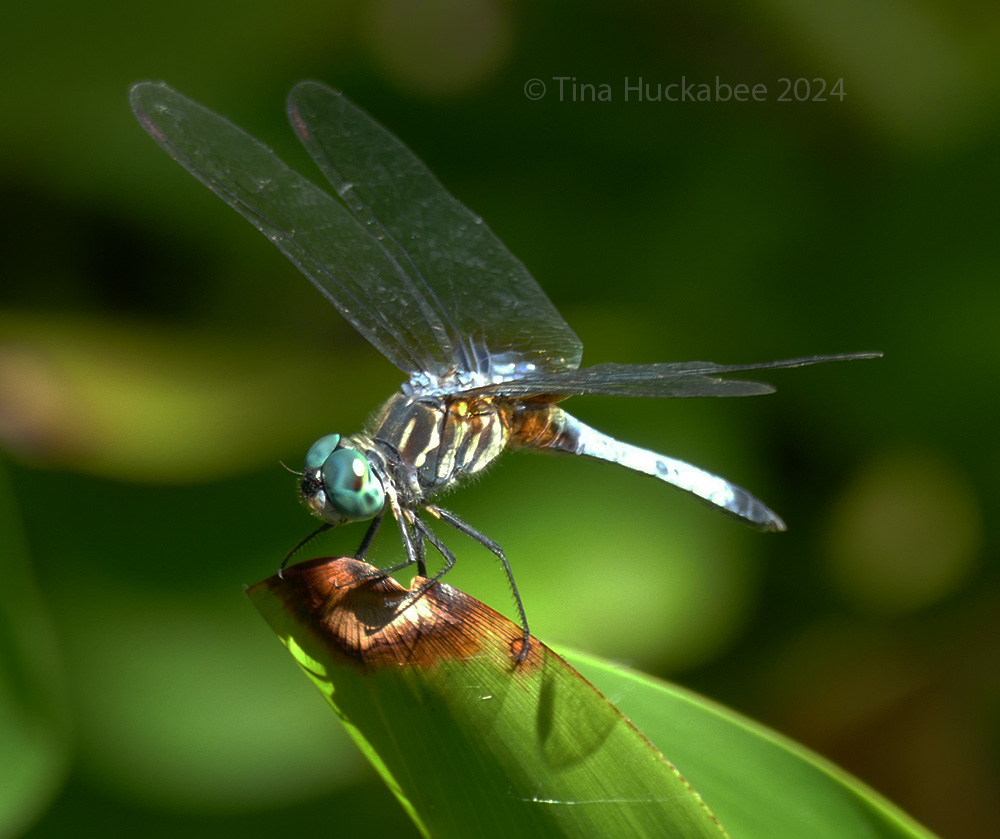
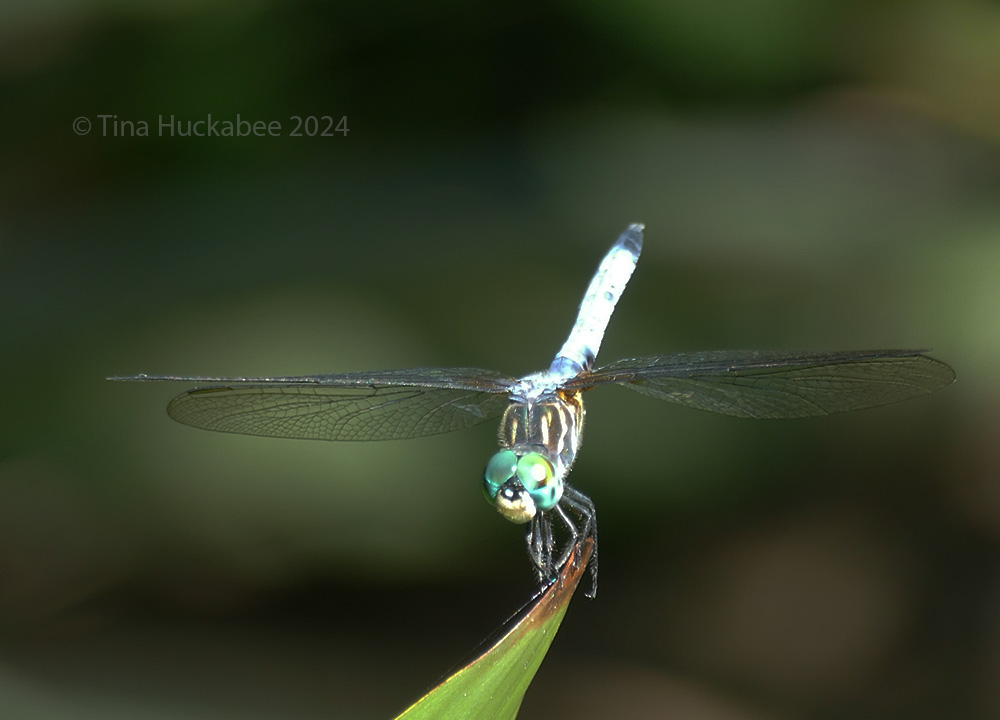
This beautiful Blue Dasher, Pachydiplax longipennis, danced and pranced with a partner over the pond, alighting and resting on a sun-crisp tip of a Pickerel Rush leaf. I’m not sure whether the partner was a potential mate or a rival in territory, but it also sported a rich blue/green exoskeleton, though didn’t perch where I might easily observe its beauty.
Wings sparkle in the early autumn sun, head swivels in response to large eyes watching for prey of small flying insects. These dragonflies (in the skimmer family) are not pollinators, but skilled predators in the garden, eating a large variety of insects, including mosquitoes and various flies.
Later in the afternoon, in different light, the skimmer was still around. Its azure and jade buddy was missing; perhaps it had moved on to another watering hole.
Late summer and autumn, until our temperatures turn significantly cooler, these insects will rule the airspace around the pond.
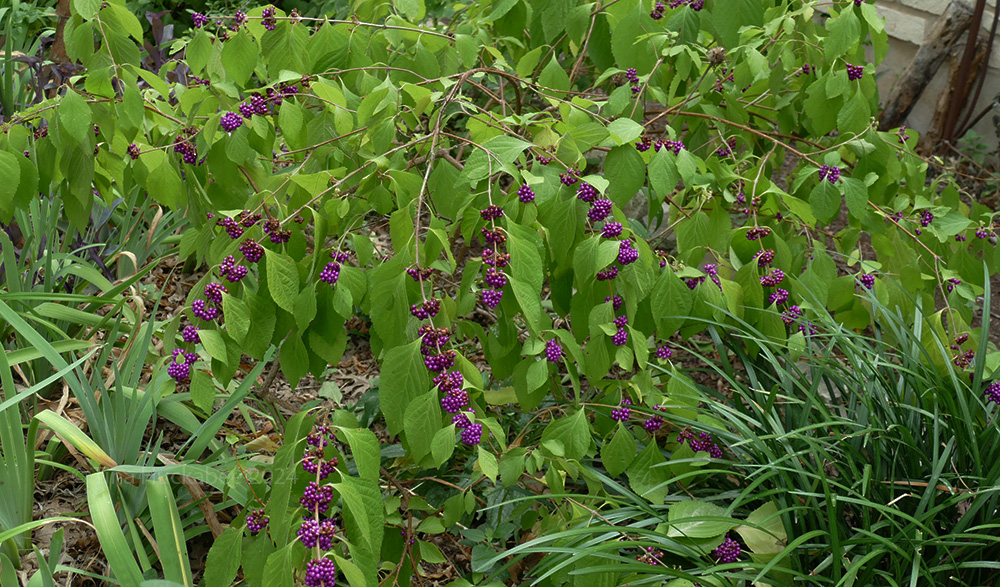
This arching, medium-sized shrub, an American Beautyberry, Calicarpa americana, is laden with luscious purple berries, though the berries won’t be on their stems for long.
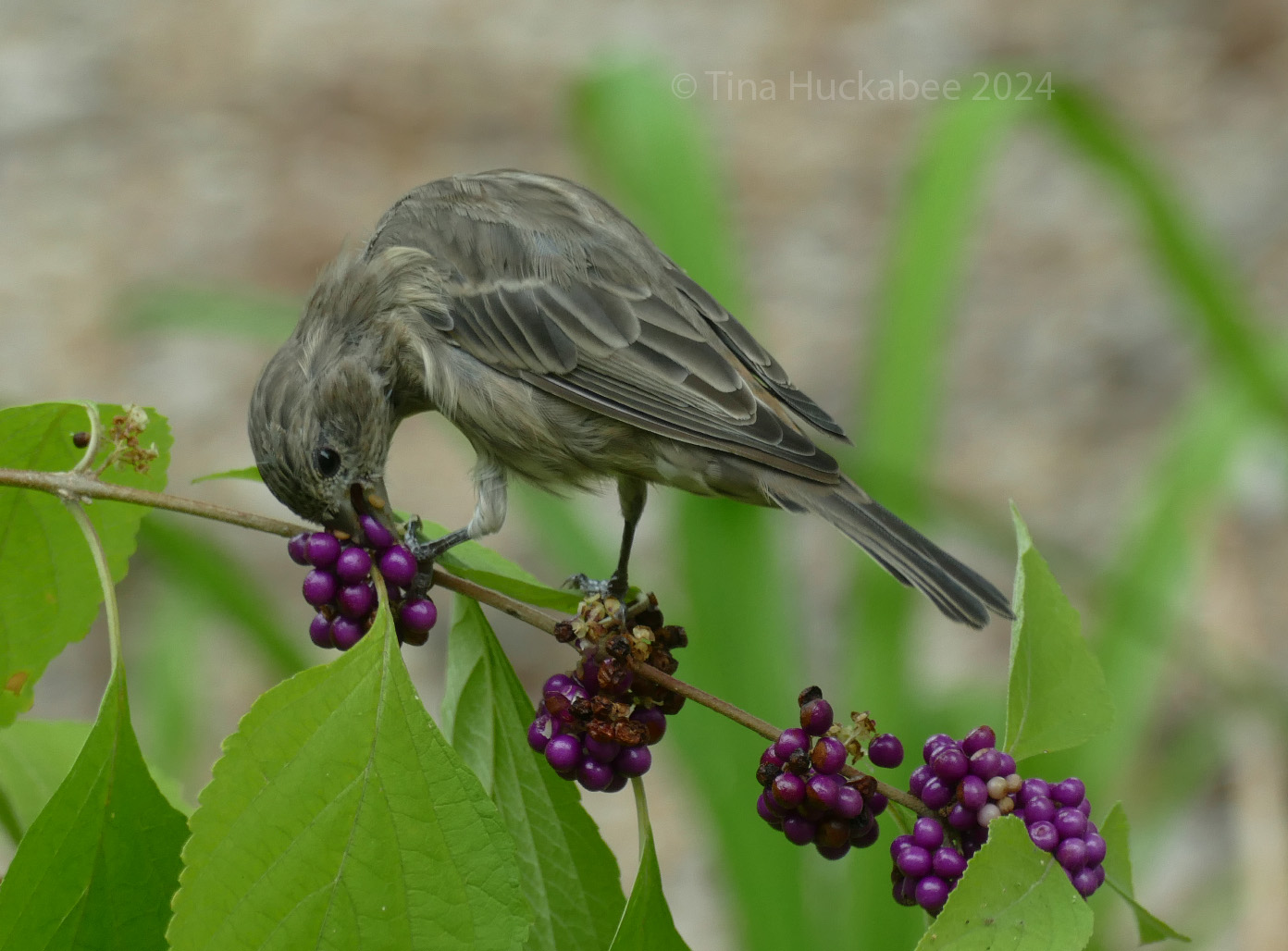
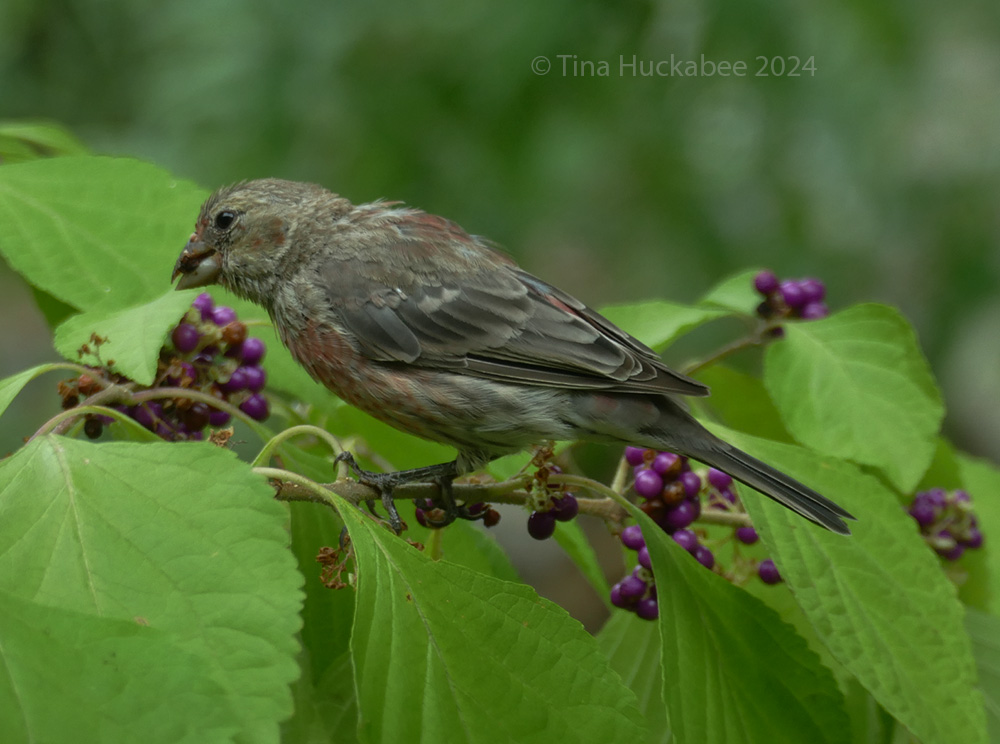
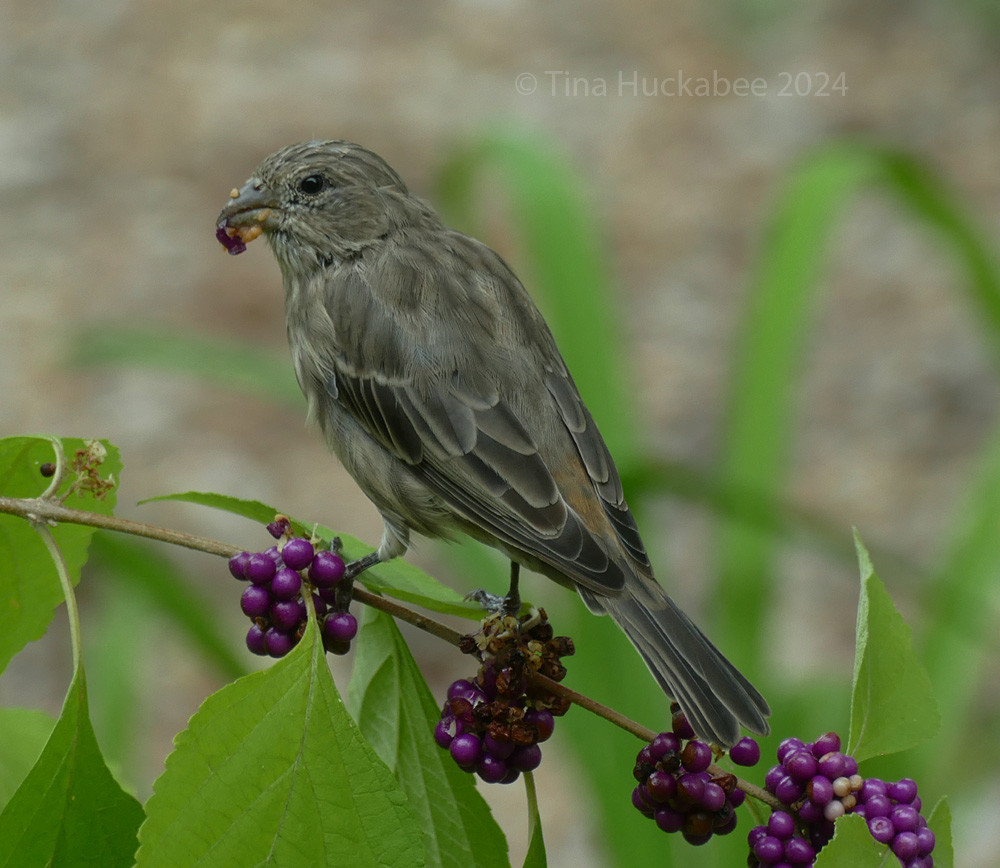
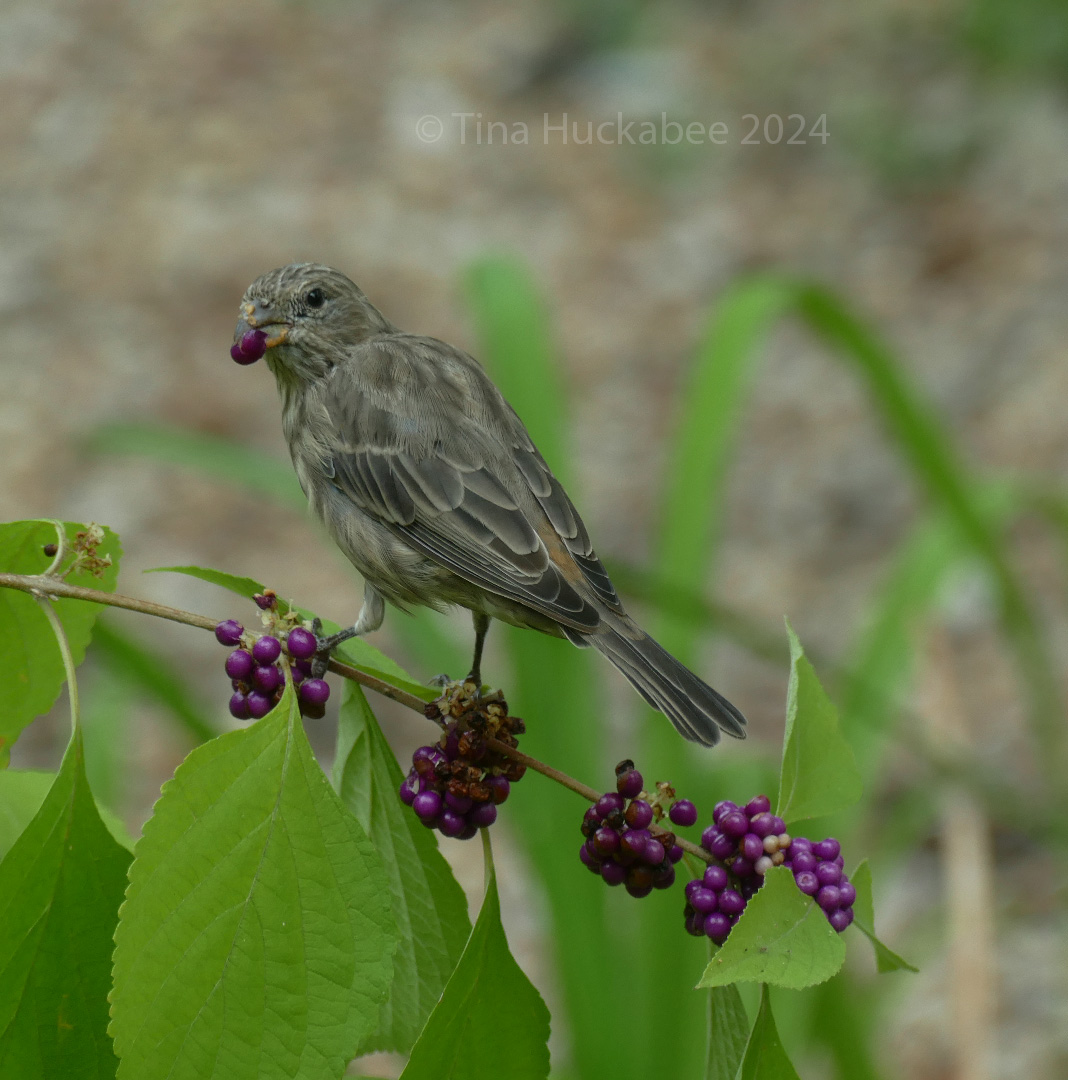
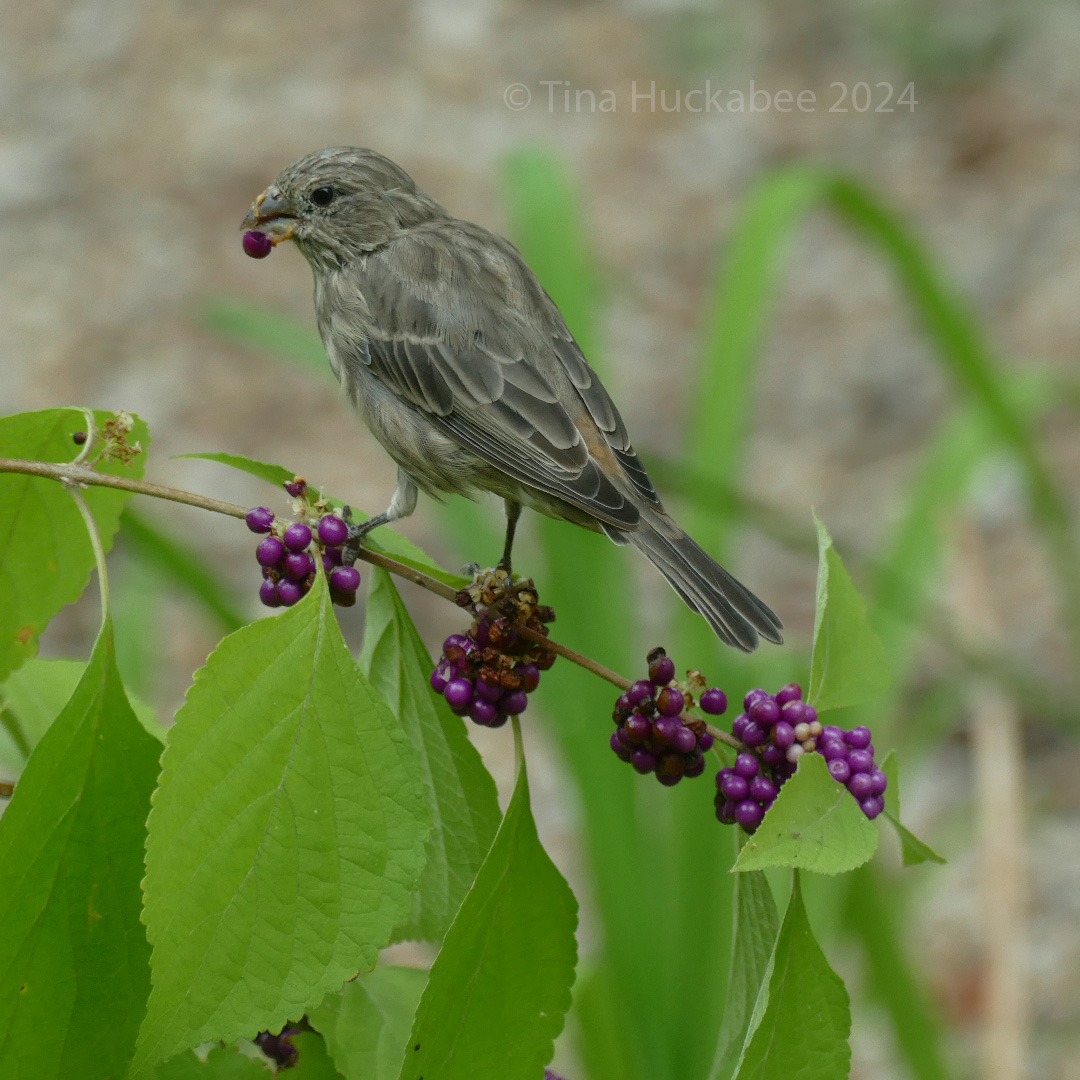
Beautyberries are food for a host of critters, but in my garden, it’s mostly mammals and birds who love these ridiculously purple fruits. Recently I watched as a couple of young, peckish male House Finches spent time enjoying the fruits of the shrub’s labors.
As I observed their brunch munching, I didn’t think they were particularly messy eaters, but I guess berry parts and juice will get stuck on beaks.
I like this shot. It looks like the berry is speared onto the bottom of the bird’s beak. Well, who hasn’t had that problem?
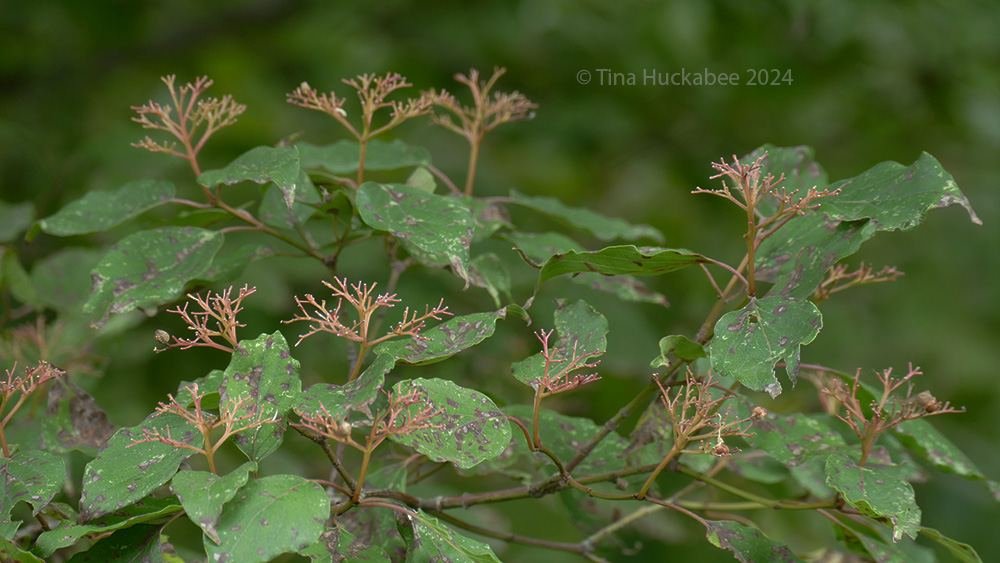
Late summer, moving toward autumn, many berrying native plants here in Central Texas reach their zenith in food production and beauty. I grow only one beautyberry shrub, but two Roughleaf Dogwood trees, Cornus drummondii, have their homes in my garden. The older, larger tree’s berries ripened in August and were quickly made into meals, stems now reaching out as if they miss their spherical hats.
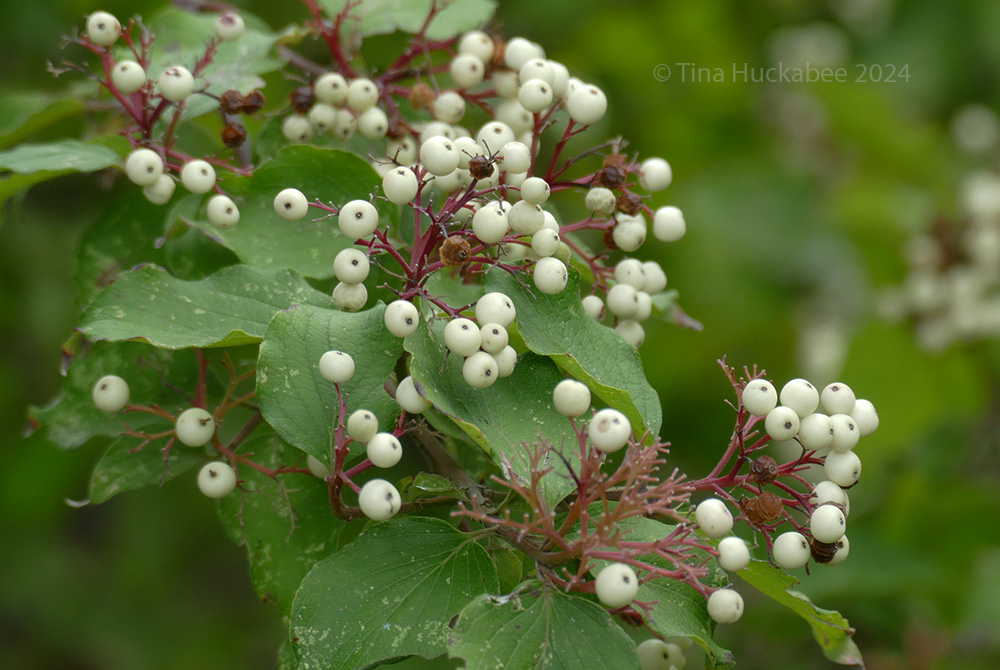
The younger, smaller tree still offers a few clusters of creamy fruits.
I find it challenging to get clear photos of birds as they dine at the dogwoods. Birds tend to stay in the center of the trees, reaching up or out to snatch the fruits. Plenty of foliage for hiding and nervous bird movements mean that the trees have their fruits stripped, while birds are relatively safe from prying eyes (and cameras) as they eat. This year, Blue Jays, Northern Cardinals, and European Starlings were the most frequent diners of the dogwoods’ treats
While it’s a win to catch decent photos of nibbling birds, I’m content to observe wildlife eating healthy, native berries from my garden. After all, feeding the wild things is why I plant what I plant!
It’s been good, this summer of 2024, with less extreme heat and drought than summers of the past decade. With only brief flirtations of over 100 F (searing, but of relatively short duration), plus bouts of welcomed rain in between, the garden and its inhabitants have flourished. August is always hot, dog-days and such, but pollinators are in their prime, busily working the hot August blooms.
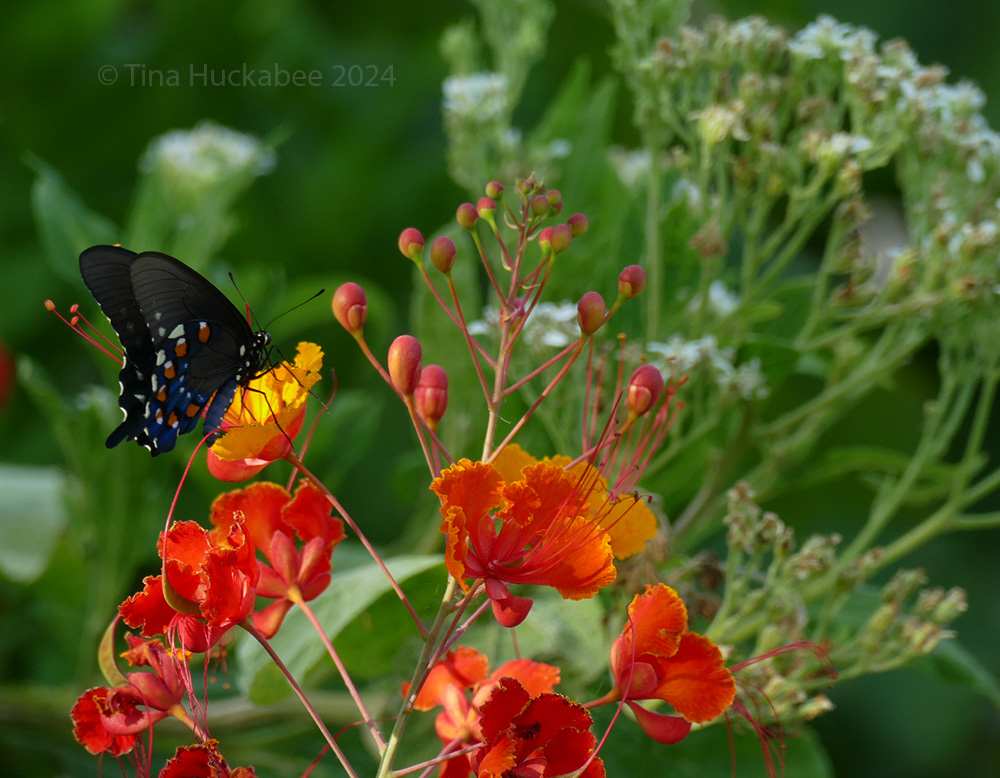
My last post profiled the emergence of newly adult Black Swallowtail butterflies from my garden’s supply of the host plant, fennel. I also grow White-veined Dutchman’s Pipe, Aristolochia fimbriata, which is an excellent host plant for the Pipevine Swallowtail, Battus philenor.
This beauty drifted from flower to flower, settling on a fiery Pride of Barbados for this nectaring session. The snowy Frostweed in the background also saw visits from the Pipevine.
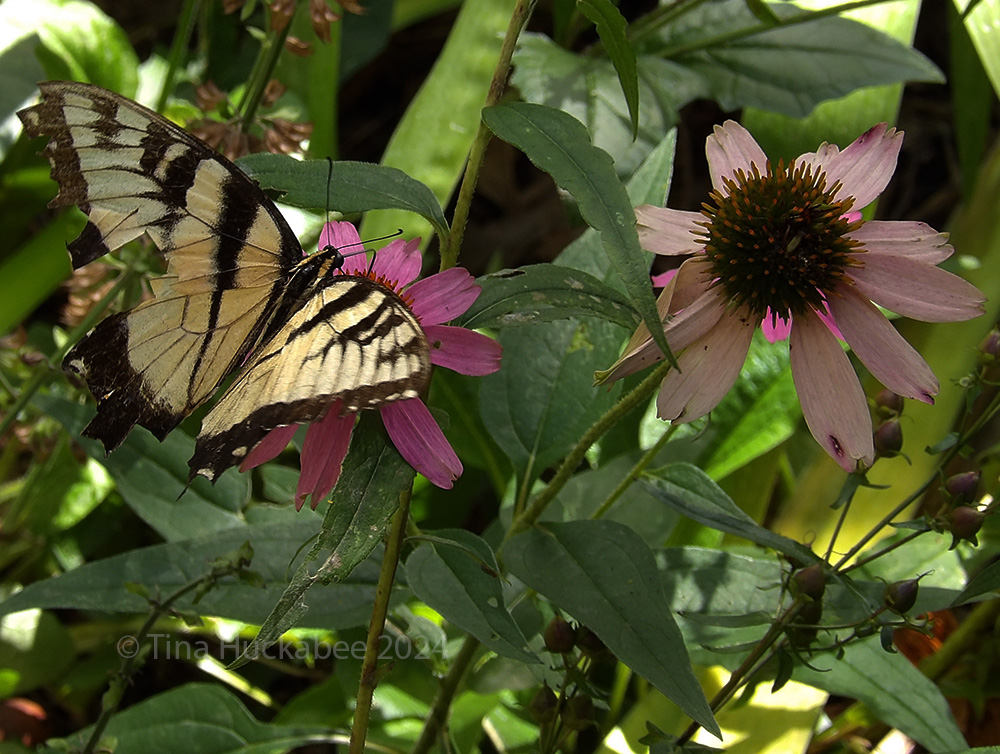
Spring bloomers are nearly done and those that are hanging on into late summer are tired, much like this cluster of Purple Coneflower, Echinacea purpurea. Their weariness didn’t lessen the attraction for a Tiger Swallowtail, Papilio glaucus, though. It sipped, then flit–as butterflies will–before moving on to its next snack.
Most of the sunny summer sunflowers are spent, having segued from providing rich nectar and plenty of pollen, to offerings for birds and mammals in the form of seeds. There are a few flowers open for pollinator business and our honeybees never miss a trick when it comes to open flowers.
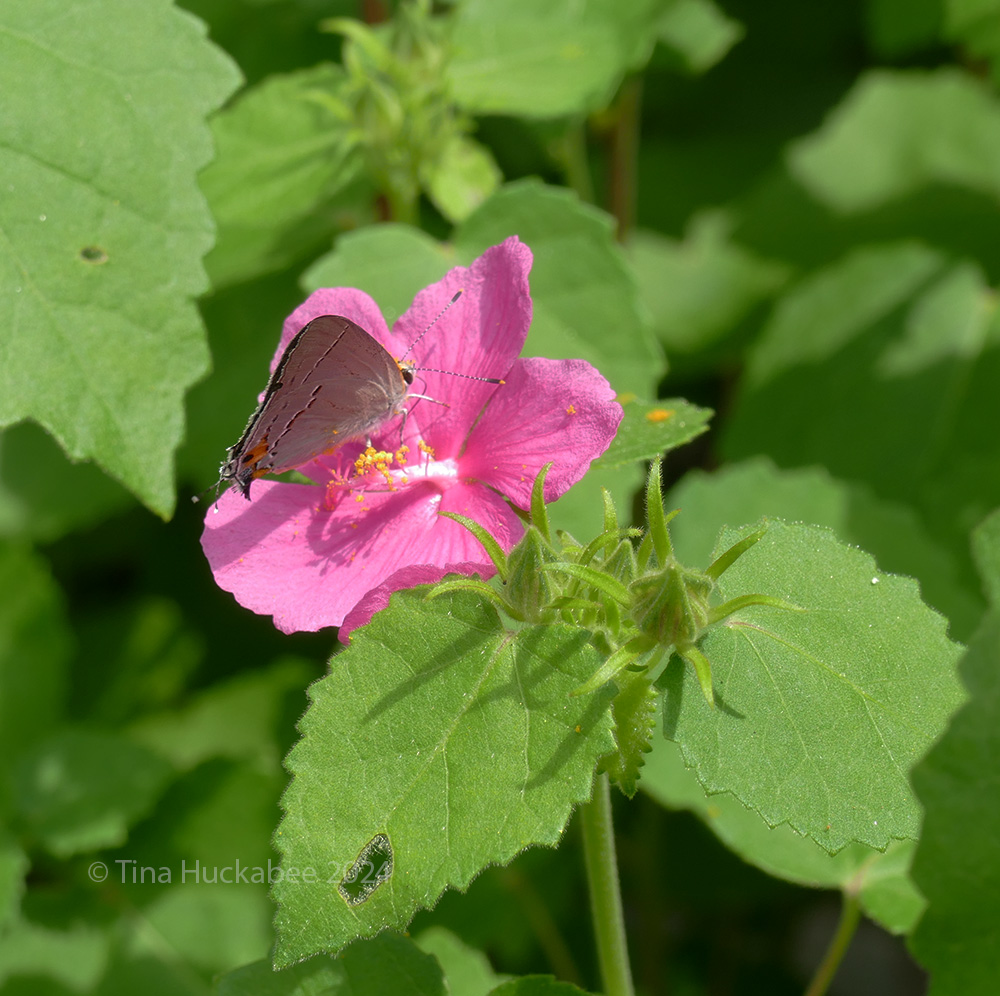
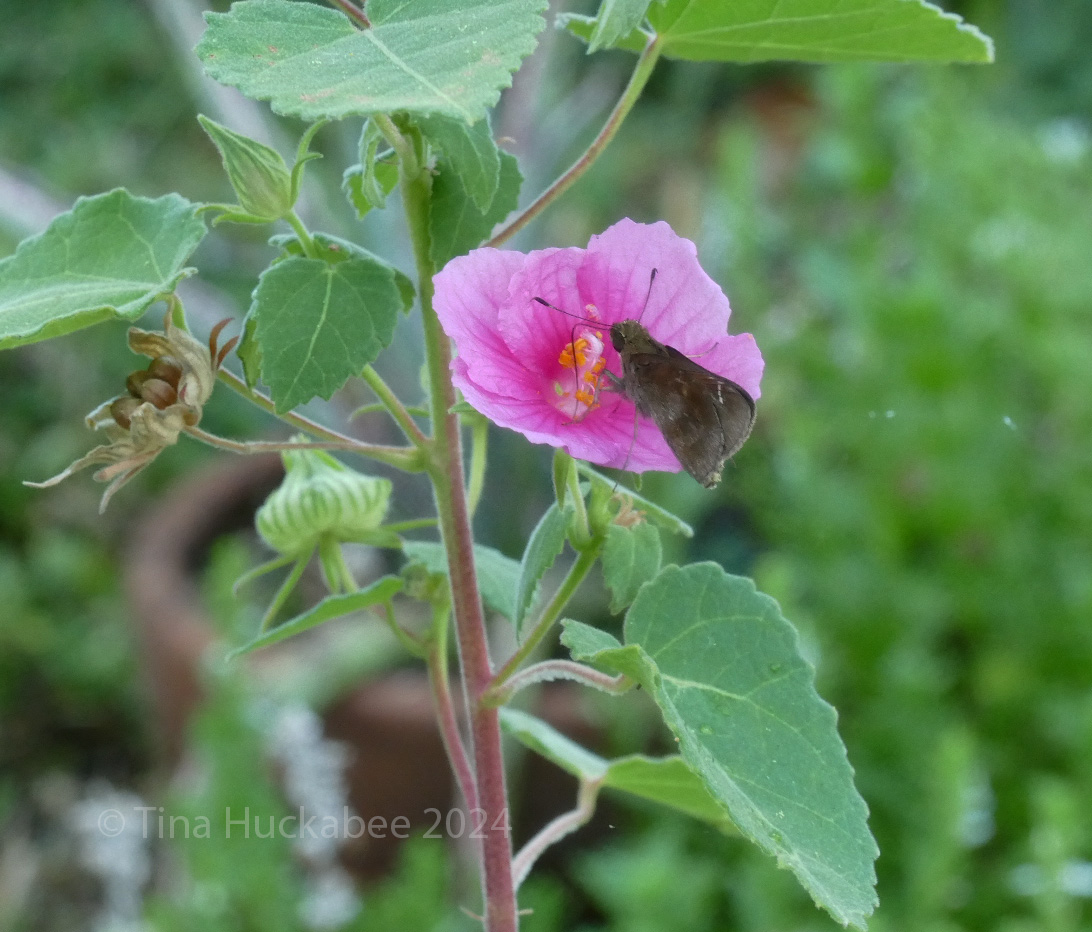
My Rock Rose, Pavonia lasiopetala, shrubs have flowered non-stop since early May. A garish, Barbie-pink bloom, some gardeners don’t care for the flowers, but I love this plant, as do a wide variety of pollinators, like this Gray Hairstreak, Strymon melinus,
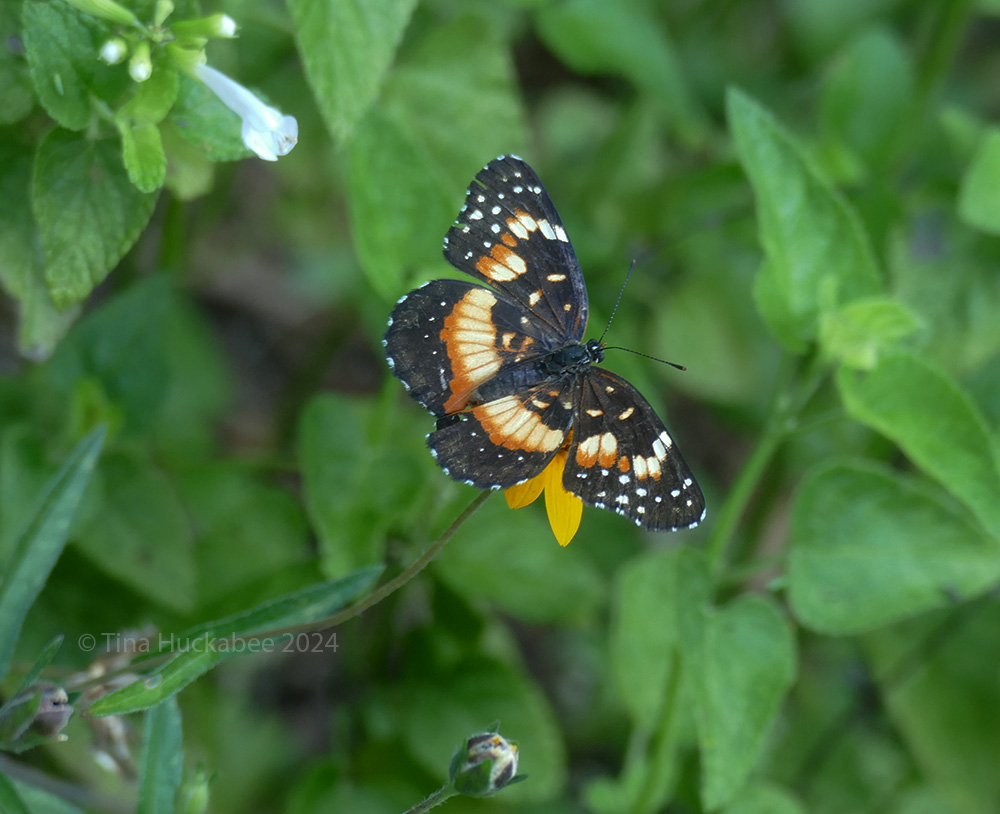
Bordered Patch, Chlosyne lacinia, are everywhere this latter part of summer! Since I grow many plants in the Aster family, these cuties have plenty of host plant material to nurture their young into adulthood. The adults, like many butterfly species, will nectar on scores of flowers. The garden is a win for this showy winged thing!
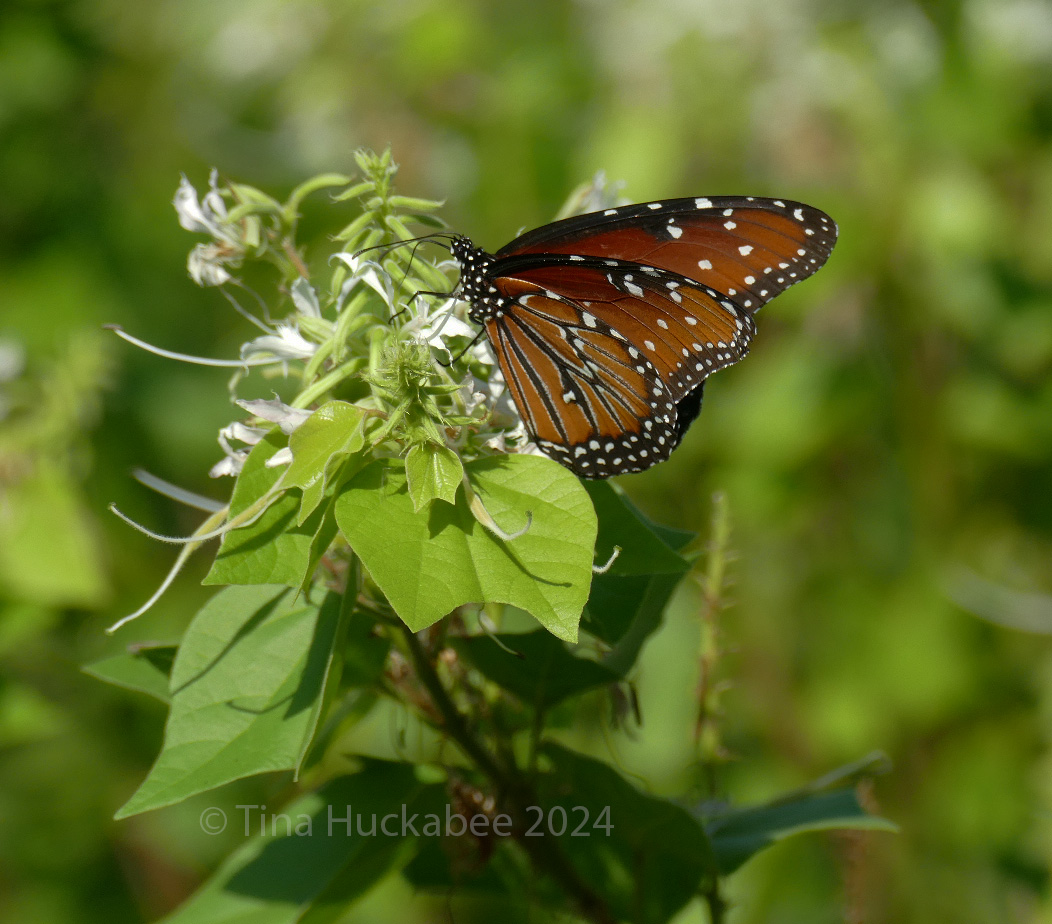
Recently, Queen butterflies, Danaus gilippus, have re-appeared in spades after an early summer lull. This one, along with several of its look-alike buddies, enjoyed the bounty of the Mexican Orchid tree blooms.
A cousin butterfly, one single Monarch butterfly, also visited my garden. I only spotted it for one day; I assume it’s an early migrant, headed to its winter quarters in Mexico. In the next months, I will see more of both kinds of butterflies as autumn approaches.
Summer brings breeding hummingbirds to Central Texas, and the females and juveniles remain until serial cool fronts encourage the tiny birds southward. There’s a good deal of zooming and chasing happening now, territorial disputes that are entertaining, but frustrating to photograph.
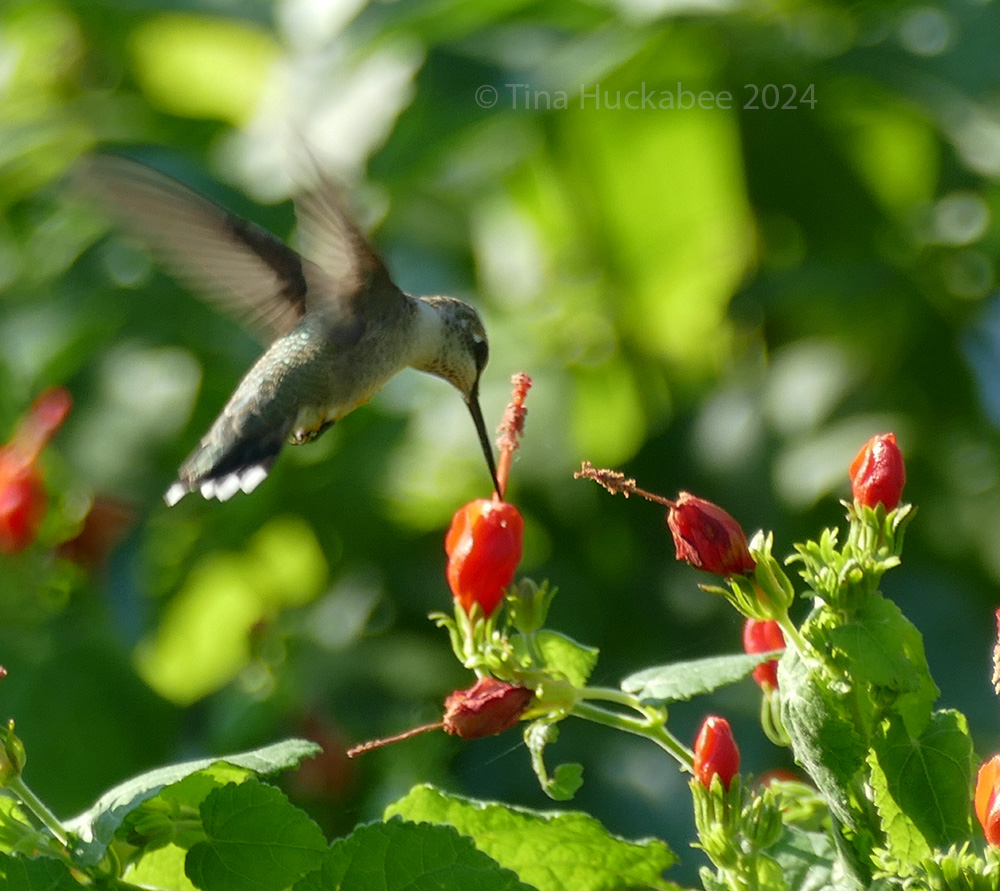
This female Black-chinned Hummingbird, Archilochus alexandri, stopped to re-fuel with some Turk’s Cap, Malvaviscus arboreus var. drummondii. Stopped is not the correct word; maybe slowed down is a better description of the hovering motion as it fed from the crimson cap.
Busy as the pollinators are, buzzing, flying, or floating through the garden, sometimes pollinators need a rest.
Pipevine Swallowtail on Evergreen Sumac
As September is just around the corner, summer is rapidly closing its oven doors. Oh sure, there are warm days ahead–plenty of those to come–but days are shorter, rain chances are greater, and the first cool fronts, fleeting though they are, are merely weeks away. The garden, the gardener, and the wildlife will appreciate the changes that the season brings.


 My Gardener Says...