December Backyard Birds

Here in Central Texas, resident birds slow down their feeder feeding during August, September, and October. The chicks have fledged and are mostly grown, the next breeding season is far enough away that adult birds are just taking care of themselves. Also, there are plenty of plants with seeds and fruits available during late summer and autumn, so feeders aren’t emptied with the enthusiasm as during other times of the year. Native plants are always the best feeders for birds! Birds are certainly around, but the garden is quieter in these months; I miss the birdie antics and chatter.

In the last few weeks, avian activity has ramped up. There are more birds and a greater variety of species. As well, the mated pairs are hanging out again and feeding together. There are two Northern Cardinals, this female,

…and her mate, that are regular visitors in the garden. For a while, I spotted a second male flitting about, but I’m guessing that this handsome guy chased him off and won her heart.

Red-bellied Woodpeckers are common in this neighborhood and several of her kind regularly stop by for suet (seen here) and peanuts.

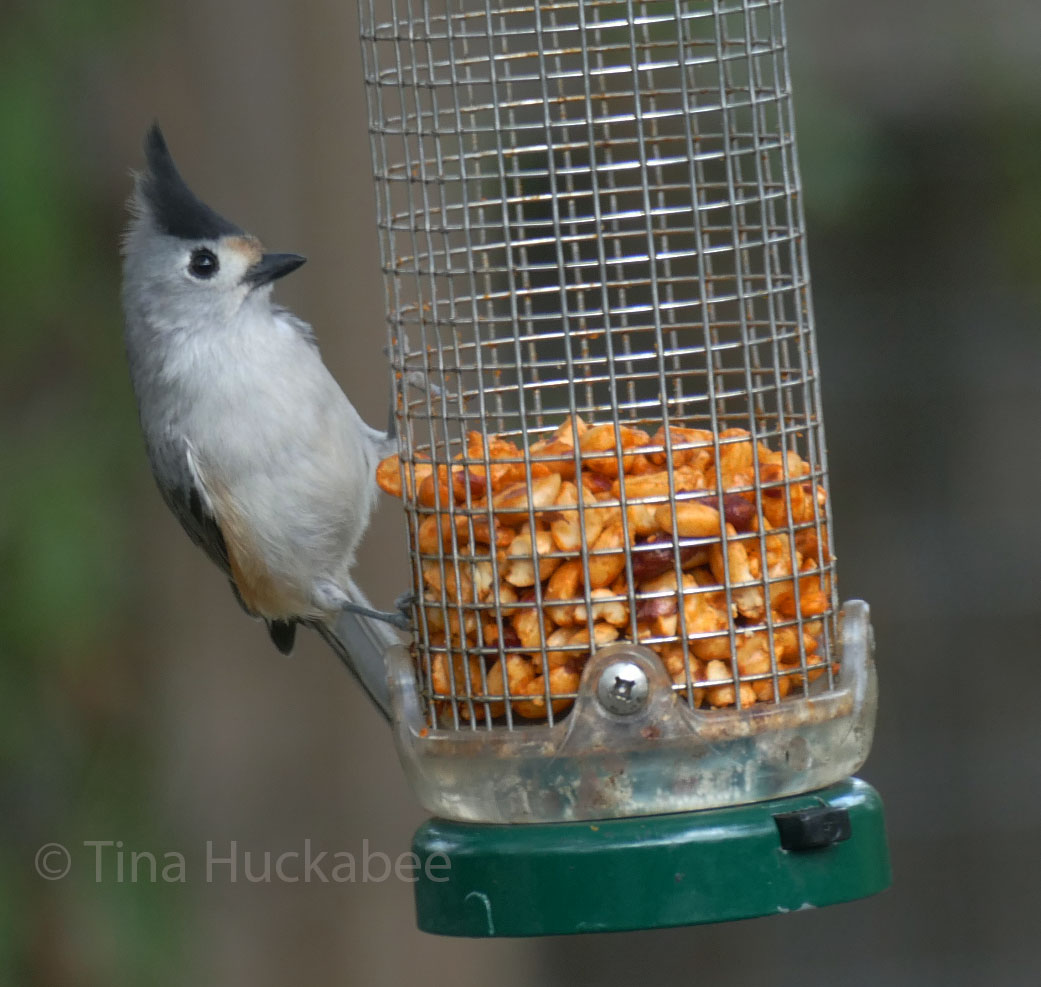
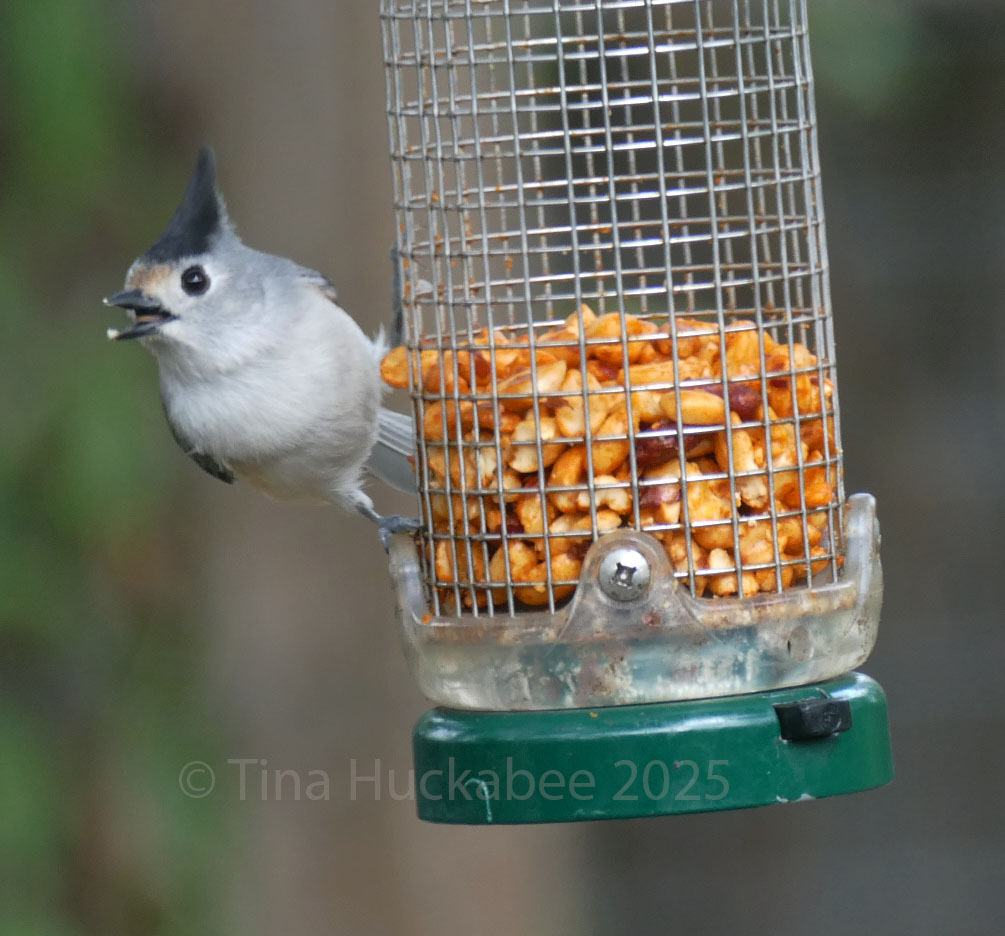
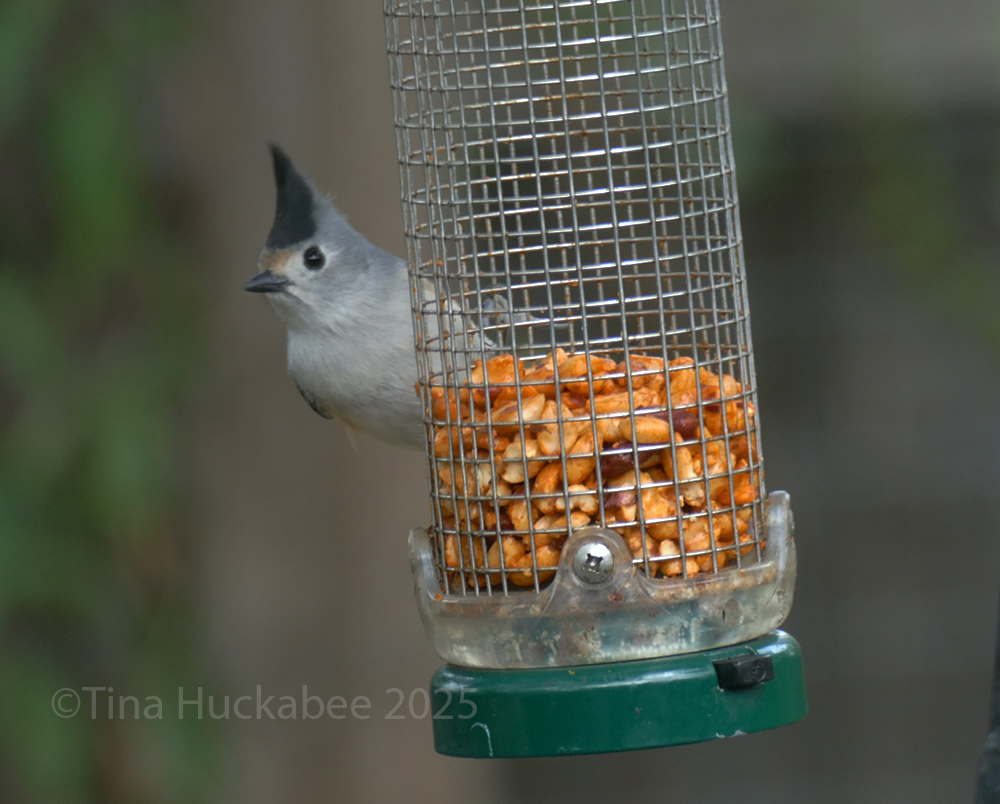
Some of the cutest birds are Black-crested Titmice. Native to Texas and northern Mexico, these adorable birds zip from tree-to-tree, branch-to-branch–and really love peanuts.

What a darling!

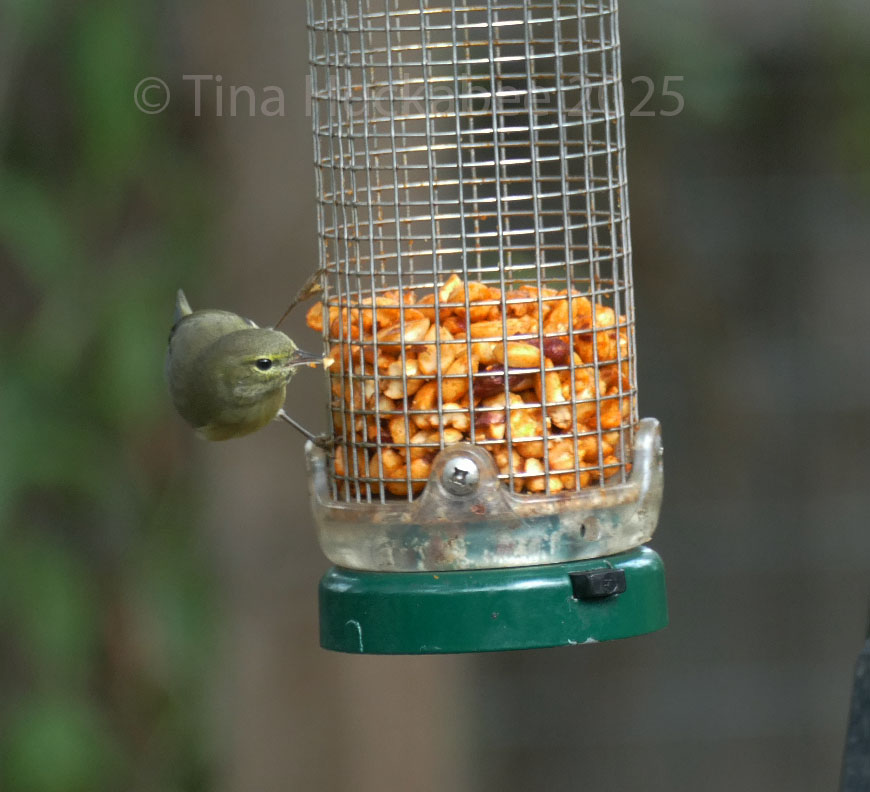
I’m always happy that over-wintering warblers hang out in the garden from November to April. Typically, there are one or more Orange-crowned Warblers, like this little one:

Also, Yellow-rumped Warblers and Ruby-crowned Kinglets are winter residents. So far this autumn I’ve sighted only one of the Butter Butts (Yellow-rumped Warblers) and no Kinglets in my garden. I have heard both kinds of birds nearby, so they may be snatching peanuts when I’m not looking.

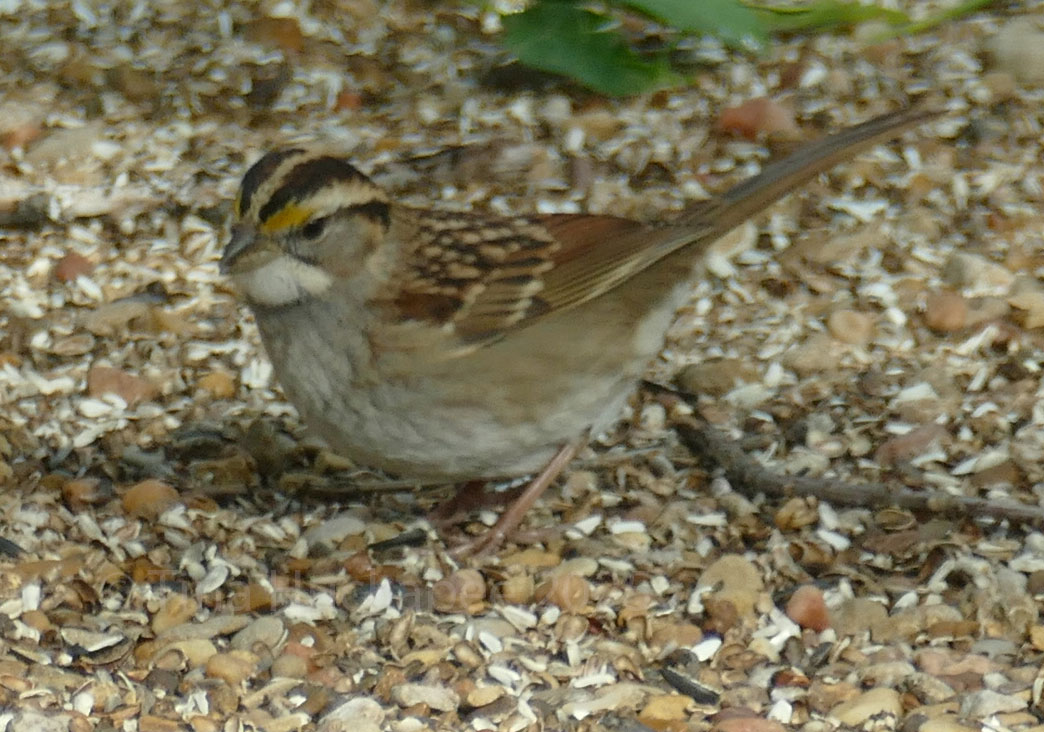
This attractive fella and a buddy spent a couple of days cleaning up sunflower and safflower seeds on the ground. A White-throated Sparrow, this part of Texas is included in its non-breeding territory. I’ve seen this species before, but they’re not common visitors to my garden.

A me-and-my-shadow capture of a local Blue Jay as it snacks on some peanuts. Blue Jays are always fun birds to have around: loud, raucous, and beautiful, they’re obnoxious charmers.

I’m keeping count of my backyard birds for Cornell Lab of Ornithology’s Project Feederwatch, though I don’t really need a reason to watch birds! It’s a great way to learn about resident and visiting birds, their habits, breeding, and food likes, and it’s easy. Birds are boss and always interesting to watch!

For the Birds

Birds and windows don’t mix. When they come into contact with one another, the bird is usually the looser. Glass reflects the outdoors and birds see the glass as a place to fly through. Research now suggests that in the United States, 1 billion birds die each year due to window strikes. Even when a bird flies away after a strike, it’s estimated that upwards of 60% die within a 24 hour period. This information comes from wildlife rescue organizations’ records of birds brought in for treatment after window collisions.

The numbers are daunting and birds are dying. We human types can mitigate some of that problem by using window decals in the forms of lines, dots, or cutesy decorations.

I’ve opted for cutsey in my window situations.

Decals are easy to put on windows, available through many sources, and last quite a long time. In my own experience, my back garden windows are the main source of bird collisions, obviously because of the feeders. For some years now, I’ve placed decals on those particular windows (I’ll talk about other window remedies later). While I love the aesthetic of a clean, large window, dead or dying birds because of those windows is a non-starter for me. I’ll tolerate some interruption of that sheet of beautiful glass for the sake of even more beautiful birds. I’ve grown used to the decals; they don’t hinder my inside enjoyment of the outside and it’s now a rare event that a bird hits my windows.

This window is in in my living room, the photo taken from outside. It’s easy to see how a bird might think it can fly right through. It’s been 4 years since a bird hit this window; sadly, it was a beautiful Cedar Waxwing. In addition to the decals placed at the bottom half of the window placed a few inches apart, there is an indoor blind hanging in the upper half with slats partially open so that the horizontal slats indicate to birds that the window isn’t a flyway.

When we were in Costa Rica, a number of the places we visited opted for vertical lines on the windows. Some newer buildings are using glass that has dots or lines formed in the glass. Decals, lines drawn on glass with oil-based paint markers, blinds (vertical or horizontal), patterned draperies–anything that disrupts a reflection of a natural landscape is a cue to birds that the window shouldn’t be part of the bird’s flyway. I’ve witness a hawk, and many migratory and resident birds fly towards my windows, to suddenly bank away as they clearly recognized that the path isn’t safe. What they think the window is at that point I have no idea, but that the birds didn’t head straight into the window is a win for the birds. For me, that alone is worth a few in-the-way-decals.

Most of my windows have blinds on the inside and because there are lines, the birds see that those windows are not through-ways. When I raise the blinds, I’ve placed a few decals on the lower part of the windows so that the birds don’t hit the glass.

If you’d like to read more about this problem, the research to mitigate the problem, and how you can prevent bird strikes, check out these links. The first is from Cornell Lab of Ornithology, the second from Audubon.

Why Birds Collide With Windows

Window Strikes Are Even Deadlier for Birds Thank We Thought

Do it for the birds!

Black-crested Titmouse, Baeolophus atricristatus

After Dinner Drink?

On a recent evening my back garden was honored with a visit from this immature Cooper’s Hawk, Astur cooperii, who spent time at one of my bird baths. The bird sat and surveyed its surroundings,

…took thirsty dives into the water,

…and with beak pointed to the sky, gulped, gulped, gulped, enjoying a cool water drink at the end of a day.

At first, I assumed he’d landed looking for dinner, but the squirrels were somewhat active (not directly under the hawk’s beak, but nearby) and birds were around, though giving this formidable predator its space. Cooper’s Hawks typically hunt birds, but I’ve witnessed one catch a squirrel. A successful predator will hunt whatever is available and catch-able.

I wouldn’t want to be on the catching end if these things–would you?

Given the hawk’s lack of interest in a meal and its focus on the water bowl, I wondered if this one had dined earlier, in some other venue, and was in my garden for its after dinner drink.

The hawk sat, sipped, looked around and eventually hopped to the opposite side of the water bowl. This young Cooper’s has a regal form: bright, intelligent eyes, glorious plumage, and a dignified figure.

My favorite photo of this half hour of hawk watching is this one.

The hawk has a I meant to do that! look on its face. Maybe it took a page out of the White-winged Dove book and pooped in the water? Or perhaps it belched a bit and was embarrassed? Do hawks belch? Do hawks get embarrassed?

Shortly afterwards, my hawk buddy winged to the overhead utility wires behind my property and then onward to its perch for the night.

I love to spy on the flitty birds in my garden, both migratory and resident. They’re quick, agile, easily hidden in the foliage and a triumph when I get a good look and photograph. That said, it’s rewarding and so much easier to watch and appreciate a bigger bird. It’s truly a gift when one lands and spends time resting in the garden.