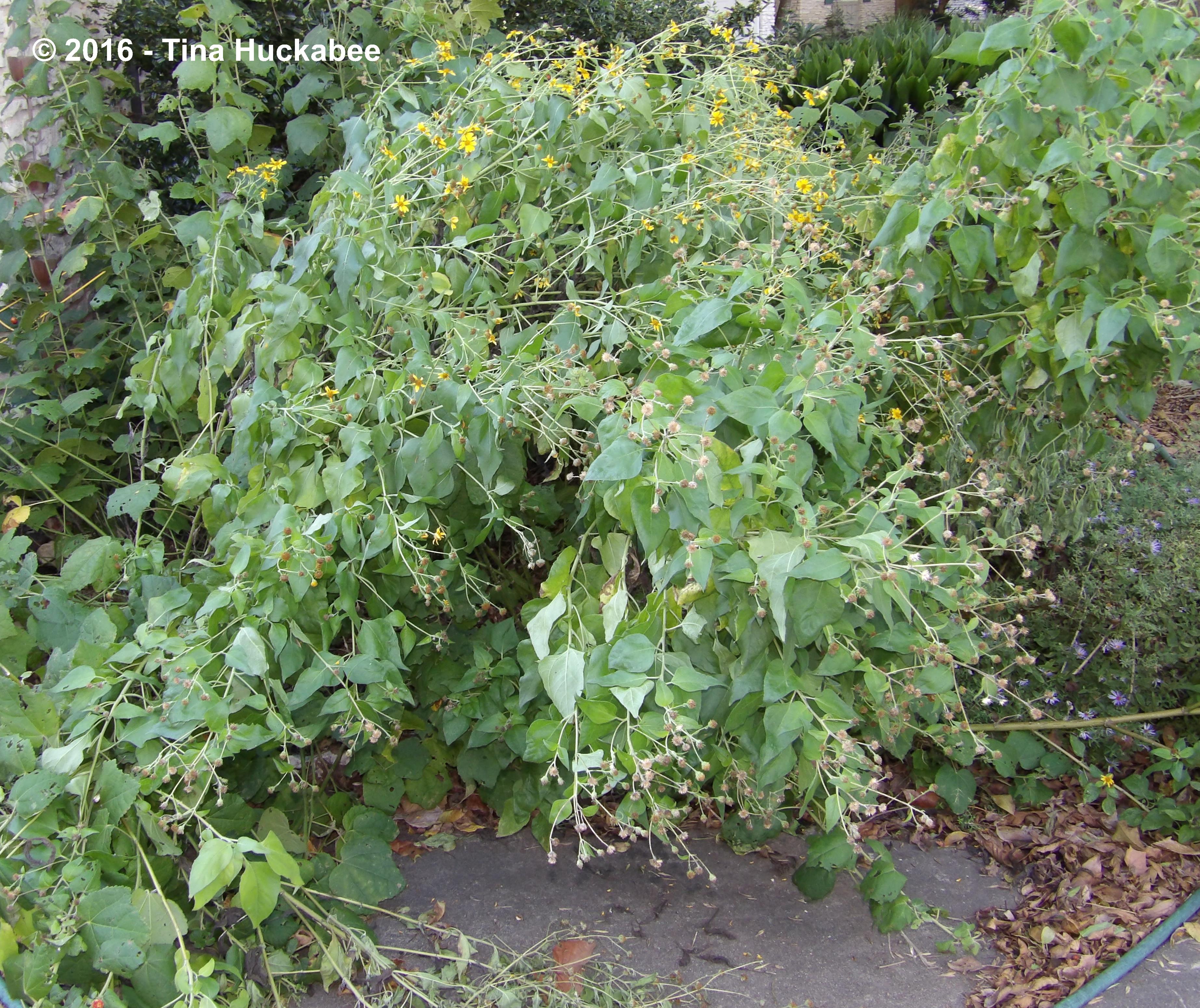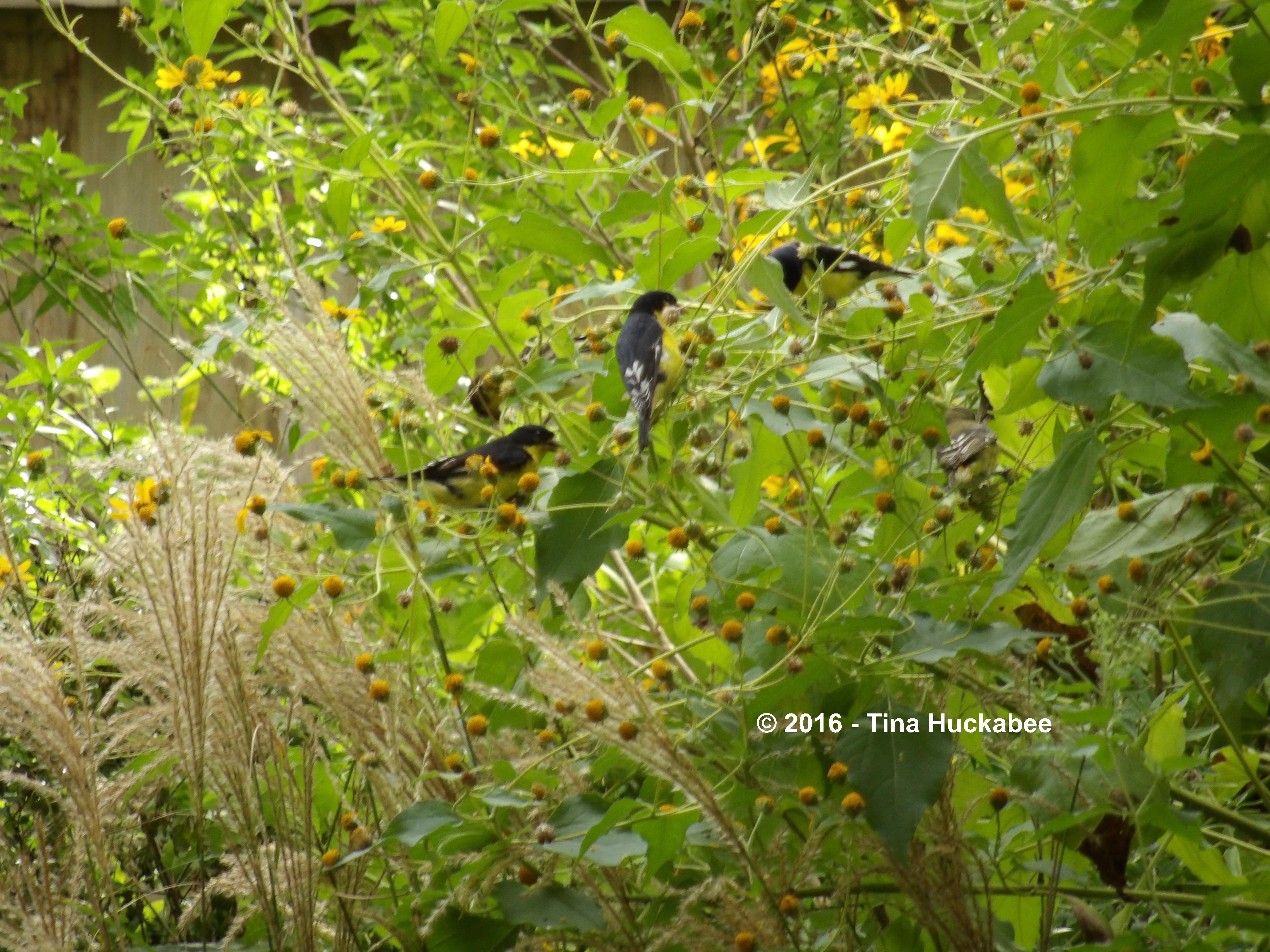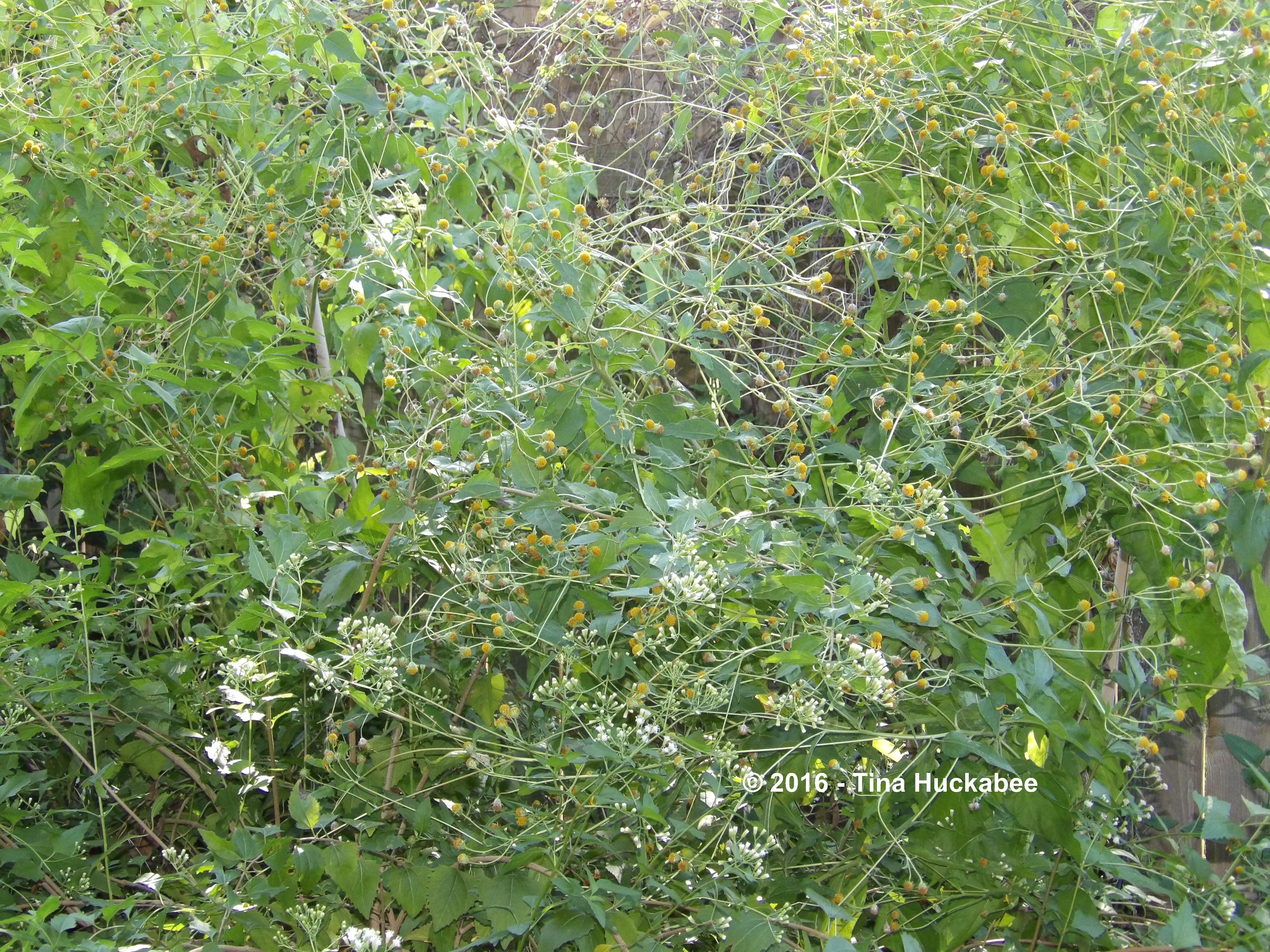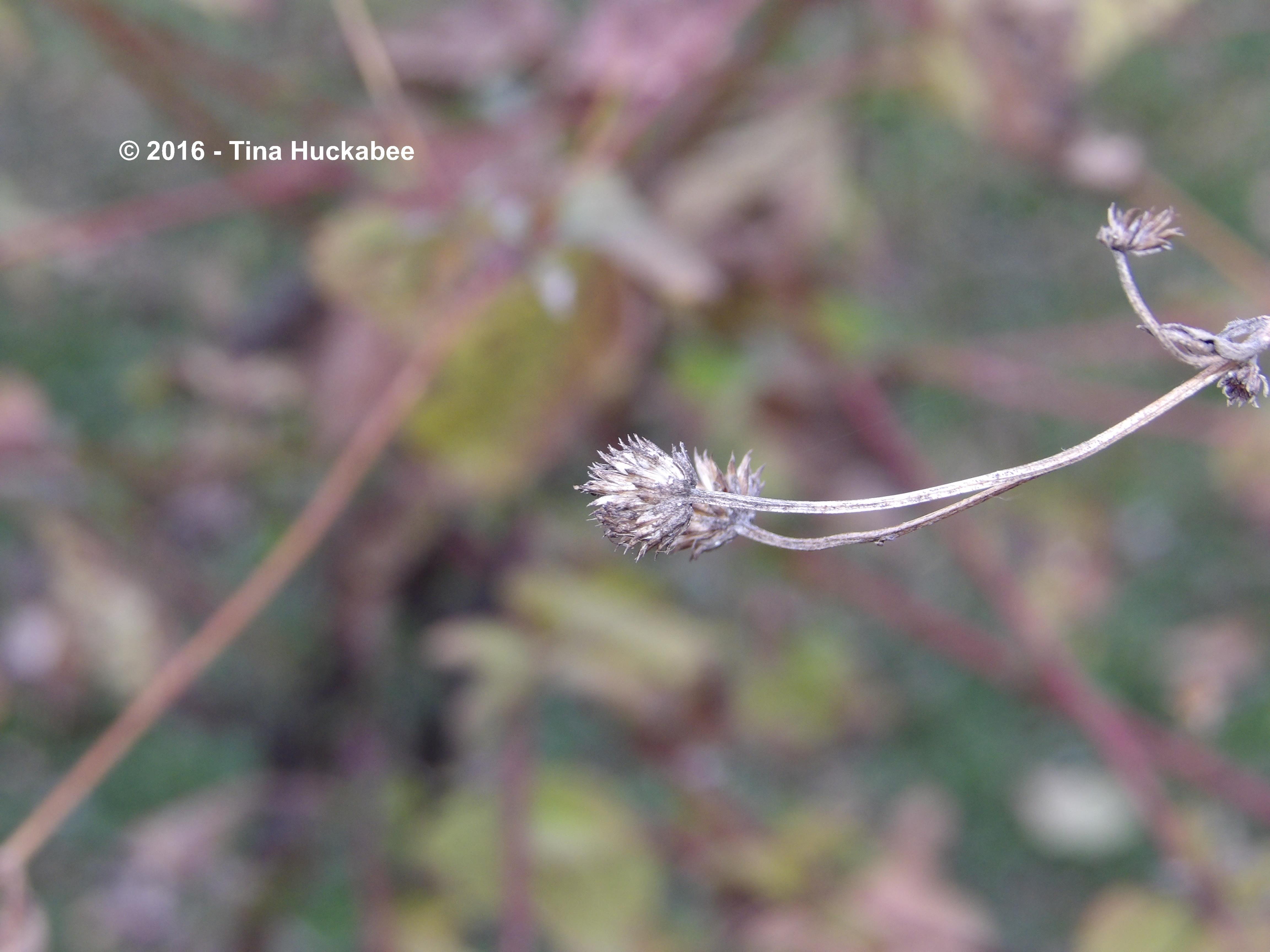
Rock rose (Pavonia lasiopetala): A Seasonal Look

If you’re a fan of pink, this is the post for you!

Rock rosePavonia lasiopetala, is a small shrub adorned with blooming Barbie-doll pink flowers through much of the growing season.  In my Austin garden, the first blooms appear in late April, with stragglers showing up as far into the calendar year as early December.  The charming hibiscus-like flowers,

…framed by fuzzy, scalloped foliage, are congenial and reliable garden partners.  A water-wise perennial shrub, Rock rose flowers are visited by many winged things:  butterflies, bees (both native and honey), and hummingbirds.  I guess all that pollination activity explains why they seed out so readily–I always have many seedlings to share.

Honeybees and several varieties of native bees regularly work the blooms. Most of the butterflies who visit Rock rose blossoms are smaller skippers and hairstreaks.

With its mallow blooms ranging from subtle, sweet pink,

…to garish, stopp’em-in-their-tracks pink,

…this shrub is a must-have for anyone gardening in Central Texas and southward into Mexico.

Masses of blooms
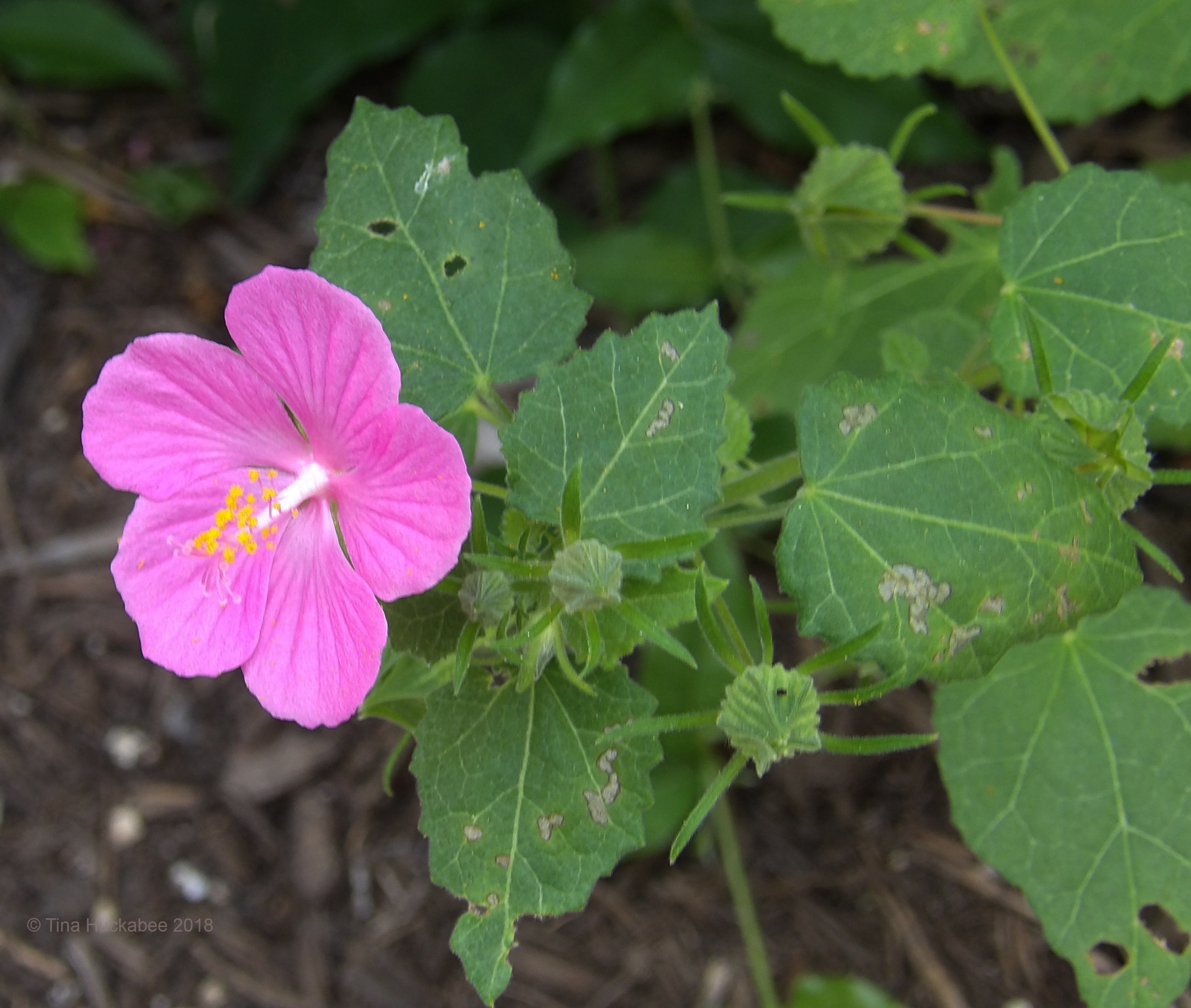
A single flower paired with blooms-about-to-happen. Rock rose isn’t a host plant for any insect that I’m aware of, but someone’s been nibbling at these leaves.


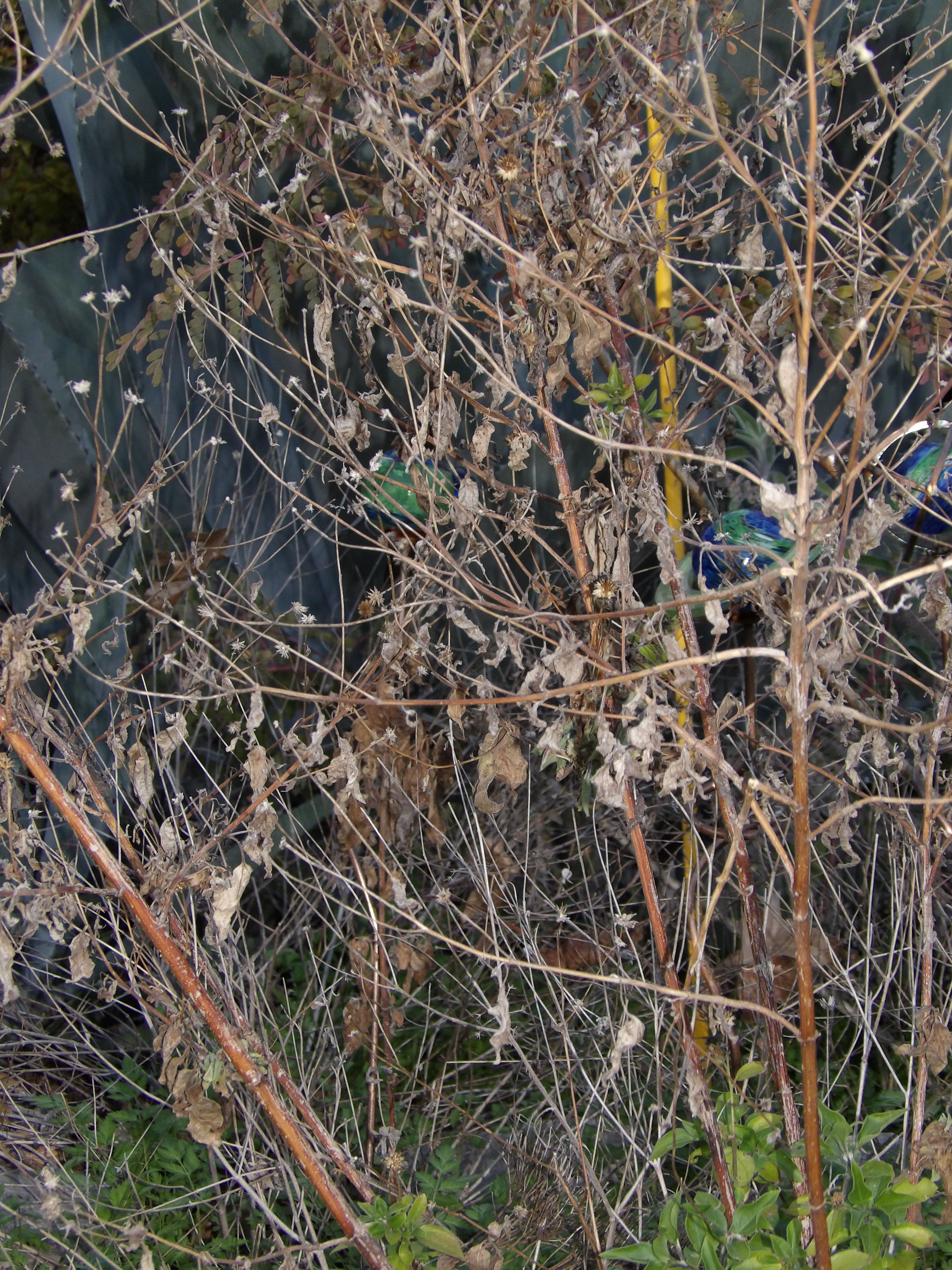
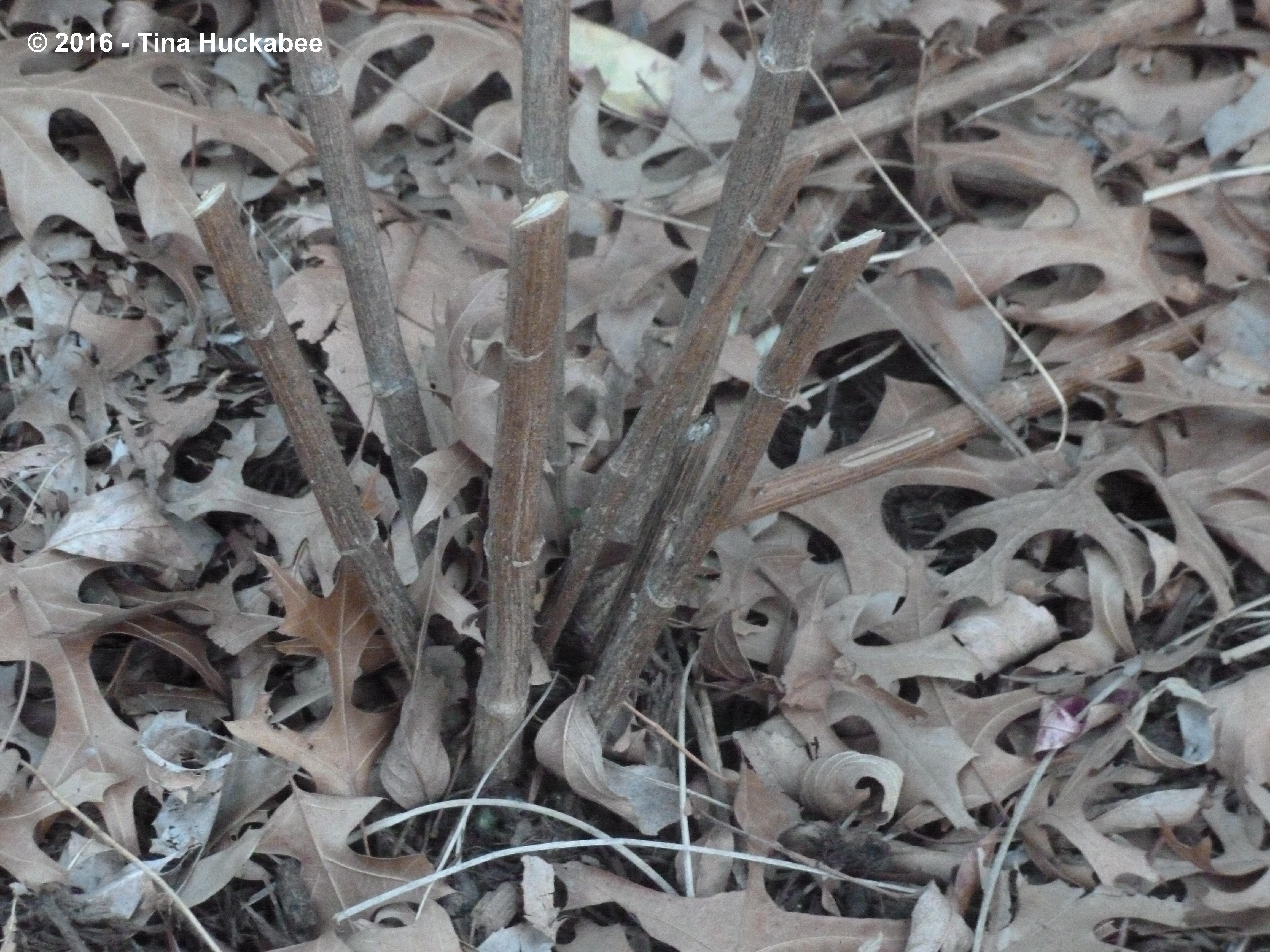
In winter, Rock rose retains some of its leaves, but definitely thins out;  I guess I’d label it as semi-evergreen.  I typically wait until late February to prune back  the shrubs to about 10-12 inches in height.  In fact, I just completed this winter chore.

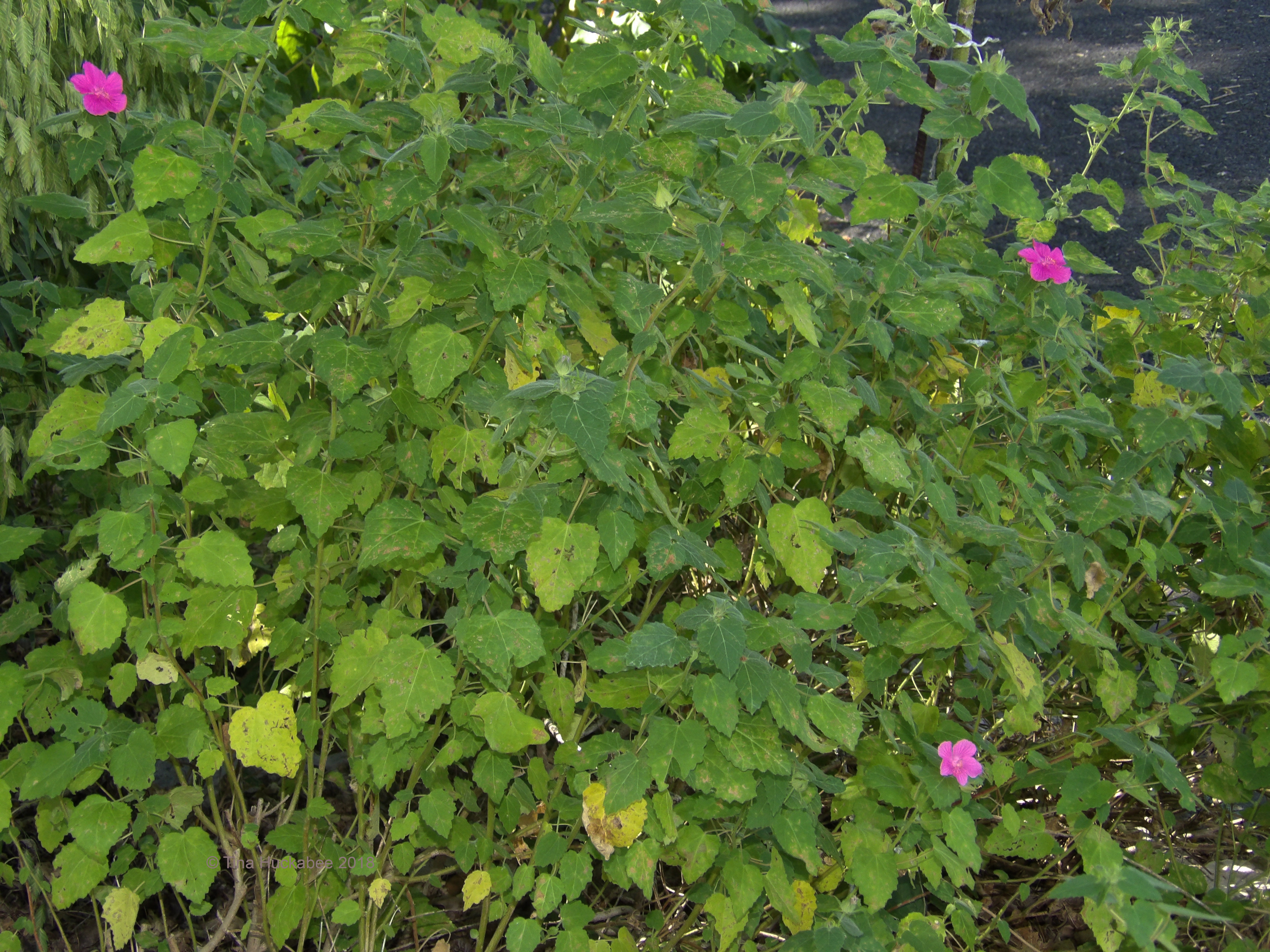
Look closely to see the nearly naked limbs of February just-pruned Rock rose shrubs.  This garden boasts a cluster of Rock rose shrubs which border a walkway.

As with all things winter in my zone 8b garden, now is a good time to prune and clean out garden detritus which has accumulated.

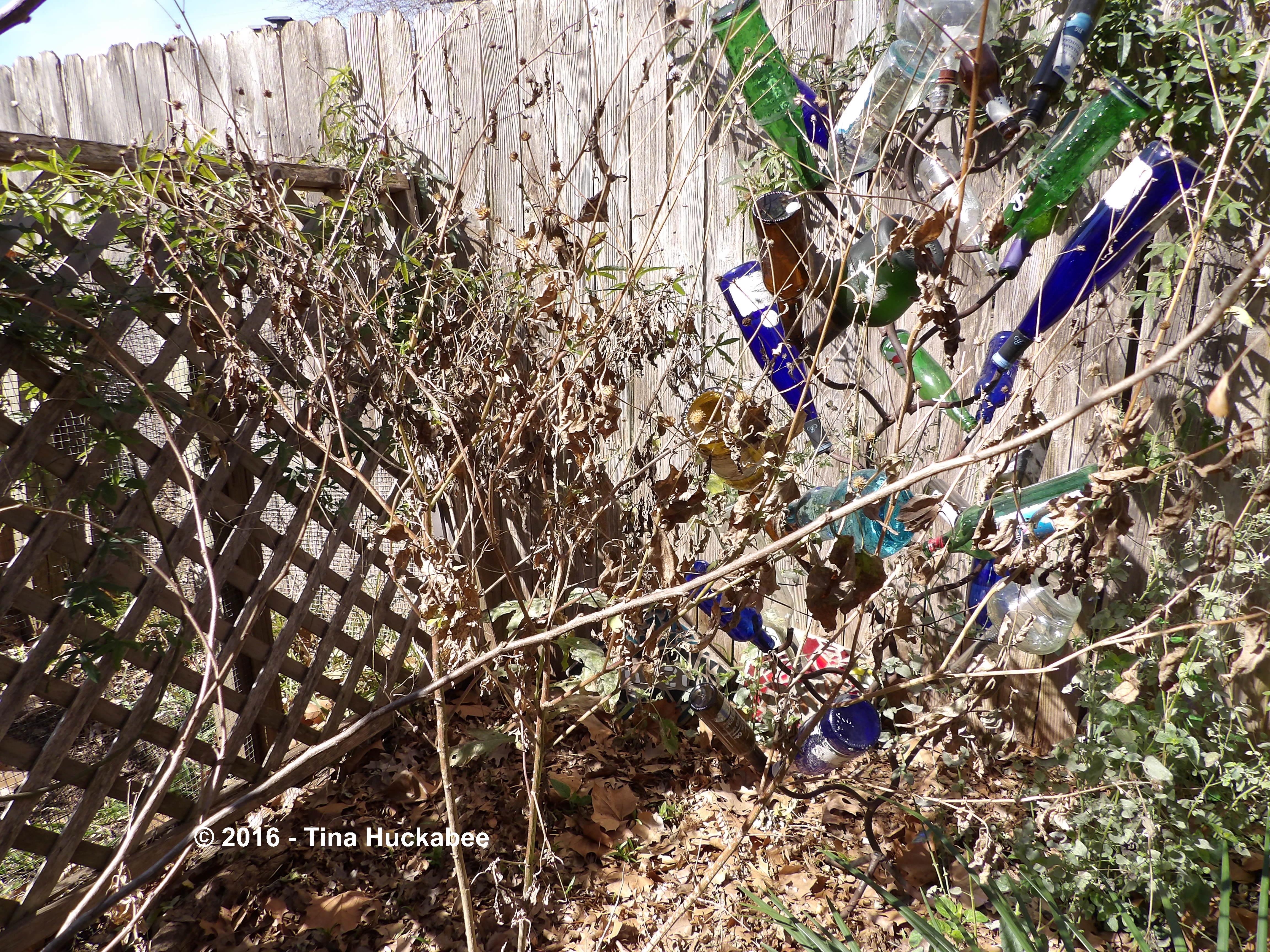
The leaves of my American sycamore, Platanus occidentalis tangle in the web of Rock rose limbs.


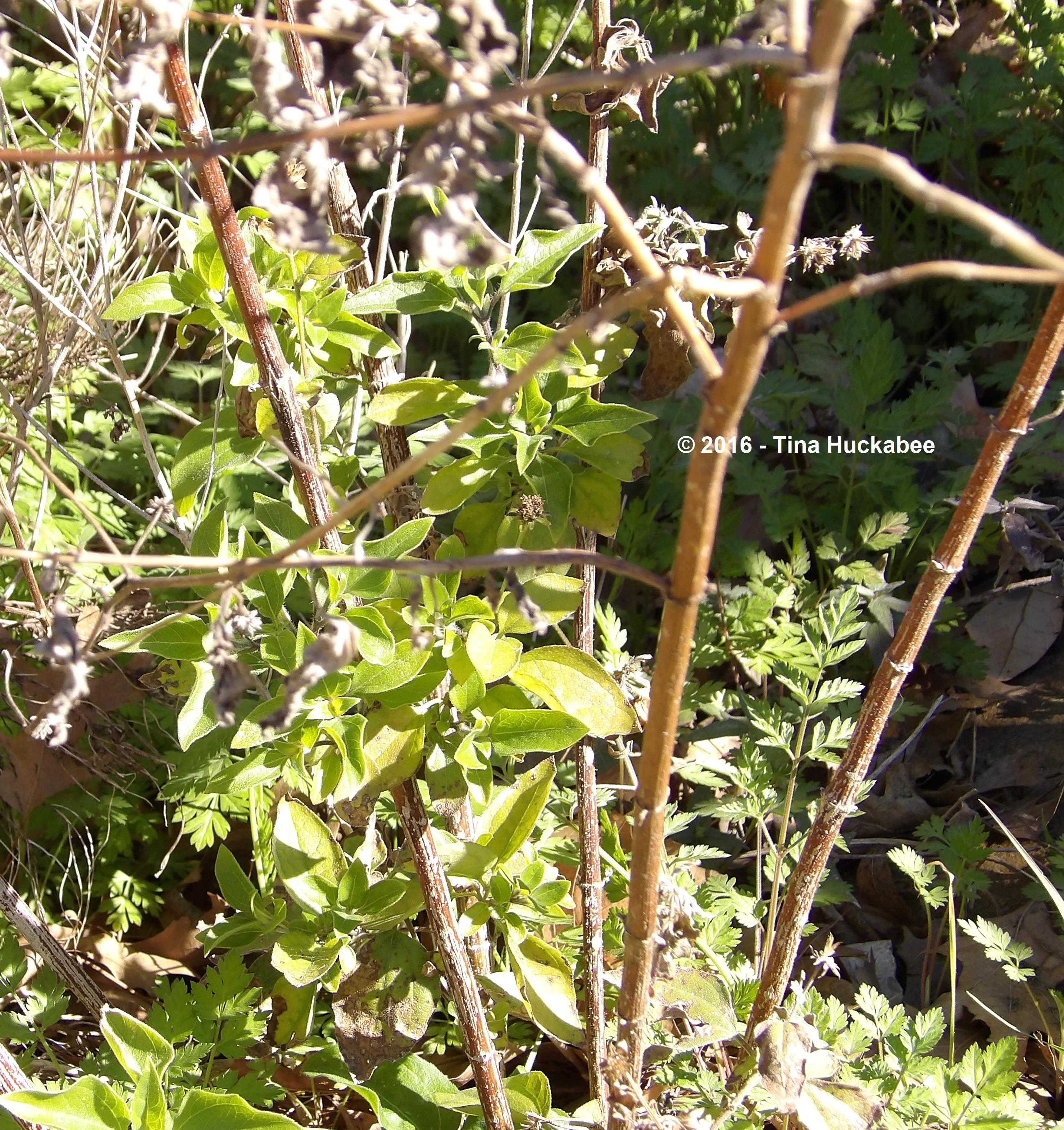
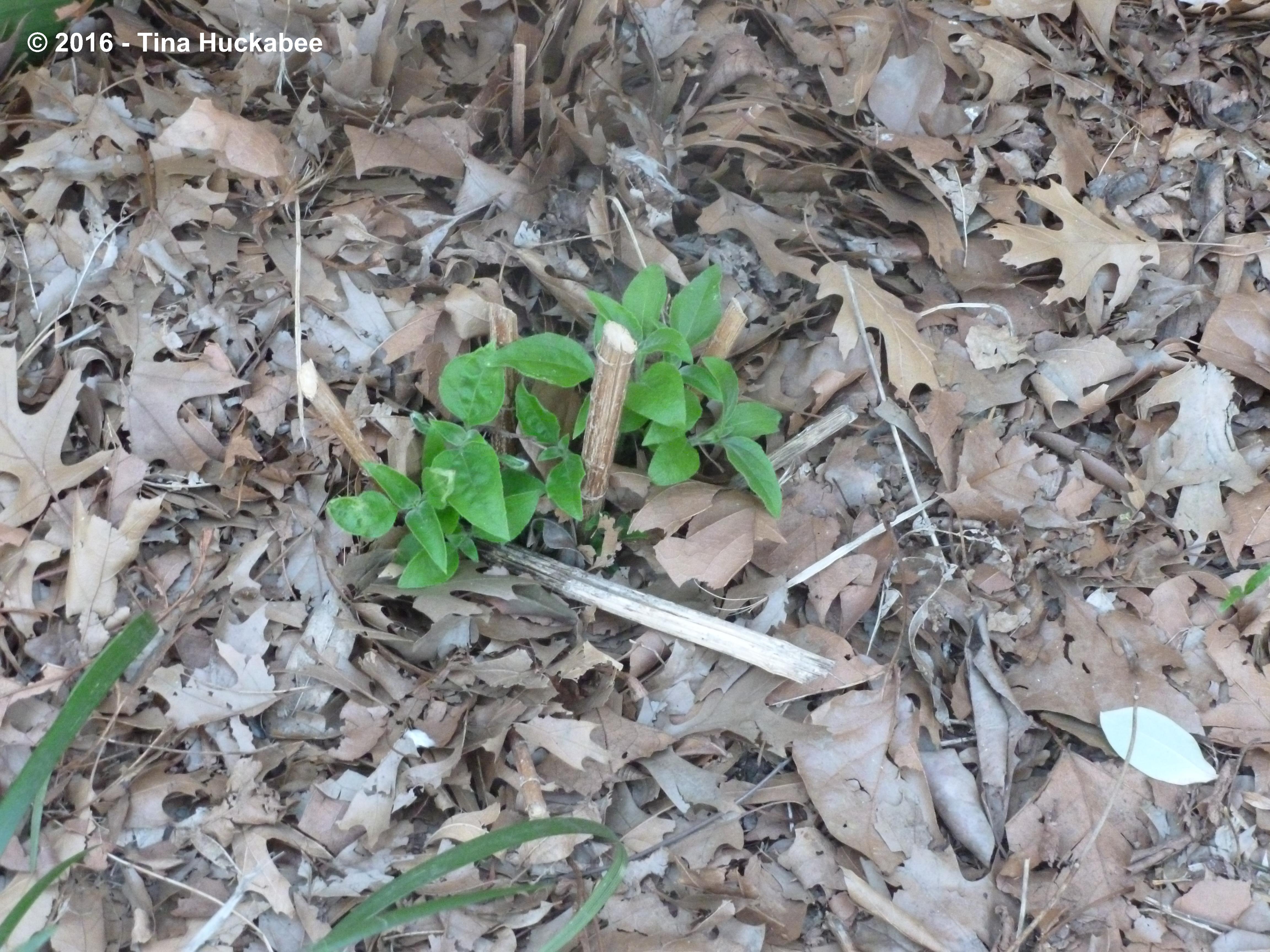
Throughout March and April, the foliage will return–vigorous and verdant–ahead of the rosy charmers.
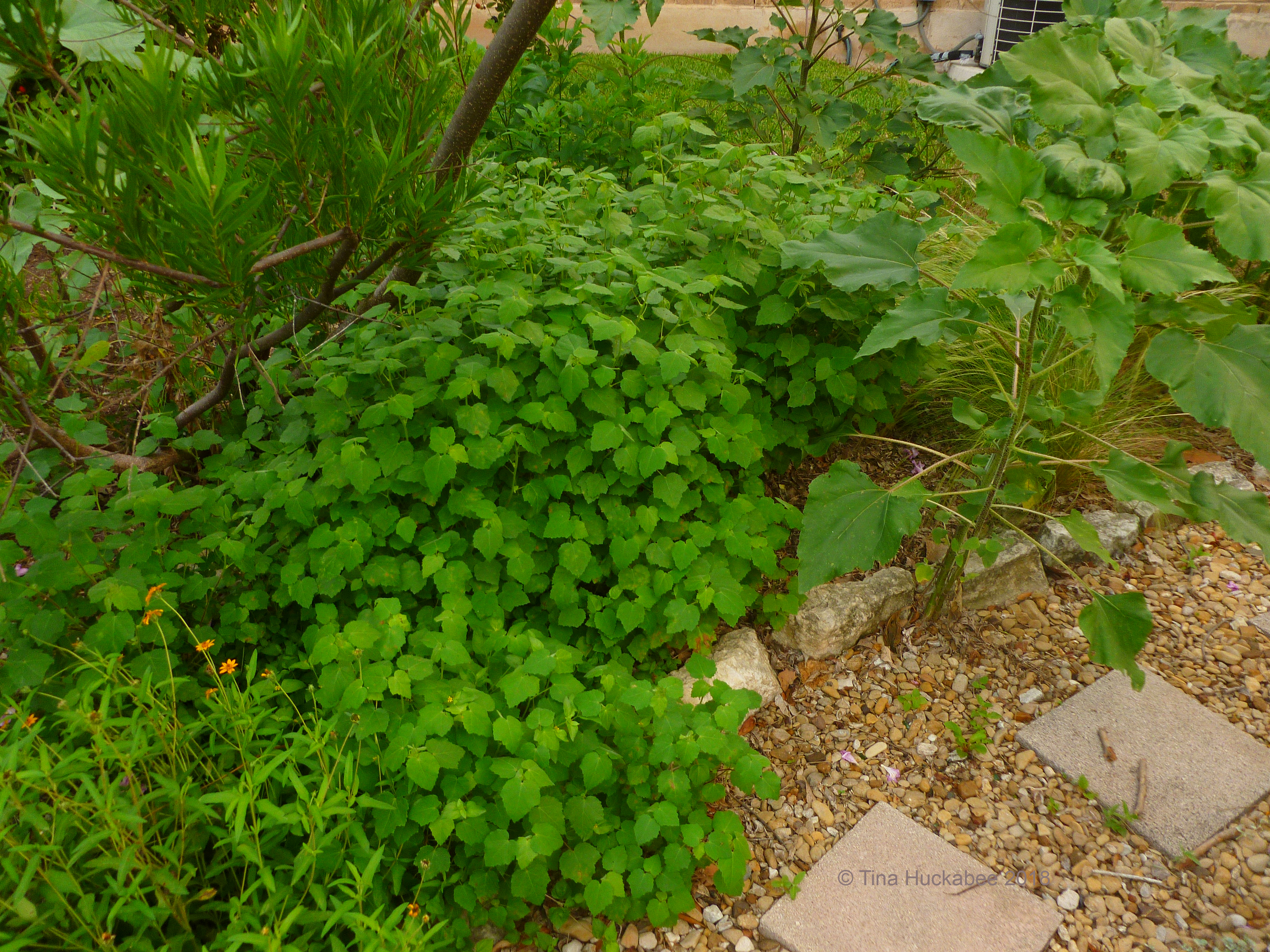
This is an April shot of several Rock rose shrubs bordering a walkway.

The first set of blossoms sprout in spring, blooming prolifically through summer, depending upon rainfall and /or irrigation.

Opening at dawn, the flowers remain available for critter pollinating and gardener viewing until afternoon, when they shutter their petals for the night.  As summer temperatures creep upwards, the blooms close earlier, often by mid-afternoon.  This is especially true of those growing in full sun. Well, why not??  It’s hot out there and closing the flower shop early in the day is how these plants conserve moisture during the dry, toasty summer months.

Because Rock rose produces masses of flowers, with heaps of seeds following, I typically prune a second time, by about one-third, sometime between  May and late June, depending upon rainfall.  I do this for two reasons: one–to limit seed dispersion after blooming (read: a good, old-fashioned “dead-heading”);  two–to shape the shrubs and encourage new growth.  Rock rose blooms on new wood, and if the gardener prunes the shrub 2-3 times in the growing season, the plants look tidier.  That said, I’ve seen many Rock rose shrubs go unpruned during the growing season and the worst result is that they’re leggy and floppy and produce multitudes of seeds, resulting in more Rock rose plants.

That’s not a bad thing.
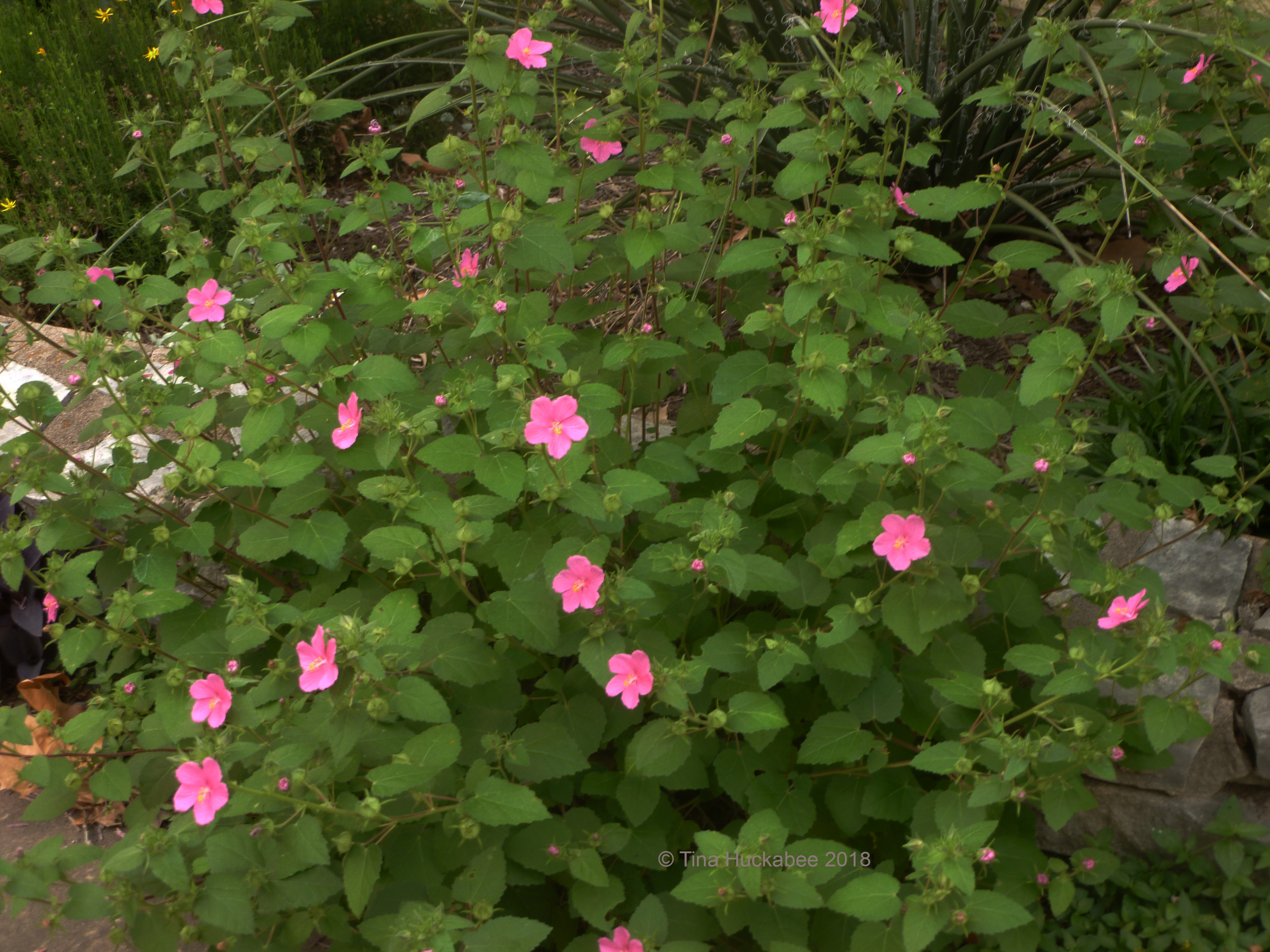
Flowers open alongside developing and developed seeds.

Rock rose is a stellar summer bloomer, even during drought, but the flower show  declines unless there’s measurable rainfall.  In the driest period of summer, supplemental watering is appreciated, but Rock rose is a water-wise plant and thrives without much irrigation.

I  prune once more in late August, ahead of the autumn rains, shorter days, and the promise of cooler temperatures.  This readies the pink wonders for their autumn show!
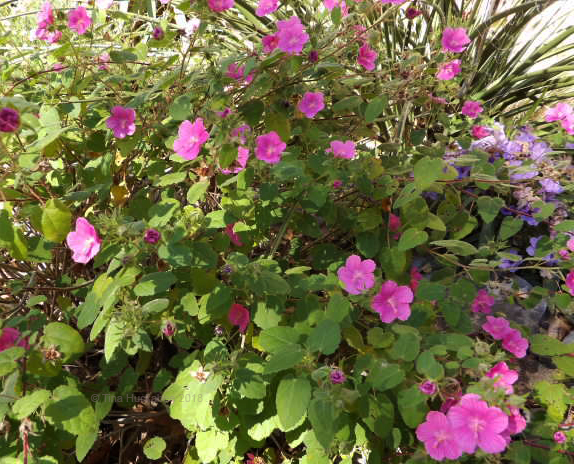
As the temperatures cool in autumn, the flowers still open early, but  stay open until sundown.

I like Rock rose planted in groups of three, or more.  This maximizes visual impact in the garden and pollinators have plenty of pink to partake of.   It combines beautifully with other plants:

Rock rose paired with Katie’s Dwarf Ruellia.

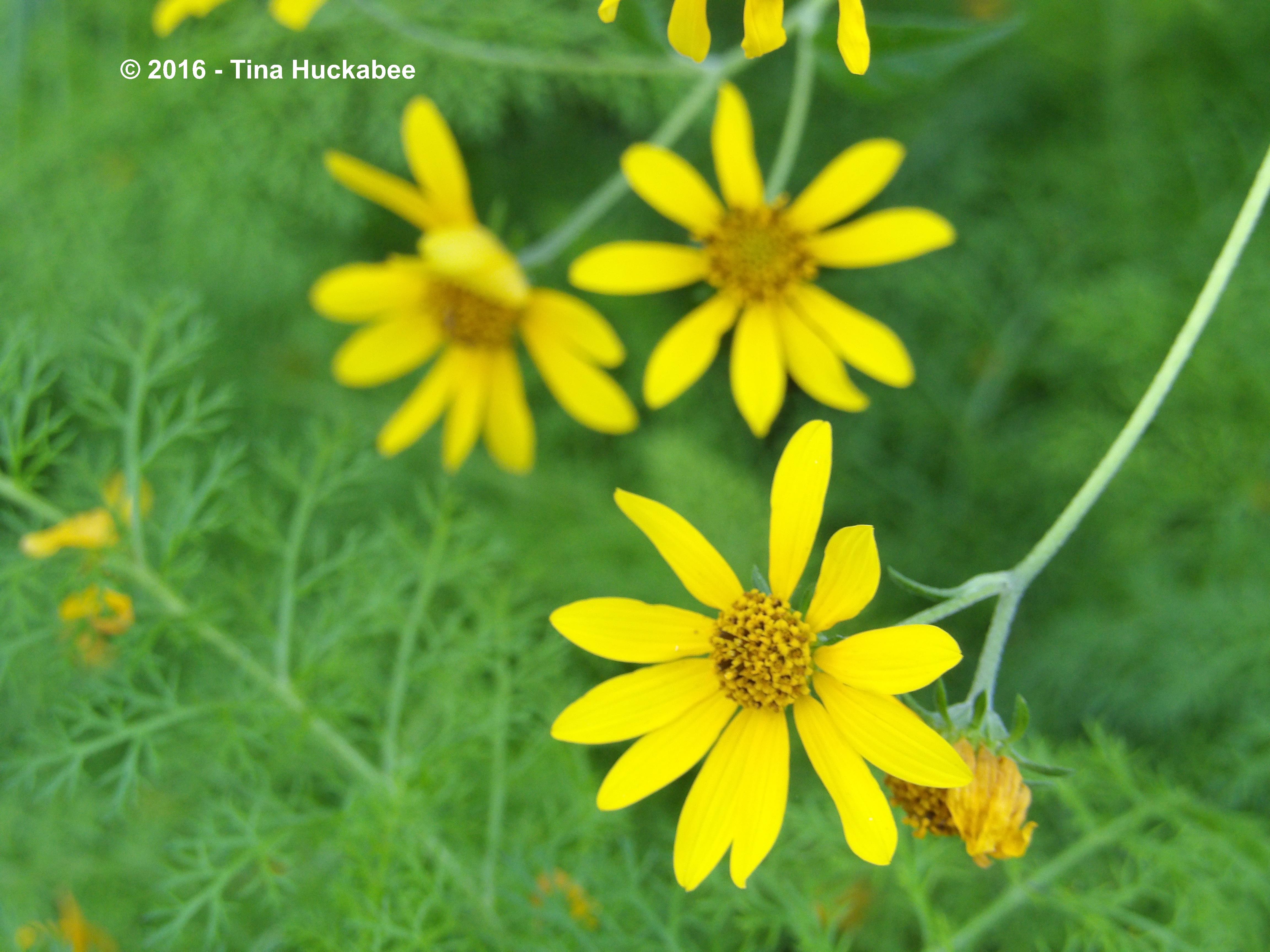
One of my favorite combinations is rosy Rock rose planted with sunshine yellow Zexmenia (Wedelia acapulcensis var. hispida).
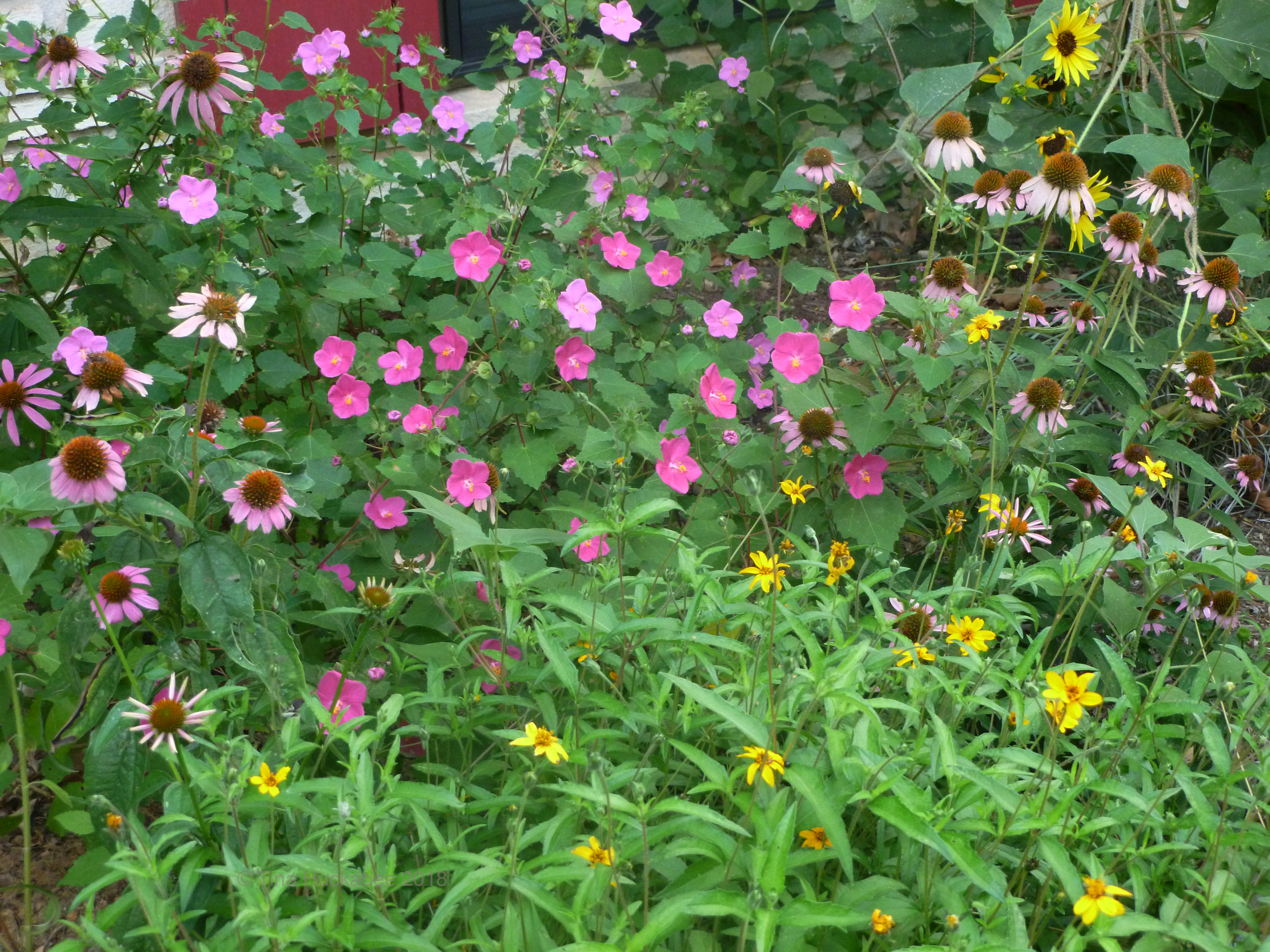
Rock rose, Zexmenia, and Purple coneflower (Echinacea purpurea) are a winning combo in spring and summer.


Rock rose performs best in full sun, but handles significant shade, with diminished flowering; I wouldn’t recommend it for deep shade. Shrubs growing in shade (and sometimes, those in sun) may develop mildew on the foliage.  Typically, the mildew resolves and other than temporary unsightliness, isn’t an issue, but it’s something the gardener should consider when choosing to plant this perennial.  When it happens, I prune offending shrubs and the foliage rebounds.

Another issue with Rock rose is its proclivity for seed production.  If you grow this shrub, you will have Rock rose babies each year.
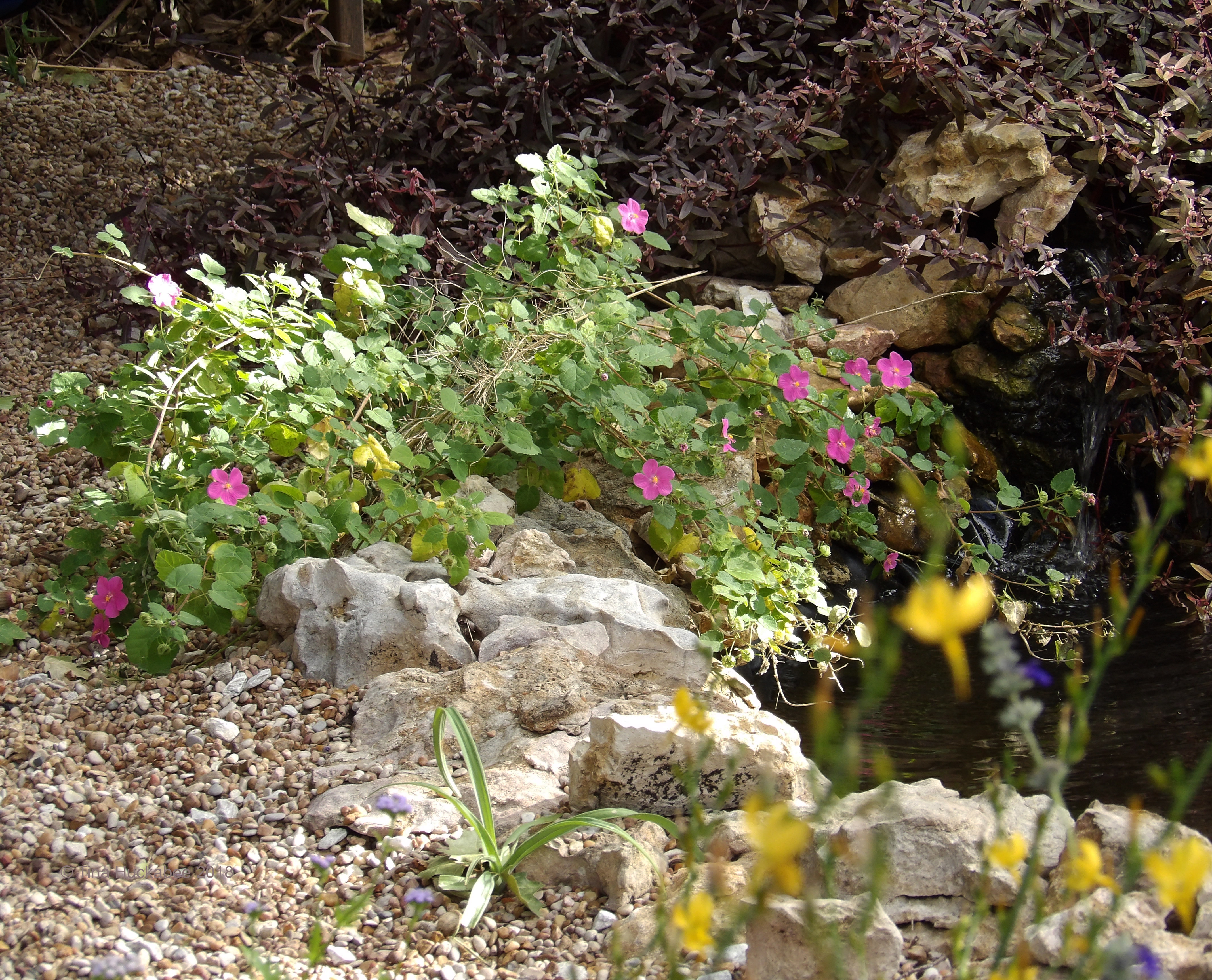
A volunteer Rock rose beside the pond.

The Rock rose which border the raised bed are all volunteers. They’ve grown out of the crack between the retaining wall and the driveway.  Even in full, west sun, these Rock rose shrubs never wilt.  Who knew that concrete is such an effective mulch?

You can pull seedlings and compost, transplant them elsewhere in your garden, or give them away.  More than likely, you’ll do all three of those things.  The seed bounty of this native plant–while annoying–is a gift.

From left to right:  two open blooms, a bloom about to open, a newly closed bloom with developing seeds, and in the background, a seedhead with seeds nearly ready to disperse.

When my shrubs develop this many seedheads, I grab my Felco pruners and have at it!  I prune the branches as little as 4-5 inches to as much as 12 inches, all depending upon how big I’ve let my shrubs get (ahem!).  The goal is new stem growth and a new set of blooms.

The seeds in the middle of this photo are ready for dispersal.

Newly formed seeds (green) and mature seeds (brown).

As well as providing for pollinators, I have witnessed various finches nibbling at the seeds, so Rock rose’s worth for wildlife extends beyond the blooms.

For those gardening with deer guests, Rock rose is only mildly deer-resistant.

Rock rose is not a long-lived shrub.  I’ve read that individual plants live approximately 5 years.  I can vouch that some of my plants have died at around 5 years, but most have lived far longer.  If you notice foliage turning yellow and  withering as if needing water (and you’ve irrigated or have had rain), don’t try to save the plant–it’s done.  Your best bet is to yank it out and plant one of the many seedlings which have popped up in your garden.

Rock rose is a lovely, tough, blooming shrub providing plenty for pollinators and birds.  It requires some maintenance during the growing season in the form of regular pruning, but is otherwise an easy-peasy plant to grow, with rewards aplenty.

Spring:
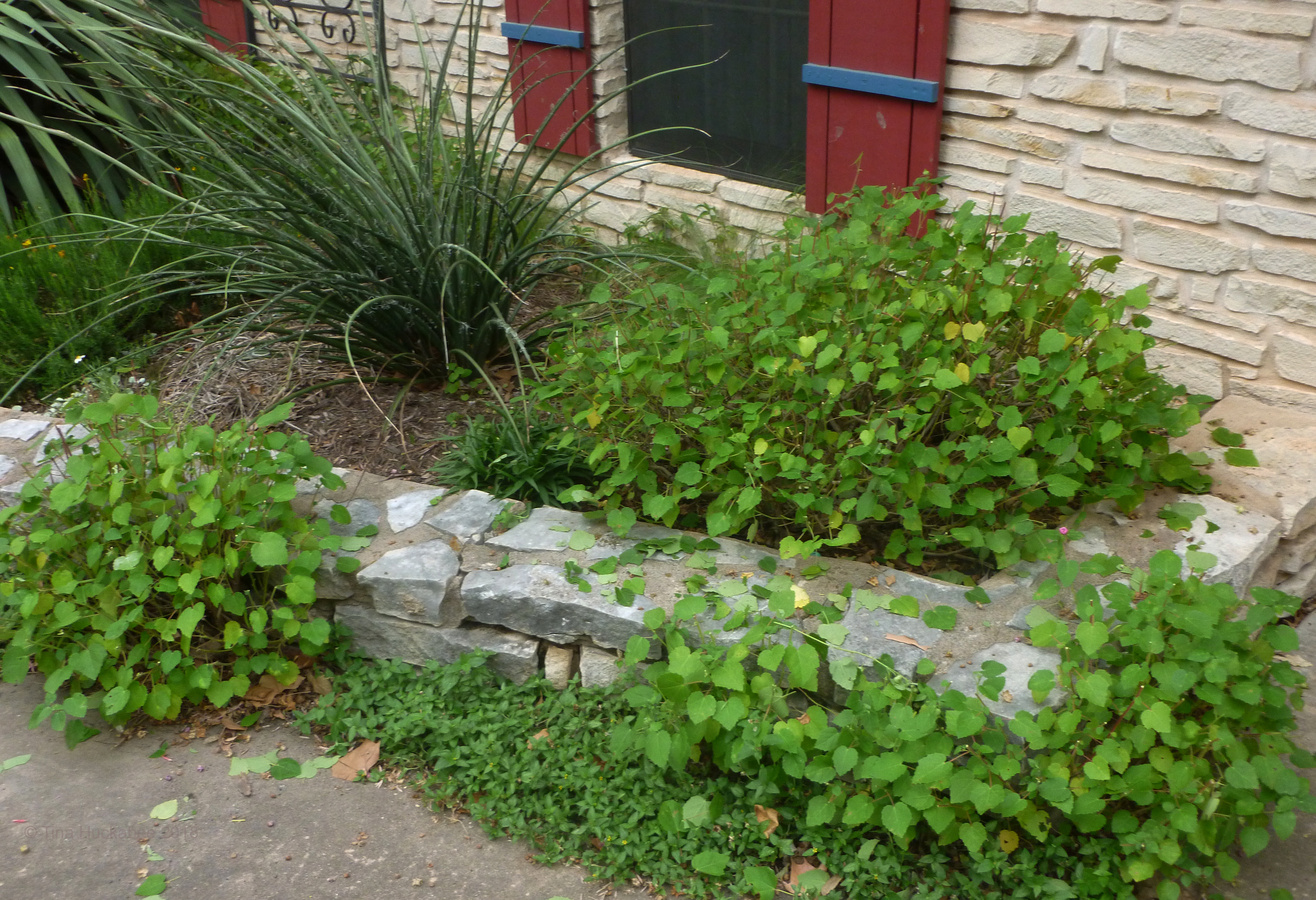
 

Summer:

Fall:


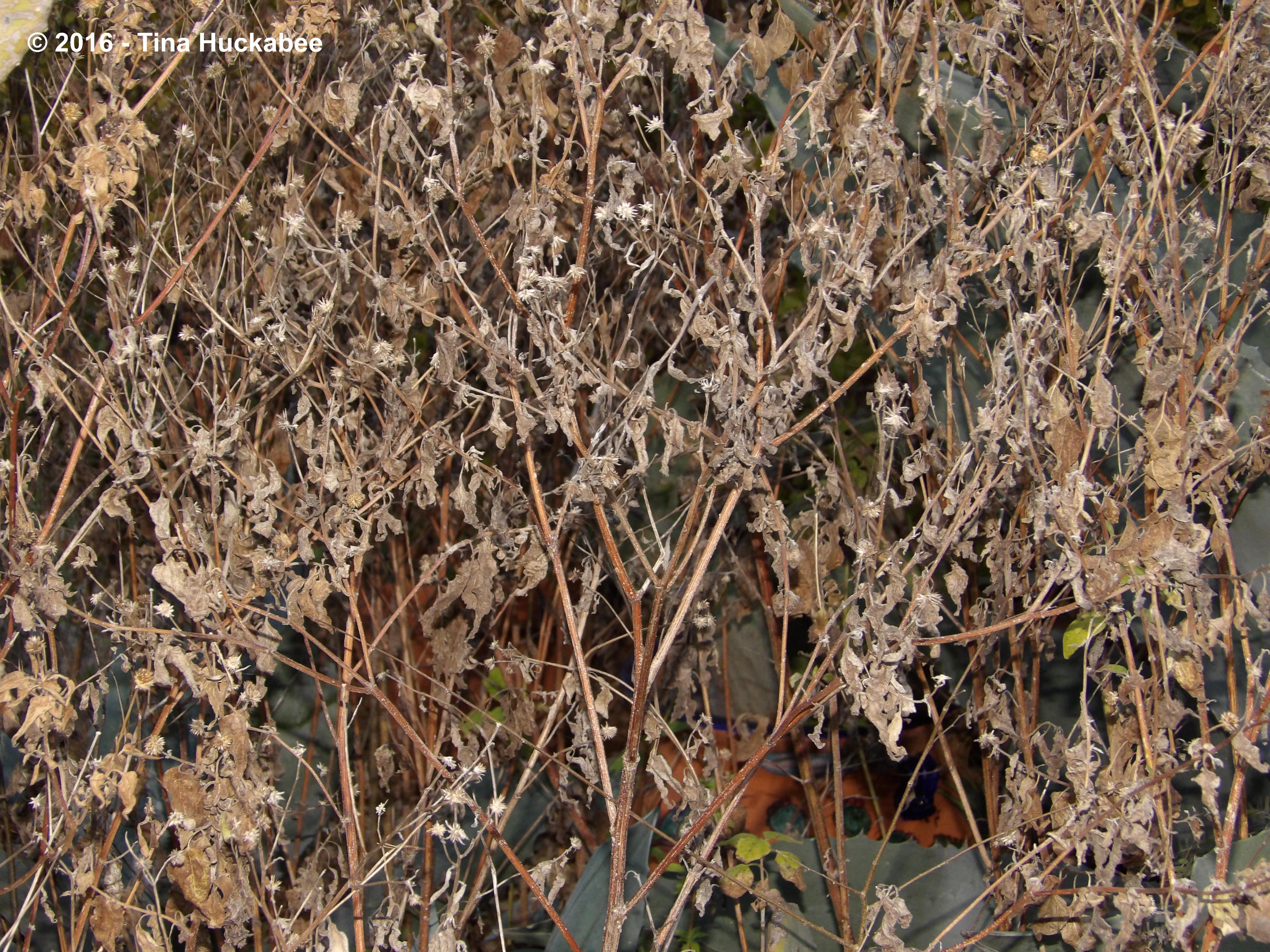
Winter:

In mild winters, the foliage remains. In colder winters, more of that foliage will disappear.

Goldeneye (Viguiera dentata): A Seasonal Look

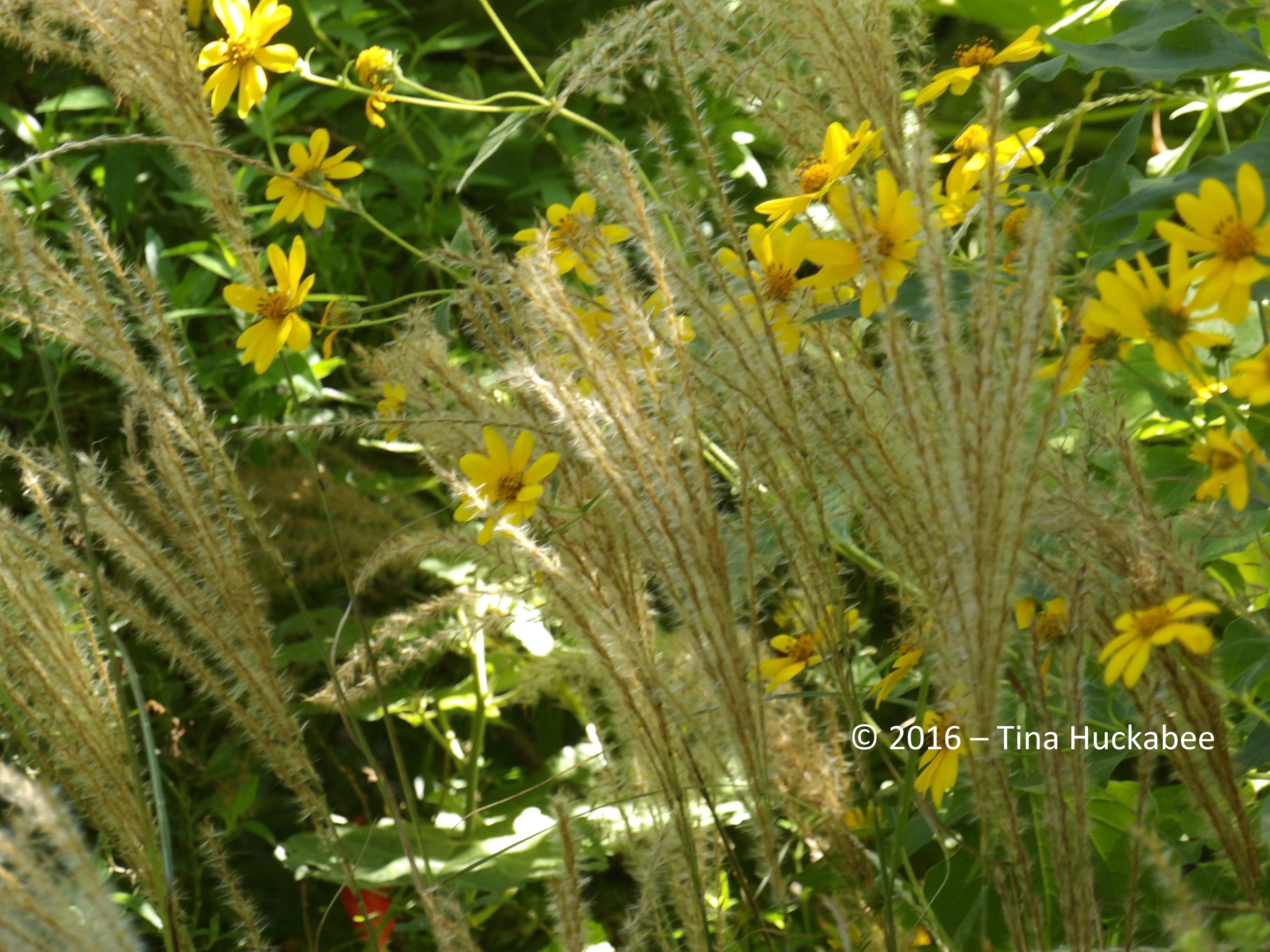
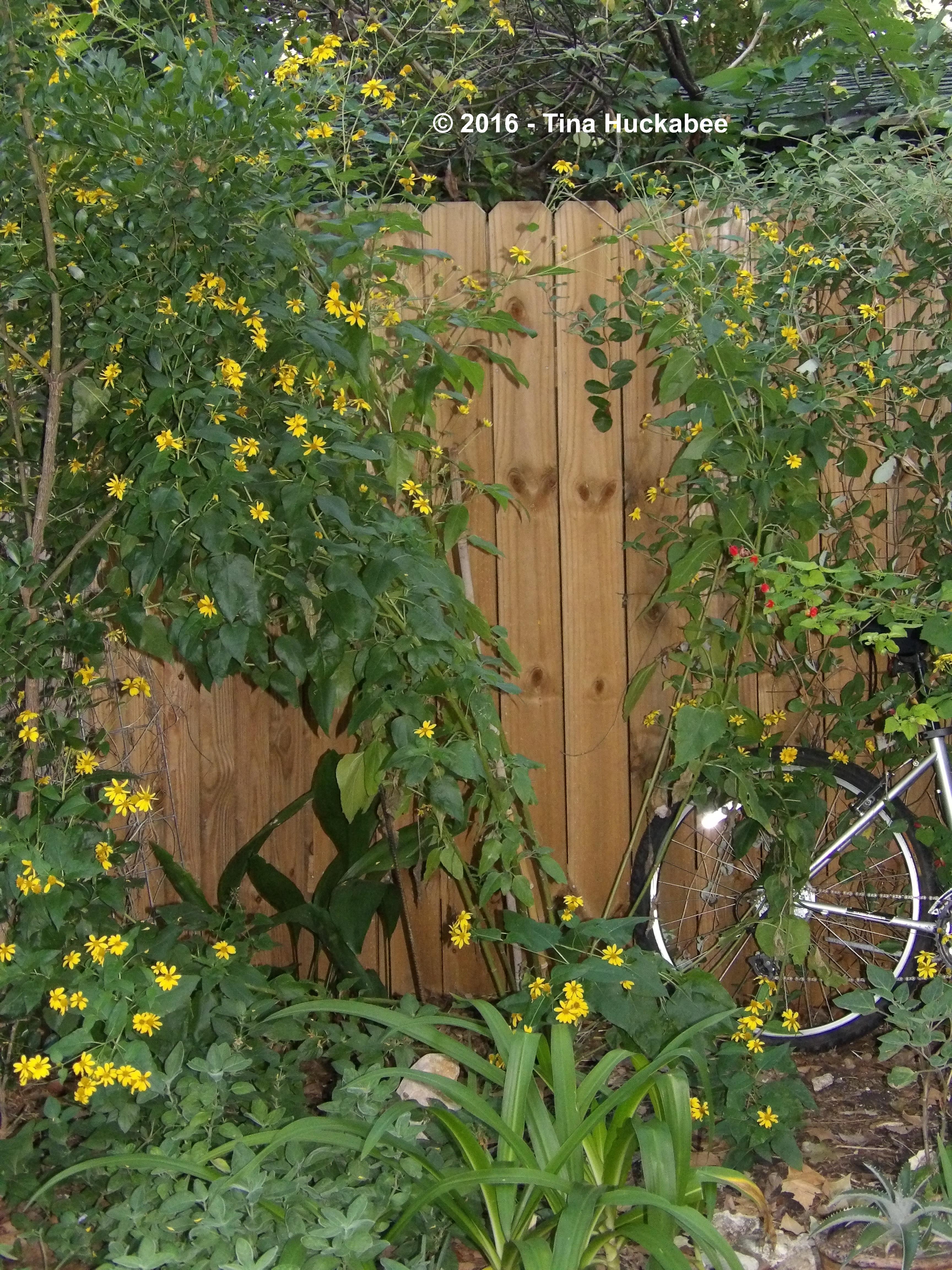
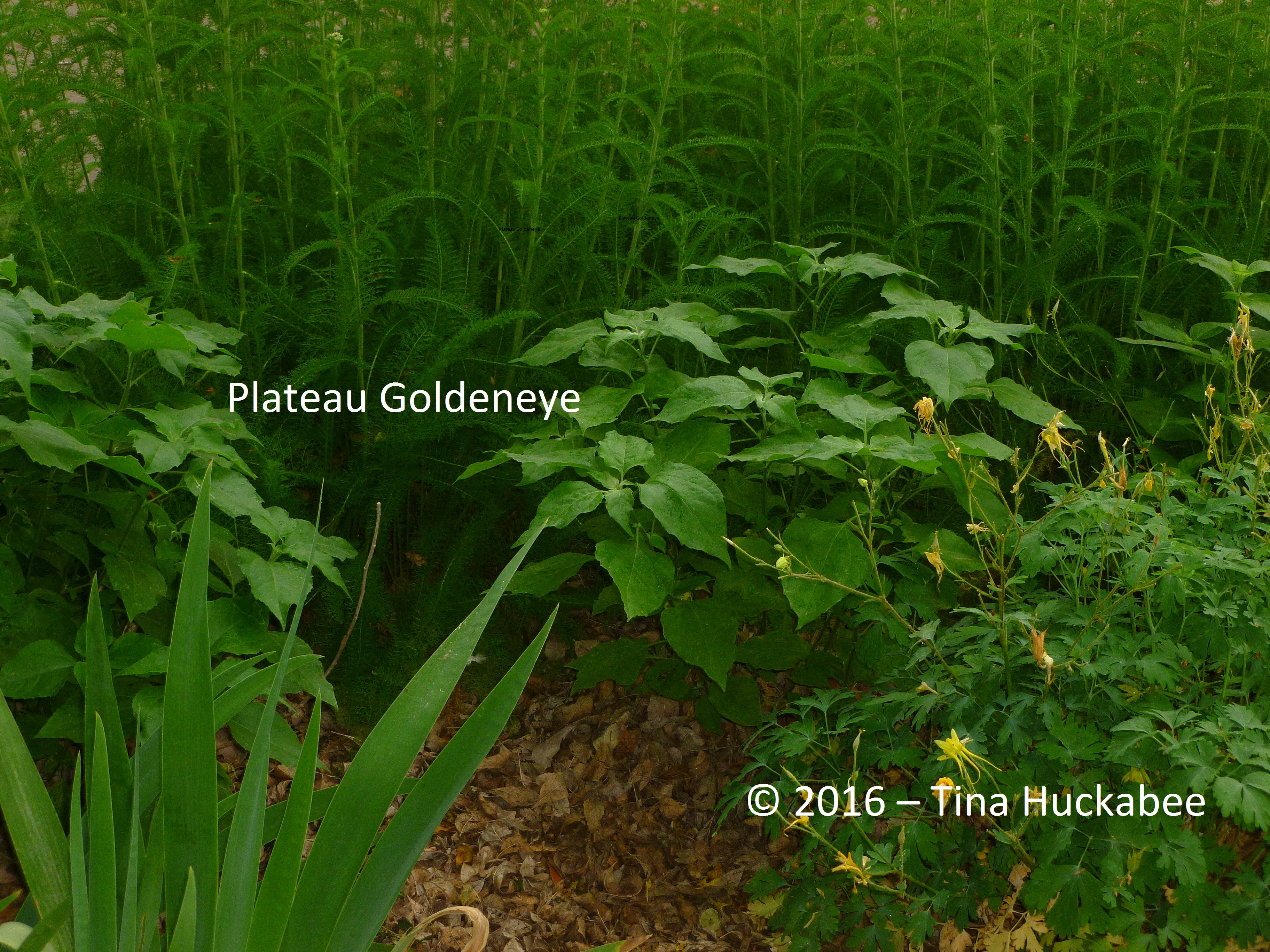
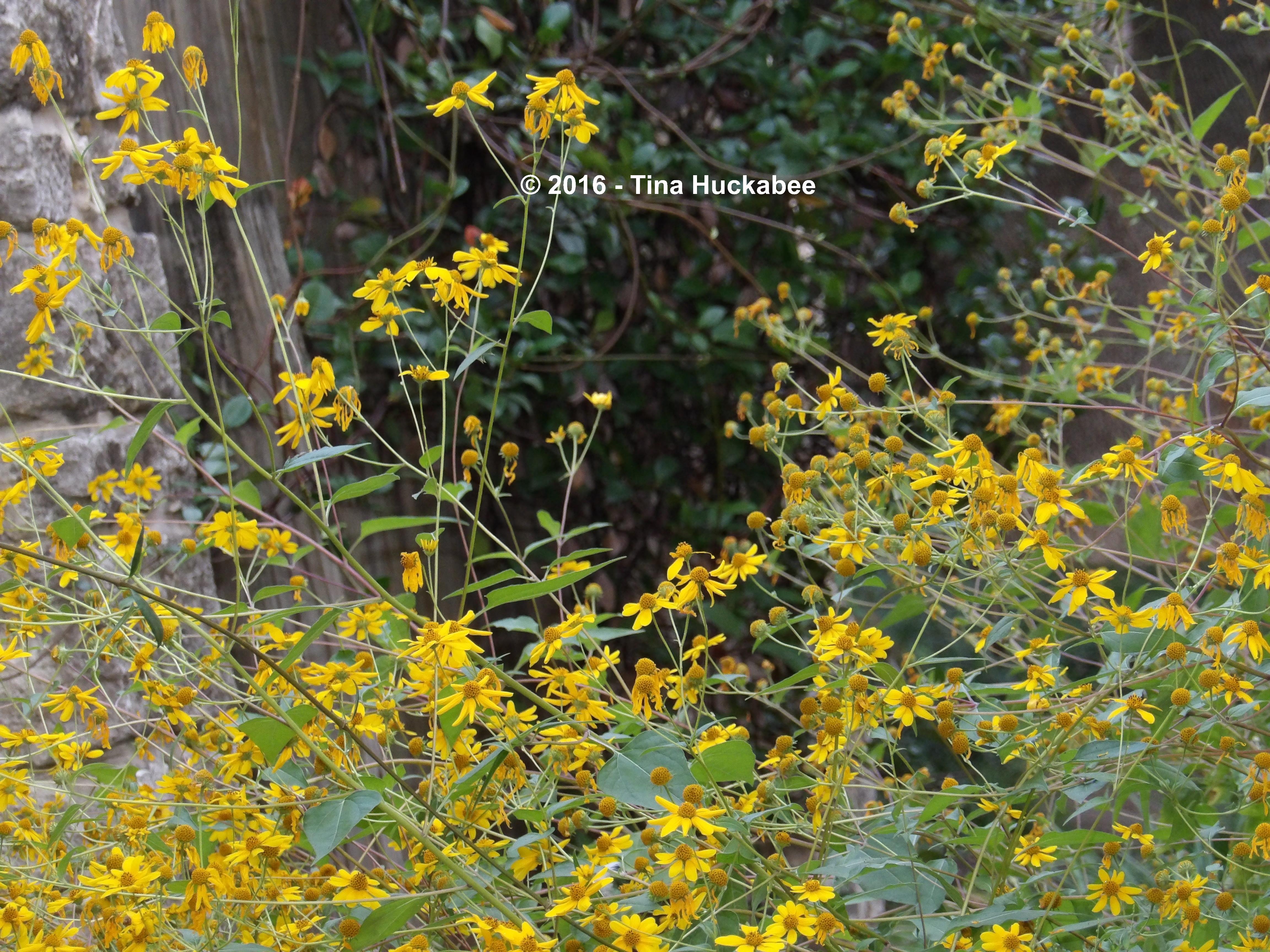
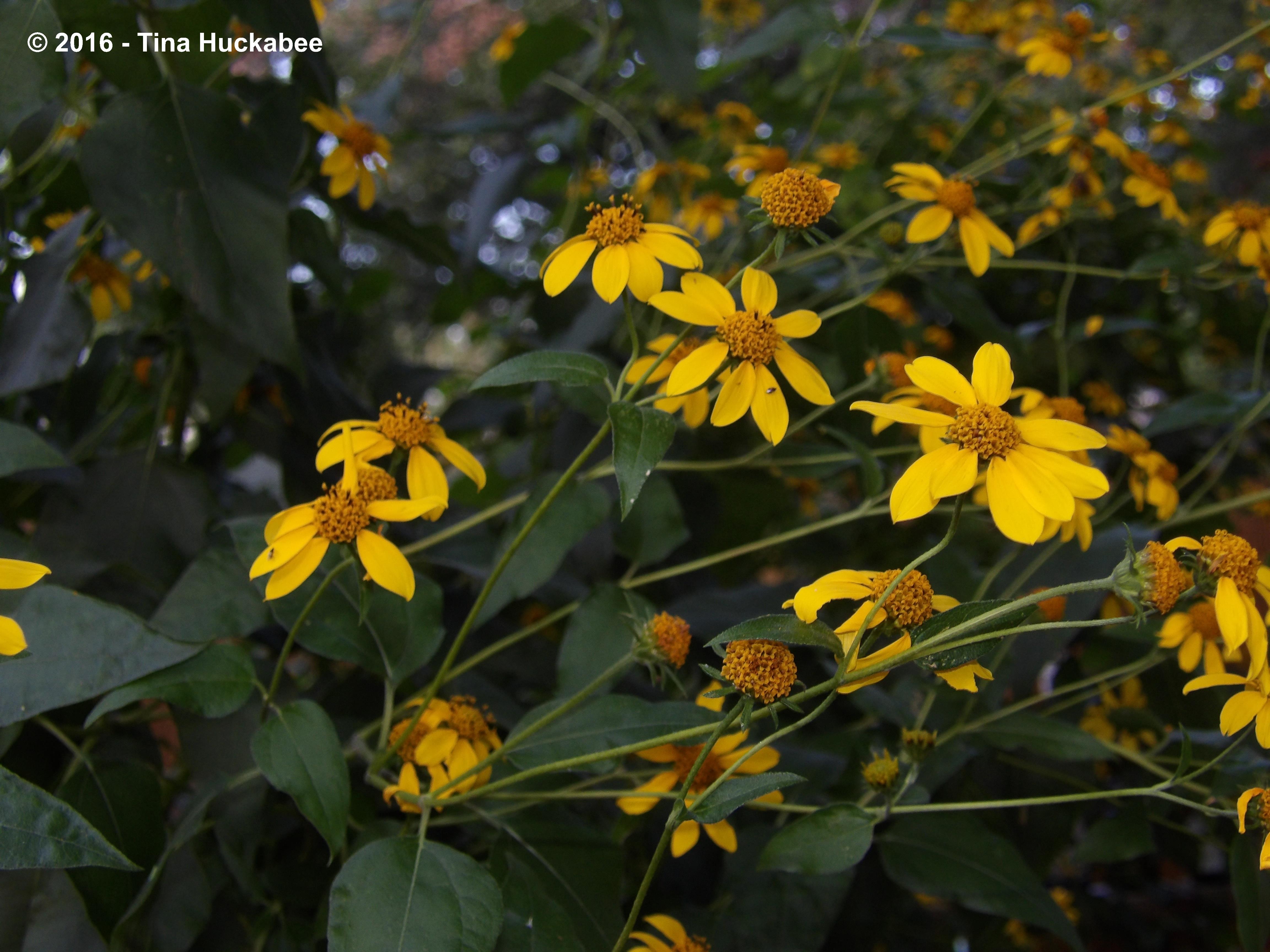
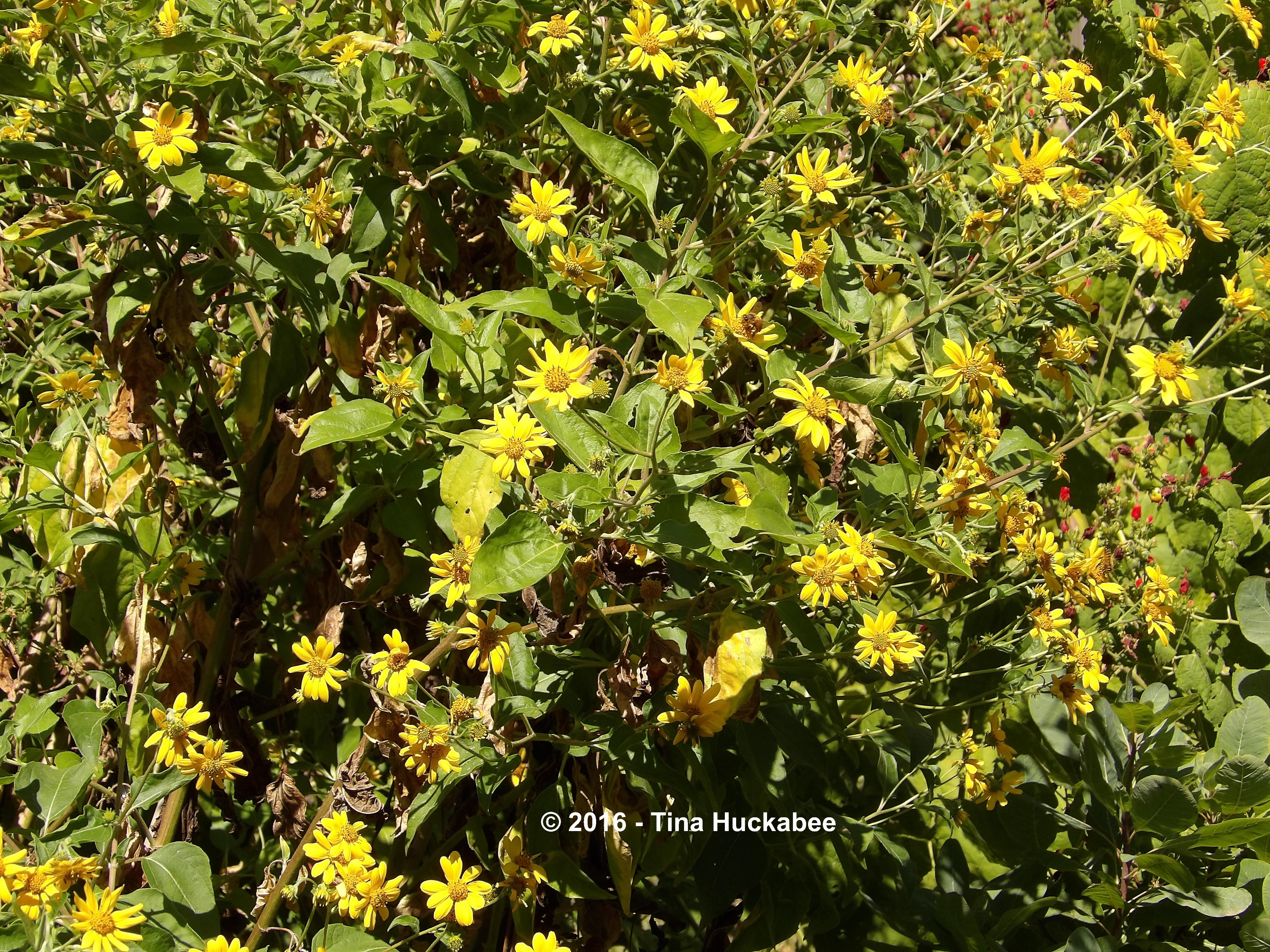
In November 2015, I wrote about the golden glory that is Plateau GoldeneyeViguiera dentata, or as I usually call it–Goldeneye.

RICOH IMAGING

A native to the Southwestern U.S., specifically Arizona, New Mexico and Texas, Plateau Goldeneye is a bright and sprightly autumn bloomer which graces the likes of roadsides, plains and valleys, and home gardens equally.

IMGP2126.new

In profiling this perennial for A Seasonal Look, I realize that it has a limited area in which it grows naturally, but it’s an interesting plant and if you garden in its range, it’s one that dry-garden gardeners should grow, especially those who wish to attract a range of wildlife.

IMGP1896.new

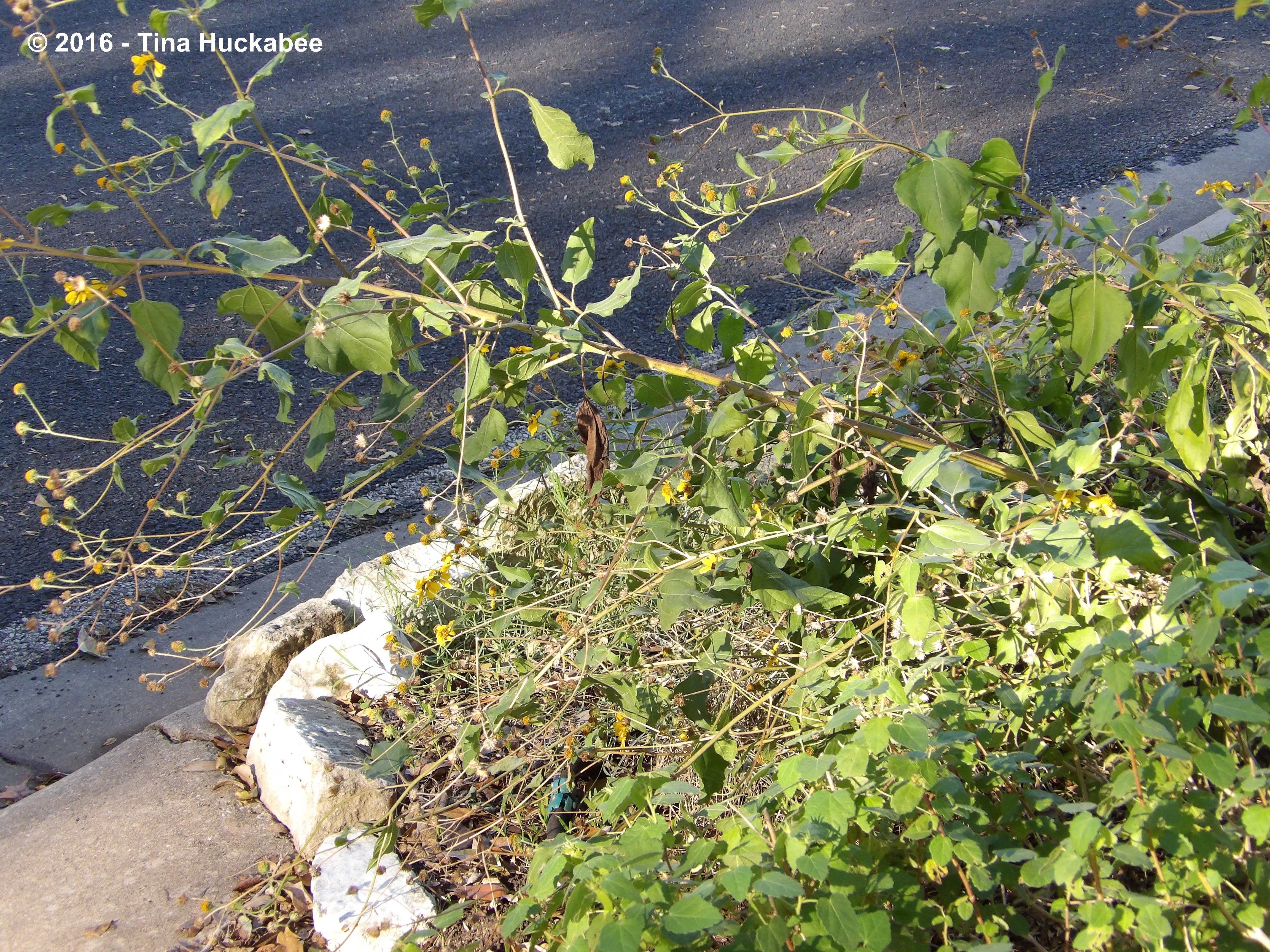
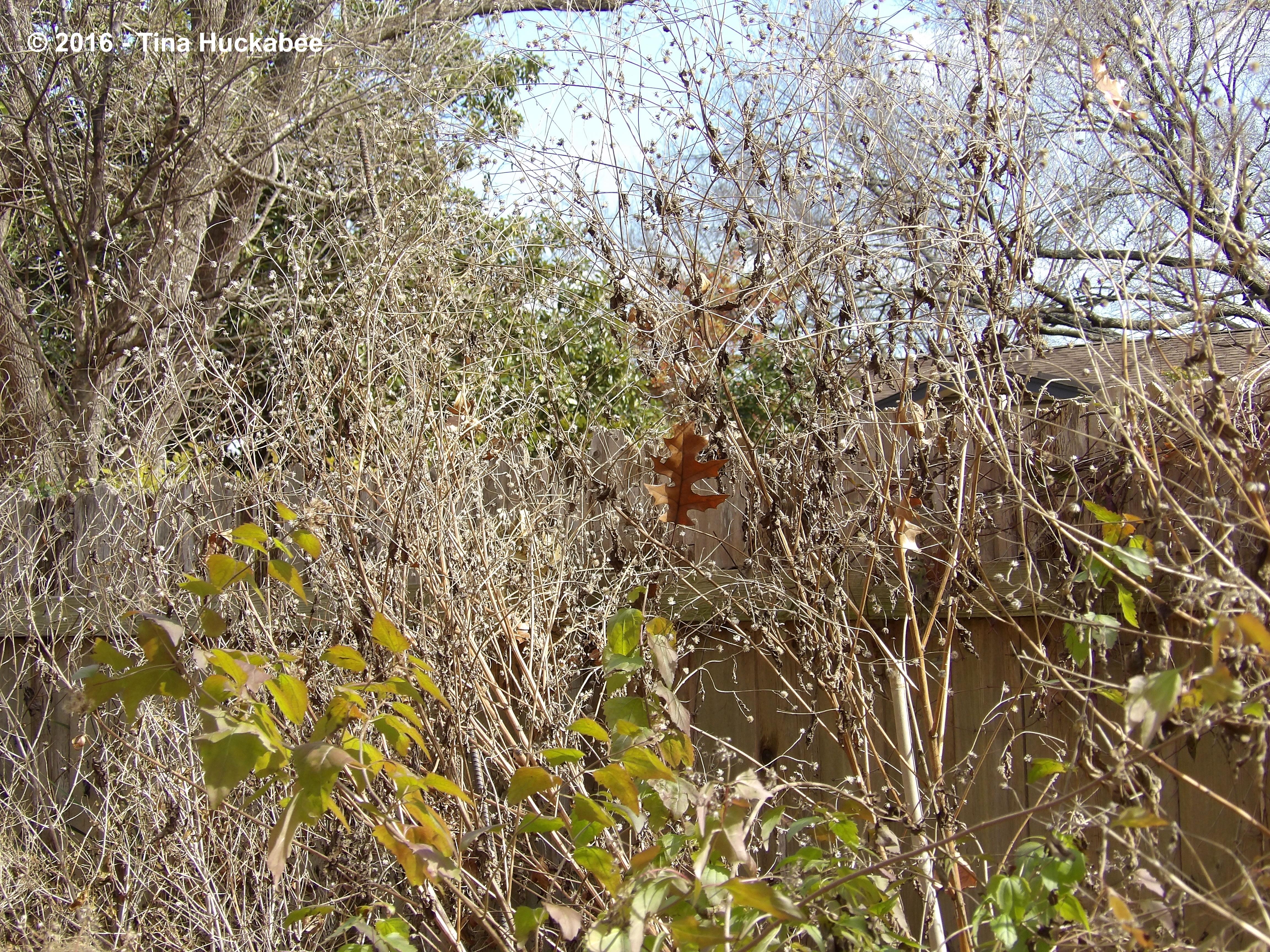
In winter after a  reasonable freeze, the plant is done for the year.

RICOH IMAGING

In milder winters (like that of 2016) there may still be some green leaves and canes,

IMGP4412_cropped_2958x3142..new

…and a flush of new growth in January or February.

I typically  leave my Goldeneye for as long as possible because I’ve read that finches will take strips of leaves for their nests as they prepare for spring breeding season.  Also, there are often seeds available throughout much of winter for birds to snack on–and they do partake of those seeds.  So, in spite of its skeletal, freezer-burned appearance, I keep mine around until mid-to-late February, or as long as I can stand to look at them.

IMGP4278.new

However, there arrives a day when it’s time to whack back the remains of the year’s growth.  And whack I do.

P1020761.new

Does that make me whackadoo??

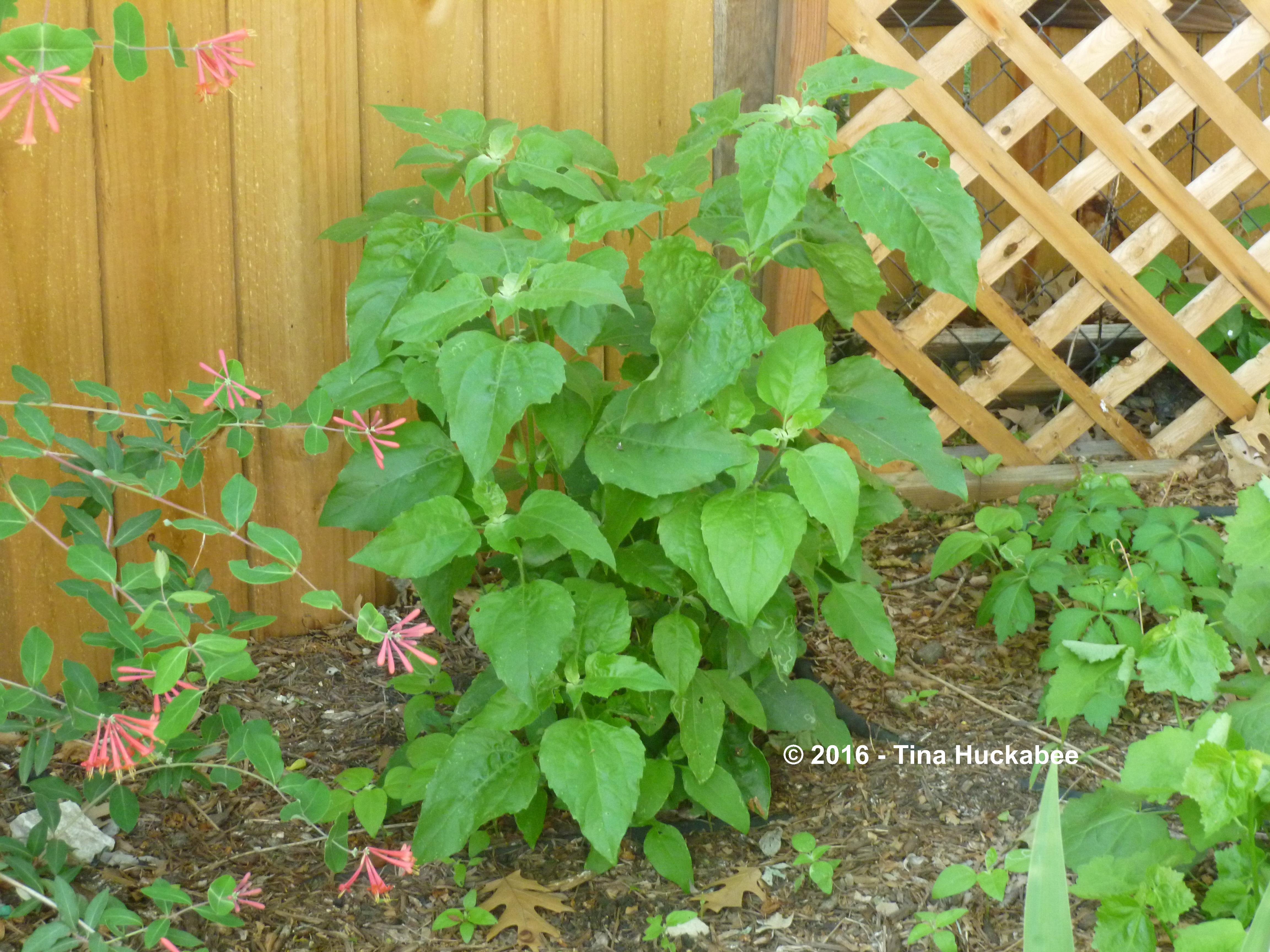
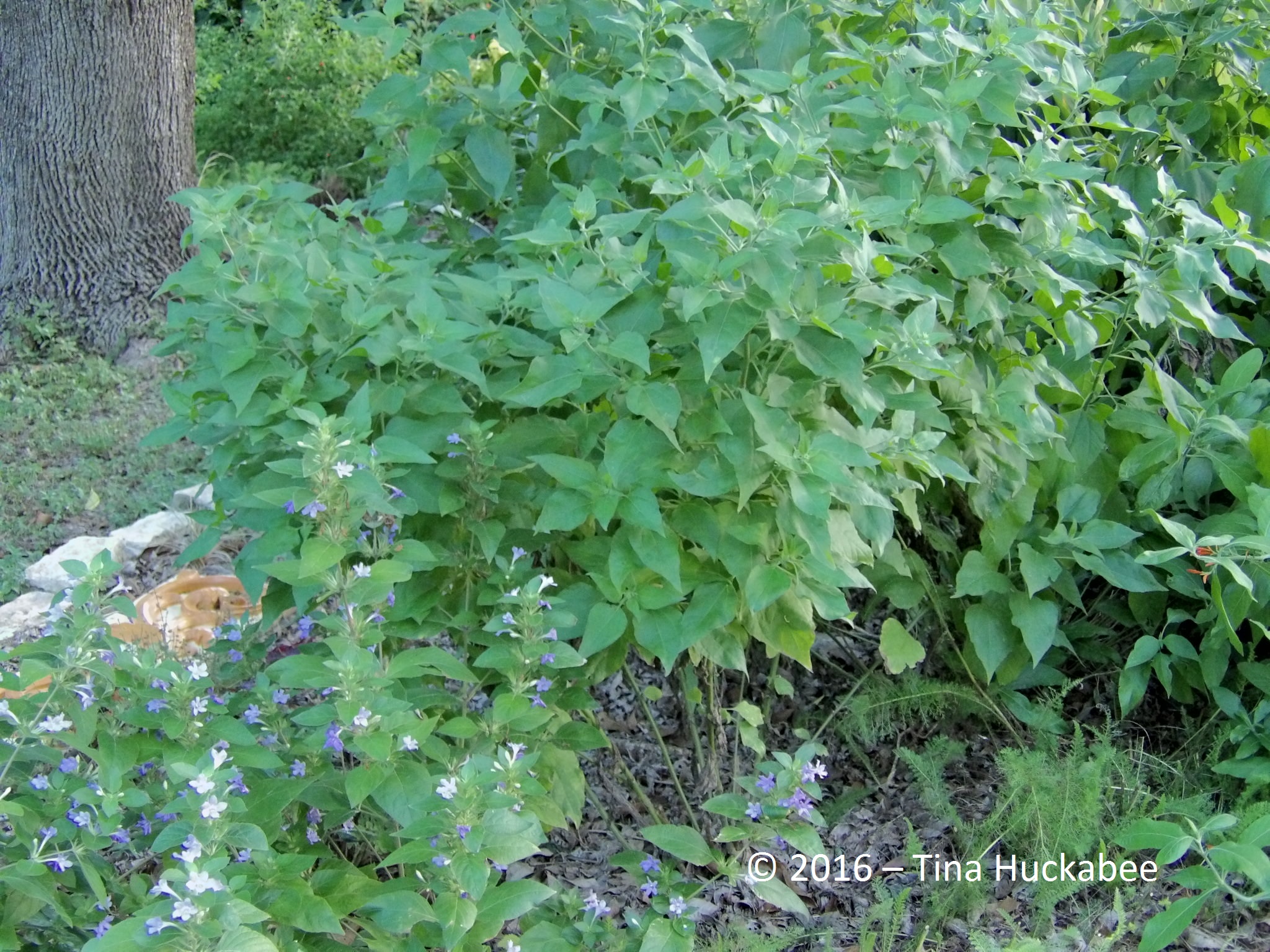
Here in Central Texas, in normal winters with regular freezes, Goldeneye remain dormant until March. It’s a nice garden design practice if planted with evergreens or more structural plants as companions, but the dormant period isn’t all that long. Once spring warmth envelops Central Texas, the arrival of Goldeneye foliage is not far behind.

P1020760.new

P1030351.new

Plateau Goldeneye belongs to the Asteraceae family and shares the qualities of other sunflower-type perennials–lovely, cheery blooms coupled with  somewhat large, sand-papery leaves.The leaves are attractive for most of the growing season–they’re a rich green, especially in early spring, then border on grey/green later in the growing season.

RICOH IMAGING

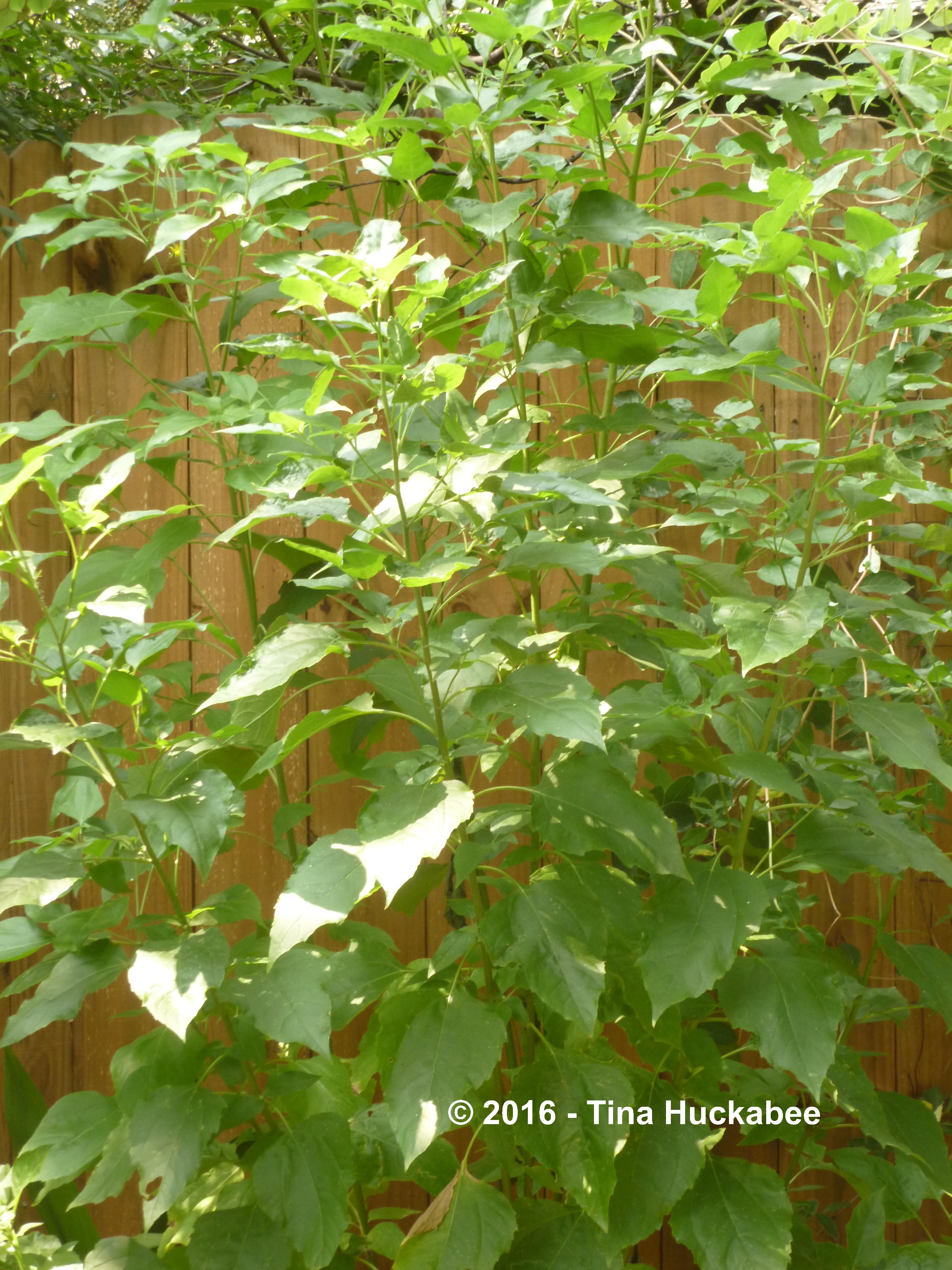
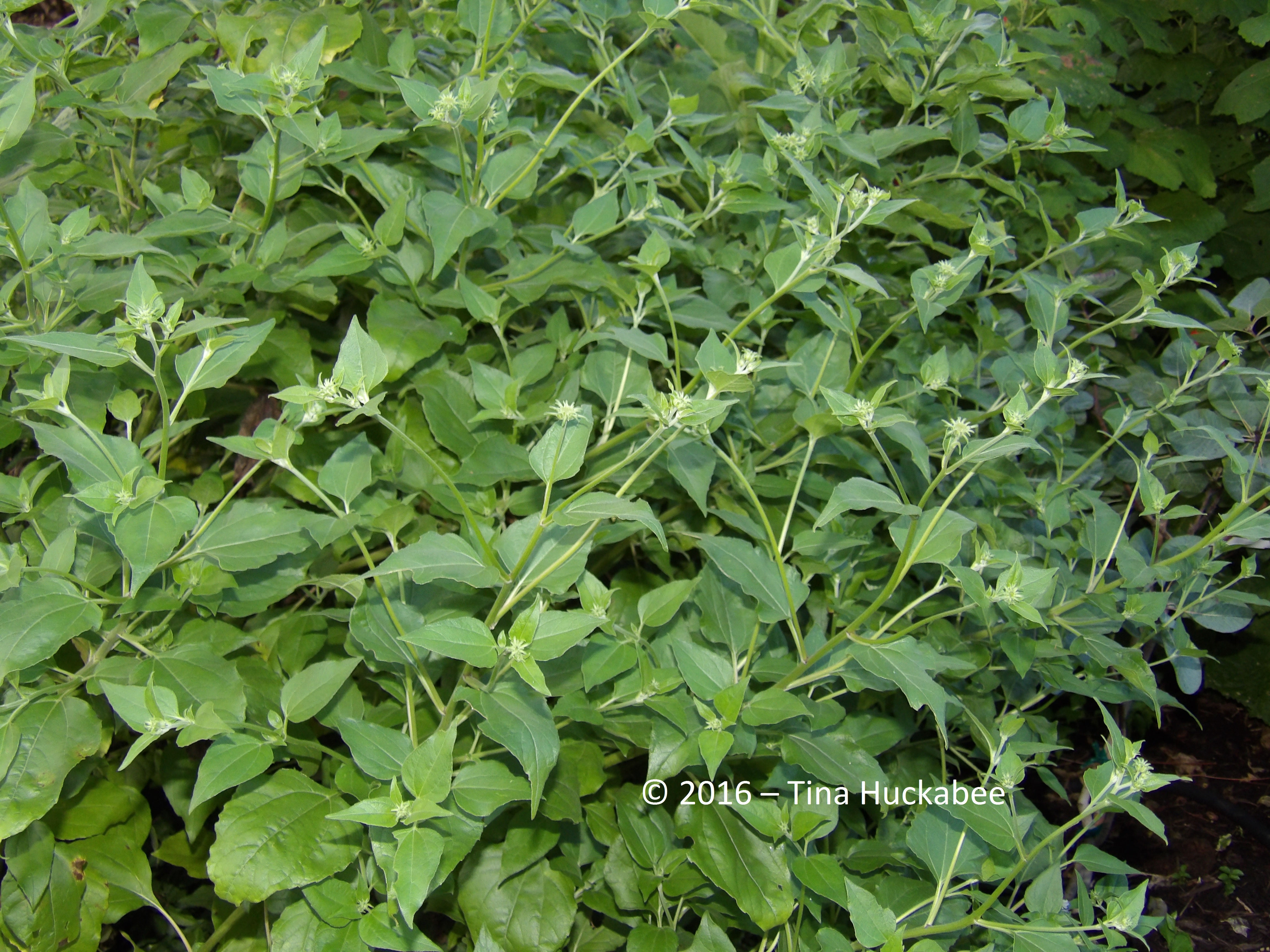
The leaves grow opposite and full along the stems of the plant, leading to a bushy, upright growth habit for the individual plant. Throughout spring and summer, the plant grows,

P1040416.new

P1060038_cropped_2320x3507..new

…and grows.

P1050982.new

Goldeneye  plants  typically reach 3-4 feet tall in my gardens, but can grow as tall as 6 feet.

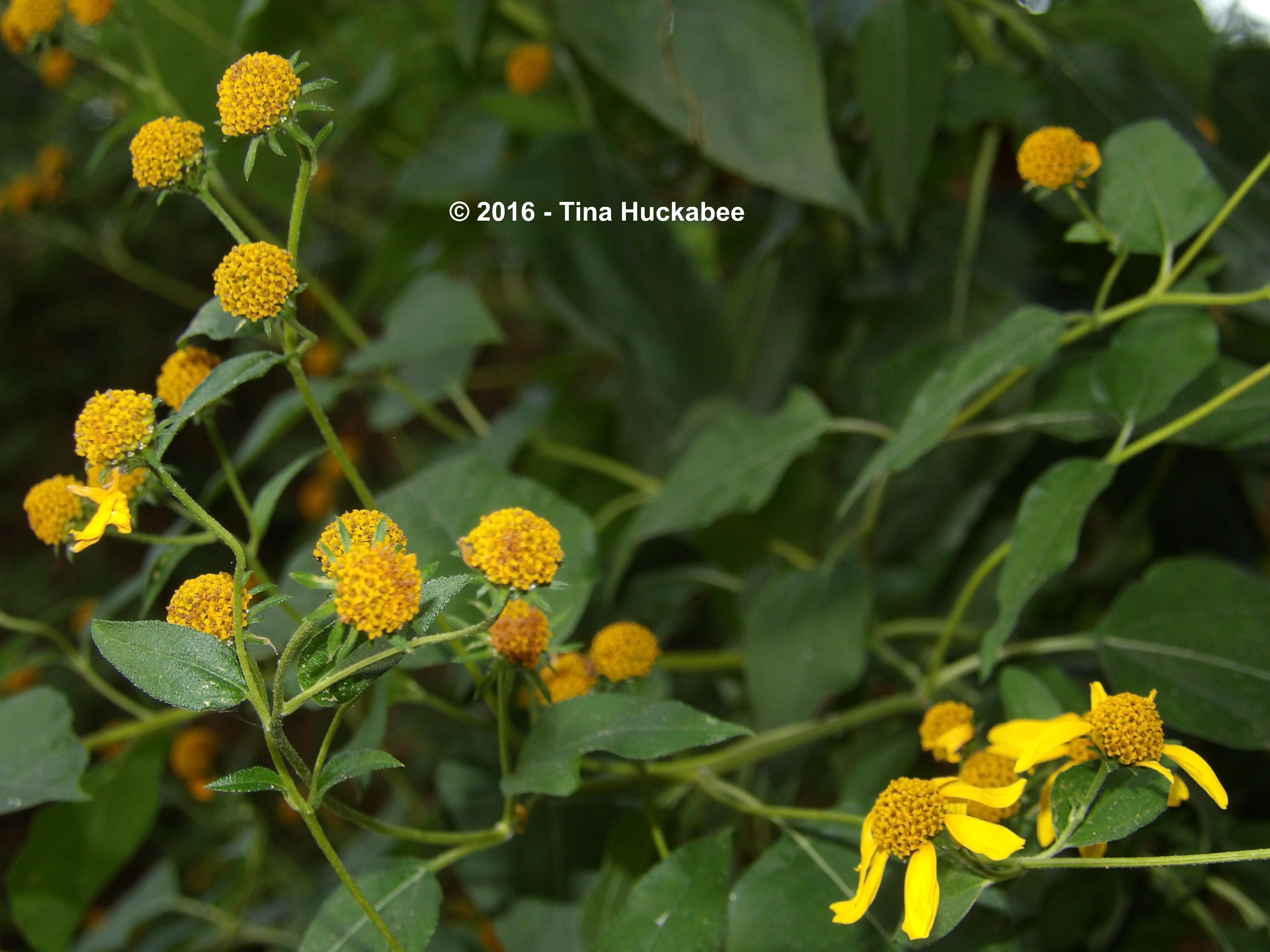
It’s exciting when I spy my first Plateau Goldeneye bloom, usually in August, but sometimes as early as June or July.

RICOH IMAGING

There are a smattering of blooms in summer, but only enough to hint at the beauty to come.RICOH IMAGING

In September, though the days are warm, the light changes and the buds of Goldeneye form.

RICOH IMAGING

The anticipation of those shorter autumn days, combined with the flowering Goldeneye, are  just compensation for the long Texas summer. And well-worth waiting for!!

IMGP1248.new

RICOH IMAGING

RICOH IMAGING

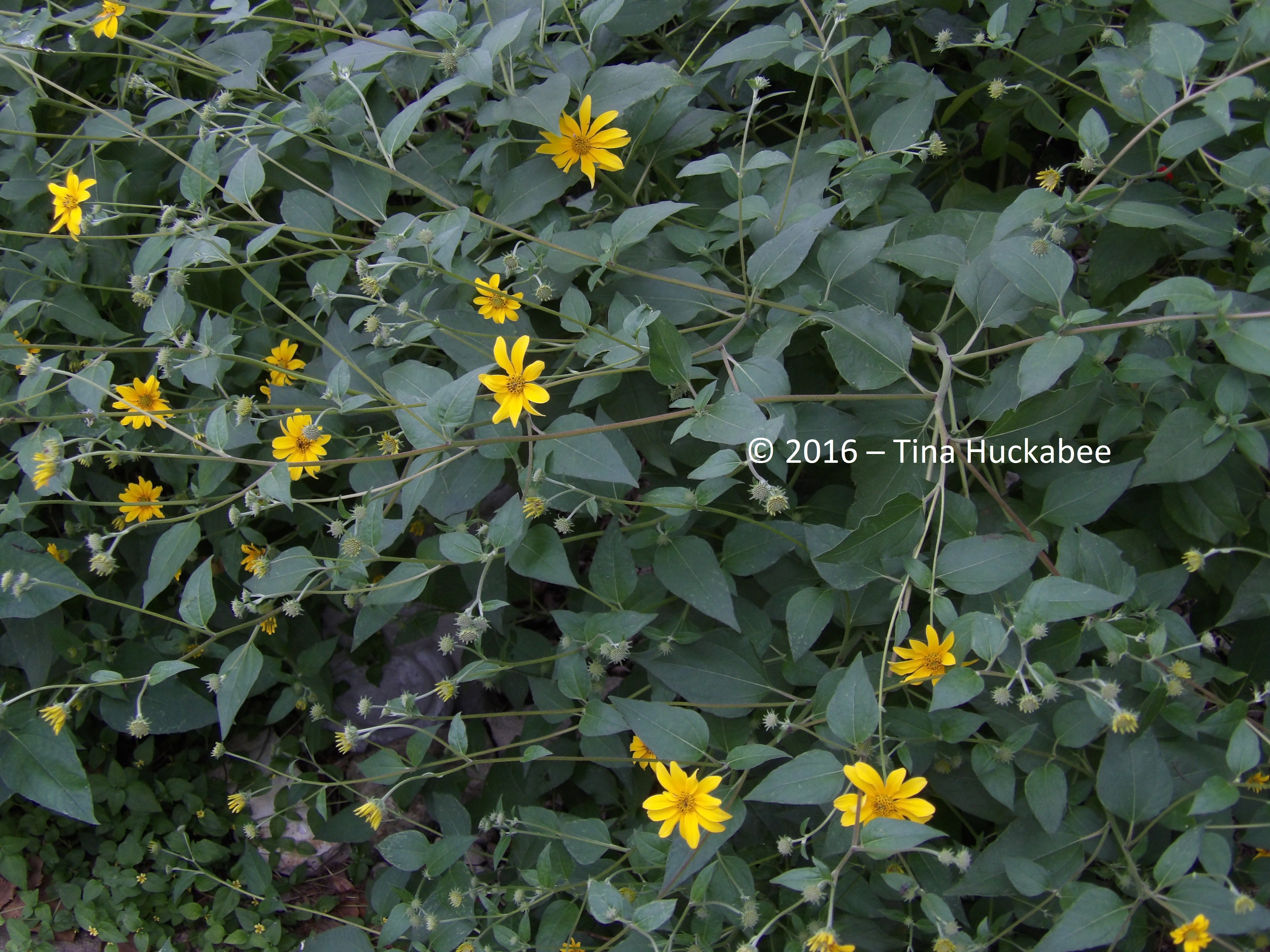
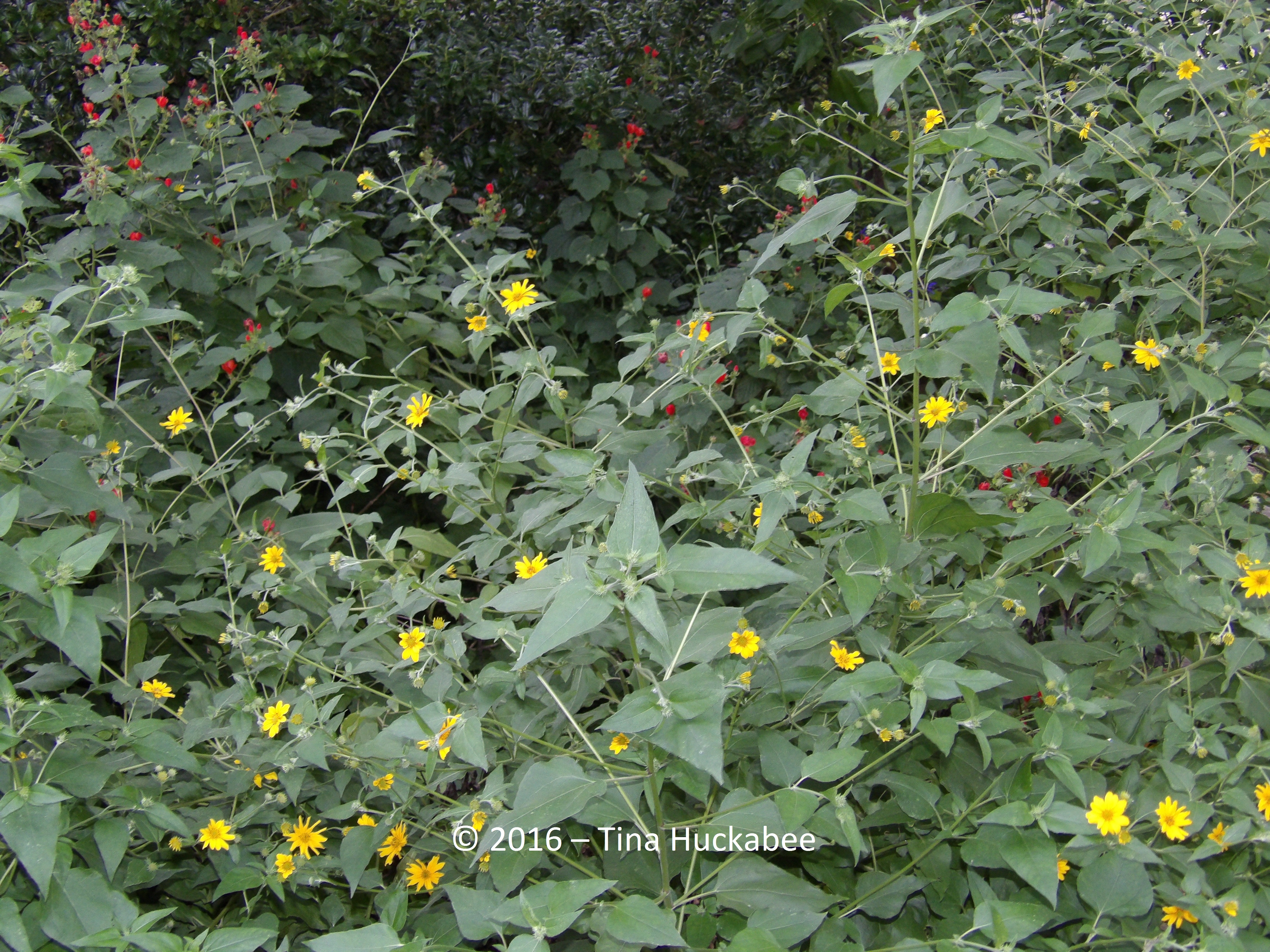
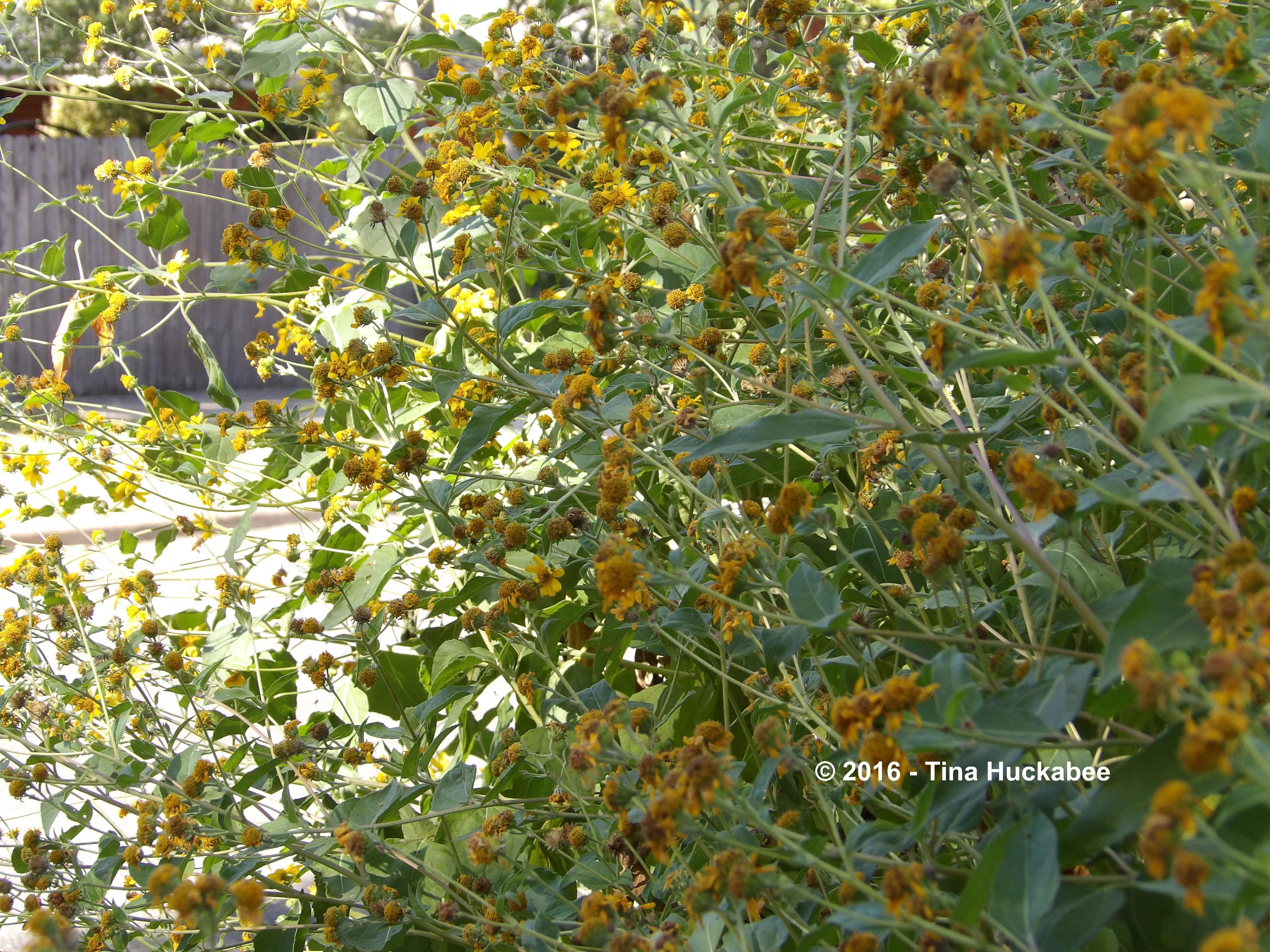
BOOM!!  Plateau Goldeneye flowers appear and brighten the world.

A variety of bees nectar and gather pollen from this nurturing plant.

IMGP2214_cropped_3036x2396..new

IMGP2213_cropped_3821x2917..new

Small carpenter bee, Ceratina sp., working a Goldeneye bloom.

Small carpenter bee, Ceratina sp., working a Goldeneye bloom.

Goldeneye is also the host plant for two butterfly species, Cassius BlueLeptotes cassius and Bordered PatchChlosyne lacinia.  I’ve seen Bordered Patch butterflies and their eggs on Goldeneye, but never the Cassius Blue.  I’ve seen butterflies of many species working Goldeneye blossoms, but oddly, never took a photo. My bad.

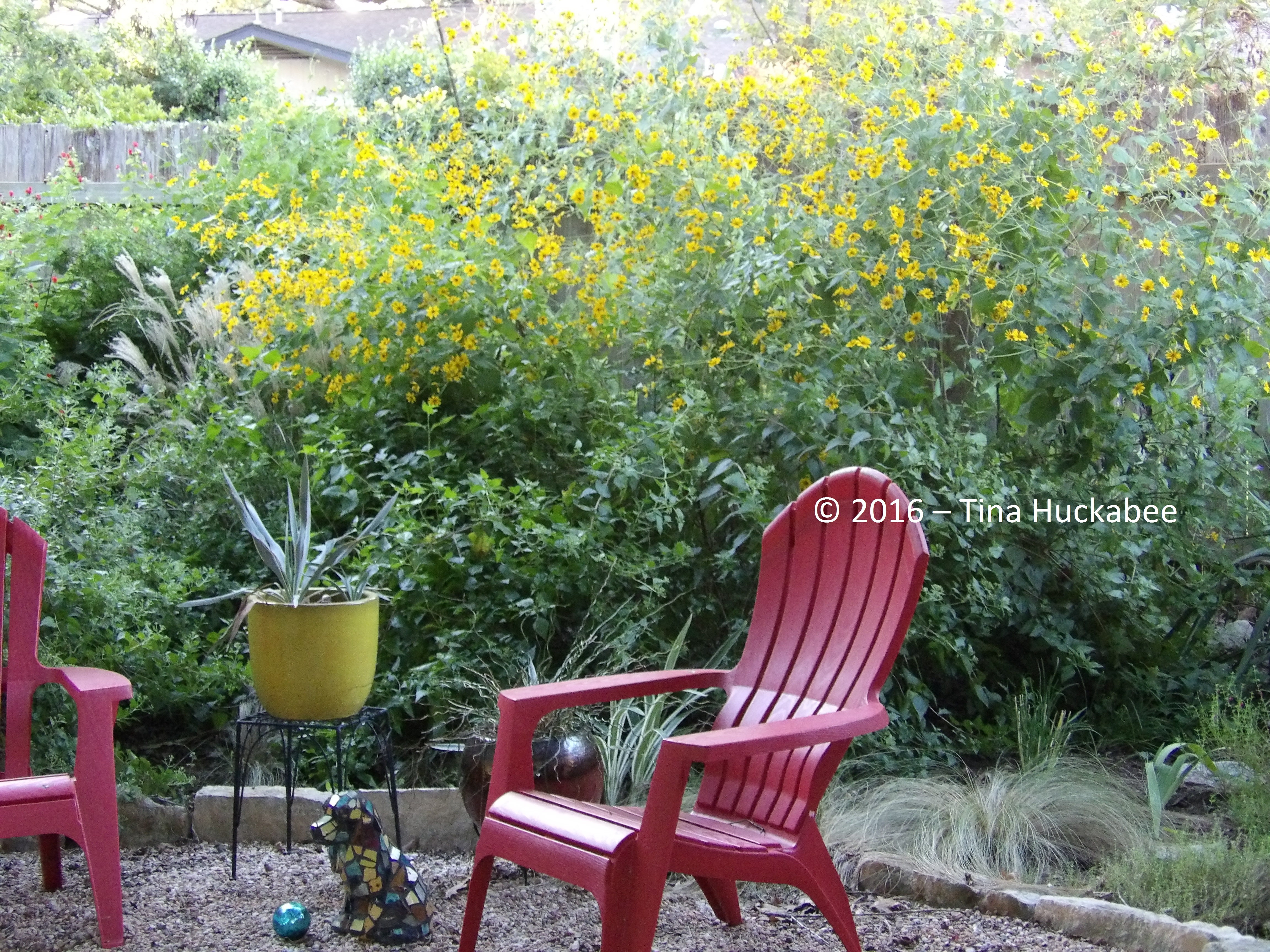
The Goldeneye sunshine show lasts for 4-6 weeks. It’s a plant that mixes well with other bloomers, too.

RICOH IMAGING

RICOH IMAGING

RICOH IMAGING

RICOH IMAGING

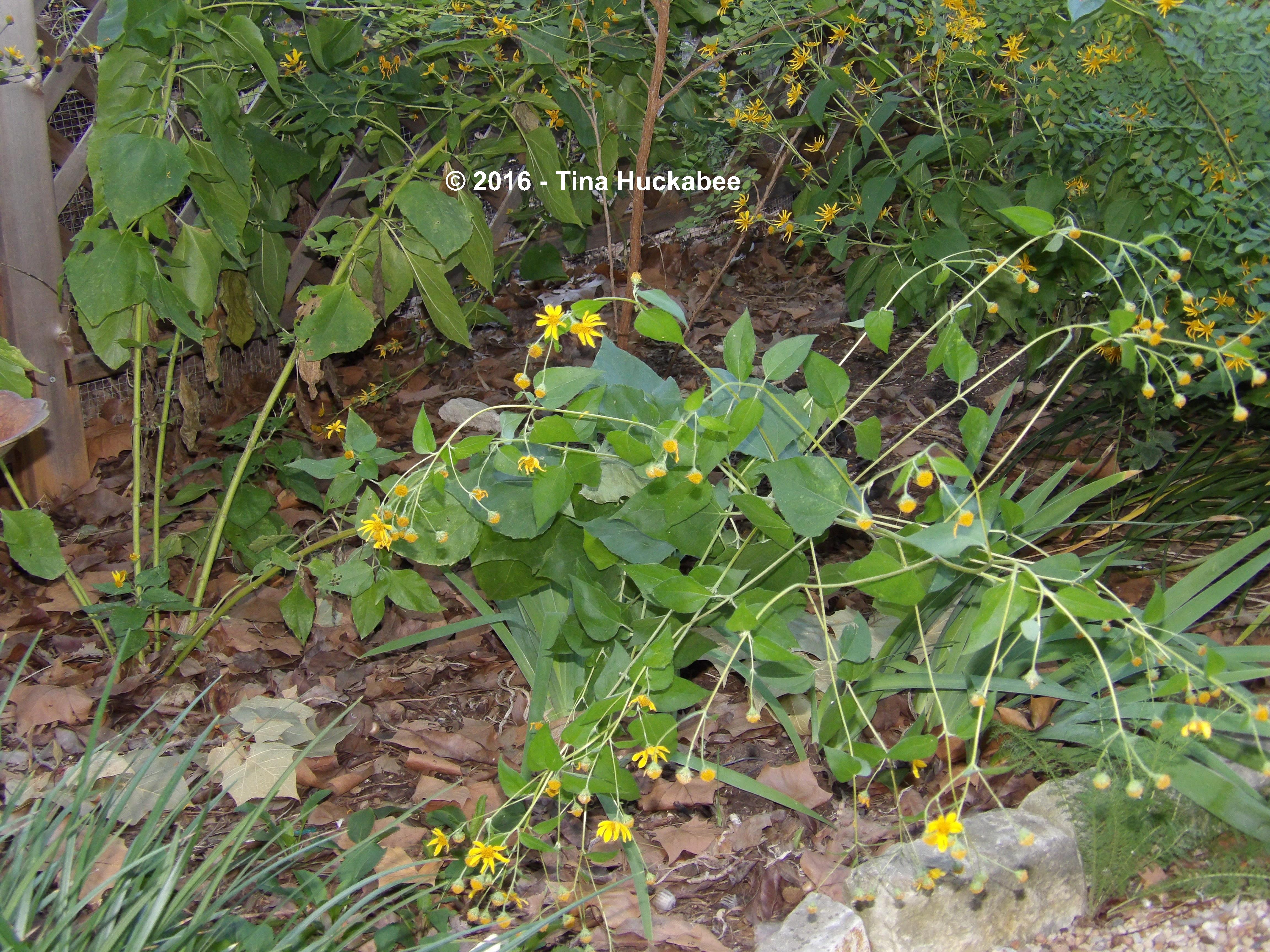
Sometimes my Goldeneye require staking, especially in a wetter-than-normal year. The bushy quality of Plateau Goldeneye lends itself to a lush, but well-appointed mien throughout summer, which is deceptive because once the fall growth spurt occurs and the masses of blooms develop and open, the weight of those blooms can cause the plants to lean over.

In more shade, the plants grow taller, thinner, and they lean more. In fuller sun, the plants remain upright and generally keep their form,  even when the flowers appear.

IMGP2137.new

IMGP2139.new

Pruning Goldeneye in July or August by about 1/3 is one method of preventing Goldeneye floppiness and sloppiness once the October explosion of yellow flowery joy happens.  After a light pruning, the plant continues growing, but more compactly and seemingly able to handle the onslaught of flowers.  But if there are heavy fall rains during the height of blooming (which happens here in Central Texas) the floral-laden Goldeneye stems tend to flop over and sometimes break at the base of the plant. I boost the stems by staking if I can and don’t fret about it if I can’t.    For those gardeners who want a totally tidy plant, you’ll need to prune in mid-to-late summer.  If you’re fine with some seasonal fall wonkiness, just let the plants do what they want.

IMGP2772.new

Every fall, the bloom decline seems sudden, though it’s probably because I enjoy the flowers so much that I’m sorry to see them go for the year.

IMGP2226.new

IMGP2277.new

IMGP2539_cropped_3691x3101..new

However, once seed development is in full swing,

Male Lesser Goldfinches feeding on Goldeneye seeds.

Male Lesser Goldfinches feeding on Goldeneye seeds.

…a second wildlife performance is definitely worth watching.   Entertaining and biologically important, feeding finches of several varieties adore the seeds.  In my garden, it’s usually the Lesser Goldfinch, Spinus psaltria,  who are the main, though not the only, visitors of the Goldeneye food bar for weeks. Eventually, the finches clean out the seeds and/or move on to riper pickings and the plants are left to the whimsy of  colder temperatures.

The two major problems I find with Goldeneye is that they re-seed prolifically, especially in wet years, and the aforementioned flopping over once the blast of blooms appear.  I haven’t found the seedlings onerous to weed, and timely, judicious pruning mostly takes care of the wayward limbs.
IMGP2140.new

Plateau Goldeneye is an extremely drought tolerant plant–very appropriate for someone who doesn’t want a water-needy perennial.  Because it’s such an attractive plant for so many species of wild critters, it’s a must-have addition for a wildlife garden.  It’s casual growth habit could be an issue for those wanting a more formal garden,

RICOH IMAGING

…but placing plants at the rear of a bed, fronted by other shrubs and perennials can solve the issue of their loosey-goosey growing nature.

According to the Lady Bird Johnson plant database, Goldeneye have only “minimal” deer resistance.

In Winter,

IMGP5112.new

RICOH IMAGING

IMGP4002.new

Spring,

20140508_37.new

Summer,

RICOH IMAGING

RICOH IMAGING

Autumn,

RICOH IMAGING

IMGP2228.new

IMGP2194.new

IMGP2120.new

…Goldeneye is a tough survivor, beautiful bloomer, and a valuable resource for wildlife.  If you live in its native range, try this perennial in your garden.    It grows easily by seed or transplants.  Commercially, you’re most likely to find seeds or seedlings at a locally owned nursery, or if you live near Austin, Goldeneye are usually on sale at the LBJ Wildflower Center’s fall or spring plant sale.  Goldeneye is also a common passalong plant in its native range.

IMGP1918.new

Plant and enjoy these gleeful blooms!

Frostweed (Verbesina virginica): A Seasonal Look

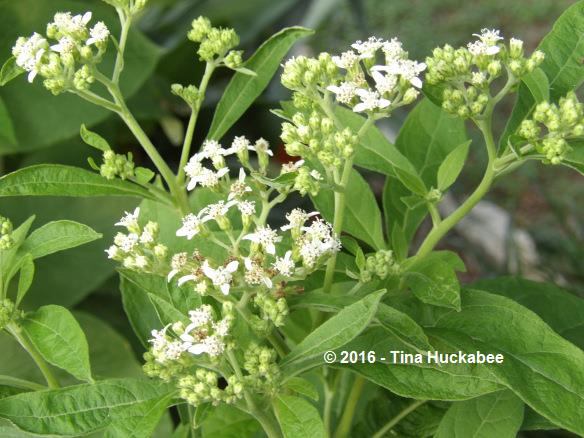
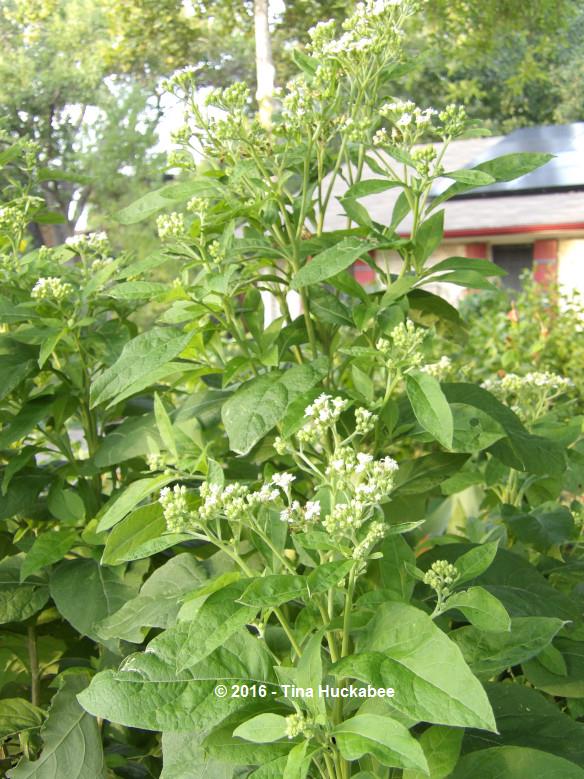
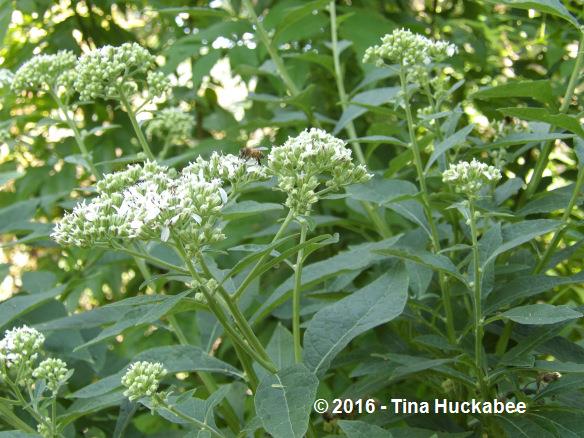
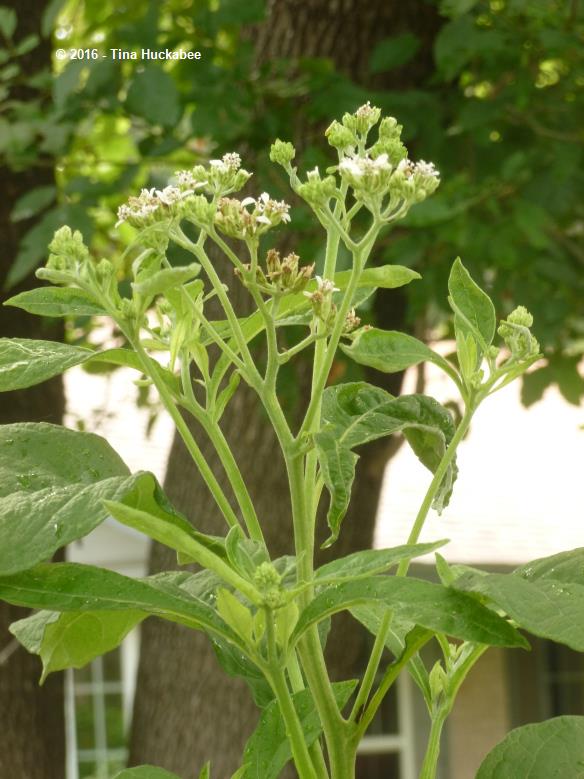
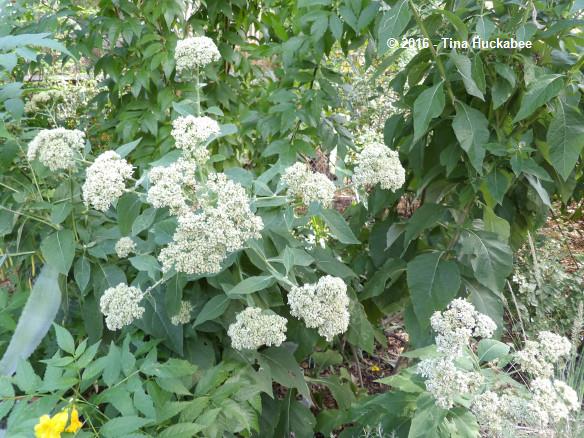
It’s seldom frosty here in temperate Austin, Texas, but when FrostweedVerbesina virginica, graces a garden, it beautifies with icy-white, frothy flowers from late summer through autumn.

imgp0497.new

imgp0498.new

imgp0841.new

A native North American herbaceous perennial, Frostweed is a great plant to profile for A Seasonal Look, because it’s lovely, interesting, and home gardeners, as well as visiting pollinators and birds, should enjoy this plant.

imgp1169.new

The most common of the common names for V. virginica is Frostweed, but according to the LBJ Wildflower Center, it also goes by the names White Crownbeard, Iceplant, Iceweed, Virginia Crownbeard, Indian Tobacco, Richweed and Squaweed.  While I don’t know this for certain, I’m guessing that the Crownbeard variations might refer to the clusters of lovely autumn blooms that V. virginica displays.

imgp1284.new

Additionally, Frostweed leaves provided a tobacco source for some Native Americans, which presumably gave rise to those last two common names.  On  a healthier note, Frostweed was also traditionally used as a fixative for gastrointestinal issues, urinary, and eye problems.

I like it because it’s pretty and tough and a great wildlife plant.

imgp0970.new

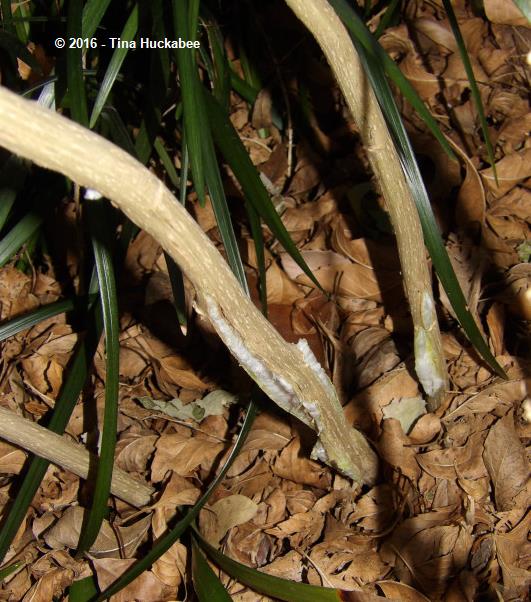
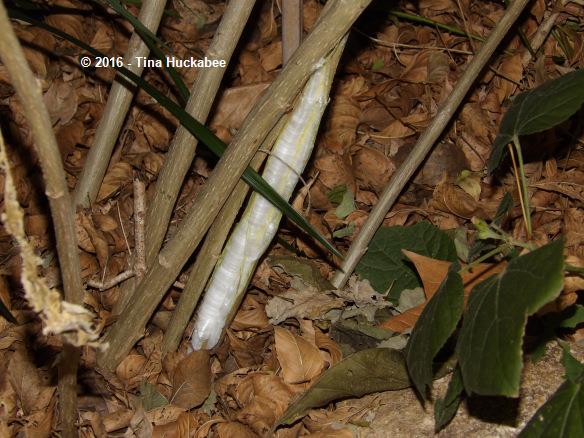
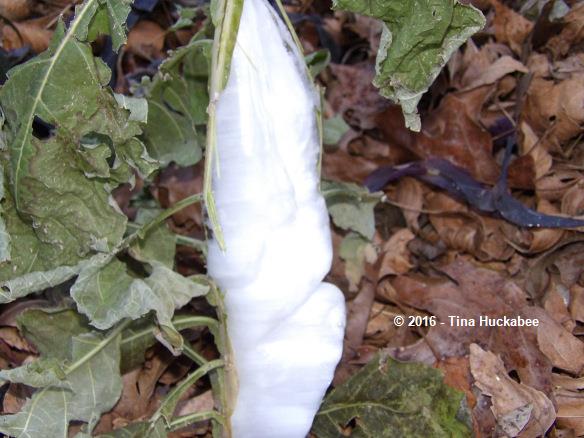
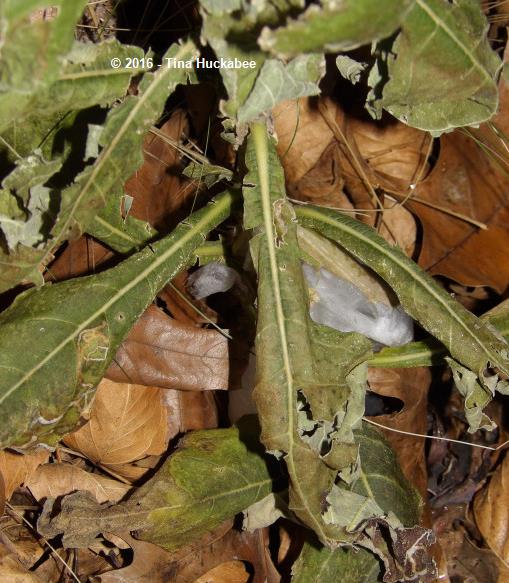
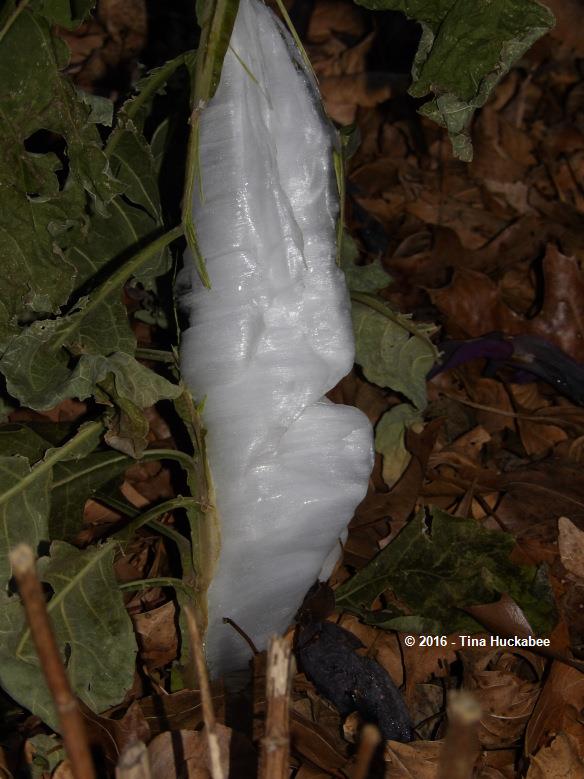
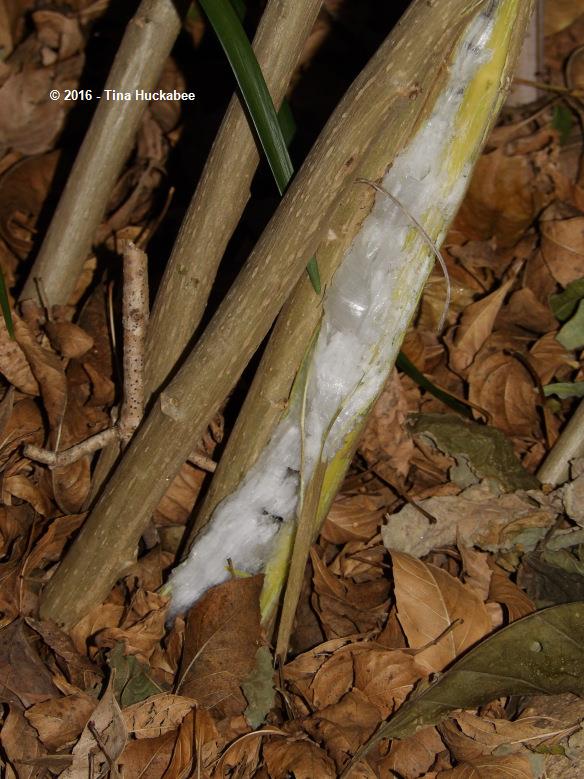
As for the various names suggesting more frigid attributes, those names are not referring to the cool white of the flowers, but instead to an unusual process that occurs with this plant early in winter, at the first hard freeze.  As the temperature plummets , sap in the trunk cools and expands, eventually breaking through the epidermis of the plant.  The sap hits the freezing air, solidifies in thin sheets, moving up along the vertical structure of the plant.

imgp4494_cropped_531x602..new

imgp4489.new

imgp4509.new

The ice sculptures freeze in a ribbon-like design.  Conditions for this awesome display are particular:  the ground must be moist, assuring the roots are actively drawing  water into the plant.  Also, the temperature drop must be relatively rapid.

imgp4528_cropped_509x583..new

The ice ribbons are fragile and thin, melting at the touch or quickly by air once temperatures rise above freezing. The Frostweed ice extravaganza is an ephemeral event. Not many plants ice dance this beautifully, but Frostweed is one that does. If you’d like to see more wavy-groovy Frostweed ice sculptures, click on the LBJ Wildflower Center’s Frostweed,  68 photo(s) available in the Image Gallery.

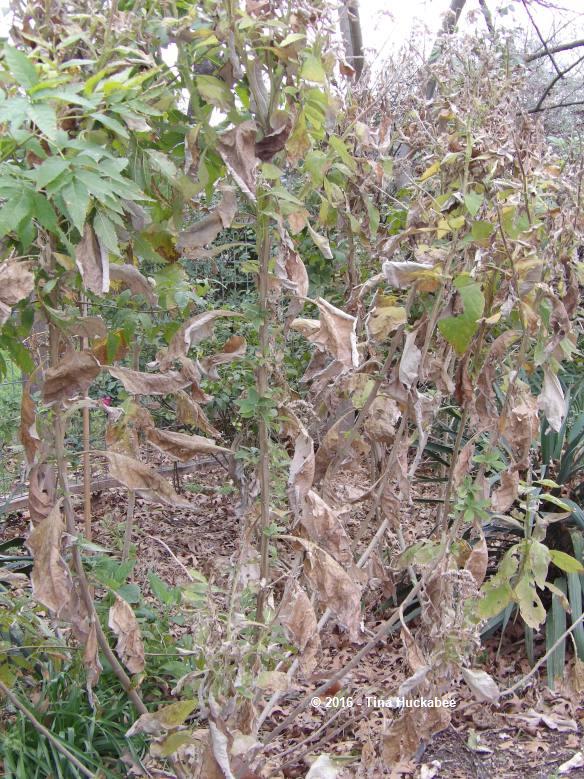
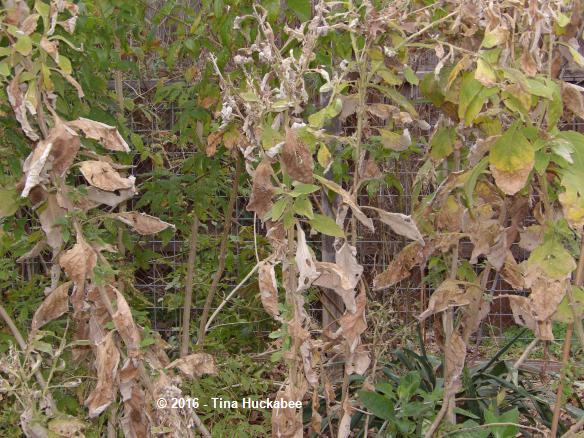
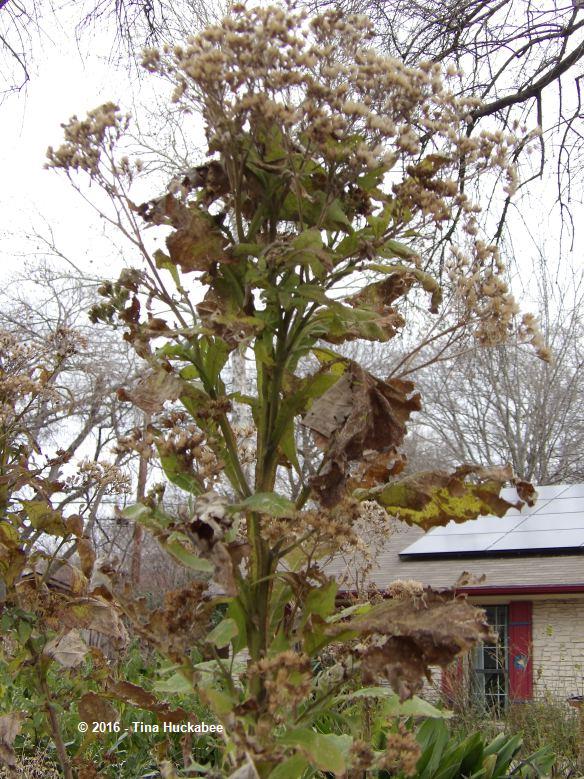
Once a hard freeze occurs and Frostweed concludes its frozen display for the year, the plant is rendered dormant.  I don’t necessarily prune my plants at that point, but one can–it’s a matter of your aesthetics and time.  Some winters are mild and in those conditions, Frostweed doesn’t produce ice sculptures, but the plant will become dormant, or mostly so, even with a light frost.

imgp3971.new

imgp3977.new

imgp3969.new

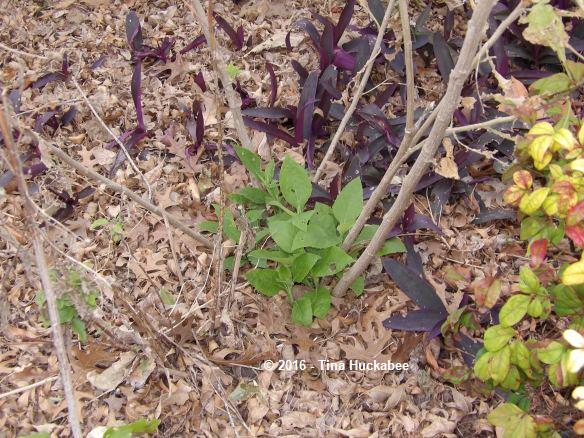
Additionally, in mild winters even after Frostweed is dormant, new growth can appear from the ground when temperatures are warm enough, well before calendar springtime.

imgp3982.new

That’s always tricky because if a late hard freeze occurs, the  Frostweed will die back again. An established Frostweed plant is robust enough to overcome that shock, but new plants might succumb. So, the stalwart gardener rolls up his or her sleeves and plants more Frostweed.

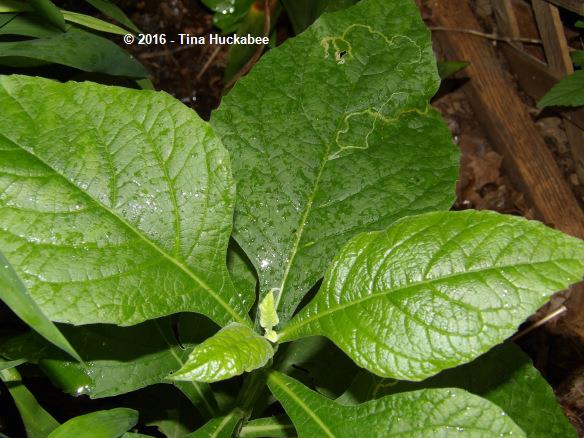
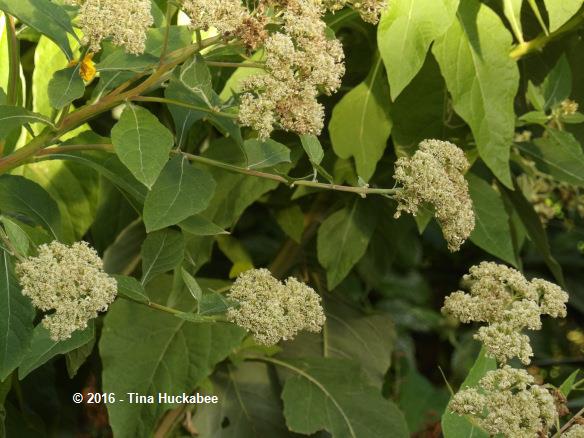
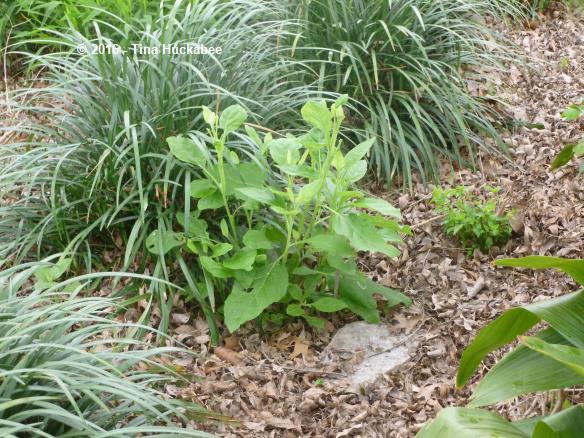
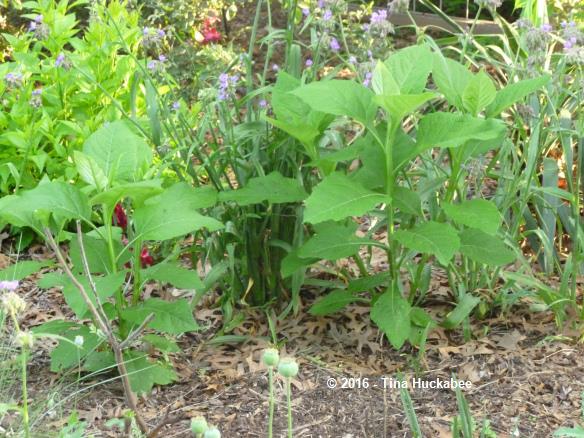
Newly emerged foliage is exuberant and verdant, but like others in the Asteraceae (Aster) family of plants, Frostweed’s leaves are sandpaper rough.  The leaves are also a bit awkward because they’re also quite large, even those on the new spring plants. Frostweed is the plant version of a puppy with large paws.

imgp8315.new

p1050297.new

I like the showy, scrappy foliage. I plant my Frostweed with complementary fine or small leafed shrubs and grasses, and also mix it with evergreens (when possible), since Frostweed itself is pruned back in winter.
imgp2128.new

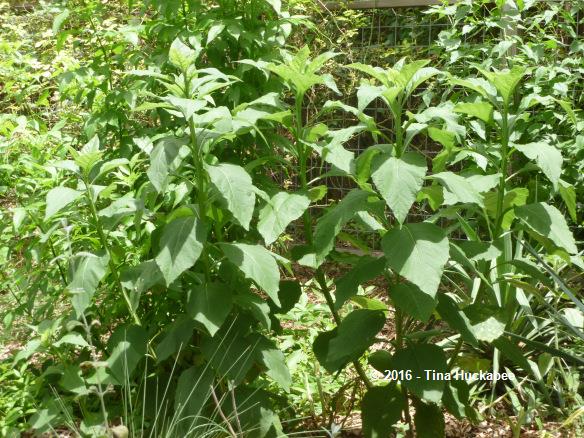
Throughout the late spring and summer months, Frostweed grows and the plant  eventually catches up to the leaf size.  The puppy grows into its feet.
p1050983.new

imgp0340.new

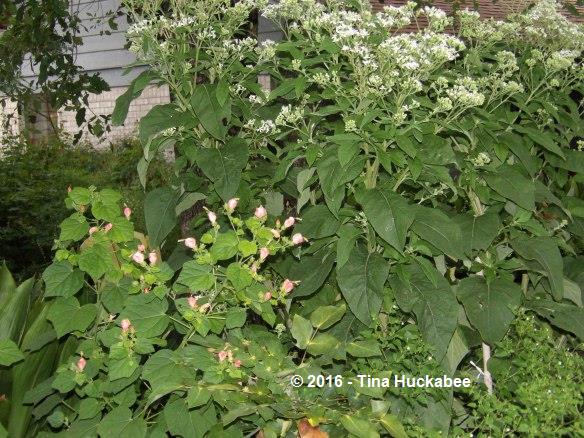
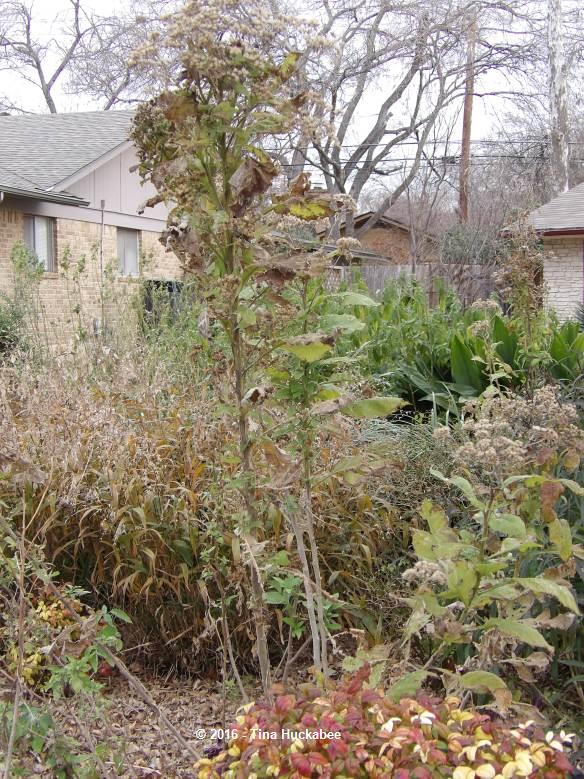
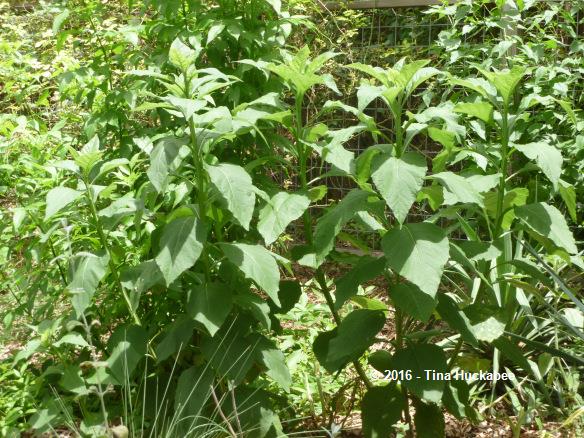
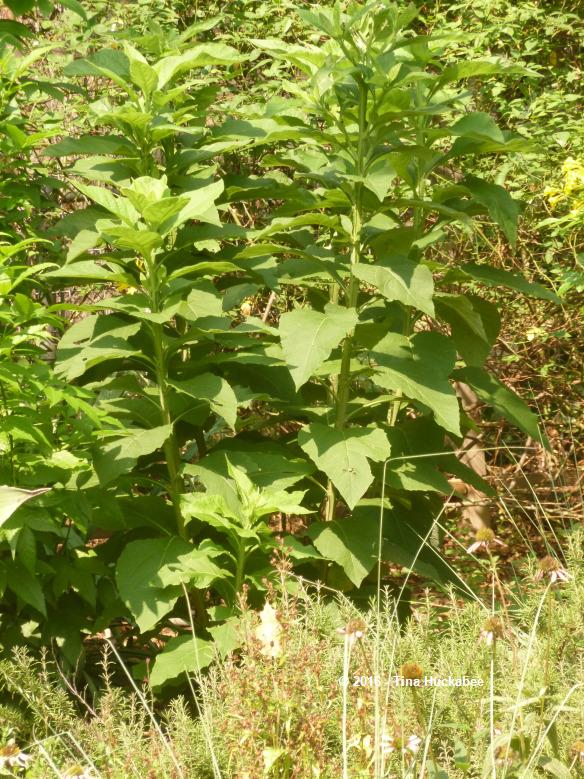
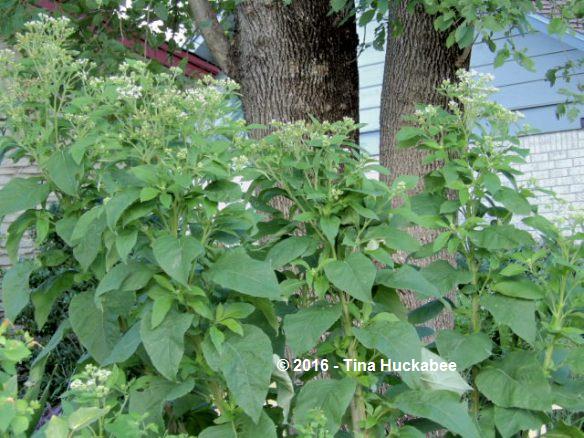
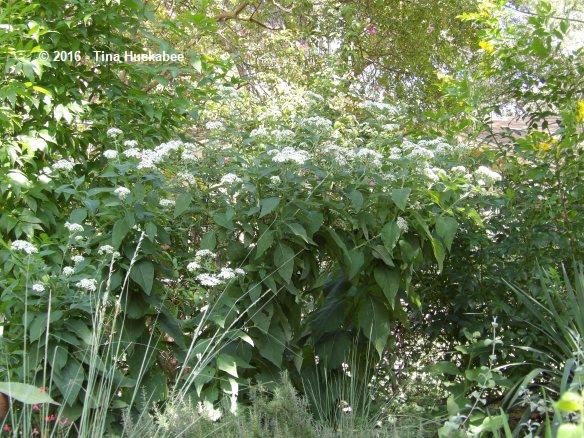
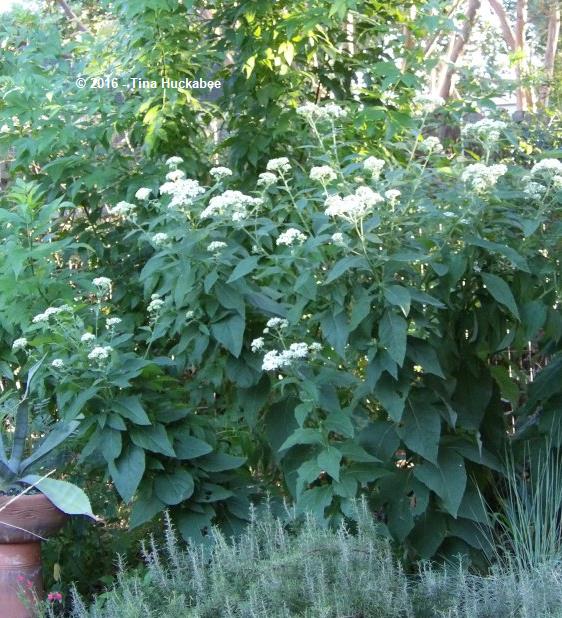
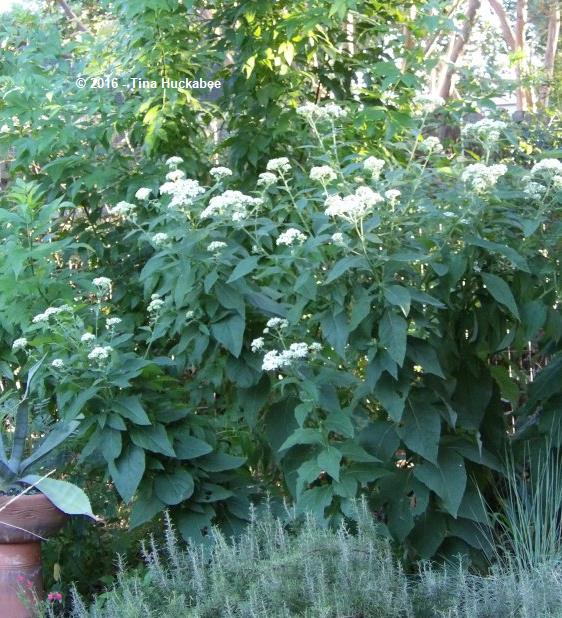
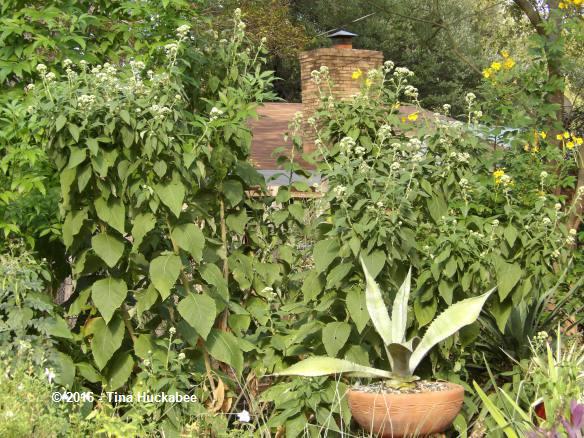
Frostweed’s height ranges from 3 feet to about 6 feet, depending upon soil, sun, and moisture.  It’s a woodland plant and considered an understory, so it grows and blooms well in shade–with or without extra watering.  It’s an excellent dry-shade plant.  Some of my Frostweed get a reasonable amount of afternoon (Texas!!) summer sun and those specimens tend to grow to about 6 feet.  Some years (depending upon rainfall) I stake with rebar because at the first heavy fall rains, Frostweed can flop a bit and I prefer their stand-at-attention persona.

imgp1252.new

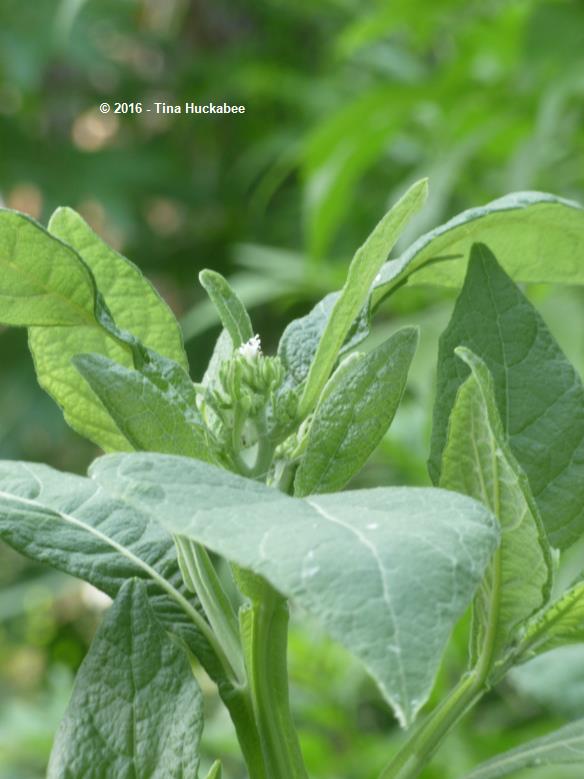
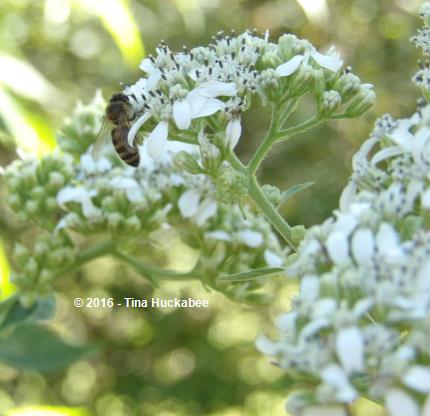
By early August, here in Central Texas, regardless of whether it’s been a dry or a wet (hah!) summer, Frostweed flowering begins. At first, a tiny bit of bloom.

p1050741.new

…then more.

p1060015.new

And more.

imgp1059.new

imgp1227.new

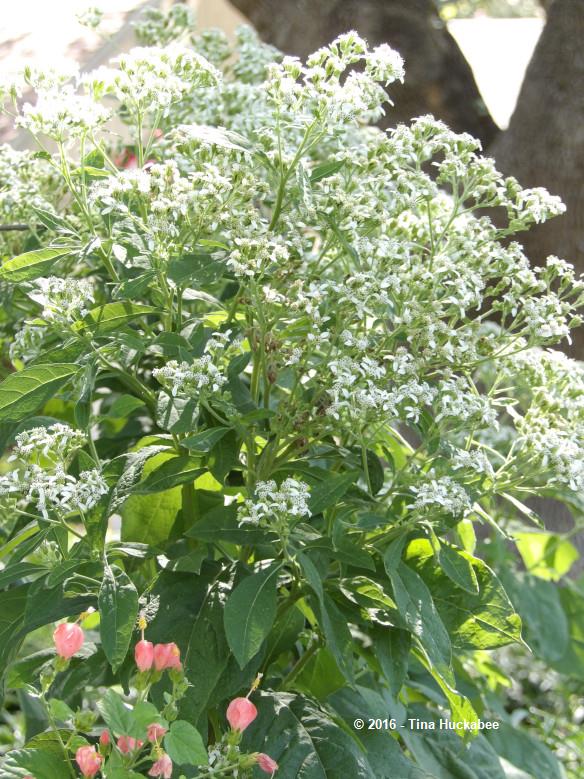
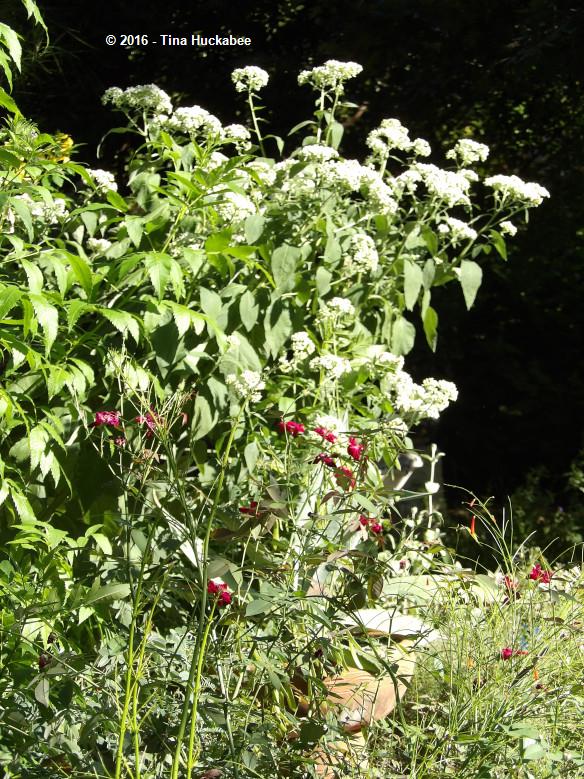
It can take  6-8 weeks from those emergent blooms for the whole set of flowers to burst forward in full cauliflower-style glory, but when they do, stand back and enjoy.

imgp1007_cropped_562x618..new

imgp2175.new

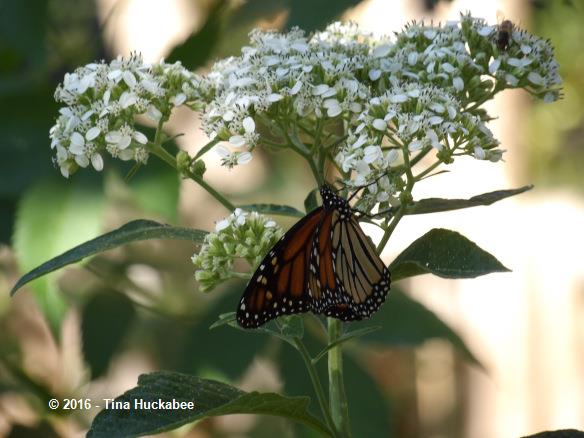
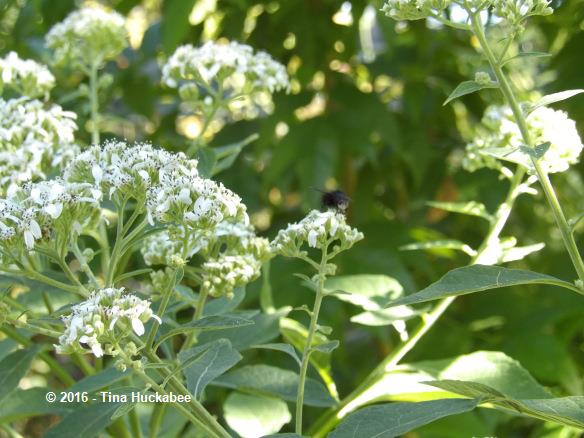
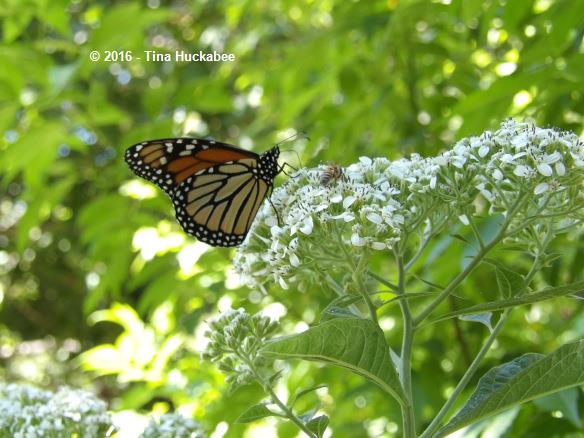
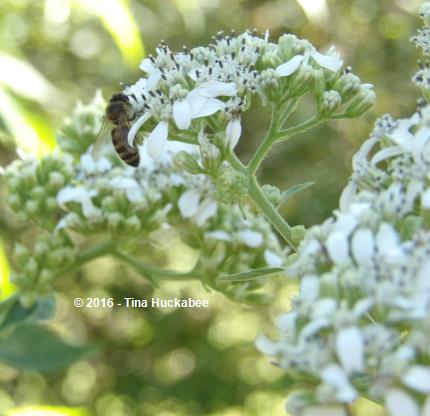
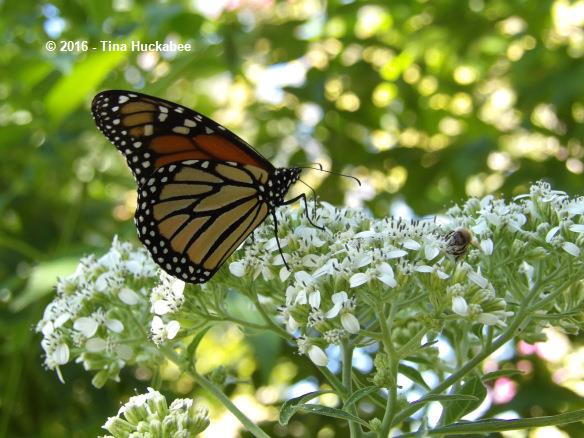
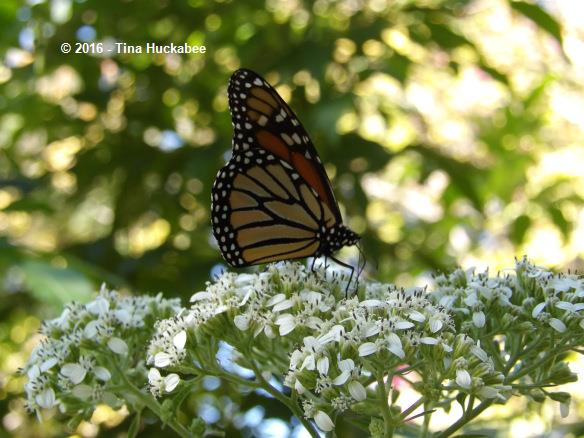
A favorite of many pollinators, Frostweed’s blooms are timed for the autumn Monarch migration.

imgp1151.new


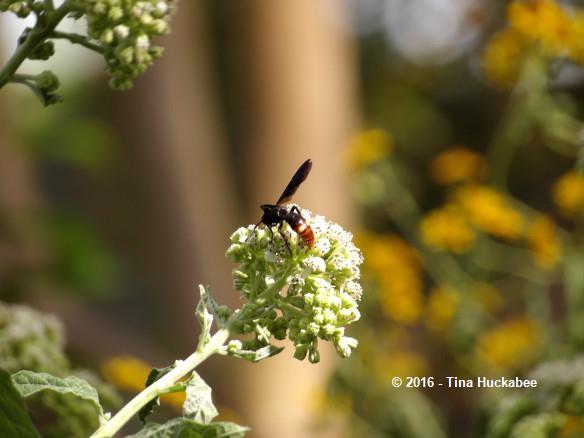
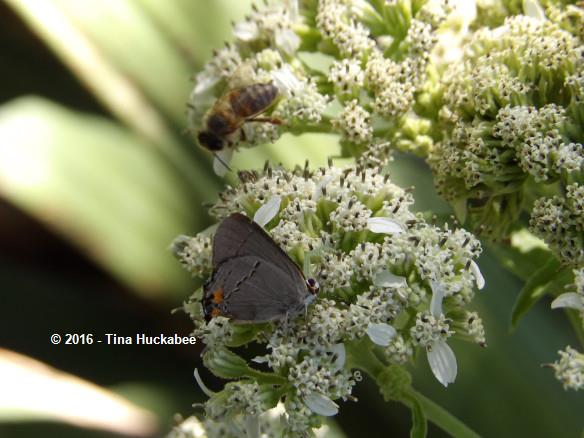
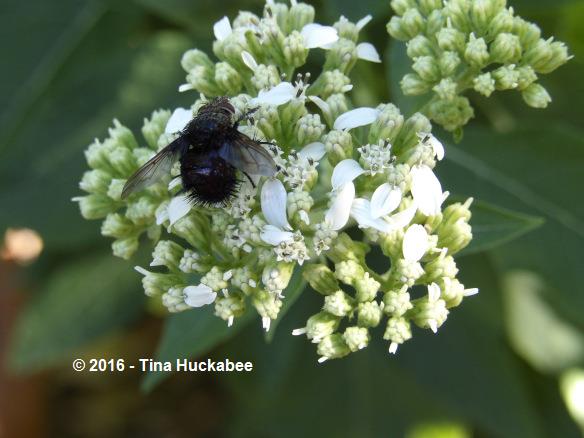
Many other pollinators visit too:

imgp1969.new

imgp2067.new

imgp1077_cropped_430x416..new


This Tachnid fly is one that I never see–except when Frostweed blooms.

imgp1065.new

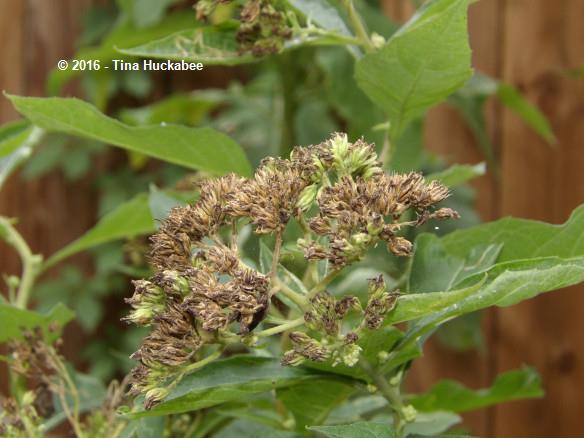
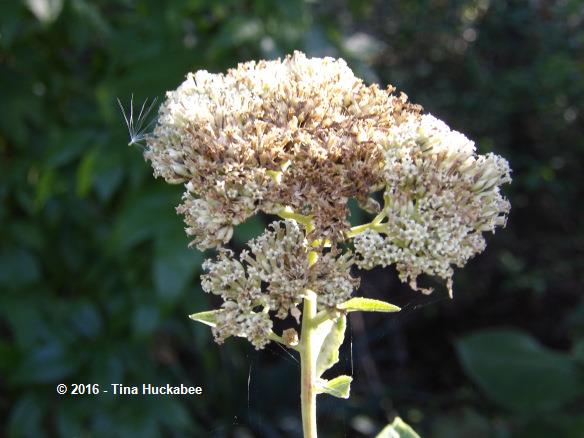
Frostweed blooms from August through early November.  Once the blooms begin fading, they turn a pale green,

imgp2295.new

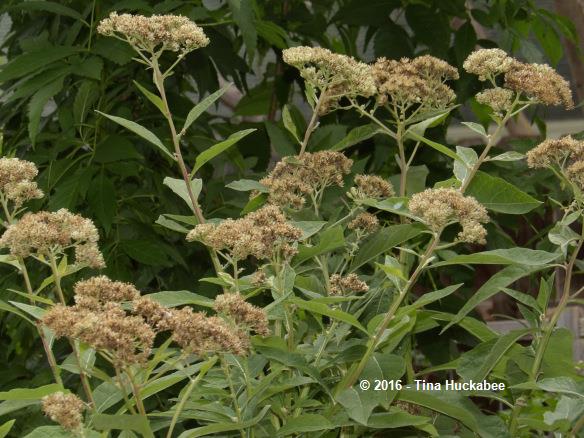
…then toasty brown.

imgp2542.new

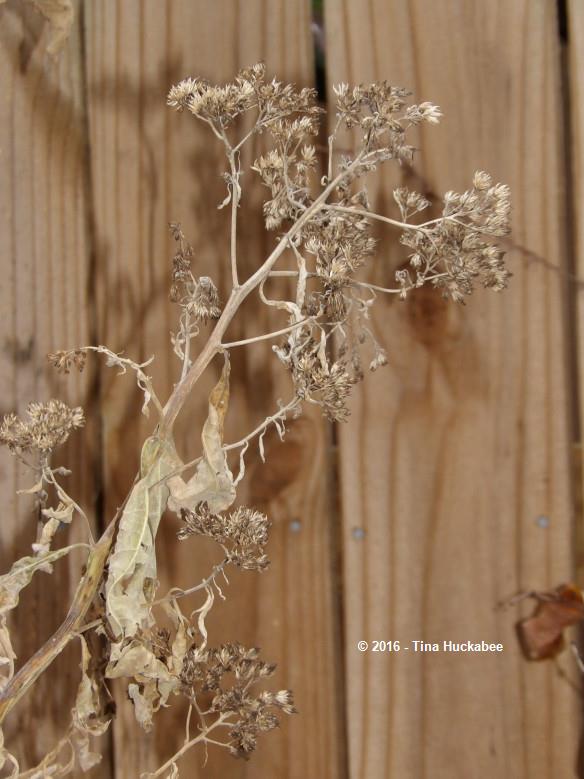
At this point in late autumn, seed development is well underway; finches and warblers are present and snitch Frostweed seeds from time-to-time.

imgp2681.new

Still, there are plenty of seeds that drop, germinate, and produce seedlings for the next growing season–either to give away or to transplant to other places. Overall, I think that Frostweed is a superb  insect nectar source, but it’s also a fair seed provider for the avian set and for future Frostweed production.  In short, Frostweed is a great wildlife plant addition to any garden.

Frostweed is found throughout a large area of North America, from Texas to the deep South and northwards to the mid-states of the US.  I would imagine that in the areas where freezes are a sure thing, Frostweed’s ice show is always a winner, though that’s not always true where I live in Austin.

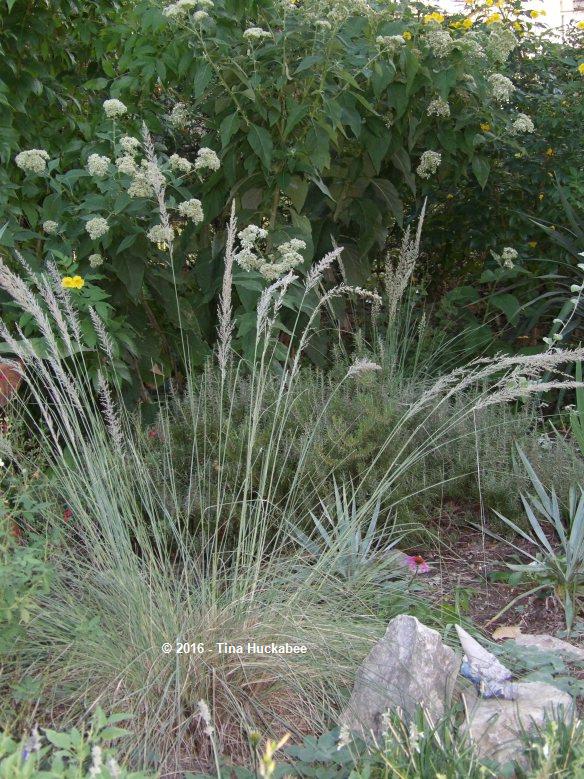
I would also suggest that Frostweed is a casual plant.  In literature about using Frostweed in the garden, it’s often suggested that it’s best planted in an informal setting or as a transitional plant situated between a cultivated garden and a more natural wildscape.

imgp1007_cropped_562x618..new

Frostweed is not something that is pruned and shaped, nor is it something that you want to tidy too much.  For the more formal garden and gardener, Frostweed’s crinkly winter leaves won’t appeal,

imgp3973.new

…nor will its rangy growth be a desired outcome.  Frostweed’s beauty lies in its hardiness and value as a wildlife food source,

imgp1159.new

imgp1077_cropped_430x416..new

..and of course, those pretty, pretty blooms.

Left to its own devices, Frostweed will create a thicket and that is typically how you’d find it growing in a wild area.  It’s deer resistant and needs no irrigation–gosh, the perfect plant! So where do you get this perfect plant?  If you’re in or around Austin, I’ve seen it for sale at the LBJ Wildflower Center’s spring/fall plant sale.  If you live in Frostweed’s native range,   check out your locally owned nurseries and if they don’t carry Frostweed plants or seeds, request that they do.  Native American Seed, an online native seed source, carries Frostweed, as well as many other native North American seeds.  In my quick Google search on where to buy Frostweed, I noticed that Amazon also carries them, along with everything else.  No word though whether a drone would drop off seeds at your house. Best bet?   Find a garden buddy who’ll share his/her seeds–and enjoy the results.

A year in the life of Frostweed, Verbesina virginica:

Winter:

imgp3981.new

imgp4526.new

imgp4532.new


Spring:

p1030207.new

p1030461.new


Summer:

p1050297.new

imgp1791.new


Autumn:

imgp1227.new

imgp1163.new

imgp1026.new

imgp2469.new

Plant it!