Green With Envy: Wildlife Wednesday, September 2020

On lucky days my garden is graced by some of Austin’s resident, non-native, Monk Parakeets.  Usually it’s a small group of two or three gregarious greens flying over and cawing loudly to let everyone know they’re in the neighborhood.  Occasionally, one or two of these gorgeous birds will pop in, perch in my trees, and purloin some seeds.  The munching Monks have generally favored the black-oiled sunflower feeder, but recently, this one decided that safflower seeds were just the thing it craved.
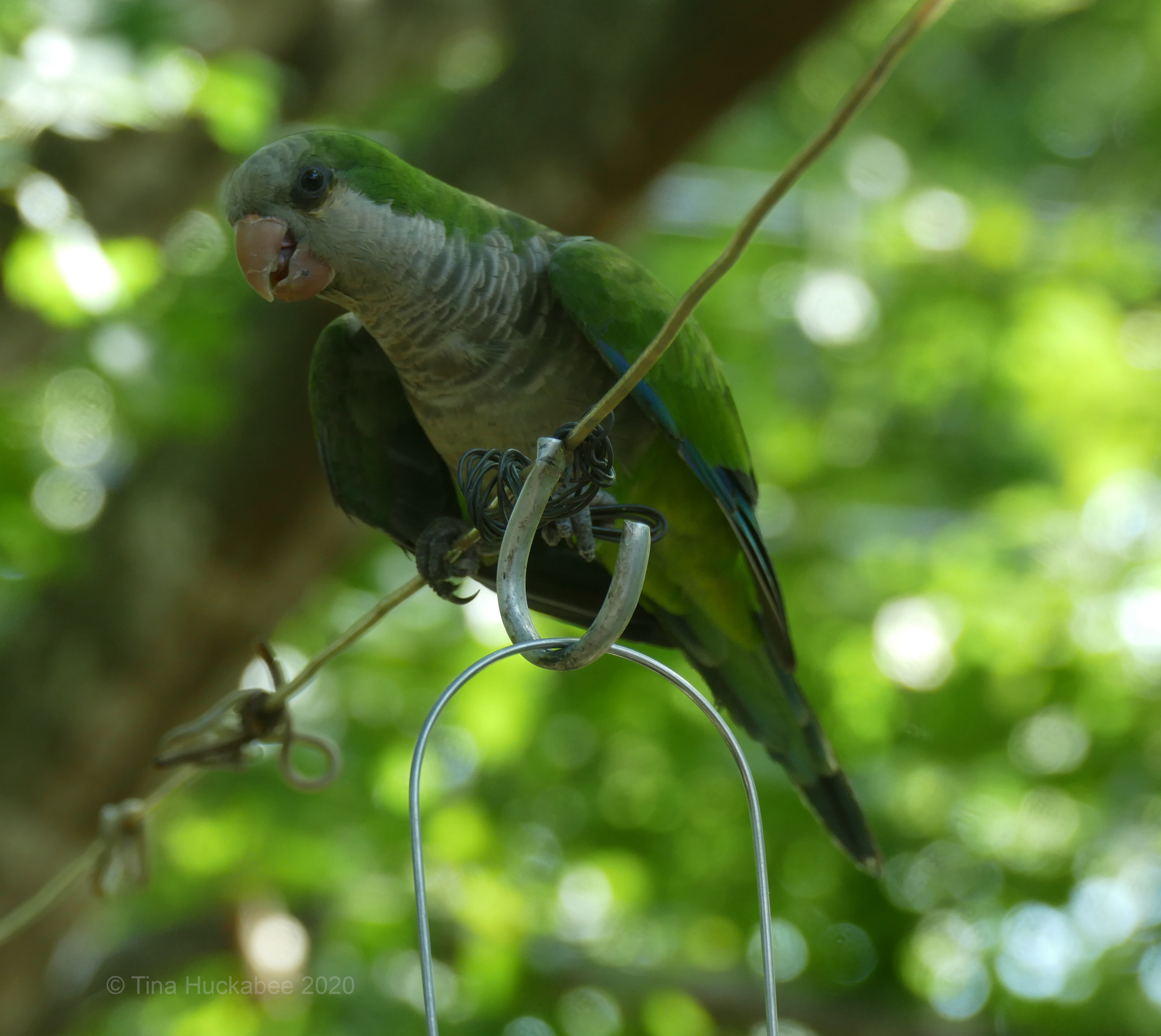
That said, the green-with-envy bird could only look, smack its formidable beak in anticipation, and wait patiently above the popular bird seed feeder, because the House Finches, Haemorhous mexicanus, are currently the dominate guests at the safflower food tube. 

Safflower seeds are all the rage, it seems.
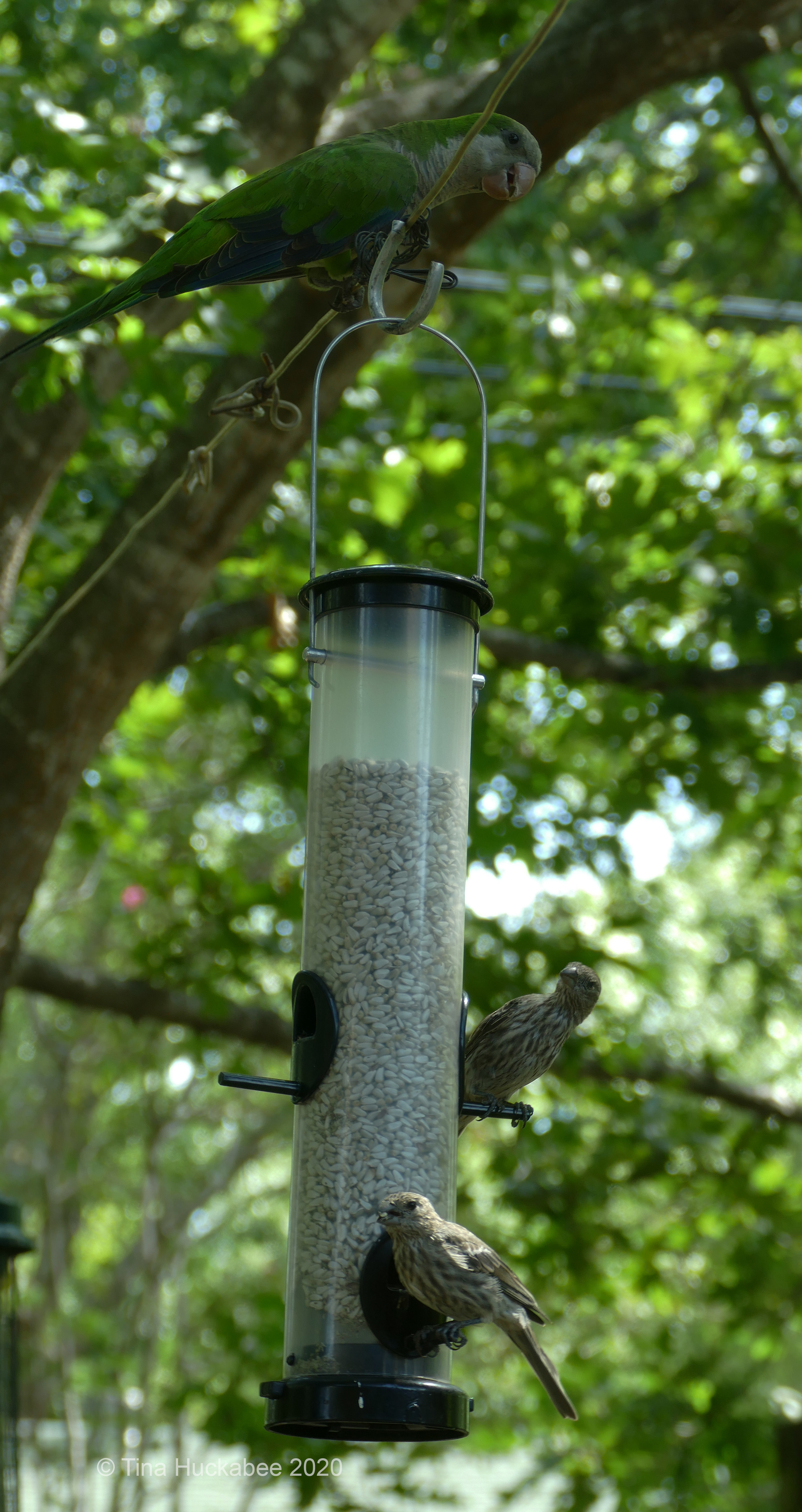
While the Monk Parakeet waited, two hatch-year females took their time enjoying the seeds, no doubt frustrating the colorful giant.  Most days, each of the four safflower feeding stations are filled with finches and there was a bumper crop of fledglings this year, so there’s currently lots of finch action in my garden, in the trees and on the feeders.  I enjoy observing the House Finches:  they’re attractive, chatty birds with pretty songs and calls and they chirp with charm as they chop their seeds.   The females are striped in brown and cream, as are the males, who also blush red on their breasts, heads, and under wings.

Eventually, the petite finches became safflower-sated and the parakeet got the feeder to itself.  Austin’s Monk Parakeets are descendants of pets released over the past 50 years or so.  The Monks have adapted well here, as they have in other North American cities.  Monk Parakeets, Myiopsitta monachus, are native to South America and live communally, building large nests atop utility poles and tall trees.  As far as I’m aware, the Monks haven’t negatively impacted the environment or displaced any native birds.  It’s not unusual to see Monks hanging out with glossy, gleaming black-to-brown Great-tailed and Common Grackles, especially in open areas.  The birds all congenially march along, pack-like, gleaning seeds or insects from the ground before taking flight to trees, bright green wings in contrast and complement to the black iridescent ones. 

On some rare occasions, fires have erupted in and on the large Monk stick nests built at the top of electric poles, which obviously isn’t good either for the birds or the people and other critters who live below.  In the interest of safety, Austin’s fire department pull down nests built in questionable places which is a bummer for the Monk Parakeets, but better for all concerned.

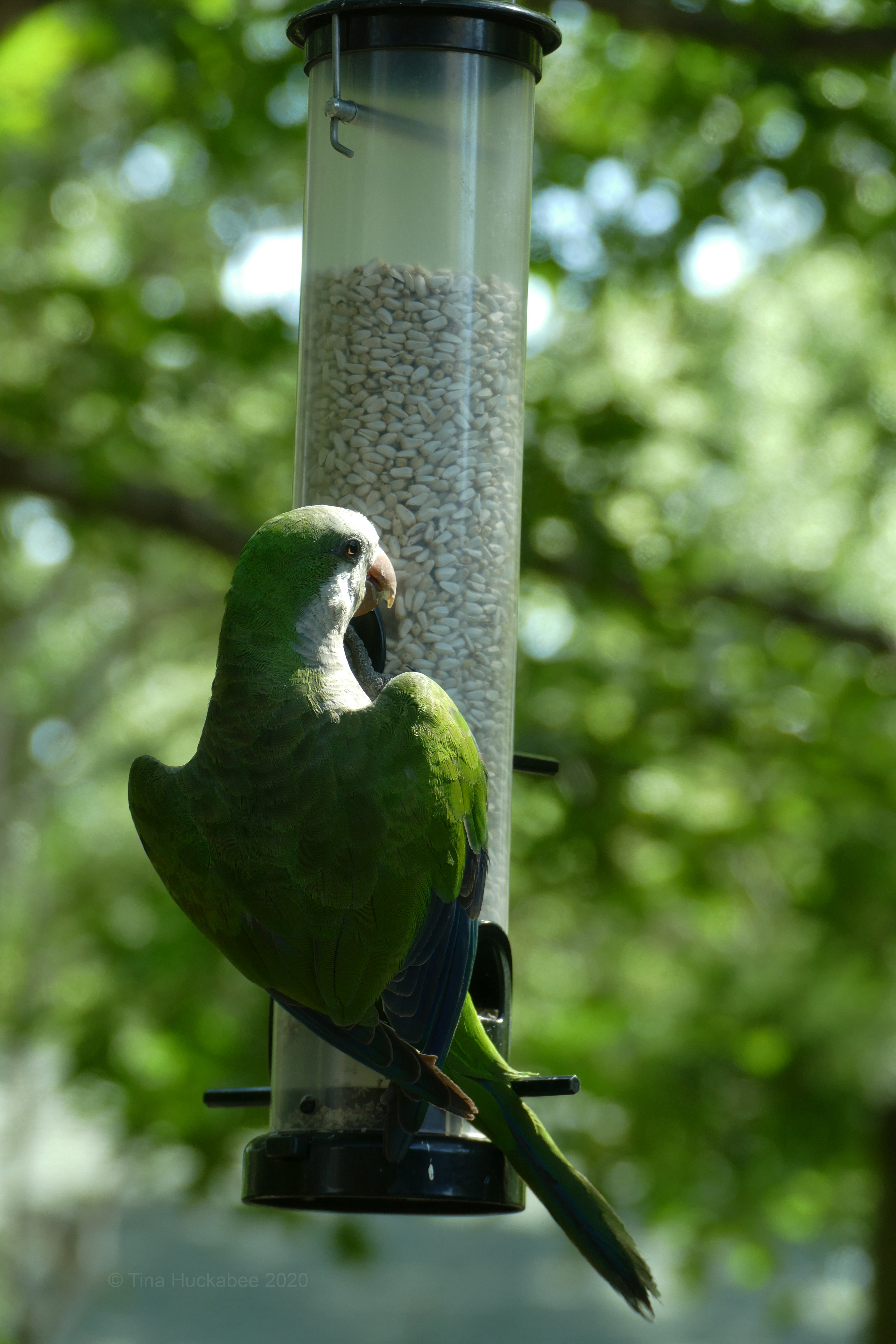
My visiting Monk Parakeet was almost, but not quite, too big for the feeder.  It maneuvered around the feeder somewhat awkwardly, taking seeds successfully.
And while the green machine ate, look who had to rustle up some self-restraint and wait her turn. 
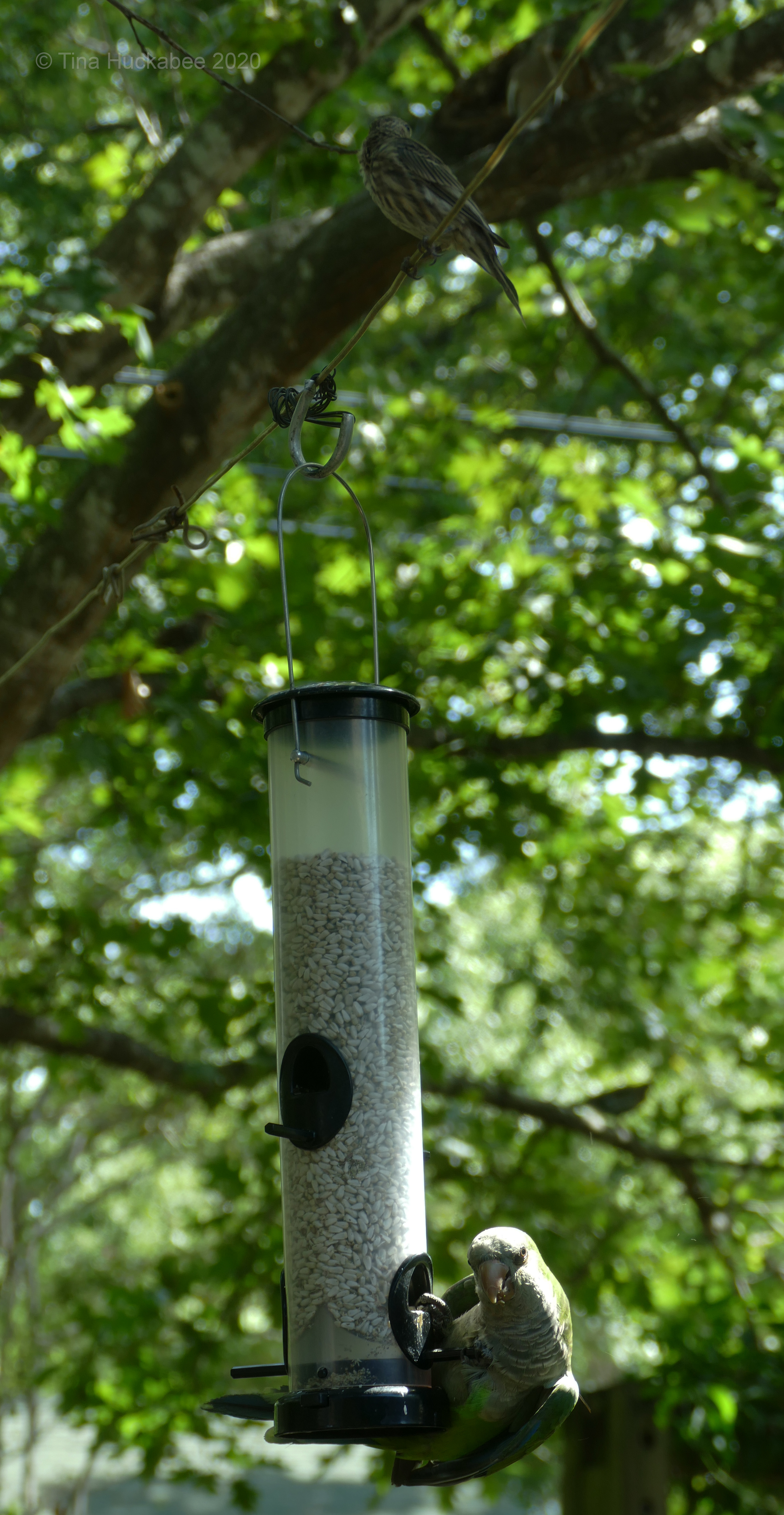
Who’s green–or brown and white–with envy now?

I hope your garden has some wild goings on and happy wildlife gardening!  Also, pop over to Flutter and Hum for garden vignettes;  there’s always a story there to enjoy.
That Branch

Sometimes I look at that dead branch and wonder why I haven’t pruned it back to the  major limb that’s actually alive.  The branch belongs to a Red Tip Photinia which I planted decades ago when I was a newby gardener and knew next-to-nothing about gardening in Central Texas.  It sits near a back corner of my house and I’ve kept it because it provides evergreen coverage for the many birds who visit: those who’re migrating through and the neighborhood birds who’re making the rounds to feed, drink, and rest.  That’s why I keep the Photinia, but why the dead branch?

This is why.

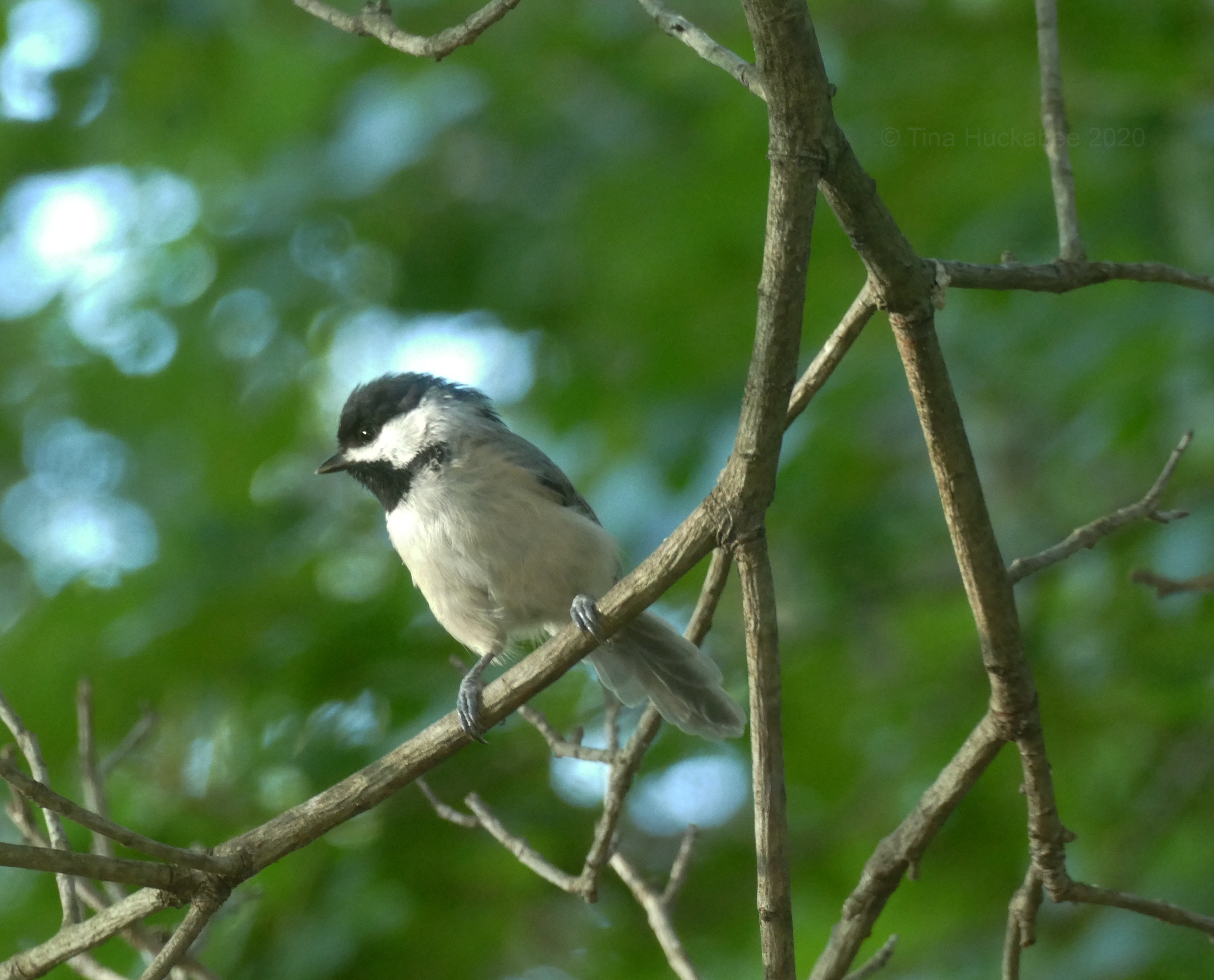
Carolina Chickadee (Poecile carolinensis)

The branch is perfectly suited for a quick dash to or from the feeder: feeding birds snatching a snack, then retreat to the large shrub to nosh.  Sometimes the birds prefer the foliaged parts, sometimes, they’re content to perch in the open.

What I’ve learned in the decades since I plopped the Photinia into the ground is that the perfectly coiffed “yard” is not an inviting home or welcoming place for birds, bees, butterflies and other critters.  My goals in gardening have changed from those early days and I prefer plants, or plant parts, that are useful for those critters who live among us critters.

The branch will eventually break, either from a heavy wind or rain, or just because–but I won’t bring it down.  I’ll leave it for the birds until events require them to find another place to park.  

I’m happy to link today with Anna at her lovely Flutter and Hum and Wednesday Vignette; pop on over to enjoy garden stories. 

A Seasonal Look: Goldenball Leadtree (Leucaena retusa)

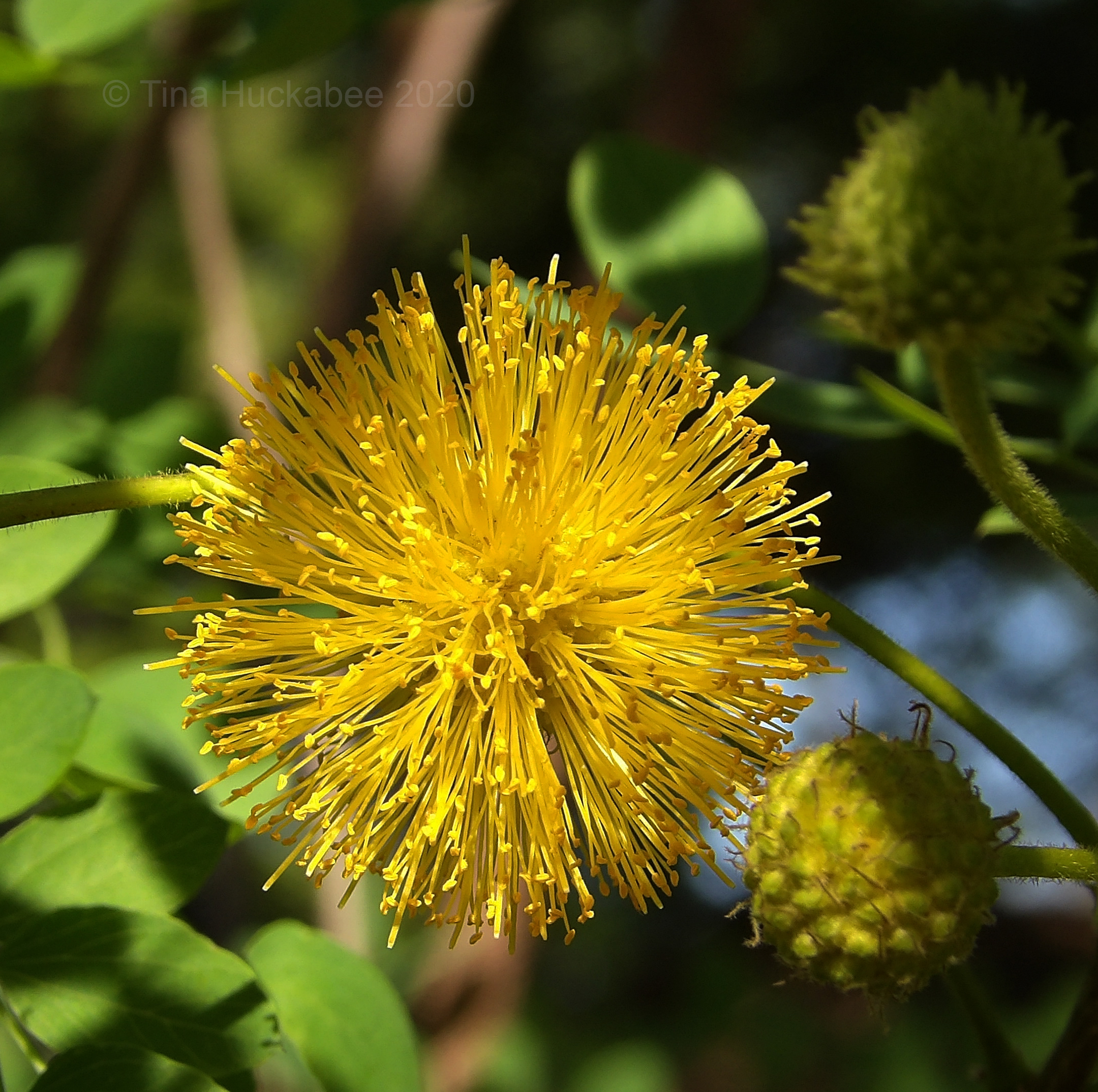
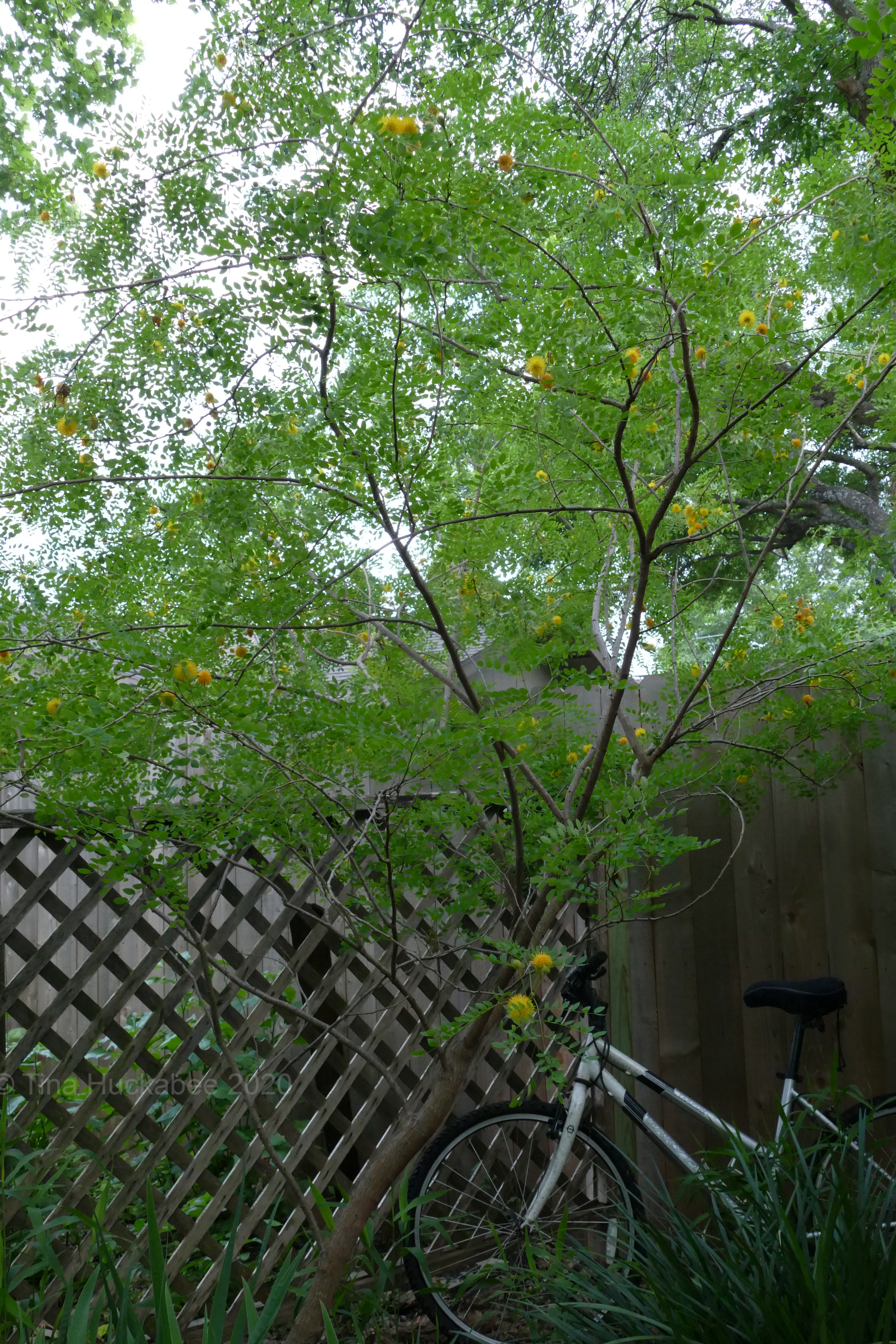
In my reckoning, the Goldenball Leadtree, Leucaena retusais the quintessential spring tree here in Central Texas.  It’s striking green foliage, paired with cheery yellow blooms shouts spring! spring! spring! and its airy, graceful growing pattern, echos the joyful vibe that we all feel during spring. 

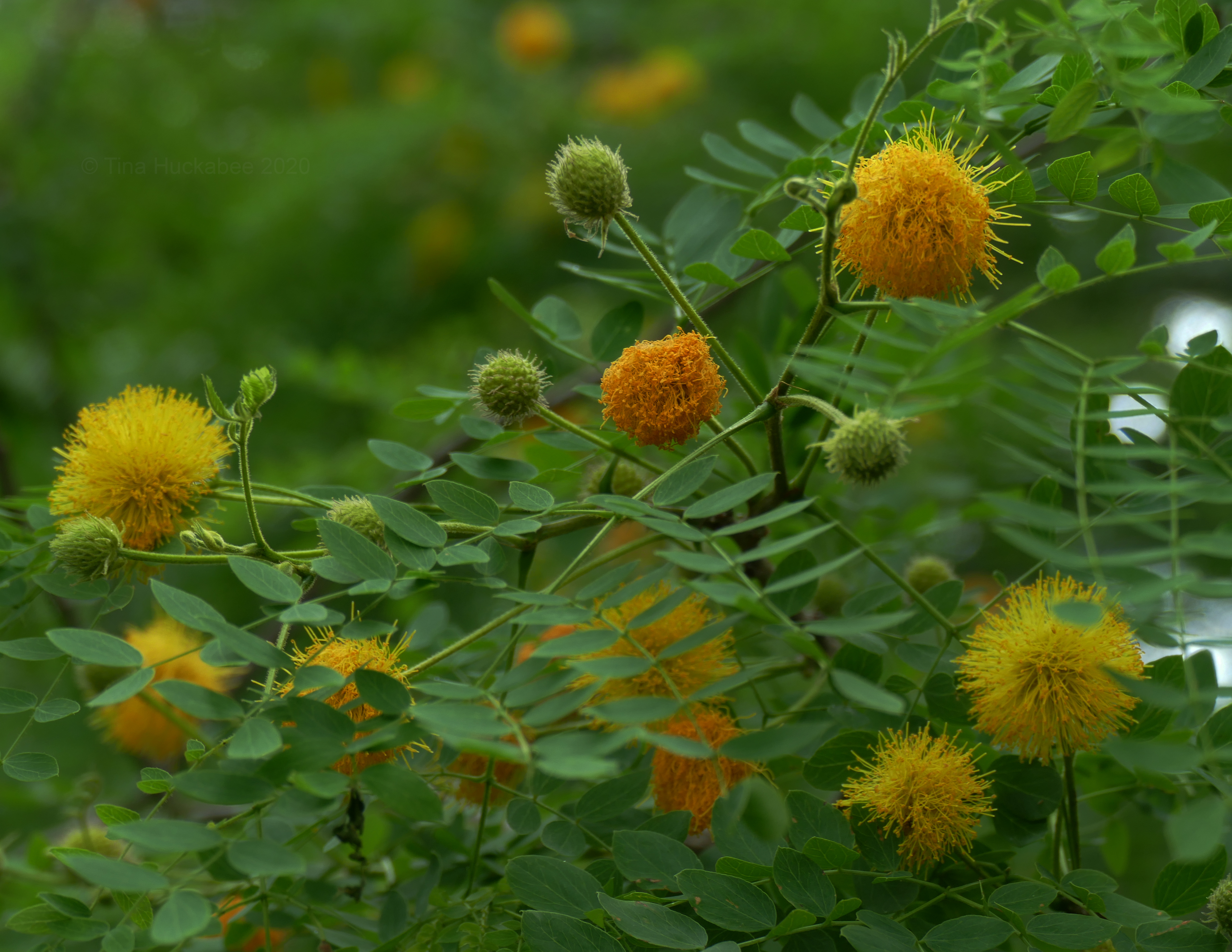
Goldenball’s native range is only in Texas–primarily in Central Texas, but also to far West Texas and even into northern Mexico.  For pollinators exclusively and for gardeners mostly, the fuzzy blooms are the key items of interest on this attractive tree.  Fragrant and stunning, the blooms dot the tree for at least two months in spring, sometimes longer.

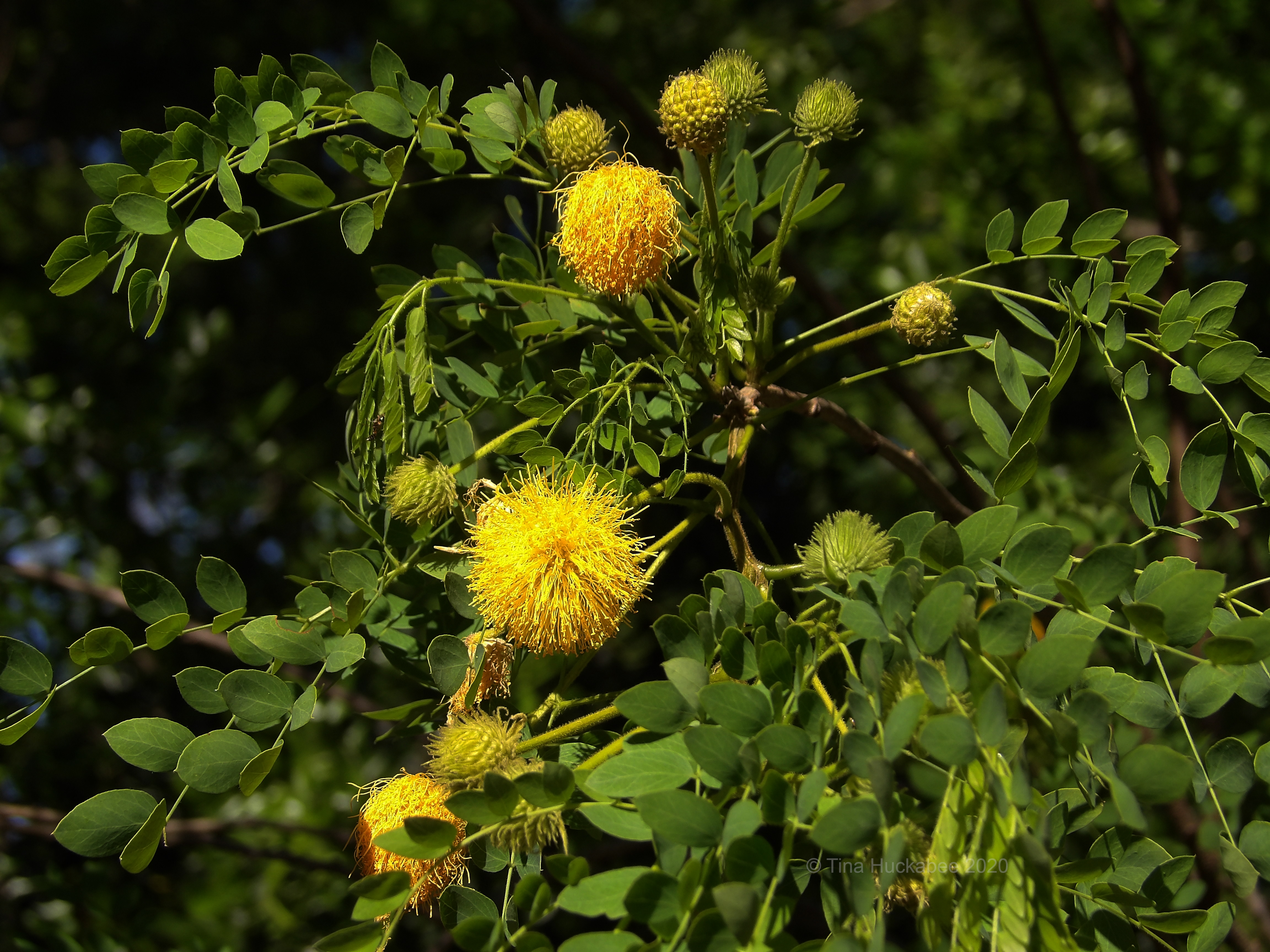
I like this shot as it demonstrates a flower in its prime, some blooms are which over-the-hill, and a bunch of bloom wannabes, gearing up for their time in the sun.

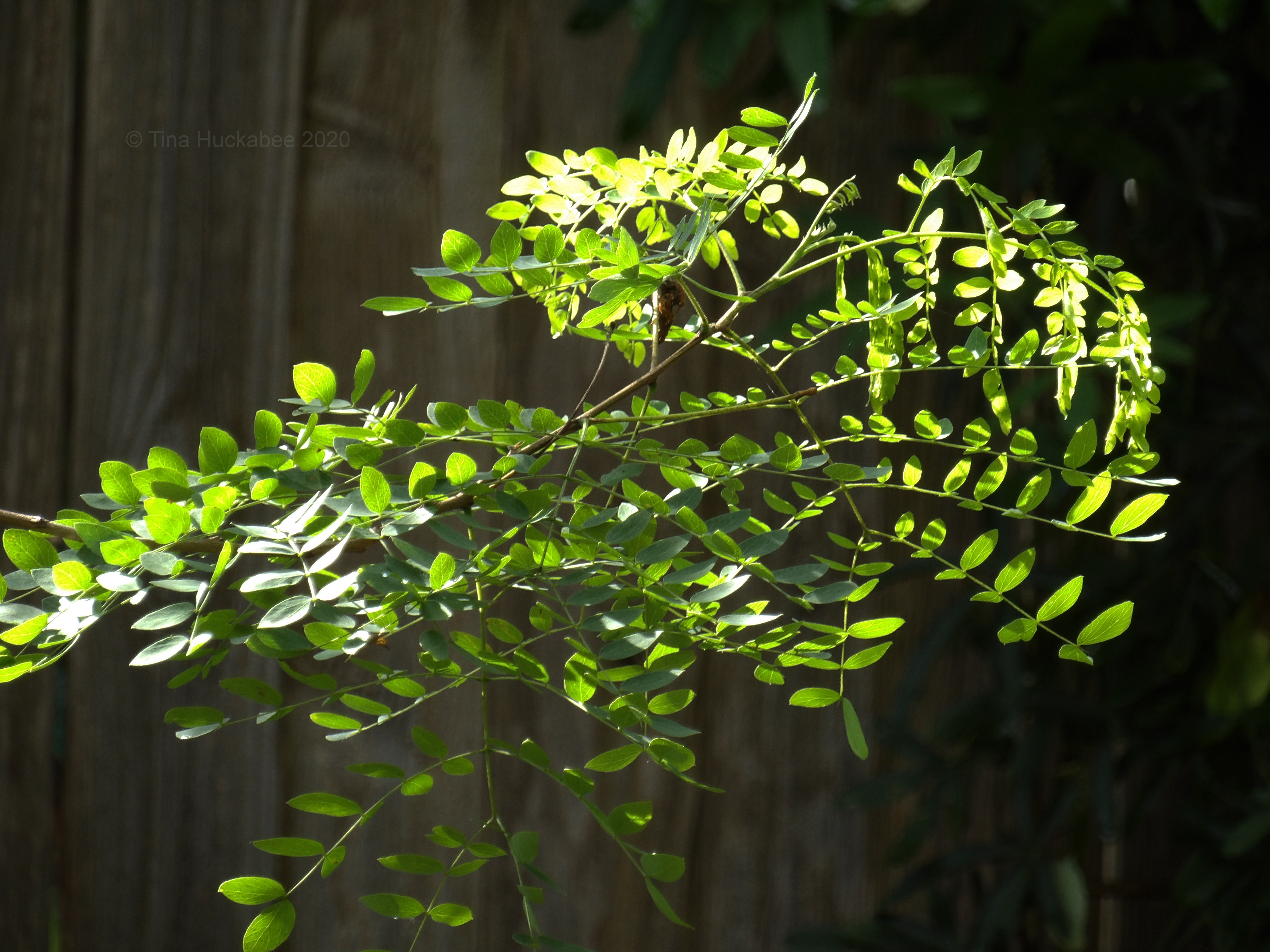
The leaves are small and oval, arranged bipinnately along an axis, and suggest a kind of transparency when highlighted by Texas sunshine.   The flowers are about an inch in diameter, yellow when at their blooming peak, taking on an orangy hue as the bloom fades.


Sometime in February, depending upon the depth of our winter, the deciduous tree begins to show new life. 


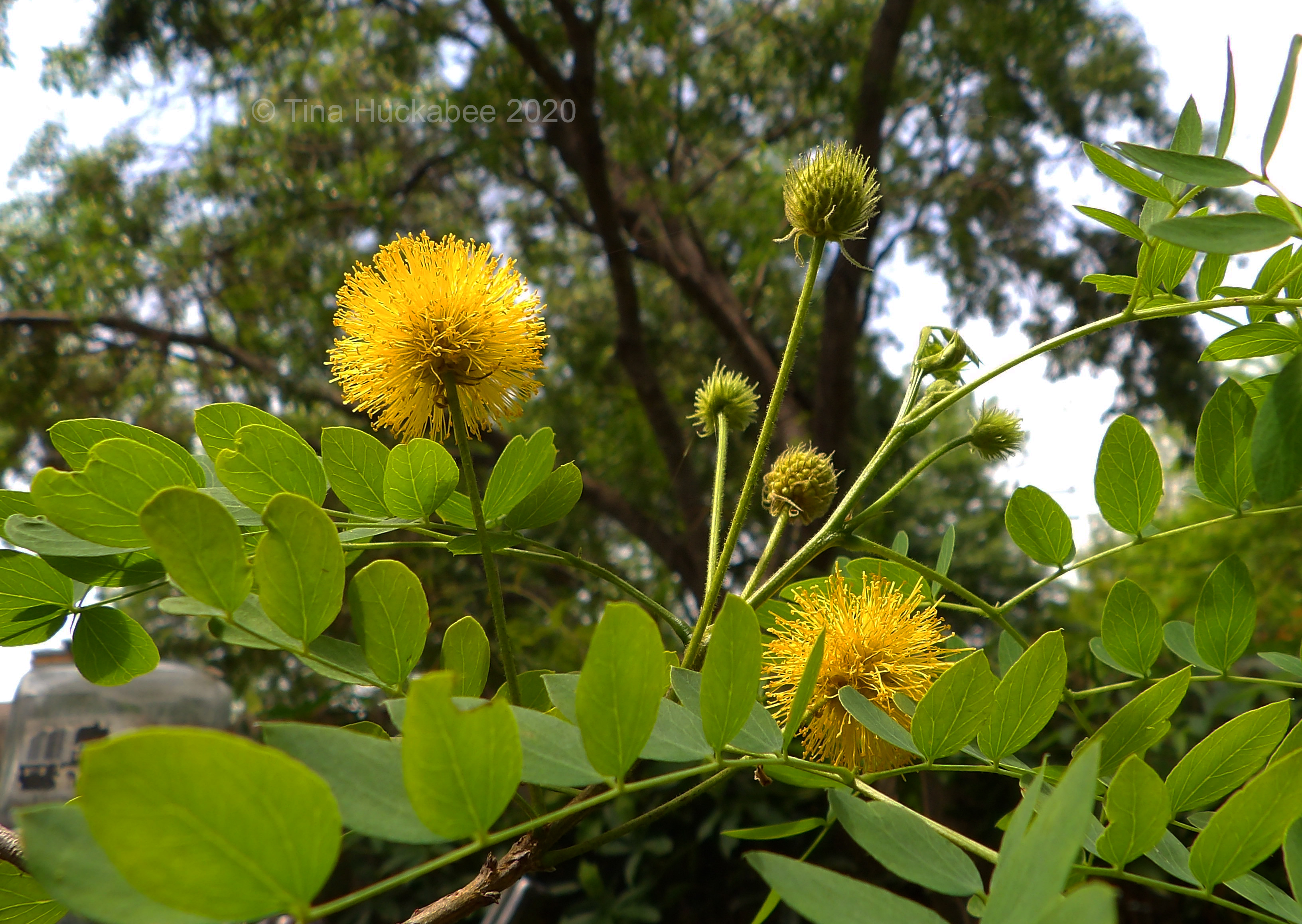
Foliage forms and unfurls, growing at a steady pace through February and into March.  By the time the leaves are near a mature size, the bloom buds are developing.  Initially they’re small, green, and spiky:  green kush balls,

…that develop into fat, yellow kush balls.

As beautiful as the flowers are, I find the airy foliage just as attractive and it lasts the whole growing season.  It never loses its spring green, either.

It’s a hopeful green.

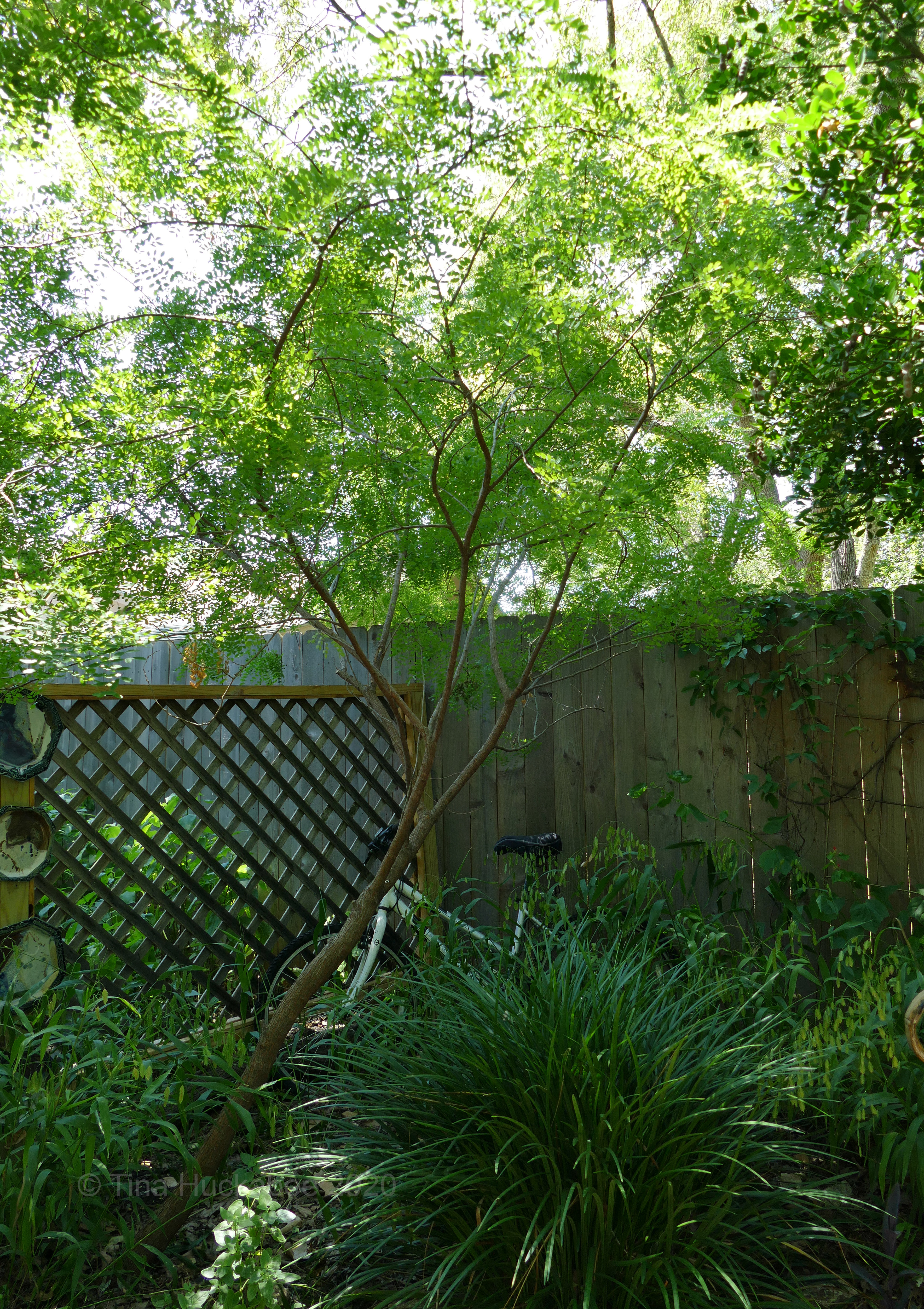
My Goldenball is about 10 years old and probably 15 feet high.  It prefers full-to-part sun, but mine only receives some dappled early morning sun, then an hour or two of direct sun in late afternoon.  Because of shade, mine doesn’t bloom quite as much as it once did, but I’m still very happy with this beauty. It has an open, rangy quality that I like.  It’s a vertical plant, but not huge nor dense, which allows it to fit in a small area without overwhelming or outgrowing the space.  The Goldenball is interesting all year.  While I have no pollinator-sipping-the-blooms photos (how did that happen?), large carpenter bees and my honeybees are grateful visitors during the March-April-May bloom time.  Some sources report that Goldenball blooms on and off throughout summer, but mine is strictly a spring bloomer.

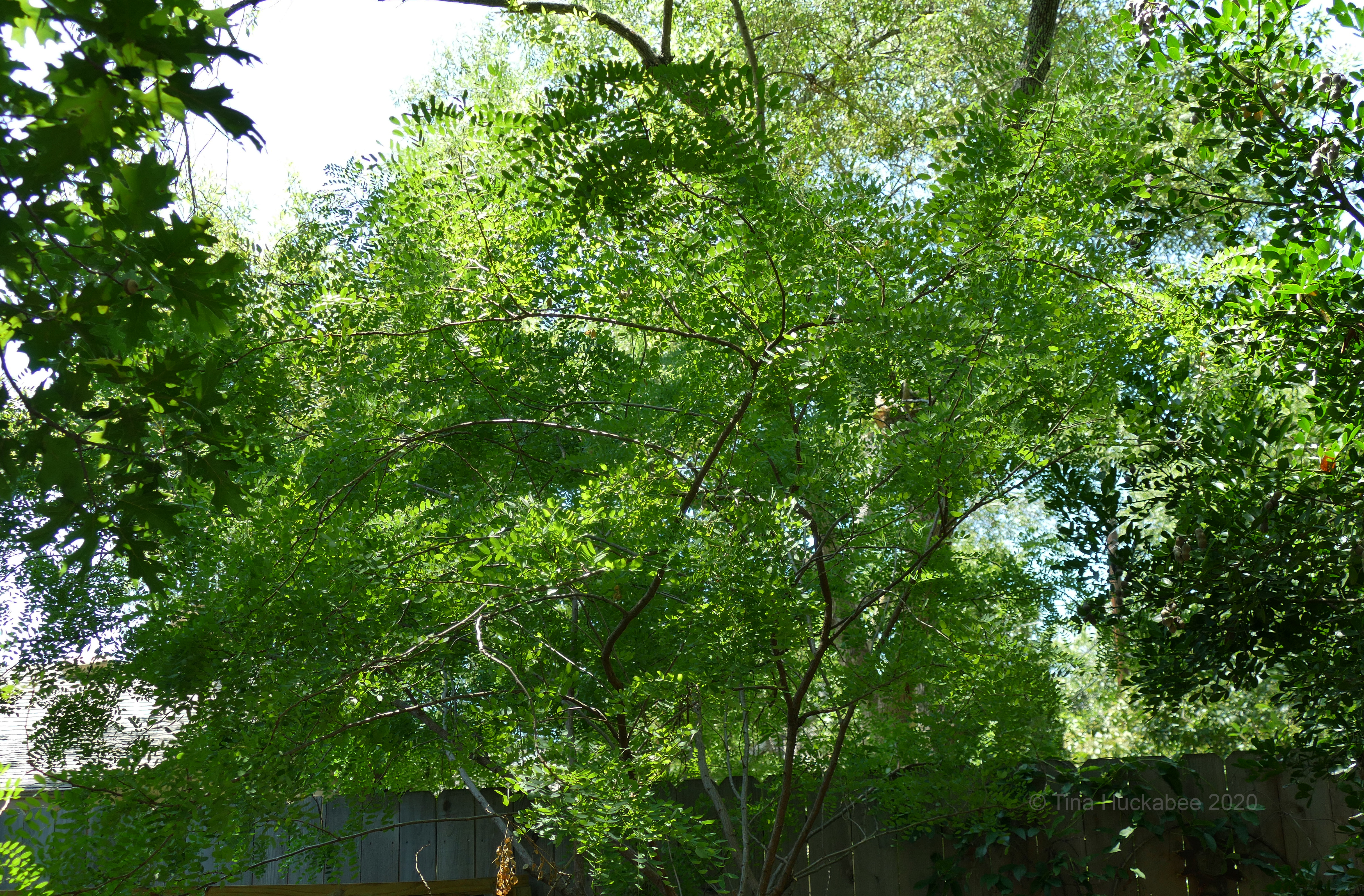
Summer and fall show the Goldenball Leadtree as a happily green, dry-loving small tree, perfect for an urban garden in a hot climate. 

My Goldenball leeaans to the left, I suspect trying for as much sun as it can gather for itself, but I don’t mind that bit of quirkiness.   Throughout the year and especially in summer, the fledging birds dash to this little bit of protective green, which sits not too far from the bird feeders.  I’ve seen Carolina Wrens, Thryothorus ludovicianus, hopping along the slender branches, gleaning insects from the bark as they go, and during migration season, warblers zip to it for safety.

I like the Goldenball’s green glow.  Notice how light and bright the green is on the Goldenball, versus the darker foliage on the Red Oak branch to the left and the Mountain Laurel, to the right.

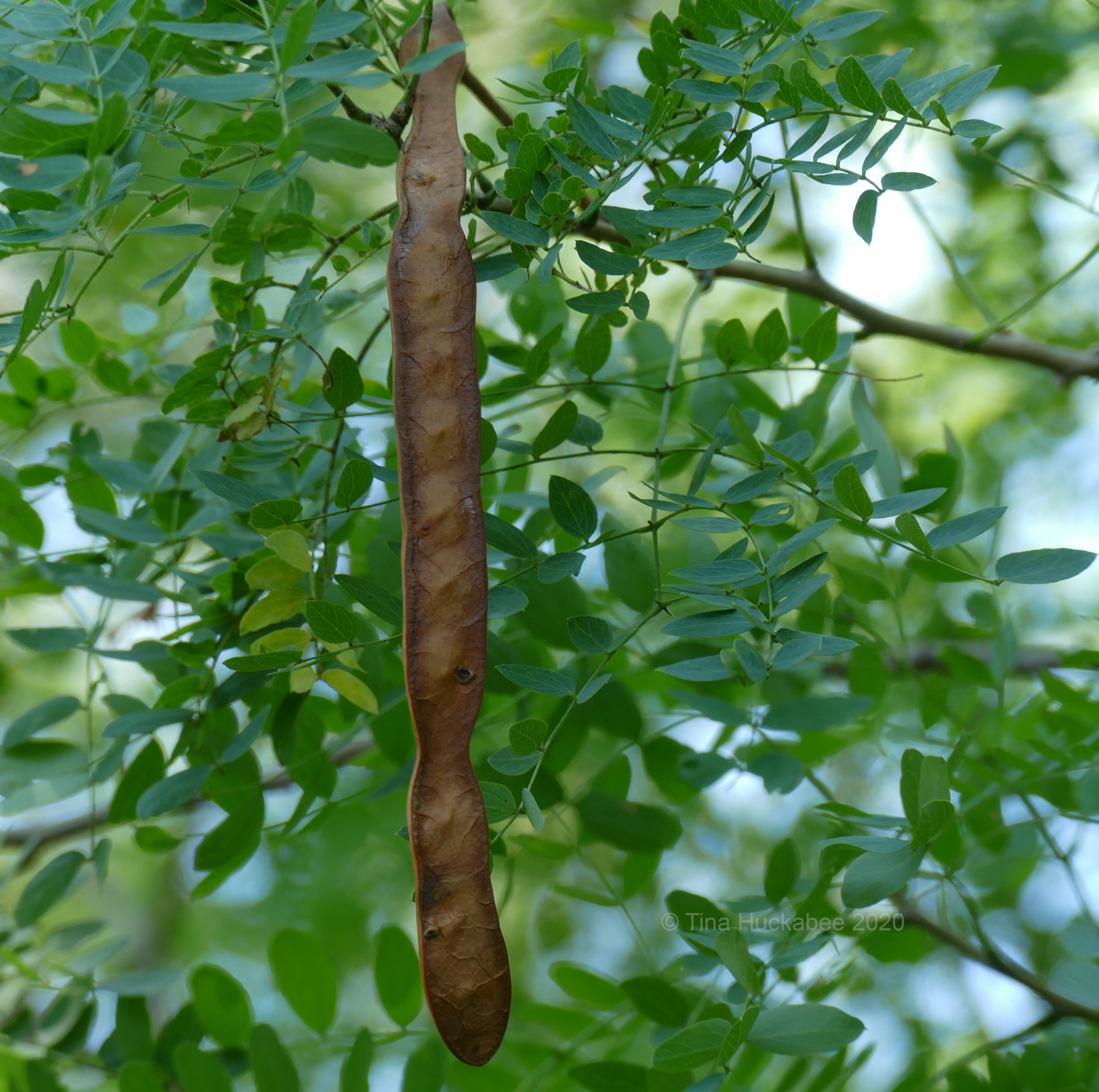
By late summer, the Goldenball Leadtree–true to its legume heritage–develops seedpods, which hang, pendant-like, from the branches.  

I let mine break open and drop, but thus far, I no seedlings have grown from the mother plant.  Supposedly, Goldenball easily grows from seed, but mine remains seedling-less.  I would love to have some baby Goldenballs to share.

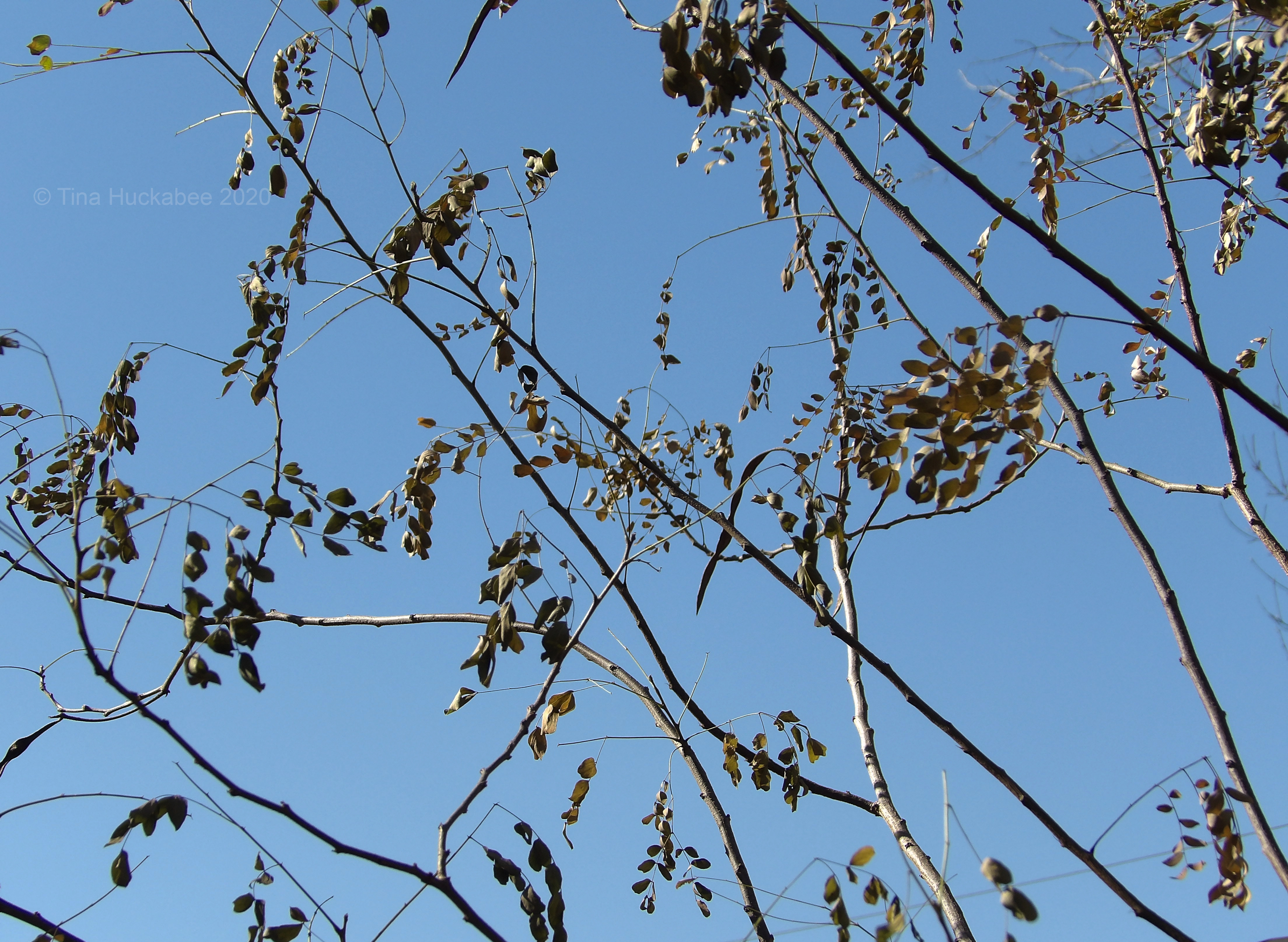
Until there’s a hard freeze, the foliage remains on the tree, thinning a bit with consistent temperatures near to, but not below, freezing.  A hard freeze will take care of that green business, leaving the tree a skeleton of its former self.

Goldenball Leadtree, winter form with sunny sky.

Goldenball Leadtree, winter form with gloomy sky.

The now freeze-burned and dropped Goldenball leaves mix it up with the also frozen and dropped Red Oak leaves.


For those with deer in their landscapes, Goldenball Leadtree is not deer resistant, so browsing will happen, at least until the foliage is high enough that deer can’t reach it.  Is that even possible?  But for those who have cattle and aren’t growing it for this tree for its beauty, Goldenball is reportedly a good browsing plant. 

I am happy to have a spot for this lovely little tough-as-nails native tree in my urban garden.

In spring:


Summer and Fall:


In Winter:

If you garden anywhere in Central to West Texas, Goldenball Leadtree is a charming, easy-to-grow addition to your garden.