Drummond’s a Cure for the Dog Days

During these August days, these hot days, these dog days of summer, I relish the relative cool of my garden.  Here in Texas, morning is best–quiet, fresh, uncooked. It’s been hot, more hot than what once passed for August hot.  Fortunately, my garden remains green and lush, with sprinklings of color–some warm, some cool–all welcome.

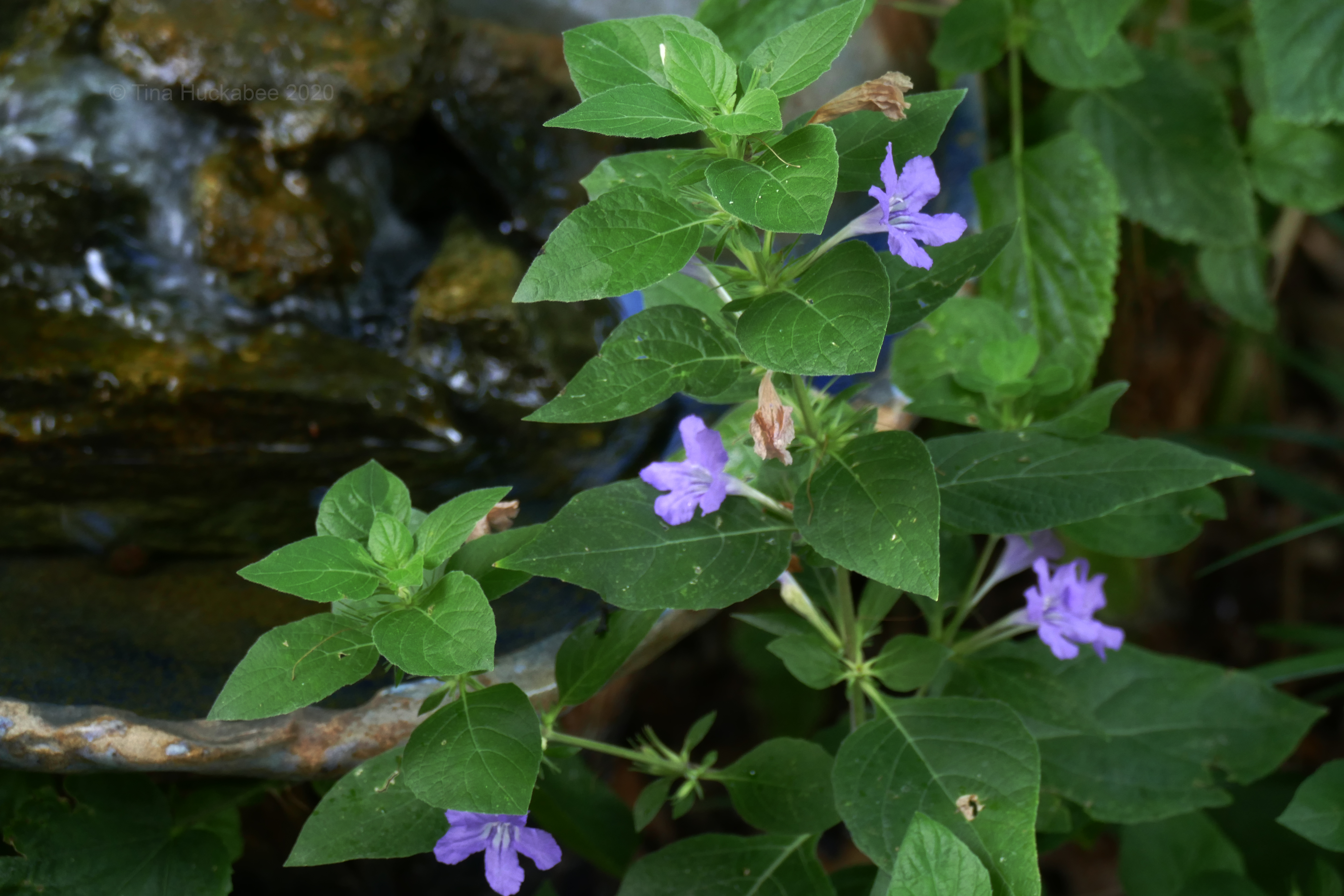
Drummond’s Ruellia, Ruellia drummondiana, is a star in the garden, especially at this time of year.

This native summer blooming wildflower which came from seeds collected some years ago, were let loose to live: they germinated and have produced many generations.  They’re happy wherever they set root, or wherever I transplant the emergent seedlings. Drummond’s bloom sporadically in late spring and early summer, but ramp up in July, reaching the zenith of their beauty just as our “real” heat kicks in and kicks ass.  Well, kicks my ass, anyhow.  The Drummond’s Ruellia?  They’re just fine and dandy: no wilting, no complaining.  The hotter it is, the better they bloom.

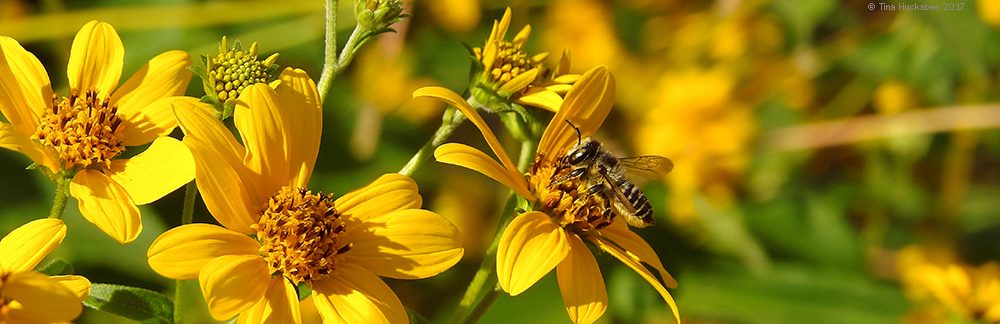
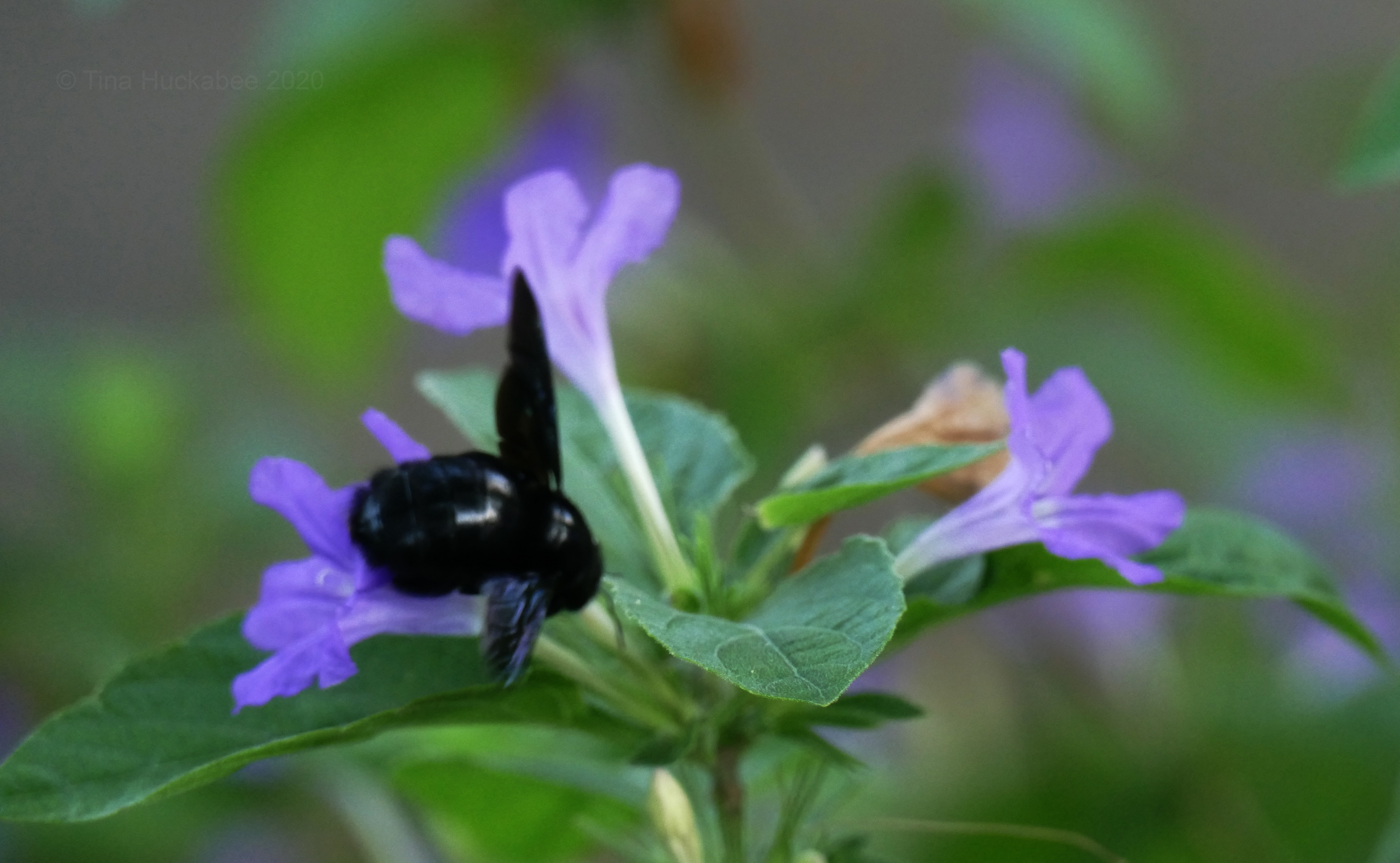
Visited by several kinds of native bees, honeybees, and some small skippers, the ruellias are hosts for pollination parties.  This ruellia is also the host plant for the Common buckeye, Junonia coenia, though that butterfly isn’t particularly common in my garden.  I grab my camera when I see one.

The plant produces flowers in pretty purple, each individual flute opening for just one day.  At the end of the bloom life, tissue-paper petals form, preparing for seeds and new blooms.

Drummond’s Ruellia is a great shade/part-shade plant and perfect for my shady place.  

Linking today with Anna at her lovely Flutter and Hum and Wednesday Vignette; pop on over to enjoy other garden stories. 

August Blooms

It’s hot August and hot-hued blooms are more than a match for the heat wave that defines recent days in Austin, Texas, USDA zone 8b. The flowers are fine as the day heats up, but the gardener becomes sweaty and grumpy.  Early morning is the best time to appreciate the heat-loving blooming bonanza.  

In my shady garden, I grow only two Pride of BarbadosCaesalpinia pulcherrima; both receive late morning to late afternoon direct sunshine.  I adore the full-of-pulchritude flowers, but each of my individual plants are, truth be told, thinner and less lush than those around town which grow in all-day sun.  

I’m not complaining, especially when an early migrating Monarch stops by for a sip of the sweet stuff that the flowers offer in abundance.  In fact, these blooms are pollinator magnets and there’s always something flitting about and alighting on the bright blooms.


Turk’s capMalvaviscus arboreus, is a signature plant in my gardens, as they bloom well in shade–which my garden has plenty of–as well as in full-to-part sun.  These native Texas shrubs bloom multitudes of petite fire-engine red hibiscus flowers from May until October.  Bees and hummingbirds are frequent visitors, and birds will enjoy the fruits that follow, later in autumn.  


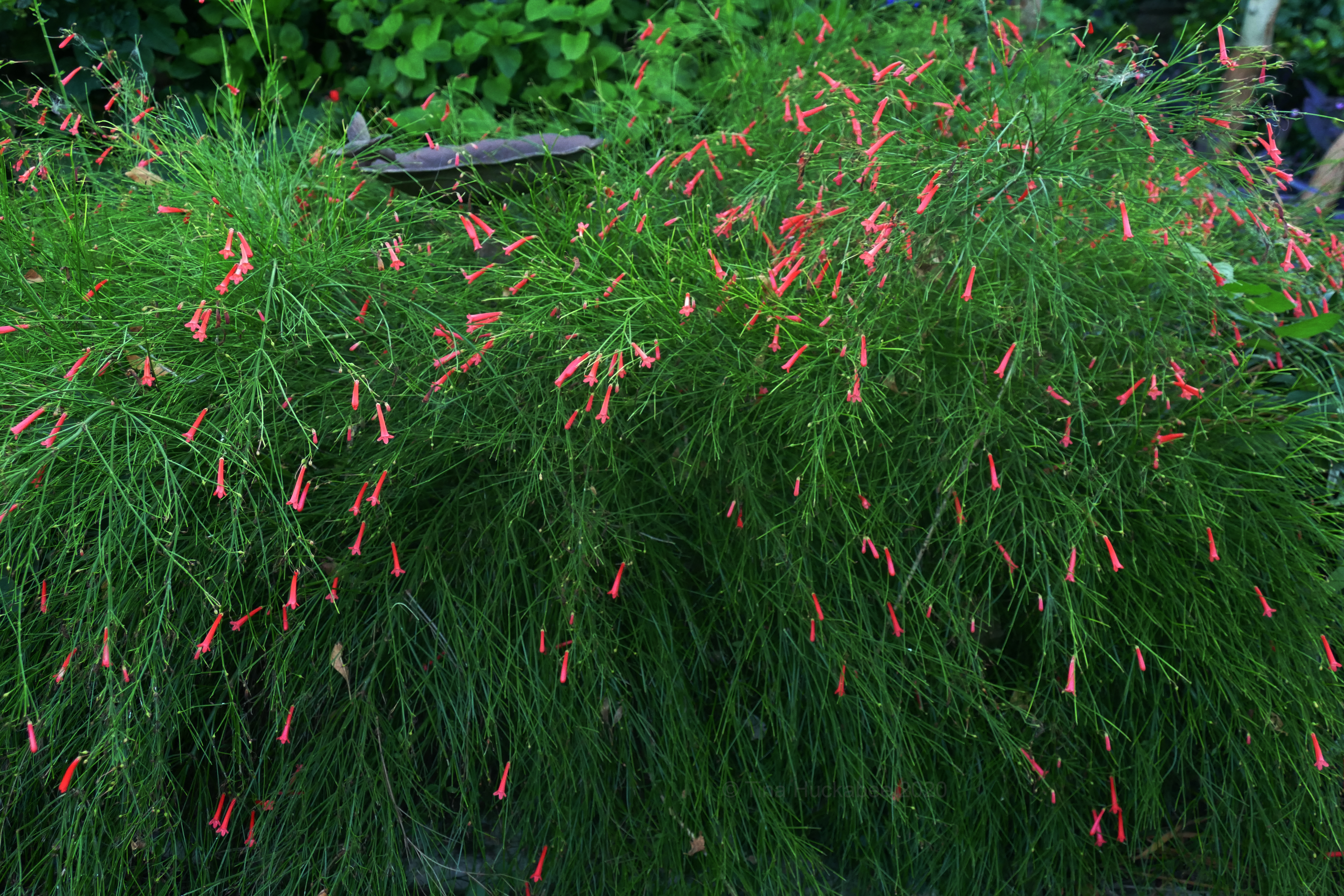
More hot red blooms this hot August are found on the Firecracker plantRusselia equisetiformis.

A plant which thrives in both dappled shade and part sun, its tubular blooms attract native metallic bees and hummingbirds.   It’s a tough plant:  it requires little water, has no disease or insect problems, and is lovely in both flower and foliage.

I also grow a cousin to the R. equisetiformis, the Russelia coccinea.  My one little plant  has been in the ground for quite a few years and doesn’t bloom often.  

But, it’s blooming now–and how–and has done so for much of this summer.

I like how the arching branch full of red blooms visually bisects the purple Oxalis Triangularis.

Blooms are numerous along arching branches, bright red, but more fluted than the cigar-shaped R. equisetiformis blooms. The leaves are small, opposite and scalloped, rather than the fern-like foliage of the R. equisetiformis

The R. equisetiformis is native to Mexico and southward.  I’ve had both plants in my gardens for many years, but the R. equisetiformis is the more prolific of the two and seemingly better adapted, as mine grows in both shade and in some sun, whereas the R. coccinea seems happier in a spot protected by the Texas summer sun.


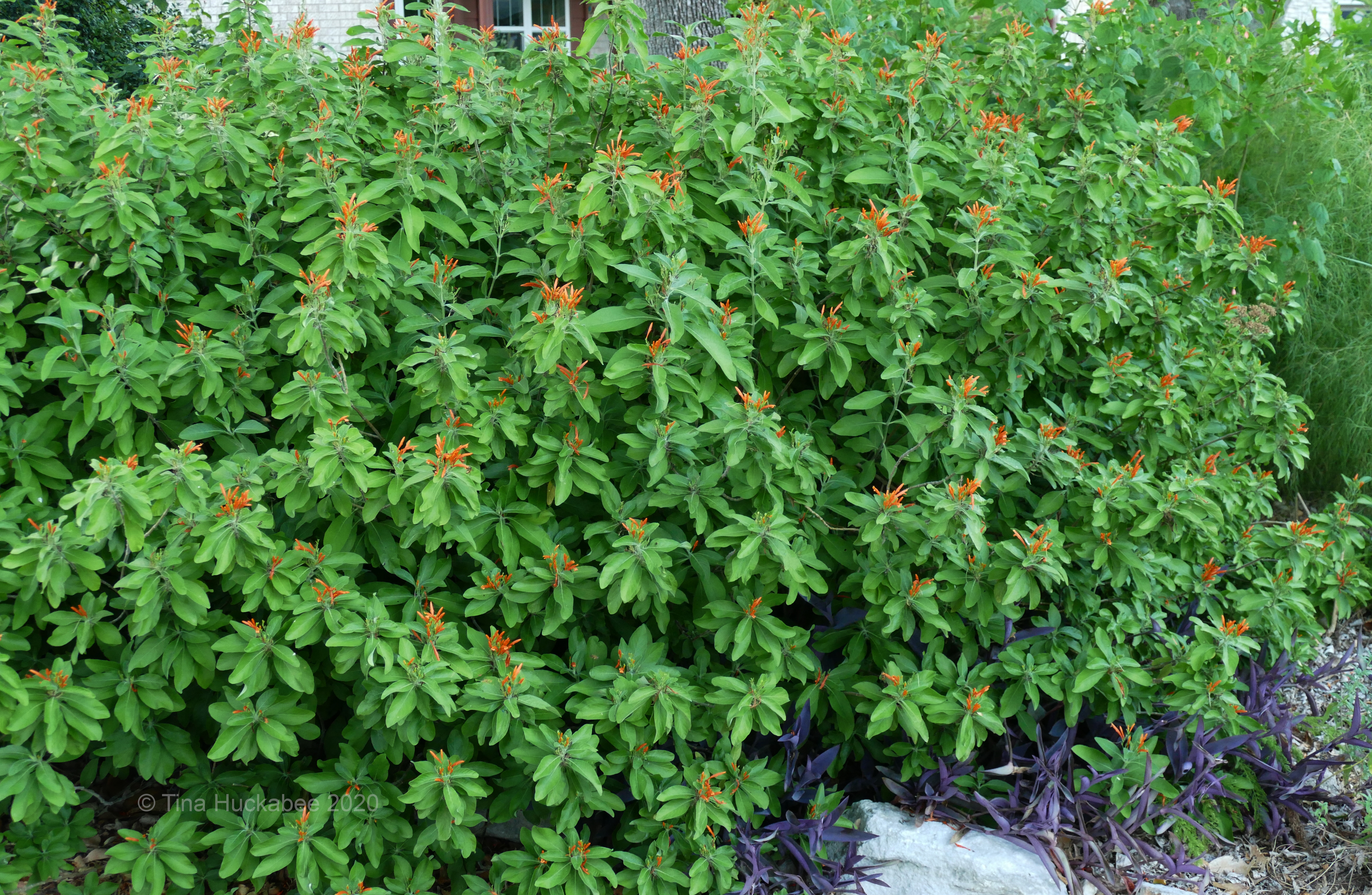
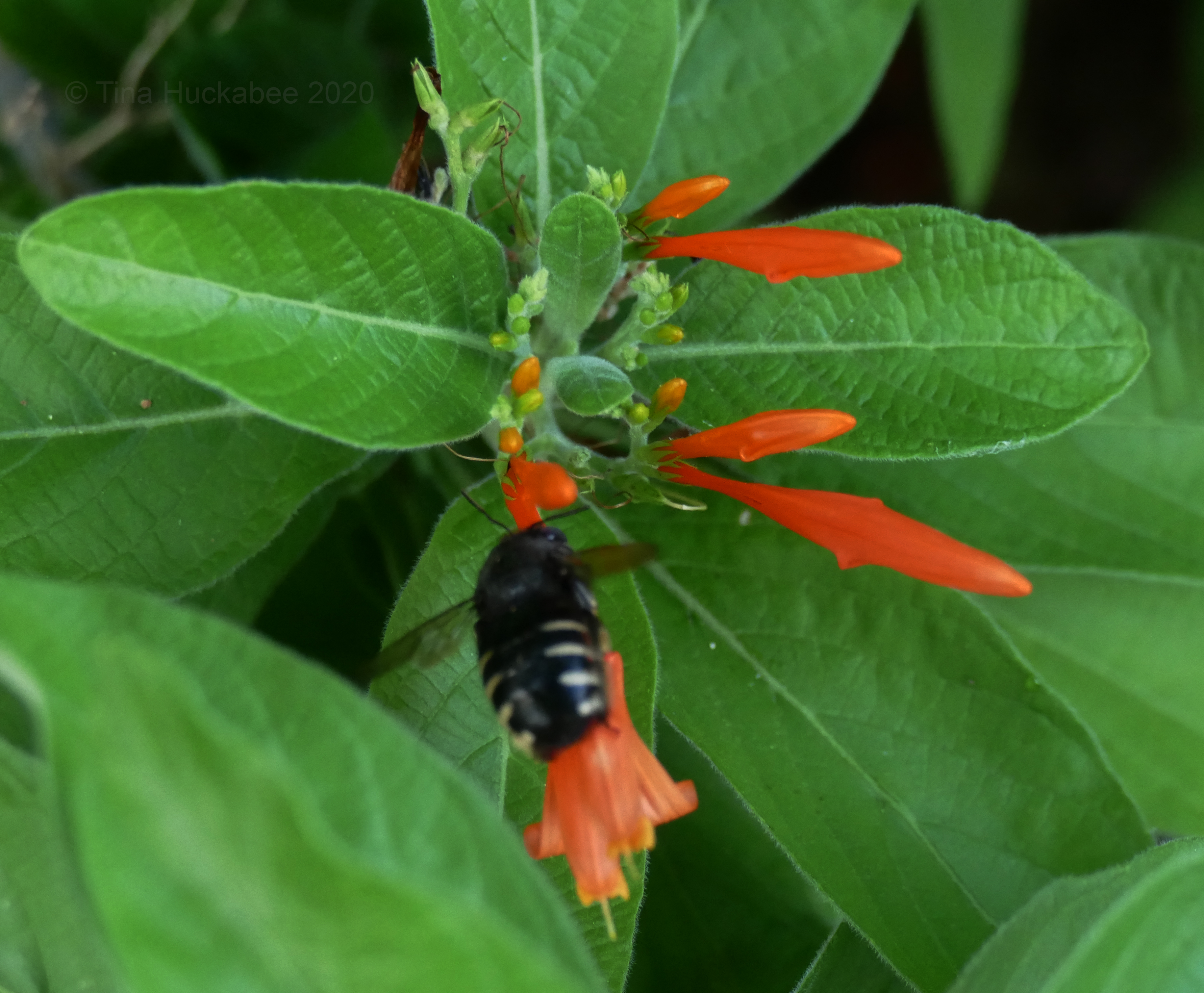
Mexican HoneysuckleJusticia spicigera, is back in blooming business after its June and July vacation.

The pollinators are cheering!  Well, they don’t exactly cheer, but there are few bloom clusters which don’t have attendant bees, busily working the blooms–all day, everyday.   It’s a popular place to eat!

A honeybee works the bloom,

…as does a Southern Carpenter bee,

…and a Horsefly-like Carpenter bee.


Another two plants which thrive in summer’s heat are the Flame Acanthus, Anisacanthus quadrifidus var. wrightii, and Firebush, Hamelia patens. 

Like the other hot plants in this post, both of these shrubs produce blooms that pollinators love.  Shortly before I caught this shot of the Flame Acanthus flower, it was feeding a female Black-chinned hummingbird.  The hummer buzzed away with an annoyed chirp directed at me, but the flower remained, posed for a photo.

A native metallic bee was more cooperative with the photography session as it ignored me and worked a bloom cluster of  the Firebush.

It’s hot.  It’s August.  There are still a few more weeks of oven-like temperatures–can you tell that I’m weary of the heat?  That said, my garden and its heat worshiping blooms are doing just fine.

Autumn is just around the corner.  I can’t wait.

For more awesome August blooms, check out May Dreams Gardens and its celebration of blooms galore.

Daddy Duty Almost Done: Wildlife Wednesday, August 2020

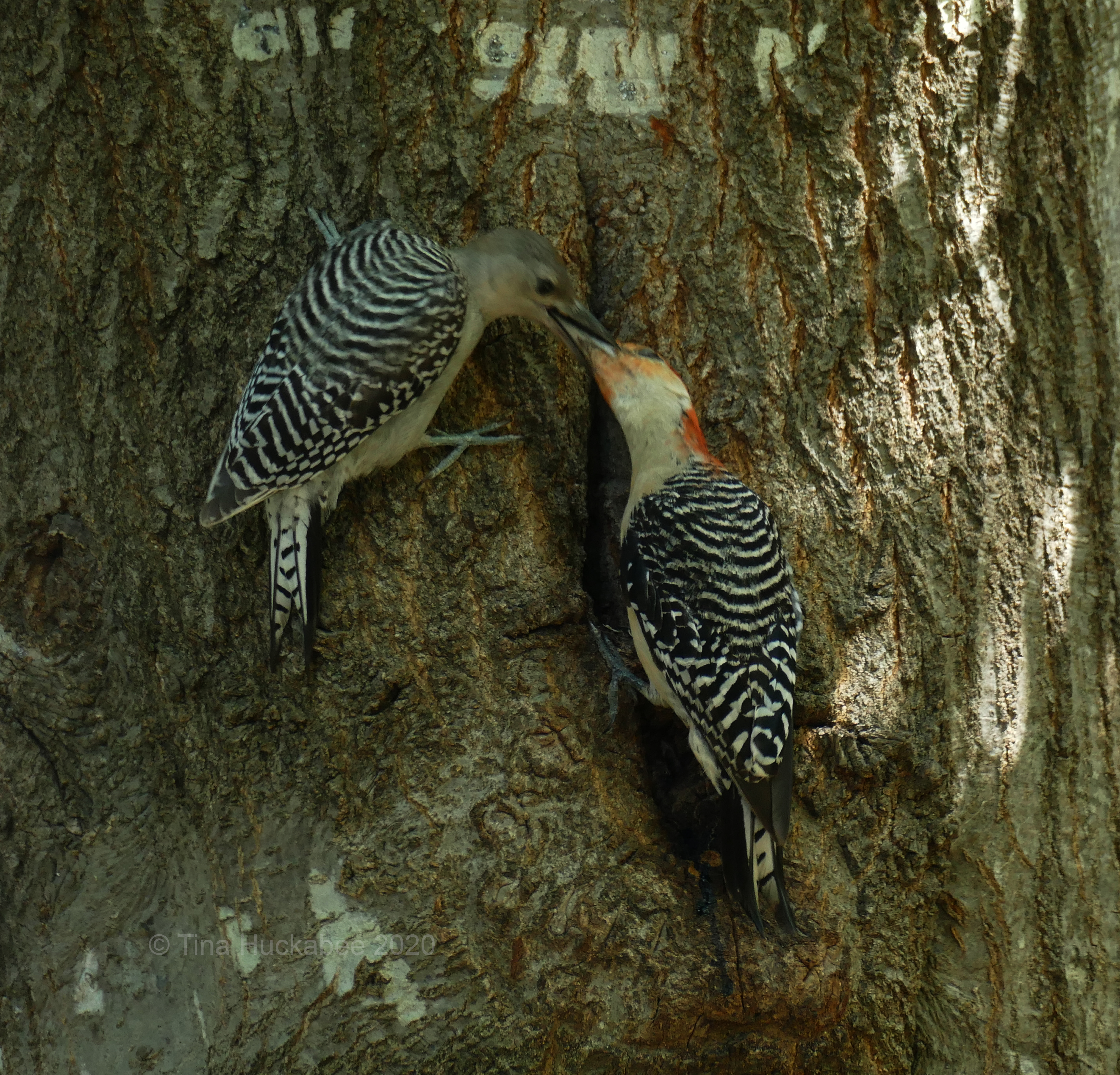
Spring is new life and verdant growth, but is also well behind us and with it, the boom of babies born.   There are still some critters in offspring production: insects, rodents, sparrows, doves and others, I’m sure, who produce youngins’ year-round, or nearly so.  But for many of my local wildlife, their baby-rearing days for this year are drawing to a close.  Baby birds are no longer helpless chicks, but are at fledgling and hatch-year stages; almost, though not quite, independent. Some lessons are still imparted by dedicated parents, like this handsome daddy Red-bellied Woodpecker, Melanerpes carolinus.
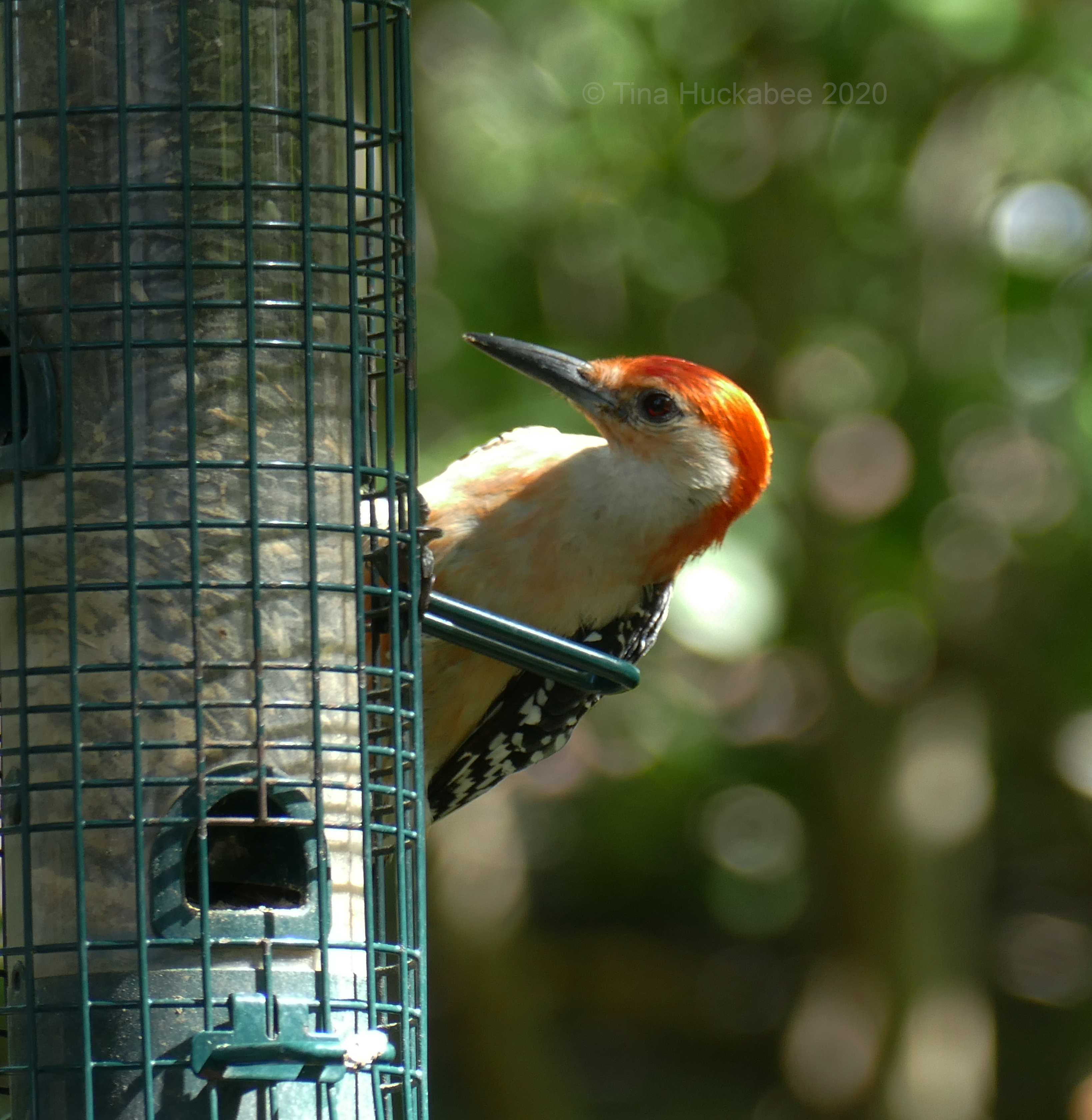
Such a pretty woodpecker!  His head is most definitely red, but it’s the blush on his belly which gives this interesting bird its common name.   

As dad picks up a black-oiled sunflower, baby red-bellied waits patiently on the trunk of the near-by Oak tree. 

C’mon Dad! I’m hungry!

I observed this sweet familial scene for about 15 minutes.  Dad flew to a feeder–mostly the sunflower, sometime the peanut–grabbed a morsel, then zipped back to the tree. When the snack choice was a sunflower seed, he’d spend a minute working the seed-coat off by hammering it as it was secured in the crevice of the bark.  I wonder how he’d learned–by experience or from his parents–that by placing the seed in the crevice, he could better work the seed without its falling on the ground?  Finding an easy source of available food and preparing it for a meal would a skill dad would want to pass on to junior.  Modeling is the best form of teaching!

It’s not yet clear if the fledgling is male or female, but there is the suggestion of rosiness on the back of baby’s head.  Time will tell.  Male Red-bellied red heads begin between their eyes and cover over the tops of their heads. Females’ red heads start toward the backs of their heads, leaving their sweet faces mostly non-red. 

The youngster knows a treat is coming and inches closer in anticipation!
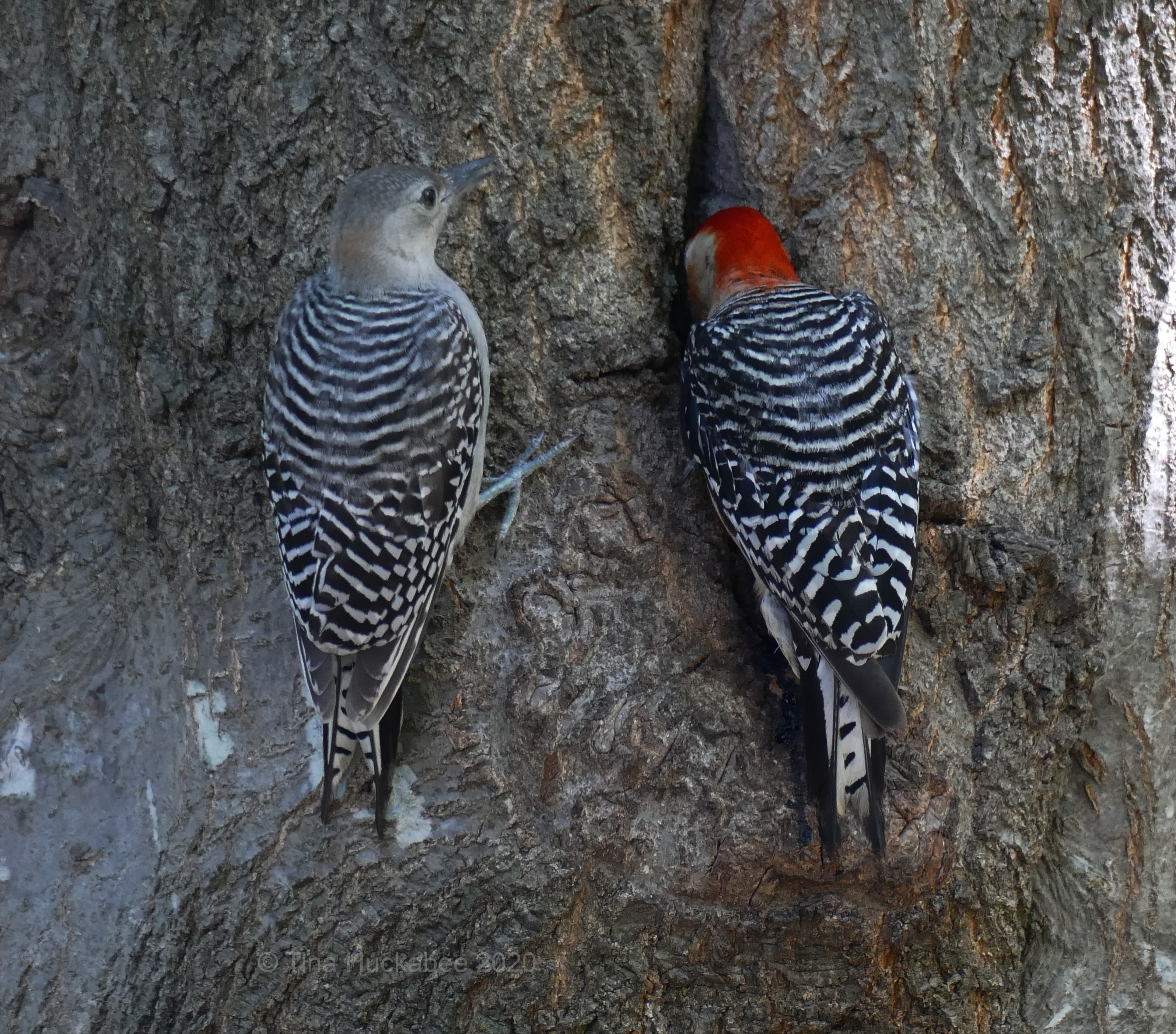
 Yum!!  Thanks, Daddy!

Woodpeckers are common feeder birds, but they eat a wide variety of foods:  all kinds of insects, spiders, nuts from a variety of trees, and seeds from annual and perennial plants.  According to Cornell’s page on Red-bellied Woodpeckers, they sometimes eat lizards, nestling birds, and small fish.  I’ve watched as woodpeckers (Downy Woodpeckers, too) glean insects from the barks of trees, but I’ve never witnessed any munching on protein from higher-up along the food chain.  

“Yes, Little One, you might someday enjoy the crunch of a lizard.”

I watched these two in my back garden as they hung out on my Red Oak tree, but commonly, I’ve seen Red-bellied Woodpeckers–mom, dad, kids–hitch themselves along the thick branches of my neighbor’s large front garden Arizona Ash tree.  That tree now belongs to my SIL:  different neighbor, same house and tree.  

The ash is old and particularly weak-wooded.  During  a May storm, a major branch broke, landing in multiple pieces at the end of SIL’s driveway.  It was rather dramatic!  Thankfully, no one and nothing (except the branch) was damaged.  Interestingly, the break occurred at an established Red-bellied Woodpecker nesting site.  Especially in the last few years, I’d observed little red-heads hanging out from the hole that some dad started and some mom helped finish.  This spring, before the break, bully European Starlings chased off the Red-bellied Woodpeckers, which was sad.  In retrospect, I’m glad the Red-bellied babies weren’t in the nest when the storm came and the limb fell.

As neighbors stood around and marveled at the mess, recounting their own storm horror stories, I cast my eye on the portion that housed the woodpecker hole and nesting cavity.  SIL was on-board with me taking it–for what, I wasn’t yet quite sure. 

That piece of former woodpecker nest now sits in a garden just below the tree. 

The hole, drilled through the thick bark by determined, hammer-beaked woodpeckers, is a door/window into the tree.  The nest cavity was fairly roomy and the sides of the hole were completely smooth, an exemplar of fine crafting by woodpeckers.

At the storm-driven break, obviously weakened by the nesting of generations of Red-bellied Woodpeckers, I filled the former nest with potting soil after plugging the woodpecker hole with crushed granite.  I popped in a stem of Ghost Plant, Graptopetalum paraguayense and the plant is doing well in its new home.  I just need to water from time-to-time. Ahem.

I enjoy observing the excellent parenting skills of the various birds who visit my garden.  For a while longer, I’ll watch the juveniles’ antics as they mature.  Autumn isn’t too far in the future and the new generation will eventually leave, moving on to their own territory to find mates and continue the cycle.   
What wild things did you see in your garden this past month?  Please leave a link, if you’d like to share your garden’s wild ways.  Happy wildlife gardening!