Foliage and Bird

It was a sprinkling of snowy Four O’Clock flowersMirabilis jalapa, that caught my eye one evening, not too long before sundown.  My two Four O’Clock plants (the other one blooms a stunning hot pink) are pass-alongs from a gardener and former blogger.  This old-timey, Southern garden addition-by-way-of-Central and South America, is a night bloomer and grows from a fleshy root which can become quite large.  The creamy flowers brighten a shady area close near my pond;  the flowers open in late afternoon, bloom all night, and close by late morning.  

But it was the metal bird, standing in a diversity of foliage, that resonated as a garden story.  Even though I planted this crew, I didn’t recognize just how different the various leaf forms are and how well they complement one another as they mature. 

Sometimes, it’s challenging to see consciously what will be as a garden evolves.

Clockwise from top left, the blue-tinged Soft-leaf Yucca, Yucca recurvifolia, sits next to the tropical green foliage of the Four O’Clock.  To its right, another grey-blue foliage plant, Drummond’s Ruellia, Ruellia drummondiana, serves as backing for three individuals of strappy, stripy Carex phyllocephala ‘Sparkler’ sedge–and that’s where the quirky bird perches.  A couple of iris straps and dangles of autumnal seeds of Inland Sea Oats, Chasmanthium latifolium complete the oddball group.

The Drummond’s Ruellia and ‘Sparkler’ sedges will grow and will require management: the ruellia will need pruning and the ‘Sparklers’ transplanting.  Maybe the bird will  migrate elsewhere.

For now, the group is simpatico and the gardener is pleased.

It was Anna’s own lovely foliage photo which reminded me of my foliage and bird.  Check out her Wednesday Vignette for garden happenings.
September Blooms

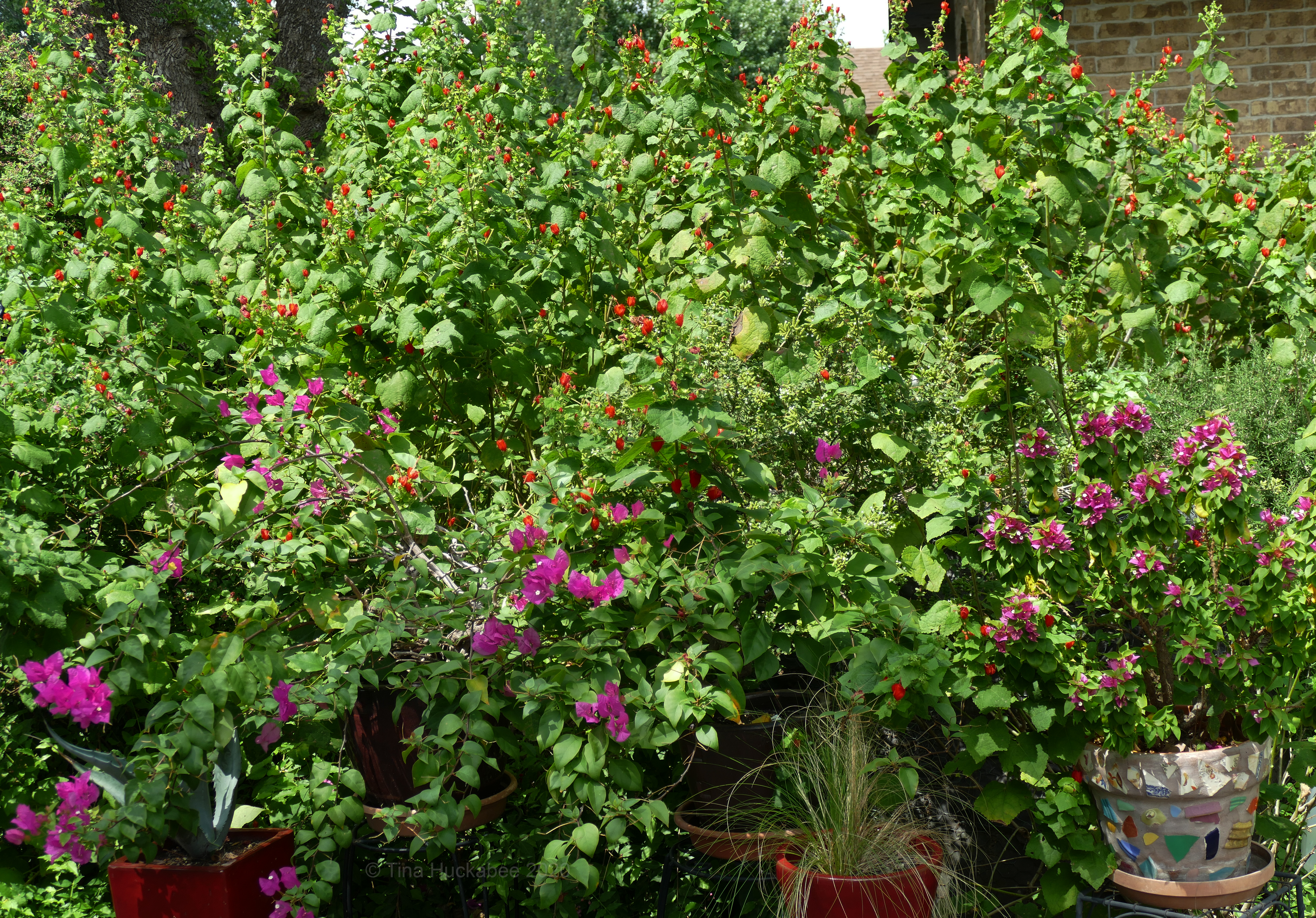
Come September, gardens and gardeners in Austin, Texas, zone 8b, breathe a sigh of *qualified* relief, thankful that we’re mostly through the long hot, the searing sun, and the toasty dry.   Come September, very welcome rain usually occurs and even a couple of lame cool fronts puff through, cooling things off (however briefly) and all but ending the truly hot and ushering in the merely warm.  It is still warm, downright hot many afternoons, but our second spring–a flush of autumn blooming–is just beginning.

Turk’s cap, Malvaviscus arboreus, blooms from early May until November, but peak in floriferousness (turns out, that’s a word!) during the last few months of their bloom cycle, just in time for migrating monarchs and ready-to-migrate hummingbirds.

Accompanying the Turk’s cap during the long growing season are potted bougainvillea, a Mexican feather grass, and an American agave–sun worshipers, all.


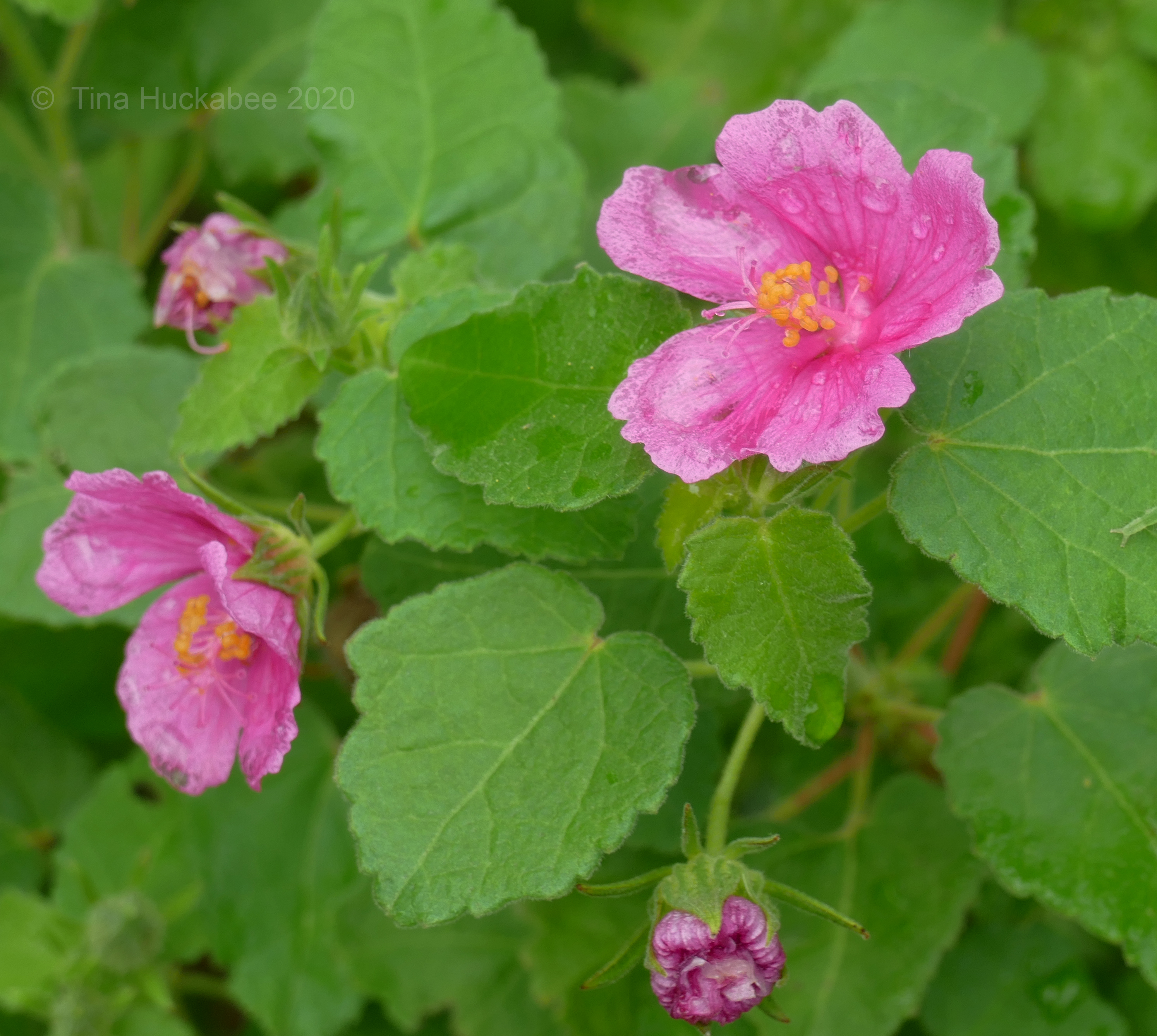
Rock rose, Pavonia lasiopetala, rests during July and August, gifting to the gardener only a stingy few shockingly pink delights during those hot months.  But add a little rain and the pink petals produce a pow-wow.

Late summer rain sets these lovelies up for a profusion of tiny flowers until the days are short and cool and their blooming cycle is complete for the year.


Mexican orchid tree, Bauhinia mexicana, have an on-and-off bloom cycle, except from late July and through hot August when this native of northern Mexico enjoys a bit of a siesta during the hottest time of the year.  As soon as the weather patterns gentle up the blooms bust out.


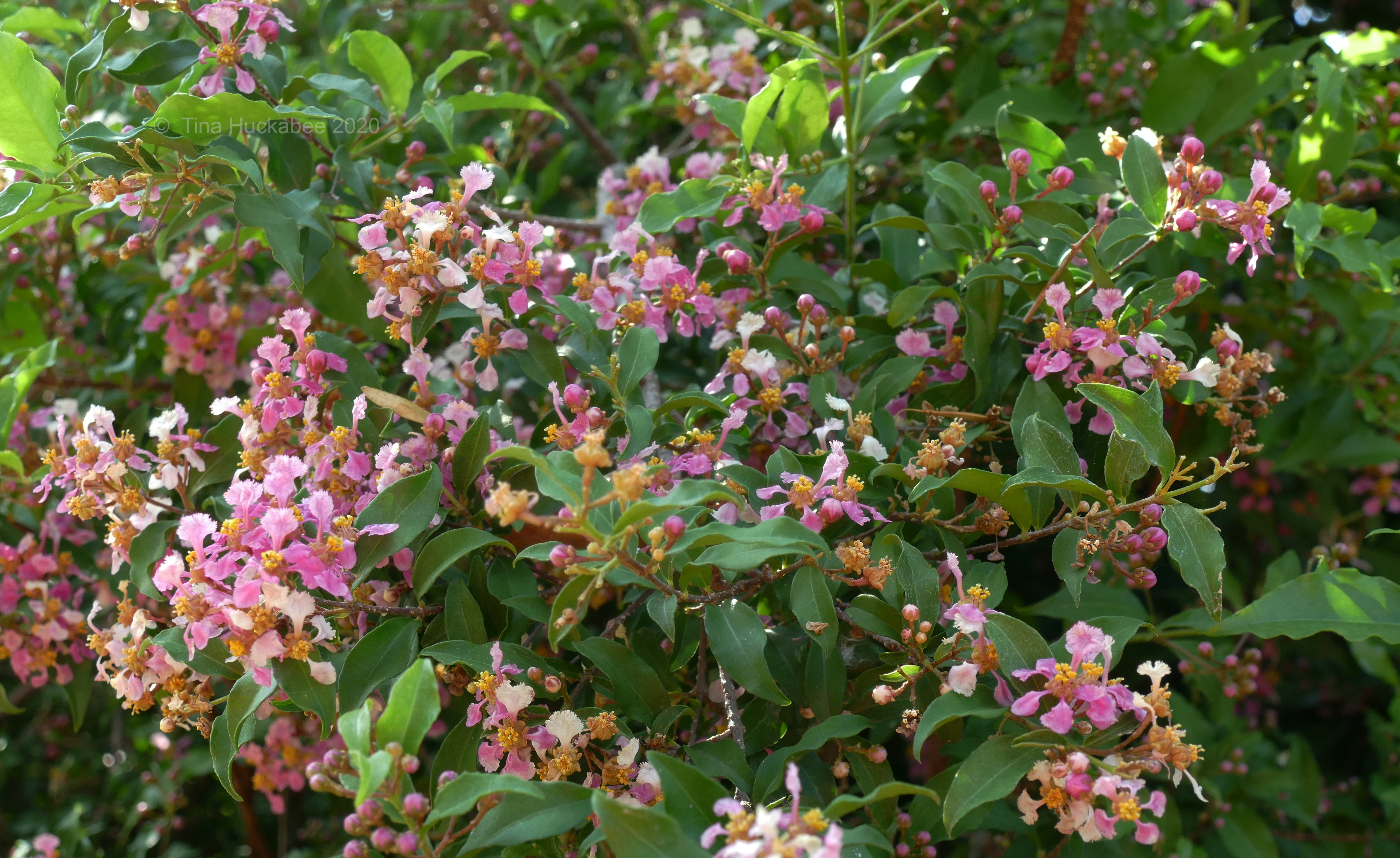
Busting out is also a good description of the masses of frothy pink bloom clusters that  Barbados cherry, Malpighia glabra, produce after some needed precipitation.

Most of the year, this large shrub lacks these floral decorations and is green, dense and provides good cover for birds, lizards, and other assorted critters.  But with spring and fall rains, blooms develop (to the cheers of the gardener) followed by luscious red fruits  (favored by many birds).  The dainty clusters attract all sorts of pollinators and fill the air with a fragrance reminiscent of baby powder.

A pretty plant which provides so much for so many.  Win!

I’m linking with Carol at May Dreams Gardens for her monthly bloom huzzah.  Check out her blog for more bloomin’ love!


Always a Surprise

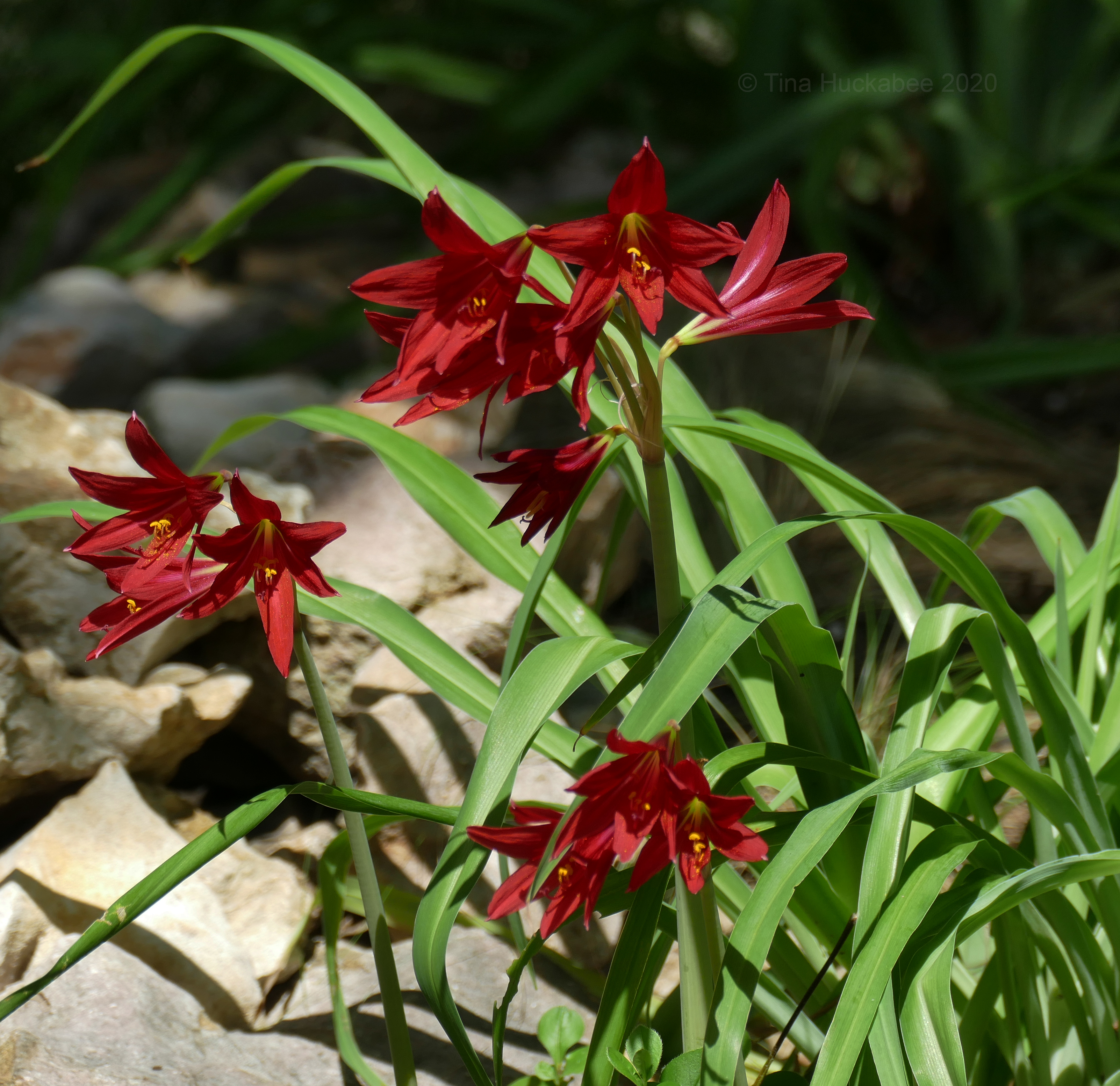
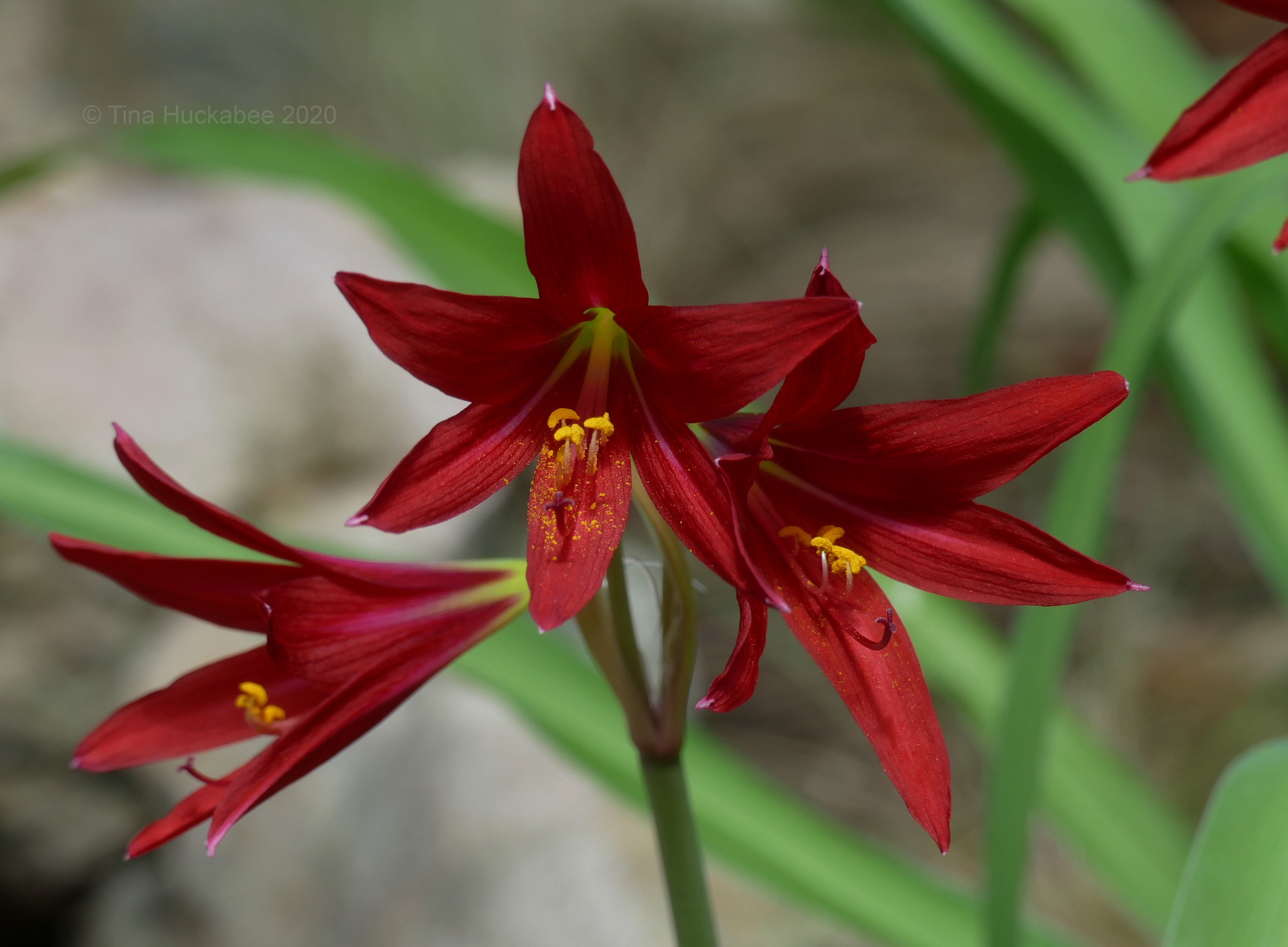
Every September, I’m surprised–and unsurprised–at the overnight emergence of the clusters of Oxblood lily, Rhodophiala bifida, in my gardens.

The September surprise begins with the fleshy stems, which push through newly rained upon soil and which I observe if I’m actually looking for them.  But it’s usually the riot of red atop those stems that catches my attention.  And how could I miss that scream of scarlet? 

These shockingly crimson blooms emerge at the end of our long summers and after the first fall rains.  Not native to Texas, these beauties originated in various parts of South America.  Oxbloods were brought to Texas by an early Texas botanist, Peter Oberwetter and have naturalized throughout much of the state, gracing lawns, natural areas, and gardens–including my own.  The blooms sit only about 12 inches from the ground and last a week or so.  Often, though not this year, my various groups pop up and bloom at different times, extending the bloom period to as much as a month.  This year, they’ve all burst open at once.  Once the blooms are done, slender, striped foliage emerges and remains evergreen throughout winter, disappearing sometime in late spring.  The Oxblood lily bulbs hunker down for the hot summer.  Smart bulbs! 

The strappy leaves you see accompanying the blooms in the photos belong to another plant, the native Texas craglilyEcheandia texensis, which are revving up their autumn blooming, too. 

As I sat on the ground to get these shots, several metallic sweat bees buzzed around the blooms, but I couldn’t get more than a smear of bee in any of the photos, so I settled for pure flowers.  It’s affirming to see the pollinators active and attracted to these blooms.  A little ways from where I sat, a hummingbird worked a different set of red flowers and I’ll bet that after I left the scene, Ms. Hummer came by for a sip. 

Surprises in the garden really aren’t surprises, are they?  We know the garden is dynamic, we know there’s always something new, something evolving, something different.  We just need to pay attention to the somethings.

For more surprises–or not–check out Anna’s Flutter and Hum and Wednesday’s Vignette!