Dad’s Duty

It appears that our Eastern Screech Owl, Megascops asio, couple are in the family way. About 12 days ago, dad owl moved from his daytime perch in the back neighbor’s ash tree, located at the opposite end of my garden from the nest box, to varying spots that are within 10-20 feet from the nest box. That he is now hanging out so close to the nest box indicates not only eggs, but that they’ve begun to hatch. As well, I haven’t seen any sign of mama, as I’m certain that she’s been busy brooding the eggs and is now caring for hatchlings. She probably leaves the nest box briefly in the evenings (everybody has to pee and poo), but she’s mostly in the box with the chicks. Dad is providing meals for the whole family at this point in time. I haven’t seen a rat in weeks!

Some days, dad perches in my SIL’s large ash tree (just over the fence line), other days he’s in our Red Oak tree, just a few feet above the nest box. No matter which perch he chooses, he snoozes, but he’s also keenly aware of what goes on in the garden and he keeps a wary eye on our activities.
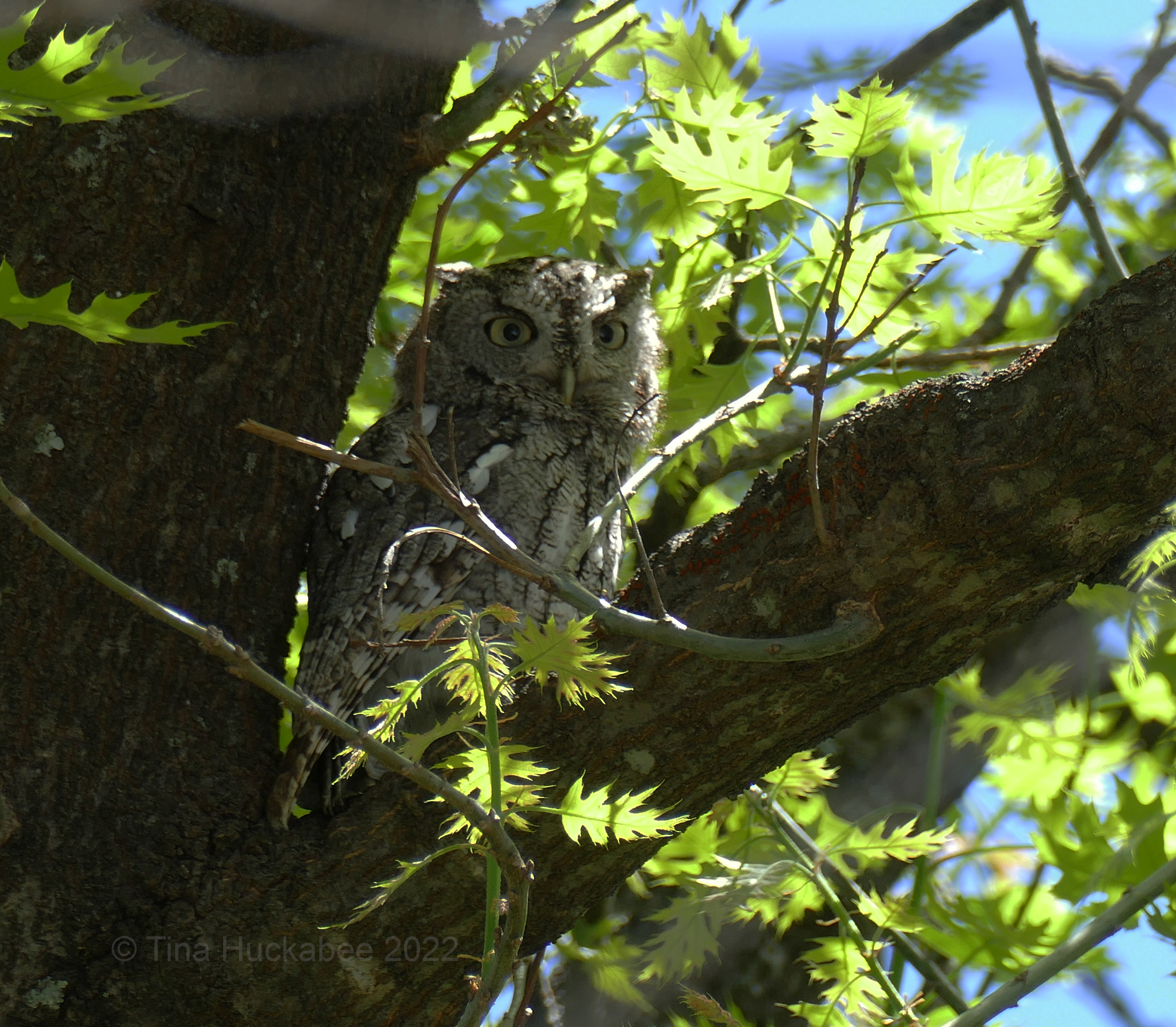
Hanging out in our Red Oak tree, he stares at me while I snap a photo.

Our poor owls have had a run of bad luck for about 5 years, following years of successful families raised. I’m keeping my fingers crossed for appearances of fuzzy owlets the first week of May. I’m likely to see mama hang out more in the trees soon, too, because those hungry chicks will be getting big and the box will be crowded.

Our camera stopped working last year after the owls abandoned the nest and we didn’t replace it. I regret that we didn’t, as I’d love to observe the chicks’ progress and the parents’ devotion and care. Even so, I like searching for dad each morning as he sits sentry, protecting his family, and I look forward to seeing mama again, and in time, the darling owlets.
Gettin’ the Good Stuff

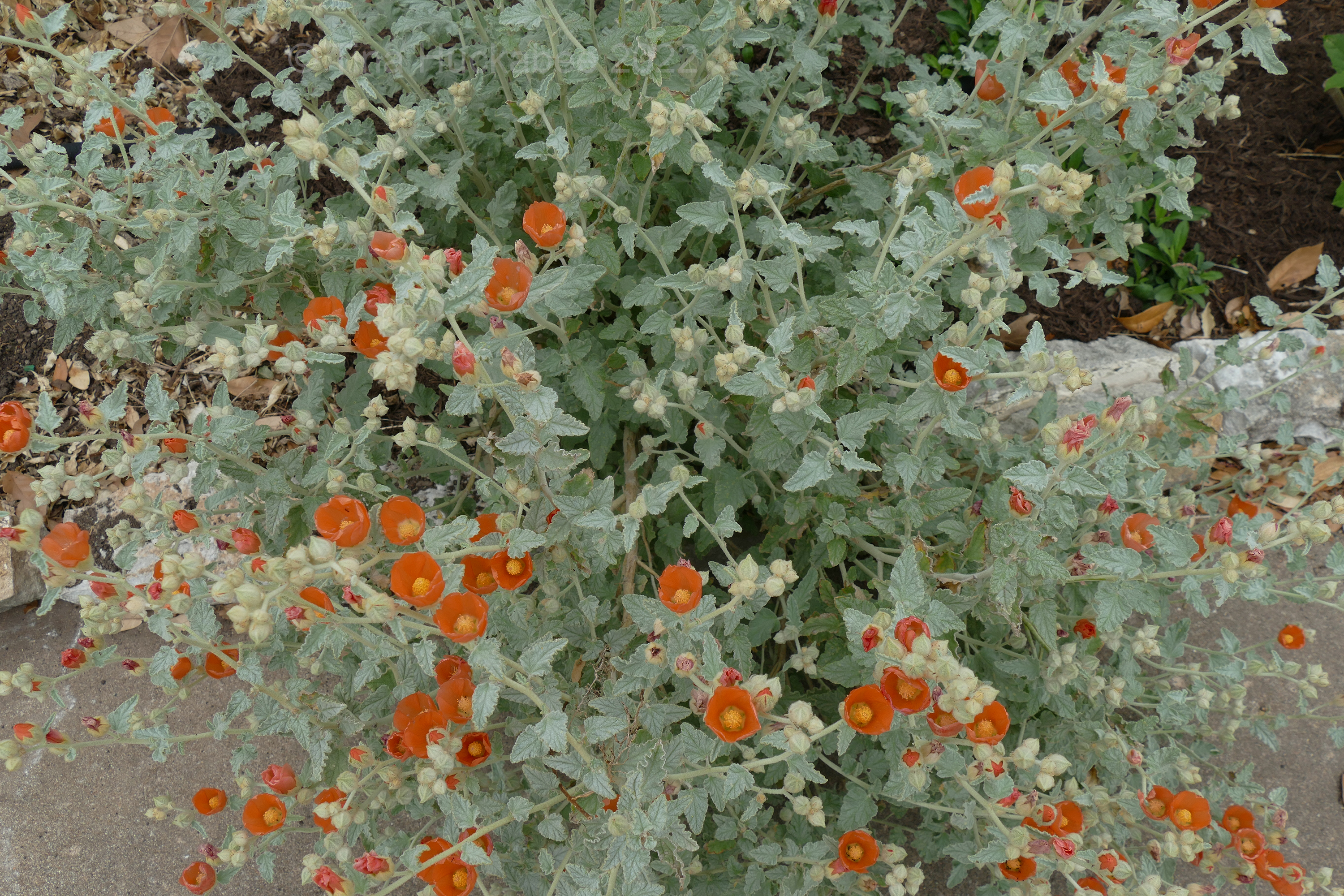
On a cloudy, not-too-windy morning, I strolled through my front garden, stopping to admire one of my Globe Mallow, Sphaeralcea ambigua, shrubs. Its soft silver-green ruffly foliage, paired with the stunning dreamsicle orange blooms melts my gardener’s heart.

Out of the corner of my eye, I glimpsed a streak of movement, though it took a minute or so for me to see it again, catching sight once the flash landed. It was a zippy thing, this flash, not lingering on any surface–until it did. The mystery critter proved to be a Green Sweat Bee, Halictidae, and was all in with the luscious mallow blooms.

I was pleased to see this bee at the mallow, though not surprised: this plant attracts a wide variety of pollinators. I now have enough areas of full sun for this gorgeous native North American plant to grow it in several areas of my garden.

Go get the good stuff, little bee!

Wannabee

Last week a cold front barreled into Austin, dropping temperatures 56 degrees, from 88F to 32F within a 24 hour span. As the wind picked up in late afternoon and I was covering a few of my container plants, I ambled to our lone beehive, Bo-Peep, noticing that the ladies were heading inside, having finished foraging on that warm day, soon to be cold night. I don’t know if they knew that it would be freezing for the next few days, but it would make some sense that they were snuggling in for the duration of the chill.

On the entry board of the hive, this stunning moth was also ambling about; the bees ignored the moth, the moth ignored the bees.

I’ve seen this species of moth before, mostly in flight, but it was always too quick for me to identify. A Grapevine Epimenis, Psychomorpha epimenis, this moth species uses grape plants as its host plant, meaning that it lays eggs on the plants, the larvae eat the plant as they mature to adulthood. In one local source that I found, the author mentions that the adults typically fly in February, laying their eggs on the still dormant vine. My Mustang Grape vine, Vitis mustangensis, has grown along a trellis for a number of years and is courtesy of a passing bird, raccoon–or something. I’ve never noticed caterpillars on the vine, but will keep a keen eye out for them in the next couple of months.

This moth sports red spots on its wings, indicating that it’s a male; females’ spots are orange. I was able to catch a glimpse of the underside of the wing, too. I like the mottled grey/black pattern, black dots on charcoal grey background. What a handsome fella!

During my winter pruning frenzy, I recently pulled some of the grape vine, which I’m now regretting. Though there’s still plenty of vine left and probably eggs on the vine, I wish I’d been aware that the vine is a host plant. Next year, I’ll leave the vine alone until later in spring, giving the larvae time to hatch, eat, grow, and become lovely little moths to grace my garden.

As it became colder, I wondered if the moth found refuge inside the hive, or if the bees would have tolerated a cold weather interloper. Maybe they became sisters and brother during inclement weather. Or did the moth fly off, finding warmth and protection under leaf or branch elsewhere in the garden?