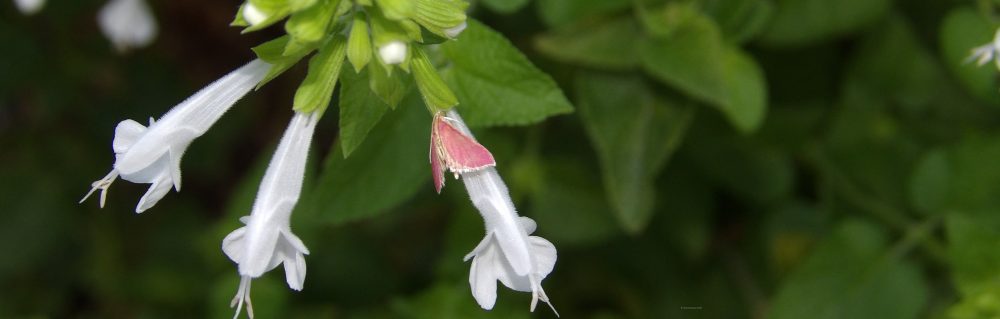
The annual autumn bird migration through Central Texas is mostly completed. I typically observe fewer birds coming through my garden in fall than in spring, but there are always a few who spend time in the trees and shrubs and splish-splash in the pond.
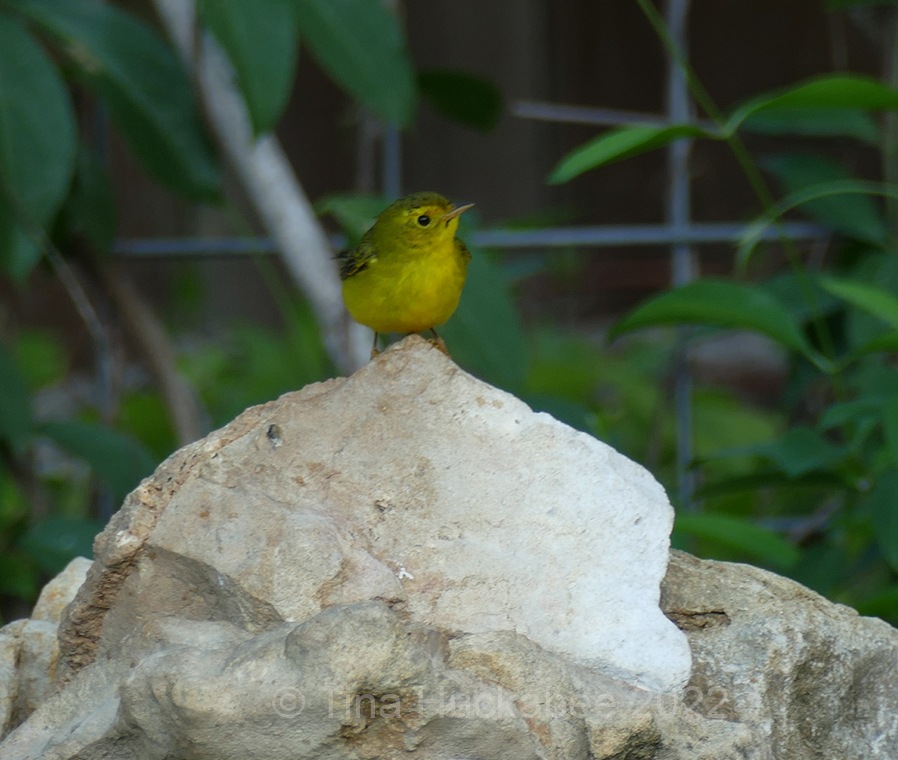
This fall several male adults and at least one female adult Yellow Warbler, Setophaga petechia, popped by for visits. These sunny critters are hard to miss: dashes of yellow through the air, pops of yellow in trees and shrubs, flashes of yellow in the shallows of the pond. These bright streaks-n-spots in the garden are busy, busy birds–they don’t stay still for long! I’m glad this one wanted some warmth from the sun after his bath; he perched long enough for a quick photo.

Male Yellow Warblers are brilliantly yellow, with lovely burnished breast streaks. Females and juvenile males are yellow in a softer hue, but lack the markings on the breast. These beauties winter in Central America and northern parts of South America.
I took plenty of photos of “Yellow Warblers” but as I downloaded the shots, it happened that some birds were Yellow and some were just yellow. The two just yellows are female or immature Wilson’s Warblers, Cardellina pusilla.
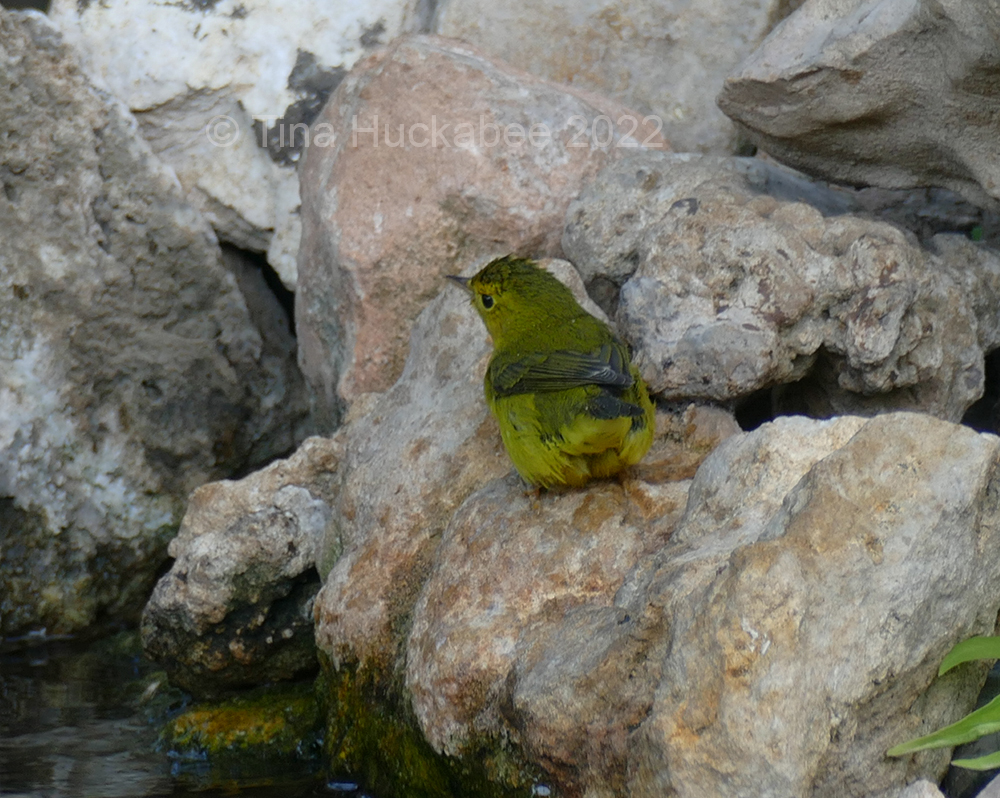
Several years ago, I enjoyed the visit of a male Wilson’s Warbler, his little black cap a signature accessory. This fall, the two who bathed in the pond and bopped through my garden didn’t rock black hats, but instead, attractive arches of yellow over their eyes–the clue to their identities. These birds are heading for Central America, to rest, eat well, and prepare for next year’s breeding season.
An Eastern Phoebe, Sayornis phoebe, graced my garden for several days, dipping in the pond, fluffing in the trees, catching insects on the wing. This bird is a flycatcher and some of its winter non-breeding range is located in Texas, though south of where I live in Austin. I see one or two almost every spring during migration, though I don’t recall ever spotting one in fall.
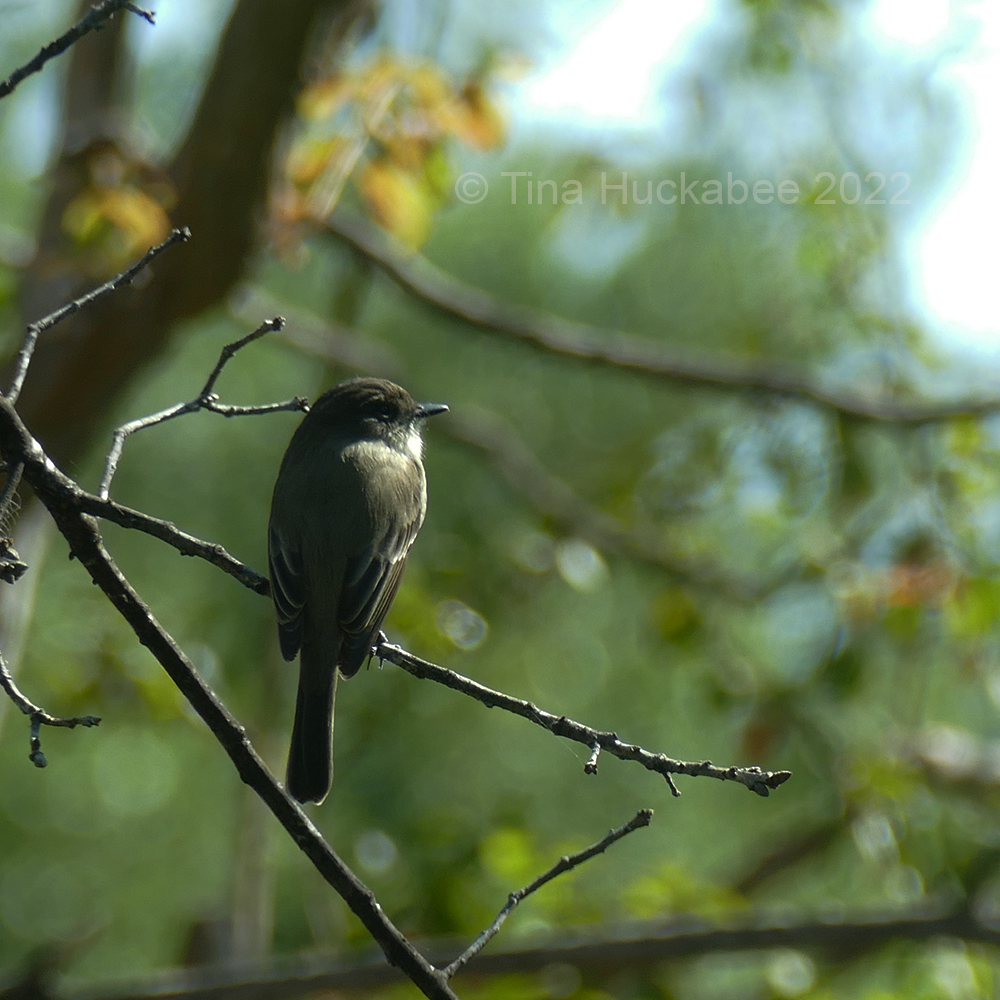
The Phoebe has a charming way of tilting its head back and forth, as if listening for important news. As insects are its main food source, the Phoebe is a fast and agile flyer, and an excellent hunter of many kinds of insects.

From November to April, I’m fortunate to host several kinds of warblers and I’m eagerly awaiting their settling in the garden. It’s always a thrill to observe them for the first time, but I never grow tired of their presence; their beauty and calls are a joy in the winter garden. I’ve already seen a couple of Orange-Crowned Warblers, but both moved on to other places, other spaces. Neither were my warblers.
C’mon little warblers: there’s plenty of food and water, trees and cover, and the cats are in the house. What are you waiting for??


 My Gardener Says...