When I began re-imagining this plot of Earth, my back garden was the sunny side up and the front garden, while facing harsh west sun, grew mostly in dappled shade. Nature evolves, change happens and the opposite is now my gardens’ norm: the front garden is glorious in sunshine and my back garden is nearly opposite, ranging from deep shade, to dappled, to part shade. In the long, hot summer months, the back garden is a refuge. It’s still hot of course, but the cover of the two mature Red Oaks, Quercus buckleyi, is a balm to that heat, allowing for a more comfortable time in the garden to work or sit.
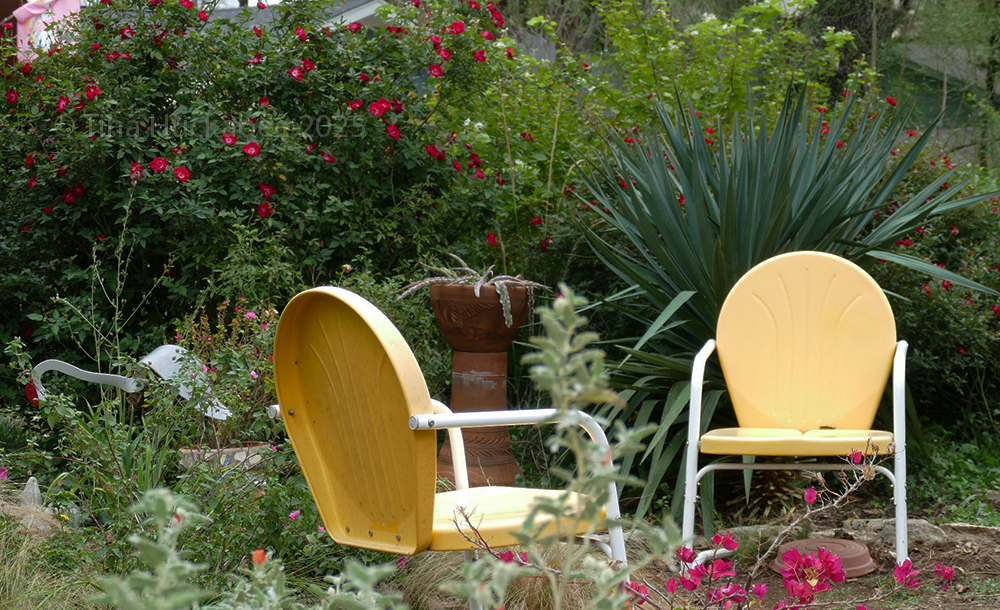
My back garden isn’t as lush with flowers or native grasses as the front, though there are plenty of blooms and varying foliage, the palette of garden choices is simply more limited. In this photo, facing northwest and behind the yellow chairs the plants receive no direct sun.
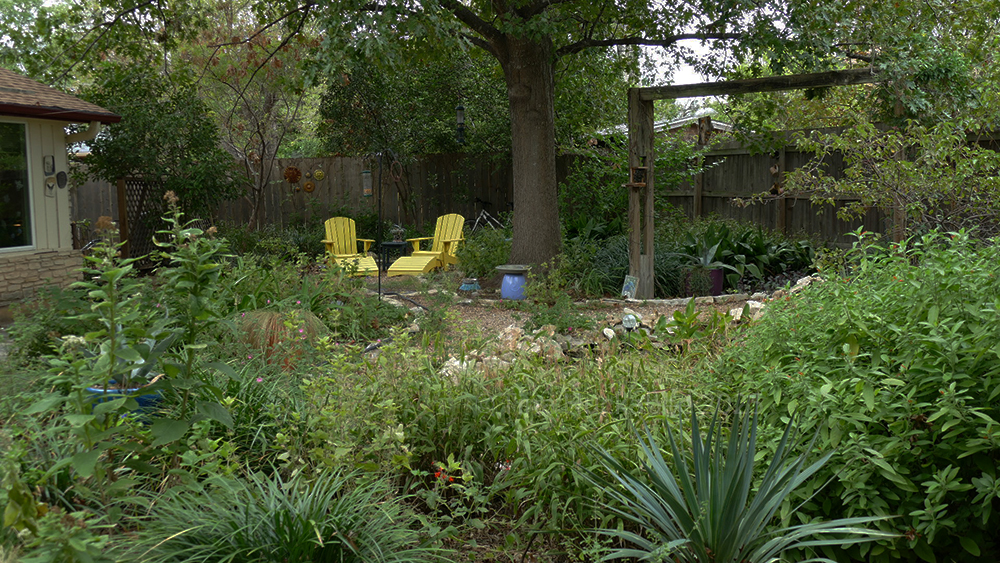
In that space, Turk’s Cap, Malvaviscus arboreus var. drummondii, provide wide, tropical looking leaves paired with the Turk’s signature red blooms; several Drummond’s Ruellia, Ruellia drummondiana, which offer rich purple flowers from mid-summer through September, and Tropical Sage, Salvia coccinea, brightening the dark space with white, pollinator flowers. There’s plenty of evergreen, too, in the form of Giant and small Lirope and iris straps, though it’s far too shady for iris flowers to bloom here.
Another dark space, behind the Red Oak in the above photo, sits an American Agave with Purple Heart, Tradescantia pallida. I’ve planted five sections of this ground-cover in the back garden. Where it receives more sun, the foliage is a darker purple; with less direct sun, both green and purple leaves are represented. Purple Heart doesn’t not like full sun.

Straight out from the kitchen, living room, catio, and back bench, the garden is a narrow, part-shade situation. This is where most of the bird feeders reside (peanut, safflower, suet, and sunflower) and where birds hang out. The pond is also a huge draw, especially during spring and summer migrations.
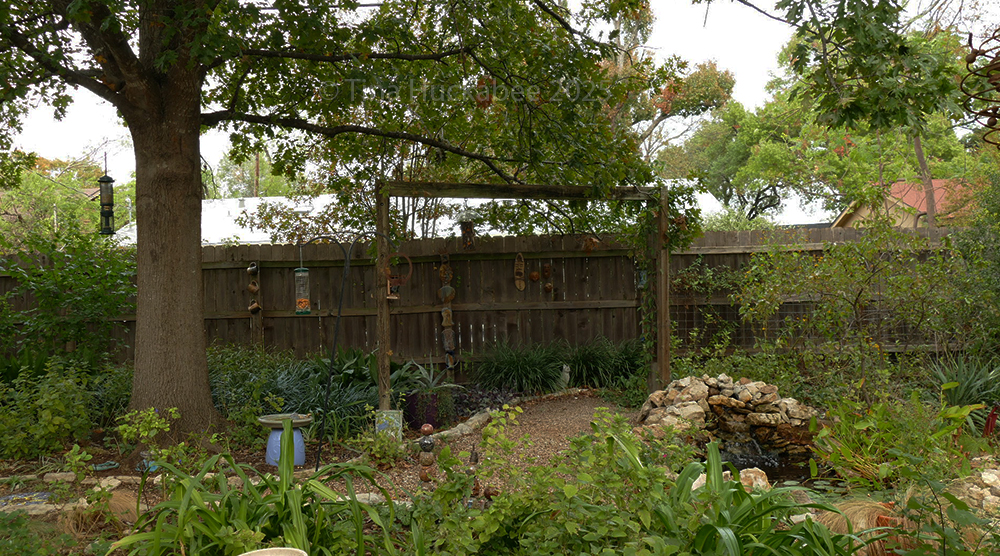
In both my front and back gardens, I grow many plants that provide cover, flowers, and seeds/fruits for resident and migrant birds. However, it’s in this back space that I can watch, unobtrusively, the antics and activities of birds and other wildlife. During the day, whether the feeders are out or not, there are always critters around. For nighttime viewing, we’ve installed two wildlife cameras: one placed on the left beam of the wooden arch in this photo, the other in a different area of the garden. Raccoons are the most frequent visitors, but neighborhood Grey Foxes, Opossums, occasionally a stray cat, a bunny or two, once, a Yellow-crowned Night Heron, and (unfortunately) some rats, are active, especially around the pond.
The front garden is now wonderful for bird activity, but I don’t have a particularly good spot in which to watch that activity. The two yellow chairs in the center of that garden (see previous post) are too much a part of the garden and when I’m there, the birds scatter. I’m mulling changes to allow a bird blind–of a sort–but haven’t settled on a good way to watch the front garden birds so they won’t be offended by my presence. For now and maybe always, I’m content knowing the birds have plenty to nibble and currently, no stray cats to bother them!
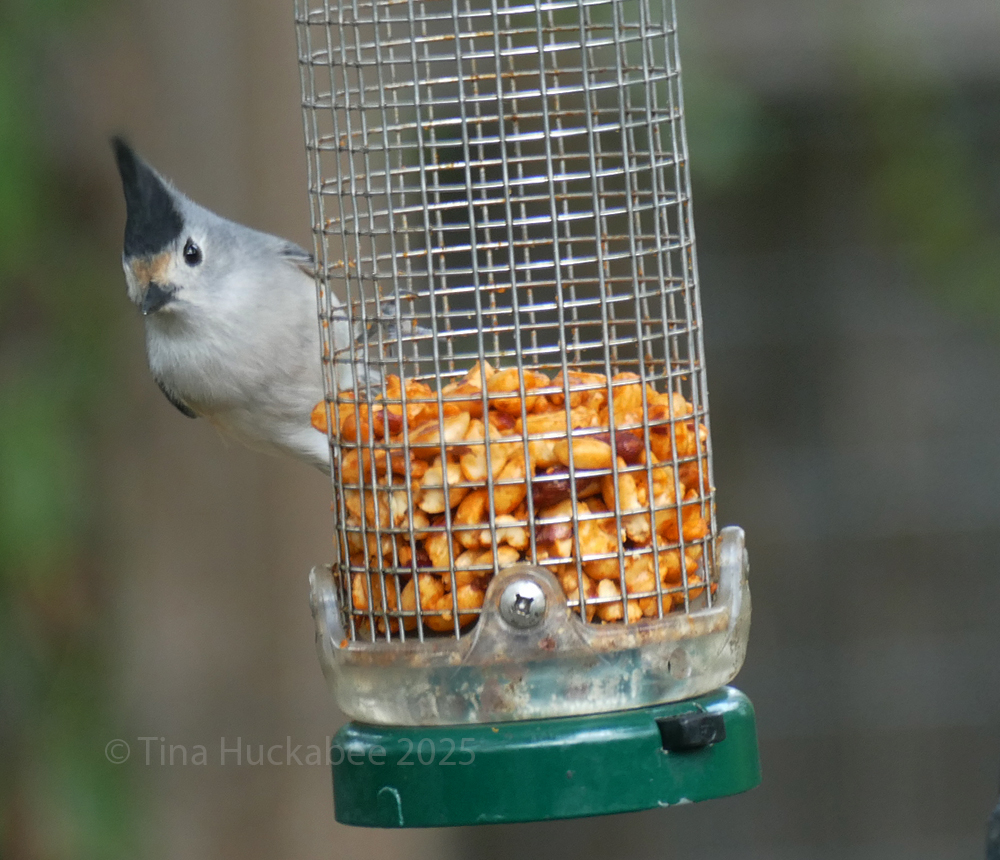
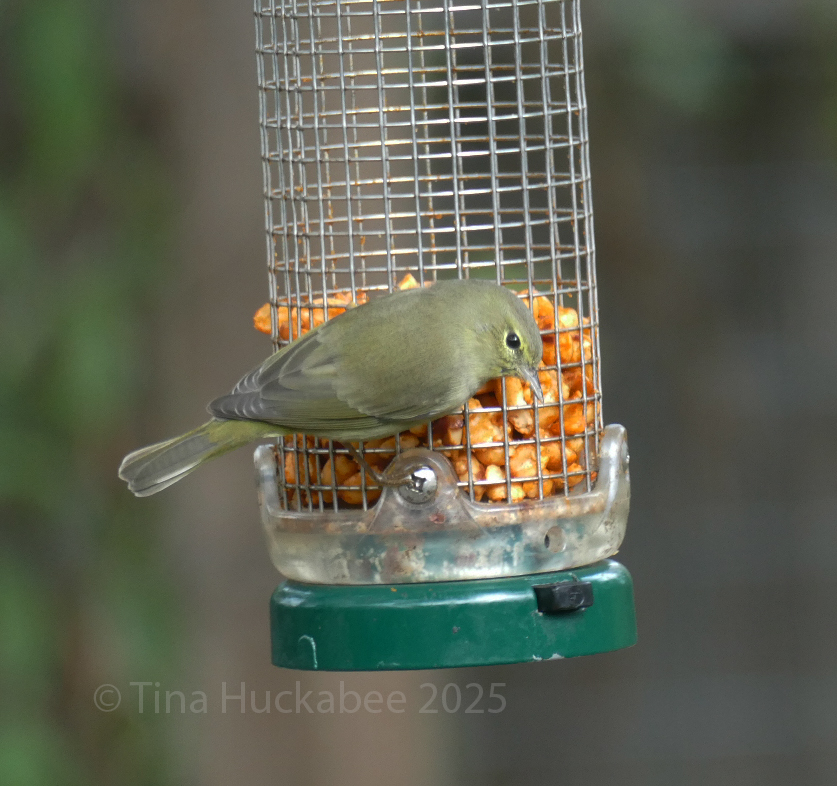
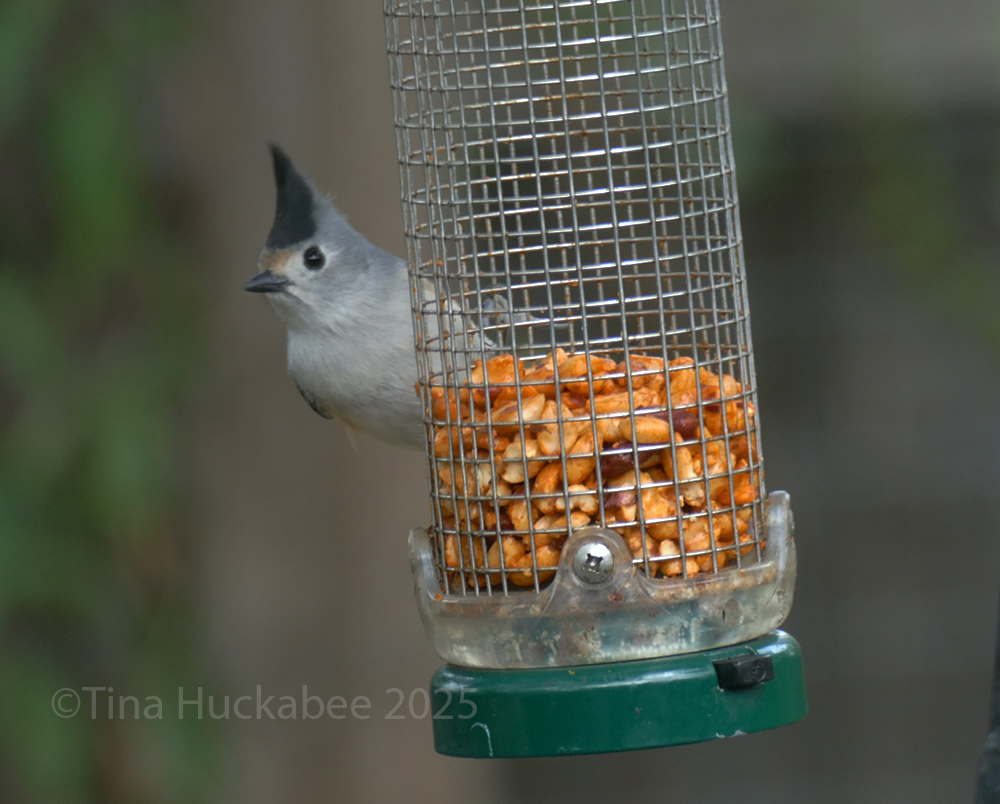
It is in this shady back garden where I take most of my bird photos:


Moving south east toward the wider part of the garden, the garden opens a bit to the sky, primarily because the far Red Oak tree was damaged in Winter Storm Uri in 2021 and no longer spreads its canopy over the whole of the garden. There are pockets of sun, here and there, allowing for a wider range of plants to grow. The pond, across from the pea gravel negative space, receives a decent amount of needed sunshine in the summer months. The fish and lilies are happy with that arrangement.

I resisted digging a pond for a long time. I thought it would too much work and maintenance, but I’m pleased to say that I was wrong about that! The pond benefits from a once-per-year clean out–and it’s a long day when that happens–but other than that and adding a bit of water from time-to-time, the pond is a delight. I can’t imagine a garden without some sort of moving water feature.

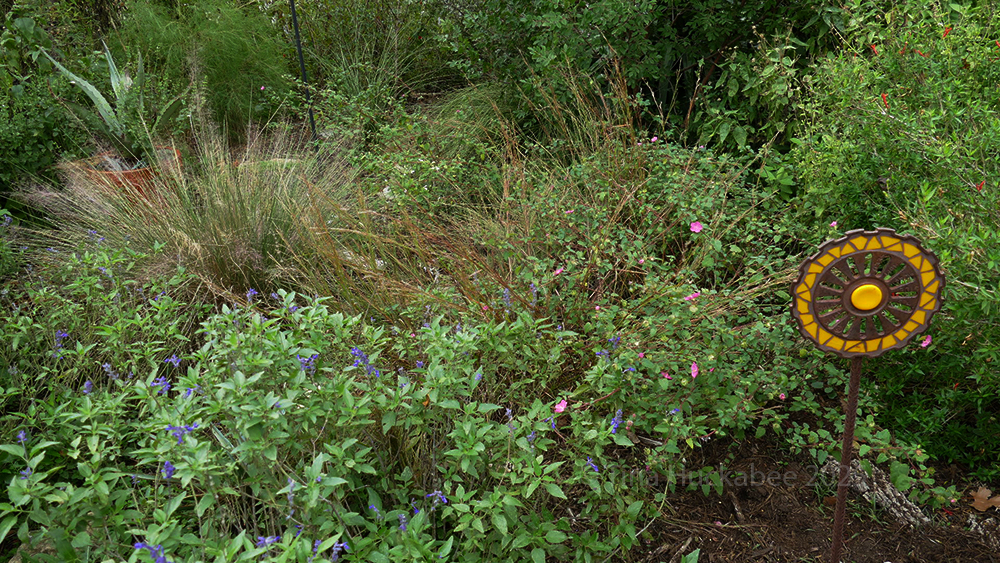
The area of the garden directly adjacent to the pond receives about 5 hours of sun during most of the summer months, less so once the angle of the sun changes. I grow orange daylilies, native Mexican Feathergrass, Nassella tenuissima, Mexican Honeysuckle, Justicia spicigera, Softleaf Yucca, Yucca recurvifolia, and Inland Sea Oats, Chasmanthium latifolium as well as several other smaller native shrubs and perennials.

Beyond the pond and central part of the back garden, and at the far end of my pie-shape lot, more native perennials and native and non-native grasses keep an old Texas Mountain Laurel, Sophora secundiflora company.

The Mountain Laurel was the first small tree I planted (not long after we planted the large Red Oaks) and is at the end of its life. Birds still perch in it and squirrels still climb along its old branches. While it no longer holds a beautiful form or produces stunning purple flowers, it will stay for those critters as long as it’s not in danger of falling.
This section, which abuts the fence between our garden and our neighbor, my husband’s lovely sister, gets a good blast of sunshine. I’ve not been completely happy with some of my plant choices here; it’s a work in progress and an area that I’m still futzing with!
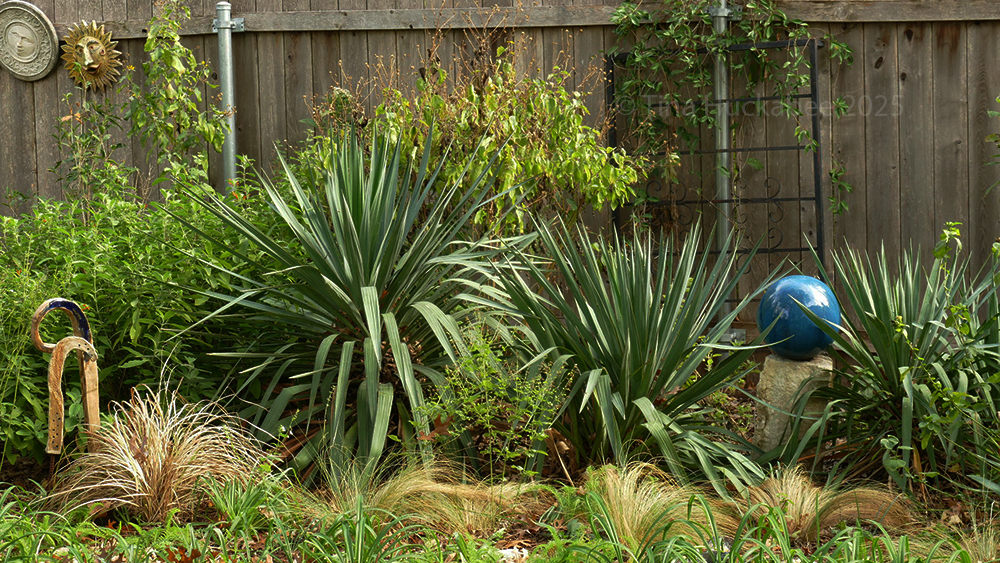
Along the pathway to the back corner (where the honeybees live), two Frostweed, Verbesina virginica, and smaller companion ground-covers and perennials provide color and a diversity of foliage.

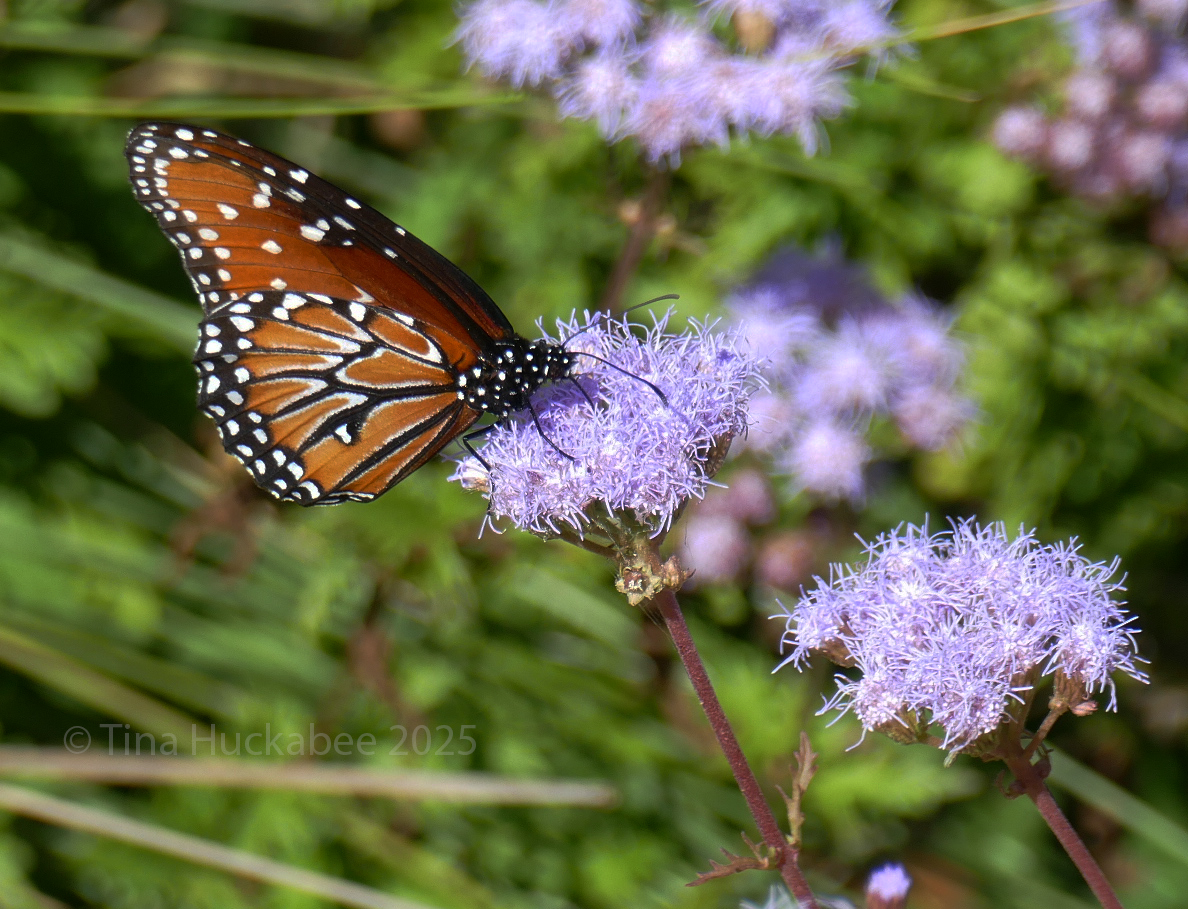
Left to its own this year due to my laziness (I usually lightly prune mid-summer), the Frostweed bloomed twice: one bloom-up in July/August, the second in October–and it’s still in creamy flowery mode. I should always be so lazy! Frostweed is a Monarch butterfly favorite and a number of the amber beauties stopped by this Frostweed for nourishment!

This crazy thing is all over the place!
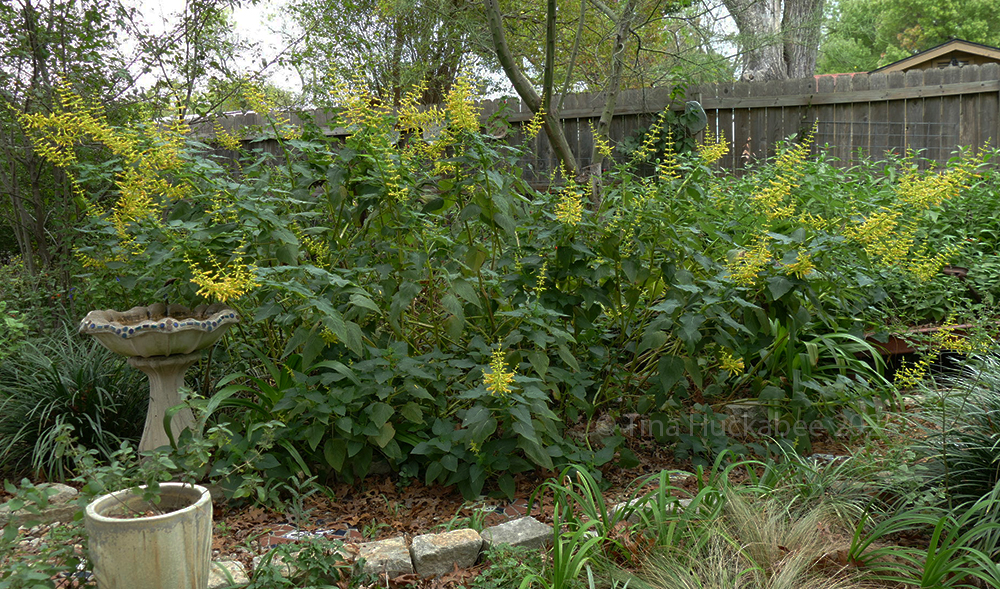
Forsythia Sage, Salvia madrensis, is a garden pass-along plant–as are many of my plants. Another missed opportunity to prune in August, I was too whiny about the heat and therefore didn’t. Now, instead of standing as a more compact plant, the long, cheery bloom spikes sit at the end of even longer, brittle stems and most of those stems are a tad floppy! S. madrensis is the last perennial to bloom in my garden, strutting their yellow stuff mid-to-late October until a freeze renders its blooms’ mute. I don’t have any photos of honeybees on the flowers, but they visit regularly, and towards winter, it is usually the last plant where they get nectar and pollen. Native to the Sierra Madre Oriental mountains of Mexico, Forsythia Sage provides blue-tinged foliage and stunning blooms, and is a dramatic addition to the back garden. It’s thirstier than most of my plants, so receives some extra wet stuff from my hose (maybe twice/month in the heat), but it’s worth that effort.

In the back of the main section of this garden packed with shrubs, perennials, and ground-covers, I’ve added small trees/large shrubs.
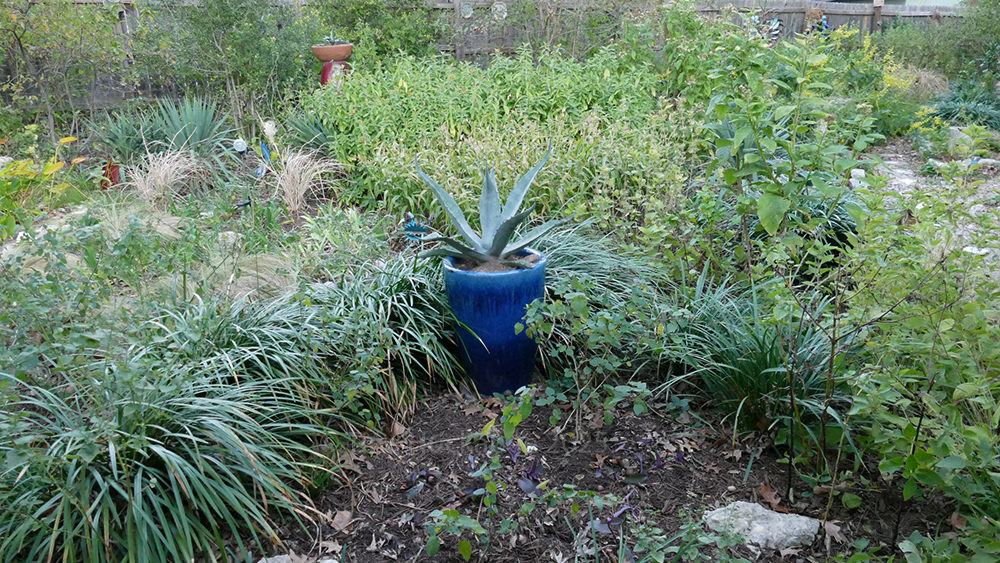
Included are two Rough-leaf Dogwoods, Cornus drummondii, and two Yaupon, Ilex vomitoria, two Retama trees, Parkinsonia aculeata, and one Possumhaw, Ilex decidua. Some are evergreen, others deciduous, but all are cover for birds and also produce blooms and fruits for mammals, birds, and insects.
This past summer, my back garden received no artificial irrigation in the shady spots and was watered only twice in areas that receive sun.
Thank you native, hardy plants. Thank you shade. Thank you, no grass!
My gardens–front and back–are both mature and new. I’m always re-imagining and re-configuring areas, either due to changes outside my control, mistakes I’ve made in previous years (snort–there are lots of those!), or simply realizing there are better, more biologically appropriate and aesthetic choices for a section of garden. I feel about my garden the way the second Mrs. de Winter in the novel Rebecca explains to Max de Winter about her father, who was an artist and painted a tree–just one tree–over and over, in different ways because he continually saw the tree differently. Gardens are like that, sparking interest and imagination, they are vessels for learning and experimenting, and are always places of joy, connection, and peace.










 My Gardener Says...