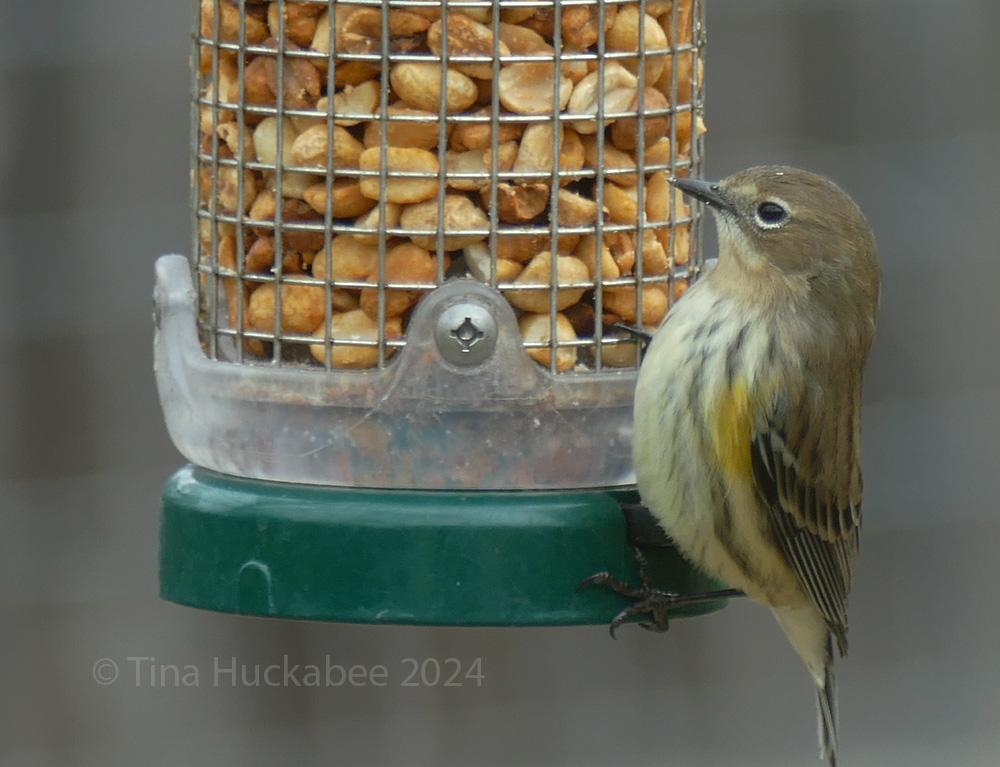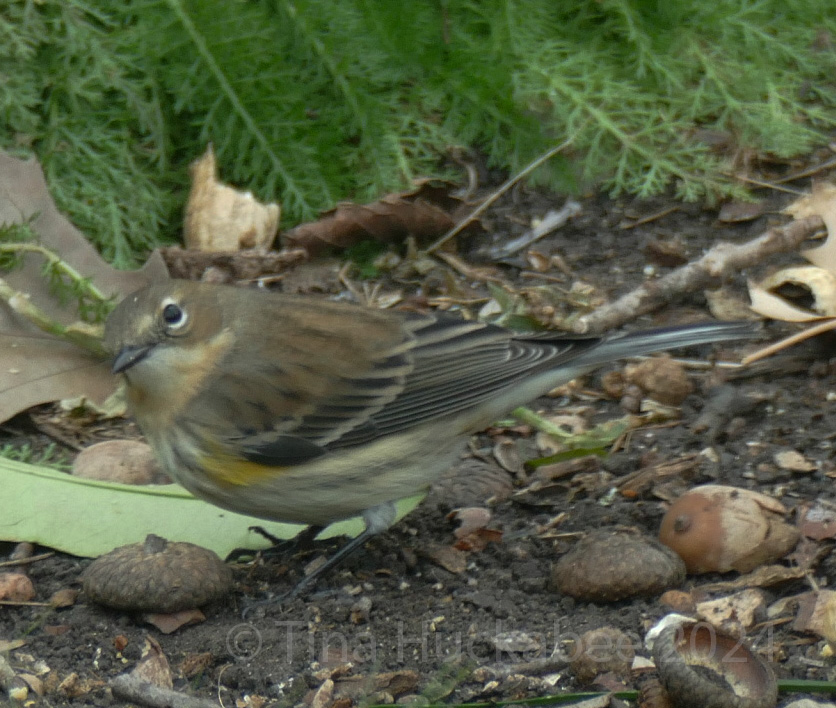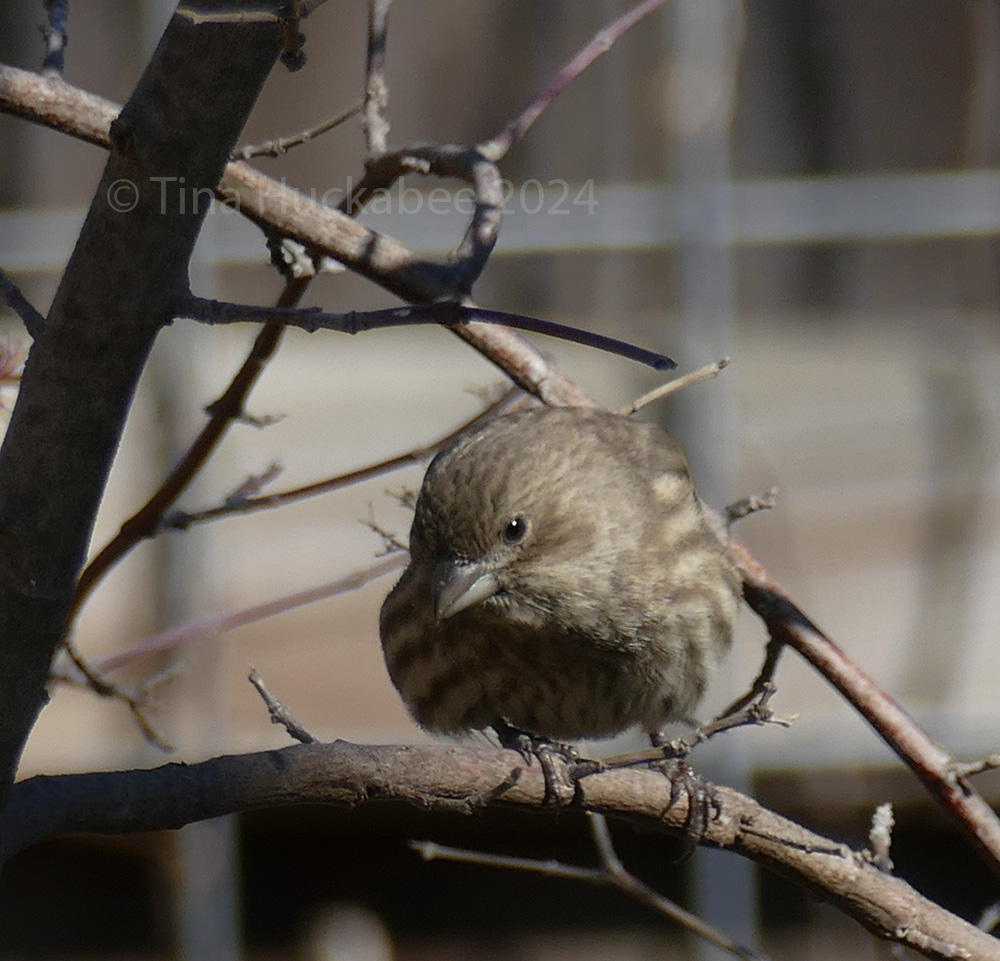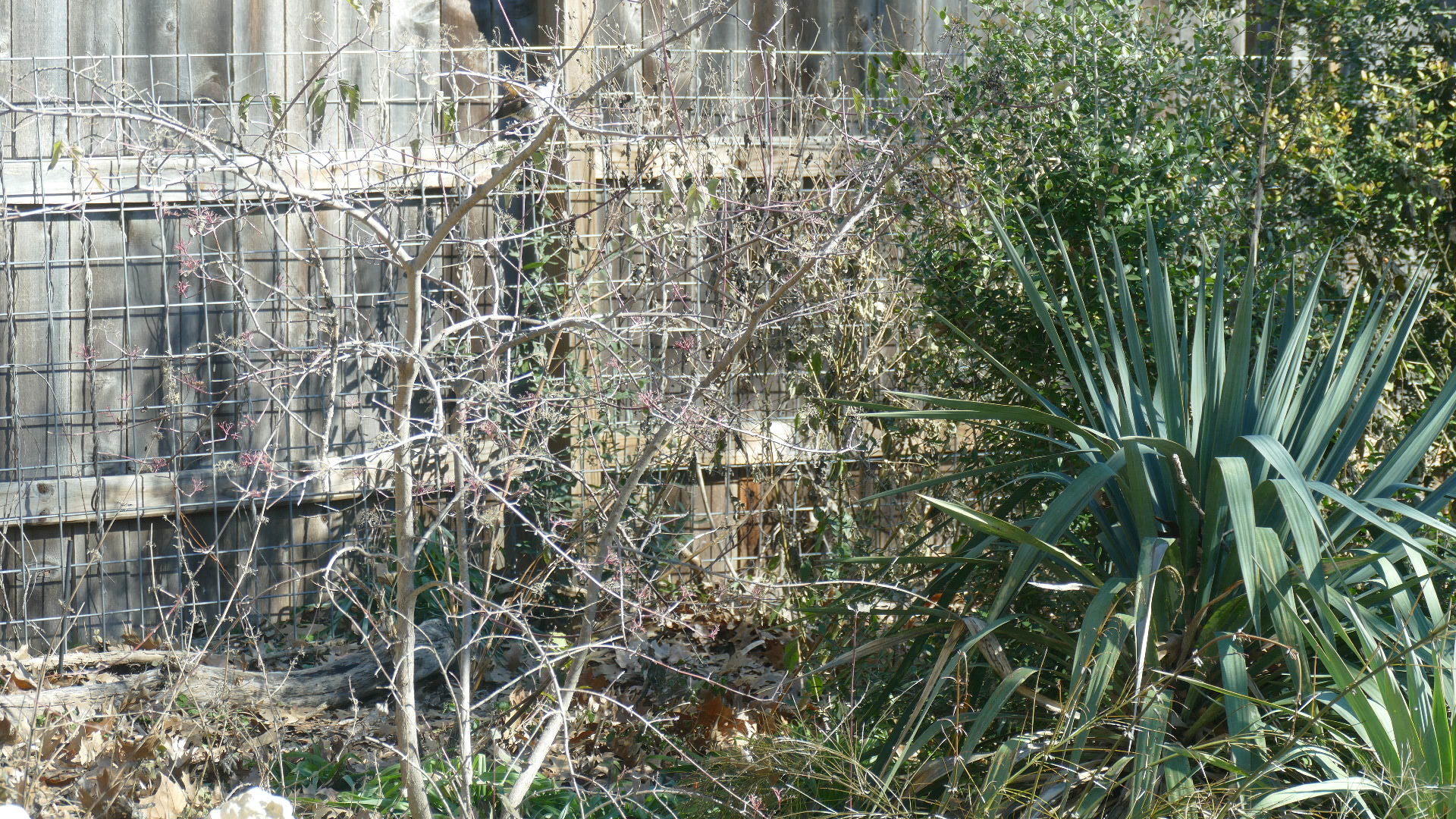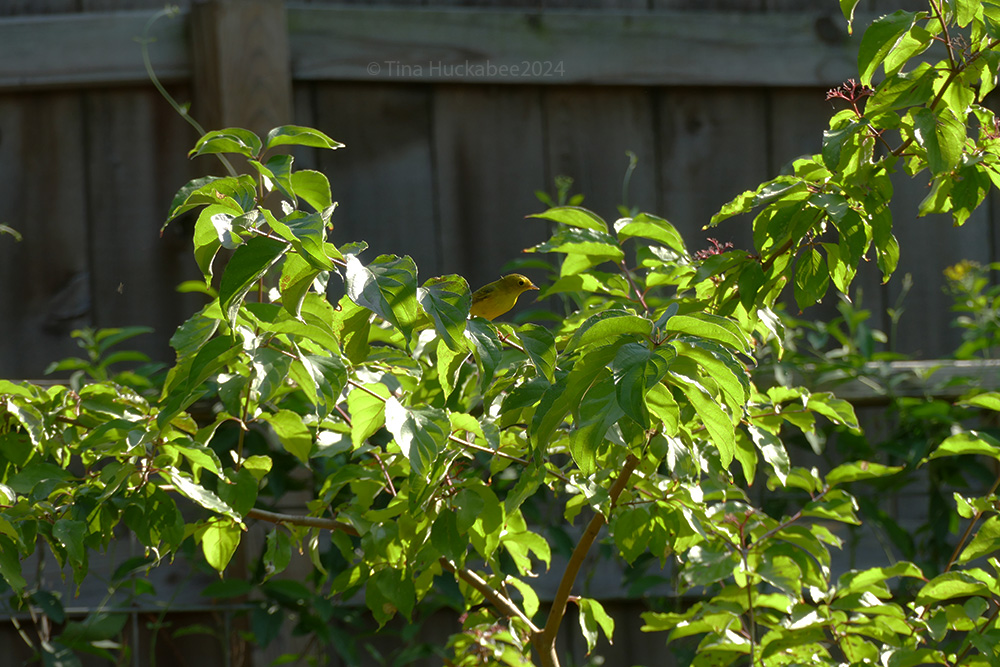
It’s suet season for the birds who visit my gardens. This over-wintering Orange-crowned Warbler, Leiothlypis celata, is a frequent nibbler of the peanut butter infused, commercial suet block.
I only offer suet in the cooler months of the year. Central Texas is far too warm from April/May until December, to set out suet. It melts in summer’s heat or turns rancid in balmy autumn; it becomes gross and the birds won’t touch it. Can you blame them? There are better alternatives for commercial bird food in those months: sunflower and safflower seeds, peanuts, and mixed varieties of seeds all give proper nourishment for birds, and while the birds are eating and jostling for the best perches, entertainment for humans. In winter, suet provides needed calories during cold temperatures, though black-oiled sunflower seeds and peanuts also supply healthy fat alternatives as well.
Using commercial bird seed in the yard is a wonderful way to observe, appreciate, and learn about our native and migrating birds. That said, native plants which have foliage, produce seeds and fruits, and host a variety of insects, are the best food sources for birds. Plants and birds evolved together over eons, and plants exist to feed and provide cover for critters. A garden full of native trees, shrubs, perennials, and annuals is not only beautiful, but more importantly, is alive with activity and life. Birds, pollinators, mammals, and reptiles seek food and shelter in a diverse ecosystem–no matter the size. Human caregivers of garden ecosystems can appreciate the garden’s beauty while enjoying the antics of those who need the garden to survive and thrive. A healthy, diverse garden community is vital for wildlife and a continual source of fun and learning throughout the year.
Winter is a good time to plan a new garden. Removing some (or all!) of your sterile, water-hogging, high maintenance turf, and replacing it with native plants is the way to bring nature home: to provide a safe place for wildlife displaced through urban encroachment, habitat loss, and improper chemical use.
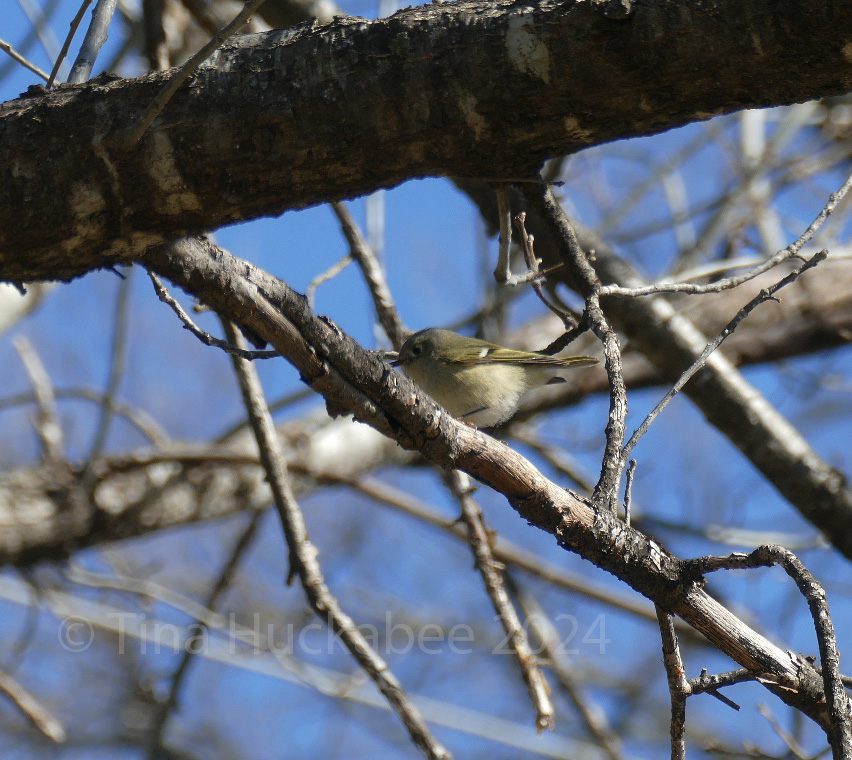
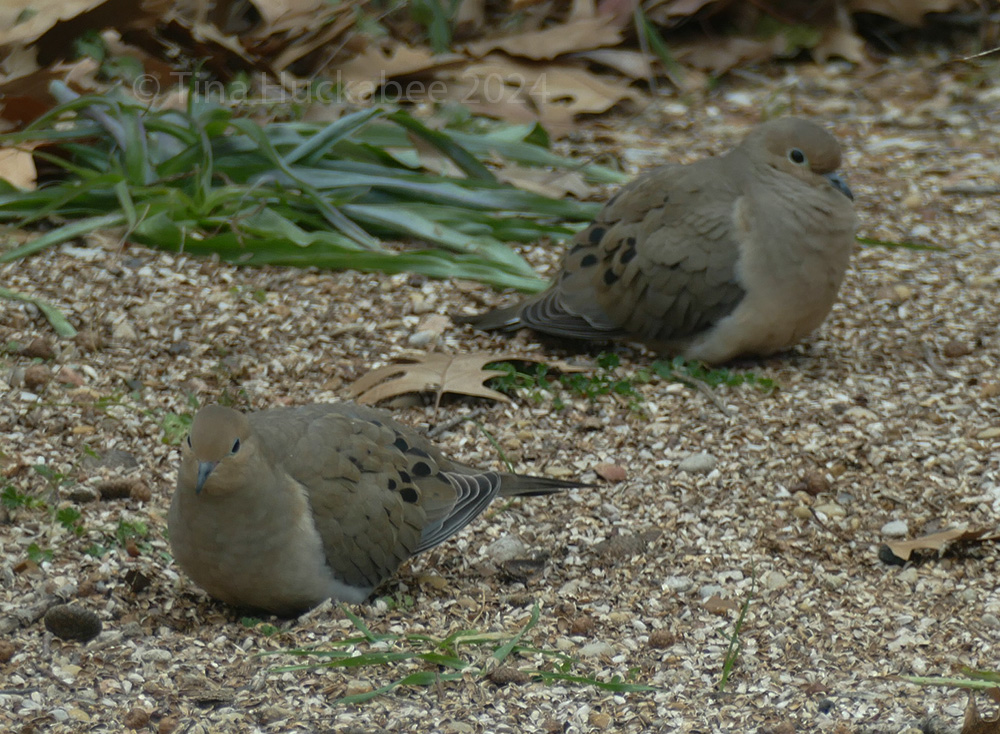
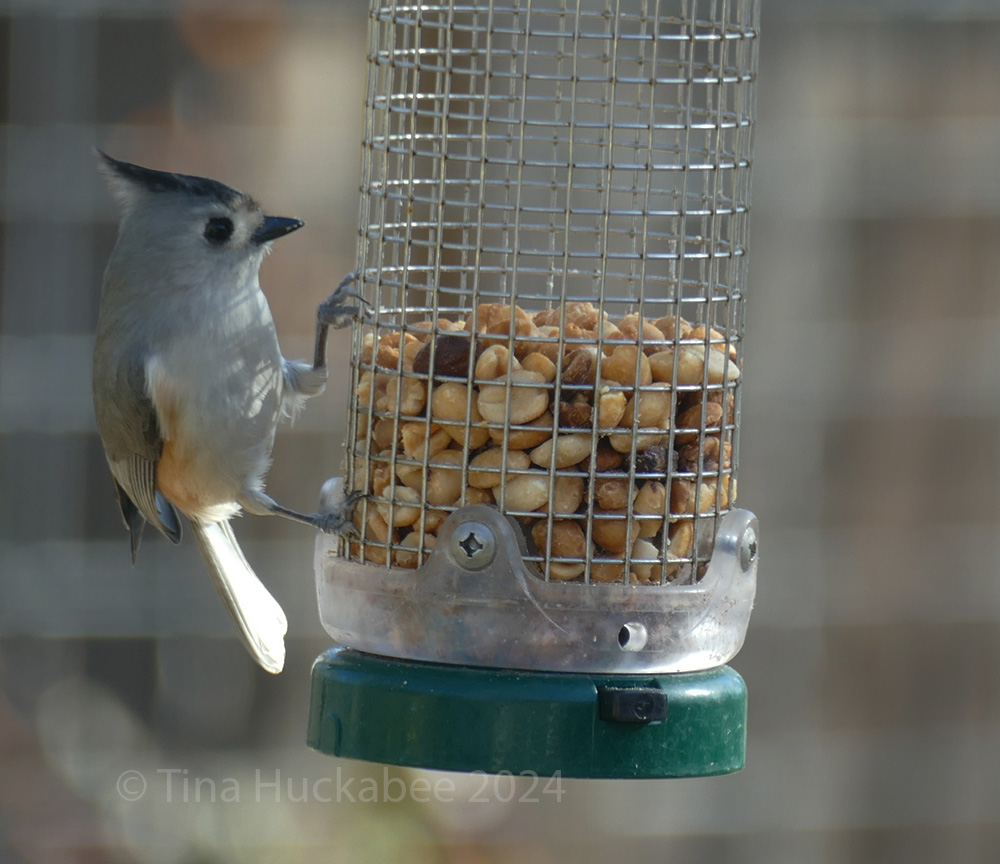
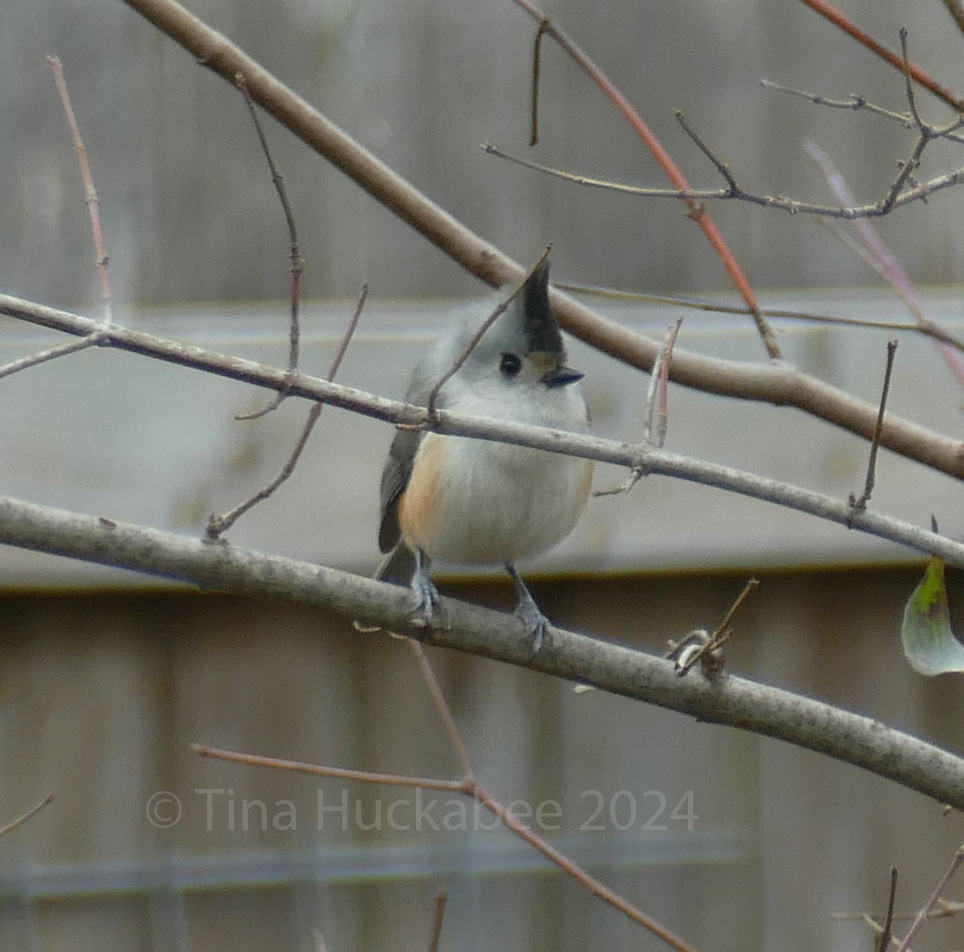
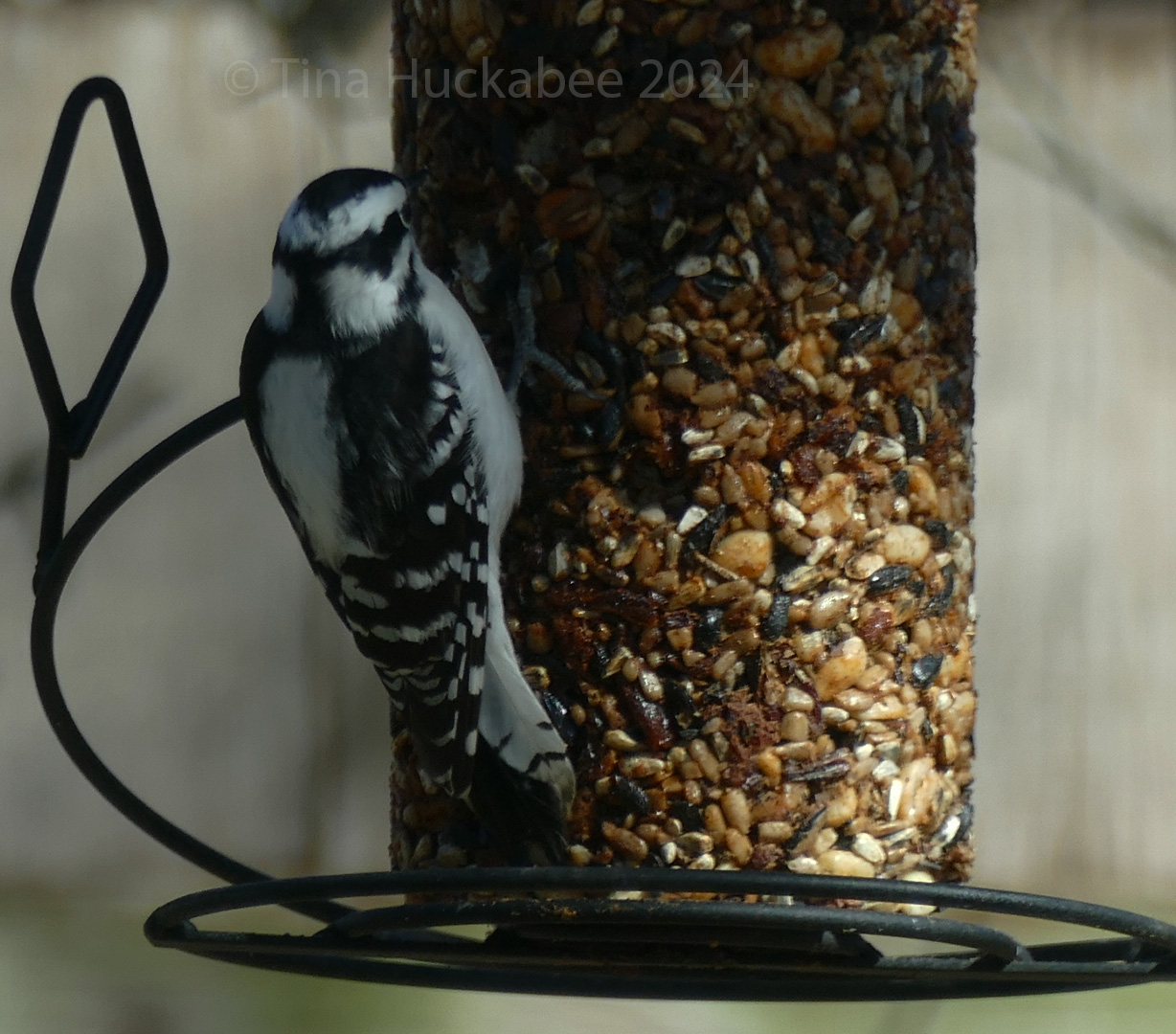
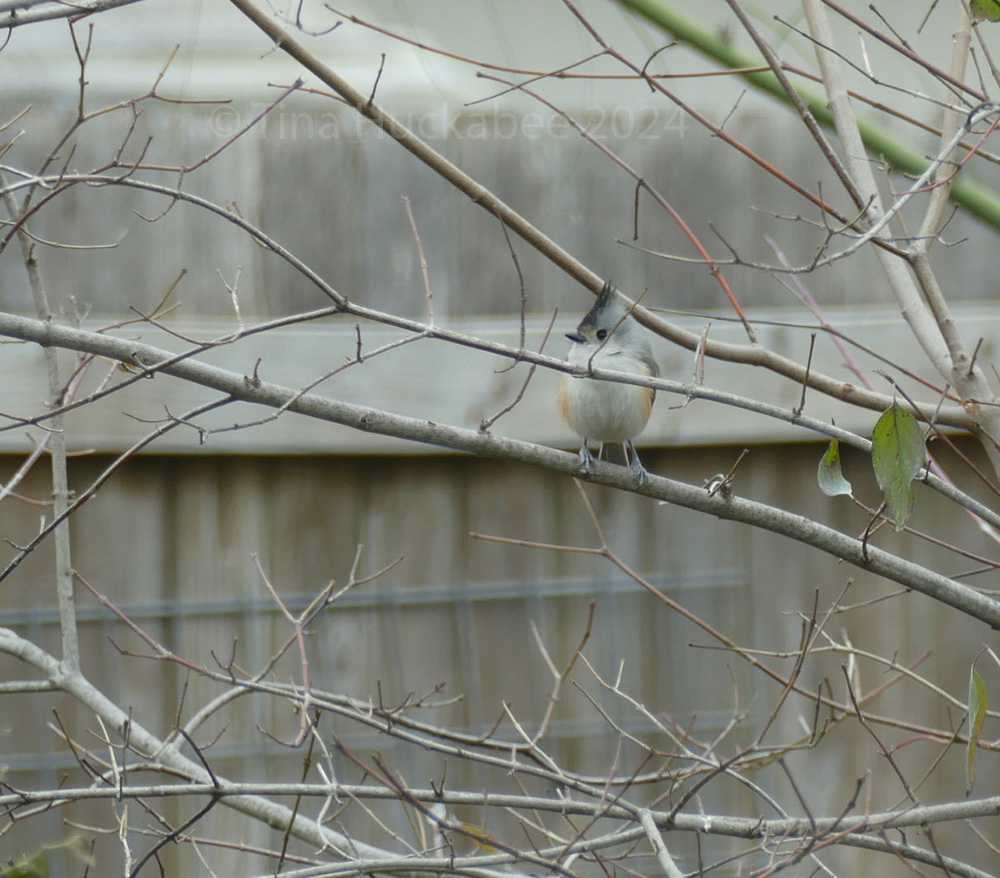
So far this winter, the Orange-crowned Warbler is the only winter migratory visitor at the suet. I haven’t yet witnessed suet snacking from Yellow-rumped Warblers or Ruby-crowned Kinglets, though I fully expect to. Some resident birds, Carolina Wrens and Black-crested Titmice, have made a stop at the suet feeder part of their daily rounds and are suet buddies with the Orange-crowns.
In my garden this winter, I’ve observed two Orange-crowned warblers, as well as one Yellow-rumped Warbler and one Ruby-crowned Kinglet. These three species are not native to Texas, but migrate south for the winter months; there are usually a few of each in my gardens from November through April. I enjoy their presence in the garden and having feeders allows me to observe them more easily. These flitty, tiny birds are challenging to observe in trees and shrubs! Once all the foliage from the trees has dropped, the birds are easier to see as they bop about the limbs, eating insects, and chasing one another in duels for the best eating spots.
This female noshes at the suet and peanut feeders several times each day. I buy my suet from Wild Birds Unlimited, but many bird fans make their own suet and there are plenty of recipes on the internet.
Winter is a great time to bird watch and plan for the next garden season. Gardening with, or simply observing native plants is a small but powerful counter in a world where we as individuals have little control or positive influence. Spending time outdoors, listening to bird and insect song, creating and nurturing life and diversity with a native garden is a balm for an often broken world and a positive step toward a more hopeful future.
As of mid December, my garden has experienced only the slightest touch of a light freeze, so some plants are still blooming, especially those plants which hug close to the ground. The late season availability of flowers makes for happy, busy pollinators during sunny days.
The autumn blooming ground-cover, Gregg’s Mistflower, Conoclinium greggii, is a favorite of many pollinators, big and small. This native-to-Texas perennial boasts bright green foliage and vibrant flowers with a fuzzy structure that pollinators adore.
I’ve seen many a Grey Hairstreak, Strymon melinus, nectaring on the mistflowers. This is one of its kind visiting, wings spread wide, proboscis deep in the bloom.
Another common pollinator of the popular aster are Fiery Kippers, Hylephila phyleus. I particularly like the orange and brown of the skipper paired with the bloom’s rich lavender color.
An American Hoverfly, Eupeodes americanus, can’t resist the bounty of the mistflower. I’ve seen other flies pollinating, but catching them in action proves elusive on breezy days. This yellow-n-black stripey fella cooperated with the photo session.
As always in my garden, the honeybees are active. If there’s a flower available for sipping, honeybees are all-in.
Yellow is a color of autumn and this Little Yellow, Pyrisitia lisa, is one of several who’ve worked the patch of mistflower for the past few weeks.
The Queen rules the mistflower. Queen butterflies, Danaus gilippus, are regulars in my garden. During autumn and until the first hard freeze, they’re particularly fond of Gregg’s Mistflower; Queens are some of its most loyal customers. This male Queen, along with several others of both genders, flit to the mistflower once the sun is shining on the blooms.
Male Queens and Monarchs have two black dots on their hindwings, located on either side of their abdomen. The black dots emit pheromones to attract the females. And they look cool, too!
Another queenly view…
Weirdly, Monarchs, Danaus plexippus, are still migrating through Central Texas on their way to their Northern Mexico wintering homes. I don’t recall seeing monarchs this late in fall, but I’m happy that there’s plenty for them to nectar from.
This Monarch’s wing looks like it met with a predator or possibly another kind of accident. It flew well though and I’m sure it will have no trouble getting to Mexico–assuming no other mishaps.
Tres mariposas, three butterflies–all in a row! Two Queens (left and center) and one Monarch, far right. Did I mention that these butterflies love Gregg’s Mistflower? Often there are even more individuals snacking at the patch of flowers.
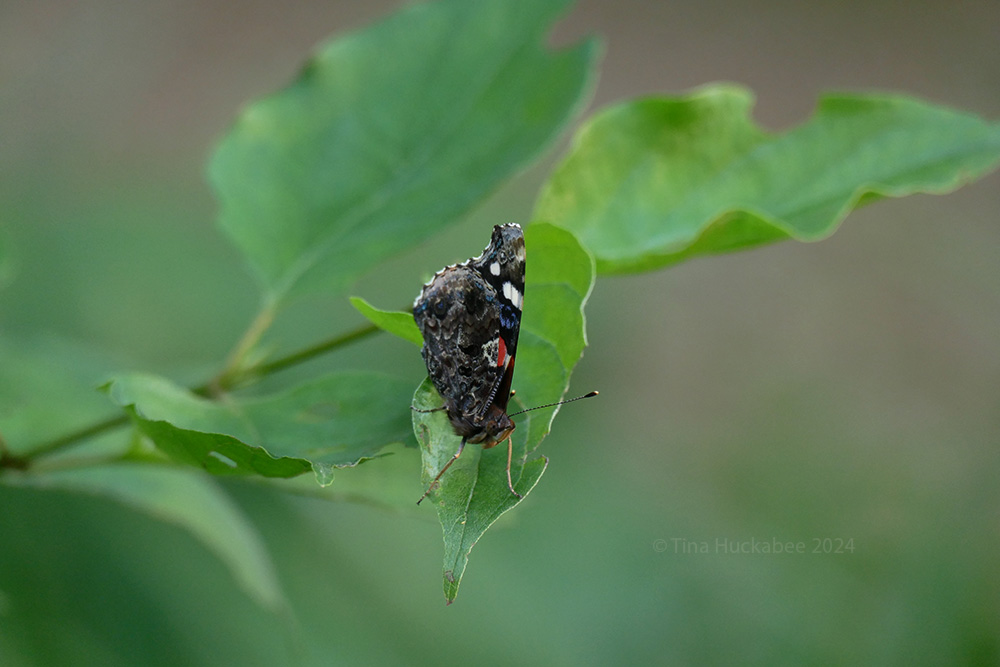
More admiring fans of mistflower are Painted Lady butterflies, Vanessa cardui. The ones visiting my mistflower have been skittish, but I finally caught a couple of photos demonstrating their enjoyment of the flowers–and their beauty.
These are but a few of the pollinators working this popular flower during the zenith of its bloom season. Not shown, but definitely groupies of Gregg’s Mistflower, are multitudes of tiny native bees (which never seem to perch and pollinate, but must do?) and other too-quick-to-catch-with-the-camera butterflies. This lovely plant will bloom and provide for pollinators until a hard freeze renders it dead for the season. Fuzzy blooms then turn a warm toasty color and over time, mistflower fluff drifts with the breezes.
In a few month’s time and with spring’s warmth, new growth will emerge from the soil, signature puffy flowers will appear in clusters, and pollinators will return.
While the various landscapes were stunning and the beauty of the birds mind-boggling, there were other wild things that we experienced in lovely Costa Rica. We spent most of our trip hiking in rural areas, national parks and reserves, as well as strolling through established garden spaces. Wildlife abounds in Costa Rica, confirming its reputation as a richly, bio-diverse nation.
Where flowers are, pollinators follow and that’s certainly true in Costa Rica. We saw plenty of native bees, wasps, butterflies and moths. Many butterfly species we encountered live in a wide geographic range, including where I live in Texas. Familiar garden friends like Queens, Gulf Fritillaries, and Yellows thrive in Texas and also in tropical Costa Rica.
Most of my CR butterfly interactions occurred when the jeweled insects wafted along my path as I walked. Like those who visit my garden, the CR butterflies weren’t always cooperative when I wanted a photo. A few obliged, though, like this dainty, a Great Southern White, Ascia monuste.
Clearwing butterflies, which I don’t see in Texas, are abundant in Costa Rica and we saw several kinds. I was fortunate to snap this resting Thick-tipped Greta, Greta morgane.
Ants were a thing on several of our hikes. In particular, cutter ants are always fascinating to watch. We saw several busy colonies, a couple with large mounds.
We also came across several groups, or maybe I should say columns, of army ants. They were amazing to watch, and determined as they marched, focused on forward movement, across pathways. As the ants marched, other insects cleared out of their reach, catching the attention of mixed flocks of colorful birds, ready to munch on fleeing, frightened insects. Poor insects: army ants on one side, hungry birds on the other! We observed this in forested areas and the events allowed us to observe tanagers and other gorgeous birds at work, nibbling on insects.
Coatimundi, or White Nosed Coati, are common in Costa Rica’s forest areas, and belong to the raccoon family. The local name for coati is Pizote. Family groups foraged in the gardens and green spaces near our the lodges. Coaties are comfortable with people, though they keep their distance–as we did from them. They are omnivores; we typically saw them noshing on seeds, roots, and leaves. In one case, an adult was munching on a small snake, but the coati was eating from the snake’s tail; the poor snake was still alive.
Sometimes, nature is a bitch.
At one point during the trip, I asked our excellent guide, Johan, about Costa Rican bats. He mentioned that many bats rest under large leaves during daylight hours. Later, as if he planned it, Johan pointed out a little bat, this Northern Ghost Bat, Diclidurus albus, resting under the protection of a large palm leaf.
Like bats worldwide, this little dude and his bat buddies are important pollinators and seed dispersers.
We frog hunted several nights, visiting nearby ponds, listening to nocturnal chirps and (fingers-crossed!) hoping for glimpses of eye-catching Costa Rican frogs. We saw a few Green-and-Black Poison Dart Frogs, Dendrobates auratus, but our photos weren’t clear, they simply looked like black and lime-green squiggles.
I don’t know the names of either of these two beauties, but they, and their kind, brightened the night life with their songs and good looks.
Yes, we saw sloths.
Cute, cute sloths. Hard-to-see-unless-pointed-out-to-us, sloths! We visited a small sanctuary with pathways winding through a dense, dark forested area. It didn’t take long before Johan spotted a sloth, which looked like a bundle of leaves way up near the top of the trees. This cutey is a Brown-throated Three-toed Sloth. Watch him stretch and move, sloth-like, ever so slowly!
Both the photo and video were taken with Steven’s (my husband) cell phone camera through Johan’s scope.
We were fortunate to observe this mother and her baby.
The sanctuary also is home to some Hoffman’s two-toed Sloths, but we didn’t see any.
Not far from the sloth sanctuary, we stopped at a favorite cafe of Johan’s to enjoy some delicious dragon fruit ice cream. It was some of the best ice cream I’ve ever eaten. Also having a snack, but of veggies from the cafe’s kitchen, were a troupe of Iguanas. This handsome male Green Iguana and his entourage of females are maybe just a bit scary–I mean, they’re really big lizards!
We cautiously eyed one another: me slurping my ice cream, iguanas crunching their veggies. While he may be called a Green Iguana, he isn’t green–as you can see. Costa Rican Green Iguanas come in different colors.
We also saw a number of iguanas on our wetland boat tour of the Tarcoles River, in the Central Pacific coastal area. Iguana’s are adept climbers, comfortable in trees.
Along the Tarcoles River boat trip Howler monkeys were tucked away in a thicket, eating foliage, and sedentary. Our boat and presence made them uncomfortable and the the howl that the male delivered resonated with warning. The good captain moved away, so as not to disturb them further.
In the Arenal volcano area, Spider monkeys were active and such fun to watch. Those arms-n-legs! Those tails! That agility! They climbed and swung through the trees, traveling from their daytime feeding areas to their nighttime nesting spots, all the action taking place just behind our lodge. They put on a good show!
There were 20-30 in this family group, including a mother and her baby. At one point, she needed to jump from one tree to another, a longer distance than most of her jumps, and was clearly nervous about jumping. As her infant was attached to her, she hesitated, she swung the limb she rested on, back and forth to gain momentum for the jump, but just couldn’t make the leap for several minutes. Eventually, she sprang, baby hanging on, and they landed safely.
Life is challenging when you’re a mom, especially if you swing from tree to tree. I hope they both rested well that night.
Some of our experiences during the trip happened so quickly that we hardly processed the event in real time and certainly weren’t focused enough to get photos or videos. One was as we ended a hike in the Orosi Valley, a young White-tailed fawn bolted out of the forest, just in front of us, and bounded away. As we looked, agape, just to our left, a handsome, dark-coated tayra ambled toward our path, then, viewing us, moved back into the cover of the forest. A weasel-type of mammal, tayras are omnivores. Johan speculated that the tayra was hunting and flushed out the fawn from its hiding place. He also wondered if the deer would be permanently separated from its mother.
The second drama unfolded during our hike in the Carara National Park when a pack of agouties spent several minutes chasing one another, their screeches echoing in the dense undergrowth. The agouti is a large and cute rodent, common in many parts of Central and South America. At several points, the agouties came within 4 or 5 feet of us, banking away as they continued pursuing one another, issuing their screeches all the while. We were confused and wondered about their motivation, until I noticed two of them, a male and female, mating, just off to our right. So it was a agouti-type OK Cupid flirt party and we were right in the middle of it!
Our time in Costa Rica was filled with wonder and great appreciation of the natural world. Coupled with that, we were welcomed by Costa Ricans and felt at home. We will return one day to this very special place; there’s so much to see and experience.