Garden Bloggers’ Bloom Day–January 2012–Before the Pruning

My gardens haven’t experienced much of a freeze here in central Austin thus far-just a few light frosts.  Even so, there’s not much in bloom with the short days and chilly weather. Here’s a peek of what’s blooming in my part of the world in celebration of Bloggers’ Bloom Day, hosted by  Carol at May Dreams Garden:

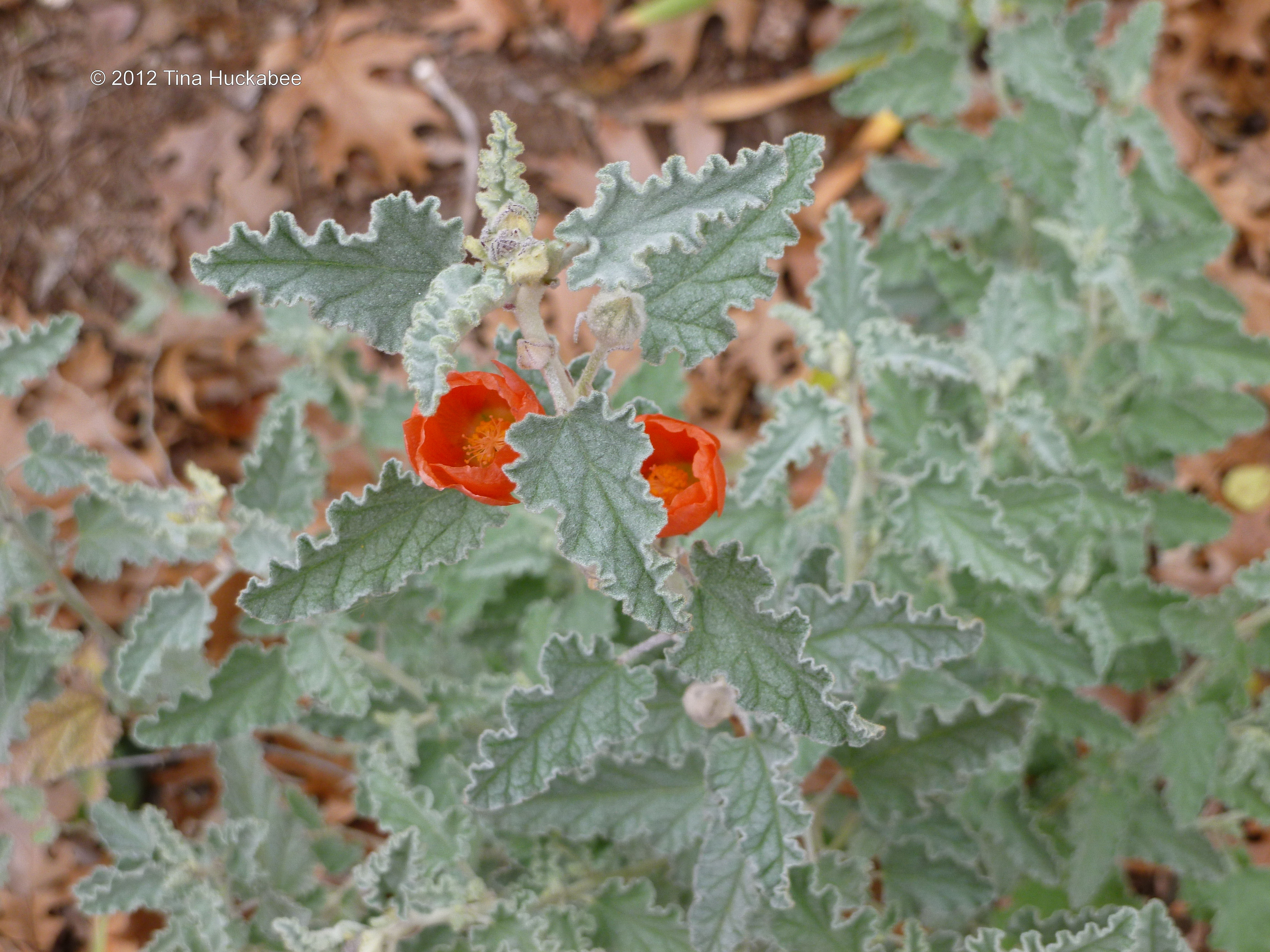
Two views of two blooms on the lovely and talented Globe Mallow (Sphaeralcea ambigua).  I’m smitten with the salmon color of the flowers and the sage green, frilly leaves.  It blooms best for me late winter/spring with fewer blooms in the summer/fall.

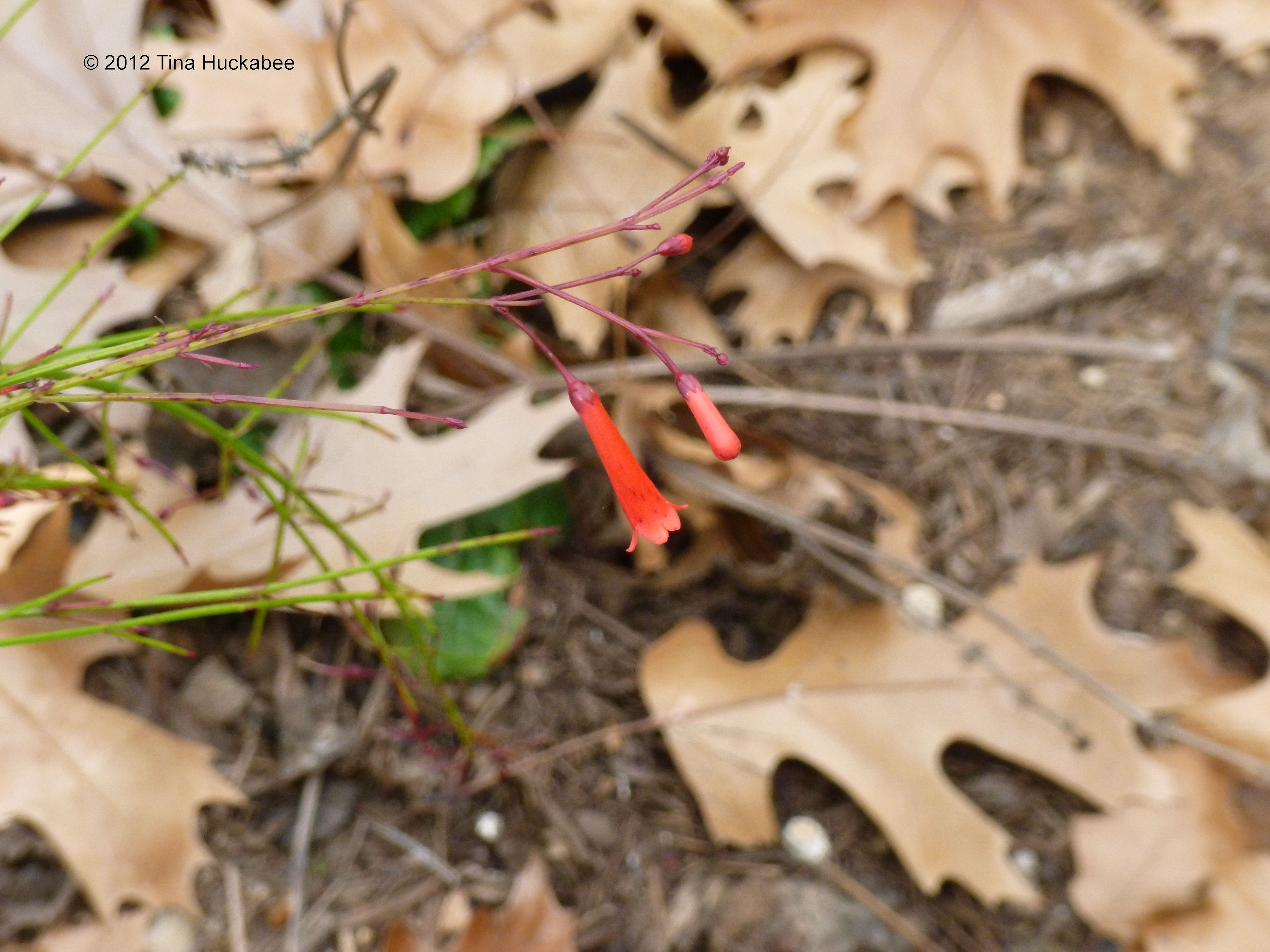
There are still several blooms left on one of the Firecracker Ferns (Russelia equisetiformis).  Some suffered freezer-burn during the light freezes, but not this one by the pond.

A lone Gregg’s Mistflower (Conoclinium greggii), still sweetly blooming–it just won’t quit!

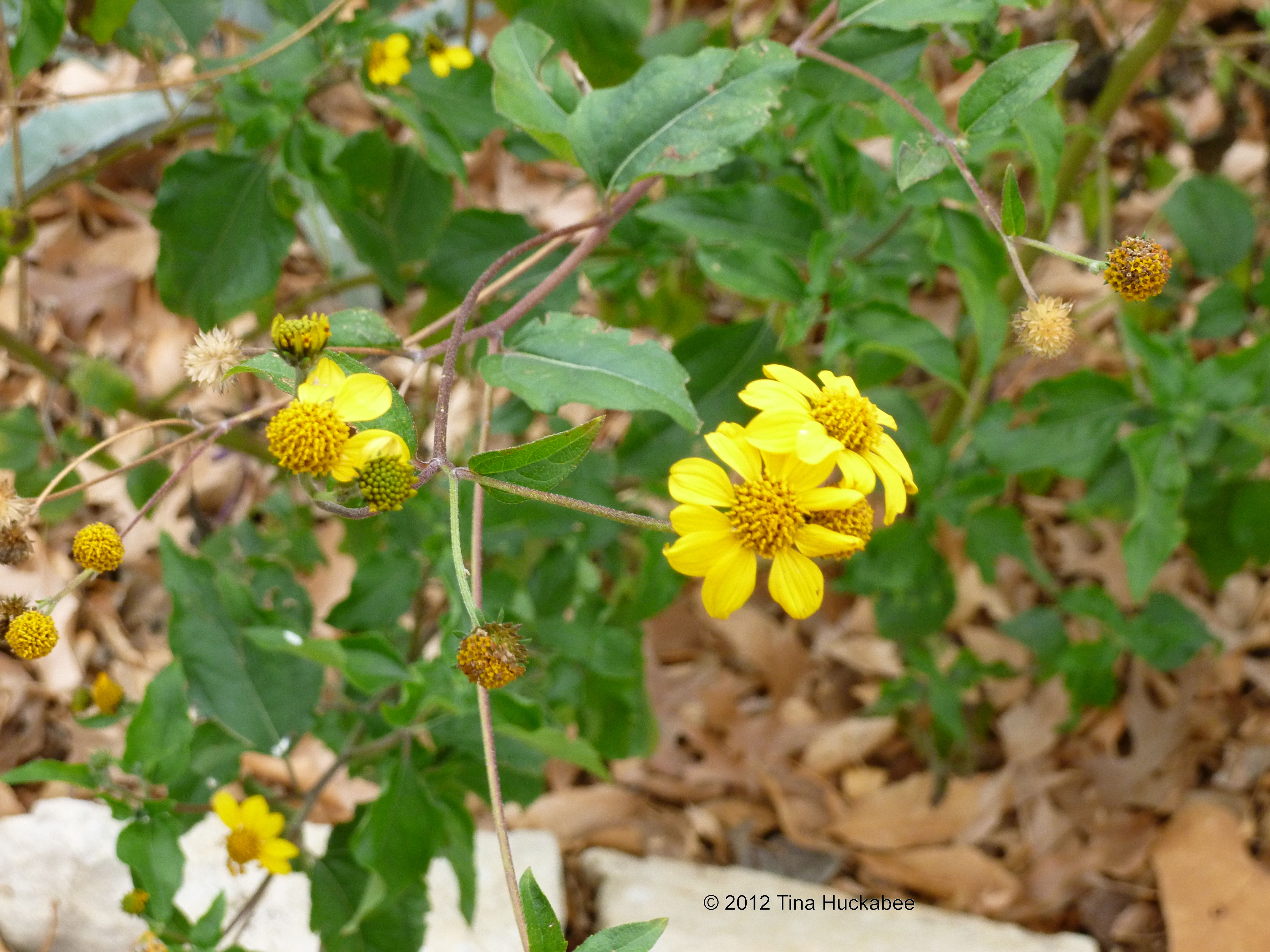
One stand of Goldeneye (Viguiera dentata) still in bloom.  Half the plant shows freeze damage, the other half is in bloom.  Go figure.

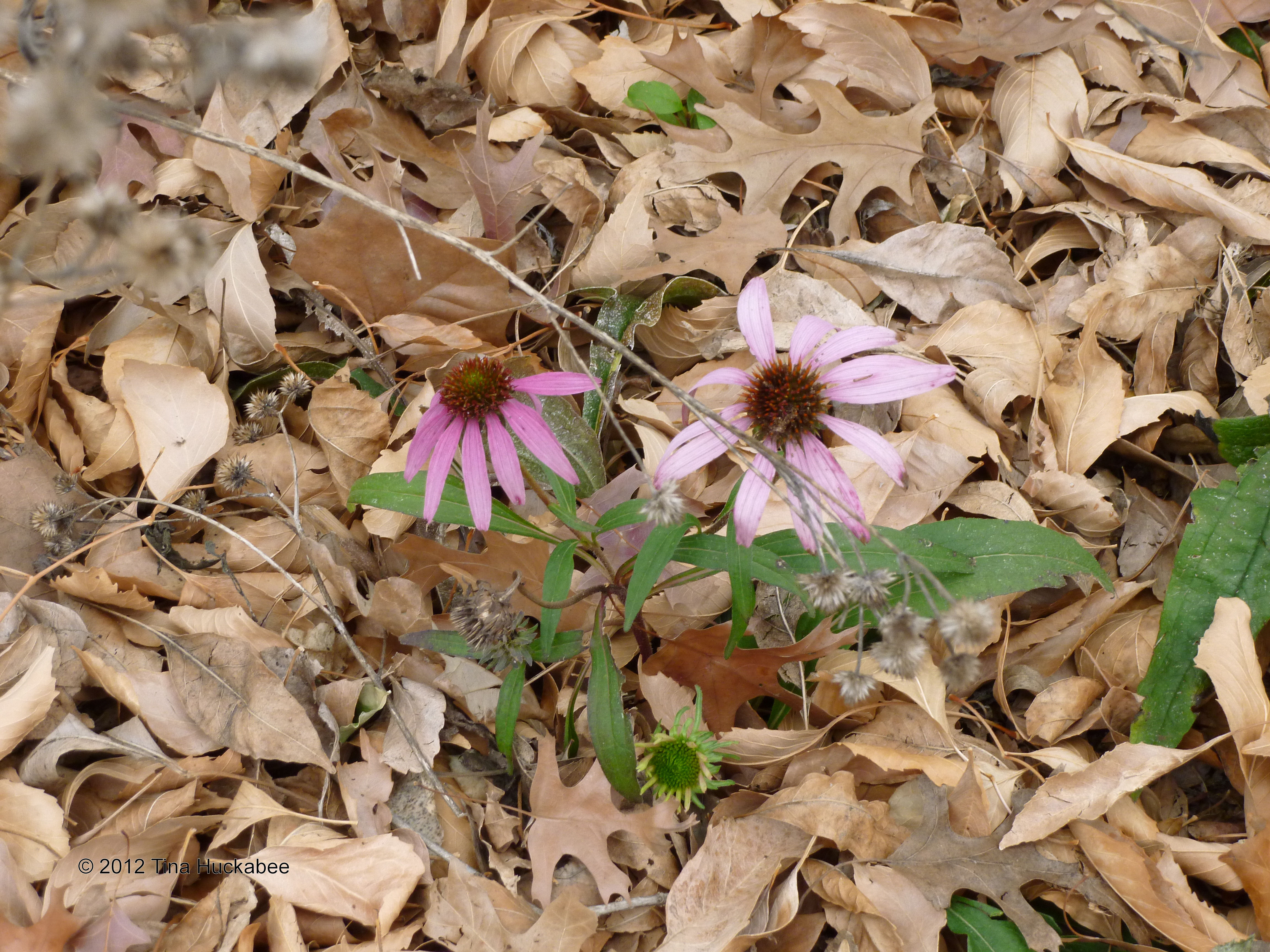
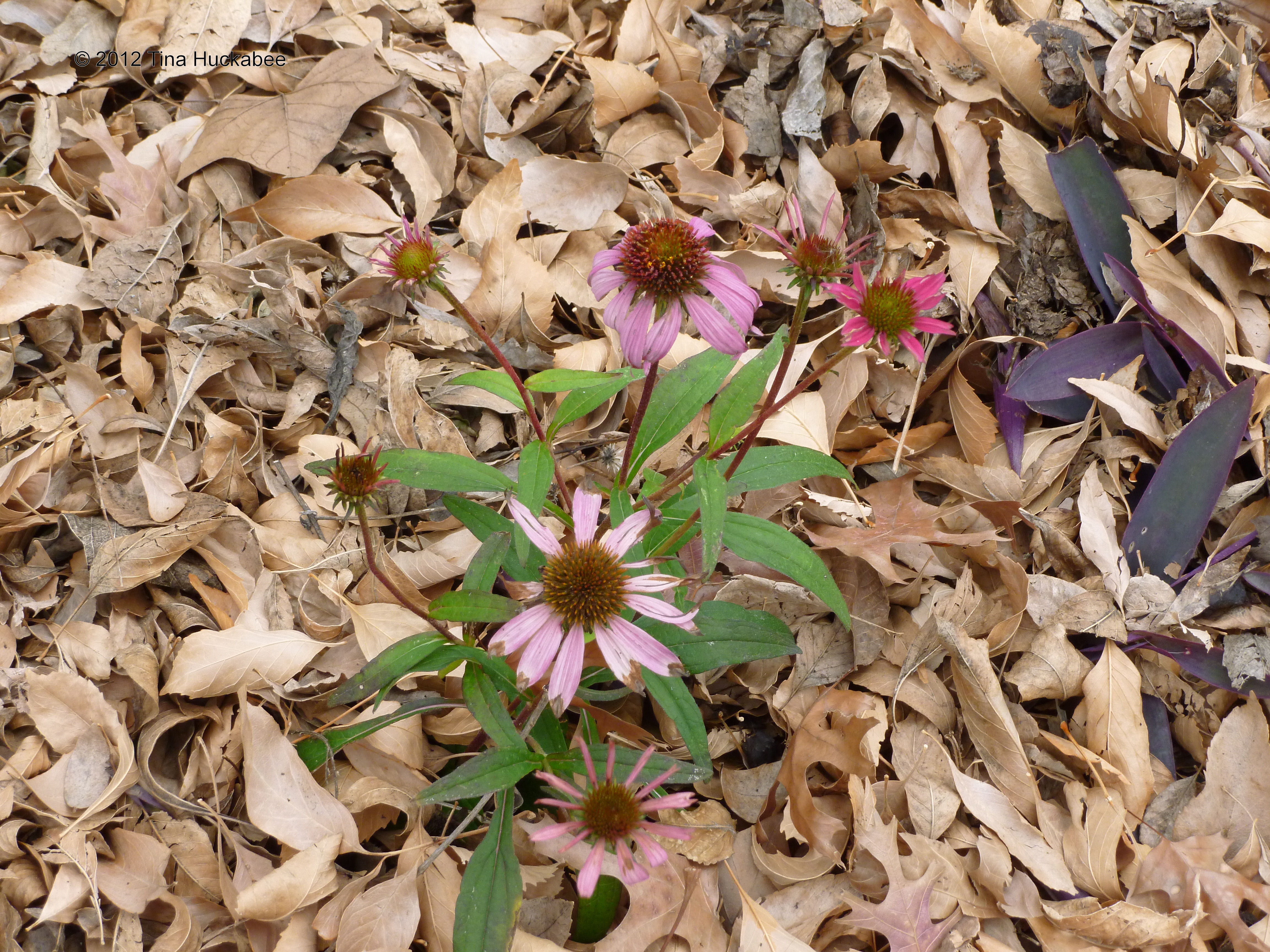
There are two Purple Coneflowers (Echinacea purpurea) in bloom. Interestingly, they are situated beside the Goldeneye.  Is the soil especially good there?  (Not that either of these plants care much about soil type.)  Or are they protected from the little bit of cold we’ve had because they’re beside the driveway/street and  benefit from warmth of the asphalt?  Probably, but who knows….

Also by the street, one group of Turk’s Cap (Malvaviscus arboreus), with its one bloom.  Glad it’s still around–I hope any over-wintering hummingbirds know to locate it.

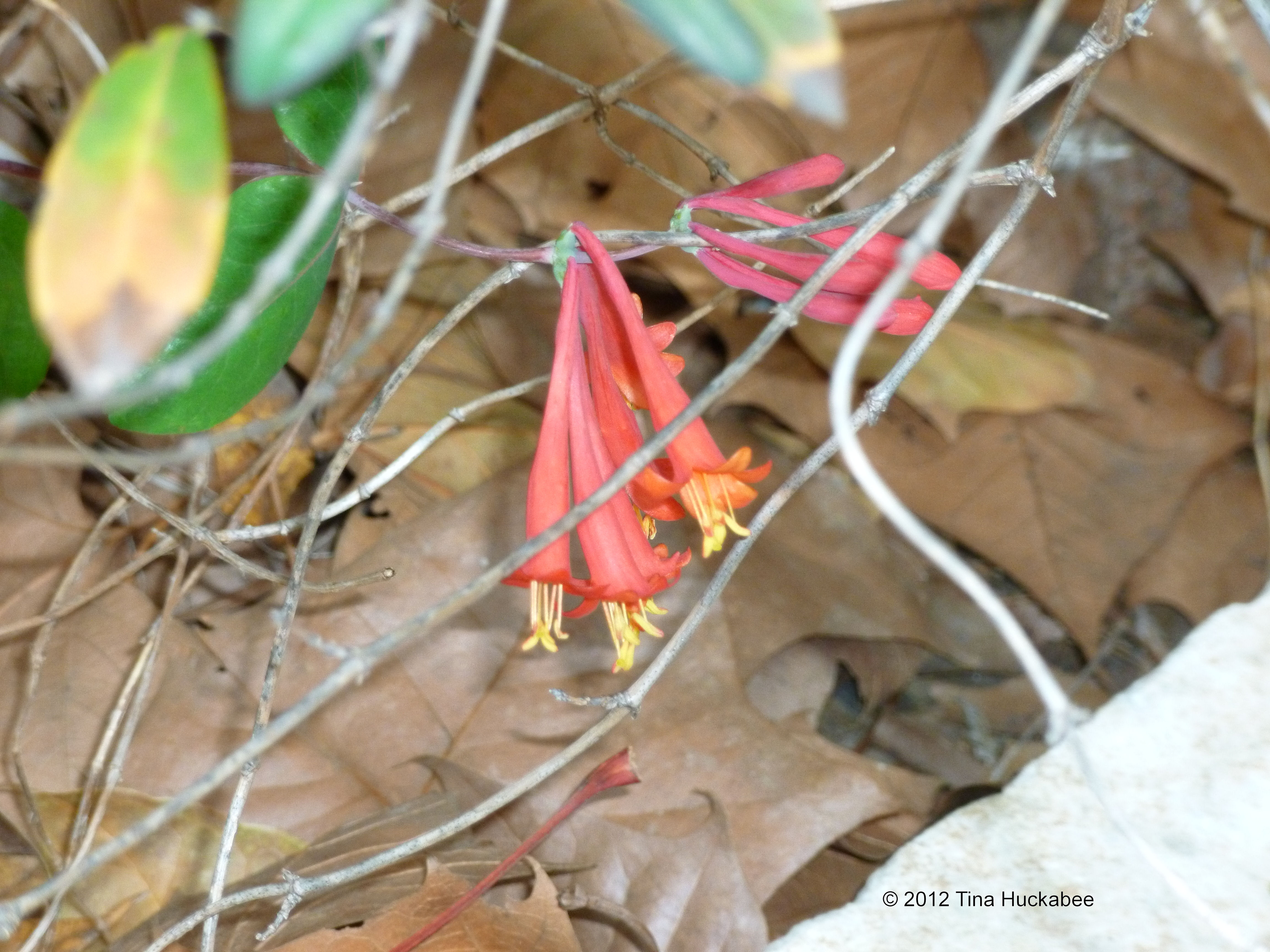
I’m so excited to see a lone, open bloom on my native Coral Honeysuckle (Lonicera sempervirens).  There are others that will open soon.  This little dude is at the bottom of the vine.

Another “lone,” this time in the form of a Columbine (Aquilegia chrysantha).  I’ve seen blooms on Columbines before during the winter (they are a cool season plant), so I’m not shocked to see this one.  It’s on the plant where I observed two blooms back in October, which is very unusual.  I hope it’s getting prepared for its big show in spring.

And finally, there are still a few little blooms on the Blackfoot Daisy (Melampodium leucanthum).  Love, love, love that plant!

I’ve also discovered the beginnings of some blooms on my Barbados Cherry (Malpighia glabra)–if we don’t have a hard freeze in the next week, they’ll be in bloom too.  Wow!

I guess it’s not so skimpy for January.  What’s blooming where you live and garden?

It’s Not Therapy For Me

I hate leaves.

I guess I should elaborate on that statement:  I like leaves as long as they’re attached to a tree.

I hate them once they fall to the ground.

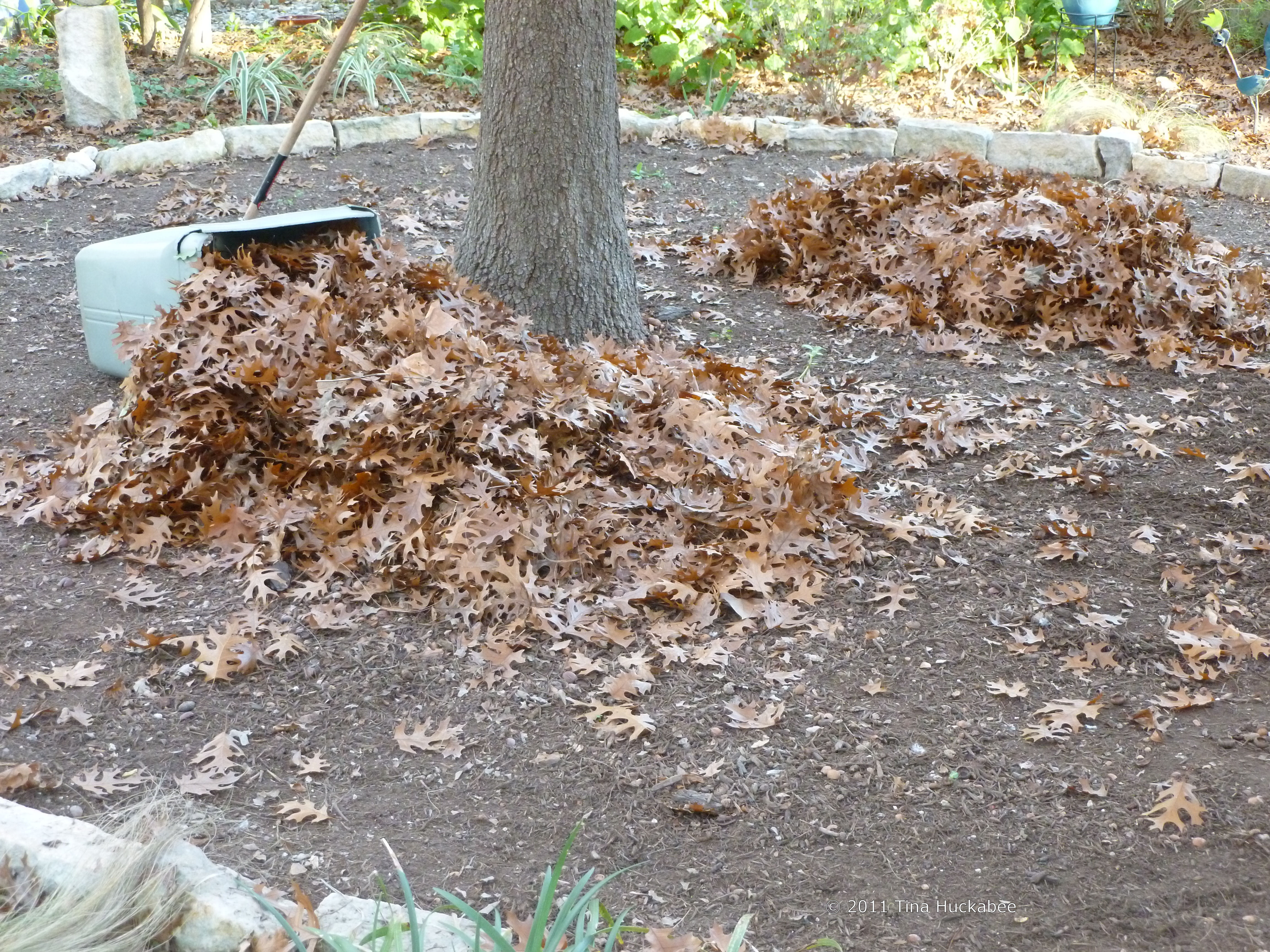
I spent the better part of the end of 2010 raking up the multitudes of leaves that fall from my trees.   Some gardeners find  raking leaves therapeutic.  Not I!  It’s a job I dread and detest.  I foisted some of this year’s work on The Teenager–it’s always good to have things to hold over a teen.  But, as usual, because I’m the gardener,  I’m left with the bulk of leaf clean-up.  And it always seems like the leaf pick-up will be endless, yet the mess only lasts  for a few weeks, at most.

It’s just that there are so many leaves.

And more leaves.

While I rake, I repeat a mantra to help me through the drudge:  Stop whining about the leaves.  You have four large, mature trees on your property.  They provide shade during the hot months of the long Central Texas summer.  Stop whining about the leaves.

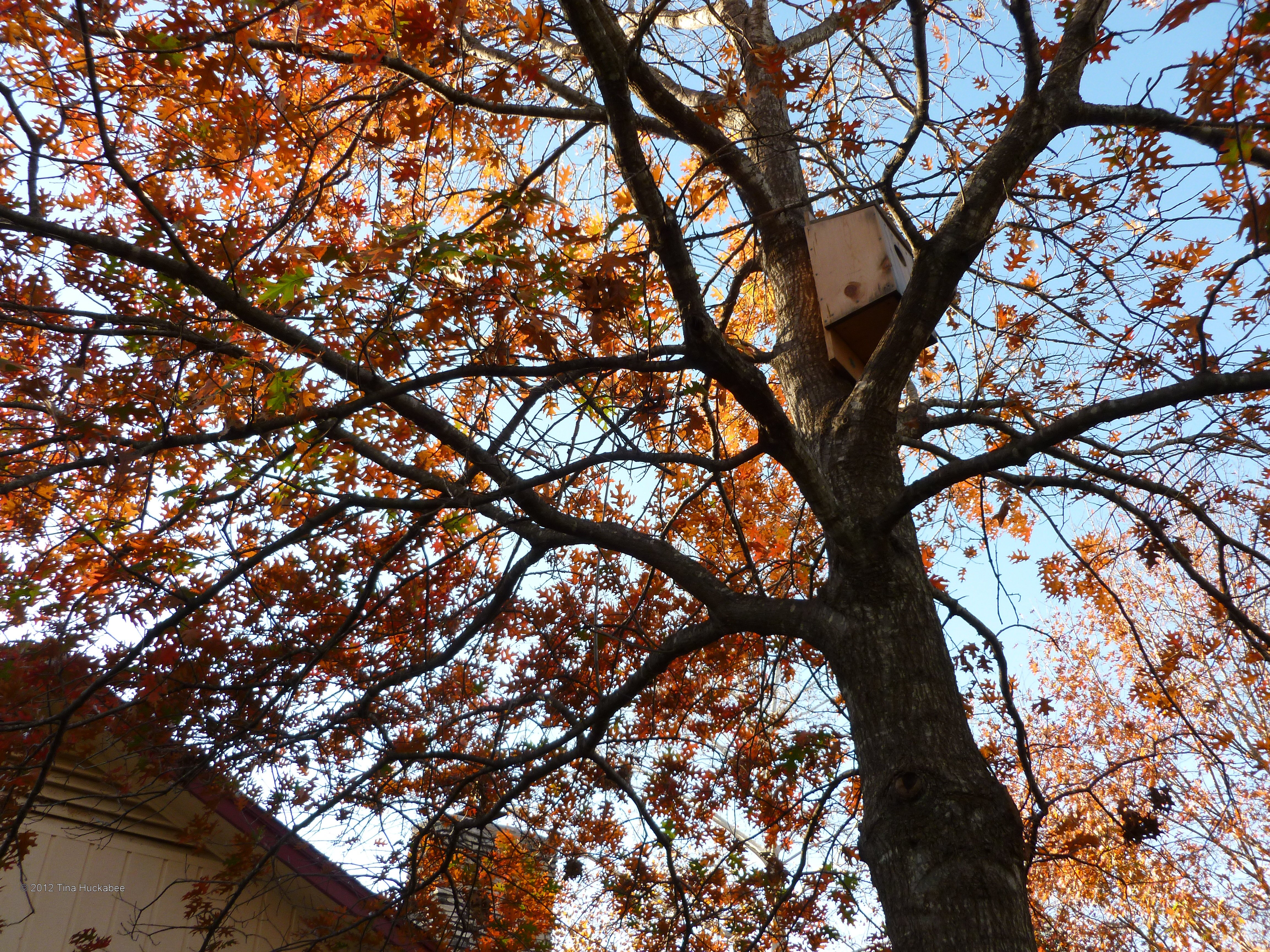
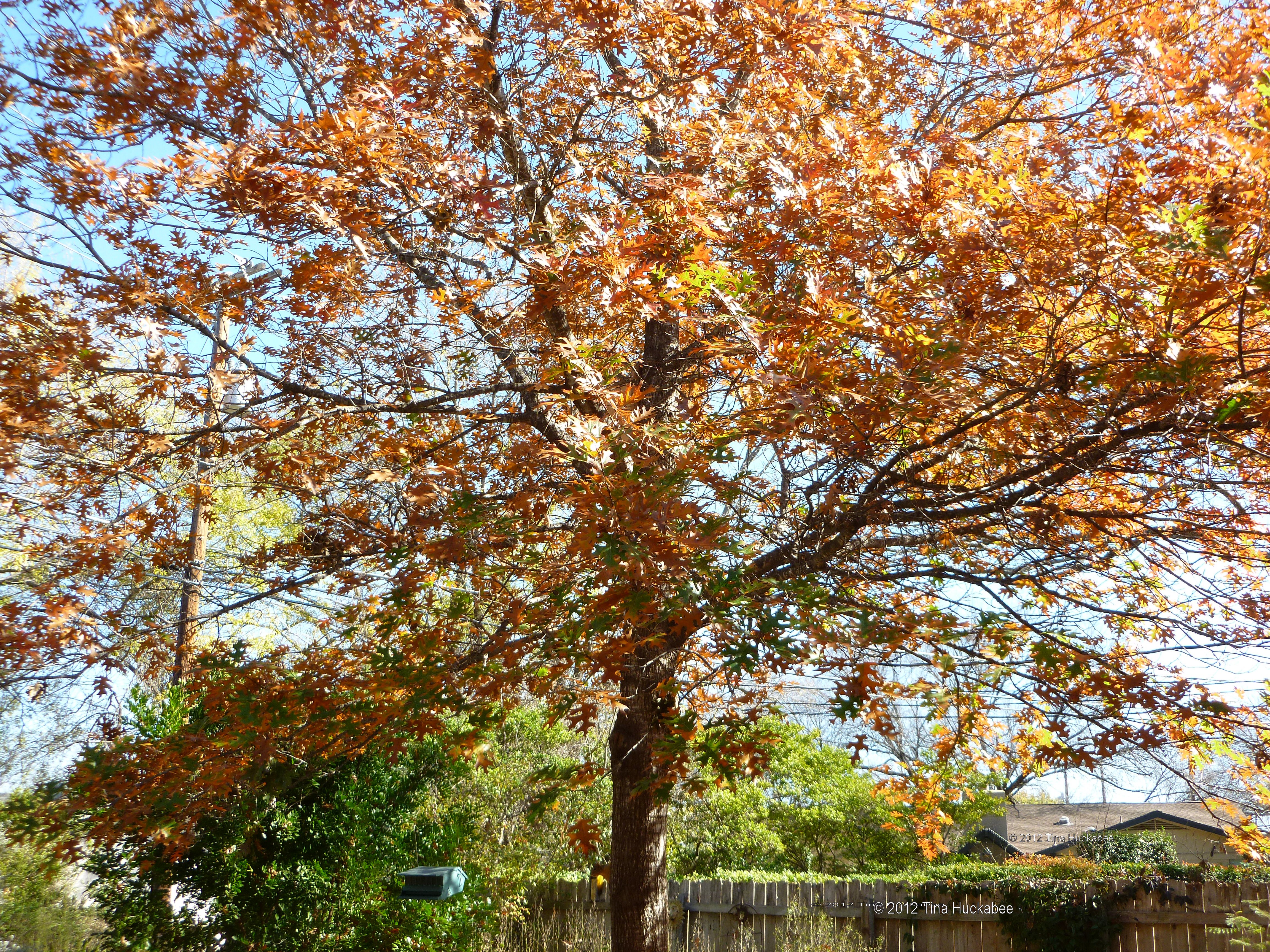
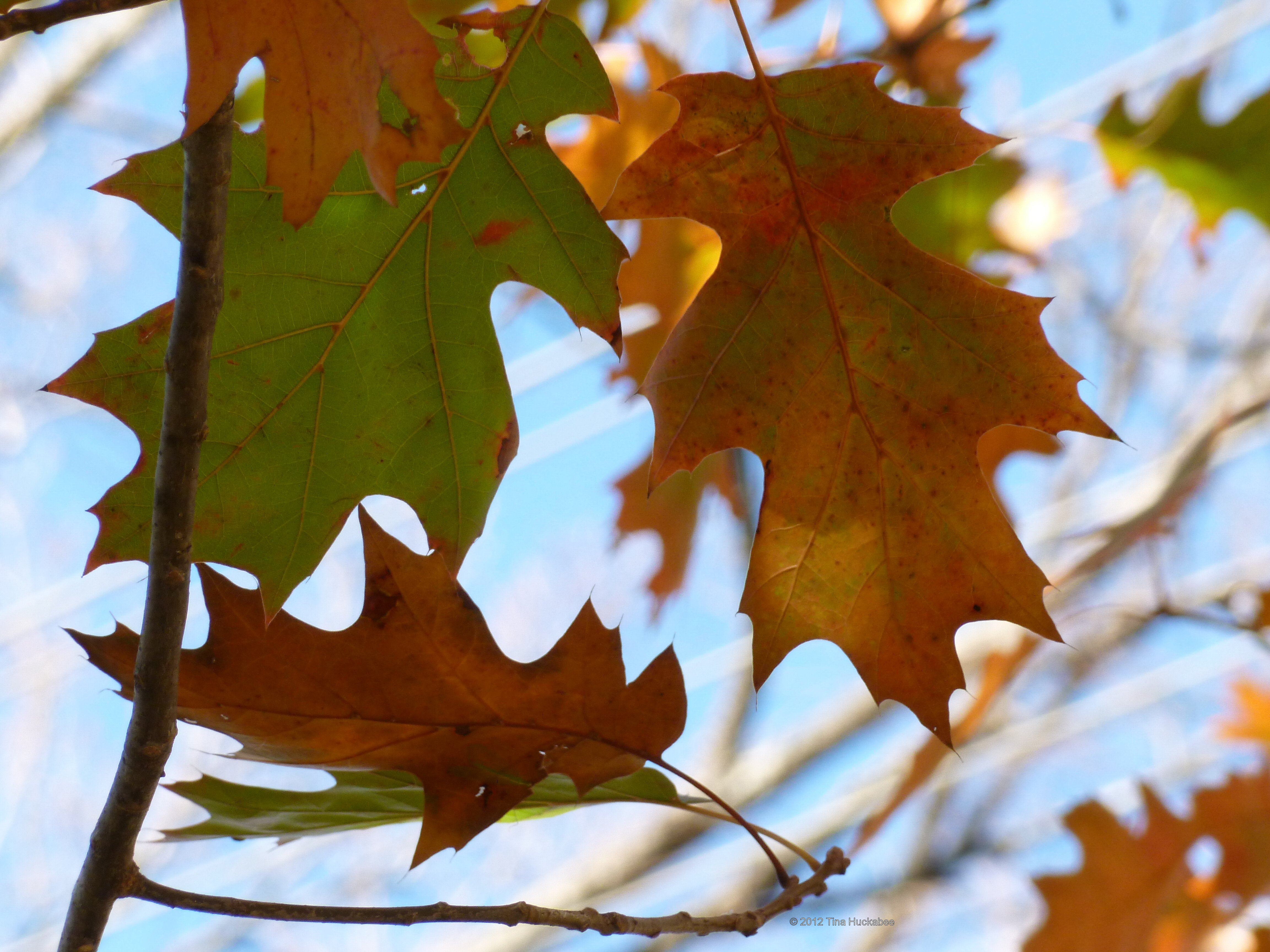
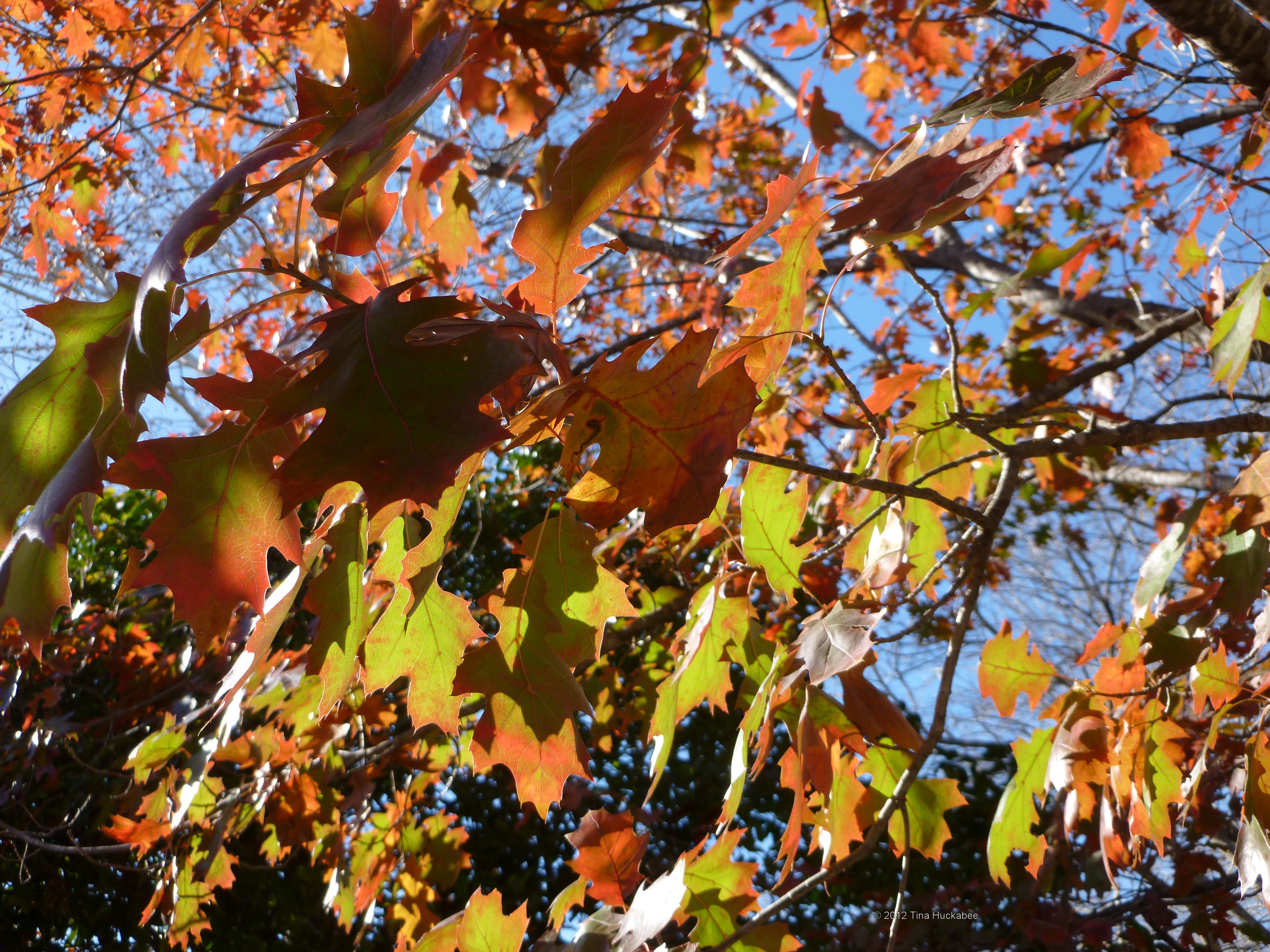
I love the beautiful rust color that the Red Oaks turn before the leaves disengage from their arboreal home.

The transformation of color begins in earnest in early December, from green to the lovely blend of orange, rust and burgundy,

and by the end of December, they drop.

And then I rake.  And rake.

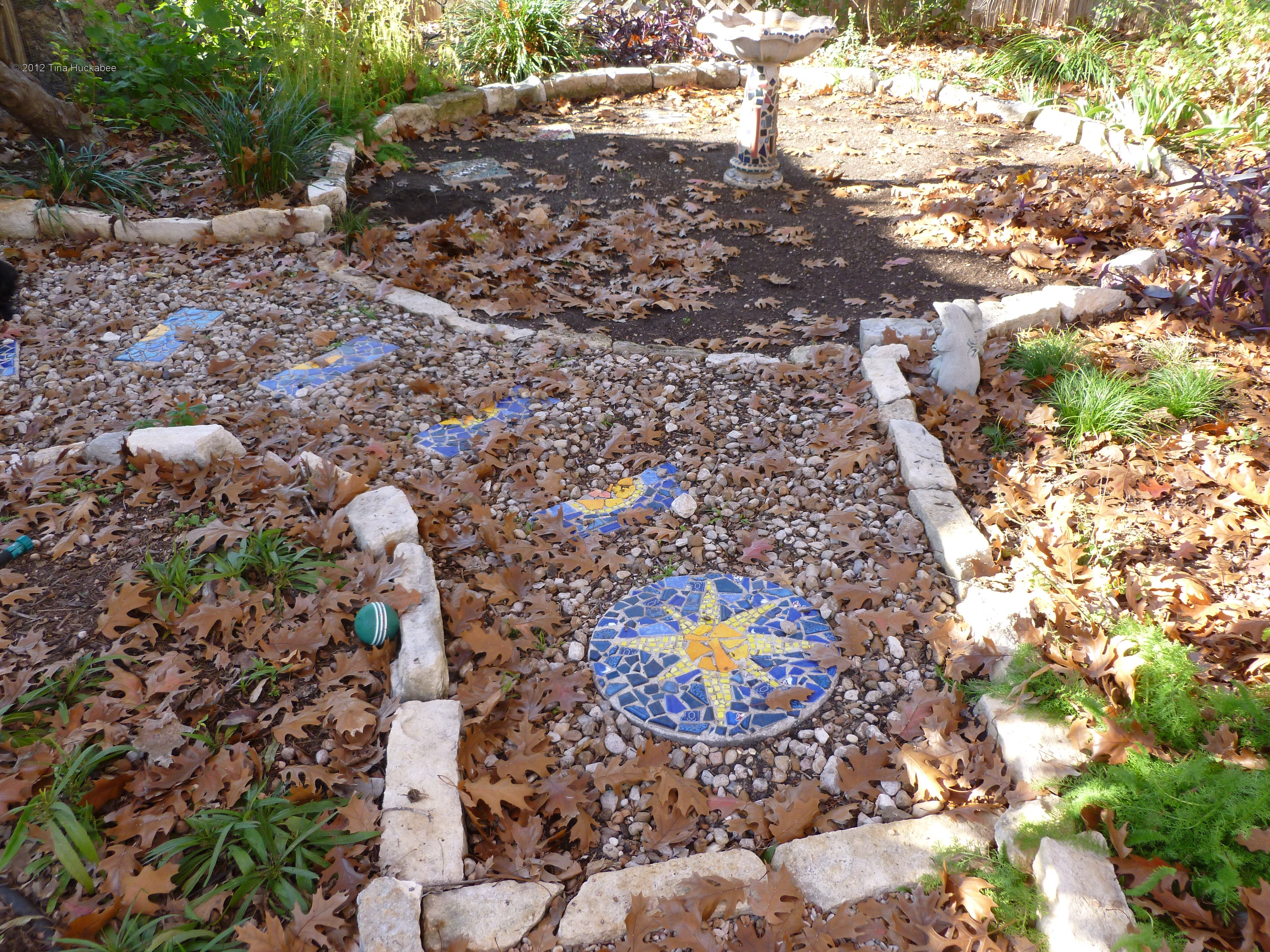
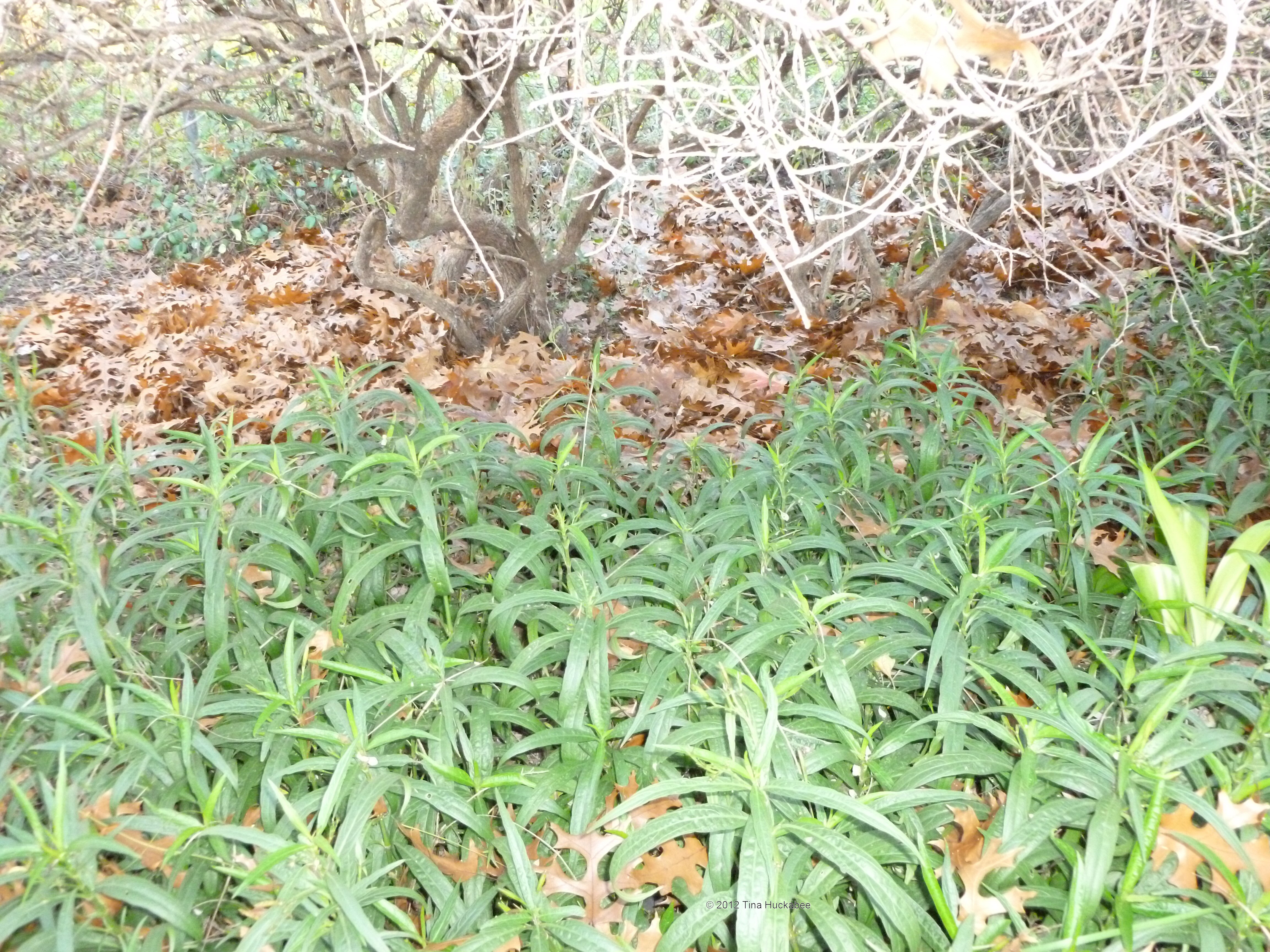
Some of the Red Oak leaves will also end up in the gardens, but only in specific areas because of the size of the leaves.

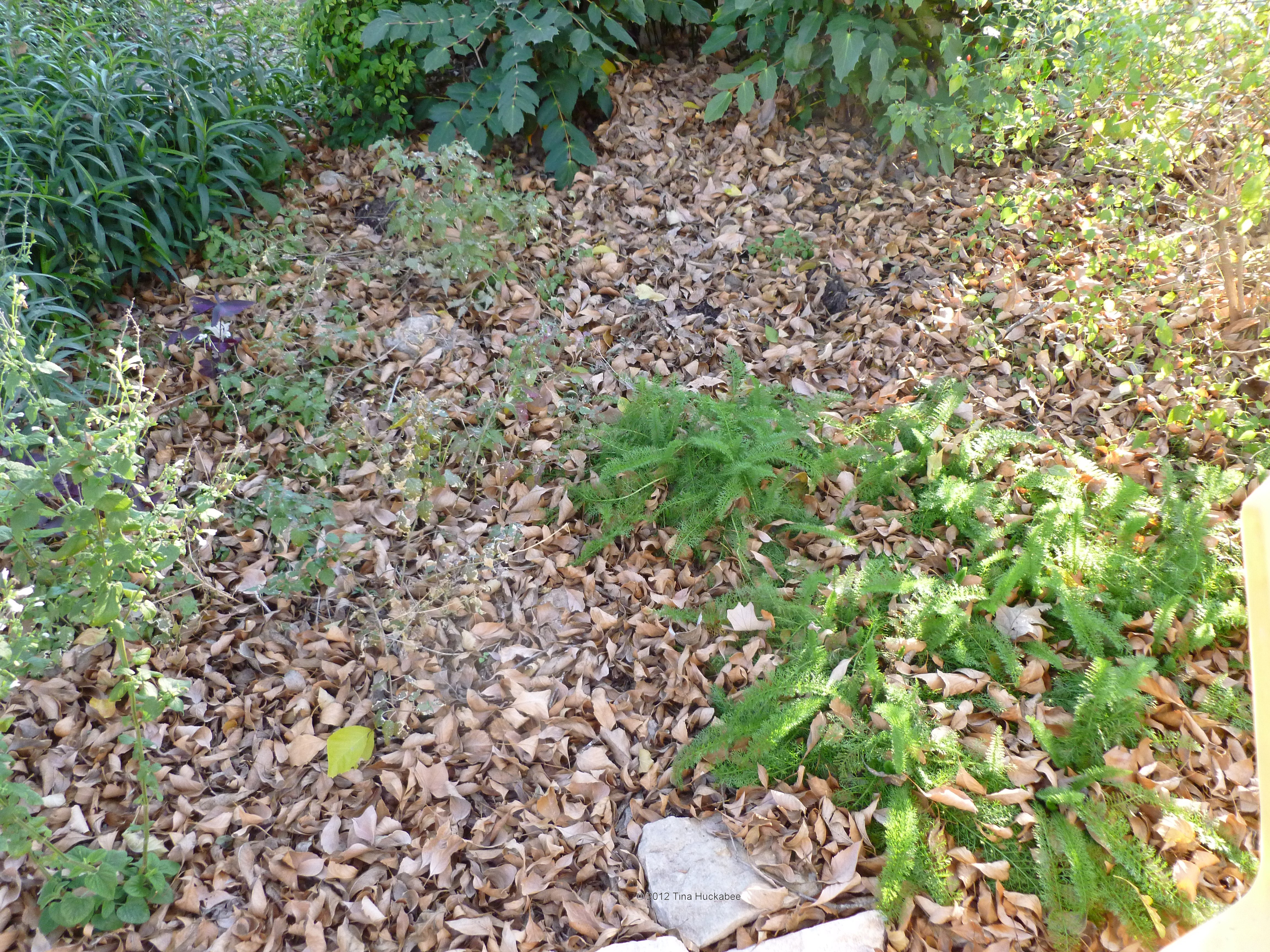
The small, thin leaves of the Arizona Ash tree are ideal to leave in the gardens, so that’s where I put most of them.

They break down through the winter months, especially if it is a wet winter.

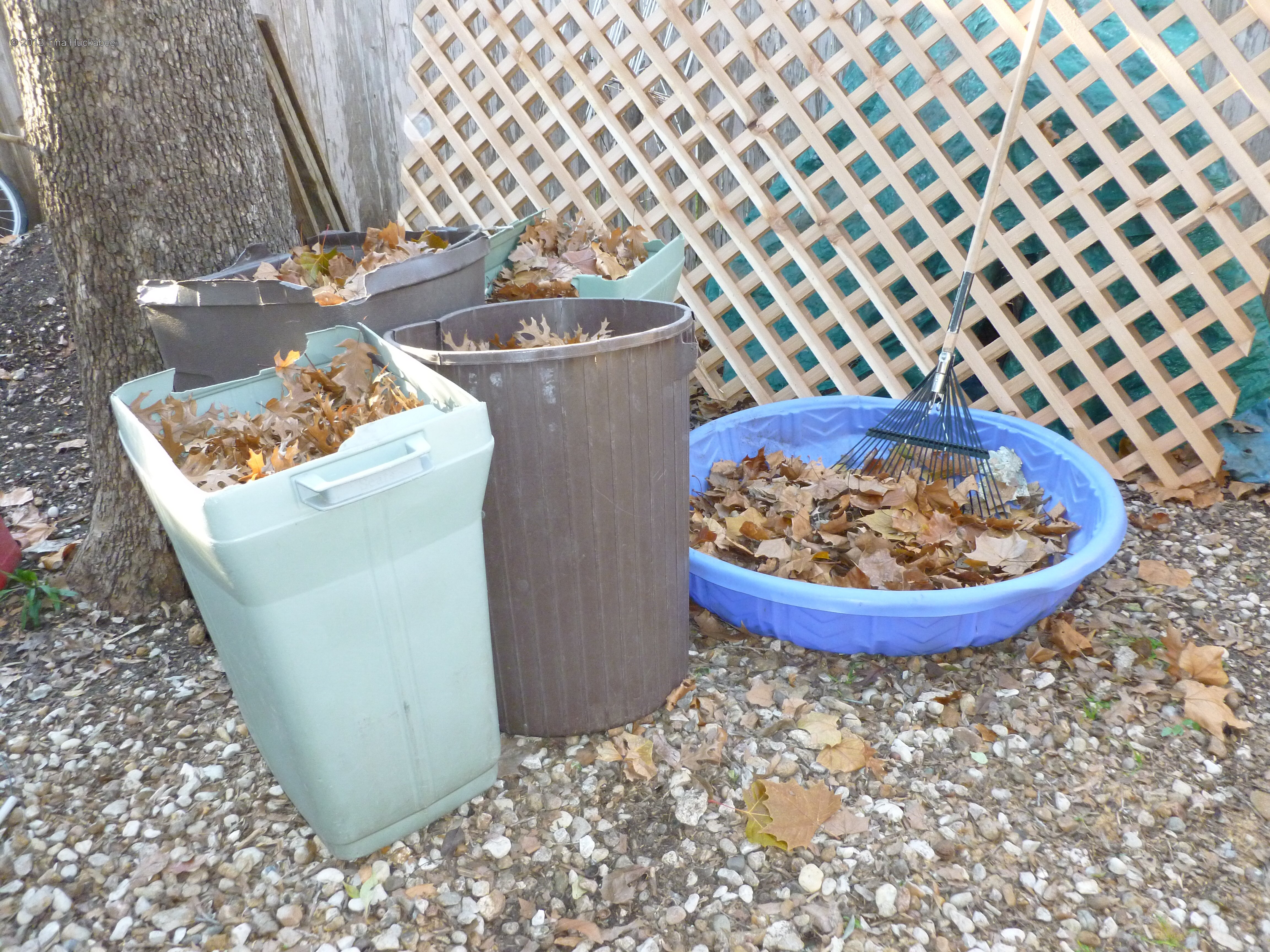
Some leaves end up in the compost.

This year, because I haven’t been a good gardener and I haven’t been diligent about turning the compost, most of my leaves ended up as yard waste, placed at the curb for pickup on
Thursdays.

In their next life, they’ll be mixed with treated sewer sludge  (heated to a safe temperature) and made into a gardening product called “Dillo Dirt” by the City of Austin.  It’s sold in Central Texas nurseries as a soil amendment.

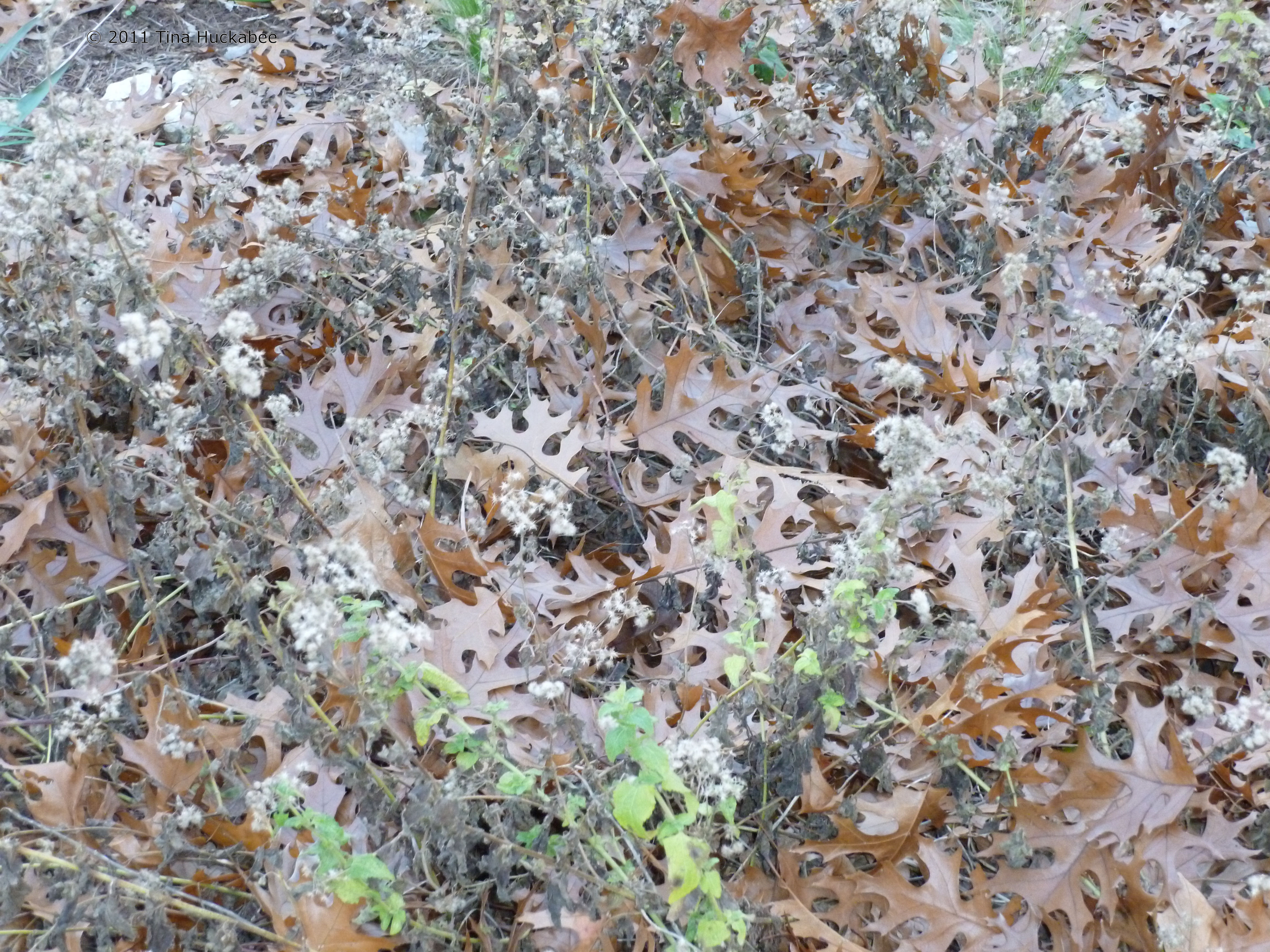
My least favorite leaves in my gardens are the leaves of the American Sycamore.  Big, thick and just…not attractive, except when they’re on the tree of course.  Once they’re down on the ground, they are clumsy and awkward.

They can be almost as big as dinner plates.

I hate these leaves once they fall.

This December, there weren’t as many of the Sycamore leaves because quite a few dropped during the summer.  The Sycamore is not a particularly drought tolerant tree and in especially hot, dry summers, it sheds some leaves early.  Usually, this garden is covered.

It’s actually not so bad this year, I guess.  I’ll shred some of these leaves with an attachment to my leaf blower and that’s useful because then I can put these leaves directly in the compost or in some areas of the garden.

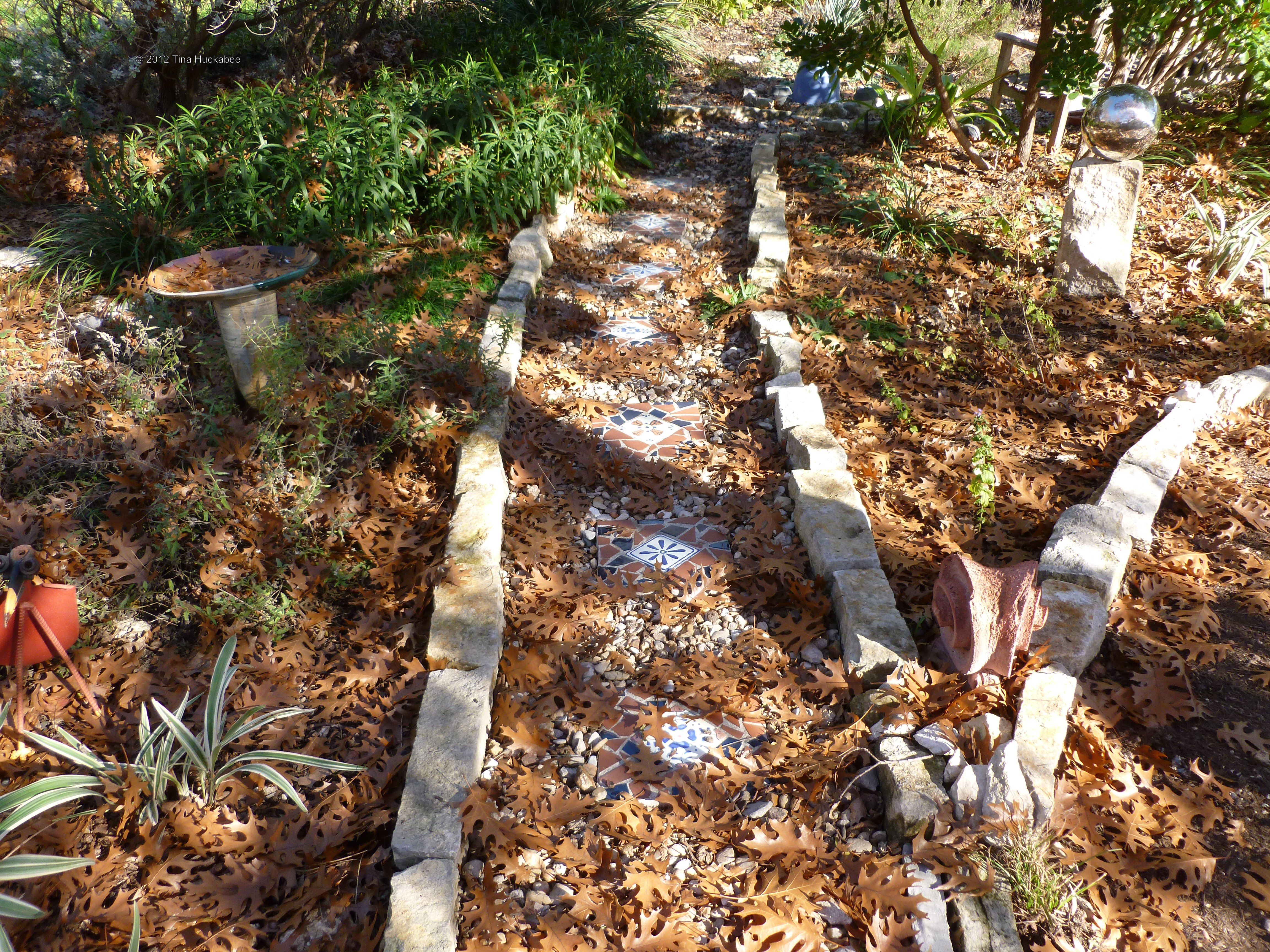
The leaves are almost all down now.  Some are still wafting to terra firma with the breezes, so the cleanup isn’t quite over. There will be some tidying up here and there over the next month and then my gardens and pathways will be cleared and non-crunchy once more.

I’ll miss the beautiful hues of brown, red and orange in the garden.

Kiss My Grass…Goodbye

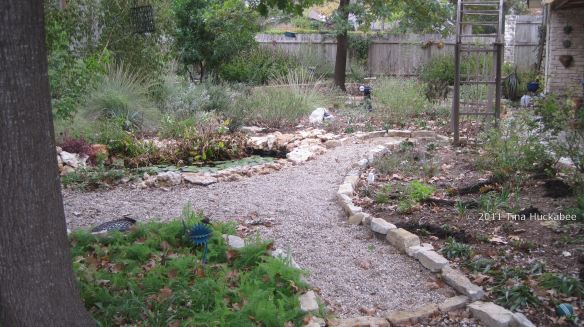
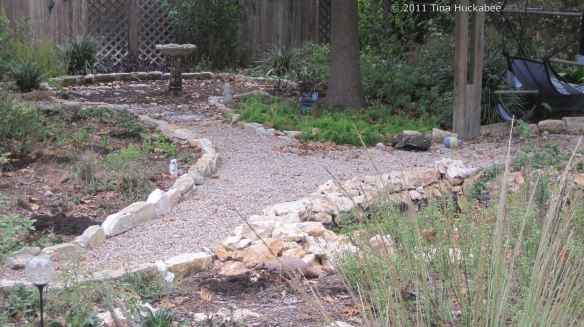
I’ve recently rid myself of the last remaining turf on my property by building a pathway where the grass was.  It’s easy to lay a pathway, especially if the topography is flat. Adding a pathway is also a good way introduce structure to a garden.  A defined pathway gives visitors a specific route for meandering a garden space.

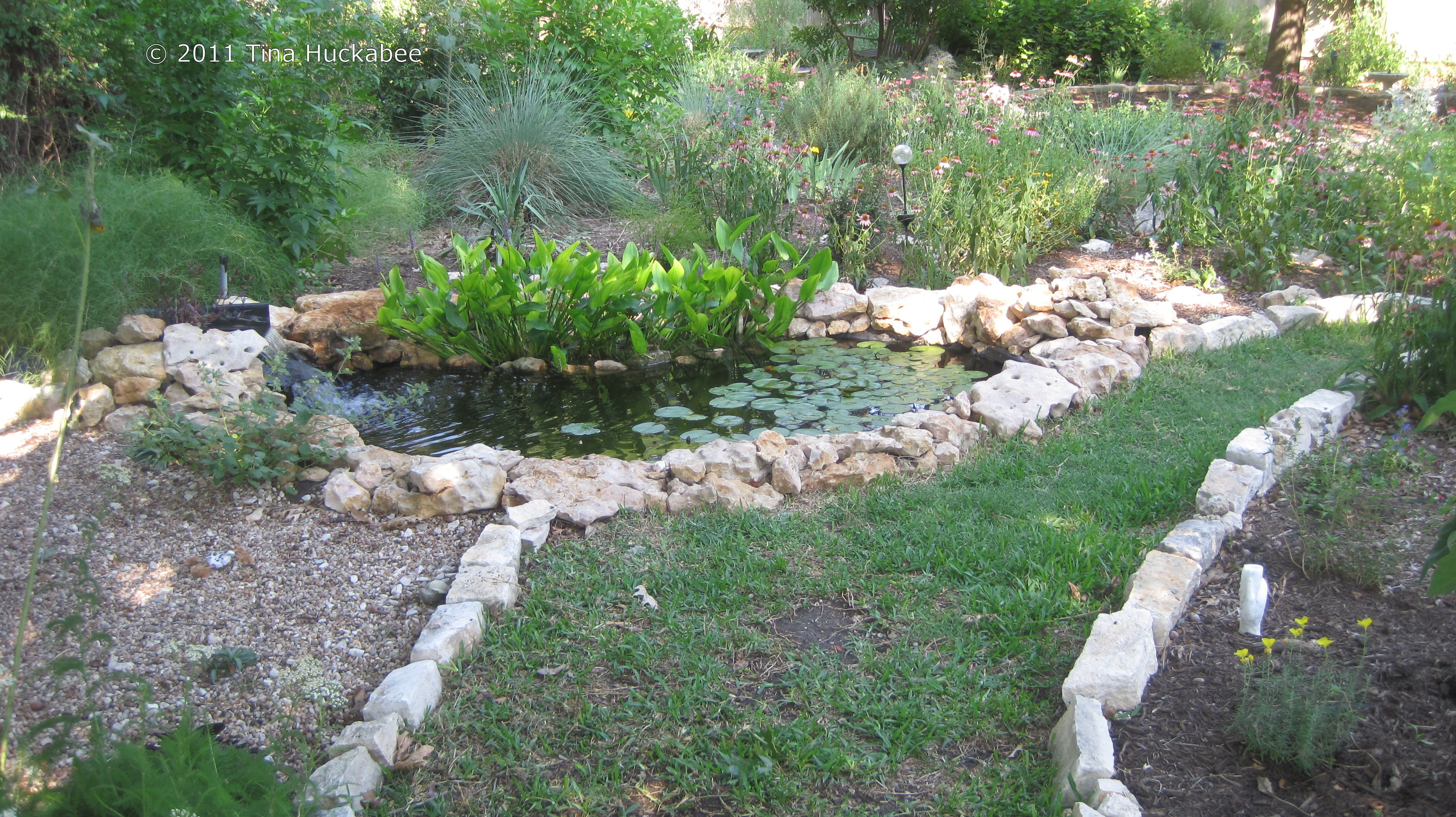
When we built our pond three years ago, we placed it within the border of an established, large perennial garden and adjacent to the remains (swing beam and pea gravel) of the kids’ play-scape.  We hung some nice hammock chairs so that we can sit by the pond and enjoy the fish, flowers and sleep.  (Inevitably, that’s what I end up doing when I sit there and (ahem!) read.)

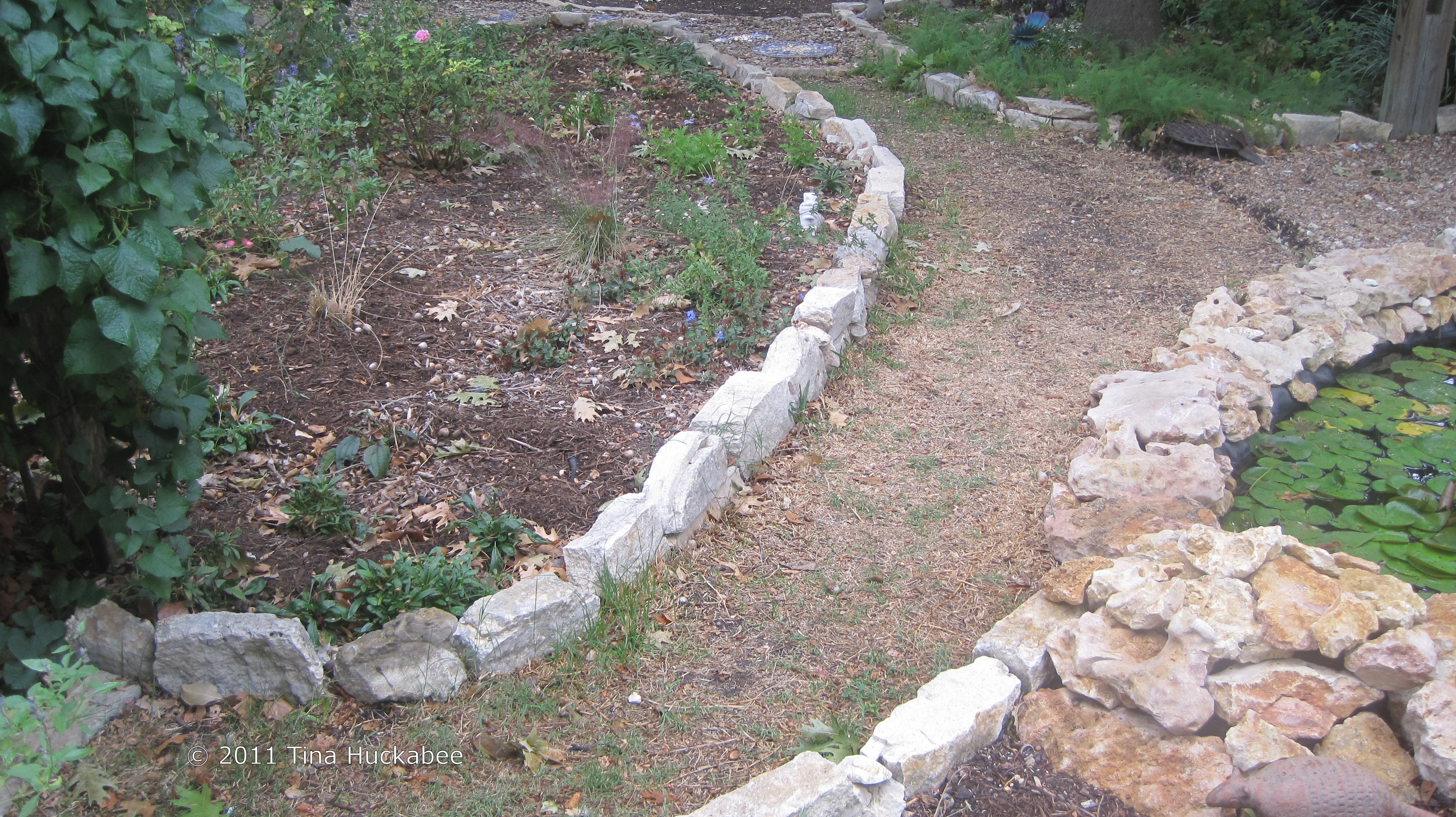
Because I haven’t been able to decide exactly what I wanted for the pathway, I left a (roughly) half-moon shaped patch of mostly Bermuda grass which leads  from the patio/archway to the sitting area by the pond,

and then onto the next walkway/mulched area.

Other than occasional hand and automatic weed-eating at the border of the pond and gardens, I haven’t done anything to maintain this grass area.  After the Summer From Hell of exceptional drought and almost 100 days of over 100 degree temperatures, coupled with no additional irrigation, the grass died.

Good riddance.

It’s time to build a pathway–I just have to decide what my building material will be.  So…mulch?  Or gravel, (pea or larger?)?  Crushed granite? Or City of Austin crushed, recycled glass?

I prefer mulched areas because I like to walk barefoot and I don’t mind walking on mulch, plus I like the warmth of the earth tones in a landscape.  But I have two large mulched areas already and want something different.  Plus, my sweet dog loves to roll around in the mulch and I have enough problems with indentations in the mulched soil from his back-scratching antics that I don’t want to give him more opportunities to dirty himself.  (More on that in another post.)

I love the look of crushed granite, but I don’t like walking on it barefoot and the dog is still going to roll in it, so no solution there.  And as beautiful as recycled glass is, I don’t think it’s practical for a walkway where we’re going to be barefoot.

Gravel it is!!  I like to walk on pea gravel (feels good on the feet!) and the area where the play-scape was/hammock chairs are, is covered with pea gravel, so this choice simplifies the layout of this area.  My original plan was to have something other than pea gravel for the formerly grass area, but I prefer to keep the lines simple and pea gravel fulfills that desire.

The downside to using gravel is that it will be hot in the summer from about 10 am to about 3pm because of the direct sun.  The area is mostly shaded after that and gravel cools quickly, so other than a few hours during the day where it will be necessary to wear shoes, it won’t be a difficult place in which to walk.  Another related problem is that  the heat generated from the rock might contribute to some evaporation from the pond.  However, I don’t think the evaporation will  be that significant

This was an easy project to complete.

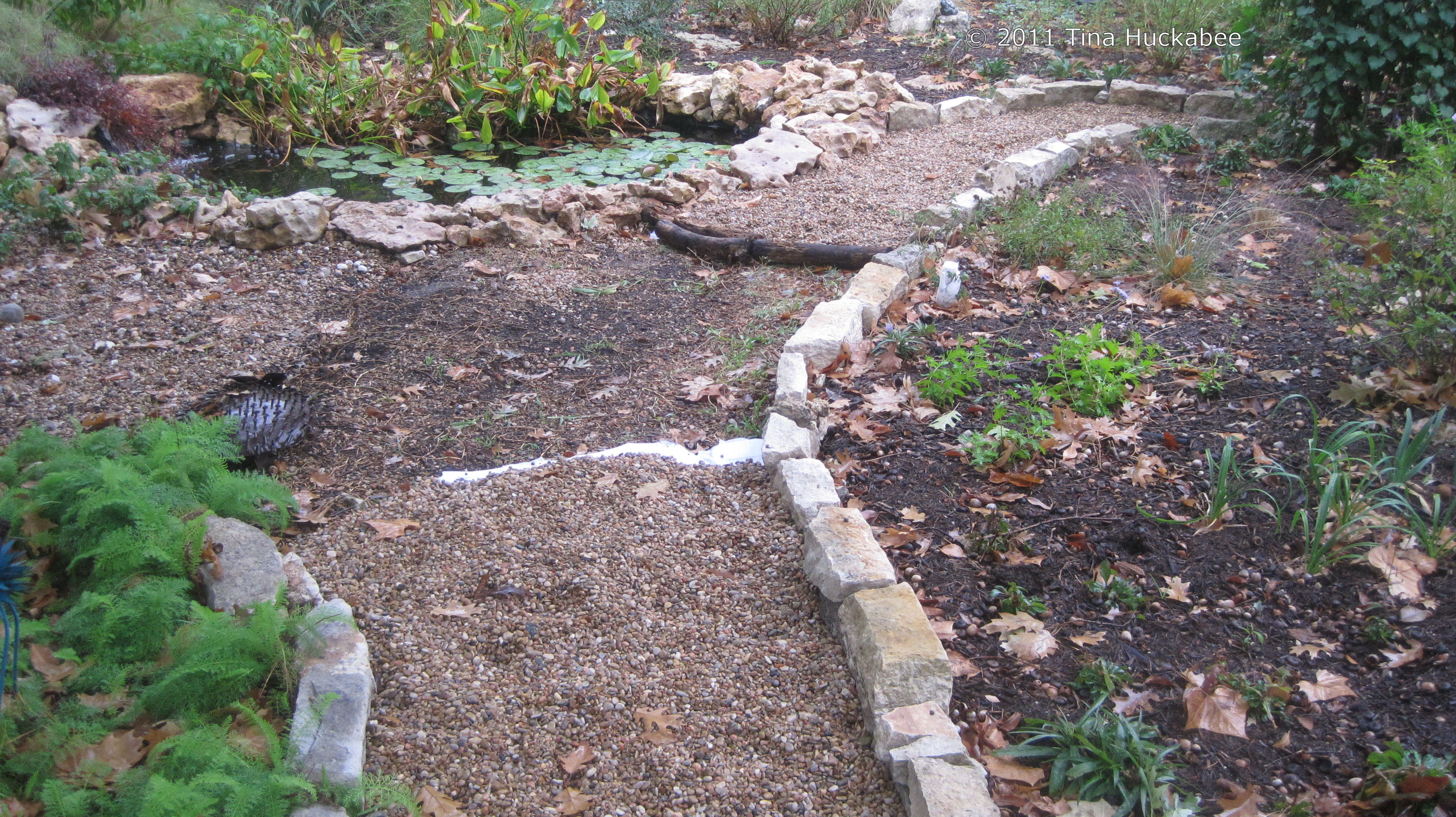
1) I hand pull and weed-eat remaining grass (which there was not much of) and start laying  weed-block.

2) My weed-block of choice has always been newspaper.   I use fifteen layers and overlap the sheets so that the more ambitious weeds can’t get through.  It’s best not to do this on a windy day….

3) I have to excavate about four square feet along the pathway, just past the arch.  That area is flush with the river rock and an embedded stepping stone under the arch.  I don’t want to add weed-block and pea gravel directly adjacent because it will be higher than the stepping stone and that won’t work.

4) I dig out the soil with a sharp-shooter and use the straight-edge of a hoe to even the soil and keep the slope consistent.  I excavate about three inches deep, for about one and one-half feet in length, gradually sloping upward to the top of the soil where it meets the remainder of the established path.

5) The remaining pathway is bordered by five-to eight inch high limestone chopped rock and the ground is flat, so I can simply add weed-block and pea gravel directly on top of the soil.
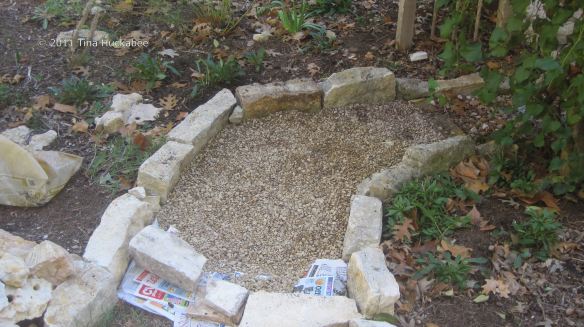
6) I open bags of pea gravel and pour.  The total pathway area is about twenty square feet, so I purchase individual bags from a nearby nursery.  If it was a larger project, it would be more economical to order gravel from a local landscape supply company.  Except for the excavated area (where I use three and one-half inches of gravel), the pea gravel on the pathway is two and one-half inches deep.

I complete one end,

then the other.

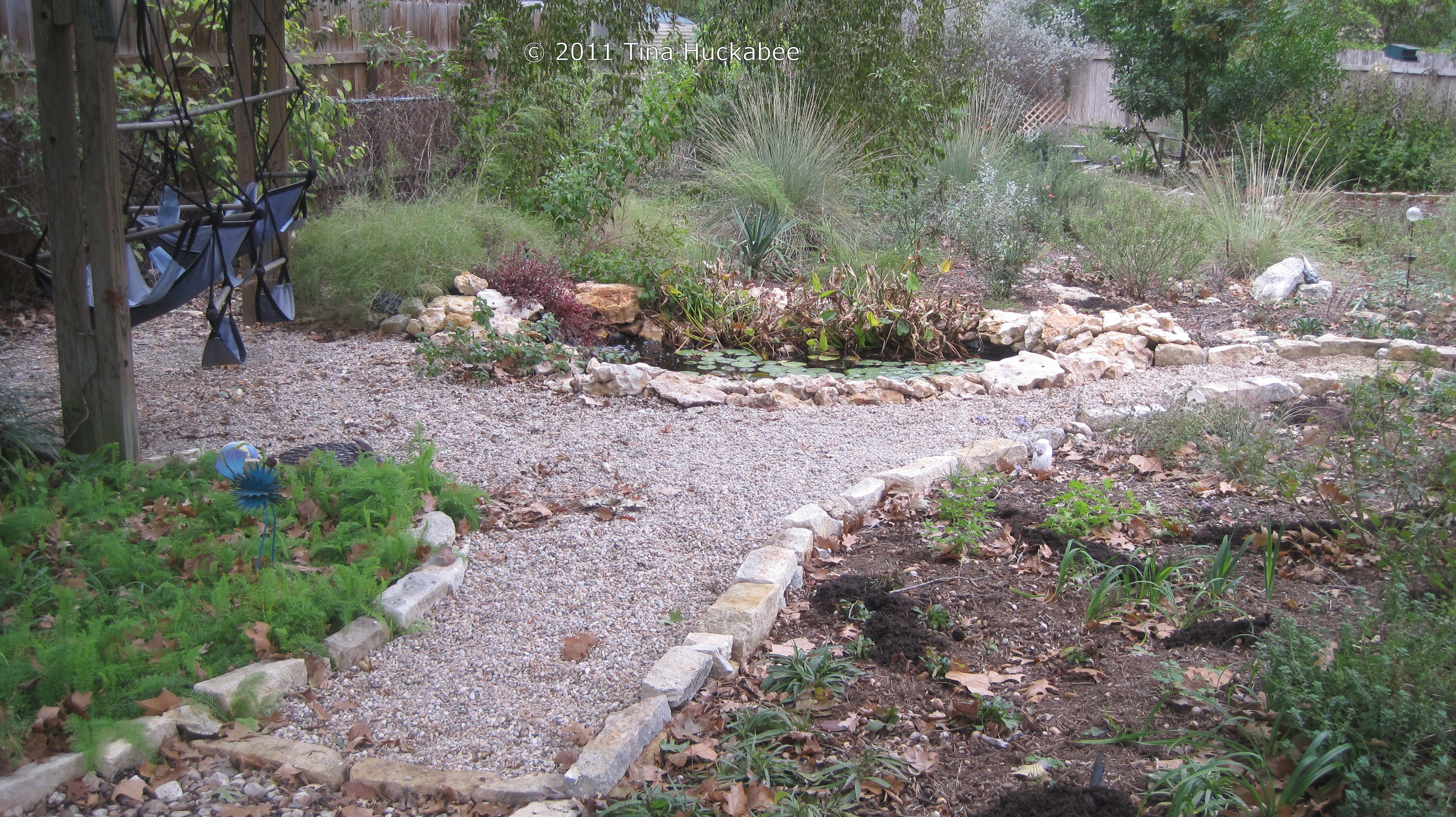
Finally, I finish the whole deal!

I built the pathway in two or three afternoons, working for an hour or two each, as I had time.

No more grass!  Just nice pea gravel that requires no maintenance and that feels good on the tootsies.  The dog can roll around in it (it’s become his favorite spot) and all it needs is the occasional rake pulled over to keep it level and tidy.

Now it’s time to clean up the billions of Red Oak leaves which are currently falling to the ground and covering everything.  Ugh!

There’s never an end to garden projects…