Bee Mama Missive: Oops!

Adventures with bees!

P1040970.new

Or, crisis in Bee-ville.

As of this writing, I’m not sure which of those I’m experiencing.  What I’m understanding about beekeeping is that there’s much to learn.  And like gardening, one learns more from mistakes than from successes.

I’m also beginning to trust my instincts.

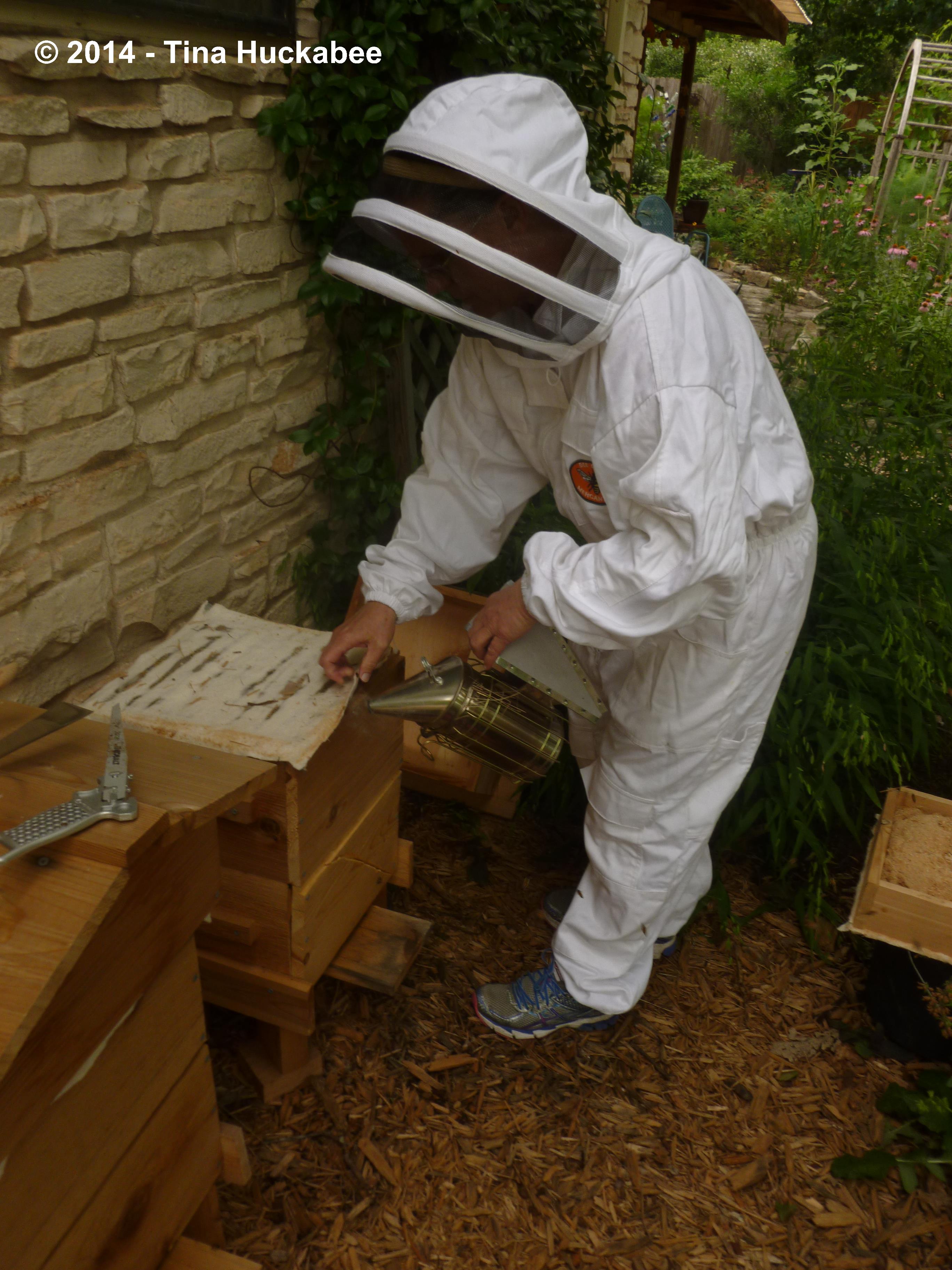
When we open the hives, there’s so much to keep track of.  We look for eggs, brood, number of drone cells, queen, capped and uncapped honey.  We’re doing all of this as quickly and efficiently as possible, while recording our observations.  We smoke the bees continually to keep them calm–the little buggers sting!  There are an array of tools (brush, hive tools, saw) to keep track of, all while perspiring profusely in a hot, hot, hot bee suit.

Sometimes,  this beekeeper’s head wants to explode!

In early June, we performed a routine check of our hives. We were leaving town for two weeks and regular hive checks are mandatory in beekeeping.
P1040935.new

P1040939.new

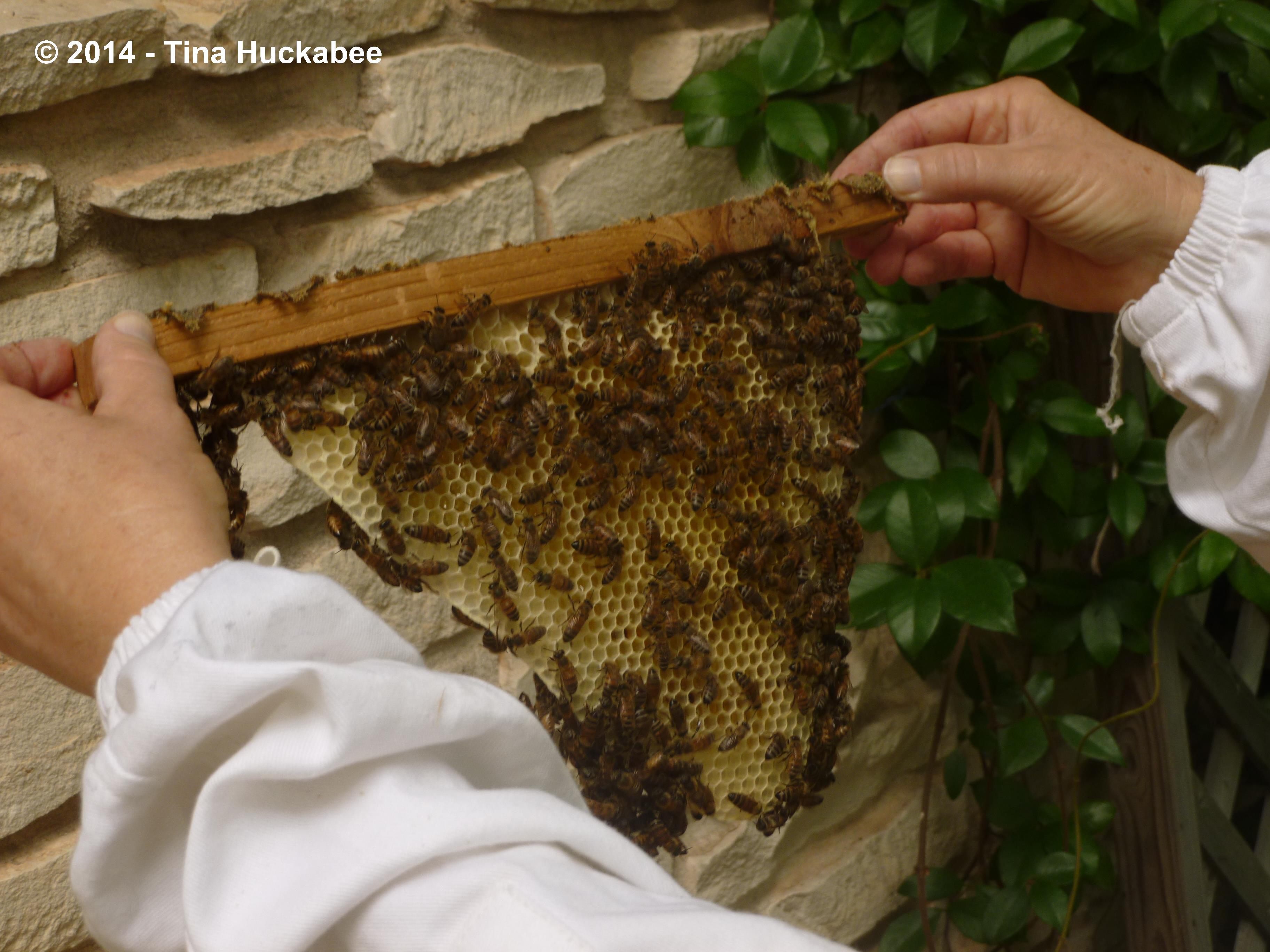
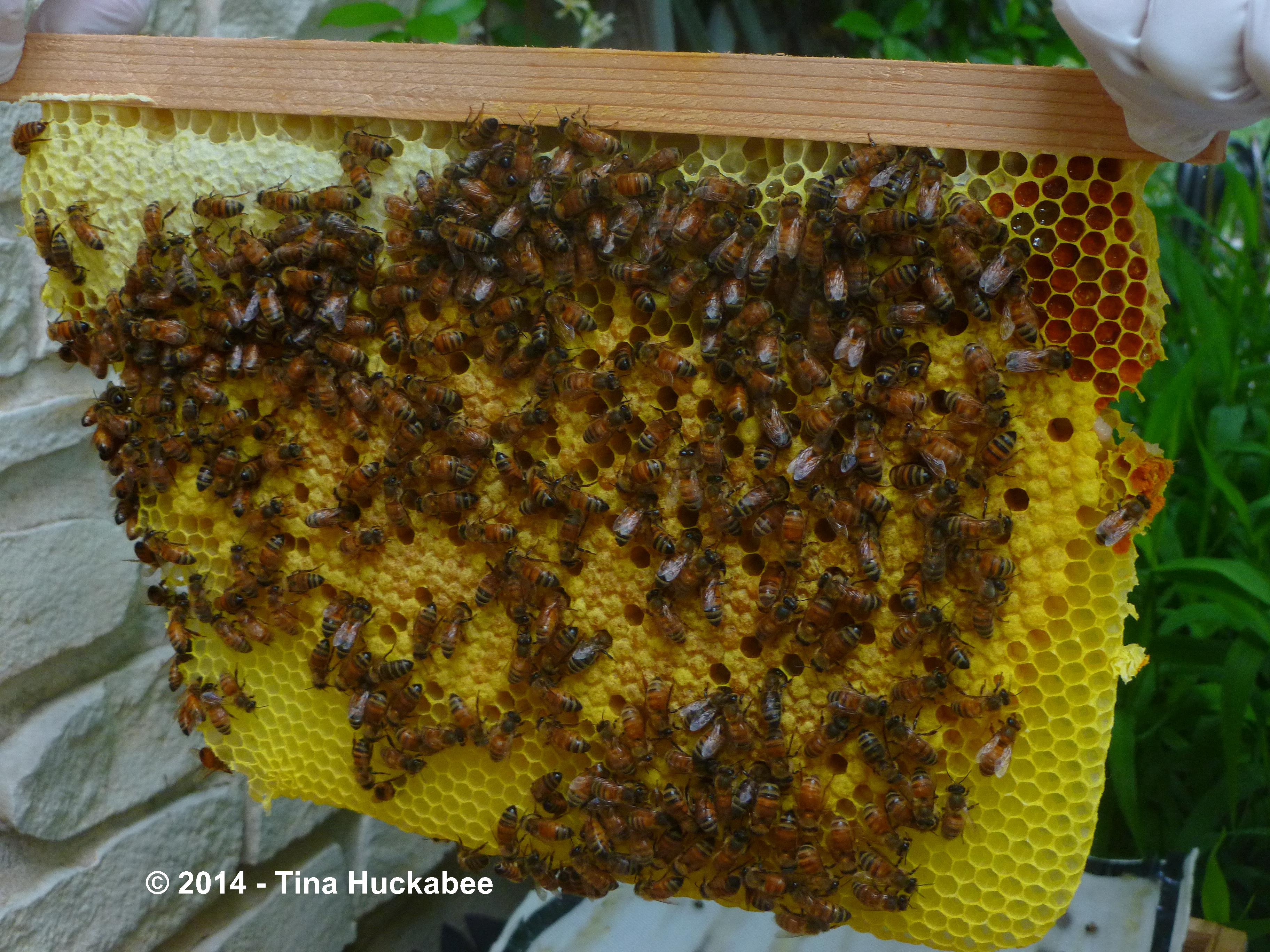
As we removed bars with comb, we noticed that instead of the comb having a full,  normal shape,
P1030837.new

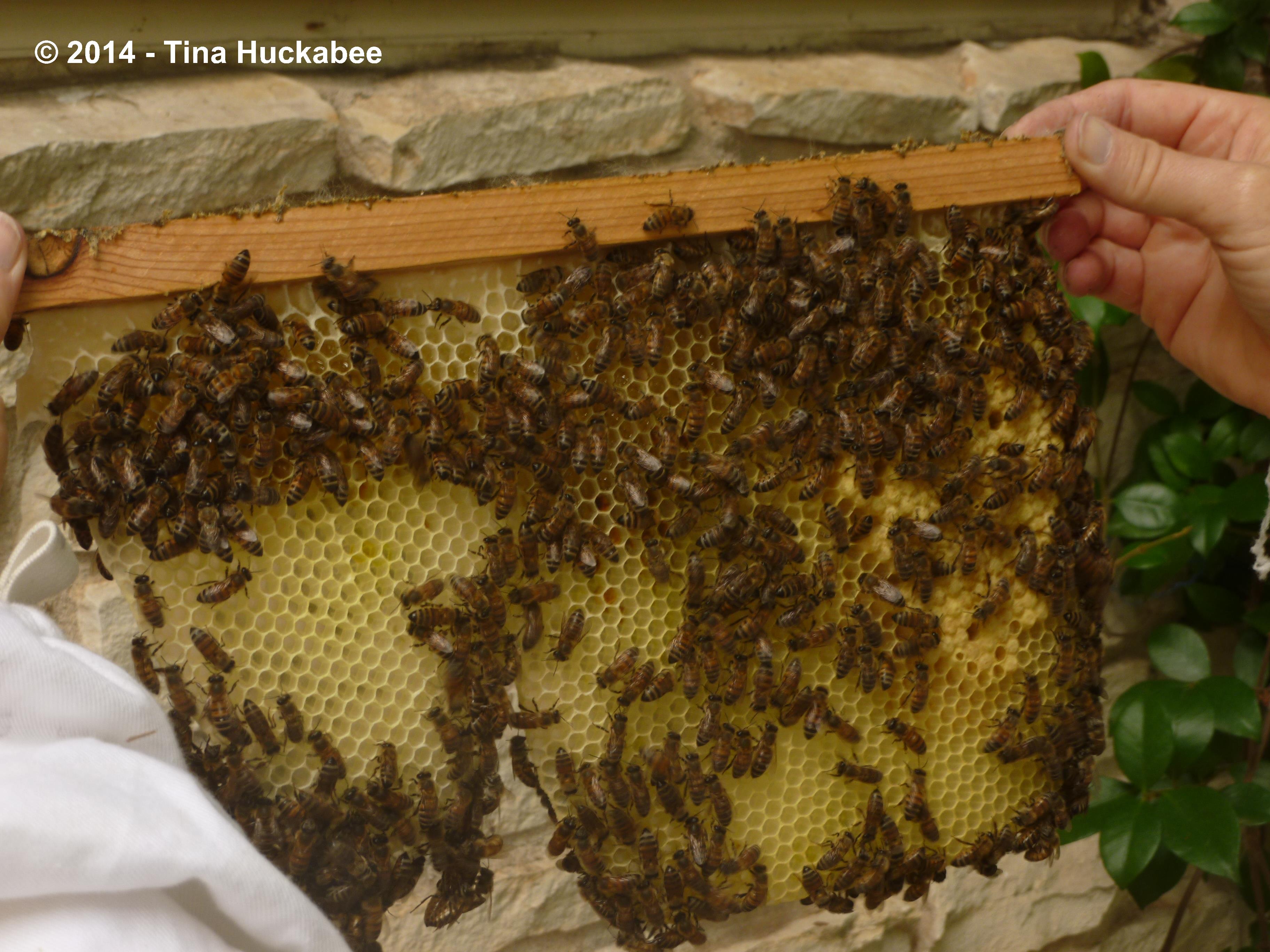
several of the combs in both hives were indented at the bottom,
P1040936.new

or skewed  to the side.

P1040938.new

We realized that the bees had built cross comb in both hives.  Cross comb is comb built perpendicular to the main direction of comb in the hive.

P1040943.new

Turns out, bees have a thing about gravity and if the hive is tilted back ever so slightly and is not level, bees are more likely to build cross comb.  Sure enough, our hives weren’t quite level.  So I placed a bit more mulch underneath the feet of the hives to level the hives,

P1040959.new

and that problem was resolved.

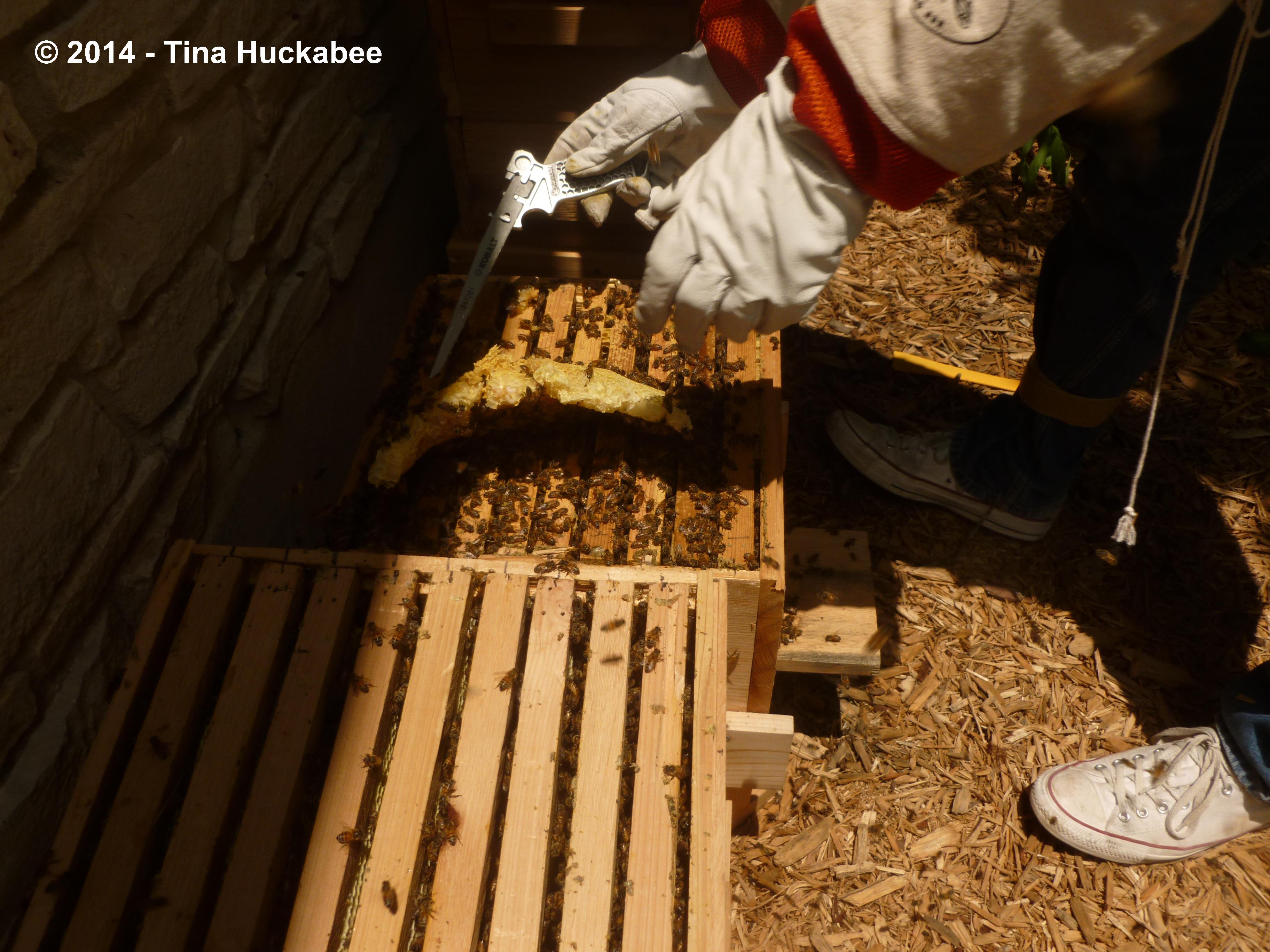
Because it’s best (for the beekeeper, anyway) to encourage the bees to build comb in an organized manner, we were told to cut out the cross comb–which we did.

P1040965.new

P1040966.new

As good beekeepers, we followed beekeeping protocol.  Honestly though, given our problems now, I regret that decision.

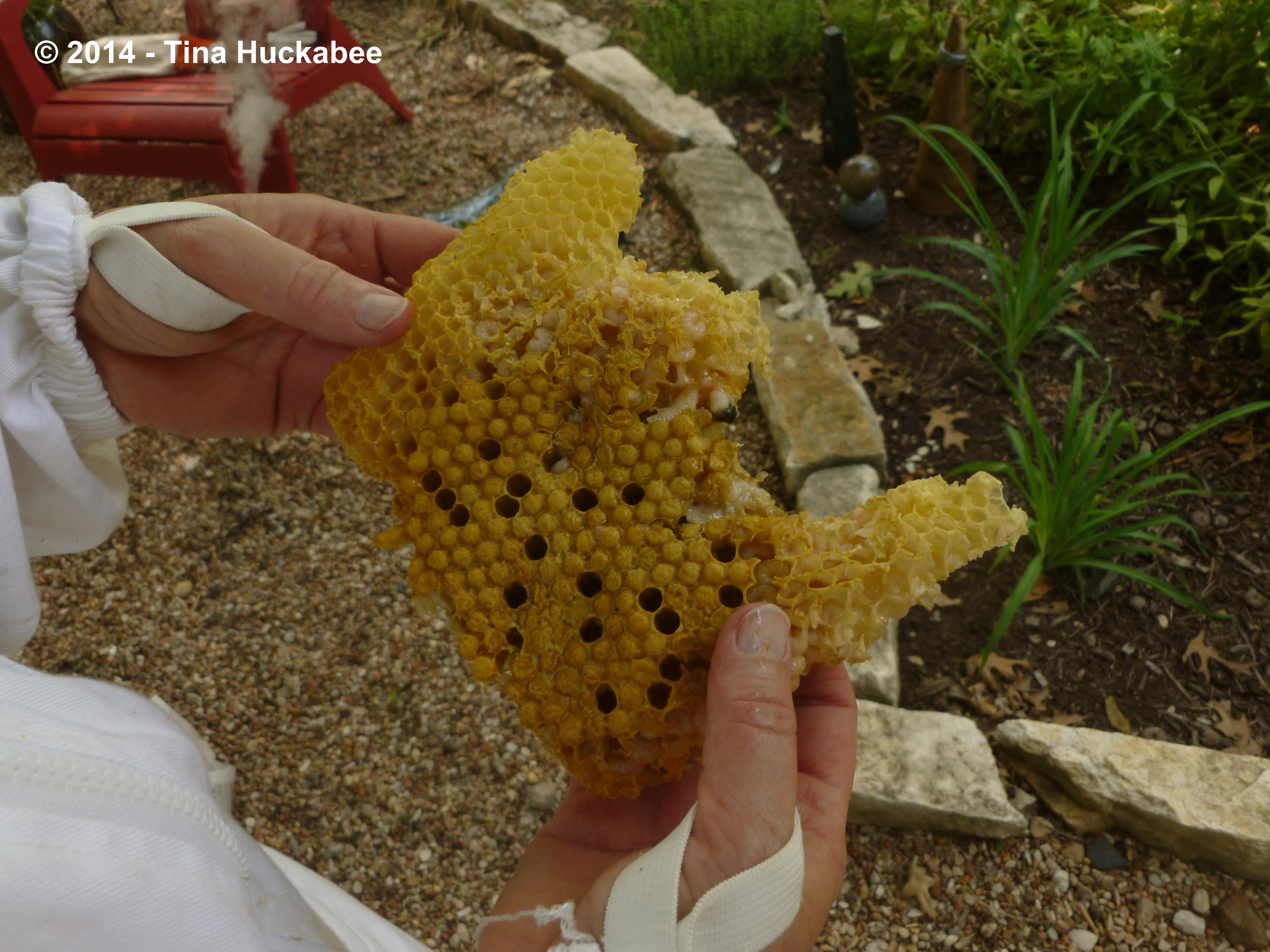
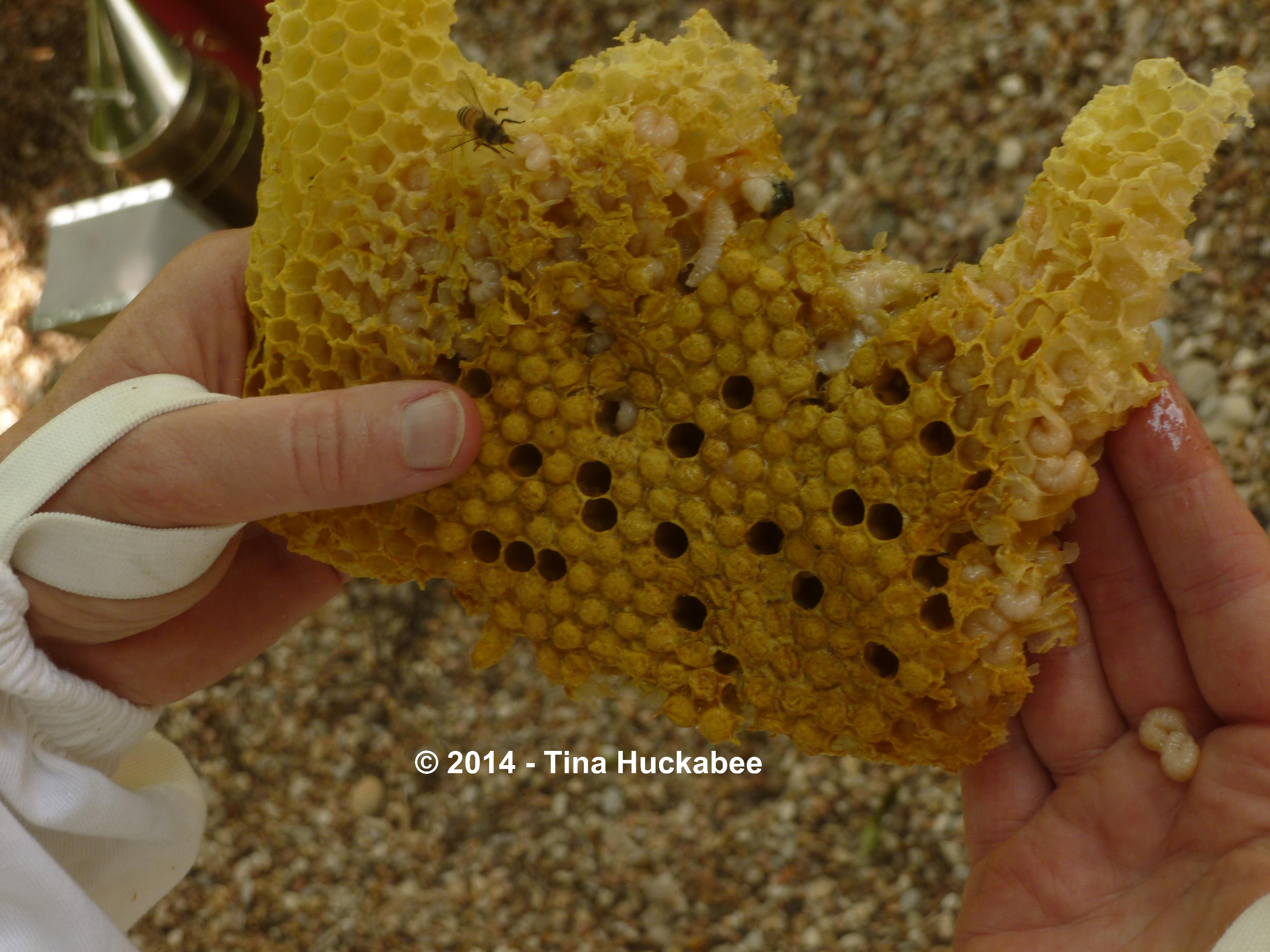
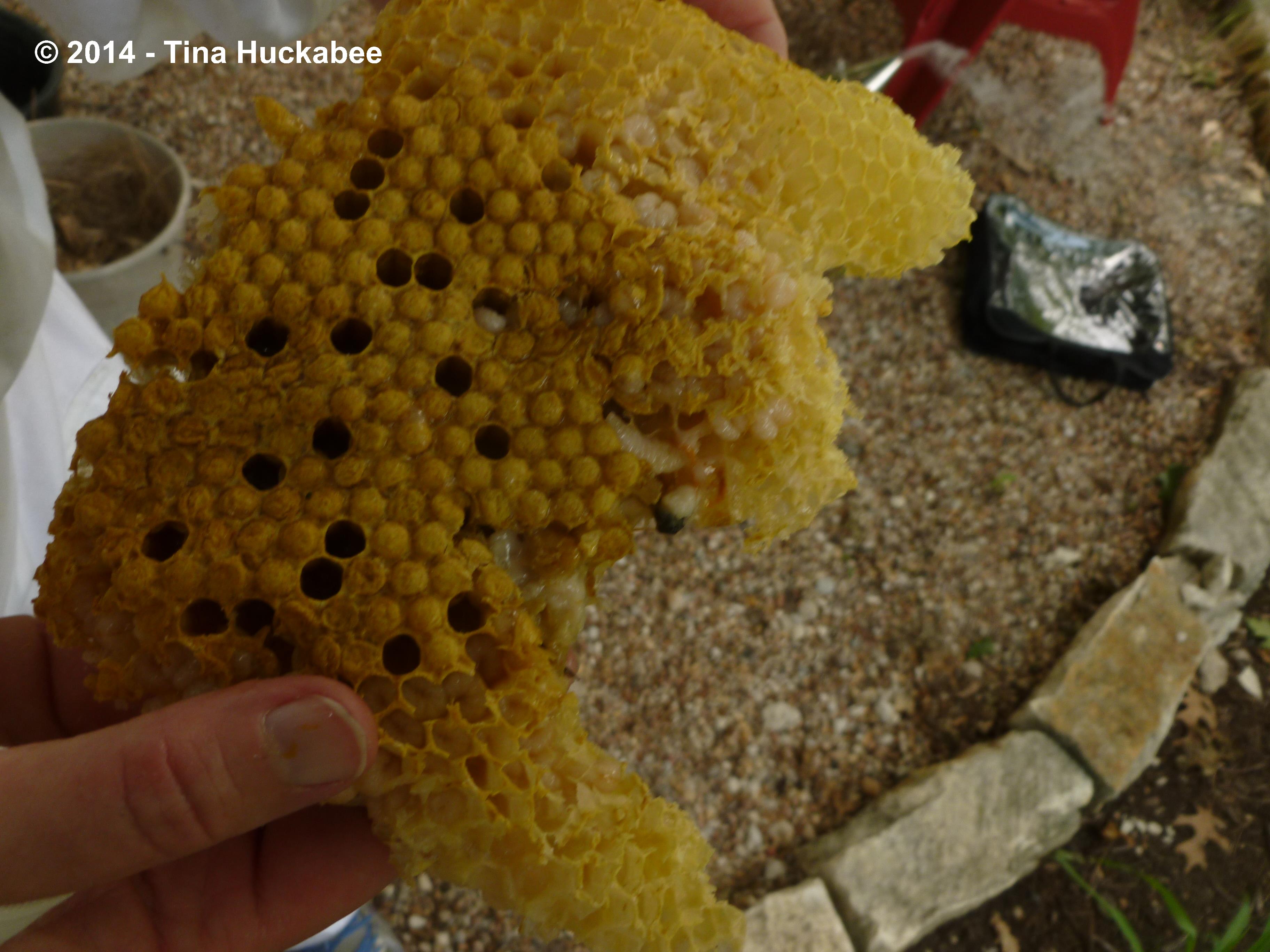
I felt badly about removing the cross comb.  There were lots of capped and uncapped white larvae in that comb which we removed and therefore destroyed.

P1040974.new

P1040975.new

P1040976.new

P1040977.newCapped and uncapped larvae denote developmental stages.  The eggs are laid in the cells of comb, larvae develop and grow, then at a certain point the cell is capped. The bees develop on a specific timetable into either workers, drones, or queens and eventually the adult bee emerges from the cell.

For the next few days after the hive check and before I left for my trip, I noticed that the bees were different–more aggressive and not the same sweet little girls I was accustomed to.  I was stung multiple times and they were not keen on tolerating me anywhere near the hives, which was unusual.  Bees are driven by pheromones. Their development, job in the hive and hive identification are all  pheromone-based and the queen is the epicenter of that pheromone universe.  I’ve learned that when a queen dies and the pheromone levels are dropping, the hive can become cantankerous.

Menopausal bees, if you will.

I understand that.

Fast-forward three weeks later and another hive check. Before I continue, I should explain that we’ve named our hives: Scar (for obvious reasons), on the right and Mufasa, on the left.

P1050530.new

That will make telling the story slightly easier.

And confirm to you that I’m completely wackadoo.

We opened both hives and noticed several oddities.  There was no brood in Scar and only a little capped brood in Mufasa. No fresh eggs or larvae in either hive.

There was lots of plain comb,

P1050503.new

comb loaded with honey,

P1050505.new

and comb with budding queen cells.

P1050511.new

That’s concerning because it means the bees are attempting to create their own queen.  That’s not necessarily bad, but given the other evidence of no queen activity, that could spell doom for the hives.  By now I was convinced that we had no queen, definitely in Scar, possibly in Mufasa.

I won’t bore you with the details, but I sent queries to an Austin Beekeeping Association and to BeeWeaver about what we observed in the hives and the possible injury to or death of our queen(s). Additionally, our hives were a bit overcrowded with nine frames, rather than the normal eight, so moving drawn comb in and out of tight quarters increased the likelihood of injuring bees, including the queens.  Bees are killed every time we hive check and it is possible that we killed the queen(s), either by removing a bar with comb, or setting it back in the hive or when we cut out the cross comb.

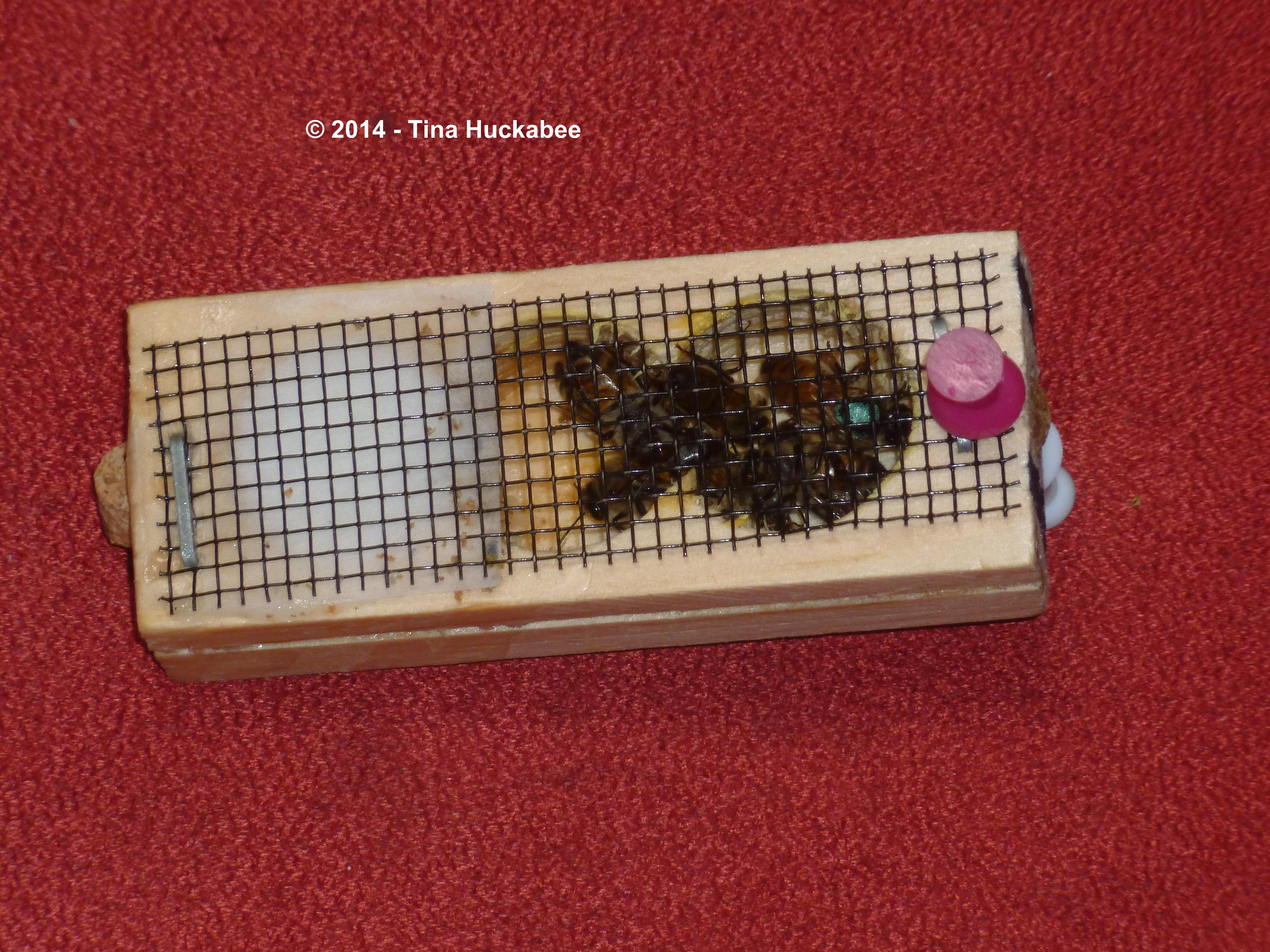
All advice to us was to wait a week or so and check again.   A week later,  I checked  and still there was no new brood.  I sent photos to BeeWeaver and they agreed that it was time to get a new queen for Scar–which fortunately I was able to do immediately since BeeWeaver’s home office is about 10 minutes from where I live.   I brought home Scar’s new queen (marked with a green dot) and her attendants,
P1050622.new

and re-queened Scar on July 1.

I’ve checked both hives since and Scar’s queen is out of her queen cage and I think there’s some new brood, though I’ll know for certain next week.  But there’s no brood at all in Mufasa and for bureaucratic reasons, I can’t get a queen for Mufasa until next week.  Last week, my gut told me to get a new queen for both hives, but I deferred to those with more experience and only re-queened one hive.

I now regret that decision.

I knew something was amiss after the early June hive check and I felt that both of my hives needed new queens last week, even though others recommended re-queening only one of the hives.  I don’t generally operate on woo-woo, emotional factors.  I’m an adherent to science, fact and reason.  But I dearly wish I’d followed my instincts with this glitch in my beekeeping.

Time will tell whether my hives survive.

The mistakes we’ve made are the mistakes of novice beekeepers:  building hives that are out of the ordinary, overcrowding the boxes with the placement of one-too-many bars in each, (perhaps) removing the drawn comb too quickly when checking the hives, not acting immediately when we suspected that there was something wrong with our queens.

The biggest mistake though, was not trusting ourselves.

The one positive from this experience, hard lessons aside, is that we extracted honey!  I hadn’t planned to retrieve honey from my hives this year, but we decided to remove one bar from each box to alleviate crowding and the bars we removed were those full of honey!

More about that next time.


No Nekkid Bicyclists

Wishing a bon voyage to the garden bloggers flinging their way to Portland, Oregon for the 7th annual Garden Bloggers Fling.  Lucky gardeners!!  Oregon Bounty is the Oregon gardening battle cry and appropriately so, because (it seems to me) that Oregonians can grow anything.  I’ve spent some time in Portland and other Oregon venues (love the Willamette Valley!) over the past few years and love it more with each visit.  Polite drivers, Stumptown coffee (which is available here in Austin at selected places), Saint Cupcake, Powell’s Books, Moonstruck Chocolate, fabulous eateries everywhere, great climate and nice people.

Oh, yeah–incredible gardens, parks and miles of trails.

I was in Oregon for a couple of weeks in June and can share a bit of Portlandia.  I promise there are no pictures of nekkid (as we say here in Texas) bicyclists.

Really I don’t think anyone wants to see that.

But you might want to see a photo of a lovely Portland painter in the International Rose Test Garden in Washington Park.

20140606_111810.new

Or a photo of a winning dragon boat during Portland’s Dragon Boat Race along the Willamette River during the Portland Rose Festival.

20140607_134711.new

Outside of Portland, where I spent most of my time this trip, maybe you’re interested in seeing some beautiful wildflowers that I saw.  Most of the wildflowers I observed were on my hikes in and around the Three Capes area of the Oregon Coast.

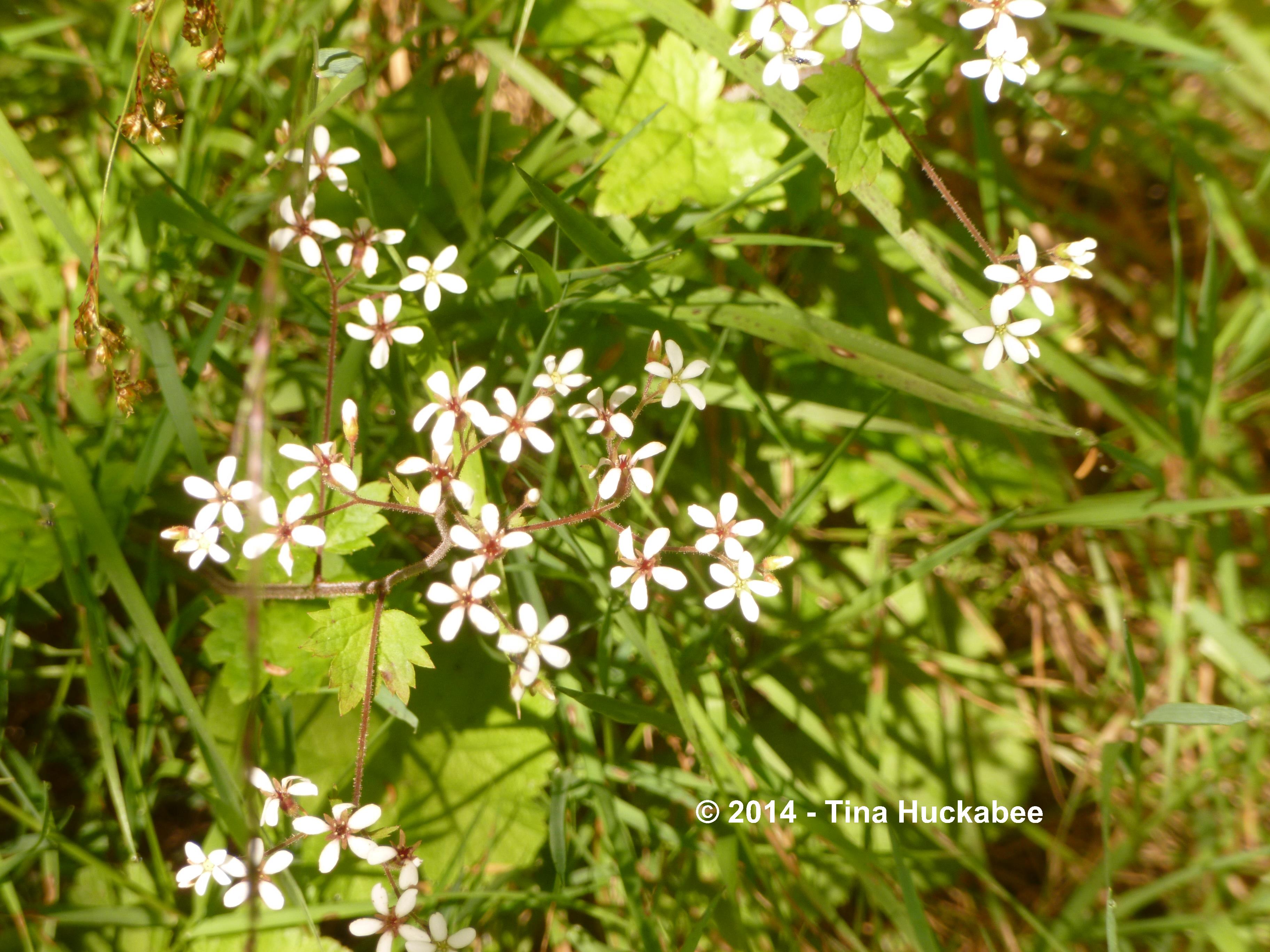
My college roommate, maid of honor and long time great friend, Dr. Linda Hardison, heads up the Oregon Flora Project and I’m plugging the Project’s work. I used the Oregon Flora Project’s newly published smart phone app to identify the flowers that I saw.   Here is a tiny sampling of the almost 1000 native wildflowers of Oregon.  Any identification mistakes are mine alone due to the less-than-stellar quality of my photos and my limited abilities as a botanist.

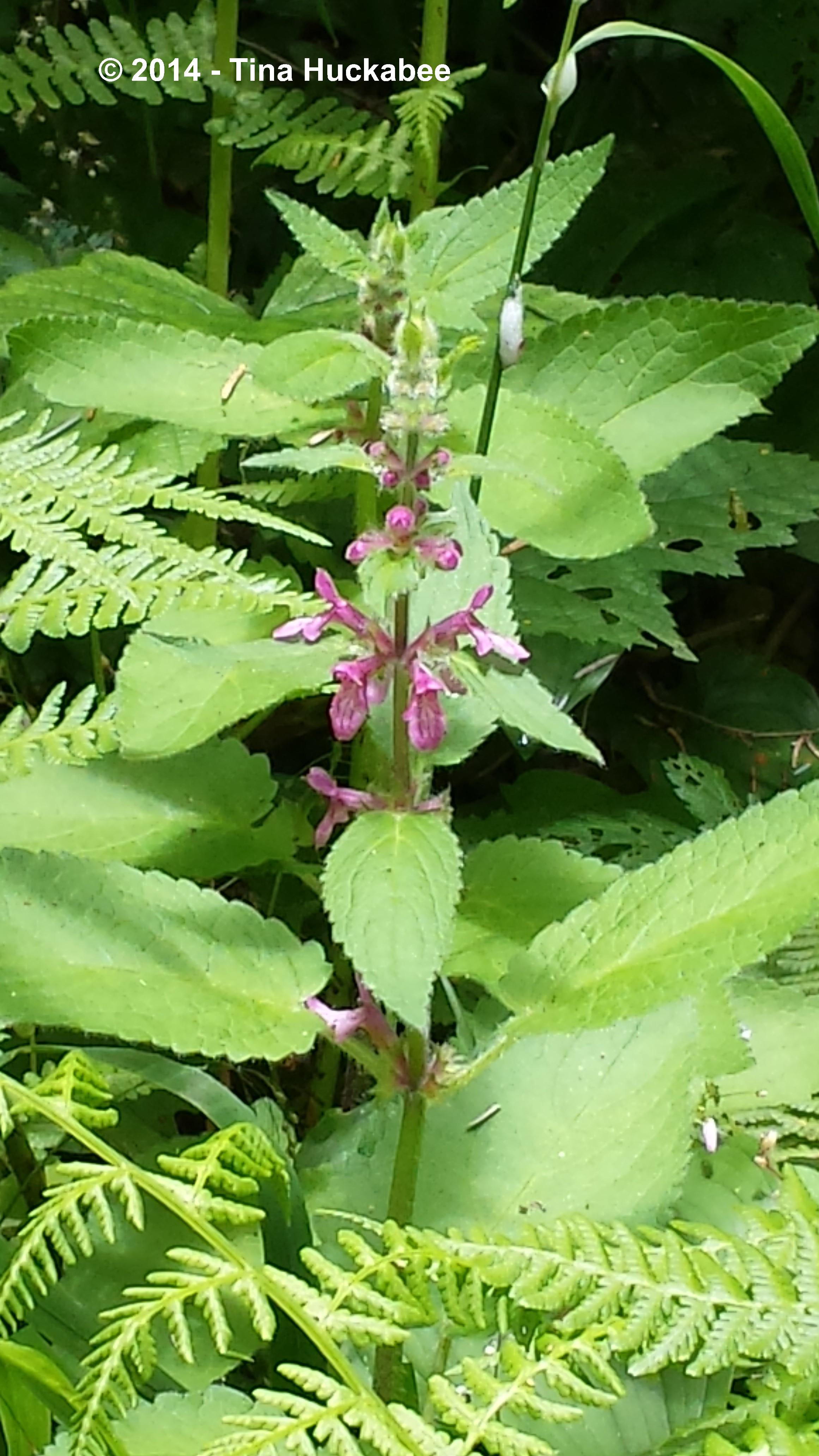
Great Betony or Cooley’s Hedge Nettle, Stachys cooleyae:

20140609_121626.new

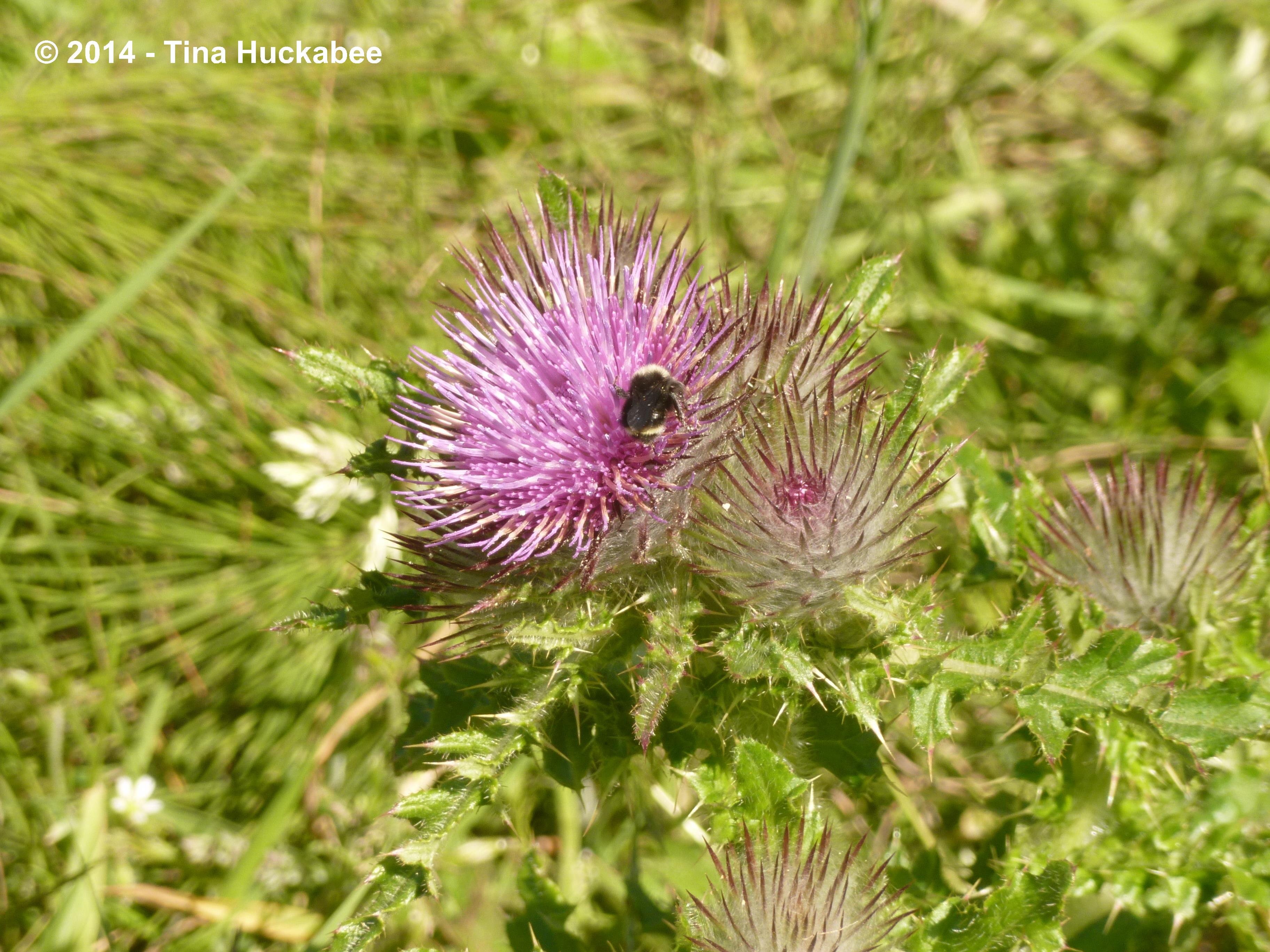
Short-styled Thistle, Cirsium brevistylum:

P1050078.new

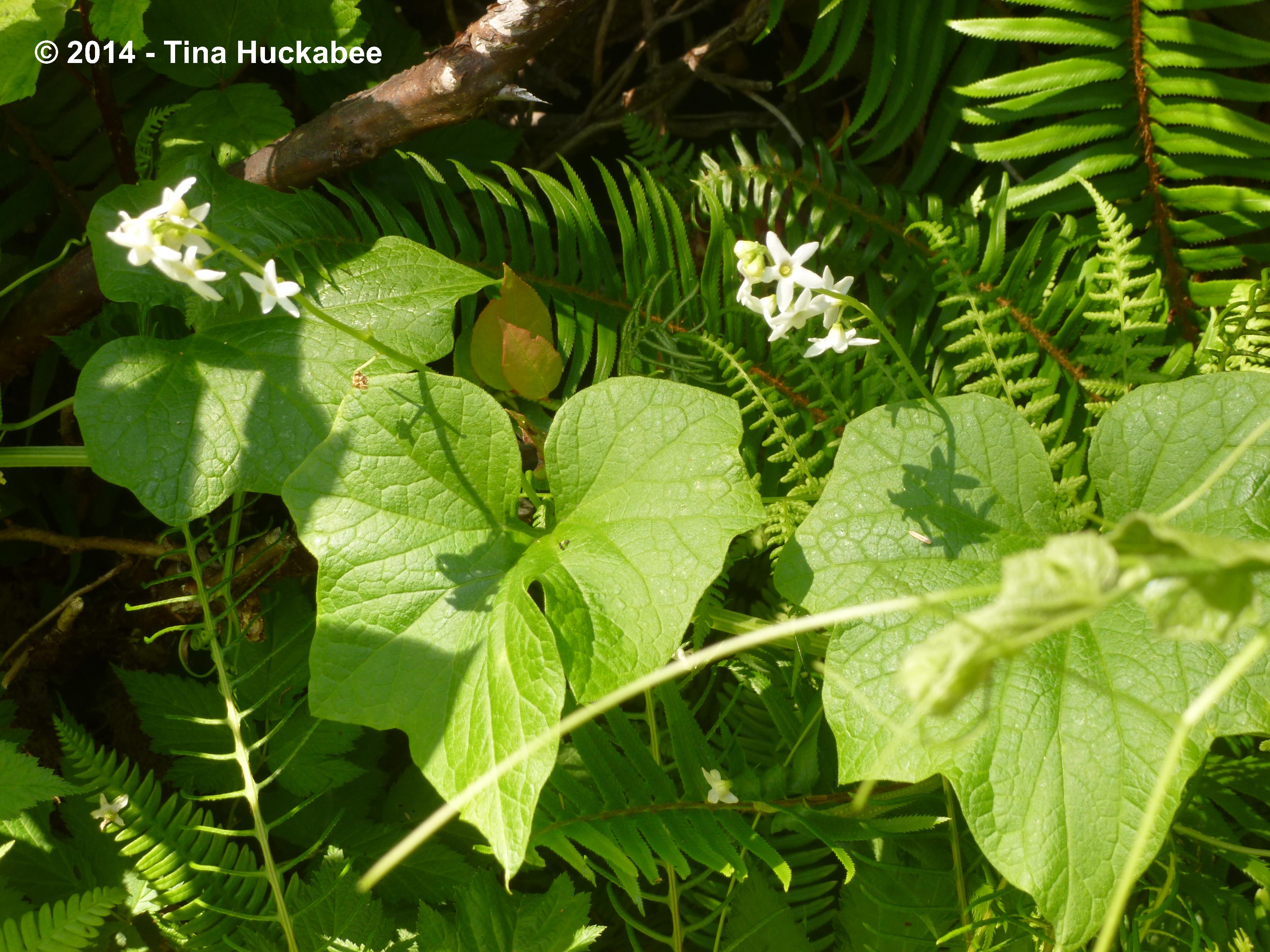
Oregon Bigroot, Marah oregana:

P1050106.new

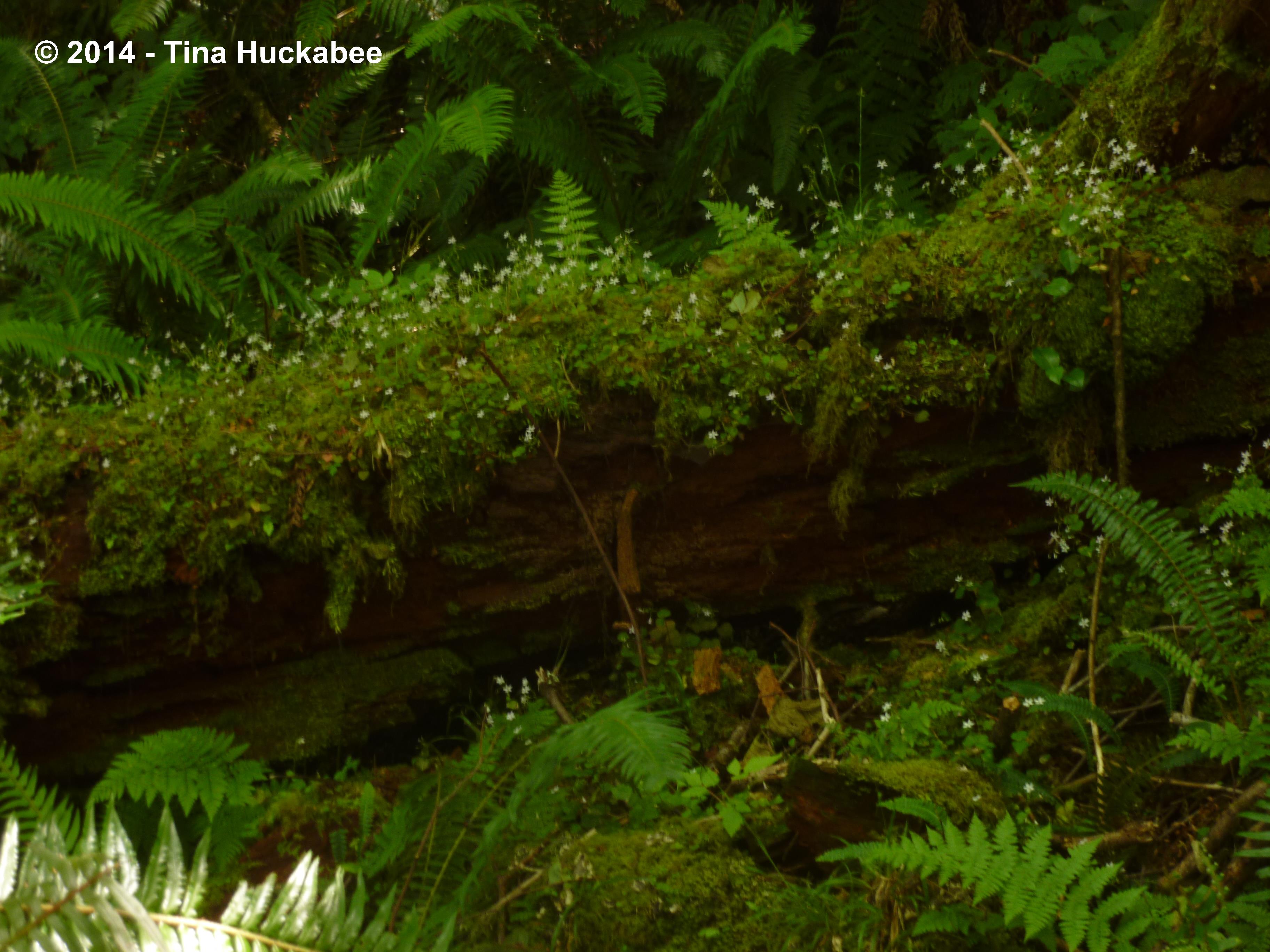
Littleleaf Miner’s Lettuce, Montia parvifolia:P1050098.new

And some of the same growing out of a fallen log:

P1050108.new

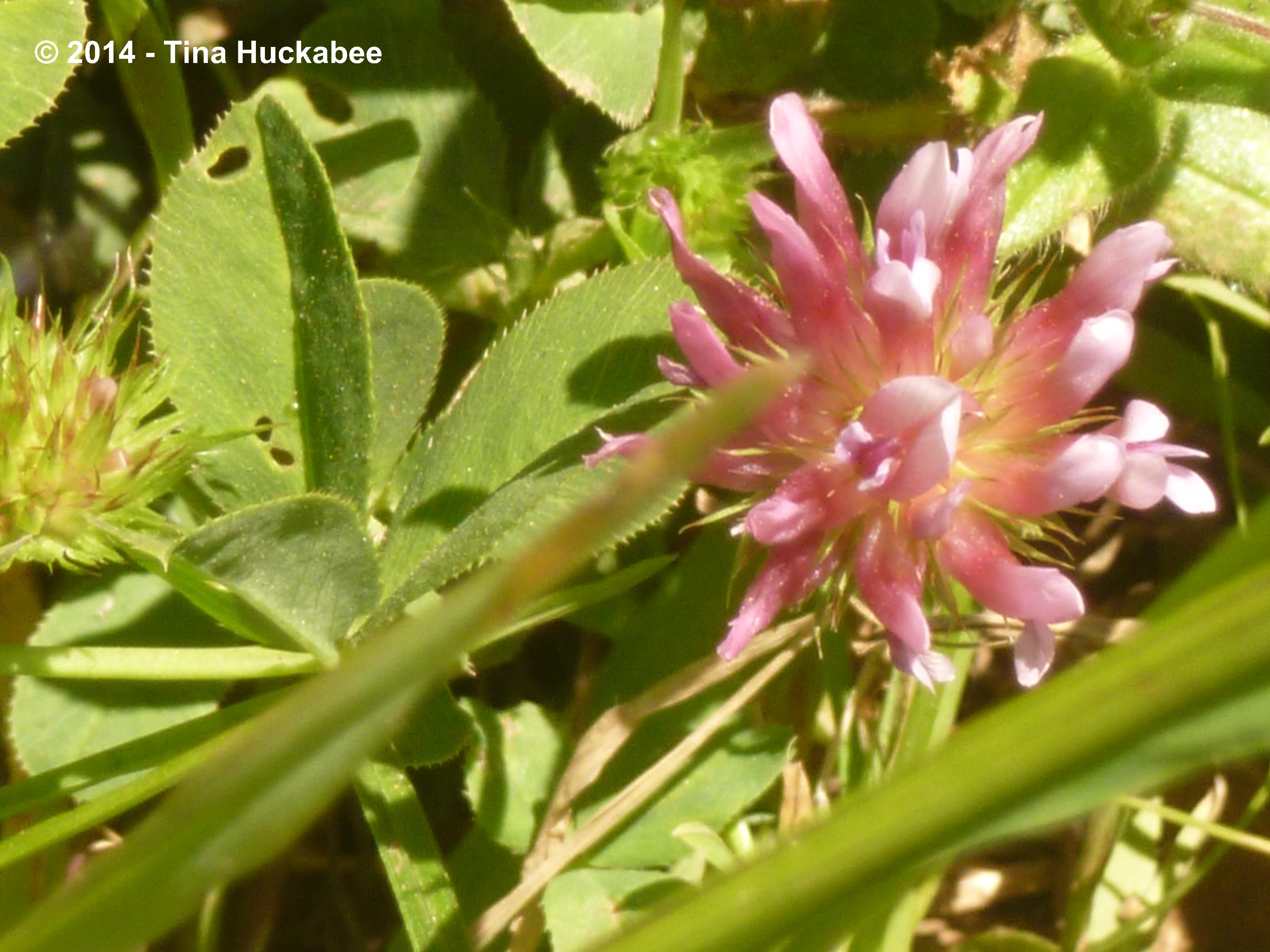
Small Headed Clover, Trifolium microcephalum:

P1050110.new

Fewleaf Thistle, Cirsium remotifolium:

P1050114.new

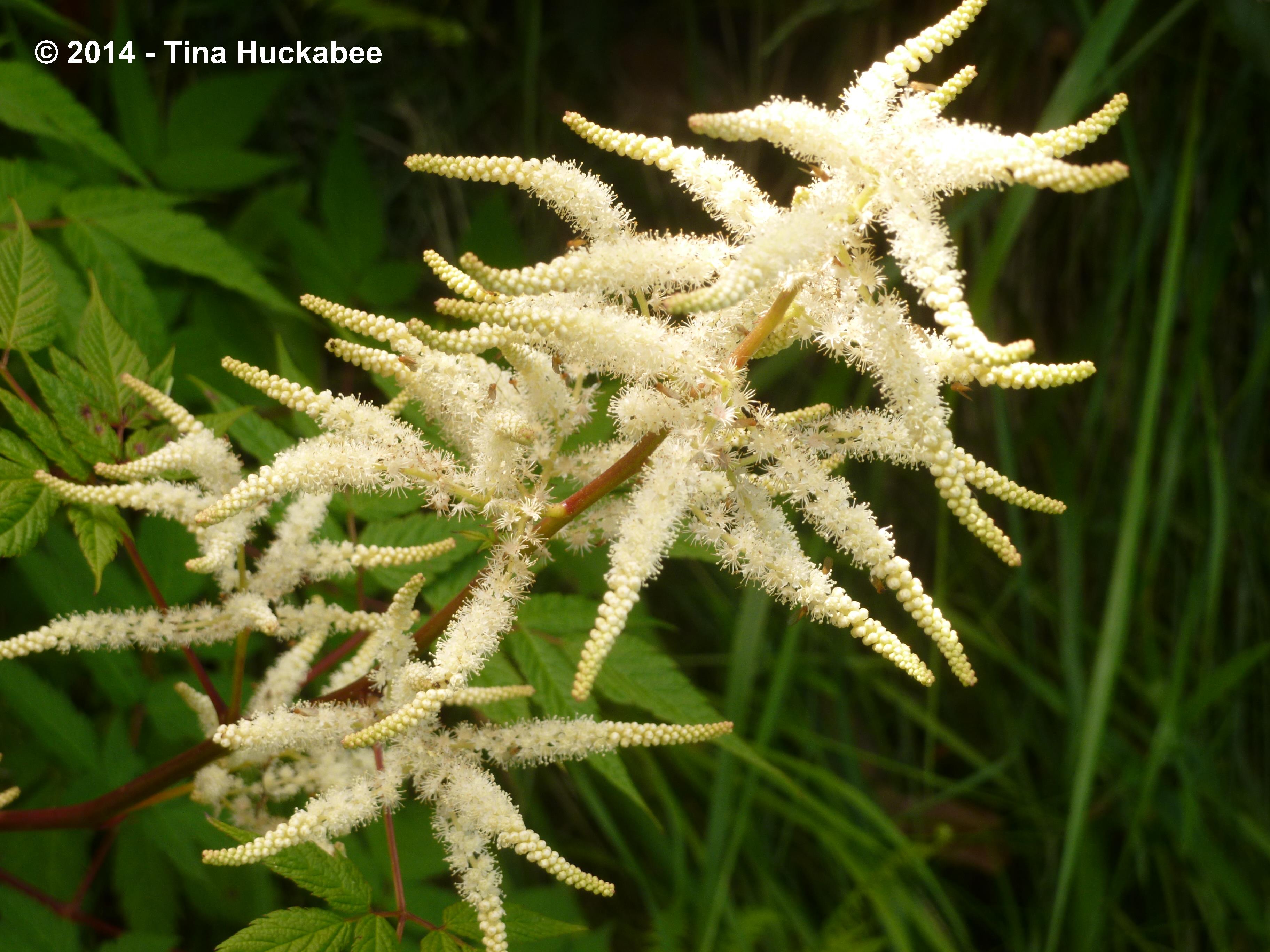
Sylvan Goatsbeard, Aruncus dioicus:

P1050062.new

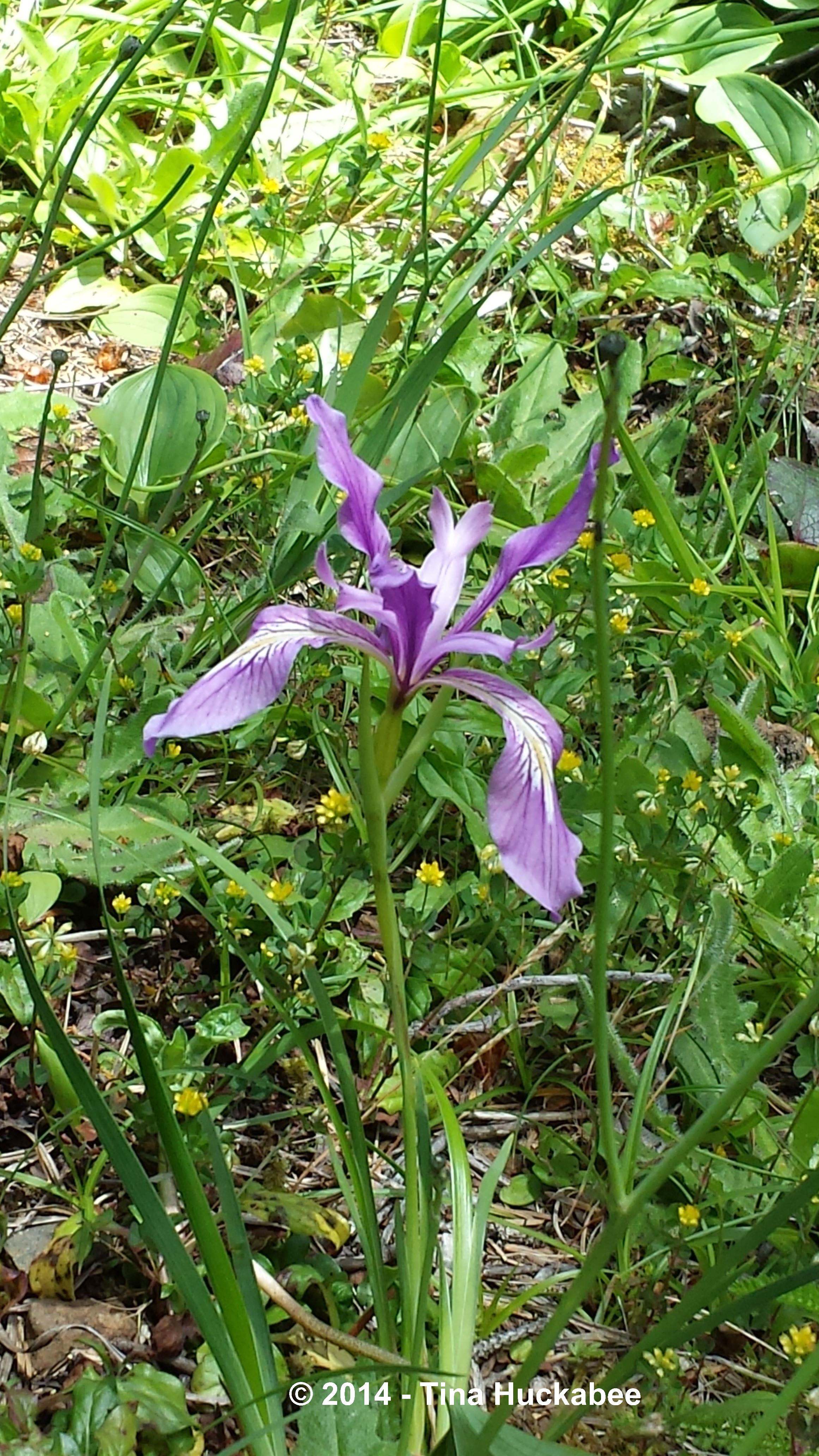
Oregon Iris, Iris tenax:

20140609_123644.new

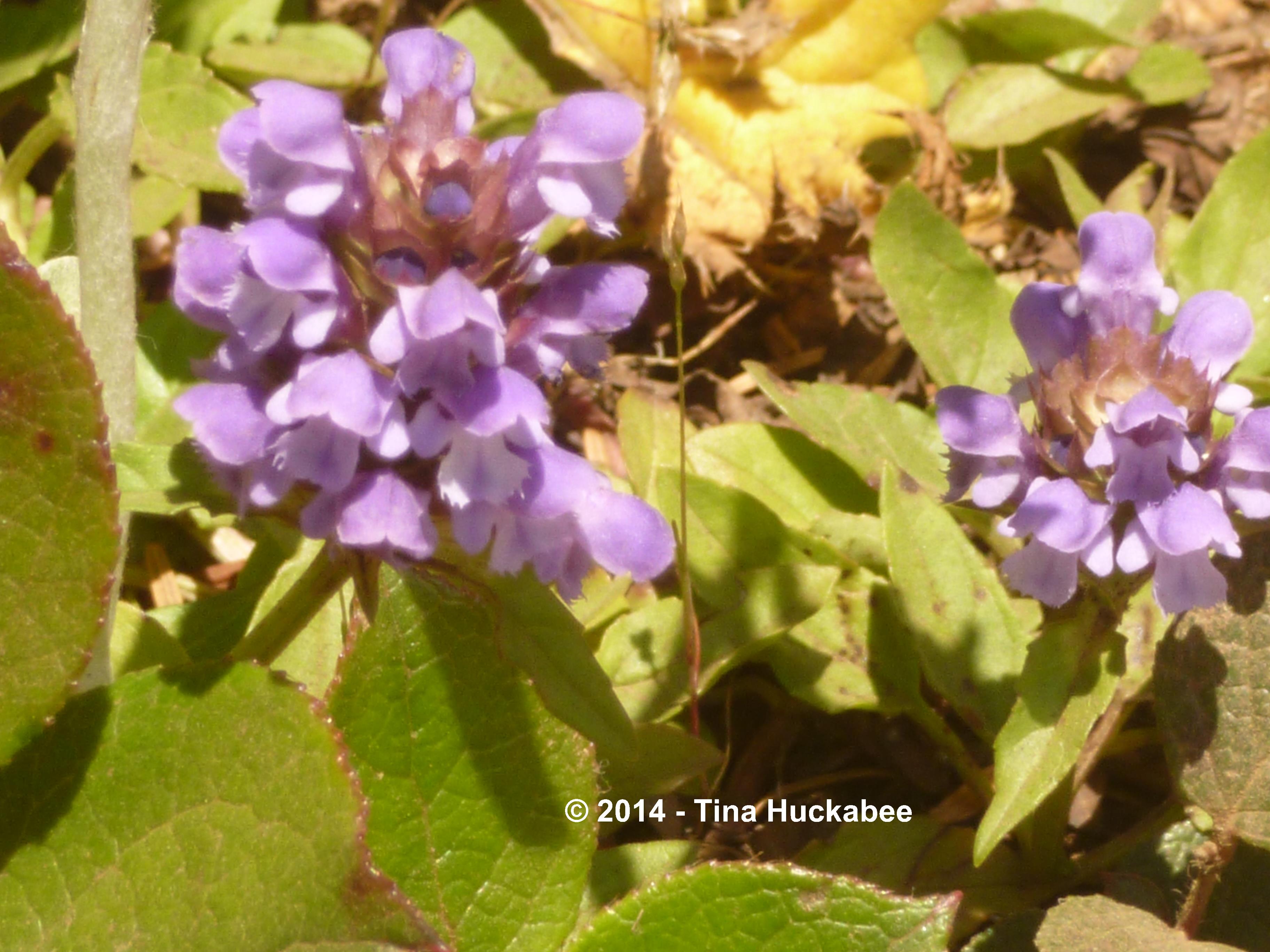
Common Selfheal, Prunella vulgaris:

P1050081.new

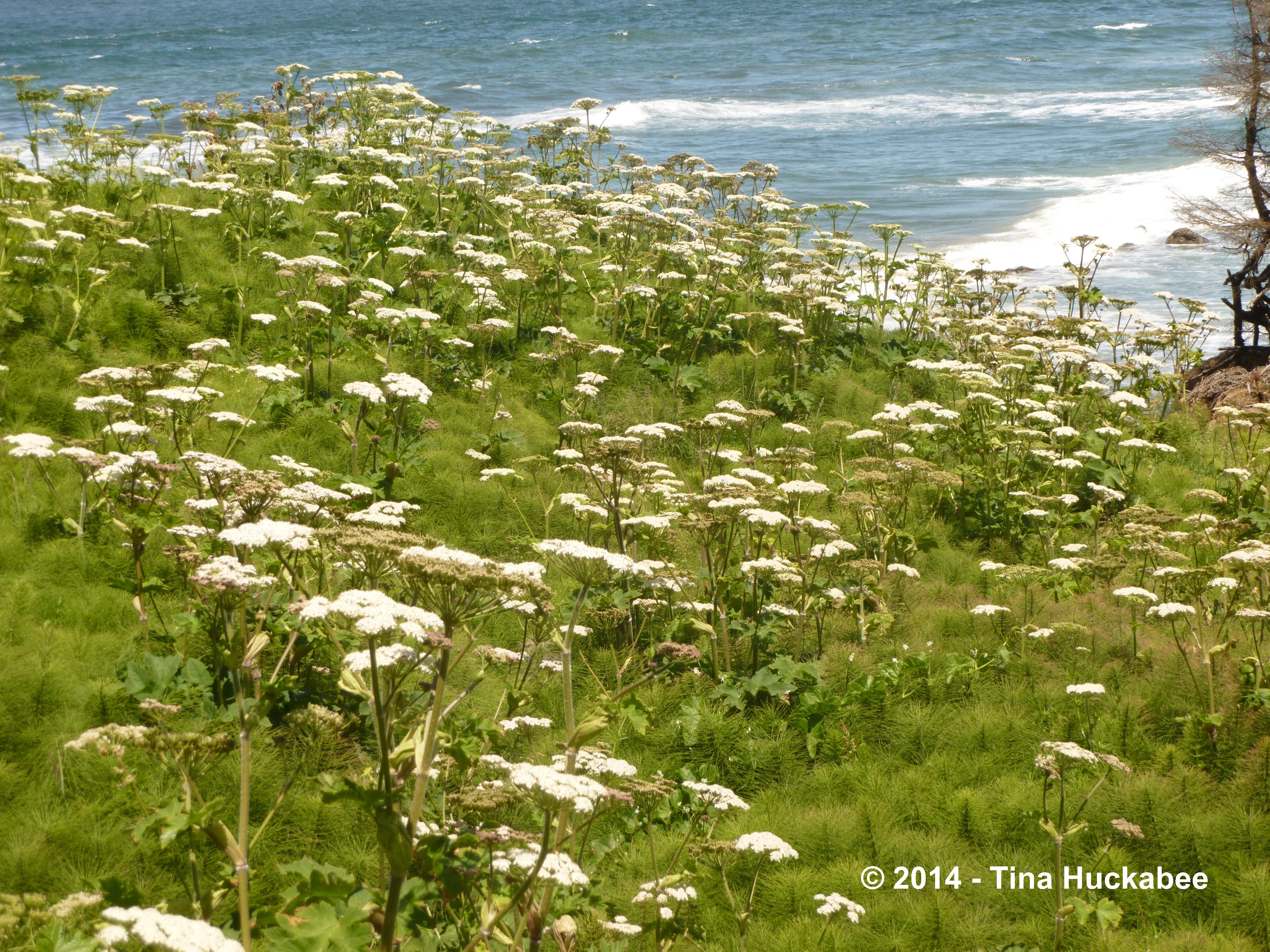
Cow Parsnip, Heracleum maximum, with the Pacific Ocean in the background:

P1050115.new

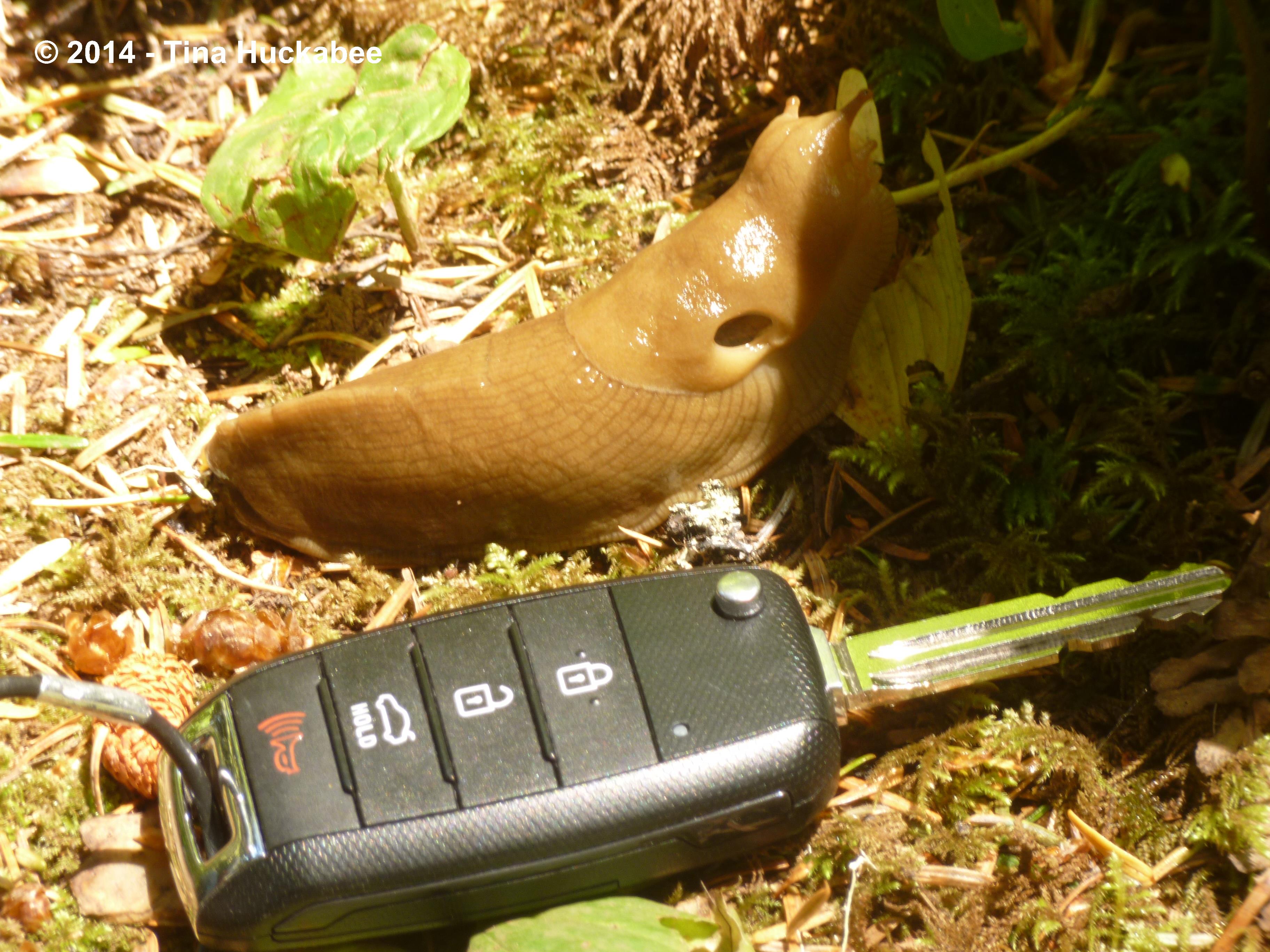
Big-ass Slug:

P1050072.new

I think it’s a Banana Slug, but I’m not quite sure.

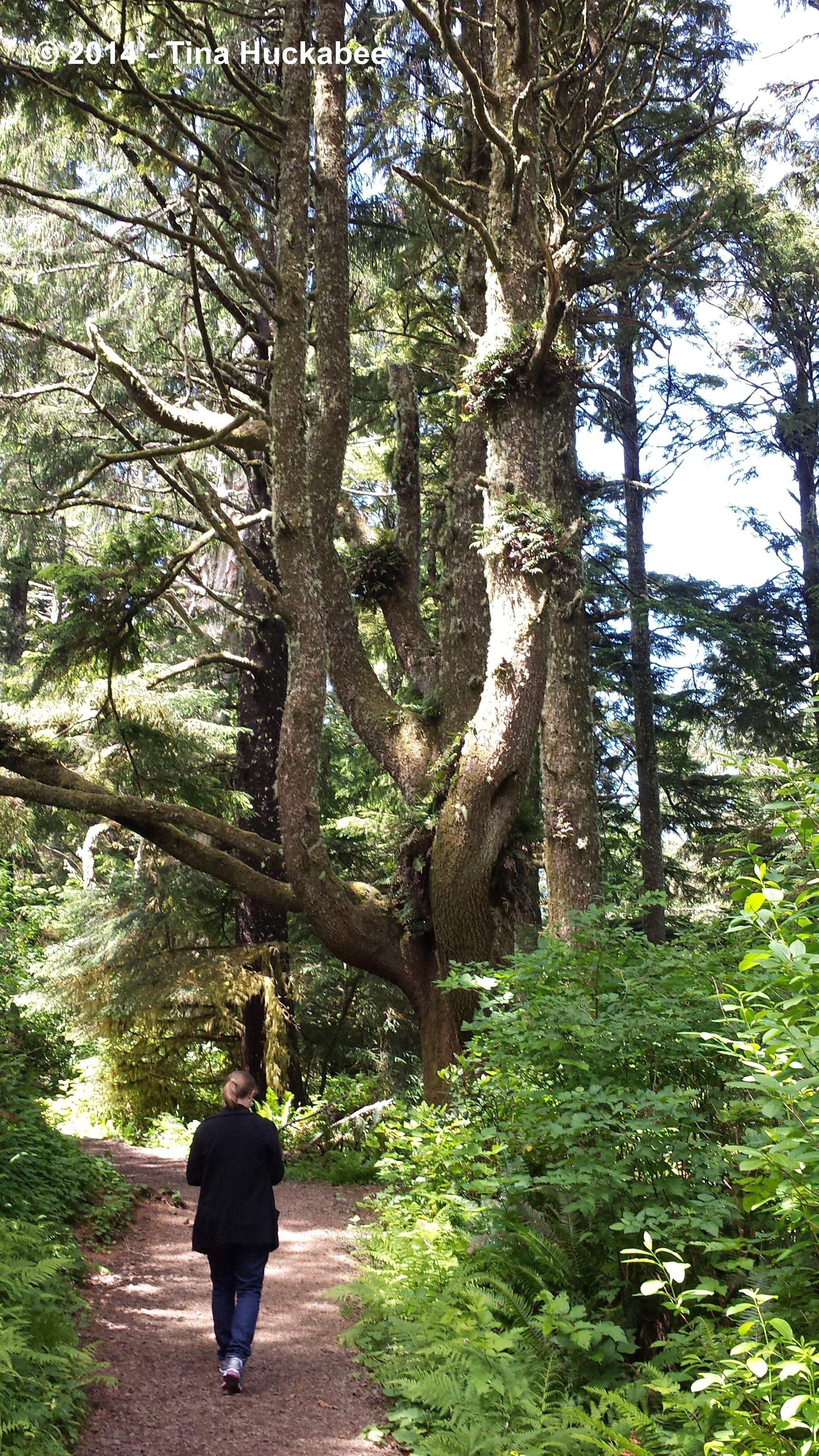
A Texas girl enjoying a stroll through an old-growth forest–in June–with a sweater on.

20140609_122745.new

Sweet!

Oregon bound garden bloggers, have fun because there’s so much to do–just watch out for those nekkid bicyclists!


Pretty Lemon Yellow Rosemallow

Some call it Yellow Rosemallow.

P1050342.new

Others refer to it as Lemon Yellow Rosemallow.

P1050359.new

I usually call it Rosemallow.

20120730_11_cropped_3691x3180..new

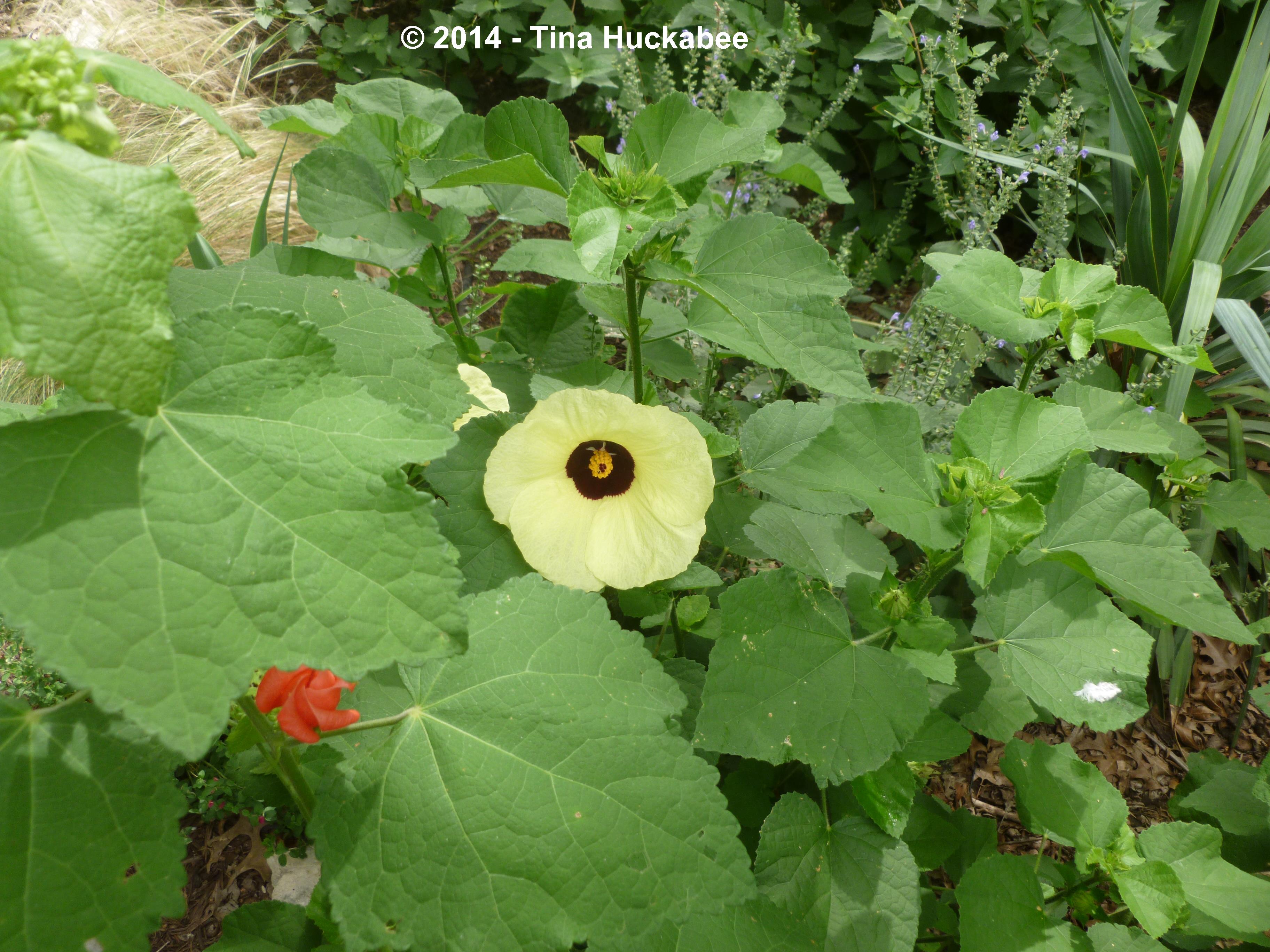
The proper botanical name is Hibiscus calyphyllus.  Whatever you want to call this beautiful warm-season bloomer, you should welcome it to the palette of your garden choices, planted either in the ground or in a container.

20120730_22_cropped_3590x3064..new

P1050341.new

Here in Austin, Texas, zone 8b, it grows and blooms from late spring, throughout summer and into the fall.  Rosemallow dies to the ground during a hard freeze, but returns from its roots in spring as long as it’s well-mulched.

This plant is not native to North America.  It hails from Central to South Africa, but has naturalized in many places in the world.  I became familiar with Lemon Rosemallow when I was working at the Green Garden at Zilker Botanical Gardens (ZBG).  I was  researching out-of-the-ordinary, hardy, non-invasive shade bloomers that weren’t already in abundance at the Gardens.   I purchased plants for the Green Garden at the excellent, locally owned Barton Springs Nursery (BSN) and one of BSN’s knowledgeable  employees suggested  I try Lemon Rosemallow.  The employee showed me a BSN  Rosemallow specimen planted under a large shade tree.

The Rosemallow was full of blooms and I was smitten.

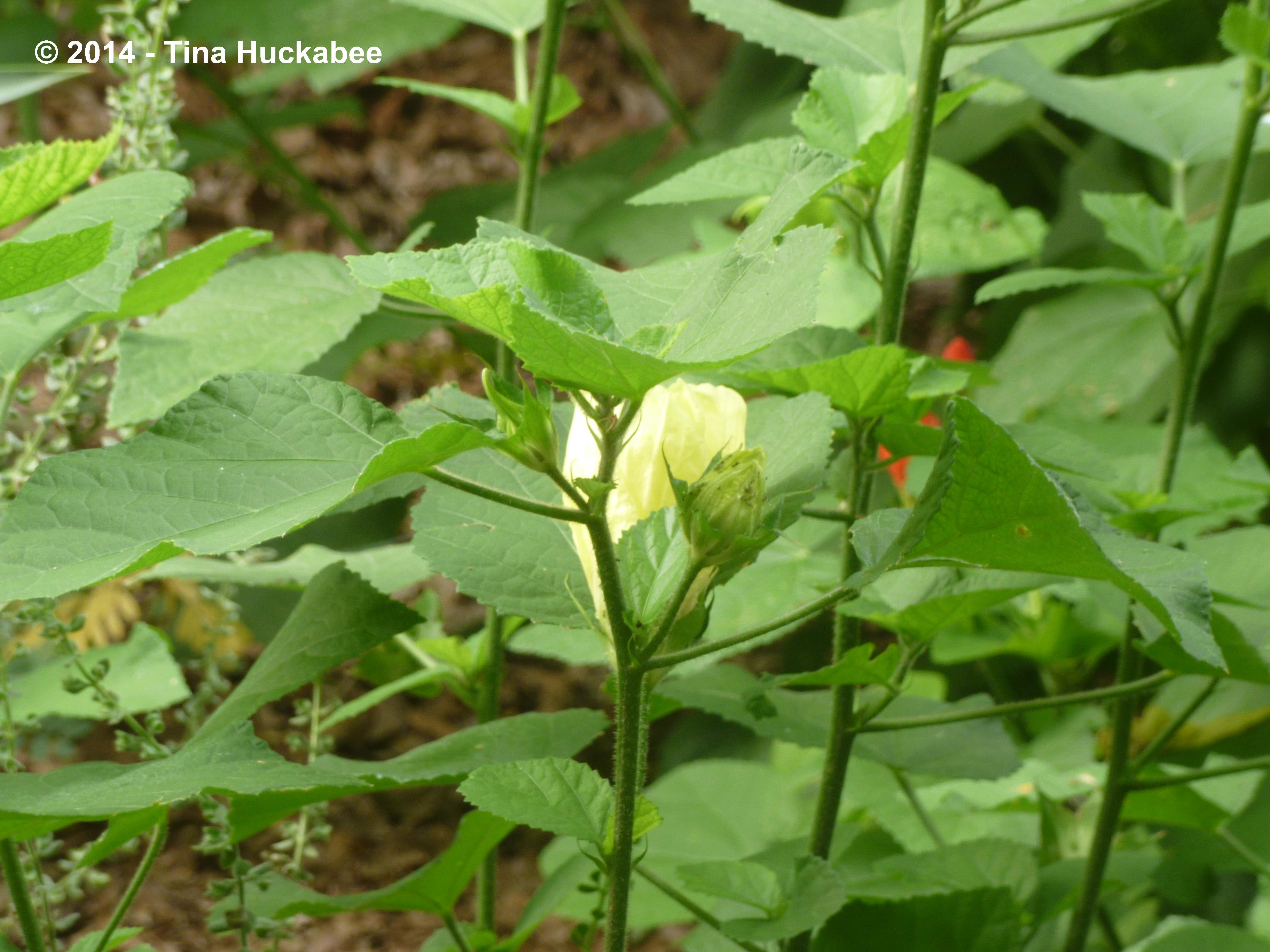
A full, but loose and airy shrub, it sports large tropical-looking leaves and  showcases large hibiscus-like flowers.

P1050355.new

What’s not to love about that?

P1050346.new

For reasons I no longer remember, I never bought one for the Green Garden. But I eventually purchased one for myself.  I planted it in a relatively new extension of an established bed.  It’s been three or four years since I planted the Rosemallow and my adoration of this lovely, long-blooming perennial continues.

P1050529.new

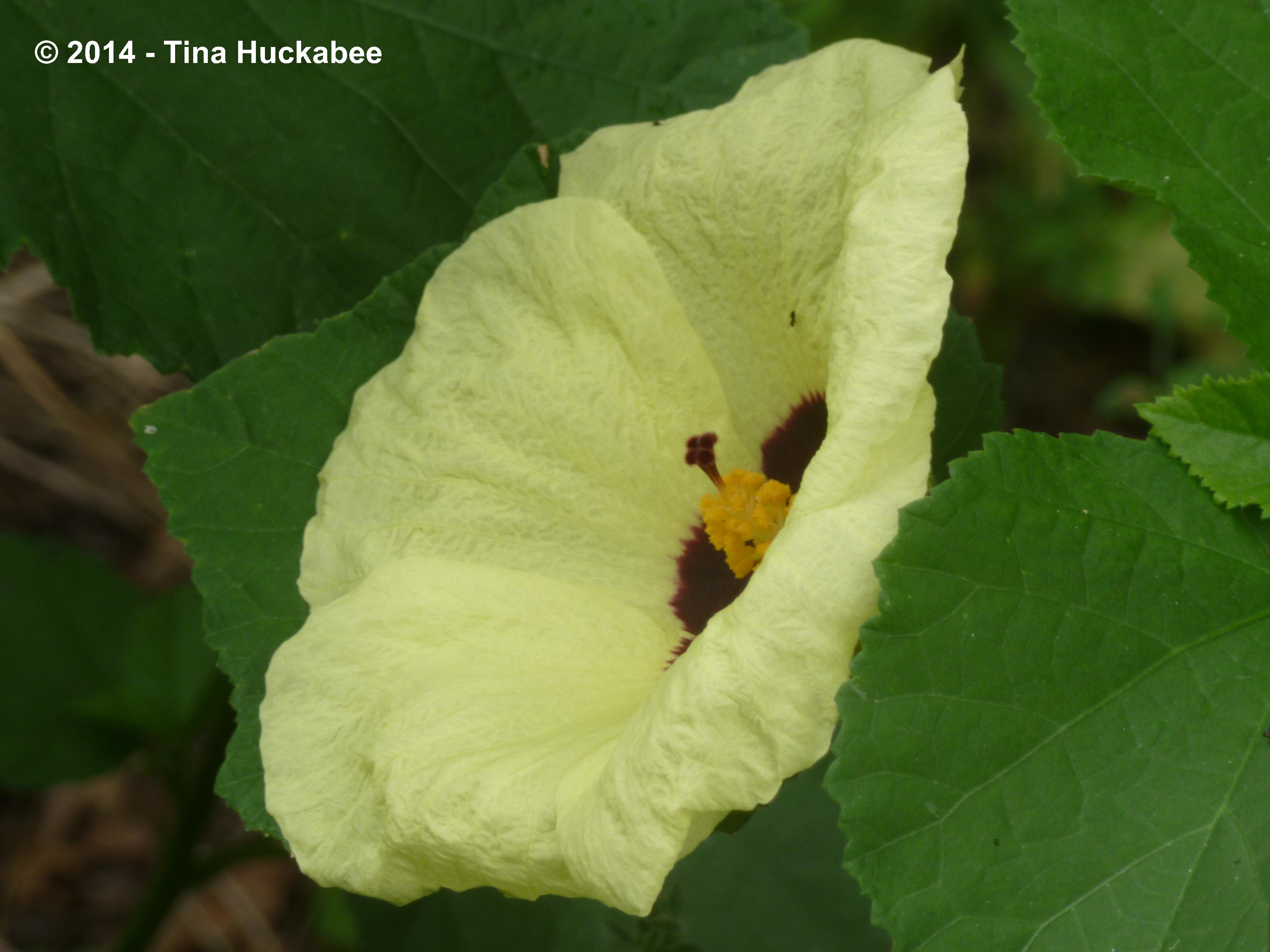
From April to November, this perennial hosts blooms almost everyday. Large lemon-yellow petals with a deep burgundy middle.

20120730_24_cropped_4419x3125..new

The flowers open slowly in the morning.

P1040748.new

The peak of the blooms occurs mid-day.

P1040750.new

The blooms close in late afternoon.

P1050393.new

20120730_6.new

P1050349.new

P1050398_cropped_2652x2204..new

Three to four flowers open most days during Rosemallow’s long growing season; I usually snip off spent blooms to promote continual flower development. In my garden, the Rosemallow receives morning to mid-afternoon sun in the summer and a bit less than that during the fall.  My Rosemallow is not planted in shade, though I consider it in a part-shade situation. For its first years it remained evergreen during winters.  This past winter, which was a colder than recent ones, the perennial froze to the ground.

In spring it returned from its roots, fuller than ever.

P1050528_cropped_2160x3565..new

While researching this plant for use in Central Texas, couldn’t find any definitive information about Rosemallow’s deer resistance. Other commonly utilized Malvaceae/mallow plants in Central Texas are considered moderately deer resistant.

At most, Rosemallow only needs average irrigation–maybe a thorough soaking twice-per-month for typical (not rocky) soil. During the record hot and dry summer of 2011, my Rosemallow was a champion bloomer and with minimal watering.  This is an easy, no-fuss perennial.

I haven’t noticed any disease or insect problems with this plant, though my blooms often host some ants.  They ants don’t negatively affect the blooms or foliage and I don’t think the ants are eating aphids.  Maybe they just like hanging out on pretty flowers?

I’ve observed butterflies and moths at the blooms, though in my gardens, Rosemallow isn’t a strong attractor of pollinators.

Really, it’s just for me.
P1050347.new

Since the Rosemallow is in the Malvaceae (mallow) family, I thought it would be fun to plant it alongside its kin, an established Turk’s Cap.

P1050396.new

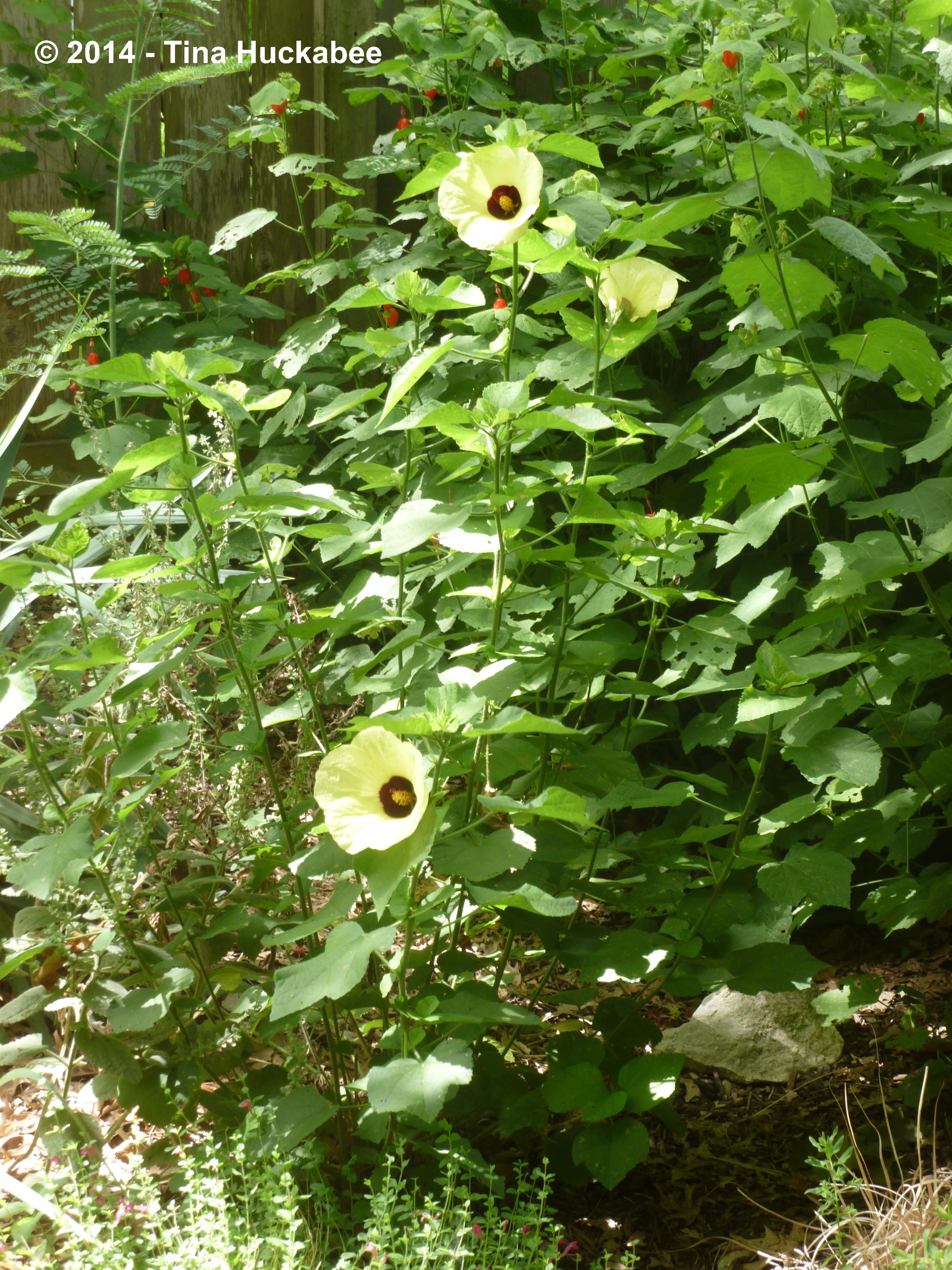
You can see from this photo, that the leaves of the two plants are almost identical, except that the Turk’s Cap leaves are larger and have something munching on them.  Drat!

At a quick glance, it looks like the Turk’s Cap has big, yellow blooms.

20120730_1_cropped_2673x2378..new

Because Rosemallow can disappear in winter, I planted mine with evergreens as companions:  Soft-leaf Yucca, Yucca recurvifolia,  Pink Skullcap, Scutellaria suffrutescens, Iris, Thyme and  Fall Aster, Symphyotrichum oblongifolium.  Given Rosemallow’s loosey-goosy growing habit, it’s a good idea to plant it with at least some architectural plants–yucca, grasses and the like.

P1050699.new

Try this hardy and beautiful hibiscus in your garden.

P1050316.new

P1050356.new

Then sit back and enjoy its beauty.

P1050357.new