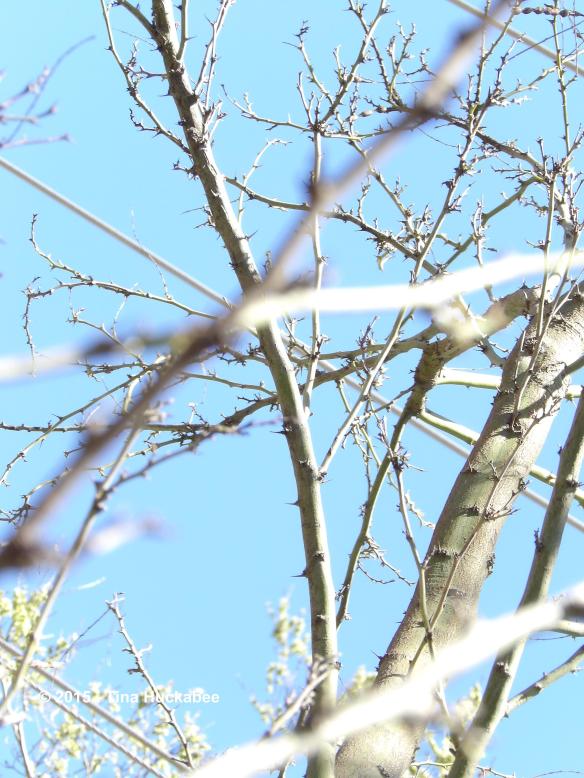
Thanking Lucy at Loose and Leafy for hosting Tree Following, there’s nothing new to report about the physical state of my lovely Retama, Parkinsonia aculeata. February proved chilly, though not in any record-breaking way like so much of the United States, but cold enough that the Retama still sleeps.

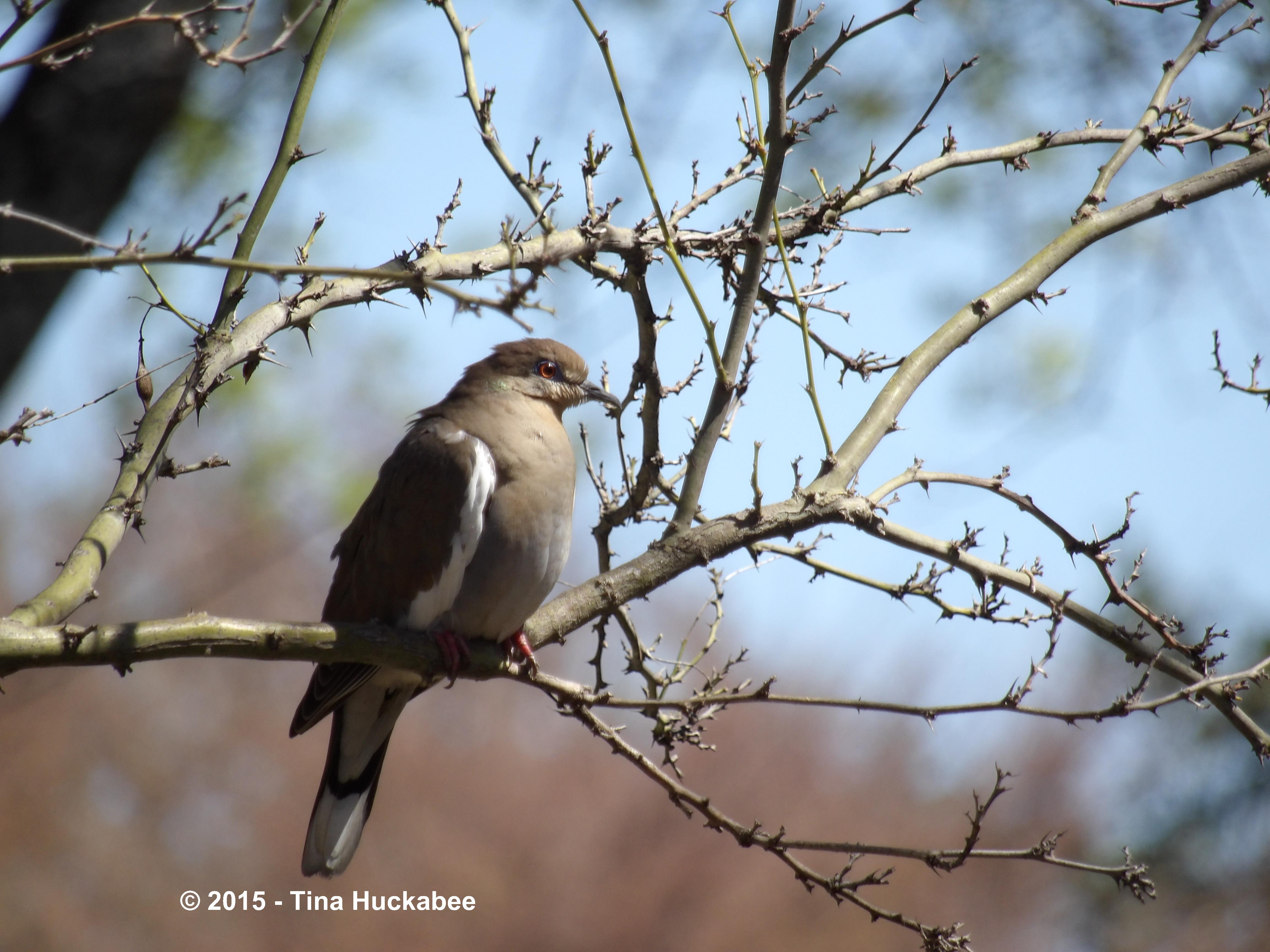
Cold birds, like this White-winged Dove, continue perching on sleepy limbs.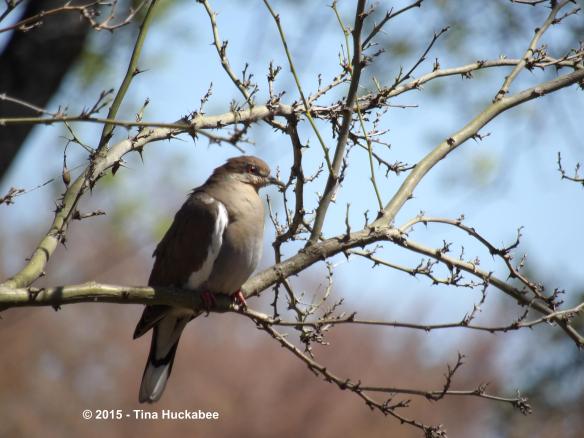
No swelling or emerging buds exist.
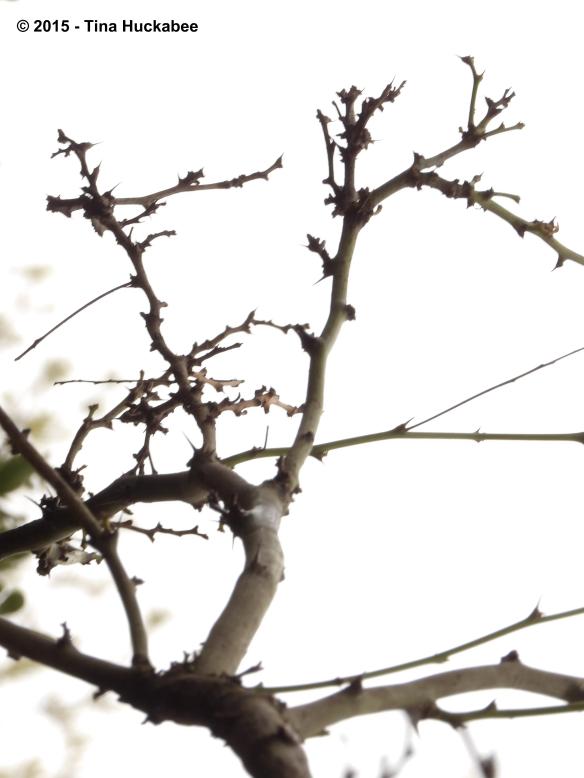
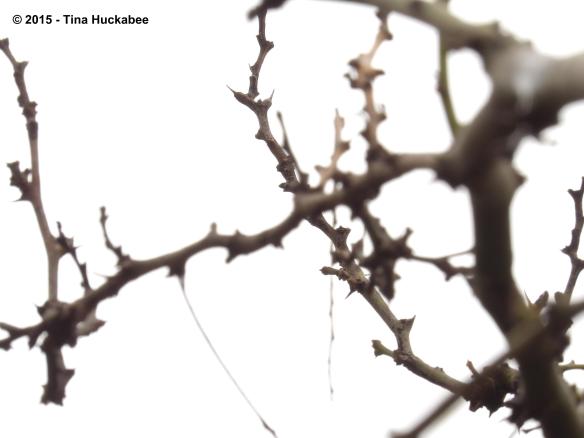
Last year’s seed pods, a few anyhow, dangle, undropped and unsprouted. 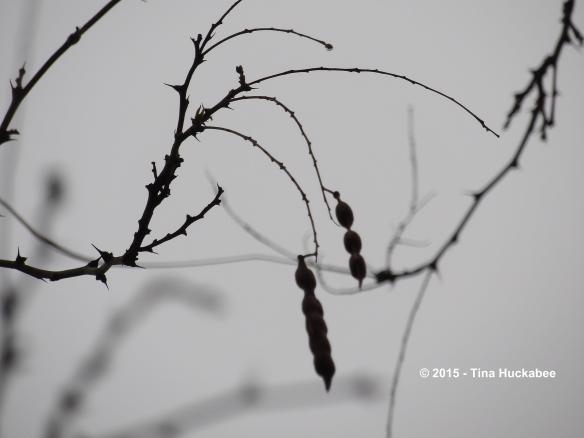
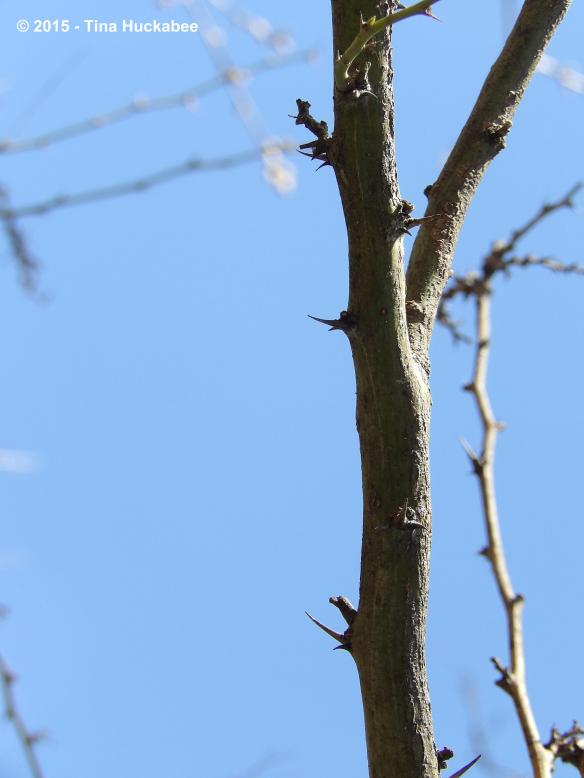
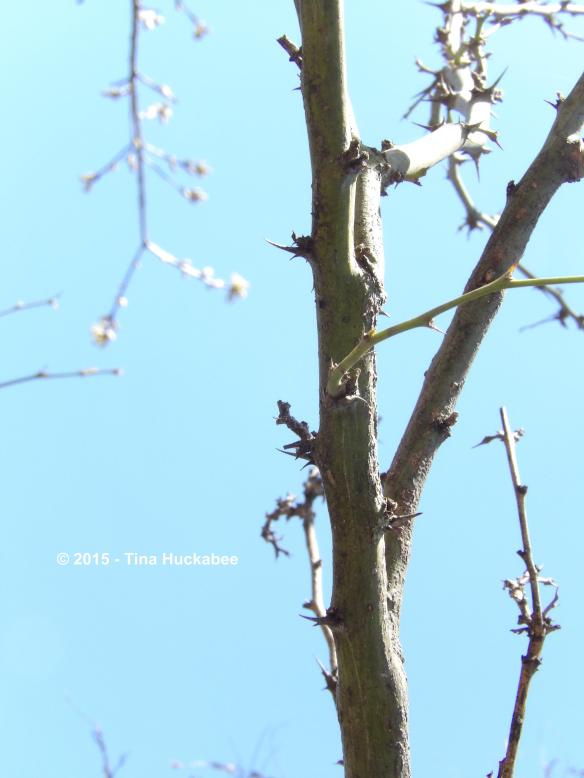
The trunk and many branches remain green, as is the way of the Retama, continuing the chlorophyll function that the tree is known for, especially during drought periods. Those nasty thorns,
 …which prick and poke this gardener from time to time, are healthy and prominent. One of the common names for P. aculeata is Jerusalem Thorn, though not because of these sharp fiends,
 …but rather because the English name is an adulteration of the Italian/Spanish word girasol, which means sunflower, or turning toward the sun. ‘Sunflower’ or girasol is an appropriate name as the the Retama requires full sun exposure for its growing and blooming best, and the spring, summer, autumn flowers are brilliant yellow, though not of the sunflower or aster (Asteraceae) variety. The legume fruits in the earlier photo are evidence that P. aculeata is a member of the Fabaceae or Pea, family of plants.
I’ve always called this tree Retama, but my mother referred to it using another of its common monikers, Palo Verde, which is also spelled Paloverde, from the Spanish, ‘green wood’. In reading about this great tree, I’ve discovered many other names for it. The Lady Bird Johnson Wildflower Center lists a total of six names for P. aculeata: Retama, Paloverde, Mexican Palo Verde, Jerusalem Thorn , Horsebean, Lluvia de Oro.
In this link from the World Agroforestry Centre, I found loads information about Retama, including a long list of names from around the world for this indigenous North American tree. Similar to most plants, not everyone calls P. aculeata by the same common name. That’s one of the interesting side stories with horticulture: as plants are globally distributed, the vernacular of plant names adopts a linguistically provincial flavor. Often, names are descriptive (‘green wood’/Paloverde) and many common plant names are quite charming and poetic. This excerpt from the section about names from the Agroforestry Centre’s article lists an array of common names in numerous languages used for P. aculeata.
Amharic (filfile,Ye eyerusalem eshoh); Arabic (sessaban,sesaban);
Bengali (balati kikar); Bislama (shewina); Creole (madame naiz,madame
yass); Dutch (boonchi strena); English (wonder tree,Mexican palo
verde,blue palo verde,takataka tree,Barbados flower fence,Jerusalem
thorn,horsebean,hardbean); French (epine de Jerusalem,arrête-
bouef,genet epineux); German (Stacheliger Ginsterßaum); Gujarati
(bawal,kikar,rombawal); Hindi (adanti,sima tumma,vilayati babul,vilayati
kikar); Indonesian (adjao kase); Italian (Ginestra spinosa); Spanish
(aroma extranjera,capinillio,capinillo,cina-cina,acacia de los
masones,bayahonda blanca,palo de rayo,sulfato,sauce
guajiro,retama,pinos japonés,pino japonés,junco
marino,paloverde,espino,mataburro,lluvia de oro,acacia de agüijote,pauji);
Swahili (mkeketa); Tigrigna (shewit hagai); Trade name (Jerusalem thorn);
Yoruba (hanson sessaban)
.
Where’s my Retama?? Funnily enough, what I call P. aculeata isn’t mentioned in the English section of the names, but it is listed in the Spanish, because retama is Spanish for ‘broom’. I used Google translator to check out the meanings of many of these words and I was surprise at how many had ‘broom’ in the translation, though not at all surprised at how many use ‘thorn(y)’ in the meanings. My favorite name for P. aculeata is the Spanish, Lluvia de oro, which translates as ‘rain of gold’. If you’ve ever seen a Retama in full, glorious bloom and some, or many, of those blooms have dropped to the ground, lluvia de oro certainly tells that story beautifully.

I fear I’m too cranky and set-in-my-ways to change what I routinely call this plant, so Retama it remains for me. Maybe I should call it by its scientific name, Parkinsonia aculeata? That’s a mouthful of words, but from where is that name gleaned? The Parkinsonia part of the equation honors the British botanist, John Parkinson, who lived from 1567-1650. While Parkinson was an important gardener and introduced new plants to England in his lifetime, he did not “discover” the genus of trees which bear his name. The naming of the New World plant genus, Parkinsonia, commemorates Parkinson’s life and horticultural contributions. The species term, aculeata, derives from the Latin, aculeatus, meaning ‘sting or prickle’. As one who’s been dinged on the head more than once by those thorns, yes, I agree that it’s aptly named.
I’m not always a conscientious practitioner of proper name usage for plants, but it’s a good idea for gardeners to familiarize themselves with scientific/botanical names. The example of my followed tree, the Retama, is a good one–at a minimum, there are 50 different common names for this one little tree: Parkinsonia aculeata.
Head over to
Loose and Leafy and read about other trees from their admirers and followers.

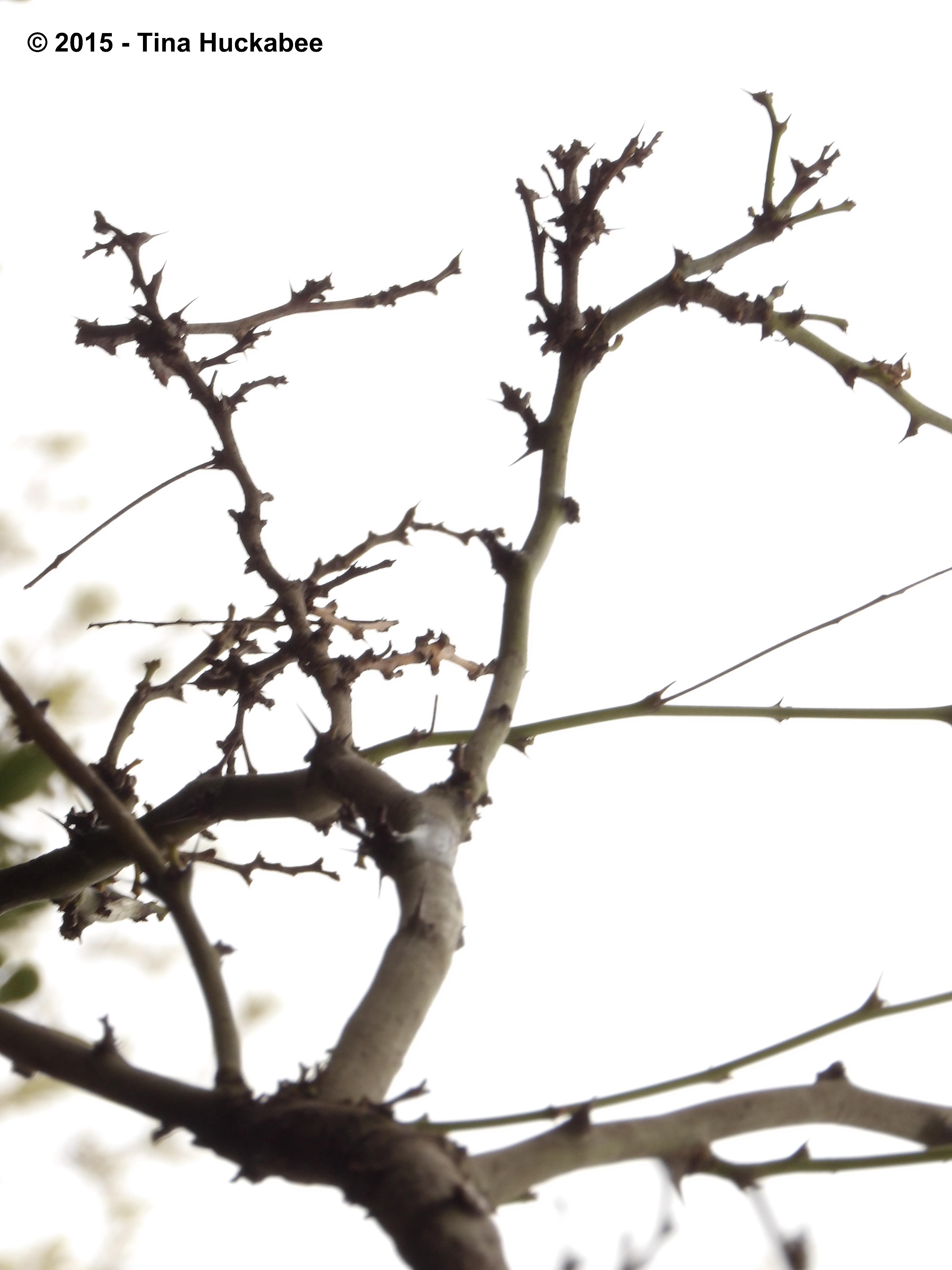
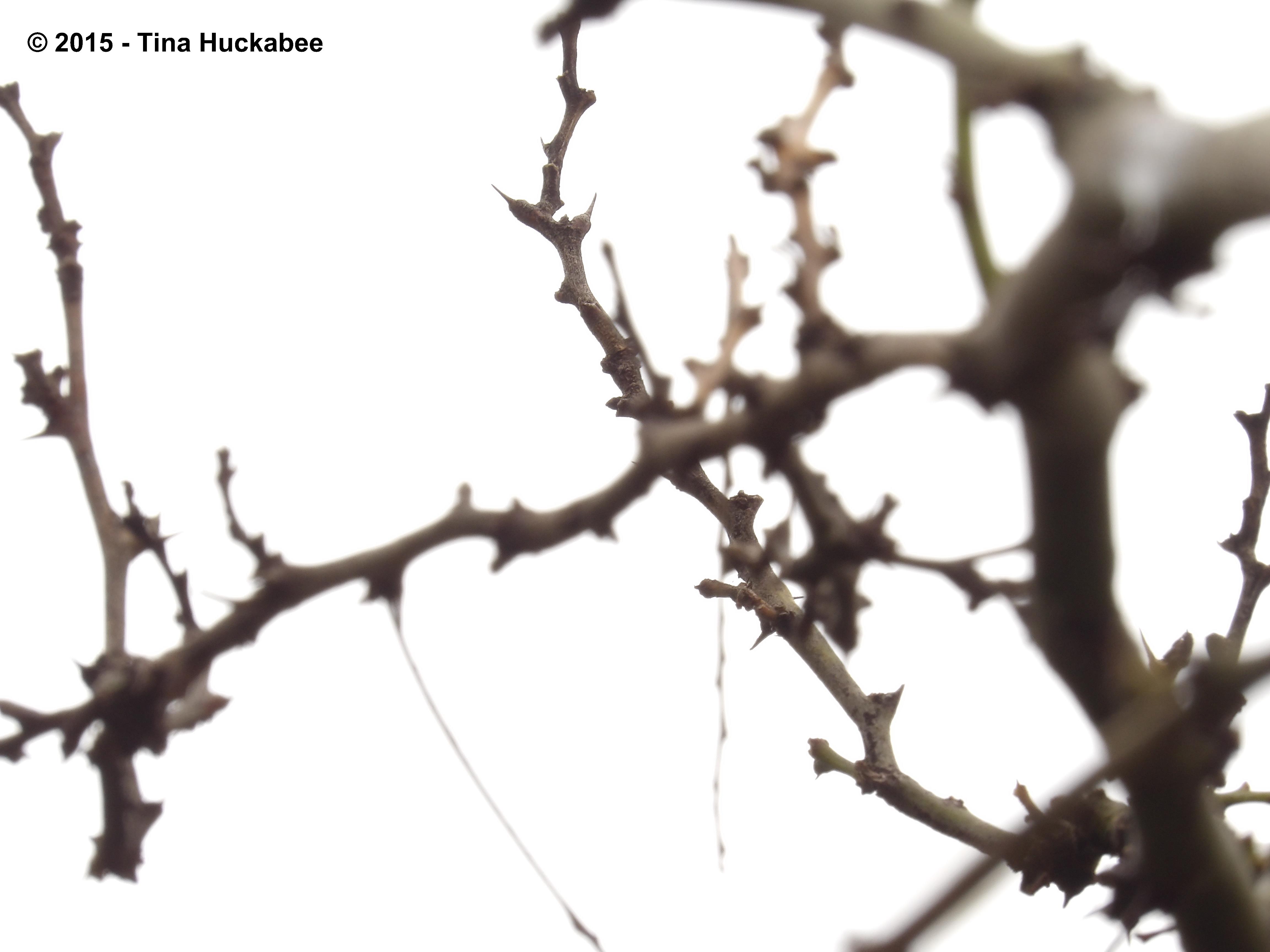

 …which prick and poke this gardener from time to time, are healthy and prominent. One of the common names for P. aculeata is Jerusalem Thorn, though not because of these sharp fiends,
 …but rather because the English name is an adulteration of the Italian/Spanish word girasol, which means sunflower, or turning toward the sun. ‘Sunflower’ or girasol is an appropriate name as the the Retama requires full sun exposure for its growing and blooming best, and the spring, summer, autumn flowers are brilliant yellow, though not of the sunflower or aster (Asteraceae) variety. The legume fruits in the earlier photo are evidence that P. aculeata is a member of the Fabaceae or Pea, family of plants.














 My Gardener Says...