As I close out the year of learning about the Retama, Parkinsonia aculeata, for Tree Following at Loose and Leafy, join me for year-round look-see at this fascinating native tree to parts of North and South America. Indigenous to Texas and westward to California, as well as to large areas of Central and South America, this beautiful small tree is a boon for wildlife and native plant/wildlife gardeners alike.
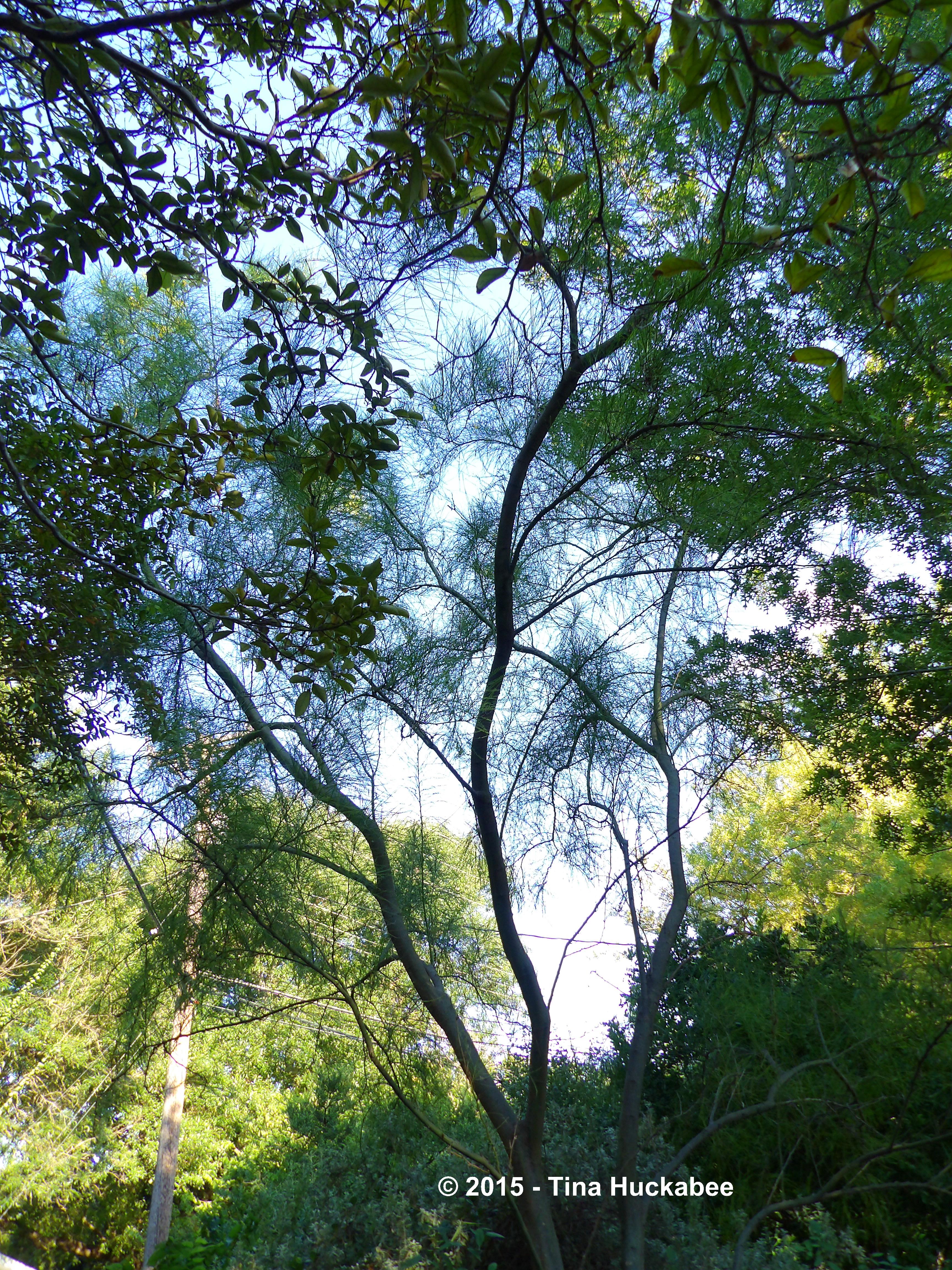
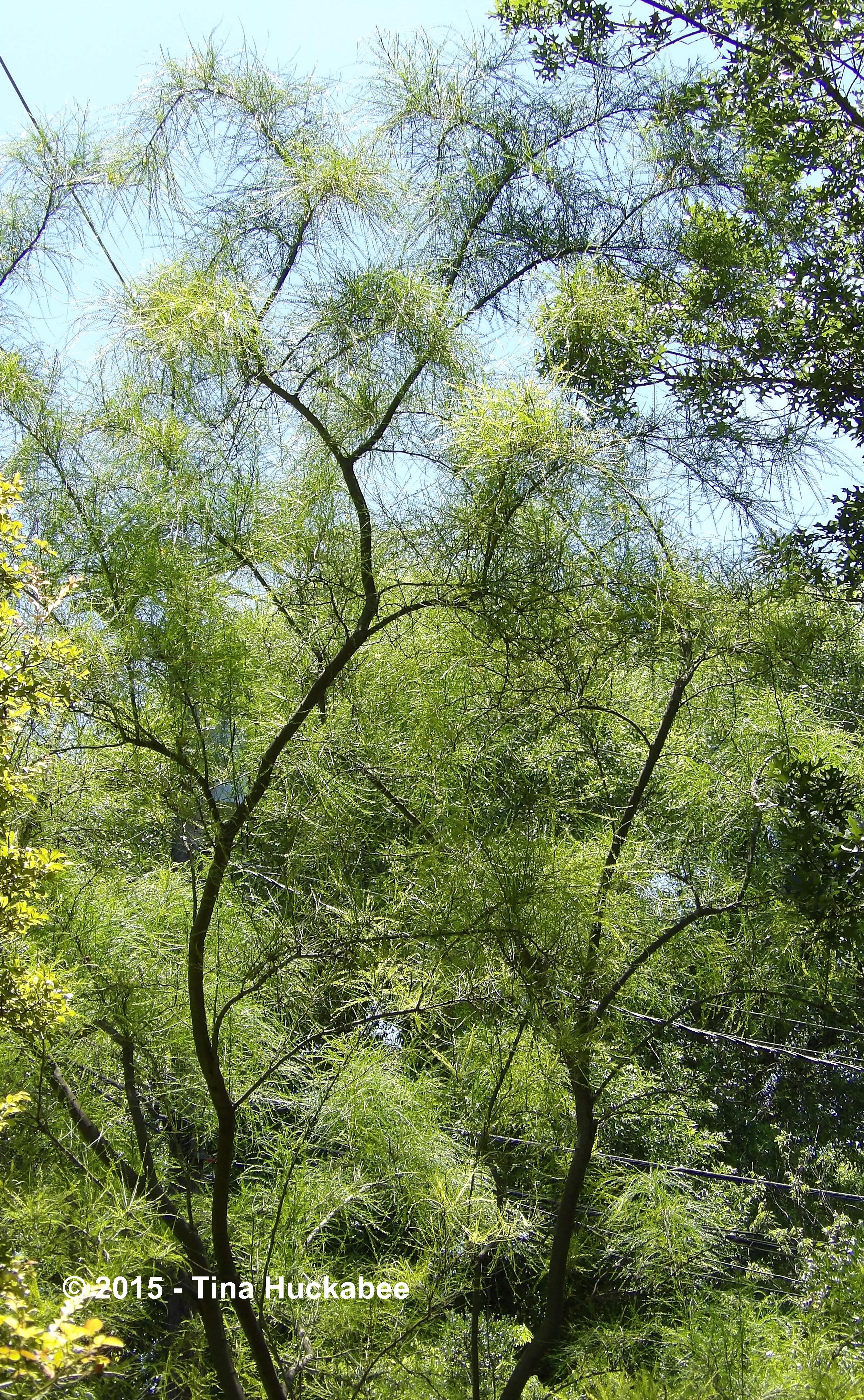
This October of 2015, my Retama tree is green, leafy, and full of life.
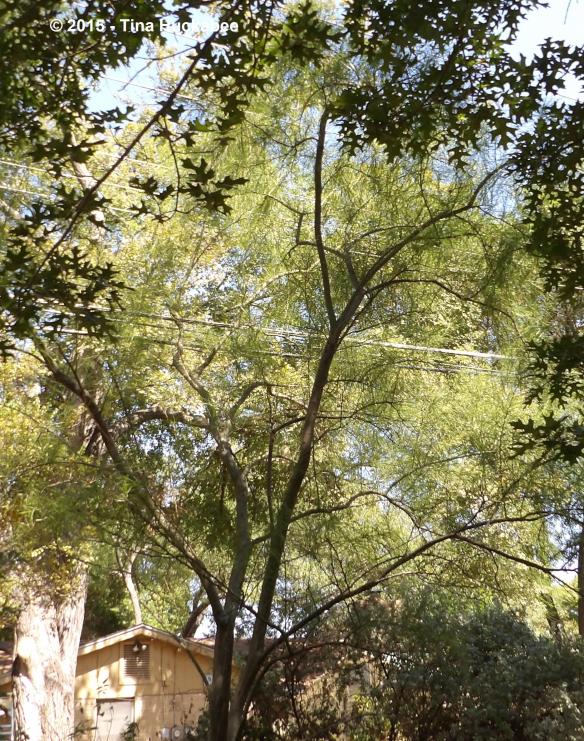
There is little change from my September and August Tree Following posts, except that there are few flowers left to complement the feathery foliage.
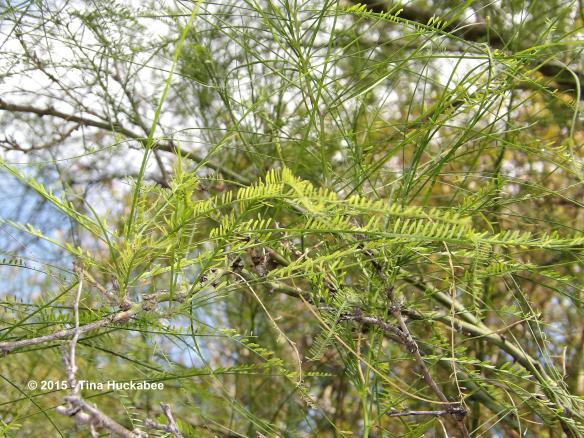
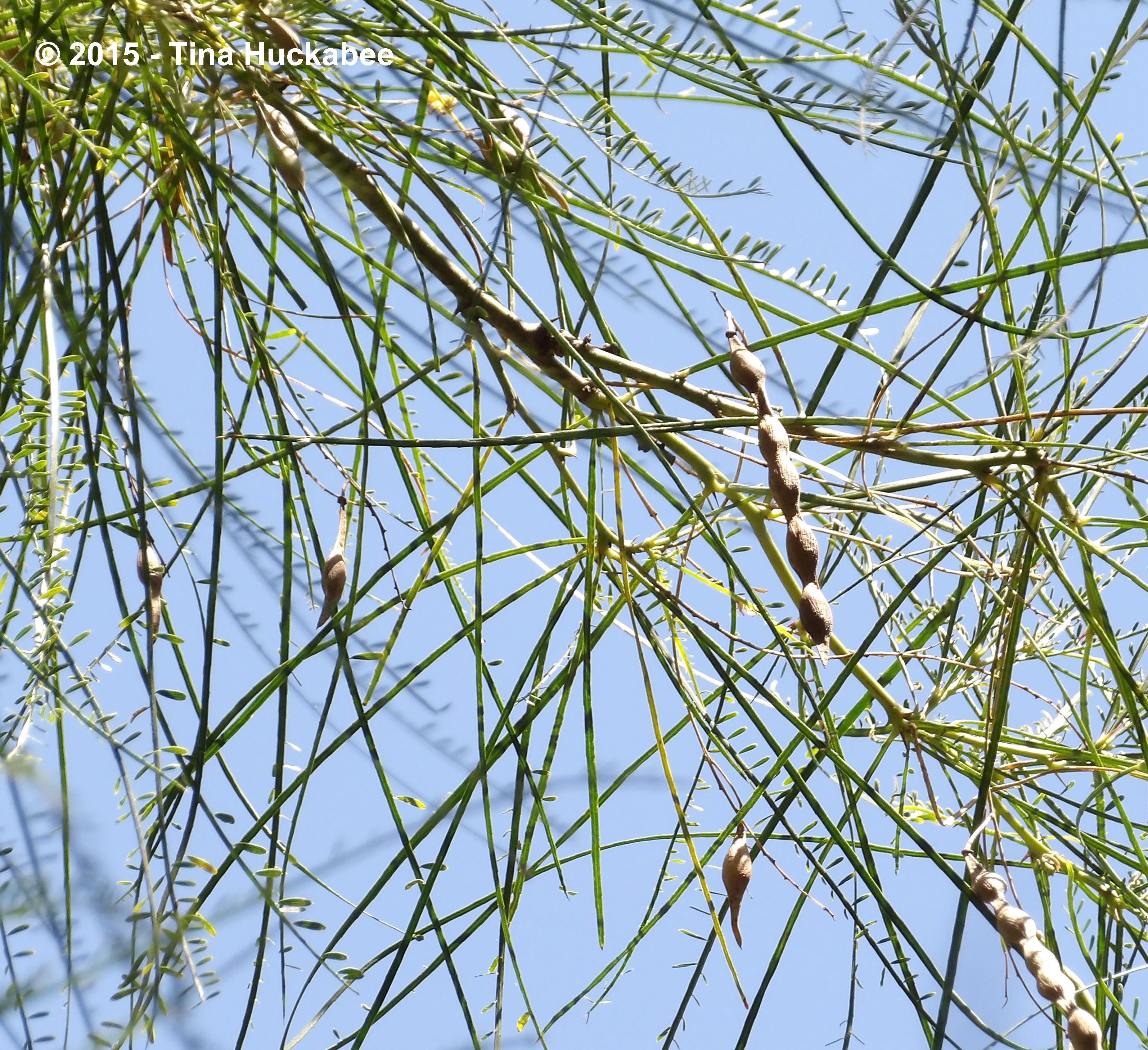
Interestingly, there aren’t many seed pods on my tree this year, either. Seed development varies from year to year and I’m betting that there are fewer because the mass of late spring blooms were knocked of during our heavy May/June rains: fewer flowers, fewer seeds.
In October, with summer continuing its hold of warm (not hot!) afternoons, arid breezes, and no rain, the Retama presides, lush-n-lacy, over my back garden.

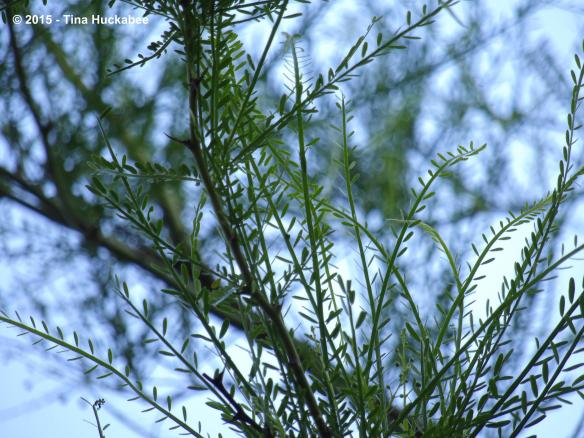
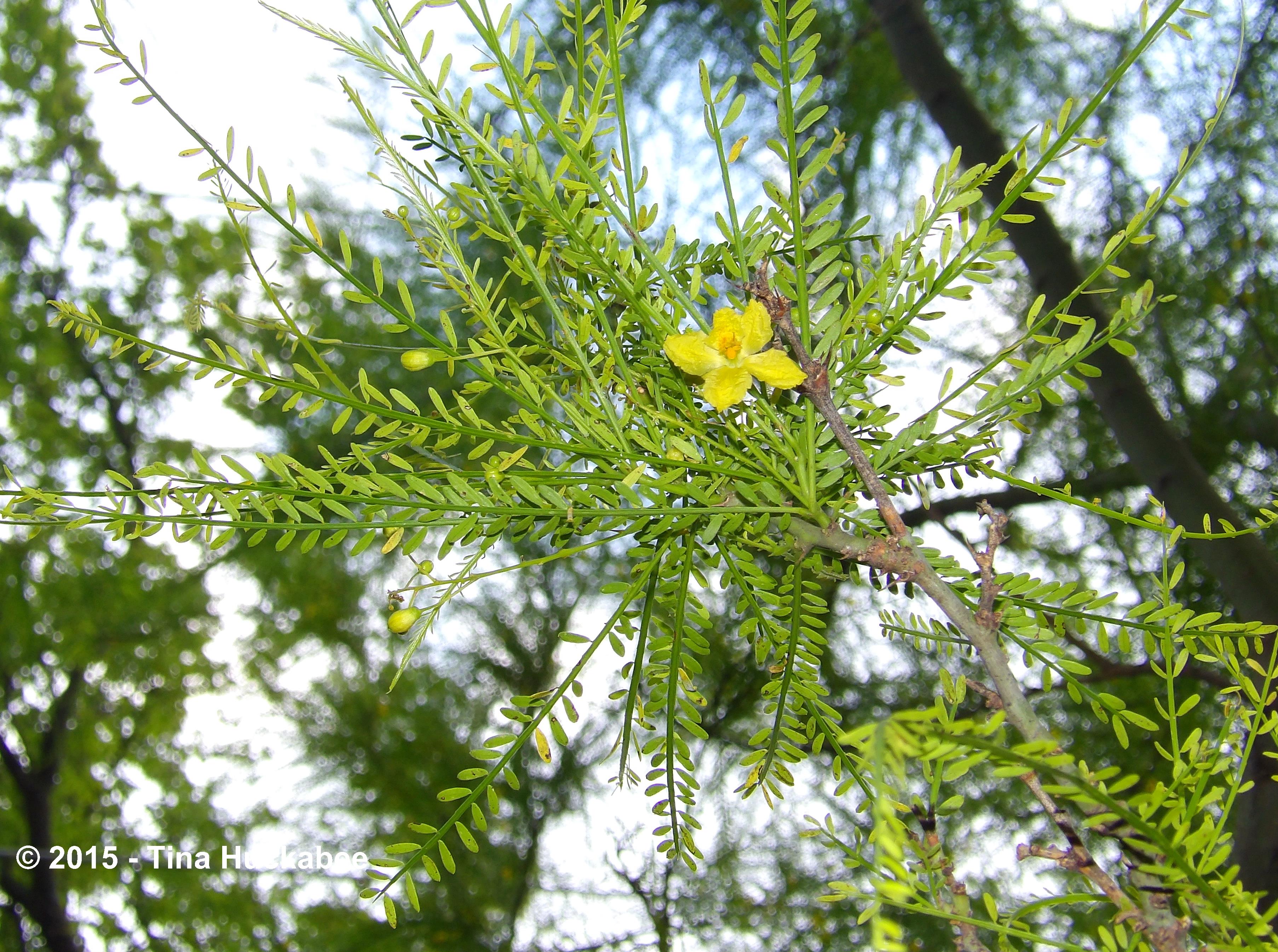
Retama foliage is a series of leaflets aligned opposite one another along paired leaf stalks.
As the days shorten and the temperatures cool significantly, the leaflets adorning the paired stalks begin dropping off.
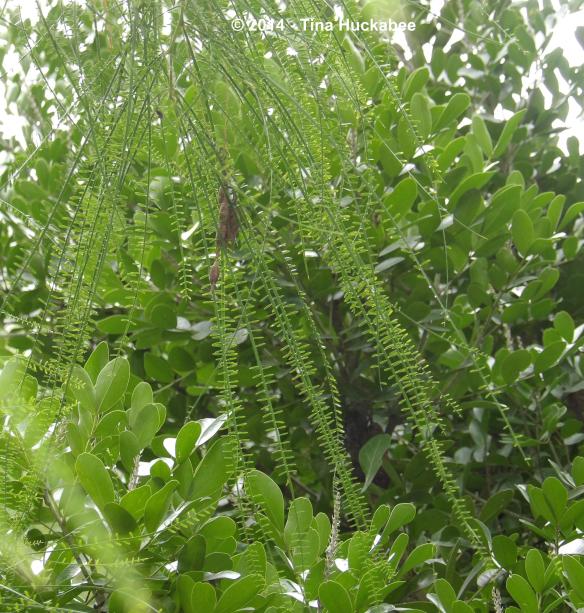
The stalks will be left, for a time, as a spidery remembrance of the elegant and unusual foliage.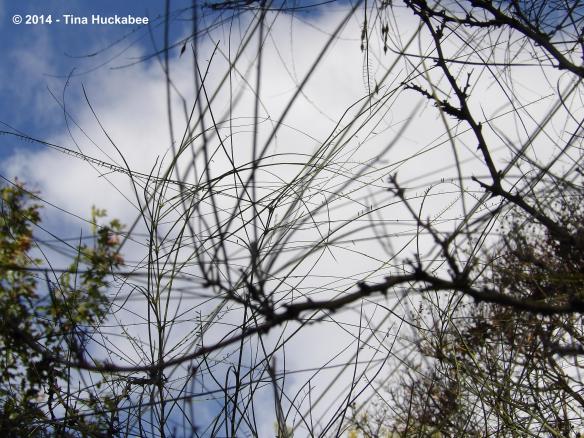
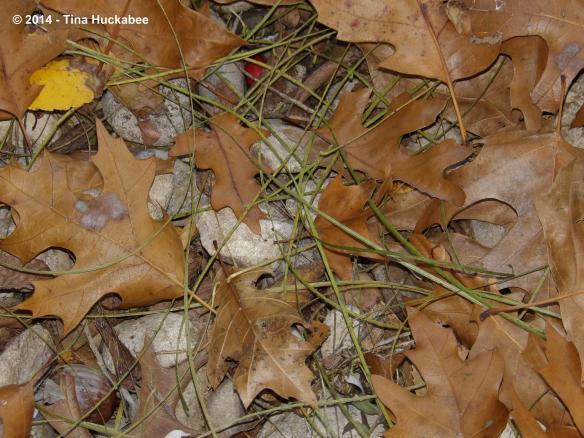
If or when there is a hard freeze (after all, Retama flourishes in tropical and semi-tropical climates), all manner of Retama foliage–leaflets and stalks–vacate the tree, joining with other deciduous leaves–either on the ground as mulch, or in the compost bin for future soil nourishment. Here in Austin, that will typically occur in late December and January.
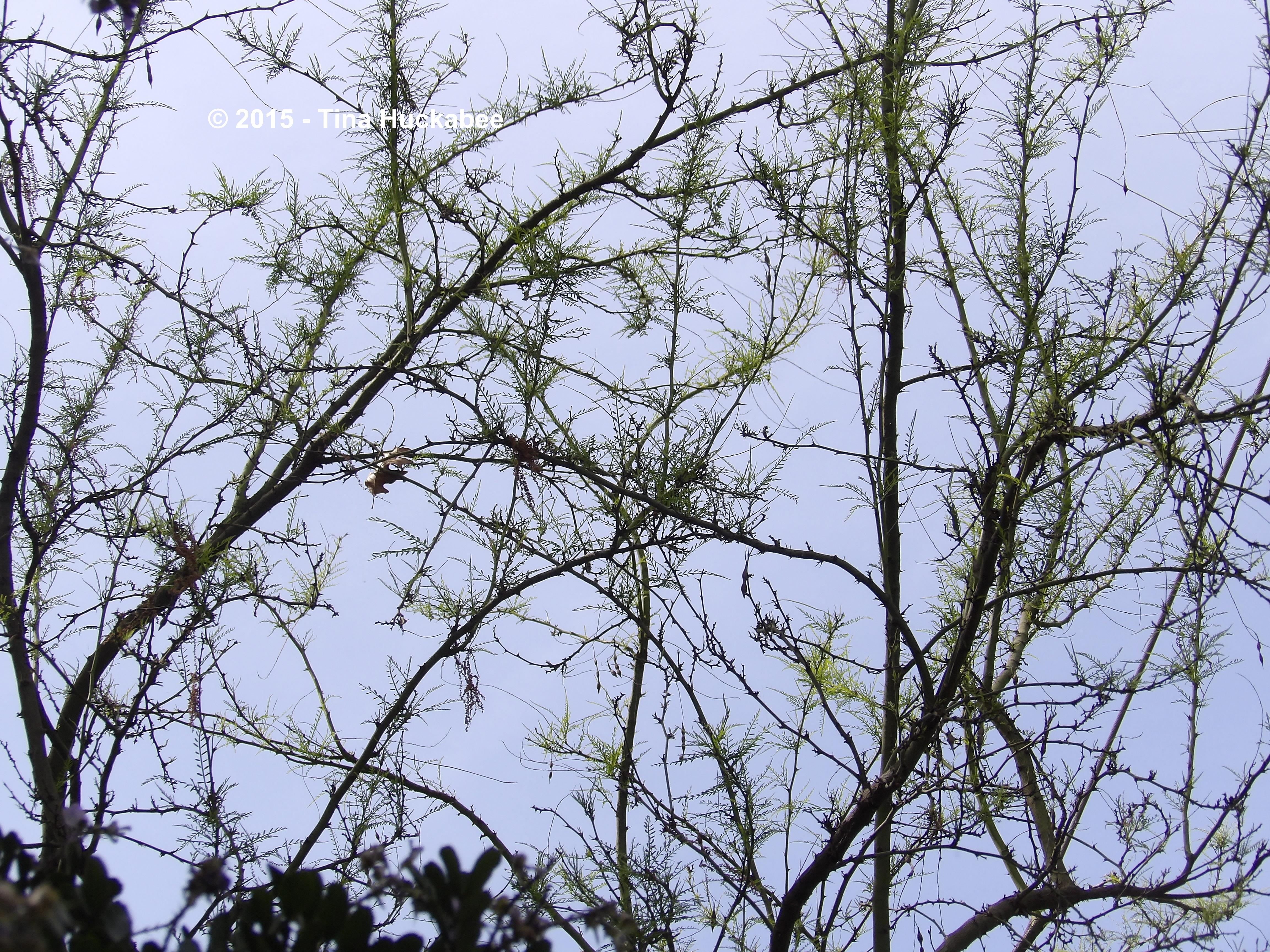
The limbs and trunk of the tree remain green throughout winter. This adaptation is valuable for survival and stunning to observe. The transfer of the photosynthesis process from foliage to limb allows Retama to continue feeding during times of drought, and to maintain vigor during the relatively short, but temperature variable, winter months.
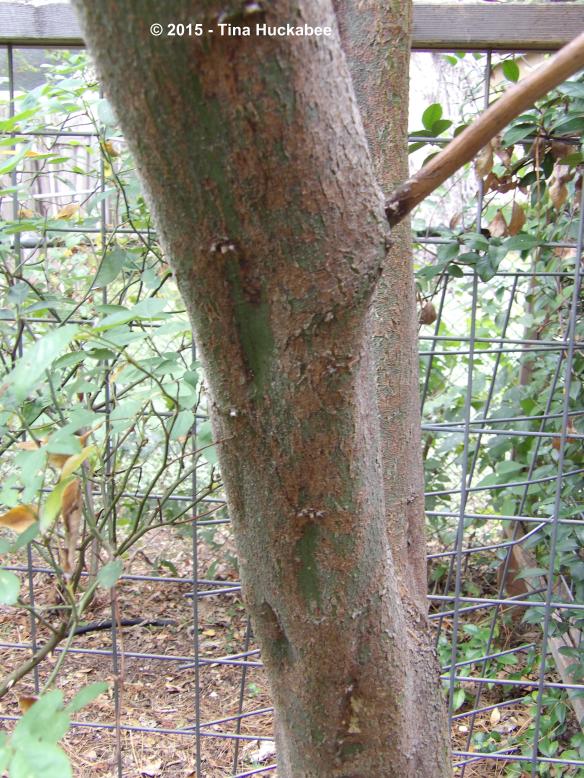
In the deep of winter (such that it is in the Southwest U. S. and other regions where Retama is native), the green of the limbs and trunk provide life-affirming color and are an attractive feature in the winter landscape.

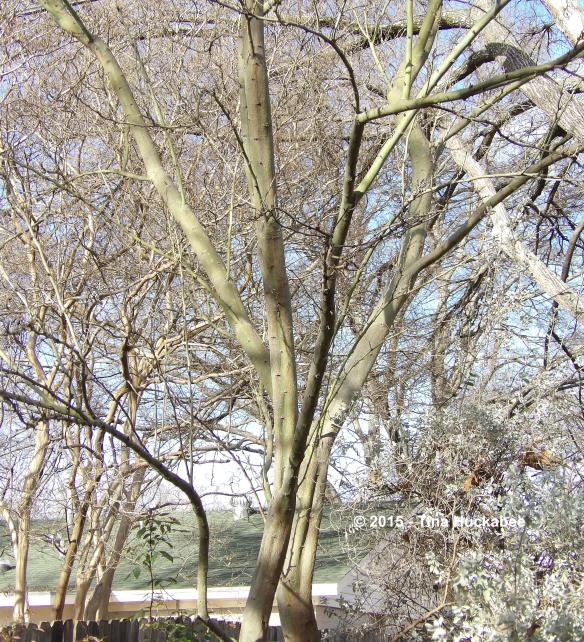
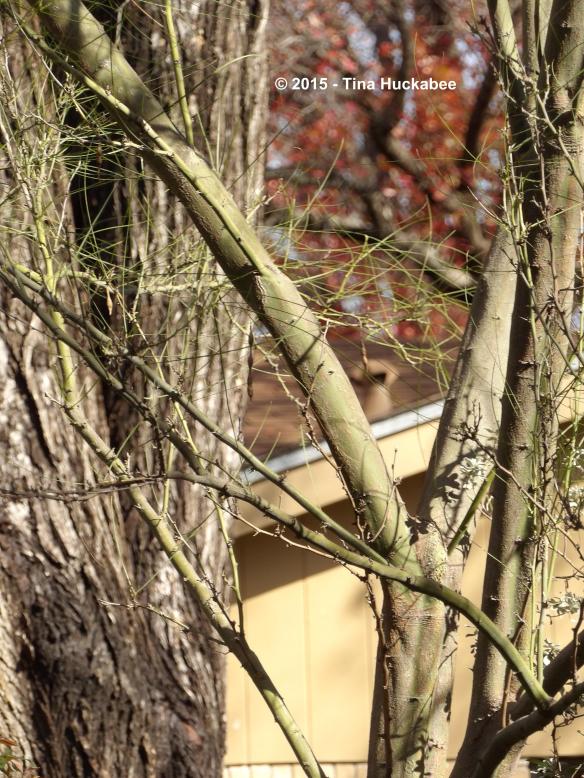
Without foliage, the thorns on the branches are more noticeable. Be careful, they bite!
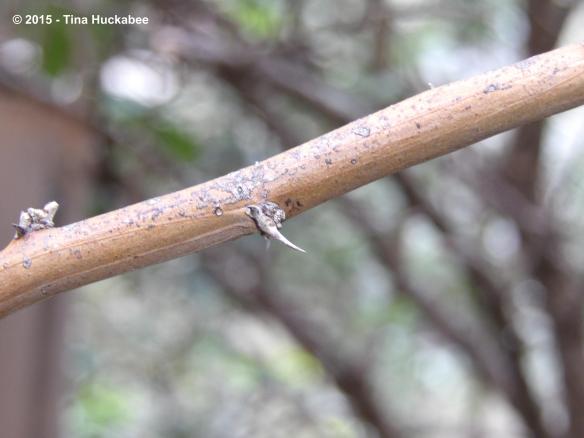
As spring approaches in March, the Retama responds with green,
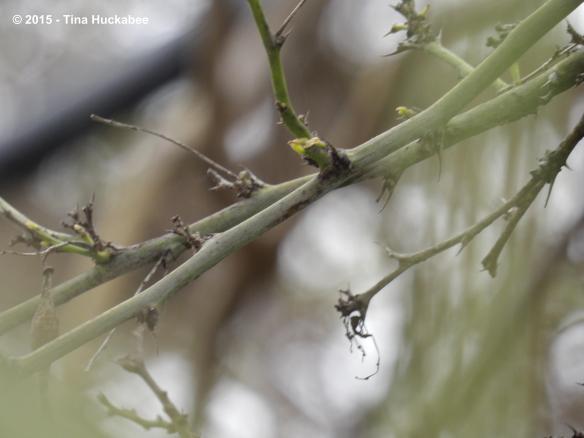
…green,
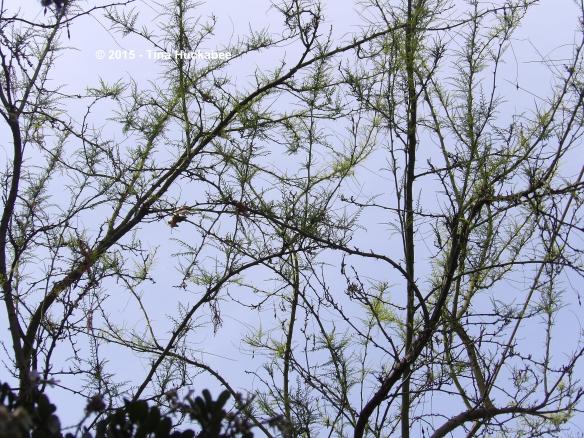
…green foliage.
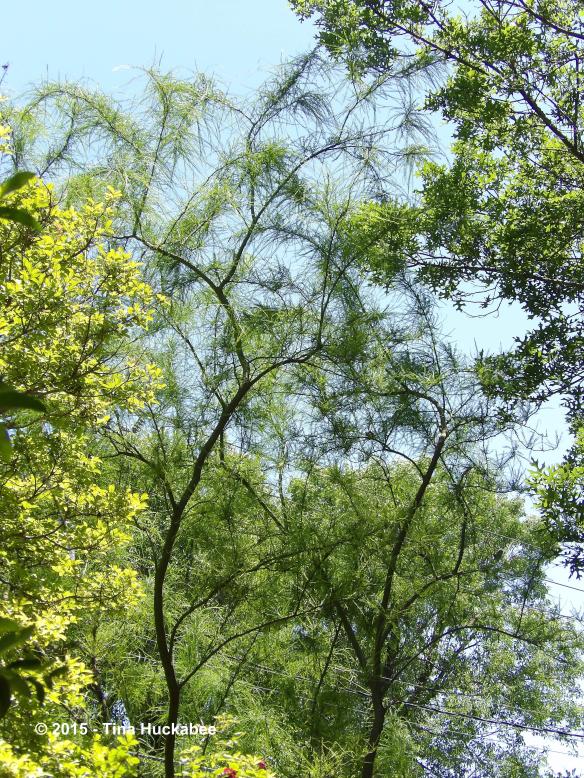
Retama is a member of the Fabaceae, or legume family. Other Fabaceae plants are nicknamed “broom”, if they sport slender stems with tiny leaflets. The unusual leaf or “broom” arrangement of Retama lends a soft, verdant look to the tree throughout its growing season.
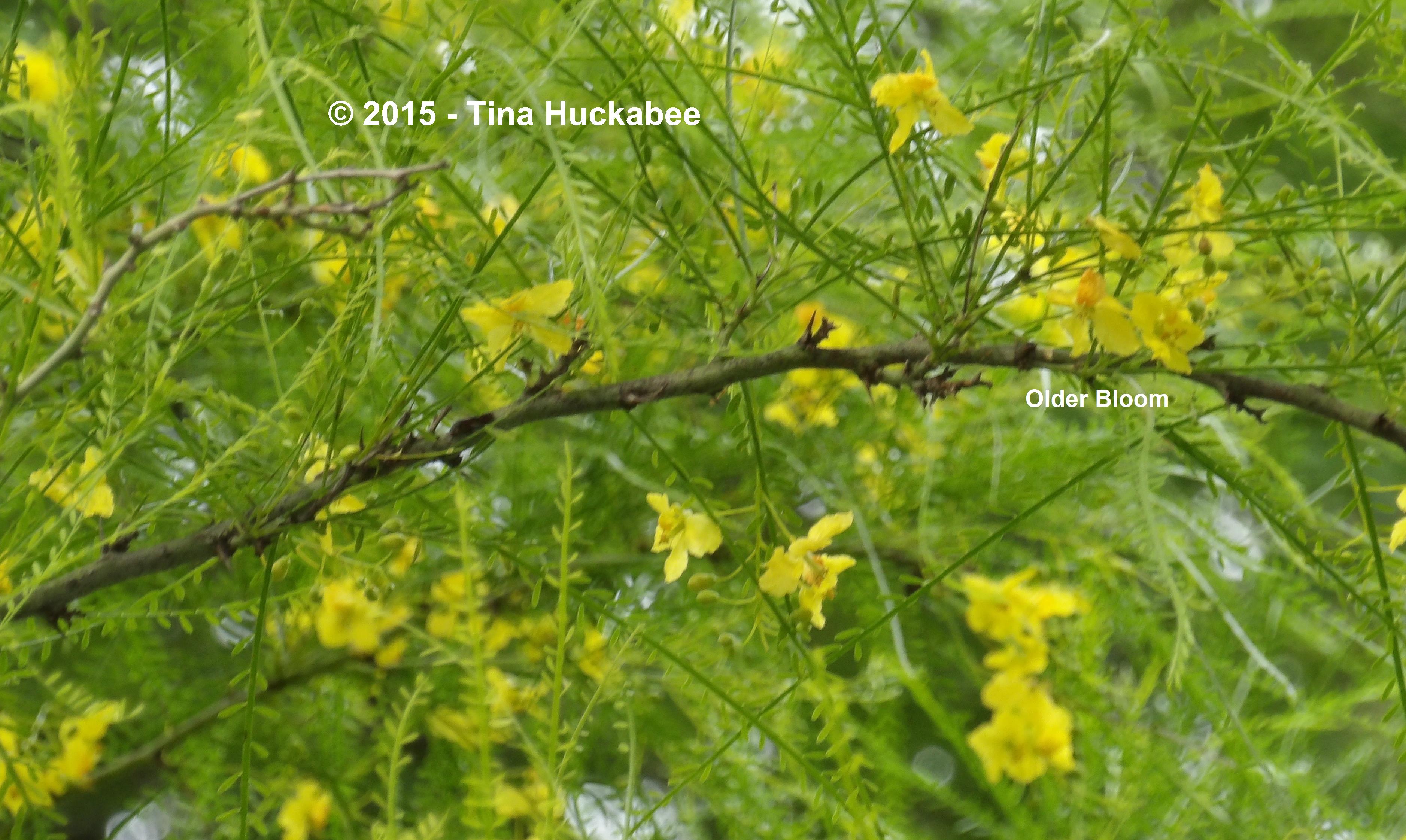
By May or June, clusters of bright yellow flowers form and will flower continuously, causing pollinators to visit regularly and, no doubt, eagerly.
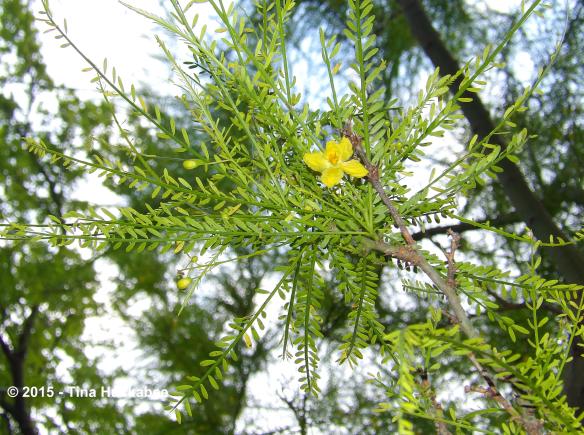
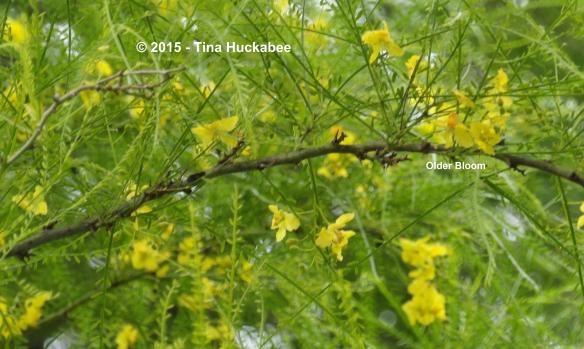
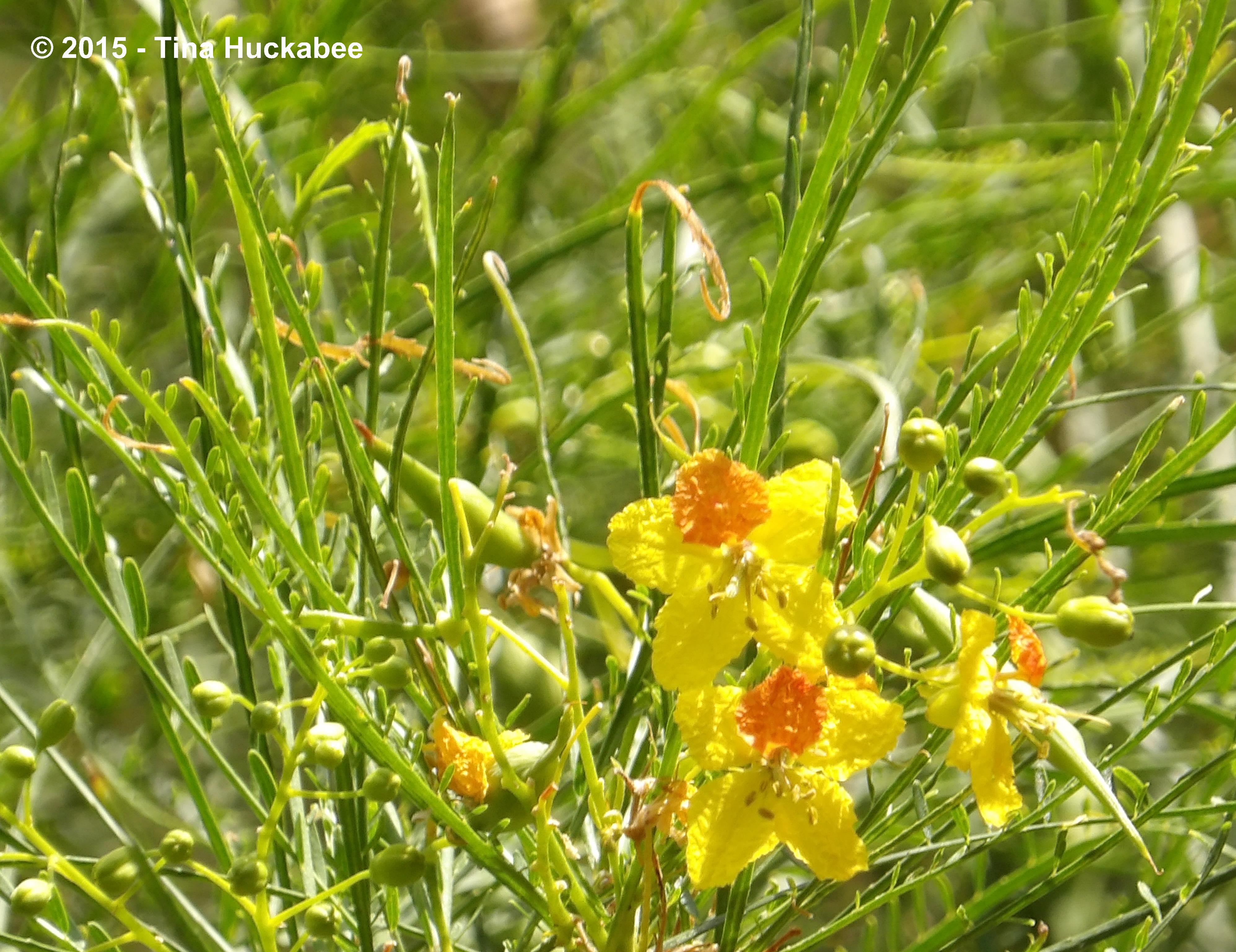
The Retama flower is an interesting one, because the petals are bright yellow, except for one which is called the “honey” petal. The honey petal is pale to deeper orange.
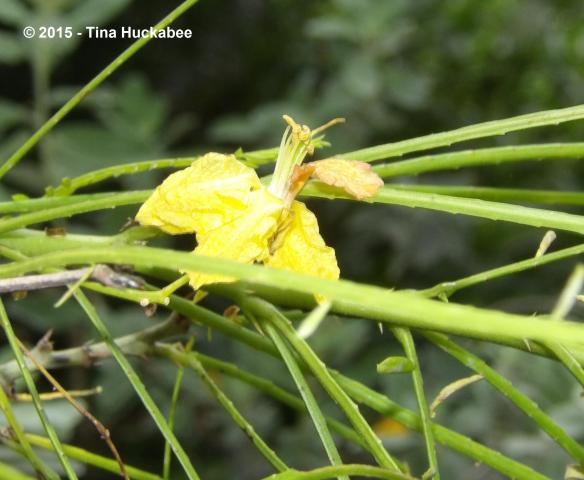

Once pollinated, the colored petal deepens and remains on the tree longer than the other petals. The flowers adorn the plant in response to rainfall and can bloom for a long period of time–late spring, all through summer, and into the fall. My particular Retama does not grow in full sun, so it’s never achieved the mass blooming that a Retama in blasting sun would produce.
In this year (2014-2015) that I’ve Tree Followed the Retama and profiled it for A Seasonal Look, the tree experienced a range of extremes–not that unusual here in Texas, as this is a land of extremes–but noteworthy. We enjoyed a “normal” spring with mild temperatures and average rainfall. However, in May and early June, we received nearly 20 inches of rain, temporarily halting an 8 year drought. Known as a “rain bomb,” that type of flooding has always occurred in Central Texas and is often, though not always, a drought-buster. The Retama’s response to the heavy rains was to drop its first flush of glorious flowers that had opened in May.
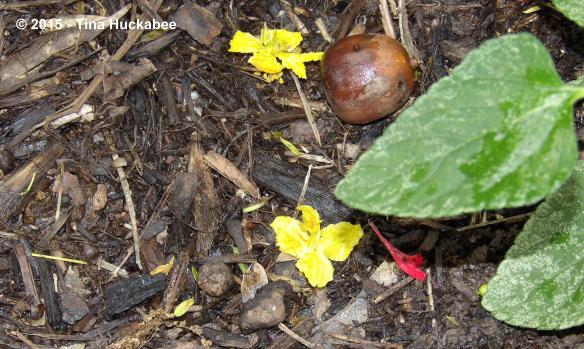
For the latter part of June and into July, my Retama was flower-less, but it did produce more clusters as the summer months progressed. Once the rain stopped in early June and the Texas summer temperatures and dry conditions settled in for the duration (and duration and duration…), it took a little time for the tree to set out its signature bloom sprays. I didn’t water my gardens until mid-July and have only watered four times as of this post. After the flowers were pummeled by the May rains, the tree bloomed up again, much to the delight of the bees, butterflies and hummingbirds.
Oh, and the gardener too.
In more typical years, the Retama is a solid bloomer during the toughest months of our growing season and with minimal rain or irrigation. After the wet spring and then with no rainfall until late August/early September (and not much then), many plants succumbed. Even some native plants that are evolved to withstand the capriciousness of the Texas climate, struggled this summer. The Retama? It flowered and foliaged along just fine, thank you very much:
In July,
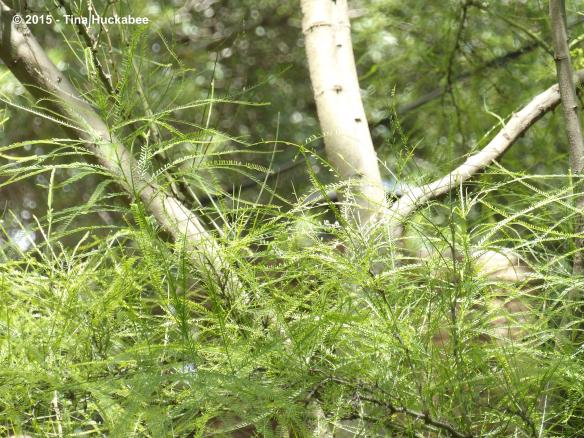
….August,
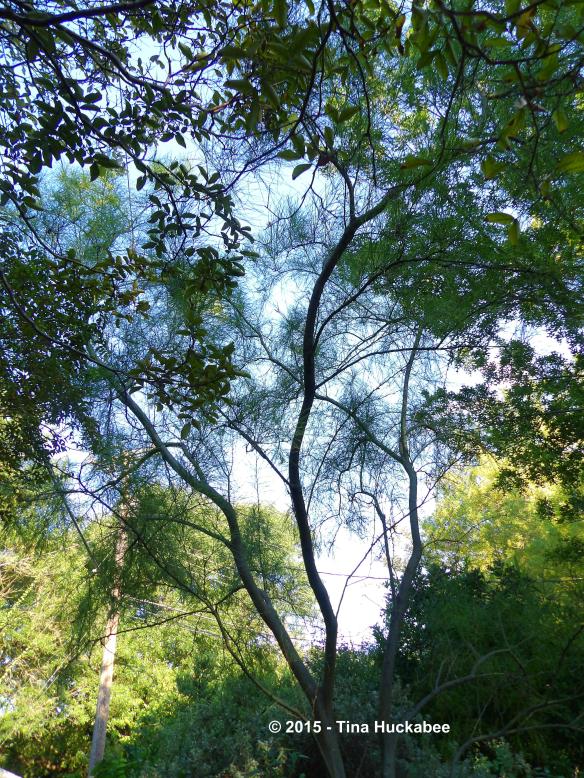
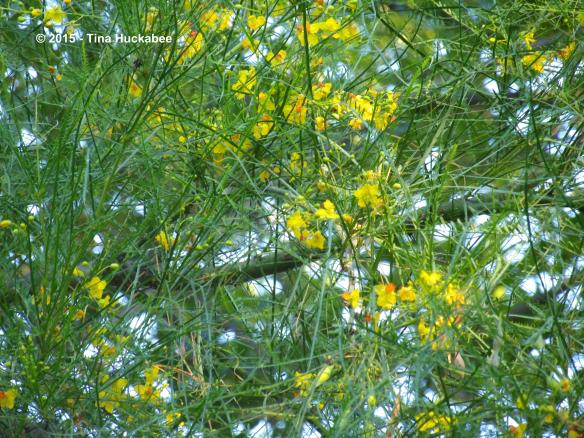
…and September.

It was green, blooming and gorgeous. What’s not to love about that?
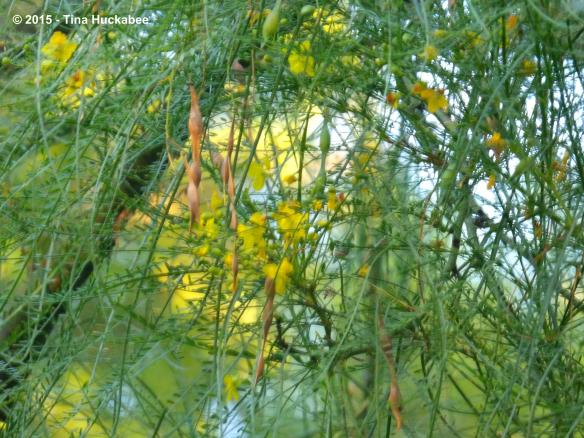
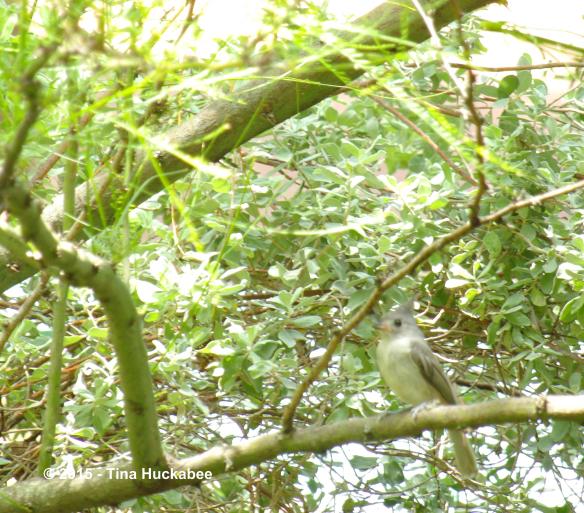
Birds are constant companions of this tree.
As the flowers fade and the seed pods form, first green,
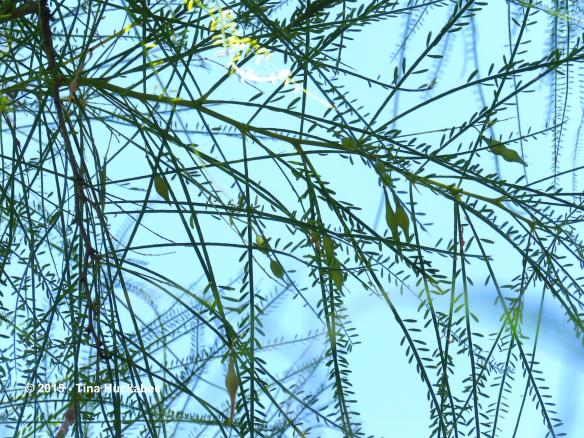
…then brown,
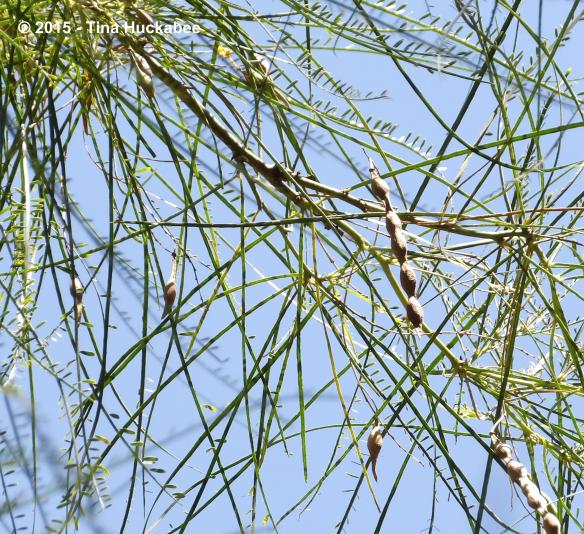
…the tree adds other delectables to the landscape besides pollen and nectar: small mammals and birds (in particular) enjoy feeding on the seeds. In areas of the world where Retama is invasive (parts of Africa, India and Australia), it is most likely birds who’ve spread Retama to problematic levels. I don’t want to blame birds for Retama’s invasiveness–that’s squarely on people and lack proper management for introducing non-native and potentially harmful species to new areas without first experimenting with natural controls. Where Retama is native, it’s an excellent plant: water wise, wildlife friendly, and beautiful. Where it’s an introduced aggressor in the landscape, it’s proven a serious problem for indigenous flora and fauna, requiring great efforts to remove. For example, Australia has banned the sale and planting of Retama.
Have I mentioned that it’s always best to plant native?
Here in Central Texas, the Retama is a plant which needs little, if any, supplemental watering. It grows remarkably fast, reaching to “tree” height in a matter of a few years. I mulched it when it was a baby tree (I think I purchased it as in a one gallon pot), but I don’t mulch established trees. Retama is commonly available at locally owned nurseries, especially in late summer and fall, which are good times of the year to plant perennials and trees here in Texas. Retama has a graceful natural form and doesn’t require pruning, except if a branch dies–or perhaps if the gardener is weary of getting dinged on the head by a formidable Retama thorn.
Retama trees aren’t particular about soil types, so no amendments are necessary. If much irrigation or rainfall is the norm, Retama will seed out, but in its 12 or 13 years in my garden, I’ve only found a half-dozen seedlings from my tree.
If you live in Retama’s native range, you’d be hard-pressed to grow an easier or lovelier tree to accent the southwestern garden.
In Spring,

…Summer,
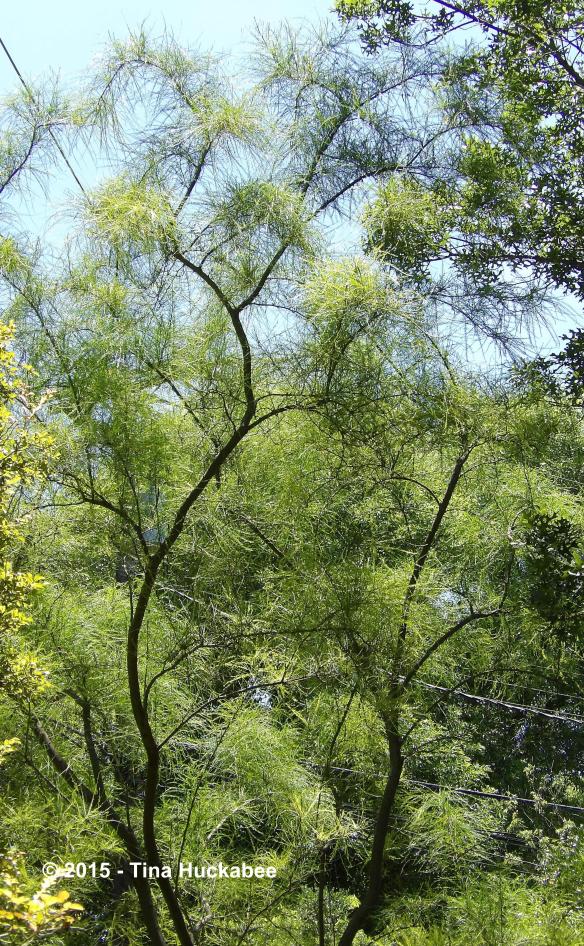
…Autumn,
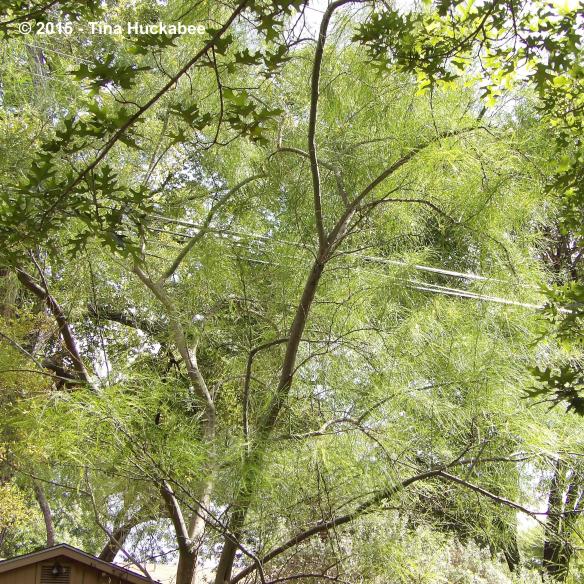
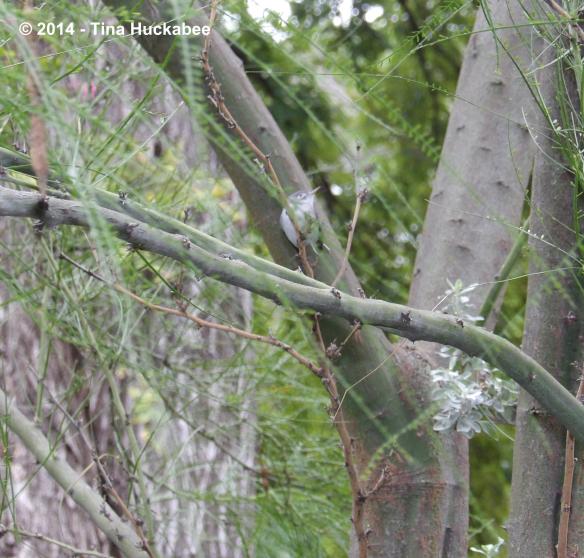
…Winter,
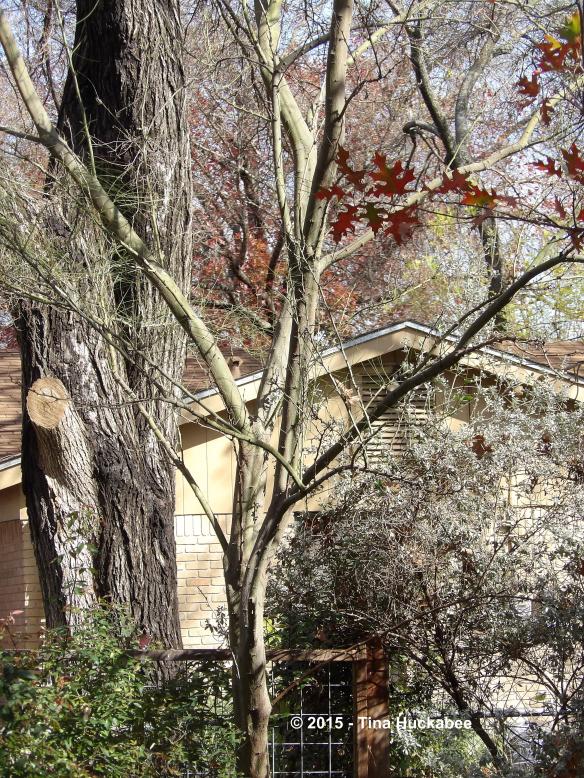
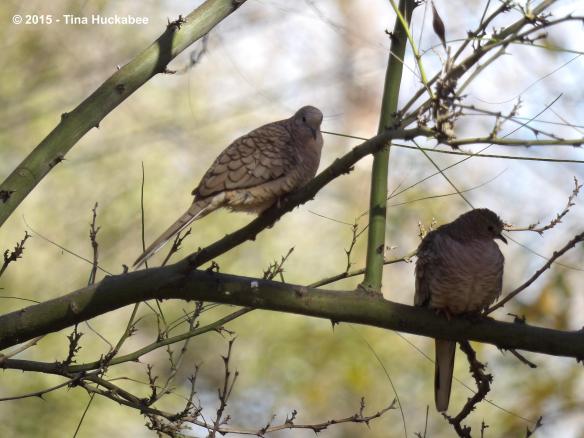
…Retama is a stunning tree: hardy and reliable, wildlife friendly, and darned pretty to look at. Who doesn’t want plants with those descriptors?





















 My Gardener Says...