The Spring Garden

I don’t often show photos or write about my garden as a whole–the wide views–as it’s often phrased. While I love the  macro of my garden–I’ve designed and implemented a connected set of gardens and pathways–I’m more interested in exploring and discussing the micro of a garden area: the big and small wildlife that make a garden truly a living space, as well as the specifics of plants–foliage, flowers, bark–the stuff of plant life. Also, I think a garden is a very personal expression and so I don’t necessarily seek discussion about whether a chair or shrub or some other garden accessory is placed in an appropriately designed spot; the chair (or whatever) is where I put it because it works for me and for my garden.   I should add that I enjoy looking at others’ gardens and appreciate what I learn from gardeners’ accomplishments. As well, I’ve certainly benefited from  gardening advice that I’ve received  when I couldn’t get past a troubling gardening problem.  I’m continually impressed with (and maybe a bit jealous of) the ingenuity and creativity displayed by gardeners, especially home gardeners, in the articulation of their outdoor spaces and the artfulness and technical knowledge that gardening requires and that these gardeners supply. For my own purposes in assessing whether my garden is what I want it to be, I photograph my garden–the wide views–usually once per season, to help me with that assessment.

Photographing a garden, or parts of a garden, is instructive. I’m fascinated at how viewing a garden–in any light–is different from viewing a photograph of that same garden–in any light.  More than once, glitches in my garden layout have revealed themselves through photographs, even when they were hidden from my eyes in real-time.

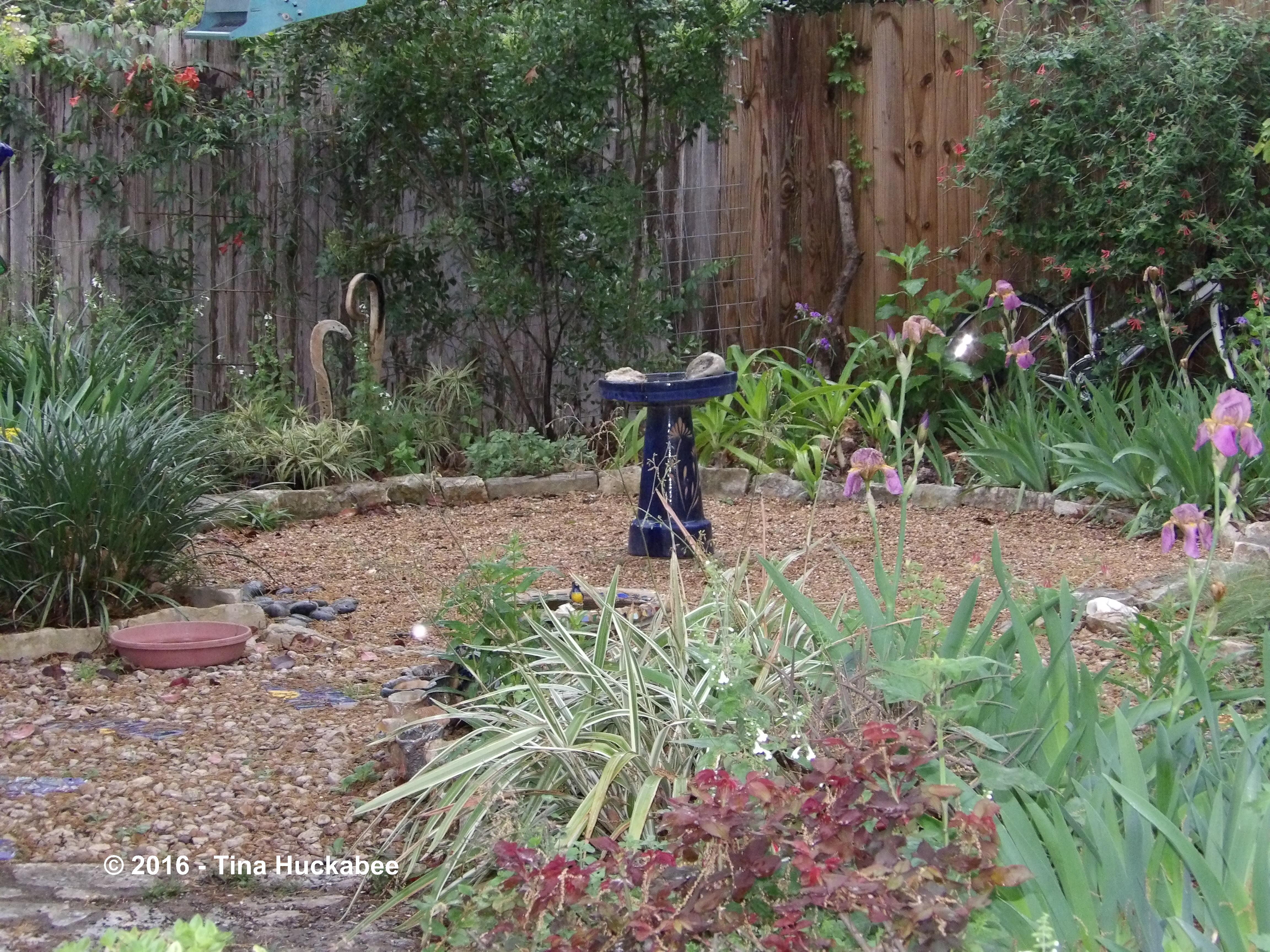
In the back garden, which is where I usually photograph, the early March garden bursts with spring green and early blooms.  A new fence, with trellis added, hosts three new Crossvine,  Bignonia capreolata, plants  which have bloomed and are growing rapidly. The vines should cover the trellis within a couple of years.  I hope.
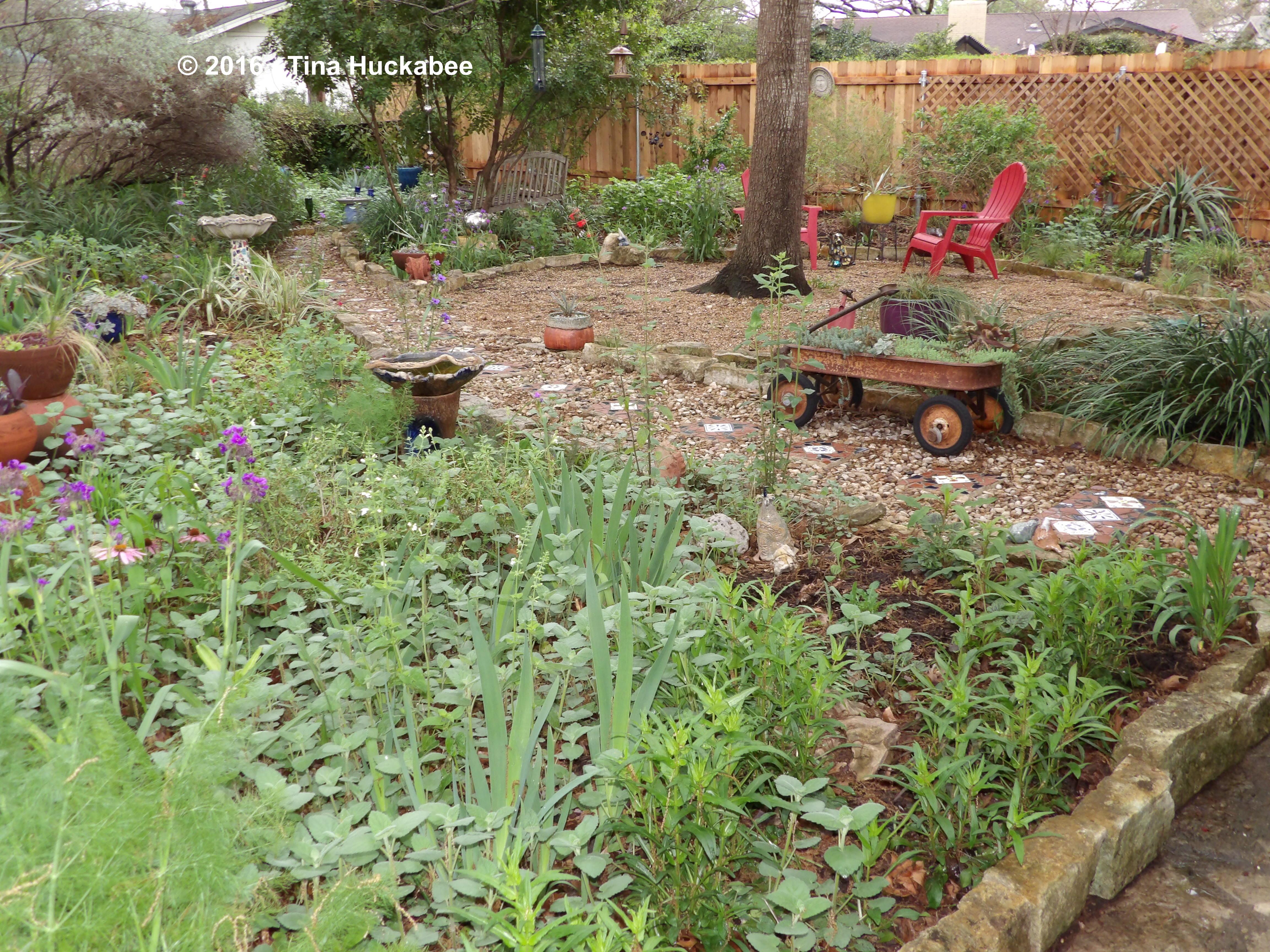
Garden "stuff" seems to me too busy. Does some of it need to go?

Garden art makes the garden too busy. Does some of it need to go?

The back corner is an odd place:  full sun in summer, shady, or in and out of shade,  for most of the remainder of the year.

IMGP5102.new

It's becoming clear that I must do something, SOMETHING, about the back fence. I guess a new fence is in order.

It’s become painfully obvious that I must do something, SOMETHING, about the back fence. I guess a new fence is on the garden menu.


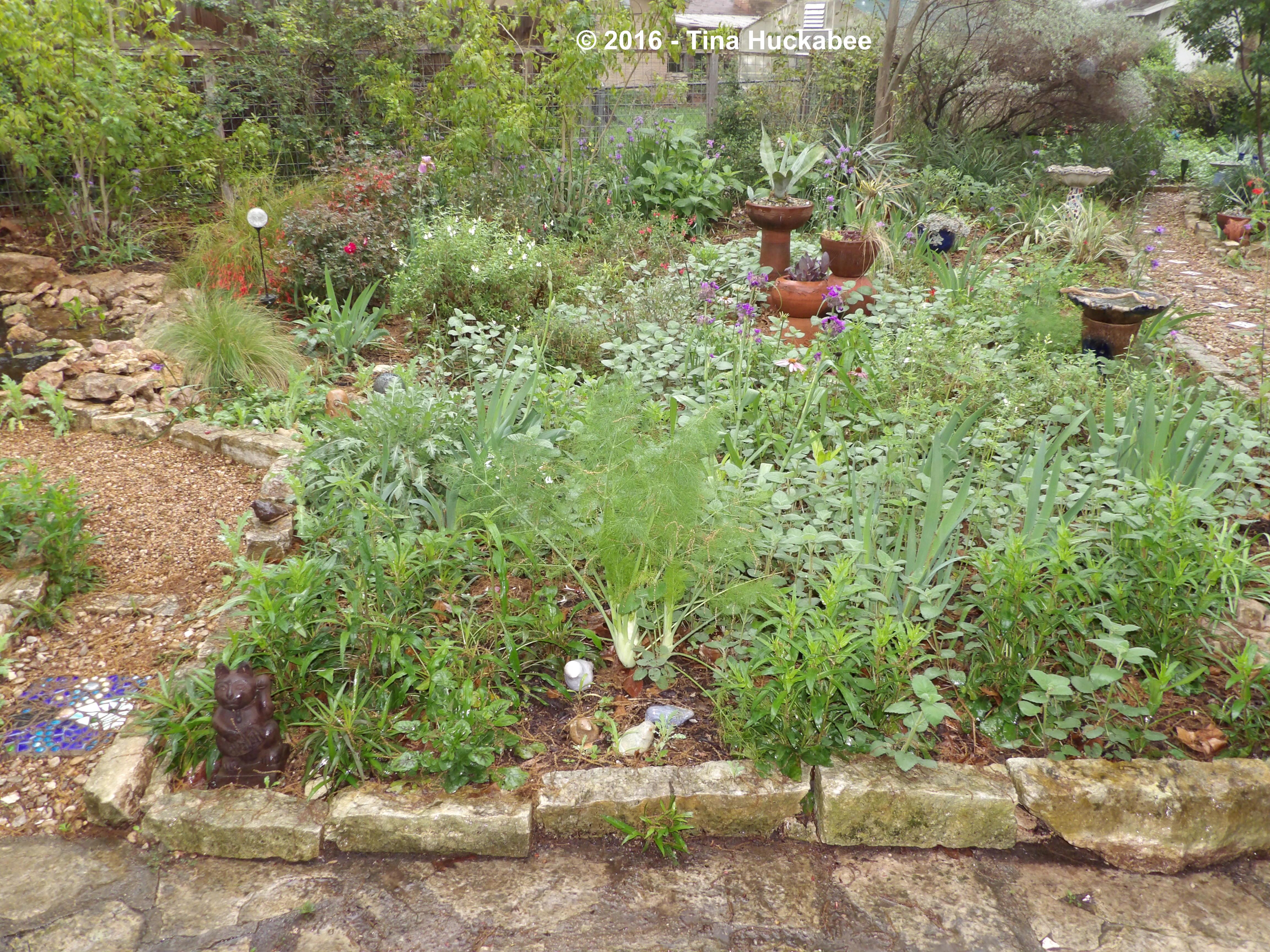
The center part of the back area gets a good amount of sun most days, most of the year, though parts of the garden play hide-n-seek with shade from the trees and house.
IMGP5108.new

Generally pleased with the central part of the garden, I'm constantly making amendments because of ever-increasing shade. Many plant choice mistakes have ensued.

Generally pleased with the central part of the garden,  I’m constantly amending because of ever-increasing shade. Many plant choice mistakes have ensued.


The narrow part of the back garden is given almost exclusively to shade plants, but there are bloomers in the mix throughout the long growing season.

IMGP5105.new

A closer look.IMGP5107.new


Foliage and flowers flushed out as March progressed, filling in with diverse colors and textures.

Back to the central garden, I’m especially fond of the waves of grey-green Heartleaf skullcapScutellaria ovata ssp. bracteata  undulating through the main garden bed, supervised by newly-in-bloom Old Gay Hill Rose shrub and Martha Gonzales Roses, as well as white Autumn sageSalvia greggii.  Accents of spring bloomers like Spiderwort, Tradescantia,Tropical sage, Salvia coccinea, Purple coneflower,  Echinacea purpurea, Iris, and others, thwart monotony.   Deadheading spent blooms can be tricky as I trip over rock stepping-stones in the laudable goal of keeping things tidy. Summer flowers will appear in short order.

IMGP6848.new

The Firecracker Plant (Russelia equisetiformis) blazes red and echoes the red chairs at the end of the garden, as well as other pops of red, here and there.

The Firecracker Plant (Russelia equisetiformis) blazes red beside the pond and echoes the red chairs at the opposite end of the garden.  There are other pops of red, here and there, throughout the garden.

IMGP6128.new

A  longer wide view.IMGP6131.new


The back corner garden has been an early morning coffee retreat for me–and just for me. That’s about to change with two new sets of Langstroth bee hives which will soon find a home where the bench sits.  I’ll miss sitting here, but I can plop myself down on the walkway (with a pillow for my bum) to watch the bees.  The bench will be moved to a better bird watching spot.  And who knows–when I hire out for the new fence that I mentioned above, maybe a new sitting area will follow.

IMGP6480.new


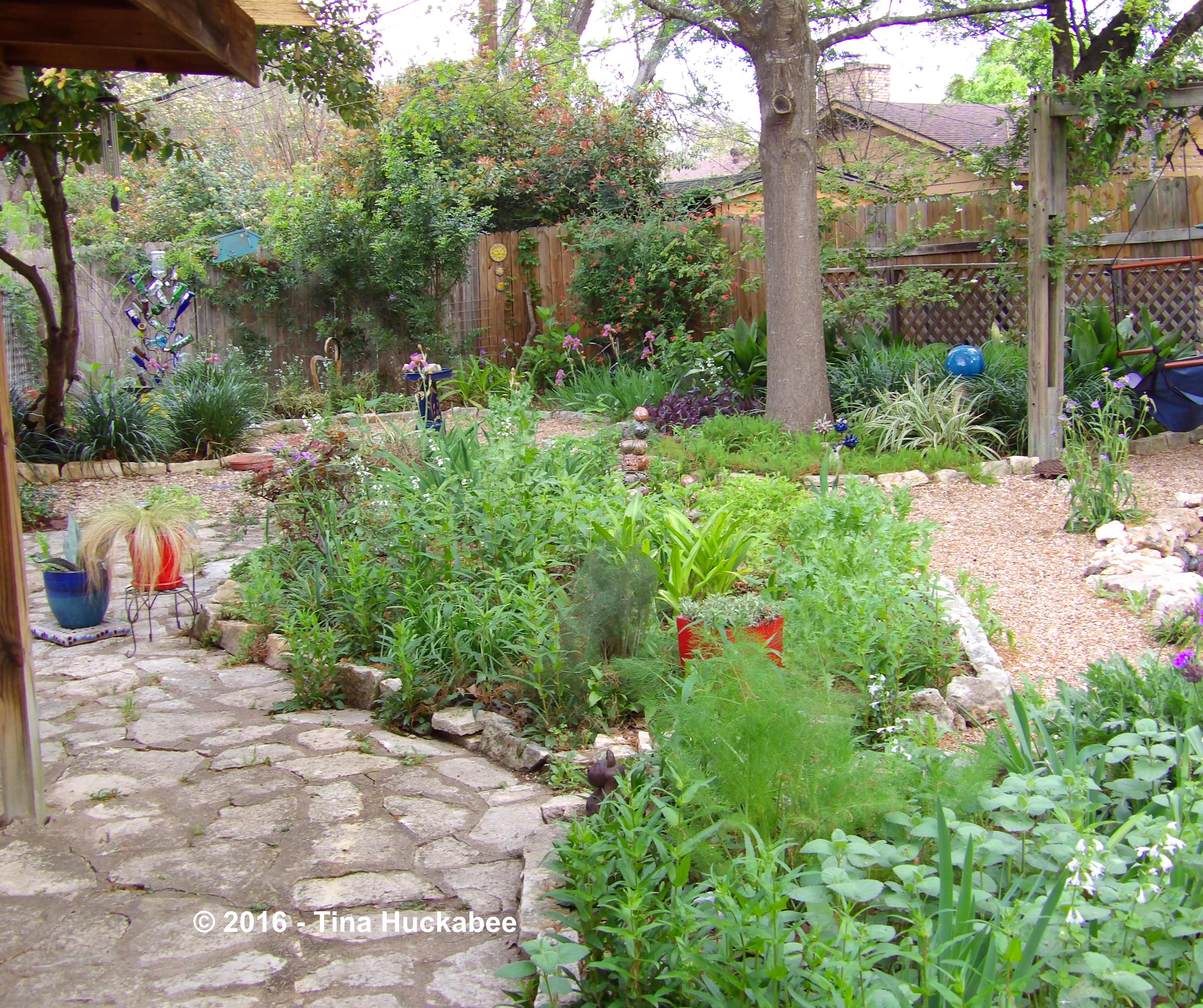
The “shallow end” of the back garden is in full spring mode,
IMGP6129_cropped_3982x3336..new

…and there’s plenty for the pollinators and the gardener to enjoy.
IMGP6847.new

IMGP6846.new

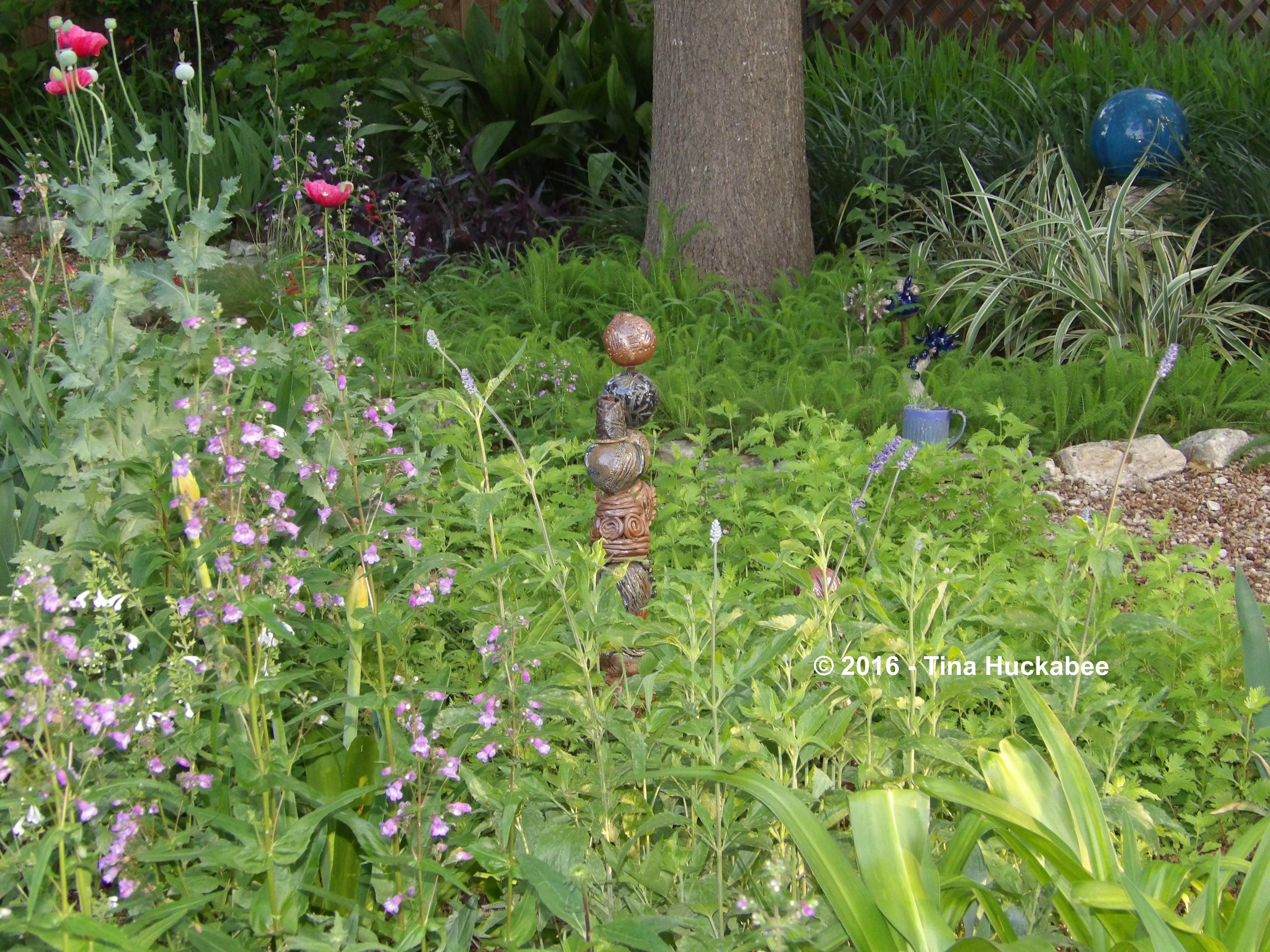
Gulf Penstemon (Penstemon tenuis) spike in lavender loveliness during March and April.  Here, they’re accompanied by red poppies and soon these will be  joined by the flowers of my mother’s unknown variety of Amaryllis.


I rarely take photographs in my front garden.  During spring, there’s enough wind whistling down the street that attempts for bee or butterfly photos is pointless.  I also don’t have much maintenance in the front garden, except when it’s time to mulch or when I’ve decided to rip up a  garden and re-do it.  The main part of the front garden abuts the garage, which is bordered by an old stand of Burford Holly shrubs.  Birds adore the winter berries and bees the tiny white spring blooms.

IMGP5120.new

By way of a mulched path, the garden opens to a sitting area with mostly, though not exclusively, shade-tolerant and foliage-dominant plants bordering the area.

IMGP5128.new

The groundcover is Straggler Daisy (Horseherb),  Calyptocarpus vialis.

IMGP5114_cropped_4553x3230..new

I mow the Horseherb as needed with an old-fashioned push mower. Yes my neighbors think I’m odd–nothing new there.

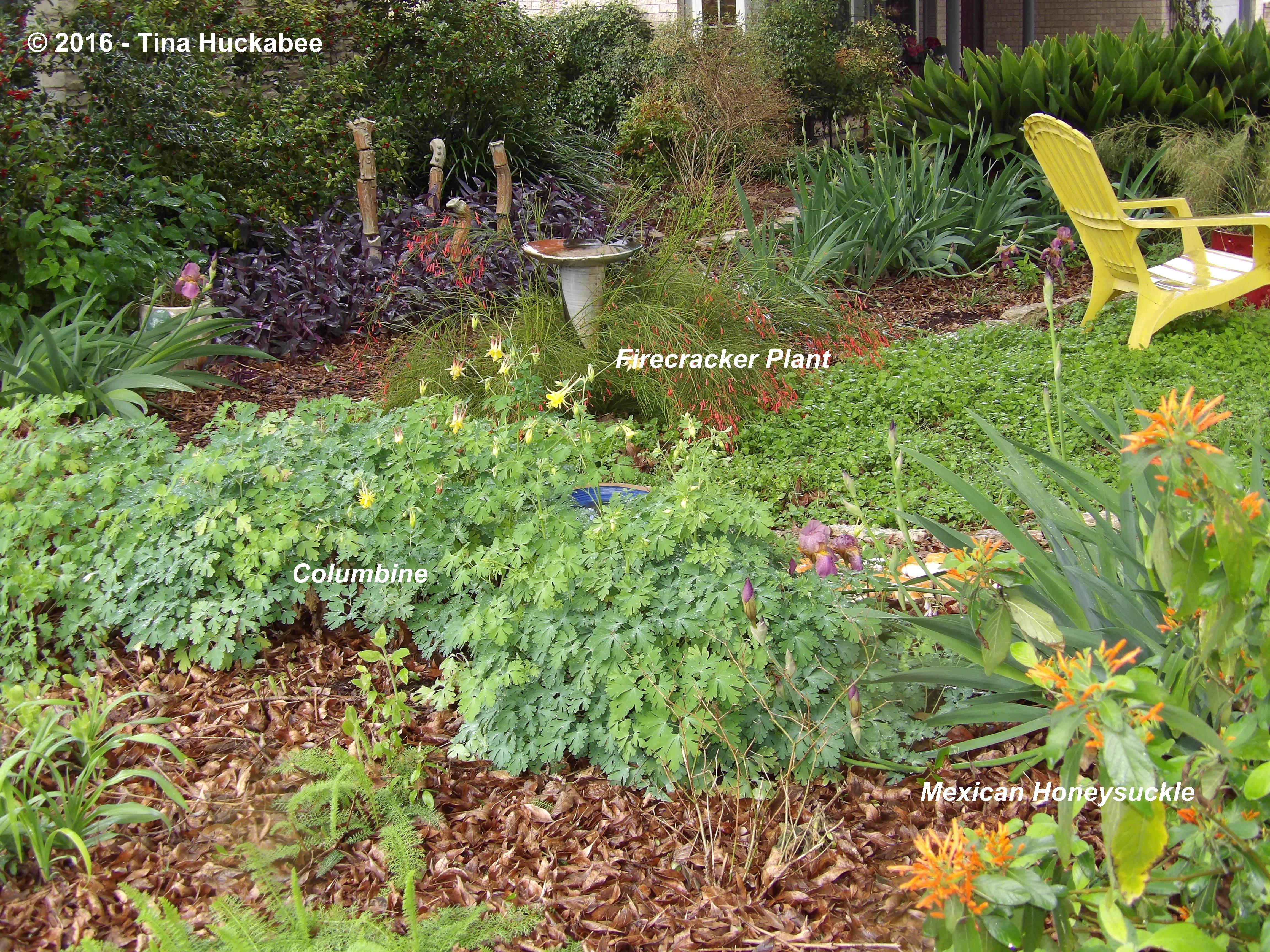
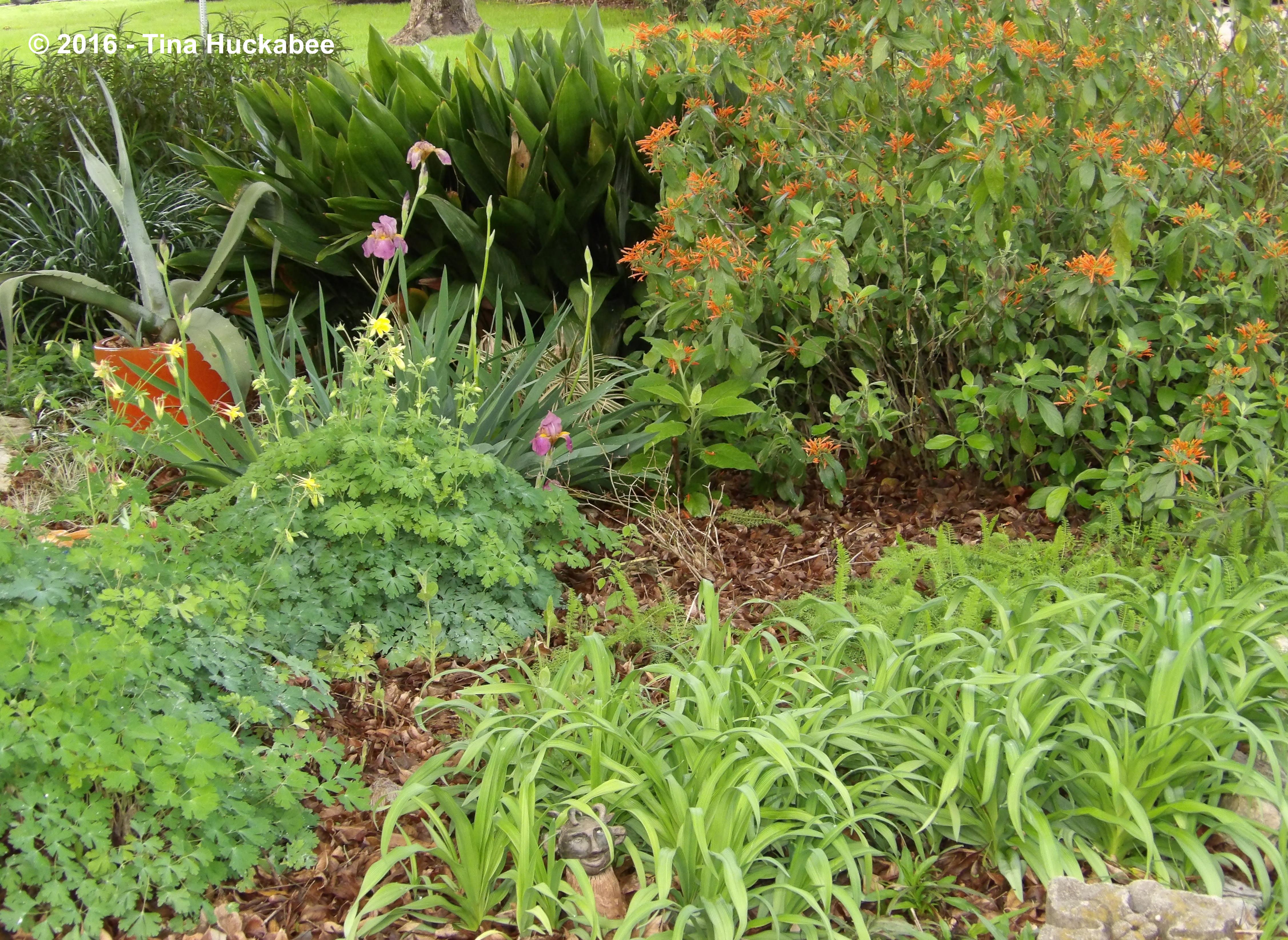
Spring bloomers like Columbine, Aquilegia chrysantha and A. canadensis, Iris,          Mexican honeysuckle, Justicia spicigera, and this year (due to our non-winter), both Firecracker plant and white Tropical sage, as well as some smaller groundcover-type perennials, add color and pollinator pizzazz to this garden.
IMGP5113.new

IMGP5142_cropped_4507x3291..new

IMGP5112_cropped_4420x3148..new

IMGP5129.new

This view is from the mulched pathway as it rounds the corner of the garage, headed to the back side of the house.


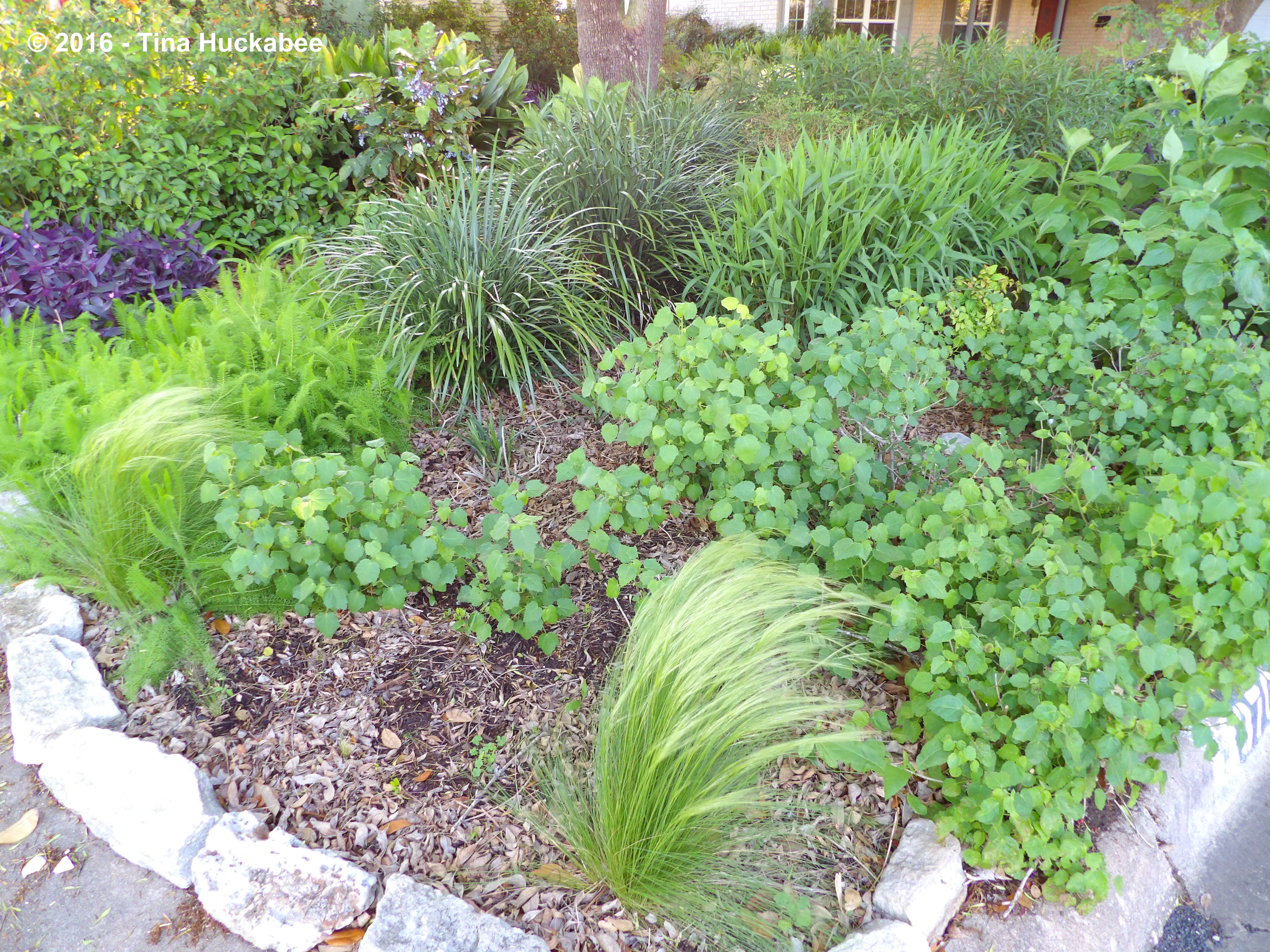
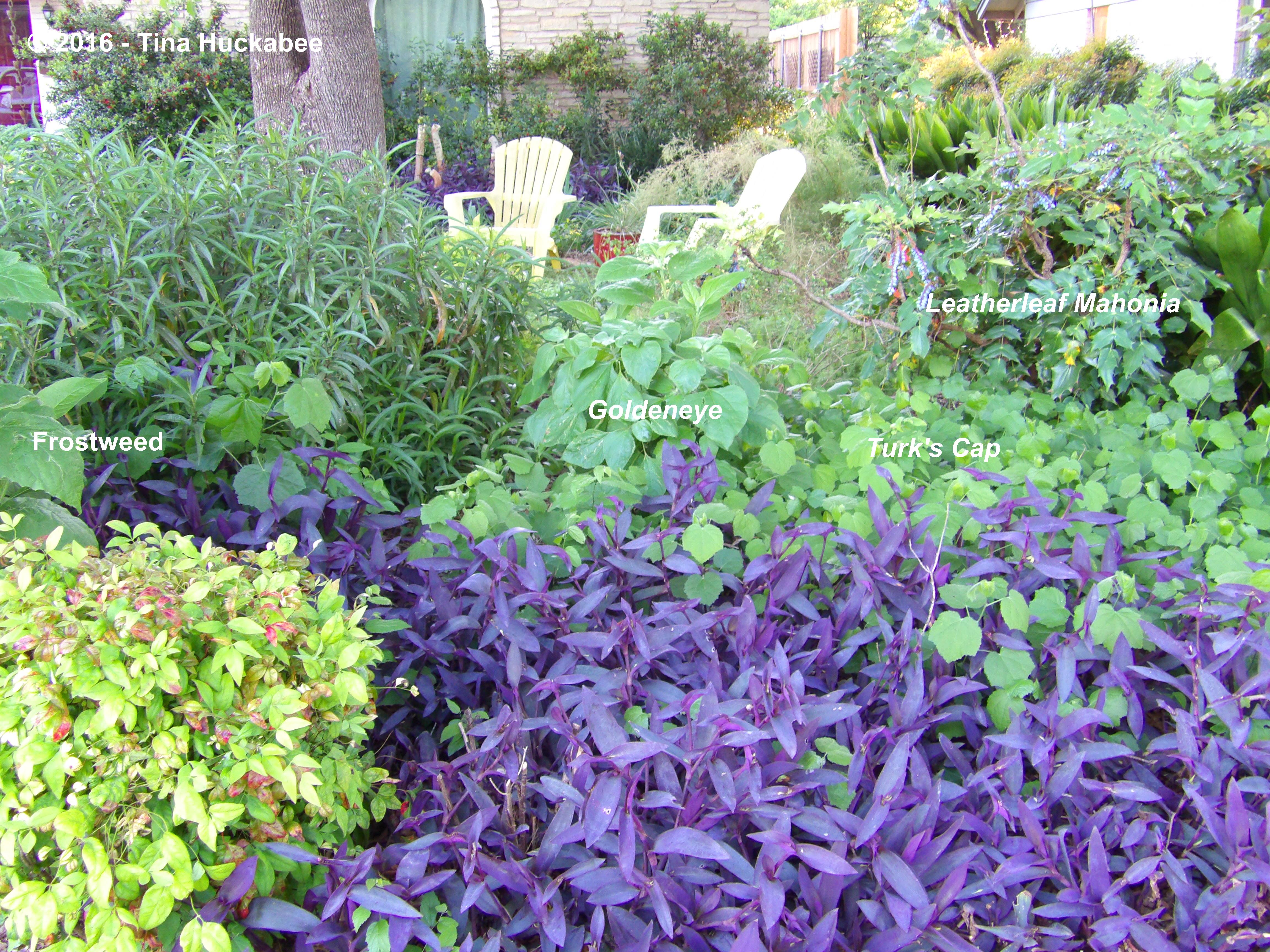
From the street, for now, it’s all about foliage and texture.  That will change when the Rock rose,  Pavonia lasiopetala, Turk’s cap,  Malvaviscus arboreus var. drummondii    Frostweed, Verbesina virginica, and Goldeneye, Viguiera dentata, begin their bloom cycles.  This corner is challenging: full shade, except for the last, blast of hot, west sun.  Additionally, this area fries in the summer with the reflective heat from the street and driveway.

IMGP5121.new

IMGP6957.new

Mexican Feathergrass (Nassella tenuisima) and Rock rose  smirk  at summer’s heat.

Down the curb from the corner, the colorful Purple Heart, Setcreasea pallida, is a welcome change from the ubiquitous green.
IMGP6991.new


The “driveway” garden has undergone renovation and is still finding its footing.
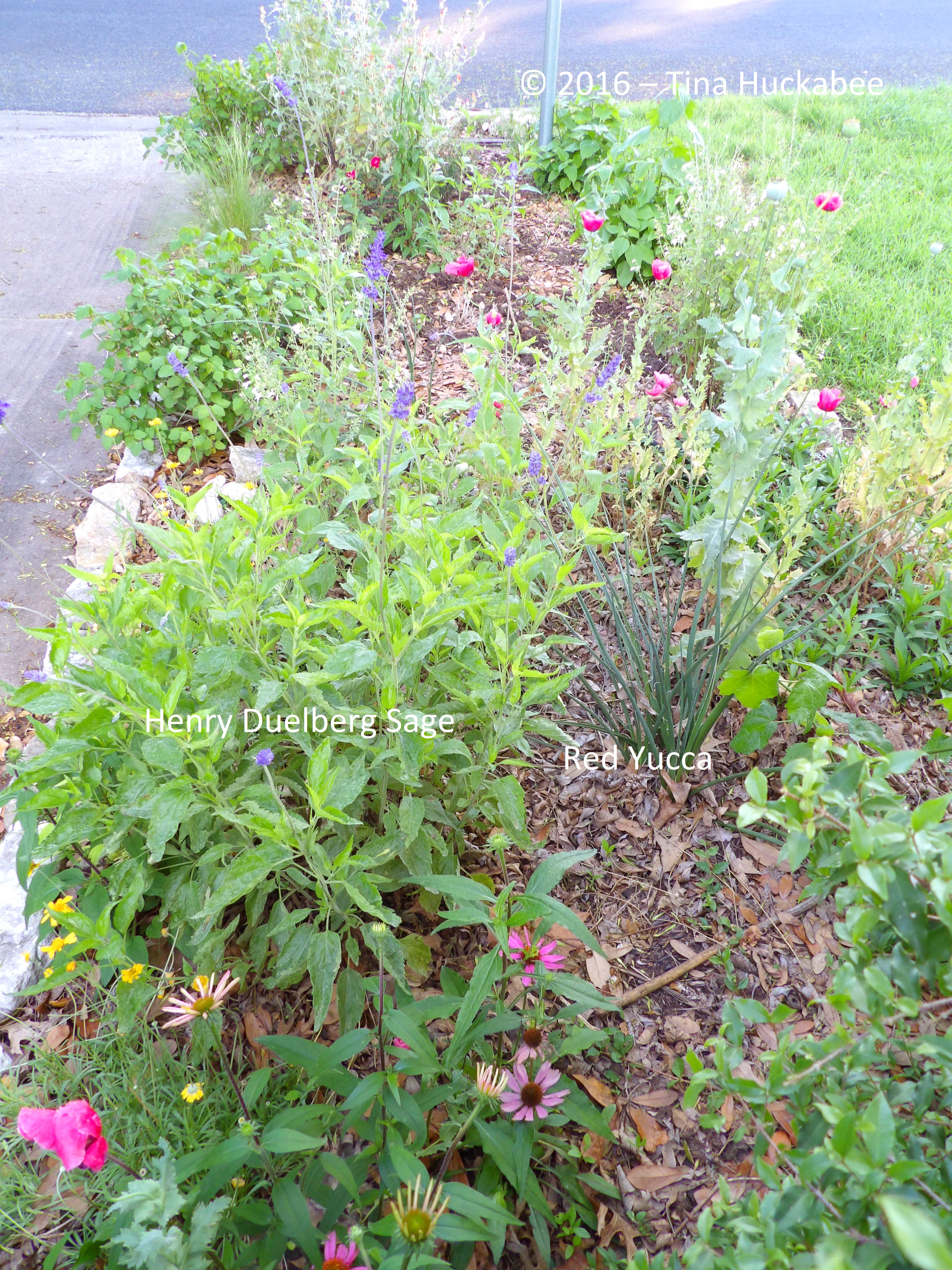
There will be more blooming action during summer and autumn and when the Rock rose, Red yucca, and Martha Gonzales Rose grow to maturity. Some other perennials and shrubs here include Henry Duelberg sage, Salvia farinacea ‘Henry Duelberg’ and Barbados cherry, Malpighia glabra.

The “upper end” of the driveway garden sports many of the same plants, plus a lovely young Texas smoke treeCotinus obovatus.

Along with the Smoke Tree are more Rock Rose, Turk's Cap, Goldeneye, Frostweed and Purple Coneflower.

Along with the Smoke Tree are more Rock rose, Turk’s cap, Goldeneye, Frostweed and Purple coneflower.

.

The Butterfly/Blackberry garden is weird.   From a “design” aesthetic, it doesn’t quite fill the bill.

IMGP6996_cropped_4425x3286..new

This garden is much more attractive in real life than in photos. I’ve come to the conclusion that its lack of photogenic character is one of life’s mysteries that I’ll never understand.  I’ve stopped trying.

Seven Tropical milkweed,  Asclepias curassavica  grow here, though are currently looking poorly and mostly munched.  This spring the plants fed some Queen Butterfly larvae, which have pupated, and at least one Monarch larva, which also pupated. I’ve also planted scads of white Tropical sage because they seed out prolifically and the bees and I love them. There are also Purple coneflowers that haven’t yet hit their stride this season, as well as a culinary sage and some larger perennial shrubs, not yet active. The Brazos blackberry vine is weedy and thorny (ouch!!), but oh those blackberries are tasty as they come off in May and June.  So, it stays.

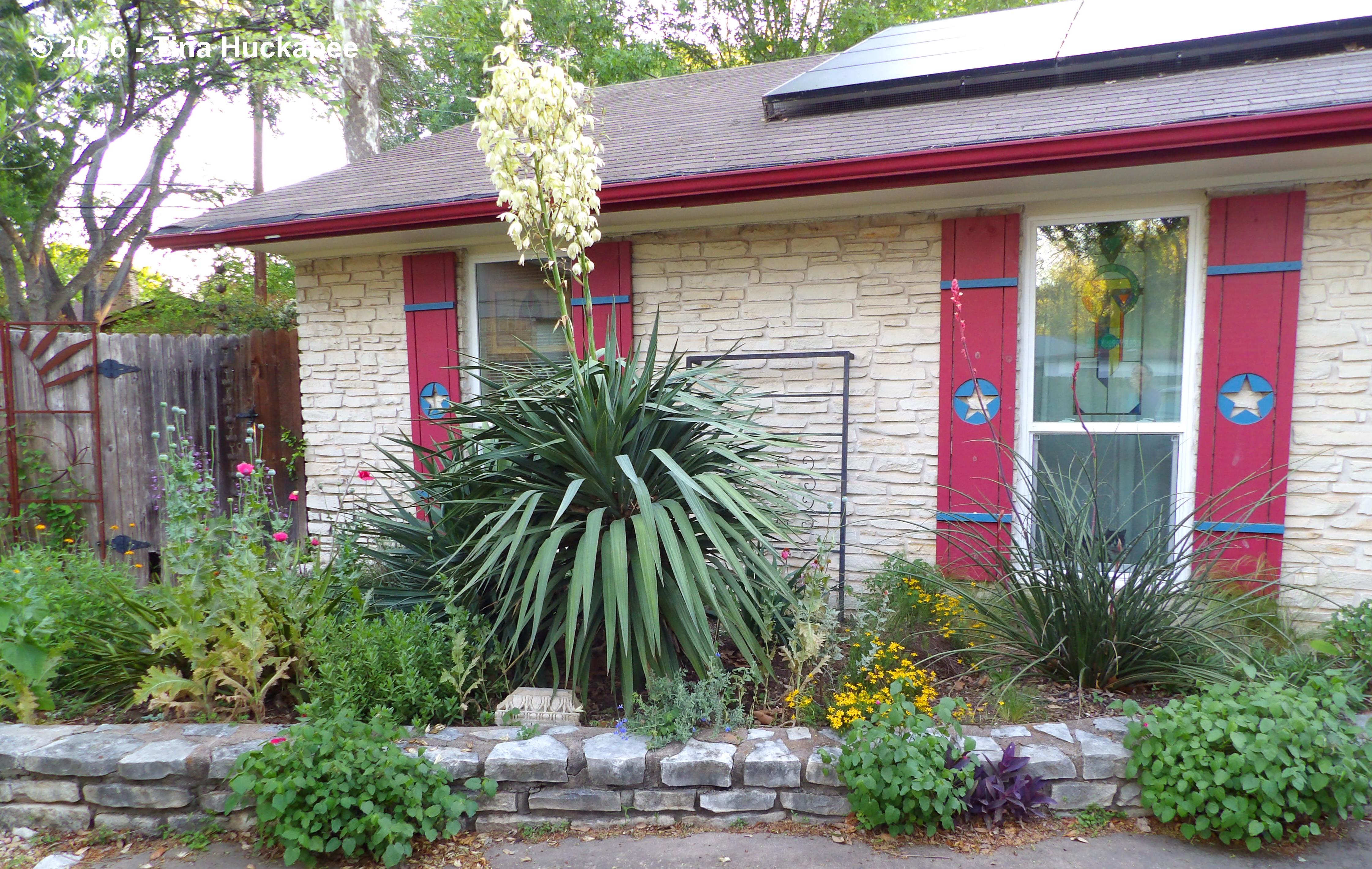
I like the front door garden–plenty of color and good structural plants to boot.
IMGP6995_cropped_4483x2838..new

Soft Leaf Yucca is currently in bloom and Red yucca (in front of the window) is now sending forward its bloom stalks. This year there are four. Woo-hoo!!

There are other, smaller side and fill-in gardens nestled in my urban plot, but some are under construction and others, well, they’re just not that interesting or challenging and I’m not going to waste your time or mine with them–for the moment.

I plan to re-visit these same views in the summer.  The perennial mixed-border garden is one of organic change and seasonal interest.  There’s always, always room for improvement and new issues and trials to face.

If you’re reading this, you’re a gardener–and gardeners are never quite satisfied with what their gardens are.  Do you photograph as a method of looking at your garden spaces differently, or to find problem areas?  Are you open to advice from other gardeners? If you’re a typical gardener, my guess would be that you’ll answer ‘yes’ to both questions.

A garden is never so good as it will be next year.   Thomas Cooper
Who Needs a Rubber Duckie?

Rubber Duckie, you’re the one,
You make bathtime lots of fun,
Rubber Duckie, I’m awfully fond of you…

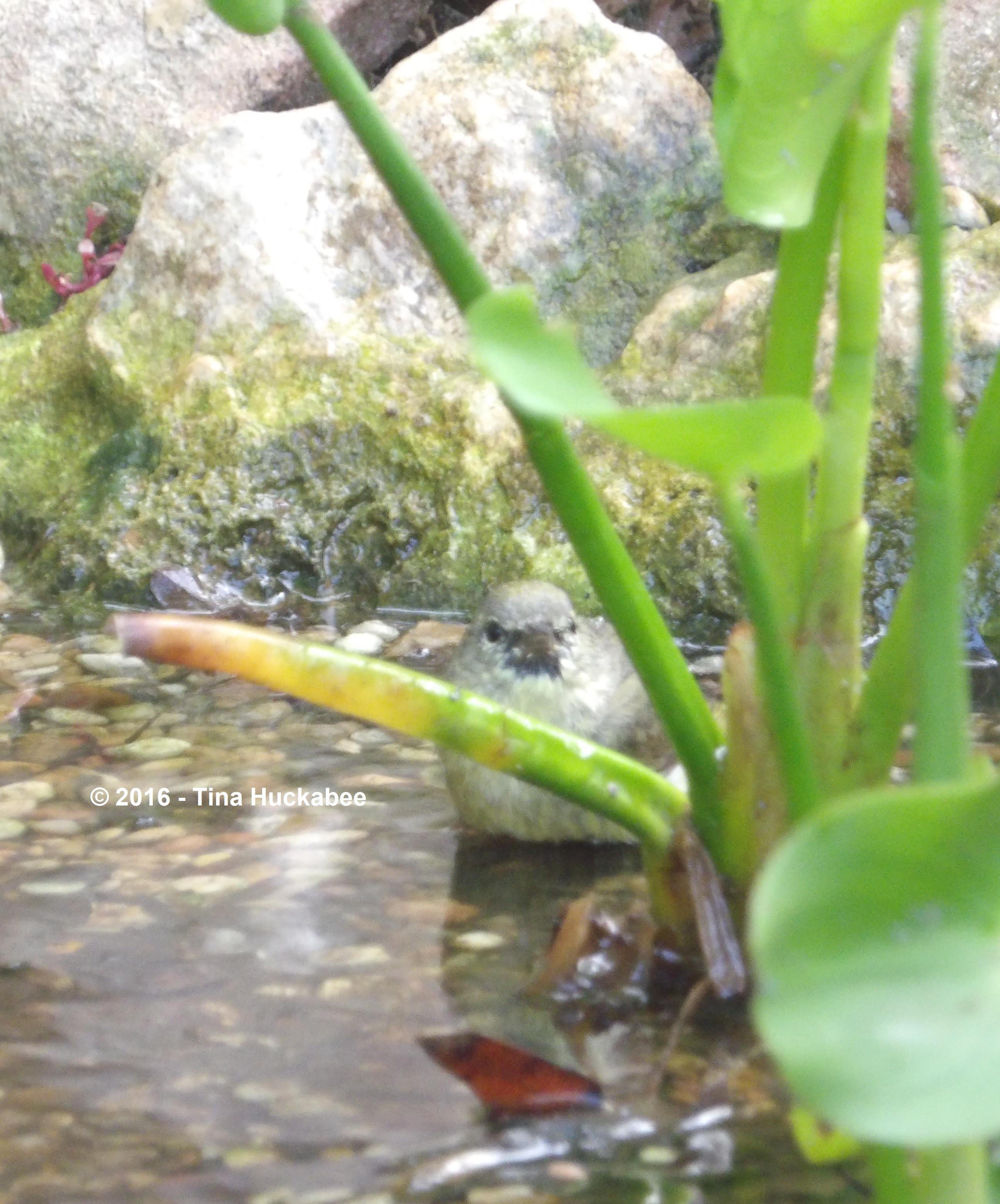
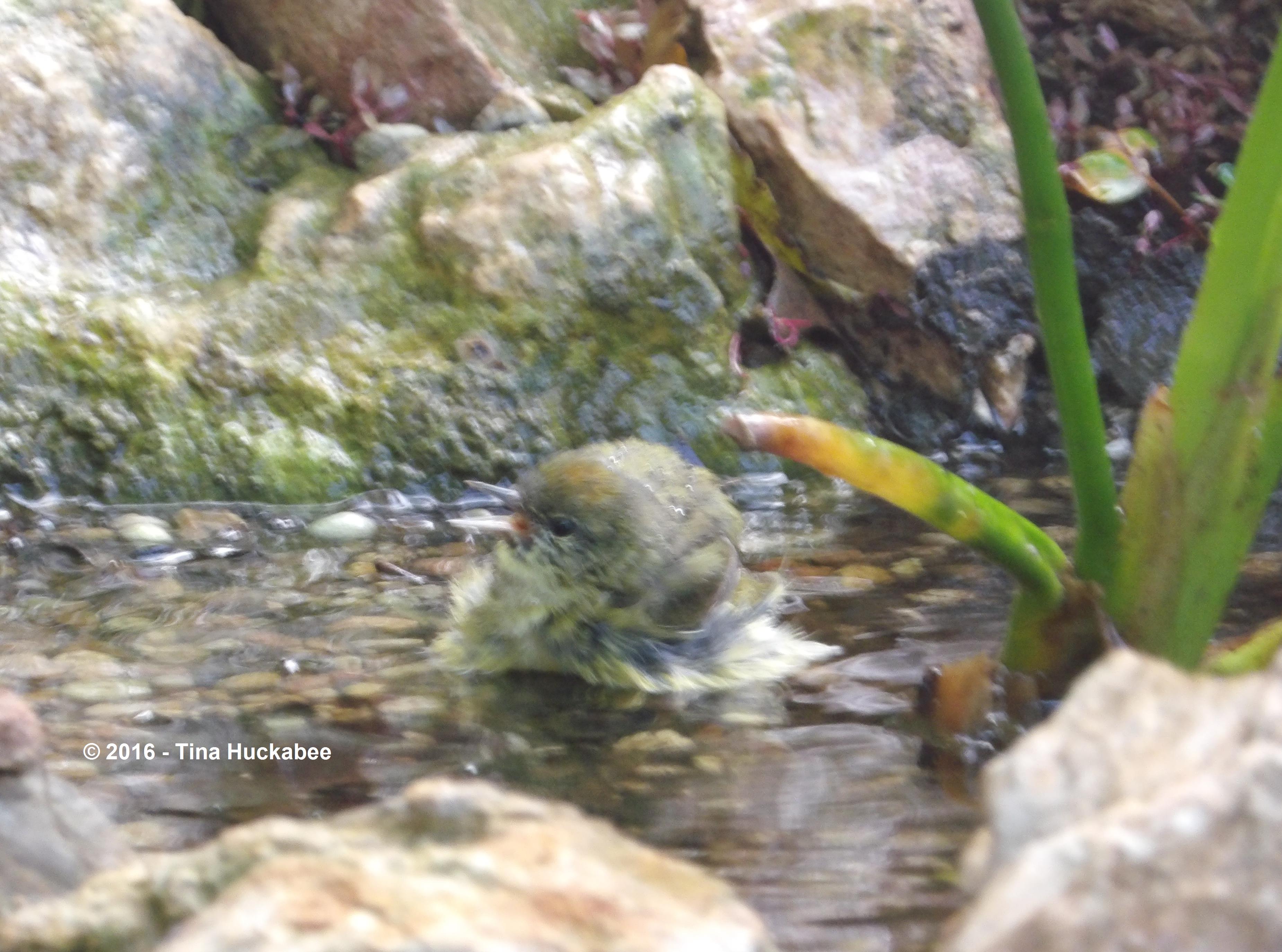
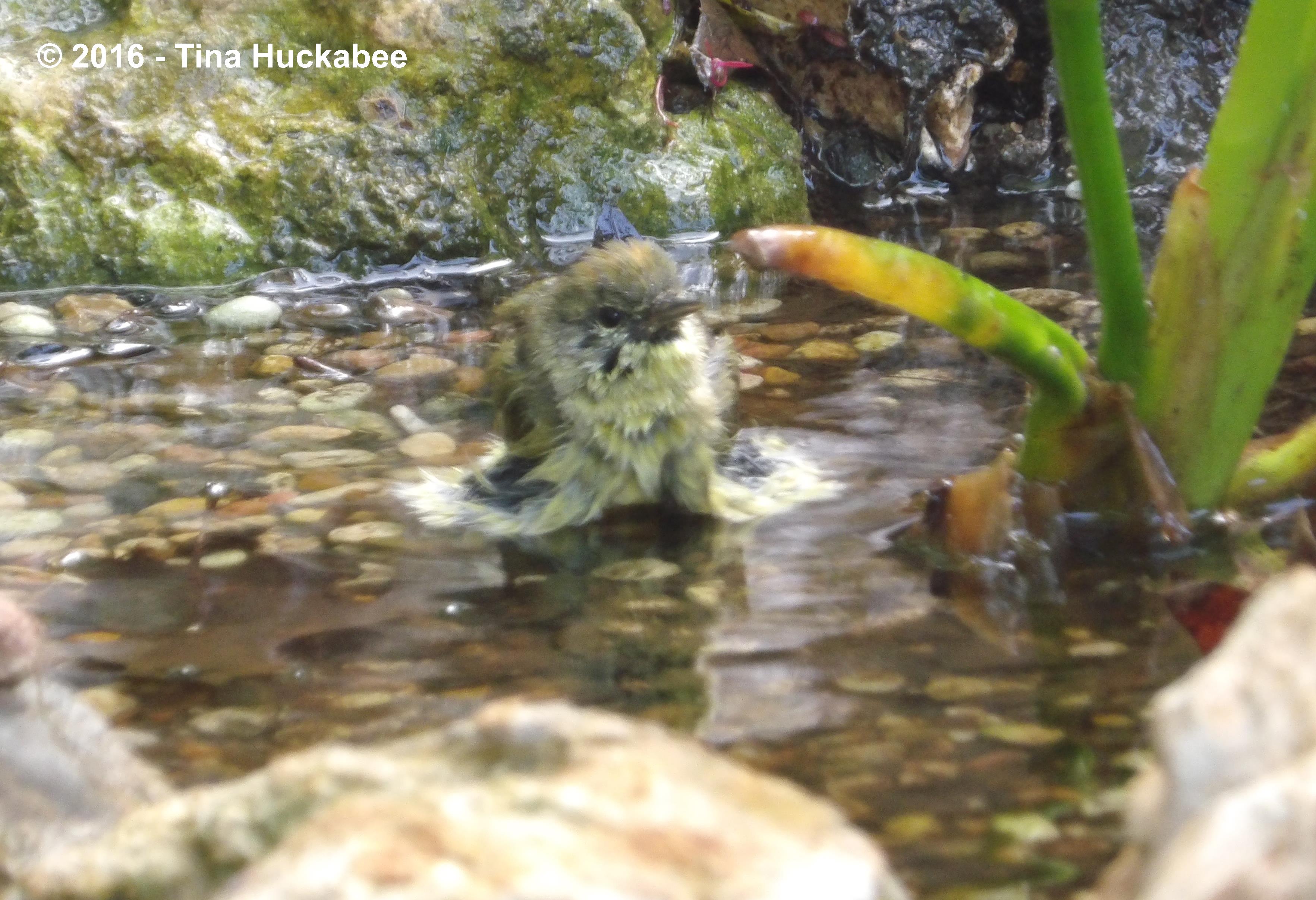
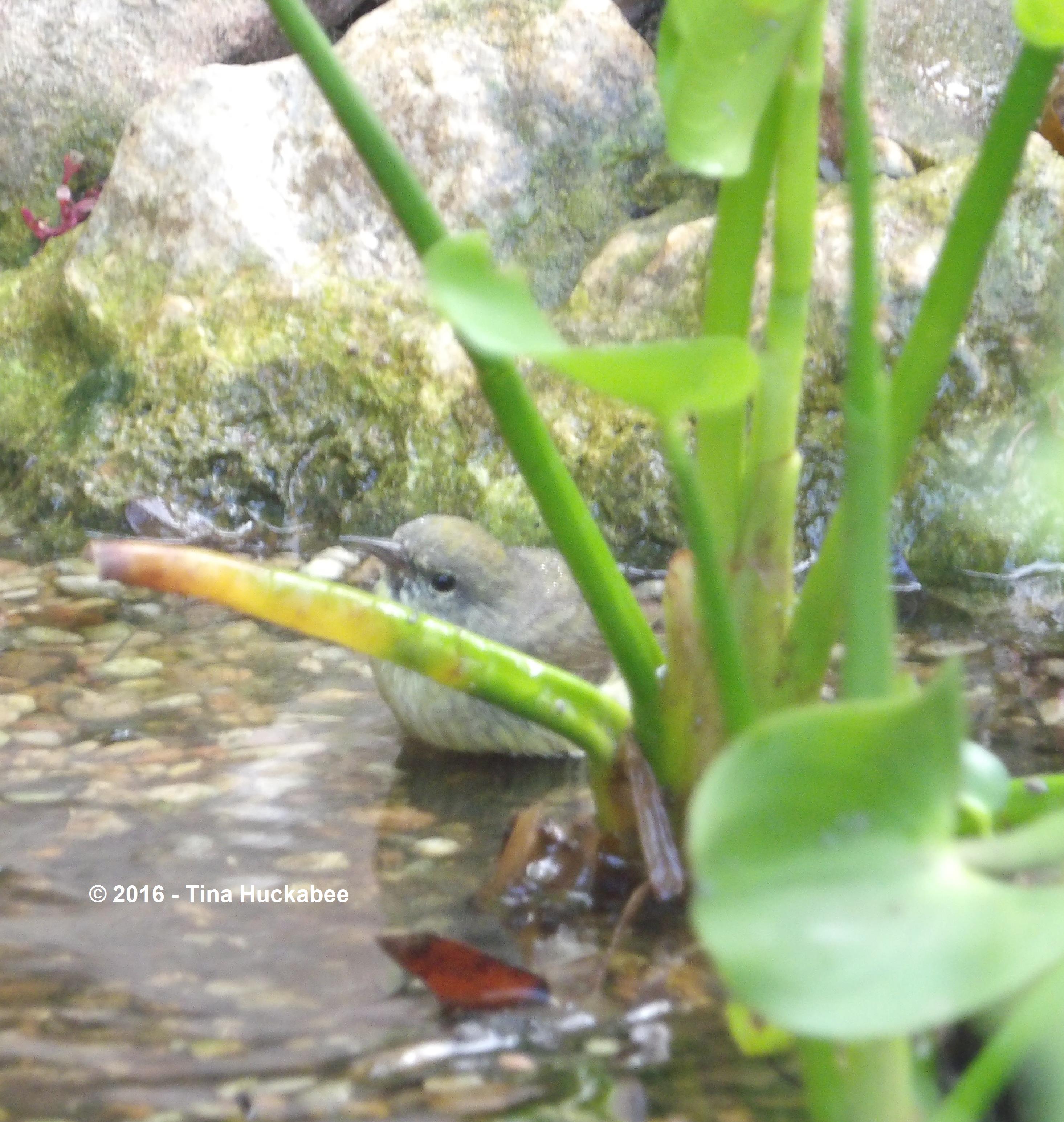
With apologies to Sesame Street, Ernie, and the songwriter, Jeffrey A. Moss, this male Orange-crowned Warbler, Oreothlypis celata, has no need for a rubber duckie to have fun in the bath.

IMGP6850_cropped_2931x3092..new

IMGP6854_cropped_2594x3124..new

On mornings when I don’t have to scoot out of the house too early, I take some time to watch avian visitors as they bathe in the bog section of my pond.   I’ve separated the Pickerel Rush, Pontederia cordata, allowing for more water than plants in the bog, and birds are enjoying the shallow, moving water. This little guy just seems so happy to have his bath.

Sing to the right...

Sing to the right…

Sing to the left...

Sing to the left…

Wiggle and splash!

Wiggle and splash!

Clean and pretty!

Clean and pretty!

Look at that gorgeous orange crown!

Look at that gorgeous orange crown!

I'm so cute, I'll drive the girls wild!

I’m so cute, I’ll drive the girls wild!

After he flew into a neighboring small tree to fluff and preen, his mate hopped to the edge of the public bath.

Guys!

Guys!

She was a bit more tentative and I never got  good, clear shots of her. Trust me though, she had a great time too.

Fun with birds!

A Ballyhoo for Spiderwort

Texas is well-known for its spring wildflowers: BluebonnetLupinus texensis

Bluebonnet.new

IMGP6796_cropped_4461x2977..new

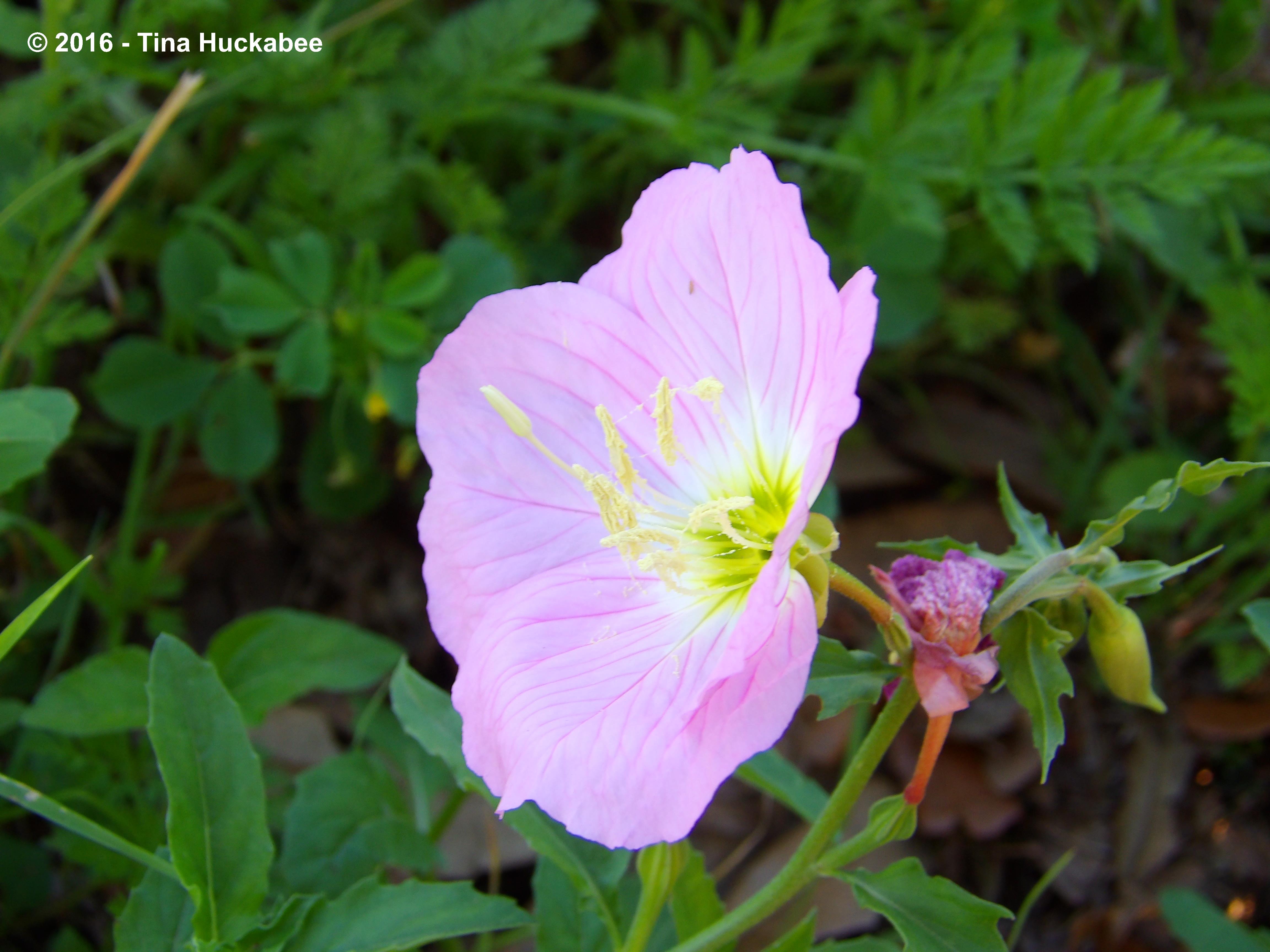
Pink evening primroseOenothera speciosa,

IMGP6793.new

FirewheelGaillardia pulchella,

IMGP6795.new

…and so many others. Folks from far and wide travel to Texas to view the spring wildflower show. In a good year, open spaces and home gardens are resplendent with color from all parts of the color wheel.

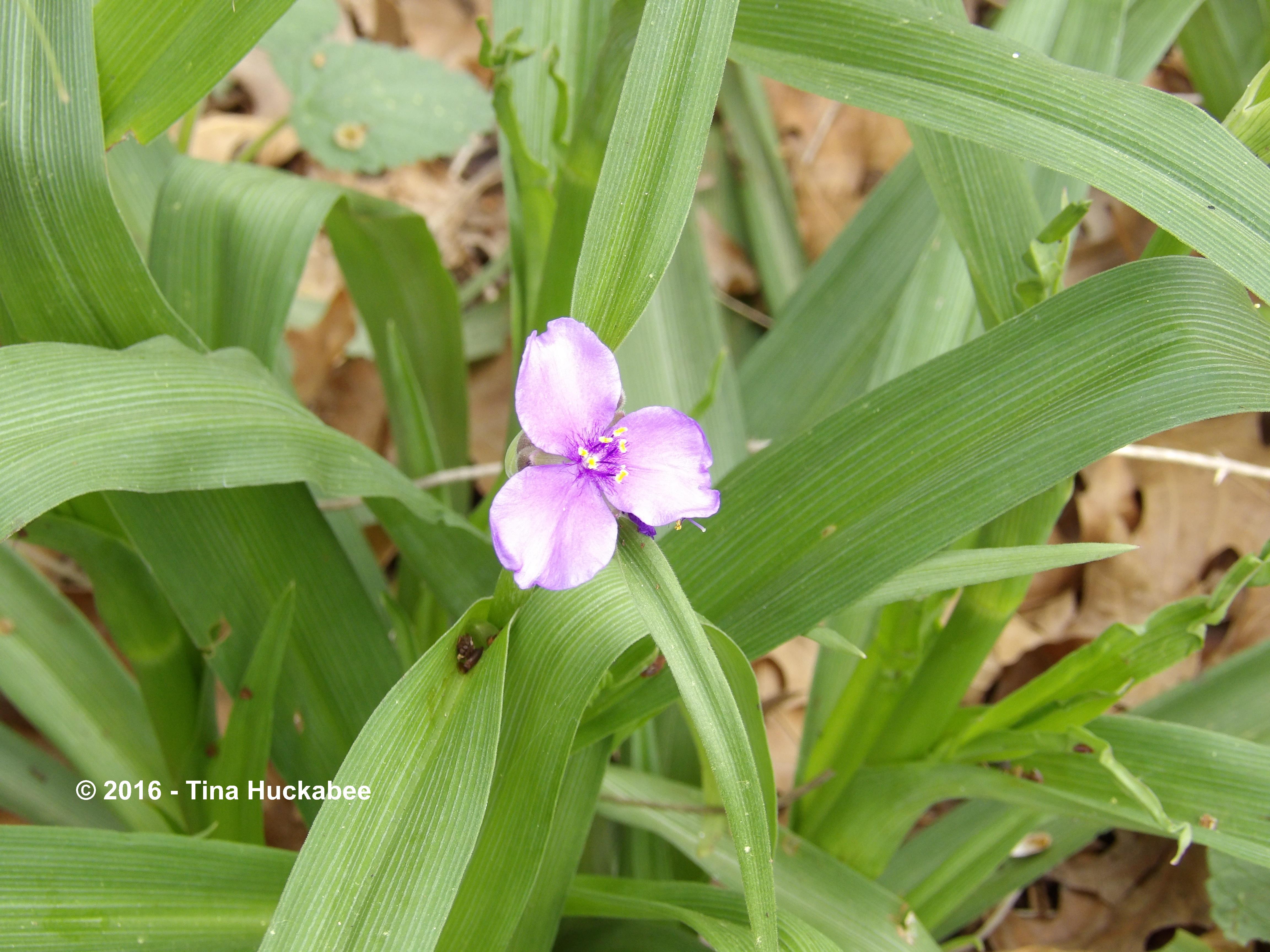
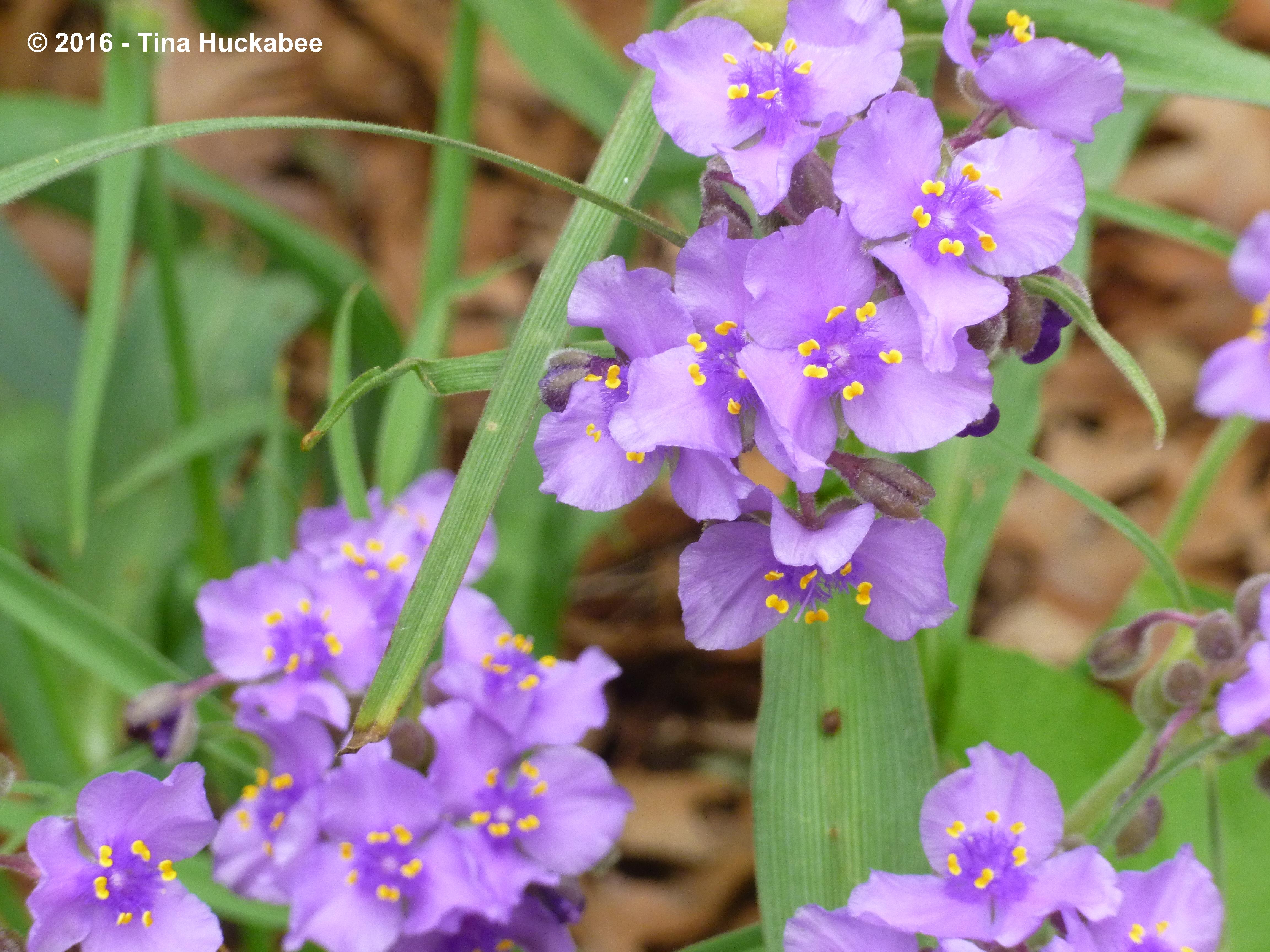
I don’t grow any of the famed Texas wildflowers in my personal garden. Alas, my soil is too heavy and my space too shady for the prairy/grassland flowers that most identify as quintessential Texas wildflowers.  But I certainly love and grow many other native Texas plants and wildflowers and a favorite in bloom right now is a group belonging to the Commelinaceae family–the pride of purple–Tradescantia or Spiderwort.

IMGP6242_cropped_2359x2161..new

IMGP5091.new

There are 19 species of Tradescantia throughout North America, almost half of which reside in Texas.  A woodlands plant, Spiderwort thrive in a variety of soils, but generally prefer part-shade to shade exposure, though it grows well in more sunny conditions, too.  In short, it’s not a picky plant.

I can’t tell you exactly which one of the Tradescantia that are in my gardens because different Spiderwort mix-n-match with one another, hybridizing readily and creating variations in color,

IMGP6804_cropped_3548x2972..new

…height,

…and petal shape.

A simple Spiderwort petal,

A simple Spiderwort petal,

...and a more ruffly form.

…and a more ruffly form.

I started with several individuals gifted to me a few years ago and they’ve self-seeded with aplomb.  Some clumps of these purple zingers trend very purple,

IMGP5085.new

…and others lean-to the lavender side of things.

IMGP6208_cropped_2148x2092..new

I think the majority of my Spiderwort plants are the Giant spiderwortTradescantia gigantea,  if only because most of them are just so darned tall.

IMGP6288.new

And so darned purple.

Spiderwort pop up in the late fall or winter, sporting grass-like foliage; during the cool season the foliage grows and thickens.

P1020688.new

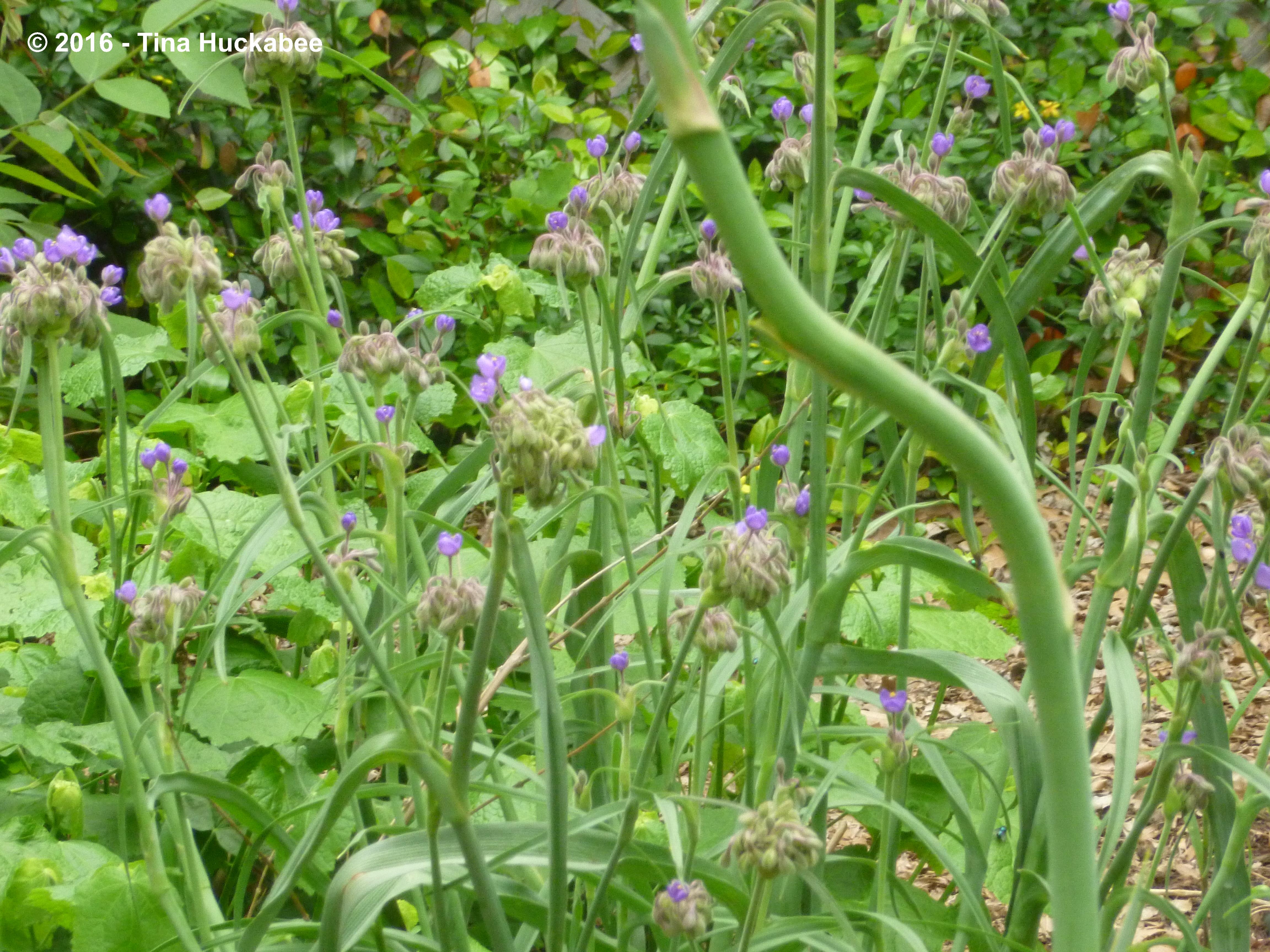
As the days lengthen and temperatures warm, fleshy stalks shoot up from the base of the foliage.

A Spiderwort bloom stalk arises.

A Spiderwort bloom stalk arises.

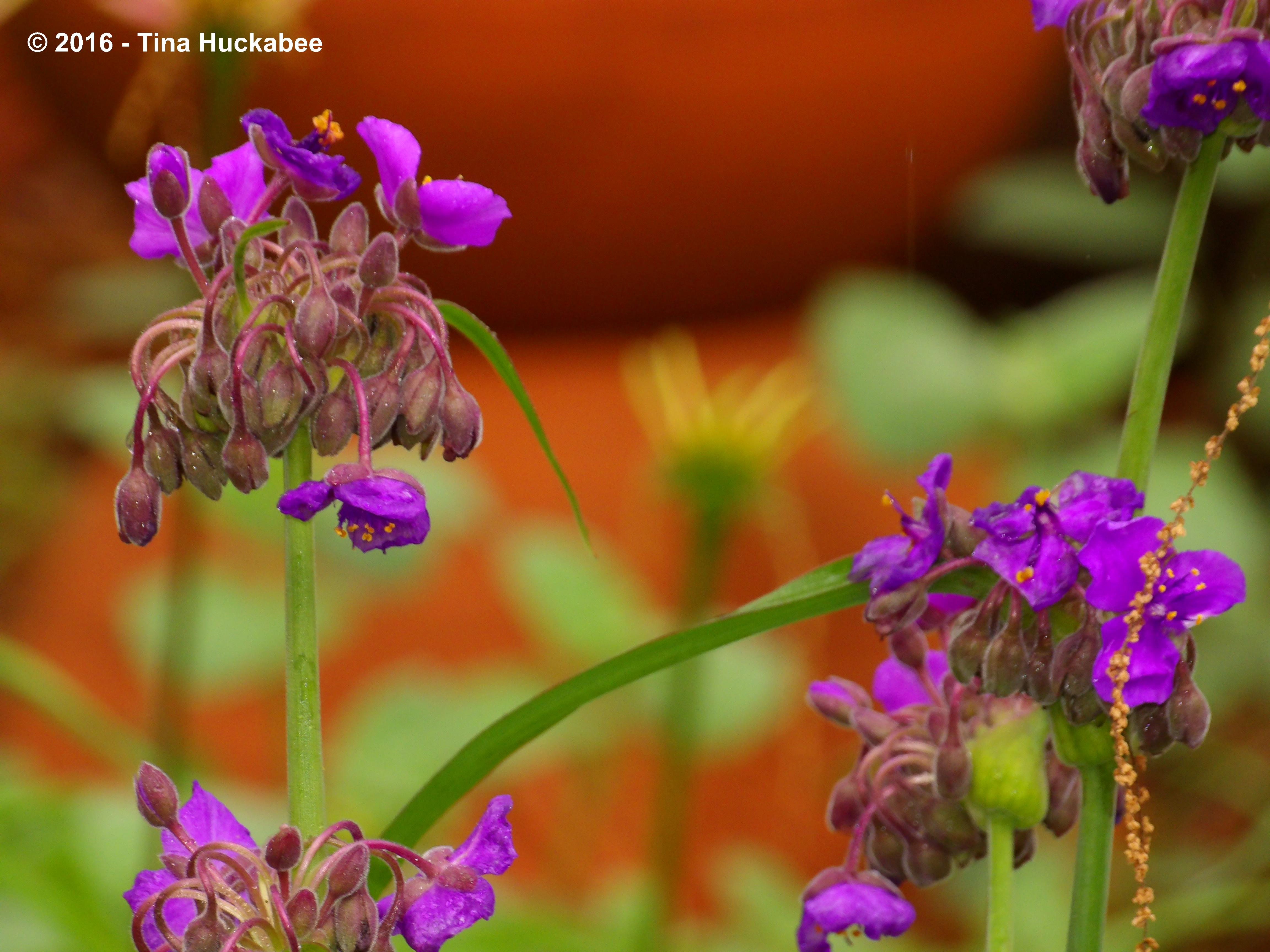
In time, bloom clusters form atop those bloom stalks and purple play begins!

Spiderwort in blooming tandem with Lyreleaf sage, Salvia lyrata.

Spiderwort in blooming tandem with Lyreleaf sage, Salvia lyrata.

P1030161.new

IMGP5083.new

In my garden, Spiderwort blooms for  a rather long period.  Often, the flowering begins at the first of March (if not sooner) and continues well through May. Spiderwort plants are best situated in a more casual garden, though if kept in check, it’s a plant that could work beautifully in a formal setting.  The key phrase is kept in check. Tradescantia re-seed with abandon and can prove weedy and thuggish if allowed to seed out ungoverned. You MUST weed wayward seedlings if they grow where they’re not wanted!  A good time to discipline these rogue germinators  is in winter and early spring, as the seedlings emerge.

P1020734.new

Spiderwort seedlings alongside sprinkled spent blooms of White Tropical sage, Salvia coccinea.

Spiderwort seedlings alongside sprinkled spent blooms of White Tropical sage, Salvia coccinea.

If I see a mother plant and scads of babies at her feet AND I don’t want them–out they go! The seedlings are easily removed by hand or with a weeding tool.

The mother Spiderwort is toward the top right of the photo, her progeny are everywhere else.

The mother Spiderwort is at the top right of the photo, her progeny are everywhere else.

Another strategy is to nip Spiderwort in the bud during the blooming season.  Once I notice less flower production, it means that the seeds are developing and it’s time to snip.P1030500.new

P1030501_cropped_2594x3166..new

IMGP6925_cropped_3046x3106..new

Most of these bloom clusters are ready for seed.

Most of these bloom clusters are ready for seed.

I prune the flower stalks down to the base of the grassy foliage to lessen the spread of the prolific re-seeders.

A just pruned Spiderwort at the end of its bloom cycle.

A just pruned Spiderwort at the end of its bloom cycle.

I’m brutal with this process because I know that if I’m the least bit kind-hearted, Spiderworts will be everywhere in the garden.  I still get plenty of new seedlings each year, but keeping Spiderworts in check prevents mayhem in the garden of the Spiderwort variety.

Despite its mission to spread, Spiderworts are valuable to pollinators and pretty  for me to relish, and therefore, welcome in my garden–with practical limitations of course. Honeybees adore this plant and Tradescantia are visited by native bees and butterflies too.

IMGP5008.new

P1030163_cropped_3119x3299..new

A buzzing honeybee sharing Spiderwort pollen with a Syrphid fly.

A buzzing honeybee sharing Spiderwort pollen with a Syrphid fly.

From A Seasonal Look perspective, Spiderwort are primarily winter and spring plants. In a wet and cool autumn, the foliage will emerge early; in a wet and cool early summer, the blooms might last into June, the foliage a little longer.  But once the heat of summer sets in and Spiderwort flowers have bowed out and relinquished the flower show to the heat lovers, the foliage…fades away.  I can’t honestly say exactly when the foliage is no more–but eventually, it disappears.  One of my strategies in planting for seasonal flowering is to plant early spring bloomers underneath the larger summer/fall blooming/berrying shrubs (many of which are herbaceous perennials).  I’m certain that those particular Spiderwort plants hang on for a while after the peak of their blooms, shadowed and covered by the limbs of summer/fall plants.  Since the Spiderwort plants are sheltered by the spread and height of the summer shrubs and perennials, I don’t notice what they’re doing–and I won’t notice (or think about) those Spiderwort plants again until winter’s first freeze renders the deciduous perennials inconsequential and the tell-tale grassy foliage of Spiderwort emerges from the chilled soil.  The caveat is that many of the unwanted Spiderwort in my garden occur because I neglect to deadhead those soon-to-disappear-under-larger-plants Spiderworts.  That’s the downside of planting them underneath larger plants: out of sight, out of mind.

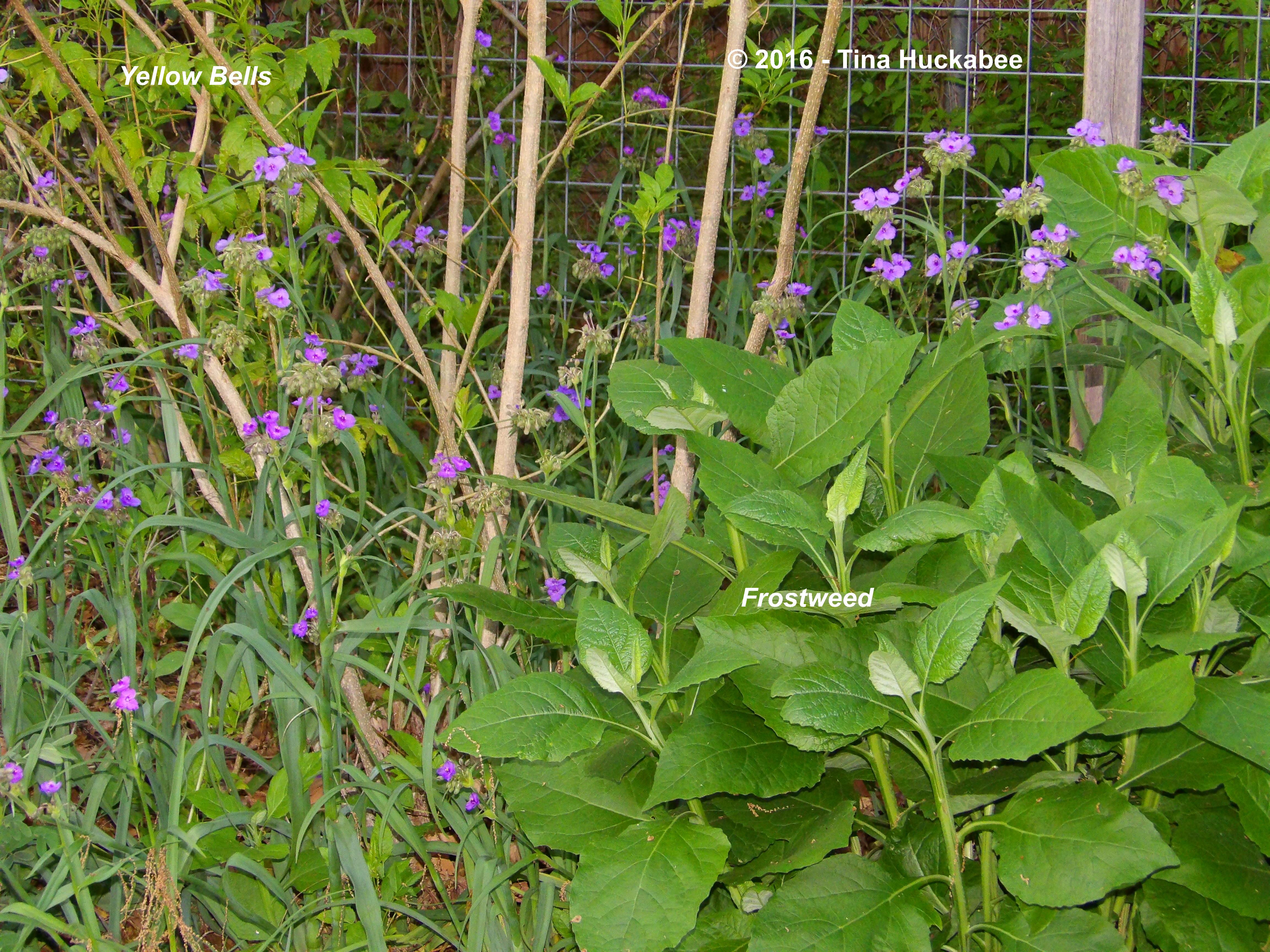
Spring blooming Spiderwort growing amidst Frostweed, Verbesina virginica and Yellow bells, Tacoma stans. Both of these larger perennials will cover the Spiderwort by early summer.

Spring blooming Spiderwort growing amidst Frostweed, Verbesina virginica and Yellow bells, Tacoma stans. Both of these larger perennials will cover the Spiderwort by early summer.

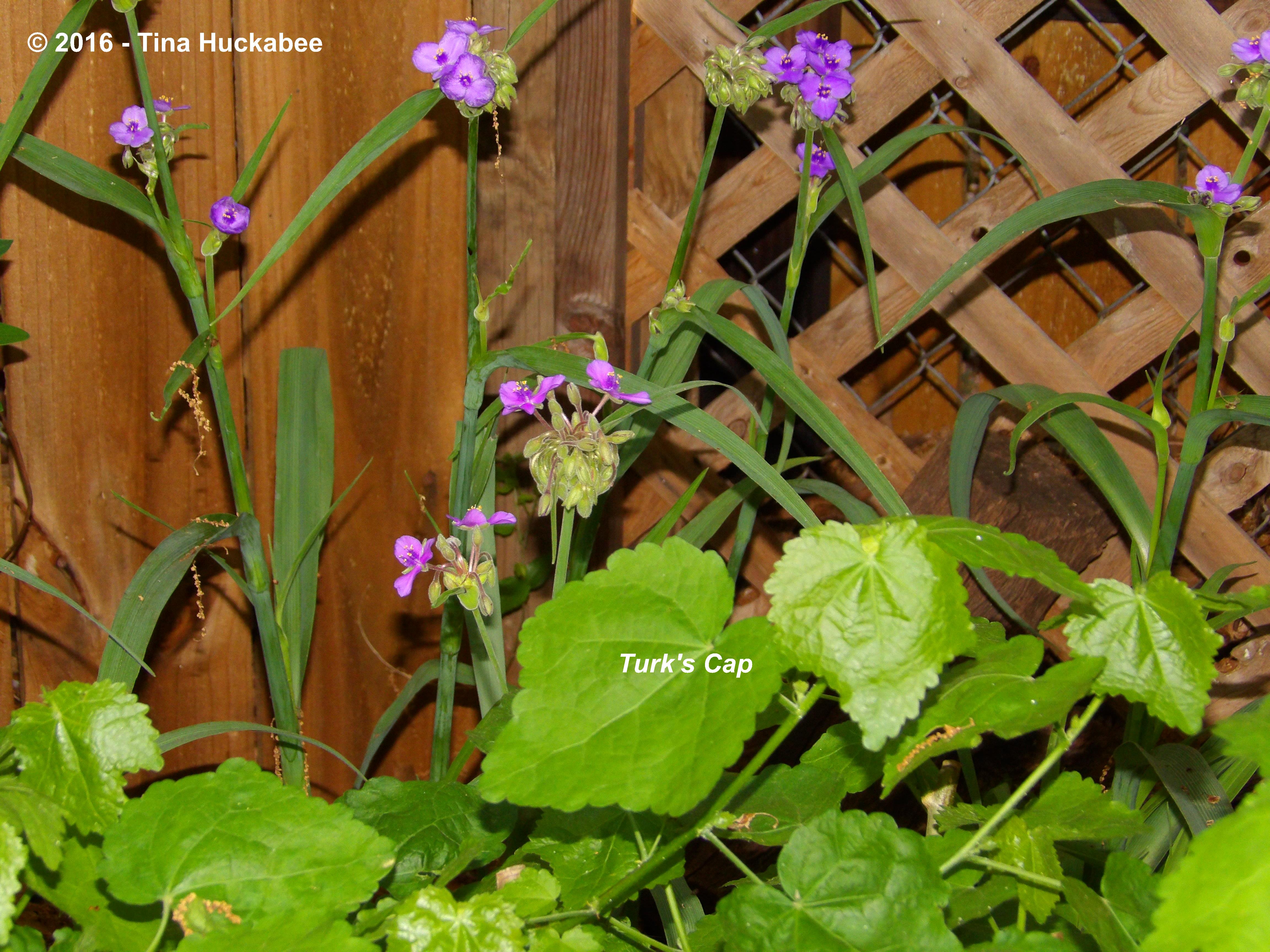
Spring blooming Spiderwort will be overtaken by the rapidly growing Turk's cap, Malvaviscus arboreus.

Spring blooming Spiderwort will be overtaken by the rapidly growing Turk’s cap, Malvaviscus arboreus.

IMGP6274.new

Spiderwort planted underneath a White mistflower, Ageratina havanensis. Most years, the Mistflower freezes to the ground, or nearly so, allowing the Spiderwort a good late winter and spring show.

Spiderwort planted underneath a White mistflower, Ageratina havanensis. Most years, the Mistflower freezes to the ground, or nearly so, allowing the Spiderwort a good late winter and spring show.

For those free-standing Spiderwort individuals that drag into summer, their seasonal end is more obvious.

A self-seeded Spiderwort beside the pond. By late May, the bloom stalks will be pruned and by mid-summer, the foliage will wilt and the gardener will prune the foliage to the soil and toss in the compost bin.

A self-seeded Spiderwort beside the pond. By late May, the bloom stalks will be pruned and by mid-summer, the foliage will wilt and the gardener will prune the foliage to the soil and toss in the compost bin.

What typically happens is that sometime in June or July, they become terribly droopy and sad–heat is not a friend to Spiderwort plants.  I relieve any Spiderwort misery with my trusty Felco pruning shears, cutting down the remaining, sad foliage to the soil. The roots stay safe in the ground until more convivial conditions present and ready the Spiderwort story to begin again: lush winter foliage and enchanting spring flowers.

If  basic preventative pruning and/or seedling weeding is employed, Spiderwort is a desirable spring wildflower for the garden with its lovely foliage and flowers, attraction for many pollinators, and easy growing habit.  What’s not to enjoy about Spiderwort?

IMGP5082.new.new

I appreciate the winter foliage and spring flowers–and who wouldn’t?

IMGP5007.new

P1020807.new

IMGP5004.new