Wild things are throwing off the covers of winter and so are their garden partners! Welcome to Wildlife Wednesday, celebrating all things wild in our gardens. Here in Austin, Texas, it’s not meteorolgically spring, but it’s also definitely no longer winter. Sure, it’s likely there will more cold days, but spring is busting out everywhere and wildlife are gearing up with life-affirming activity.
Birds–residents and winter visitors–have taken front stage in wildlife action for the last couple of months and they still are the leading characters of the garden. There are other garden-dwellers who are angling to slough-off their winter wears and gear-up for a new life and the promise of a mate (or mates!) and family.
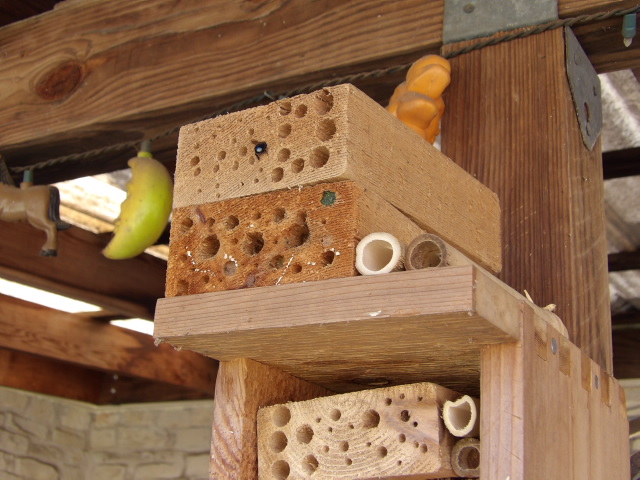
Bees are back! The honeybees have been around all winter, though on the coldest days, they remained well-tucked in their cozy hives to keep warm. But the season is nigh for the emergence of the native bees and first in line are the Blue Orchard bees, Osmia lignaria. The highlighted link takes you to my March 2017 Wildlife Wednesday post, where I wrote about these stunning bees as they emerged at exactly the same time last year.

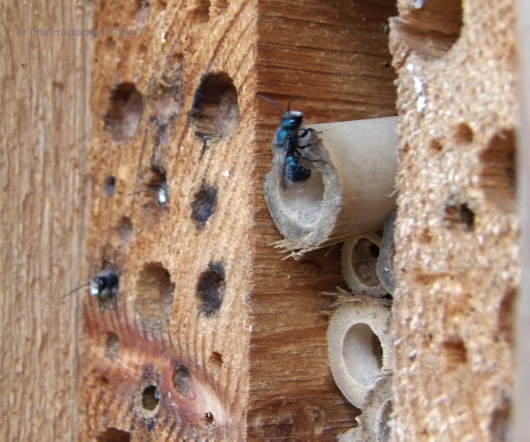
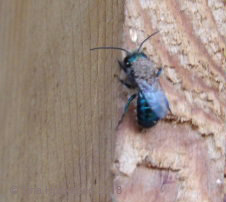
Two adult bees emerging after a year of development in the holes of an insect hotel.
The Blue Orchid adult bees live for about a month and during that time, they mate, and then gather pollen, leaf material, and mud for their offsprings’ incubation chambers.

I found this Blue Orchard bee chewing away at the leaf of my Old Gay Hill rose. It’s the leaf material that they gather which gives the packed holes a green tint.
Females lay their eggs in the holes of wood,

This female is regurgitating her gathered material, so she’s head-first in the baby-bee incubation chamber. Check out the packed green tinged hole; is that green from my rose-leaf??
…or masonry,
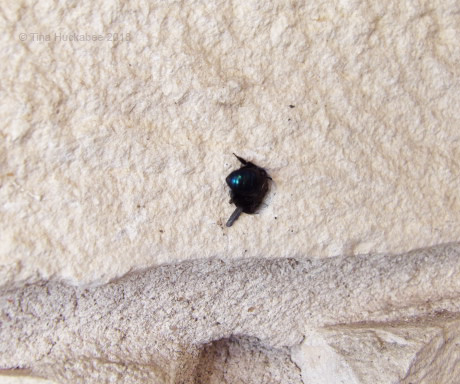
…and then pack the holes to protect the developing bees for the next year.
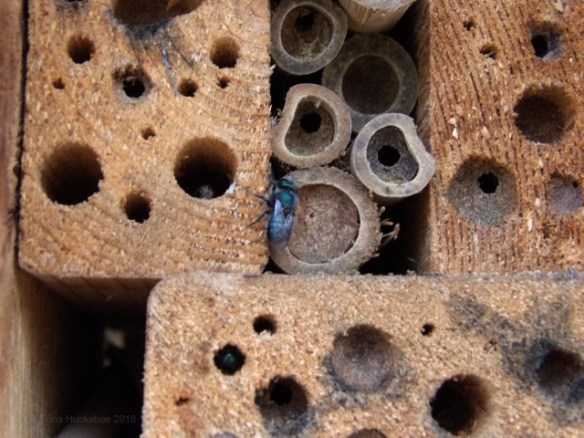
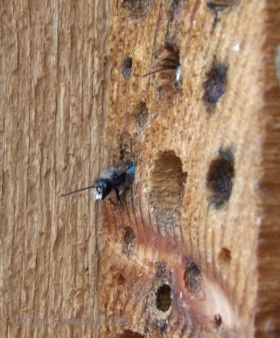
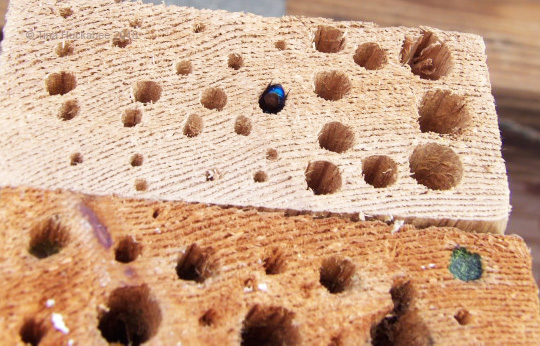
A just-emerged adult Blue Orchard bee. You can see the holes that the adults emerge from in the packed nesting material created last February/March.
It takes a full year for these blue beauties to “cook till done” but it’s time well-spent. Currently, every time I walk by either of my two insect hotels, there is a flurry of shiny blue activity as the buzzers have mated and are bringing in material to secure their babies’ future.
With as long a screw that I could find in our garage, I cleaned out those drilled holes where it was obvious that a bee had emerged, so that it’s available for the next generation. I couldn’t quite reach the end of the drilled holes in some nesting spaces, but cleared many spots. I also added a few more cut bamboo pieces and drilled wood blocks to the boxes.
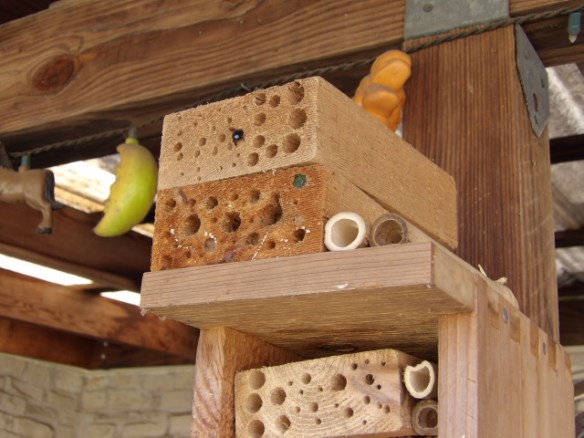
I like blue bees in the garden and will happily welcome more next year!


Squirrels are ever-active and always cute. And annoying.
Winter and spring are the best times to see woodpeckers in my garden and this year, they haven’t disappointed. I hear and see Red-bellied Woodpeckers, Melanerpes carolinus, nearly daily. A male and female are regular visitors (mates?), enjoying the commercial suet I provide in the cool seasons.

A handsome male.
This male sat for quite a time in my Red oak tree, enjoying the rest. Maybe his tummy was full.

At another time, he (or a buddy) worked the bark of a neighbor’s tree. Check out the holes to his left!

I don’t see the female as often, but snatched a quick shot of her one day as she nibbled at the suet.
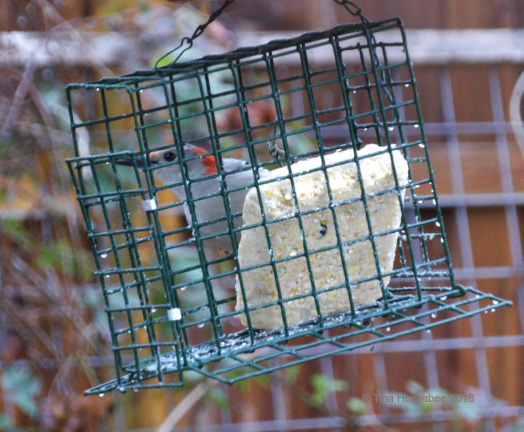
Suet is a bit gross (all that fat!), but birds need fat during winter and so I oblige. Personally, I’d choose cheesecake. Or ice cream. Ahem.
I only provide suet in winter and spring; once it’s hot, the suet spoils quickly. During the warm months, I’ve tried a recipe of non-animal fat suet (peanut butter with seeds and cornmeal), but there were no takers.
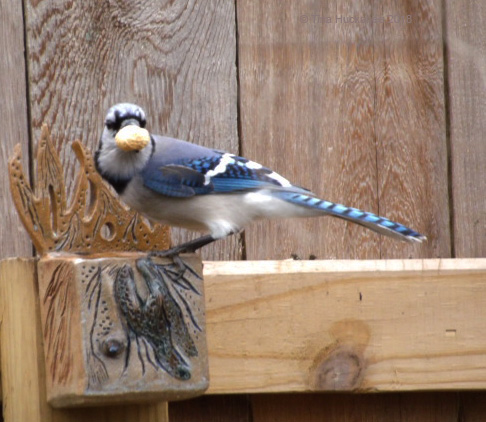
A few mornings each week, I take a handful of peanuts out for the Blue Jays, Cyanocitta cristata. They love their peanut treats!

Sometimes they line up along the fence line like planes on a runway, awaiting departure. Each bird waits its turn for a peanut-grab and take-off.
A pretty-boy House Finch, Haemorhous mexicanus.
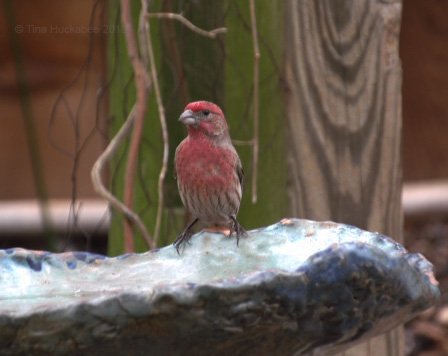
Perched at a bird bath.
The males are in full-mating color form, accompanied by lots of singing!
White-winged Doves are common here in Austin, but in my garden I rarely see Inca Doves or specimens of like this pretty Mourning Dove, Zenaida macroura.

The bird’s blue eyeliner echos the blue of the bowl it waddled past.
Its been hanging around for a week or so, nibbling seeds and resting in the sun, and walking that weird walk that doves are known for.
Another common bird, replete in his stunning spring plumage, is the Great-tailed Grackle, Quiscalus mexicanus.

This photo doesn’t catch the luminous colors that his feathers display when the sun shines. Instead, on this cloudy morning, the feathers showcase the velvety black that complements his striking eyes.
Not my favorite bird and an invasive pest, I rather admire the plumage and coloring of the European Starling, Sturnus vulgaris.
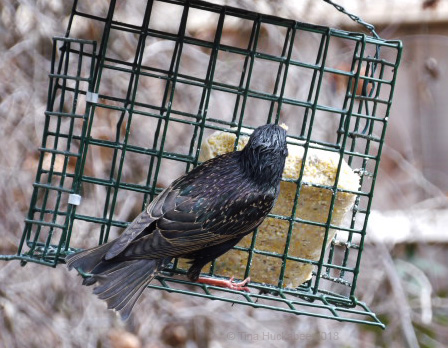
Starlings show up in late February and are bullies at the suet feeder. I usually stash away the suet when I see them congregating and chasing off the local songbirds, because a group of Starlings can finish a suet block in an hour, if allowed the opportunity. I have noticed that they only appear in the mornings, so I hang out the suet in the afternoons once they’re gone. This year, there haven’t been as many Starlings, for which I’m grateful. They are joyous bathers and make great use of my birdbaths and the bog area of the pond.
The seasons are changing: winter to spring and summer to autumn.
Who’s visiting your garden in this time of change? Please share your photos and stories of wild critters this past month. Remember to leave a your link when you comment.
Happy wildlife gardening!












 My Gardener Says...