A flower profiled on a gardening blog–who woulda thunk!
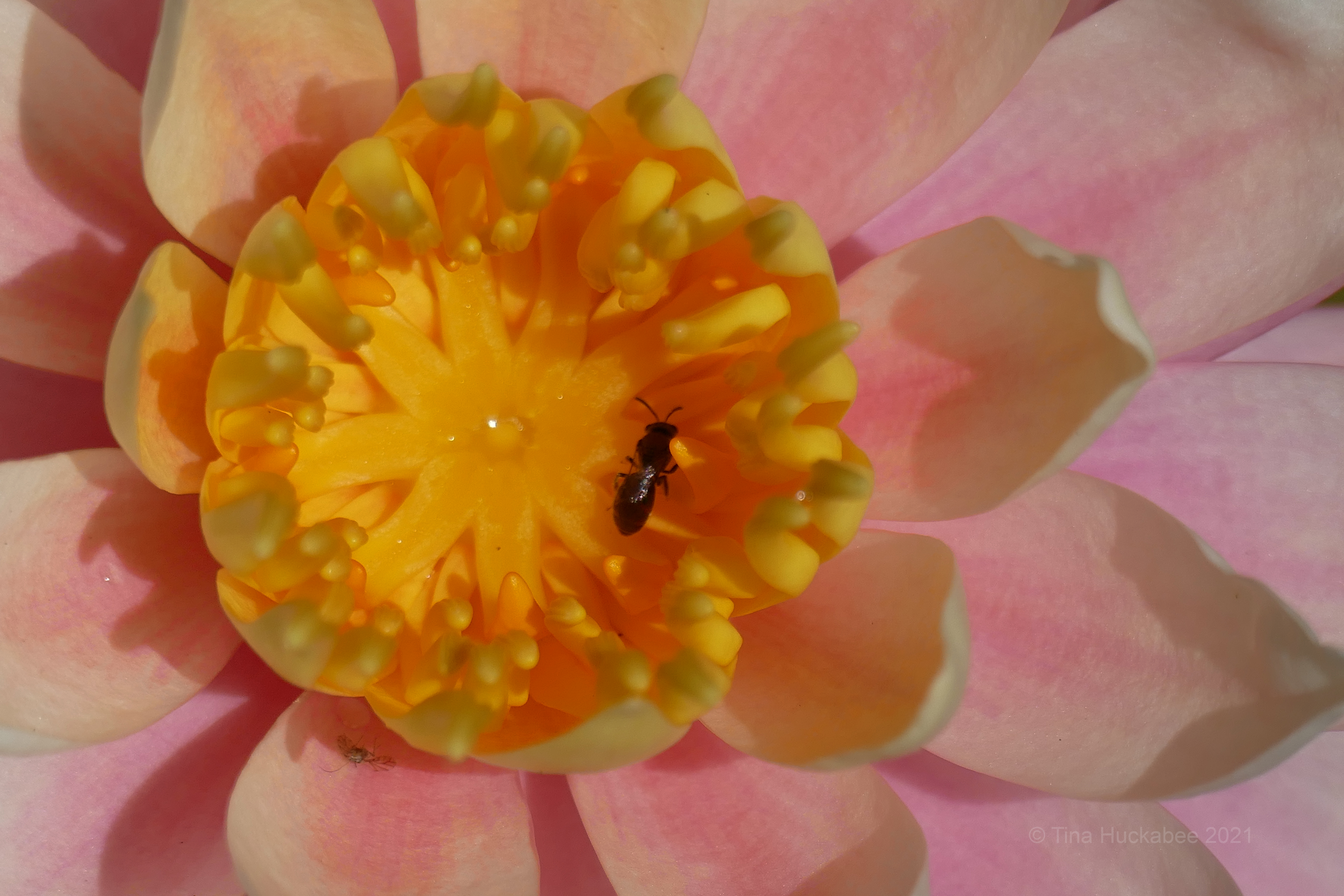
Given the devastation from the February snow and ice storms, flowers have been non-existent in my garden these past few weeks. But this pretty-in-pink ‘Colorado’ water lily opened petals this morning to the cheers of the gardener and the feeding and pollinating efforts of a native Sweat bee, Lasioglossum.
There were two of these little bees, but one winged away before I captured its presence.
My garden currently boasts a dreary range of browns and tans, highlighted by occasional burnished green–and those colors are on plants not yet pruned to the ground. That said, low-growing, spring-blooming perennials are coming on strong and flaunting their happy green foliage, blooms to follow very soon! Spring is just around the garden path!
The surprise water lily beat them all and its welcome spring color, with accompanying bee, brings joy and hope!
Cleaning-up from Texas’ recent snowpocalypse is on-going and eye-opening. Well over 90% of my garden is pruned back or will be soon. That being said, while I’m probably going to lose a few, most of my plants will return from their roots or leaf out from their limbs. Sadly, it will take a chunk of the growing season before there are choices for the pollinators and fruits-n-berries for the birds and mammals. The garden is resilient and demonstrated its worth in the face of extreme cold.
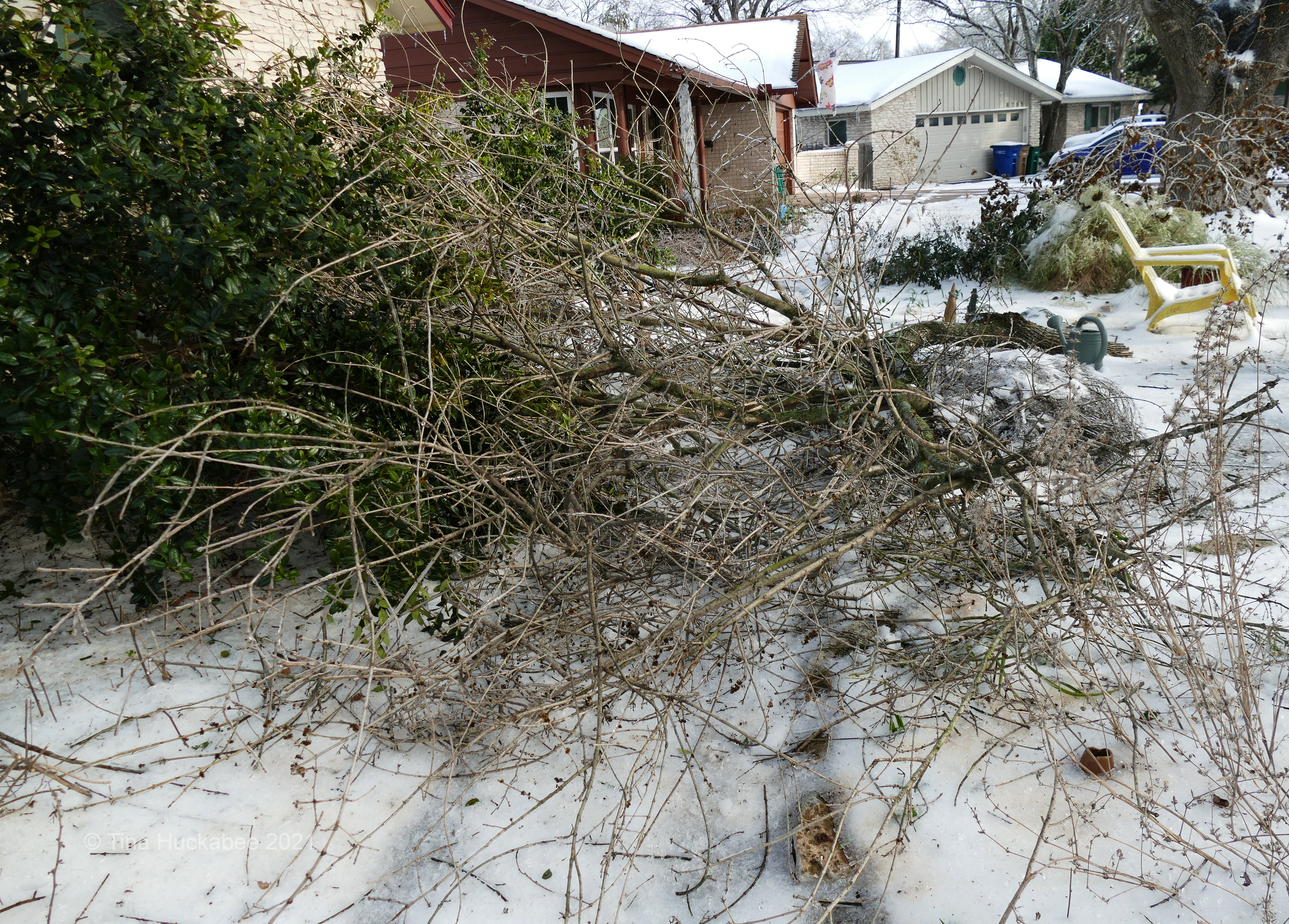
In my front garden, my non-native Arizona ash tree relieved itself of a large branch when the ice and snow became too much to bear.
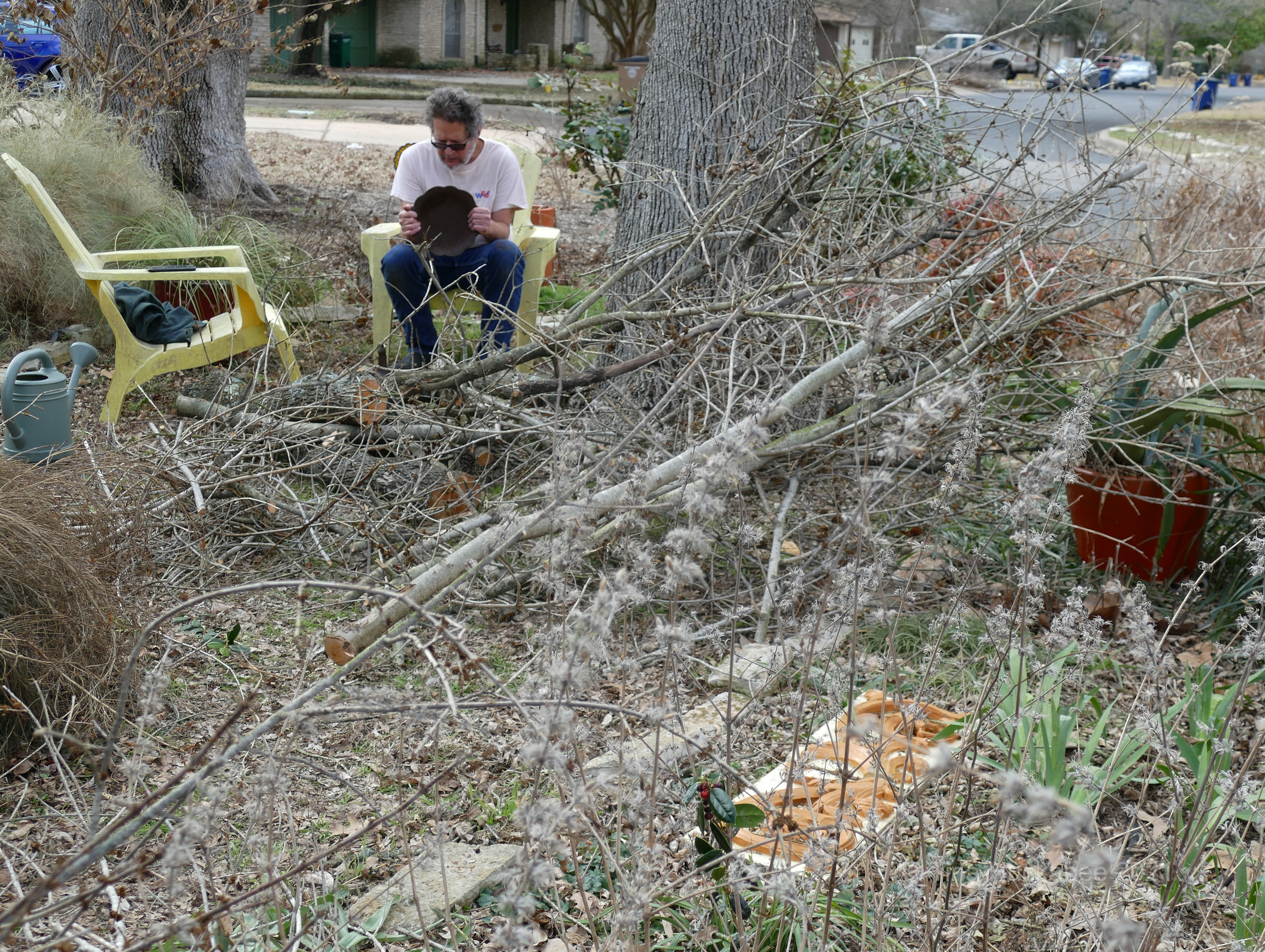
I caught this photo as the temperature had warmed a bit, but before the snow and ice melted. It was five more days before it was pleasant enough to tackle the limb and its branches, cutting the material to bin-appropriate lengths and widths. I was grateful that little damage occurred to the Burford holly, where the tree mess landed. As an aside, during the snowy-icy days, Cedar Waxwings and Robins swooped in and devoured those berries; I’m tickled that an excellent food source was available for the hungry birds during the frigid days.
As we worked that Sunday morning, the Hub puzzled a fix for the metal bird bath which suffered a career-ending injury when the limb crashed down. Under the weight and power of the tree limb, the pedestal snapped in two pieces, the small bowl popped free. The pedestal isn’t fixable, so into recycling it goes, but I can easily hollow out a small area in the garden for the bowl to sit in comfortably. The birds, lizards, and toads will like that.
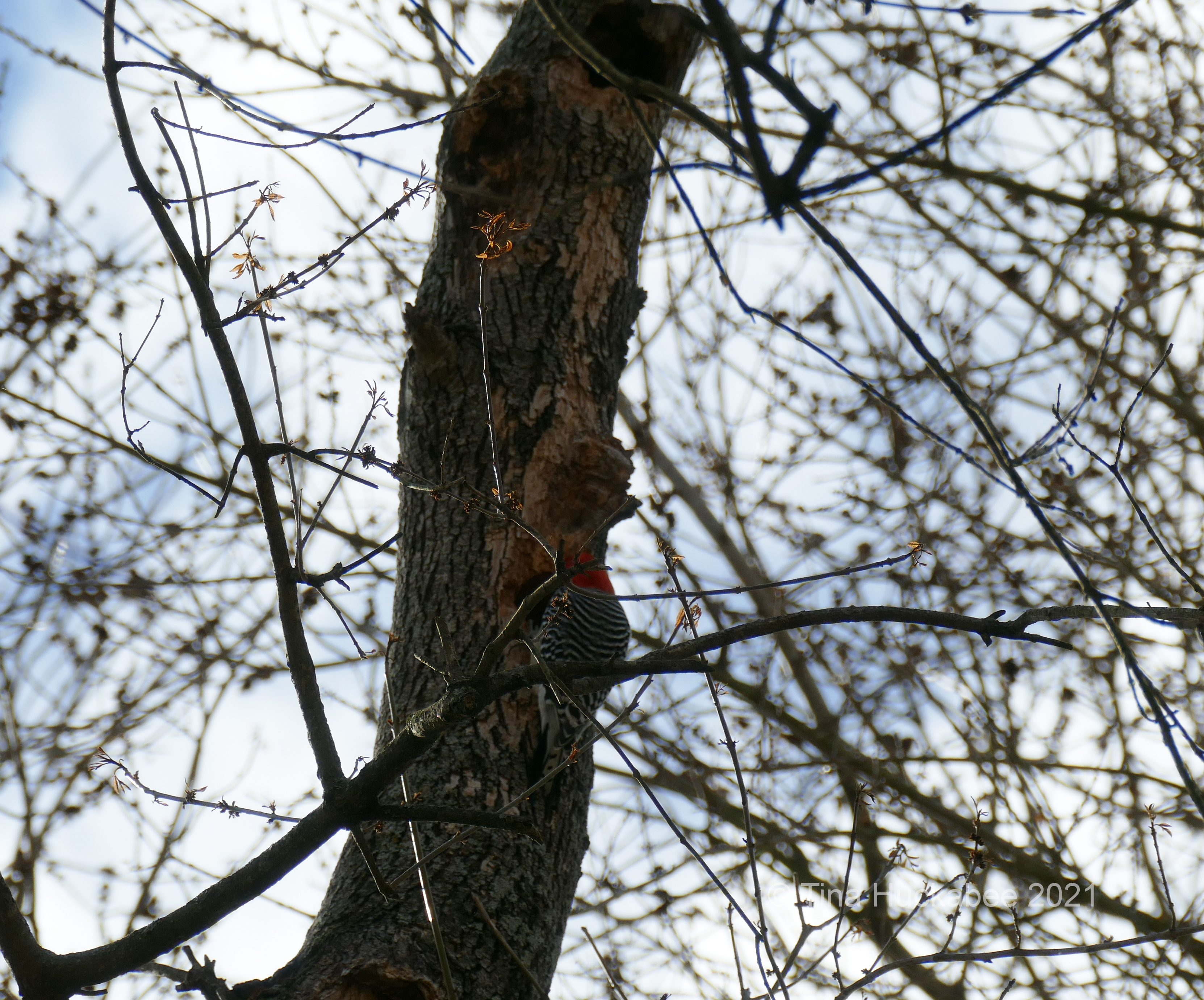
As we trimmed and tidied that first warm day and in the days since, we’ve enjoyed listing to and observing the nest building efforts of this male Red-bellied Woodpecker, Melanerpes carolinus.
His rhythmic tap tap tap has served as a percussion accompaniment to the pruning of our mushed and freeze-dried plants.
Dad-to-be woodpecker is annoyingly shy. I’ve had a tough time catching a photo of him at work; he flits away as soon as he’s sure I’m set for a shot, camera lens adjusted. But I’ve managed few photos, when he was too engrossed with designing the kids’ bedrooms to notice the weirdo below him.
The large limb which landed in the garden broke off from this perforated section of the tree.
Hmm–wonder why it broke so easily? Arizona ash trees are notoriously weak-wooded, but even less stable when a woodpecker adds its formidable beak work to the wood. We’ll keep a keen eye on this limb during the coming spring storms for potential problems; falling logs add nothing to a garden’s charm. I’ll need a consult from an arborist on removal of this section, but for now and the coming few months, we’ll leave it alone: baby woodpeckers will soon be in residence.
This storm was destructive in countless ways and distressingly, leadership in this state is lacking. As for my tiny plot of Texas, I’m saddened at what the deep freeze delivered to my garden and fret over the damage done. Even so, I welcome exposure to the garden’s bare bones. This sort of destruction makes clear poor plant choices or placement, and allows some re-thinking of the garden and its purpose. The garden will recover, in time, in one form or another.
The impacts on wildlife may be devastating, though urban wildlife are likely to fare better than their rural counterparts. Flora and fauna continue their lives: plants grow, flower and seed; animals grow, mate, parent. Like my Red-bellied Woodpecker buddy and his building of a nest to woo a mate and create a nursery for his offspring, there is meaning in continuity and hope in survival.
Last month we enjoyed a rare and fun snowfall which you can read about here. Well, we Texans are right back in it, only this time, the below freezing temperatures, sleet, and record snowfall amounts have arrived and settled in historic measure.
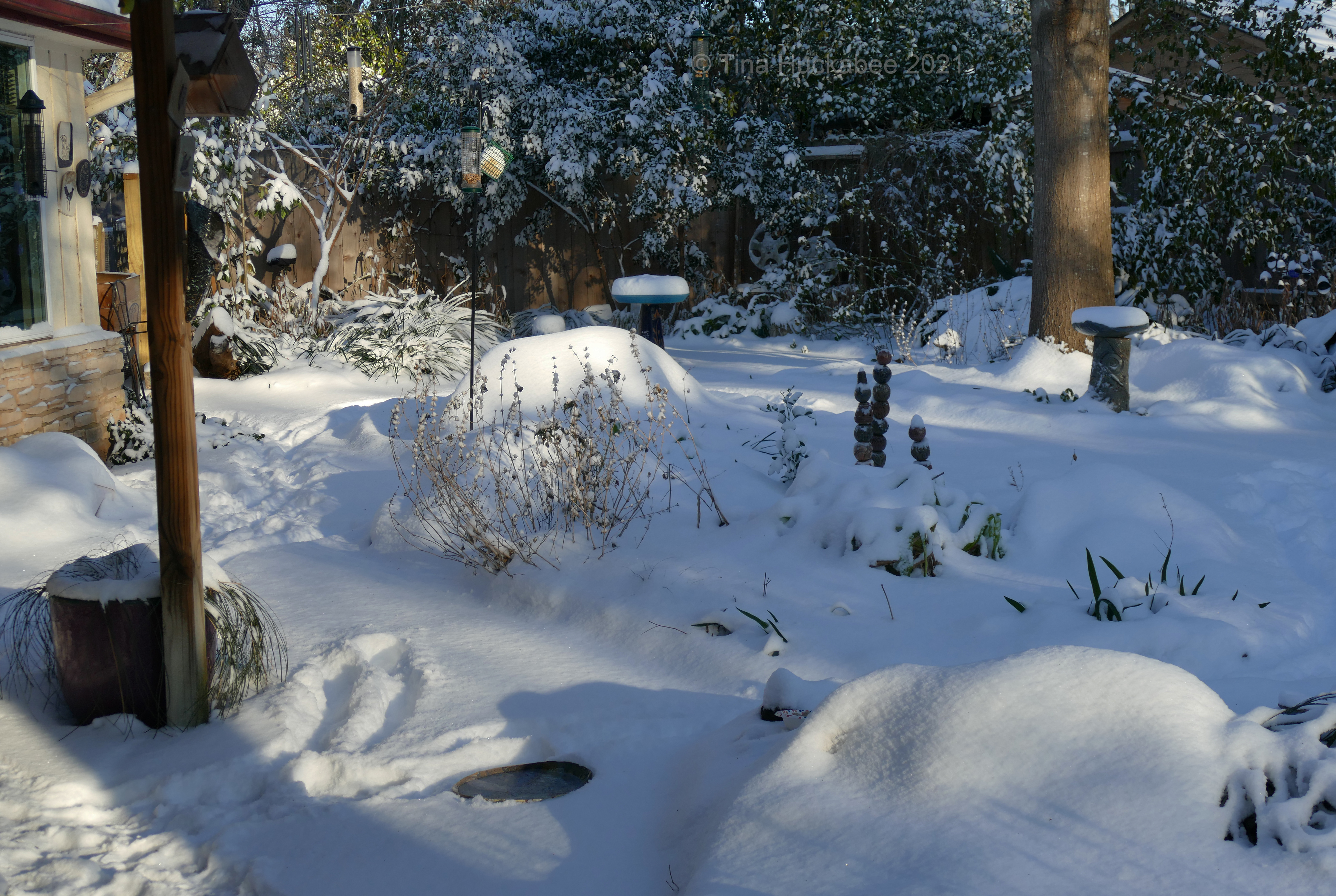
Snow. From one end of the garden,
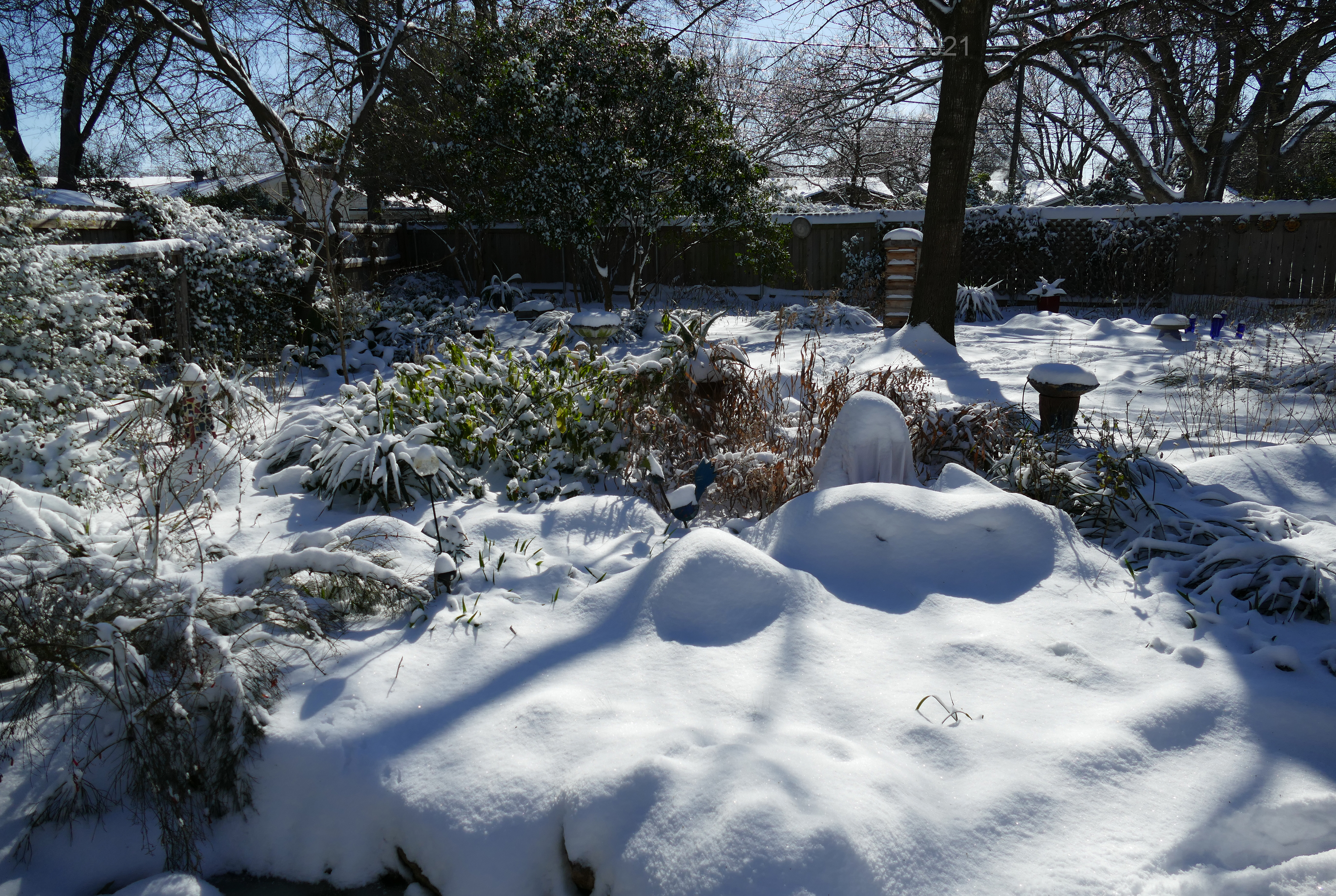
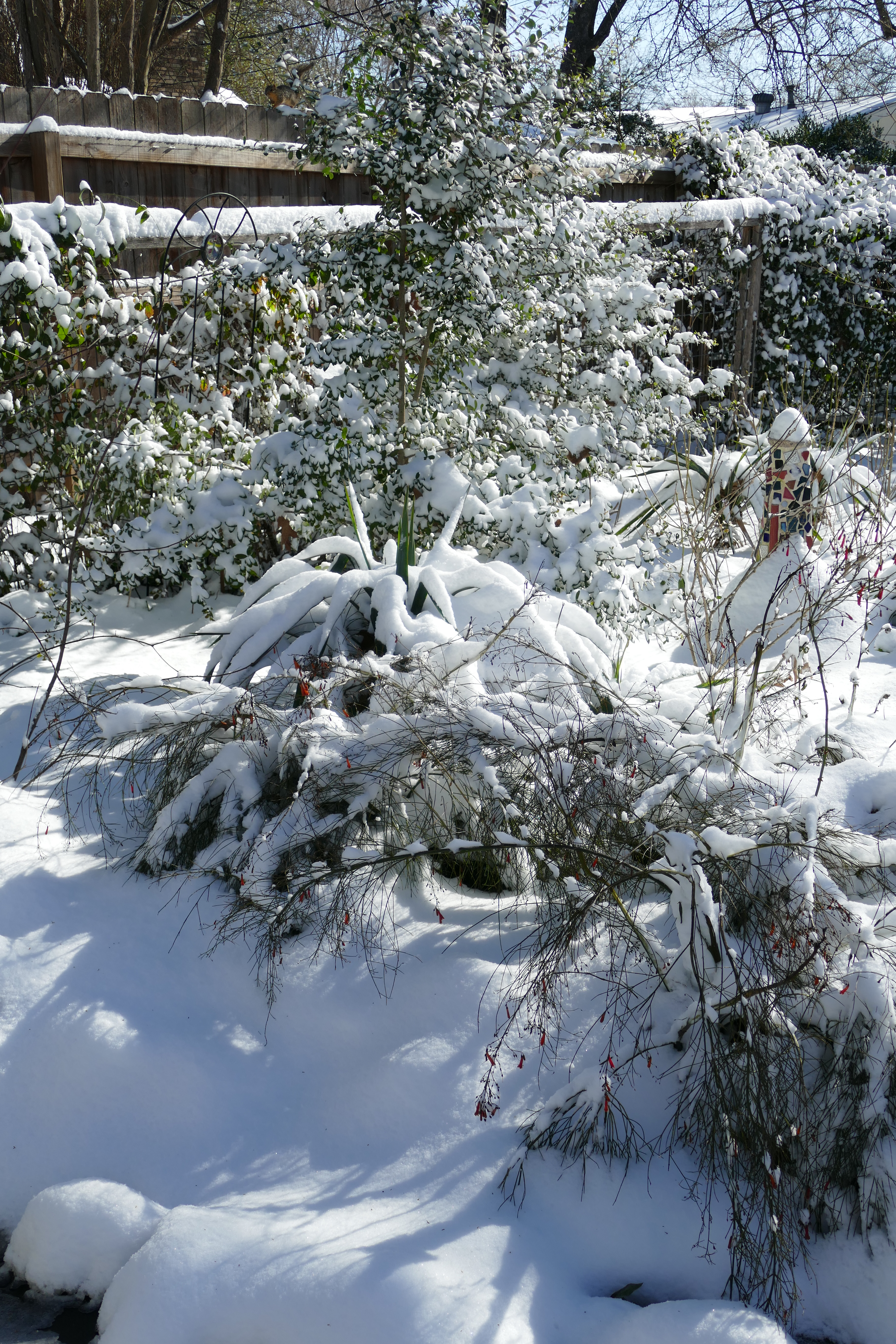
…to the other. A half foot of snow covers my Austin garden and is paired with a deep freeze. All of Texas is experiencing a monster weather event.
These photos were taken yesterday (Monday) morning when it was about 12F (-11C).
The various lumps in the garden are plants that I covered with old blankets, sheets, towels in hopes that the roots will remain viable.
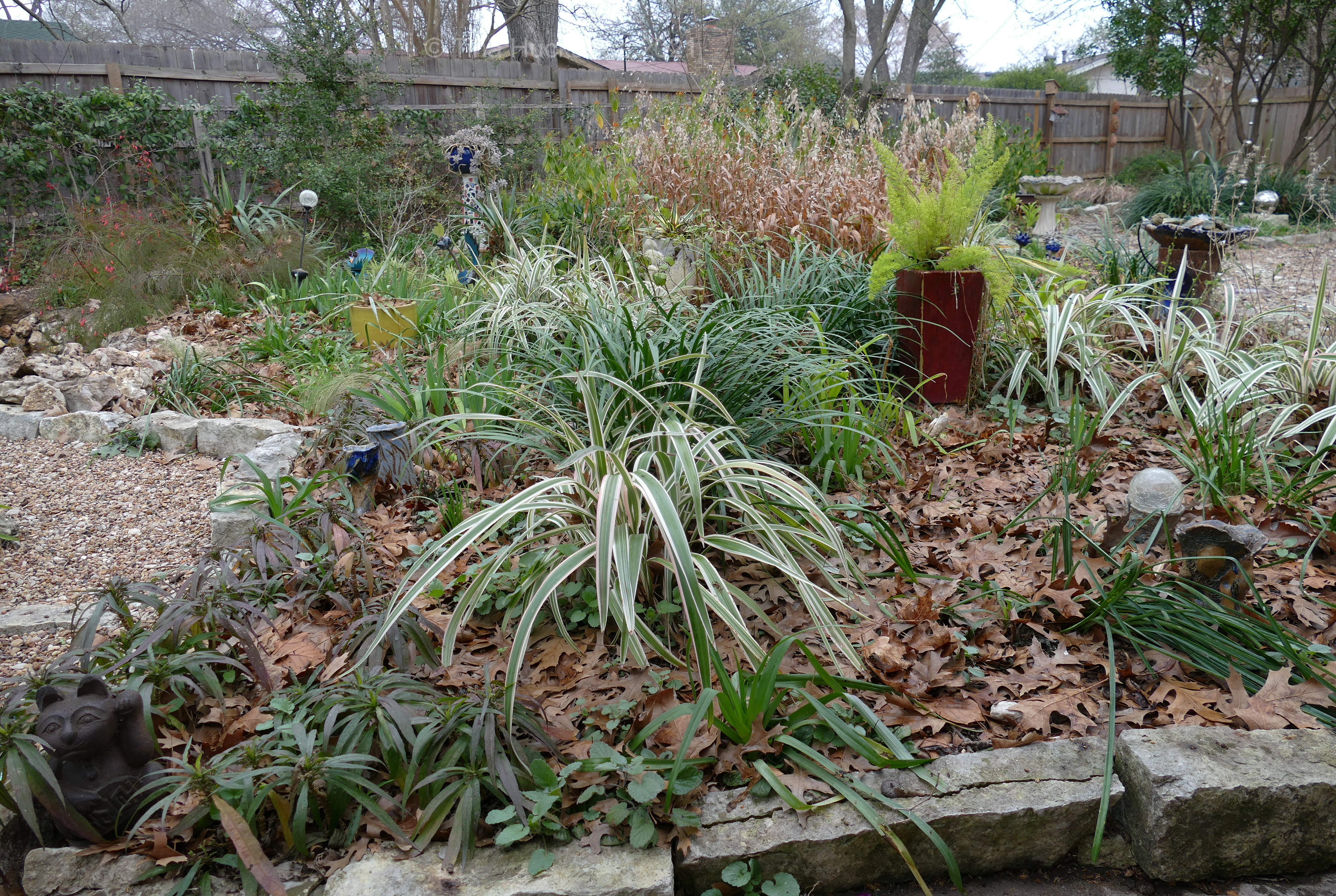
For some context, the photo below (which I took last week) is roughly the same area as the above photos.
It doesn’t look like the same garden.
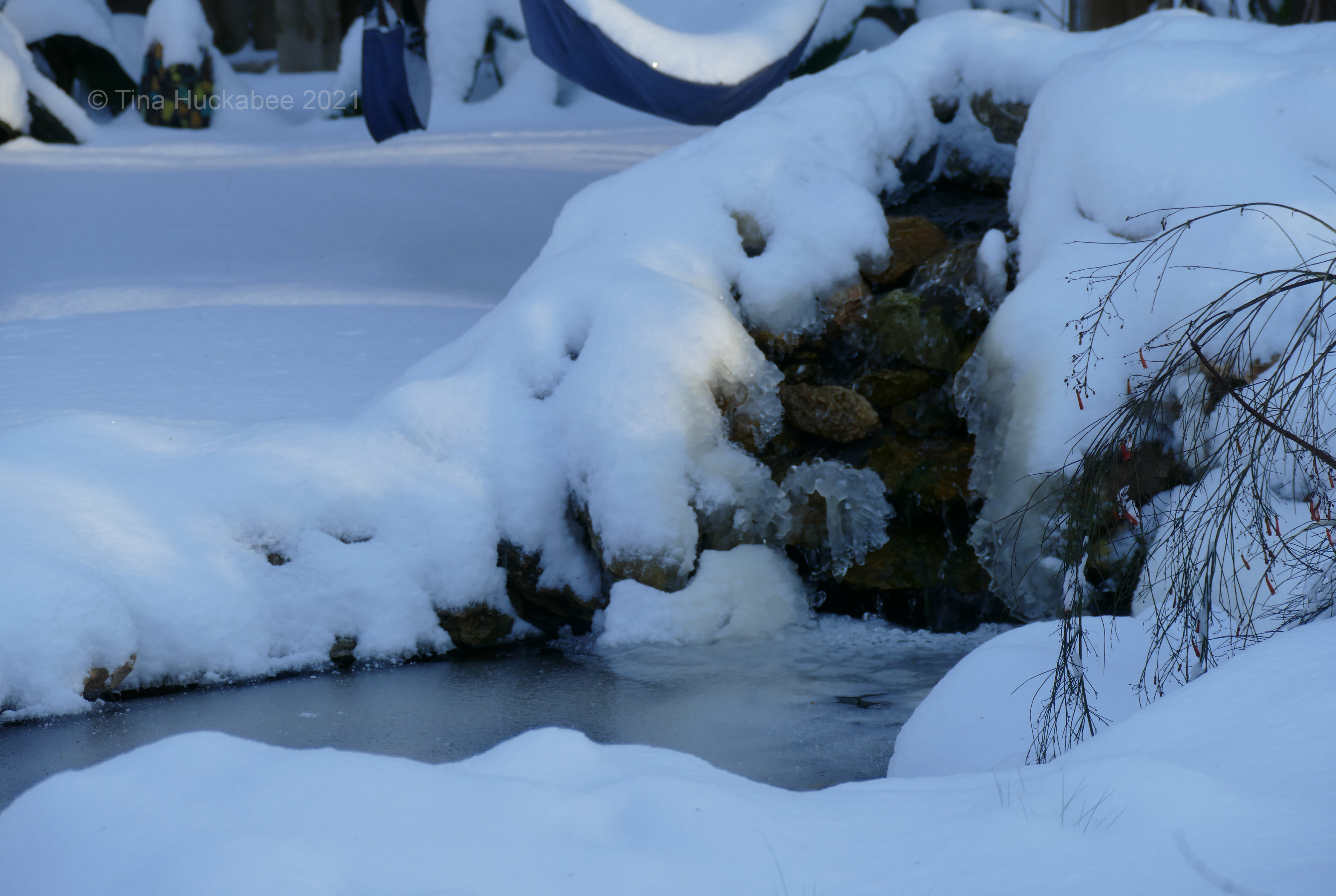
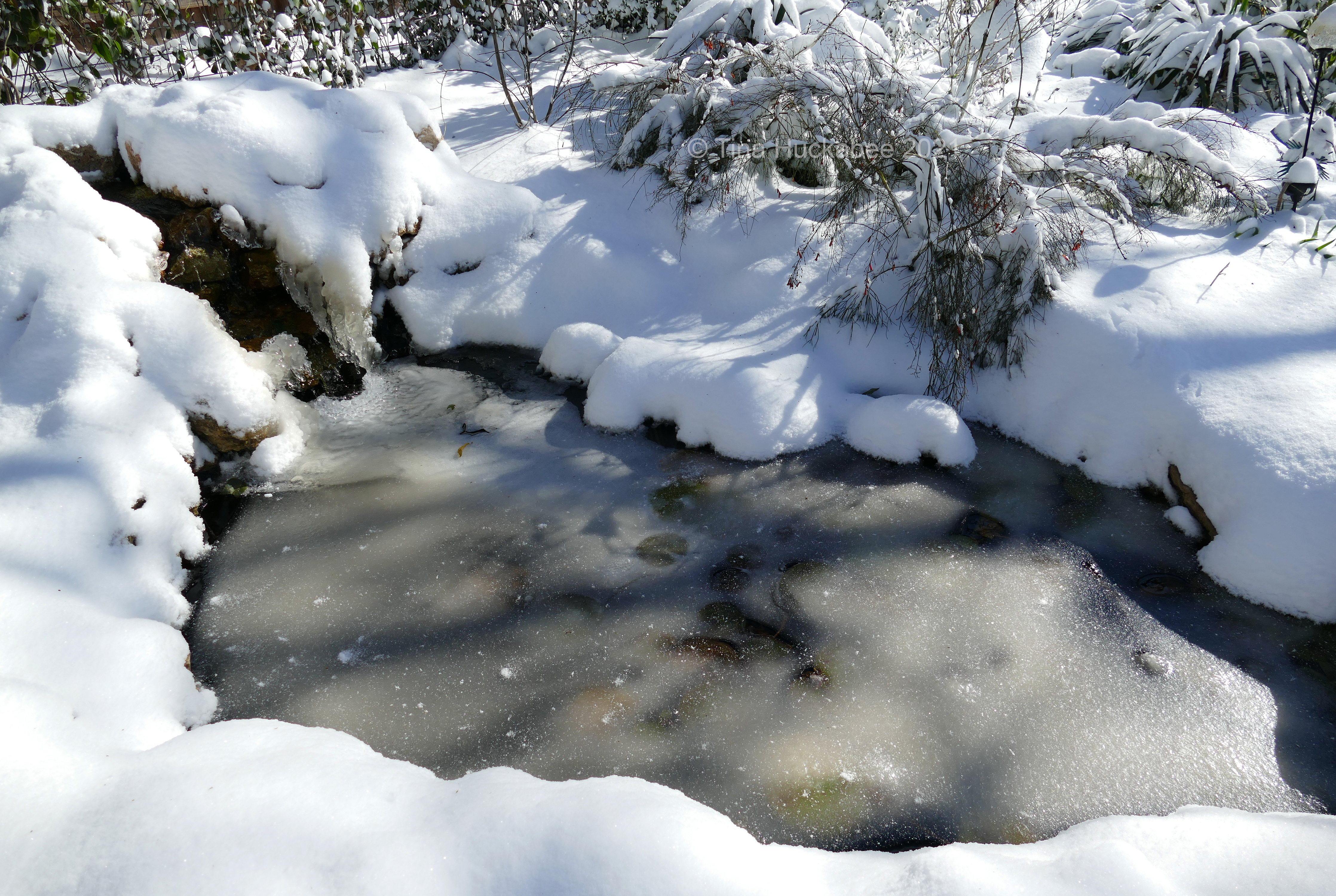
Snow drifts embrace the pond, ice edges its water. Water continues falling, sustaining wildlife. I’ve also rigged our dripping outdoor water spigots to empty into containers so that there are several places for wildlife to drink.
Most of the pond’s surface is covered by a thin layer of ice,
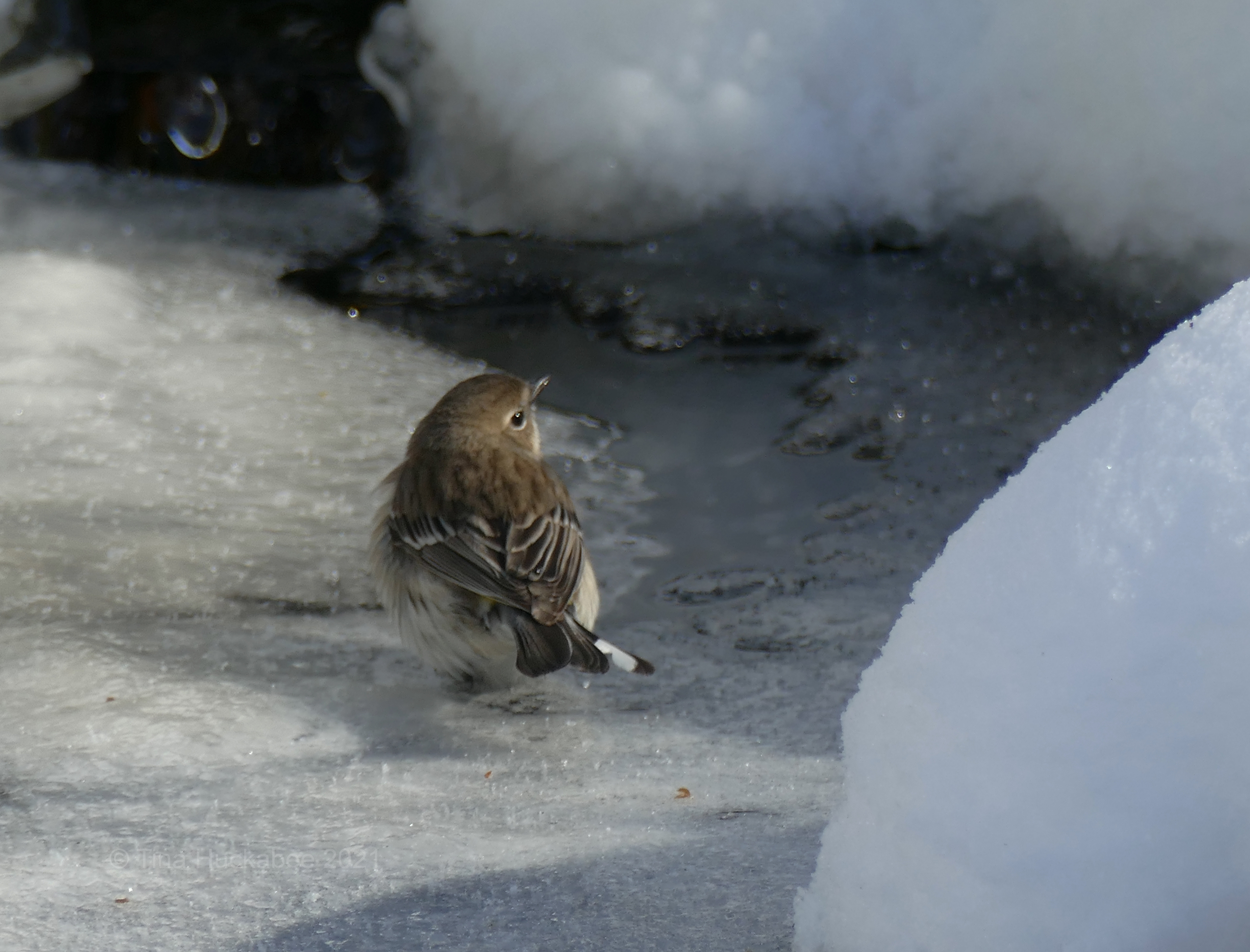
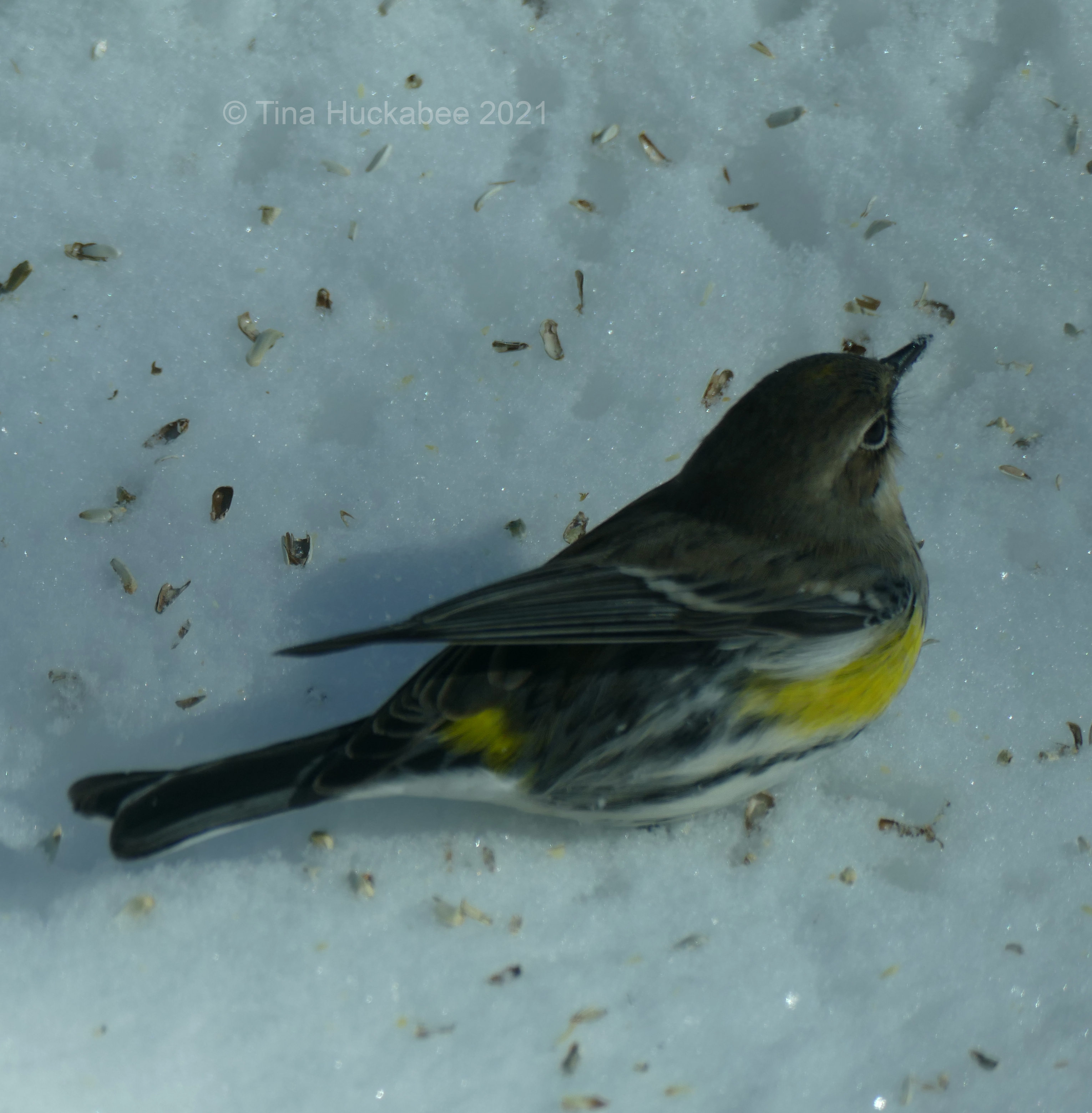
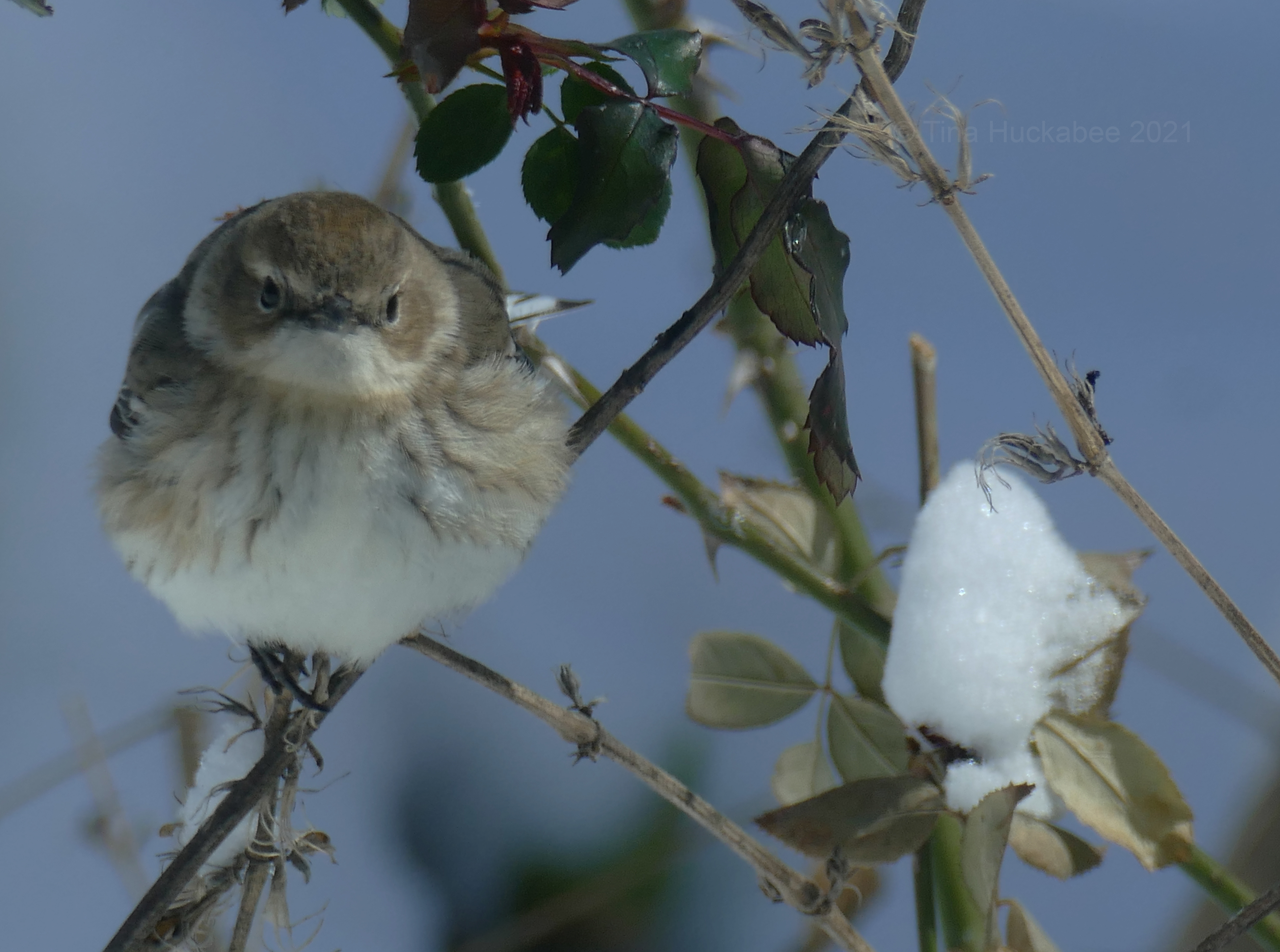
…but this Yellow-rumped Warbler, Setophaga coronata, sipped from a thin stream of water, unfrozen at the pond surface.
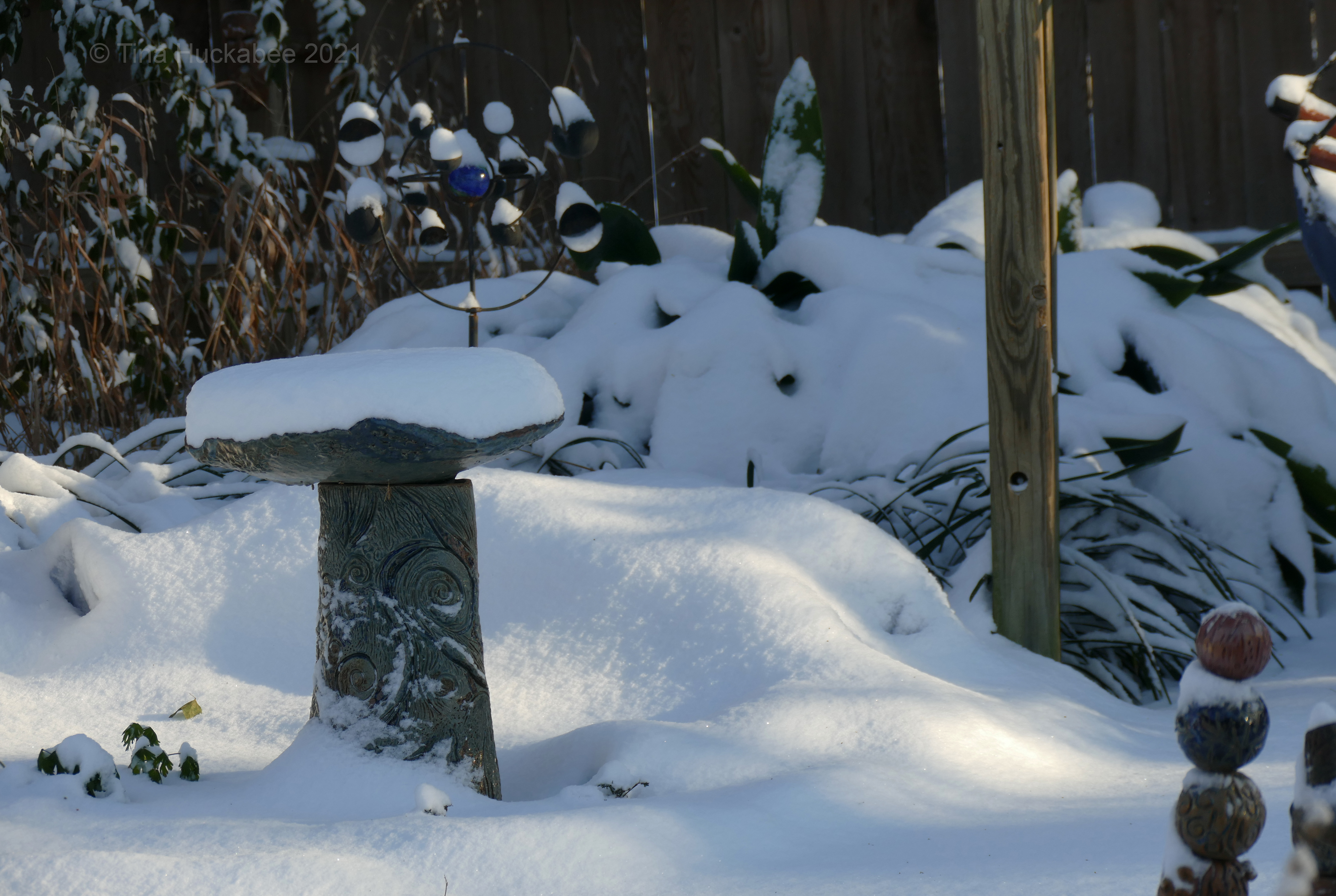
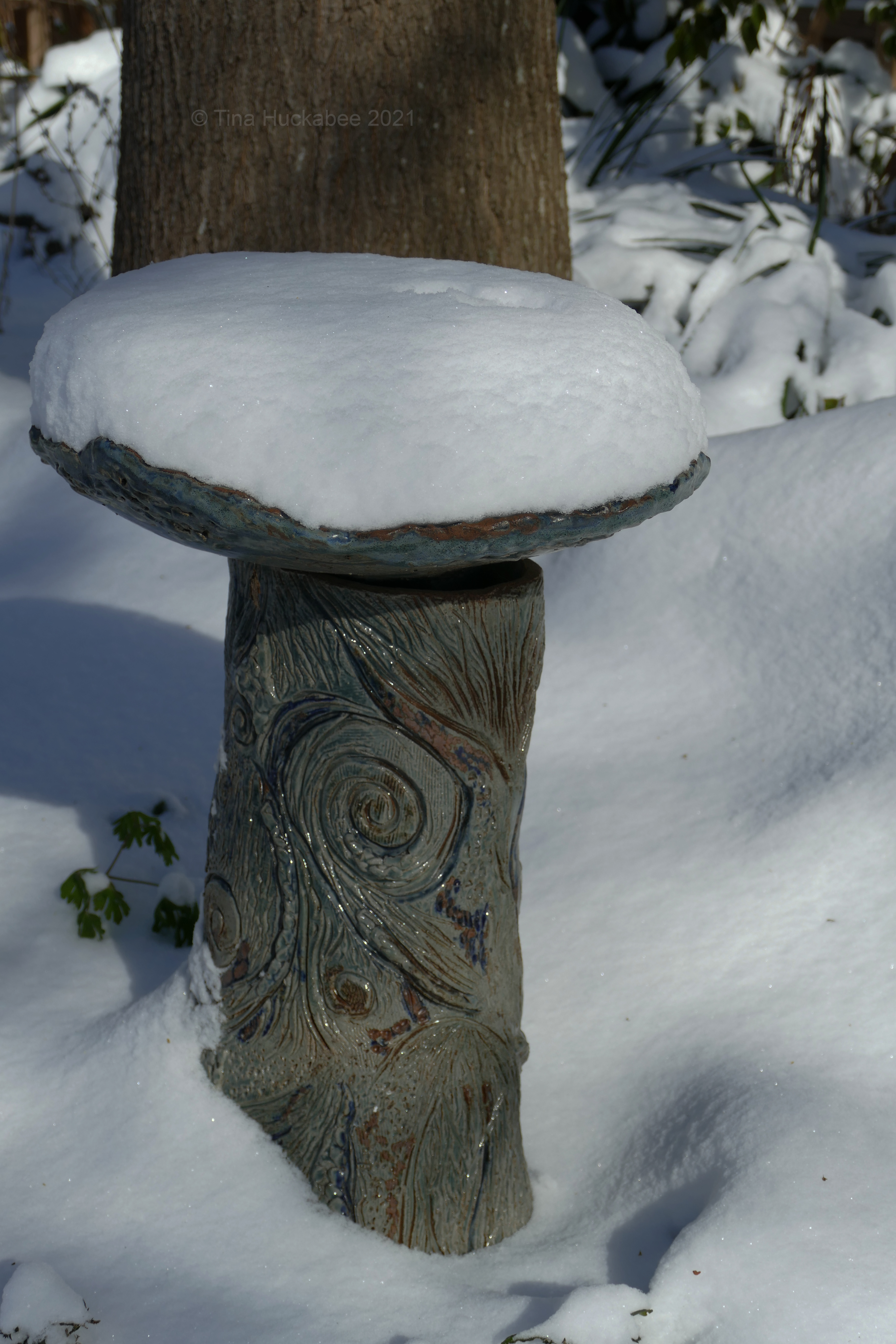
I like the snow capped everything in the garden.
The mosaic stand usually holds a ceramic pot with a cascading succulent. That succulent currently cascades in the house.A potted American Agave and bird bath keep cold watch together.Birdbath and bottles, accompany pruned Turk’s Cap, Malvaviscus arboreous, in the background.For some bizarre reason, these two remind me of the Sesame Street characters, Statler and WaldorfYet another birdbath, swirled in ceramic, coned with snow.
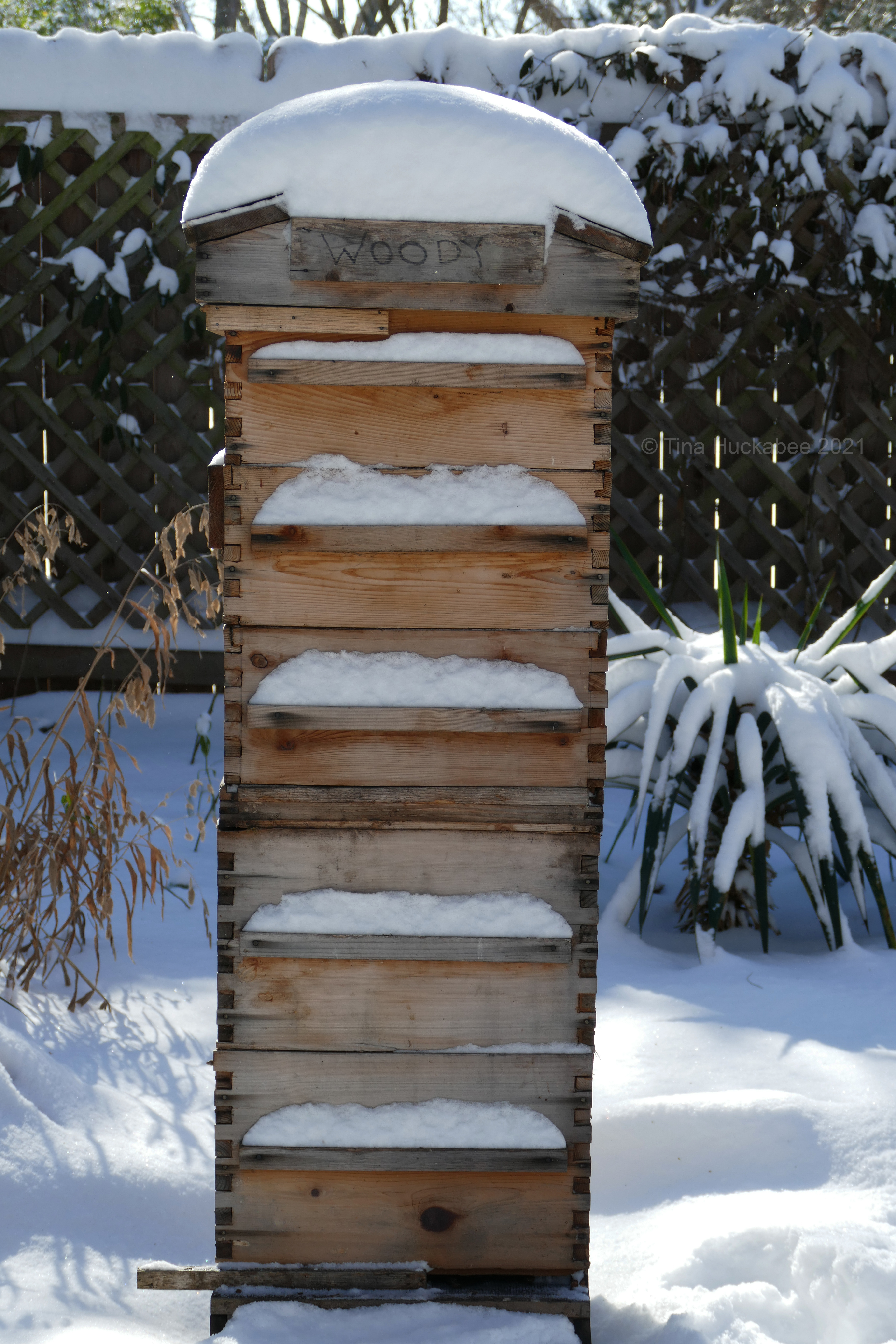
Poor honeybees. Late afternoon on Sunday, I came across a video of advice from Dan Weaver of BeeWeaver, the apiary from which we purchased our original honeybees. Because bees use respiration to cool themselves in summer and heat themselves in winter, it’s important that fresh air makes its way into a hive through small openings and the bottom board entry way. A beehive shouldn’t be airtight (ever), but with the deep freeze, the bees’ respiration will create moisture in the hive and if there isn’t some fresh air circulation, the bees will freeze. Oh dear.
After viewing Dan’s video, the Hub and I discussed the situation and agreed that both of our hives (Woody above, Scar not pictured) have sufficienty small openings and generously sized entry ways so that cracking of the roof and propping it up with a small stick to allow air in (Dan’s suggestion) was probably unnecessary.
Being snowstorm neophytes, we didn’t account for snow drift, and that drift, which covered the entry ways and some of the small openings on the sides of both hives, may have doomed our bees. At 7am yesterday, I frantically brushed away the snow which had gathered and blocked each entry way and the few holes at the sides of each hive. We won’t know until the weekend (when temperatures will rise enough to encourage the bees to forage) whether the bees froze or are still alive. I’m regretful that we didn’t take Dan’s advice, but there little I can do about it now. We lost a hive (Buzz) last year, which you can read about here and have ordered a package of bees (one queen, ten thousand workers) for an April pickup, so we will have honeybees, but whether it’s one hive or three is unclear at this point.
I’ve kept our native and wintering birds well-stocked with plenty of food and water. A Cooper’s Hawk swoops through from time-to-time, scattering those birds as it hunts; it needs kibble too. For four days, a female Eastern Screech owl rested in the nest box, but she’s not there today. Life continues for wildlife; they have no choice but to be out and about when nature throws them a frozen curve-ball. They must get on with the business of survival.
Yellow-rumped Warbler and you can see her yellow rump!
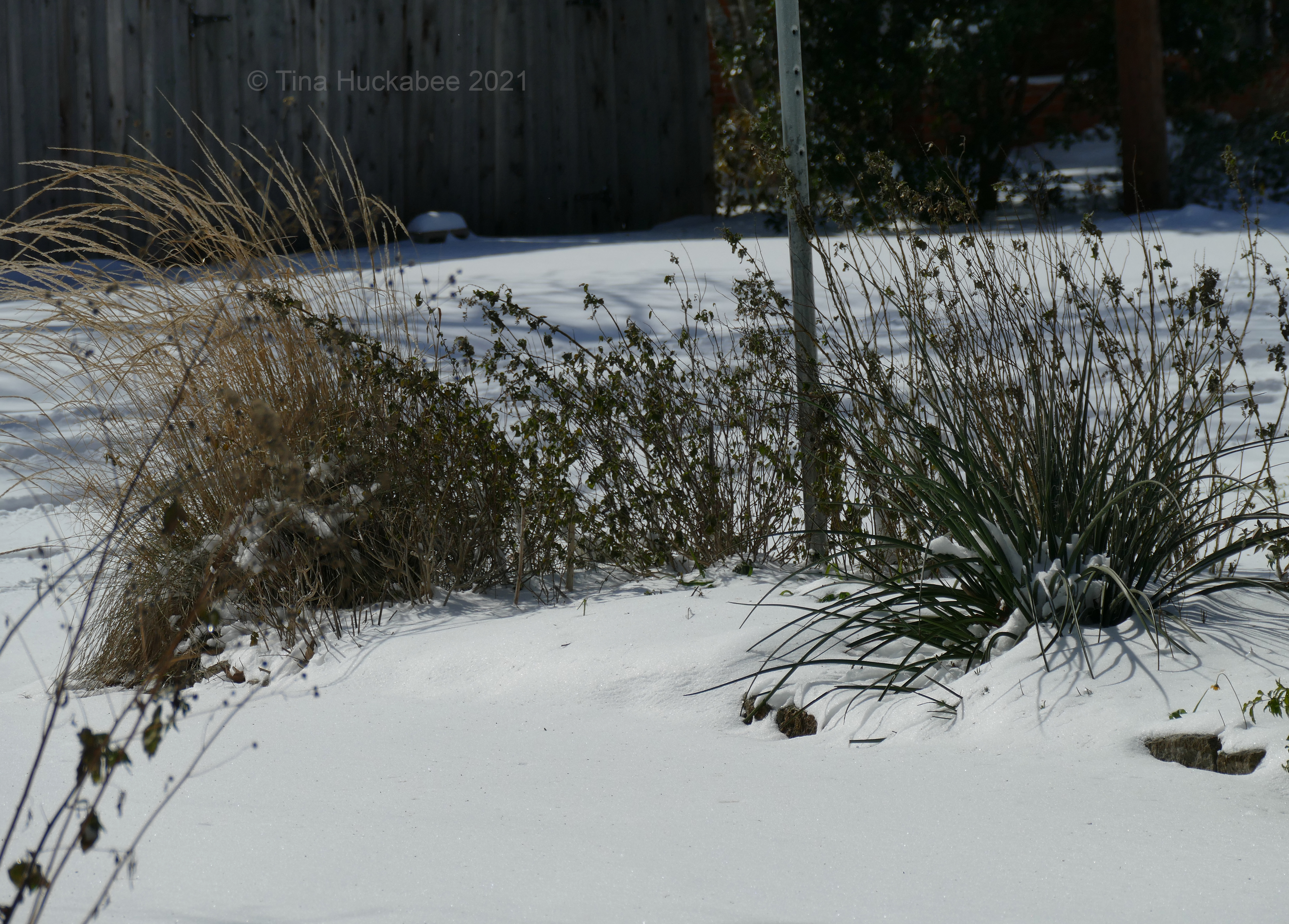
I don’t take many photos of my front garden, but here, the Barbados Cherry, Malpighia glabra, seems fine with the snow. I’m sure the foliage will drop, but the plant should return from the roots. That’s okay with me if it dies to the ground; the shrub is a beast and the deep freeze will allow me the opportunity to shape-n-t tidy a bit.
The expanse just beyond these native grass and perennials is our street. I haven’t walked that way yet, but have enjoyed observing folks with their very happy, bouncy snow-loving dogs.
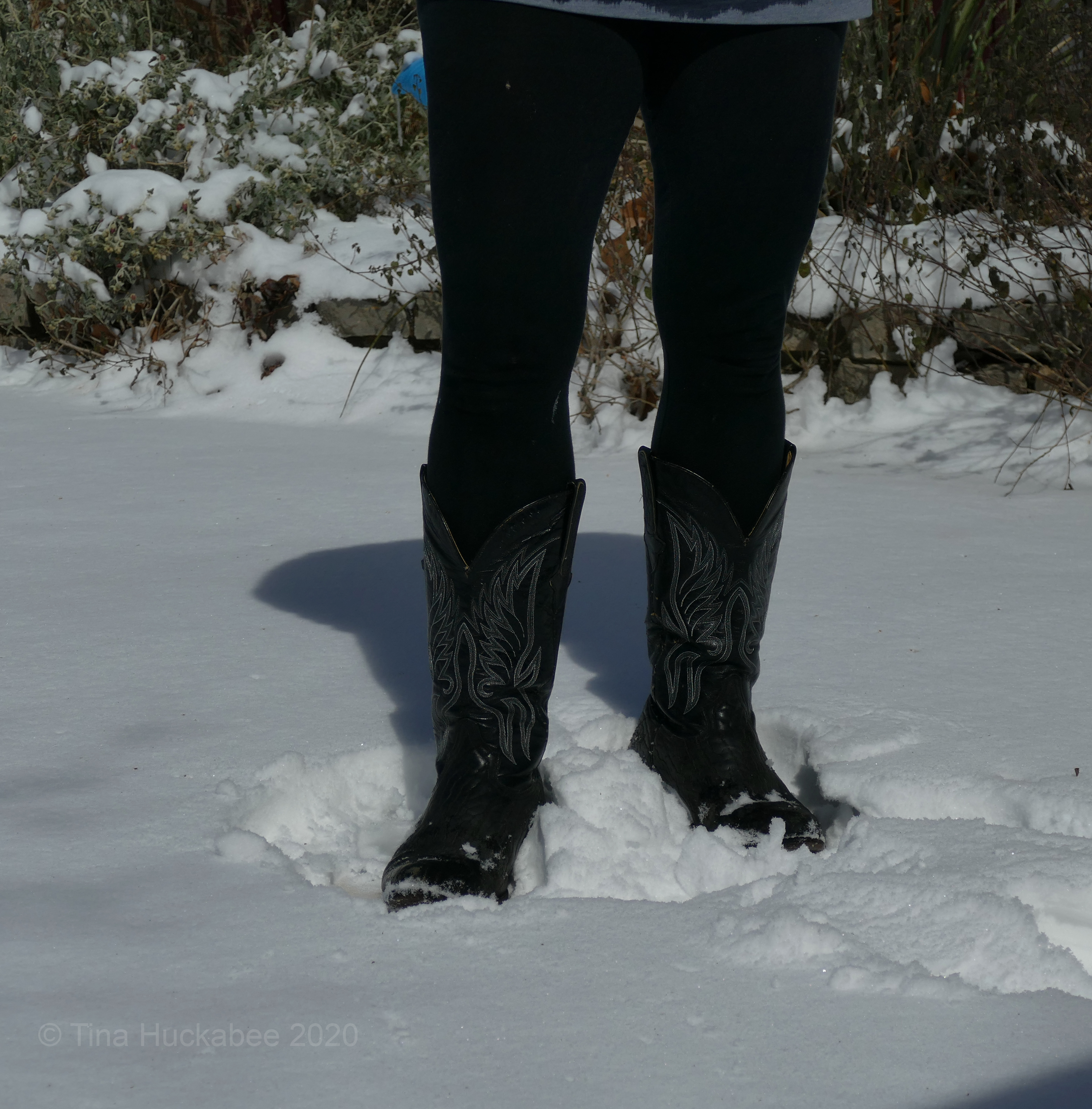
I’ve never seen snow like this before, as I’m not interested in skiing; my cold weather experiences are limited to brief bouts and limited fall. I have clothes that are warm enough when layered, but don’t own boots of any sort; my go-to winter shoes are a pair of Dansko clogs and quite frankly, those haven’t met the challenge of the half foot of snow. That said, the Hub has a lovely pair of cowboy boots that he bought in Mexico some years back. I confess to slipping the iconic footwear on my little feet, when I’ve grown tired of wet socks as I venture outdoors.
I clomp around like a little kid wearing her daddy’s too-big shoes–but my toesies stay dry.
Silliness aside, this weather event has been and continues to be dangerous, the low temperatures unprecedented. Some two million Texans are without power and heat, the state’s energy grid unable to meet demand. Another storm comes in tonight, so these frigid temperatures will continue for a little longer, with sleet and snow added to what is already fallen. Warming temperatures are on the way after this next storm.
With heartfelt thanks, gratitude and appreciation for first responders: utility and road employees, EMS, fire, and police who are out in this cold, cold world, and hospital workers who must tend the injured and ill–all doing their best for the rest of us. Where would we be without them?
I think we’re all ready for this history making event to end.







 My Gardener Says...