
One of the first improvements we made to our house after we bought it years ago was to hire a carpenter to build a covered structure over the boring slab of concrete, ubiquitous to urban homes all over Texas, just outside the back door. We’ve enjoyed the covered patio over the years, in hot weather and cold, during rainstorms and drought. It’s been a place to keep handy some of my gardening tools, a covered spot for the grill, with easy access to the kitchen, and for dining al fresco at the table during pleasant times of the year. There are some downsides to the patio: the area is challenging to keep tidy, as breezes constantly bring leaves, pollen, and other plant matter into the patio area, that detritus resting (and sometimes piling) at the back door, and during warm months (we have plenty of those), mosquitos are in the garden–and buzzing in the covered, but not enclosed, patio.
We’ve also always had at least one, usually two-at-a-time, cats during our stay a Chez Gardener Says. Our current cat companions include 10 year-old Astrud (named after Astrud Gilberto) and 2 year-old Lena (named after Lena Horn). Astrud has been an indoor/outdoor cat, mostly being indoors. When we adopted Lena, we decided she would remain a strictly indoor cat. She’s super smart and fast and I wasn’t convinced that wildlife would be safe around her. That being said, she has enjoyed some short, supervised kitty field trips in the great outdoors, when I have time to keep a keen eye on her.
I never worried about Astrud hunting as she has poor eyesight (cataracts), but late last summer, she managed to catch a couple of birds. One was a House Sparrow, which I admit to not caring about because they’re invasive. (I know, species prejudice…) The second was a Lesser Goldfinch, and that catch was a feather too far. I couldn’t, in good conscious as a wildlife gardener, let Astrud continue time outside since the evidence was now clear that she menaced those wild things that I garden for and welcome in this space.
Prior to this, we’d mused having the patio enclosed, possibly making it a catio, which typically has shelves for cats to climb on and sturdy screening that is cat-scratch proof. I’ve always liked the open area to the back garden and fretted that enclosing the patio might make the living room darker than I prefer. After sweet Astrud perpetrated her murderous deed, the decision was clear: catio or bust.
Voilà! And here we are! A newly hatched catio, designed and built by father and son team, Oren and Ben Gil at CatManDo Catios! CatManDo is based in Austin and work in parts of Central Texas creating unique, beautiful catios for those who love cats, want to keep them safe, and appreciate the native wildlife in our midst.

The team worked around the existing structure, keeping the roof and supporting columns intact. They used lovely cedar, lightly stained, to create the door and supporting wood for the shelving and to close all openings to keep the area flying-bug free. The entire patio is screened, the back garden visible.
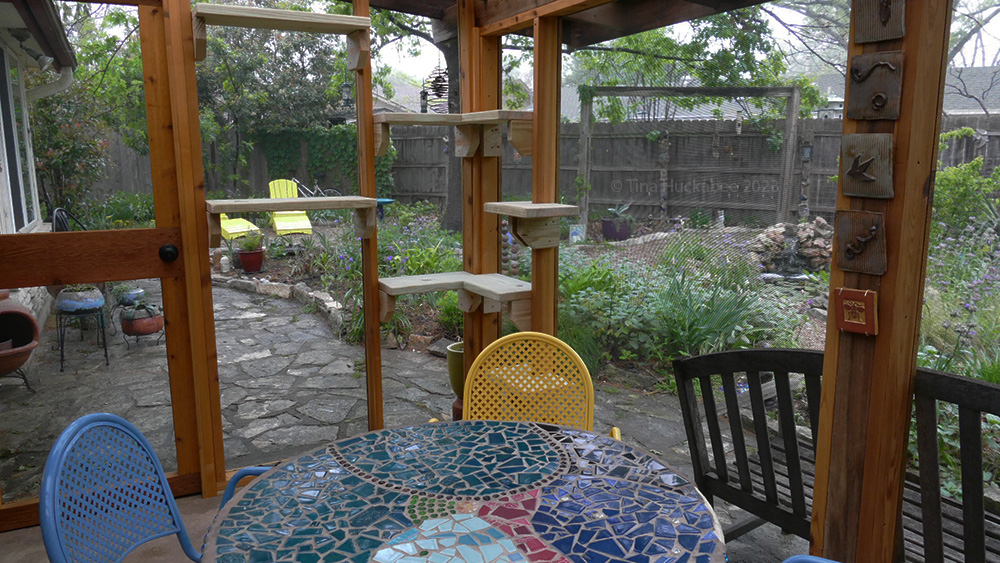
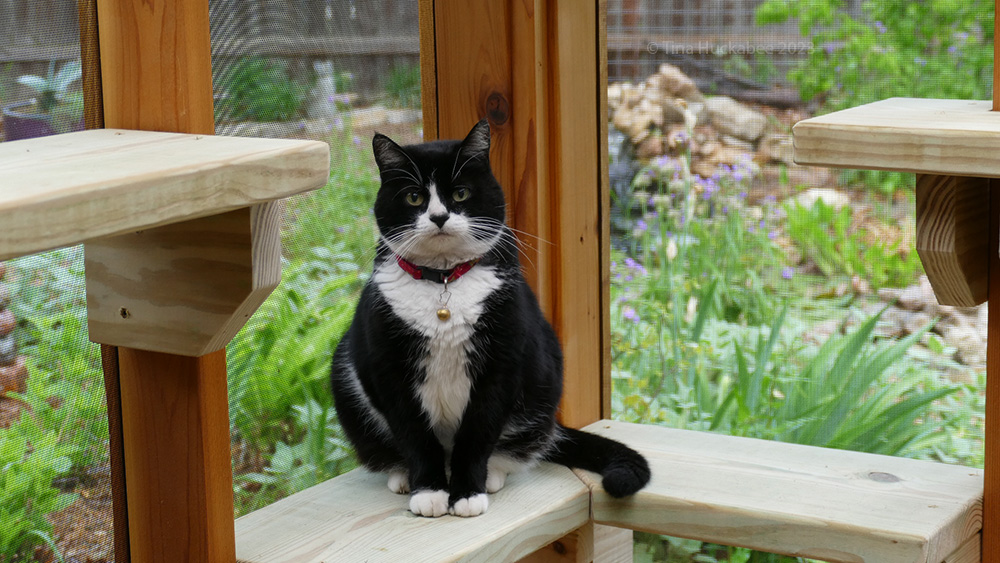
Lena is completely on-board with this new room. She loves being in the catio, snoozing on the top shelves; she’s entranced with the antics of squirrels and activity of birds. When we’re home and she’s in the catio, she’ll dash from the catio, through the open back door into the house, to the kitchen window to “chase” a squirrel that has run along the edge of the catio and house. Then, she runs back to the catio, so that she doesn’t miss any action. She’s having fun!


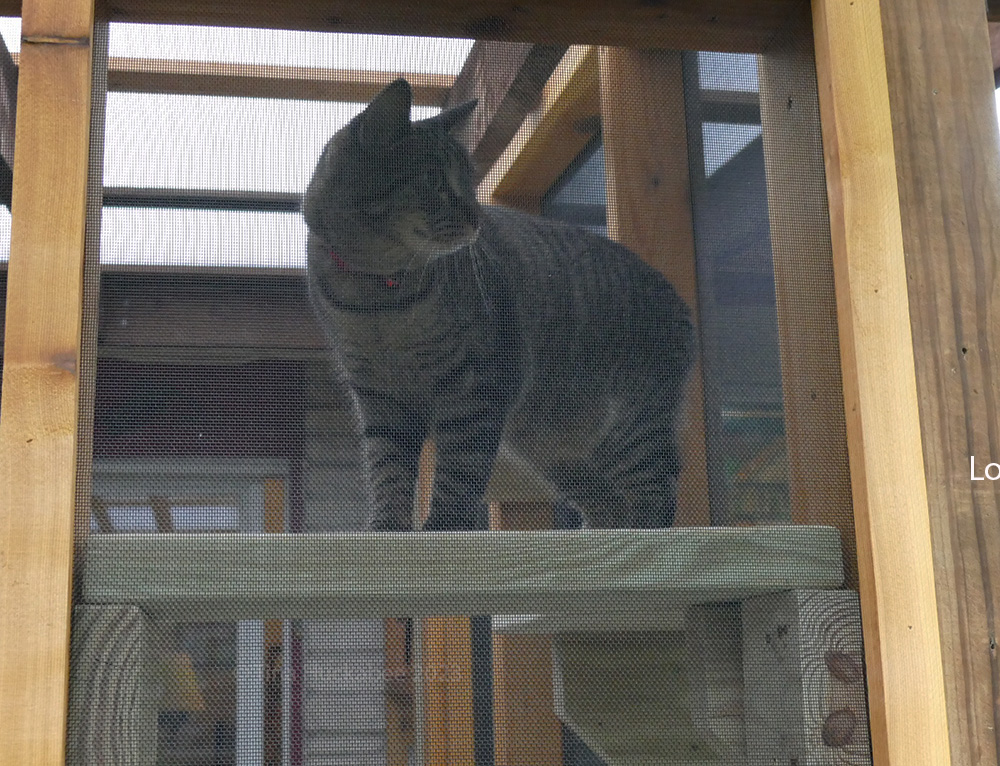
Astrud is shy. Very shy. Change is hard for her, and she is slow to adapt to new situations. But she’s meandering into the catio, hopping onto the lower shelves, and observing some garden goings-on.

She’s not entirely sure this is her cup-o’kibble, but she’s giving it a chance and I think in short order, she’ll be happy for this enclosed outdoor space.
From the outside, the screening looks dark, but it’s not dark at all from inside of the catio looking out, and the screen hasn’t darkened the inside of the house. My fretting was for naught; Astrud isn’t the only one who resists change.

However, I will have a harder time bird watching from inside the catio, especially during migration season, as those neo-tropical songbirds are typically tiny and flitty. I still have good windows in the house for observation, and the bench that has been my go-to bird watching bench is now placed in front of the catio for direct access to the garden. During mosquito season (which goes longer with each passing year), I won’t need to use repellent as long as I’m in the catio, but if I garden or sit at that bench, long sleeves and pants for cover, or repellent on my skin will be required.
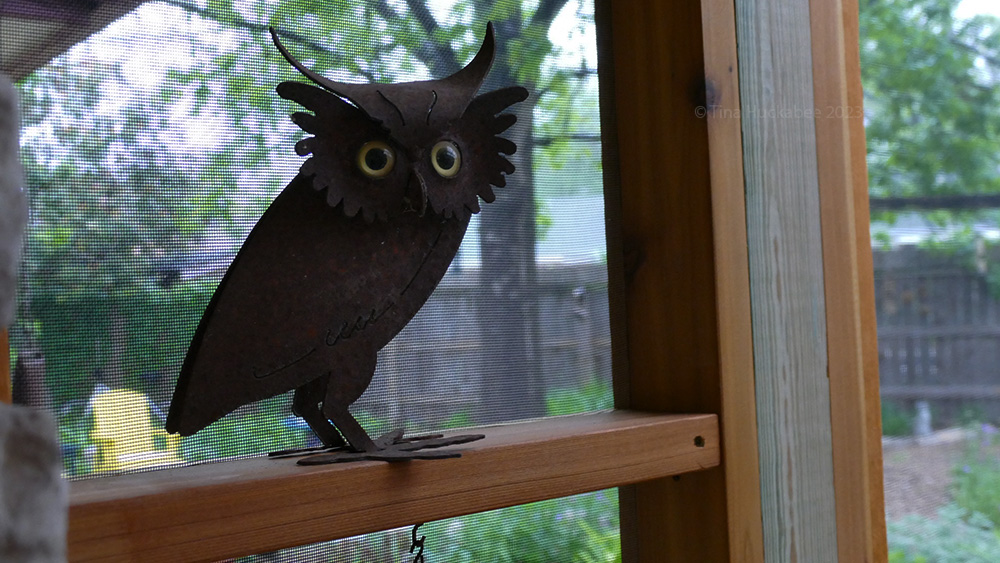
There’s also a couple of places for my own tchotchkes, including the metal screech owl who keeps me company year-round, even after our neighborhood owls have left.
Duke the Dog has also enjoyed some time in the catio, but the cats get priority and I think he knows it!

If you live in Austin, or nearby areas, and are thinking about enclosing your patio or adding a catio to a window, check out CatManDo–great guys who create good things for cats, their owners, and critters-at-large.


 My Gardener Says...