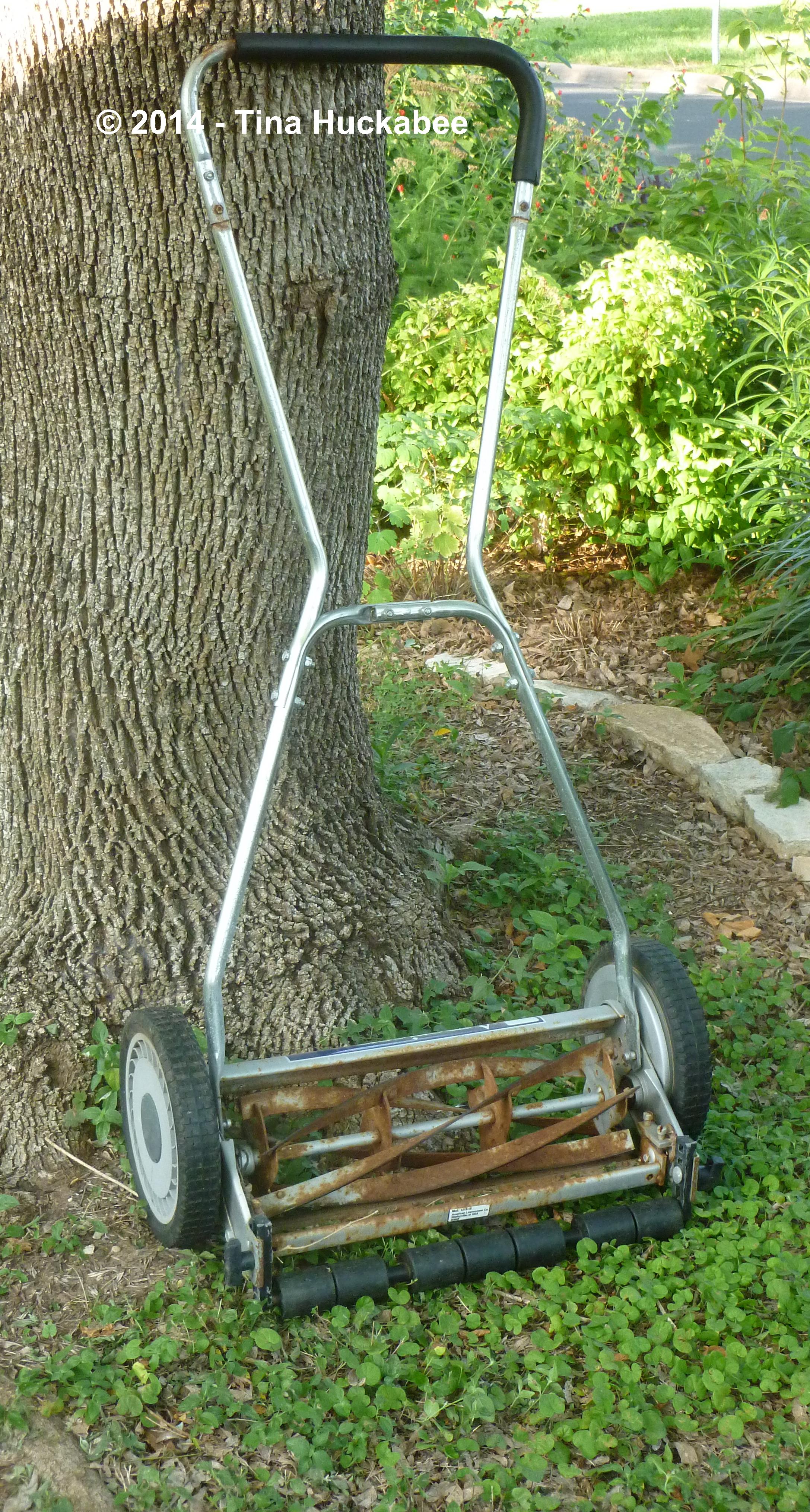
I finally rid myself of this bad boy last spring.
I left that gas mower out on the street for the City of Austin’s twice annual large waste pickup, where I’m assured it will be dismantled in a responsible manner. At least that’s what they say and I choose to believe them. I haven’t used a gasoline powered mower for 8-10 years. Its oil and gas long since drained and properly disposed of, I can only attribute to laziness my not having scrapped the mower before now. I ended the last patch of grass on my property in 2011–you can read about that process here.
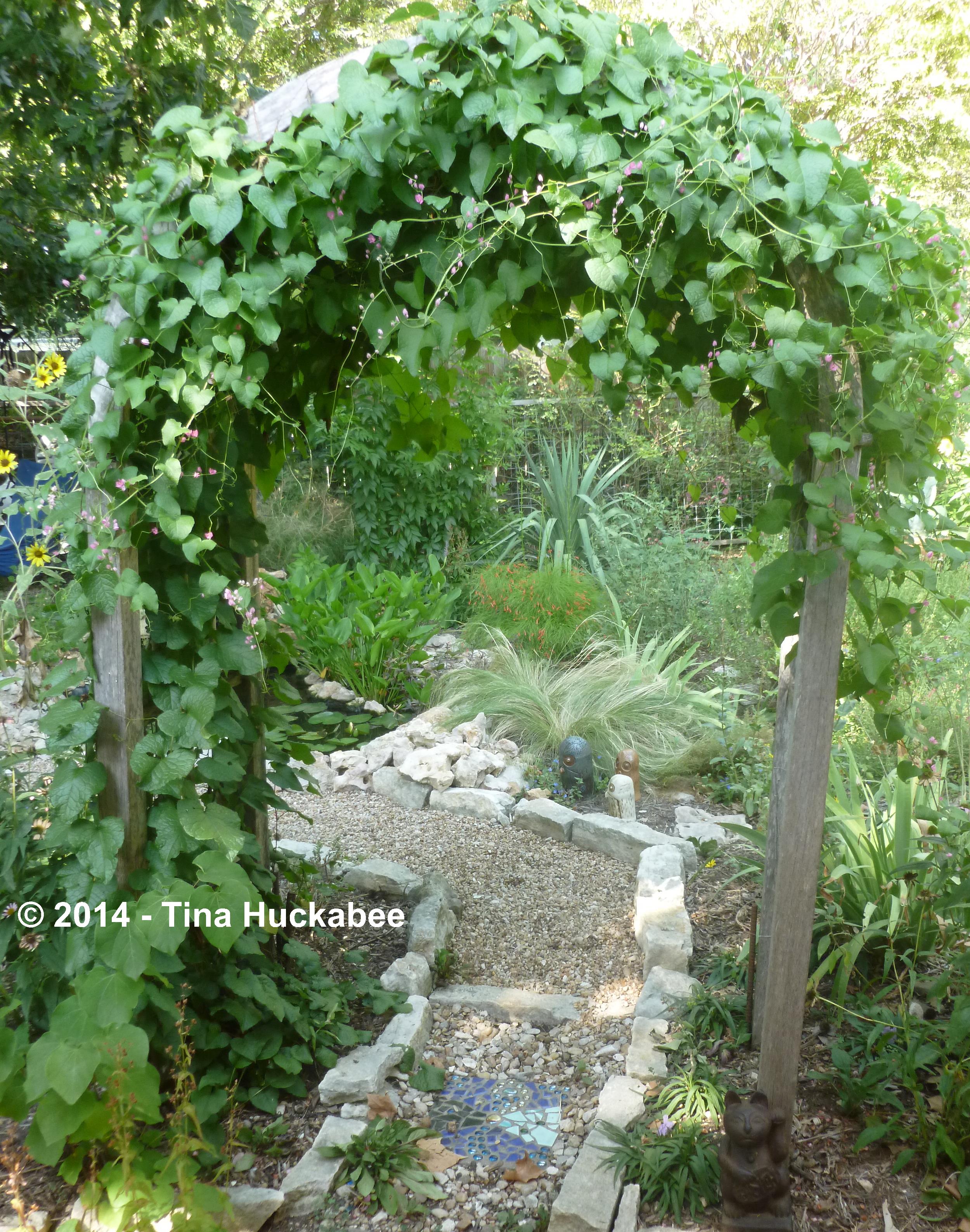
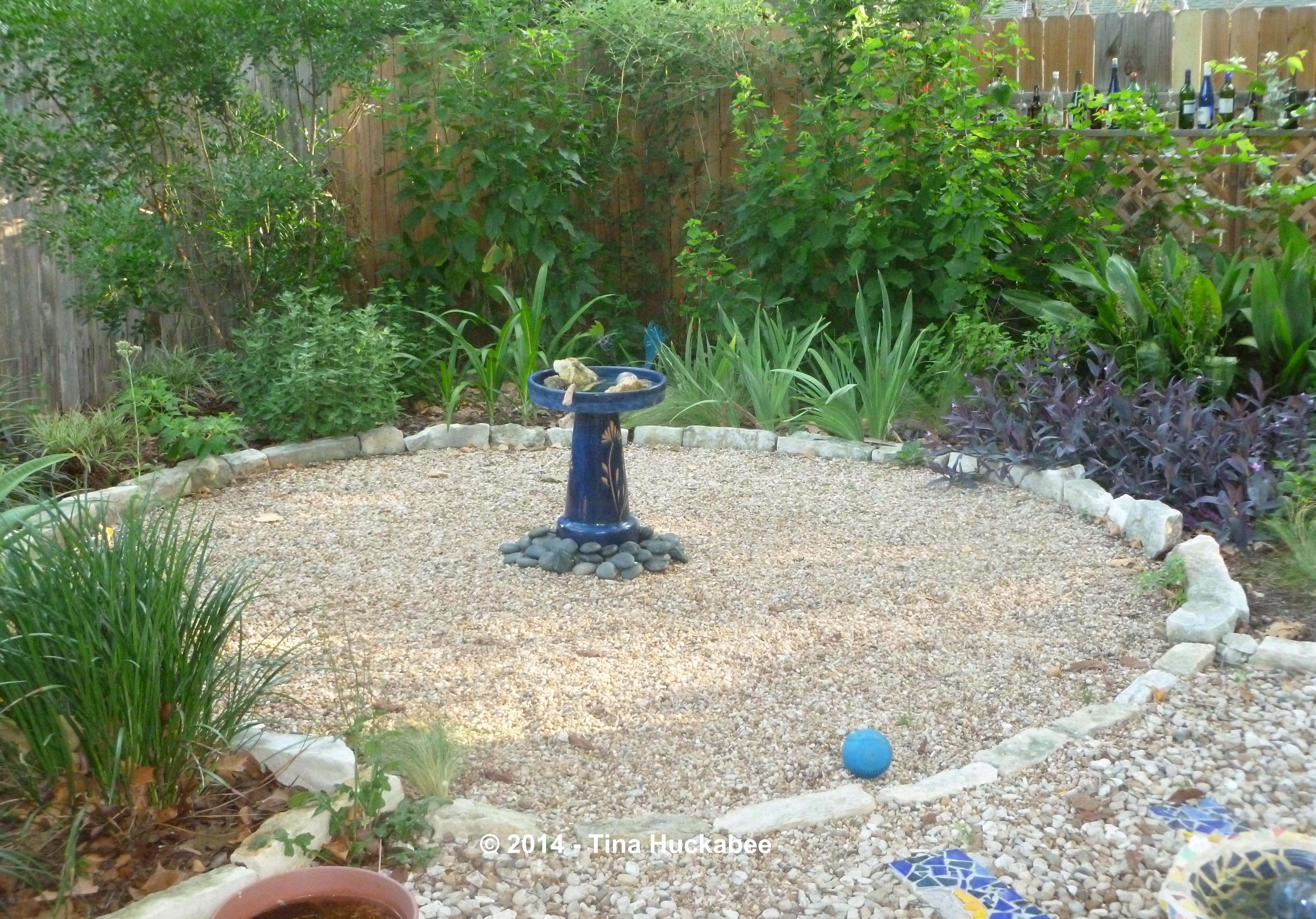
Instead of grass there is now a simple swath of pea gravel, bordered by perennial gardens and the cooling, restful pond.
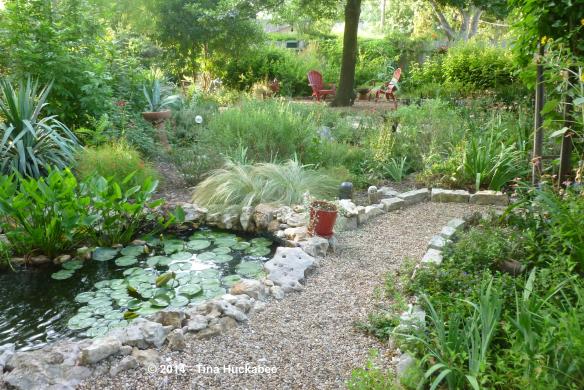
I drool over photos of the extravagant and creative walkways I see on garden blogs and in garden literature, but I have to be practical with my walkways.
My dog, Asher likes to roll in mulch so that pathway product is out of contention because of the mess engendered. He also enjoys rolling in pea gravel.

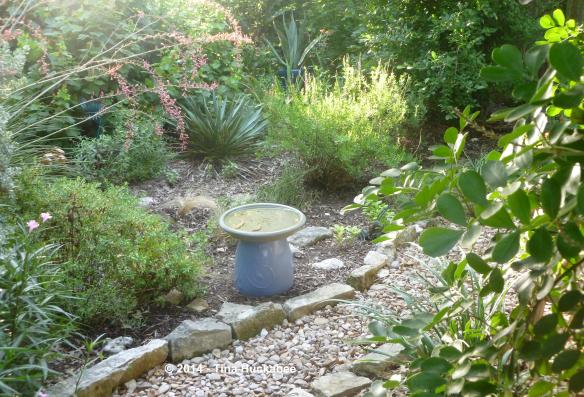
But pea gravel is cleaner than mulch and I don’t mind walking bare-foot on it, so that’s the medium I’ve chosen for two open, negative spaces and one pathway in my back garden. The maintenance is easy and pea gravel has a tidy appearance.
This area was once entirely turf,

…and this one, too.

In fact, my whole back yard was lawn. Now the area is a low-maintenance, no-lawn alternative. There is no turf and no grass. There is nothing left in my back gardens which needs heavy-duty weekly upkeep or irrigation.
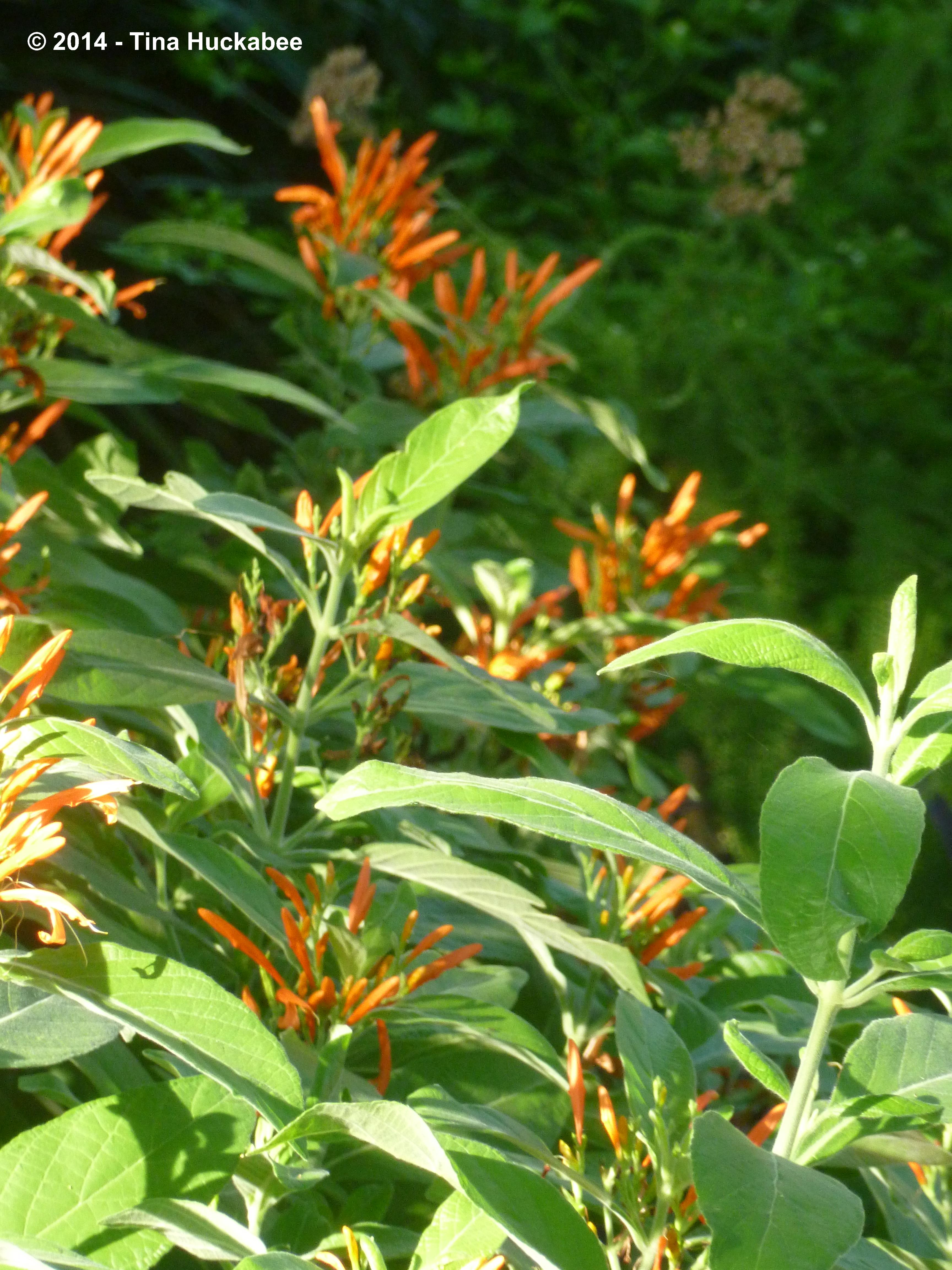
Instead, lovely perennials, shrubs and ornamental grasses,

…with accompanying pathways fill this once sterile place.
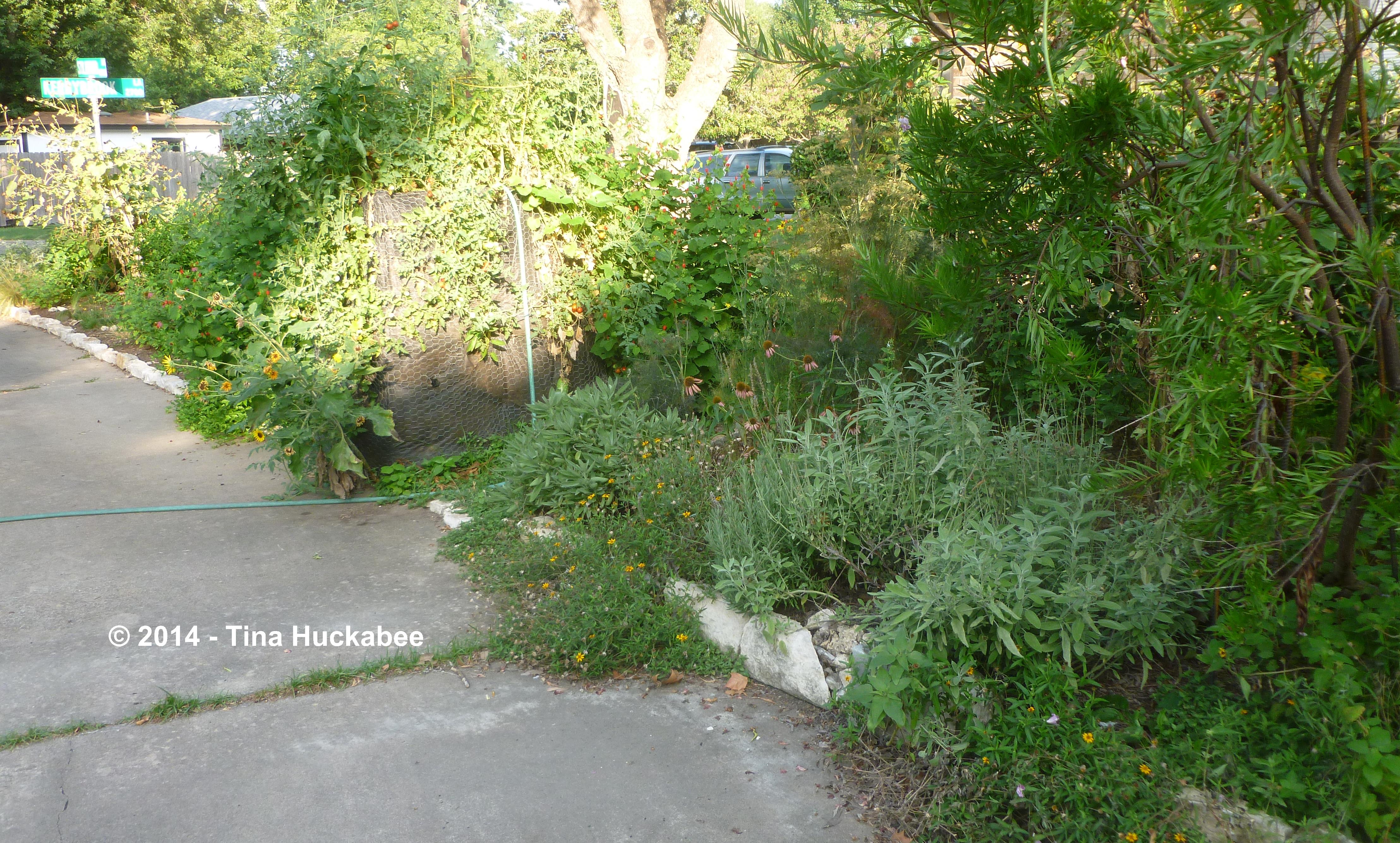
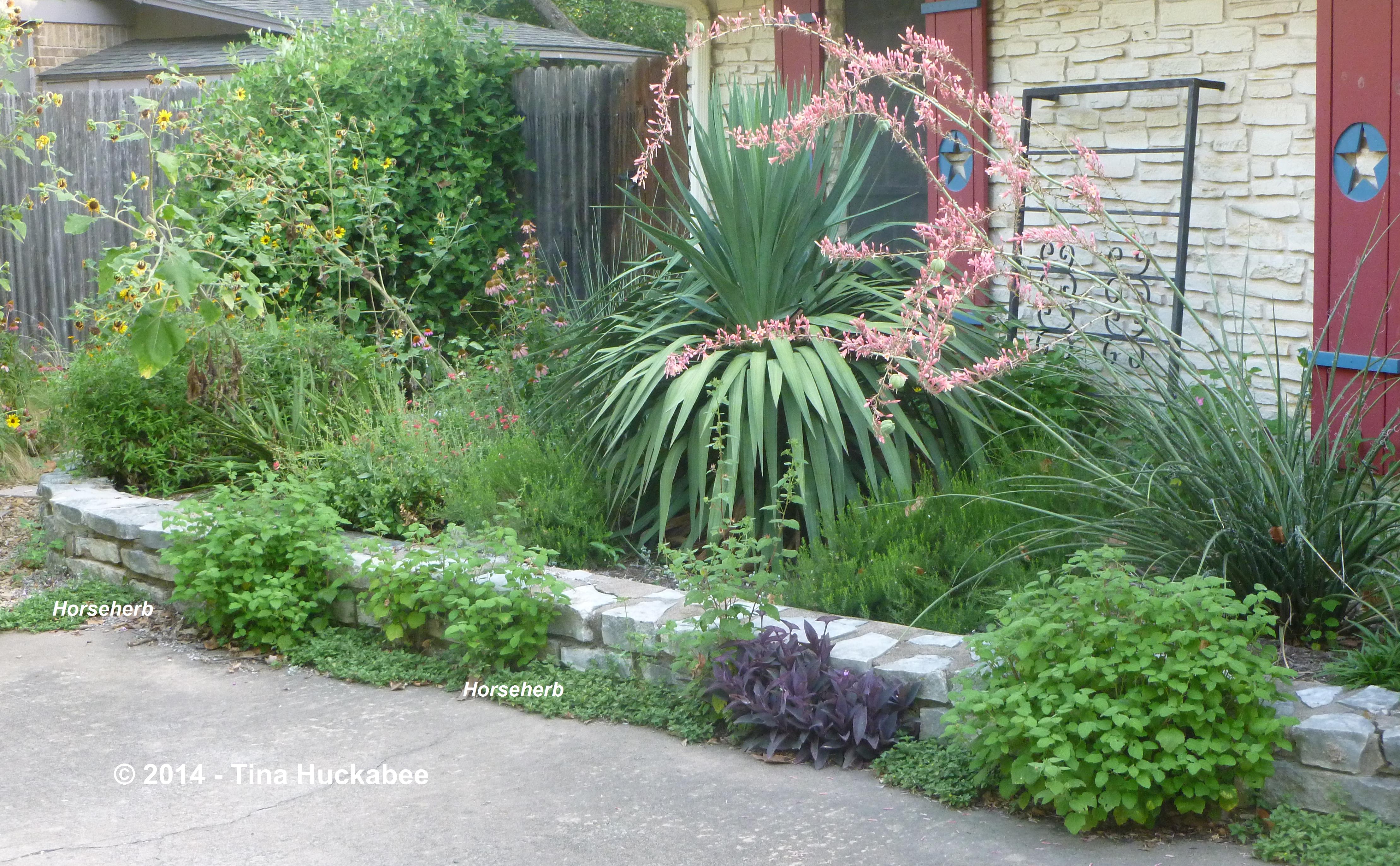
This front part of my Slice of Paradise was all St. Augustine grass for many years.

But for the past 8-10 years, it’s promoted perennials and hosted plants for wildlife, while providing herbs and vegetables for my family.

The main section of my front yard was entirely St. Augustine grass until 18 years ago. I added a border garden stretching along the street side and up the driveway to enclose the space. After a cold winter 16 years ago which killed the St. Augustine grass, I expanded the garden inward toward the center of the lot. For many years, I mulched the open space, resulting in a restful sitting are where we enjoy the garden, mosquitoes notwithstanding.

I admit that I came to miss the green expanse that turf lends to a garden space. I didn’t want to install grass because most lawn varieties are water-needy and wasteful. Most turf doesn’t feed any wildlife, and it requires mowing and fertilizing. None of that for me!
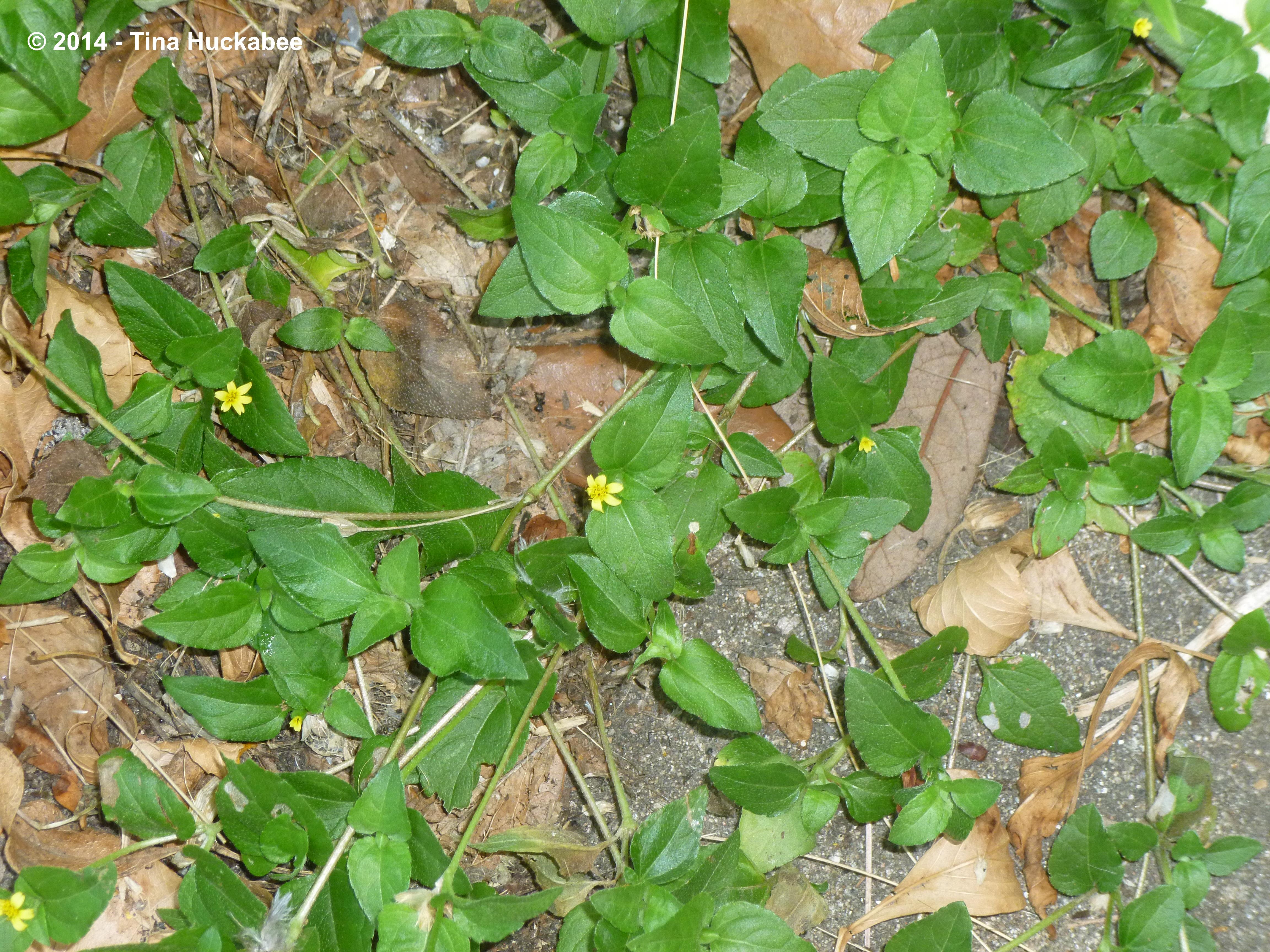
A while back, I noticed Horseherb, Calyptocarpus vialis, popping up in crooks and crevices around my gardens, or more correctly, in pathways around my gardens. I don’t know where it came from, but I like Horseherb also call Straggler Daisy.

Rough-textured foliage, with tiny, sunny-yellow flowers, some years it blooms more than others. This year, hardly at all.
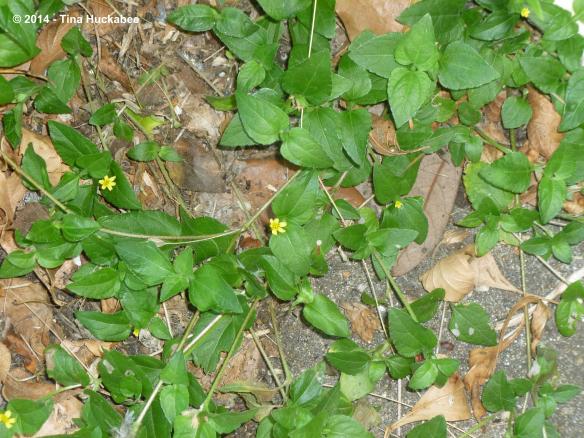

Horseherb is a drought-tolerant, hardy native ground cover which accepts shade and moderate foot traffic. While I didn’t mind it spreading in my garden space, I was attempting to keep it under some control. As I was yanking out some Horseherb (which has returned…) from the crack between the driveway and this raised bed,
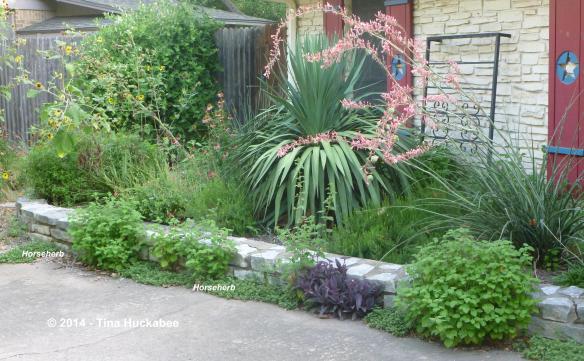
I thought: Why can’t I use the Horseherb as a ground-cover in that sitting area? There’s no reason this can’t be transplanted.
So I did!
I’m pleased with this project. The Horseherb nearly filled the space last summer, though with the cold winter of 2013-14, it’s returned slowly and unevenly.
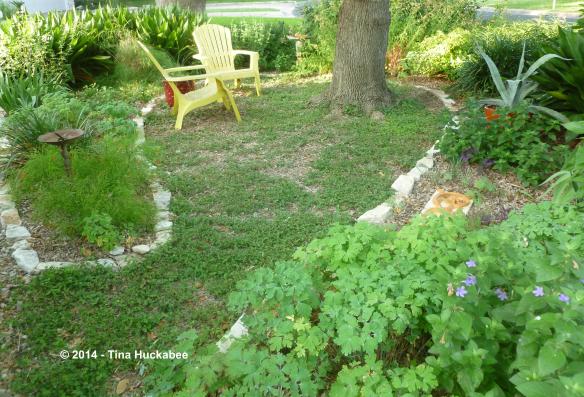
I transplanted some of the clumps of Horseherb very late last fall–I believe there wasn’t sufficient root establishment for those particular plants and that’s why it didn’t return after the hard freezes. Also, I haven’t transplanted any new clumps this year to replace the lost Horseherb. If I had, this area would be completely filled in by now.

I watered it three times last summer and so far, not at all this summer. I probably should water at this point, but it certainly doesn’t need the weekly irrigation that the typical lawn would require.
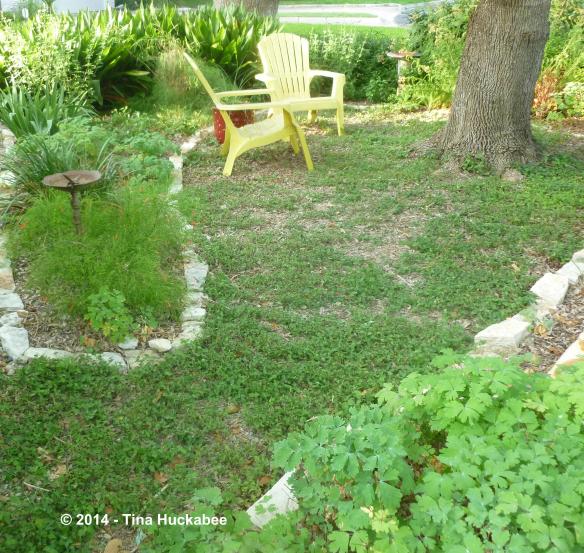
Two downsides of using Horseherb as a “lawn” ground cover are, 1) it needs trimming along the edges to prevent encroachment into the garden, and 2) it’s not evergreen. Those minor issues aside, Horseherb allows me some green expanse of lawn that had I missed and desired.
However, I do have to mow it. So I use this not-so-bad-of-a-boy for that job.

A friend gave me this old-fashioned, human propelled push mower a few years ago. It’s perfect for the tiny area which needs mowing and I don’t waste fuel when using it. Tina-powered calories fuels the mowing and I’m always happy to spend of a few of those.
I don’t live in a gardening-centric neighborhood. I’m dismayed when I see homeowners replace dead grass with the same, or similar, grass. In my neighborhood, that happens all too often. (What’s the definition of insanity? Making the same mistake over and over?) With the reality of increasing limits on water usage faced by urban areas, here in Austin and elsewhere, homeowners will need to remove water-hogging turf and install usable pathways and native/well-adapted perennials. The market is also expanding for commercial drought-tolerant lawn substitutes–there’s more than just St. Augustine and Bermuda grass to choose from. Practical lawn alternatives support water conservation, can (and should!) promote wildlife gardening, and are easy to maintain.
Lawn alternatives are at least as attractive as a stretch of green lawn, if not more so.
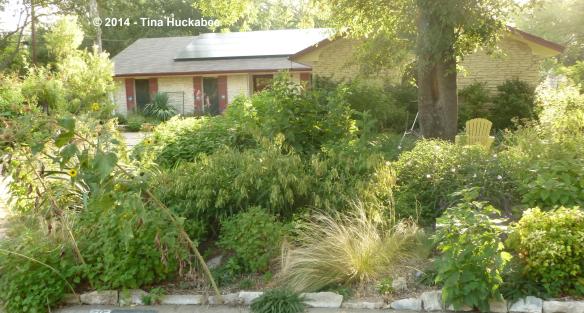
I wish the less lawn revolution was happening more quickly, but it is happening. I’ve never regretted ditching my lawn so long ago. If you want to read about my yard transformation, click here.
No more bad boy turf for this gardener!