A Camel Is A Horse Built By Committee

It’s a truism that decisions by committee don’t always achieve the best solution, only the solution that everyone agrees on. On May 24th, I wrote this post about the City of Austin’s proposal to disallow  personal grave memorials at Austin Memorial Park.  I explained my stake in this cemetery and why I am against the new rules.  Austin PARD (Parks and Recreation Department) provided a survey that well over 1000 people completed.  Thank you to all who completed that survey–I know there were many who read this blog who participated.  Your voices were heard.

Initially, PARD planned to completely remove all personal mementos from graves. After the results of the first survey, PARD has amended their initial  proposed rules. The results of the survey suggested that most who completed the survey did not want the aesthetic of private, sometimes quirky, memorials changed.  So, PARD compromised with  new and improved rules.

Sort of.

What is now proposed is that there can be private memorials placed only within 36 inches of the head of the grave (this would include the headstone) and 10 inches from the sides.

While I appreciate PARD’s willingness to listen to taxpayers and stakeholders, I still have problems with the newest proposed rules.  I will have to completely  rip out the garden atop my daughter’s grave and there will be grass planted, against my wishes.

This “compromise” won’t improve maintenance, the mowers will still mow around graves and segments of graves.  With the amended rules, PARD is still insisting upon a change of cemetery aesthetics away from what has naturally evolved in the cemetery.

PARD is asking for yet another survey on the new, proposed rules. If you believe that cemetery stakeholders who own plots should be allowed to place private memorials on the entirety of those plots,  please take a few more moments to complete the new survey, here.

You will only have until Friday, June 13, 2014 to complete this survey.  The City Council will decide this issue sometime in August.

Please remember:

The plots are owned in full by family members. We’re only asking  allowance to memorialize our loved ones on land we own.

The garden and memorials on Shoshana’s grave have been there for over 7 years.  There are other graves that have had gardens and memorials for much longer, even decades.  There is a common understanding in law whereby unenforced rules and covenants become null and unenforceable over time.  All we ask is that this cemetery and its graves be considered in the same way–that the new cemetery rules encapsulate the aesthetic which developed over time.

Reasonable people agree that nothing dangerous should be on graves.

The new proposal doesn’t decrease maintenance in any substantial way.


Big Muhly, Lindheimer’s Muhly (Muhlenbergia lindheimeri): A Seasonal Look

This is the second post as part of the new and continuing series, A Seasonal Look. Today we’ll look at Lindheimer’s (Big) Muhly, Muhlenbergia lindheimeri .

Be still my beating heart!  THAT is a beautiful plant!

20111102_4

The slender, graceful foliage in spring and summer and the fall/winter inflorescence of the Lindheimer’s or Big Muhly, Muhlenbergia lindheimeri, is eye-catching and always makes my heart skip a beat. My oh my!

2011-08-28 472_cropped_1386x1015..new

Lindheimer’s Muhly is one of my favorite plants. (I know. I say that all the time.)  I think it’s stunning year-round and a desirable garden addition–from its early spring-green strands of foliage growth,

P1040238.new

P1040271_cropped_3562x3133..new

through summer,

IMG_0852_cropped_1609x1095..new

to the zenith of its beauty in fall.

20121013_38_cropped_3516x2525..new

Lindheimer’s Muhly is a native Texas grass.  Endemic to Central Texas, it’s become a popular landscape plant for home and commercial gardens.  L. Muhly is excellent in full sun and requires little water once established.  It is a lovely ornamental grass and regionally appropriate for our gardens.  Lindheimer’s Muhly is  gorgeous when planted in pairs or groups,

20111102_11

or as a single specimen.

IMG_0878_cropped_969x1179..new

It’s a plant which adds structure, foliage interest and grace to any garden, whether in a mixed perennial bed or a desert-themed garden.

In most locally owned nurseries here in Central Texas, L. Muhly is available in four-inch, gallon and larger containers–depending upon the store and time of year. Lindheimer’s Muhly is an easy plant for the most neglectful gardener. The only maintenance is pruning the grass in late winter, preferably in February. Other than that, this plant requires little care.   One other chore the gardener might undertake is to rake fallen leaves out of the grass after autumn leaf fall.

P1020648.new

Personally, I don’t bother.  But if you find fallen leaves tangled in the grass unattractive, it won’t hurt your Muhly to rake them out.  Go for it!

As for pruning Lindheimer’s Muhly, all that’s required is pruning straight across in a “buzz” cut or pruning into a rounded shape.  You can use hand pruners or larger lopping pruners.  I have an old, electric pruner and I simply let’r rip–it takes about 30 seconds for me to prune a mature plant.  That’s it!

Here are some examples of L. Muhly after winter “hair” cuts.

P1020828.new

P1020823.new

An advantage of pruning in late February versus early January ( well after the typical first hard freeze renders the plant dormant), is that pruning in February  results in only days or weeks before new growth begins.  A week or two after pruning, the new spring growth visibly arches up and over the pruned portion of the grass.
P1020934.new

Also, it’s a good idea to plant L. Muhly with early to mid spring blooming perennials or native annual spring wildflowers.  I’ve planted mine with Heartleaf Skullcap, Purple Coneflower and iris as neighboring companion plants.  As the Muhly is growing from its winter prune, the blooming annuals and perennials can flower with abandon and strut their stuff.  Later in summer and fall, when the Muhly is in its full glory,  the earlier spring bloomers have exited center stage–either by complete dormancy (like Heartleaf Skullcap) or reverting to a less showy, non-blooming state.

It’s not necessary to prune Muhly–after all, in the wild they aren’t pruned.  I experimented a couple of years ago with one of my Muhly grasses and didn’t prune in late winter.  Here it is in spring:

20120314_2_cropped_2221x1793..new

and in the early summer:

20120502_6_cropped_1724x1133..new

I eventually selectively pruned the dead foliage out of the plant because I preferred the newer green growth to dominate and considering that my Muhlies are in a cultivated garden, it’s appropriate to “neaten” them with a late winter trim. Pruning isn’t necessary for the health of the plant–pruning is for aesthetics only.

Lindheimer’s Muhly is deer resistant  and will get two to five feet tall and about three feet wide. L. Muhly prefers full sun, though it can take some shade. It can also grow in a variety of soil types, though as it’s native to the Edwards Plateau eco-region, it prefers a rockier soil. The two original Muhly plants in my gardens succumbed to increasing shade, plus the soil in my garden is somewhat heavy.  My property lies along a junction of the Edwards Plateau and the Blackland Prairie eco-regions and is the heavier Blackland Prairie soil.   The combination of increasing shade and clay soil is not ideal for L. Muhly.  Last year, one Muhly rotted out completely and the other was well on its way.   I removed both, but added two more L. Muhlies to the garden.

20121013_39

I replaced the two rotted Muhlies with new, one gallon-sized plants in fall 2013. Seedlings and newly purchased specimens  are easy to plant–just water for the first few weeks, then back off of the irrigation.  Mature L. Muhly require minimal irrigation. I water one or twice per month during the summer months.  Also, I don’t mulch my Muhlies thickly–a thin covering is fine.

The replacement Muhly grasses receive more sun than the originals–they should be happier.

P1040237.new

P1040655.new

Try Lindheimer’s (Big) Muhly in your garden.  It’s hard to find a plant that requires less maintenance than this magnificent ornamental native grass.

In spring,

P1040188.new

summer,

IMG_0874_cropped_1816x1076..new

fall,

20121013_18

and winter,

P1020639.new

you’ll be happy with your choice!


Wildlife Wednesday

I know it’s not Wednesday.

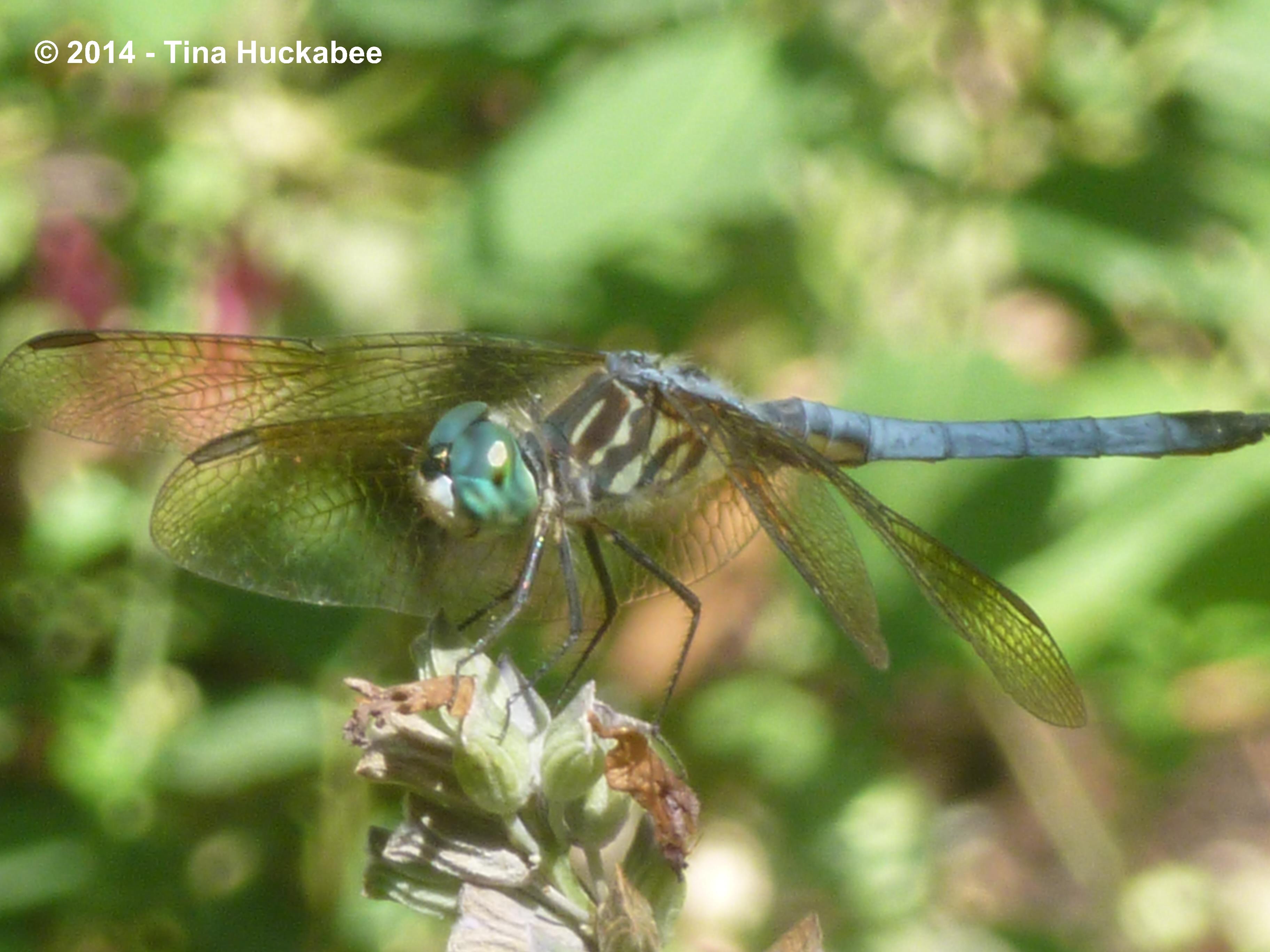
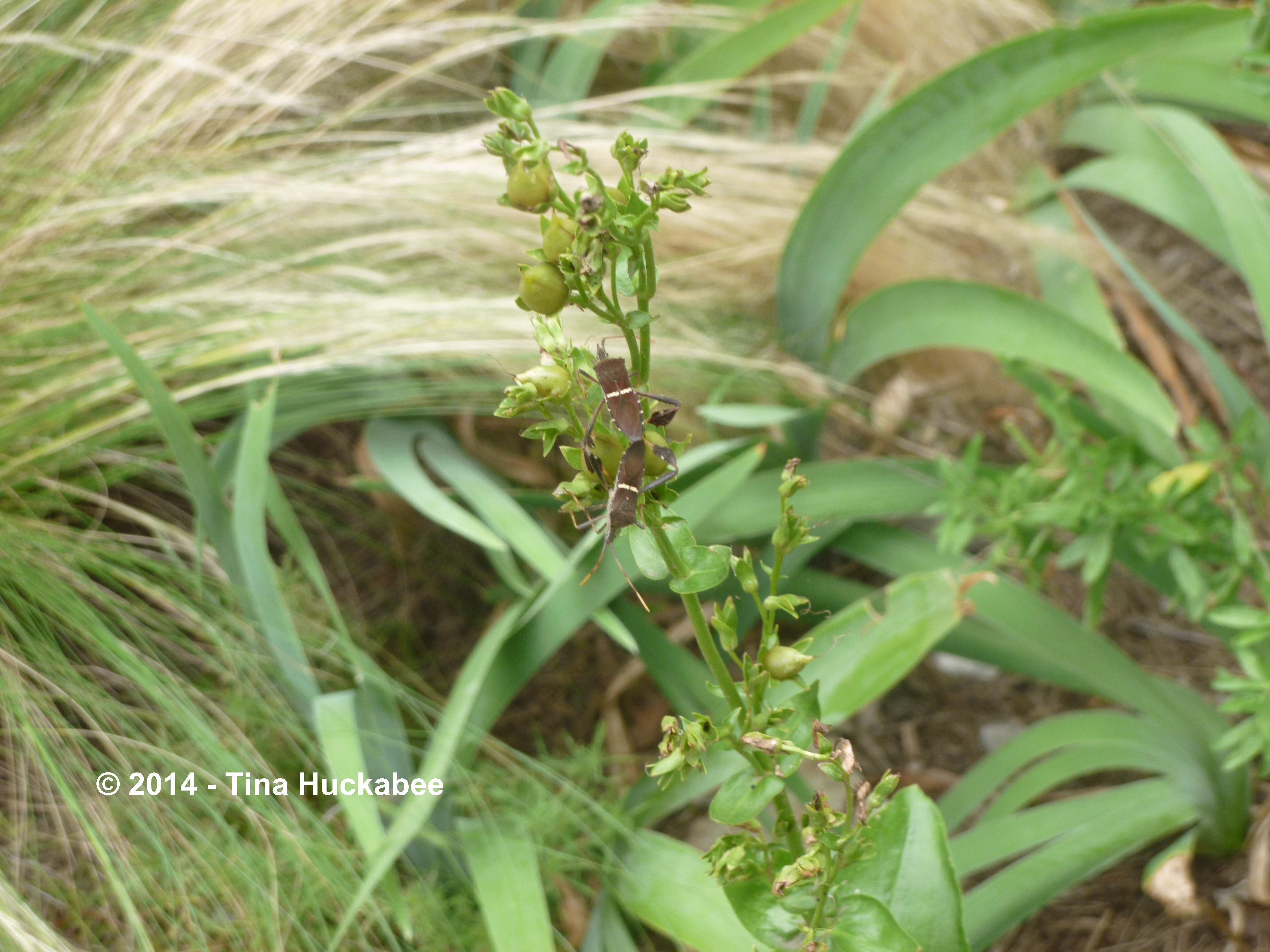
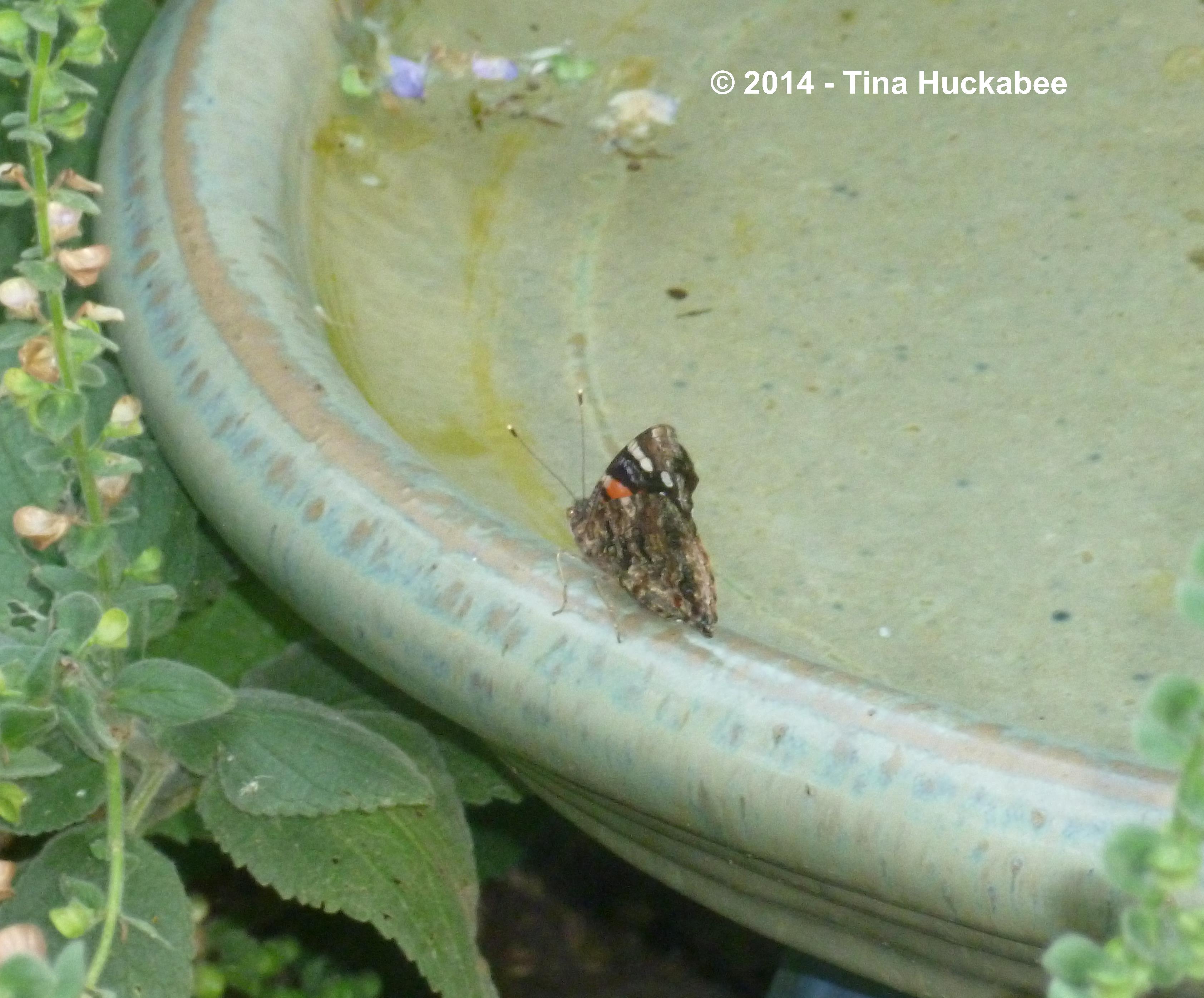
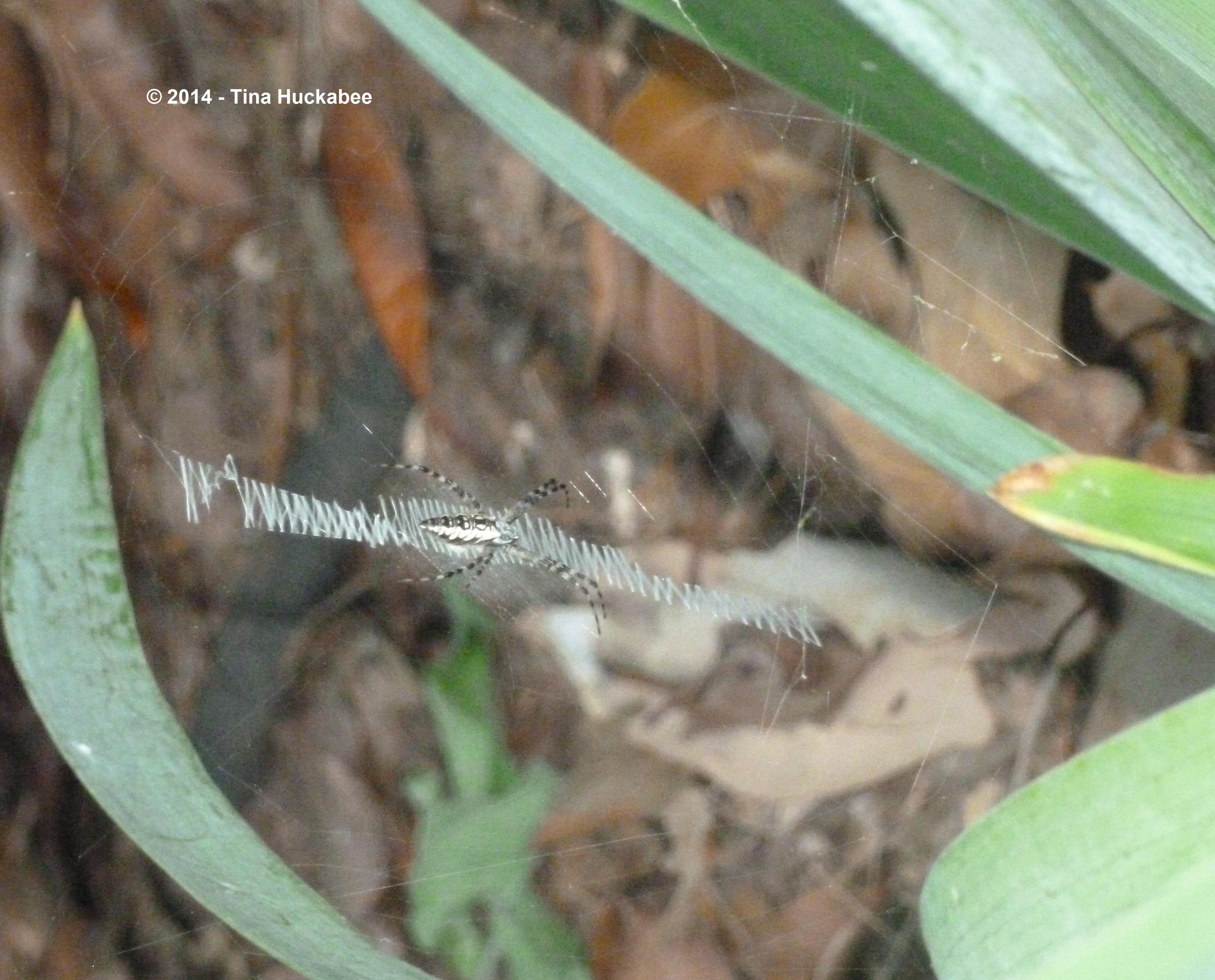
But I don’t believe there’s a specific blogging day dedicated to the celebration of wildlife in the garden and I want to change that.  I’m inviting enthusiastic garden bloggers everywhere to snap photos of the wild visitors in your gardens and then to join me on Wednesday, July 2, 2014 and every first Wednesday of the month after that, to share posts about those wild ones you encounter.  Photograph and write about any kind of wildlife that interests you.

From the ordinary,

P1040895.new

to the extraordinary.

P1030230_cropped_2378x2433..new

Post about the beneficial ones,

P1040757.new

P1040891.new

or the not so beneficial ones.

P1040623.new

All garden bloggers dedicate some writing and photography to the furry, feathery, or scaly in their gardens.  Attracting wildlife to our gardens is partially why we garden isn’t it?  A garden is never so alive and vibrant than when it is graced by wildlife.  Otherwise, it’s not much of a garden.

I admire the many bloggers who have more patience (and probably a better camera) than I.  I’m frequently awed by the juxtaposition of the artful and the scientific displayed in gardening blogs.  Garden bloggers love sharing the beauty of wildlife in their gardens. We teach what we’ve learned and experienced because of our passion for gardening and the critters intrinsic to cycle of our gardens.

P1040755.new

In this dedicated wildlife meme, my own personal goal is to become a more patient  photographer and to improve my study of the wide variety of wildlife who inhabit, visit and share my garden space.

P1040660.new

This past spring, I wasn’t able to post about my Eastern Screech owlets because they were high up in the tree before I spotted them and shy before that–I only saw one at the nest box, one time.   Mom and Dad owl raised four owlets this spring and seemingly ushered them into the outside world successfully.

Last year (2013) we enjoyed quite the drama when our owlets fledged, though I don’t think the owls were quite as pleased with their initial excursion from their nest box.

P1020473.new

This little one was glaring down at my curious and circling cats and needed my intervention. Check out those talons: woe to the rats, mice and toads when they come into contact with those.

P1020478.new

I love being needed.

P1020481_cropped_2235x2184..new

P1020482.new

I don’t think Little Owl appreciated my help.

Don’t worry Little Owl, you’ll be back in the tree in asap!  I deposited Little Owl in the tree as both parents watched and within a few days, they were off!

A day or two before The Great Rescue, I was eyeballing Dad Owl in the Mt. Laurel and discovered this magnificent Cecropia silkmothHyalophora cecropia .

20130406_12.new

I’ve never seen one before or since.

20130406_13.new

20130406_14.new

20130406_15.new

Wildlife in my garden–owls and their off-spring because I’ve welcomed them with a nest box (and plenty of toads from the pond to hunt) and a moth who found refuge in a lush, native tree.

Let’s do it!

Wildlife Wednesday.  July 2, 2014.

Beginning July 2, 2014 and every first Wednesday of the month thereafter.