The spring garden is popping with all sorts of pollen-laden plants and pollinators are punctilious in their pollination proclivity. In particular, bees–both native and honey–are performing their tasks, adding to the pulchritude of the garden and the procreation of new plants.
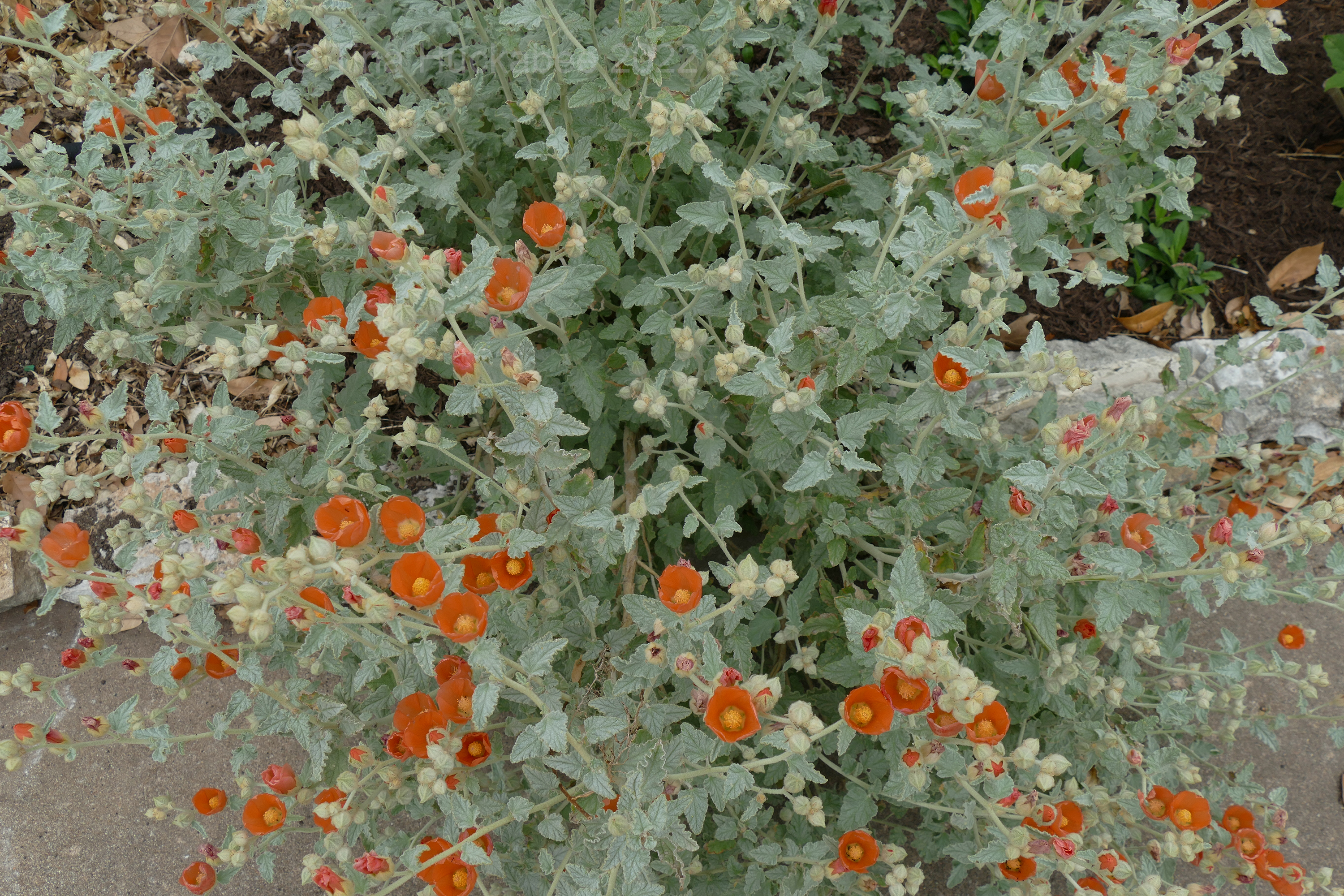
Five Desert Globemallow shrubs, Sphaeralcea ambigua, that now grow in my full-sun garden, are powerhouse plants with pretty flowers; honeybees are passionate about these blooms. Four of the shrubs are pictured here, two in front, and two on either side toward the back, near the wall of the house. One shrub grows prolifically off-camera. I’m pleased as punch that I now have the perfect place to grow these peachy/sagey plants.

All five were damaged by the week-long hard freeze in January, but have rebounded with aplomb. I’m pumped about their growth and blooms.

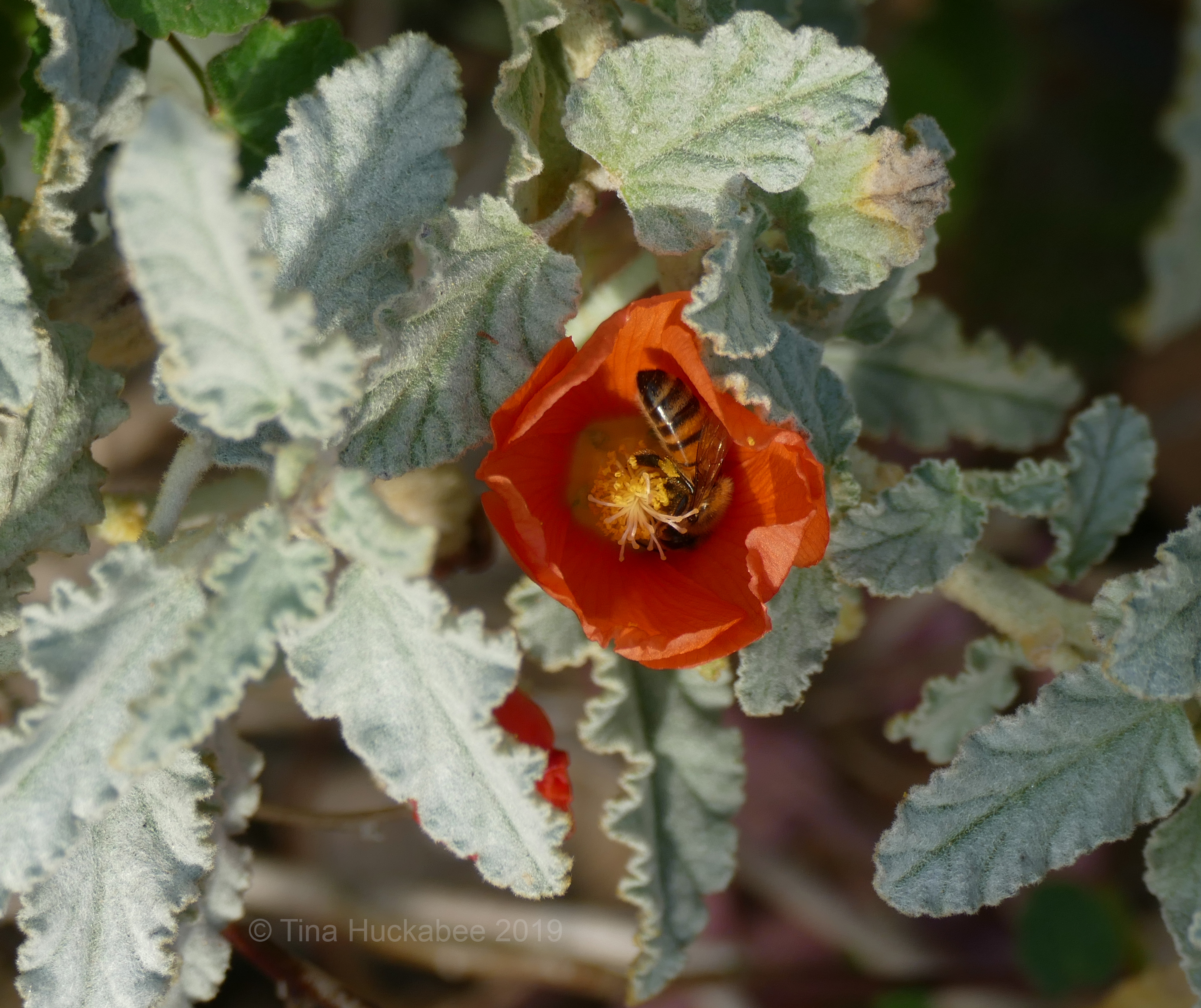
Sun or clouds, honeybees visit the dreamsicle mallow blooms daily; they exit the blooms sprinkled with pollen, and buzz forth, from one bloom to the next. I can’t help but wonder: is it possible that honeybees become too pollen-packed to fly to their hives?

While Desert Globemallow is native to North America, it isn’t native here in Central Texas and can be a pain to procure. Mine have produced a couple of seedlings; with some good luck and careful transplanting, sharing of plants is in the plans.
In its native range of Nevada, Arizona, California, Utah and parts of Mexico, Globe Mallow tends to a longer bloom time than I’ve enjoyed here in humid Austin. These pretties’ bloom production will become pokey once summer’s heat pummels the garden. Except for occasional freeze damage during winter, the foliage is perfectly attractive year-round.

Prolific blooming at its finest, the Desert Globemallow flowers are preferred by pollinators and the pride of this gardener.


 My Gardener Says...