Hanging by a Thread

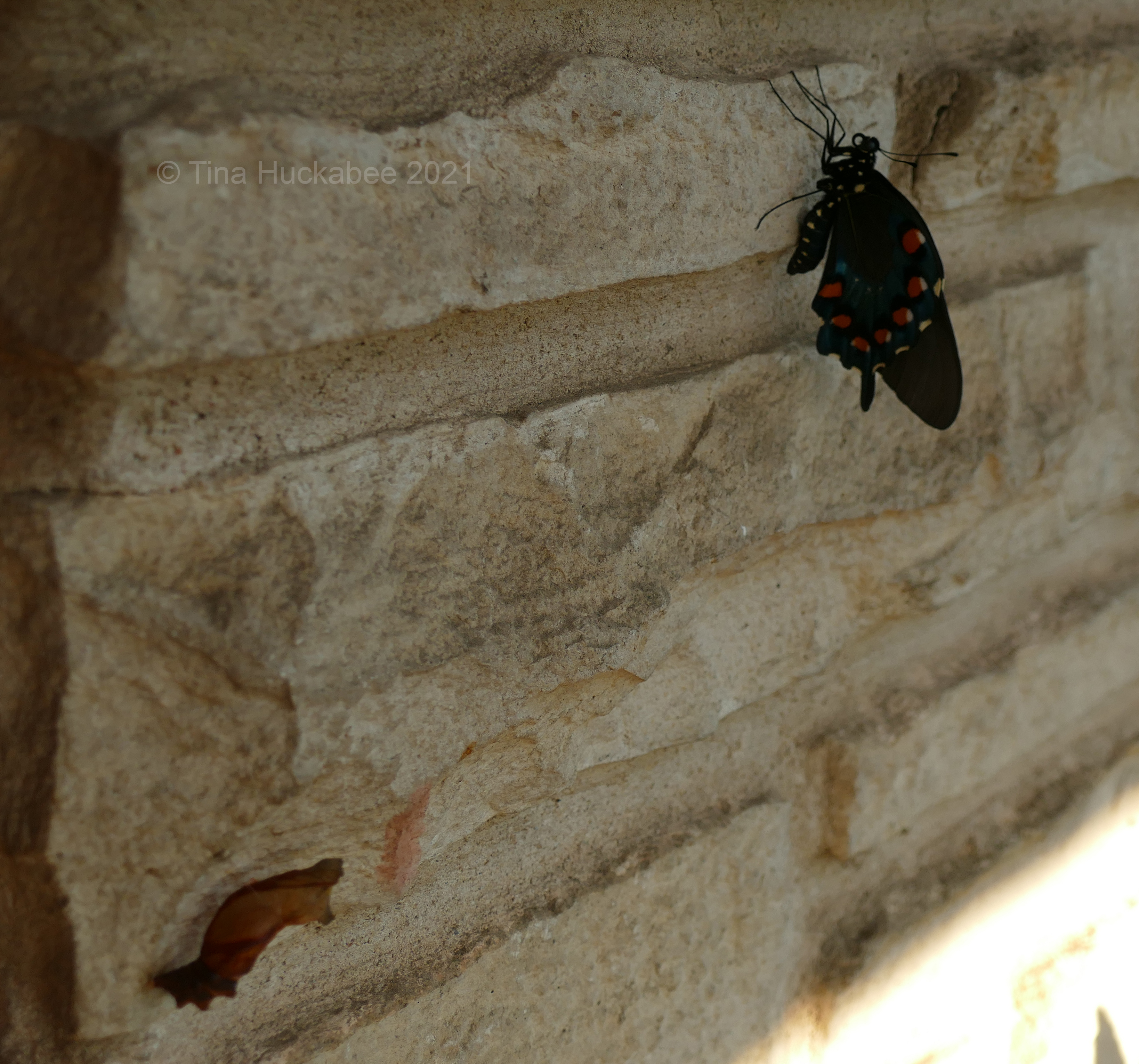
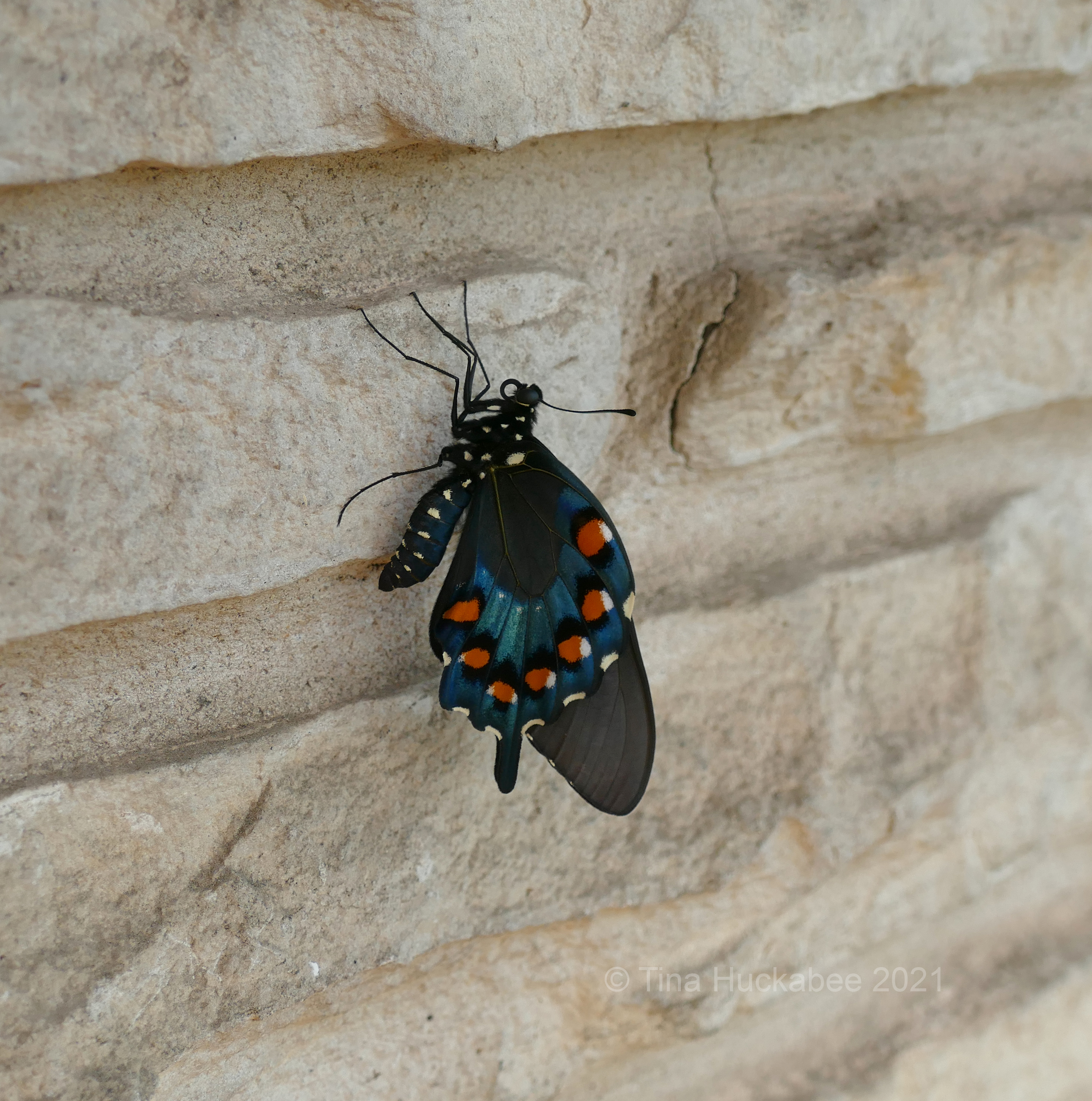
As I wrapped up some necessary gardening chores early this morning, I saw a newly emerged Pipevine Swallowtail, Battus philenor, resting near its former home, the shell of its chrysalis.

I should have dropped the pruning shears, wiped the brow, and grabbed my camera, but I didn’t. By the time I remembered that there was a photo worth getting, the butterfly was off to its adult business: its wings dry, its proboscis unfurled for nectaring, and the search of a mate a keen objective.

Every day, I pass by this seedling where the caterpillar made its home for a few weeks; I never noticed it. The chrysalises are such small, unobtrusive things, it’s easy to miss them in the lush of the garden. I’m not a scorched earth pruner, but when it’s hot and humid and I’ve had just about enough for one morning, it’s sometimes easy to forget the garden’s purpose. I guess the chrysalis isn’t the only thing hanging by a thread.

I’ve seen a Pipevine flitting in the garden today; I’m glad it was up and out in the early morning, shedding its temporary home for the wider world.

Metamorphosis

More than a collection of color and collaboration of texture and form, a garden is the base for life. Providers of pollen, donators of nectar, and deliverers of foliage, plants are foundational partners for biodiverse ecosystems. Insects, as well as other wildlife, are direct beneficiaries of the botanical bounty, frequently repaying that bounty with their own pollination and reseeding gifts.

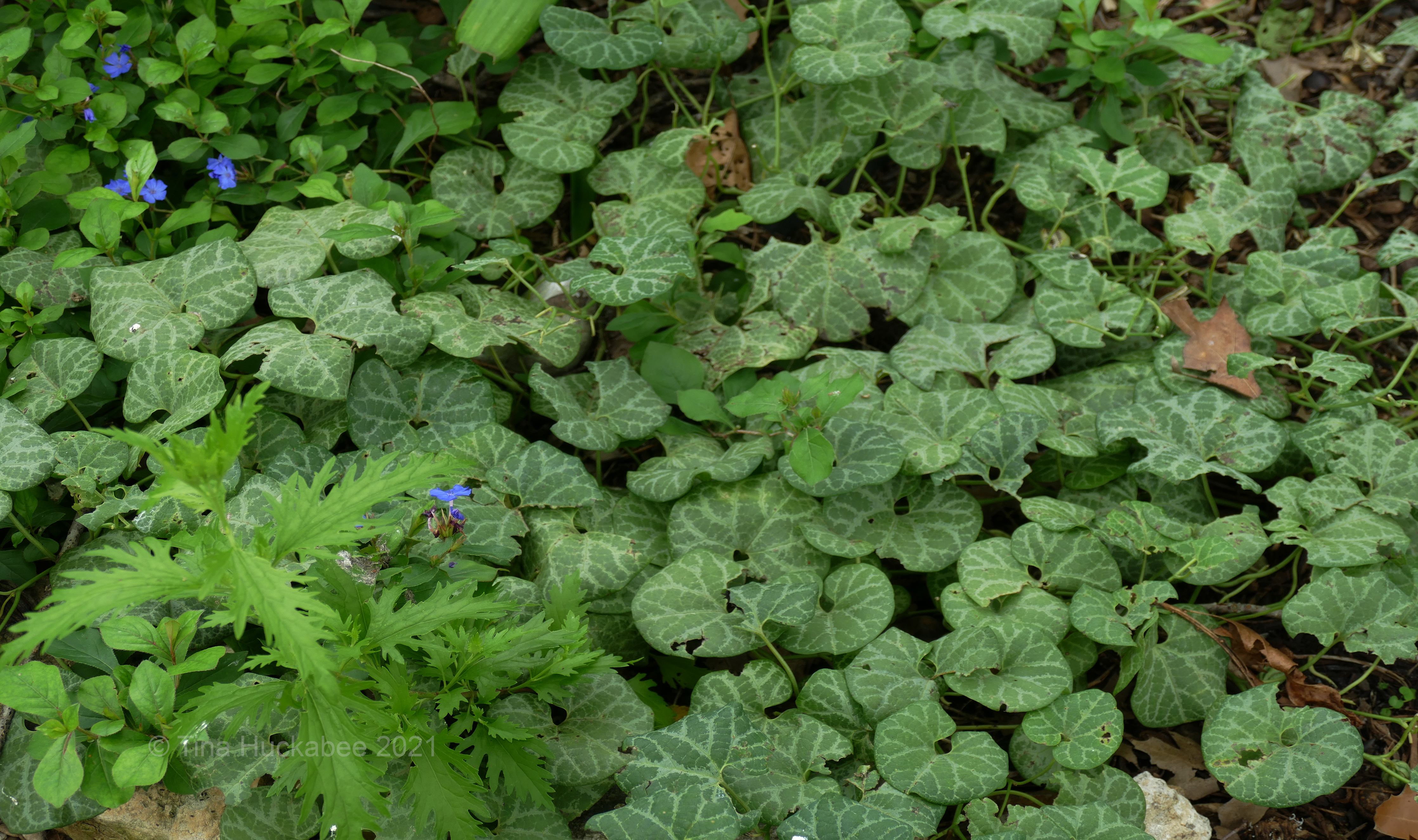
This green gathering of groundcovers all serve as fuel for others in my garden’s seasonal story.

The plant with the petite sky-blue flowers is a Leadwort plumbago, Ceratostigma plumbaginoides. It meanders through several areas of my garden, dollops of blue attracting small native sweat bees. The bright green, lobed foliage at bottom left of the photo belongs to Gregg’s mistflower, Conoclinium greggii, which is currently not blooming. Its fuzzy, lavender-blue blooms will be available for the late summer/autumn migrating monarchs, as well as for a wide variety of other butterflies and bees. The groundcover with the charming clam-shell, variegated leaves–the majority plant in this particular group–is a White-veined Dutchman’s Pipe, Aristolochia fimbriata, a common non-native host plant for the Pipevine Swallowtail butterfly, Battus philenor.

Alongside some dainty pops of blue on the plumbago, the White-veined pipevine feeds Pipevine caterpillars, like the chubby fella below. This year I have enough of the pipe vine that the cats haven’t completely denuded it as they munch their way to adulthood, but they certainly have eaten plenty of leaves to the stems.

Once the caterpillars eat their fill and morph through their various instars, they follow their chemical signals and settle in a place to metamorphize into a different form of themselves. This one strung itself to the limestone just outside the frame of my back door. It traveled far from its feeding place to get to this spot and I wonder: why here, adjacent to the door? It’s an open spot. potentially vulnerable to predators, less hidden than on a plant, like a stem or an under-leaf. Chrysalises are much better camouflaged in the garden than attached to an open wall. Nevertheless, the caterpillar was resolute in its choice, working to moor itself there on its journey to a new, winged self.

The caterpillar also chose to begin changing during a stormy 48 hours; it strung its string, but remained in the J formation through that cooler, wetter period.

In time, the chemical changes happened, the chrysalis formed, and it remained stationary–though not static–for almost two weeks. The chrysalis emitted light and color as it transitioned, sometimes golden, sometimes green, sometimes dark, but always a little different from the day before.

I missed the debut of the adult, having overslept a bit during the premier morning; butterflies emerge with the sun’s rise; gardeners, not always. At 8am, it was there, drying its wings, waiting for the right time to take flight.

The butterfly did fly later that morning, though I’m not convinced it was entirely ready. I bumbled out the door, focused on some back garden chore, and the startled insect winged its way off of the limestone and over the garden, the remaining drops of its successful chemistry experiment scattering in the sunlight.

I’ve left the shell of the transmutation in place, the remnant of caterpillar observable in form, the memory of brilliant butterfly in warm, gauzy colors.

Winged, and Other Things: Wildlife Wednesday, September 2018

Just a quick howdy do!  for September’s Wildlife Wednesday, recapping a few flitting winged things from this past month.  August is typically hot and quiet, but the garden and its inhabitants remain full of energy and life, even when the gardener drags.

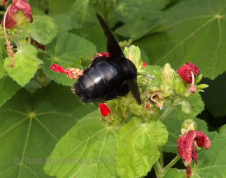
For this whole growing season, I haven’t snagged one good photo of my favorite native bee, the Horsefly-like Carpenter beeXylocopa  tabaniformis.

Bee butt-view on a Turk’s cap bloom.

There are many of these busily buzzing, nectar-stealing carpenter bees in my garden, but this is the best shot I’ve managed this year.  I’m either too slow with the click, or choose a ridiculously windy day to shoot, or am distracted and lose sight of my subject.  The bees keep their cool though, working the garden, laying eggs for the next generation, and taunting the gardener with their charm. There’s still plenty of time to work on attaining some decent photos before the days are significantly shortened and these bees bed down for winter.  Stay tuned!

I’m continuing to enjoy the Turk’s cap visits of several Southern Carpenter beesXylocopa micans.

Like the Horsefly-like carpenter bees, the Southern Carpenter bees nectar-steal and favor Turk’s caps blooms, though I have also seen them at the brilliantly blue, Majestic sage blooms.
These bees are so large, they are easy to spot in the garden, even from a distance.


The big butterflies are now more common, as is typical for the late summer.  This Eastern Tiger Swallowtail, Papilio glaucus, nectared at the dramatic flowers on one of my Mexican Orchid trees, which is a favorite of a variety of bees and butterflies.


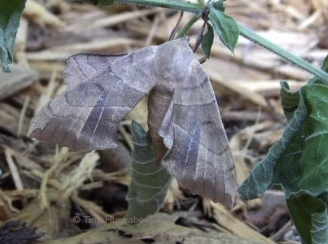
It took me some time perusing Austin area iNaturalist photos to identify this emerging moth as a Virginia creeper SphinxDarapsa myron.

Top-view,

…and the underside.

I love his/her little face and tiny chocolate-drop eyes.  Some bird-delivered Virginia creeper (the host plant for this moth), growing in my back garden, was probably the food source for the moth in larval stage.  This adult emerged in late afternoon from a chrysalis situated on a branch of a Drummond’s ruellia.


The dragons and damsels zoom throughout my garden, but perch near the pond.  I think this is a female Dusky DancerArgia translata.  

The damsel was in nearly constant motion and I took the photo at a distance, so for identification purposes, the photo is not as clear as I’d like.   The Dusky Dancer is a common predator and widespread in Texas.  The purple eyes are a marked feature for this particular species, so I’m reasonably confident I got this right.


This Pipevine SwallowtailBattus philenor, has certainly seen better days.
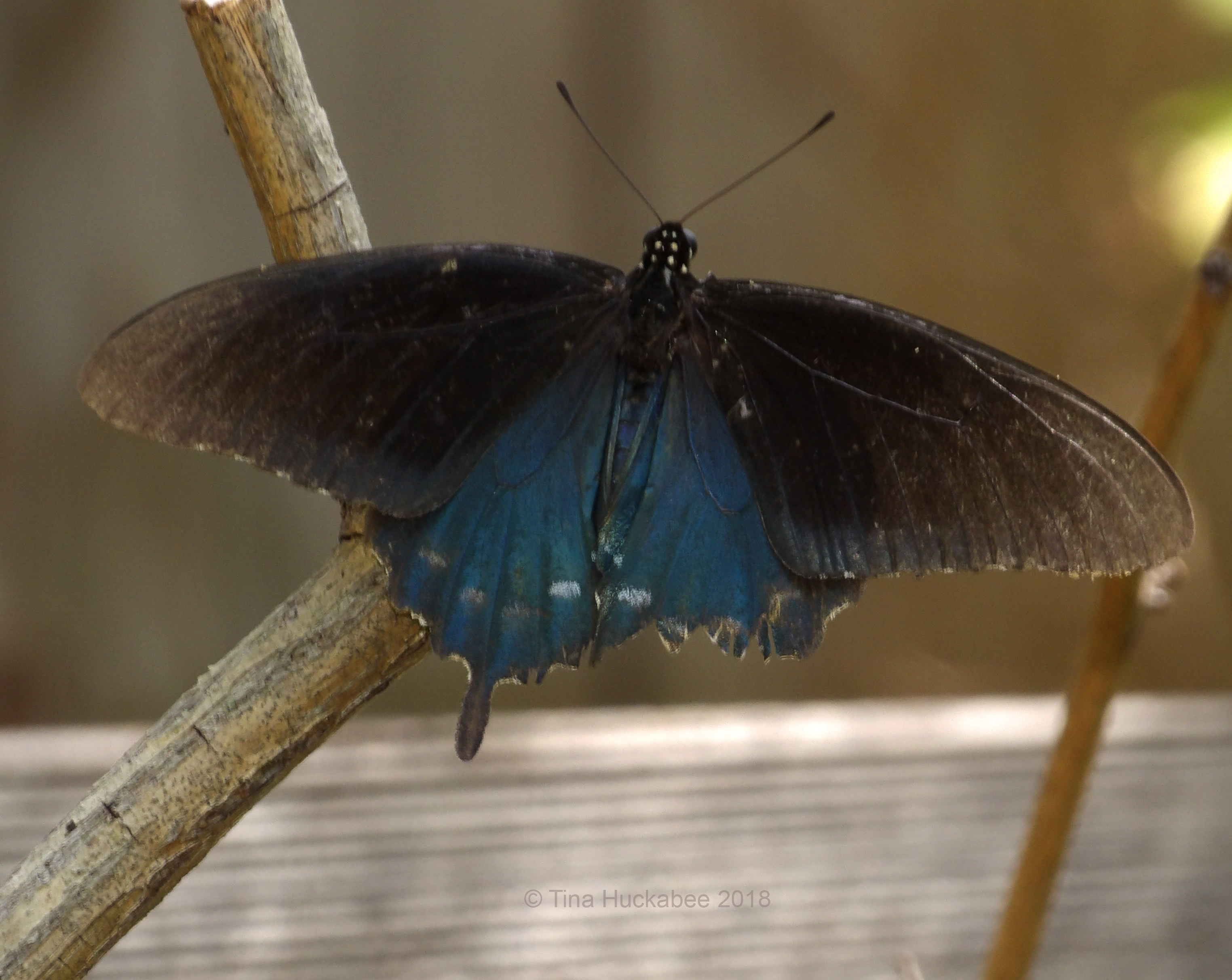
I’m now growing pipevine plant and am enjoying more of these beauties as they float through the garden.


Early one morning I caught this fella nectaring on the salmon blooms of one of my Red Yucca plants.

This Leptoglossus phyllopus is one of the many leaf-footed bugs common in this region and they do fly.


No wings here, but the look on Mr. Green Anole suggests he’s weary of summer and ready for autumn.  Or, maybe I’m just anthropomorphizing.

Yeah, that’s it.
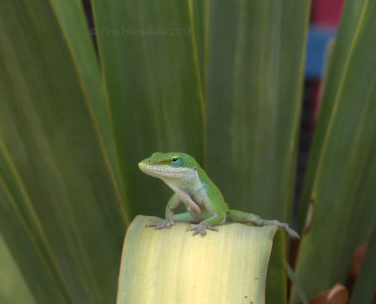
I love these little guys and gals and they’ll be around until our chill arrives, which is months away.

What’s in your garden as we wrap up summer?  Please share your critter happenings and don’t forget to leave a link to your post.  Happy wildlife gardening!