Winter Fat

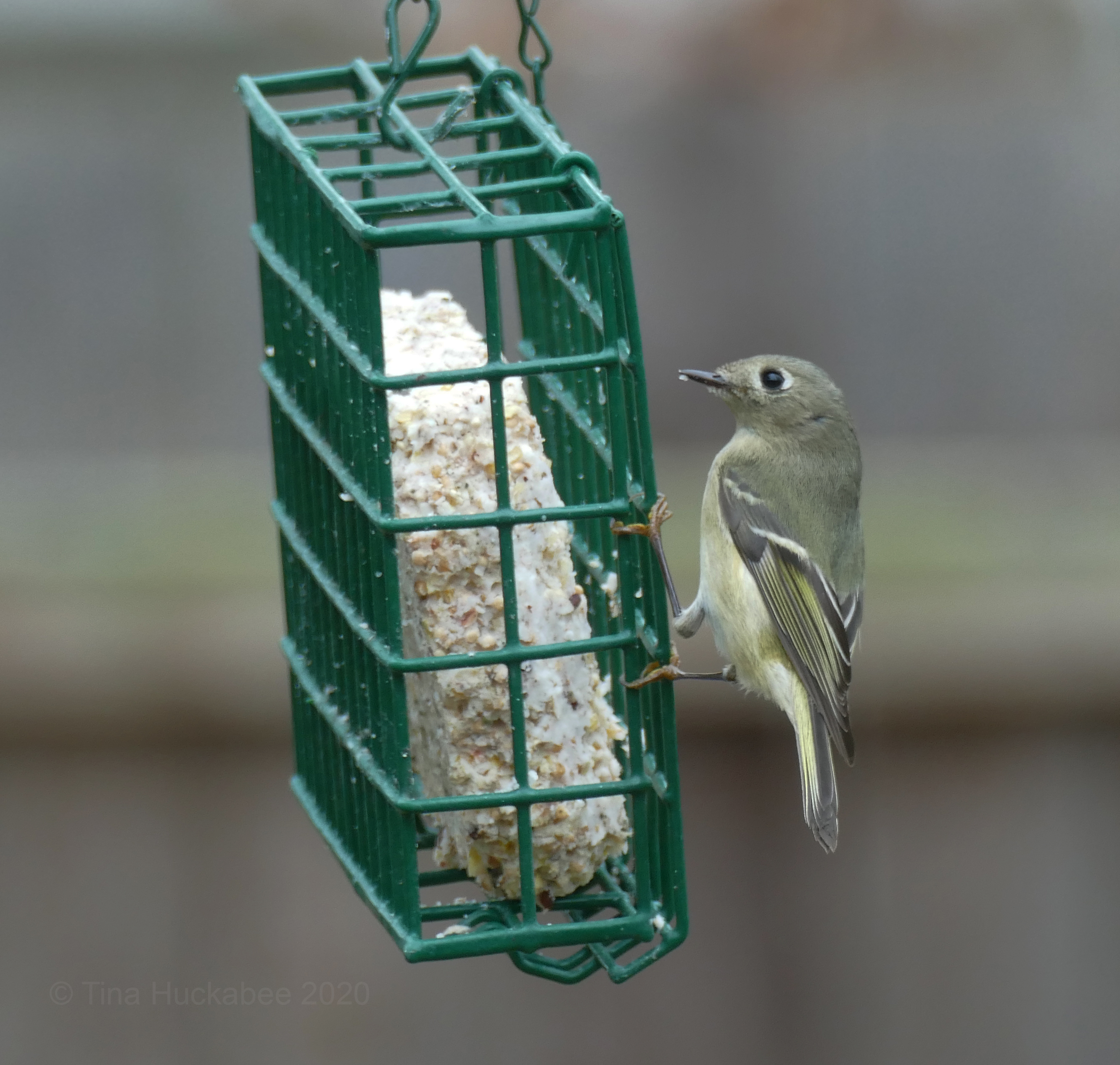
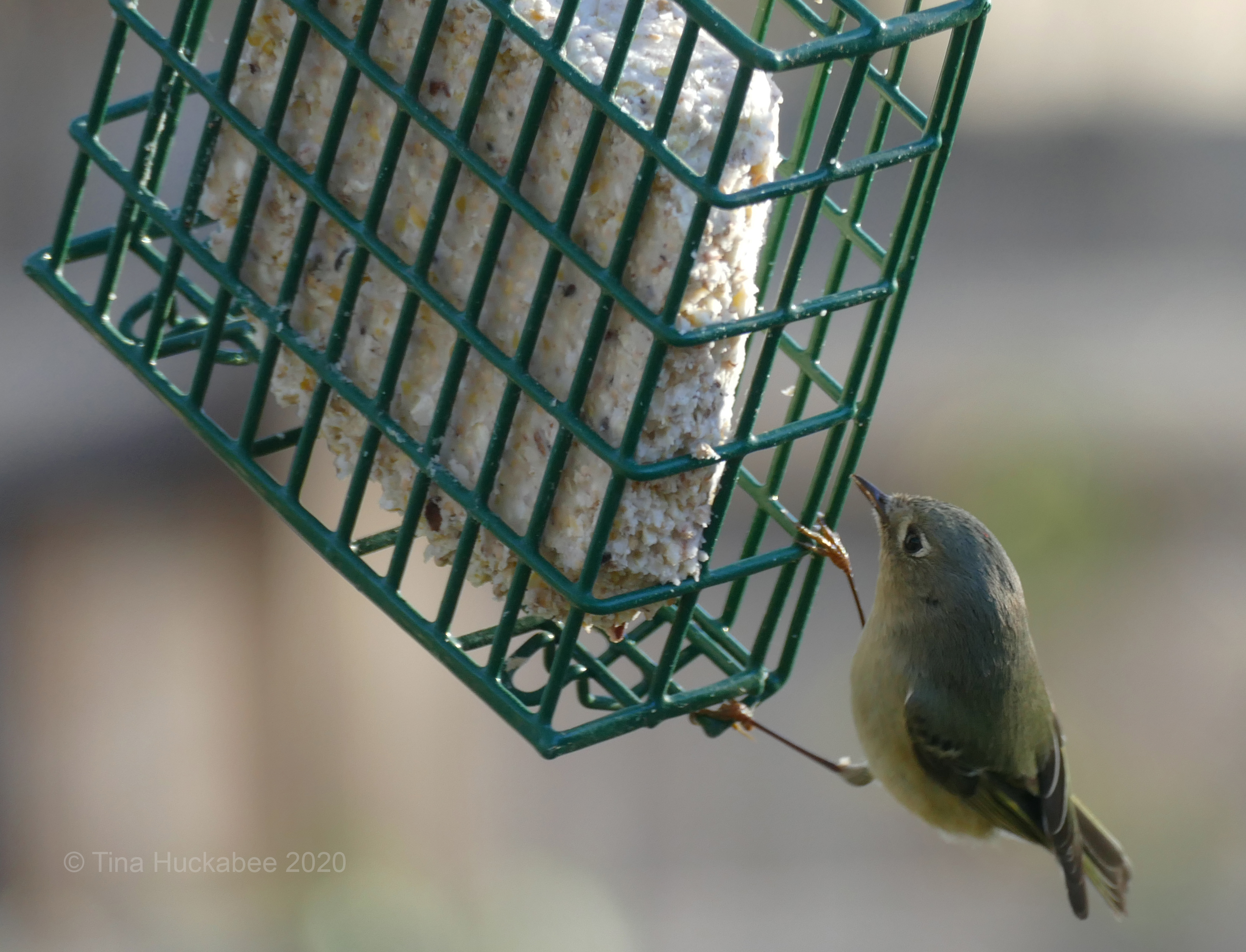
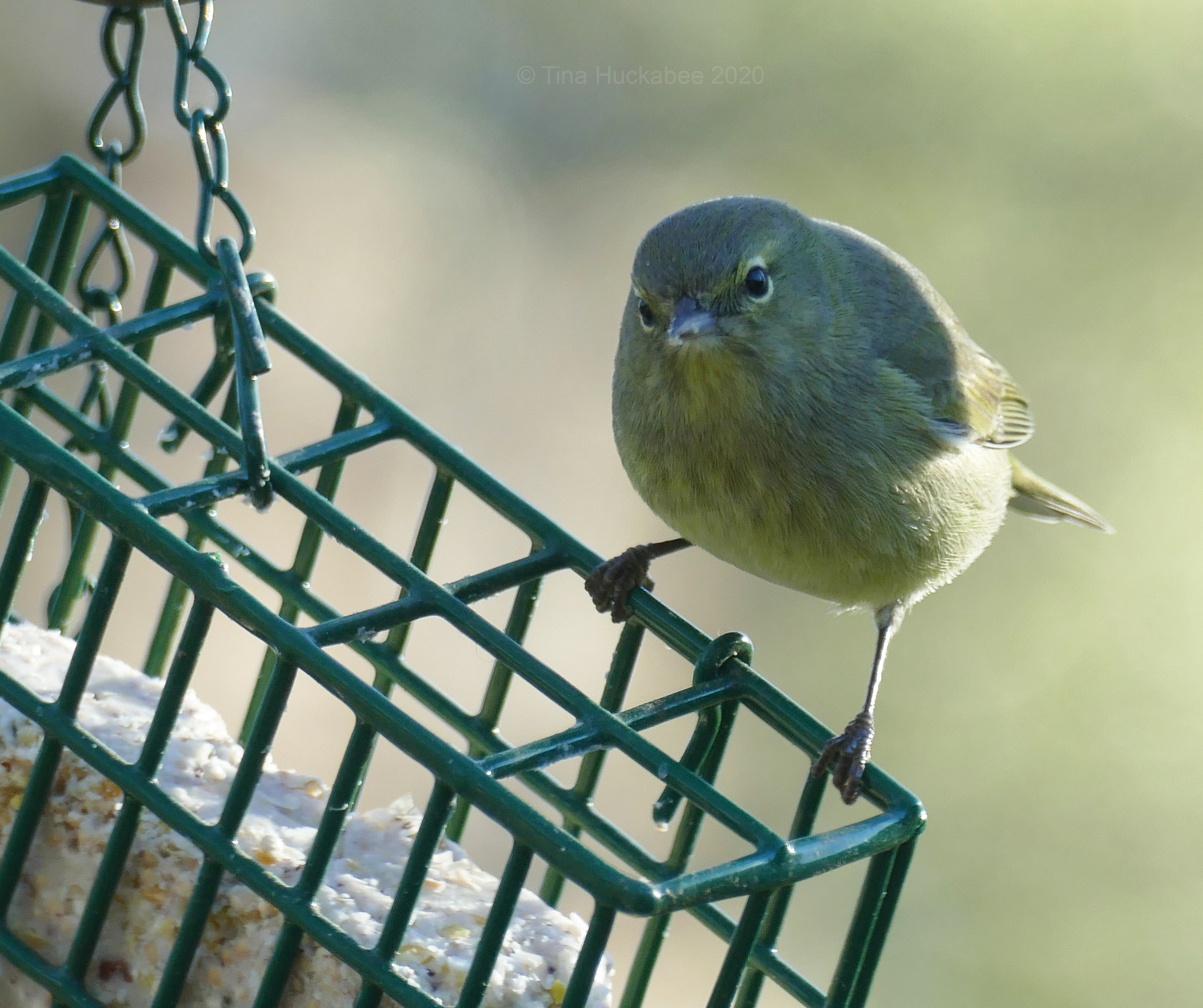
It’s suet season for the birds who visit my gardens. This over-wintering Orange-crowned Warbler, Leiothlypis celata, is a frequent nibbler of the peanut butter infused, commercial suet block.
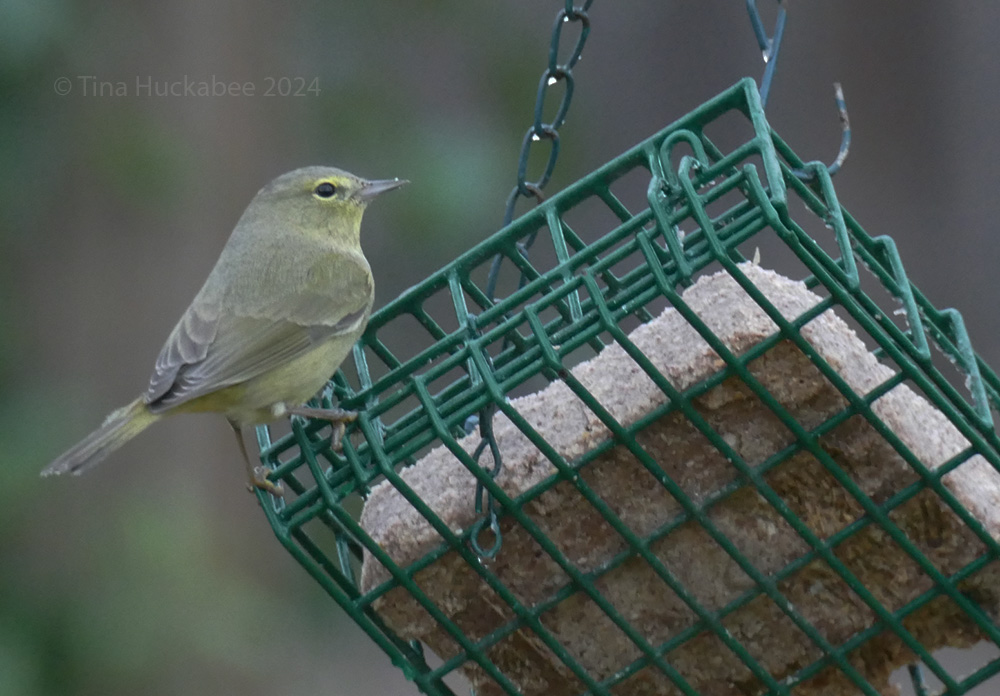
I only offer suet in the cooler months of the year. Central Texas is far too warm from April/May until December, to set out suet. It melts in summer’s heat or turns rancid in balmy autumn; it becomes gross and the birds won’t touch it. Can you blame them? There are better alternatives for commercial bird food in those months: sunflower and safflower seeds, peanuts, and mixed varieties of seeds all give proper nourishment for birds, and while the birds are eating and jostling for the best perches, entertainment for humans. In winter, suet provides needed calories during cold temperatures, though black-oiled sunflower seeds and peanuts also supply healthy fat alternatives as well.

Using commercial bird seed in the yard is a wonderful way to observe, appreciate, and learn about our native and migrating birds. That said, native plants which have foliage, produce seeds and fruits, and host a variety of insects, are the best food sources for birds. Plants and birds evolved together over eons, and plants exist to feed and provide cover for critters. A garden full of native trees, shrubs, perennials, and annuals is not only beautiful, but more importantly, is alive with activity and life. Birds, pollinators, mammals, and reptiles seek food and shelter in a diverse ecosystem–no matter the size. Human caregivers of garden ecosystems can appreciate the garden’s beauty while enjoying the antics of those who need the garden to survive and thrive. A healthy, diverse garden community is vital for wildlife and a continual source of fun and learning throughout the year.

Winter is a good time to plan a new garden. Removing some (or all!) of your sterile, water-hogging, high maintenance turf, and replacing it with native plants is the way to bring nature home: to provide a safe place for wildlife displaced through urban encroachment, habitat loss, and improper chemical use.
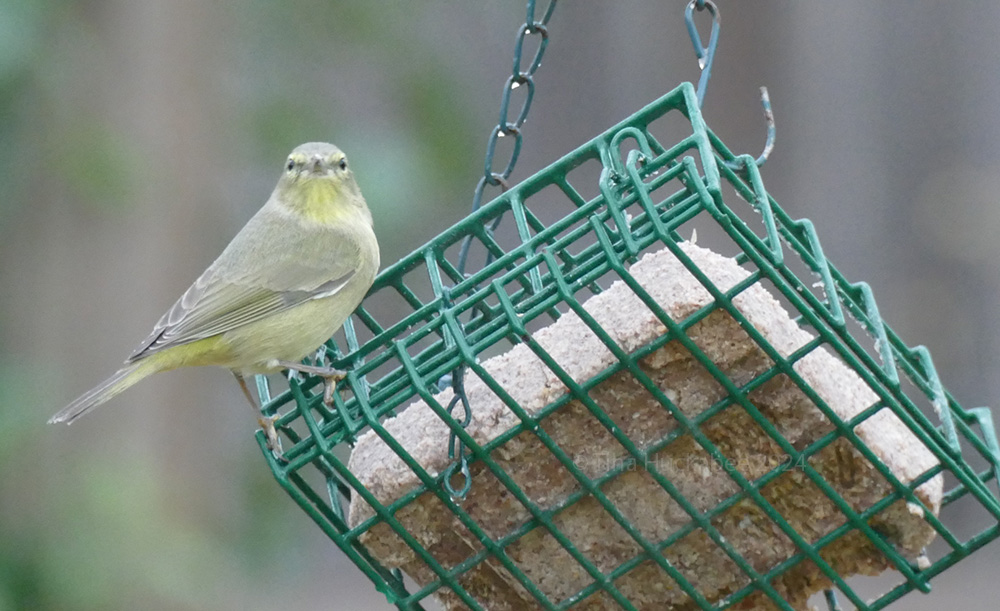
So far this winter, the Orange-crowned Warbler is the only winter migratory visitor at the suet. I haven’t yet witnessed suet snacking from Yellow-rumped Warblers or Ruby-crowned Kinglets, though I fully expect to. Some resident birds, Carolina Wrens and Black-crested Titmice, have made a stop at the suet feeder part of their daily rounds and are suet buddies with the Orange-crowns. 

In my garden this winter, I’ve observed two Orange-crowned warblers, as well as one Yellow-rumped Warbler and one Ruby-crowned Kinglet. These three species are not native to Texas, but migrate south for the winter months; there are usually a few of each in my gardens from November through April. I enjoy their presence in the garden and having feeders allows me to observe them more easily. These flitty, tiny birds are challenging to observe in trees and shrubs! Once all the foliage from the trees has dropped, the birds are easier to see as they bop about the limbs, eating insects, and chasing one another in duels for the best eating spots.
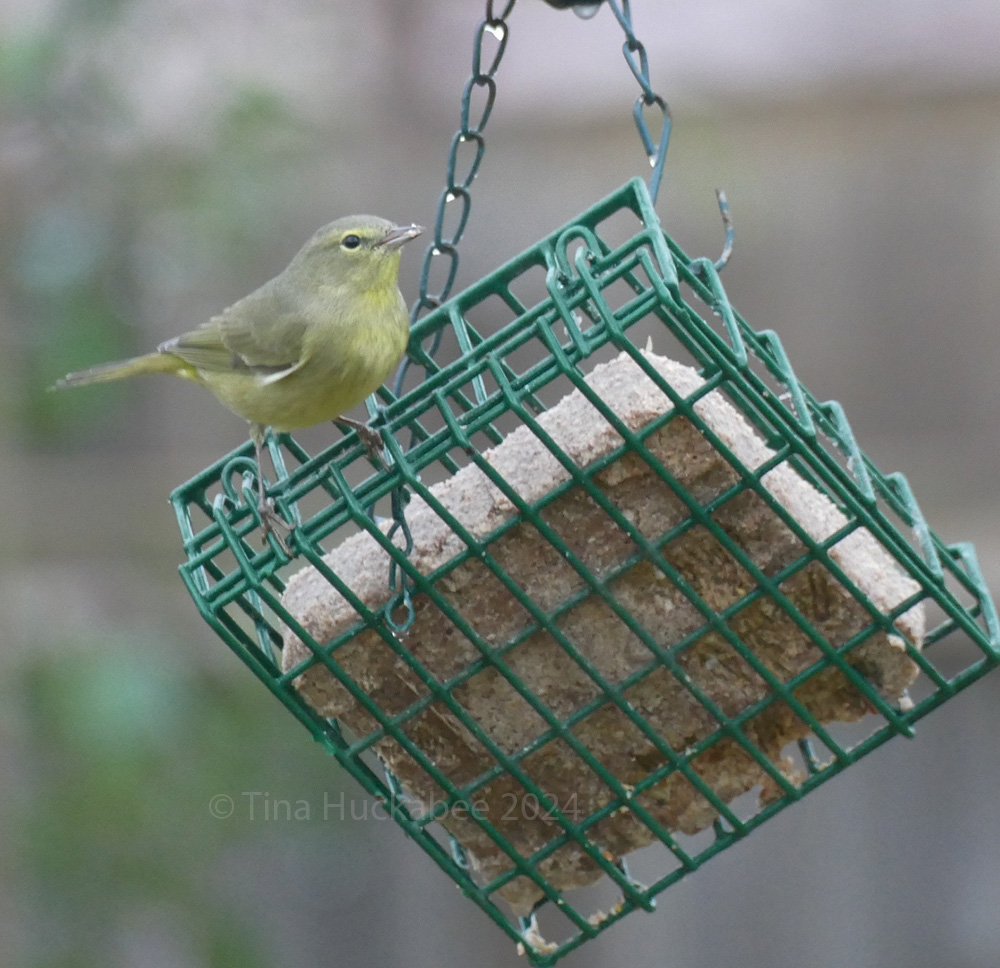
This female noshes at the suet and peanut feeders several times each day. I buy my suet from Wild Birds Unlimited, but many bird fans make their own suet and there are plenty of recipes on the internet. 

Winter is a great time to bird watch and plan for the next garden season. Gardening with, or simply observing native plants is a small but powerful counter in a world where we as individuals have little control or positive influence. Spending time outdoors, listening to bird and insect song, creating and nurturing life and diversity with a native garden is a balm for an often broken world and a positive step toward a more hopeful future.
Wet Winter Warbler

The birds in my garden are quiet now, as is typical for late autumn. The usual suspects show up early in the morning for their treats: Blue Jays are all-in for the unshelled peanuts; Black-crested Titmice, Carolina Chickadees, and Carolina Wrens favor sunflower seeds and shelled peanuts. The White-winged Doves flap around the pond and bobble in the garden, but at the moment, aren’t interested in what feeders offer. When spring approaches, that will change; doves are piggy birds. House Finches and House Sparrows are mostly about keeping clean in the birdbaths and at the waterfall feature of the pond.

Winter songbirds haven’t settled in yet as seasonal residents. These are the birds who migrate south from somewhere north and visit through winter and early spring, until the instinct to nest is paramount and they fly northward again–to mate and raise chicks, a timeless and universal cycle. These wintering birds are only here for a few months. I always look forward to their arrival and grieve when they leave.

I’ve had a couple of quick glimpses of a tiny, energetic Ruby-crowned Kinglet, Corthylio calendula, but it hasn’t stopped long enough for me to get a good photo. So far, no Yellow-rumped Warblers, Setophaga coronata, also known as Butter Butts, have appeared. It should be any day now that one–or several–come to my garden. The winter warblers see the garden as a safe haven for cover, water, and food.

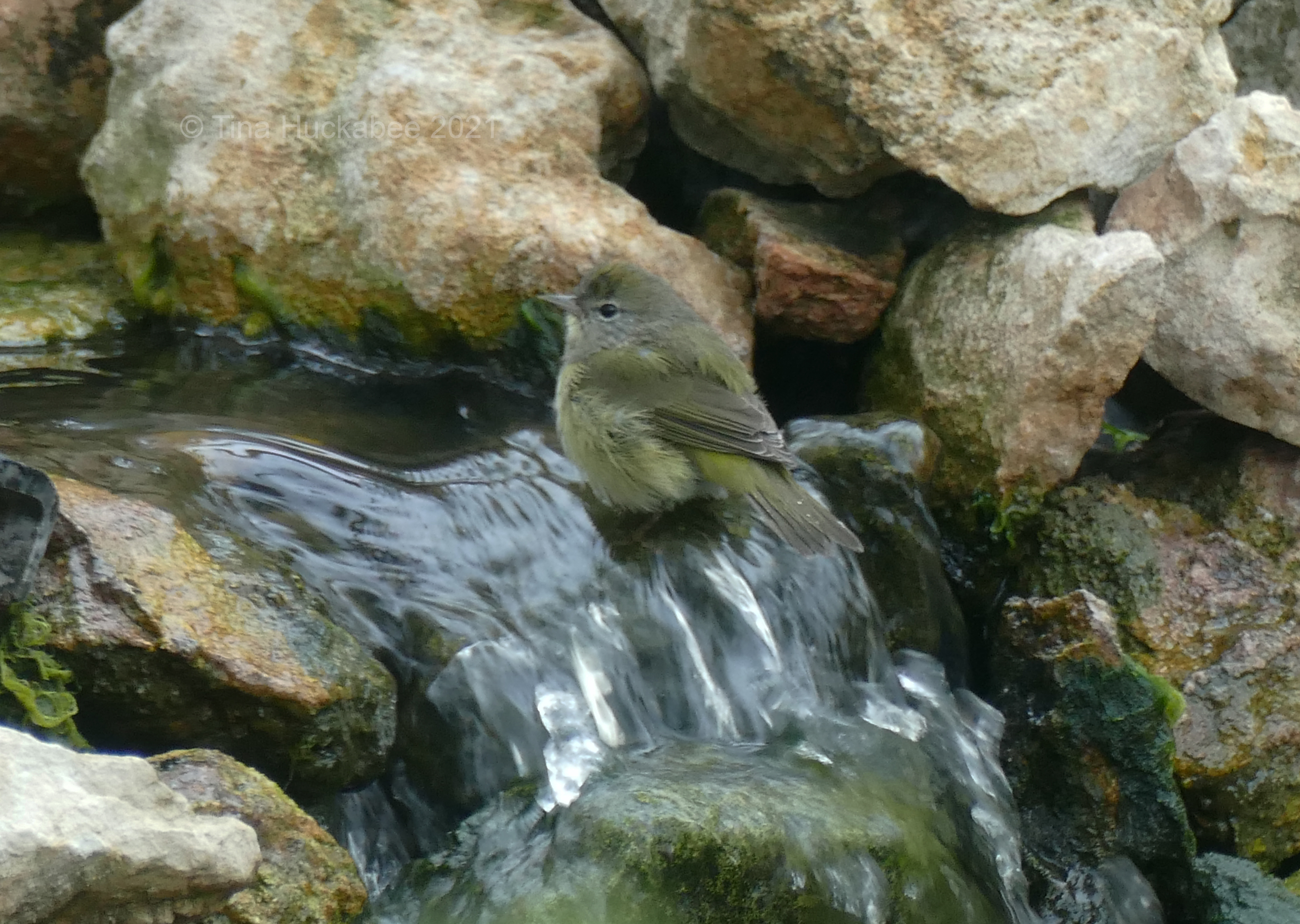
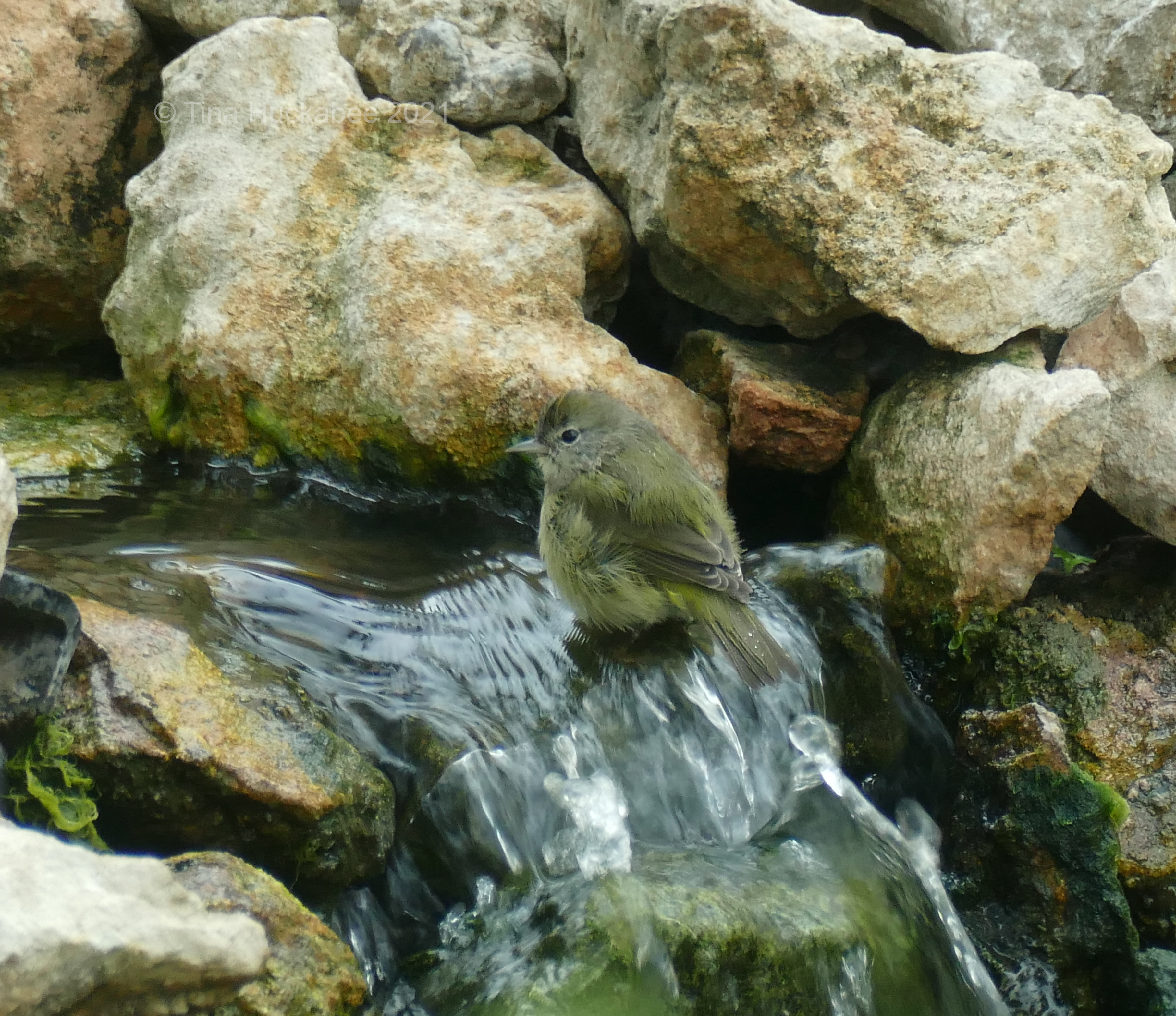
I have enjoyed a few visits from an Orange-crowned Warbler, Leiothlypis celata. It hops along the branches of the Shumard Oaks, often hidden behind foliage, but probably snacking on insects. The small warbler is too high and covered up for me to see it clearly. When it wants a refreshing bath, it’s out in the open, wary of all, careful and alert. Garden paparazzi takes advantage of the warbler’s bath time.

I think this one is a she-bird, though it could be a juvenile he-bird. There’s no sign of the orange crown that would indicate a male; the orange top is noticeable during bathing, as well as during the impressing-the-gals-time.

I haven’t seen the Orange-crown at any feeder, though they typically favor suet, which I haven’t bought yet. It’s on my to-do list.

As it finished up its bath and fluff, the little beak is open; I wonder if it chirped its approval (I couldn’t hear from where I sat), appreciating the splash of the water.

This winter warbler was wet. Other winter warblers are on their way.

To Watch a Feeder

I’m a backyard birder.  I like that my wildlife habitat, also known as the garden, attracts a multitude of native and migrating birds and that I am able to observe them from the comfort of my back patio or from inside my house.  I have little desire to wake up a 3am and drive somewhere to watch birds, though that would certainly allow me to see a wider variety of birds and there are clearly rewards collaborating with other bird enthusiasts to observe and learn about birds.   In reality though, seeing many different kinds of birds is not my goal, though I understand why it’s important to others.   At least at this point in my life, I’m not a birder in that sense–and that’s just fine.

I also appreciate that there are several kinds of citizen scientist activities that I can easily participate in which allow me to watch, to learn, and also contribute to on-going and vital research concerning how birds in North America are faring.  Climate change, urbanization, various kinds of pollution (chemical, light, noise) all have had serious deleterious impacts on North American birds.   The National Audubon Society and The Cornell Lab of Ornithology are engaged in long-time research and are great resources for learning all about the birds of North America.  Both organizations support myriad volunteer and educational enterprises related to birds, bird watching, and installing bird-friendly habitats.

My primary and on-going participation in science-based bird watching involves volunteering for Project FeederWatch, sponsored by The Cornell Lab of Ornithology.  The FeederWatch season occurs from mid-November to early April:  the ‘watch’ period is after the main autumn migration and before spring migration is fully underway.  I’m now about 8 weeks into my 2019-20 FeederWatch season and am thrilled to have listed two Ruby-crowned KingletsRegulus calendula, though I admit both little songbirds showed up on only one of the watch days.  For most of my recorded FeederWatch days, I’ve only seen this tiny cutey, a female Ruby-crowned Kinglet.

During the November to April FeederWatch time, I’m mostly counting and categorizing the native birds and those birds who are migratory, but have decided my part of Central Texas is a good place to stay for winter–like the Ruby-crowned Kinglets.

I’m especially excited about seeing the Ruby-crowned Kinglets this season, because it’s been about 3 years since any have over-wintered in or near my garden.  I’ve learned much as part of my FeederWatch participation.  Not only do I watch birds for a regular and close connection to nature, but I’m also assisting–in a small way–the research related to the health of birds, their numbers in various areas, and their changes and movements in population over periods of time.

Before I became involved in FeederWatch, I’d planted for birds (and other critters) and most warblers and other songbirds visit the garden and trees to glean insects and nosh on plants’ seeds.  But I’ve also widened both the type of feeders I place in the garden and feed that I provide for birds to better target those same songbirds and that’s thanks to my greater knowledge about birds–what they like and what’s good for them to eat.

Another typical overwintering bird species (and this season there are at least 2 and possibly 3 in my garden, it’s hard to tell for sure), are the Orange-crowned Warblers, Leiothlypis celata.  I think the Orange-crowns are my favorite of the warbler species: there’s a sweet cheekiness about them and they have darling faces.

The Orange-crowns favor the peanut feeder.

P1200040copy

Do you see the bit of green among the peanuts in the feeder? It’s a rogue bit of plastic–yuck! I didn’t see it until I downloaded the photos. I dumped the peanuts out and disgarded the plastic.

But I don’t think they always favor the watcher.


Participating in Project FeederWatch is ridiculously easy.   Pick what days are most convenient with your schedule; watching and documenting isn’t time-consuming–watch as much or as little as you please–though you need to commit to two consecutive days.  As well, the process for entering your online data is a snap.  I’ve had the occasional question about my data and the Cornell folks are friendly and great about promptly responding.

Counting birds is usually not a problem, even with their flighty natures, but sometimes…

From a post last spring: Mob

…it can be a challenge.  Oh, those silly, pond-loving, gregarious Cedar WaxwingsBombycilla cedrorum, they’re such charactersI haven’t seen any so far this year; no doubt they’ll be in my FeederWatch counts sometime in February.

It’s not too late to join in for this year, just click here and you’ll find easy-to-follow directions to help you jump on the birdie bandwagon.   Cornell Lab requests an $18 fee to get the initial information, but that’s all–unless you want to donate more to either Cornell Lab or Audubon–and they’re both worthy organizations.

Birds rock.  They’re beautiful, fascinating and you can help birds by helping the humans who study them so that your descendants will have birds in their lives, too.