Ice Arrives

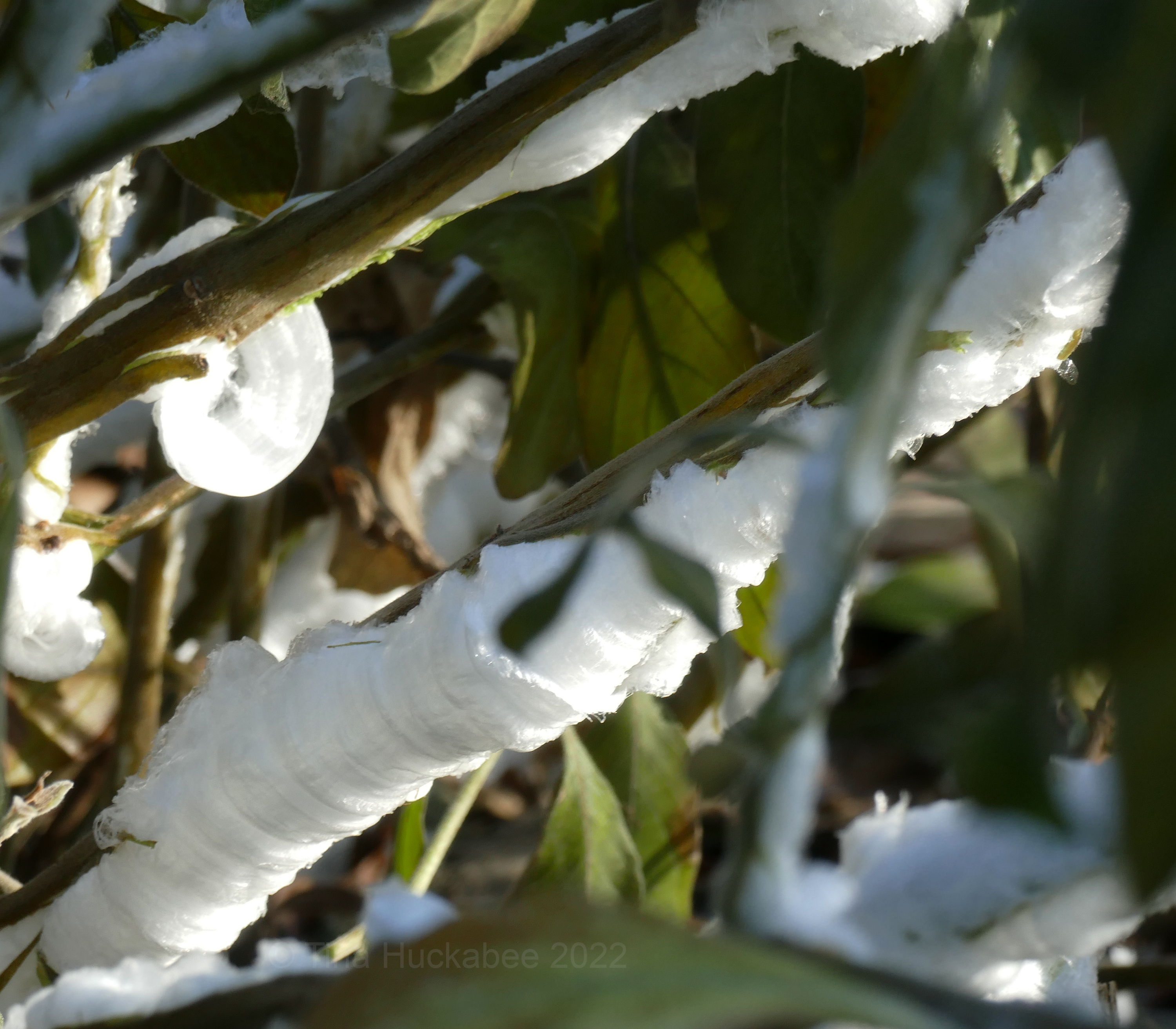
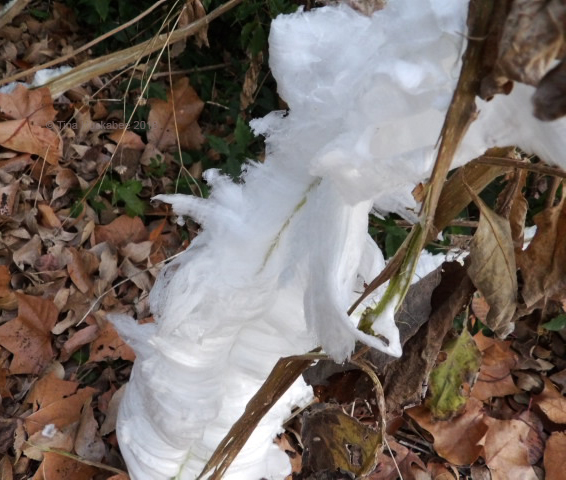
This winter has seen plenty of overnight light freezes in my garden, but only in the last few days were the conditions ripe for the formation of Frostweed, Verbesina virginica, ice sculptures. Two mornings ago, the day dawned cold, bright and sunny, with icy, exploded frostweed a new addition to the garden.

As I trundled around the garden, I observed many low-to-the-ground ice sculptures revealing themselves in light and shadow. Many plants produce ice sculptures during the first hard freeze of the season, but none with quite the drama of frostweed.
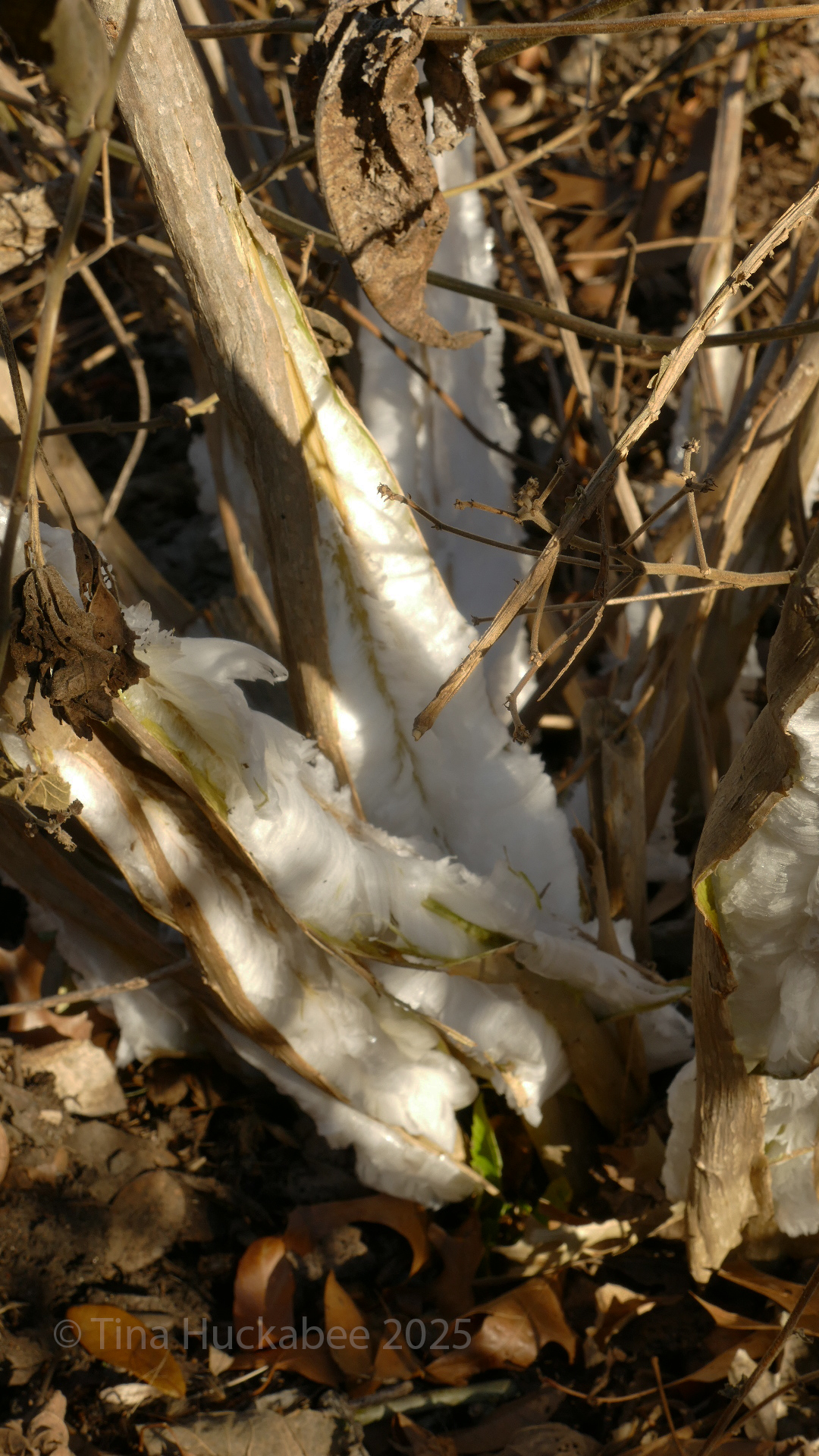
Morning sun highlighted fanned crystal formations, held firm along broken stems, as sturdy braces
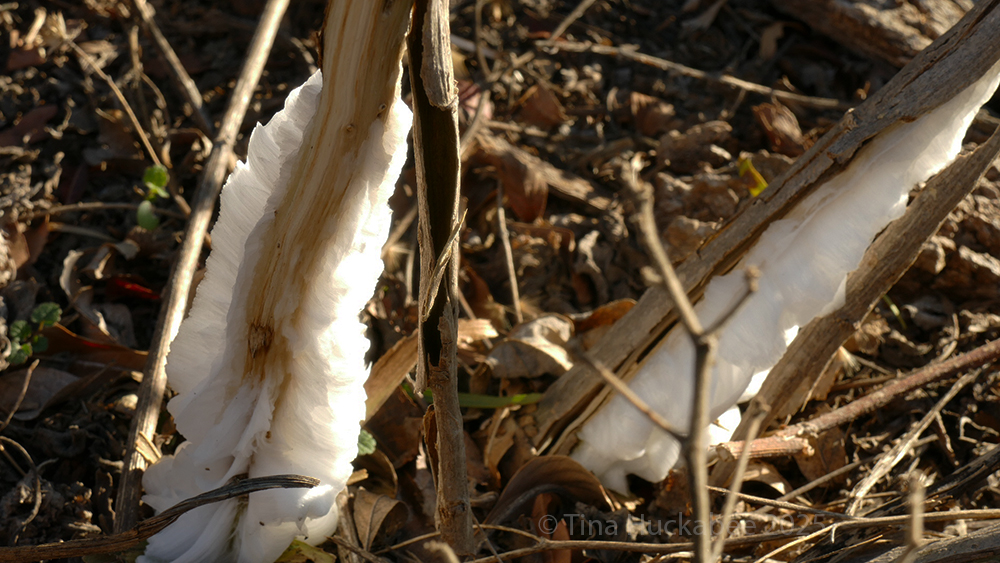
The temperature never rose above freezing that day and into the night, the fragile ice sculptures held. Indeed, by the next morning, many of the sculptures had expanded. The second day was cloudy, no sun rays to brighten the ice. Some newer sculptures, instead of traveling upwards the stems, remained close to the ground, the ice reminiscent of floral decorations from warmer days past.

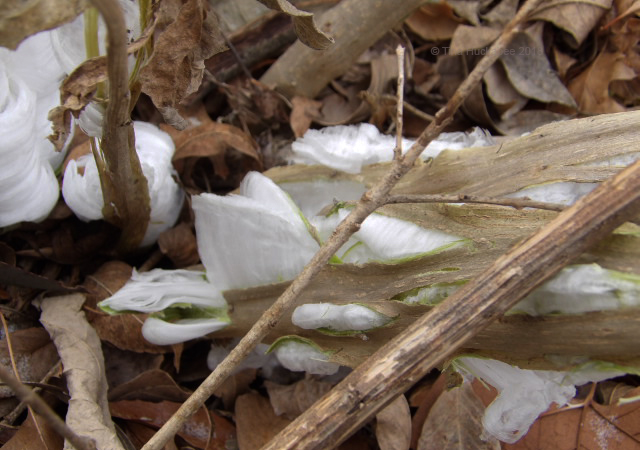
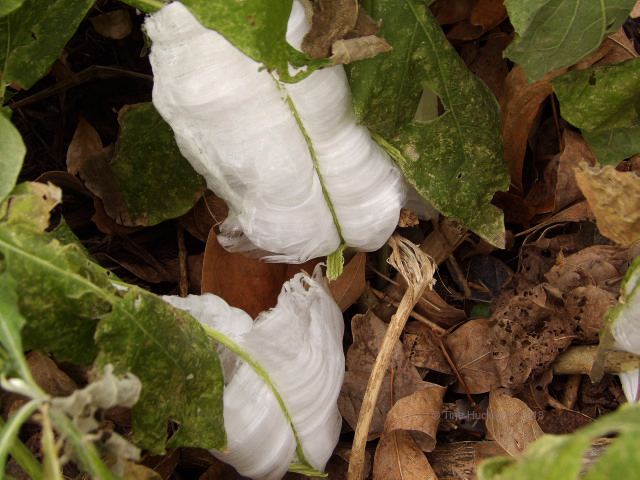
I haven’t pruned the winter garden, at least not in any major way. But here, it’s clear that stems were cut, the ice crystals limited to hugging the ground, swirling around the stems, snuggled on fallen leaves.
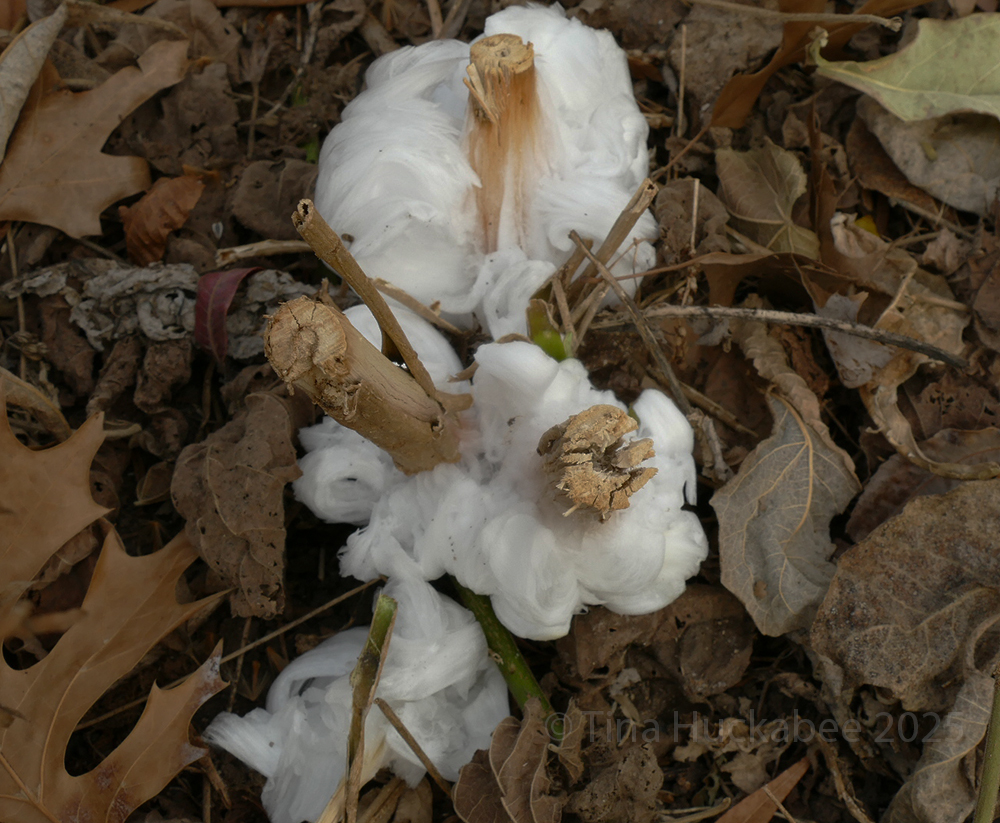
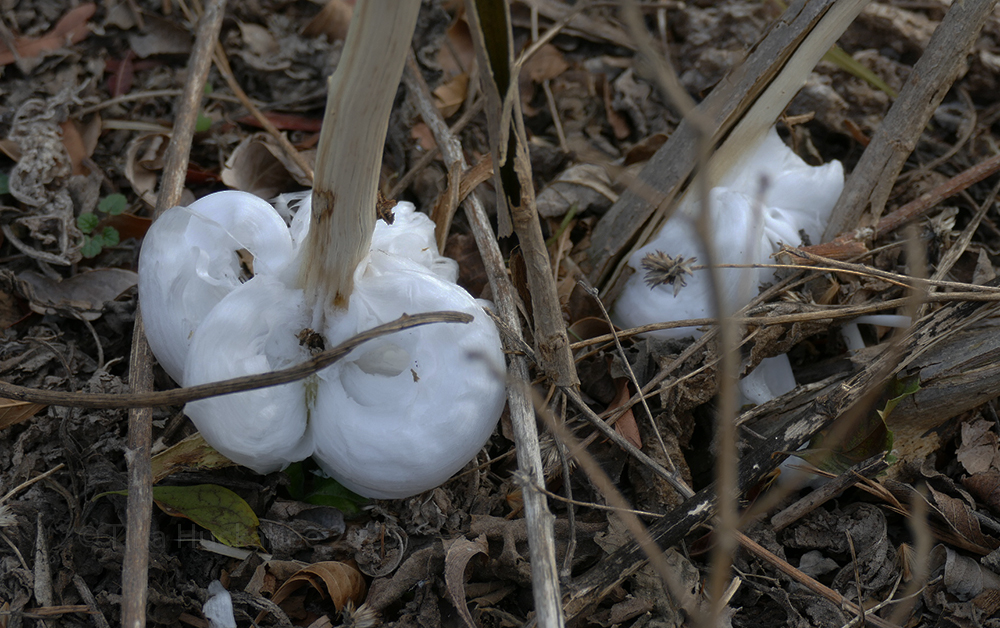
Frozen water proves stronger than sturdy stems.

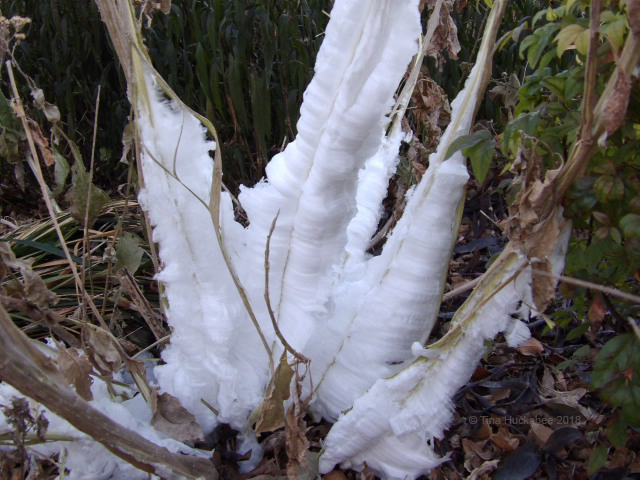
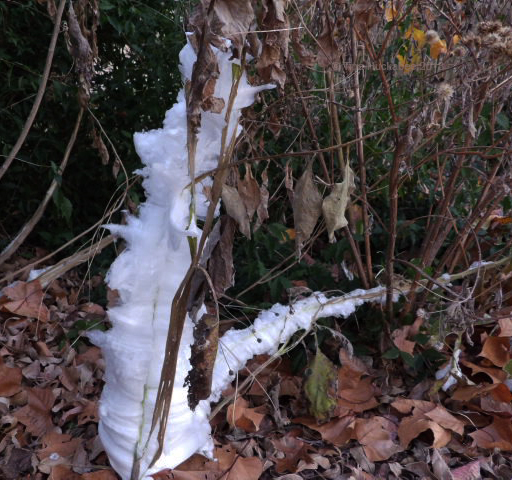
This frostweed created the tallest of the ice formations in my garden, whirls around the stems, some 2 feet up from the ground. Green winter grass, coupled with some evergreen wildflower foliage, is a fetching background to the ice and winter-dormant stems.

Compare this photo with the first: it’s the same plant with more ice, less intact stems. Such is the way of frostweed ice sculpture work, rendering a new paradigm for the plants’ seasonal life. It’s an end, of a sort, though in reality, only a resting time. The roots below are priming for spring green.

This morning, snow is a light blanket in my garden. It’s not a powdery substance, but instead, sleet and snow mixed. It’s also quiet, the birds mostly still asleep or too cold to sing, except for the Carolina Wren–he’s awake. The Grey Fox, a regular night visitor to my garden, was out last night, caught on the wildlife camera prancing around the white ground, probably hunting. I hope it’s now in some warm, protect place, resting for the adventures to come.

This winter ice, whether snow, sleet, or busted plant stems, is fleeting–like so many things in the garden.

Ice Again

With each of this winter’s freezes and accompanying ice, I’ve assumed that the plants which create ice sculptures are done with their frosty shows until next winter. But with the latest round of mid-to-low 20s, more curling and swirling appeared, some on plants thus far unmolested by the cold, and some on plants that previously froze and were pruned.

These cut stems are all that remain of a mature Frostweed, Verbesina virginica, that I pruned in late January after an earlier hard freeze. Clearly though, there was just enough stem material left for the ice fairies to appear.

I hoped that the Mexican Honeysuckle, Justicia spicigera, would be spared a killing freeze this year and remain green. That hope was dashed Thursday and Friday as temperatures dipped to the lowest point so far this year. The wilted mush of the once bright green foliage will require pruning to the ground for each of these shrubs in my garden to make room for new growth.

On the positive side, the water-turned-ice-crystals in the stems created some lovely, if short-lived ice art.

I’m now in full winter perennial pruning mode. When I prune herbaceous perennials I typically leave 8 to 10 inches of stems, sometimes more. On the remains of a Plateau Goldeneye, Viguiera dentata, the ice formed, puff pastry style.

I think the January/February 2022 plant ice capades has completed its final act. After the upcoming year of growth, it’ll be interesting to see if early freezes in November/December bring an encore performance.

Frost Fest

Everyone is talking about it!  It’s the plant of the week, the one everyone wants to know and hang out with!  My own blog statistics show a dramatic spike in views of past posts written about it!  What is this trending plant, the plant with the cool vibe?  Well, it’s more than cool, it’s cold–it’s FrostweedVerbesina virginica.  Of course!

Frostweed is an excellent wildlife perennial plant, native from all the way up in Pennsylvania to here in sunny–usually mild–Texas.  Its striking summer-to-autumn white blooms, which feed many, are quite enough for me to adore Frostweed, but it’s the transitory ice show, as seen during the first hard freeze of winter, that gives this summer and autumn blooming, pollinator-loving perennial its name.

Frostweed.

Luscious ice sculpture!

In the first winter hard freeze, this week, my Frostweed strutted its icy, frosty stuff for almost three full days, due to the temperatures dropping late Sunday and not reaching above freezing until mid-day Wednesday.  The first thing I thought about on Monday morning, January 1, 2018, (okay, second–the first was about coffee…), was Oooh, I need to check out the frostweed, I’ll bet they’ve all burst open!  

Indeed, burst open they had–and how!

The moisture from the stem blasts open the epidermis of the stalk.

Breaks through the stalk, with additional curling (upper left) of the ice, occurs as moisture, forming additional ice, moves outward.

The ice formations are delicate and transient–melting at touch or temperatures over freezing.  Ice forms as the plant draws moisture up from the ground.  The supercooled moisture breaks open the epidermis, freezing from the base of the plant and upwards along the stalk.

The resulting ice sculptures can furl (unfurl?), scroll-like, along the stalk, which is how my Frostweed usually behaves.

Monday morning.

Sometimes, the ice creates wavy, ice-taffy inspired forms.

Same plant, Wednesday morning as more moisture froze along the stalk when temperatures continued to drop.

A closer look.

Curly.  Groovy.  Icy.  Beauty.

This winter’s show was special because in Austin, and certainly in more northern parts of the state, temperatures stayed below freezing for longer than the typical fleeting hard freeze, thus allowing the ice sculptures to expand, and remain frozen for admirers to appreciate for longer than just one morning.

Other perennials demonstrate similar freeze-n-bust action, but none do it with the verve and style of Frostweed.

As the sun warmed Wednesday afternoon, so melted away the exquisite, frosty art.  The frost show ended, probably until next winter, but it was fun to see.  Frostweed will be back in spring, after winter’s pruning, for another year of blooms and bust.

Frostweed–a frosty delight.