Ice Arrives

This winter has seen plenty of overnight light freezes in my garden, but only in the last few days were the conditions ripe for the formation of Frostweed, Verbesina virginica, ice sculptures. Two mornings ago, the day dawned cold, bright and sunny, with icy, exploded frostweed a new addition to the garden.

As I trundled around the garden, I observed many low-to-the-ground ice sculptures revealing themselves in light and shadow. Many plants produce ice sculptures during the first hard freeze of the season, but none with quite the drama of frostweed.
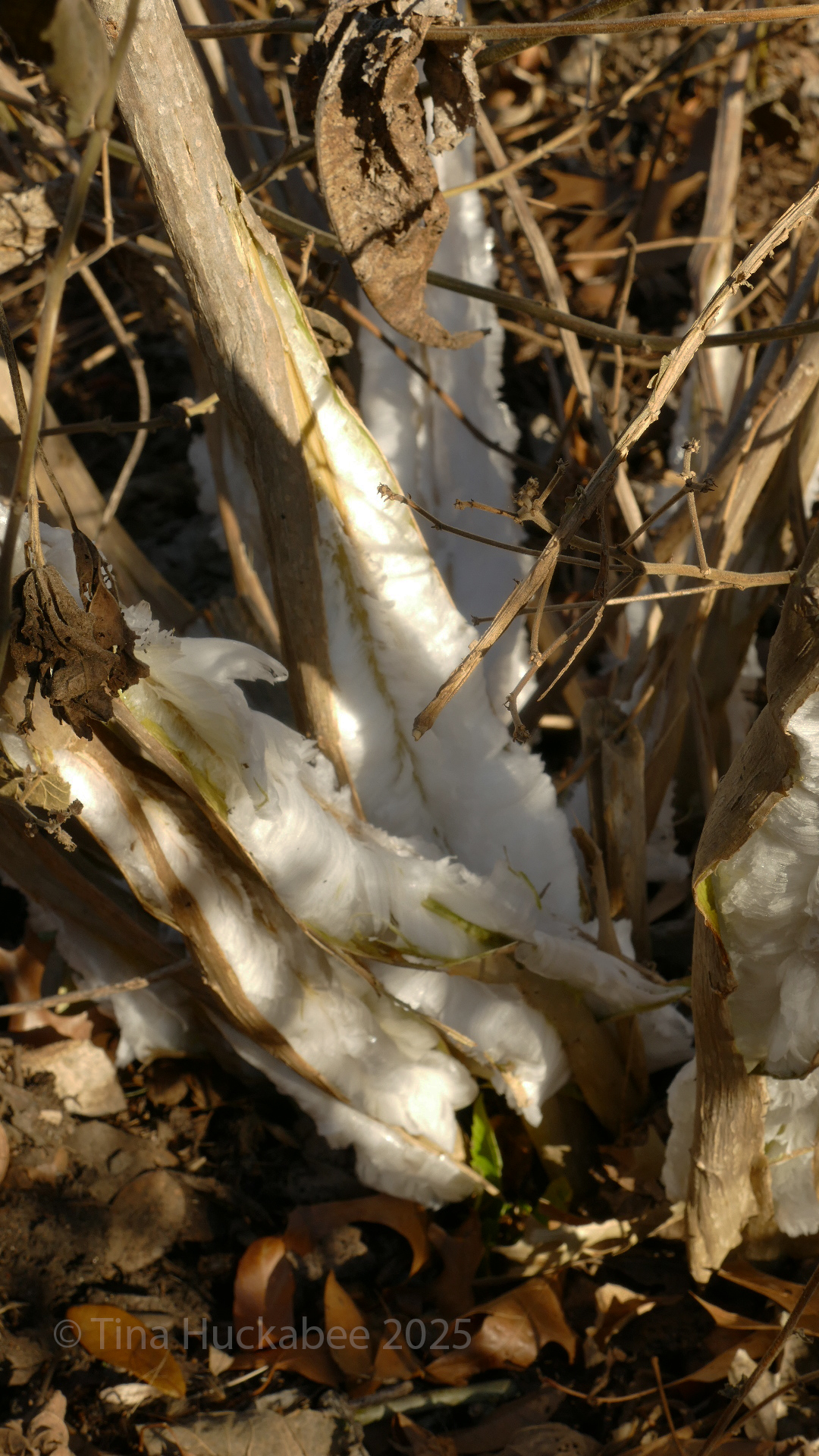
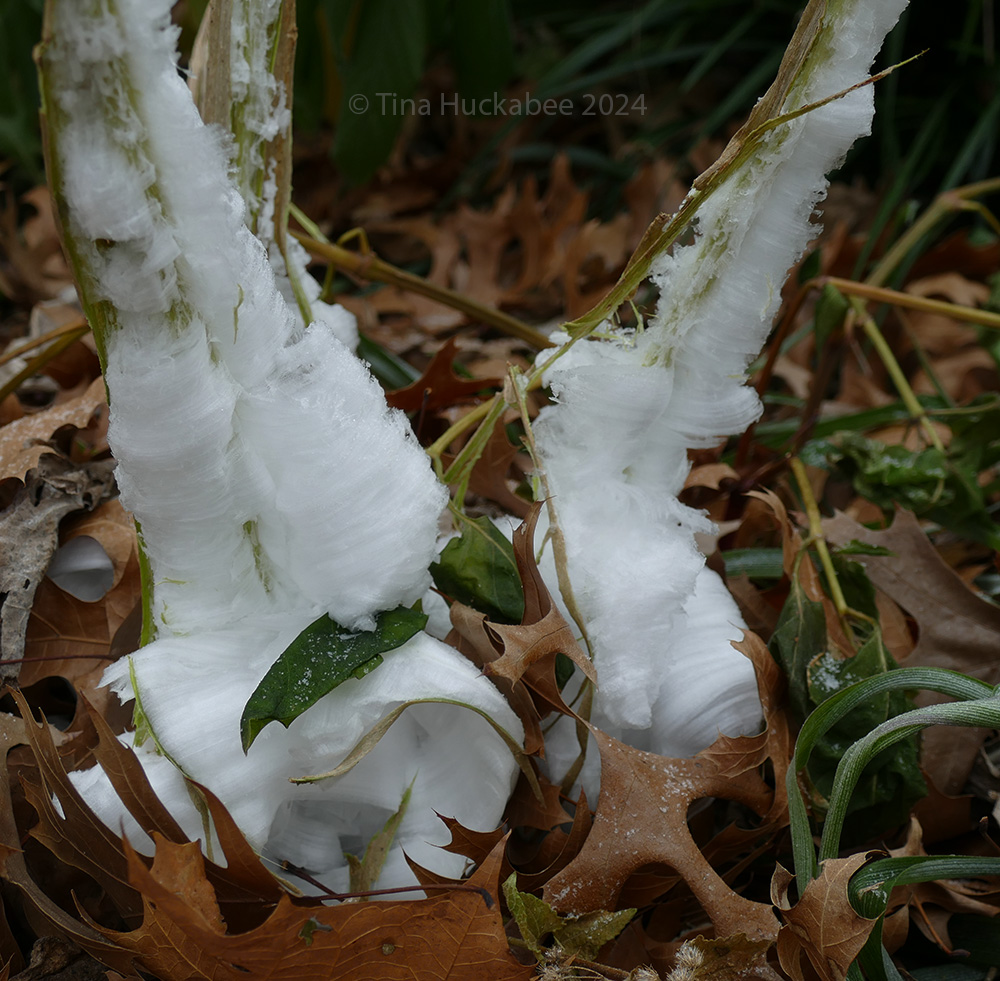
Morning sun highlighted fanned crystal formations, held firm along broken stems, as sturdy braces
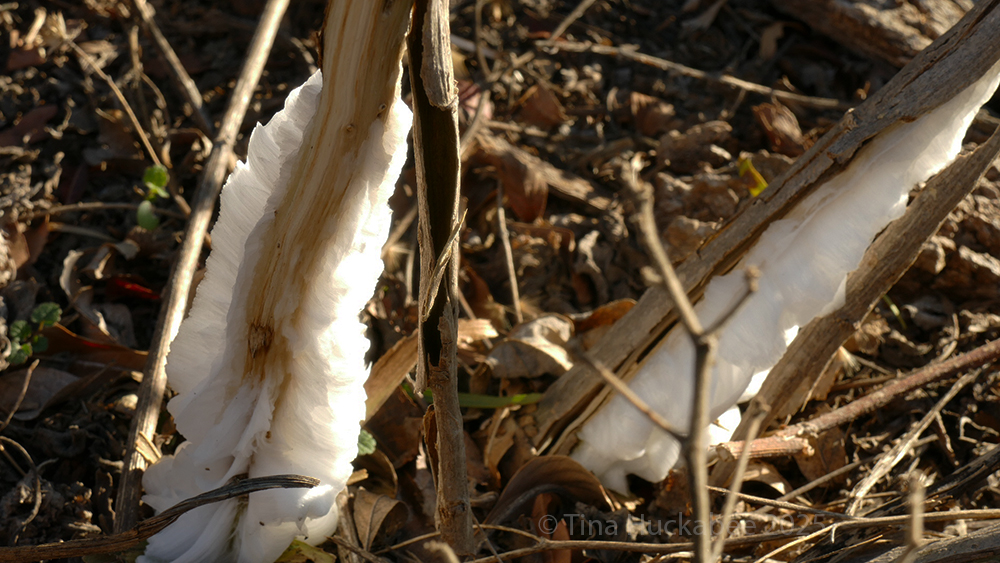
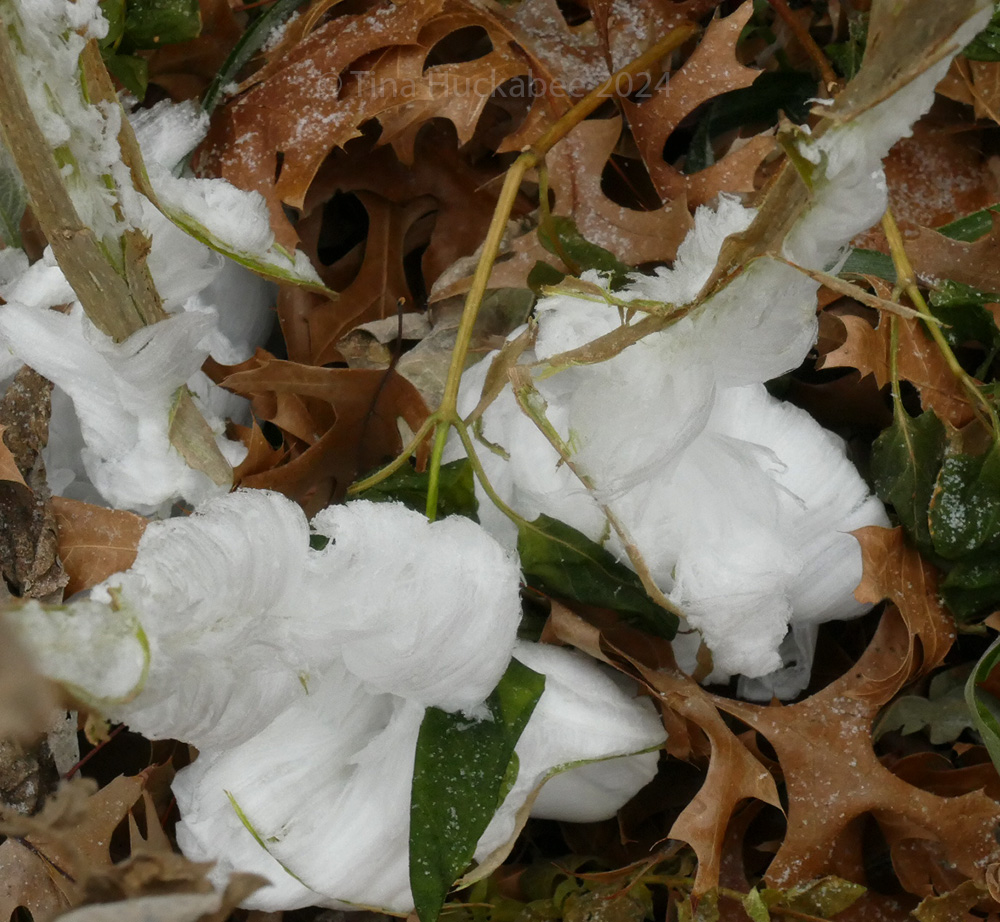
The temperature never rose above freezing that day and into the night, the fragile ice sculptures held. Indeed, by the next morning, many of the sculptures had expanded. The second day was cloudy, no sun rays to brighten the ice. Some newer sculptures, instead of traveling upwards the stems, remained close to the ground, the ice reminiscent of floral decorations from warmer days past.

I haven’t pruned the winter garden, at least not in any major way. But here, it’s clear that stems were cut, the ice crystals limited to hugging the ground, swirling around the stems, snuggled on fallen leaves.
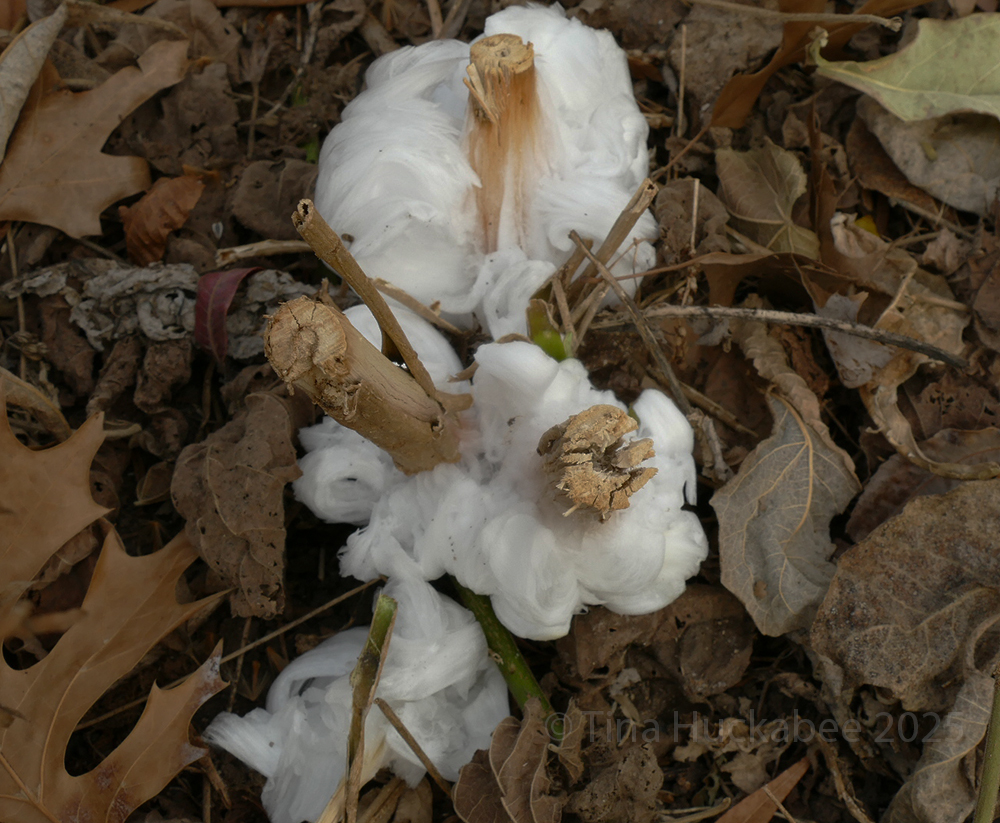
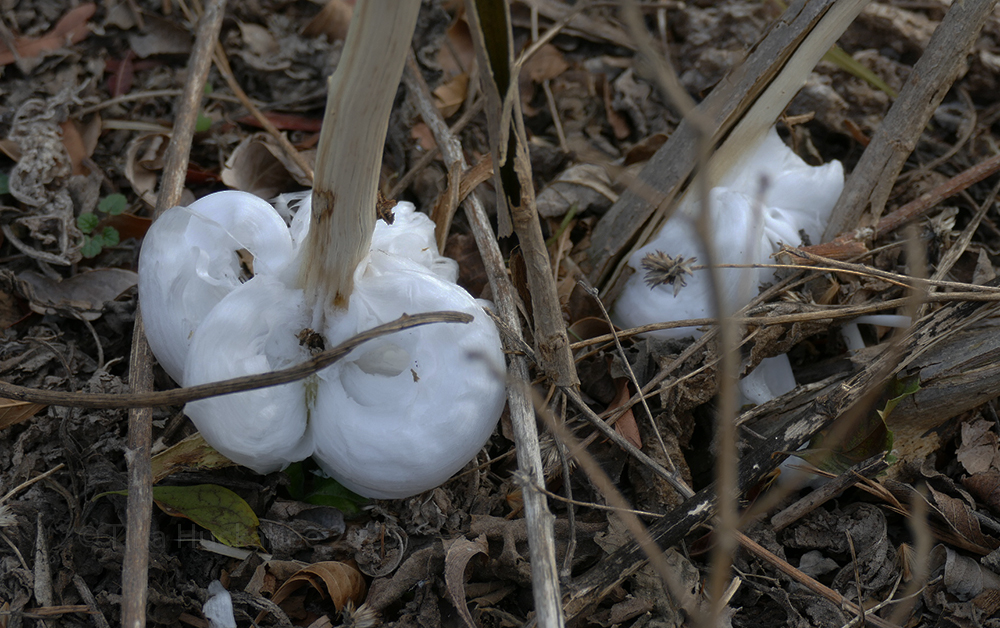
Frozen water proves stronger than sturdy stems.

This frostweed created the tallest of the ice formations in my garden, whirls around the stems, some 2 feet up from the ground. Green winter grass, coupled with some evergreen wildflower foliage, is a fetching background to the ice and winter-dormant stems.

Compare this photo with the first: it’s the same plant with more ice, less intact stems. Such is the way of frostweed ice sculpture work, rendering a new paradigm for the plants’ seasonal life. It’s an end, of a sort, though in reality, only a resting time. The roots below are priming for spring green.

This morning, snow is a light blanket in my garden. It’s not a powdery substance, but instead, sleet and snow mixed. It’s also quiet, the birds mostly still asleep or too cold to sing, except for the Carolina Wren–he’s awake. The Grey Fox, a regular night visitor to my garden, was out last night, caught on the wildlife camera prancing around the white ground, probably hunting. I hope it’s now in some warm, protect place, resting for the adventures to come.

This winter ice, whether snow, sleet, or busted plant stems, is fleeting–like so many things in the garden.

Ice in the Garden

As it happens most years during the first deep freeze of winter, Frostweed, Verbesina virginica, has graced my winter garden with its swirls of ice sculptures.

Along with the most common name of ‘Frostweed’ which pays descriptive homage to this winter phenomena, ‘Iceplant’ and ‘Iceweed’ are also names for V. virginica.

Twirls-n-curls of ice ribbons form, usually at the base of the plant, when the temperature drops significantly below freezing.

As the freeze deepens, water in the stems is released, freezing in beautiful formations along the stems, undulating around the base of the plant and often traveling upwards along the stem. 

In this photo, at the top left, notice burst open stems. Ice crystals have filled the gaps.

The ice sculptures themselves have many names: ice ribbons, ice flowers, ice fringes, ice fingers, ice filaments, ice leaves, frost flowers, frost ribbons, frost freaks, frost beards, frost castles (Forrest M. Mims III), crystallofolia (coined by Bob Harms at The University of Texas), rabbit ice and rabbit butter. I think ice flowers and frost flowers are the most poetic of the names, and frost freaks and frost castles the quirkiest. I typically refer to them as ice ribbons. 

Frostweed is particularly well known for extravagant ice ribbons, but many plants produce similar ice crystals during the first freeze. In my own garden I’ve seen various salvias, lantanas, and other asters form ice ribbons around their frozen stems, but none challenge the beauty, complexity, or size of those created by Frostweed.

All of these ice ribbons are from Frostweed plants and their appearance in the garden is as brief as they are beautiful. Once the freezing conditions are finished and the temperature rises, the delicate crystals melt. The ice ribbons will not form again until next winter’s first, hard freeze. Ice ribbons are once, and done, and ephemeral.

I pruned back this Frostweed in November, planning to remove it from the edge of my garden. I left just a bit of stem and root, mostly out of forgetfulness or laziness or some combination of both. I’m glad that I didn’t yet remove what’s left of the plant. 

What a lovely gift on this frigid day.

As I walked through the garden, bundled, but cold, a Northern Mockingbird chirped. It allowed let me get close to where it perch, fluffed feathers and all, in the Red Bud tree. We shared a moment in the quiet cold.

Who Wears White?

There’s an old saying that one should never wear white after Labor Day. My garden is gleefully bucking that tradition; Labor Day has come and gone, but snowy blooms abound! Autumn is a rich time in Central Texas gardens: a little rain (very little) and gentler temperatures, (somewhat…), are just the ingredients for September and October floral madness. All the flowers are lovely, but cool white flowers are radiant in the autumn sun.

Once my front garden became a full sun space, Gaura, also known as Butterfly Gaura, Oenothera lindheimeri, was a plant on my must-have list.

The flowers look delicate and sweet, but this long-blooming perennial is tough and a sunshine-n-heat lover. It’s also proved a great pollinator plant. I’m hoping for a seedling (or several) for more gaura goodness in my garden.

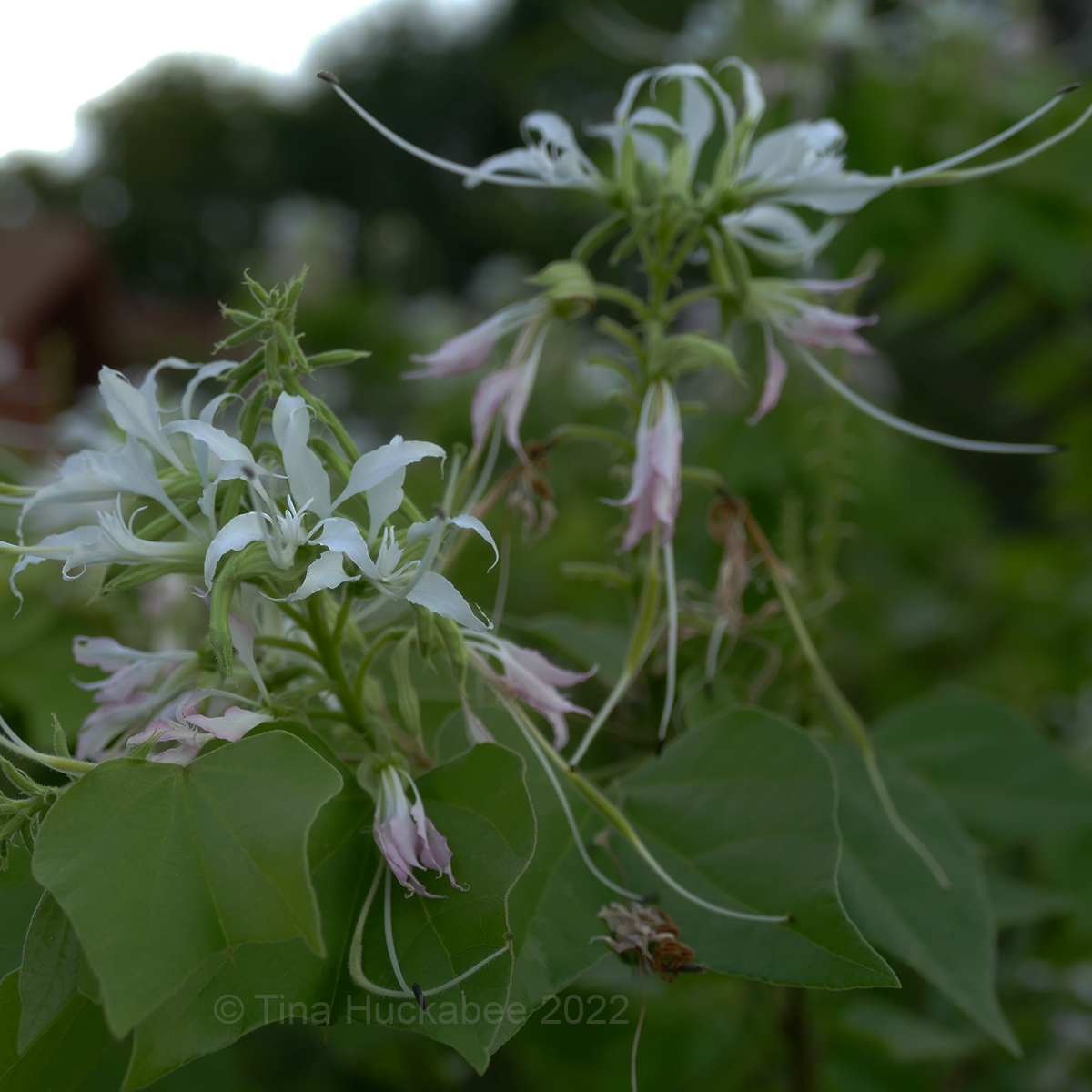
Mexican Orchid tree, Bauhinia mexicana, is also in full-bloom mode, though like the Gaura, it’s bloomed throughout this long, hellish summer.

While I’m touting the virtues of white blooms, you’ll notice that both the Gaura and the Orchid tree sport blooms with a slight blush of pink.

The front garden Orchid tree sits among some Martha Gonzales roses and Mexican Honeysuckle, Justicia spicigera. A couple of volunteer White Tropical sage plants, Salvia coccinea, have joined the crew, adding more dollops of cream in the garden.

Garlic Chives, Allium tuberosum are reliable bloomers in late summer and early fall. Typically, it’s a challenge to find a cluster without an attending honeybee–they love this plant! I’ve always wondered what honey produced exclusively from chives would taste like. Amazing, I imagine. In addition to attractive foliage and sweet, snowy blooms, the chives are also edible: bulbs, leaves, and flowers!

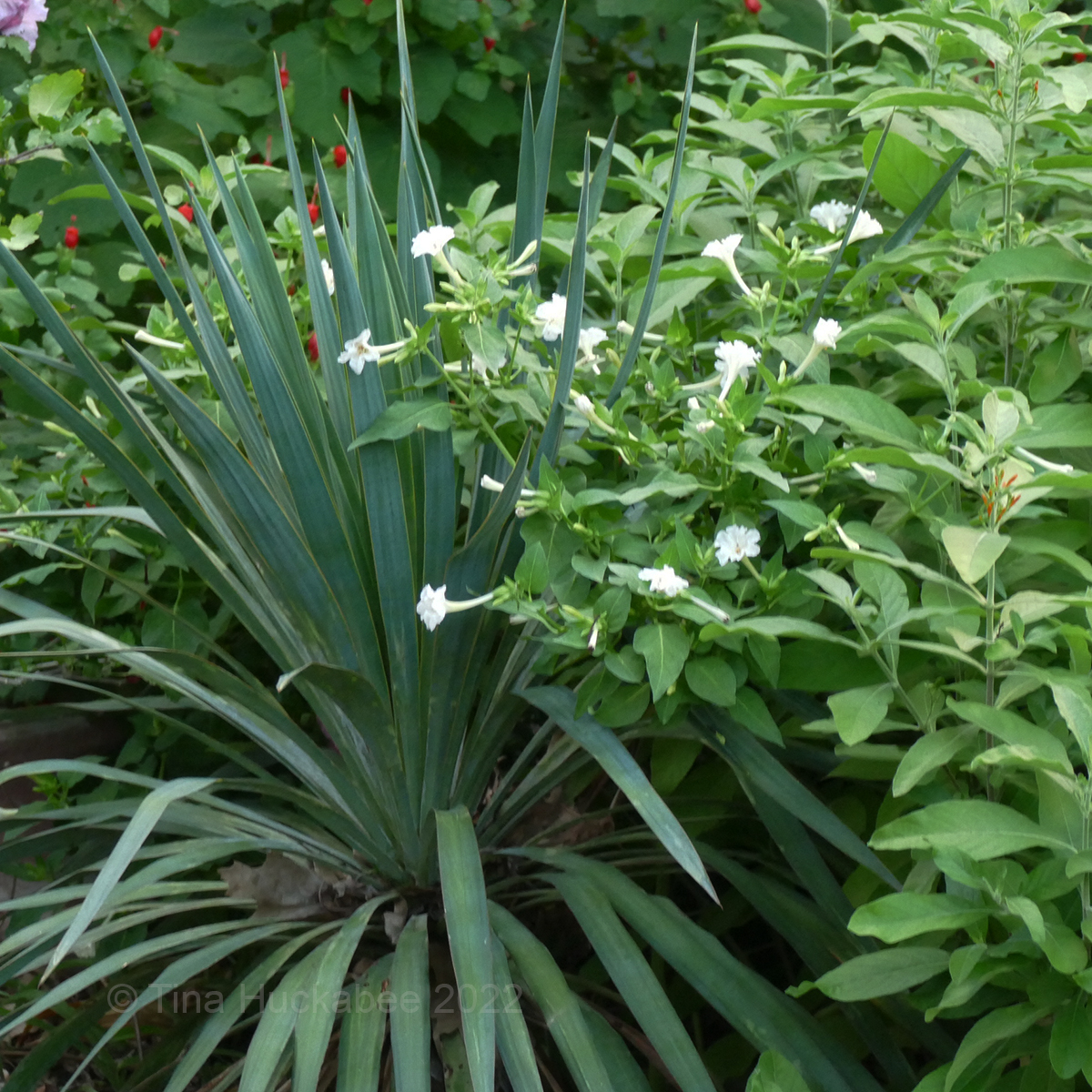
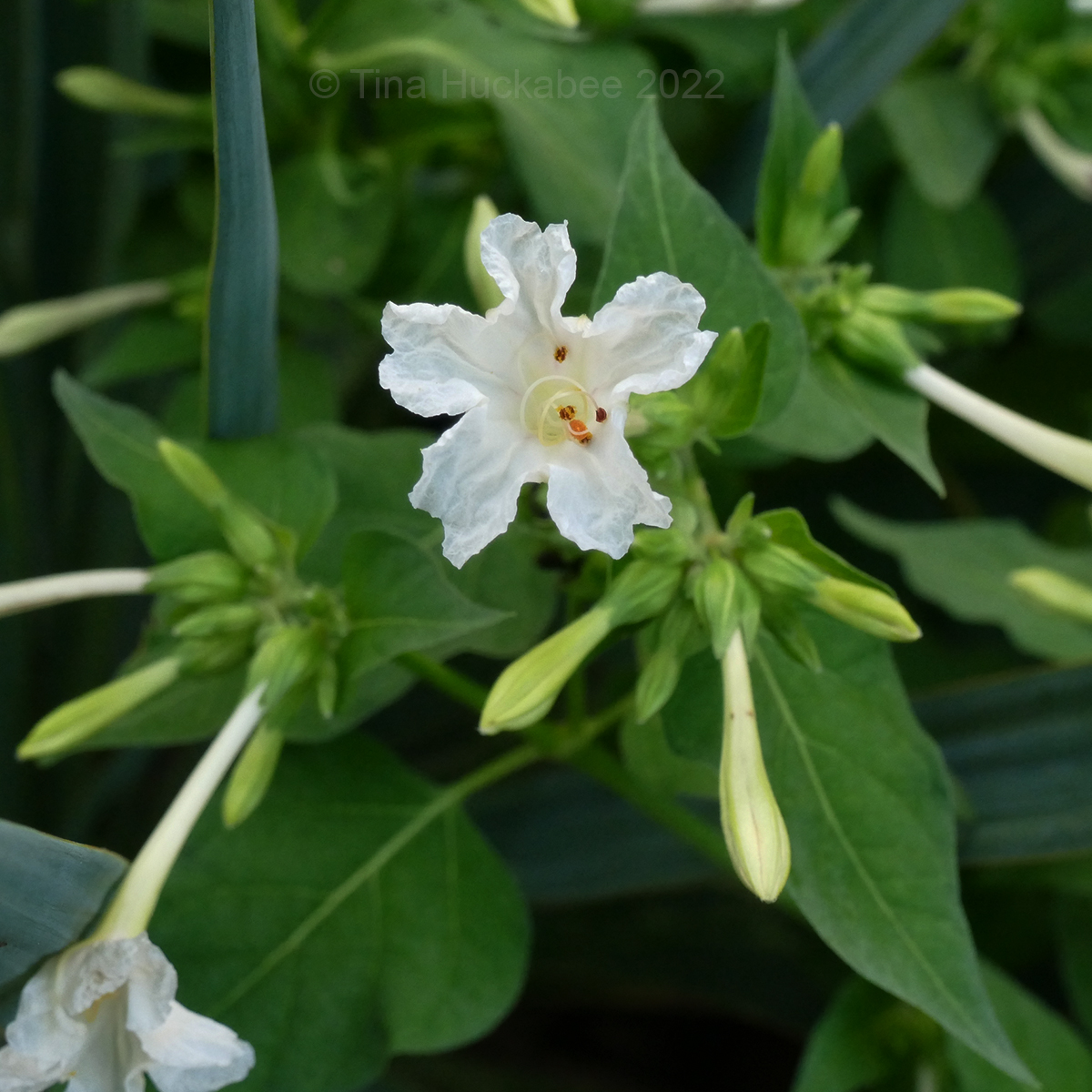
An old-fashioned pass-along plant, Four-o-clock, Mirabilis jalapa, is happily blooming white, dainty flowers while invading the space of a Soft-leaf Yucca.

Red flowering Turk’s Cap, Malvaviscus arboreus, joins the scene, top left.

The Four-o-clocks open in late afternoon, providing for nighttime pollinators, specifically Sphinx moths. By mid-morning they’ve closed up shop and new blooms will open later in the day.

I also grow a deep pink four-o-clock–a stunning color–but it’s the white flowers that are blooming beasts.

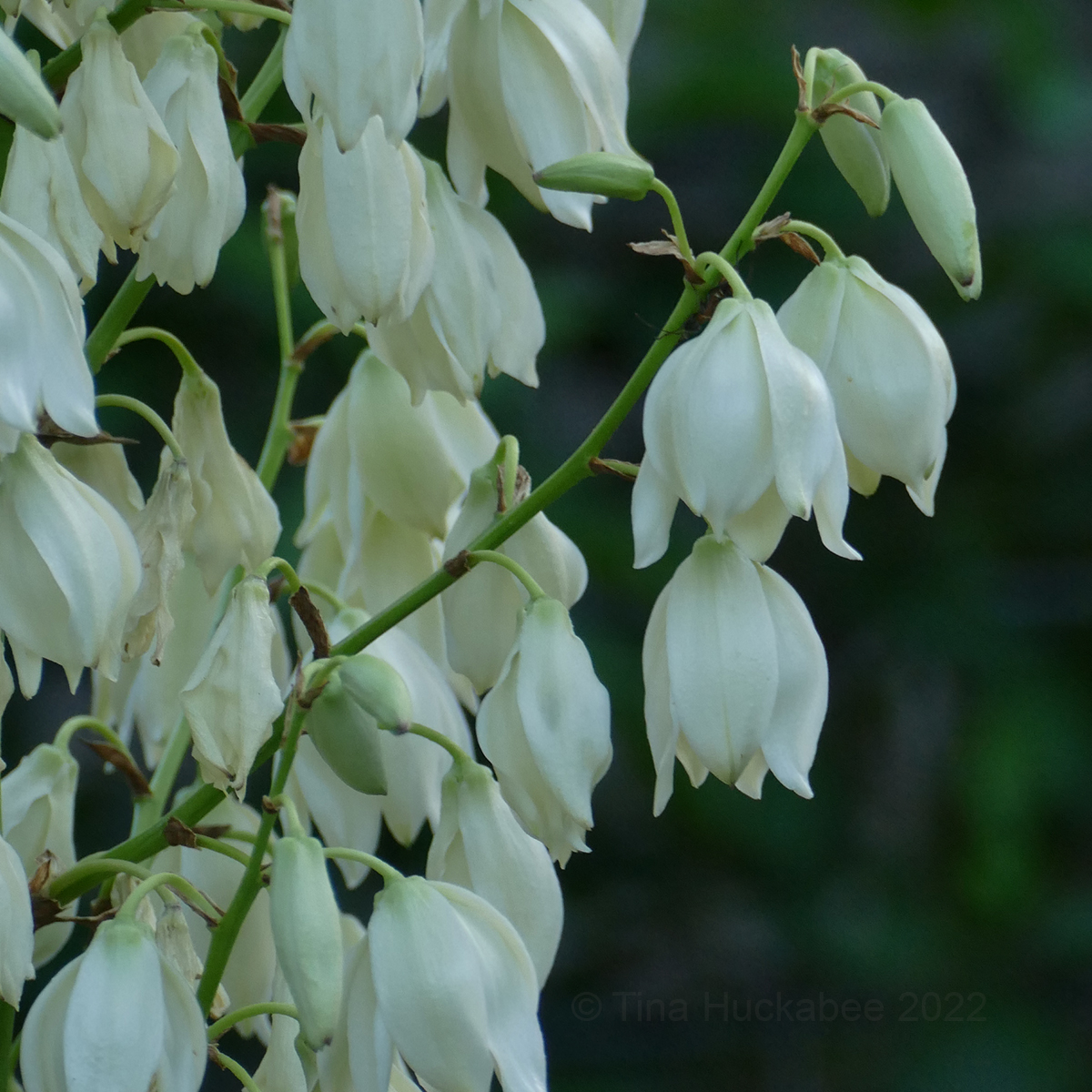
Softleaf Yucca, Yucca recurvifolia, are favorite evergreen ‘staple’ plants in my gardens. Most of mine have resided in areas too shady for bloom development, but I like their size, their pretty blue-green foliage, and their ability to withstand heat, drought, and cold. I also appreciate that they’re not too spiky in the garden–I don’t like plants that hurt! I was content with them as an evergreen, architectural presence, only occasionally lamenting a lack of yucca flowers.

This one, near the pond in my back garden, has never bloomed, so when I spotted its bloom stalk, I was thrilled.

I’ve long accepted that the back garden yuccas would never produce any beautiful, bell-shaped blooms. But after the February 2021 deep freeze, one of my oak trees was damaged and now doesn’t provide the shade it once did. I’m guessing that maturity, plus a tad more sunlight, allowed the yucca confidence to send up its bloom stalk and flower.

Nearly a year ago, I transplanted five small Softleaf Yuccas from my back garden to my front, newly full-sun garden, and look forward to their growth and future flower production. They’ll be quite happy in their new home: foliage and blooms–a win!

No Central Texas fall flower fawning is complete without mentioning Frostweed, Verbesina virginica. This stately perennial sometimes begins its blooming in summer (mine did) but the zenith of flowering usually occurs in October, well-timed with Monarch butterfly migration. Clusters of milky flowerets are magnets for a huge variety of pollinators.

My honeybee gals are all over the Frostweed flowers, slurping the sweet stuff and gathering rich, creamy pollen.

I like a garden with plenty of color and textural diversity. But in a colorful garden, white blooms have a place: cooling and calming, they temper brighter colors and are restful to the eye. Even in full sun, white blooms are luminous and beautiful.