Migration season has arrived and the first bird that I’ve identified as a non-resident and stranger to these parts is this handsome Eastern Kingbird, Tyrannus tyrannus. According to Cornell Lab of Ornithology’s map, my area here in Austin, Texas is on the edge of its breeding range, but I’ve never seen an Eastern Kingbird before, though Western Kingbirds are fairly common.

This visitor perched in the Red Oak tree near my pond, fluttering occasionally over the pond itself, presumably snacking on insects. A flycatcher, Eastern Kingbirds eat insects, hunting them on the wing. They also enjoy small reptiles and fruit, especially in their wintering grounds in South America.
King then spent time in the smaller Roughleaf Dogwood tree, Cornus drummondii, which is full of ripe berries for the munching. I didn’t see the bird eat any fruit, but Kingbirds routinely nosh on fall and winter fruits, and that is exactly why I planted a couple of these hardy and attractive small trees: spring flowers for the pollinators, fruits in late summer/fall for the birds.

Cornell’s Kingbird information mentions a red crest that these territorial and aggressive birds flash as a challenge to a predator. This one didn’t exhibit any red that I saw, though it clearly has a defined crest. I’m guessing this is a female or juvenile male bird. As adorable as it looks, these birds are bullies! They have no problem going after bigger birds like hawks and crows, and are aggressive with other birds and small mammals. Apparently, this bird is appropriately named in both its common name (Kingbird) and its scientific name (Tyrannus tyrannus). The good folks at Cornell remind us that the term Tyrannus means “tyrant, despot, or king.”
The Hub and I are planning a wildlife/birding trip to Costa Rica in the not-too-distant future and in a phone call with the guide that we’ve hired for the trip, I mentioned that an Eastern Kingbird had visited my garden. He commented that Kingbirds were “good-looking birds” (I agree!) and mentioned that in Costa Rica, they travel in in big flocks. I wonder if this bird will be in Costa Rica at the same time we visit–maybe we can exchange travel stories!
The King looks cute-n-goofy in these photos, but it was hot outside, thus the open beak.

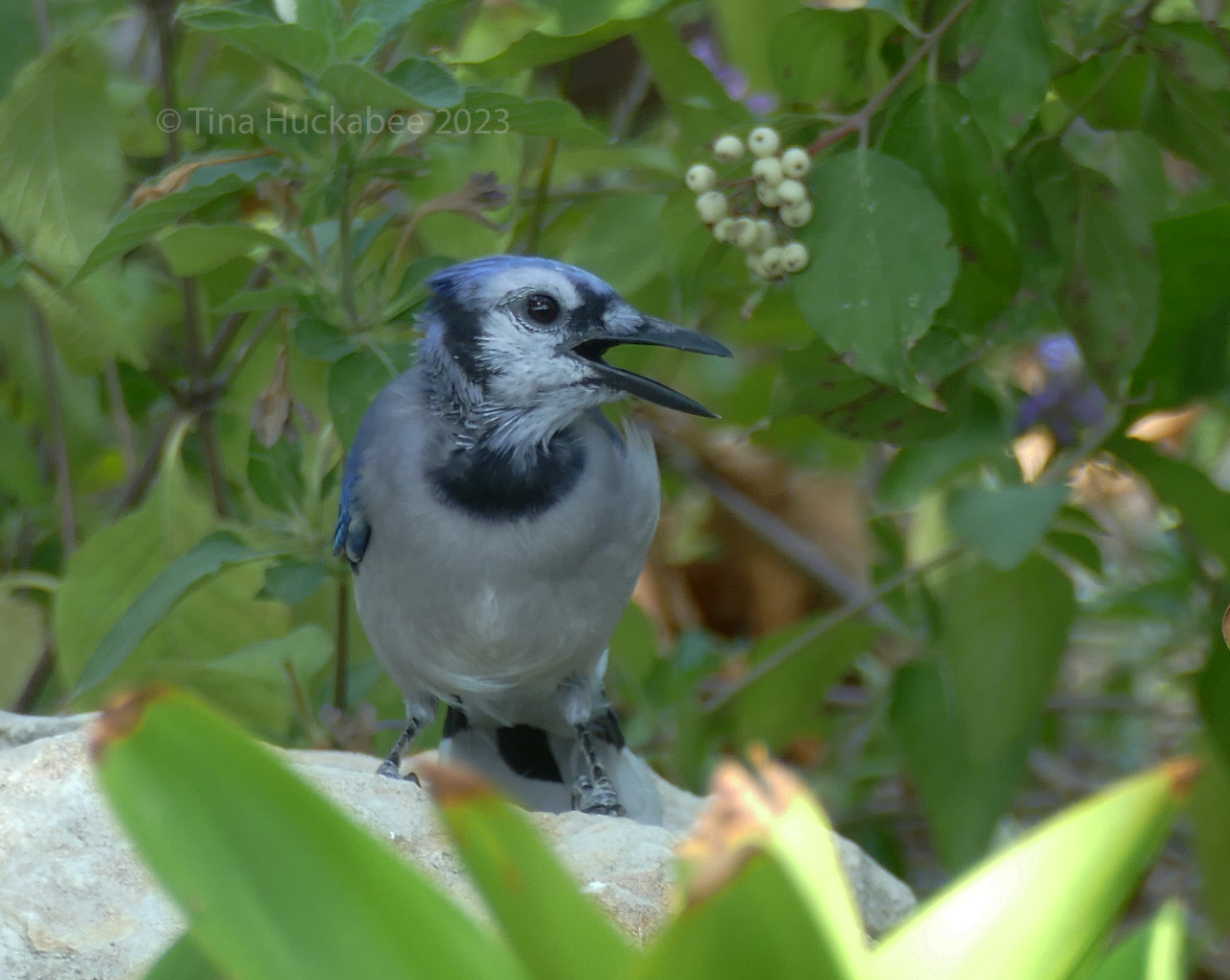
A resident Blue Jay popped into the scene, but kept its distance from Royal Highness.
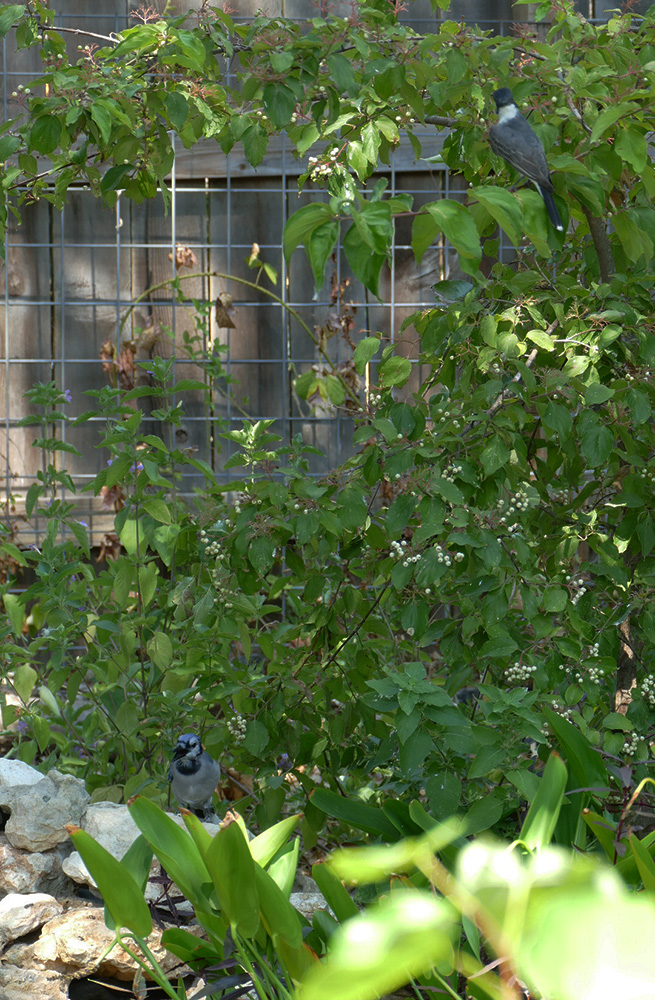
Kingbird perched in the Dogwood, above the lowly Jay, no doubt lording over its temporary territory. The Blue Jay stayed near the bog area of the pond, just hanging out, being a Jay.
Bird migratory season has arrived. I don’t see either the variety or numbers of birds in fall migration as during spring migration, but it’s time to keep a keen eye on the pond and gardens for more than the usual suspects. It’s time to observe and appreciate their beauty and contributions to diverse ecosystems. My garden will serve as a respite for shelter, food, and water for these remarkable creatures during their long, arduous travels.
 My Gardener Says...