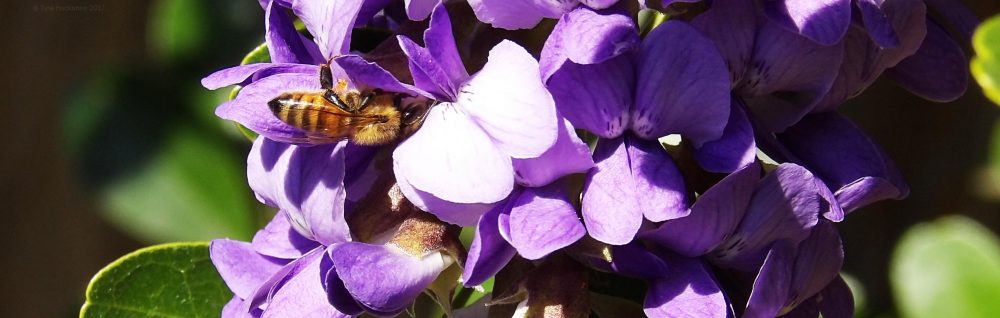
As of mid December, my garden has experienced only the slightest touch of a light freeze, so some plants are still blooming, especially those plants which hug close to the ground. The late season availability of flowers makes for happy, busy pollinators during sunny days.
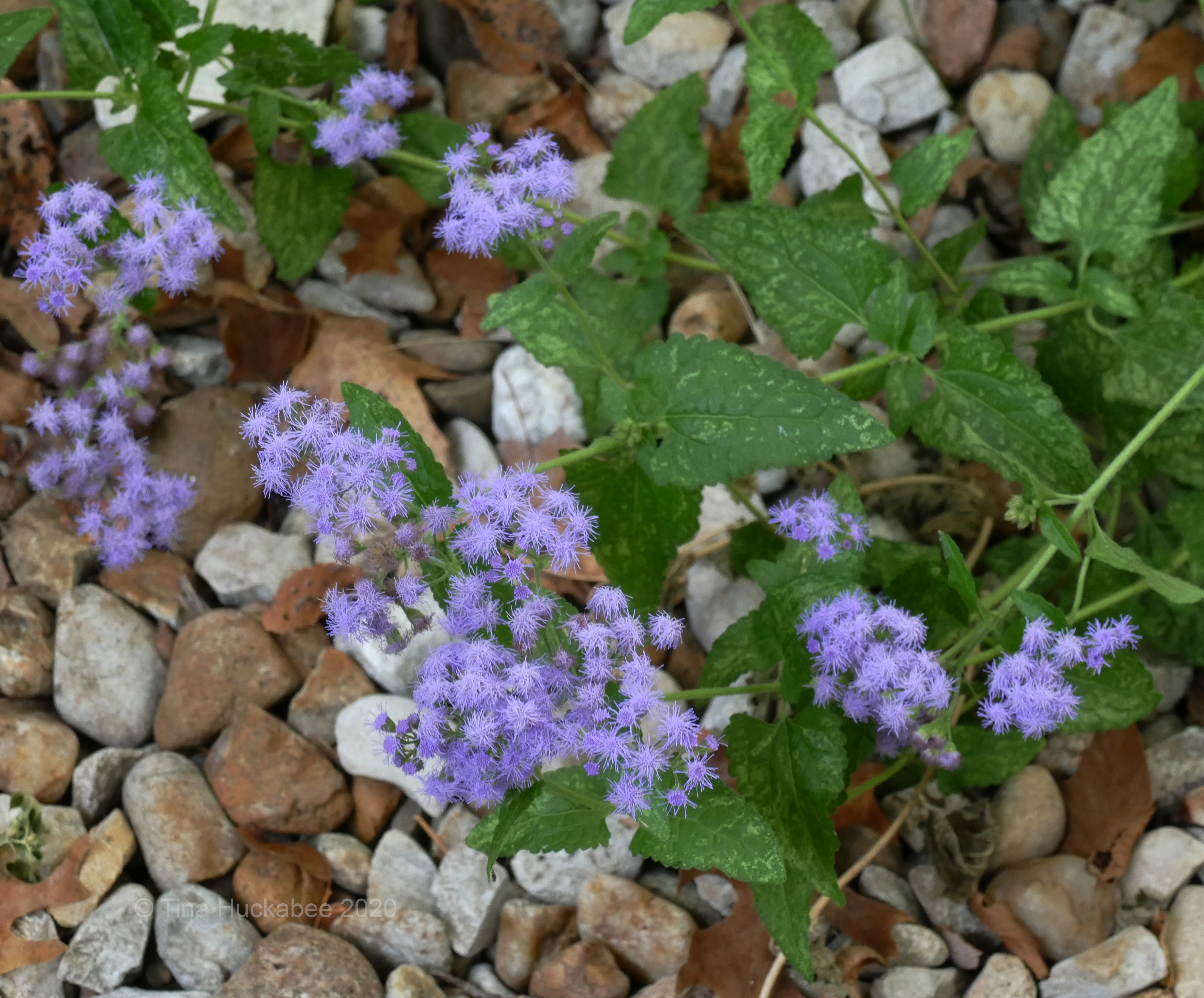
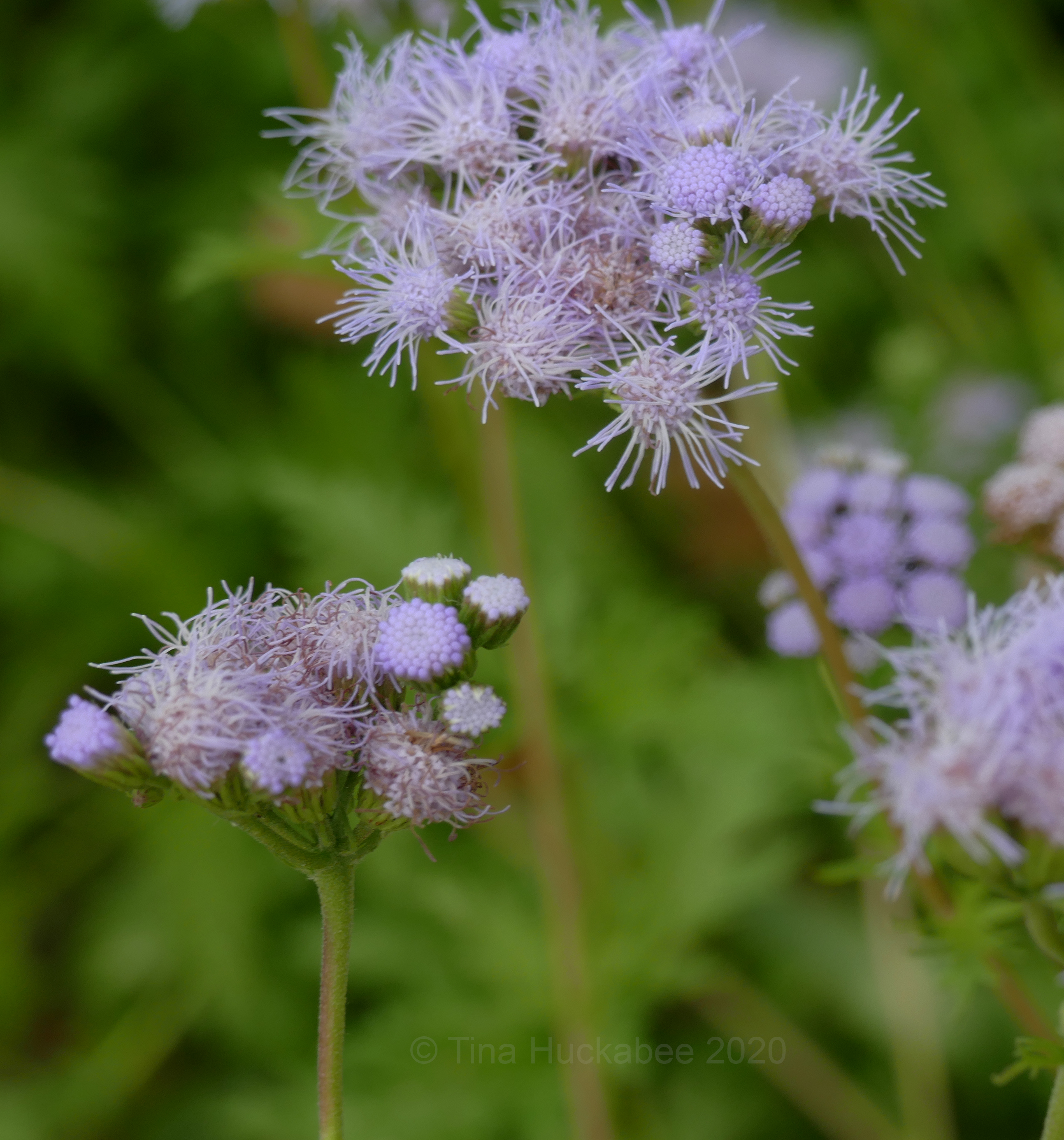
The autumn blooming ground-cover, Gregg’s Mistflower, Conoclinium greggii, is a favorite of many pollinators, big and small. This native-to-Texas perennial boasts bright green foliage and vibrant flowers with a fuzzy structure that pollinators adore.
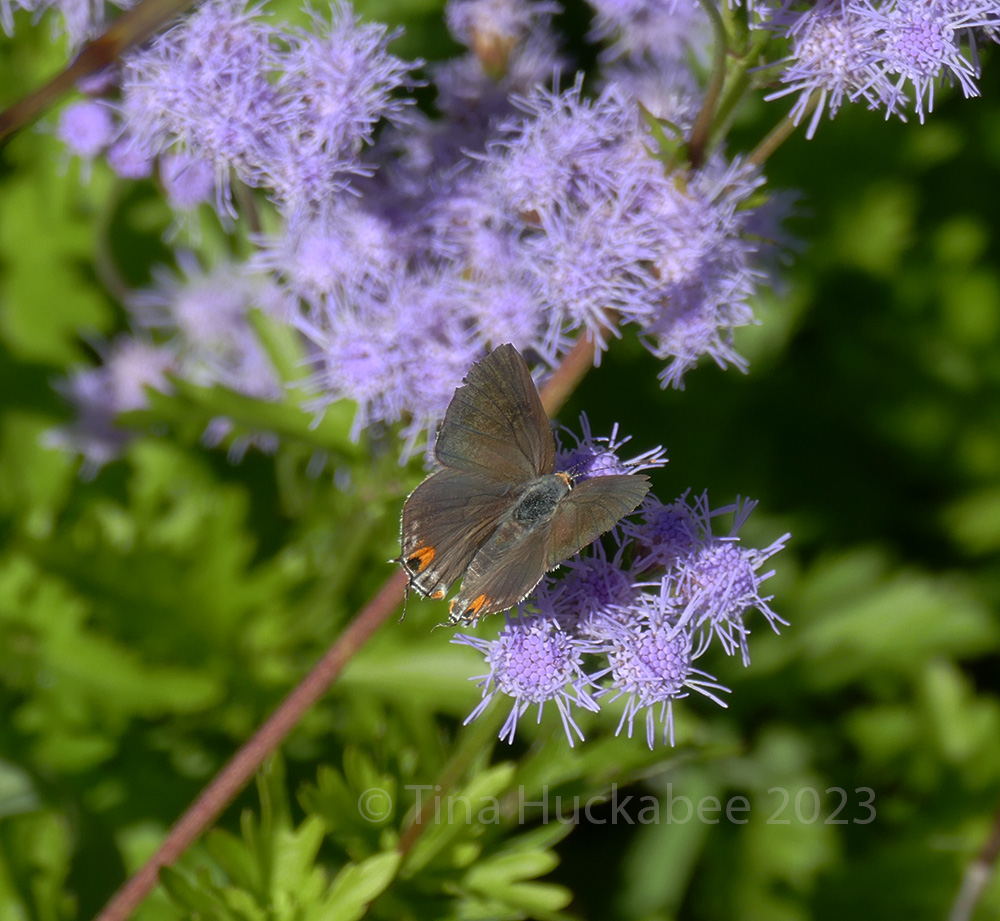
I’ve seen many a Grey Hairstreak, Strymon melinus, nectaring on the mistflowers. This is one of its kind visiting, wings spread wide, proboscis deep in the bloom.

Another common pollinator of the popular aster are Fiery Kippers, Hylephila phyleus. I particularly like the orange and brown of the skipper paired with the bloom’s rich lavender color.

An American Hoverfly, Eupeodes americanus, can’t resist the bounty of the mistflower. I’ve seen other flies pollinating, but catching them in action proves elusive on breezy days. This yellow-n-black stripey fella cooperated with the photo session.

As always in my garden, the honeybees are active. If there’s a flower available for sipping, honeybees are all-in.

Yellow is a color of autumn and this Little Yellow, Pyrisitia lisa, is one of several who’ve worked the patch of mistflower for the past few weeks.

The Queen rules the mistflower. Queen butterflies, Danaus gilippus, are regulars in my garden. During autumn and until the first hard freeze, they’re particularly fond of Gregg’s Mistflower; Queens are some of its most loyal customers. This male Queen, along with several others of both genders, flit to the mistflower once the sun is shining on the blooms.

Male Queens and Monarchs have two black dots on their hindwings, located on either side of their abdomen. The black dots emit pheromones to attract the females. And they look cool, too!
Another queenly view…

Weirdly, Monarchs, Danaus plexippus, are still migrating through Central Texas on their way to their Northern Mexico wintering homes. I don’t recall seeing monarchs this late in fall, but I’m happy that there’s plenty for them to nectar from.

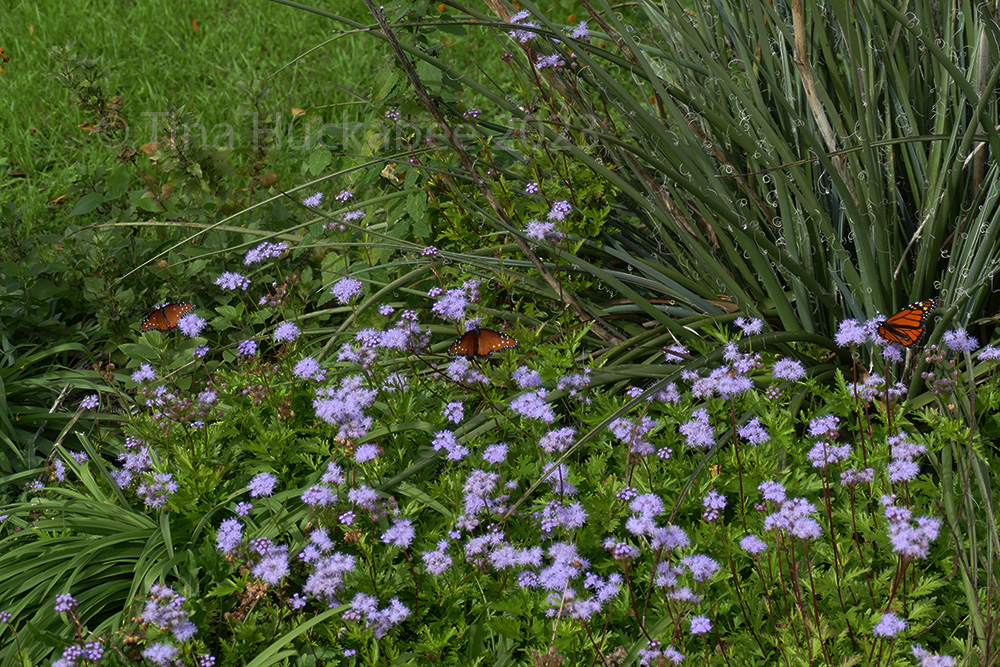
Tres mariposas, three butterflies–all in a row! Two Queens (left and center) and one Monarch, far right. Did I mention that these butterflies love Gregg’s Mistflower? Often there are even more individuals snacking at the patch of flowers.
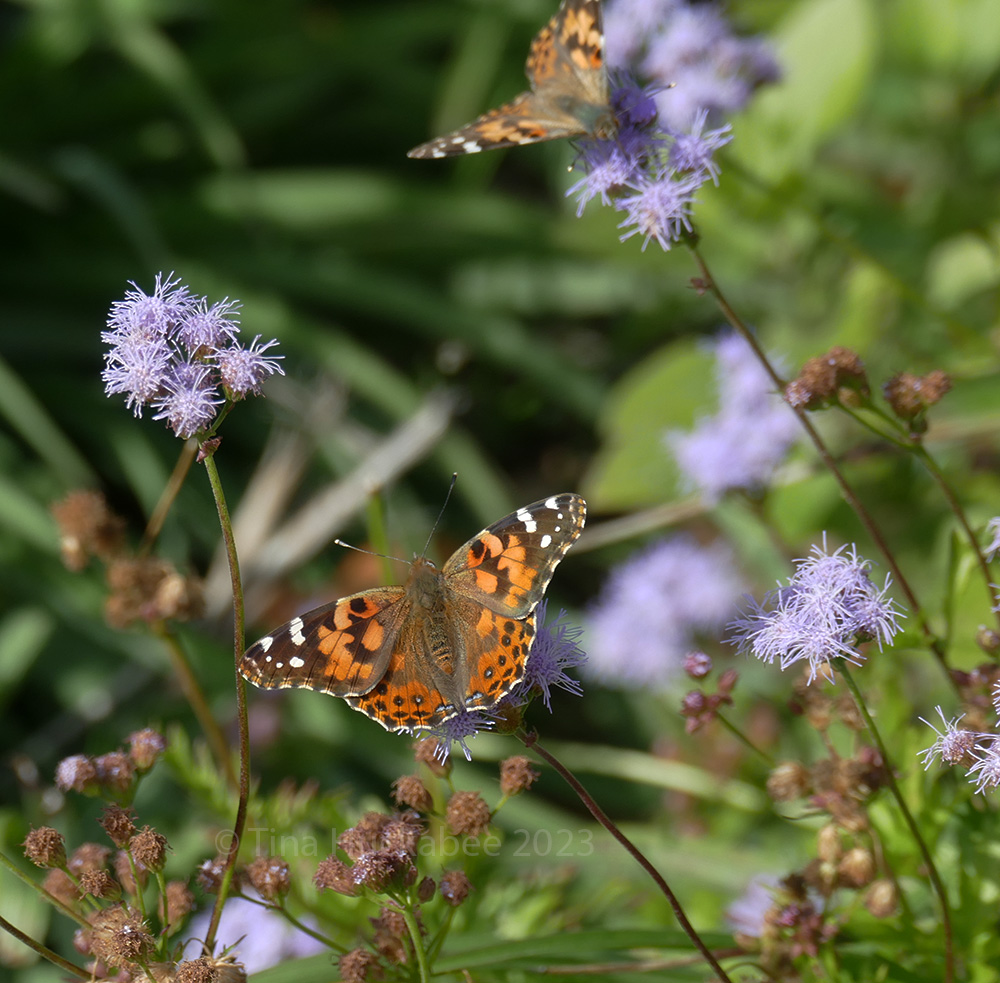
More admiring fans of mistflower are Painted Lady butterflies, Vanessa cardui. The ones visiting my mistflower have been skittish, but I finally caught a couple of photos demonstrating their enjoyment of the flowers–and their beauty.
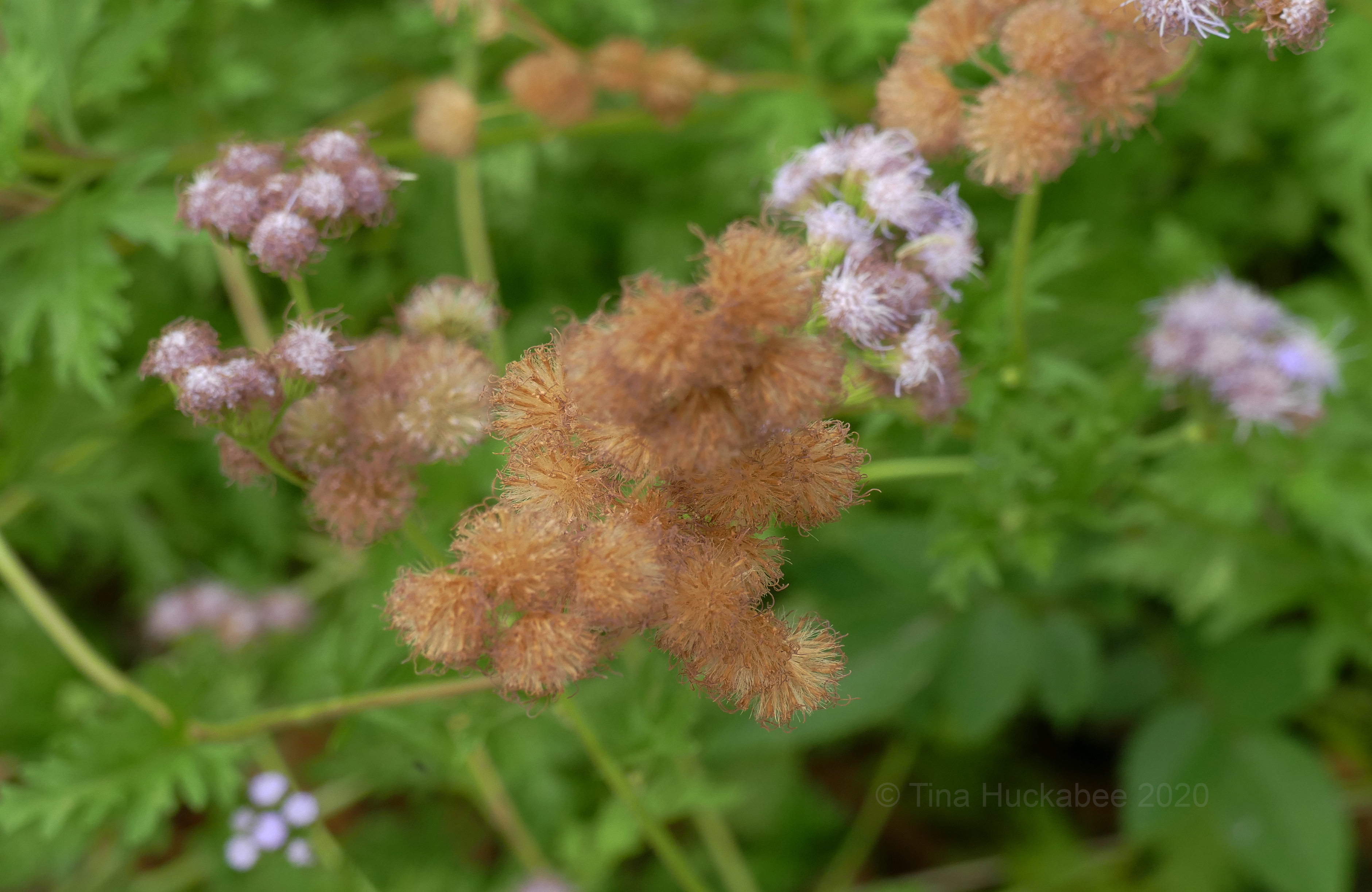
These are but a few of the pollinators working this popular flower during the zenith of its bloom season. Not shown, but definitely groupies of Gregg’s Mistflower, are multitudes of tiny native bees (which never seem to perch and pollinate, but must do?) and other too-quick-to-catch-with-the-camera butterflies. This lovely plant will bloom and provide for pollinators until a hard freeze renders it dead for the season. Fuzzy blooms then turn a warm toasty color and over time, mistflower fluff drifts with the breezes.
In a few month’s time and with spring’s warmth, new growth will emerge from the soil, signature puffy flowers will appear in clusters, and pollinators will return.










 My Gardener Says...