A New Day

My new day starts before light with coffee in the catio, as the cats keep me company. They sniff the humid, warm morning while I sip and watch the dark sky turn pink and yellow at the horizon, beyond my oak trees. Then it’s play time inside with the cats, all wands-with-fluffy-feathers, jingly bells, and happy purrs. At some point, I’m in the back garden for the first round of look-sees in the morning sun, feeding the pond fish, and hanging a couple of bird feeders. Then, it’s time for the dog’s walk.

On a recent morning, if I’d been more alert during that first round in the garden, I would have seen two Black Swallowtail butterflies emerging from their temporary homes, the homes where they morphed from worms to wings. Alas, it was later in the morning, as their wings dried the the bright sun, and before take-off for their new day as adults, that I noticed and appreciated, their beauty.

The butterfly situated at the top of a fennel stem caught my attention first.
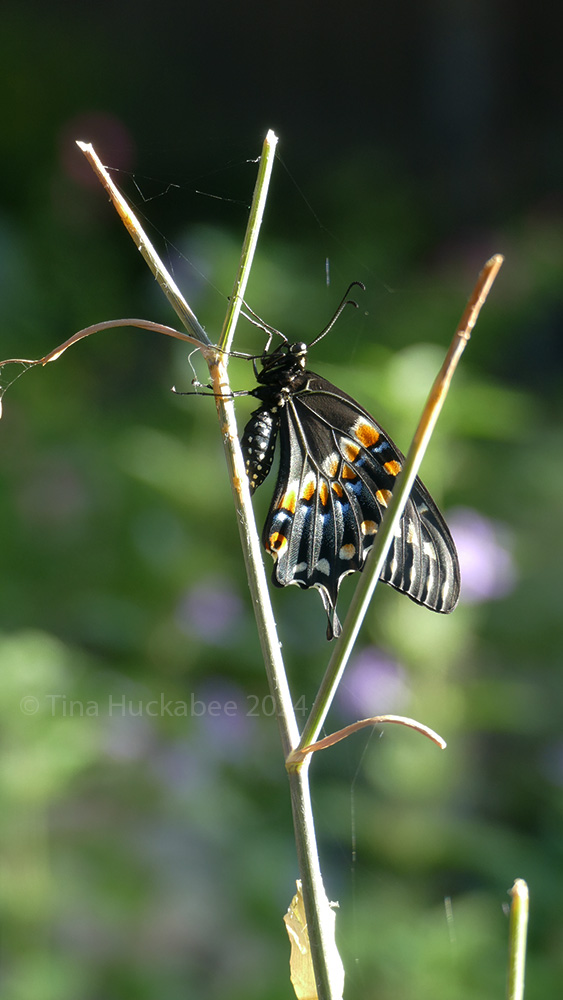
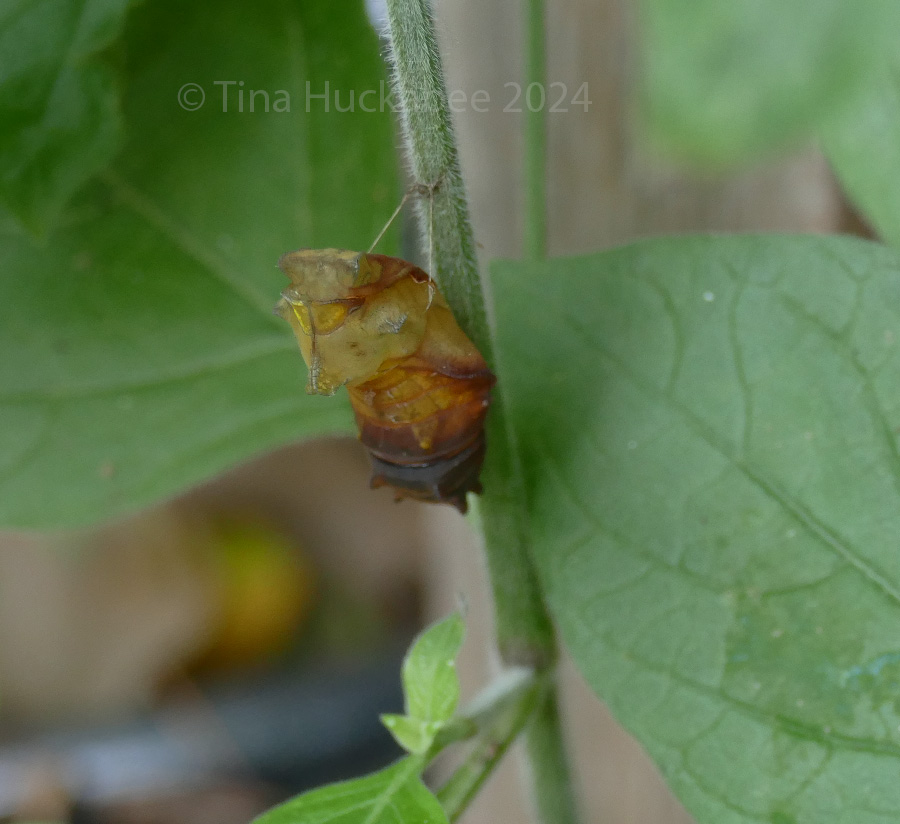
I neglected to include the whole of its now-open chrysalis in this photo, just like I neglected to take any photos of both chrysalises in the two weeks they were in chemical flux. That was my bad to miss documenting those jewels. The chrysalises are stunning and look like they are lit from within. Maybe they are.

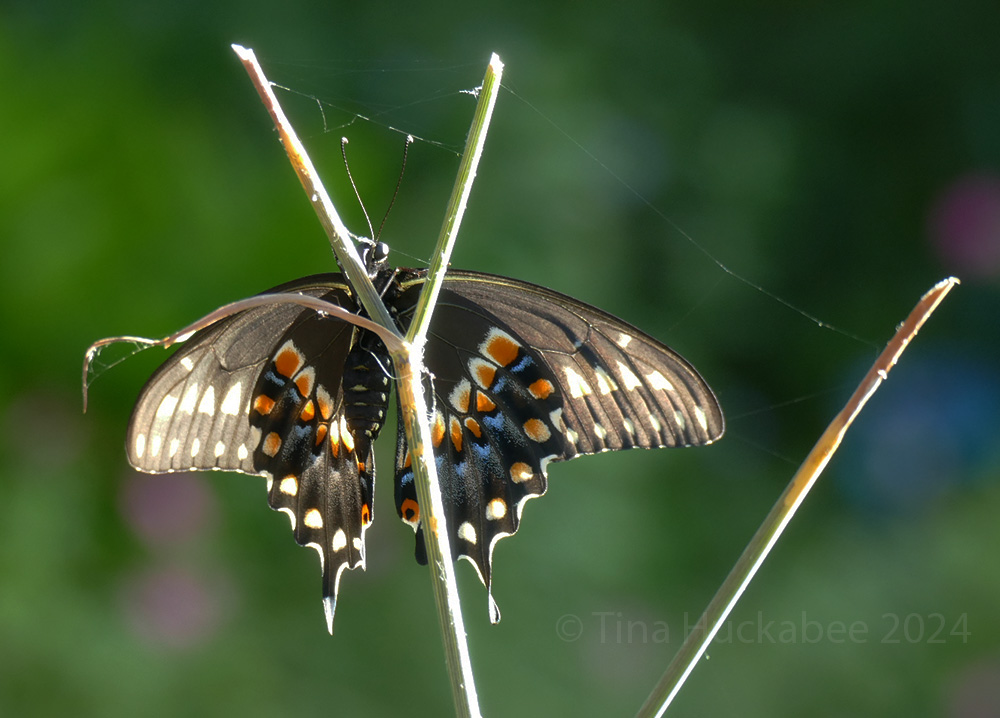
I like this view of the same insect. It’s rare that a butterfly demonstrates the whole of its underside in my presence, without my having to twist and turn and crane my neck for a glimpse or photograph.
The second butterfly and its worm-to-wing home were stationed two stems over from the first.
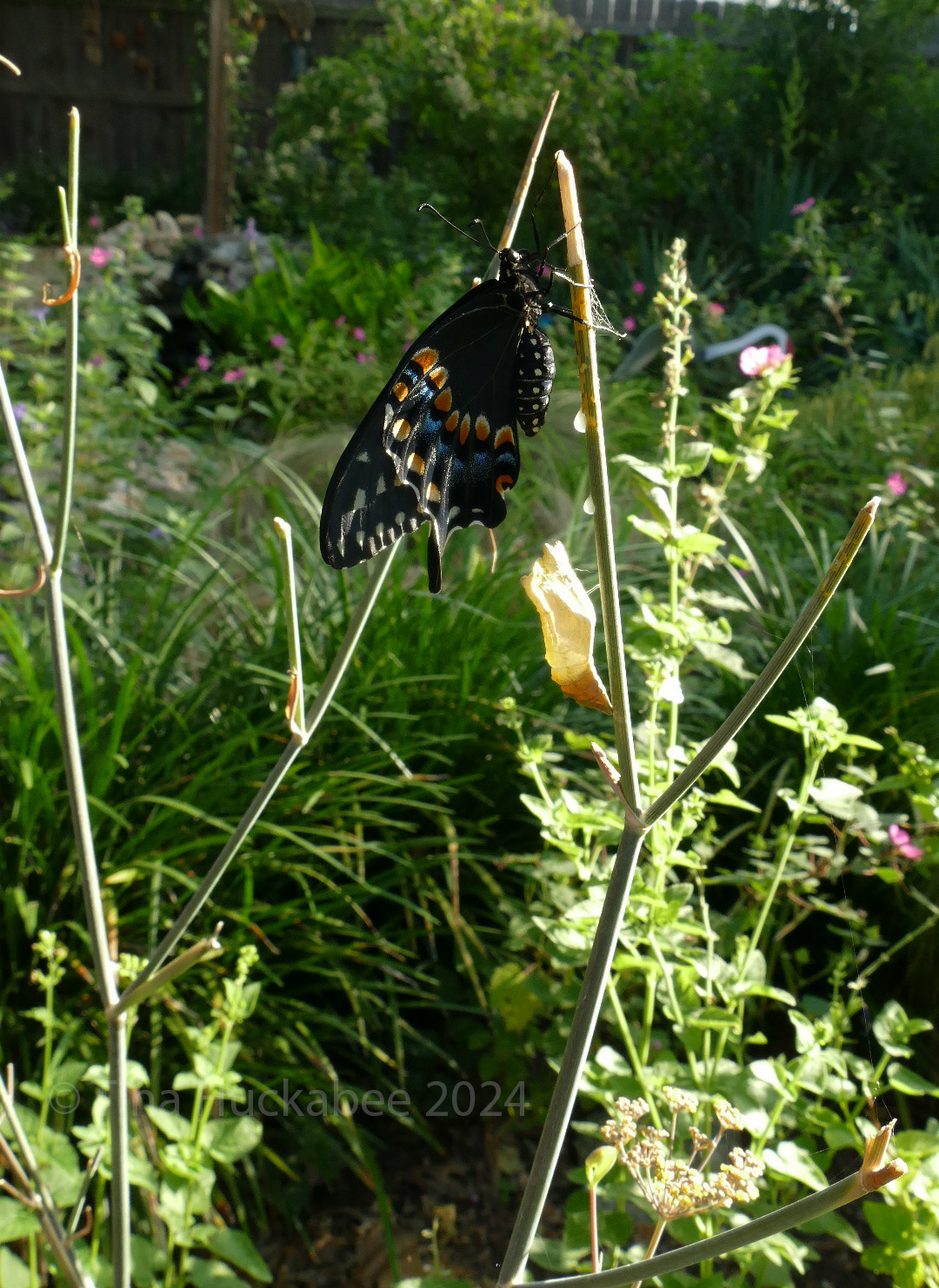
You can see two drops of liquid settled on the stem, which spurted from the butterfly just before I snapped the photo. I assume this liquid is part of the chemical transformation from a caterpillar to a winged insect, and the reason why butterflies, after emergence from their chrysalises, must sit in the sun, opening and closing their wings until dry.

Shortly after I snapped photo, the butterfly took flight, to nectar and mate, to continue the cycle.
Pollinator Week

Hosted by Pollinator Partnership, June 17-23 is a week to celebrate pollinators in the garden. It’s easy to nurture a pollinator garden: plant flowers and the pollinators will come. Every season provides opportunities to grow plants that pollinators need for survival. Some pollinators are common throughout the growing season, while others appear only when certain flowers are available. Still others are migratory, showing up in the garden as they travel to other destinations to complete their life cycles. Pollinators add beauty and movement to a garden, and are indicator species of a healthy ecosystem; good gardeners always strive for a healthy ecosystem. Choose native plants in your garden, if available, but many non-native plants are excellent pollinator providers. Seasonal wildflowers, perennials and shrubs, as well as flowering trees will all attract and sustain pollinators of every stripe, wing, and kind. Pollinator insects include beetles, bugs, bees, flies, butterflies and moths. And don’t forget that bats and birds also pollinate.

So if you want something like this:

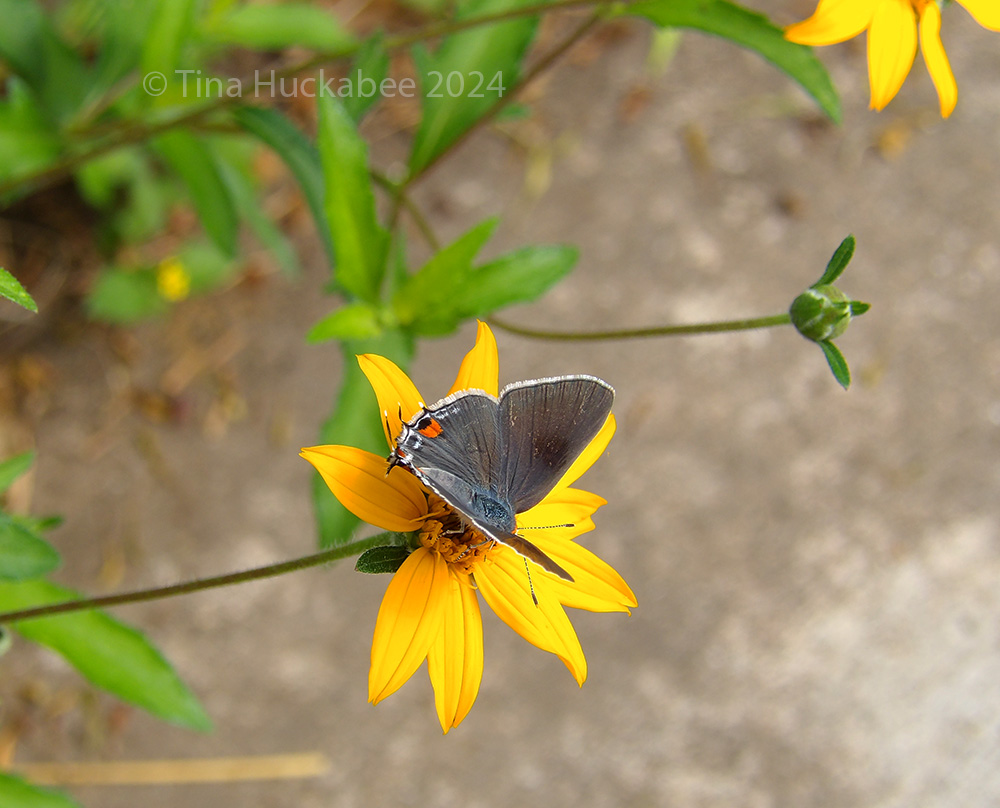
Gray Hairstreak, Strymon melinus on Zexmenia, Wedelia acapulcensis var. hispida

…or this:

Honeybee on Spiderwort, Spiderwort sp.

…or these:

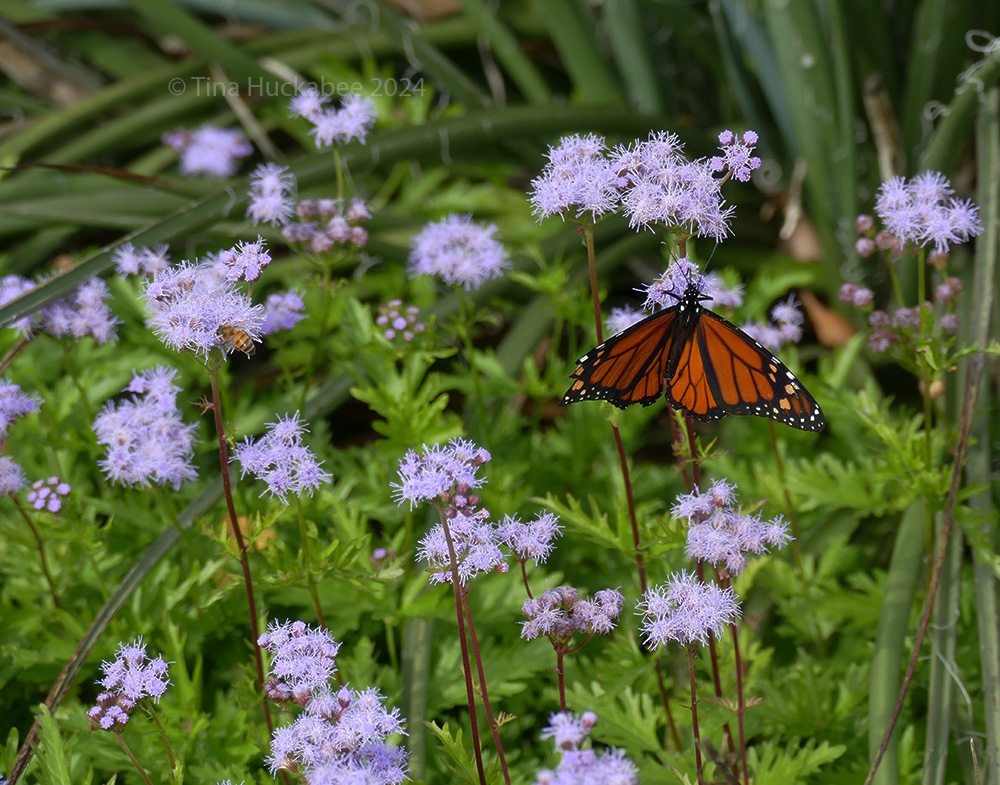
Honeybee and Monarch Butterfly, Danaus plexippus, on Gregg’s Mistflower, Conoclinium greggii

…or this:

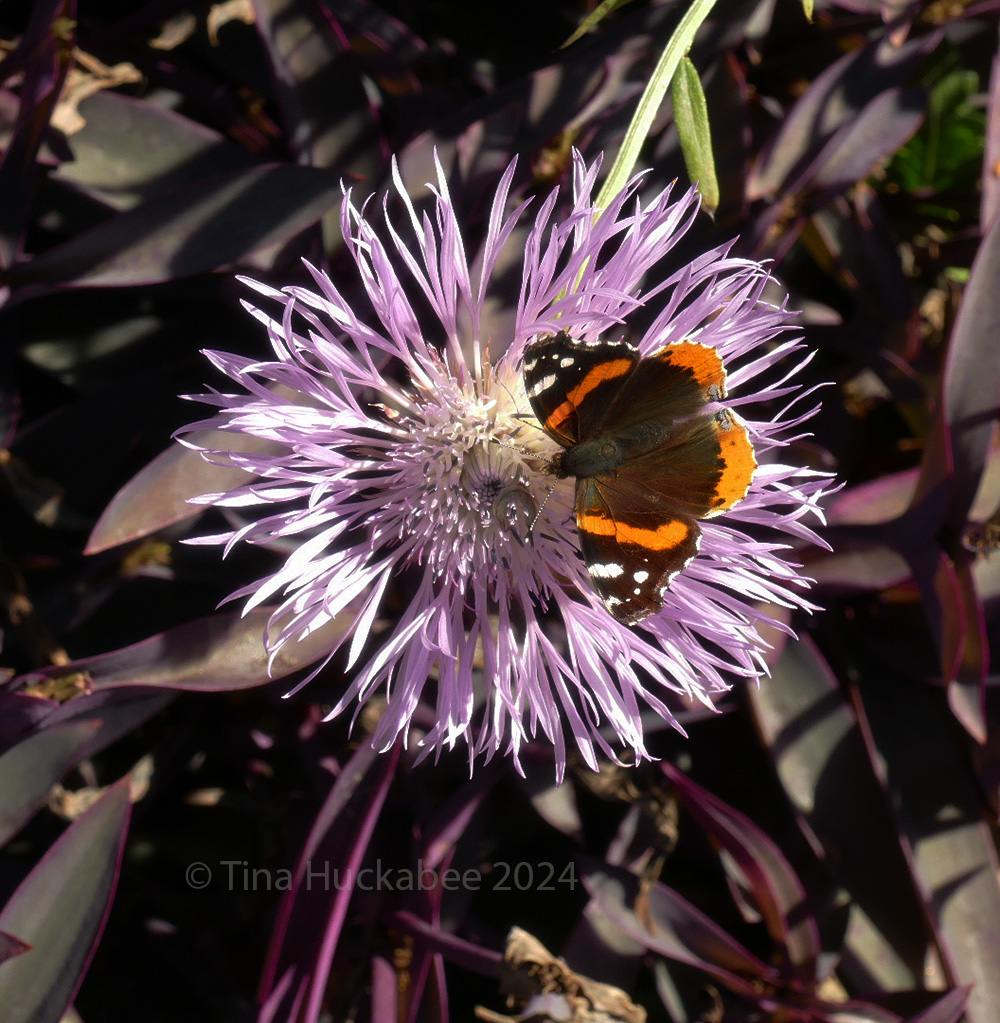
Red Admiral, Vanessa atalanta on American Basket Flower, Centaurea americana

…or these:

Two different native bees on Four-nerve Daisy, Tetraneuris scaposa

…or these:

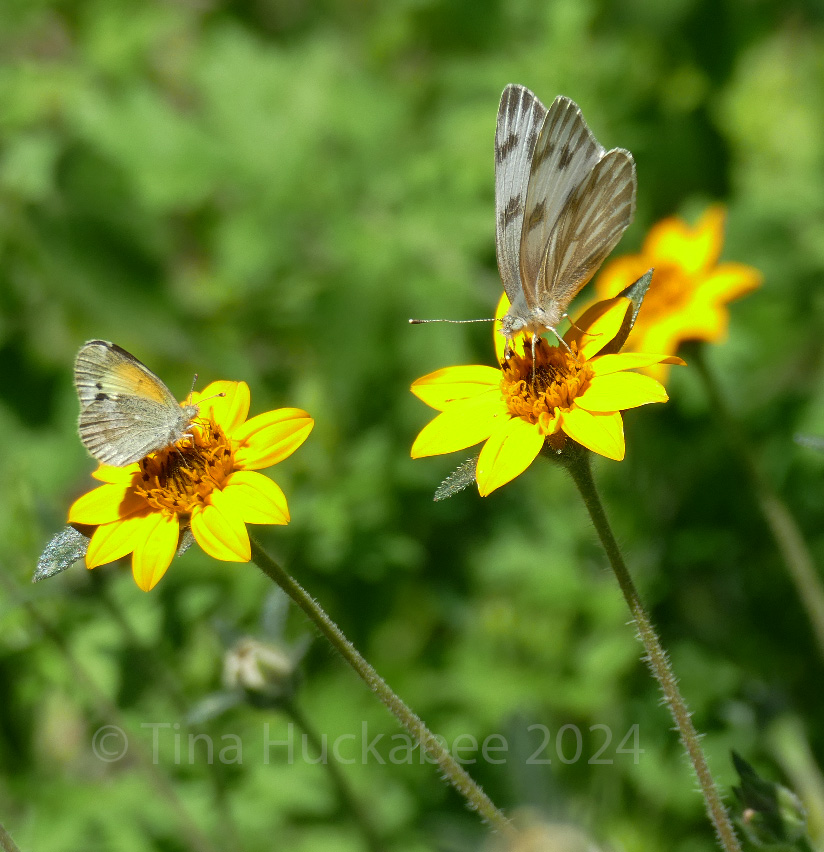
Checkered White, Pontia protodice (R) and Dainty Sulphur, Nathalis iole (L) on Zexmenia bloom

…or this:

Queen Butterfly, Danaus gilippus, on Blue Curls, Phacelia congesta

…use native and well-adapted plants in your garden and the pollinators will come.

Insects and plants evolved together and form an interdependent partnership. Good gardeners accept that plants are eaten by beneficial insects, including those that become pollinators. So a little garden patience is required, understanding that some plants will show foliage damage–and that’s just fine. In particular, native plants are resilient and a little foliage munching by a pollinator juvenile won’t kill the plant.

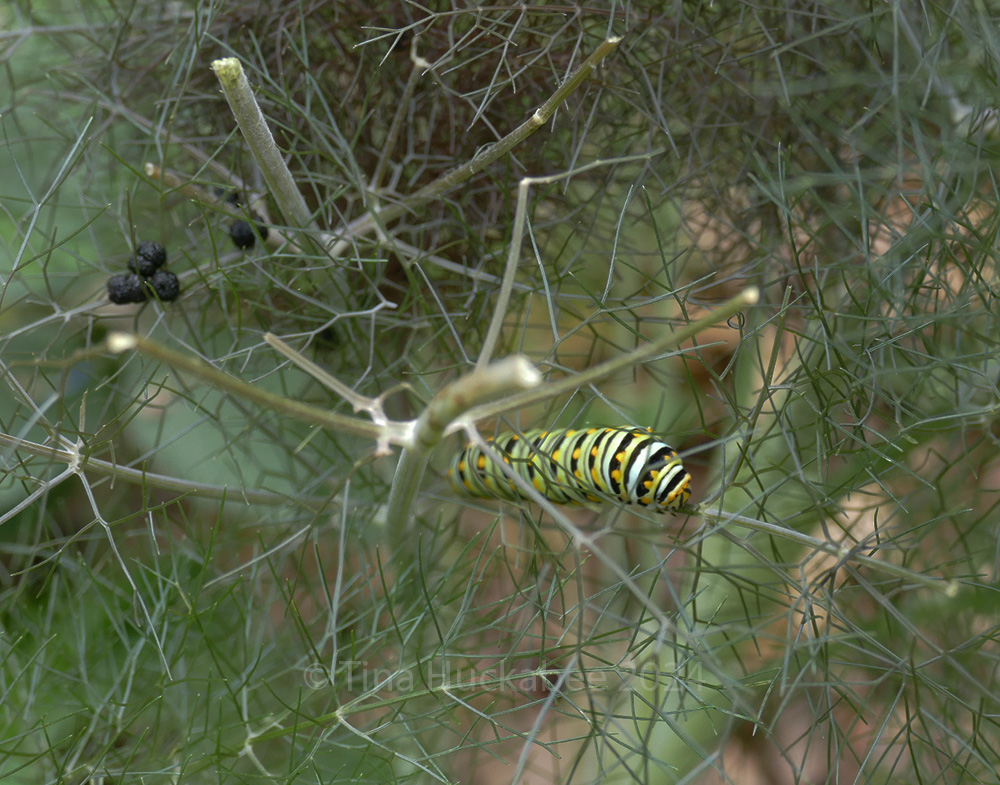
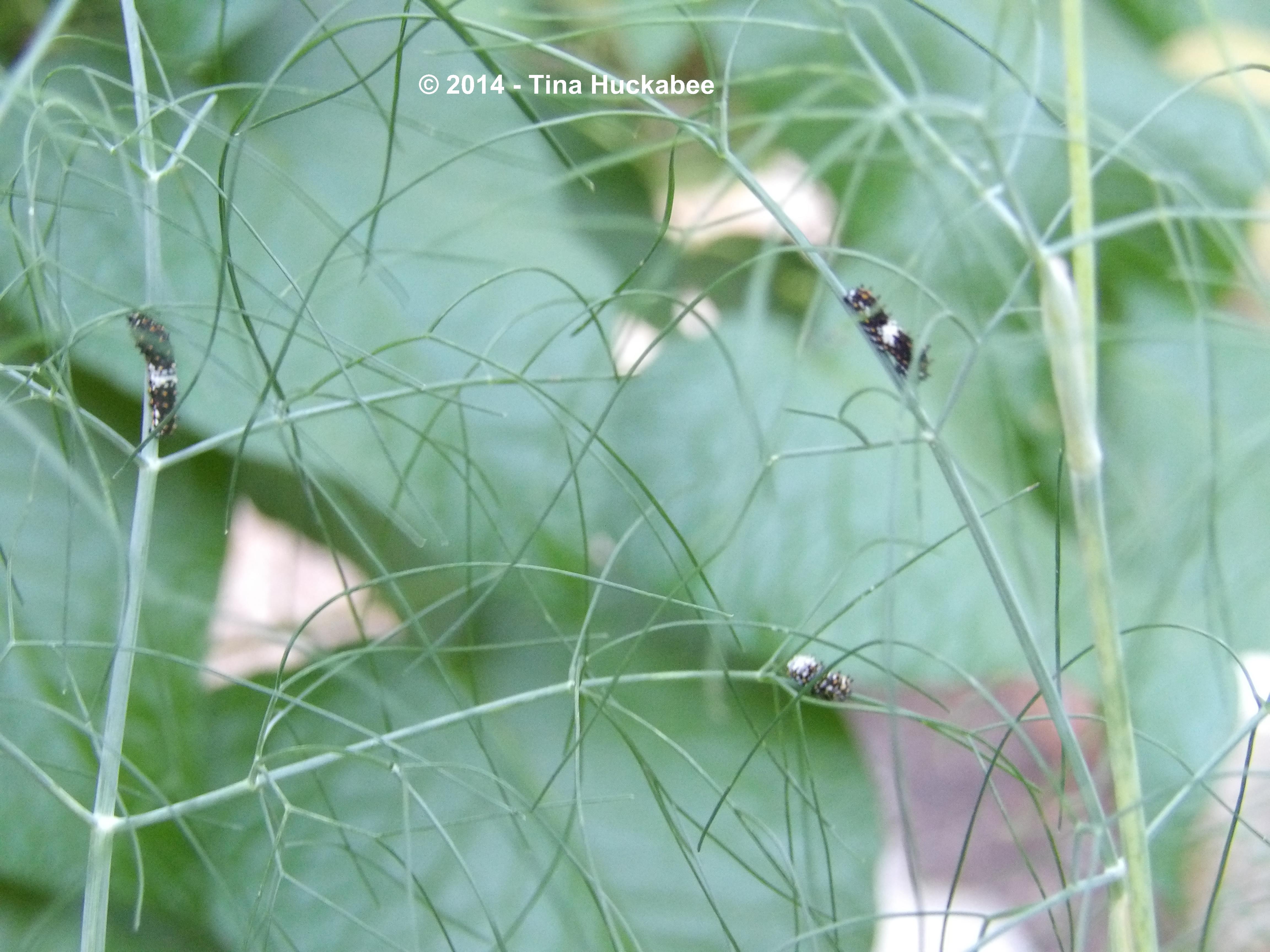
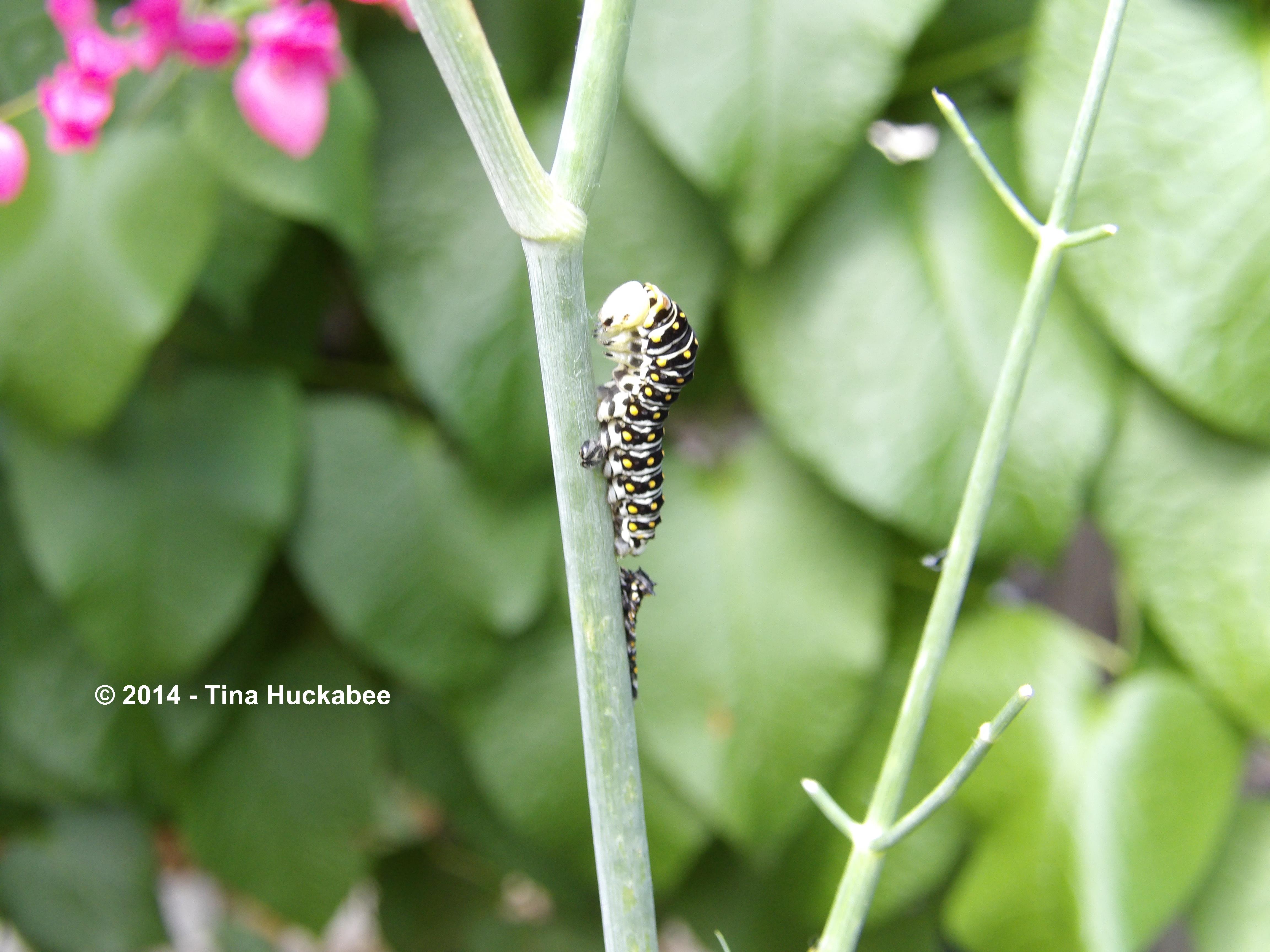
Before they become jeweled and winged things, butterflies and moths are caterpillars, like this stripey beauty, an Eastern Black Swallowtail, Papilio polyxenes, caterpillar or larva. It will eat and eat, then grows and grows. Yes, the very hungry caterpillar causes some damage to the foliage, as well as leaving some poop, but look at that fat, healthy caterpillar!

Fennel is a host plant for Eastern Black Swallowtails

In time, a nice home will chemically form for the transformation from larva to adult butterfly.

Eventually, the adult insect emerges and joins the throngs of other pollinators in the diverse and thriving garden, nectaring from a wide array of plants, for both its and the plants’ benefit.

Eastern Black Swallowtail on American Basket flower

Pollinator gardening is a win for everyone! Pollinator gardening is easy, rewarding, and will usher the gardener to observe and appreciate a whole new community–right on their own plot of the Earth.

If you plant them, they will come.

Happy pollinator gardening!

Caterpillar Happenings

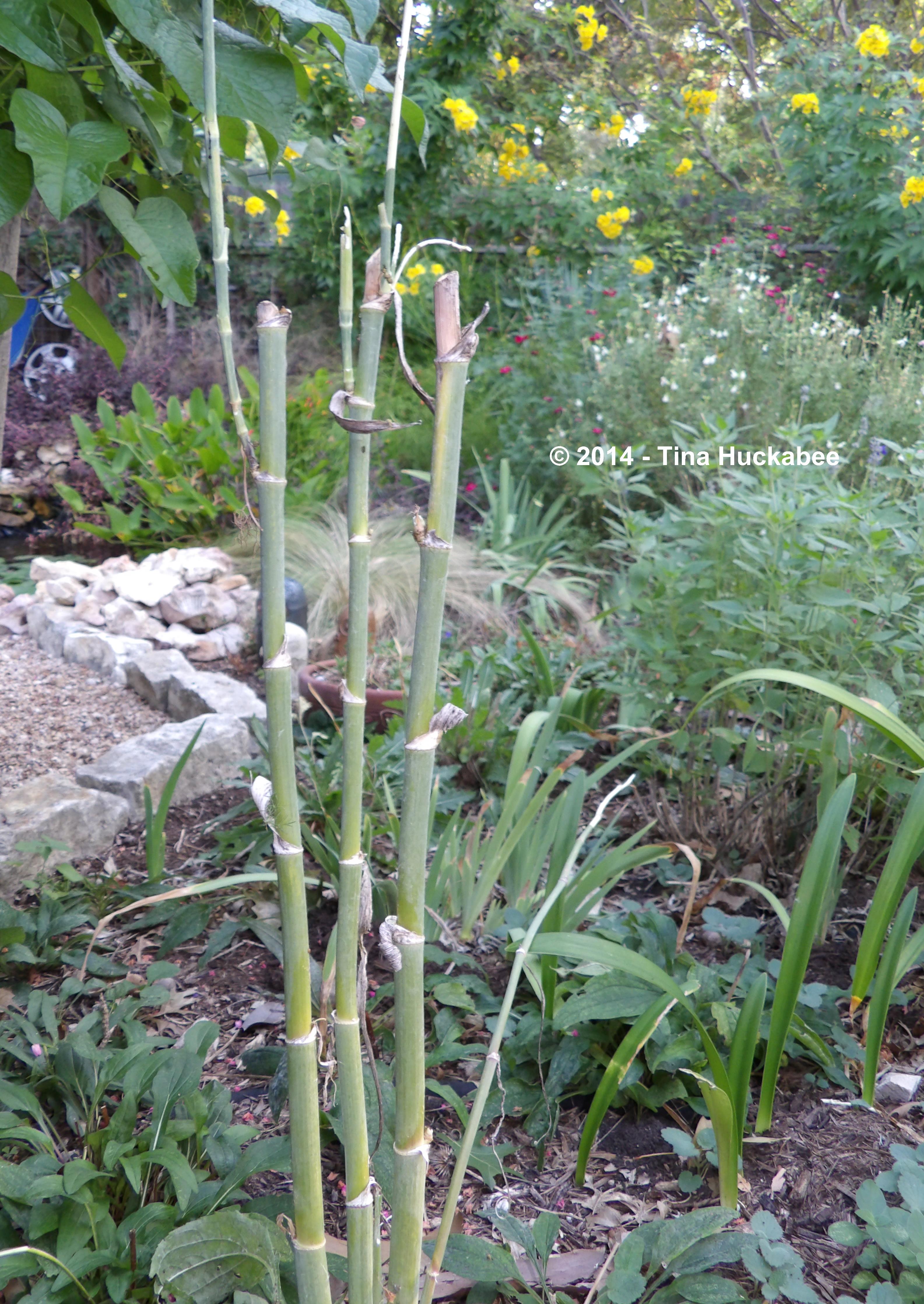
This is one of my fennel plants.
IMGP2221_cropped_3170x4472..new

These are the cause of why my fennel plant looks like it looks.

IMGP1563.new

And these,

IMGP1564.new

…and these.

IMGP1793.new

IMGP2013.new

IMGP2014.new

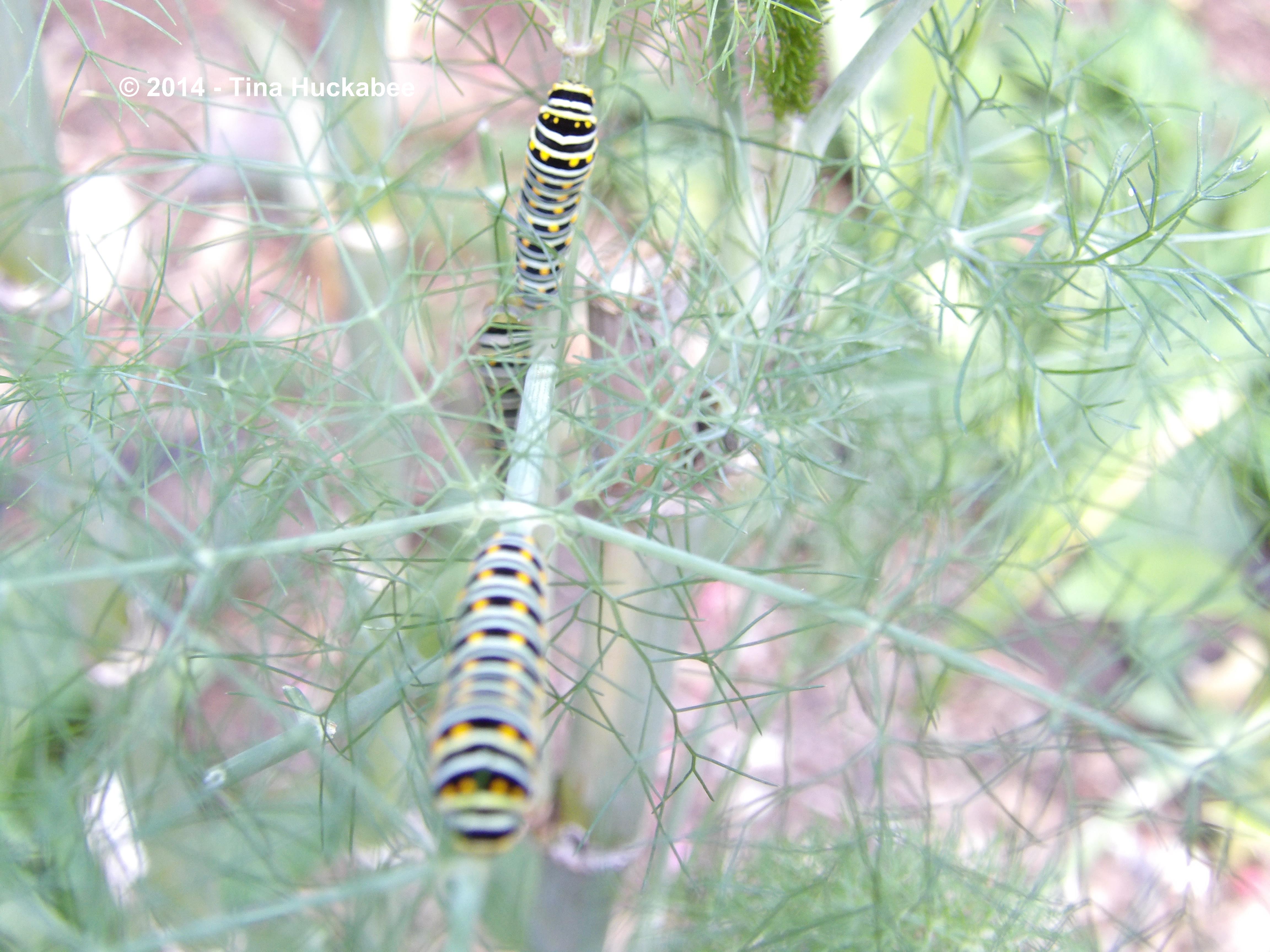
Actually, they’re all the same caterpillars. They ate fennel and they grew; caterpillars are like that. There were ten Black Swallowtail, Papilio polyxenes, butterfly larvae dining on this fennel over the past week or so.

IMGP2015.new

IMGP2016.new

Eating and eating, until there’s nothing left,

IMGP2180.new

IMGP2181_cropped_2974x4515..new

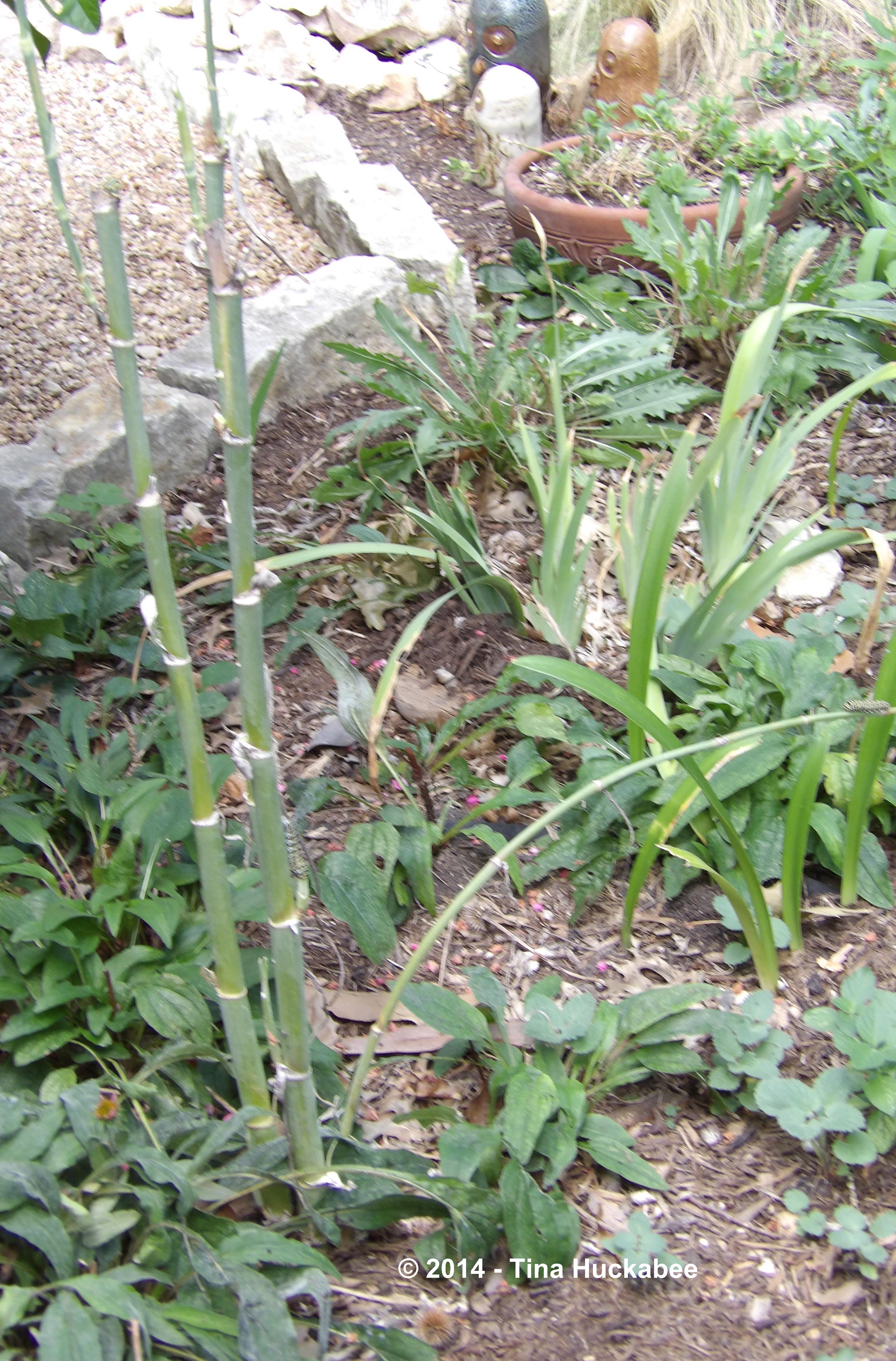
…except defoliated stems and hiding caterpillars,

IMGP2184.new

…ready for metamorphosis in their cozy chrysalides. I guess I should make that singular,

IMGP2220.new

…because from all those caterpillars, this is the only chrysalis that I’ve found.

I’m sure the others are nearby, safe from munching predators. I’ll keep an open eye for the emerging butterflies during this next week.

IMGP2187.new