
I’m recently returned from a week’s reprieve out of the Texas heat, having visited the Land of Enchantment–New Mexico. I’ve been to New Mexico a number of times now: sometimes it’s a museum and cultural events vacation, sometimes it’s a hiking vacation. This trip was in the latter category: a hiking-with-great-meals-afterward vacation. We visited Albuquerque, then traveled, with a break for hiking, through the Sandia Mountains, ending in Santa Fe.
Most hikes were on trails of the Sangre de Cristo Mountain range, all a short drive from Santa Fe. Each hike was unique in what it offered in flora and fauna diversity, as we climbed up and down rocky, well laid-out trails. It took a few days to acclimate to the higher elevation and thinner, dryer air, but we didn’t stop at the top of an incline and huff-n-puff too much. The views were striking, the experience rewarding.
I like to think of these next few photos as my Retrospective on Deceased Trees.

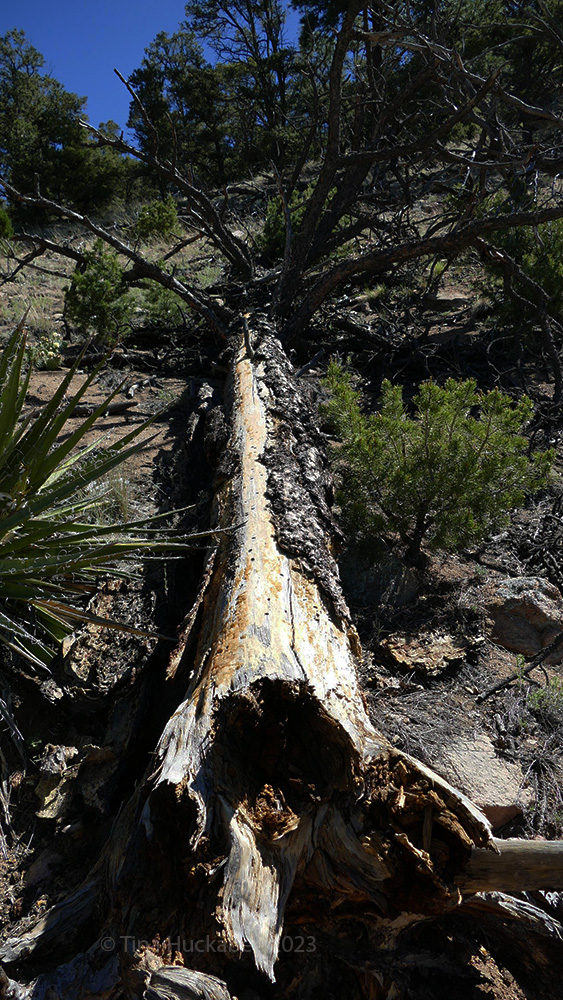
The dead and long-downed tree continues to provide life and living space for insects. I wonder if these holes are from a native bee of this area? Or perhaps it was a woodpecker or sapsucker who drilled with their remarkable beaks?

Spidery limbs act as a buffer between and mountain, and human development (Santa Fe) below.
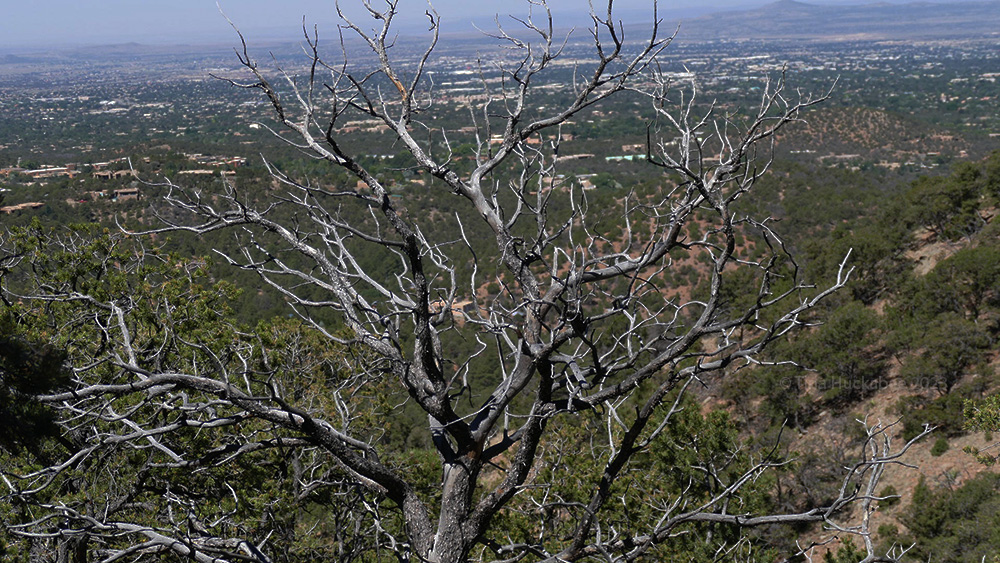
The view from a step back…

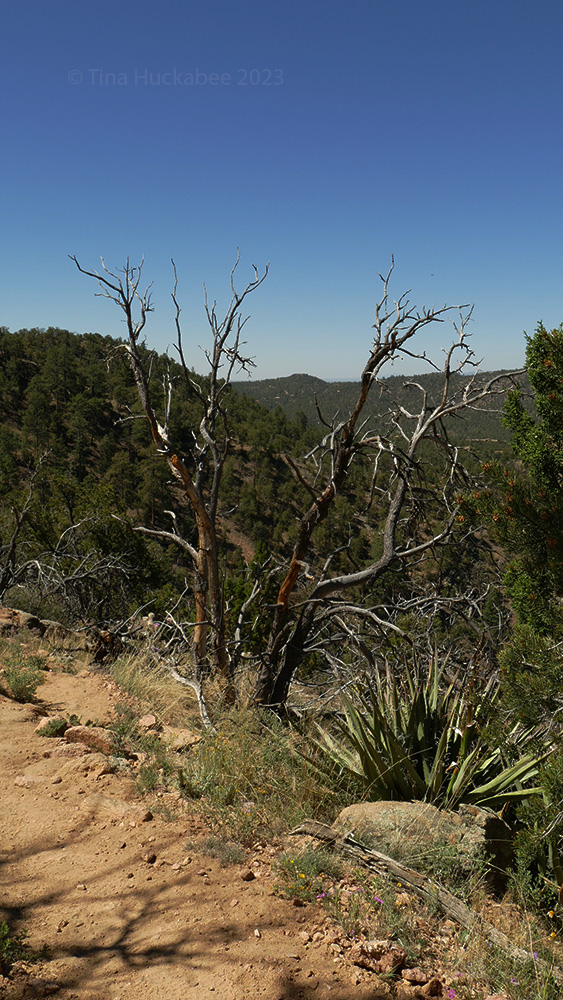
Facing away from human settlement, rugged plants–native grasses, yucca and cacti, wildflowers–fill the landscape. The wildflowers were abundant this year due to a normal winter snowfall and spring/early summer rains. Last year’s wildflower production was significantly less impressive and when we visited last May, we hiked only once, then the trails were closed due to fire and wind hazards.
Birdsong was prevalent during each hike, some areas in symphony more than others. I was pleased to identify (thanks Merlin app!) many birds that I’ve only seen in photos. I was also delighted to experience my winter visitors who share my gardens in Texas from November through April (Orange-crowned and Yellow-rumped Warblers, and Ruby-crowned Kinglets), in their breeding grounds in the New Mexico mountains. Hearing their mating and territorial songs was a first for me since I’ve begun learning about birds. During their winter respite in my gardens, these birds use minimal vocalizations.
I heard, more than saw, many birds, and very few were easily photographed. An exception included this male American Robin,Turdus migratorius. He was a cooperative subject.

I suspect a nest was nearby, as two adult birds made themselves known to us by swooping, then resting and watching, as we walked through their space.
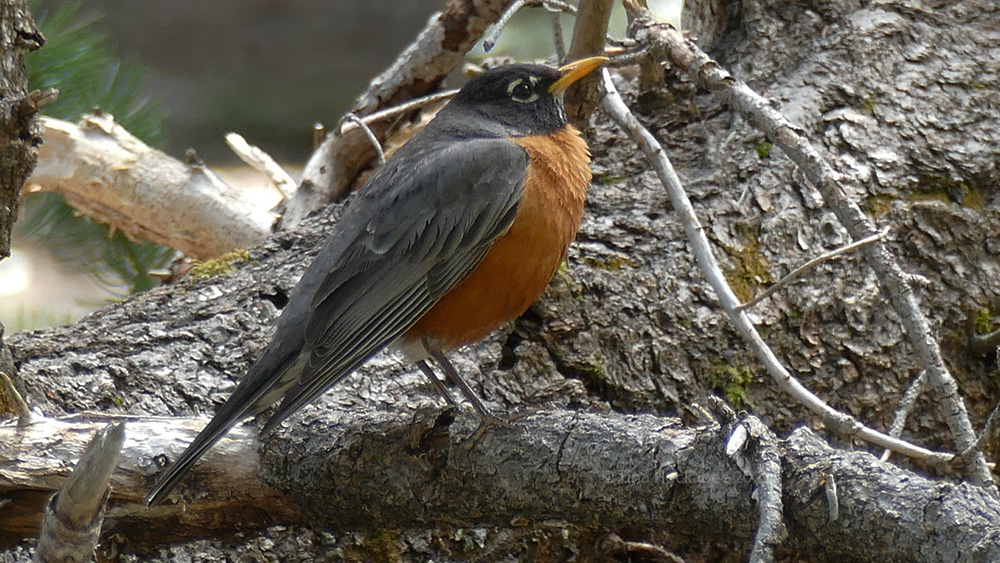
Toward the end of another hike, we were tired, a little dehydrated, and ready to return to our comfy digs, but stopped to admire this male Black-chinned Hummingbird, Archilochus alexandri. As we stood just below, he’d buzzed upwards from his chosen limb, flutter, then settled on the same, or nearby limb, preening, posing, and probably keeping a keen eye on his territory.
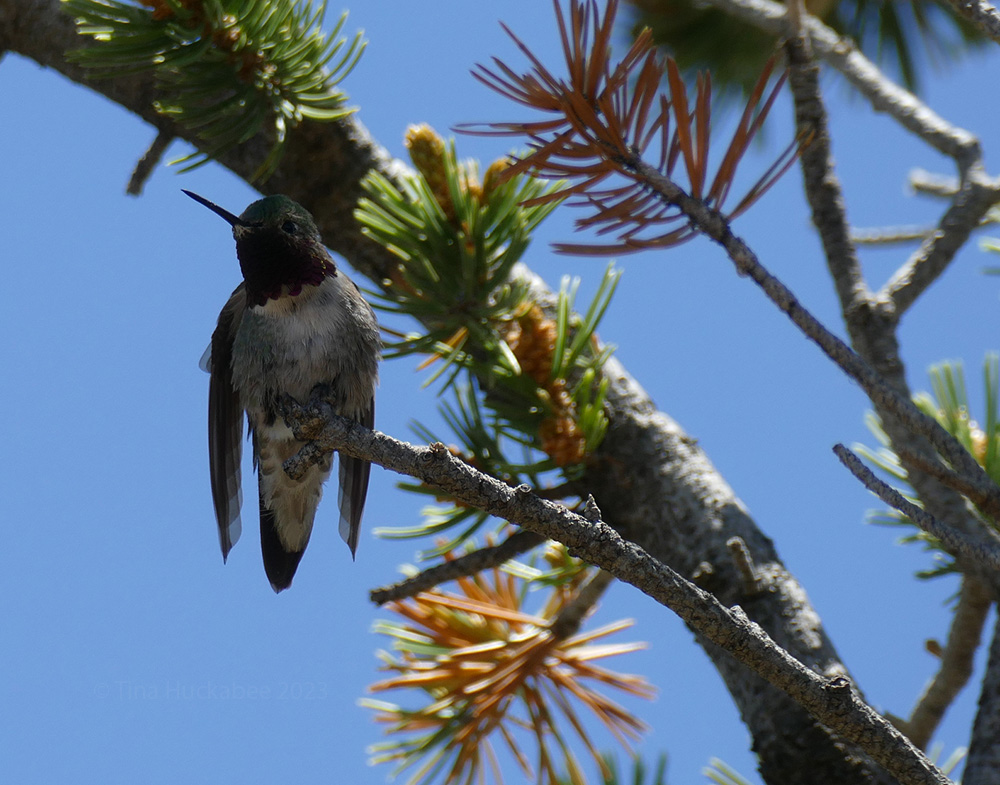
A new bird for me (‘lifer’ in birder-talk) was this cute Mountain Chickadee, Poecile gambeli.

He zipped around foliage of trees and shrubs, nibbling on insects and maybe some seeds, foraging quite close to where I stood, quiet and still, trying to focus the camera. He’s larger than my own tiny Carolina Chickadees here at home.

I saw woodpeckers (that flew too fast to identify) and shy Northern Flickers, who took flight as we came up the trail. This Red-naped Sapsucker, Sphyrapicus nuchalis, must have bathed in the creek which accompanied us on one hike, because he fluffed and preened, ignoring the human with the third eye, excited to see him post-bath.

As well as many birds, there were also lots of reptiles, skittering across the trail ahead of our footsteps and scaling up rocks and trees. It’s been years since I’ve seen a Texas Horned Lizard, Phrynosoma cornutum; I grew up calling these charmers Horny Toads, but their range also includes New Mexico. I remember them fondly from my childhood–they were fun to observe as they’re so ugly they’re cute. I didn’t see any Texas Horned Lizards on this trip, but we saw a couple of Greater Short-Horned Lizards, Phrynosoma hernandesi, who are just as darling as Texas Horned Lizards. Sadly, both species have declined, due to pesticide use, loss of habitat, and the pet trade.
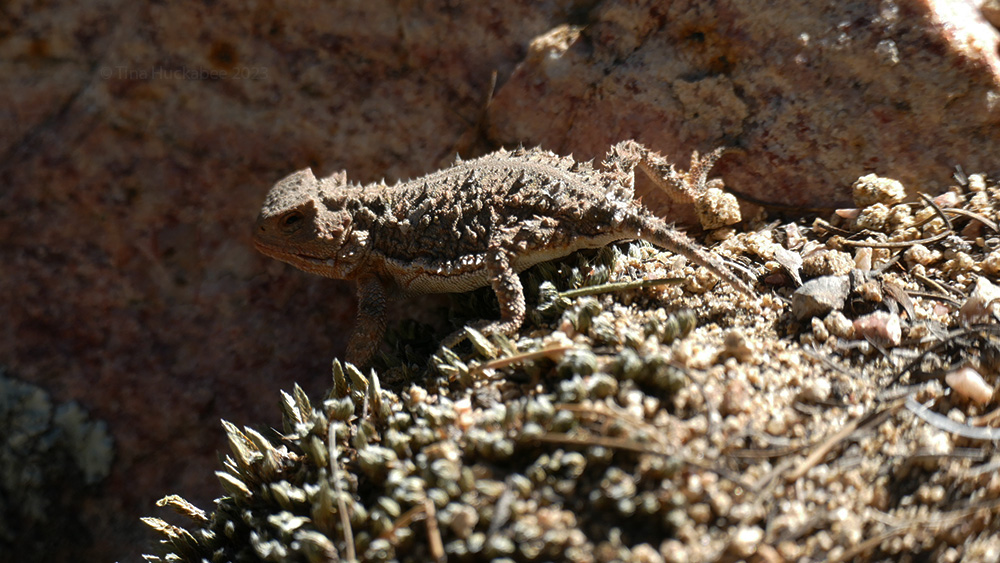
Another common and fleet-footed critter that we saw along the trails was the Desert Grassland Whiptail Lizard, Aspidoscelis uniparens. This was the longest of the lizards we saw; they didn’t immediately skedaddle away from us. This one seemed as interested in us as we were in him. Actually, it’s a ‘her’ as this lizard is an all-female species of reptile. These lizards reproduce by parthenogenesis, so no dudes necessary.

The wildflowers were lovely and varied. Individual dabs of color dotted the landscape and in open areas, devoid of shade from large trees, bigger colonies like this group of sunny Common Toadflax, Linaria vulgaris, blanketed with color and form.

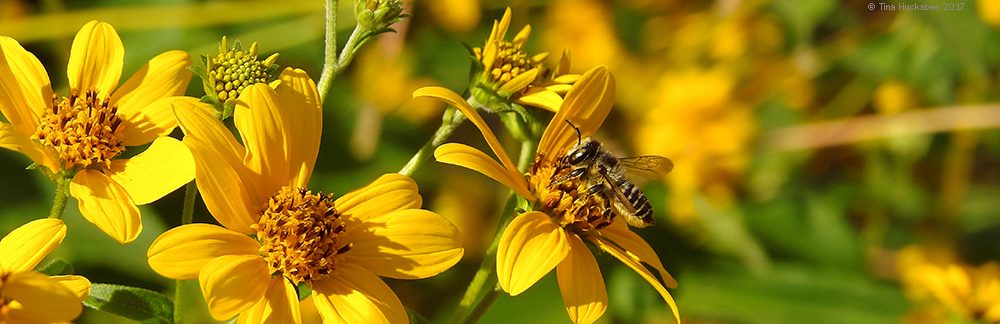
Pollinators were busy; native bees, skippers, larger butterflies, flies, and moths were everywhere flowers were found. This Bull Thistle, Cirsium vulgare, hosts a leafcutter bee, busily gathering pollen.

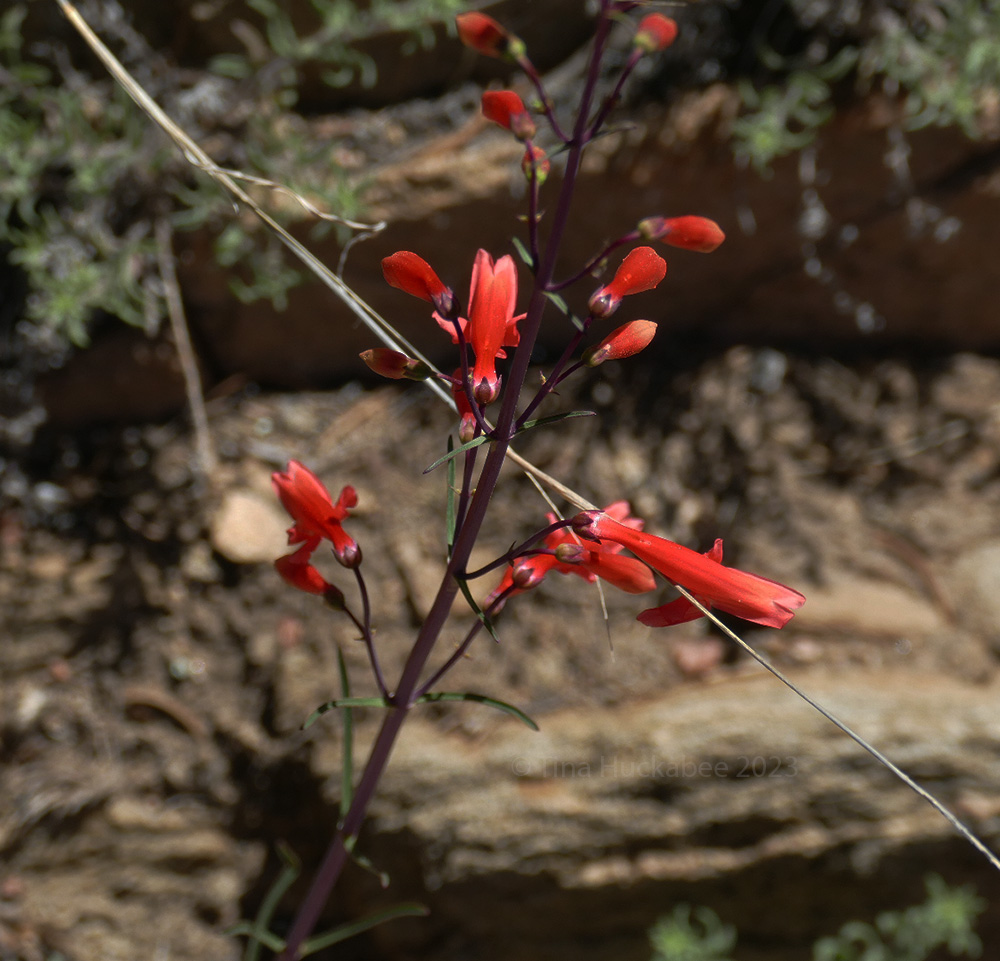
Beardlip penstemon, Penstemon barbatus, was a startling pop of red decorating many of the trails we traveled.
The hikes were strenuous and glorious. We enjoyed a variety of landscapes and diversity of life in observing water and running streams,

…diverse and majestic trees,

…sunny, open glades abutting rich, leafy forests,

…and always awesome vistas.

New Mexico, I am enchanted!





 My Gardener Says...