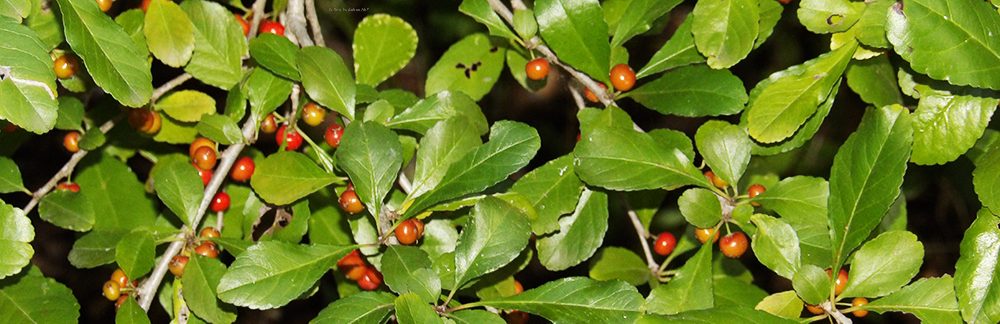
Summer is the time for gardens, even here in Texas. It’s hot, but mornings and evenings are lovely, if a bit sticky, and a shady garden is a welcoming place to spend some time. My back garden, in contrast with my sun-blasted front garden, is mostly shade. A few spots in the garden enjoy hours of sun and that’s where the back garden flower-power resides. June is in the rear window and it’s thoroughly July with its endless sunshine and no break from the heat, but a busy few weeks and poor blogging management means that this June post is late!
The northeast corner of my garden resides mostly in shade, only bits of dappled light reach this garden. The cheery chairs are comfy to rest in, provided the birds haven’t delivered too much poop upon the seats!
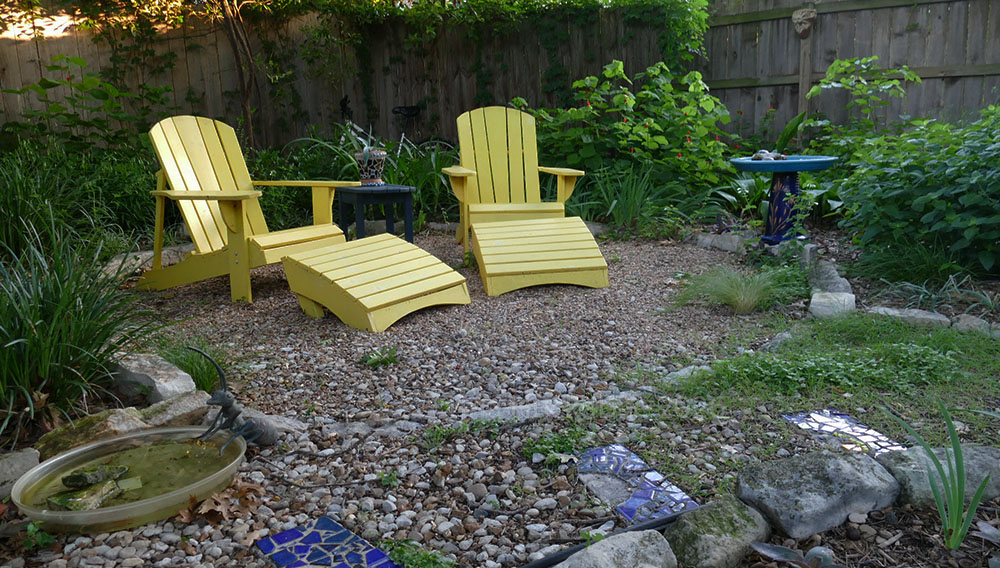
Easing out of the chairs, the pathway takes me to the pond and on to surrounding gardens.
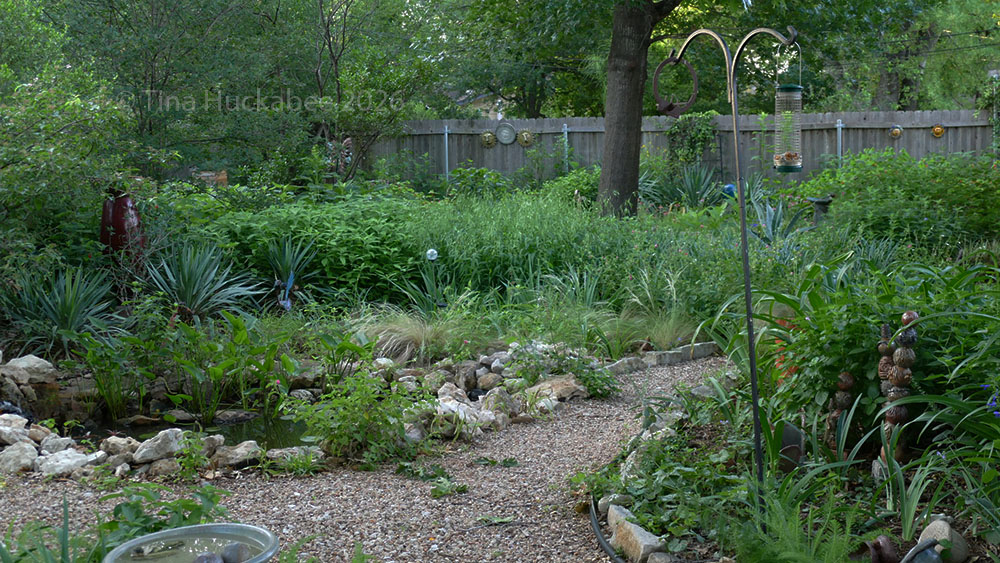
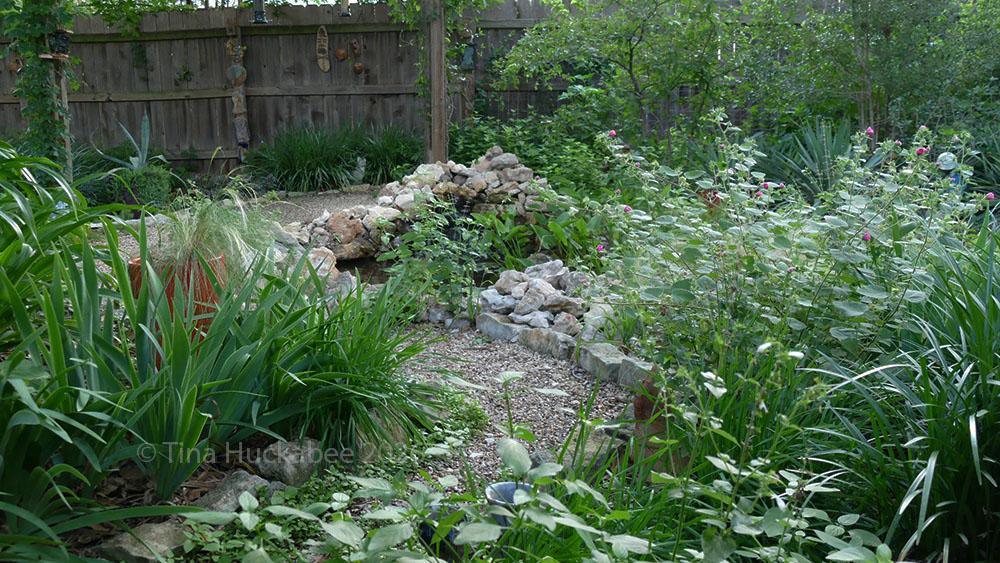
We built the pond in 2008 and I’ve never regretted its addition to the garden.
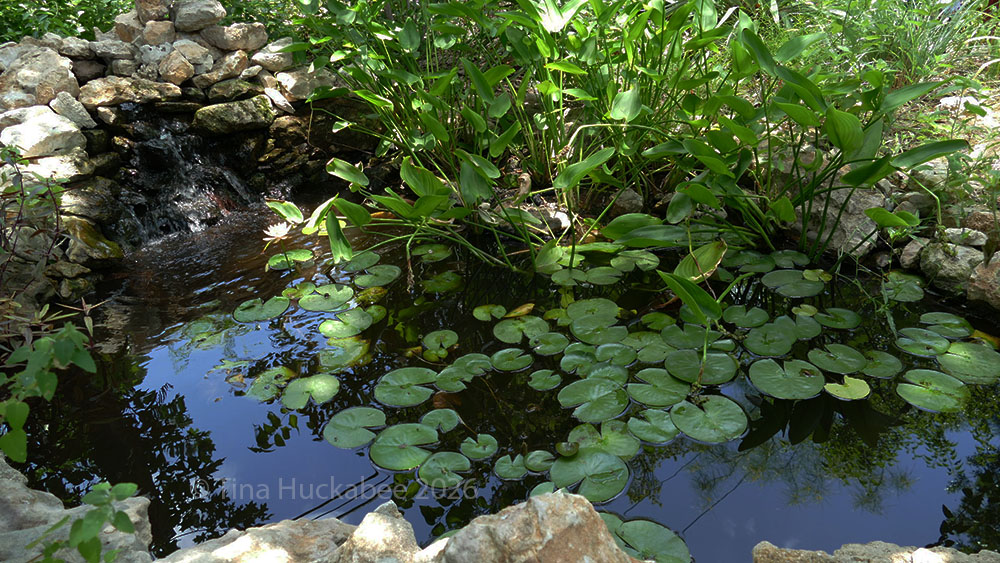
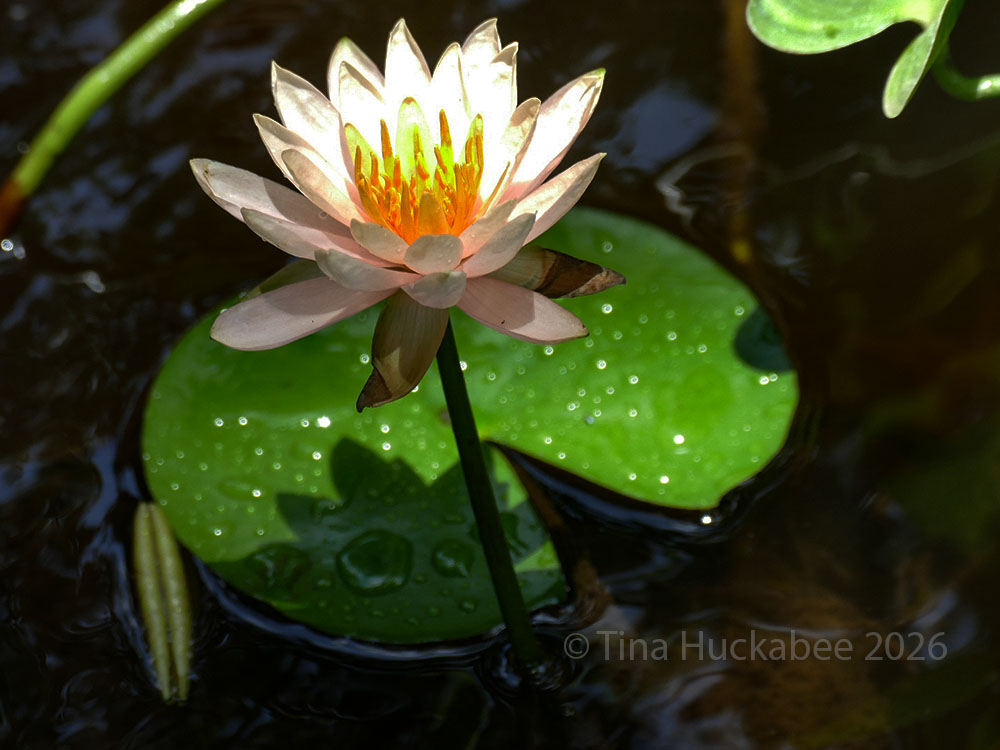
I thought it would be a high maintenance addition, but a once-per-year cleaning is the only work involved, aside from adding regular water during the hottest time of year. The pond is the focal point of this back garden. Bubbling over limestone rocks from the small fall, lush green lilies and Pickerel Weed, Pontederia cordata, which shade fish and provide for pollinators, cooling, reflecting water, the fish that swim and the birds that bathe, in addition to the critters that visit during the night hours, all conspire to bring together the important qualities of a garden. It is both restful and alive.
Only one lily, ‘Colorado’, bloomed this day.
June is daylilies month. I don’t know the name or history of this variety; these particular ones descend from a few that my mother-in-law gave me years ago. Orange has never been a favorite color, but I adore these lilies: cheery, gaudy and eye-popping! Over time, I’ve added other plants that bloom orange and each have settled in as favorites. I guess that indicates, at least in a garden setting, orange is a favorite color!
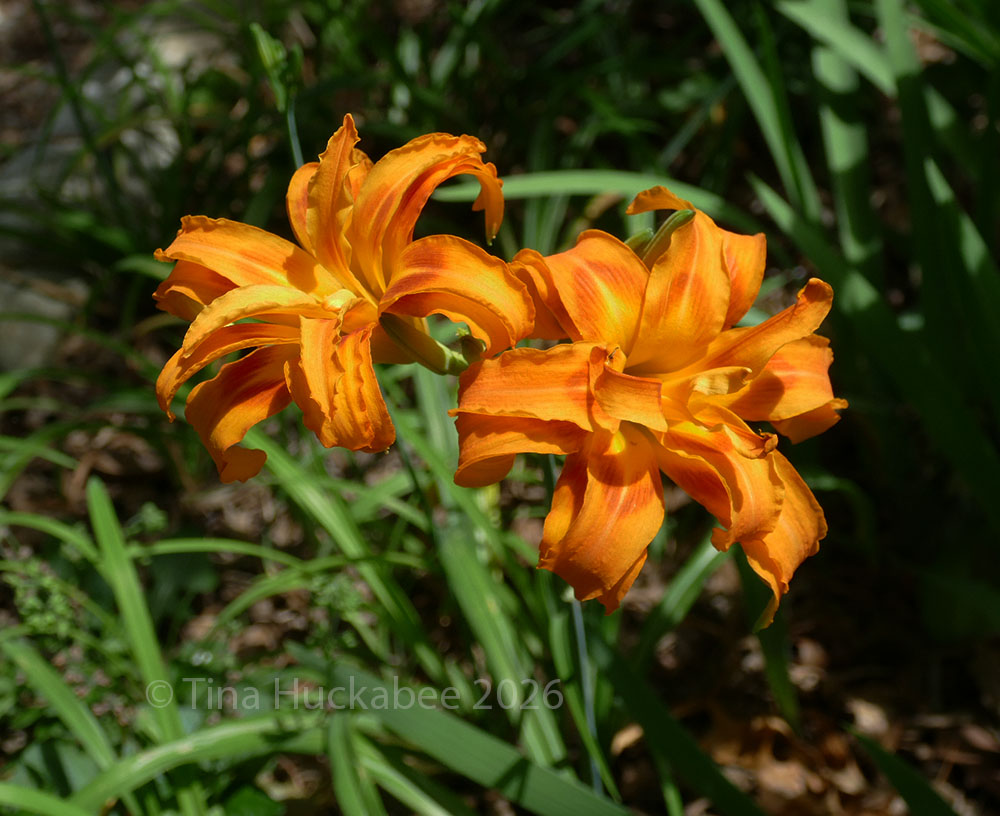
I used to grow a patch of these lilies in the front garden; they sat in morning sun and afternoon shade and delivered seasonal orange crush. When that patch lost its afternoon shade, the poor lilies fried, so I moved most to the back garden pond area,
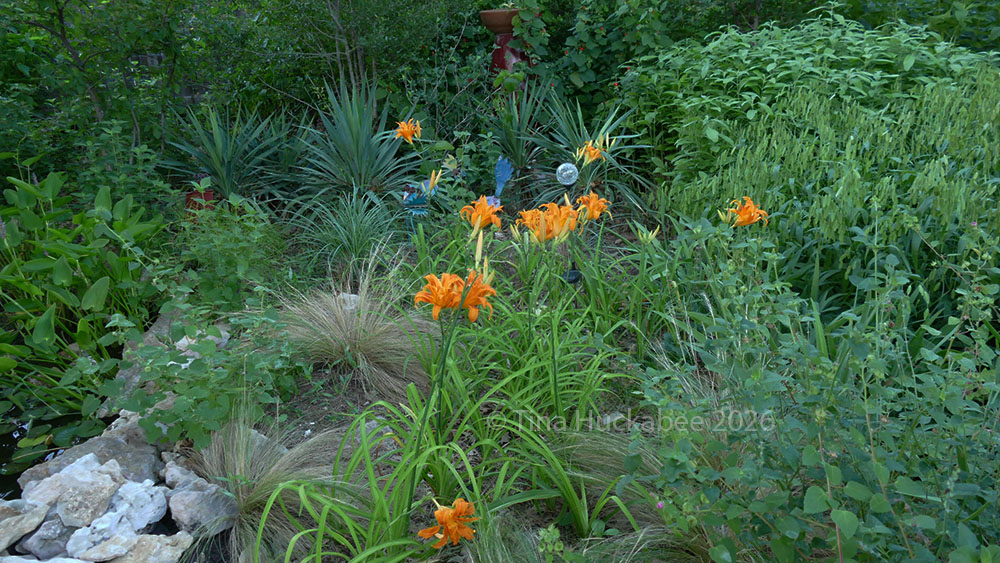
…and others to the opposite end of the back garden. Both areas receive about five hours of sun during the summer months, though at different times of the day.
Mexican Feathergrass, Nassella tenuissima, grow alongside the lilies in both areas and the two together–the silvery feathergrass and the lilies, with their Kelly-green grassy foliage, is a wining combination. The slender lily stems and brilliant pops of orange are a welcome sight every June and occasionally in late summer when there’s significant rain.
The pebbled path skirts the pond, then curves to this spot, where I stand, garden in front of me, limestone patio under my feet and enclosed catio at my back.
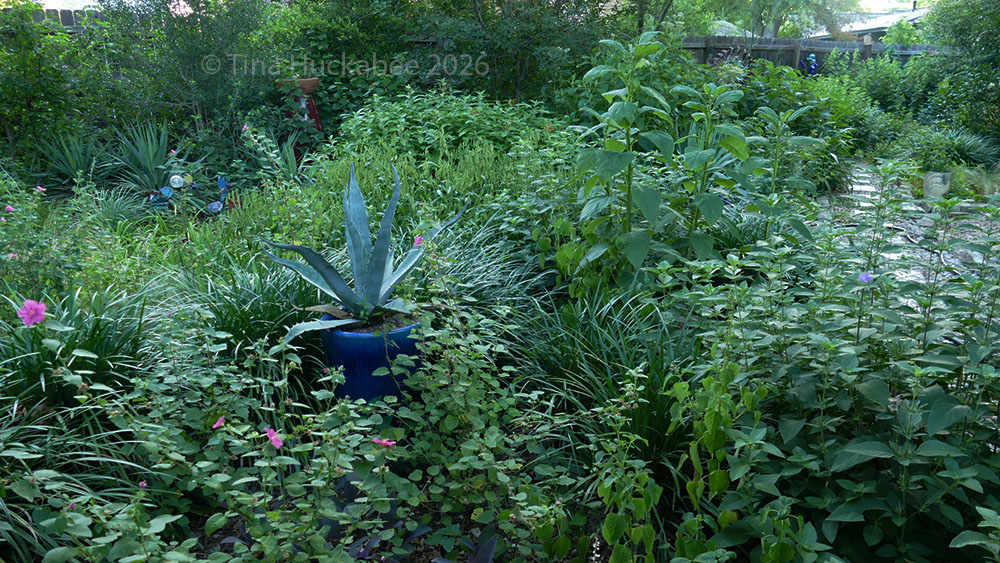
A few steps to my right and I have a good view of the central and largest area of my back garden. I focused this garden for autumn color and texture, so late spring and early summer mostly showcase foliage. The pink blooms are the mallow flowers, Rock Rose, Pavonia lasiopetala.
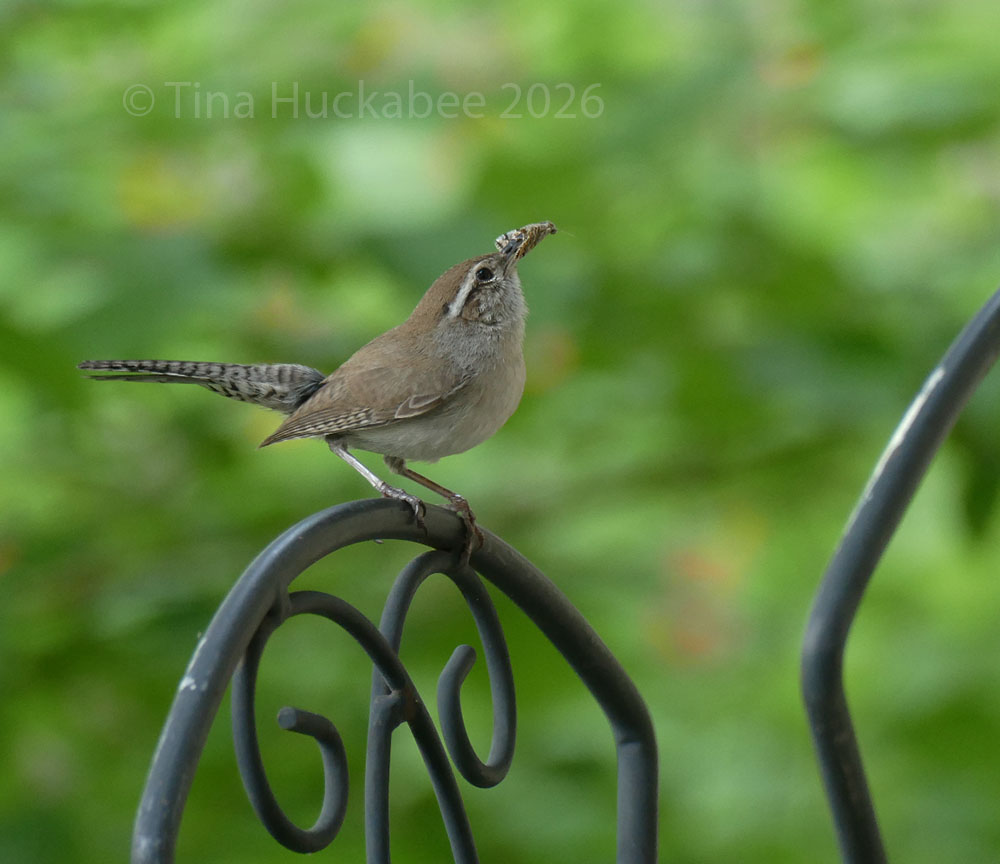
The musical Bewick’s Wren family who nested in a house at this spot in spring were still active with chick rearing in early June. This adult, meal for its chicks firmly held in beak, often perched on the metal hose stand, prior to taking the chicks’ meals to their house. I don’t know that the adults loved my presence, but they didn’t seem to mind me too much. They felt quite differently about the cats (and expressed themselves vociferously), who were safely stowed away in the catio!
Birds safe, cats entertained!
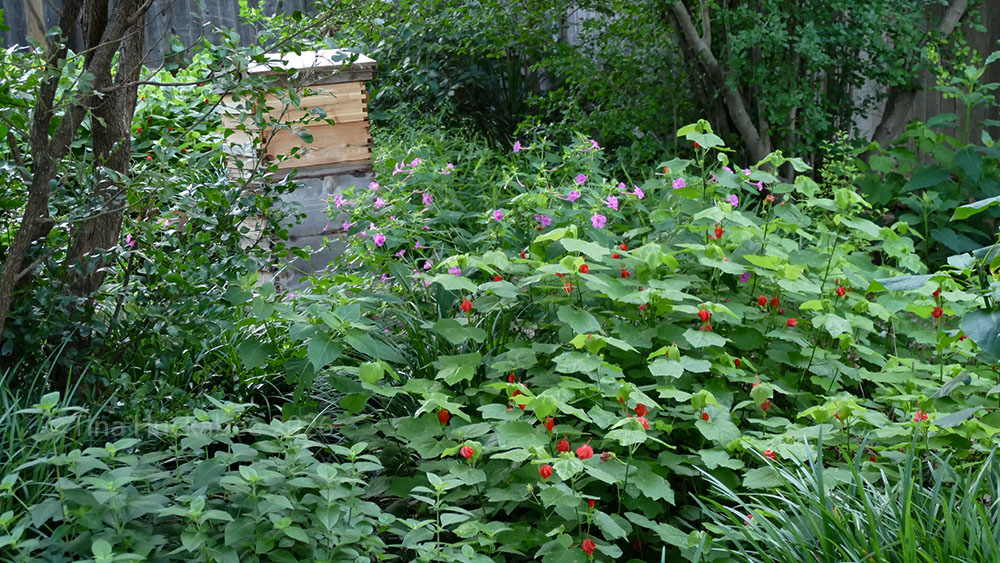
The pathway turns left from the catio, borders the main garden, and heads toward the back corner of our property where the honeybees live. I grow lots of Turk’s Cap, Malvaviscus arboreus var. drummondii, in both the front and back gardens. The wide leaves are lush all summer and crimson “caps” attract many kinds of pollinators, including the honeybees.
The pink blooms in this photo are Four O’Clocks, Mirabilis jalapa. A non-native, hardy perennial, these beauties open late in the day, closing by noon the next day, and attract a variety of pollinators, with particular benefit to the night time pollinators.
The central garden is book-ended by the pond (not visible) and the patio-to-beehive pathway. The back of this garden hosts several small, native trees: Roughleaf Dogwood, Cornus drummondii, Yaupon Holly, Ilix vomitoria, and Retama, Parkinsonia aculeata. The mix in the garden are native perennials with some evergreen, non-native Giant Liriope, Liriope muscari.
Many, if not most, of the plants I grow are pass-along plants, meaning that someone, at sometime, shared a seed, or cutting, or clump of plant with roots. As well, most, if not all of my plants are tough, requiring little care or irrigation. My biggest problem is that lots of my plants seed out with great gusto. Weeding is ongoing, and a tolerance for a certain level of serendipity is a must. My garden “style” is akin to an English cottage garden, so the tumble of foliage and flowers is appropriate, though I try to keep things in check. Or, so I tell myself…
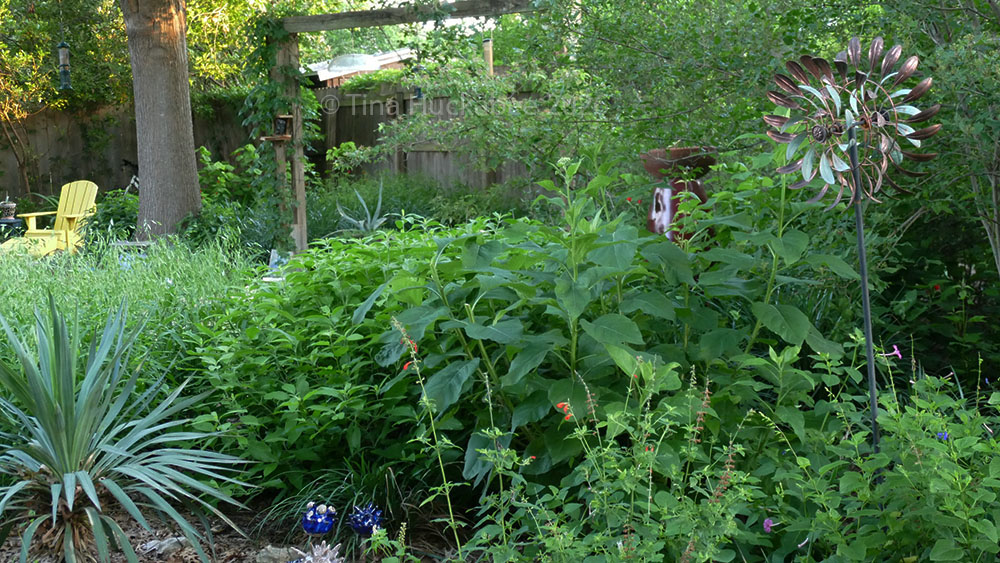
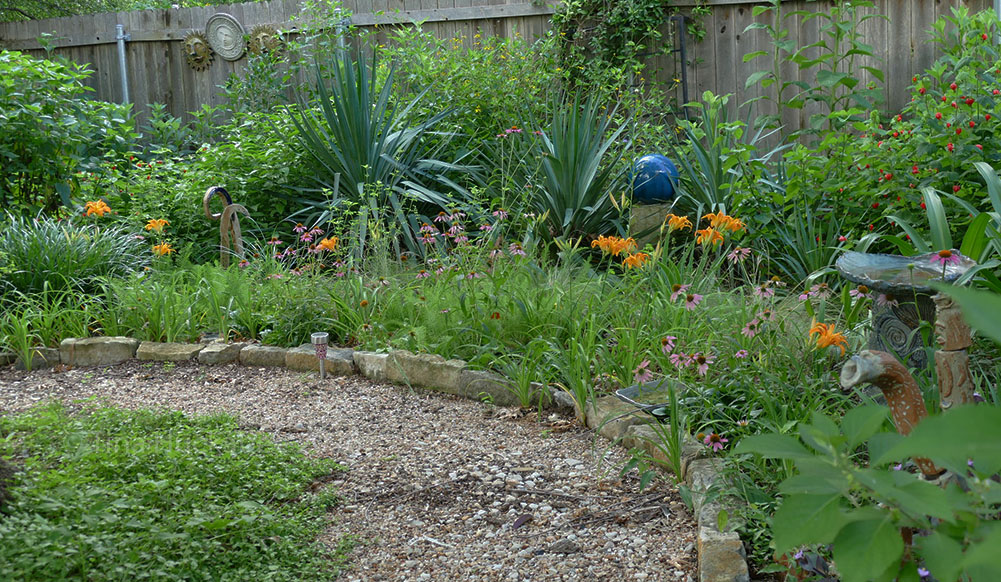
On the other side of the pathway at the southwestern section of the garden, the summer blooms bask in afternoon sun.
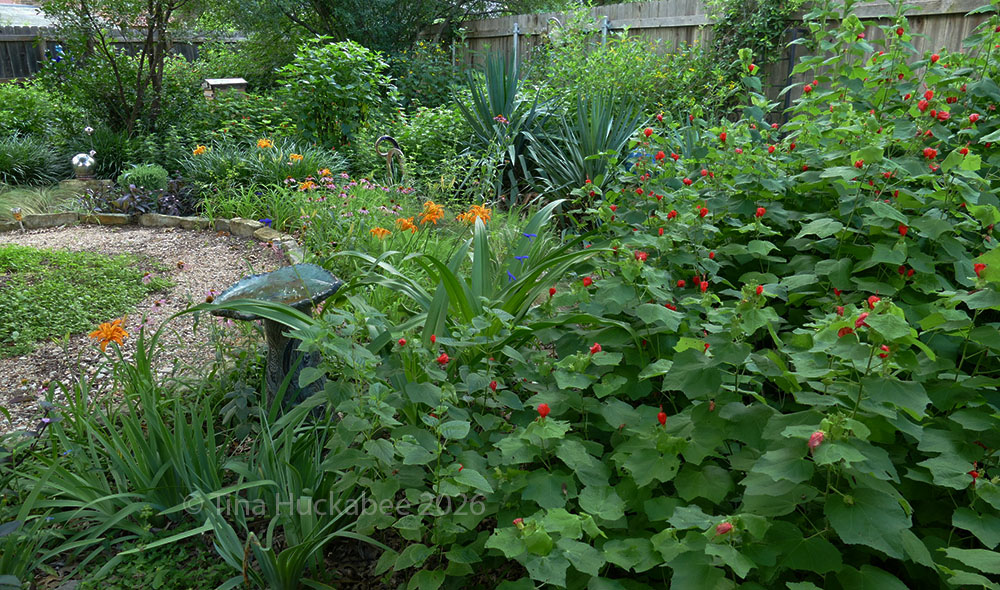
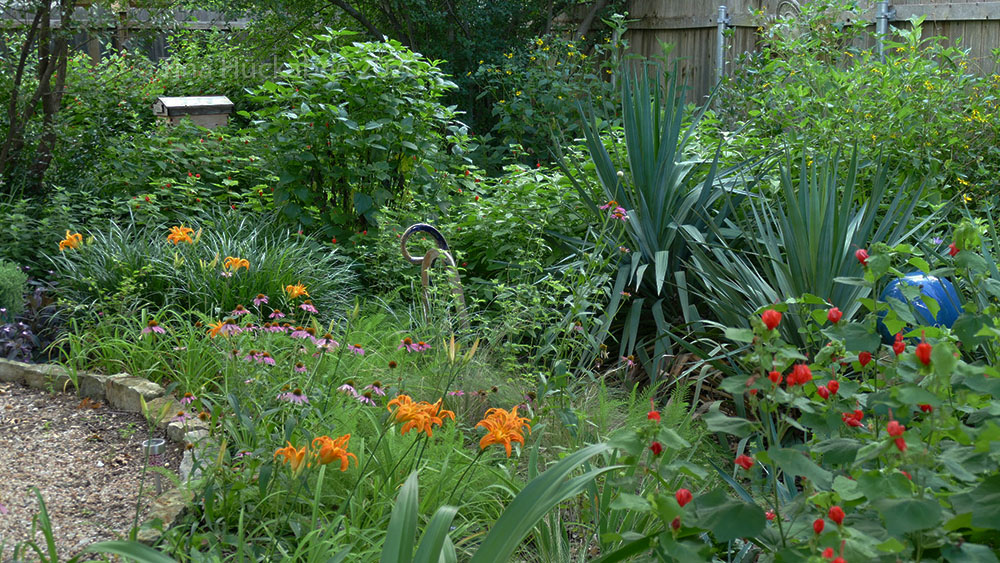
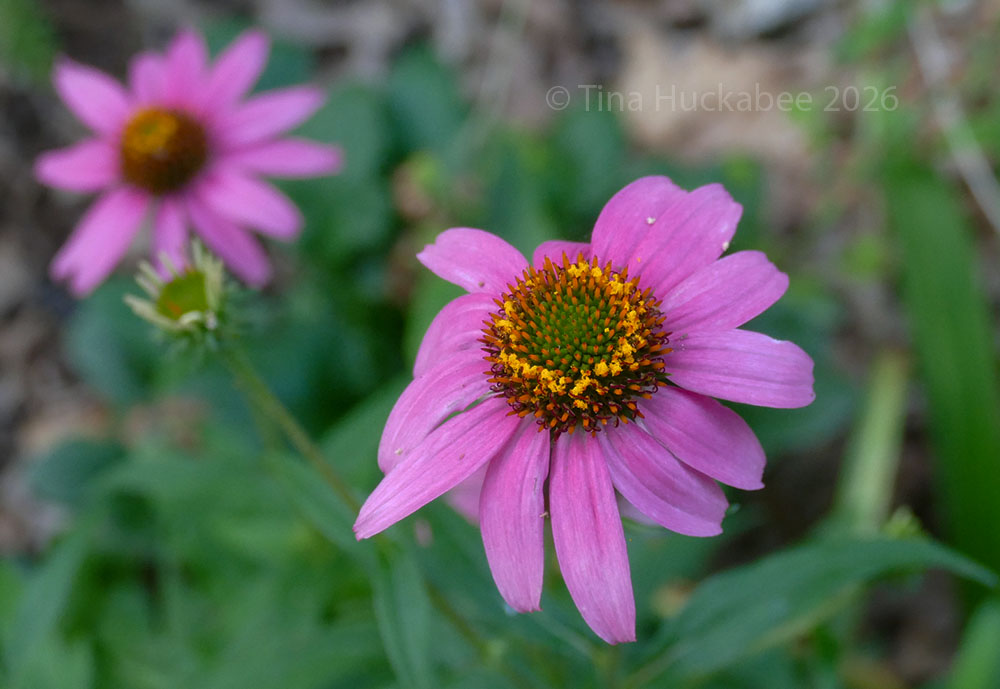
Purple Coneflower, Echinacea purpurea, charm this garden, a worthy companion to the daylilies. This year, the coneflowers and daylilies flowered together–which is the goal–though often, one species blooms ahead of the other. The gardener works toward synchronicity, the garden plants do as they please.
Except for some rain this past weekend (Yay!), the dog days of summer have arrived. So what’s next for the garden? There will be blooms during the remainder of summer, quite a few, but many plants are settling in for their summer siesta: plenty of foliage, blooms resting. I’ll prune and shape plants that benefit in autumn from that effort, then relax and enjoy the blooming beasts of this hottest time of year.
The perennial garden is just that–perennial. There’s always something happening, always growth and change, always life renewing.
 My Gardener Says...
What a wonderful tour of your garden. I’ve often wished I could visit, and now I have! It’s a peaceful and healthy place, for everyone and everything that loves a garden!
LikeLike
Thank you, Sam! Well, if you’re ever in Austin…:)
I’m very pleased with both front and back garden, though there are always places where I thought I had a good idea to plant those things, but when it grows and fills in, I realize that…oops! Need to change that. The garden never bores me, there’s always something new to discover.
LikeLike
Your garden looks great and is not minding the heat. You always have so many interesting visitors to your garden, so it really makes it worth it. Passalongs are the best, although sometimes too “good”.
LikeLike
It’s been a slightly “cooler” year this year. Lots of rain, so very humid. Like you, I love passalongs, but also like you, I think they can be too happy in the garden!
LikeLiked by 1 person
Cooler? I left Texas only to bring record temperatures up here. A reminder of home.
LikeLiked by 1 person
I love your garden, Tina, 😍 and I finally figured out why, your style is like mine, ha! Slightly wild, with a bit of a human hand present, made with critters in mind, while allowing Nature to do her thing. Beautiful!
LikeLike
Thank you, Eliza! Yes, I can tell from the photos of your garden that we’re kindred gardening spirits. Like you, I plant for critters and appreciate the life all of that brings.
LikeLiked by 1 person
Might the “slightly wild” refer as much to the gardener as to the garden?
LikeLiked by 1 person
Perhaps!
LikeLiked by 1 person
If we replace one word in a popular rock song from the mid-1950s, we get a fitting description: “Whole Lotta Garden Goin’ On.”
The weather forecast is predicting another inch or two of rain for the week ahead. That may revive a few of the plants that the heat and sun have lately bedraggled, or it may bring up some new ones.
LikeLike
It is a lotta garden and the older I get, the more I feel it!
Rain in July, what a concept. Honestly, I kind of have mixed feelings about that, I’m used to dry and hot, so I know how to do things. 🙂 Also, skeeters. Boo. And yes, there will be plenty of seeds that will love to be germinated, so more weeding. This morning, I dead-headed my basket flowers. I’d decided to let them go, so that I’ll have a crop for next year, but with rain coming, there will be more blooms and I’ll let those in-the-near-future-blooms be the ones that seed out.
LikeLike
A lovely, lush, critter friendly garden with a beautiful pond. Thank you for the tour and inspiration.
LikeLike
Thanks so much! It’s a place of great joy for me.
LikeLiked by 1 person
I have to say I love your yellow chairs. They’re just the right shade to complement all the flowers without demanding undue attention. I don’t remember seeing photos in the past that gave such a wonderful overview of all the flowers. Everything looks so lush, and so colorful. I suspect that your rain has aided that, as well as some excellent planning and diligent tending. It seems like this is the season for making use of those chairs and just admiring what surrounds you!
LikeLike
Thanks, those chairs really are very nice, bird poop aside. 🙂 I find that we both make better use of them in the cooler times of the year than right now, but they’ve been a great addition to the garden.
It’s raining now, again. It’s been about 3 weeks, maybe more, since our last rain, so as far as my garden goes, it’s perfect timing. Tbt, I rather like things when we’re in a moderate drought, I think the garden is perfection then, but I’ll take lush, along with mosquitoes, for this year. 🙂
LikeLiked by 1 person
Never mind. It went walkabout for a while!
LikeLike
Tina: Thanks for reminding me about the value of a shady garden. Sometimes I get frustrated that many plants just don’t perform as well. But on a hot summer day or night, the shade really makes a difference. We don’t have the Bewick’s wren here, but other wren species (Carolina and house wrens) are among my favorite visitors. Enjoy your summer evenings in your special place. ❤
LikeLike
I’m just like you, wanting more blooms in shade, but recognizing that foliage is boss and the break from a searing sun is a gift!
LikeLike
Thank you for this refreshing and cheering tour, Tina. We can only dream of such a lush and varied garden that does not require much water and sustains so much life.
Sometimes I dream of living in a place where plants actually thrive and not merely stay alive with the help of watering, when water is in such short supply.
LikeLike