A lush spring season continues and the garden blooms. I treasure the spring ephemerals for their brief flowering in spring, the seed development which follows, and the stability they lend to the garden palette long after their blooms are gone. Their flowery showtime is short, often only a few weeks, but important to the diversity of the ecosystem. Emerging pollinators from winter’s rest rely on these early bloomers and the gardener delights in renewal of life through these springtime beauties.
There are always a few Texas Dandelion plants, Pyrrhopappus pauciflorus, who appear in the front garden, though this spring, so far, there is only one. This sweet, butter-pat yellow aster closes up during each afternoon of the several days that it is in bloom. I’ve mostly observed small native bees nectaring here.
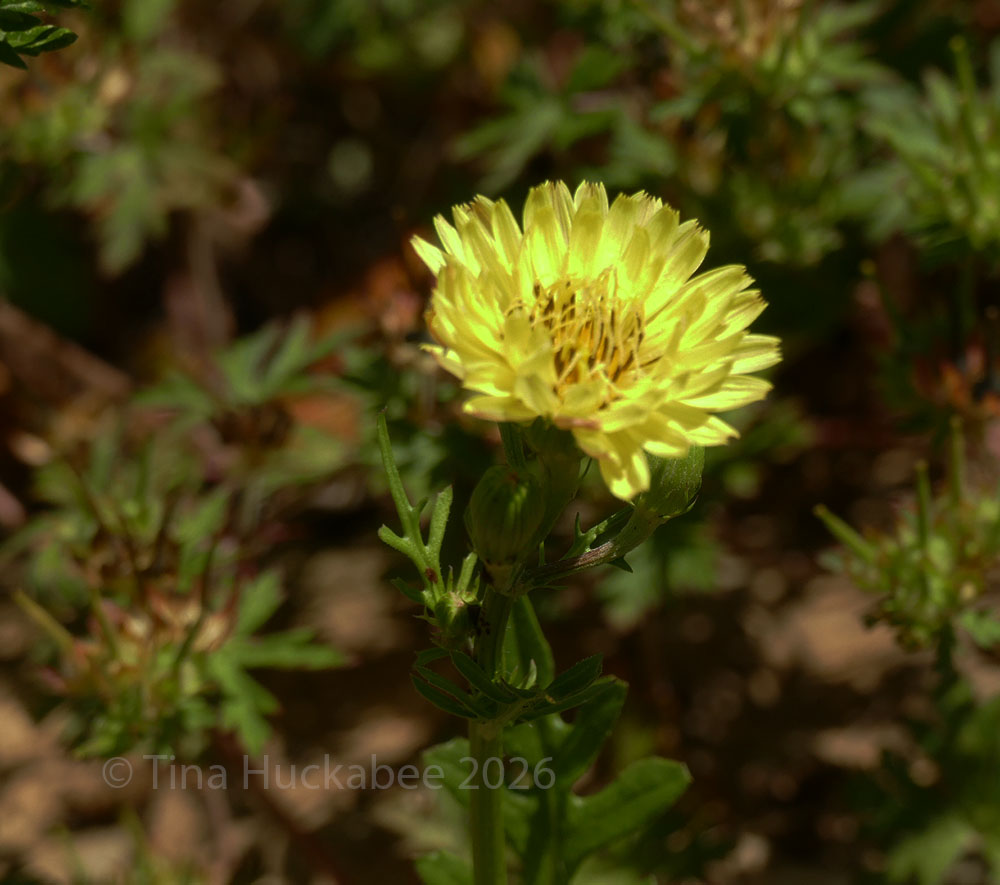
A neighborly stem of Coast Germander, Teucrium cubense, reaches out with a ‘howdy’ to the dandelion.
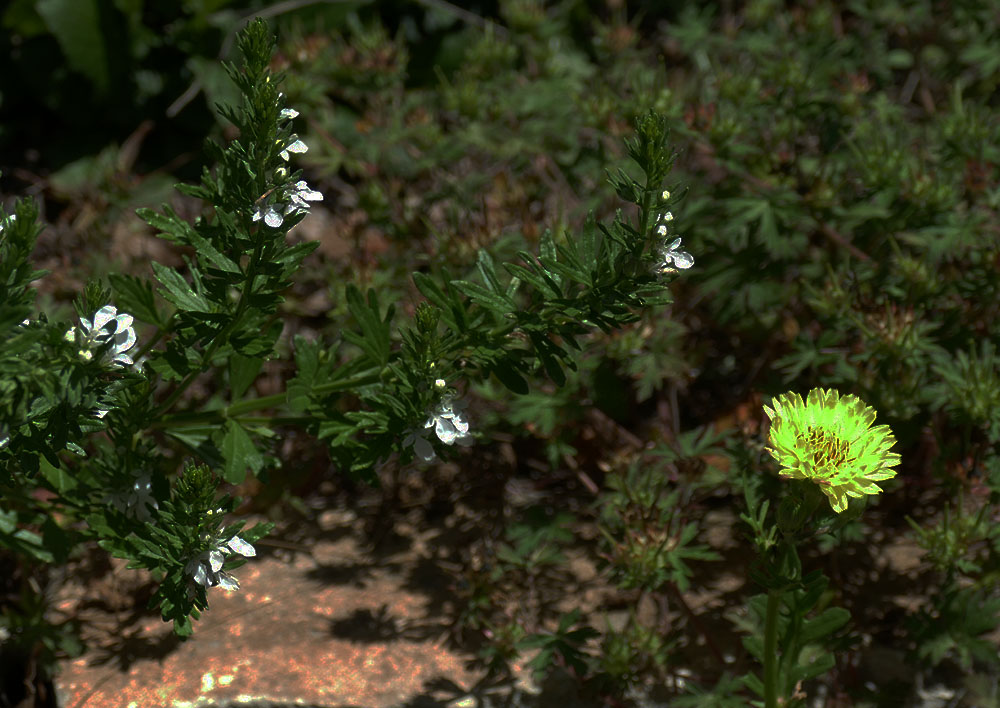
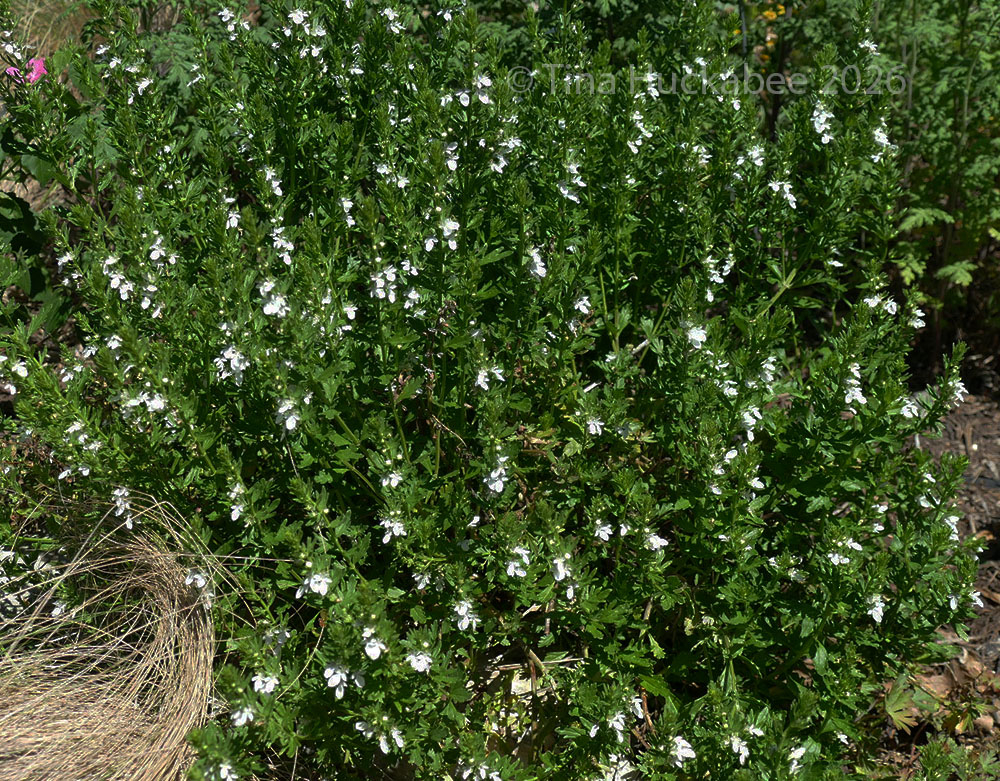
The germander is a small ground cover/shrub with minty foliage, currently covered in tiny, snowy blooms and visited by busy pollinators. They were so busy that I couldn’t manage any decent photos of the small nectar gatherers–but there were plenty!
I love white flowers in the garden. A particular favorite is the white Tropical Sage, Salvia coccinea. This one keeps company with a rich pink Hill Country Penstemon, a lavender Gulf Coast Penstemon, and a Mexican Feathergrass.
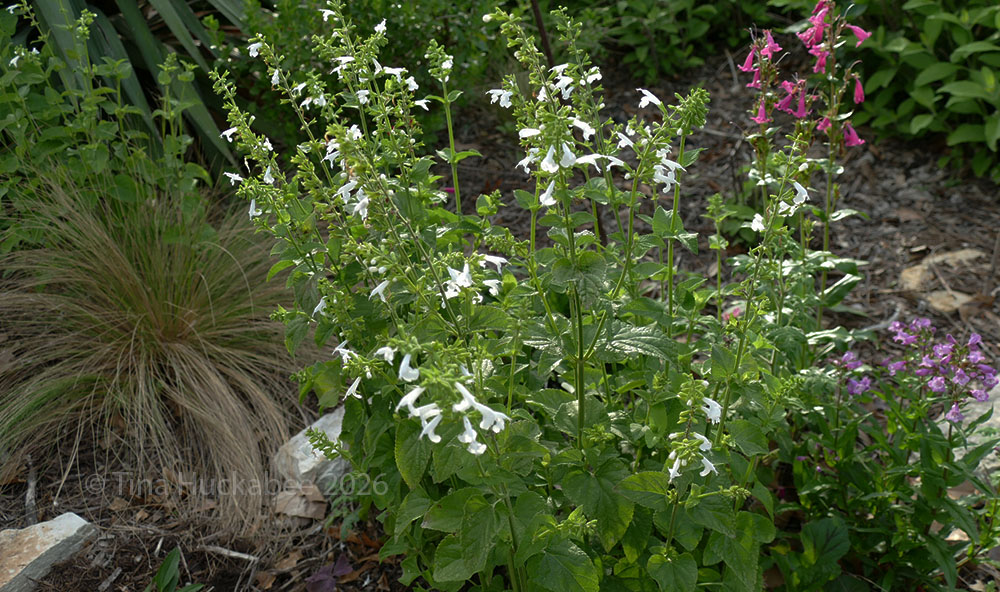
The white sage re-seeds prolifically and I tend to let the plants bloom where they grow. If I need to move one, they’re easy to transplant. In warmer winters with no freezes, they’ll bloom all winter, continuing into spring. This year, all of mine died to the ground, but popped up early, ready for flowering. The salvias’ blooms are more reluctant during our hot summers, but there are usually some available for the wide variety of pollinators who, like this gardener, love this plant.
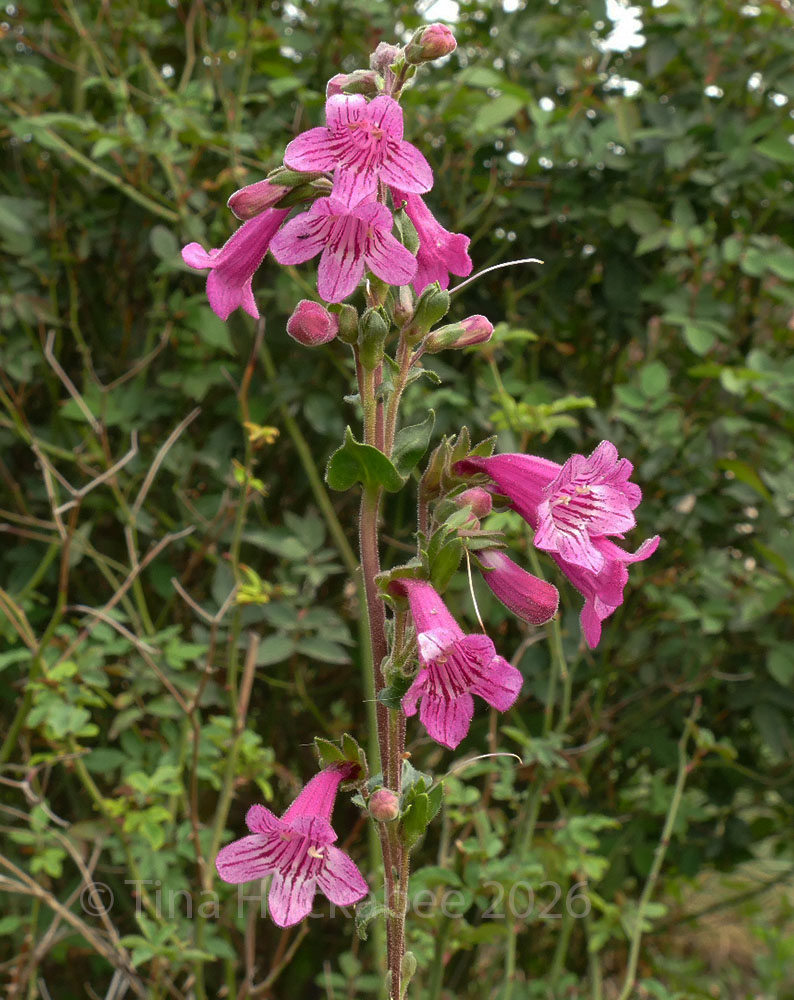
A different Hill Country Penstemon, Penstemon triflorus, demonstrates the striping common to this flower, showing the pollinators the way to the good stuff!
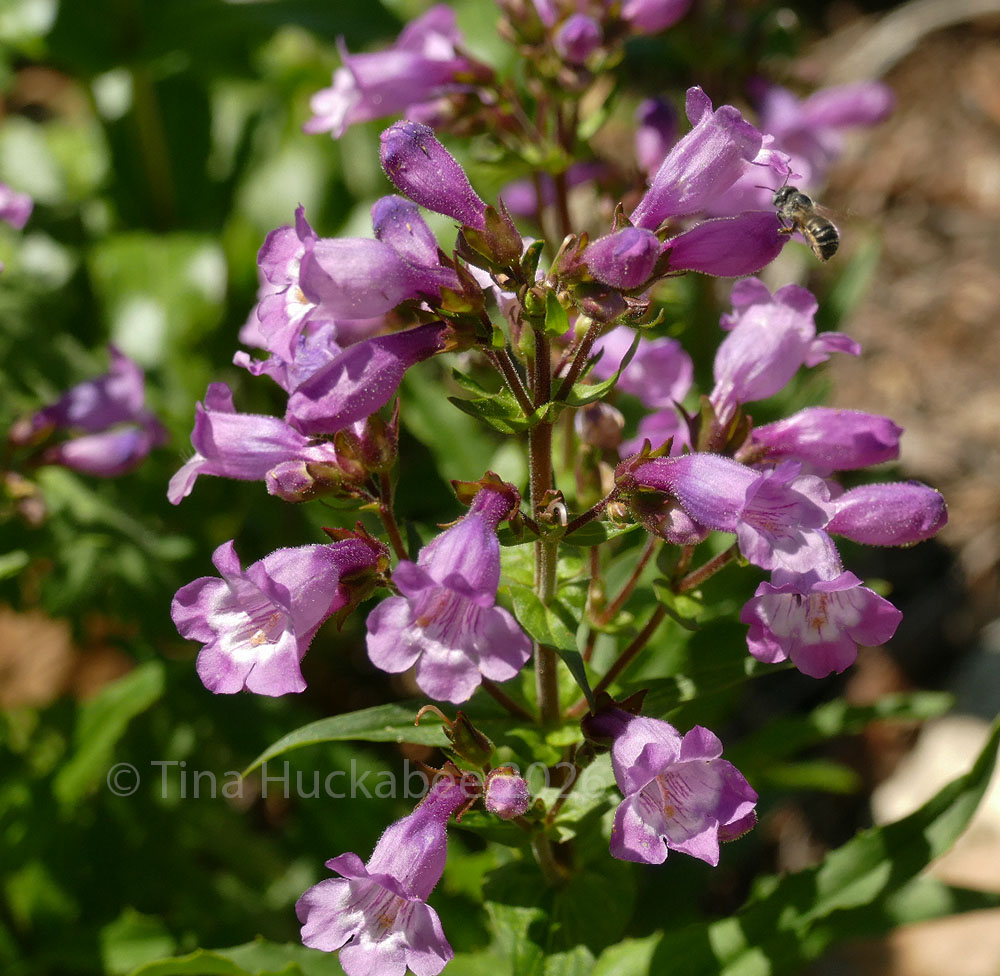
Crouched and twisted, but with no resulting pulled muscles (this time!), I managed to catch a photo of this native bee as it worked the flowers of the Gulf Penstemon, Penstemon tenuis. Another brief spring bloomer, this lovely native blooms, then sets attractive seeds for the birds and mammals. I’ve seen Painted Buntings nibble at the seed heads when they pass through my garden in early May.
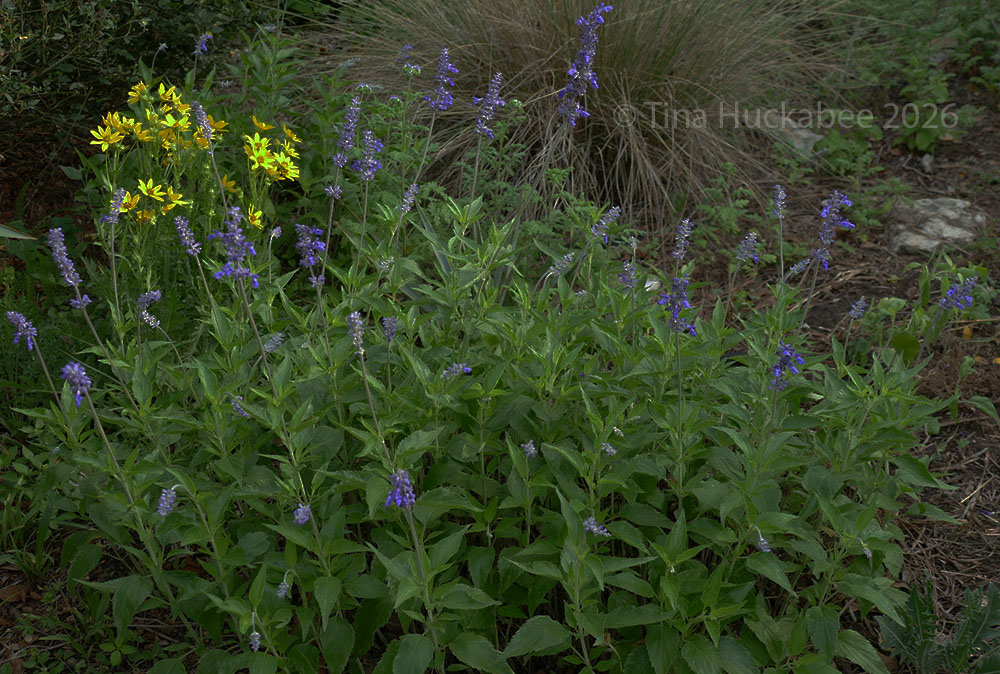
Blue and yellow is a winning color combination and I have plenty of both in my gardens. The yellow is Engelmann’s Daisy, Engelmannia peristenia, the blue is Mealy Blue Sage, Salvia farinacea. The morning of this shot was chilly and cloudy and no pollinators were out and about. Both of these natives are pollinator magnet plants; the sage blooms in summer and autumn, the daisy is primarily a spring bloomer.
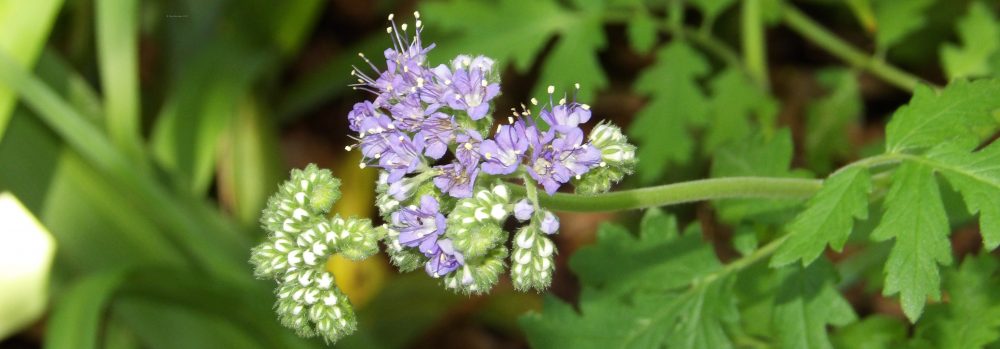
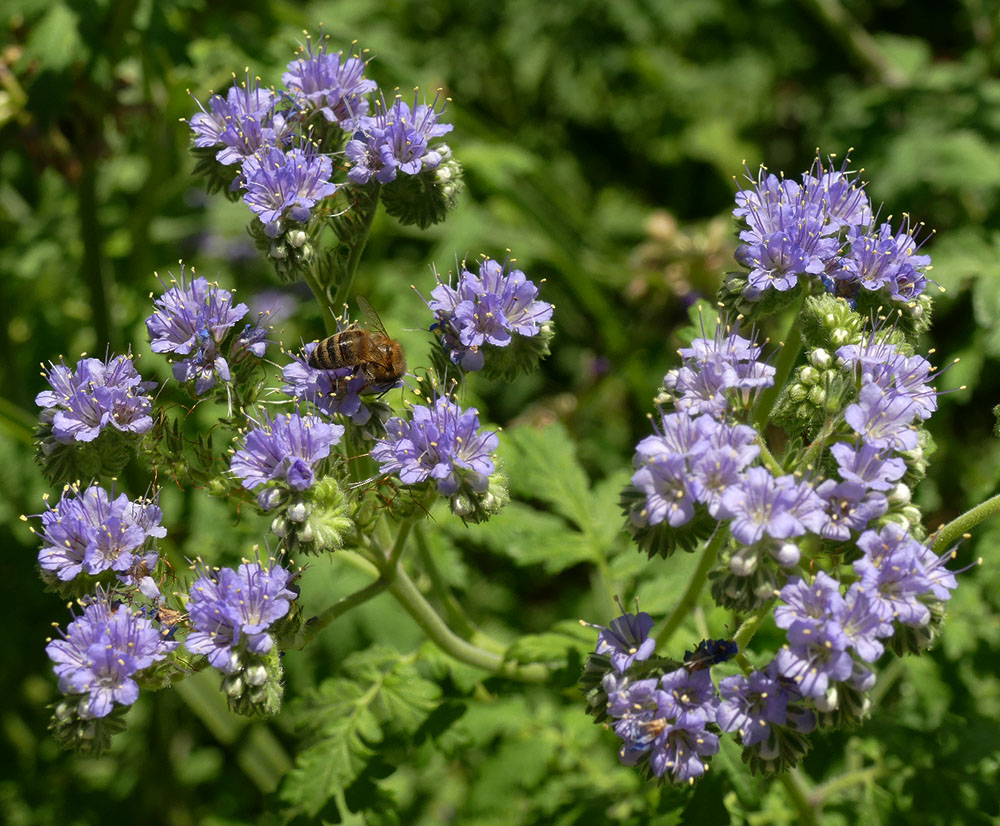
My garden is mostly perennial plants, but I certainly make room for a few annuals, especially the spring annuals. Blue Curls, Phacelia congesta, spread far and wide and it’s no wonder, as it’s a plant with multiple flowers and usually a huge variety of pollinators in attendance. This cluster only demonstrates a honeybee at work, but she’s a busy bee with lots of spots to nectar. My garden is awash in this lovely blue/purple plant and I see individuals that have seeded out in the lawns on my street. Of course, those plants are likely to get mowed, as that is the norm in my neighborhood.
I haven’t grown geraniums in pots since I was in my 20s and sported a very brown thumb. However, there’s no need for a green thumb when the native Texas Geranium, Geranium texanum, graces the garden. A small annual herb, this cutey pops up all over the place–and I let it! The foliage is pinnately arranged, the petite flowers a gentle pink, with a yellow center.
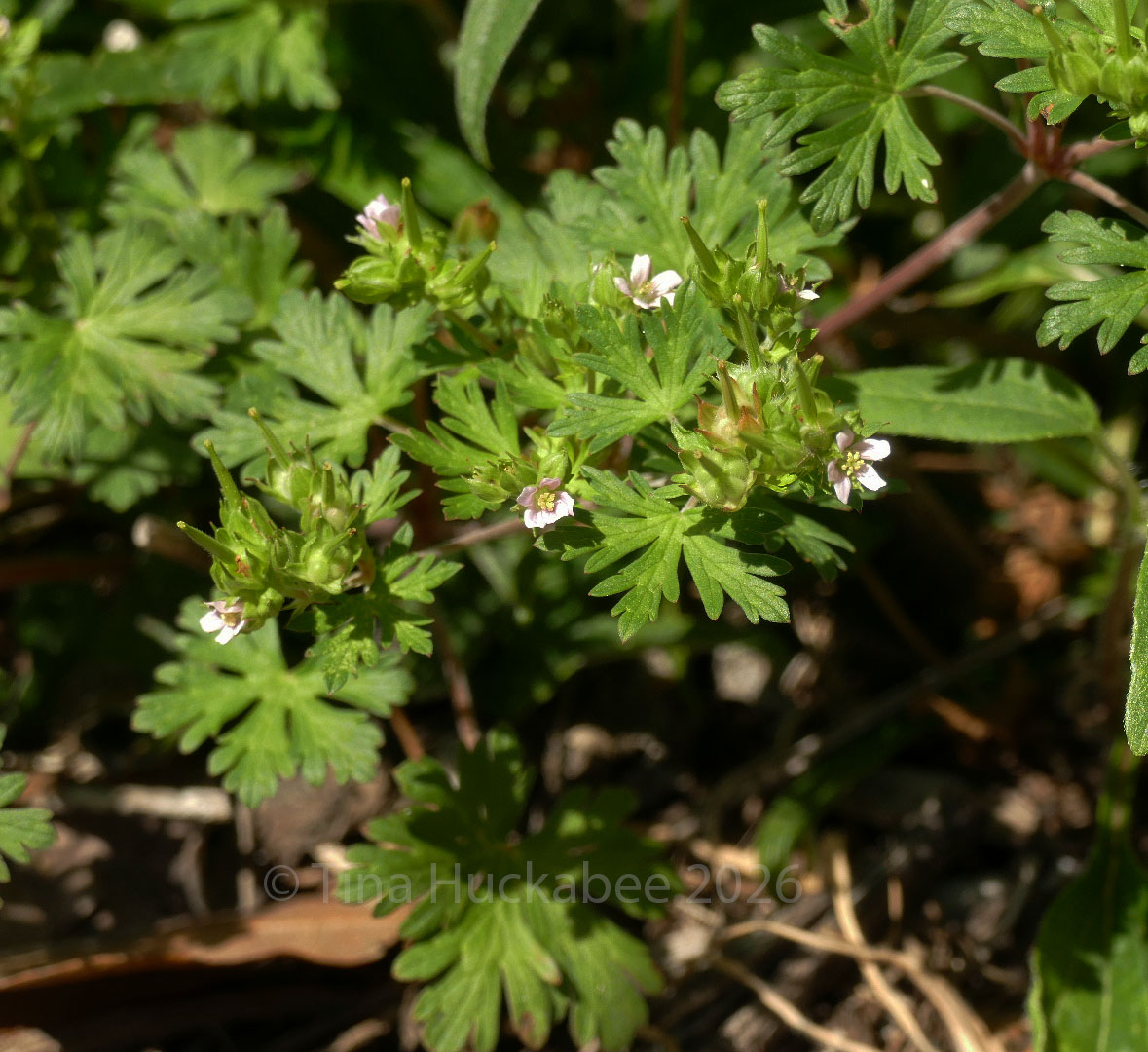
This geranium is also called Texas Crane’s-bill, because its fruit resembles a crane’s bill! I’m not sure that I see that myself, but I have no better name for it and I’m charmed by the poetry of old-fashioned common names.
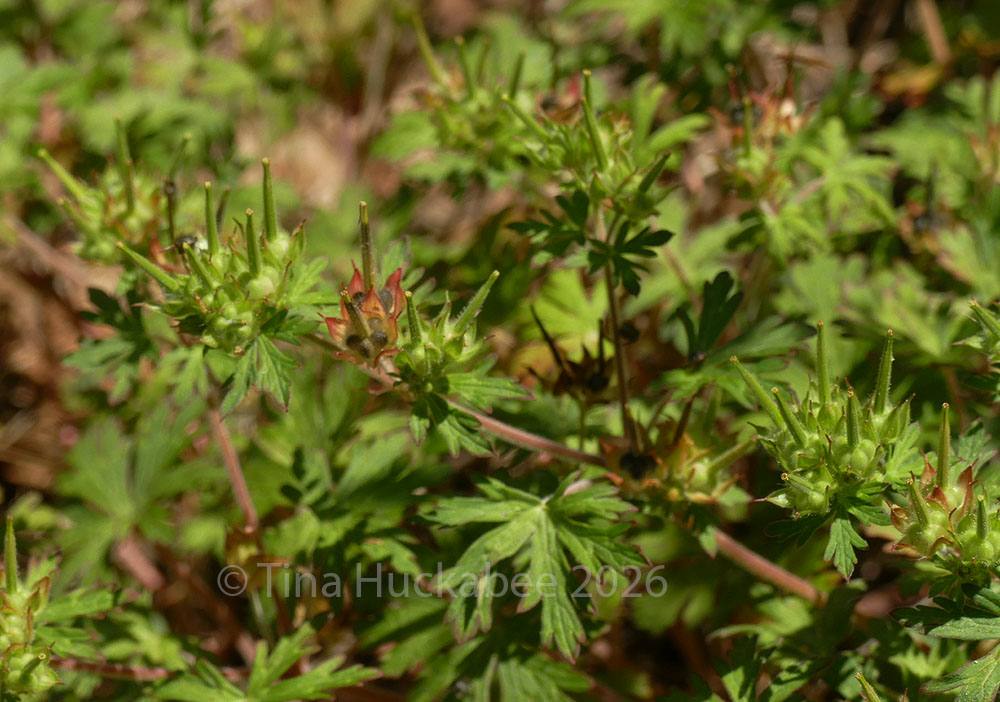
Once the bill is dried, the seeds are launched outwards and upwards, landing in soil to await the right conditions during the following February and March,starting the process again. As it’s not a showy plant, I’m not sure most nurseries would sell it, though I’d imagine seeds might be available from a reputable seller, like Native American Seed.
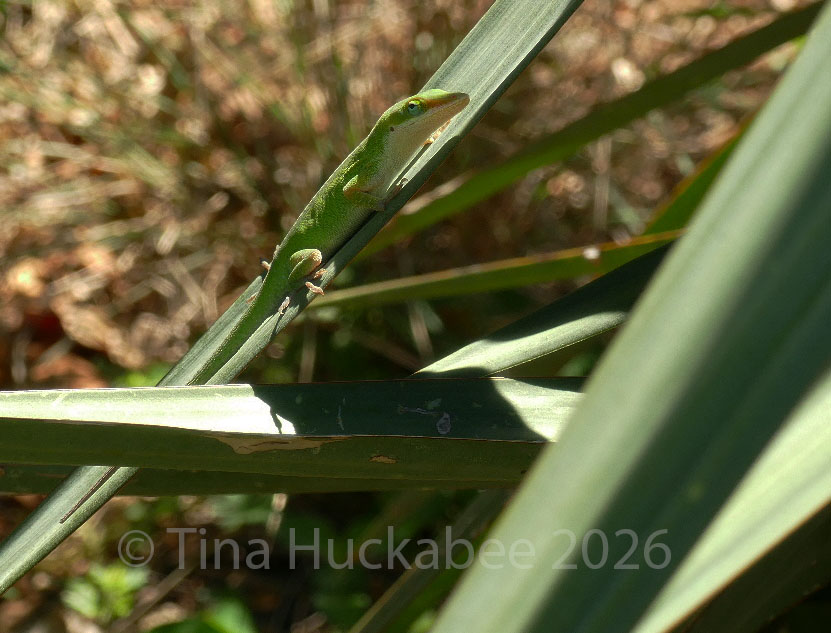
No stroll through the garden is complete without the skittering of Green Anoles. This one stopped to deliver a side-eyed glare at me, before moving on to its next adventure. It seems a good year for the Anoles, I’ve seen quite a few. I look forward to more lizardy stink-eye as the seasons progress!
Happy spring, y’all!
 My Gardener Says...
I love your salvias and penstemons, Tina. While most are annuals here, salvias are a must have in my garden, but I must buy starts every spring. My most successful Penstemon is P. barbatus, but I have tried several, which don’t last long, alas!
LikeLiked by 1 person
Thanks, Eliza–so do I! They’re all such wonderful/beautiful plants. I think I grew P. barbatus once. It didn’t make it through our summer, though.
LikeLiked by 1 person
I’m bookmarking this page. Your selection of hardy native perennials (three magic words, those) is just wonderful!
LikeLike
Thanks, Sam. There are certainly plenty of great natives out there, though I certainly wish the nursery industry was more proactive in growing even more of them
LikeLike
That’s quite a collection of wildflowers you’ve got there. What a difference one month makes at this time of year.
Your dandelion reminds me that when we were over near Brenham two weeks ago in a great field of mixed wildflowers, I explained to a Chinese family that the “regular” dandelion comes from Eurasia, whereas the Texas dandelions that had come up in the field and that I pointed out to them are native here. Ironic that some field guides still refer to it as “false dandelion” when it’s the real one in Texas.
Have you seen the scads of Engelmann daisies that are flourishing along Mopac and plenty of other places?
LikeLike
Yes, just those few weeks and a spit of rain makes all the difference!
Like you, I’m amused/irritated that the true dandy is called ‘false’. Most people I’ve mentioned this plant to don’t realized there’s any difference between native/non-native.
Yes! Those Engelmann are just magnificent and YELLOW!
LikeLike
I’m missing Texas flowers and lizards. I was thinking of you when I watched The Secret Life of Bees on National Geographic. It can be seen on HULU.
LikeLike
Someone else recommended that to me–I’ll need to watch it. We do enjoy a spectacular spring!
LikeLiked by 1 person
I’ve yet to see any of the coastal germander at the refuges. It’s one of my favorites, being white and generally pretty, but for some reason it hasn’t yet shown up where I’m accustomed to seeing it. Yesterday I wandered into a huge patch of the geranium. I’m relatively sure that our local species is G. carolinianum, which can be distinguished by generally longer sepals. Apart from the anole, those are my only ‘locals.’ To see things like the blue curls, I have to travel.
LikeLike
That germander showed up in my garden in a different spot about 10 years ago, it grew for a year or two, then vanished. This little bunch came about two years ago. I really like it. I have no idea if it’s carried in our local nurseries, I haven’t looked, but it’s sure a great little plant! Loves the full, hot sun!
LikeLiked by 1 person