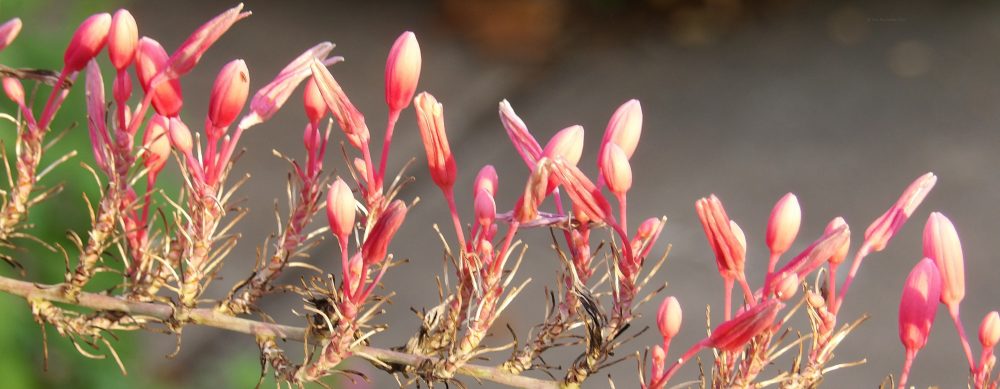
I grow a rare plant in my Austin garden. A cluster of Big Red Sage, Salvia pentstemonoides, resides at the corner where the street and my driveway intersect.

I first became familiar with this plant years ago, having read an article about a gorgeous, deep-red flowering plant that’s found only in a few counties of Central Texas. At one time, Big Red was thought to be extinct, but colonies of the plant where discovered, seeds collected, and some in the local nursery trade propagated the lovely plant for sale. When when I managed the Green Garden at Zilker Botanical Gardens, a previous gardener had planted several and those played a starring role in the front, full-sun garden, much to my. I’ve purchased several individual plants at two local nurseries over the years and my little cluster has thrived.
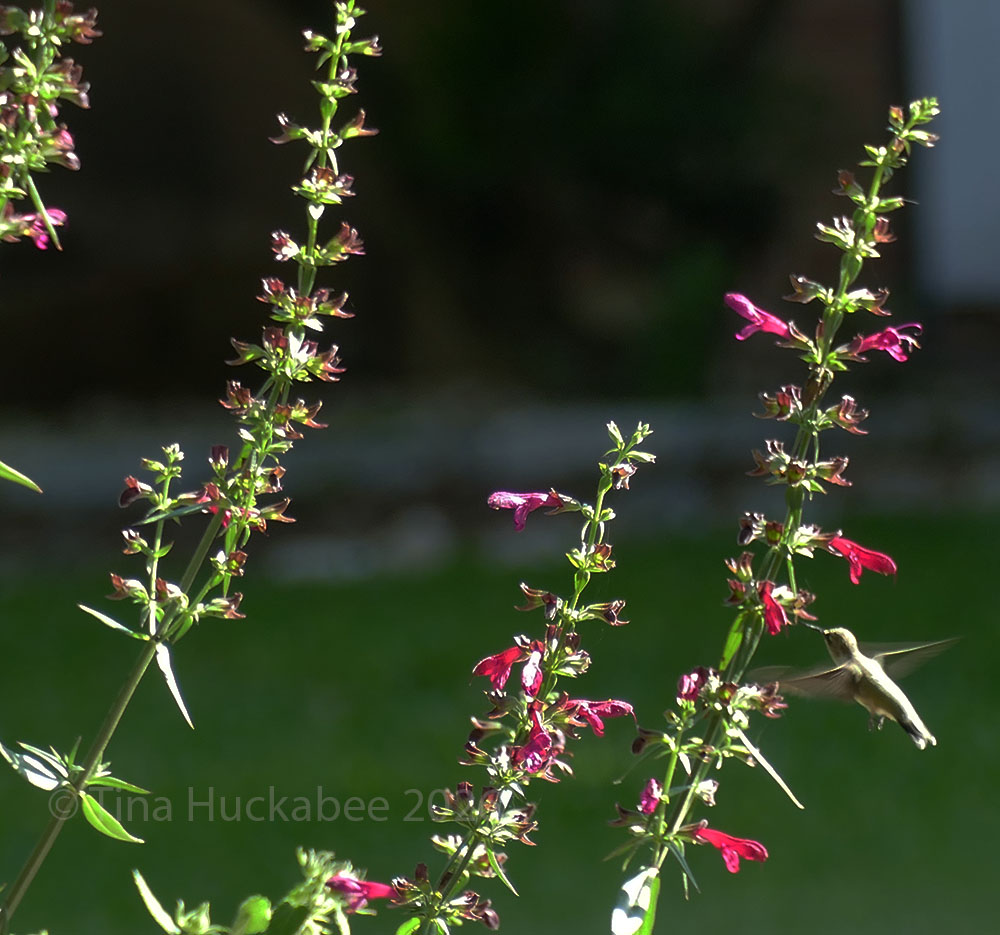
Big Red is pollinated by the Black-chinned Hummingbird, Archilochus alexandri, which hangs out in Texas during late spring and summer, migrating southward in September and October.
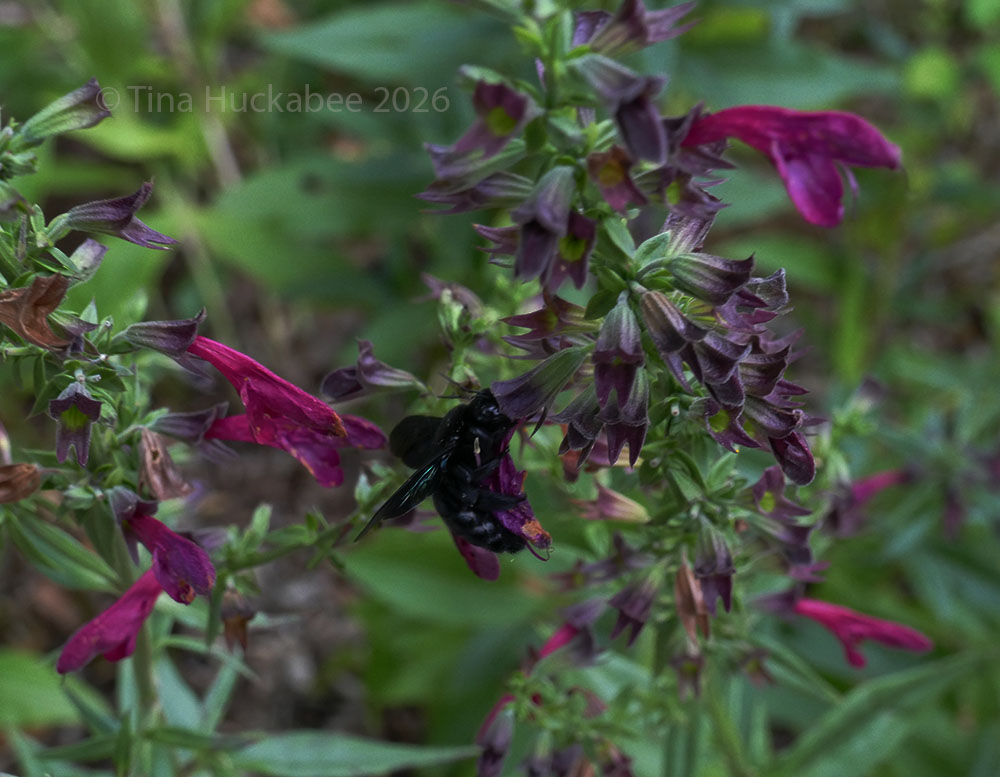
Other insects, like various carpenter bees and even honeybees, will visit the blooms, often nectar stealing from the flower, nosing deep into the calyx, puncturing the calyx-held flower for the sweet stuff.

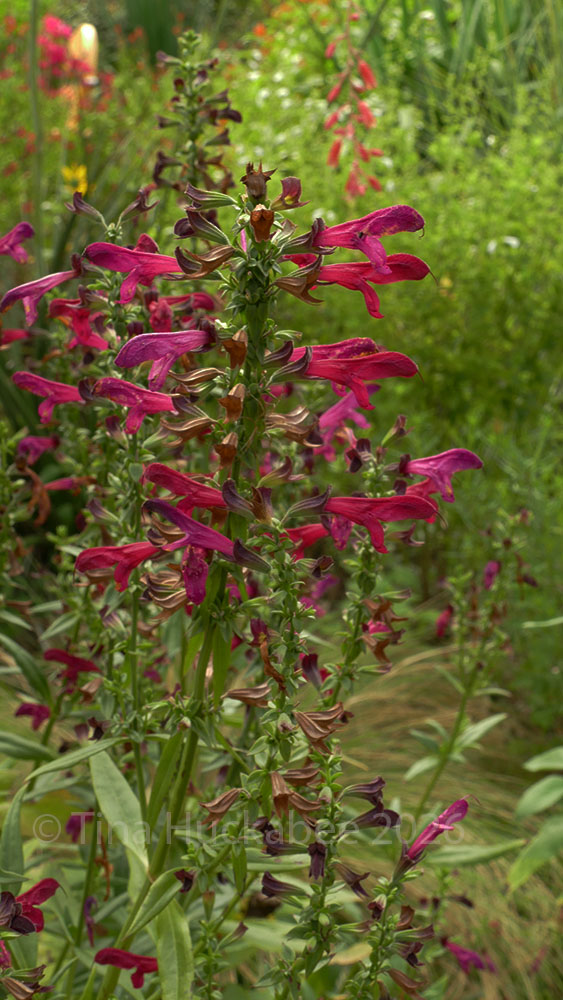
Big Red Sage is a showy thing in the summer garden. Mine grow stalks about 3 feet high, though I’ve read that the stalks in natural areas reach to 5 feet tall.
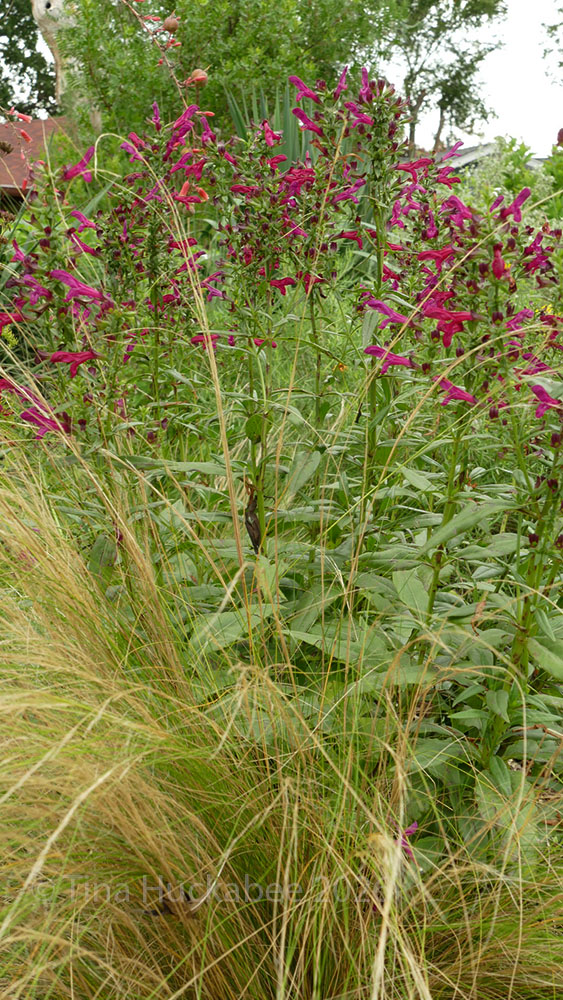
Since 1975, this rare flower in decline has awaited its turn for protection by the US Fish and Wildlife Service. In January of 2025, the Service finally proposed that Big Red Sage be listed as an endangered species. Drought, floods, animal browsing (both native and introduced), and urban development are all adding stress to this rare plant; fewer wild colonies exist compared to when I first learned about the plant years ago. The official protection granted makes illegal the collection of Big Red Sage seeds from wild colonies. Check out this press release from the Center for Biological Diversity, the key organization which pressured, through a lawsuit, the US Fish and Wildlife Service to protect the Texas beauty.

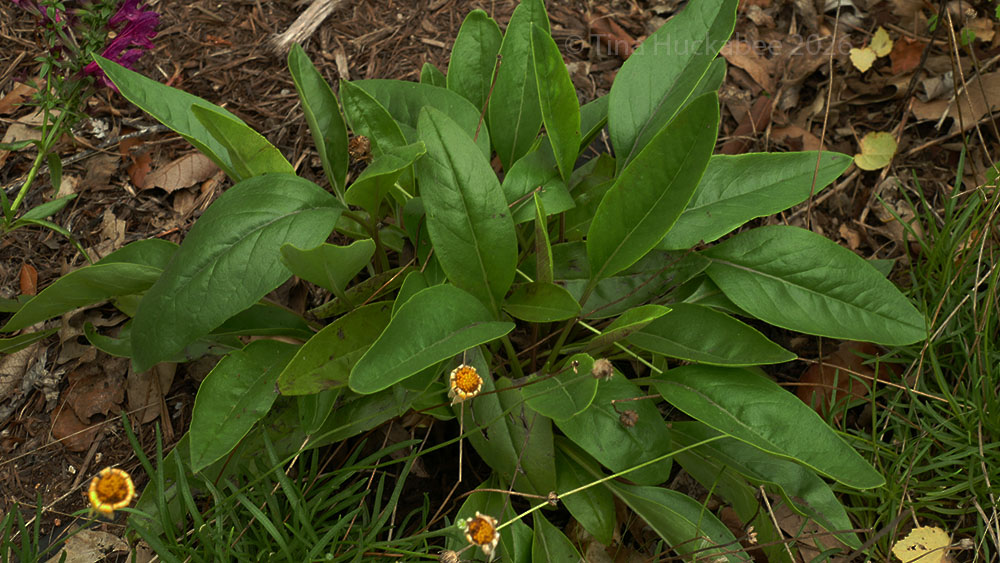
I usually prune the stalks to the ground in November, leaving the dark leaves of the winter rosette as a reminder of summer’s glory. Though most stalks have ceased blooming, often there’s at least one hold-out bloomer, which you can see at the top left part of the photo. This plant just doesn’t want to quit!
The Lady Bird Johnson Wildflower Center is currently researching this plant, spending time collecting seeds in protected areas to learn about its biology, which you can read about here. The team of scientists and volunteers are seed-banking collected seeds from specific colonies to ensure the survival if wild specimens disappear. My understanding is that there are no plans to sell either seeds or the plants germinated from the collected seeds in order to protect the diversity and genetic strength of the remaining native colonies.
I sometimes feel a bit awkward as the guardian of this plant as it’s too precious for a common, urban garden! I purchased the plants that I have, as Big Red is a commercially available in some native plants nurseries. Mine have never germinated to create new plants and I don’t live in a neighborhood with many actual gardens (lawns, lawns, lawns!), so even if my sages produced offspring, it’s likely I could control where the plants grow. Still, as Texas and the wider world becomes less biologically diverse, I’m pleased that I have some of these rare and beautiful plants in my garden, for their looks, their pollinator draw, and for their uniquely Texan heritage.

 My Gardener Says...
It’s always gratifying when a plant that people thought extinct turns out to still exist. Glad to hear you’re doing your part in promoting it. Its species name penstemonoides means ‘looking like a penstemon.’ Do you think you’d ever confuse this sage with a penstemon?
LikeLike
I wouldn’t confuse it with a penstemon, because the flowers are so sage-like. But, like penstemons, it blooms along stalks, so maybe that’s why it’s so named?
Yes, I’m glad it’s still around in nature, hopefully it will survive.
LikeLike
Tina, I bought a plant from Natives of Texas
LikeLike
Hi Karen! Good for you! You’ll love it!
LikeLike
What a beauty! I think you’re a perfect guardian. I hope research can unlock the key to successful propagation.
LikeLike
Thanks, Eliza! I’m glad the LBJWC is on it!
LikeLiked by 1 person
What a beauty. I’m glad that it’s continuing to thrive for you; perhaps it will procreate at some time in the future. I noticed your mention of its height, and remembered how surprised I was to discover a patch of some sort of red sage at the San Bernard refuge that certainly was taller than three feet. It was growing well away from the butterfly garden, in an area that looked as though it hadn’t been mowed or cleared for ages. Perhaps it benefited from some benign neglect!
LikeLike
I think with most native plants, ‘benign neglect’ is optimal!
LikeLiked by 1 person
That’s a stunning Salvia, and of course the hummingbirds, bees, and other pollinators love it. Thanks for your labor and trials to continue the plant’s life journey. ❤
LikeLike
Beautiful!
LikeLike