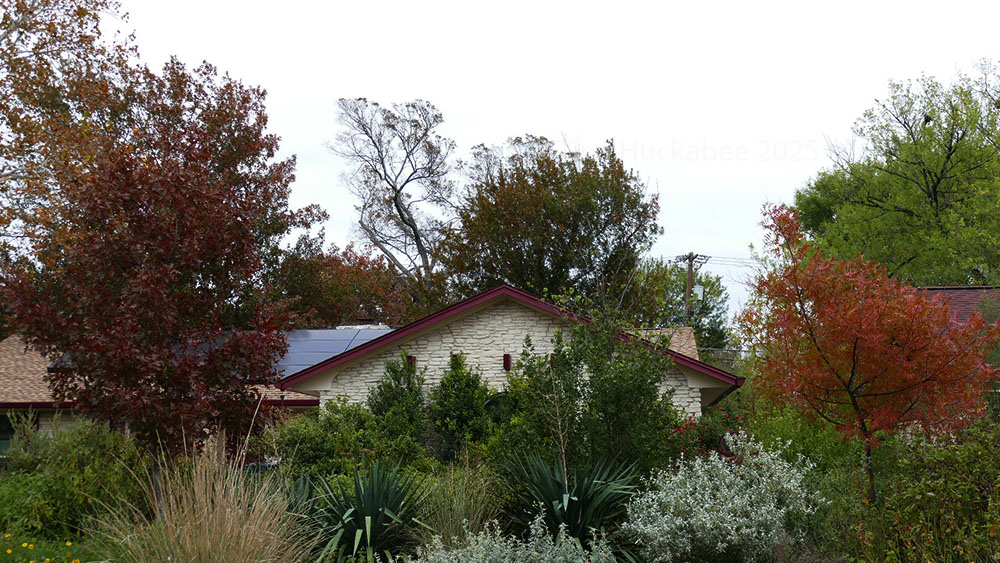
After four years of growth, my Flameleaf Sumac, Rhus lanceolata, a seedling gift from a neighbor, has finally come in to its eagerly awaited flame-y-ness. The young tree bloomed in August–pleasing the pollinators; set fruit shortly thereafter, which produced a bird buffet; now, it rocks its namesake in lovely fall color. The first photos, on a misty day earlier this month, demonstrates the beginning of the color change.
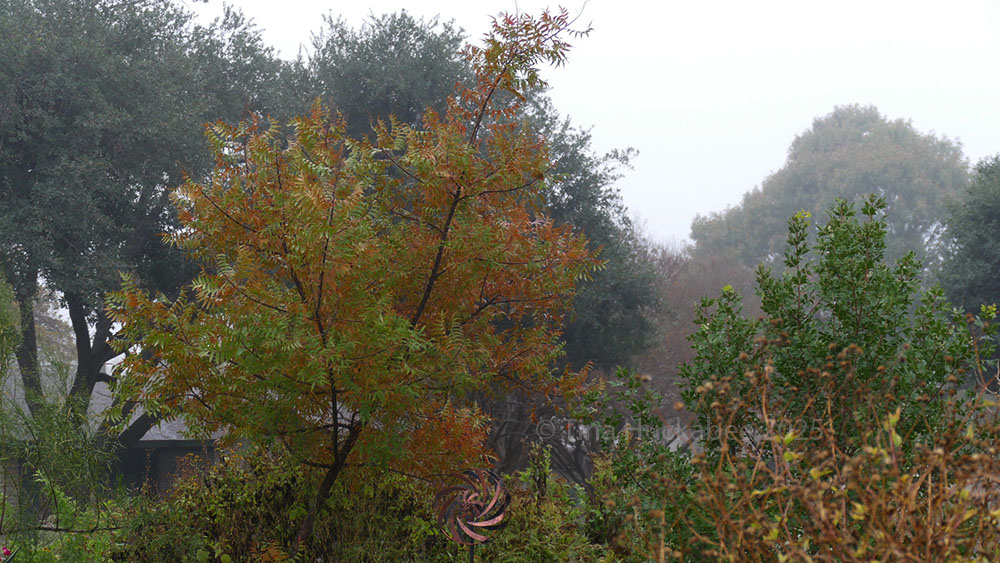
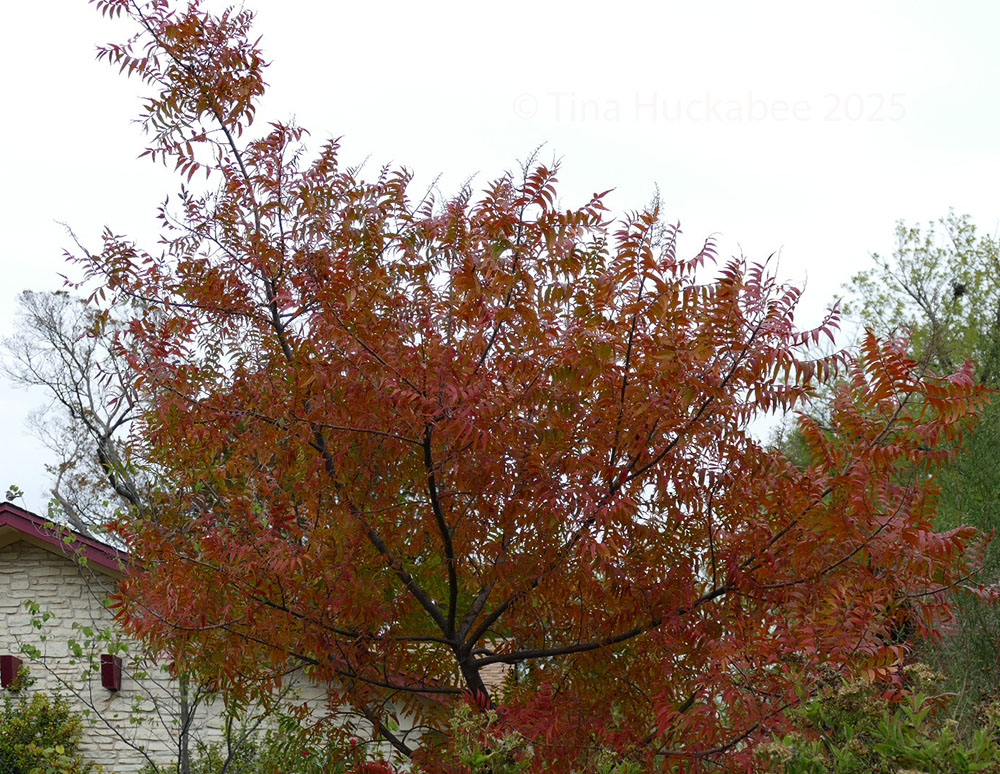
I like the mix of green and flame. Truthfully, my Flameleaf has never achieved its flame potential. Many Flameleaf sumacs show off in varieties of rich red foliage; check out Portraits of Wildflowers for some stunning photos. My young Flameleaf’s foliage ranges from yellow to mauve to orange. Deeper colored leaves are just shy of true red.

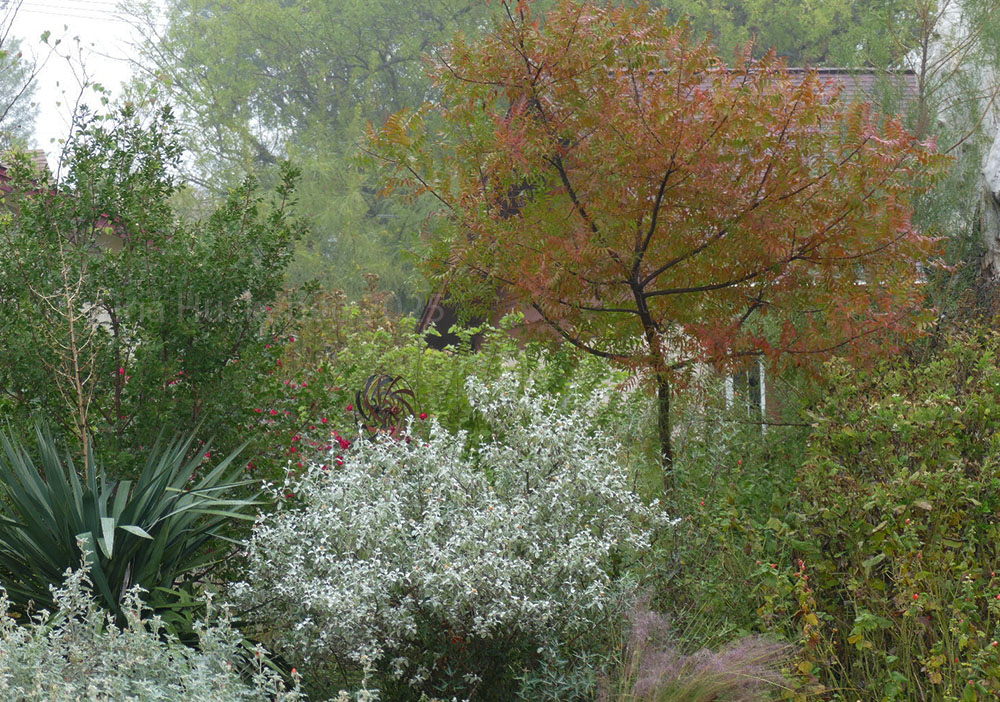
I’m okay with the orange-y tone, though. I wanted fall color and the Flameleaf has provided; I won’t criticize its choice of hue and I’m happy this plant is a member of good standing in my garden.

After four years, the still growing Flameleaf, situated next to its sister sumac, an equally young Evergreen Sumac, Rhus virens (the dark green, smaller shrub to the Flameleaf’s left), and, further left, a glorious Red Oak tree, Quercus buckleyi, are all large and autumnal enough to gratify my initial end-of-growing season vision for this front garden. The silver foliaged shrubs and tawny Big Muhly grasses are worthy companions to the reds and oranges, garden greens offering a soothing background. Central Texas’s fall color morphs in its own time, flushed out slower than in northern climes, but foliage change eventually happens.
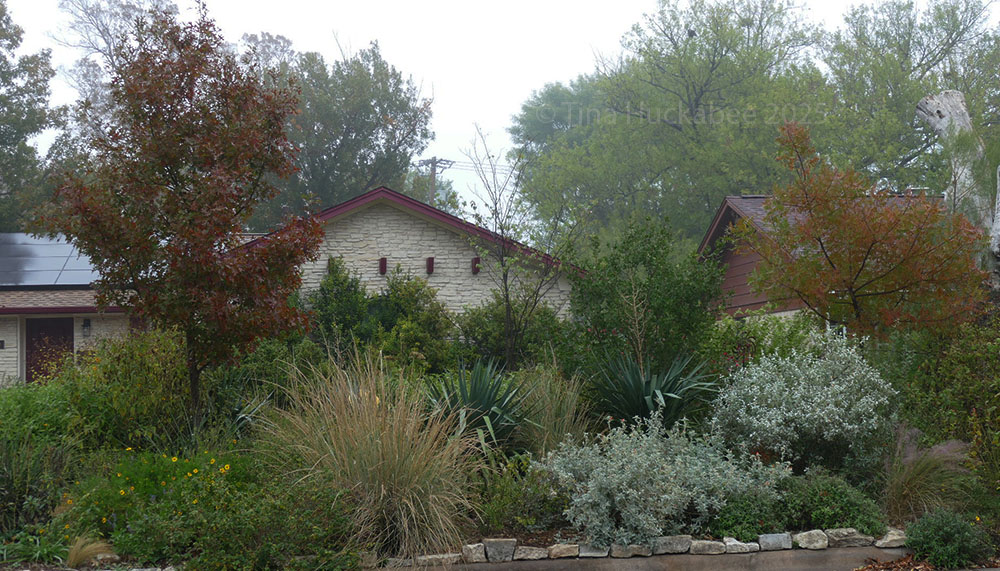
Just two days after the above photo, the fall colors deepened.
The Flameleaf orange pops against a winter sky.

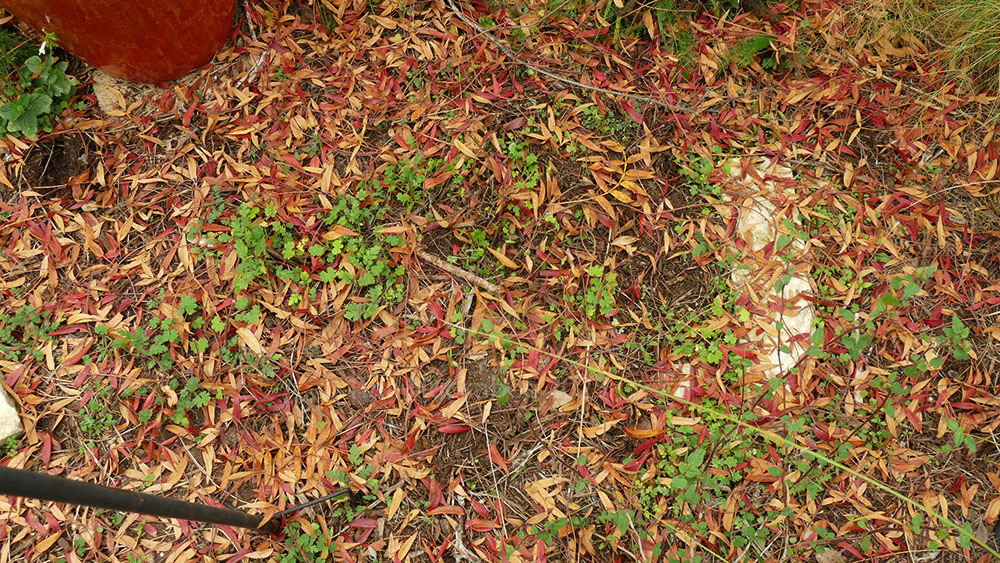
Two weeks later, the foliage on the tree was no more, but dropped and blanketed over the ground, keeping company with emerging spring wildflowers.
As 2025 ends, the tree is bare, dormant and prepared for a few months of colder temperatures.

May 2026 provide the appropriate environment for more growth, change, and beauty for this tree–and all other things.


I absolutely love flameleaf sumac!
LikeLike
It’s a good one!
LikeLike
The color came late in my neighborhood, too. Many trees dropped their leaves before the change, but those that held on — especially crape myrtles and cypress — were lovely in shades of rust and orange. I’ve seen Rhus glabra here, but the two species you mentioned require a little travel. The flameleaf sumac is my favorite. There’s a large stand of it at a ranch gate near Medina that I visit every fall. It’s color can vary from year to year: sometimes brilliant red and orange, sometimes more yellow-orange. Perhaps in coming years yours will be even more attractive than it was this year.
Speaking of our cypress, that strong north wind that came through last week stripped them bare. At least it’s easier to see the squirrels at play!
LikeLike
I love the fall color of both crape myrtles and cypress! And, I think you’re probably spot on about the color of the flameleaf varying from year to year and also as it matures. I’m looking forward its continue development.
I’m always kind of happy when the trees lose their leaves, so much easier to bird watch!
LikeLiked by 1 person
A beautiful transition to dormancy, Tina, long may it prosper!
LikeLike
It’s a nice tree and I hope it lives a good, long life!
LikeLiked by 1 person
What a good idea to plant trees that have fall color. Most of my trees were native, and the planted ones did not change. I had a great fall up here in the NE. But have been looking at bare trees for quite a while.
LikeLike
I imagine your autumn show is quite something, though probably of short duration. Stay warm!
LikeLiked by 1 person
Surprisingly, it lasted a long time in this area. Many of the neighborhood trees seem to be planted for their color.
LikeLike
Here’s to flameleaf sumac! Glad you now get to enjoy yours. Actual flames come in many shades of red, orange, and yellow, and the leaves on these trees do too. One thing you can try next year to bring out more color in your photographs is to wait for a day with a blue sky, get under the tree, and shoot upward in the general direction of (but not right into) the sun.
LikeLiked by 2 people
Oh, thanks for the photography tip! I’ll try that and hopefully won’t pull anything out of joint…:)
LikeLike