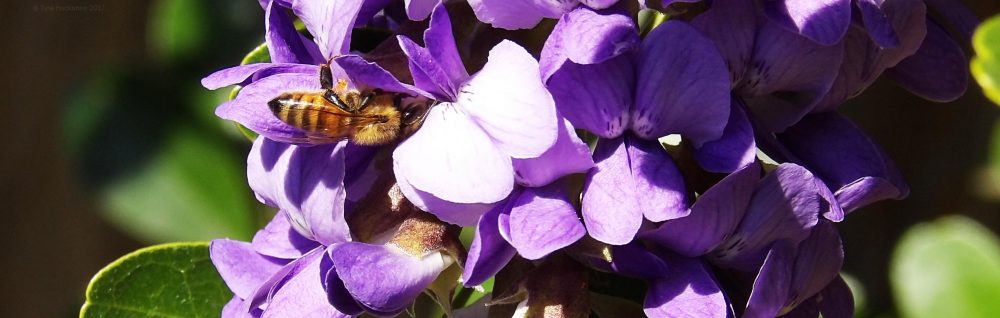
Poppies are poppin’ and honeybees are rockin’. Honeybees are all in the poppies’ innards, their pantaloons (corbiculae) laden with pollen as their work takes them from flower to flower. Most of my garden is abloom with native Texas plants, but this European poppy is the descendant of seeds given to me by a German neighbor decades ago. The poppies appear annually in January when delicate foliage rises upwards during the cool season, then buds reveal glorious red and purple in April.

It’s spring, y’all. Trees are leafing out, perennials and annuals are showing off their eye-catching wares. March was dry and warm, though rain and chilly temperatures have made a come back. Flowers are opening, pollinators are working, and birds entertain with song.
Two of my Soft Leaf yucca, Yucca recurvifolia, are in a blooming mood, guaranteeing they’re not outperformed by the red, red roses of Martha Gonzalez. I grow five of these yucca plants in my front garden. The plan was that each spring, upon maturity, the yuccas would all produce their dramatic flower spikes at the same time. This has never happened. This spring, three recalcitrant yucca individuals are refusing to send up spikes. Wishing the plants would bloom in concert with one another isn’t working. Alas, they will do their own thing.
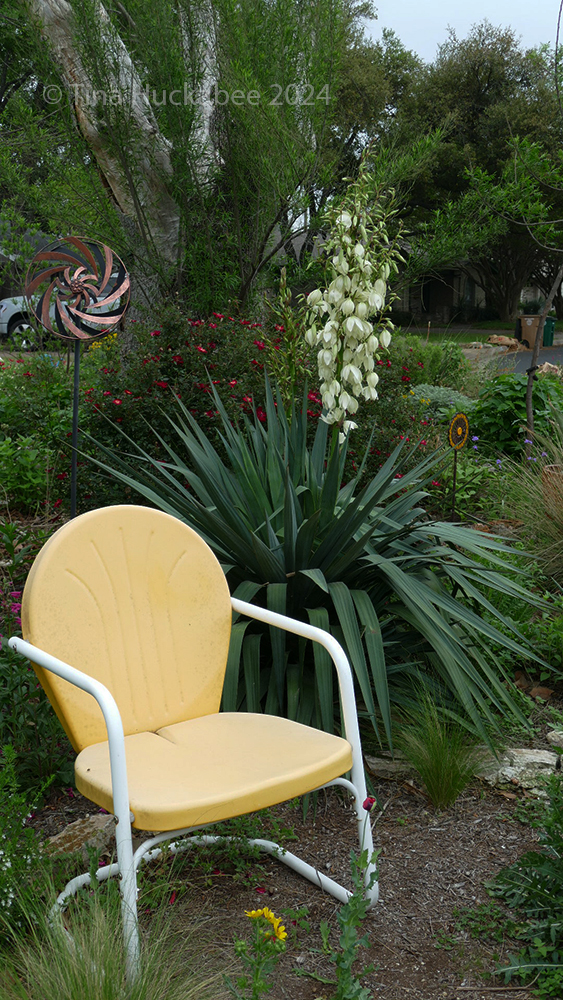
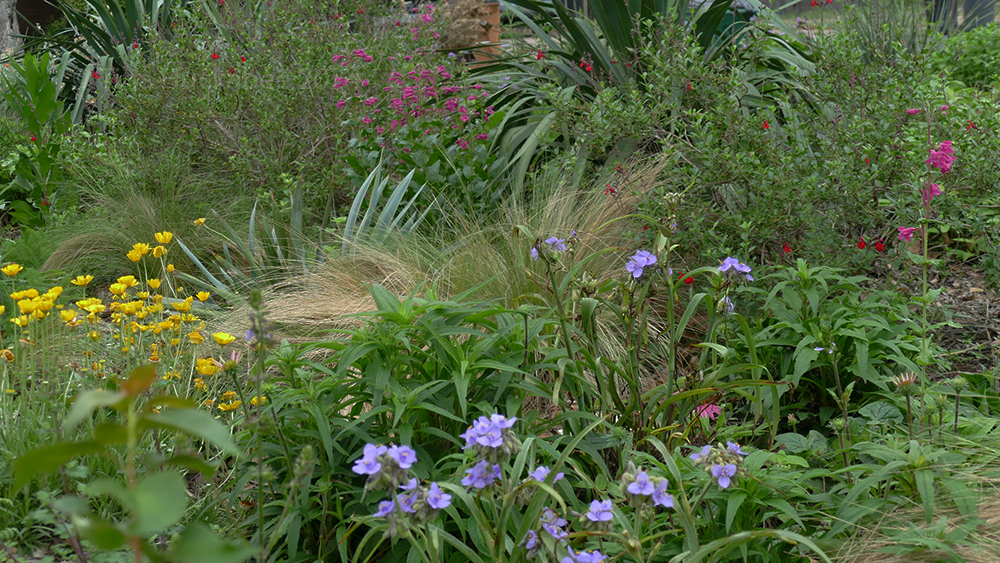
Cool season, orangy Desert Mallow, Sphaeralcea ambigua pair nicely with pretty, purple Spiderwort. Tough plants both, they’re situated at the street side of the garden, full west sun. The mallow is a shrub, the spiderwort a cool season plant that will disappear in the heat, showing up again in late fall or winter.

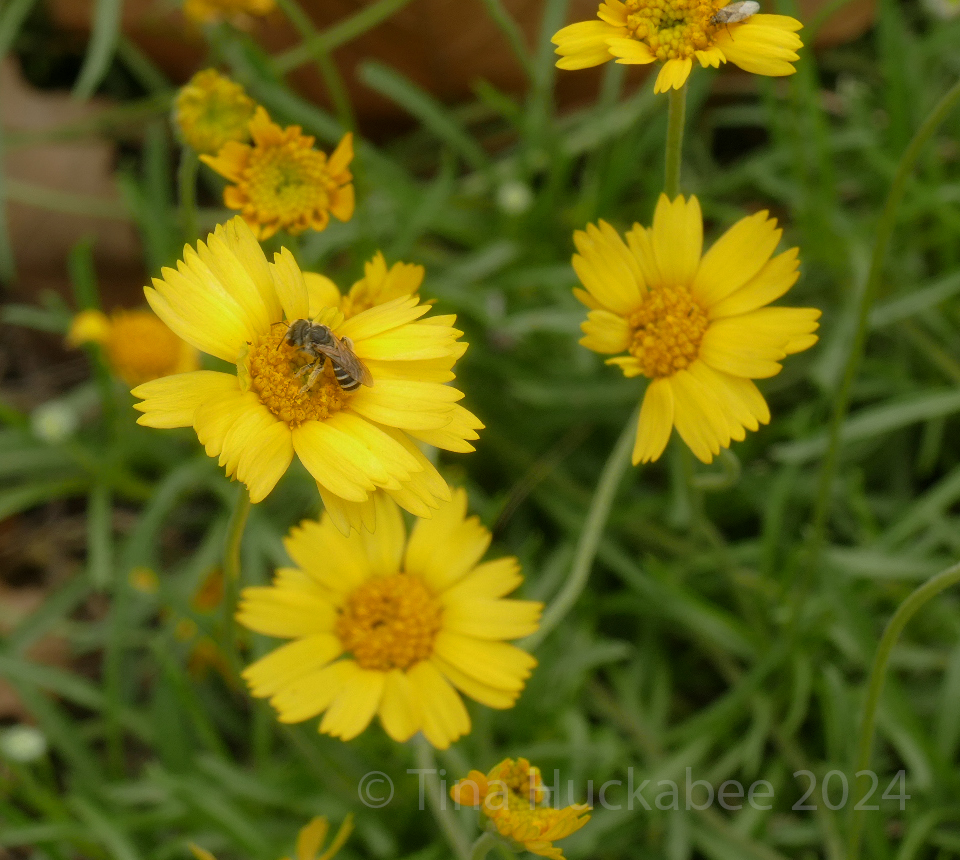
Four-nerve Daisy, Tetraneuris scaposa, dances in the breeze, their yellow faces turned to the warm sun. But are they missing something?
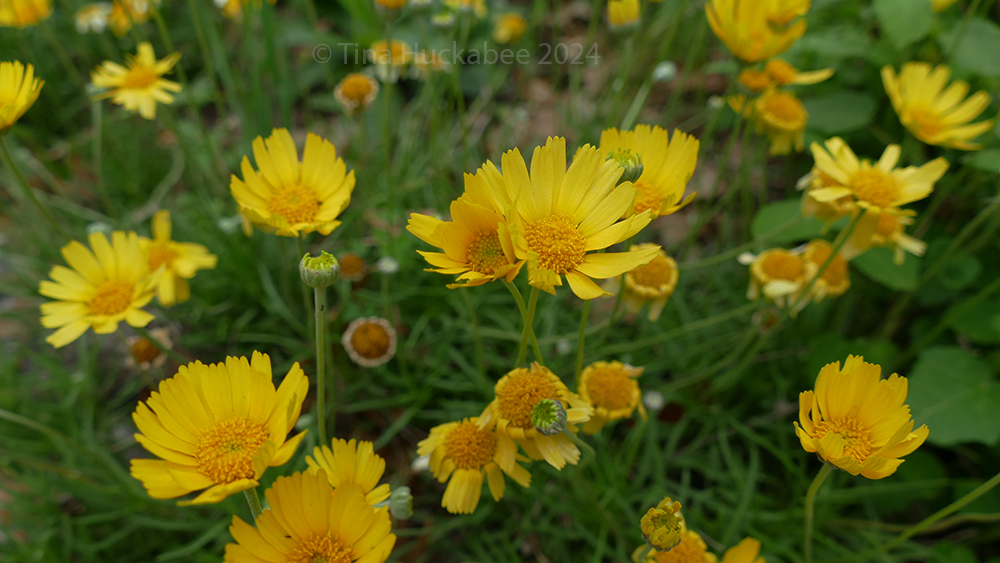
There it is! A native bee, maybe in the Melittidae (oil collecting bee) family. The bee landed in the pollen-plenty center of the sweet daisy flower, working the flower for the bee’s benefit and the plant’s future.
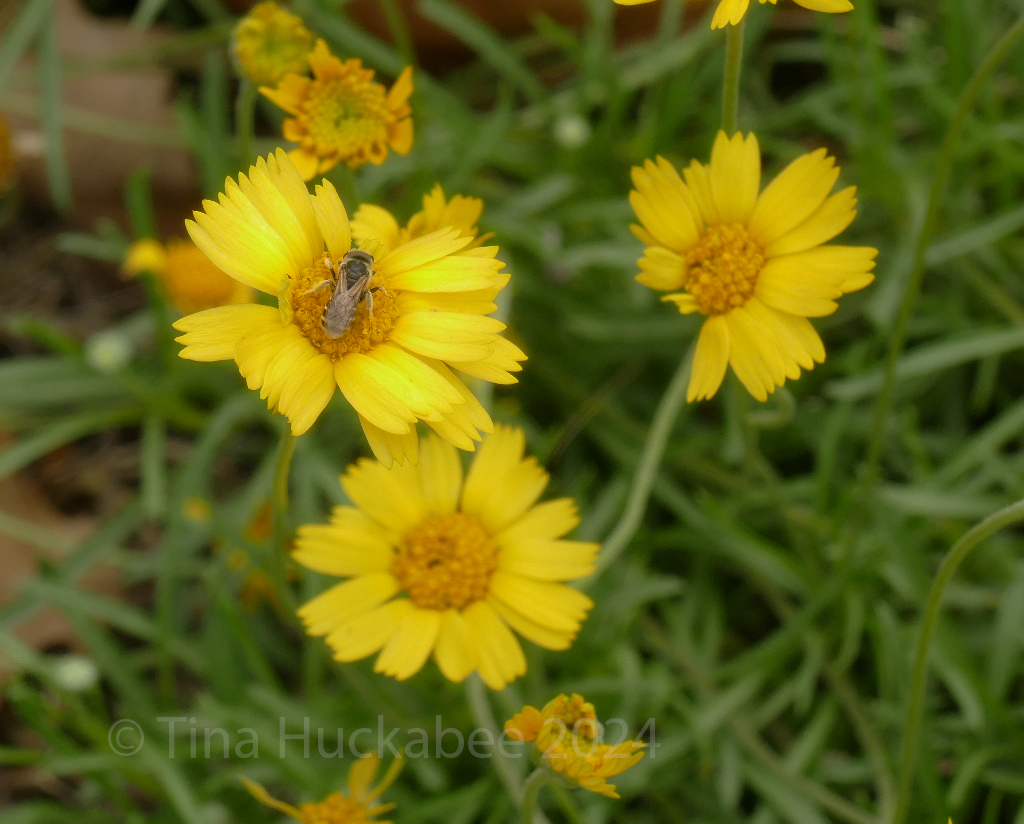
A side view of the bee highlights pollen stockings on its legs and cool abdomen racing stripes.
Hill Country Penstemon, Penstemon triflorus, is in full swing now, with mostly night moths as its main pollinators. If there are hummingbirds around, I’ve yet to spot them, but they won’t miss this pink beauty when they arrive in my garden. In my last post, I profiled the first one to flower, but now all five individuals have caught up and are playing their parts in the pink parade.

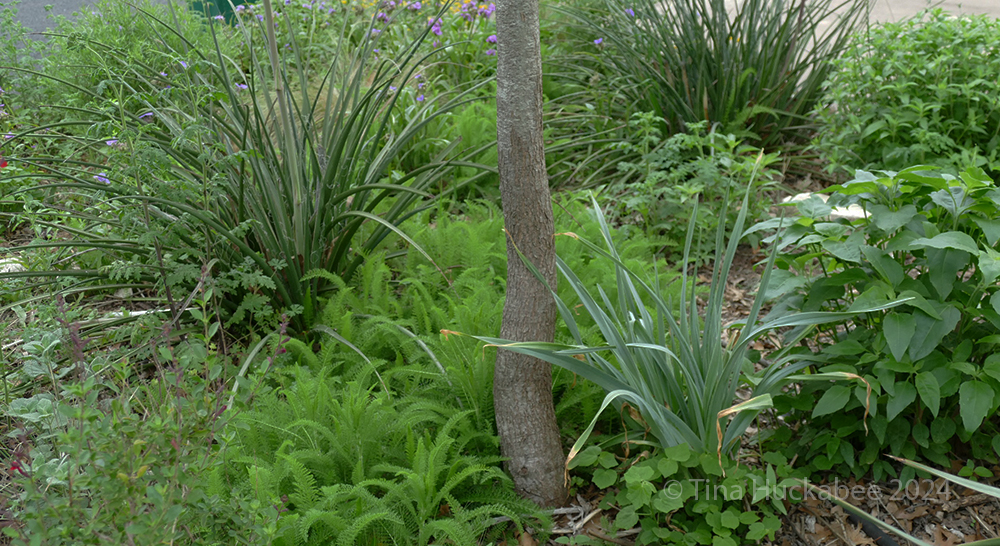
The greens are greening-up too, thank you very much. Foliage certainly has its own beauty and purpose, not outdone by flashier colors. In this photo, two evergreen Red Yucca, Hesperaloe parviflora, mix with spring-green Yarrow, Achillea millefolium, and the foliage of other Texas perennials: Plateau Goldeneye, Viguiera dentata and Zexmenia, Wedelia acapulcensis var. hispida. Just emerging from the soil is the scalloped foliage of Pam Puryear’s Pink Turk’s Cap, a cultivar of native Turks Cap, Malvaviscus. The trunk of a young Red Oak, probably planted by a Grey Squirrel, bisects the greening vignette .
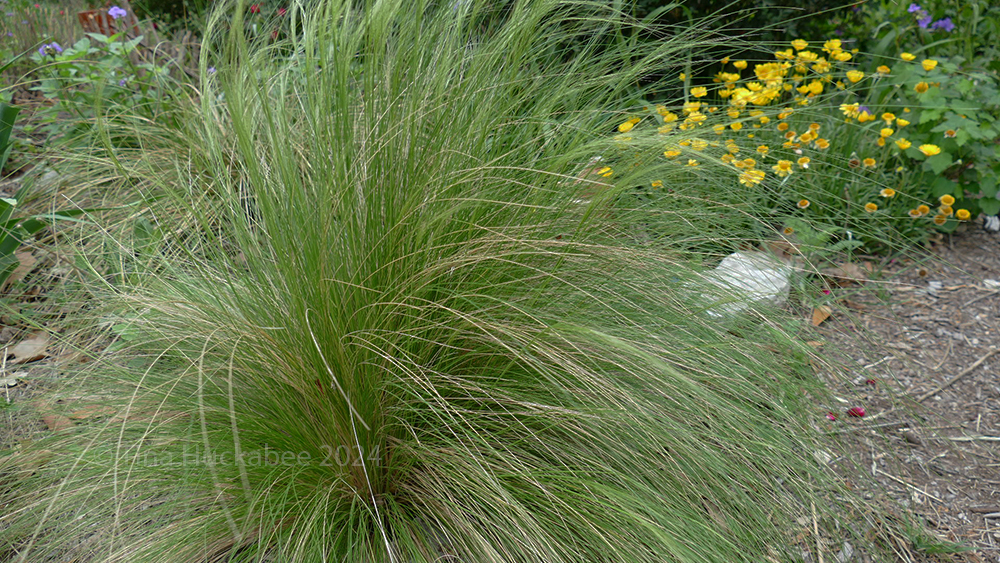
Beautiful Mexican Feathergrass, Nassella tenuissima, pops up here and there, graceful in form and color.
The primacy of Blue Curls or Caterpillars, Phacelia congesta, is nigh. Lovely blue-purple florets unfurl along a spine, beckoning pollinators to visit and gardeners to admire. There’s a tiny native bee on this cluster set, do you see it?
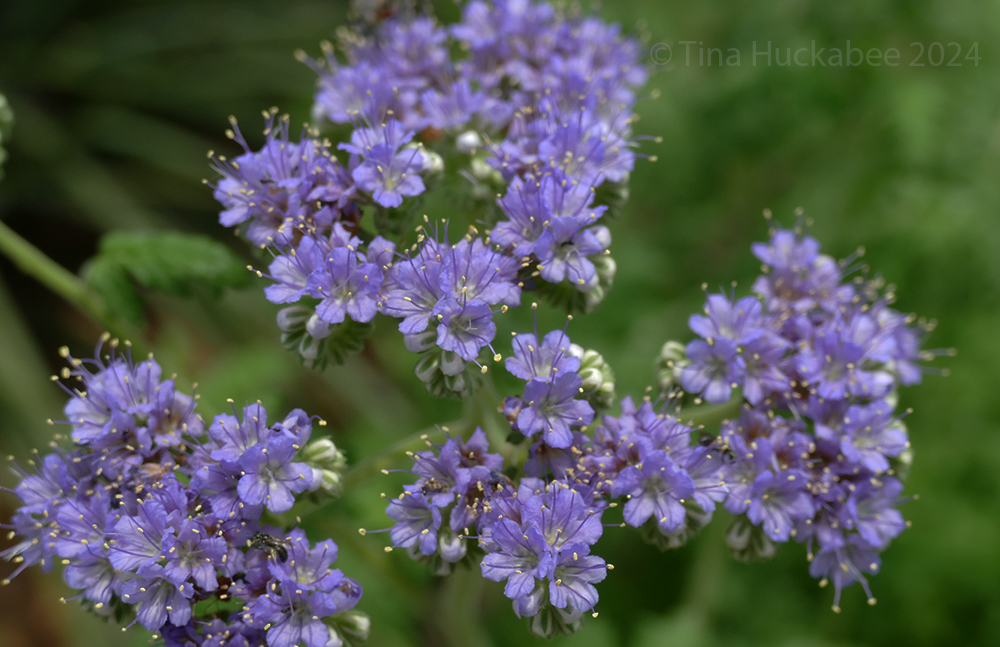
If not, here’s another flower cluster hosting a similar busy bee, one more zooming in for some action.
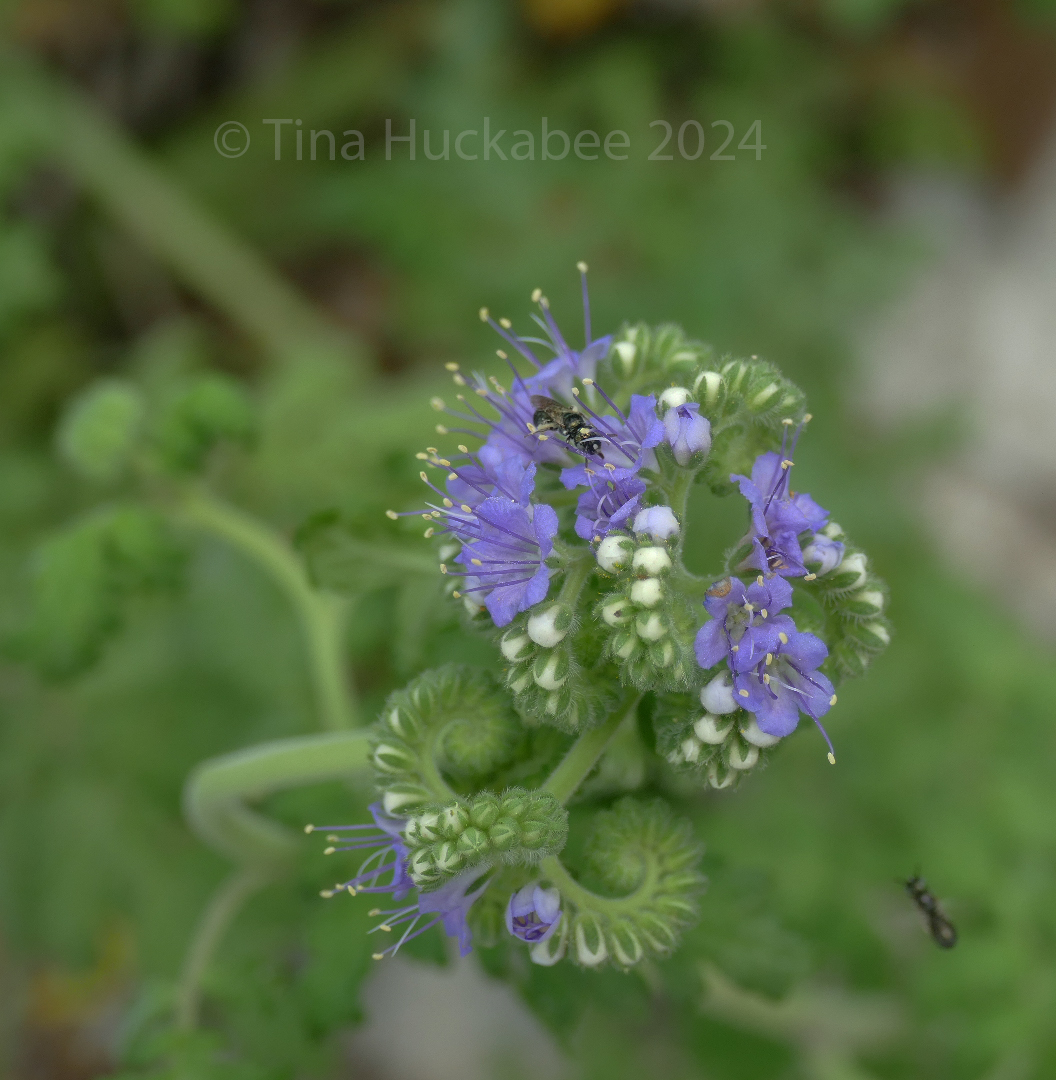
Each day, more of these annual wildflowers are opening for business. Soon, I’ll watch as myriad pollinators, particularly small native bees, skippers, and true bugs, visit these blooms. Aside from the color, texture and form of the plants, the garden is alive with movement and life of those who rely on the plants for survival.
Spring has definitely sprung. The weave of form and color mark each morning-to-nightfall, and change is a constant. Pollinators are in fine form and migrating songbirds are passing through, resting from their travels and nibbling insects and seeds that drop.
Spring is the definition of beginnings, a confirmation of living.
 My Gardener Says...
Looks like your garden is already in full bloom. Lovely !!
LikeLike
Your garden is blooming beautifully, Tina! Your lettuce leaf poppies bloom 3 months ahead of mine, like a full season of difference, wow. 😲
LikeLike
Thanks, Eliza! Wow, I didn’t think our blooming time was that far apart, but you’re way north and I’m way south, so I guess it tracks!
LikeLiked by 1 person
Your photos are a lesson in great native garden design – love the exuberance!
LikeLike
Thanks, Sam. Exuberance is a great word for spring–I should have used it somewhere!
LikeLiked by 1 person
Love the softness of yarrow foliage… I’m reminded to get some! Your garden is stunningly beautiful
LikeLike
Thank you, Lauren. I love yarrow. Unfortunately, in my front garden (where these photos are from) gets full sun and the yarrow is really struggling in the summers. That garden used to be part shade and they tolerated the conditions. Sigh. Still, in winter and spring and mostly through June, the foliage is very pretty.
LikeLike
All a lovely sight Tina, nothing like the garden bursting into life to lift the spirits. Your Poppies are very early.
LikeLike
That’s really true, Brian. This time of year, at least in the garden and natural spaces, feels so hopeful. A good contrast with everything else.
LikeLiked by 1 person
The exuberance of spring comes through in your pictures and your happy commentary. Your observation about the yuccas recalls Robert Burns’s “the best-laid schemes o’mice an’ men / Gang aft agley” (i.e. ‘go oft[en] awry”).
LikeLike
I was going to use that phrase, then opted not to. Funny!
LikeLike
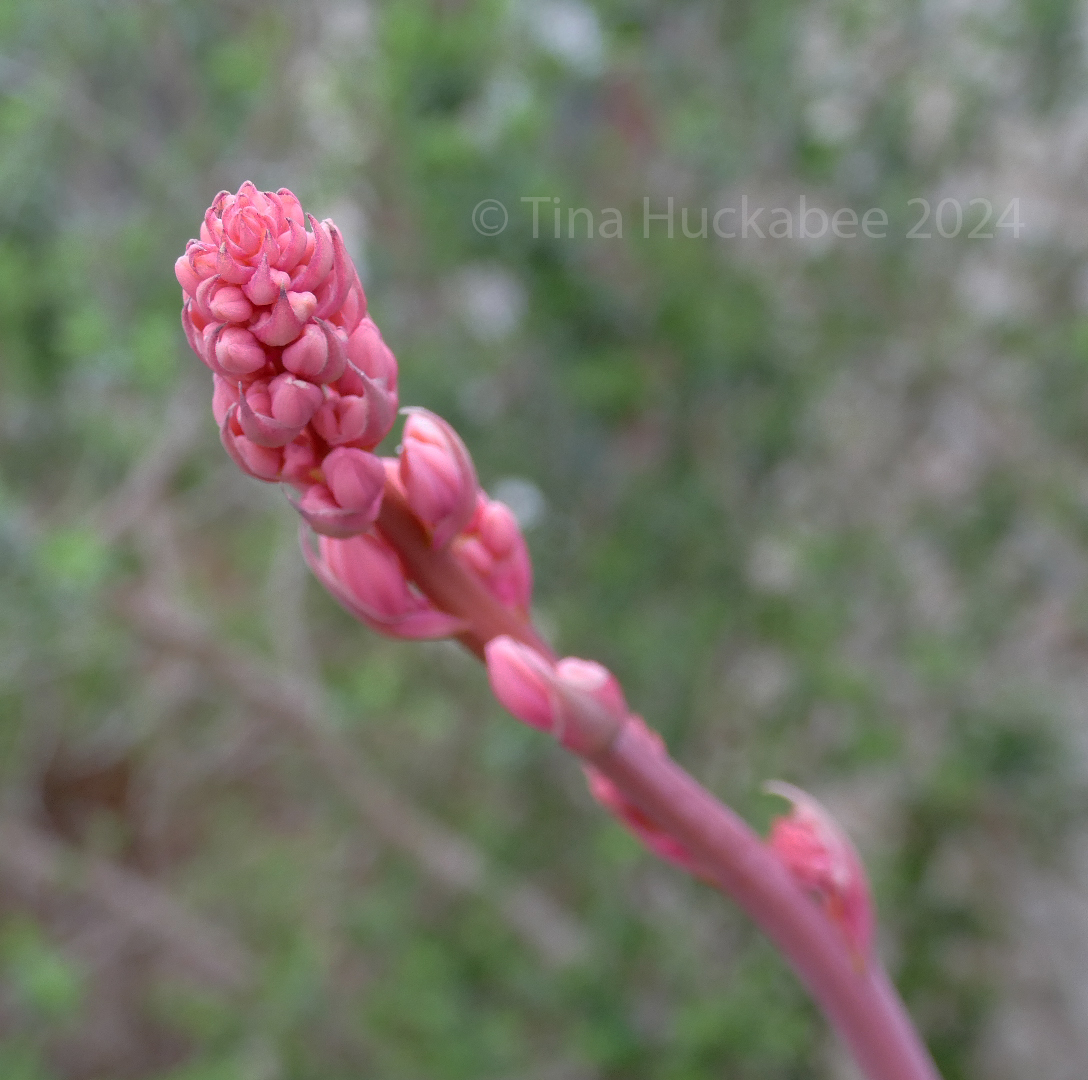
I can’t quite decide the identity of the pretty pink stem in your last photo. At first I thought ‘hill country penstemon,’ but then I thought it looked more succulent. Whatever it might be, it’s a beautiful photo. It’s great fun seeing some of my favorites, too — the blue curls and desert mallow particularly. You’re sure right that changes are coming fast, now — to the delight of many creatures, including humans!
LikeLike
It’s Red Yucca, Hesperaloe https://www.wildflower.org/plants/result.php?id_plant=hepa8 I should have labeled that and will do so!
Each day, is different. What always astounds me is plants like the red yucca or irises. I’ll look at a clump of iris or the red yucca’s foliage in the morning and only see the green foliage and by early afternoon, there’s a foot tall bloom stalk! How does that happen?! I’ve always thought it would be interesting to film one of those kinds of plants and observe its movement when it decides it’s time. 🙂
LikeLiked by 1 person
A reader left this time lapse of a spider lily opening on my entry about that plant.
Speaking of presto-change-o, last week I went to work one morning and noticed our cypress trees hadn’t yet begun to leaf out. When I came home that same night, there was a green froth of new leaves on them all. It’s amazing to see them leaf out — or drop all their leaves — in concert.
LikeLiked by 1 person
It is remarkable!!
LikeLike
Your yard has really erupted in spring. I have two Ruby Throats here. They were mostly using the feeder, but I now have some flowers for them.
LikeLike
Erupted is just about right! Lucky you with the hummers! I don’t put up a feeder for them as they tend to ignore it in favor of plants I grow. I’ll probably need to wait just a bit longer to catch a glimpse of one, but the wait is worth it!
LikeLiked by 1 person
Your spring vignettes are so inspiring, Tina. Love the scene in front where spiderwort is blooming and the yellow chair is in the distance. I feel like someone just got up from that seat to continue wandering through your garden. Happy Spring! (I tried posting this first on your blog but got a WordPress error. Hope this goes through using Reader.)
LikeLiked by 1 person
Thanks so much–your comment (obviously!) came through just fine.
It’s very likely that I was sitting in the chair before wandering through the garden with my camera!
LikeLiked by 1 person
Welcome, spring!
Your garden is a wonderful haven, Tina, so full of diverse plants all ready to welcome and harbor and sustain life. I hope the burgeoning and buzzing and singing will continue for many months to come.
LikeLike