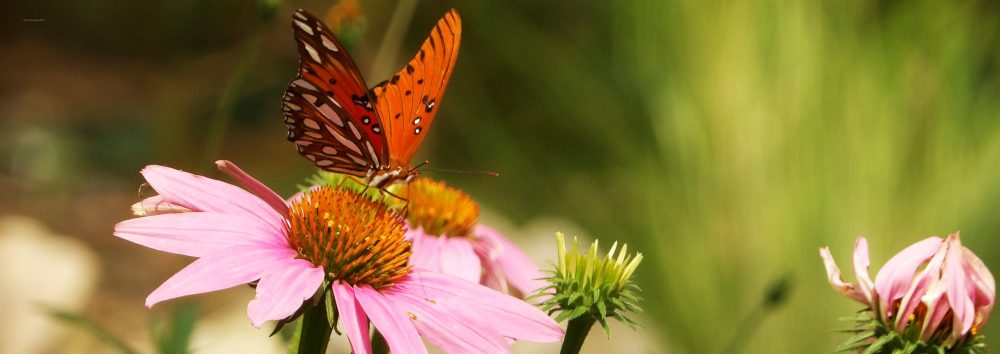
After the massive autumn flowering of Plateau Goldeneye, Viguiera dentata, and pollinators, especially honeybees, have taken their cut of the action, flowers segue to seeds, and birds replace bees.

In the last few weeks, each time I walk outside or come home from elsewhere, there’s a whoosh of wings upwards–with accompanying chirps–to the relative safety of nearby taller trees and shrubs. Tiny Lesser Goldfinches, Spinus psaltria, are come-and-go visitors in my garden throughout the year. In October and November, their numbers increase, along with their appetites, as they favor the seeds of the Plateau Goldeneye shrubs.
This little male doesn’t look frenzied, but he and his crew energetically work the shrubs, nibbling delectable goldeneye seeds as they bop along slender limbs, stopping only to munch. .

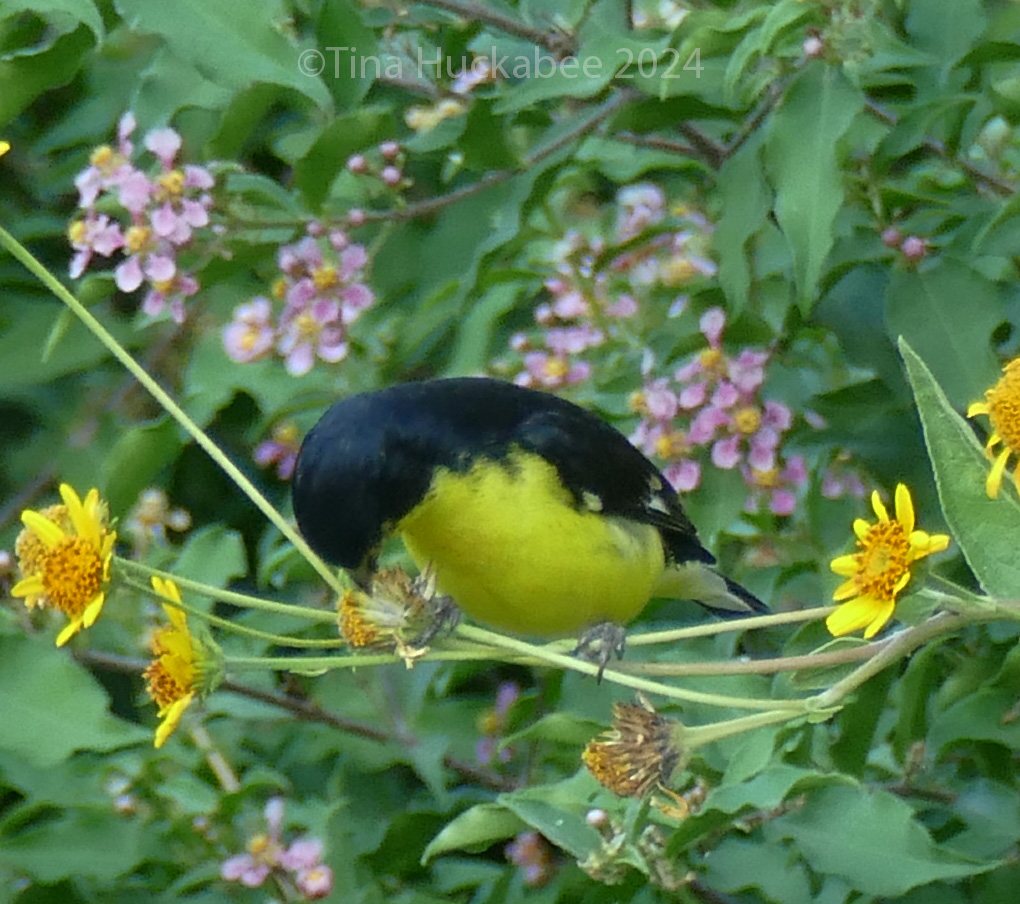
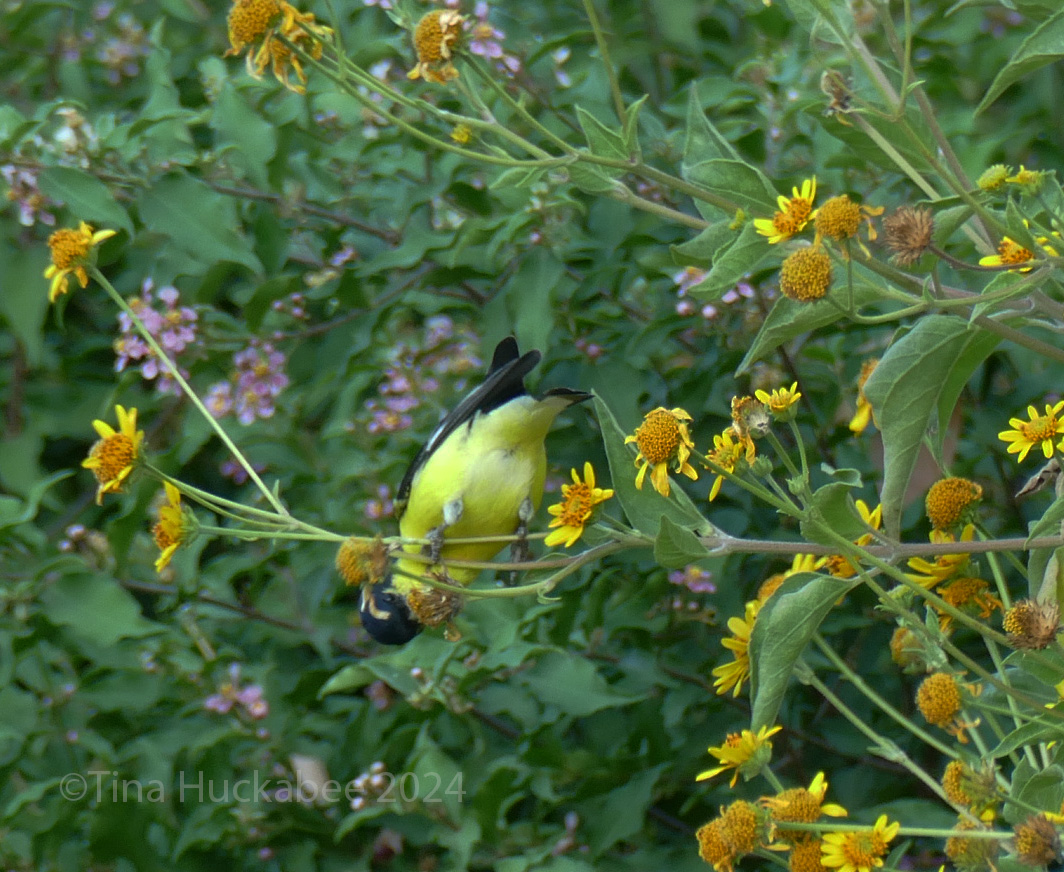
These little cuties are also contortionists, noshing right-side up, up-side down, and sideways. Their determination to pluck available seeds is hampered only by limitations of wings, claws, and beaks.
Bum’s-up, little fella!
While it’s impossible to count how many goldfinches are feeding during the frenzy, the flock(s) are made up of both male and female, and there are a also plenty of juveniles in the mix as well.
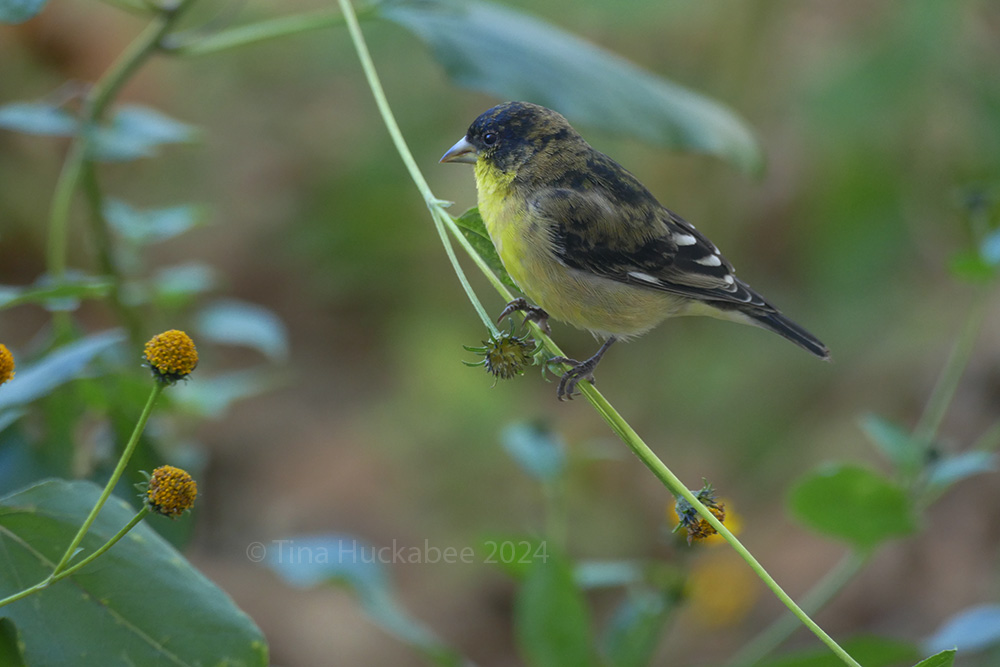
I never got a good photo of a pretty, but sedately colored, female, but they are just as active and hungry as their male counterparts. Here’s a shot of one, in early summer of 2021, enjoying the bounty of a different sunflower plant.
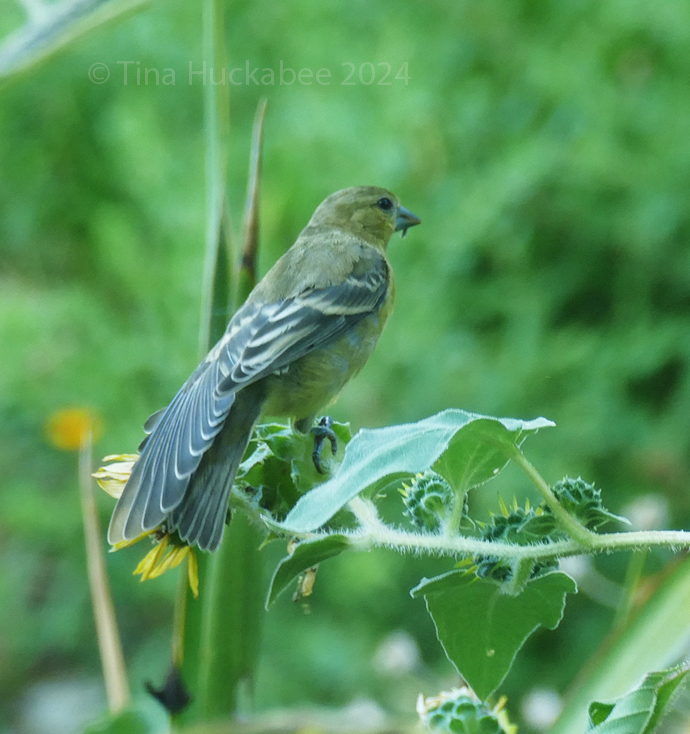
Often, a goldfinch couple feeds together, either on the same branch or near one another. As winter approaches and the seed sources disappear, I’ll see Lesser Goldfinches visit my feeders.

Until they’ve vanquished this year’s goldeneye seed crop, I’ll hear their song and enjoy their frenzied antics!
 My Gardener Says...
If you were hoping to read about goldfish, my apologies. Spellcheck and poor editing must be my excuse. That being said, I suppose I could write a post about the feeding frenzy of the goldfish in my pond. 🙂
LikeLike
Goldfish, goldfinch, goldeneye: two out of three’s not bad for a single post, even if one’s a lesser of its kind.
You described the flowering of goldeneye this autumn as massive. Were you referring specifically to the ones in your yard? My anecdotal observations around northwest Austin this fall were that the species did averagely well rather than the spectacularly well I’ve occasionally seen.
LikeLike
Lol! Lots-o-gold!
I’d say this year’s crop was moderately massive. You’re right that the dry and the heat dampened the goldeneye’s exuberance, but still, there were a lot of blooms and now, seeds!
LikeLike
Wonderful captures, Tina! We have American goldfinches and they have been clearing seeds out of sunflowers, woodland sunflowers, echinacea and hyssop quite systematically. Glad to provide the banquet!
LikeLike
I love the American goldfinches, but only see them in late winter/very early spring. The Lessers are common here, but I always appreciate their visits.
LikeLiked by 1 person
Pingback: Getting reminded | Portraits of Wildflowers
Can you believe I’ve never seen a truly gold finch? The goldfinches that are common here in winter probably arrive after their breeding colors have faded. They do seem to be coming in now, whichever species they are. When they arrive, they always seem to stop in the upper branches of the live oaks first, and their twittering, light and sometimes barely audible, is the first sign of their presence. I wonder if they aren’t eating the new buds on the trees, since they usually come about the time the live oaks are dropping old leaves and putting on new ones.
LikeLike
That’s interesting. I wonder if you’re just seeing them between ‘seasons’? Still, there twittering is nice, isn’t it?
LikeLiked by 1 person
Lovely photos of your goldfinch visitors, Tina. I also love having them visit our flowers or feeders. We tend to have a preponderance of Lesser Goldfinches in the summer, and of American Goldfinches in the winter.
It’s nice to know that the same flowers provide for so many different creatures at different stages.
LikeLike
We have a similar visitation of the two goldfinch species, though the Lessers come and go, depending on the seed source availability. I only see the American at toward the latter part of winter/early spring. I wish they were here more, I think they’re so pretty.
LikeLike
It’s amazing how goldfinches can stay put on swaying plant stems while they nibble on seeds.
LikeLike
And hang up-side-down while they’re eating!! Little acrobats!
LikeLiked by 1 person