Mini Swarm

I was surprised to see this softball-sized swarm this chilly February 29th.

Bee Daddy and I checked our honeybees this past week for the first time since October and both were thriving. Bo-Peep and Woody (our hives) had brood frames that were packed with larvae and honey–which is exactly what we wanted to see. In fact, we took a brood frame from each (replacing with an empty brood frame) which will give them some space to re-comb and hoard more honey. I was particularly chuffed about the healthy state of both hives, as I’ve been concerned about our weaker hive, Woody.

I didn’t write much last year about the honeybees, but 2023 was a tricky bee keeping year for us. Both hives swarmed in late March–which is normal–but just afterward, Central Texas plunged back to “January” weather and it was wet and cold for a full week. For the next month or so, neither hive showed any larvae, which meant that there was no queen in either hive. We guessed that the virgin queens created by the hives perished during their respective mating flights during the inhospitable-to-honeybees weather of that first week in April.

We purchased two queens and re-queened in early May, hoping that would solve the issue. Bo-Peep responded well to her new queen and rallied. Woody continued to struggle; by late June, we realized that the “new” queen had probably died. We re-queened Woody again and the hive accepted the queen. She was a prolific egg producer; by October, Woody had mostly recovered and had honey and a decent, though small, population of bees. With the late start (mid-summer) of building a population of workers, Woody entered winter weakened and with minimal honey. During that last hive check, we added a couple of Bo-Peep’s honey frames to bolster Woody’s honey stores for the winter months.

This past week was quite warm and we popped in on the girls to say howdy and check their post-winter conditions. I was gobsmacked at how robust each hive was, both full of honey and larvae. Bo-Peep has so much honey that we added a second honey box and will take and process some frames in the near future.

Then, this weird little swarm shows up today. It’s located about 6 feet from the hives. In the photo, the swarm sits on a branch in the Texas Mountain Laurel, to the left and up from the taller hive (Bo-Peep).

Additionally, our very warm spell has ended and it’s back in the 40s and cloudy. This brush of winter won’t last; it’ll be mild again this weekend, but the swarm won’t move while it’s cold. This swarm is too small to survive on its own. Will it swoop back into the hive it most likely came from, or, will it set out for parts unknown and perish? I’ll keep an eye on this ball of bees, though it’s unlikely that I actually see the girls leave the limb.

Honeybees–they’re always doing something cheeky and unexpected, messing with our heads!
Who-Who’s There?

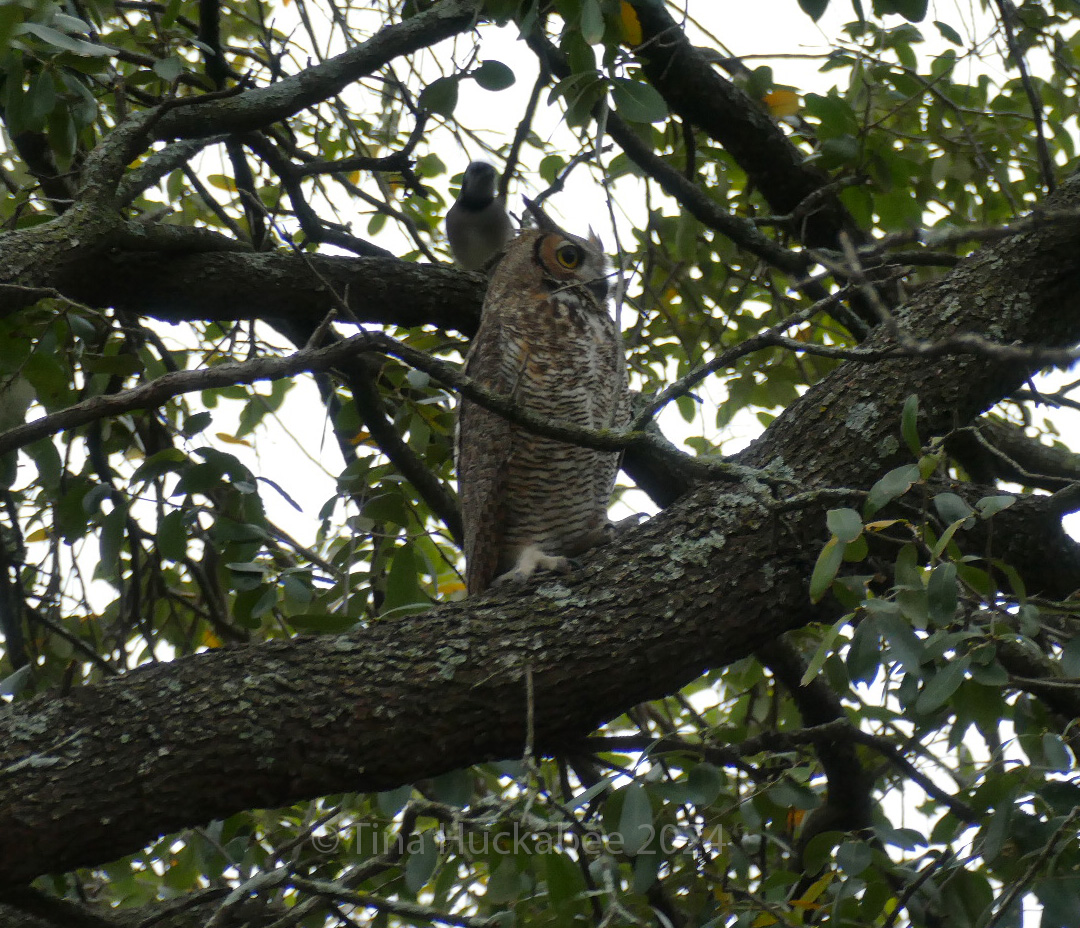
It wasn’t the signature hoot of a Great Horned Owl, Bubo virginianus, that alerted me to its presence in a neighbor’s big, beautiful Live Oak tree early this morning, but instead, the vociferous complaints of a mob of Blue Jays, Cyanocitta cristata.

I think this gorgeous bird is a juvenile Great Horned Owl, most likely last year’s hatch. It could be an adult, as our neighborhood has sustained at least one pair of nesting Great Horns for years.

Just after I returned from visiting stunning Costa Rica in November, for several weeks each day, I heard a call that I couldn’t identify, even with the Merlin app sound feature. In time, my neighbor (and sister-in-law) discovered that the call is the ‘begging call‘ that young owls use for catching the attention of their adults. Once they’ve left their parents’ tutelage, young owls use that call for a time to let their parents know where they are located in the wider world.

Handsome Bird stayed in the tree for at least an hour, with its Blue Jay back up screamers serving as annoying company.

Blue Jay nemesis perches on the branch just above the owl, cawing nonstop.

As I snapped photos, the big, beautiful bird turned southward, spread its magnificent wings, and flew to a quieter spot. Maybe it’ll get some rest today, before hunting commences at sundown.

They’re Off!

Winter placed its chilly hands on the garden these last two days, including gifting a thin layer of ice in the backyard birdbaths this morning. But the weather pattern is in flux with each passing day as the march toward winter’s end and spring’s beginning commences here in Central Texas. Later this week, the forecast is for high 70s, possibly warmer. Even without that warm smooch, the plants in my garden are raring to go and ramping up for the 2024 growing season.

On a cloudy day last week, I noticed (as yet uneaten) fruit on the Possumhaw Holly, Ilex decidua, keeping company with emerging new foliage. I like this great example of seasonal transition period. Blue Jays, Northern Mockingbirds, and Grey Squirrels are feasting on the fruit, but I’m waiting for a flock of Cedar Waxwings to swoop in and render the fruit a sweet memory.

Four-nerve Daisy, Tetraneuris scaposa, never stops blooming, though some of mine were freezer-burned in January during a very cold week. Now? The sunny yellow blooms are spring-bright and open for pollinator business.

This small (maybe?) native Halictidae bee found a sweet spot for nectar sipping and pollen gathering one afternoon. I didn’t disturb its hunt for the sweet stuff as I puttered in the garden.

Four-nerve Daisies are barely damaged by most freezes, but in the above photo, on the right side, you can see a bloom stalk that would have flowered in late January, except for that one deep-frozen week. The other bloom stalks emerged post-hard freeze.

On another day, another, different native Halictidae bee, busily works a daisy bloom.

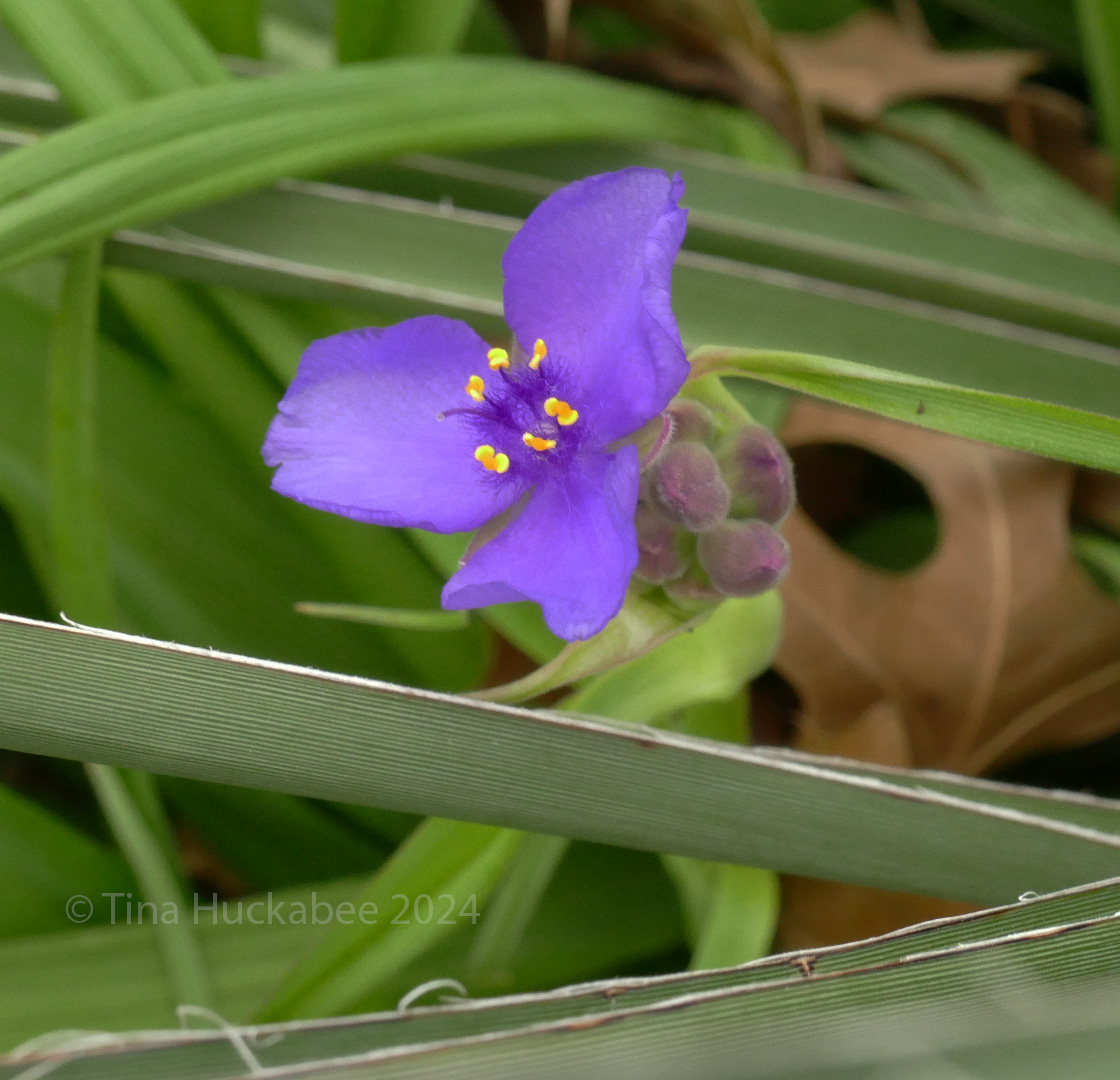
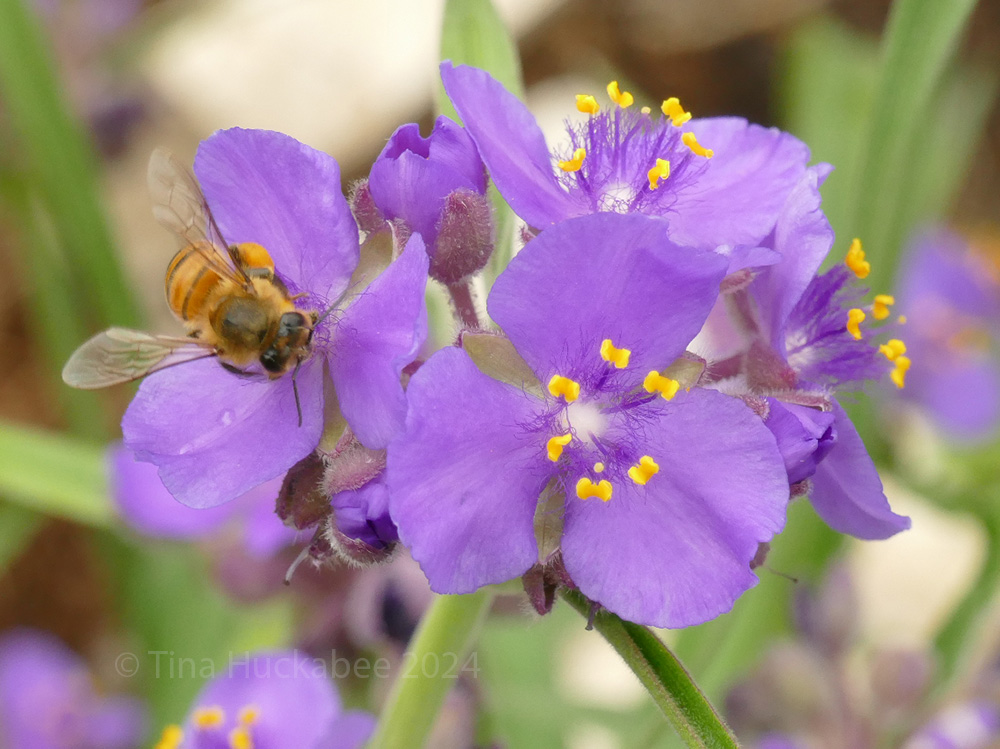
Some of the earliest blooms in my garden (and occasionally some of the latest) are Spiderworts; a handful have emerged from green foliage to grace the garden and feed hungry pollinators. A favorite early flower for many types of bees, from mid-March until mid-May, my garden will be awash in an array of purple-to-pink blooms.

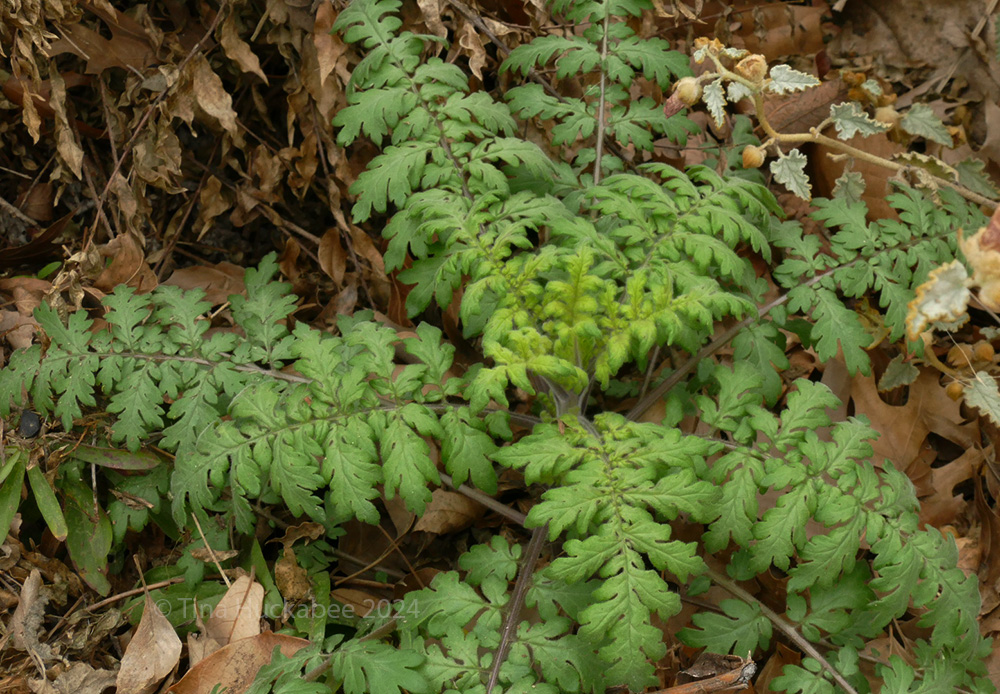
Those plants whose blooms appear later in spring and summer are flushing out with verdant foliage, like this rosette of Blue Curls (also called Caterpillars), Phacelia congesta.

A couple of young Blue Curls accompany a robust rosette of American Basket-flower, Centaurea americana. Both promise plenty of flowering and pollinator action later this year. The rich green foliage is a welcome change from winter’s muted tones.

This potted American Century Plant, Agave americana, enjoys some foliage friends in the form of one European Poppy (right), a Blue Curl (left), and a front-n-center Carolina geranium, Geranium carolinianum.

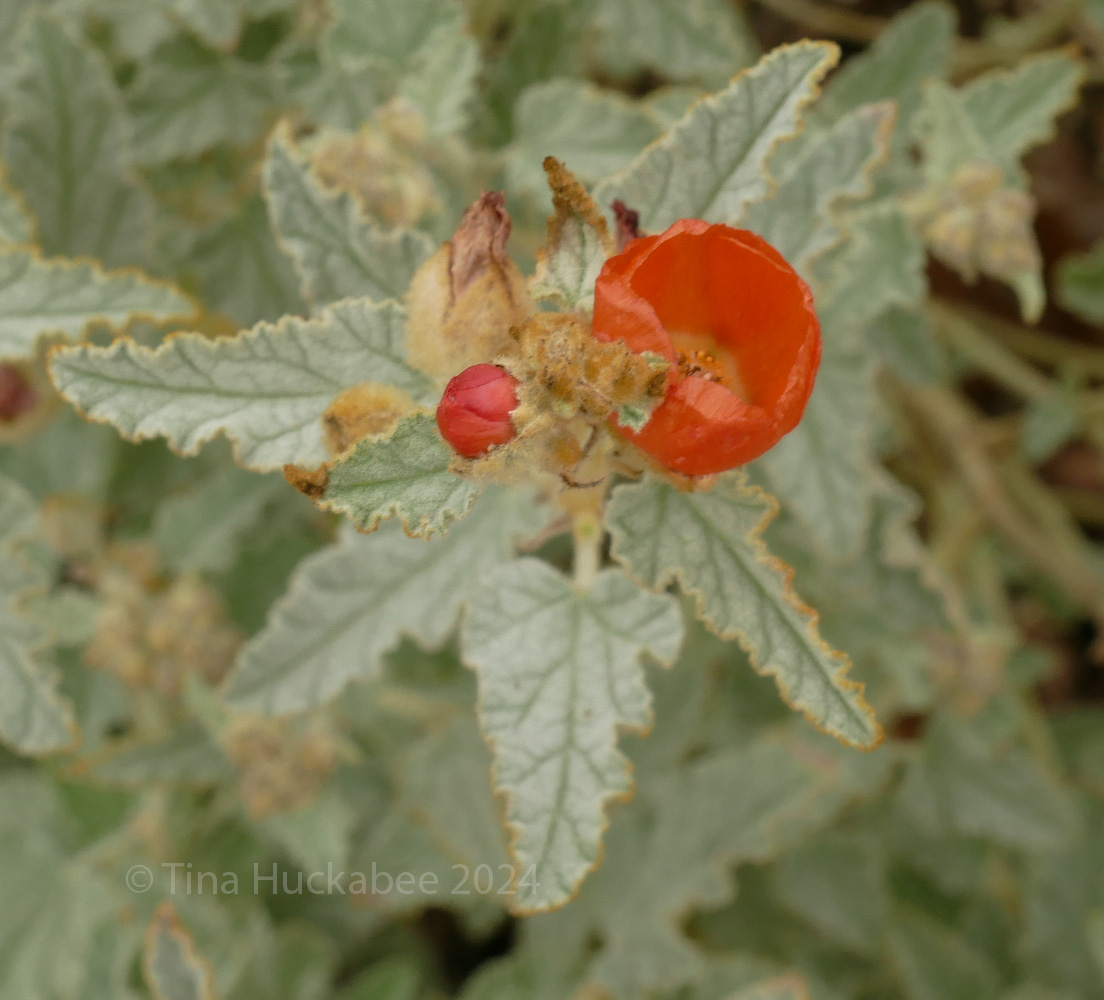
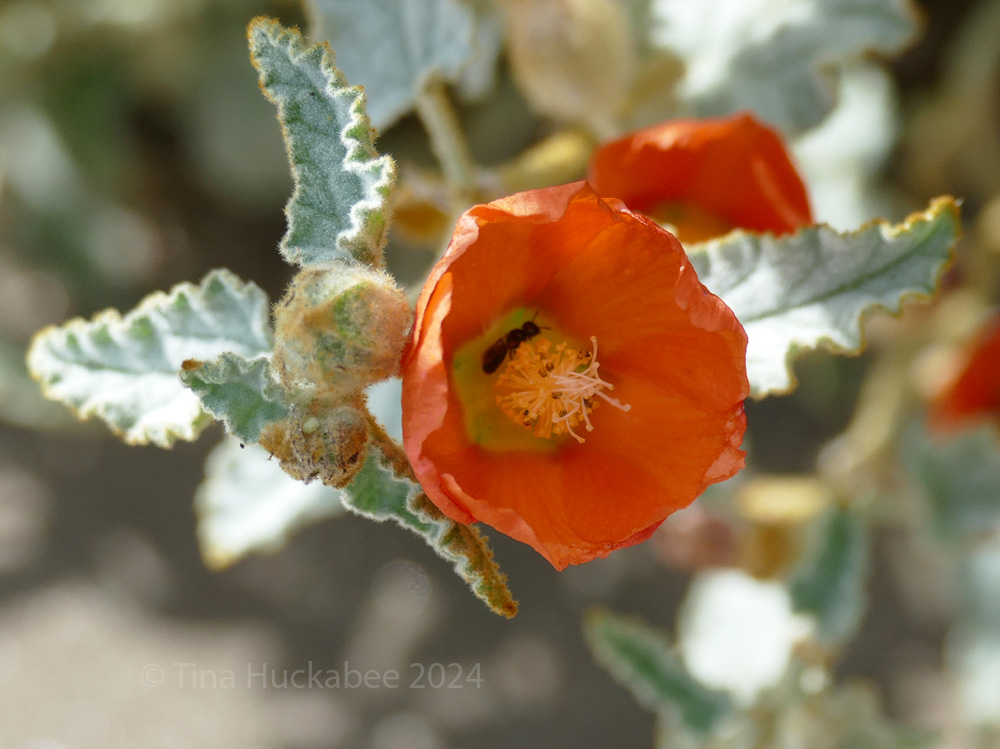
I grow five Desert Globemallow shrubs, Sphaeralcea ambigua. This gorgeous plant is a cool season bloomer here in Central Texas and requires full, blasting sun and decent drainage. Ruffly, sage-green leaves pairs beautifully with Dreamsicle orange blooms.

This globemallow withstands hard freezes, but if the temperature falls in the the teens–or lower–damage will occur. My shrubs experienced some freeze damage in January’s freeze, but all are producing blooms on the healthy stems–much to a variety of bees’ delight.

Honeybees are out and about, collecting for the the hive!

I fed the honeys during that cold week, but there’s been enough flowering (I think…) during most of this winter, plus both hives had honey stores. Our first hive check is on the to-do list for this next week to assess how the ladies are and how much honey, if any, remains from last season.

I’ve been engaged with winter pruning of the garden, but I’m nearly done. I let leaves remain on the ground, further protecting and nourishing life, and eventually decaying for future growing seasons.

The garden has awakened, its inhabitants ready to live and reproduce. Plants and critters are in sync with their companion life-cycles.

It begins, anew.