Critter B & B

With a new camera installed and functional, we’ve recently observed our Eastern Screech Owl nest box host a variety of critters, some that we didn’t want to see in the box.

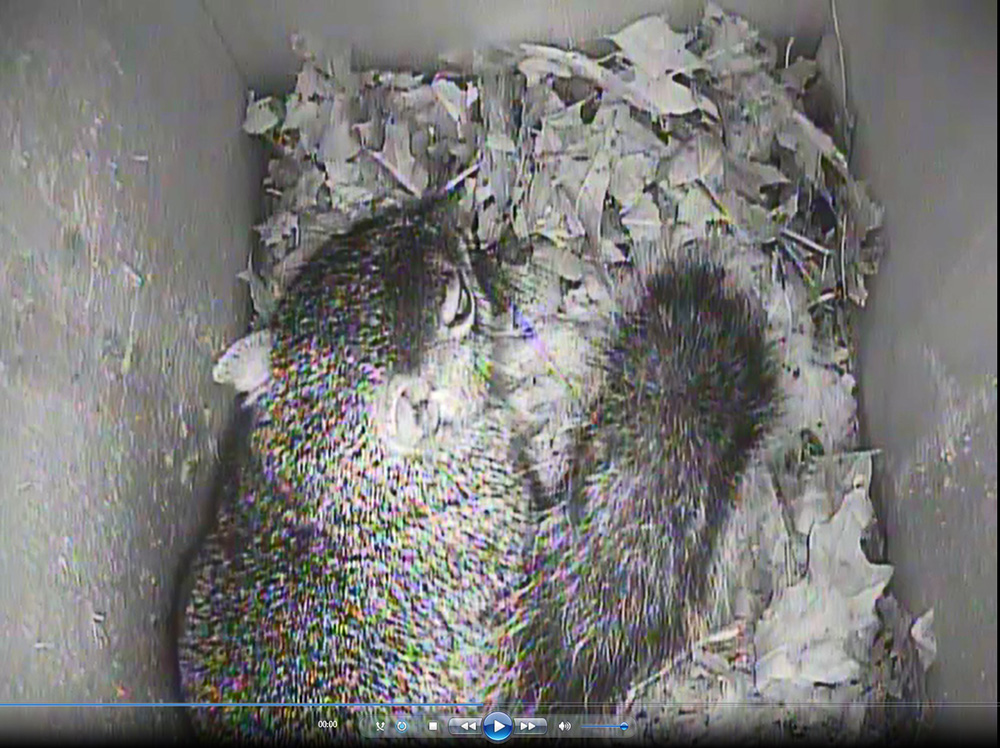
Even with the cuteness of two little rats curled up together, the view of them snoozing away in the nest box did not thrill us. So, after they vacated, we closed the box for a few days.

After we reopened the nest box for business, other rats, or maybe the same ones–they all look alike to me–have come and gone over these past few weeks. Fortunately, none hung around for any length of time. 

Then, it was the rat relatives who nosed in for some naps,
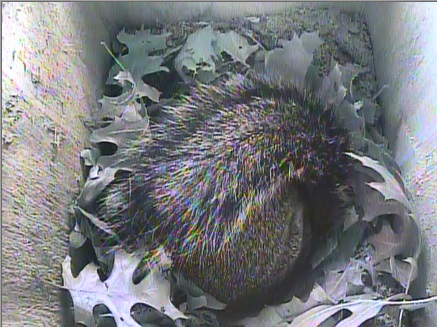
…and private time away from noisy neighborhood Blue Jays. 
For the last week, in the wee early morning hours, just at sunrise, I’ve witnessed an Eastern Screech Owl, Megascops asio swoop to the box for inspection. She’d perch at the entrance hole, sit a bit, then climb in for a look-see. Usually, she flew back to a neighbor’s tree to spend her day. Today, she climbed in and stayed in the box for the day.
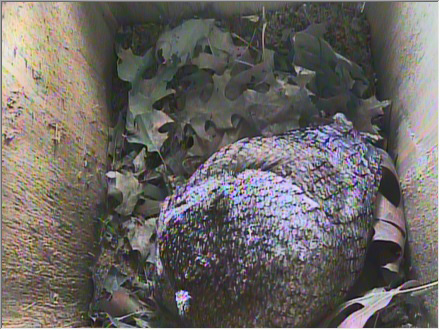
I’m not sure she’s thrilled with my oohing and aahing but she didn’t dart back into the box out of fear or annoyance, only lazily turned to look at me, squinting in the cheery afternoon sun. I’m glad she’s not threatened by my presence. 

I’m pretty sure this is the same female that we’ve hosted in the box for the last few years. She loves to be outside, perched in trees, even after the sunrise. I call her Uptown Girl. Her mate is Shy Guy and so far, I haven’t seen him. These two have successfully brooded chicks for the past two to three years. Last year, shortly before the eggs were to hatch, the nest box was raided, probably by a fox. After they abandoned our box, I discovered that they’d settled in a neighbor’s tree. I watched for several weeks and was rewarded by watching two fledglings learn to fly successfully under the careful tutelage of their parents. I hope they survived summer and have found their own territory and mates, ready to raise families.

It’s never a sure thing that the owls will stick around, or be safe. A juvenile Great Horned Owl has been in our neighborhood this winter and raccoons and foxes are always a danger to eggs and nestlings. I wish this female and her mate good things in their future. 
Winter Fat

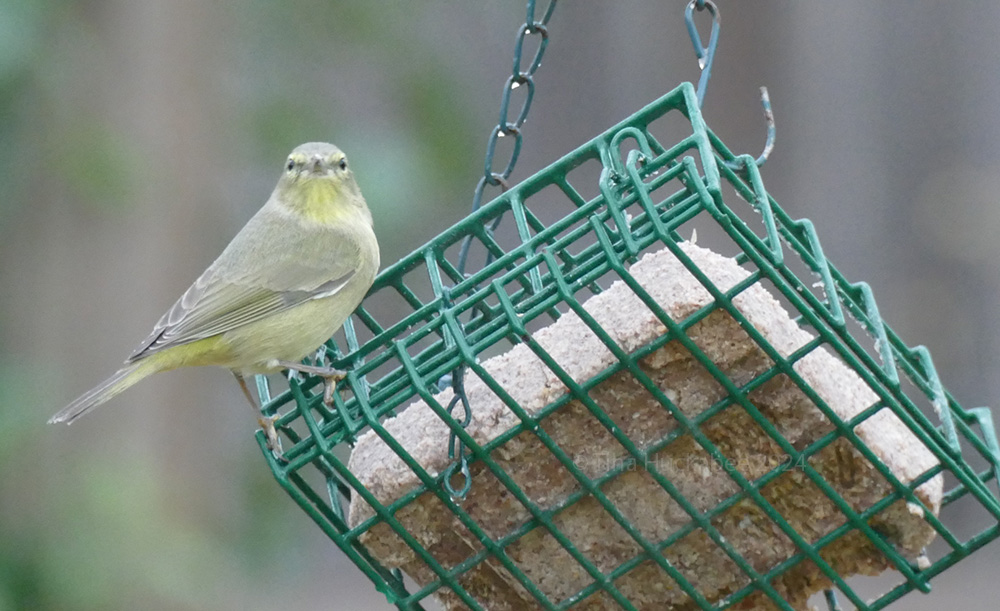
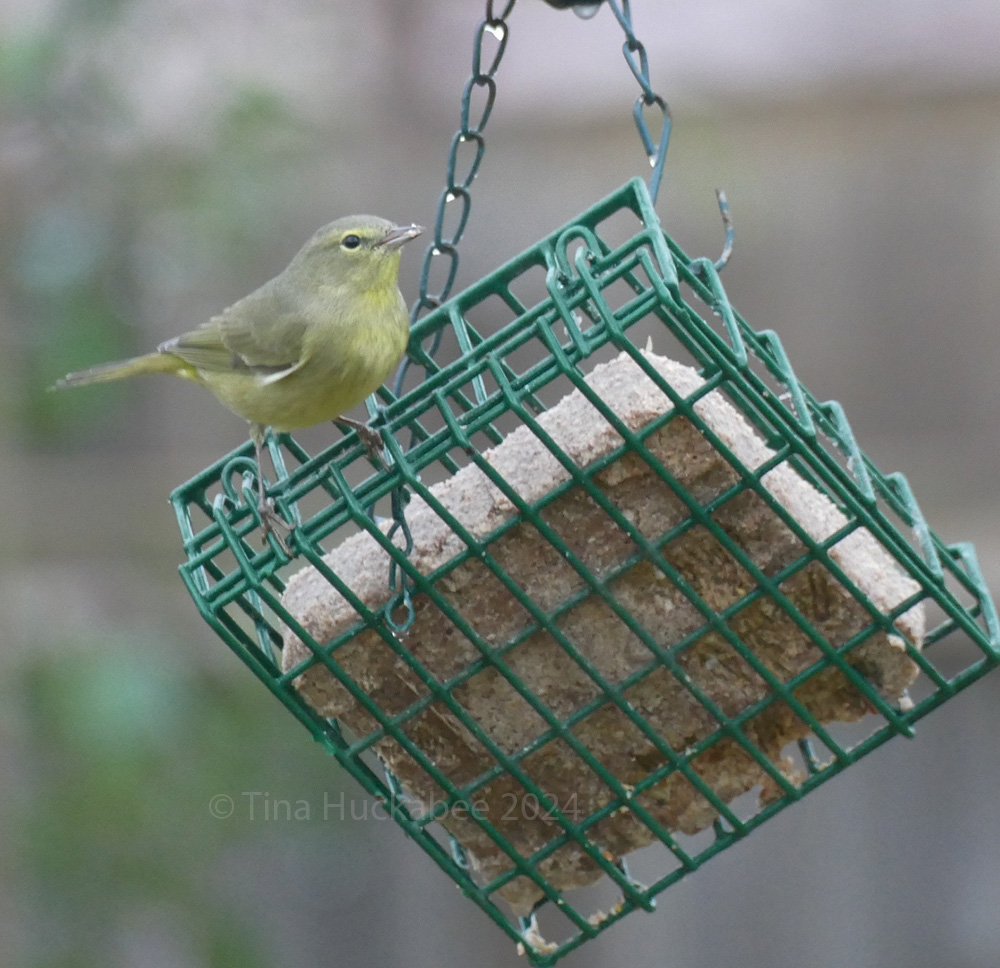
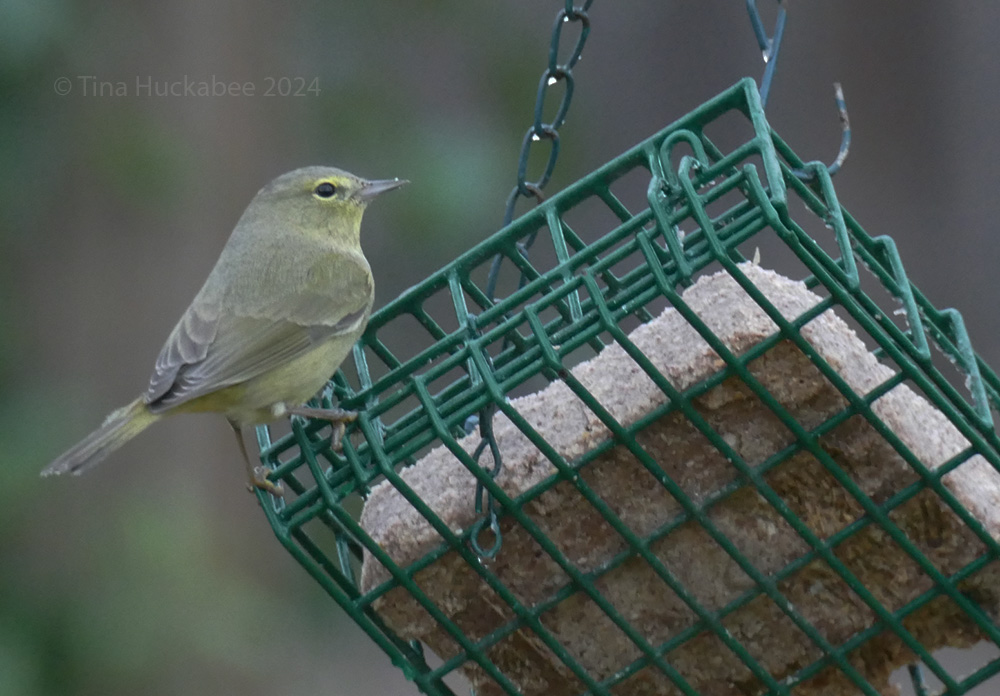
It’s suet season for the birds who visit my gardens. This over-wintering Orange-crowned Warbler, Leiothlypis celata, is a frequent nibbler of the peanut butter infused, commercial suet block.

I only offer suet in the cooler months of the year. Central Texas is far too warm from April/May until December, to set out suet. It melts in summer’s heat or turns rancid in balmy autumn; it becomes gross and the birds won’t touch it. Can you blame them? There are better alternatives for commercial bird food in those months: sunflower and safflower seeds, peanuts, and mixed varieties of seeds all give proper nourishment for birds, and while the birds are eating and jostling for the best perches, entertainment for humans. In winter, suet provides needed calories during cold temperatures, though black-oiled sunflower seeds and peanuts also supply healthy fat alternatives as well.

Using commercial bird seed in the yard is a wonderful way to observe, appreciate, and learn about our native and migrating birds. That said, native plants which have foliage, produce seeds and fruits, and host a variety of insects, are the best food sources for birds. Plants and birds evolved together over eons, and plants exist to feed and provide cover for critters. A garden full of native trees, shrubs, perennials, and annuals is not only beautiful, but more importantly, is alive with activity and life. Birds, pollinators, mammals, and reptiles seek food and shelter in a diverse ecosystem–no matter the size. Human caregivers of garden ecosystems can appreciate the garden’s beauty while enjoying the antics of those who need the garden to survive and thrive. A healthy, diverse garden community is vital for wildlife and a continual source of fun and learning throughout the year.

Winter is a good time to plan a new garden. Removing some (or all!) of your sterile, water-hogging, high maintenance turf, and replacing it with native plants is the way to bring nature home: to provide a safe place for wildlife displaced through urban encroachment, habitat loss, and improper chemical use.

So far this winter, the Orange-crowned Warbler is the only winter migratory visitor at the suet. I haven’t yet witnessed suet snacking from Yellow-rumped Warblers or Ruby-crowned Kinglets, though I fully expect to. Some resident birds, Carolina Wrens and Black-crested Titmice, have made a stop at the suet feeder part of their daily rounds and are suet buddies with the Orange-crowns. 

In my garden this winter, I’ve observed two Orange-crowned warblers, as well as one Yellow-rumped Warbler and one Ruby-crowned Kinglet. These three species are not native to Texas, but migrate south for the winter months; there are usually a few of each in my gardens from November through April. I enjoy their presence in the garden and having feeders allows me to observe them more easily. These flitty, tiny birds are challenging to observe in trees and shrubs! Once all the foliage from the trees has dropped, the birds are easier to see as they bop about the limbs, eating insects, and chasing one another in duels for the best eating spots.

This female noshes at the suet and peanut feeders several times each day. I buy my suet from Wild Birds Unlimited, but many bird fans make their own suet and there are plenty of recipes on the internet. 

Winter is a great time to bird watch and plan for the next garden season. Gardening with, or simply observing native plants is a small but powerful counter in a world where we as individuals have little control or positive influence. Spending time outdoors, listening to bird and insect song, creating and nurturing life and diversity with a native garden is a balm for an often broken world and a positive step toward a more hopeful future.