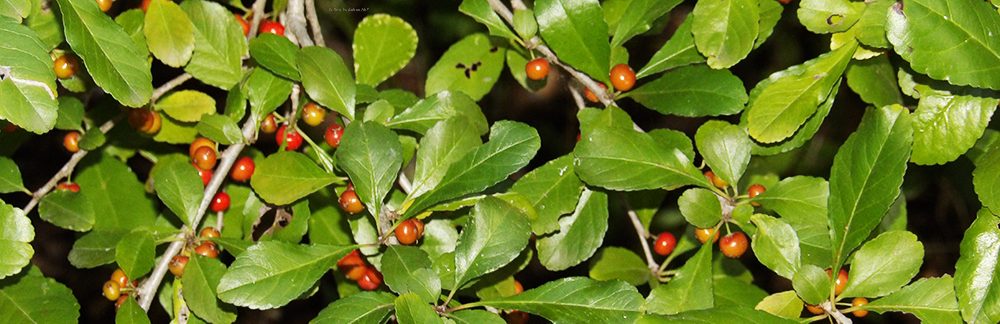
As of mid December, my garden has experienced only the slightest touch of a light freeze, so some plants are still blooming, especially those plants which hug close to the ground. The late season availability of flowers makes for happy, busy pollinators during sunny days.
The autumn blooming ground-cover, Gregg’s Mistflower, Conoclinium greggii, is a favorite of many pollinators, big and small. This native-to-Texas perennial boasts bright green foliage and vibrant flowers with a fuzzy structure that pollinators adore.
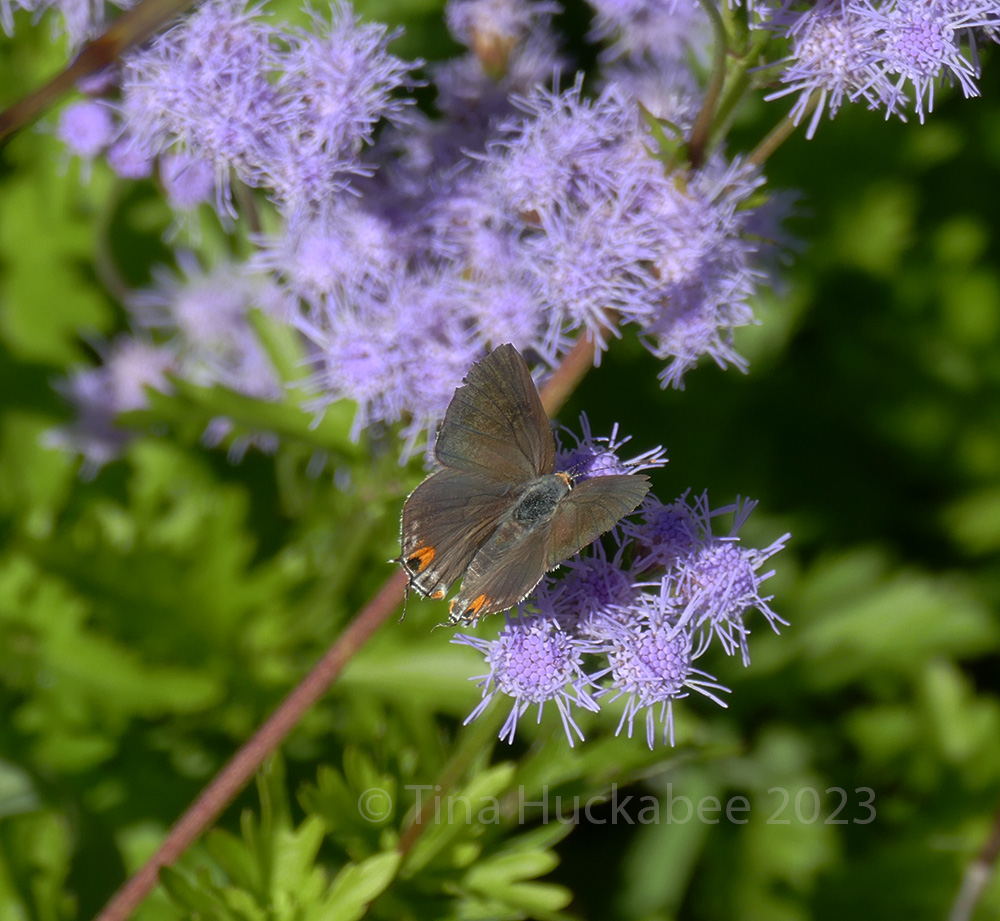
I’ve seen many a Grey Hairstreak, Strymon melinus, nectaring on the mistflowers. This is one of its kind visiting, wings spread wide, proboscis deep in the bloom.

Another common pollinator of the popular aster are Fiery Kippers, Hylephila phyleus. I particularly like the orange and brown of the skipper paired with the bloom’s rich lavender color.

An American Hoverfly, Eupeodes americanus, can’t resist the bounty of the mistflower. I’ve seen other flies pollinating, but catching them in action proves elusive on breezy days. This yellow-n-black stripey fella cooperated with the photo session.

As always in my garden, the honeybees are active. If there’s a flower available for sipping, honeybees are all-in.

Yellow is a color of autumn and this Little Yellow, Pyrisitia lisa, is one of several who’ve worked the patch of mistflower for the past few weeks.

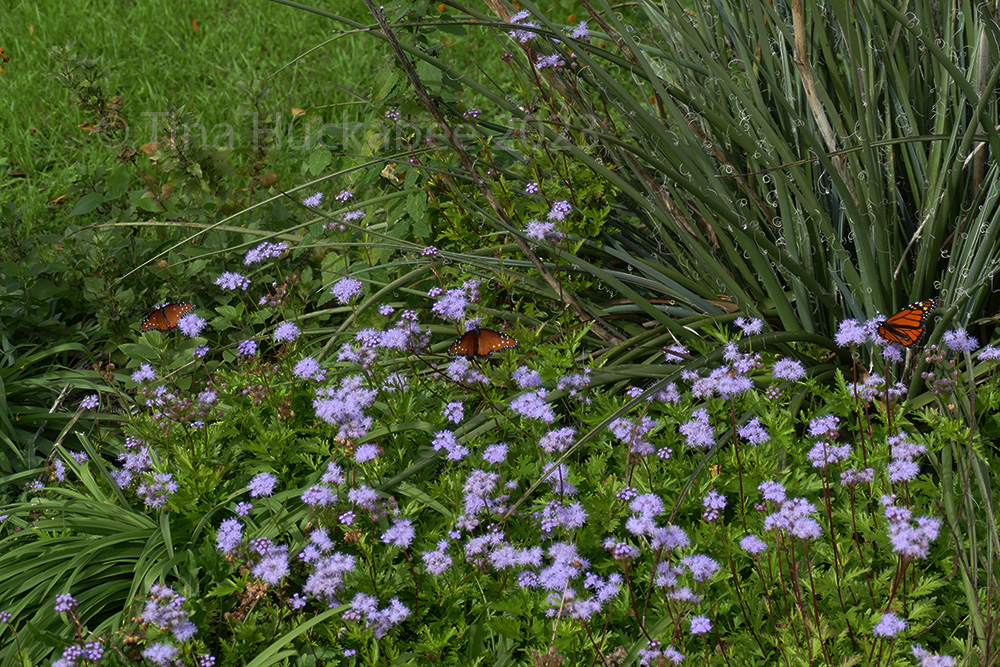
The Queen rules the mistflower. Queen butterflies, Danaus gilippus, are regulars in my garden. During autumn and until the first hard freeze, they’re particularly fond of Gregg’s Mistflower; Queens are some of its most loyal customers. This male Queen, along with several others of both genders, flit to the mistflower once the sun is shining on the blooms.

Male Queens and Monarchs have two black dots on their hindwings, located on either side of their abdomen. The black dots emit pheromones to attract the females. And they look cool, too!
Another queenly view…

Weirdly, Monarchs, Danaus plexippus, are still migrating through Central Texas on their way to their Northern Mexico wintering homes. I don’t recall seeing monarchs this late in fall, but I’m happy that there’s plenty for them to nectar from.

Tres mariposas, three butterflies–all in a row! Two Queens (left and center) and one Monarch, far right. Did I mention that these butterflies love Gregg’s Mistflower? Often there are even more individuals snacking at the patch of flowers.
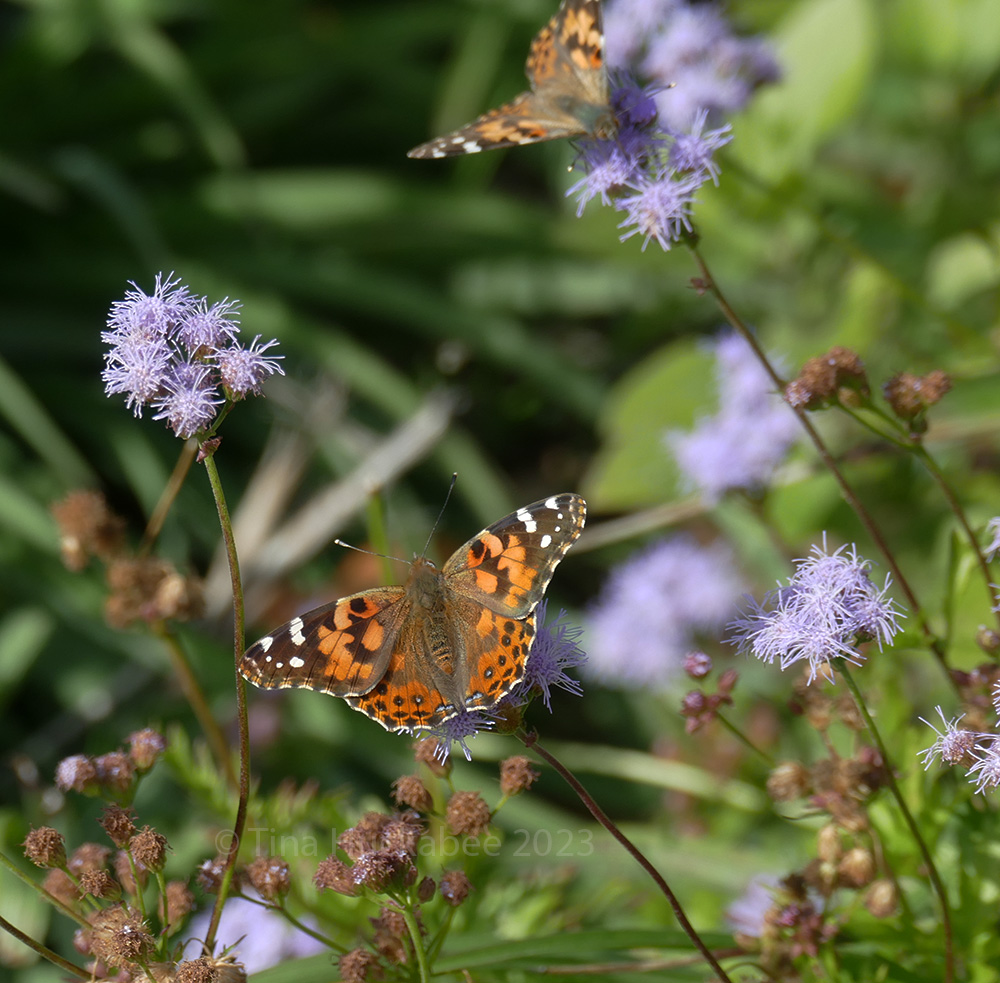
More admiring fans of mistflower are Painted Lady butterflies, Vanessa cardui. The ones visiting my mistflower have been skittish, but I finally caught a couple of photos demonstrating their enjoyment of the flowers–and their beauty.
These are but a few of the pollinators working this popular flower during the zenith of its bloom season. Not shown, but definitely groupies of Gregg’s Mistflower, are multitudes of tiny native bees (which never seem to perch and pollinate, but must do?) and other too-quick-to-catch-with-the-camera butterflies. This lovely plant will bloom and provide for pollinators until a hard freeze renders it dead for the season. Fuzzy blooms then turn a warm toasty color and over time, mistflower fluff drifts with the breezes.
In a few month’s time and with spring’s warmth, new growth will emerge from the soil, signature puffy flowers will appear in clusters, and pollinators will return.
 My Gardener Says...
I have also have lots of butterflies. It seems late for them to be here, especially with the cold spells we had.
LikeLike
It’s been chilly here, but only one light freeze. That monarchs are still here is odd; I’ve never seen them here so late. I don’t know if they got a late start because of the hot early fall. I hope they make it to Mexico before we’re really cold. Maybe we won’t have much hard freezing this year; that would be just fine with me!
LikeLiked by 1 person
Austin’s enjoying a December bonanza, all right, of both blooms and butterflies, as well as the other kinds of insects you’ve highlighted. The various species of mistflowers are insect magnets; perhaps they all contain the same chemicals that draw pollinators.
It’s good that you caught tres mariposas in a lineup and could identify all the culprits.
LikeLike
I’m hoping for a mild winter this year. It’s been a very nice December, so far. Mistflowers really are such good pollinator plants. I have one other, the Blue Mistflower, Conoclinium coelestinum. I love the deeper blue color, but it’s not quite the draw for pollinators as the Gregg’s.
LikeLike
Let’s hope nature gives us a February like the one in 2022, with no power loss, rather than the horrid Februaries before and after that left us in the cold with no power for days.
LikeLiked by 1 person
Definitely seems to be the favorite item on the menu! How delightful to see so many butterflies this late in the season. I’m rather envious! 🙂
LikeLike
It’s a pollinator powerhouse plant, to be sure. It’s been a cool late autumn with some rain, so just about perfect!
LikeLiked by 1 person
You’re a popular hostess for some beautiful friends. I’m sure they love the meals!
LikeLike
I hope they enjoy, I certainly love to see them in the garden.
LikeLike
It took me a while to sort this one out. Finally, I found that’s it native in western parts of the state, and BONAP calls it Conoclinium dissectum. At least now I know that what I see everywhere is C. coelestinum. I was surprised to read that blue mistflower’s not as attractive to pollinators; every time I find it, it’s covered with a variety of bees, flies, and such. On the other hand, I don’t recall having any photos of it with butterflies; maybe that’s the difference.
The butterflies still are abundant here. Last weekend I found painted ladies, red admirals, and a whole variety of little yellow flitty ones. There still are some Gulf fritillaries, too. It looks like we’re going to stay warm and wet through Christmas, and the long-term’s for average to above-average temperatures. I’ll take it!
LikeLike
The blue definitely attracts pollinators, including monarchs when they come through. It just doesn’t seem to have as many, or near the variety of pollinators. It’s been a good autumn for the butterflies; making up for the hellish summer, I suppose.
I’m hoping for a mild, wet winter, we really need that. Fingers-crossed.
LikeLiked by 1 person
How wonderful to have butterflies, and other pollinators, in December! If I lived in Texas, I would definitely plant Gregg’s Mistflower. I do have Blue Mistflower (C. coelestinum) in my garden, and the pollinators love it. Thanks for sharing the beauty! Happy Holidays!
LikeLike
The blue mistflower has a much wider range than the Gregg’s. I have both and used to have a white, shrubby mistflower, but no longer. All of the mistflowers are great pollinator plants. Happy Holidays to you, too, Beth!
LikeLike
Love your butterflies Tina. I removed mistflower years ago because it seemed to spread around. Seems time to add it back. The photos are beautiful. Unusual view of the Grey Hairstreak, very cool. Happy New Year!
LikeLike