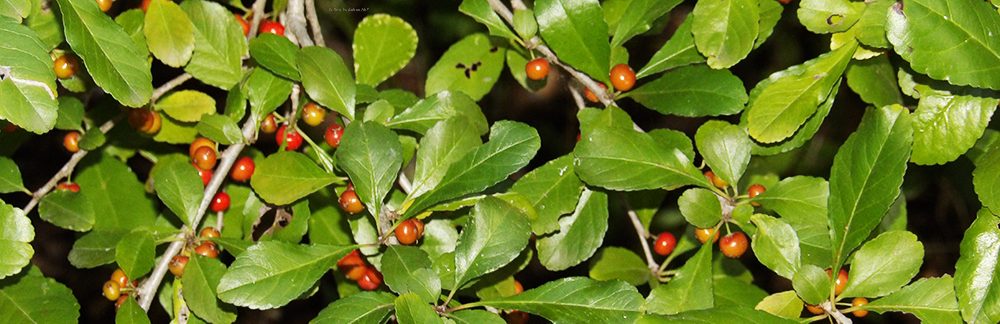
There’s yellow,
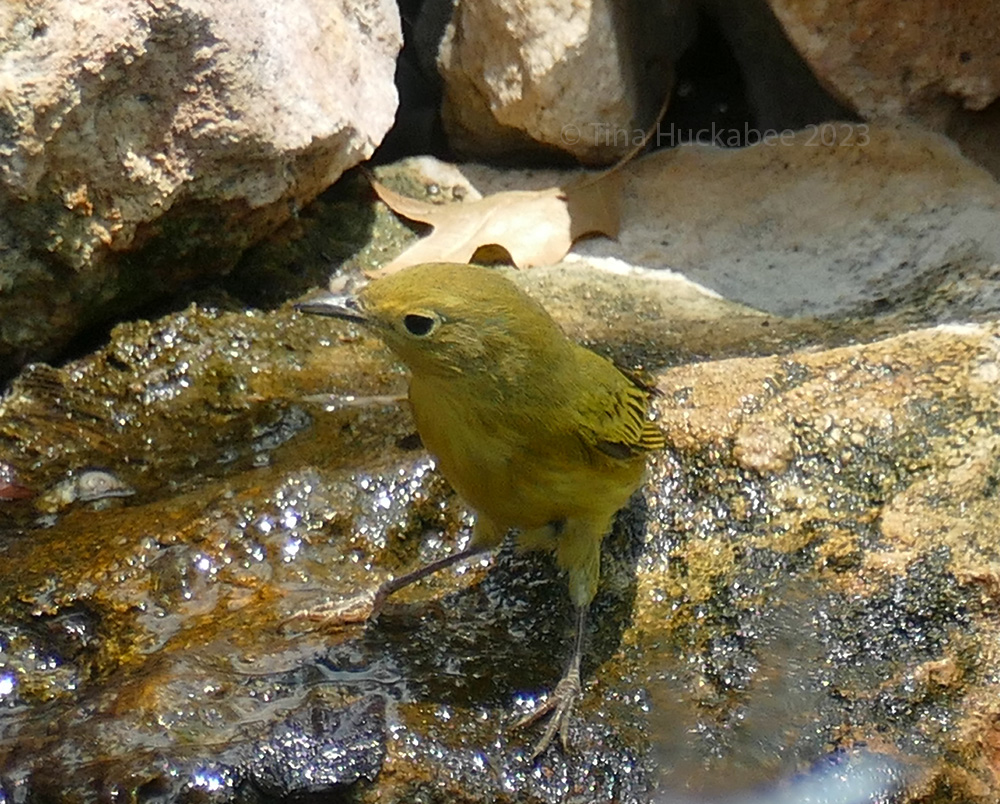
…and then there’s yellow!
Autumn migration is in full swing! Year in and year out, a most dependable visitor to my gardens during both spring and autumn migrations are the eponymous Yellow Warbler, Setophaga petechia. Flitty, flighty birds, these little darlings are a treat to see. I nearly always have birds of both genders stop in for a time; sometime they come as couples, often, they visit separately.
A female Yellow Warbler bopped around the Rough-leaf Dogwood, Cornus drummondii, growing near the pond. I planted this small native tree in this particular spot to give both resident and migratory birds a quick hiding place up and away from the pond. It also offers creamy fall fruits for noshing, if that’s on a bird’s menu.

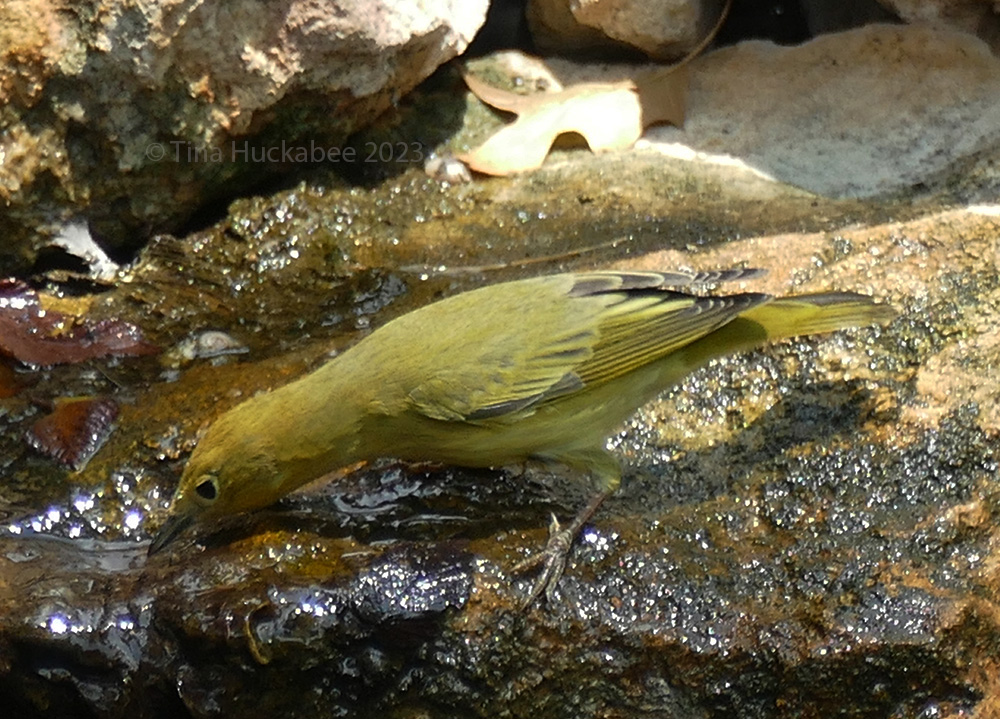
Ms. Yellow used the foliage wisely, cautiously peeking out before her forays to the pond.
There are plenty of spots for tired, hot, thirsty birds to settle in for a drink and a fluttery bath.
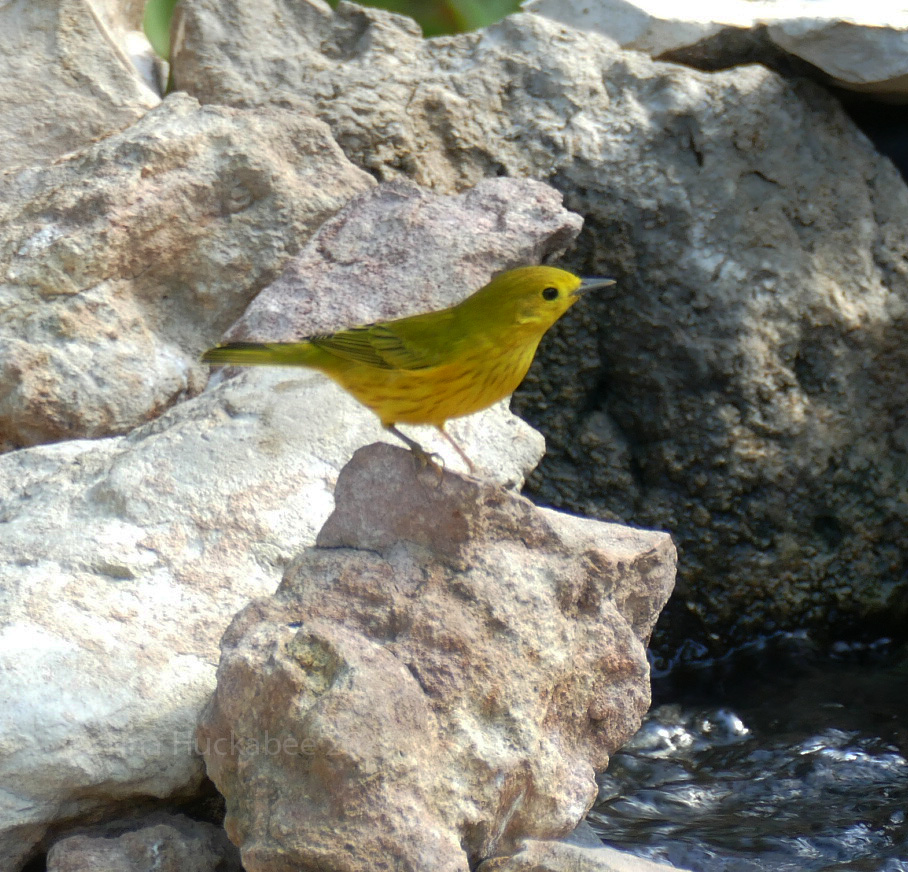
Later, her mate, or maybe a random Yellow dude on the same travel path, came by to check out the water feature.

In the avian world, the male birds are nearly always brighter and more colorful than their female partners. The Yellow Warbler male also rocks rusty streaking on its chest which the females lack.

The Yellow Warblers are heading to Central America and parts of South America, along with millions of other birds. They have treacherous travels ahead before they land in their wintering quarters. My garden, especially the pond, provides safety and respite for the stalwart wanderers and the maintenance of a wildlife habitat is a responsibility I’ve wholeheartedly accepted. Wildlife-friendly gardens are necessary in a world where buildings, roads, sterile lawns, and all manner of urbanization has damaged and reduced the natural world.
 My Gardener Says...
I’m glad you’re part of the wildlife promoting team, Tina! These beautiful songbirds have so many challenges, I’m happy they find an oasis in your yard.
LikeLike
You’re also part of the team, Eliza! Hopefully, others will follow.
LikeLiked by 1 person
👍🏼
LikeLiked by 1 person
I also love these beautiful, cheerful warblers, Tina. On their behalf, thank you for welcoming them with plants and water and for trying to make up for all the bad things we are doing to their natural habitats.
LikeLike
I feel like it’s a responsibility and fortunately, I have some space for a garden. I just wish more of my neighbors would take up the trowel, get rid of grass, plant some native, wildlife friendly plants.
LikeLiked by 1 person
Let’s hope some more will see the light!
LikeLiked by 1 person
We can say you’re a sort of warbler, too, singing the praises of these migratory birds, as well as providing a way station for them.
LikeLike
That’s me, warbling away!
LikeLike
What super images, all warblers can be pretty quick and flighty so you did well (guess you stake out the pond hoping for one to drop down?).
LikeLike
Thank you! They are hard to get, but the male cooperated! 🙂 I have a spot, just outside of my screened patio that has a good view of the pond and the tree. This time of year, with the garden all grown in, it’s harder to see the little scamps; during spring, they’re easier to spot–but not any slower!
LikeLiked by 1 person
It is lovely to see these birds in your garden. Summer is approaching in South Africa now and we have several yellow birds in breeding plumage.
LikeLike
Thank you, Anne–I’m always excited to see the migratory birds in the garden, even though their visits are all too brief. You’re now heading into your wildlife busy time of year, enjoy the watching!
LikeLiked by 1 person
So far I have only seen Hummingbirds. I have four or five fighting over feeders and flowers.
LikeLike
Yes, the hummingbird wars are in full swing!
LikeLiked by 1 person
Stunning bird! I’ll have to pay closer attention to the birds flying around. They’ve enjoyed when we’ve had the hose on to water this summer.
LikeLike
They’re real beauties and the males a super, duper yellow!
LikeLike
I thought of you today when I was at the post office and noticed a display of new stamps; it included the Golden-cheeked Warbler. Your bits of yellow are so pretty. I wondered if they could be found in our area, and Houston Audubon says yes, especially in September. They also said to look for them in moist woodlands; that’s a bit of a problem. First I’ll have to find a moist woodland!
LikeLike
I’ve heard a Golden-cheeked Warbler, never have seen one! I need new stamps, I’ll check those out! They’ll be migrating, so I’d imagine you’d see quite a few different birds, if only for a very quick look! I saw a Wilson’s Warbler two evenings ago, but it was gone before I could get the camera ready–drat!
LikeLiked by 1 person
Beautiful Pictures.
Nice to discover your blog.
janice.
LikeLike
Thank you and welcome, Janicce!
LikeLike