Bee Bed-n-Breakfast

I guess the adage if you build it, they will come, is true, or at the very least when building insect hotels, the saying suggests some level of accuracy.  For February’s Wildlife Wednesday, I wrote about our building and placing of two insect/bee hotels in the garden.  While building these things isn’t necessary to provide homes and nesting spots for bees and other insects, they are fun, quirky additions to a garden and  they lend some architectural gravitas to a wildlife habitat.

So far, the houses/hotels have been a big hit with some of the native bees!
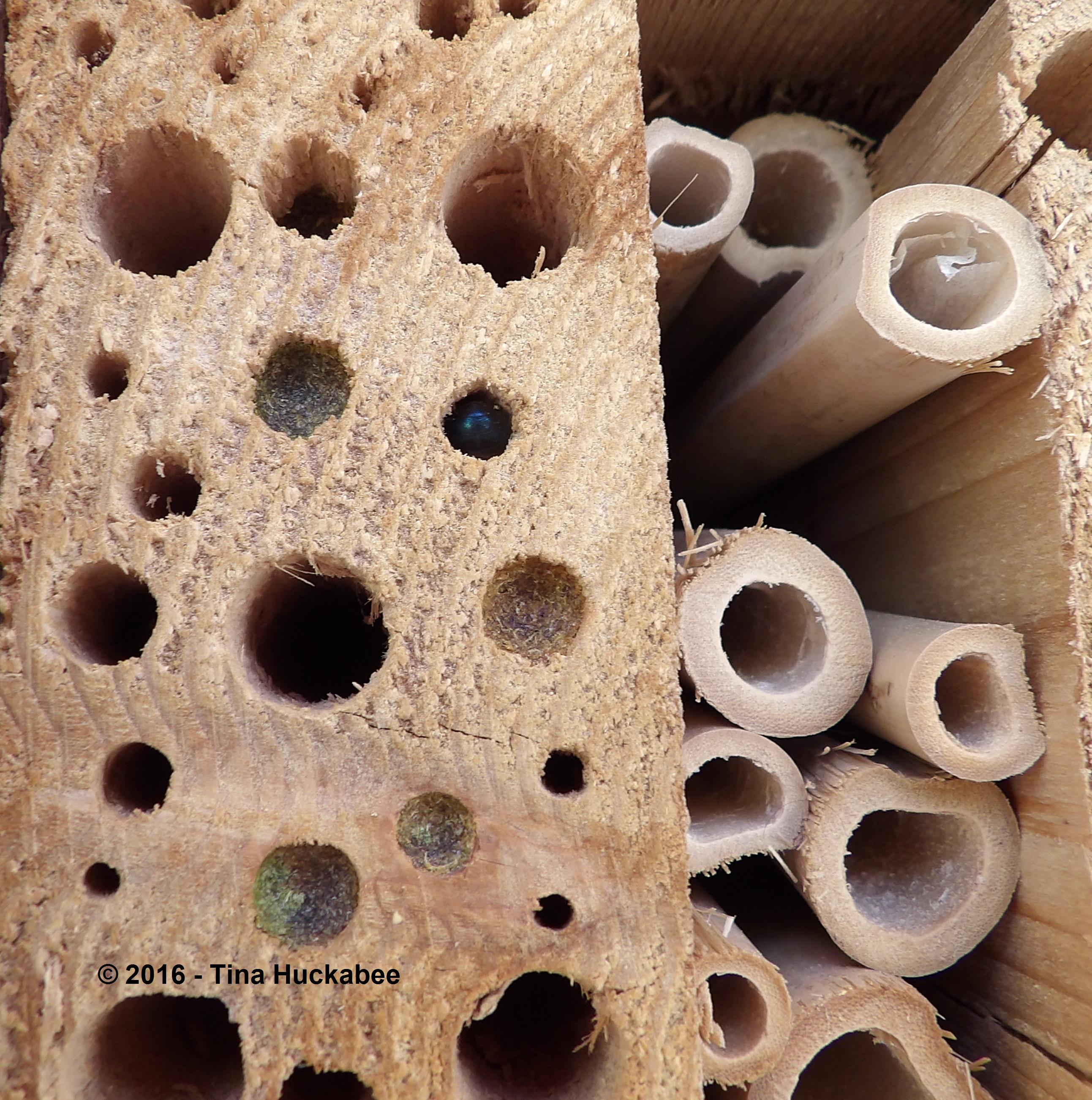
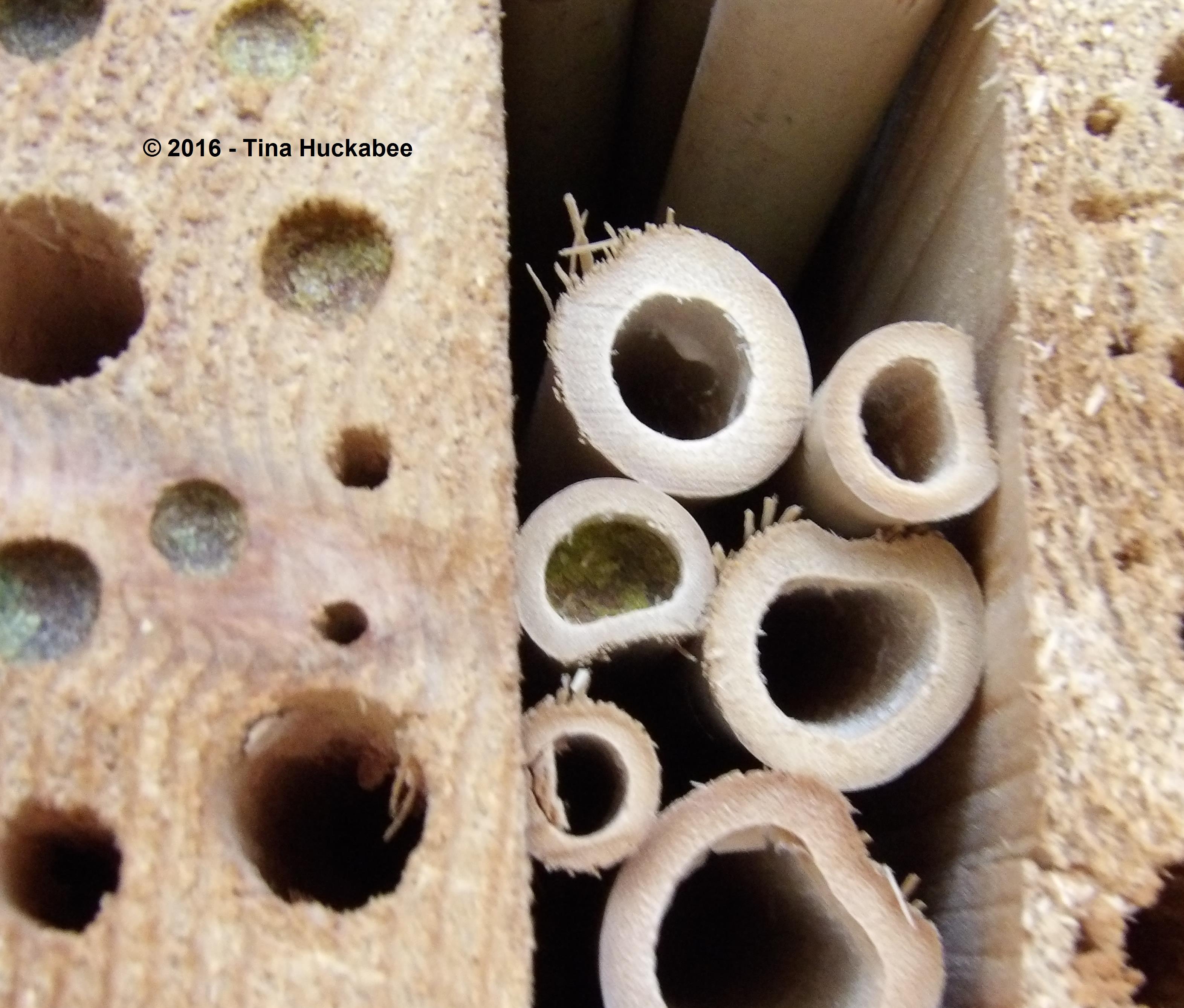
Some of the bee holes are filled providing protection and nourishment for the larvae.

Some of the bee holes are filled providing protection and nourishment for the larvae.

Specifically, one set of native bee species, the Blueberry bee, Osmia ribifloris, has really taken a shine to the new housing available in the neighborhood. [Upon further reading, I believe that this bee is the Blue Orchard BeeOsmia lignaria.  Both of these bee species are categorized as mason bees and the USDA article (linked above) describes the early spring behavior that exactly matches the behavior of “my” little bees.  Regardless, the bees are  valuable and desirable pollinators to attract to the home garden.  And, they’re really cute and interesting to observe.]
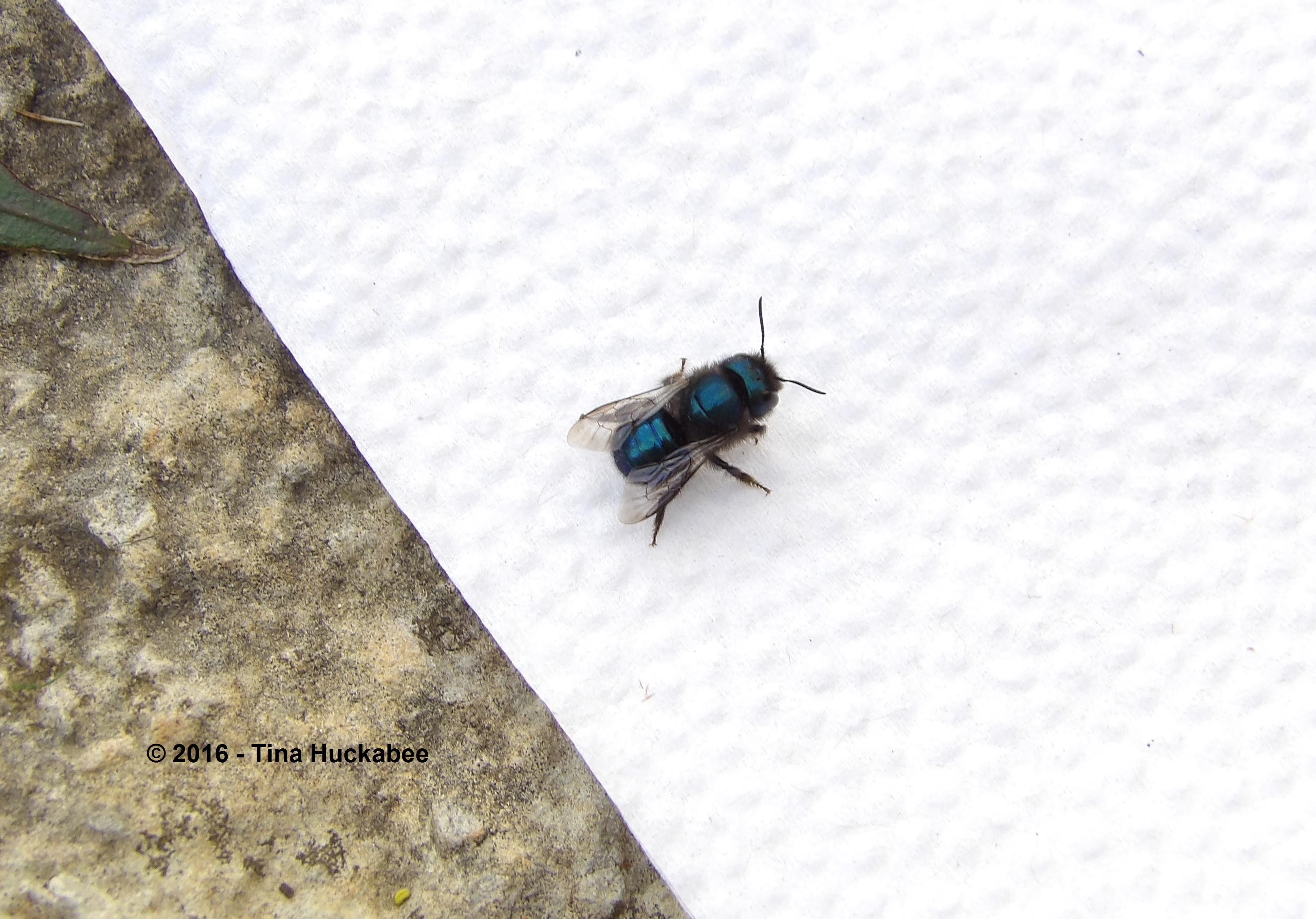
Wayward Osmia ribifloris rescued from my kitchen.

Wayward Osmia ribifloris rescued from my kitchen.

I should add that the identification of this bee species is subject to update–if you recognize this beauty and I didn’t identify the bee correctly–please let me know.  The O. ribifloris O. lignaria is a mason bee and judging from the holes in masonry of my back patio, I see why this species is categorized thus!
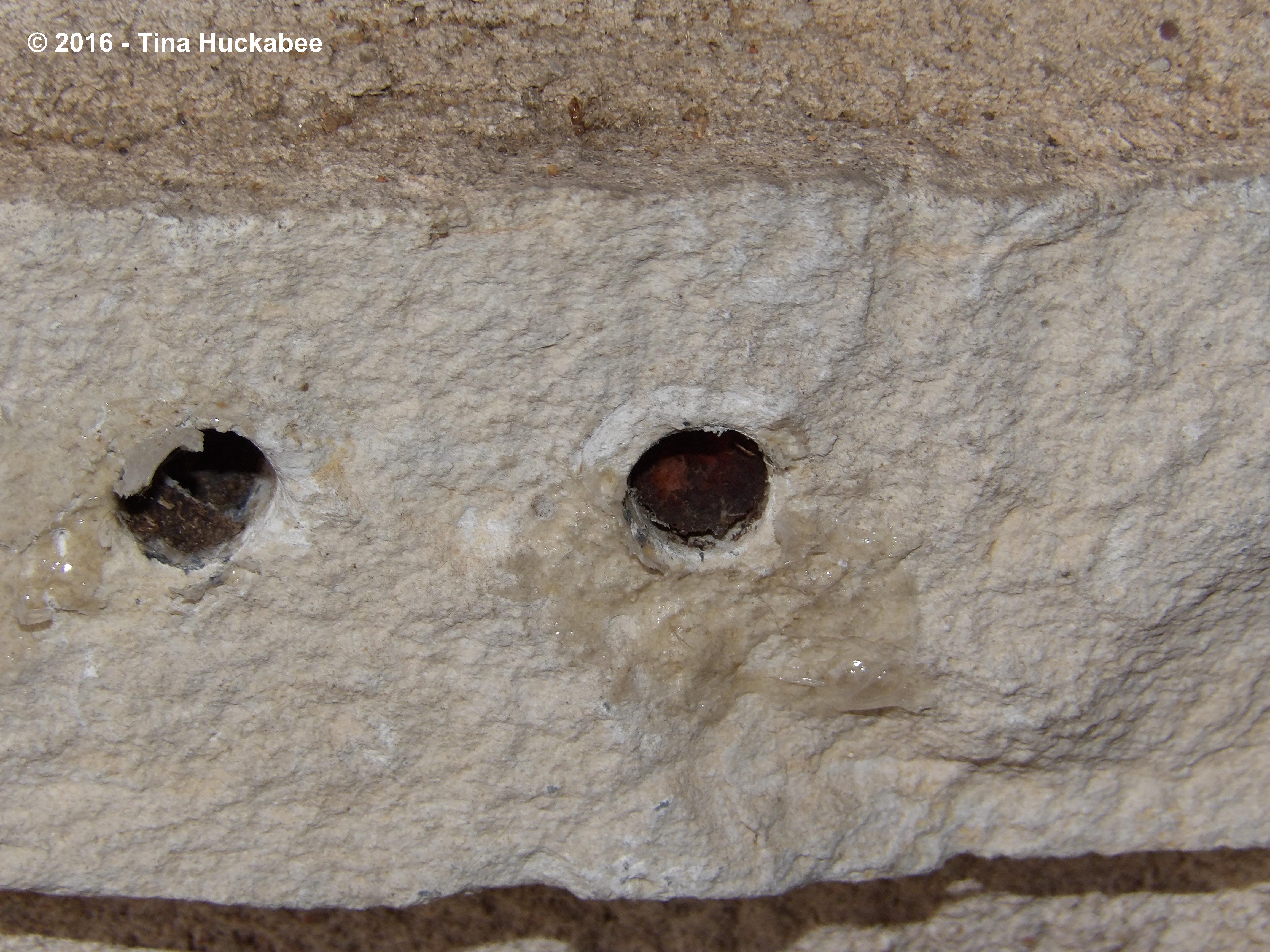
IMGP4037.new

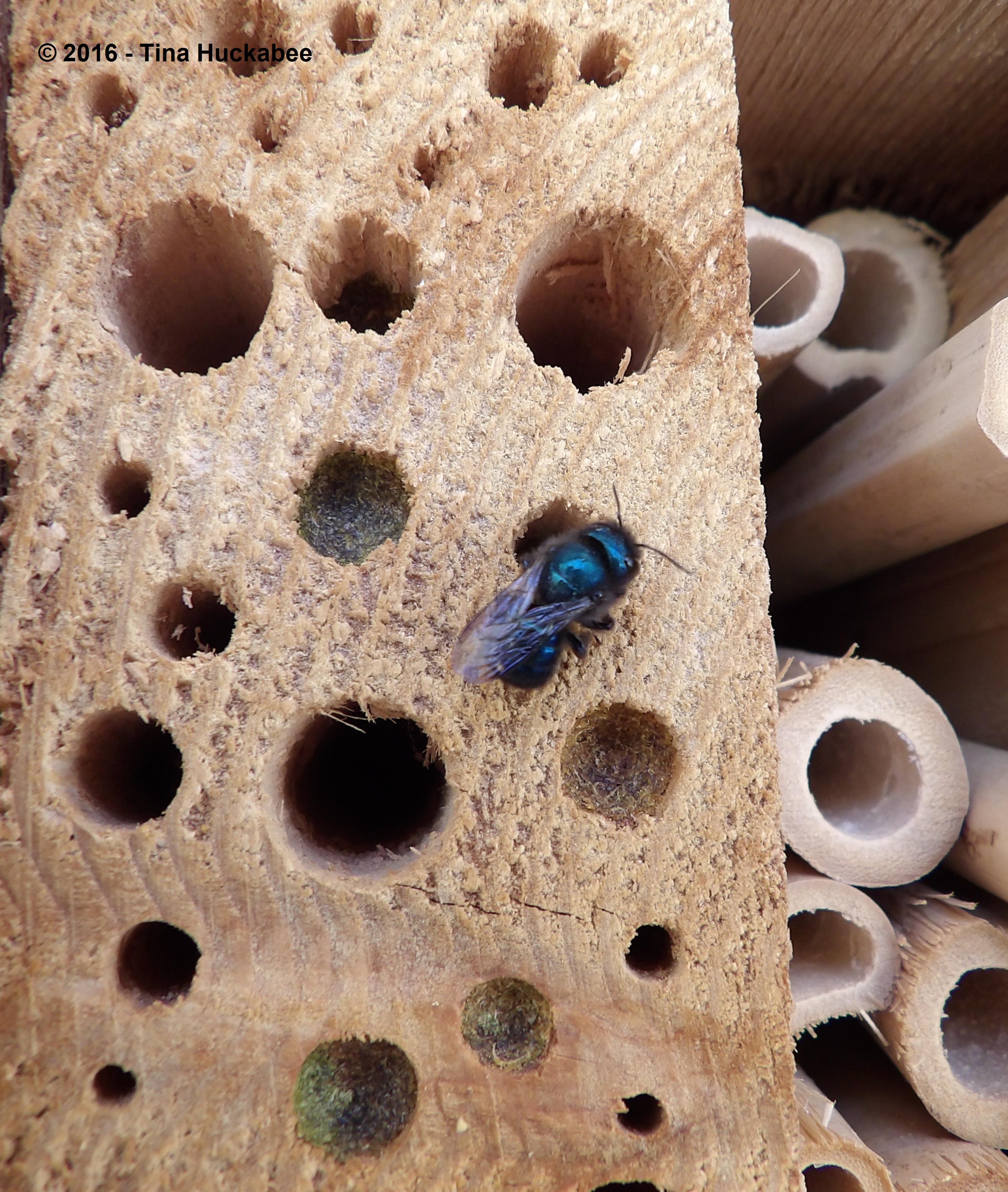
Osmia ribifloris searching for just the right hole for her nest.

Osmia ribifloris searching for just the right hole for her nest.

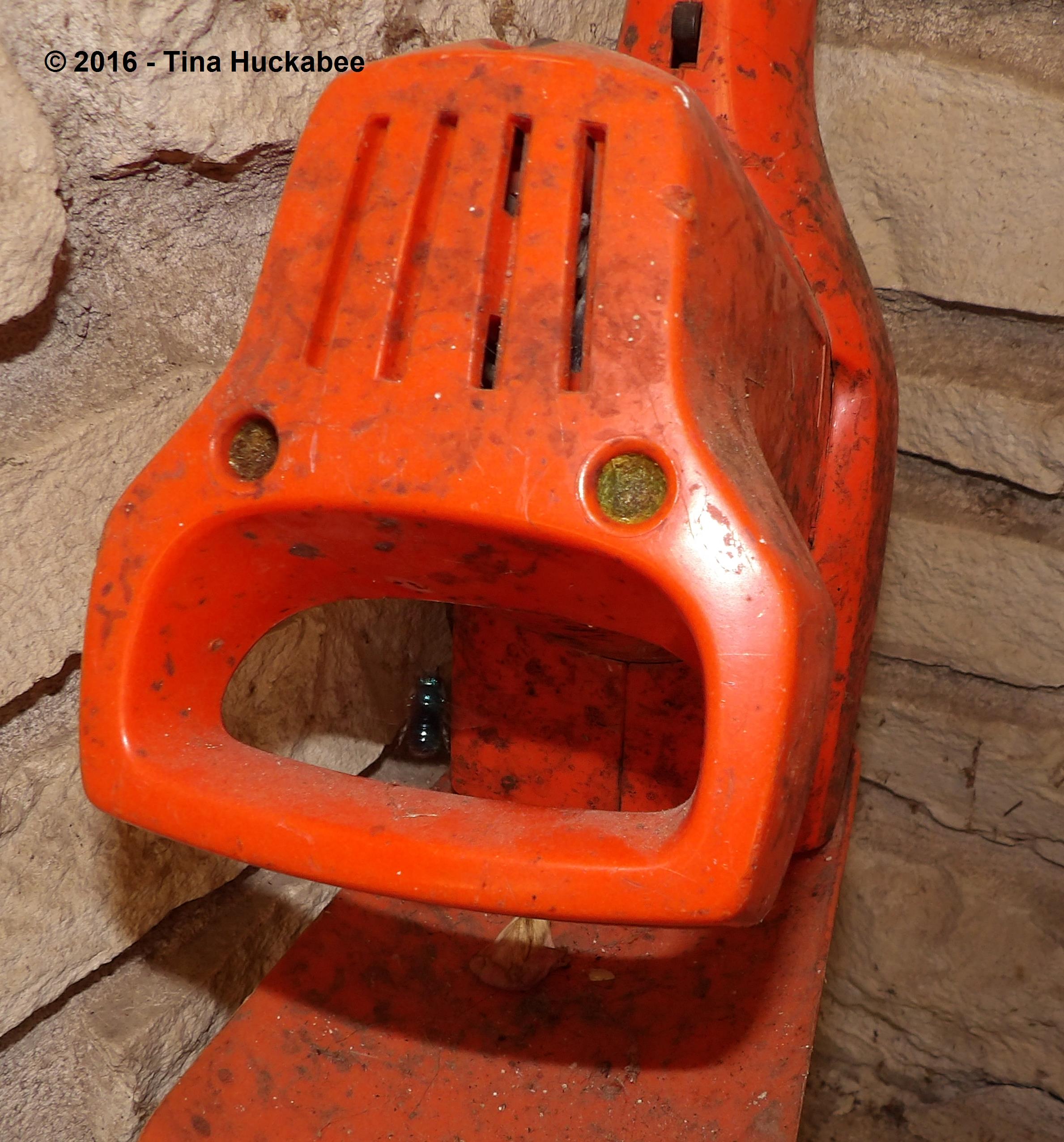
Additionally, these bees also build their nests in the screw holes of my two electric leaf blowers and an electric trimmer that I failed to store in the garage prior to the bees deciding that it’s time to raise up their families.

IMGP4827_cropped_3148x2576..new

Osmia ribifloris searching for another nesting site.

Osmia ribifloris searching for another nesting site.

That’s what I mean when I suggest that insect hotels aren’t required–bees are quite opportunistic and imaginative when finding cozy spots for their progeny. Regardless, the bee hotels are charming and I’m tickled that the bees are using them for their nesting/nursery bed-n-breakfast hotels.  Several O. ribifloris have busily laid eggs and safely tucked in those eggs and future larvae.

IMGP4901_cropped_2138x2489..new

IMGP4902_cropped_2830x2502..new

Fascinating to observe, it takes an individual bee a couple of hours to pack the hole with pollen and soil.  In my attempts to photograph the bee action, I stood for periods of time, camera at the ready, watching one, or more, bees at work. Each bee flies into her chosen hole and disappears for upwards of 5 or 6 minutes. Then each zooms out and off again, disappearing for 5-10 minutes while foraging for more nest-building stuff before returning to the hole.  The process repeats until the holes are filled almost to the rim.

As the hole fills up with packing material, the bee is visible at the mouth of the hole, working and wiggling her bee magic so the bee babies are well-nurtured as they develop.

IMGP4947_cropped_3018x2539..new

What native bees use as “packing material” varies, but it usually includes pollen (often from specific plants), soil/mud, and sometimes leaf material.  Ever had perfect little holes taken out of rose leaves?  There’s no doubt that was the work of some leafcutter bee variety as she was building her nest.
IMGP4826_cropped_2632x3111..new

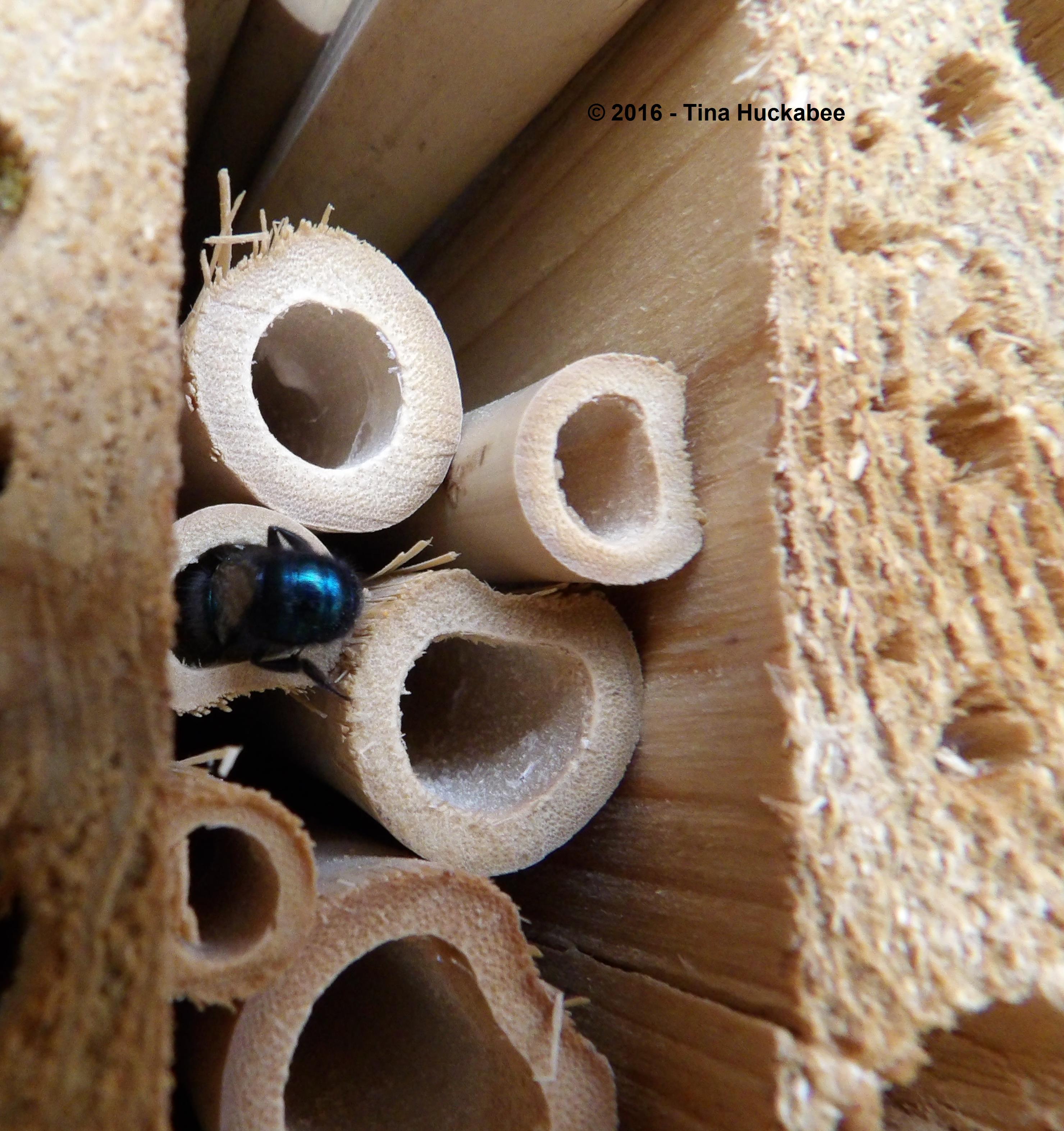
Not only have the O. ribifloris bees filled the drilled holes, but they’ve utilize the cut bamboo pieces for their nests.IMGP4953_cropped_2959x3144..new
IMGP4963_cropped_3511x2558..new

The bamboo hole was filled in one afternoon by the industrious bee.

The bamboo hole was filled in one afternoon by the industrious bee.

Since taking these photos, other holes have been filled, but really, how many pollen filled-hole photos do you want to see?

My original plan for the insect hotel  was to stack them, one on top of the other in a shady corner of my garden.

But after the squirrels (I always blame garden mischief on the squirrels) knocked them over–several times–it became obvious that a plan B was in order.  I hung the smaller of the two on a pillar of the back patio,

IMGP5147_cropped_3650x3323..new

…and affixed the larger of the two on the fence.  Because the fence-placed bee house wasn’t getting any bee action, and was difficult to get close-up photos of without tromping all over plants and soil, and was soaked during heavy rain, I’ve recently moved it closer to the back patio and in a more protected area.

IMGP5146.new

This is also a spot where I can more easily observe the comings and goings of bees without crushing emerging, or emerged, plants–or tripping over rocks.   So far, for whatever unknown reason, I still haven’t seen any bees nesting in that house.

Oddly enough and for now, these O. ribifloris are the only species choosing to nest in the insect hotels, but I don’t think I’ve seen them  working any of the many blooms that are currently available in the garden.  Perhaps I’m not out in bee-watching mode at the time they’re working flowers, but it is curious that they aren’t bees I typically see in my garden.   I haven’t followed any back into the garden while observing their nest-building because I’ve been too focused (more like too distracted) on checking photos I’ve taken of their work in and on the nests.  Not following one of these intrepid bees was probably a missed opportunity.

Nonetheless, I’m pleased that native bees of several sorts are plentiful in the garden this spring, busy at their flowering work.
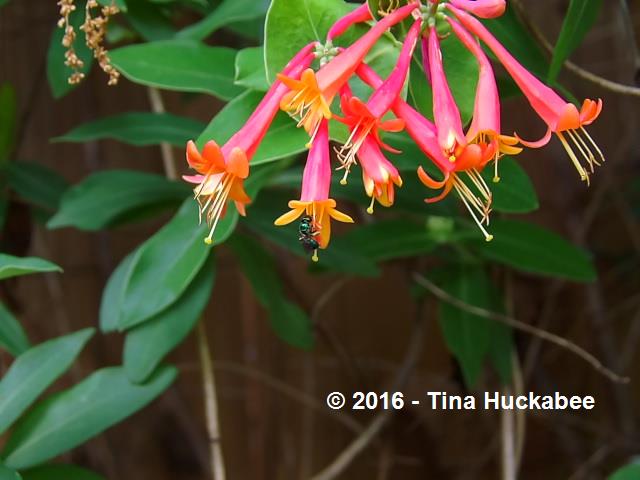
Sweat Bee (Augochloropsis metallica) at a Coral Honeysuckle bloom.
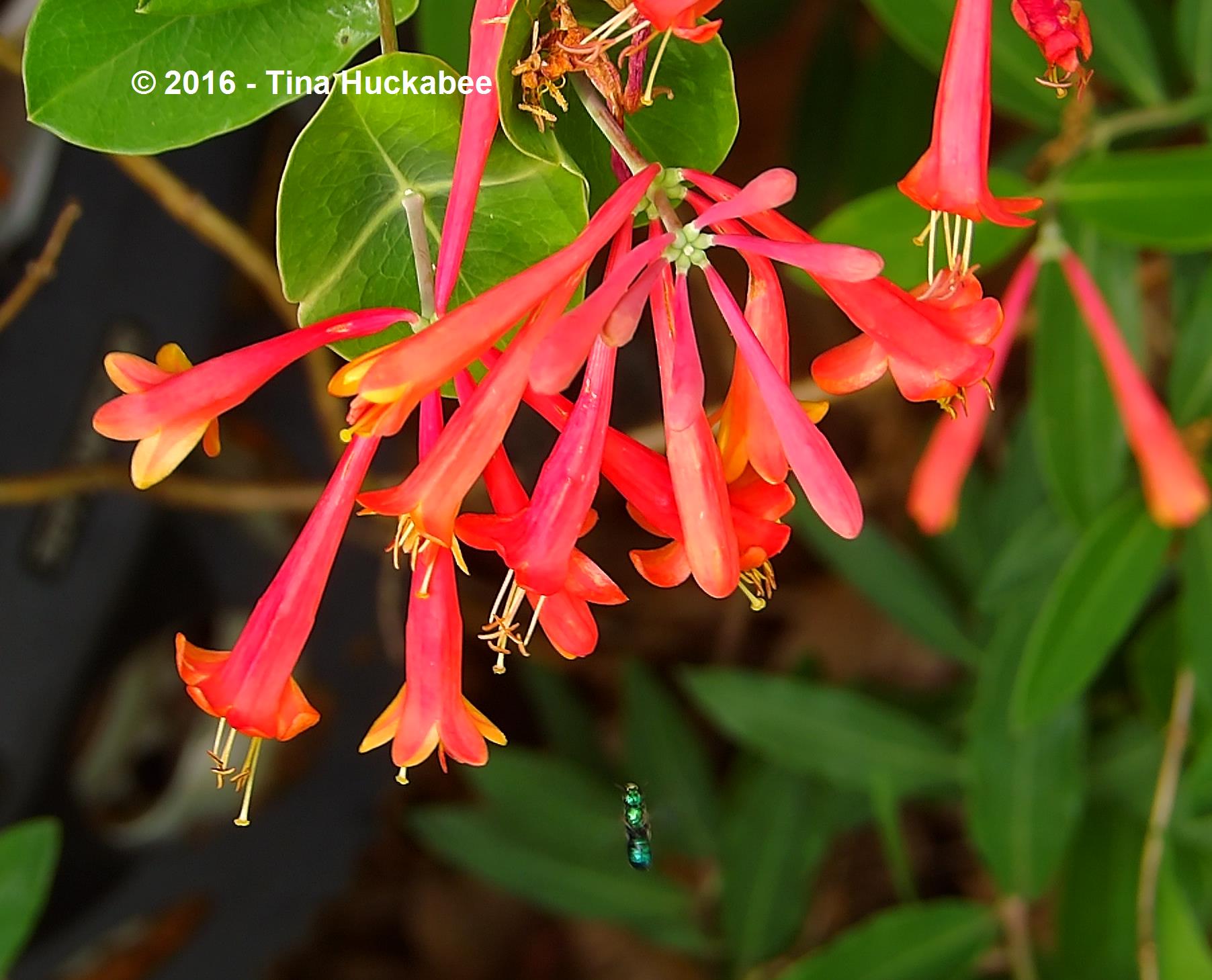
Sweat Bee (Augochloropsis metallica) at a Coral Honeysuckle bloom.

Sweat bee flying in for a bloom landing.

Sweat bee flying in for a bloom landing.

Horsefly-like Carpenter bee (Xylocopa tabaniformis) at a Coral Honeysuckle bloom cluster.

Horsefly-like Carpenter bee (Xylocopa tabaniformis) at a Coral Honeysuckle bloom cluster.

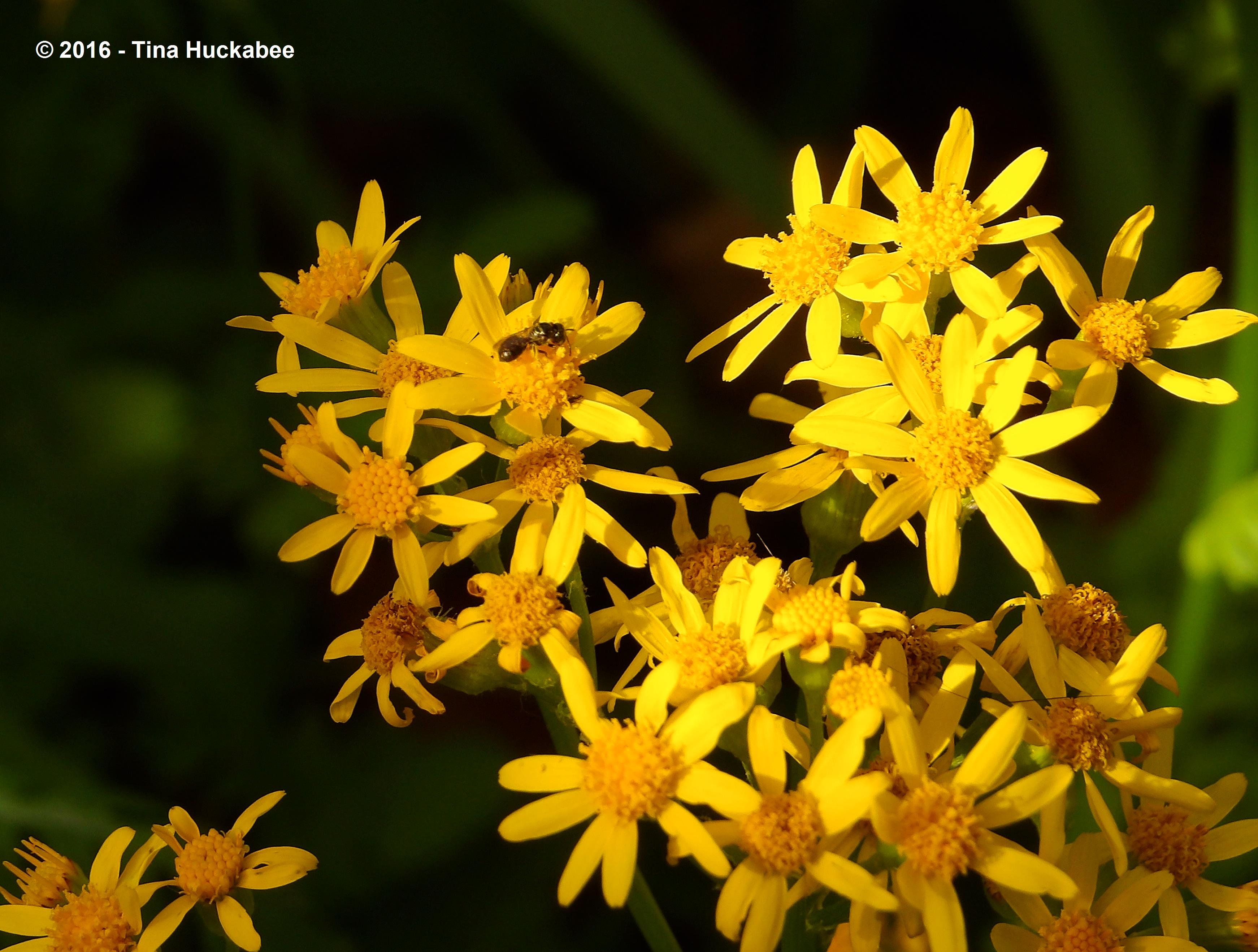
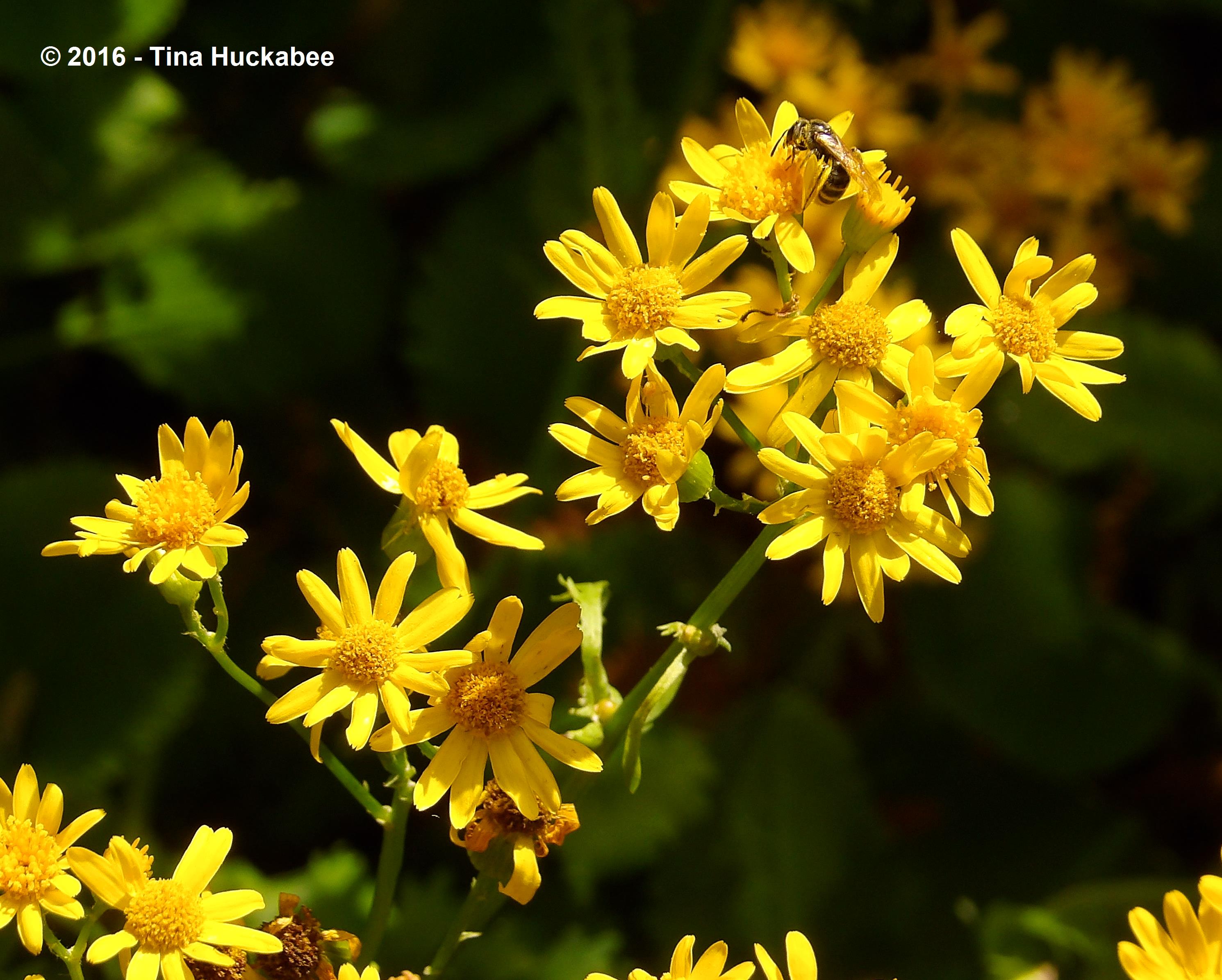
Sweat bee, Lasioglossum spp., at the Golden Groundsel blooms.

Sweat bee (Lasioglossum spp.) (?) at the blooms of Golden Groundsel.
IMGP5380_cropped_2981x2391..new

Small carpenter bee (Ceratina sp.)(?) at Golden Groundsel.

Small carpenter bee (Ceratina spp.)(?) at Golden Groundsel.

For more information about native bees and how you can make your garden appealing to them, check out this link from the Xerces Society.
 

A Parade of Pretties: Bloom Day for March

I’m not going to pretend that this post is anything more than a runway fashion show of the botanical kind.  What follows is a shameless and giddy celebration of the the bounty of blooming beauty that is early spring in my Austin, Texas, zone 8b, garden.

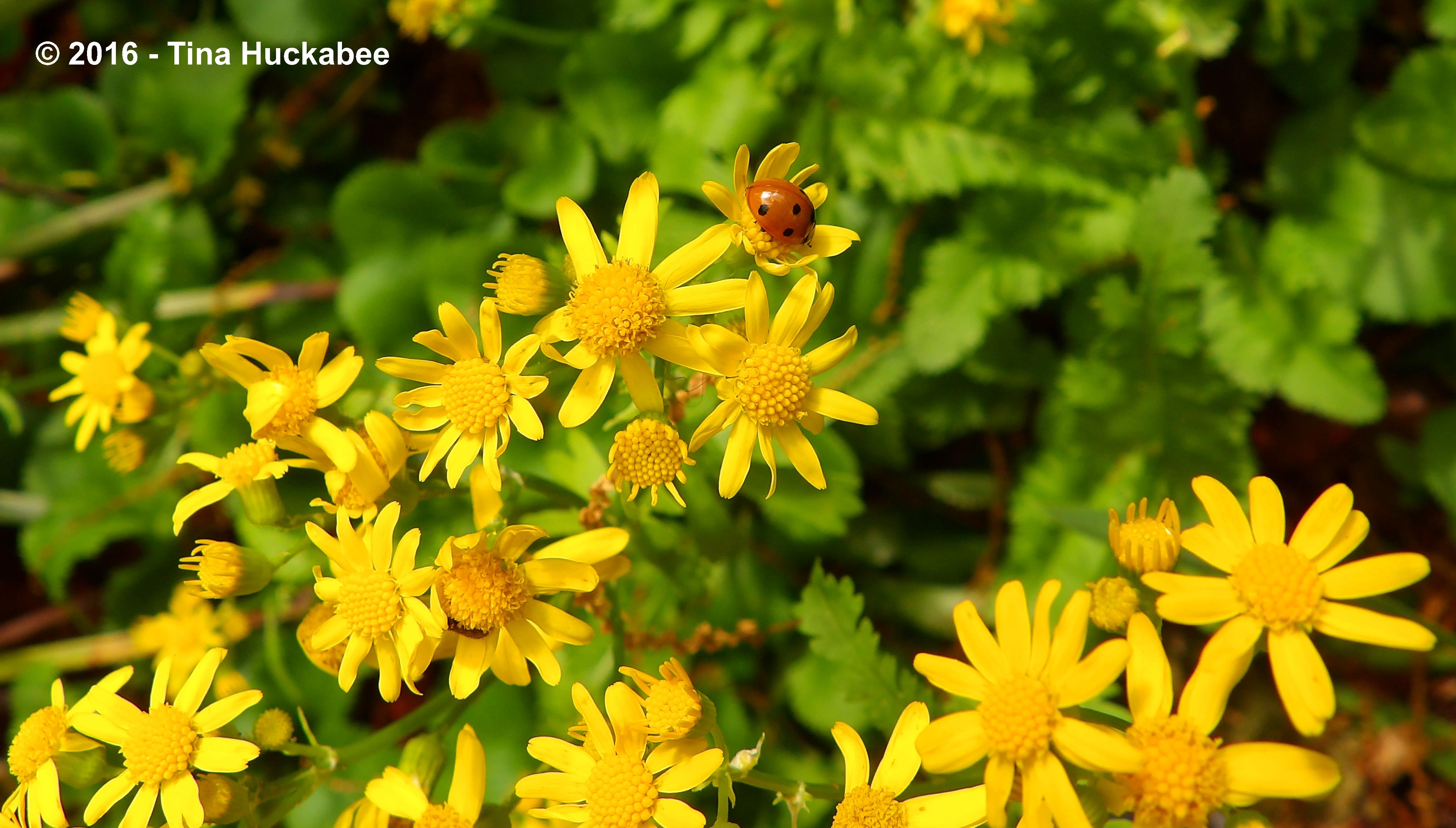
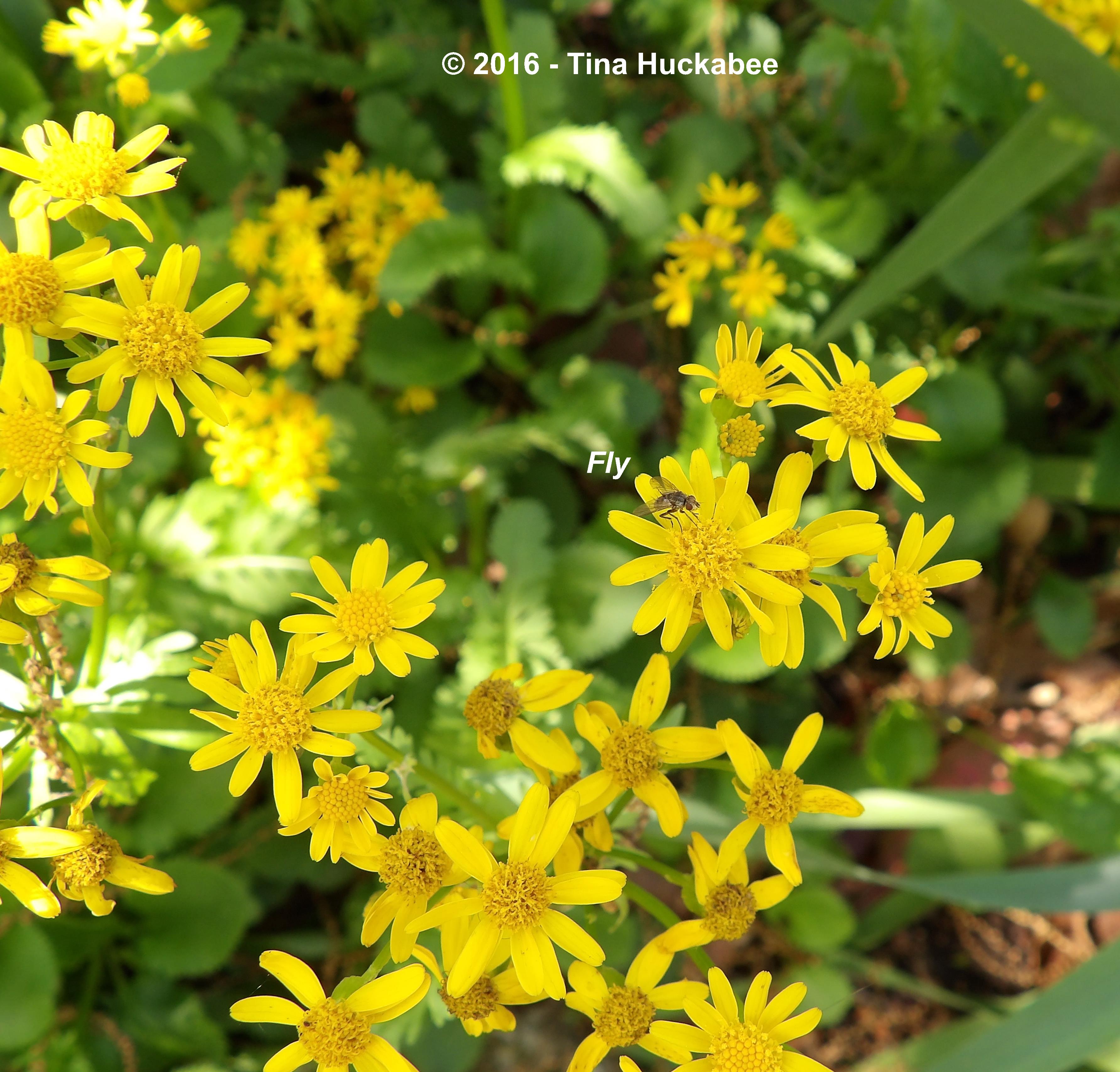
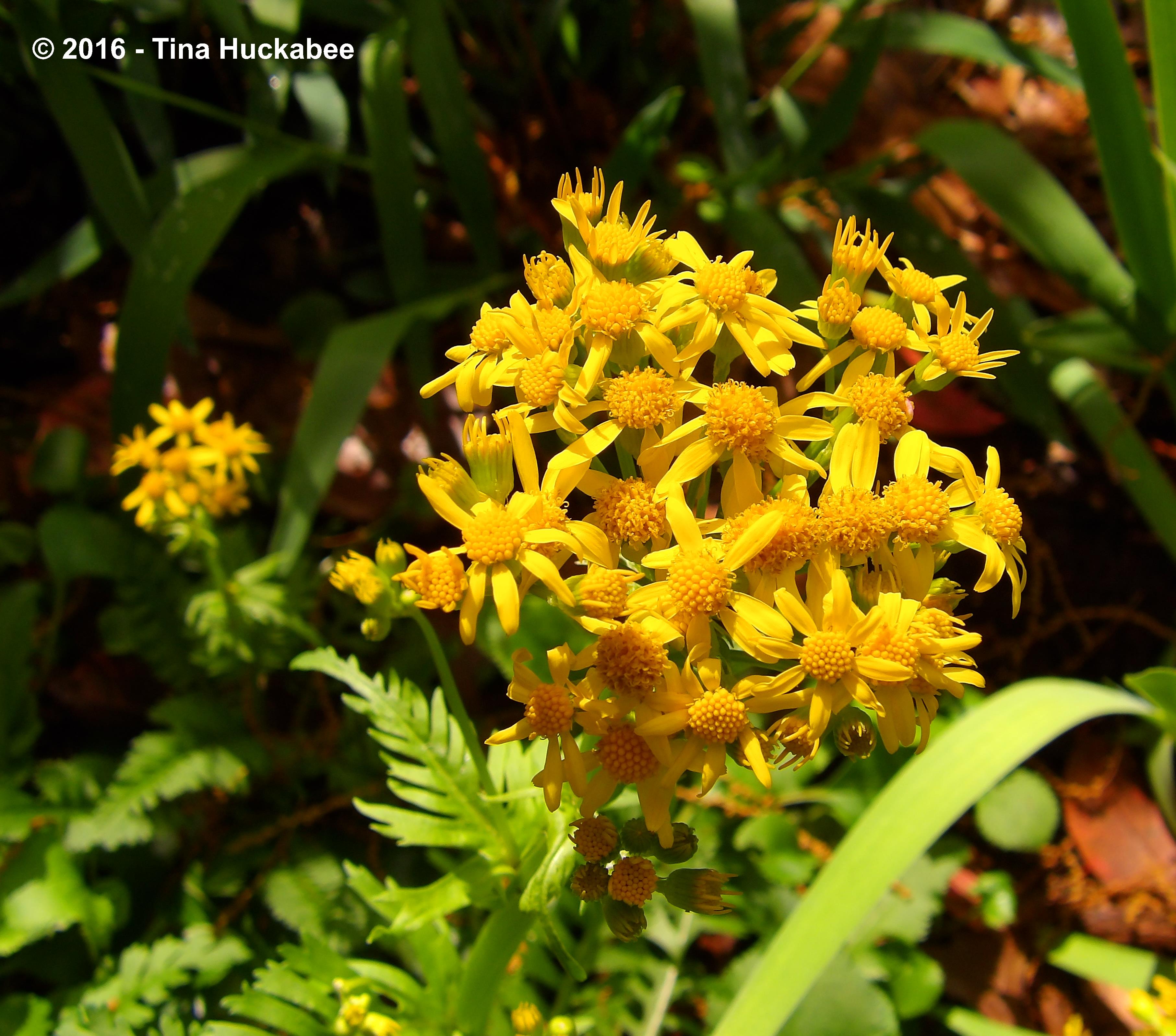
Golden Groundsel, Packera obovata, hit its flowering stride since last profiled  for its beautiful foliage a few weeks ago.

IMGP5034_cropped_3627x3194..new

Slender bloom stalks hold aloft the blasts of brilliant yellow,

IMGP5028.new

…and the gardener smiles.  Tiny critters of all sorts visit–to rest,

IMGP5031_cropped_4083x2323..new

…and pollinate.

IMGP5188_cropped_3166x3410..new

IMGP5174_cropped_3567x3414..new

I’m not thrilled when a fly makes its way into my kitchen, but am happy to see it sipping the sweet stuff from the Golden Groundsel.

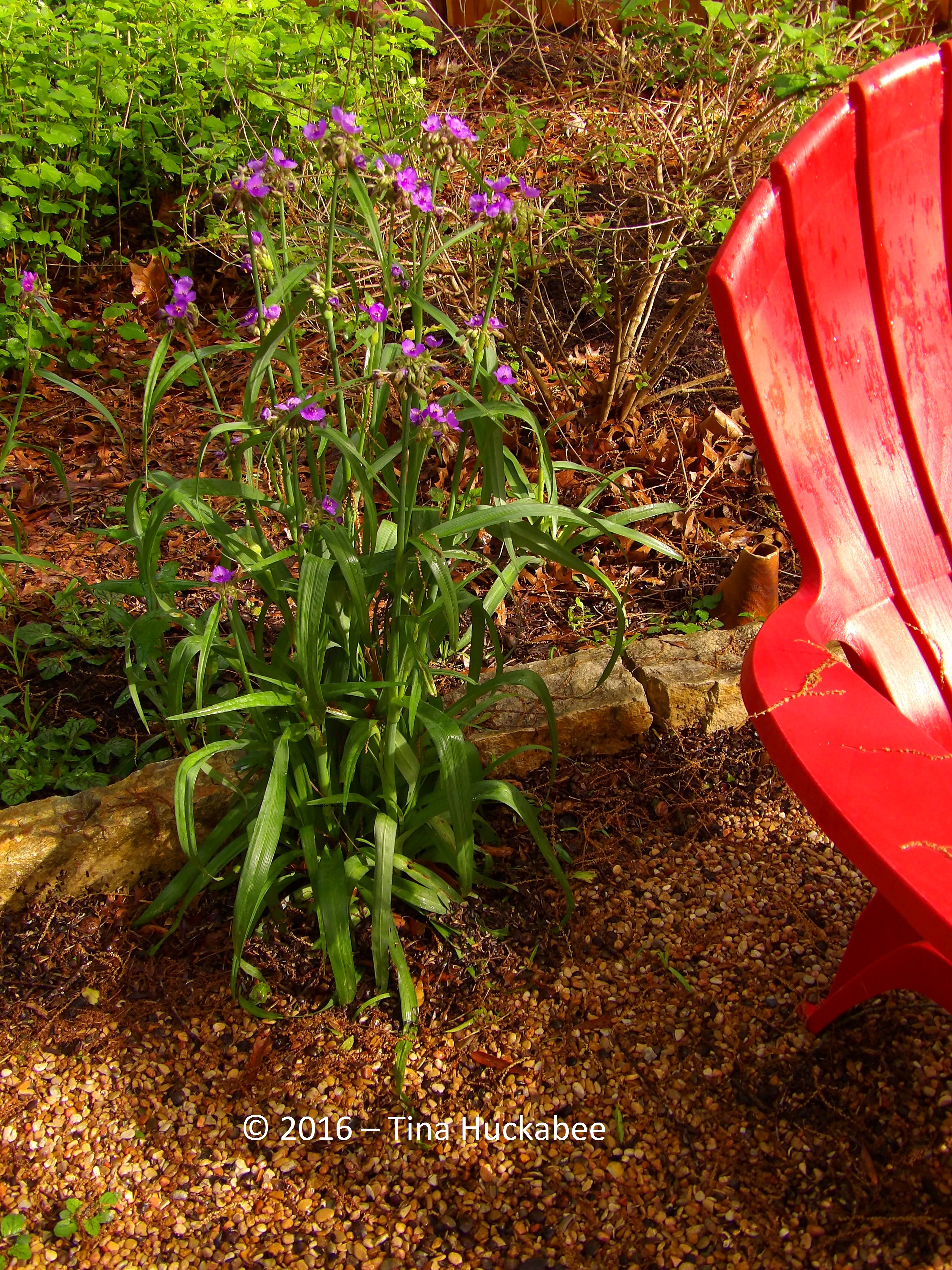
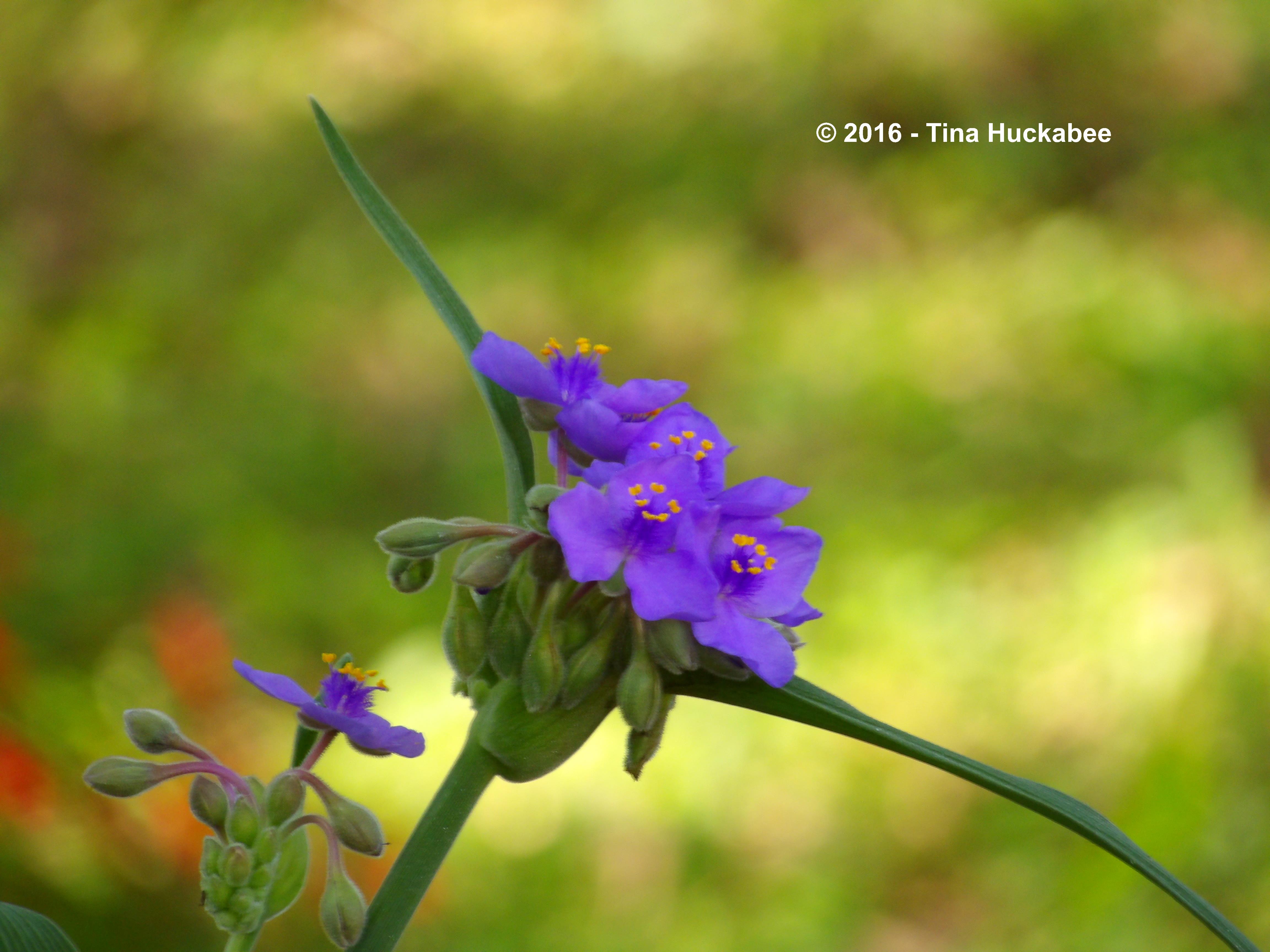
SpiderwortTradescantia, plants are strutting their flower-power and keeping the honeybees busy.
IMGP5007.new

This Giant Spiderwort  keeps company with garden furniture.
The many Spiderwort clumps my garden enjoy some variability in size and coloration and I suspect that there’s more than one species growing and cross-mingling through the seasons.

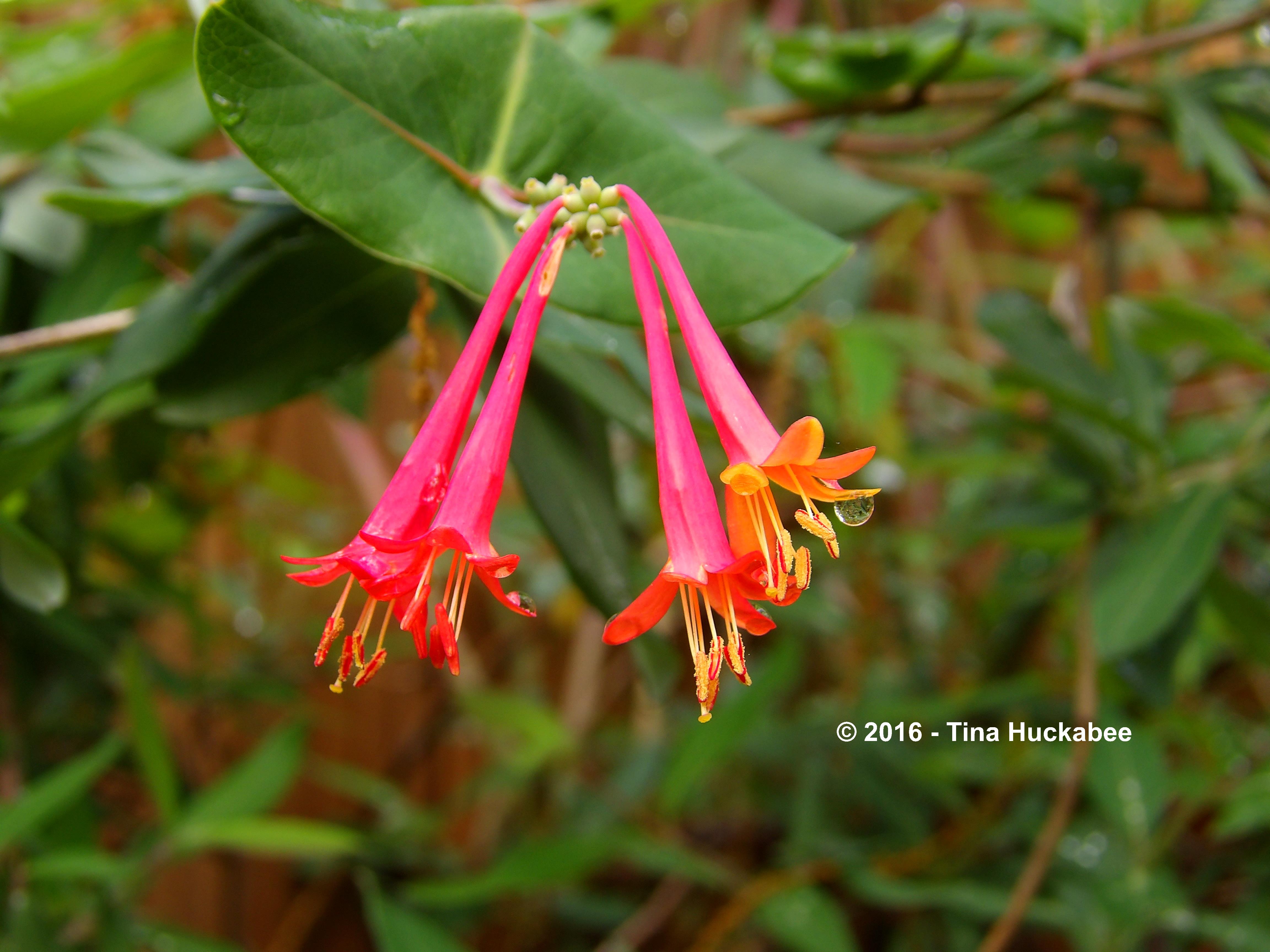
Coral Honeysuckle,  Lonicera sempervirens, a vine hosting dripping clusters of tubular beauty,

IMGP5017.new

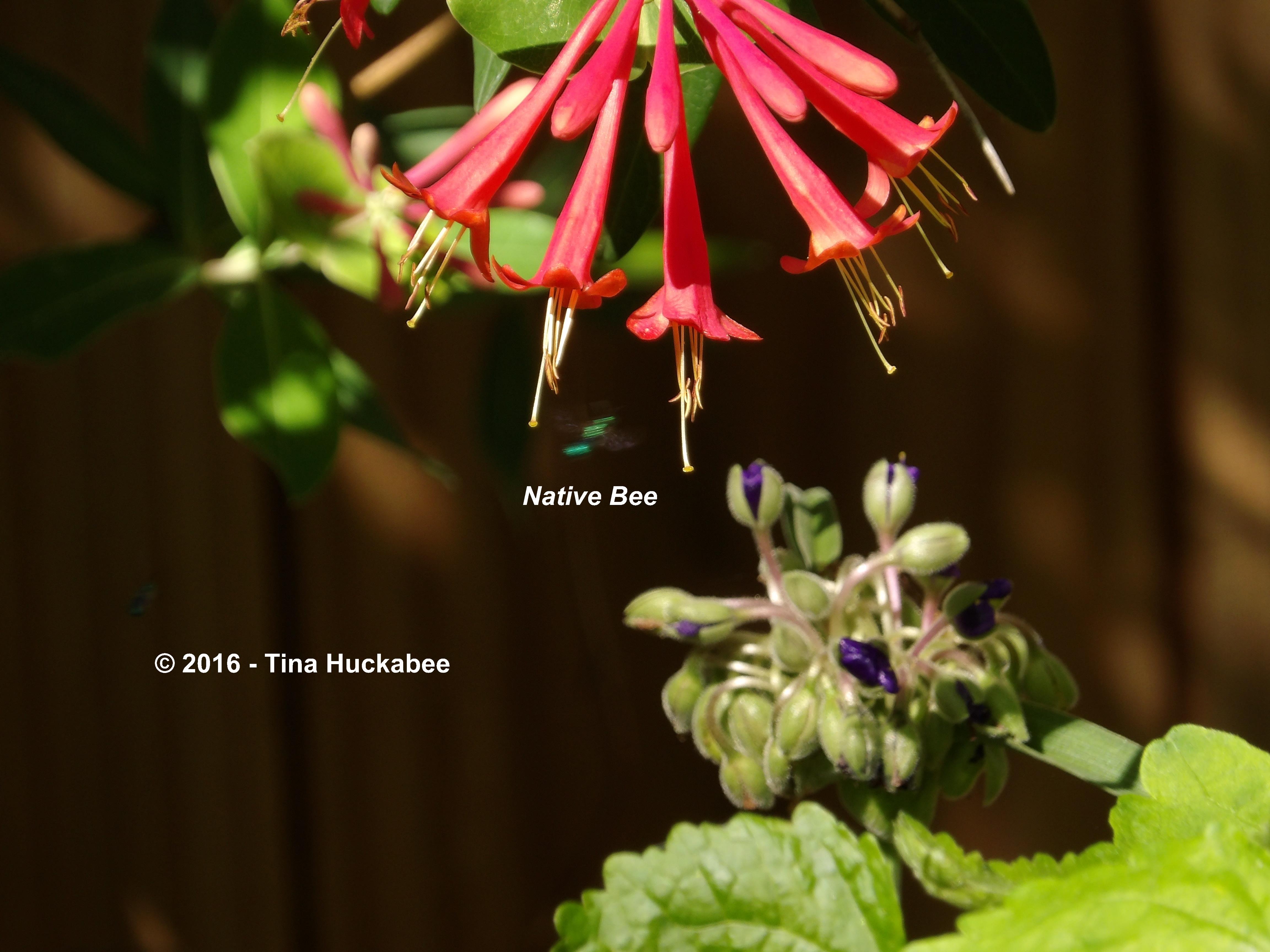
…are surrounded by tiny native metallic bees, which I can only manage a vague photograph of.

IMGP5225.new

Actually, that’s not really true, but you’ll have to wait until my own Wildlife Wednesday on April 6th to see some slightly better photos of one of the stunningly gorgeous and fast-flying metallic wild bees.

This Coral Honeysuckle bloom cluster and the not-quite-open Spiderwort look like they’re trying to reach one another for a smooch.

IMGP5237_cropped_3898x3277..new

Well, it is spring, you know–the season of love!

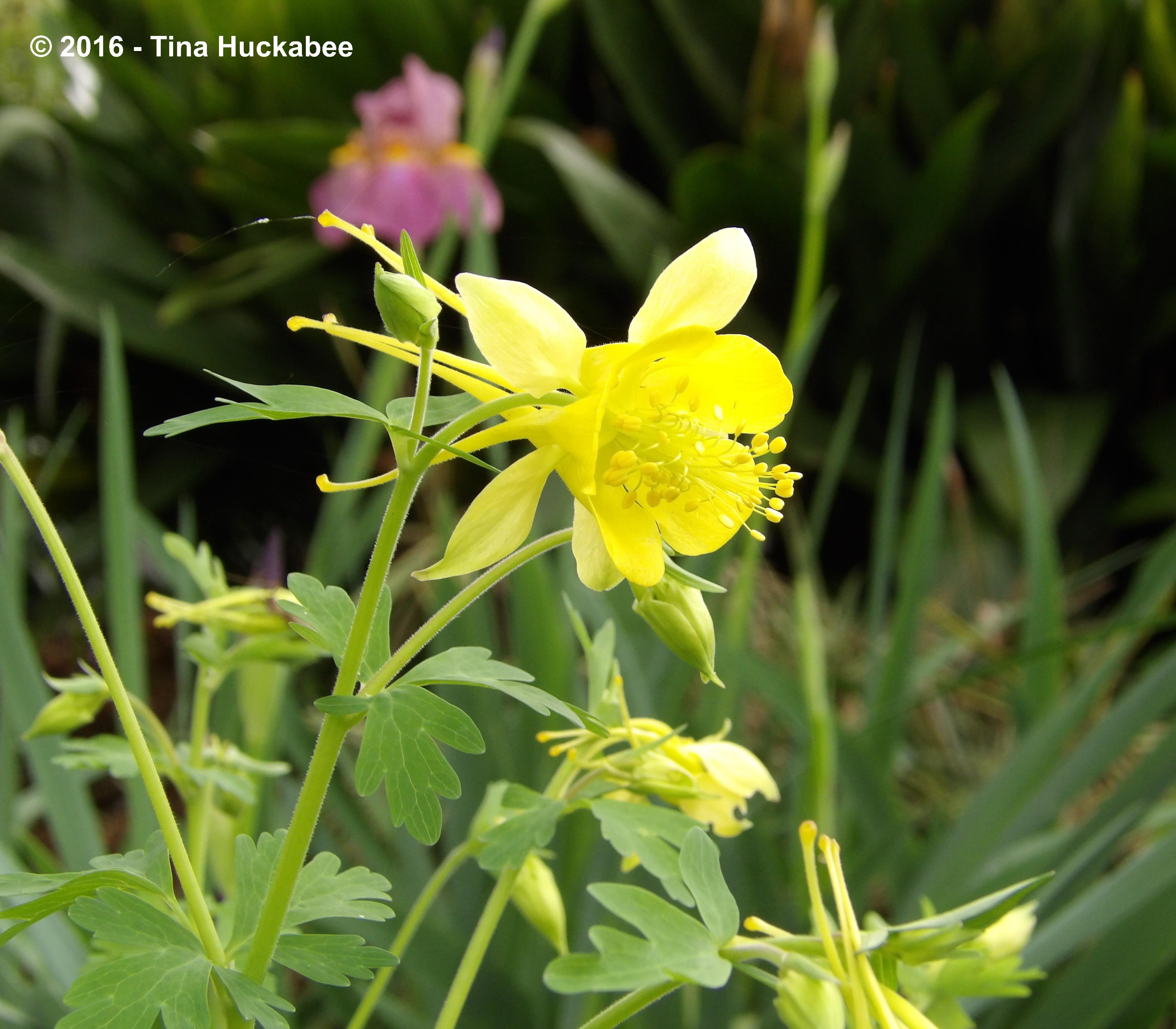
Yellow Columbine, Aquilegia chrysantha var. hinckleyana,

Yellow Columbine with blooming Iris.

Yellow Columbine with blooming Iris.

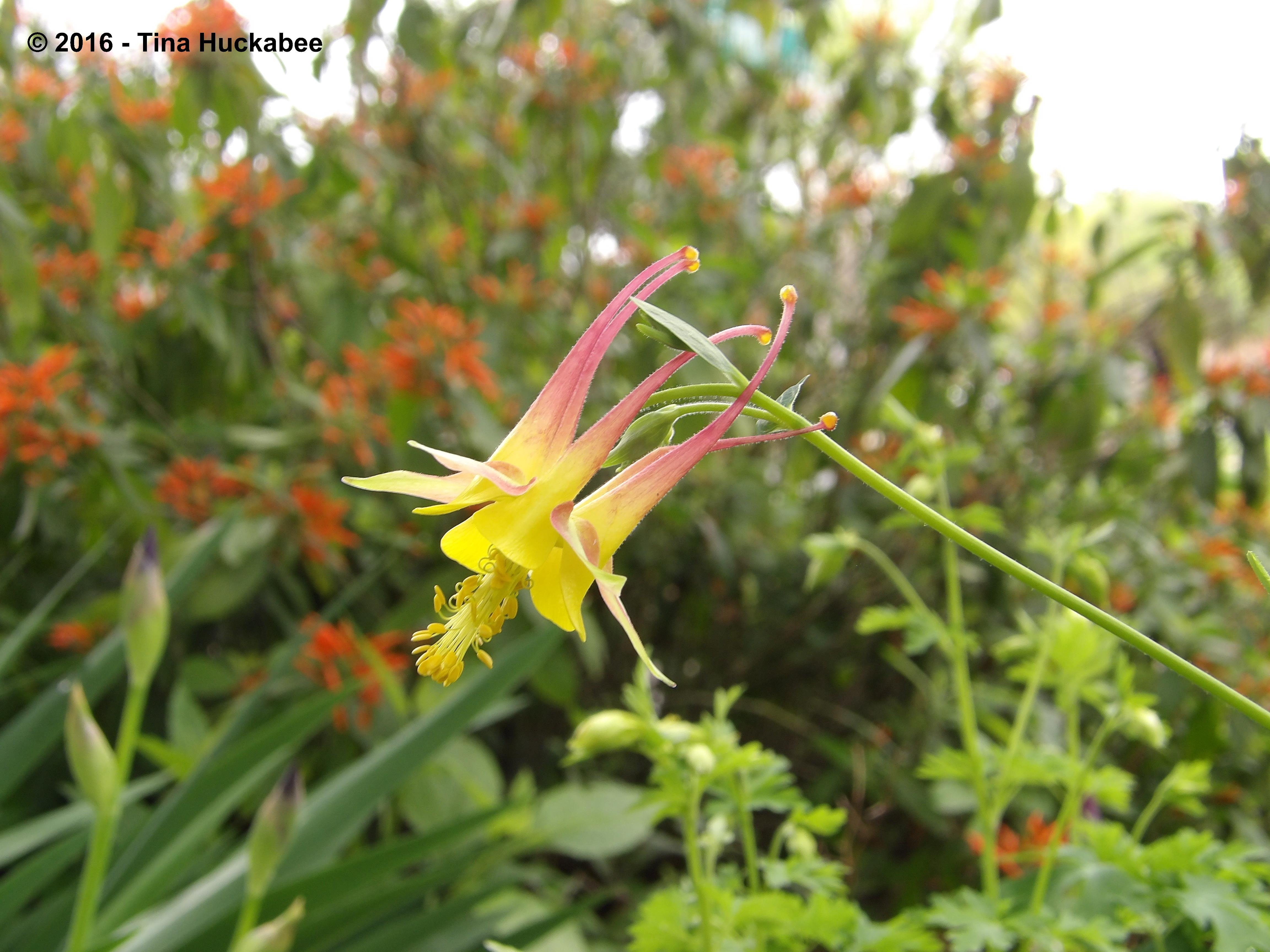
…and the hybrid between A. chrysantha and A. canadensis, pose beautifully and are available for nectaring, too–if you possess the right proboscis, that is.

Hybrid Columbine with backdrop of orange blooming Mexican Honeysuckle and unopened Iris.

Hybrid Columbine with backdrop of orange blooming Mexican Honeysuckle and unopened Iris.

Hybrid Columbine with not yet in bloom day lilies and Yarrow.

Hybrid Columbine with not yet in bloom day lilies and Yarrow.

The A. canadensis is a smaller, mostly brick-red columbine.  But when cross-pollination occurs, the flower of the hybrid is typically larger, with more yellow and a blush of red.  Over the years, the columbines in my gardens have hybridized and I’m delighted with nature’s improvisations.

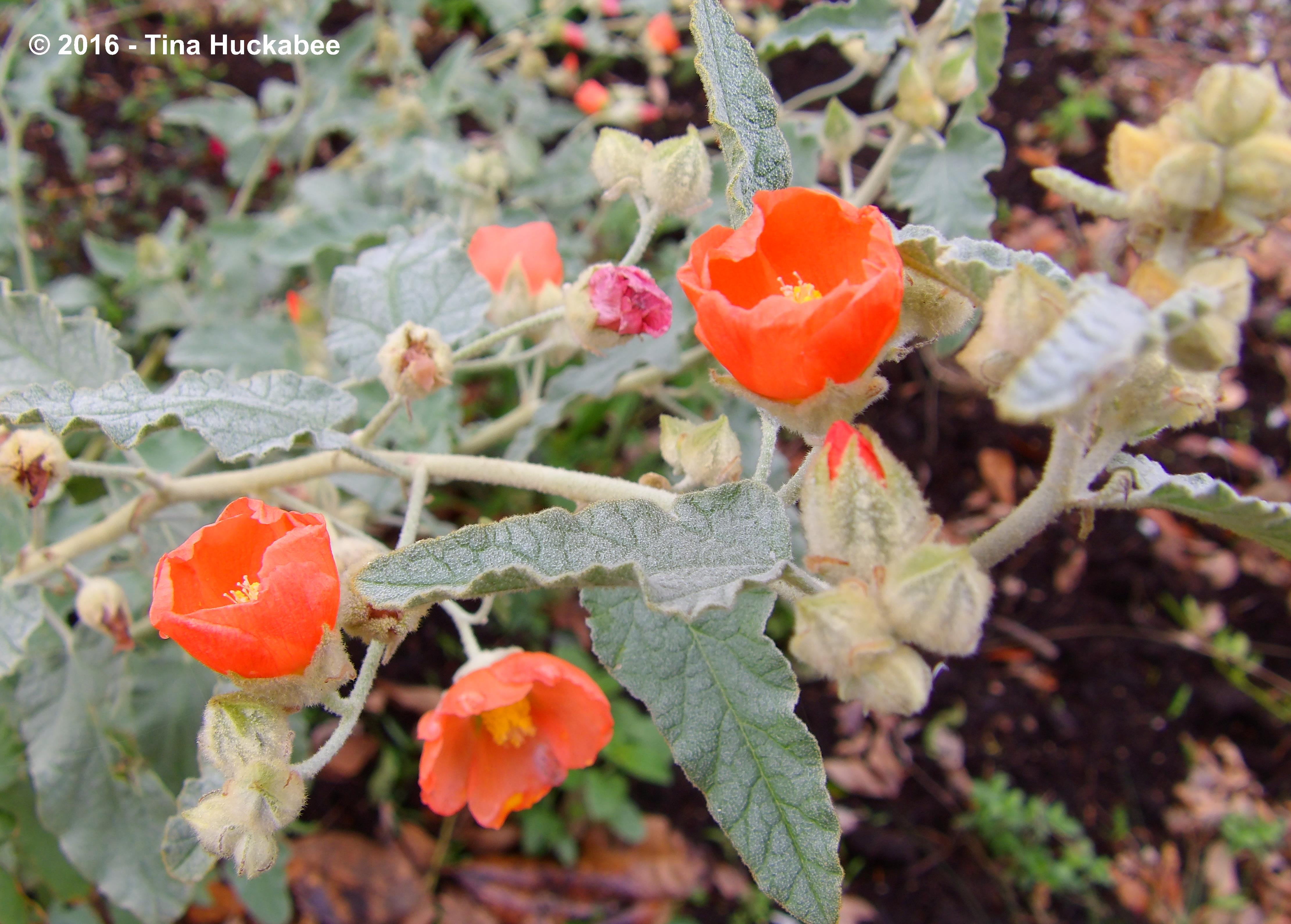
Globe Mallow, Sphaeralcea ambigua, is also open for business,  awaiting interviews from native bees.  So far, it’s been teeny, tiny bees, too fast for this photographer to capture with any competence.

IMGP5044_cropped_4443x3180..new

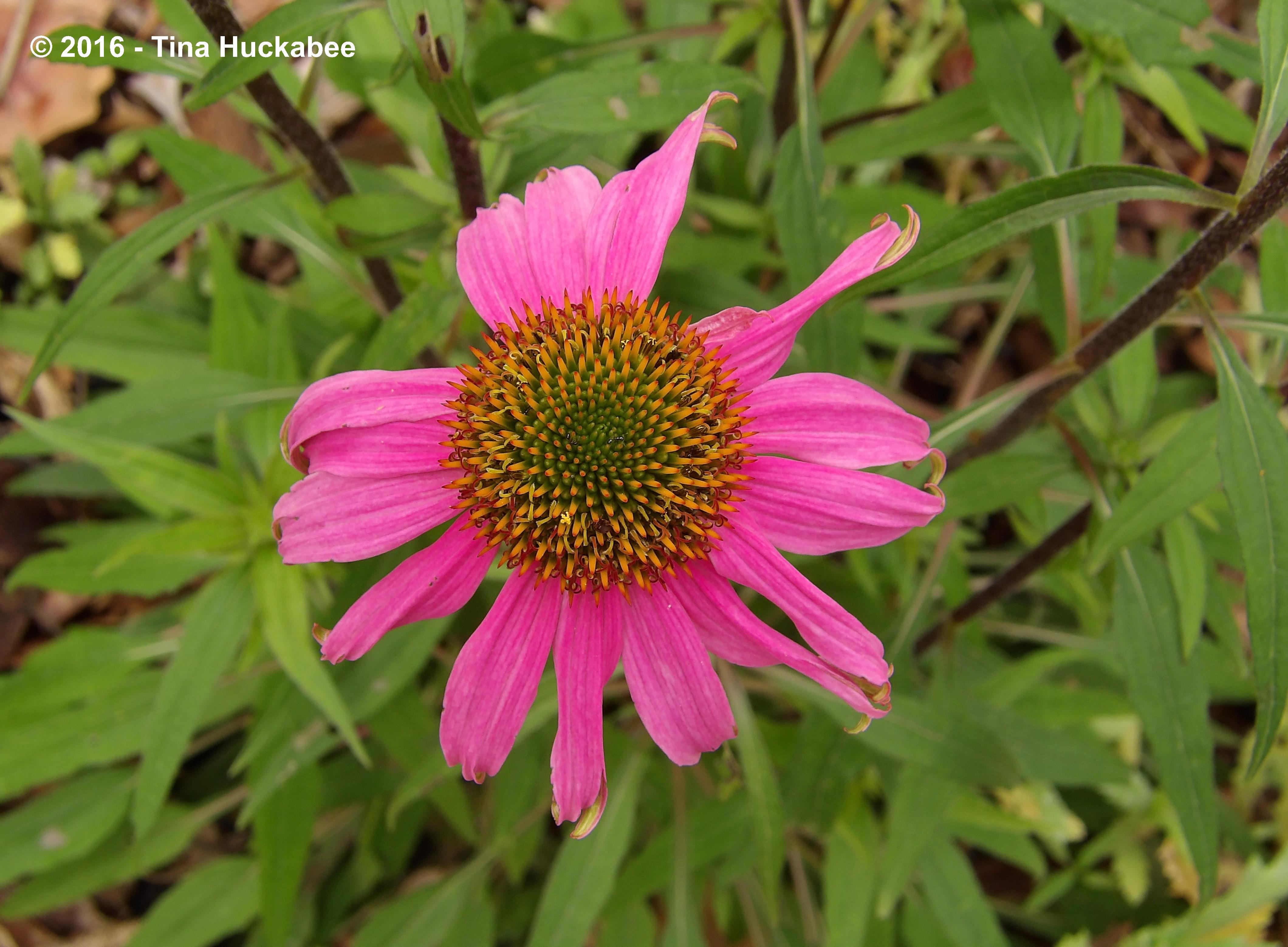
The first blooms of many-to-come Purple Coneflower, Echinacea purpurea, have unfurled their pinky-purple glory, welcoming spring and their lengthy growing season.

IMGP5050_cropped_4240x3116..new

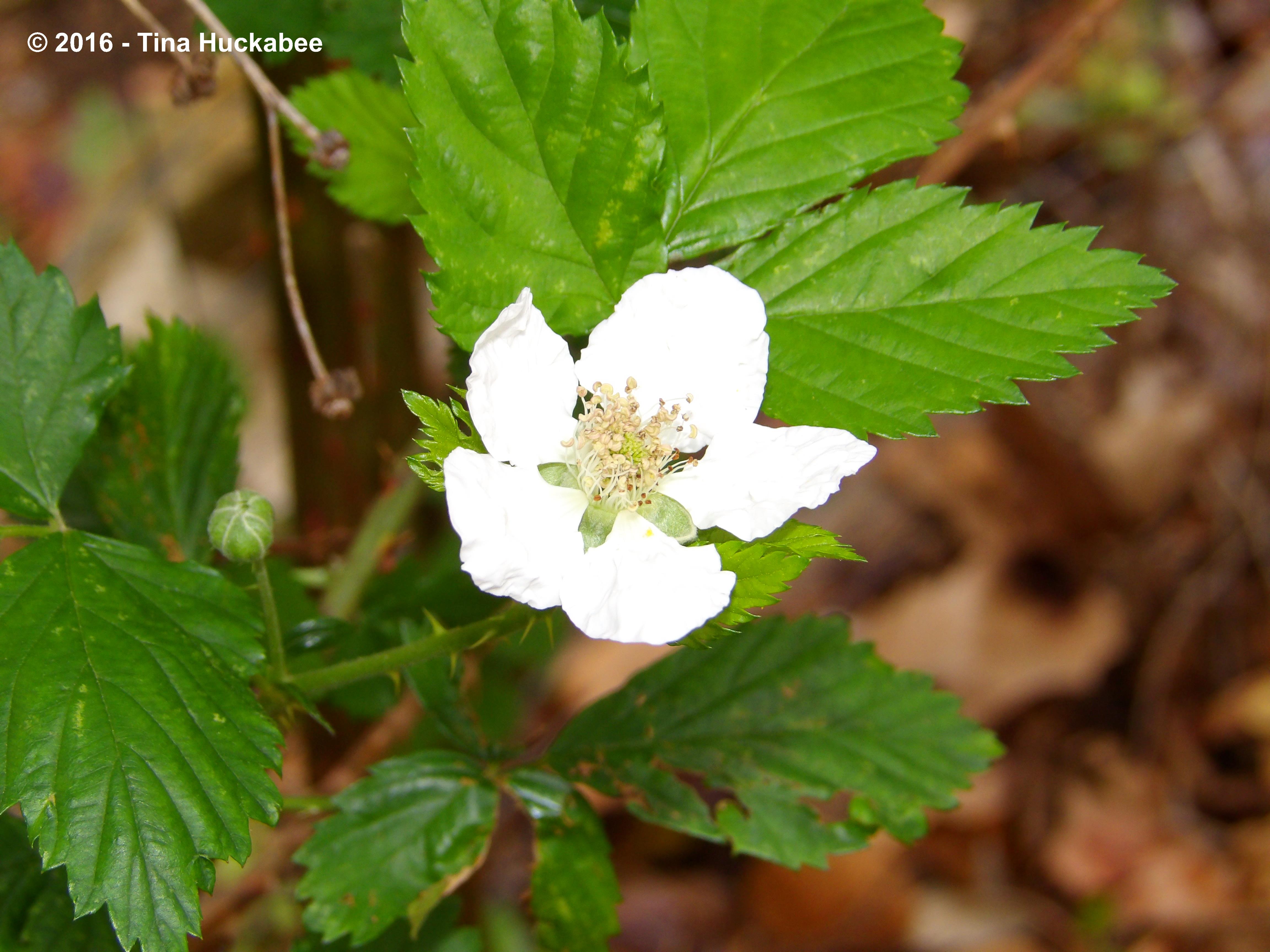
Another first is with this Brazos Blackberry bloom, which heralds more of the same.

IMGP5070.new

Once those flowers are spent, berries will not be far behind.  Yum!  I can taste the blackberries now–as well as the blackberry cobbler.  Bring’em, blooms!

Dancing at the ends of slender bloom stalks all winter and continuing their performance in the spring breezes, the cheery, bouncy Four-nerve Daisy (Hymenoxys), Tetraneuris scaposa,  flowers are nearly non-stop bloomers.

IMGP5043.new

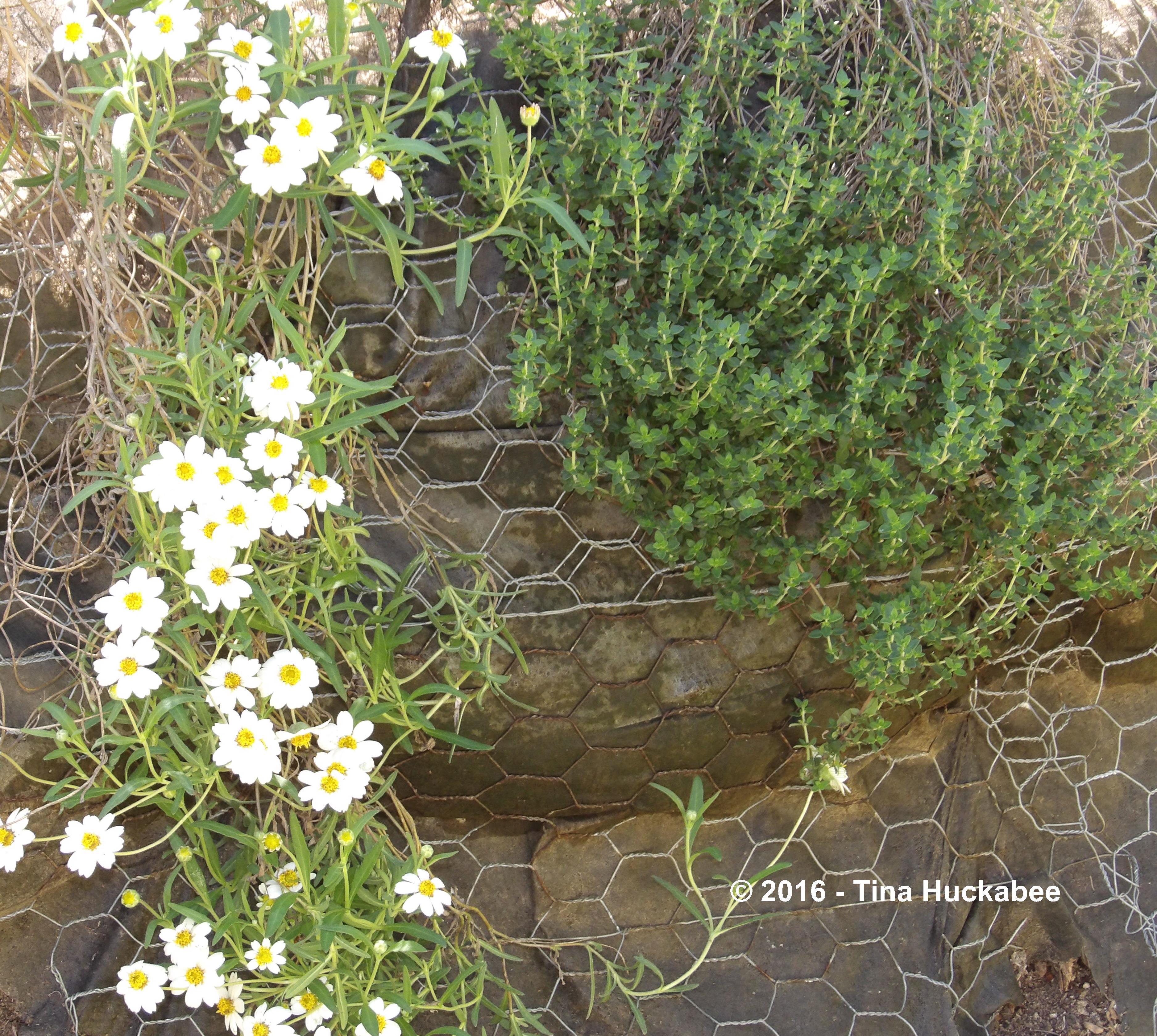
Tired of these tidy, singleton blooms?  How about this cascade of Blackfoot Daisy, Melampodium leucanthum.

IMGP5071.new

A tough Texas native that is best when growing out of poor soil or rock, this one is content and flowering in my Green Tower, which is where I grow veggies and most of my herbs.  The Blackfoot Daisy buddies-up to a thyme plant which also flourishes in the Tower.

IMGP5180_cropped_3750x3359..new

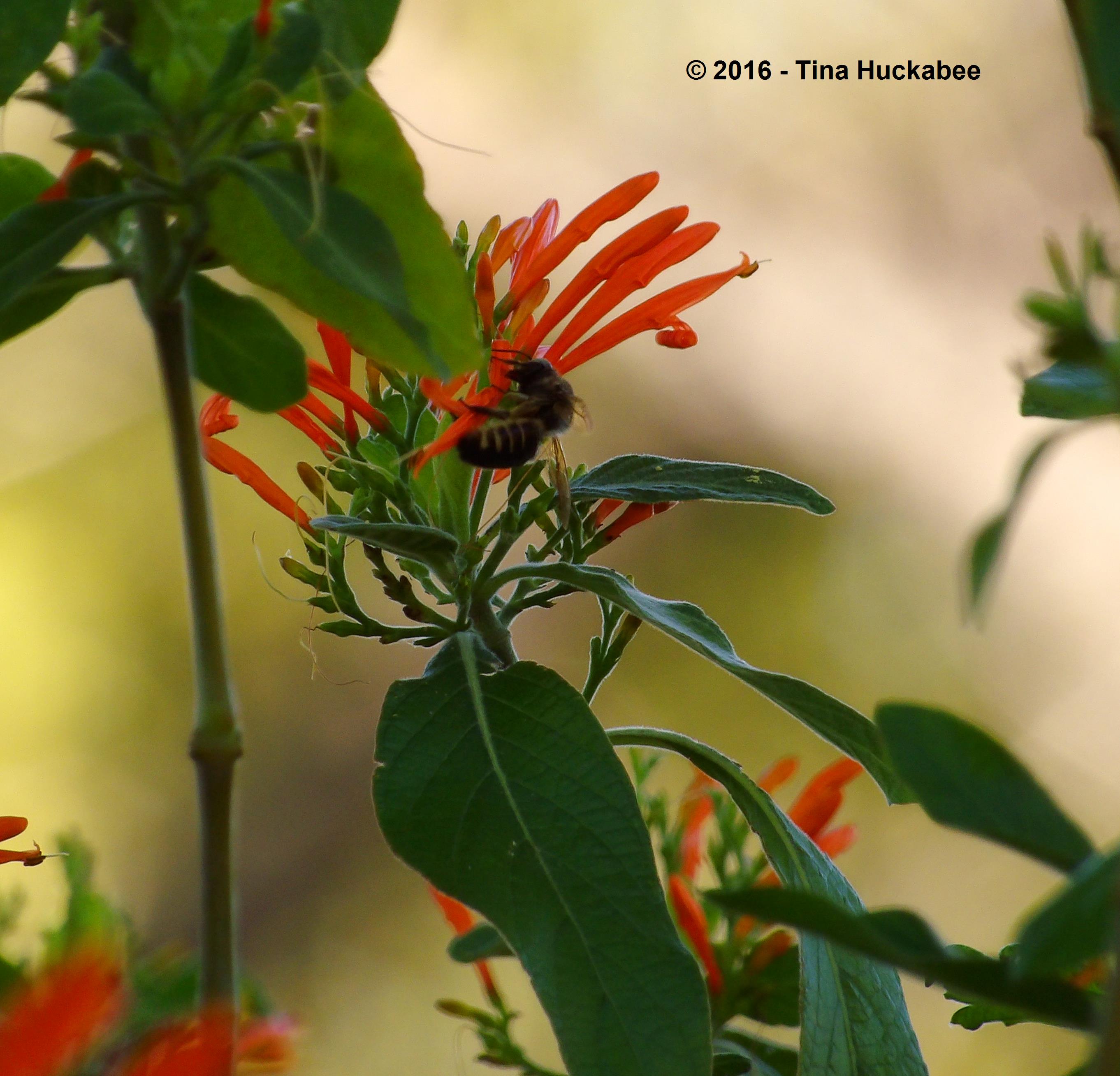
Due to the non-winter this year, Mexican Honeysuckle, Justicia spicigera, wasn’t freeze-knocked to the the ground and thus is blooming with orange abandon this early spring.

IMGP5098.new

Mexican Honeysuckle boasts constant pollinator activity, especially from a variety of bees.

Horsefly-like Carpenter Bee (Xylocopa tabaniformis) works the Mexican Honeysuckle flowers.

Horsefly-like Carpenter Bee (Xylocopa tabaniformis) works the Mexican Honeysuckle flowers.

There’s more where that came from!

IMGP5271_cropped_4552x2747..new

There are too many blooms and not enough time to showcase them all–they’ll just have to participate in another parade!

IMGP5273.new

Thanking Carol at May Dreams Garden for hosting this monthly bloom frenzy known as Garden Bloggers’ Bloom Day.  Share your garden pretties, then click over to her lovely blog to see and learn about blooms from many places.

IMGP5274.new


Spring Is Just Too Easy

It’s easy to love the spring garden.  From traditional garden standards,

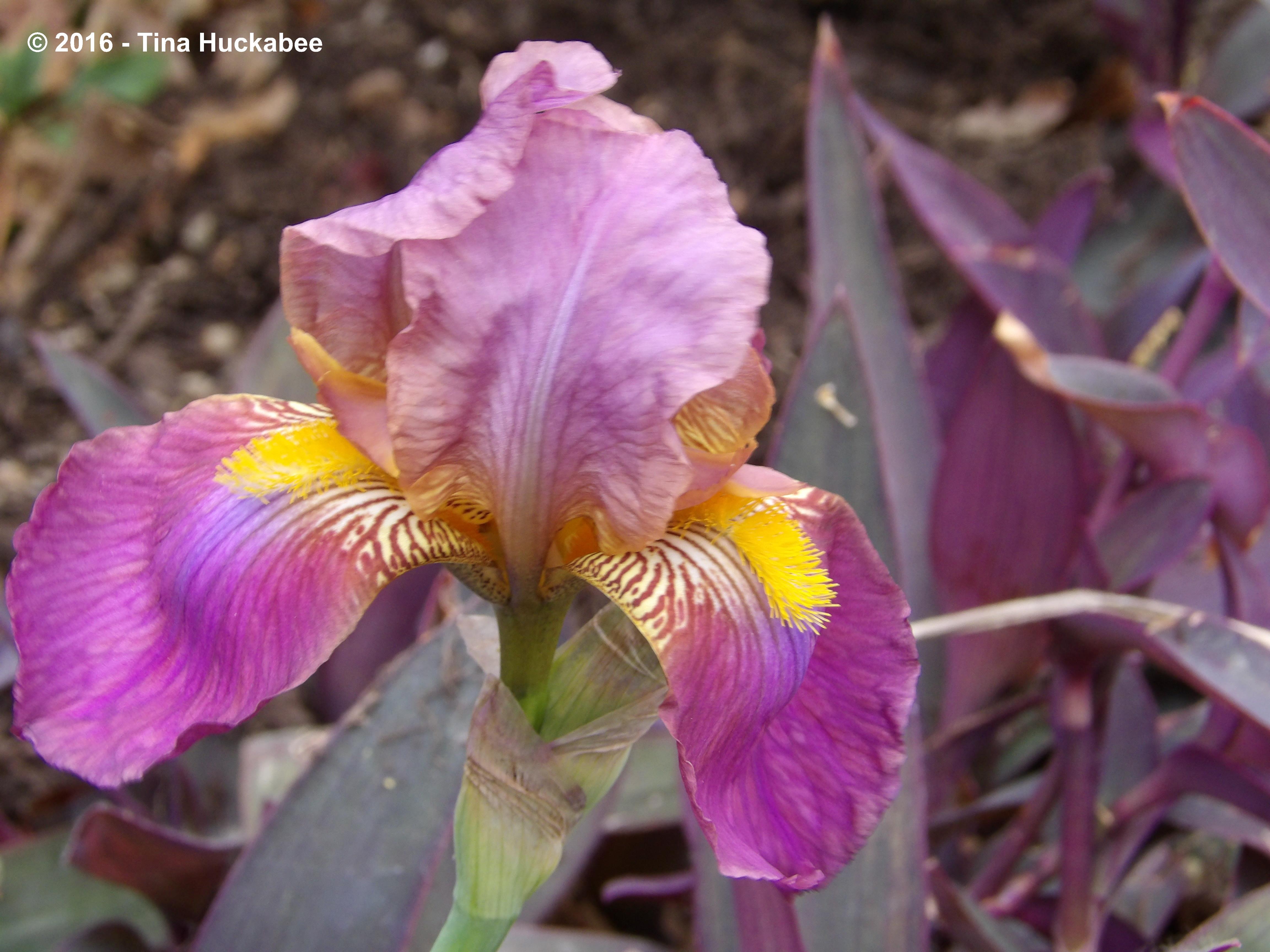
Unknown passalong Iris.

Unknown passalong Iris.

…to self-seeding weeds, also known as wildflowers,

Carolina Geranium (Geranium carolinianum) and Damianita (Chrysactinia mexicana) pair well in a sunny bed.

Carolina Geranium (Geranium carolinianum) and Damianita (Chrysactinia mexicana) pair well in a sunny bed.

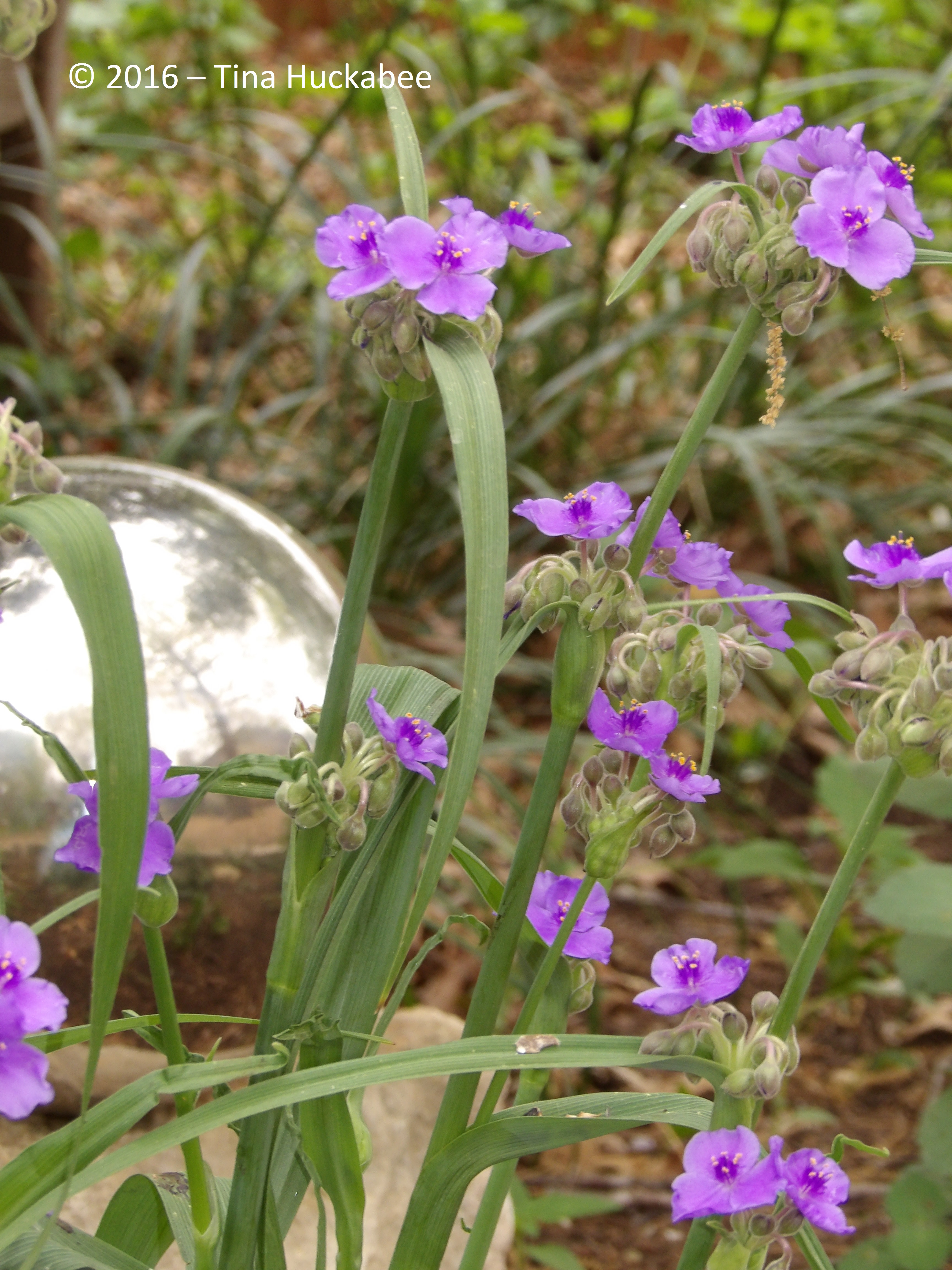
Giant Spiderwort (Tradescantia gigantea)

Giant Spiderwort (Tradescantia gigantea)

…the spring garden awakens the gardener’s heart and gladdens the soul.

Blooming and climbing vines wind their way along fences,

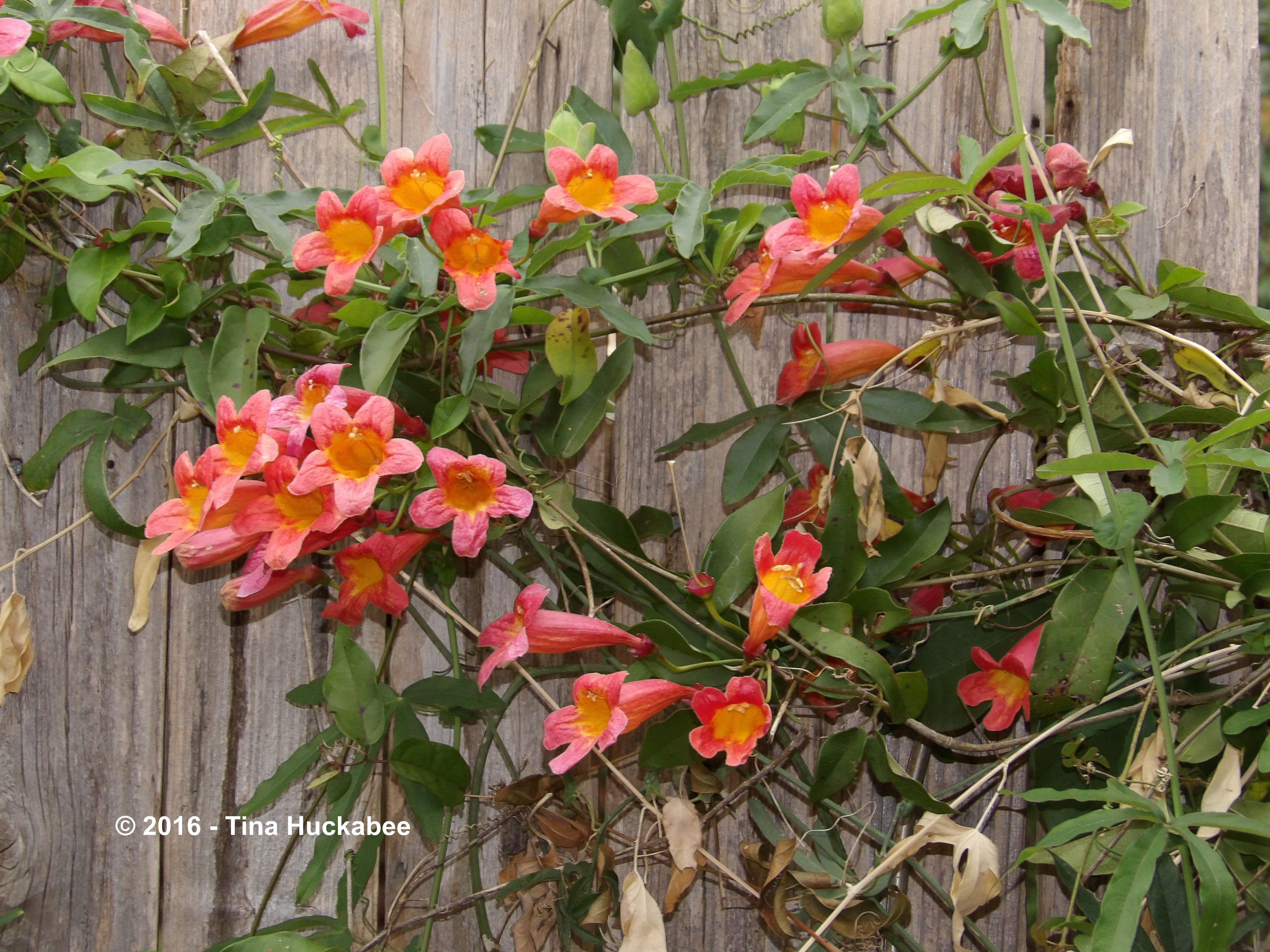
Crossvine (Bignonia capreolata) opens its tubular blooms

Crossvine (Bignonia capreolata) opens its tubular blooms

…or sometimes, a beloved daughter’s bicycle.

Coral Honeysuckle (Lonicera sempervirens) entwines and embraces Shoshana's bicycle.

Coral Honeysuckle (Lonicera sempervirens) entwines and embraces Shoshana’s bicycle.

Bold foliage/bloom pairings abound in the spring garden.  The vibrant purple clusters of the Texas Mountain LaurelSophora secundiflora, contrast beautifully with its solid and simple foliage,

IMGP4840.new

…while the orange-crush, cup-like blooms of Globe Mallow, Sphaeralcea ambigua,         differentiate themselves from their companionable ruffly, silvery leaves.

IMGP4895.new

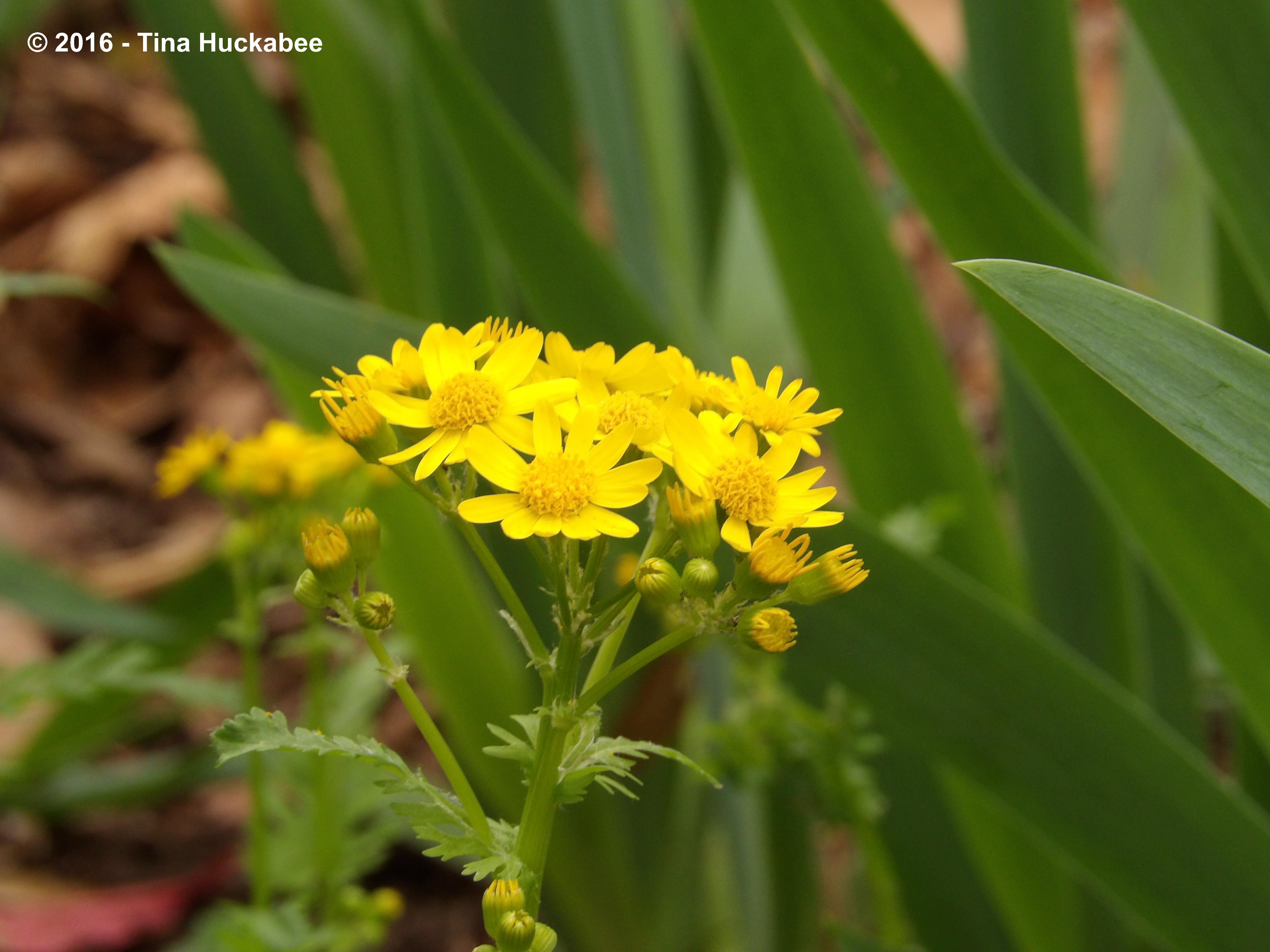
Sunshine yellow is plentiful at the terminal ends of stalks of Golden Groundsel,  Packera obovata,           .

IMGP4886.new

The cheery blooms give rest to a weary Crane fly.

IMGP4974.new

It’s easy to appreciate the many stunning blooms flourishing  in the garden.

Not to be outdone by mere perennials however, the two back garden Shumard Oaks, Quercus shumardii,

IMGP4900.new

IMGP4905.new

…rush to compete with other plants, producing their own inflorescence show which has ramifications for all other parts of the garden.

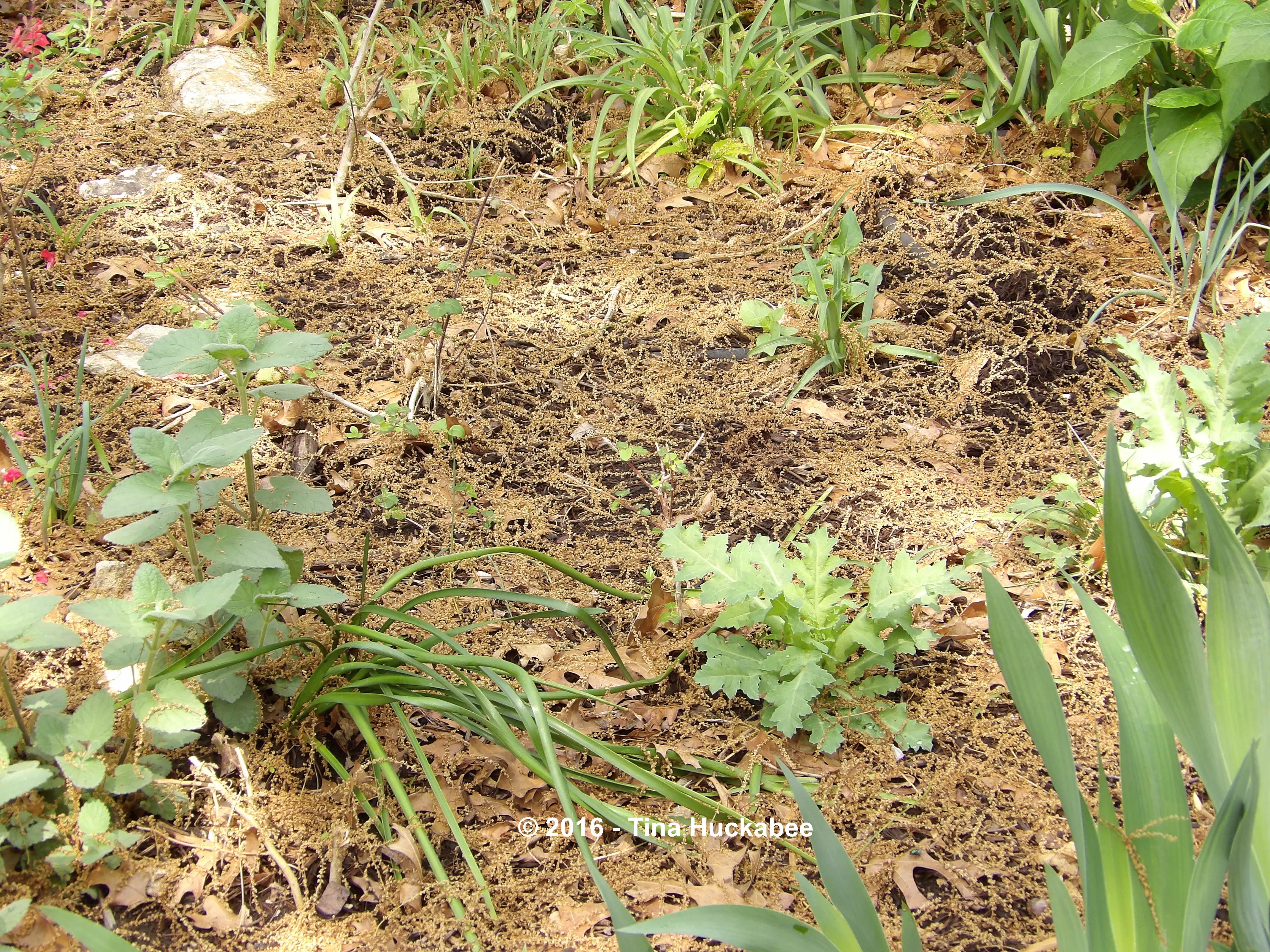
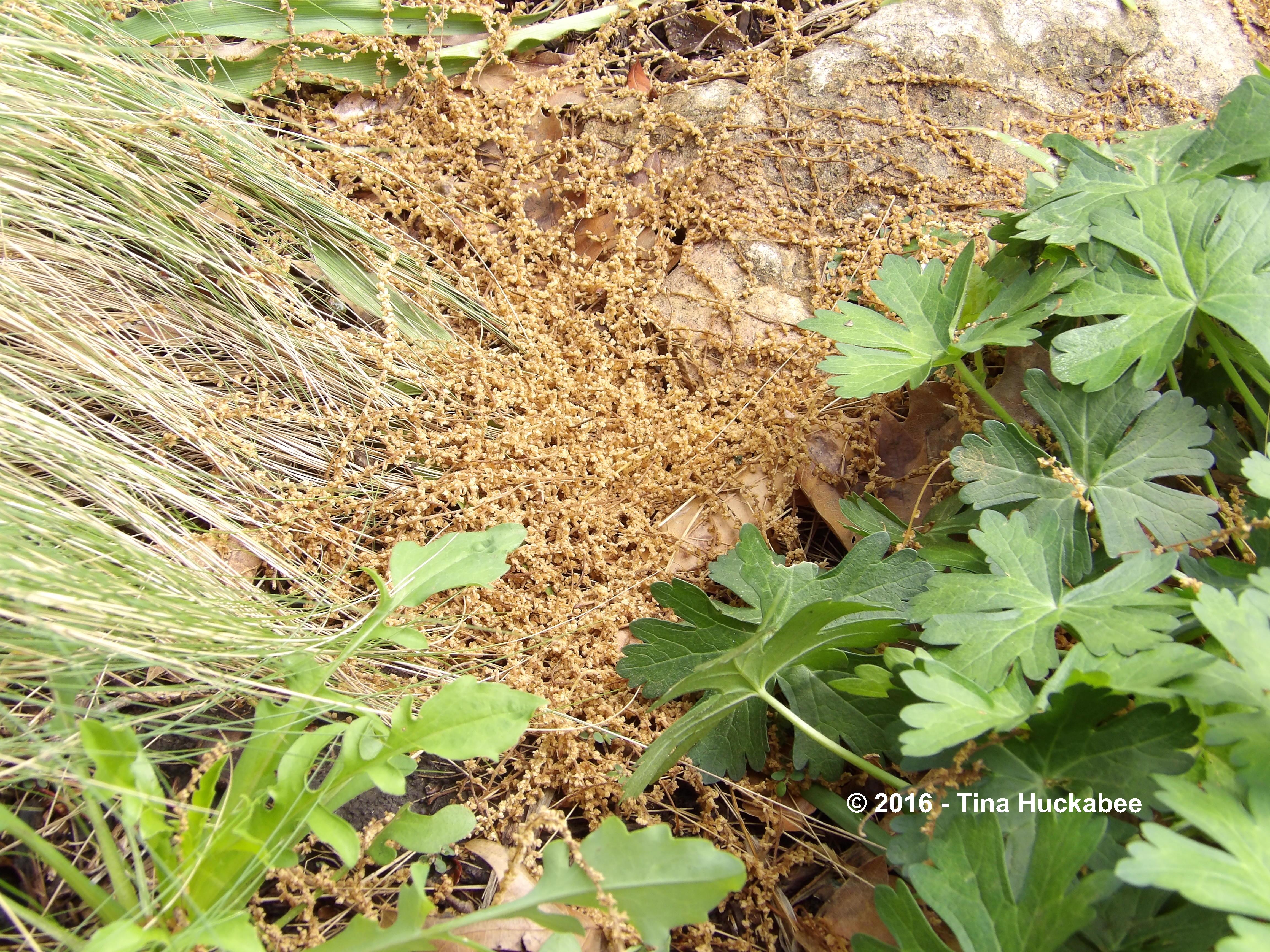
Fallen oak catkins cover a newly planted area.

Fallen oak catkins cover a newly planted area.

Oak catkins atop a potted Texas Beargrass (Nolina texana)

Oak catkins atop a potted Texas Beargrass (Nolina texana)

Oak catkins in between Mexican Feathergrass (Nassella tenuissima) and Winecup (Callirhoe involucrata).

Oak catkins in between Mexican Feathergrass (Nassella tenuissima) and Winecup (Callirhoe involucrata).

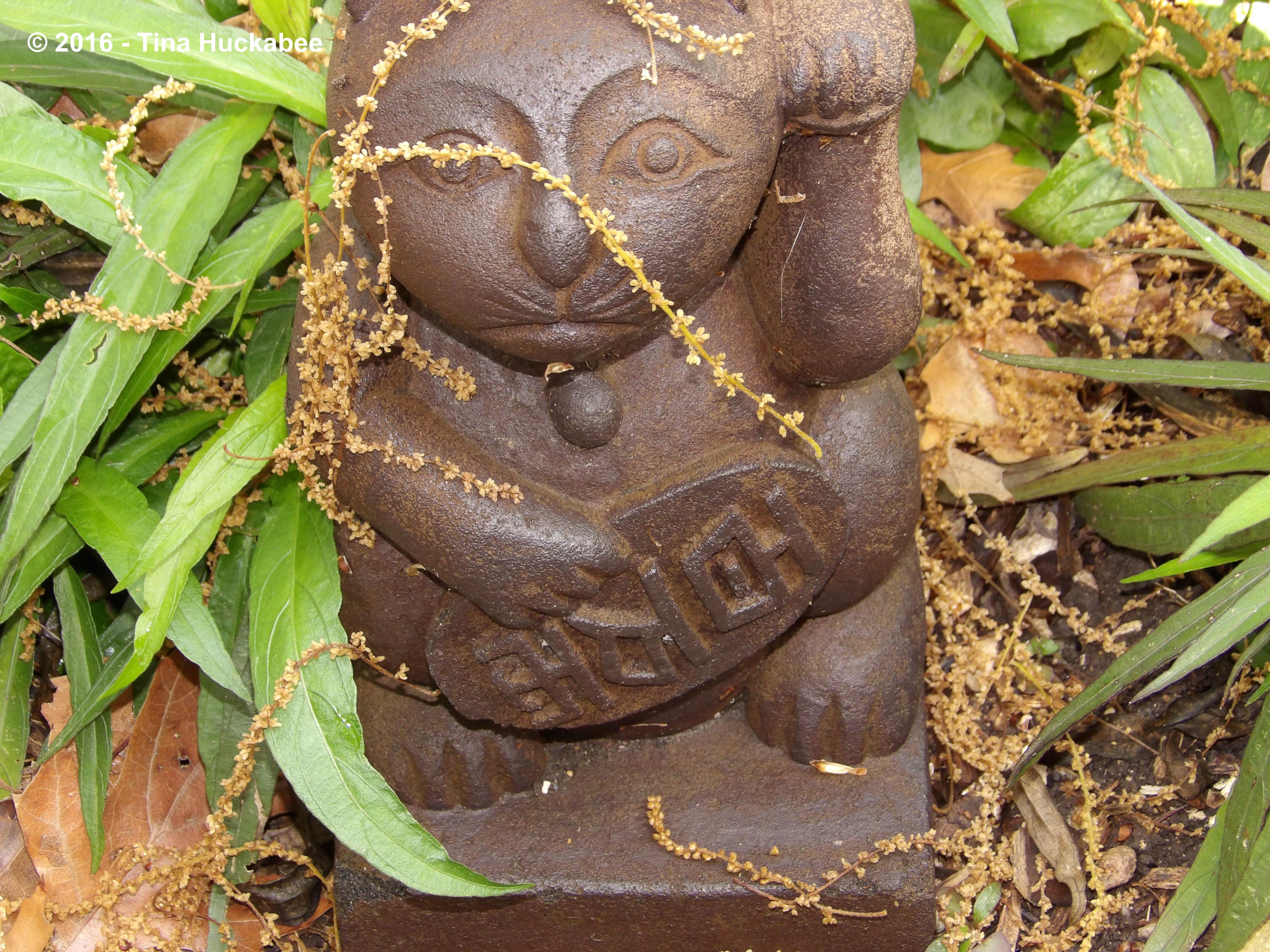
Catkins adorn a Maneki-neko garden art.

Catkins adorn a Maneki-neko garden art.

Catkins embellish a White Autumn Sage (Salvia greggii).

Catkins embellish a White Autumn Sage (Salvia greggii).

Catkins float in the recently cleaned pond!

Catkins float in the recently cleaned pond!

Catkins drape over a Martha Gonzales Rose bush.

Catkins drape over a Martha Gonzales Rose bush.

Catkins decorate Asher!

Catkins decorate Asher!

Those darned catkins!  They are not so easy to enjoy, nor are they so easy to clean up!

Ah well, it’s all part of the spring garden experience.

The early spring garden–easy to savor, easy to treasure.

IMGP4892.new

It is a place to listen to the love songs of the Northern Mockingbird, Mimus polyglottos, sung between his treats of Burford Holly berries,

IMGP4996.new

….or to be charmed with the nighttime (and occasionally daytime) trills of the resident Eastern Screech Owl, Megascops asio, couple.

Mama Screech Owl waiting for a snack from her mate.

Mama Screech Owl waiting for a snack from her mate.

Daddy Screech Owl resting and watching in the Texas Mountain Laurel Tree.

Daddy Screech Owl resting and watching in the Texas Mountain Laurel Tree.

The spring garden is lush, colorful, vibrant–and ready for new life.