I enjoy reading garden bloggers who live and garden in the northern parts of North America, Canada, or in Europe. I’m charmed as they describe the crispness in the air as September rolls around or their lament that summer wanes and autumn is upon them, rendering summer a memory. Here in Central Texas, summer is still very much a reality. Sunlight falls differently, that’s for sure, but our afternoon temperatures are still reaching the low to mid 90s, if not higher.
Oh sure, I can post about blooming things in December and probably even in January, and I’m certain that those same gardeners experience a tiny twinge of envy of my long growing season as they’re locked into snow and ice. But the promise of a soft and cool autumn is something I can only dream about for now–it’s my turn to feel wistful because the “seasonal” change doesn’t happen in my Austin garden.

But is that so? No matter how summer-like our September days are, there are flowers that bloom and shrubs that berry in response to seasonal changes, even if we humans only recognize, and therefore complain about, the heat and lack of rain. There are a number of native and well-adapted plants in my Texas garden that started blooming at the peak of summer’s heat and continue floriferous action, and others that come into their glorious own as the hot, dry months drag on (and on…) in August and September.
These stalwarts remind me why I love this place.
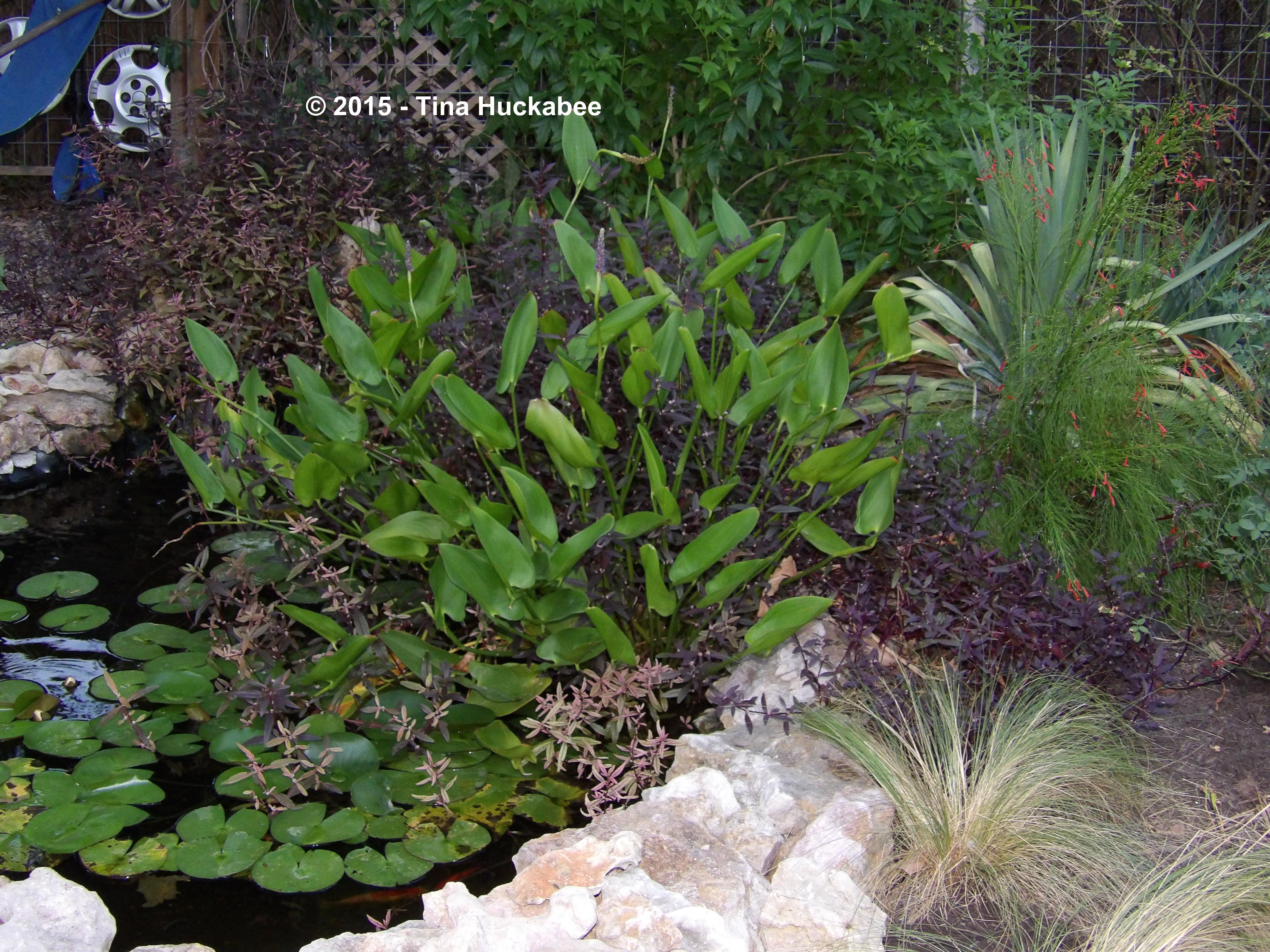
The burgundy Red Ruby Runner, Alternanthera polygoinoides,
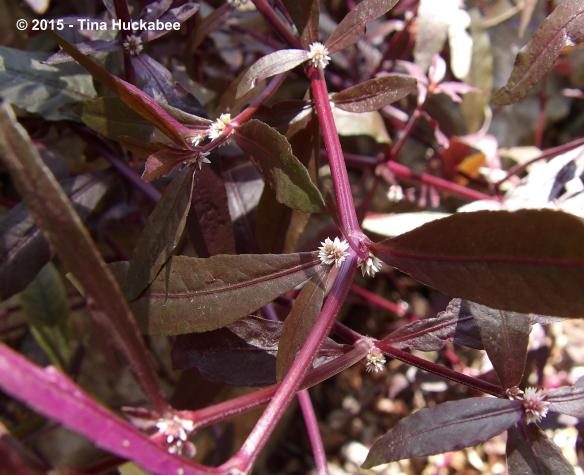
…which is part of the biological filtration of my pond, definitively runs amok during the blasting heat.
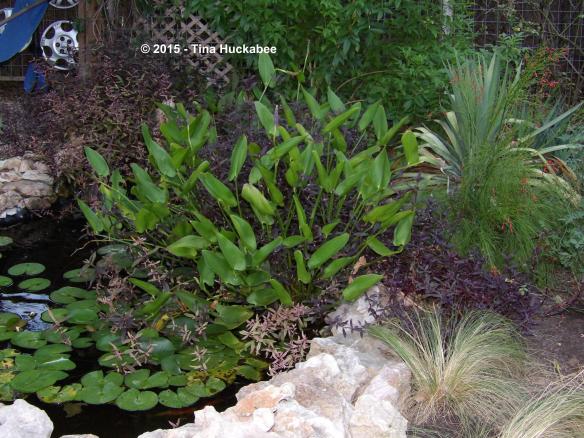
That which sprawls receives no water from the ground, though I’m sure it’s siphoning it out of the pond. It receives sun until about 3pm and never wilts.
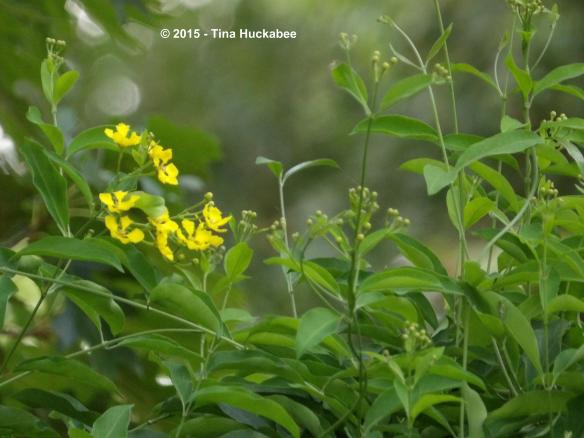
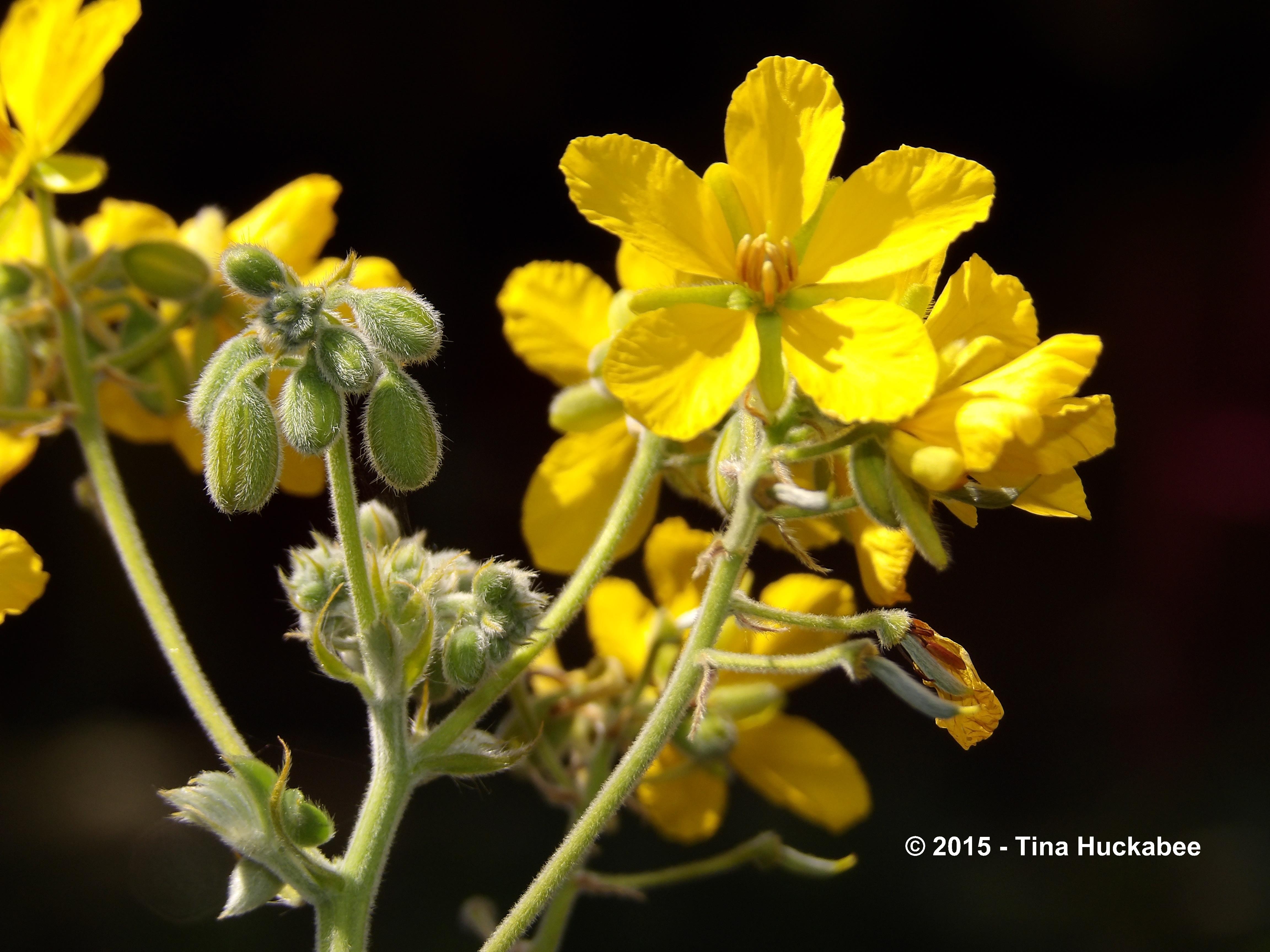
The pretty yellows of the Mexican or Yellow Butterfly Vine, Mascagnia macroptera, began blooming in the heat of July/August and will remain in bloom until the flowers metamorph into the namesake seed pods.
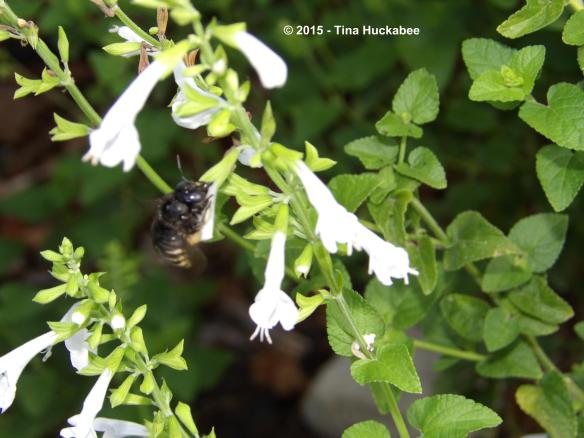
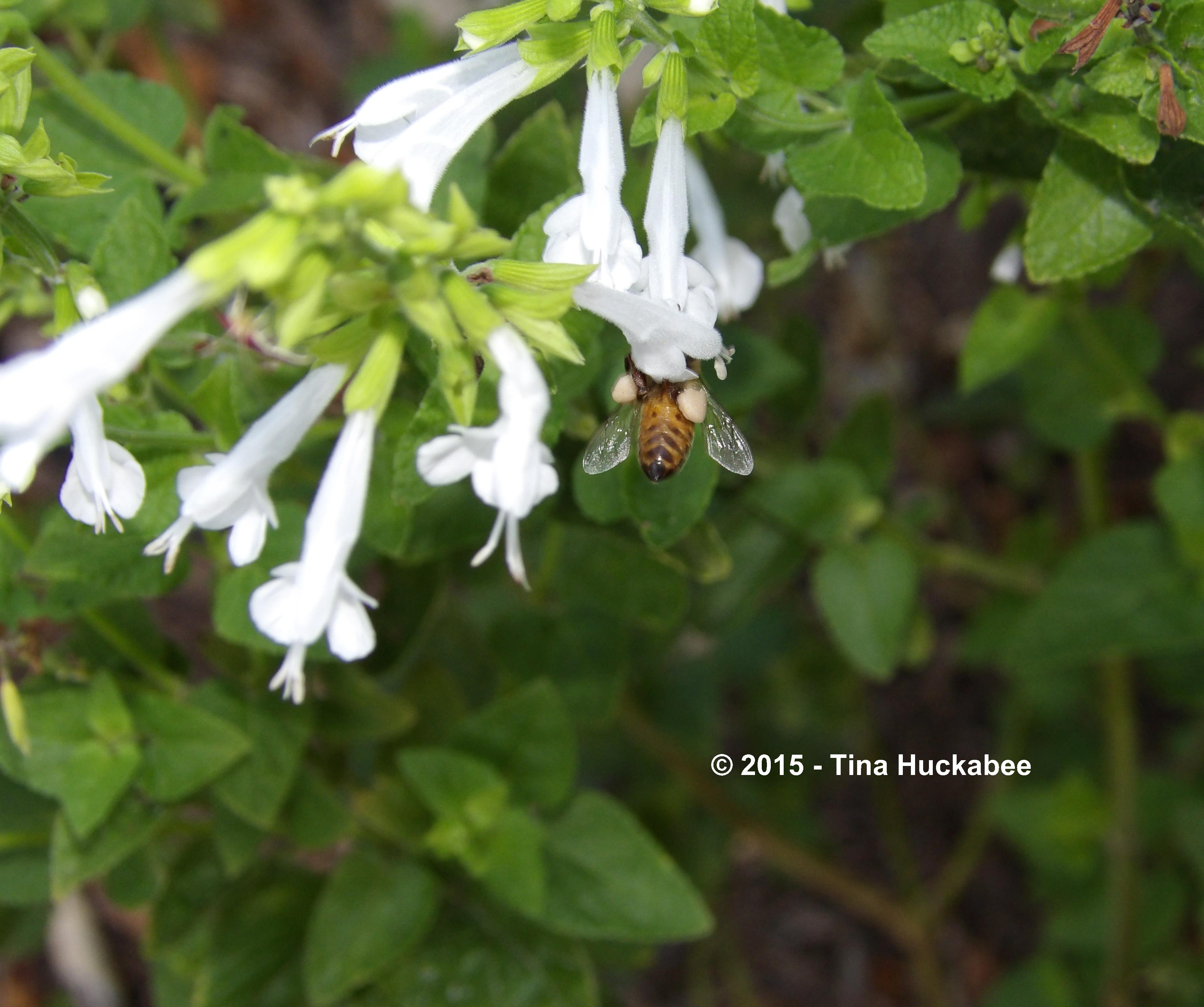
An adored plant of mine, the hybrid white Tropical Sage, Salvia coccinea, flowers in shade or full sun,

…and provides for honeybees,


…and native bees, like this Horsefly-like Carpenter bee,
…and butterflies and moths, like this Small Pink Moth, Pyrausta inornatalis.
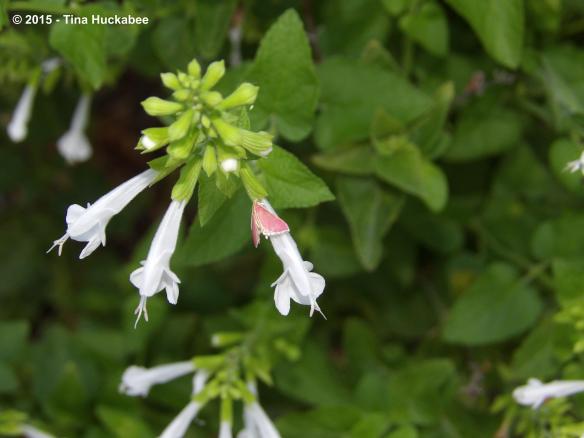
This herbaceous perennial has reseeded itself in my garden for many years. In mild winters, it’ll bloom throughout, but most years it’s knocked down with the the first hard freeze. Returning in spring, the plant focuses on foliage growth, until ramping up the flowering in August. The pollinator-favorite blooms continue until winter’s first blast.
Its scarlet kin, the red Tropical Sage, Salvia coccinea, also picks up bloom speed during the dog days, but doesn’t always return after a cold winter.
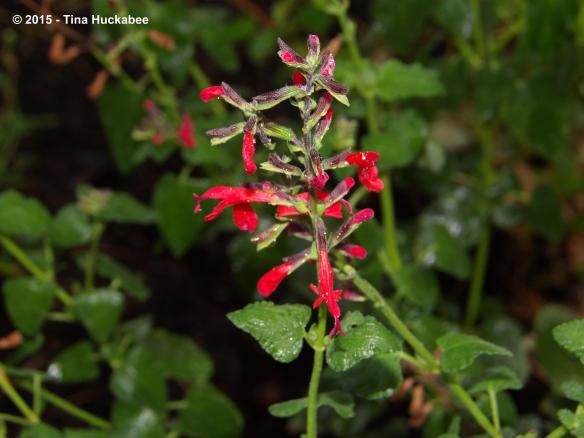
The rich blooms are welcome in the heat and during the autumn months.
Lindheimer’s Senna, Senna lindheimeriana, adds its happy, sunshine voice reliably each August.

Outrageous purple berries form on the American Beautyberry, Callicarpa americana,
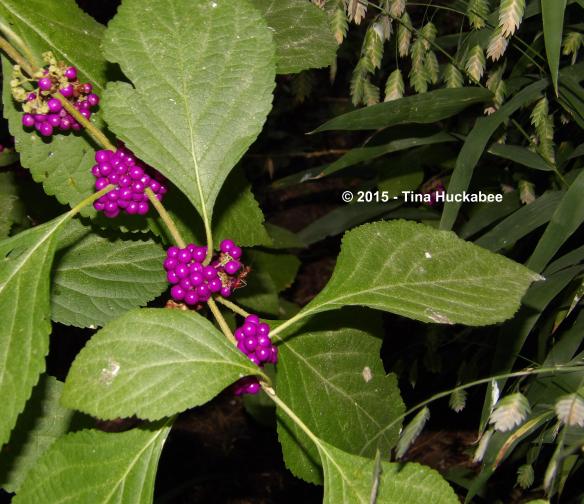
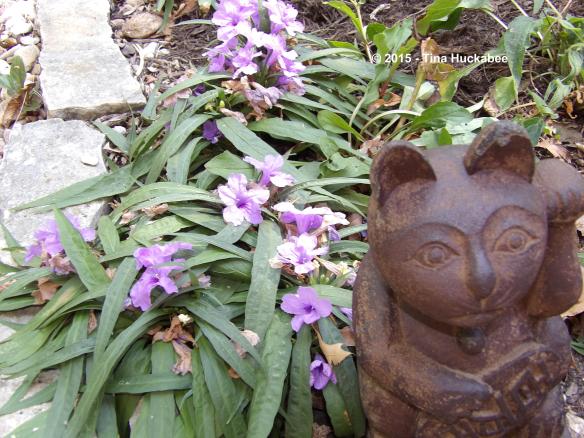
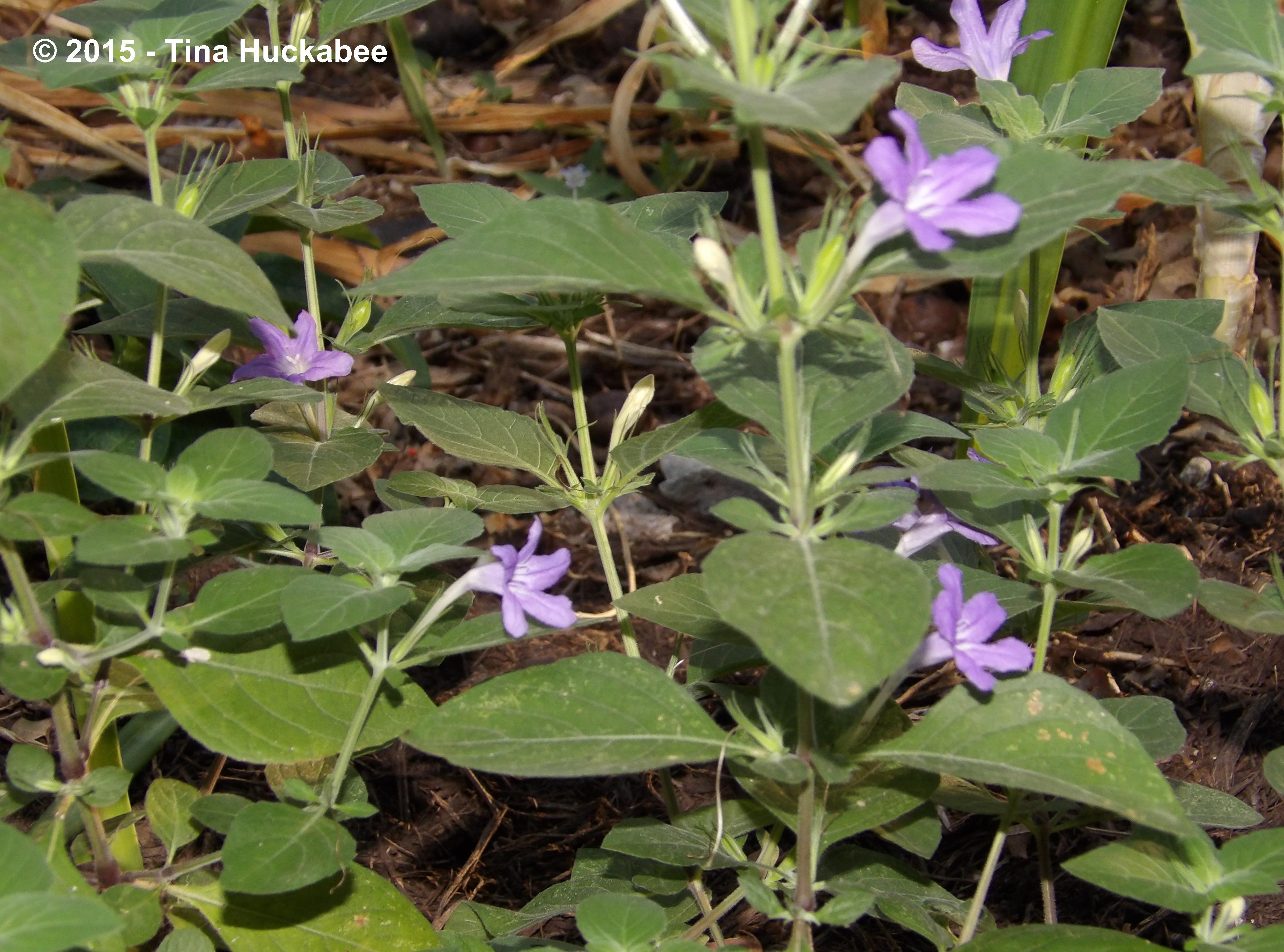
…ripening in August for the birds. Purplicious-ness continues during the broil and toast of late summer with the bloom-up of the native Drummond’s Ruellia, Ruellia drummondiana,

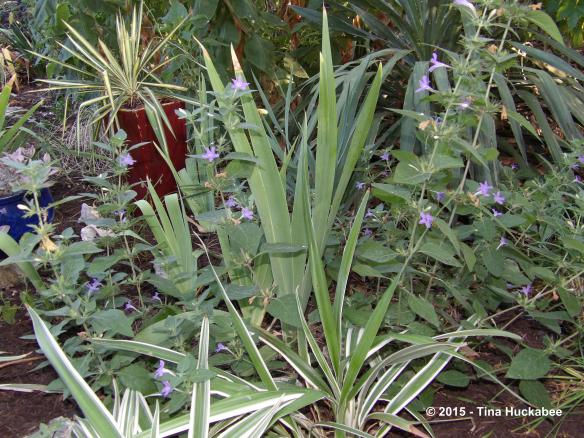
…and the cultivar, Katie’s Dwarf Ruellia.
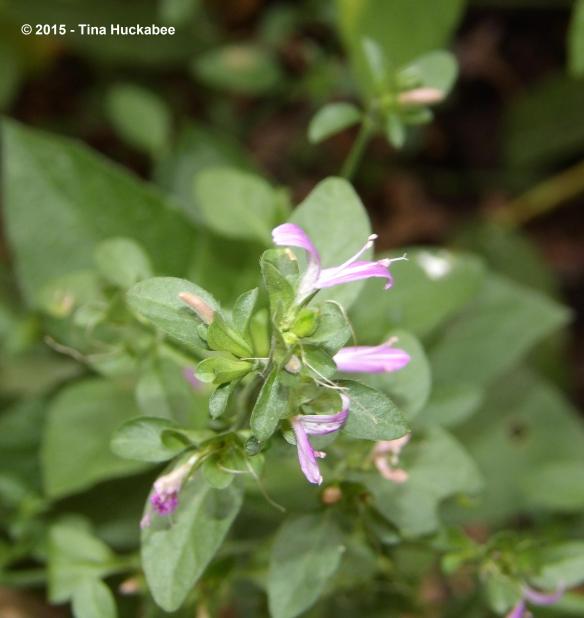
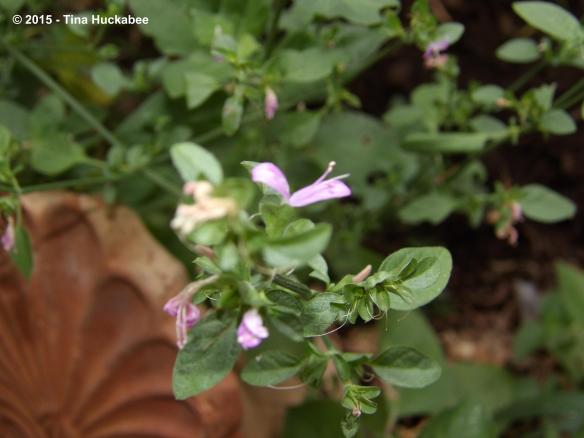
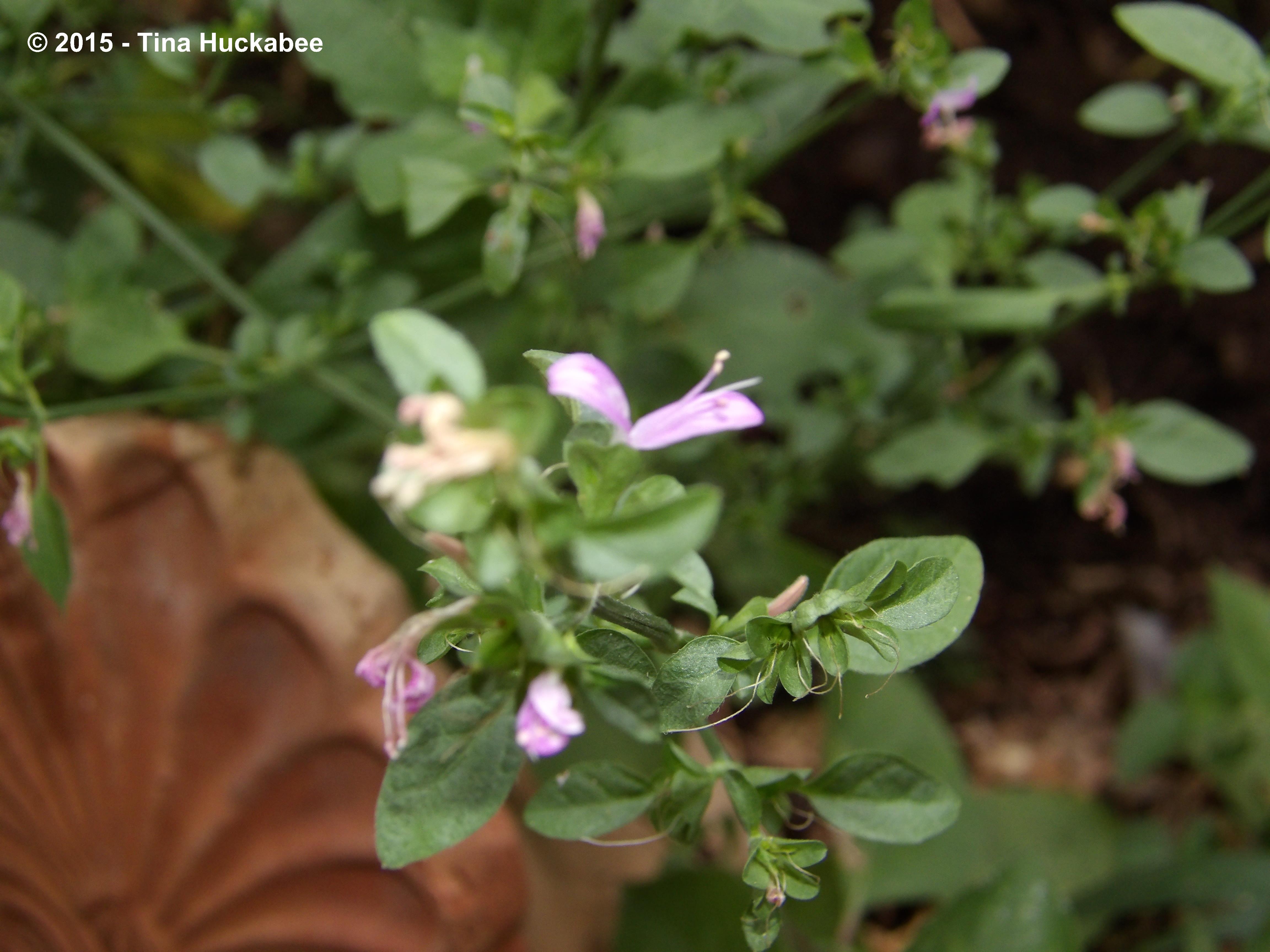
Of a more delicate hue, the new-to-my-garden Branched Foldwing, Dicliptera brachiata is dainty, but apparently tough in the Texas heat.
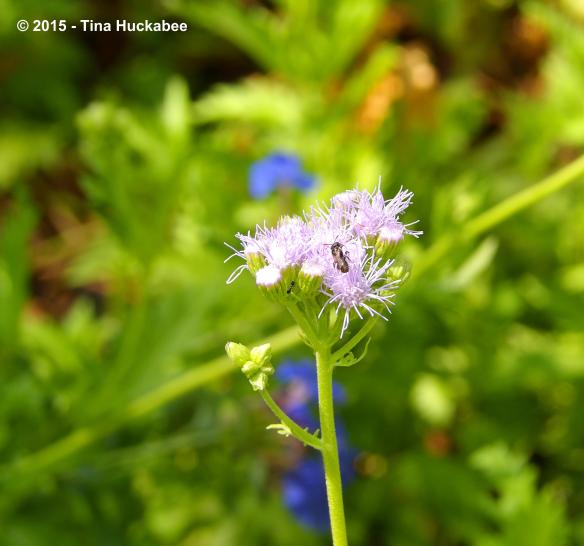
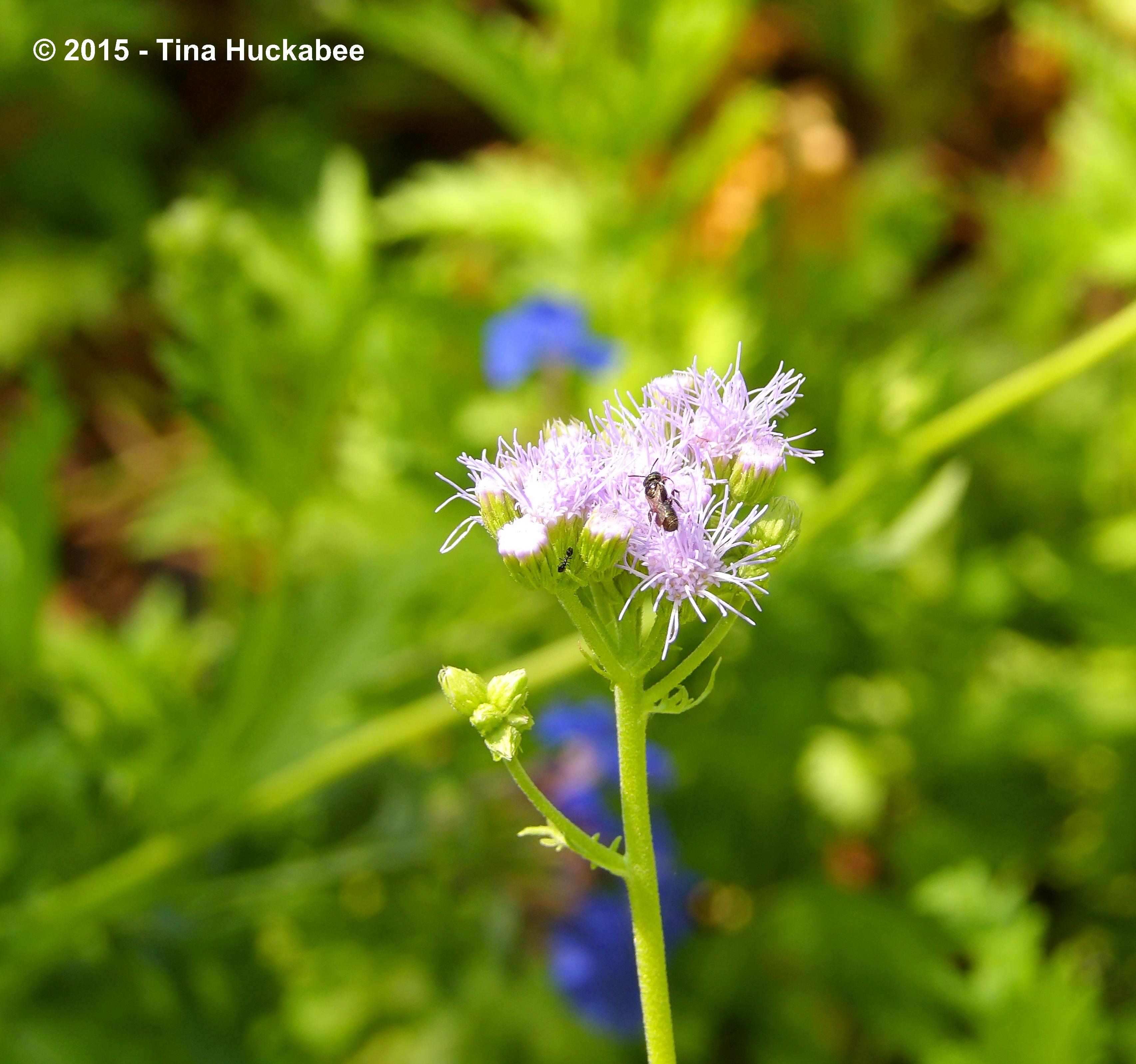
A few Gregg’s Mistflower, Conoclinium greggii, blooms have opened up for fuzzy fall business before things actually cool off, much to the appreciation of the tiny native bee (Perdita ignota?) working the bloom.
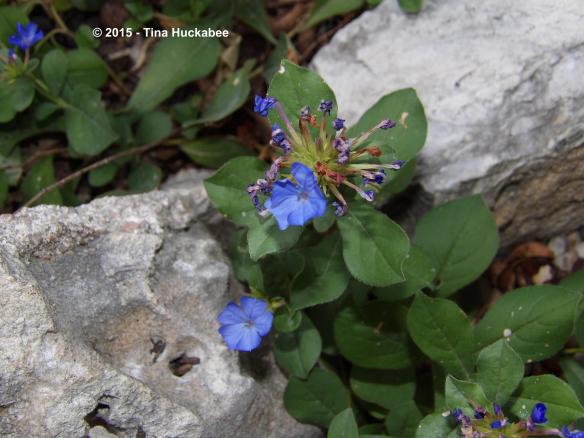
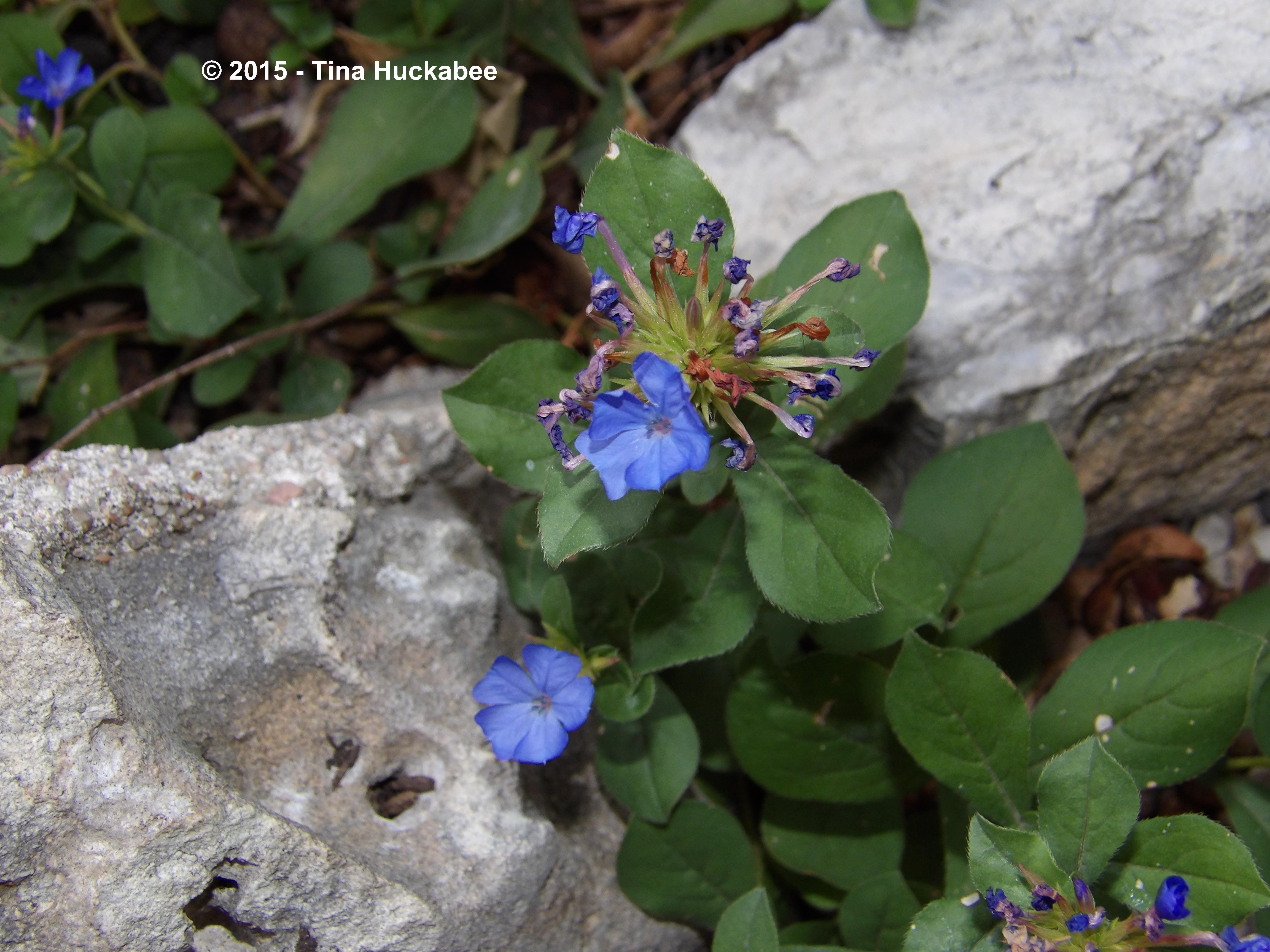
Intermingling with the native Gregg’s Mistflower is another groundcover, the non-native Leadwort Plumbago, Ceratostigma plumbaginoides.
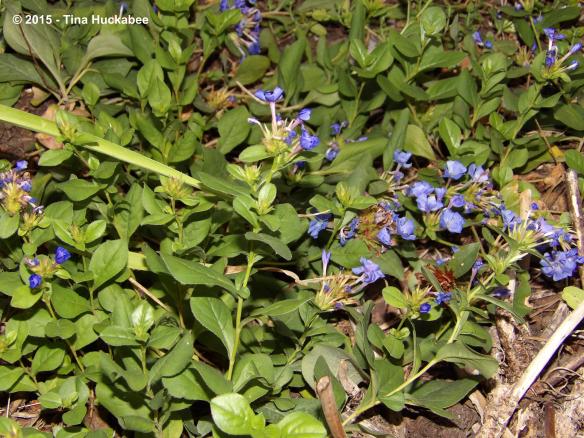
Bright blue flowers and attractive foliage thrive in July and August heat, reflecting the clear blue Texas sky as fall approaches.
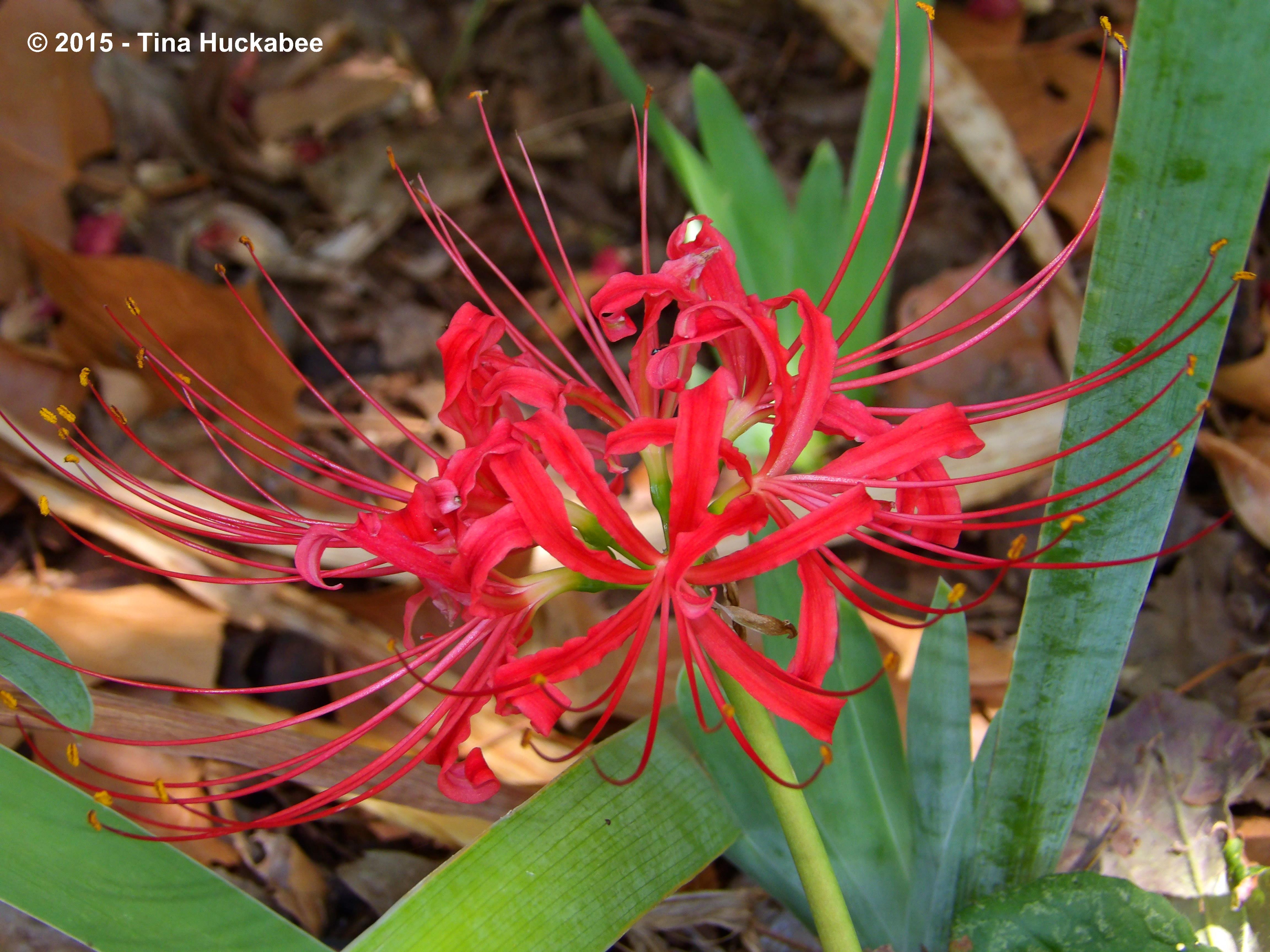
Emerging seemingly overnight at the end of August/first of September, I always forget that they’re part of my early fall garden–the dramatic and ridiculously red, Red Spider Lily, or perhaps I should use the other name, Surprise Lily, Lycoris radiata,

I should have taken a wider shot, because you could then see the cracks in the soil adjacent to where that gorgeous thing popped out of the ground.
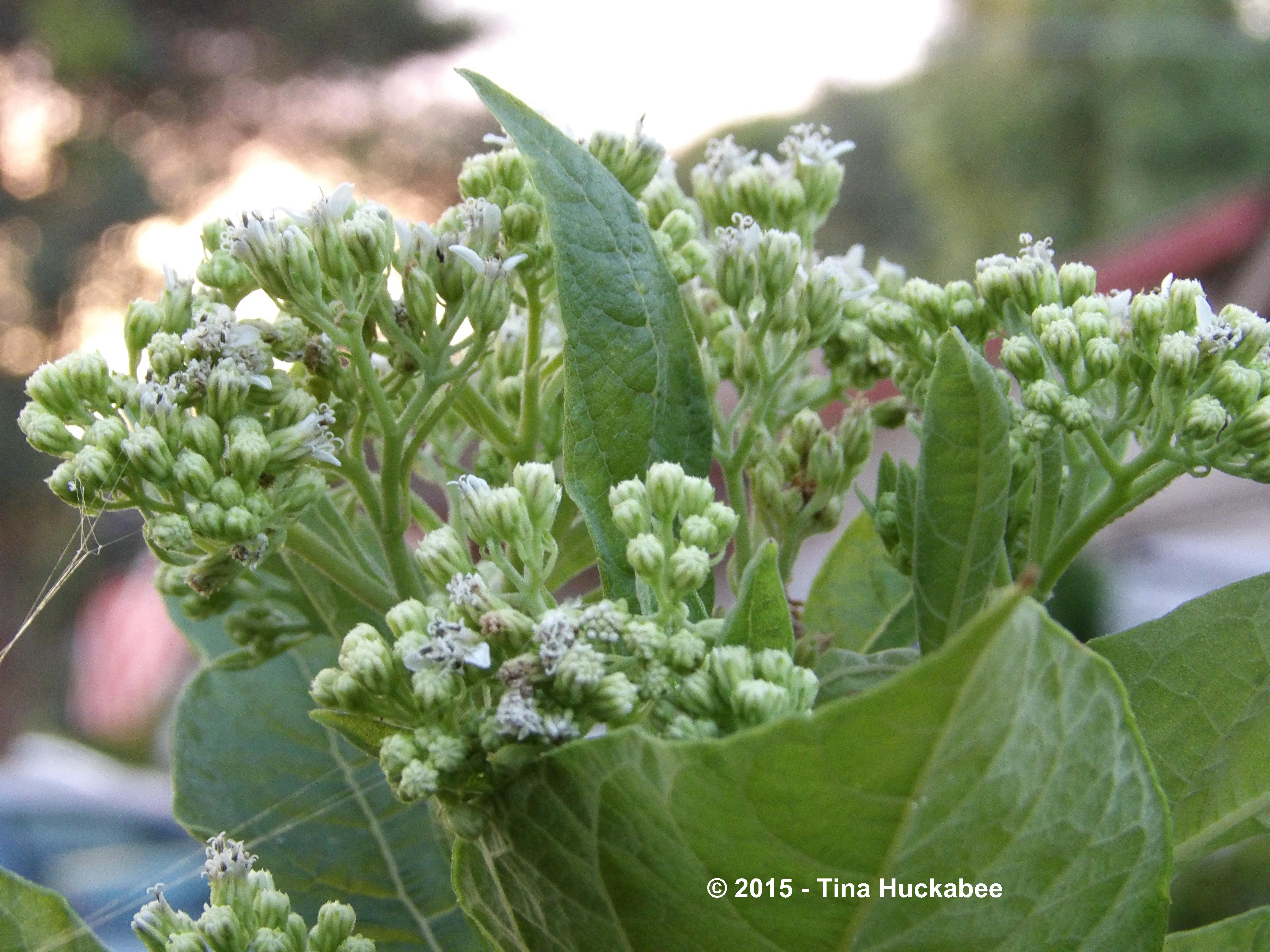
Preparing to greet the migrating Monarch butterflies, Frostweed, Verbesina virginica, dons its cauliflower hat in August, though it’s considered a “fall” bloomer.

The pinnacle of blooming coincides with later cooler temps and more butterfly action.
With its tiny, pink florets and bright red berries that follow, Pigeonberry, Rivina humilis, keeps its cool for a long flowering and berrying season.
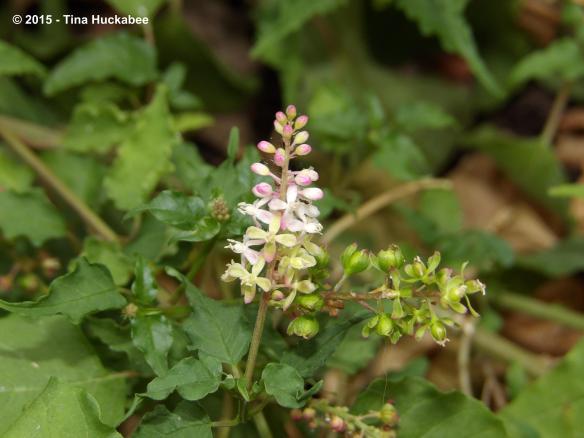
Especially lush and welcome during the hottest of the hot, mine usually begins blooming mid-summer and will remain in bloom-n-berry mode until the first near-frosts in November.
Very few perennials flower for as long and prolifically as does the Turk’s Cap shrub, Malvaviscus arboreus.
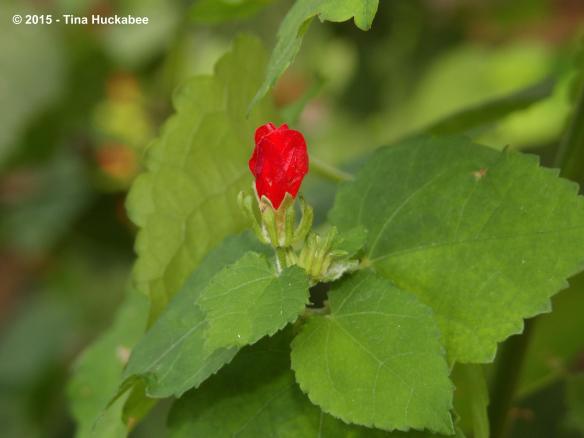
As if it knows that September heralds the end of flowering season, Turk’s Cap throws out masses of petite, crimson flowers and fruits for a couple of months, preparing for nectaring by migrating hummingbirds and Monarchs and munching by birds prior to winter.
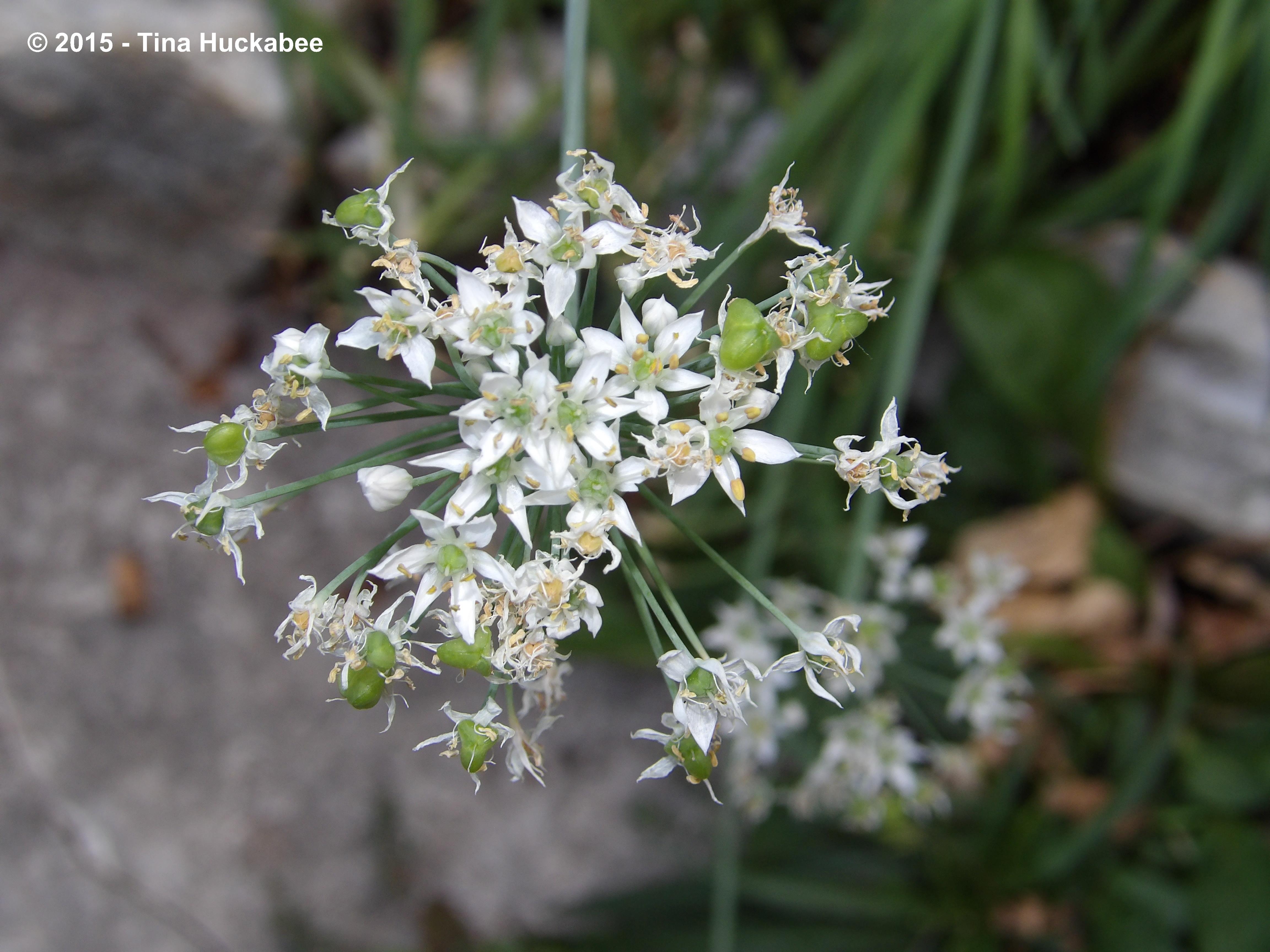
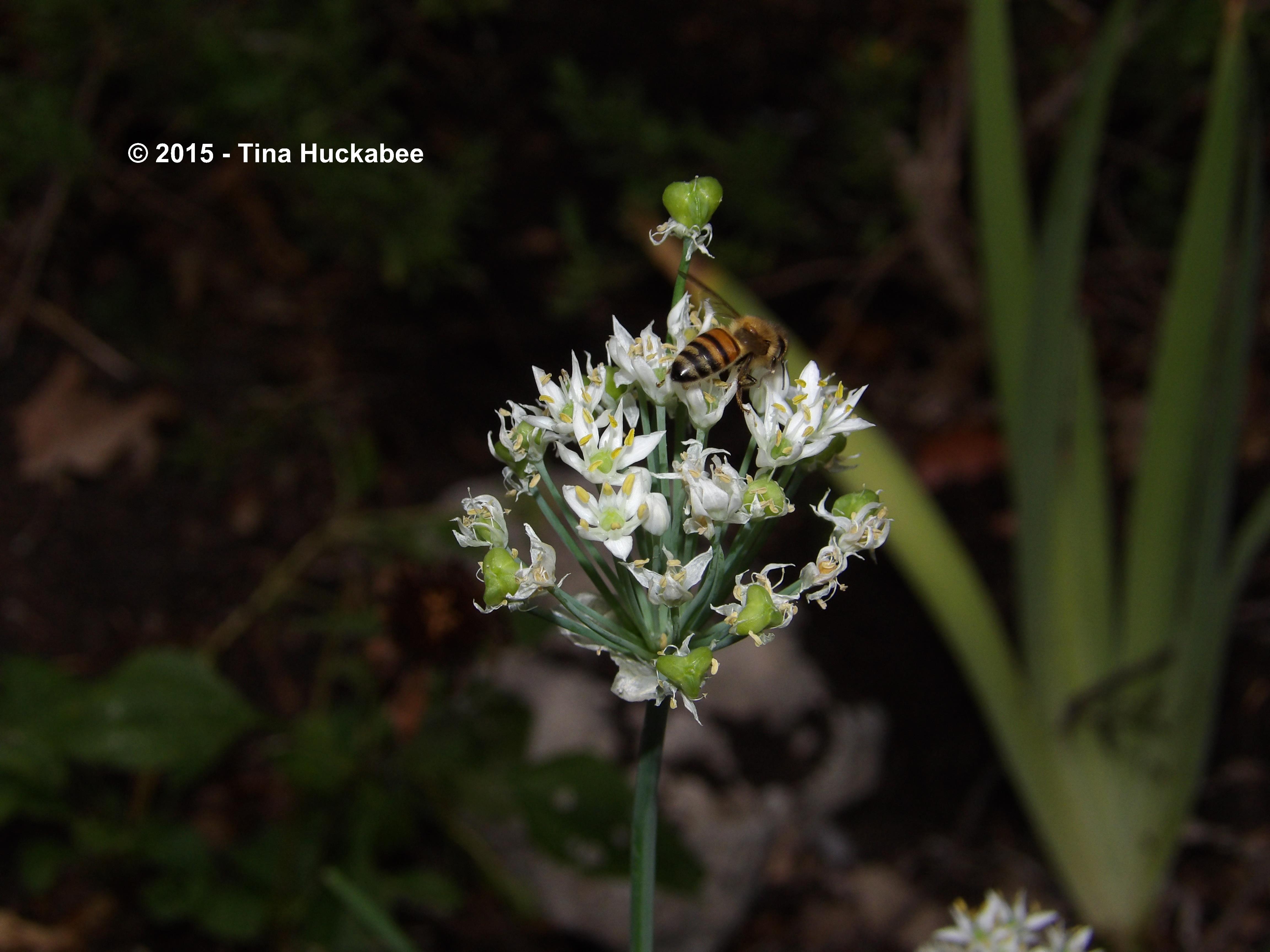
This is the first year that I’ve grown Garlic Chives, Allium tuberosum, but am loving their cool white in my garden.
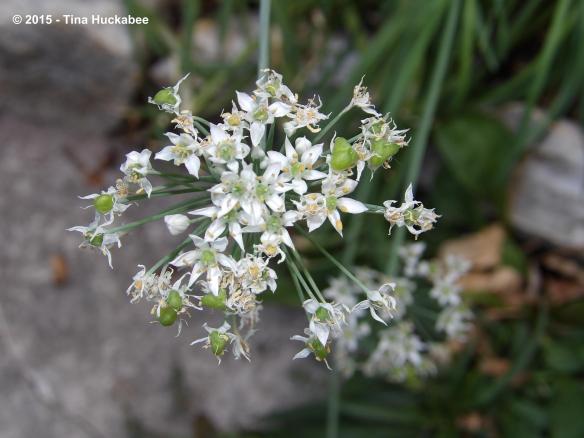
Blogging buddy, the fabulous TexasDeb of austinagrodolce, gifted to me several clumps of this perennial plant and culinary favorite last August.
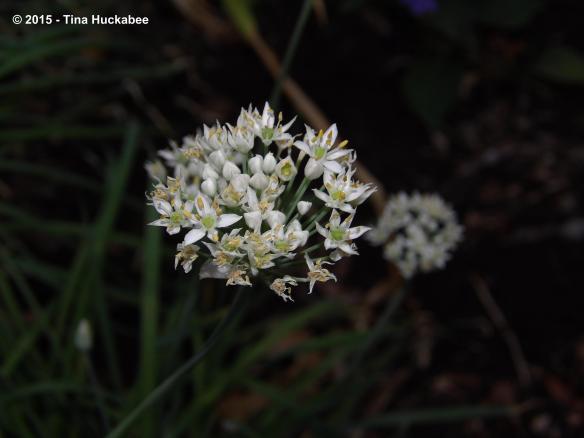
Along with this gardener, the bees are happy about this plant too. Garlic fall honey, anyone??

All of these plants thrive during the downside of our summer months, as the change in sunlight, though not a fall in temperature, suggests a seasonal lumber toward autumn. Hardy in tough conditions, none need much water or care.
September: the time when most of the Northern Hemisphere cools and readies for autumn, preparing for the end of the blooming cycle for the year. Here in Central Texas we won’t experience that chill for a little while yet. September blooming and berrying are the harbingers of change–the beginning of our second spring–the autumn flowering that is our reward for July, August and, at least in some part, of September.





















 My Gardener Says...