Beam Me Up, Scottie!

I think bees are the ‘bee’s knees’.
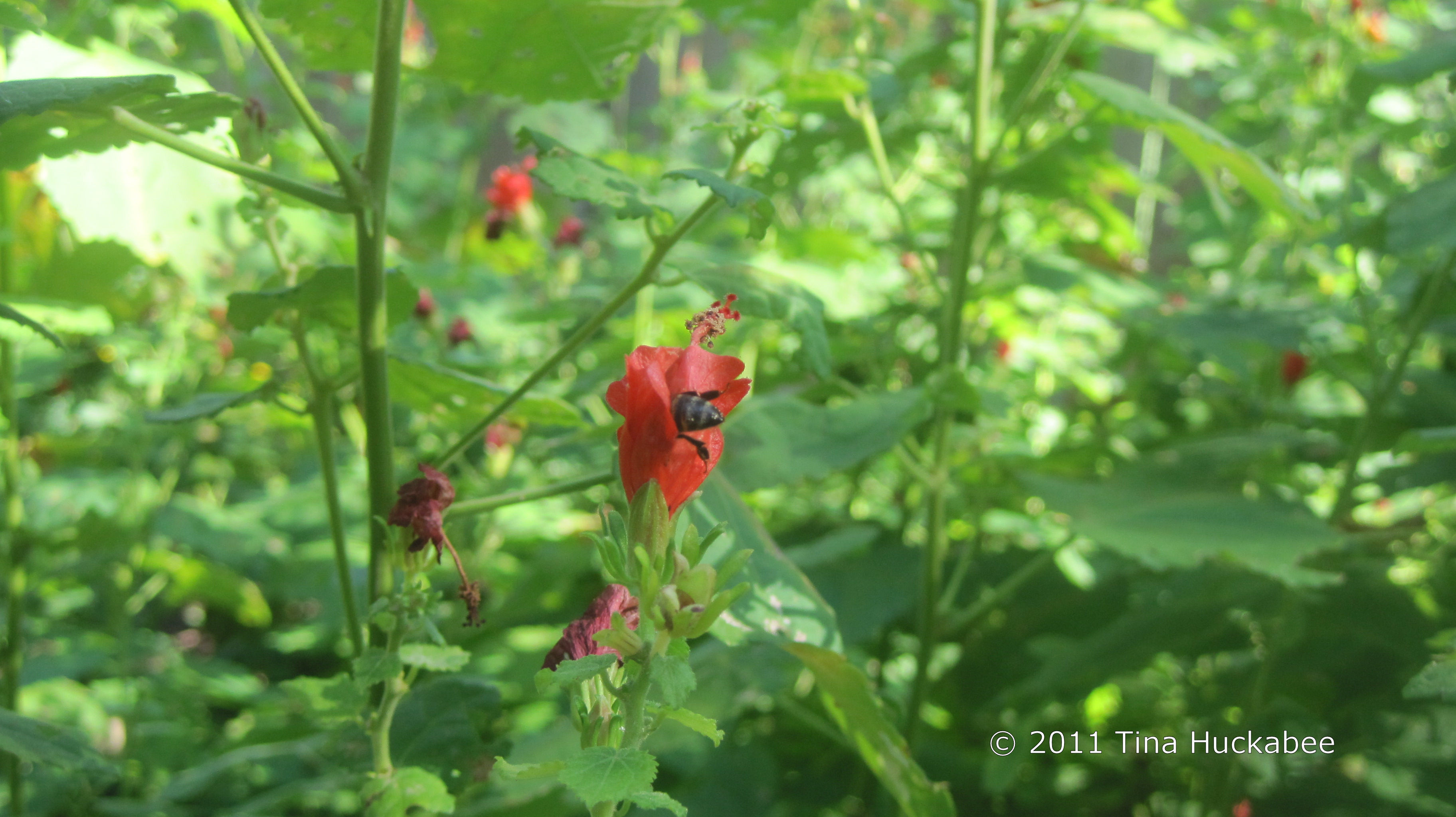
I love their work ethic.
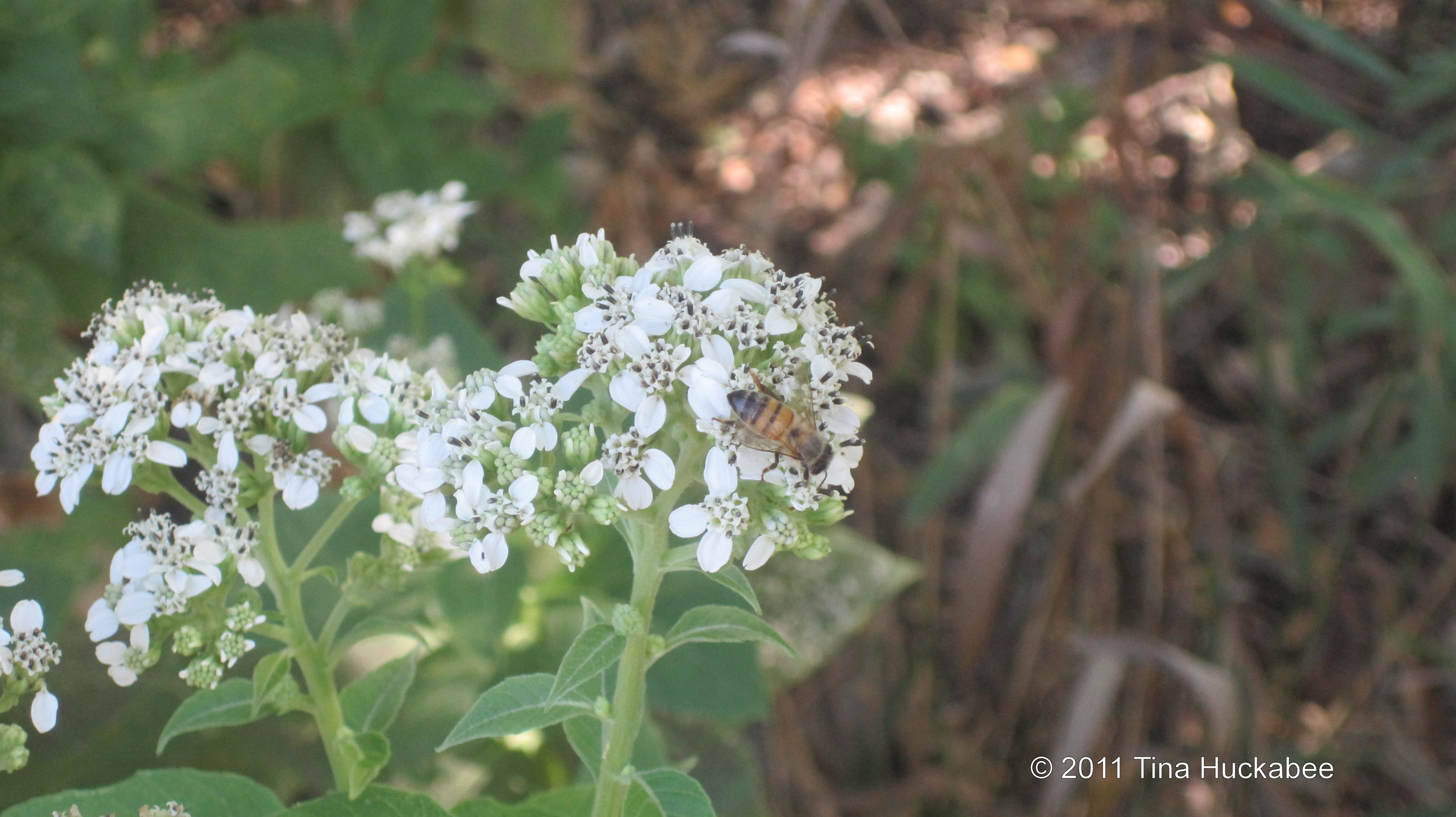
I love what they do for plants.

And I love what they do for the world.

Last November, on a chilly, breezy Sunday afternoon, I attended a basic beekeeping class sponsored by Round Rock Honey.   In the class, there were about a ten other students, with varying interests in bees and the production of honey.

Here we are, in our very attractive bee suits.

I’m reasonably sure that I saw these suits in one of the shows from the original,  Star Trek series.
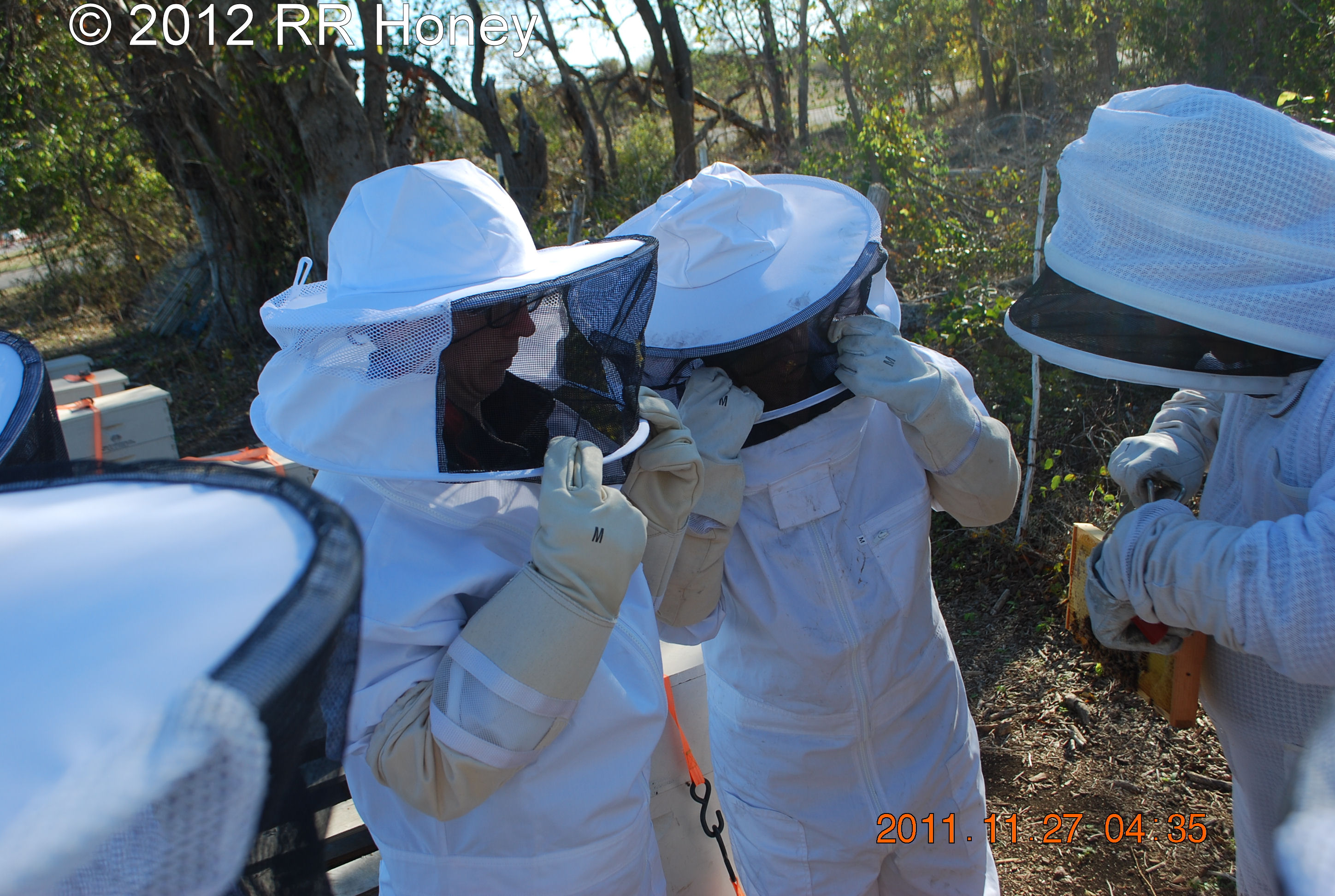
It’s fascinating to see the bees in their hive and the accompanying honey stores.

It was interesting to watch the bees actually calm down with the introduction of smoke–it really works!  (Though to be fair, it was very cold and windy that day, so that might have played a role in their lethargy of movement.)

I’m now in the process of ordering bees (yes, you can do that!), to place in my new bee hives that my nice husband built for me.

My interest in beekeeping stems from the invasion of my Eastern Screech Owl house by a little swarm of honeybees last May.  The day after the two owlets left the house for good, I noticed  a few bees buzzing about the entrance hole.  Within two days, there was a bona fide swarm in the owl house.    I knew that I didn’t want the bees exterminated, so I Googled beekeepers in/near Austin and hired Brandon Fehrencamp of Eastside Honey Co. to safely remove the hive without killing the bees.  The bees were in the owl house for about three days and when Brandon opened the owl house, I was amazed to see how much honeycomb was built in that short period of time.  After he safely vacuumed the bees into another container to relocated them to new hives, I extracted about two tablespoons of honey which I shared with neighbors.

I decided that it would be interesting to someday build some hives (I’m allowed two in the city limits of Austin, with some restrictions) and tend bees. I figured beekeeping would be a good empty-nest project. But, for my birthday last fall, my husband built a set of hives for me.  (Most women get jewelry, flowers or an extravagant dinner at an elegant restaurant.  Me?  I get bee hives.)

I prefer the bee hives!

The hives are Warre type hives built from untreated cedar.
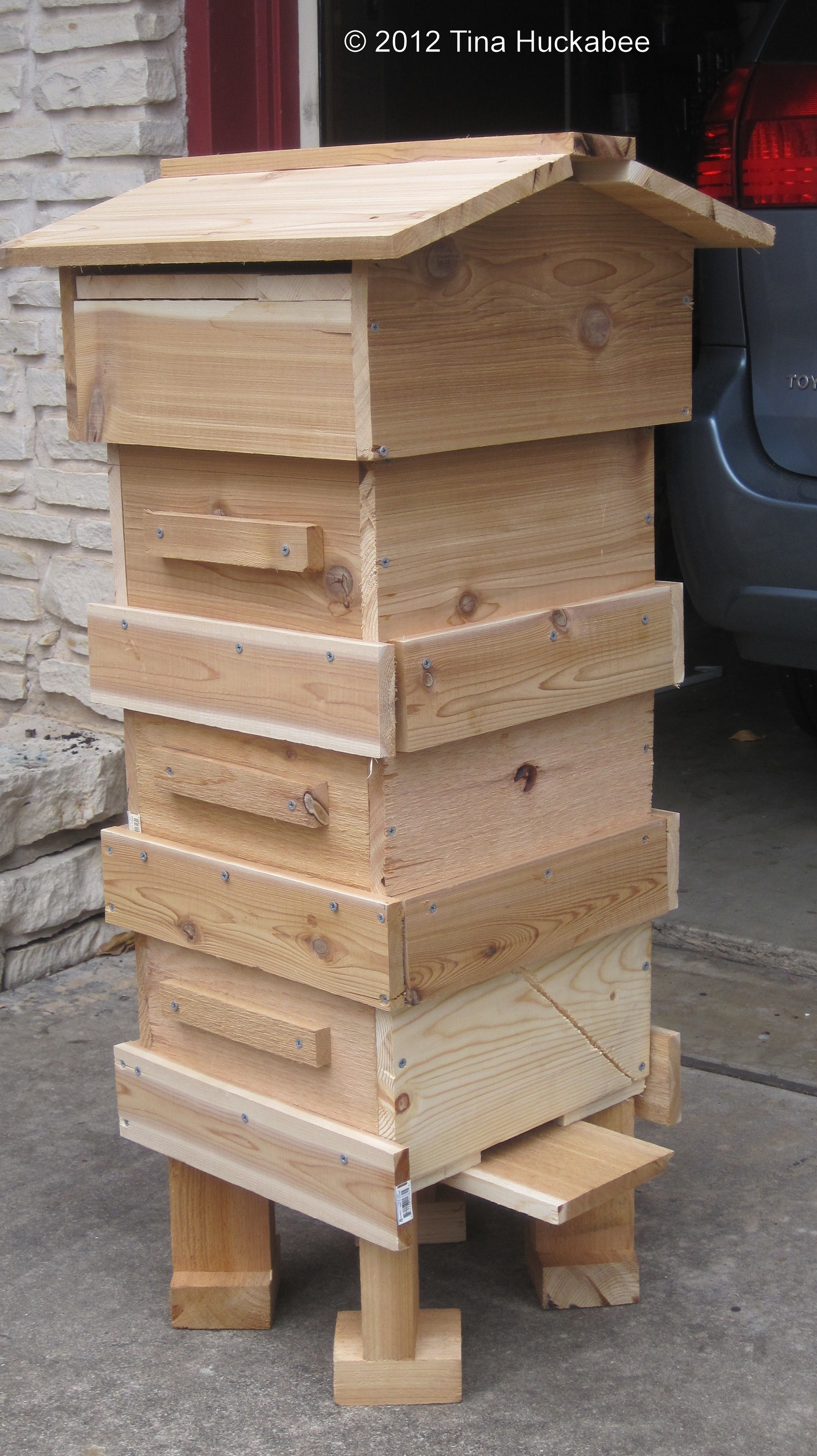
The bee houses were supposed to be a surprise, but I figured out what he was building, especially after he nearly cut his finger off and we had to spend a Sunday afternoon in a local ER.  Sigh.

The queen and her workers won’t arrive until April, so we’ll finish the work on the frames (where the honey is stored) and continue our study of home beekeeping.

If you’re interested in learning more about bees, check out BeeWeaver Apiaries and Urban Beekeeping in Austin, Texas.

Live long and prosper, little bees.

Damn Dog

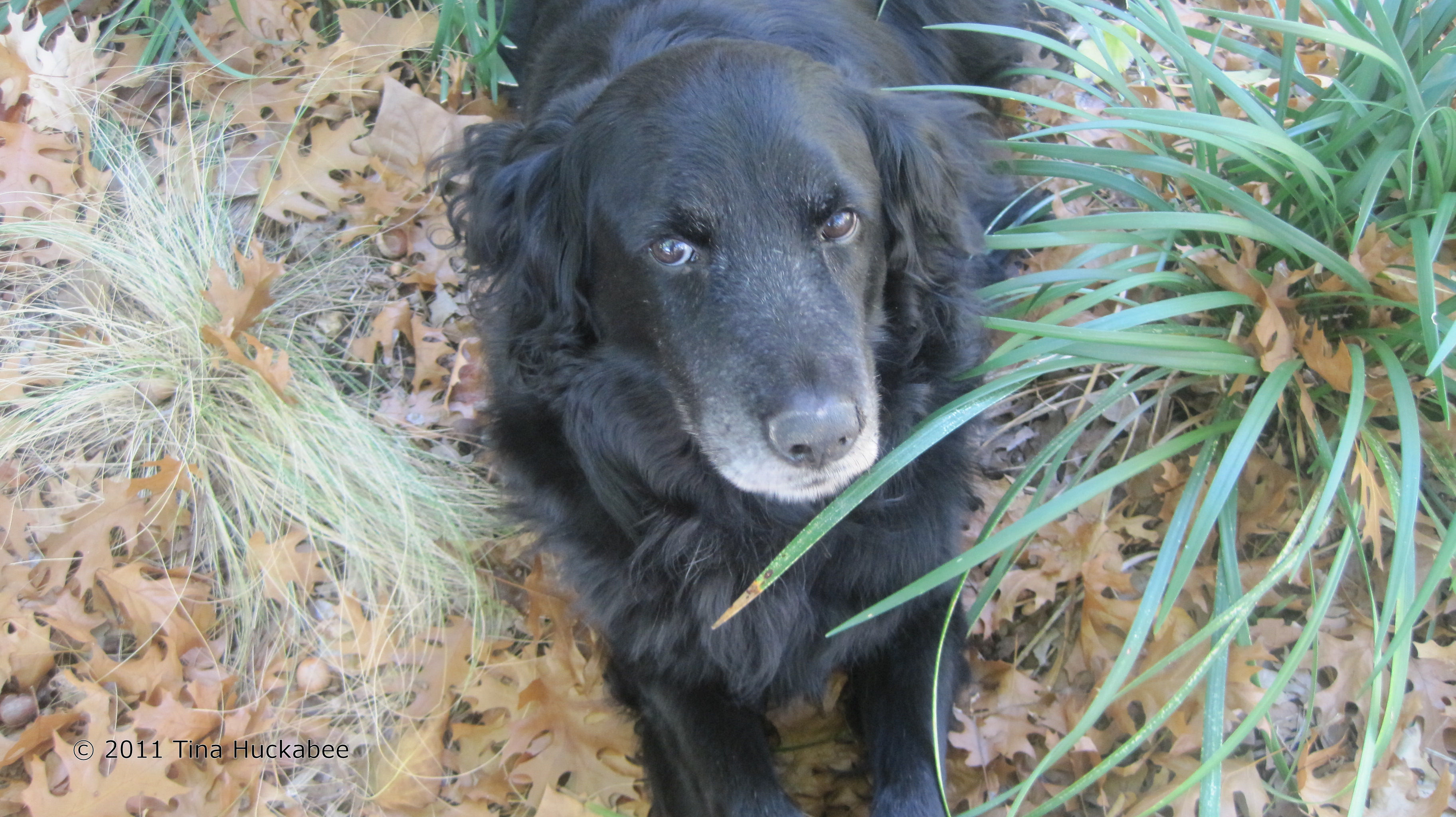
I love my dog.

I really do.

He’s a more loyal companion and friend than some of the people I’ve known. But it’s sure hard to garden with a dog around.

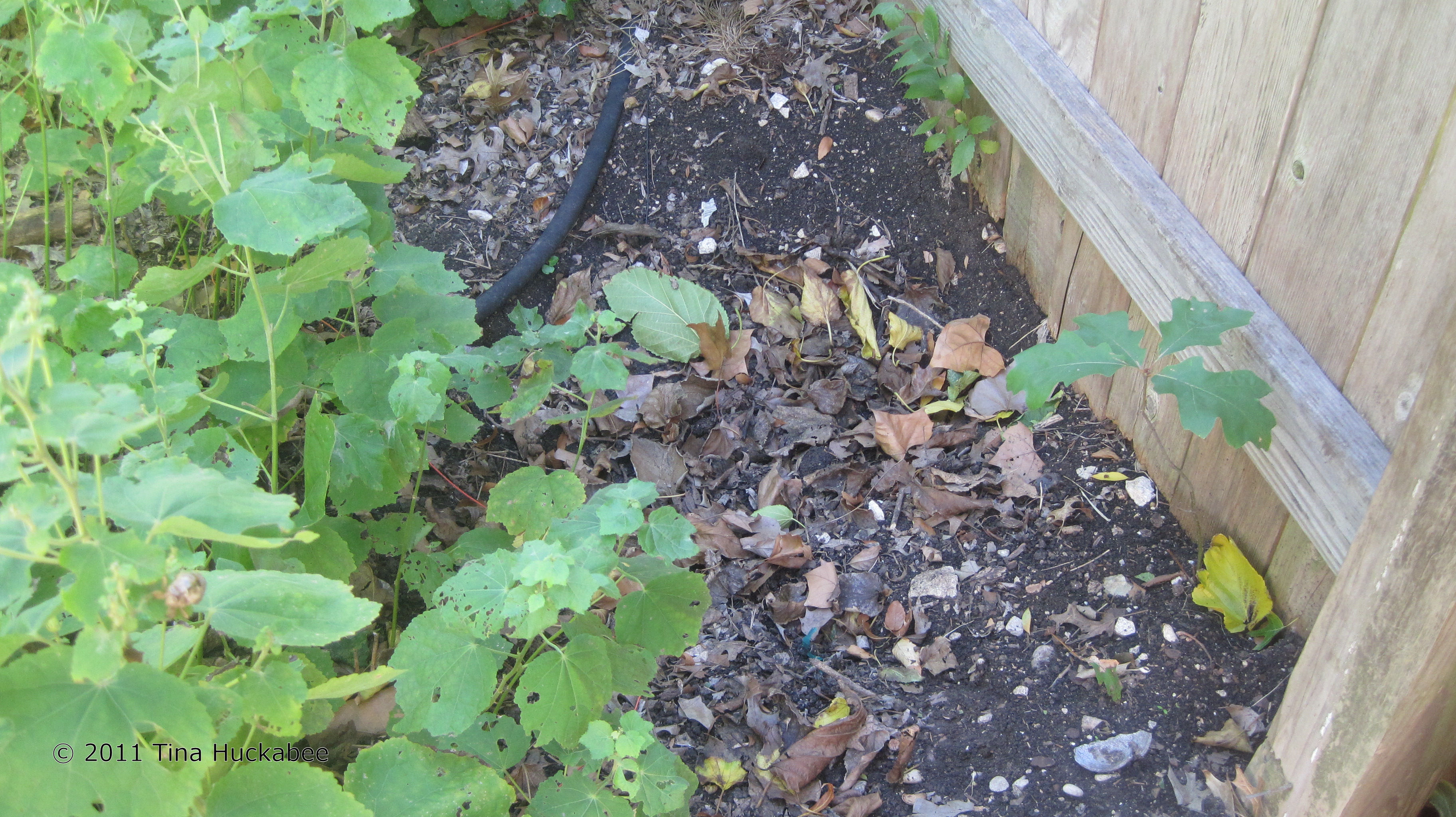
He digs.

Beside the compost bin.

And digs.

Behind an old stand of Turk’s Cap.

And digs.

Under the fence and non-native honeysuckle.

Before you say, “Gee, maybe if she walked him….”  He’s walked two or three times a day, every single day, rain or shine.   And I’ve allowed him the space for digging because he likes it and it’s not damaging any part of my gardens that I genuinely care about.  I have plans for screening that will help hide the one particularly unsightly area (under the fence) that Asher has created, but I wish it hadn’t been necessary to add yet another project to my already long list.

Actually, he’s better behaved than many dogs.  He’s never romped through my gardens, ripping things out with abandon.  He doesn’t dig up newly installed plants.  He doesn’t urinate on seedlings–something to be thankful for.

I never see photos in garden magazines and books, showing the havoc that dogs can wreck in a garden.  Those publications tend to showcase the perfectly coiffed garden–no bloom or leaf out-of-place.  I don’t know what color the sky is in their world, but it isn’t the same as in mine.  In the real world, gardeners have dogs and gardens and attempt to enjoy both without too much fret and stress.

I’ll share a funny story.  So, I let the remains of a large part of my grass area  in my back yard die this past year.   Mostly I did this because I wanted to reduce the turf area, reduce water usage and lessen general maintenance.   Also, my beloved dog  rolled in the grass and there were bald spots developing (in the grass, not on the dog), so I was more than happy to get rid of what remained of the grass.  I used layers of newspaper and then mulch on top, so that any errant roots still alive wouldn’t return.

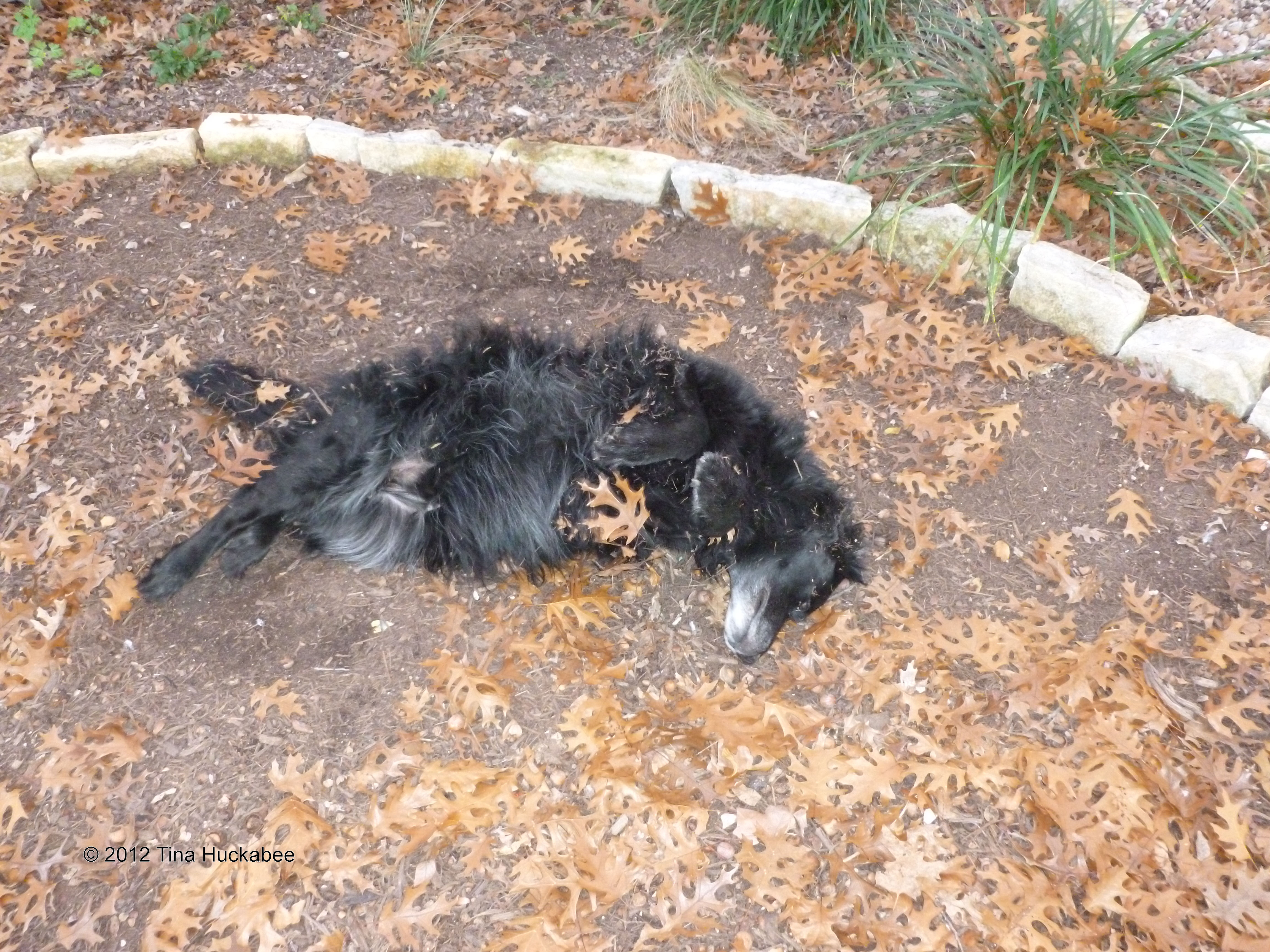
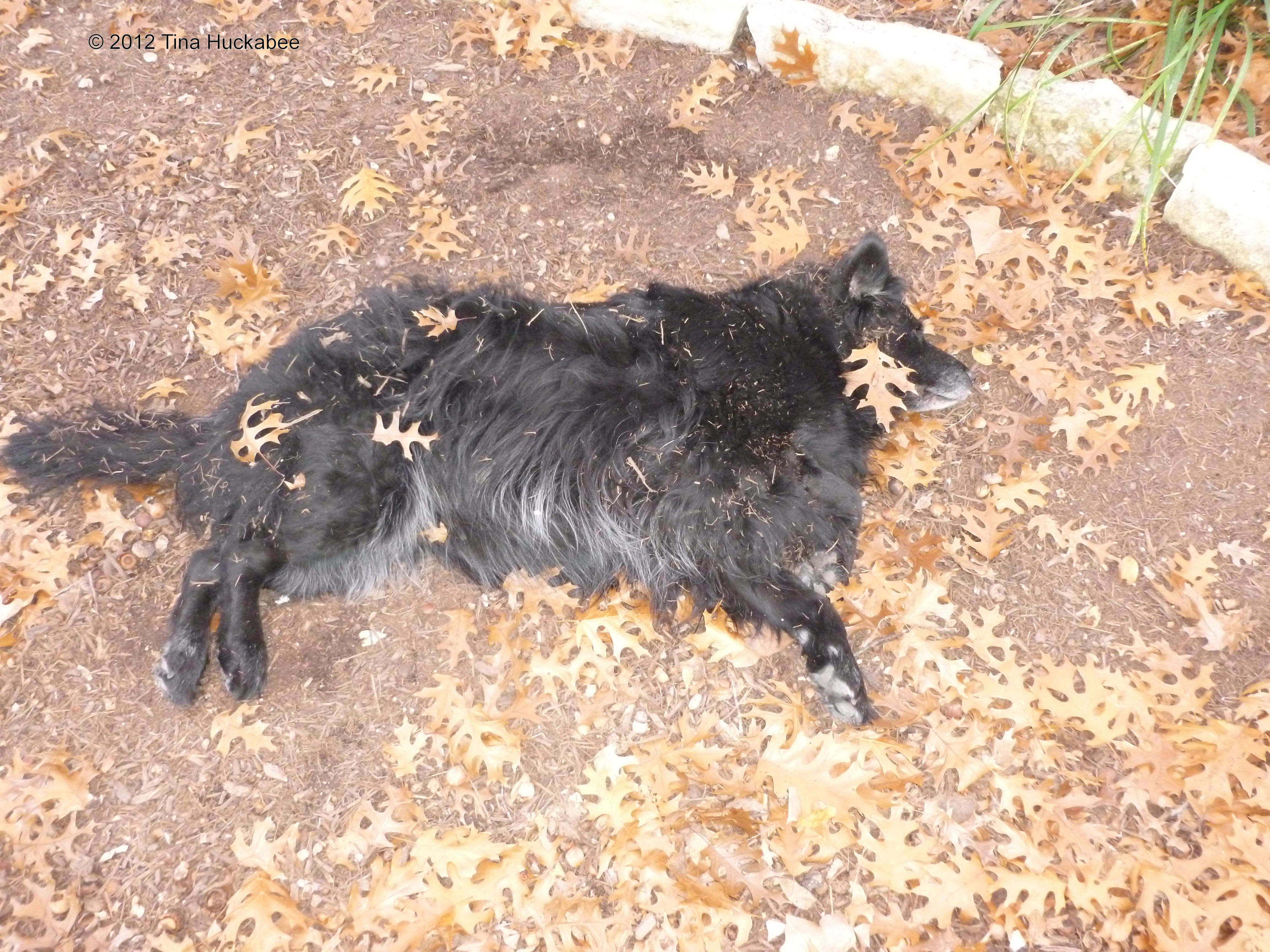
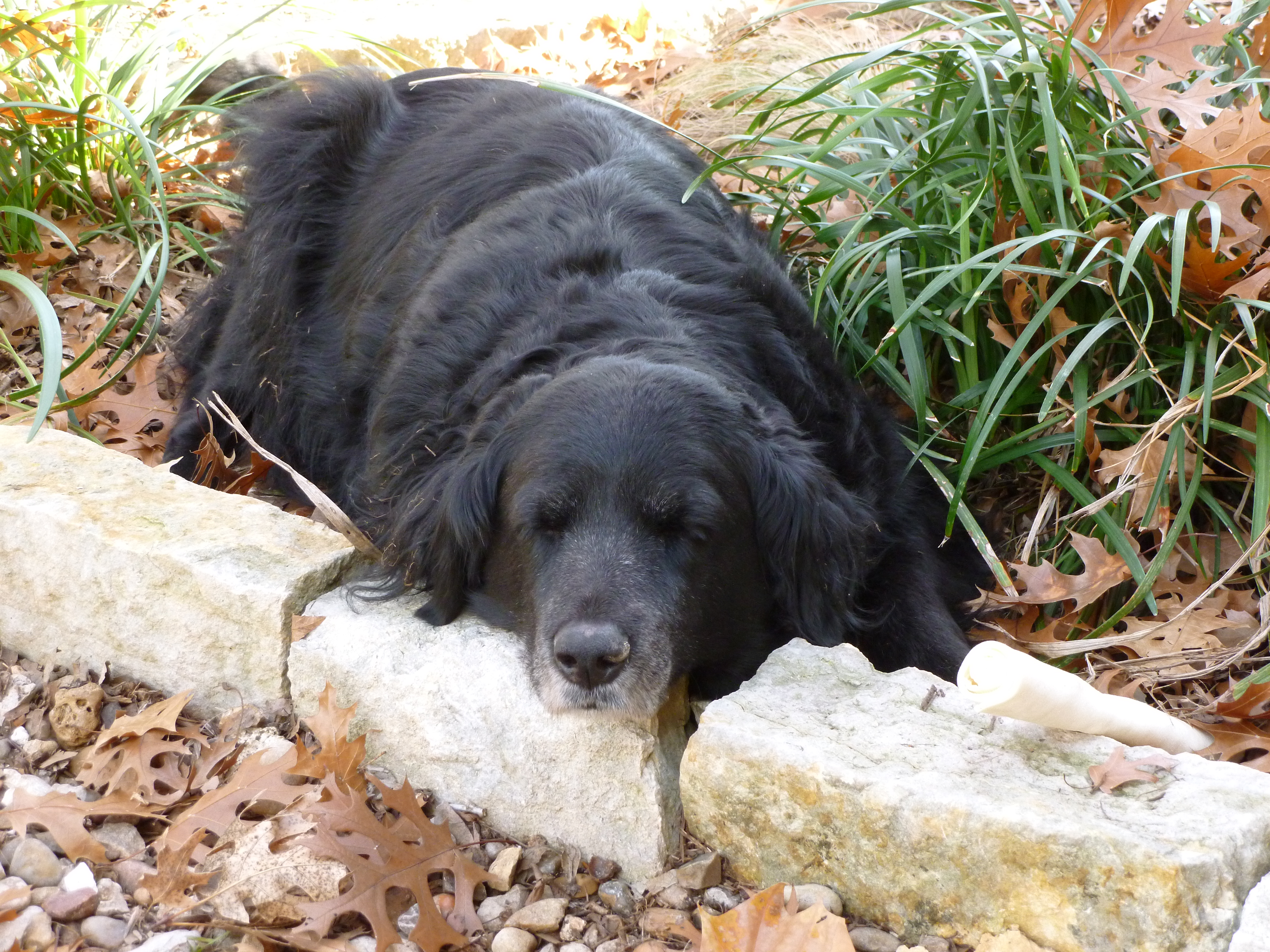
Every chance he gets, Asher lumbers out to that particular area and rolls,

and rolls,

and rolls.

Aaah, that feels soooo good!

Right. So much for low maintenance!

It’s true that I don’t have to water, mow or edge the area, but some days I have to brush Asher five or six times so that the floors in my house aren’t sprinkled with mulch and leaves.  My son claims I say, “Damn Dog” every time Asher goes outside and wants to come back inside, oblivious that he is shedding mulch and leaf bits all over the house. (Thank you very much, Asher, but the tile and wood floors don’t need mulch!)

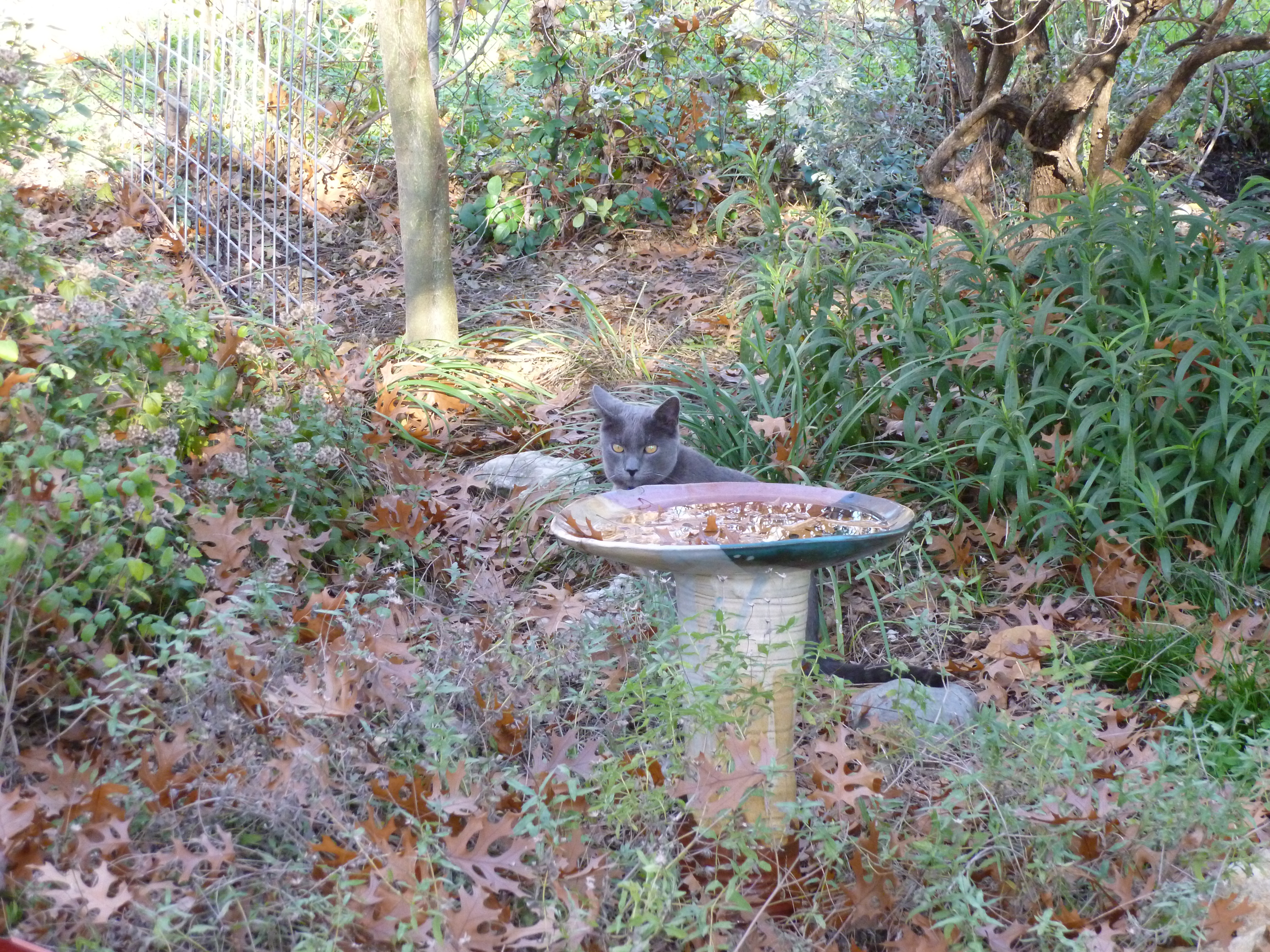
Even our cat, Nuri, thinks he’s an idiot and would never do such a thing. (No, he just catches birds–or attempts to.  Damn cat!)

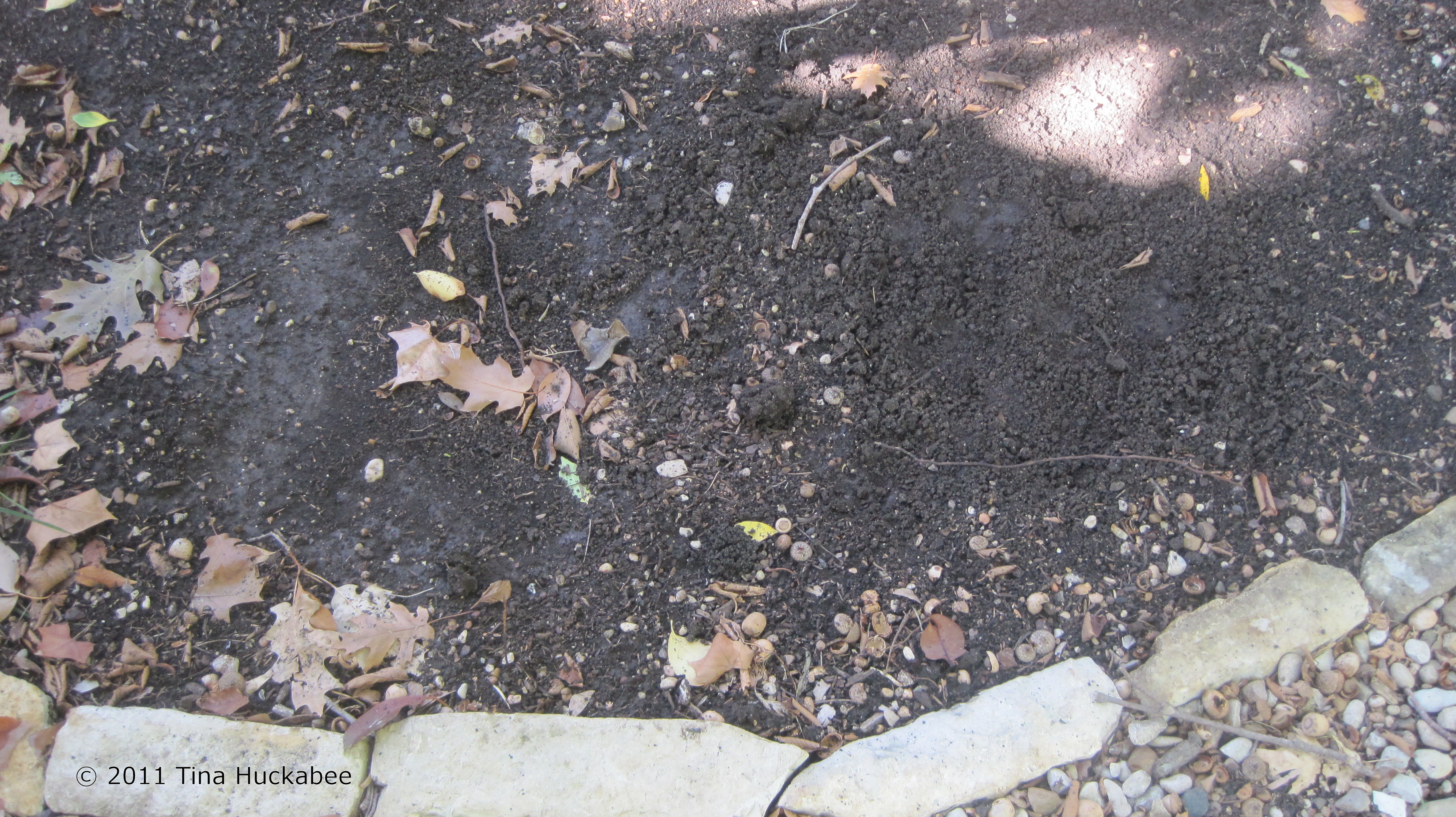
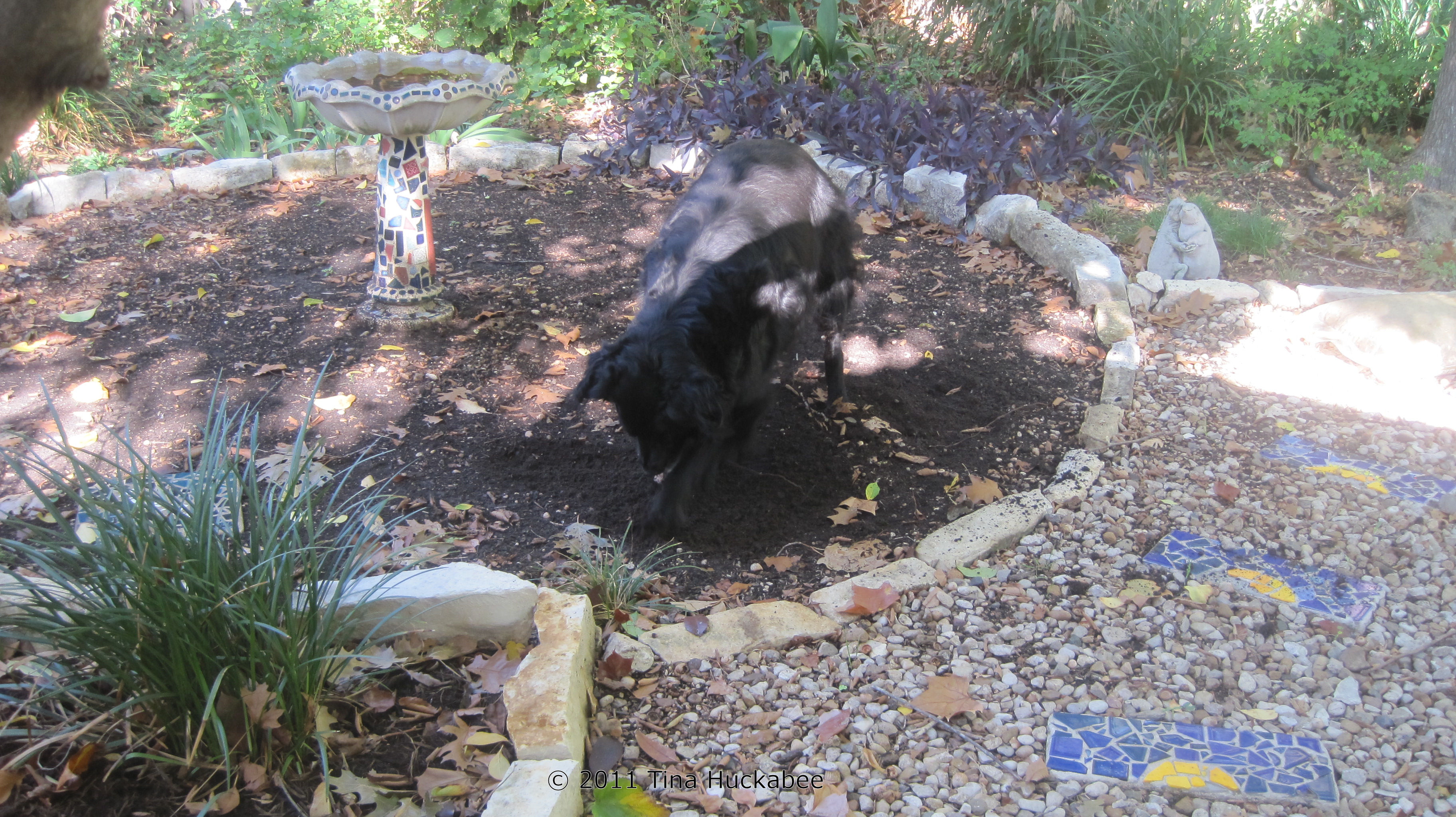
Asher has always liked digging in mulched areas. He’s pawed this older mulched area for years.

Caught in the act!

Oh, Asher, Stop!

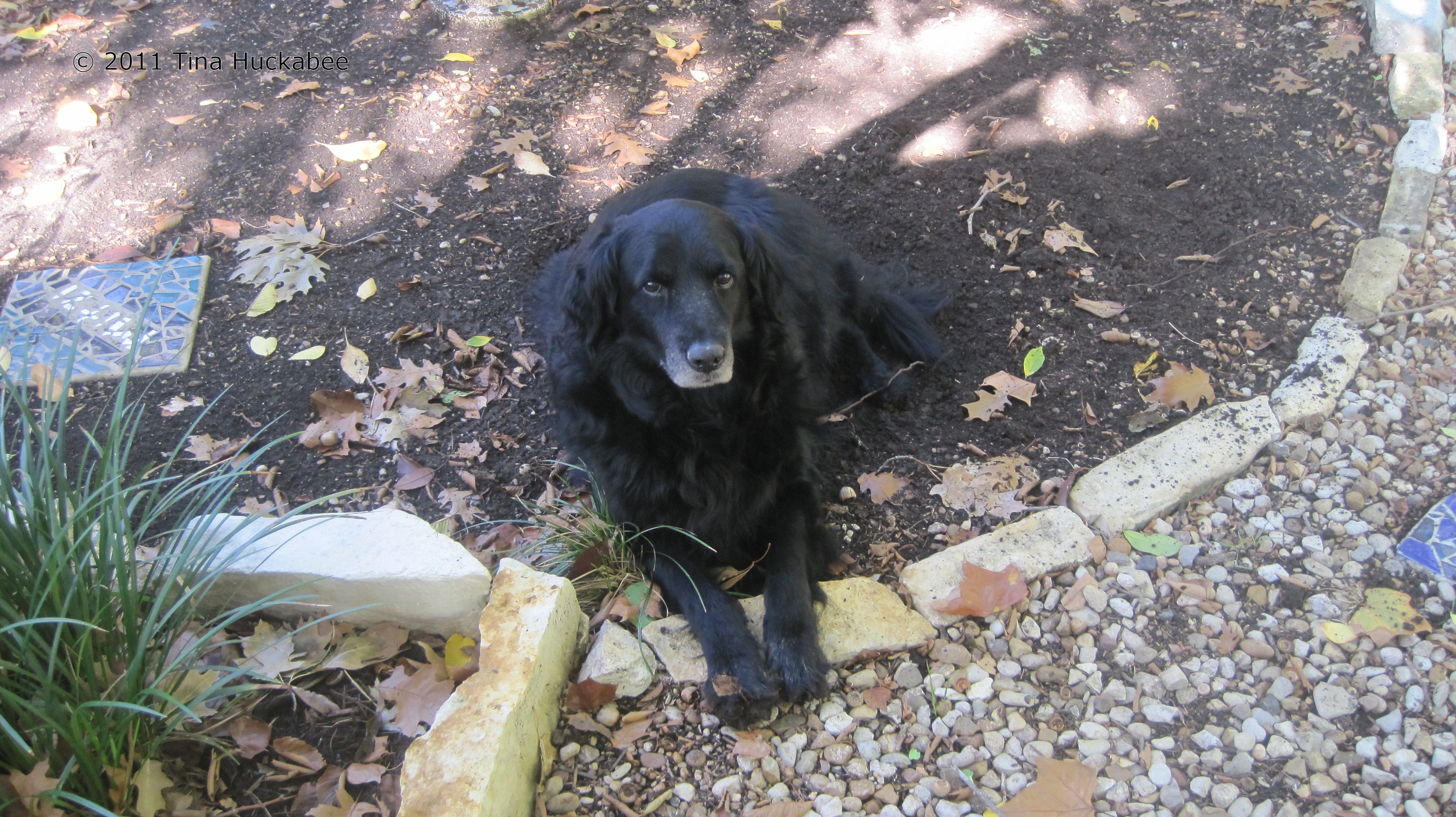
Good Boy!

Gardeners with dogs (and cats, too, if they’re causing botanical mischief), constantly must stay a ‘step ahead’ of their pets’ idiosyncrasies.  If the gardener has pets, it’s almost inevitable that some method of plant protection will be necessary.  Solutions for frustrated gardeners include installing physical or invisible fencing around gardens.  As I developed my gardens over the years, I purposely left grass so that Asher (and previous dogs before him) would have that to enjoy.  But the grass couldn’t survive my neglect and doggie overuse and the mulched areas that replaced the grass created other maintenance issues that I didn’t quite anticipate.

That said, Asher’s a good companion when I garden and seems generally content to hang out on the rock and mulched sections of the my gardens.

Plus, I’ve allowed him certain digging privileges, so we’ve come to an accord.

So I’ll let Asher be a part of the garden.

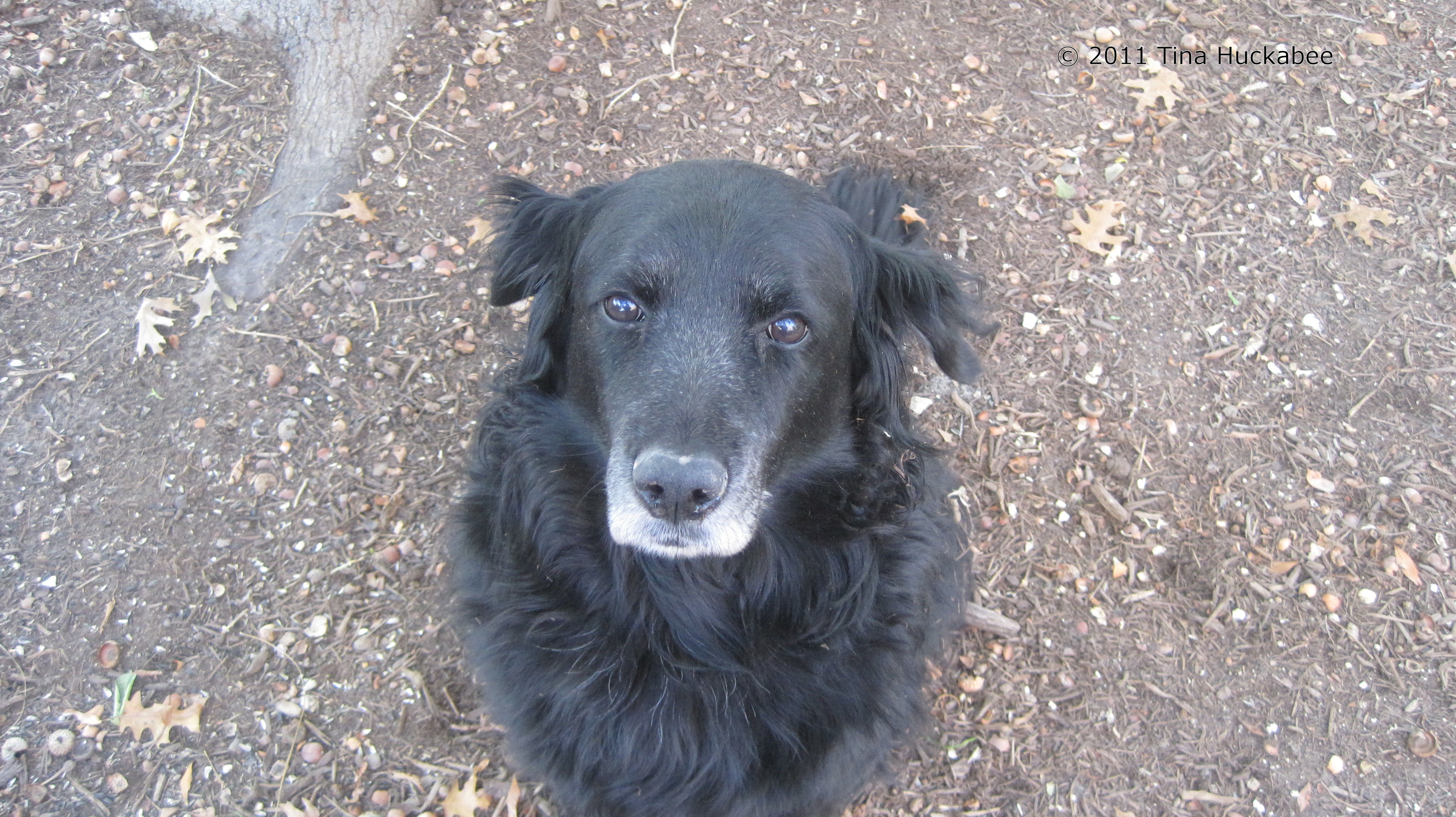
He’s twelve years-old, a great buddy of mine and I’ll use the (many) times that I have to brush him as bonding time.  How’s that for rationalization?  All worthy relationships take work, effort and compromise.

Yes, it’s challenging, though not impossible, to love a dog and a garden simultaneously.

At least I don’t have deer!

Foliage Follow-Up–January 2012–A Bit of This, A Bit of That

Typically in January, there are few blooms to grace the garden (even in sunny Texas).  There are interesting and beautiful examples of foliage though, more noticeable and appreciated during this less bloom-centered time of year.  Pam of Digging hosts Foliage Follow-Up and I’m happy to play along this month!

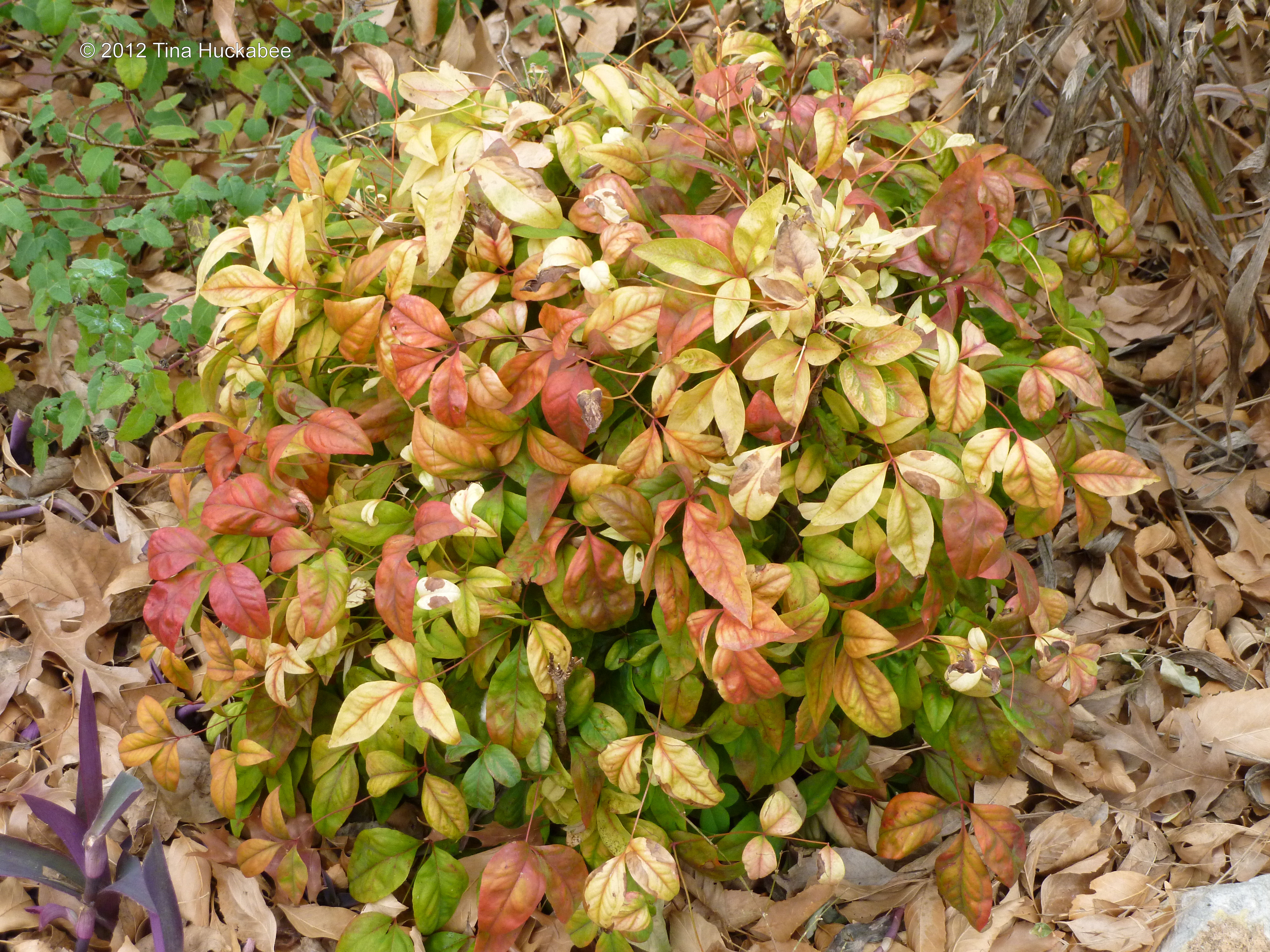
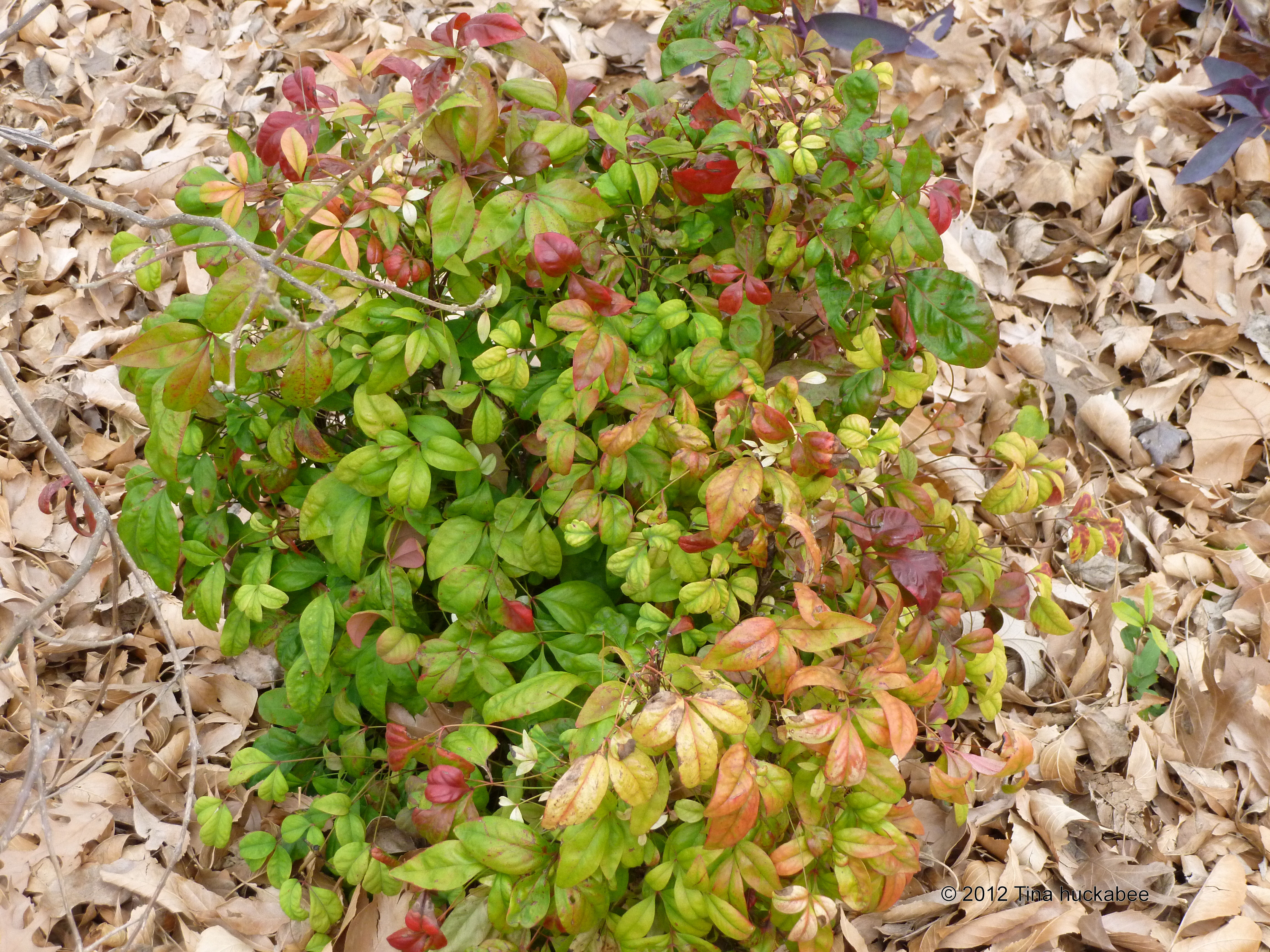
I love the ‘Nana’ Nandina in winter.  It doesn’t produce berries, so it’s considered an “okay,” non-invasive plant for Central Texas.  The more sun it receives, the richer the performance of red, burgundy and plum.


The leaves of the Columbine (Aquilegia, sp.) are at their loveliest in the winter. The bright green leaves can be covered with ice one day, emerging fresh and untainted after the ice melts. Columbine are always a touch of verdant spring in the winter.

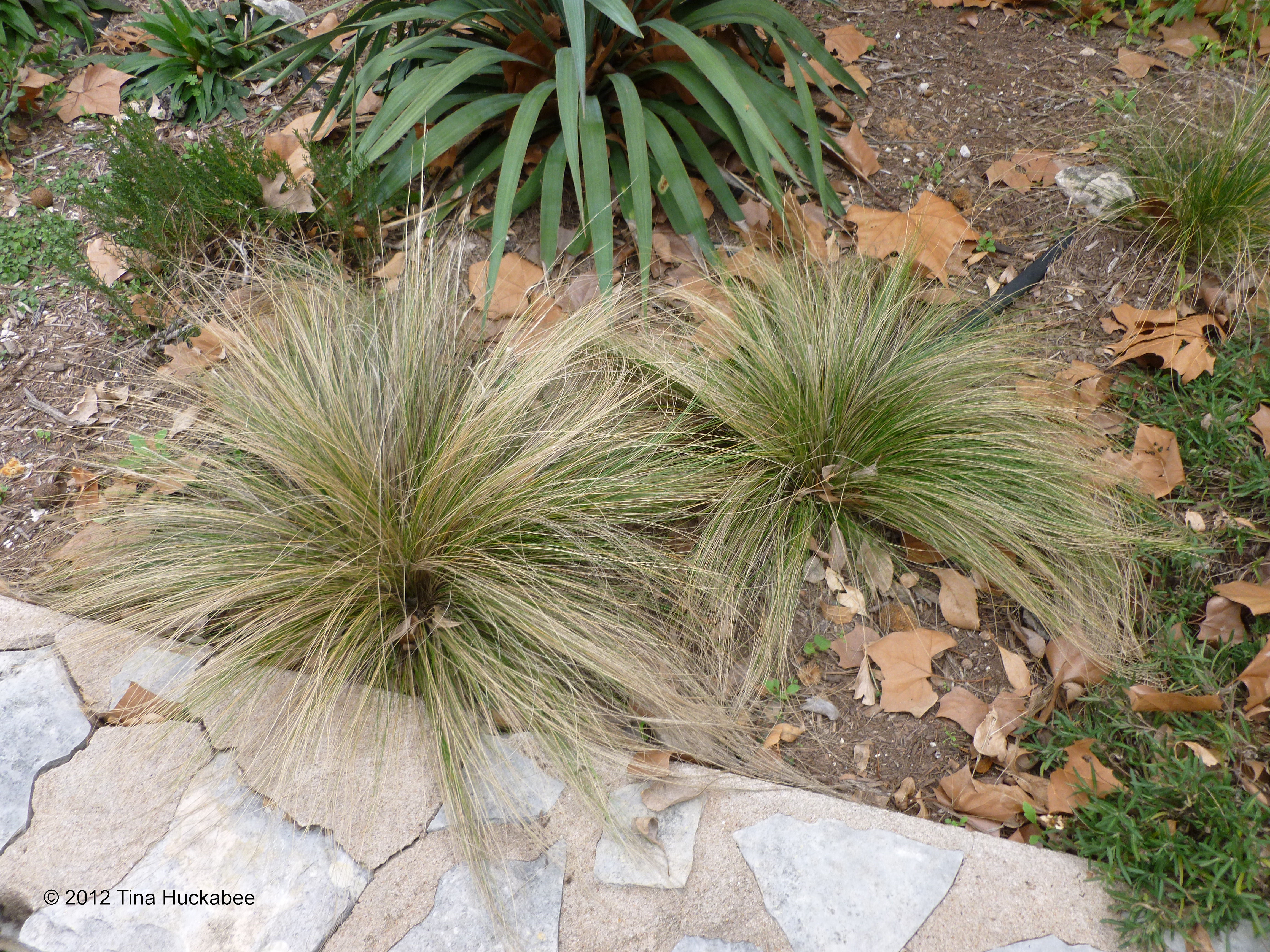
The wispy, silver Mexican Feather Grass (Nassella tenuissima) accompanies the Soft Leaf Yucca (Yucca recurvifolia) beautifully.

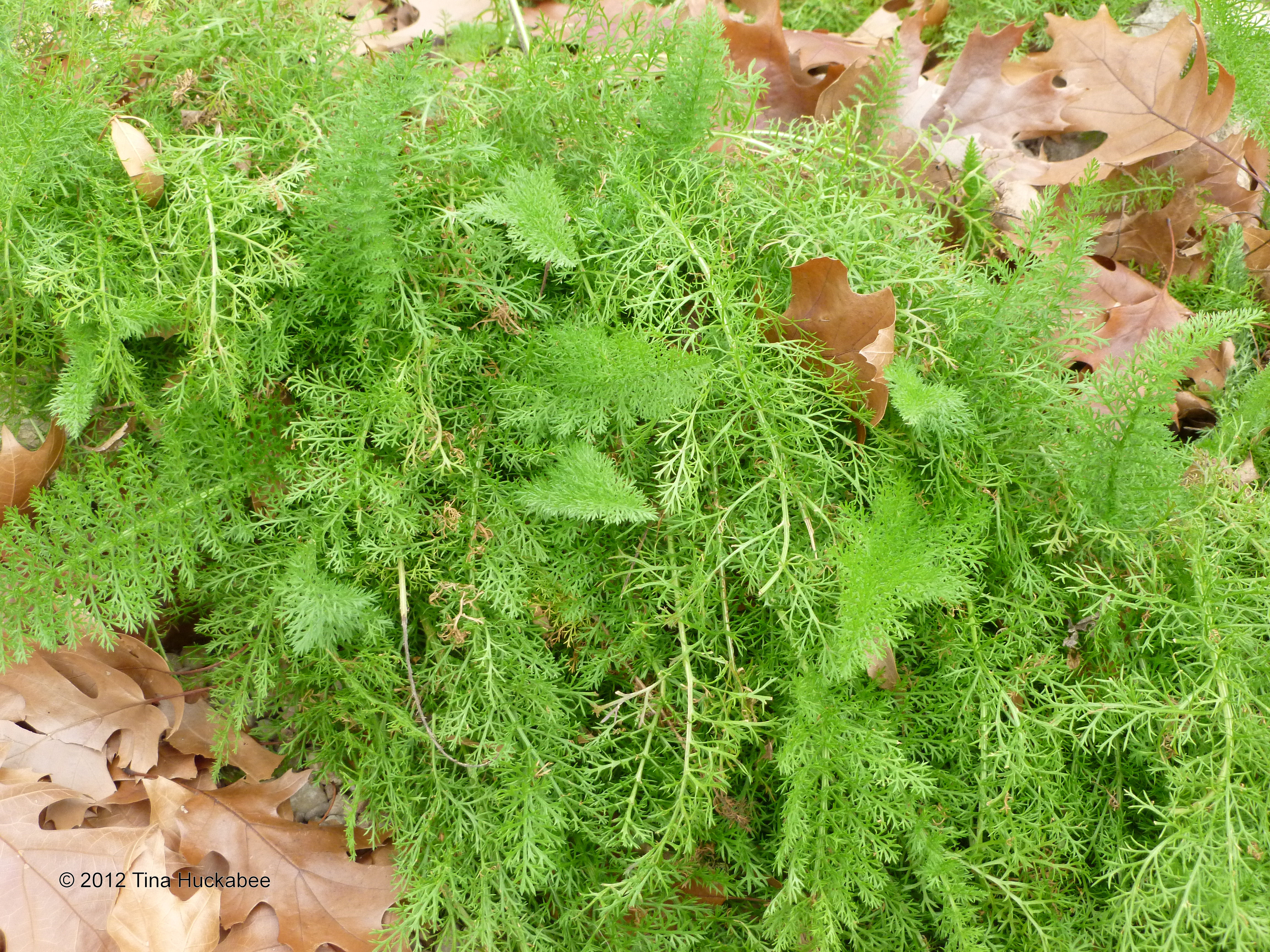
Another harbinger of lush spring and summer is the pass along Yarrow (Achillea millefolium).  The Latin name evokes the shape of the leaves.

The Pigeonberry (Rivina humilis) is all but gone in my gardens, except for this one.  It developed the burgundy leaf color after the light freezes and still sports berries.  Where are those pigeons and doves?

Another pass along plant,Oxalis, is a plant that I always forget about during our long summers.  It’s dormant during the warm season, emerging in fall with the cool and the rain.

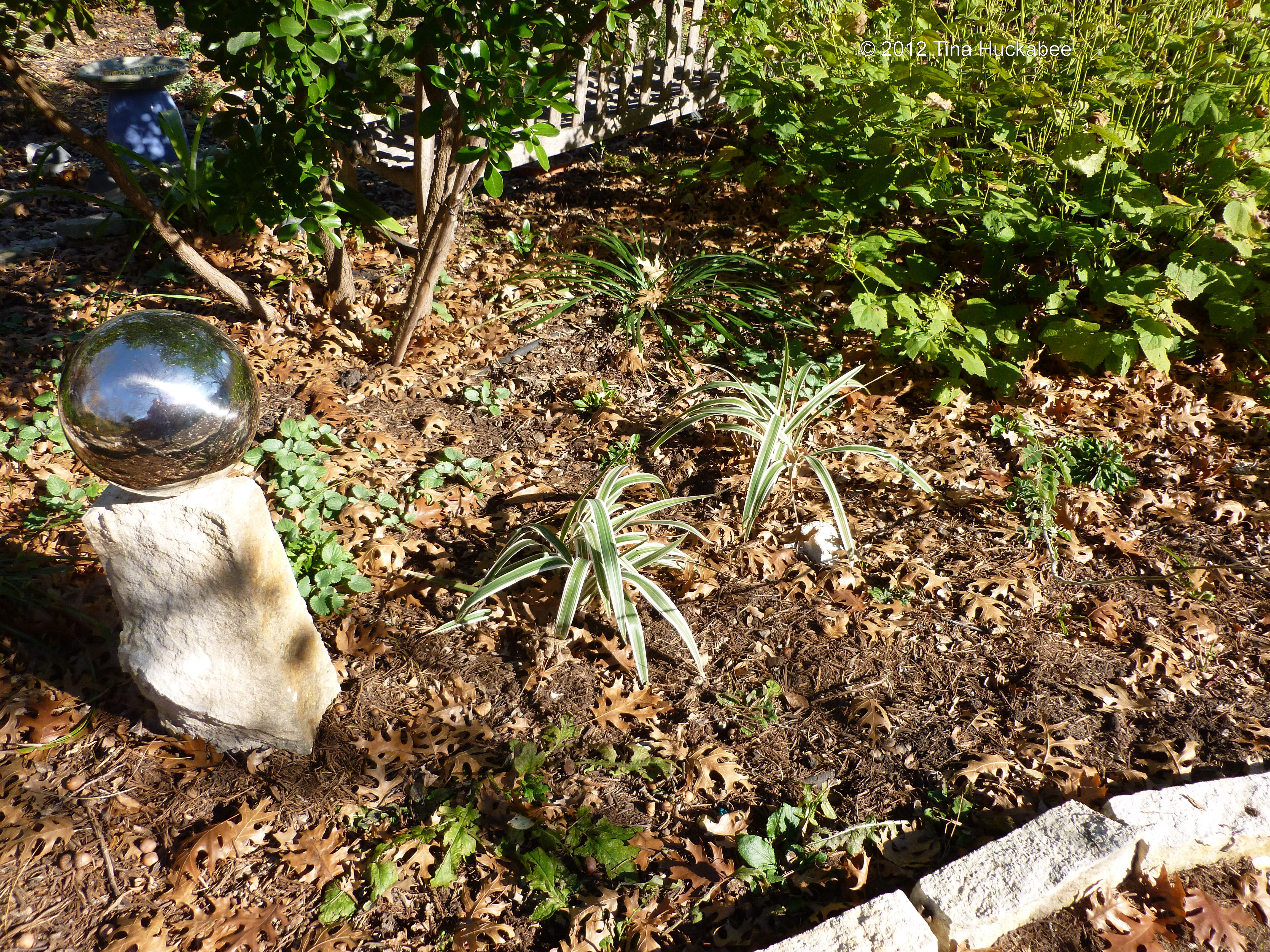
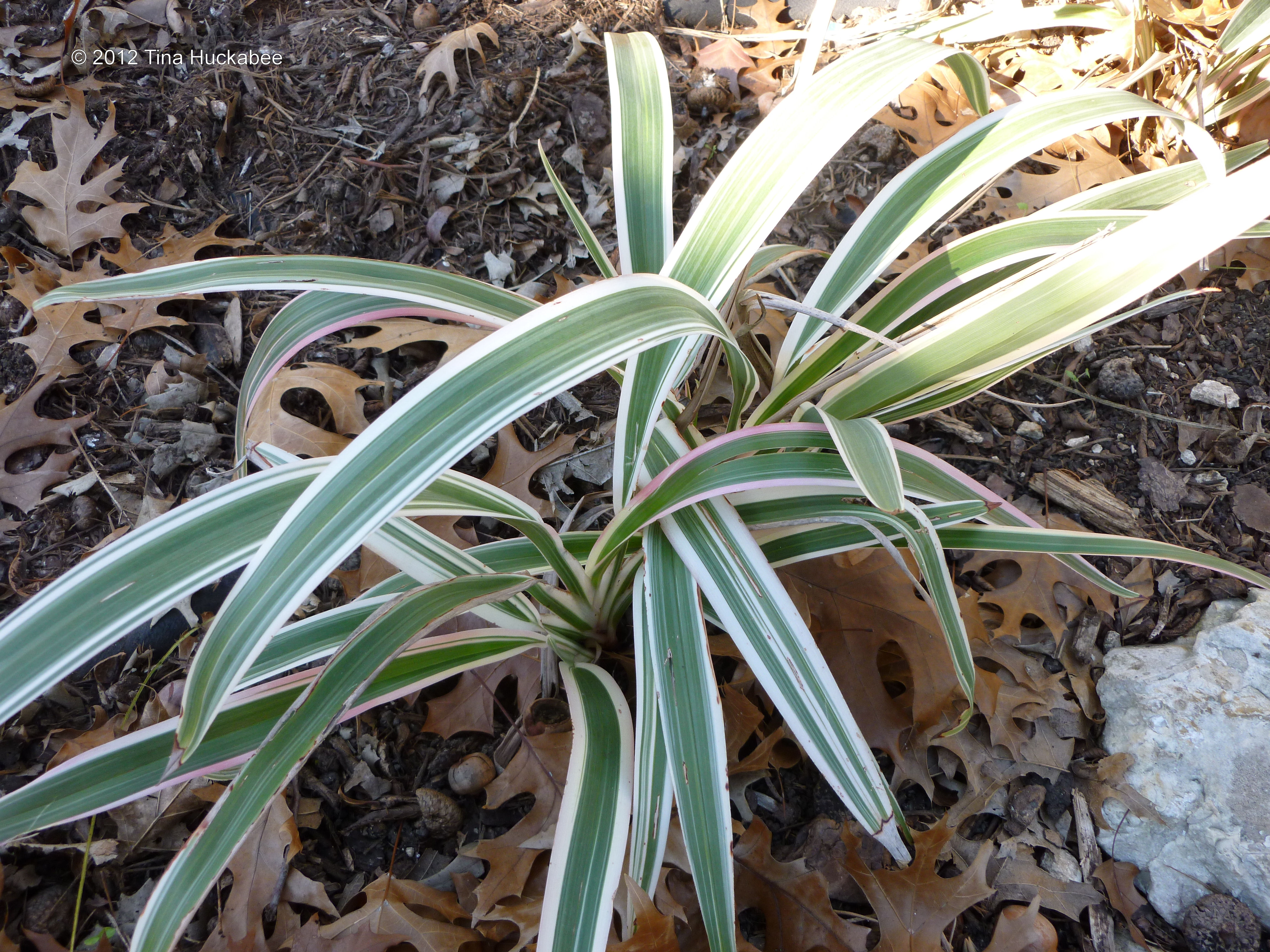
The Variegated Flax Lily (Dianella tasmanica ‘Variegata’) will brighten my gardens with its variegated leaves until there is a very hard freeze.

It’s showcasing a little bit of pink in some formerly white stripes and I assume that occurred after  the light freezes we’ve had.

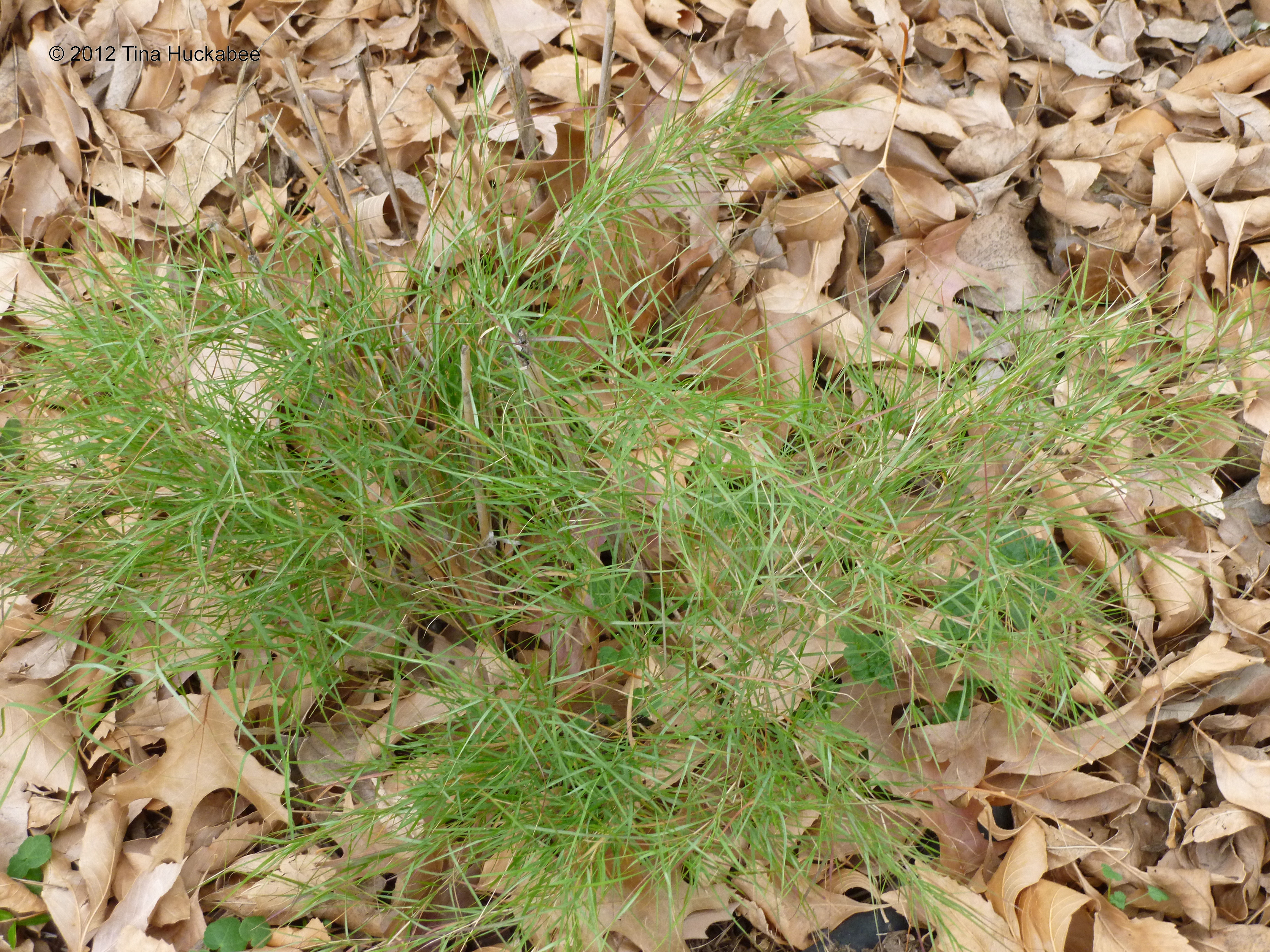
Bamboo Muhly (Muhlenbergia dumosa) is so pretty–soft, graceful and elegant.  This little one survived an early June transplant and the long, hot summer and is on its way to becoming a nice specimen in the garden.

This Bamboo Muhly crowns the Ruby Red Runner (a biological filter plant) in the pond fountain for a double whammy of groovy foliage during this (so far) mild winter.

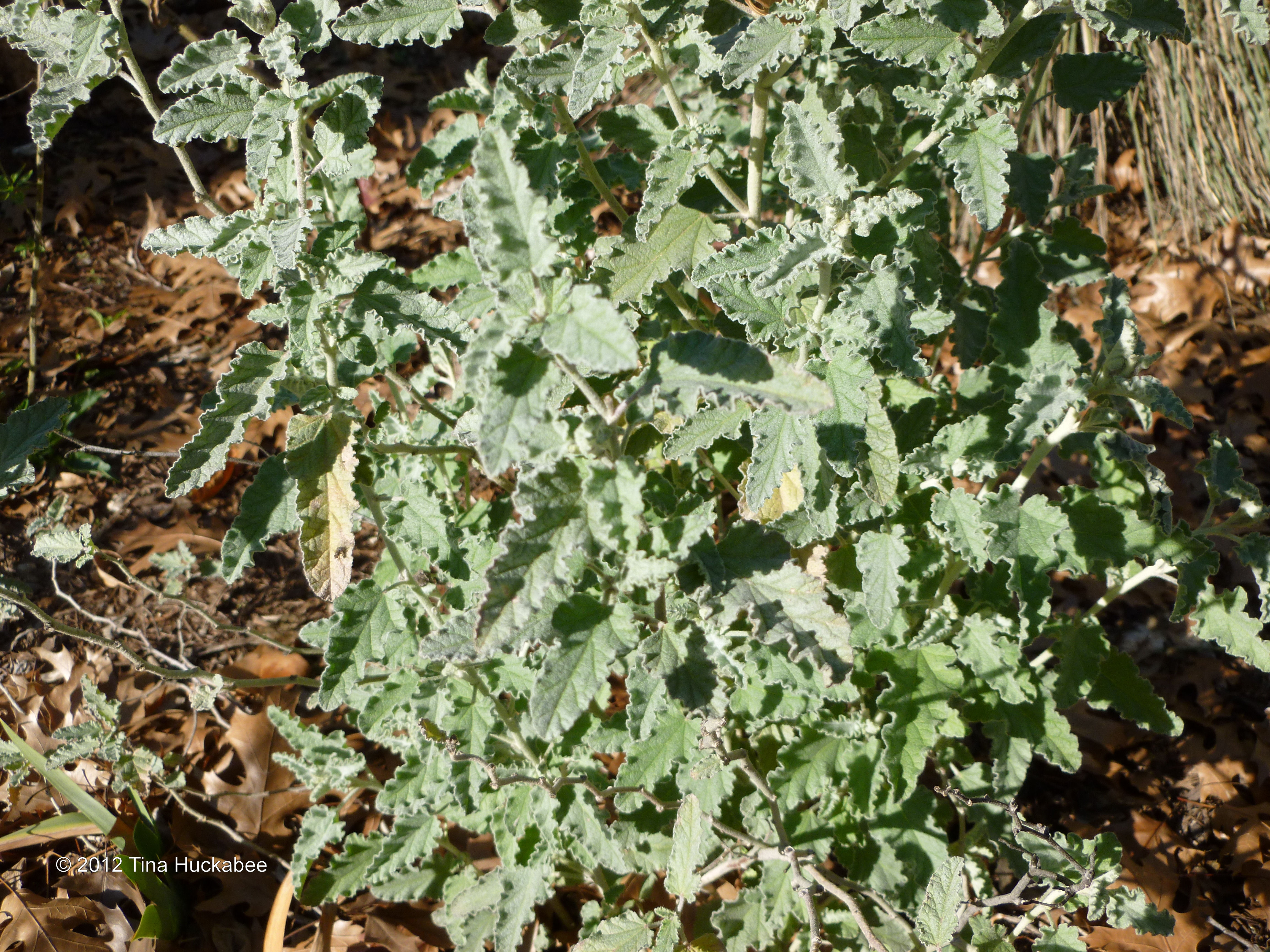
Finally, I’ll end with the plant that I opened with for Bloggers’ Bloom Day, the Globe Mallow (Spaeralacea ambigua).

I love the color and frill of the leaves which are sensual to the touch with their velvety texture.  And I think the blooms are lovely, lovely.

Sorry, Pam, I can’t resist blooming things.