A Path Well Traveled

In viewing the videos and photos capturing the night antics of various critters who visit my garden I noticed that each of the species use the same pathway as they arrive at, and then exit, the pond area. The fox(es) always travel a certain path, through the back edge of a garden, as they leave the pond area for other fox adventures.

While most nights foxes are the main attraction, the raccoons also show up to enjoy the yummy, fishy pond water. When they leave to continue their rounds, they usually follow the fox route.

There are fewer visits from Opossums that are caught on the camera, but they too like traipsing through the winter touched plants, rather than taking a less leafy track.

It’s not entirely clear from the videos, but the back fence is at the far left of the frame. There is a gardener-made path, nothing formal, just a well-worn trail going from here to there, and I would have assumed the nocturnal beasties would use that path as it’s available and easy to travel. But they all prefer ambling through the herbage, sticks and branches and pokey plants their walking companions. My best guess for the walkabout choice is that the plants provide cover and protection and I suppose they feel safer than in an open area. For myself, I don’t like to bumble through the garden too much (unless I’m working). Inevitably, a branch I move aside will pop back to whack me. I guess the low-to-the-ground animals don’t have that problem!

Interestingly, I have seen each species take the start of the back trail and make their way to the open area at the pond, politely skirting the wooden beam.

And sometimes it’s just easier to crawl over the back side of the water fall.

Like humans, occasionally a varmint will shake things up and travel a different path. This fox seemed comfortable in the garden, no doubt having cut through it before.

It’s been a week since I’ve seen a fox and longer since the raccoons were spotted on the camera. The Opossums are still around, though the pond camera hasn’t captured them; I’ve observed them in the early mornings before sunrise, crunching through the fallen leaves and sometimes walking along the top of the wooden privacy fence. Mostly, the rats have been on the camera and I’m not thrilled with that, but they’re out-n-about at night too, so it’s not a surprise. I expect that as I’m pruning many freeze-damaged plants the night walkers prefer areas with more cover. They’re still attracted to water sources though, and my garden provides plenty. I’m hoping that the rats that are now at play will become an inducement for some wily hunters.

Skulk

noun: skulk; plural noun: skulks

  1. a group of foxes.

I don’t know if two foxes are enough to equal a skulk, but there has been, on two occasions that my wildlife camera will testify to, a pair of foxes visiting my back garden.

For my October birthday, my husband gifted to me a wildlife camera, which wasn’t set into action until late November. Before setting up the camera, I assumed we’d see raccoons and opossums on a regular basis, sprinkled with appearances by rats, and only rare visits from foxes or owls. As it happens, the opposite has happened: almost nightly, at least one native Grey Fox gracefully ambles through the pond area, with somewhat rarer sightings of the other three critters. I should add that I see foxes during the daytime hours and have had them visit my garden, but those daytime sightings are only occasional. I never dreamed that fox(es) came into my garden most nights. I couldn’t be more pleased that they’re comfortable in the environment that I’ve created.

With the term skulk, I usually think of the other definition (verb: keep out of sight, typically with a sinister or cowardly motive.). I don’t see the foxes as that kind of skulky but instead, shy and alert to danger at all times. Their graceful, sinuous movements along the pathways, and through the garden itself, is delightful to observe.

Are these two siblings, or a mother and almost grown kit? Or are they mates? Whatever their family ties, I suspect that during the day they sleep under one of the many outdoor sheds belonging to surrounding neighbors and situated in back yards, though maybe the foxes change sleeping locations from time-to-time.

Will there be kits in the spring? I sure hope so! I’ve observed foxes in our neighborhood for many years, but I’ve never seen a family with kits–a skulk–or a fox that is clearly a juvenile. But the foxes are around, year after year and in all seasons, so some successful breeding is happening.

There are other terms for a group of foxes. I could call these two a troop of foxes, or a leash of foxes, or a lead of foxes, and or an earth of foxes. I think I like ‘earth of foxes’ the best!

Whatever they are, as singles, couples, or groups, these beautiful animals are very welcome in my garden to rest, catch rats or insects, drink water, or just hang out.

Ice Arrives

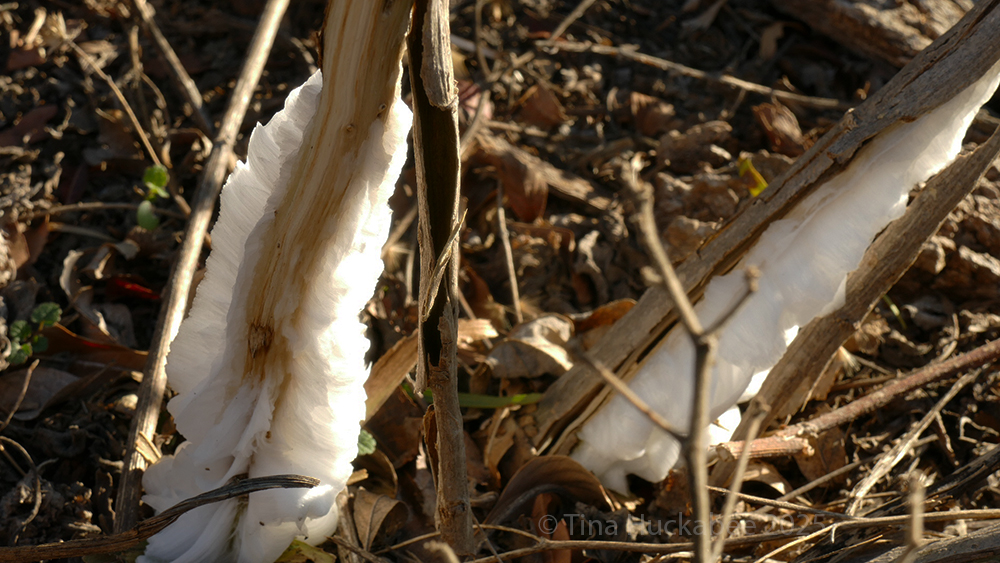
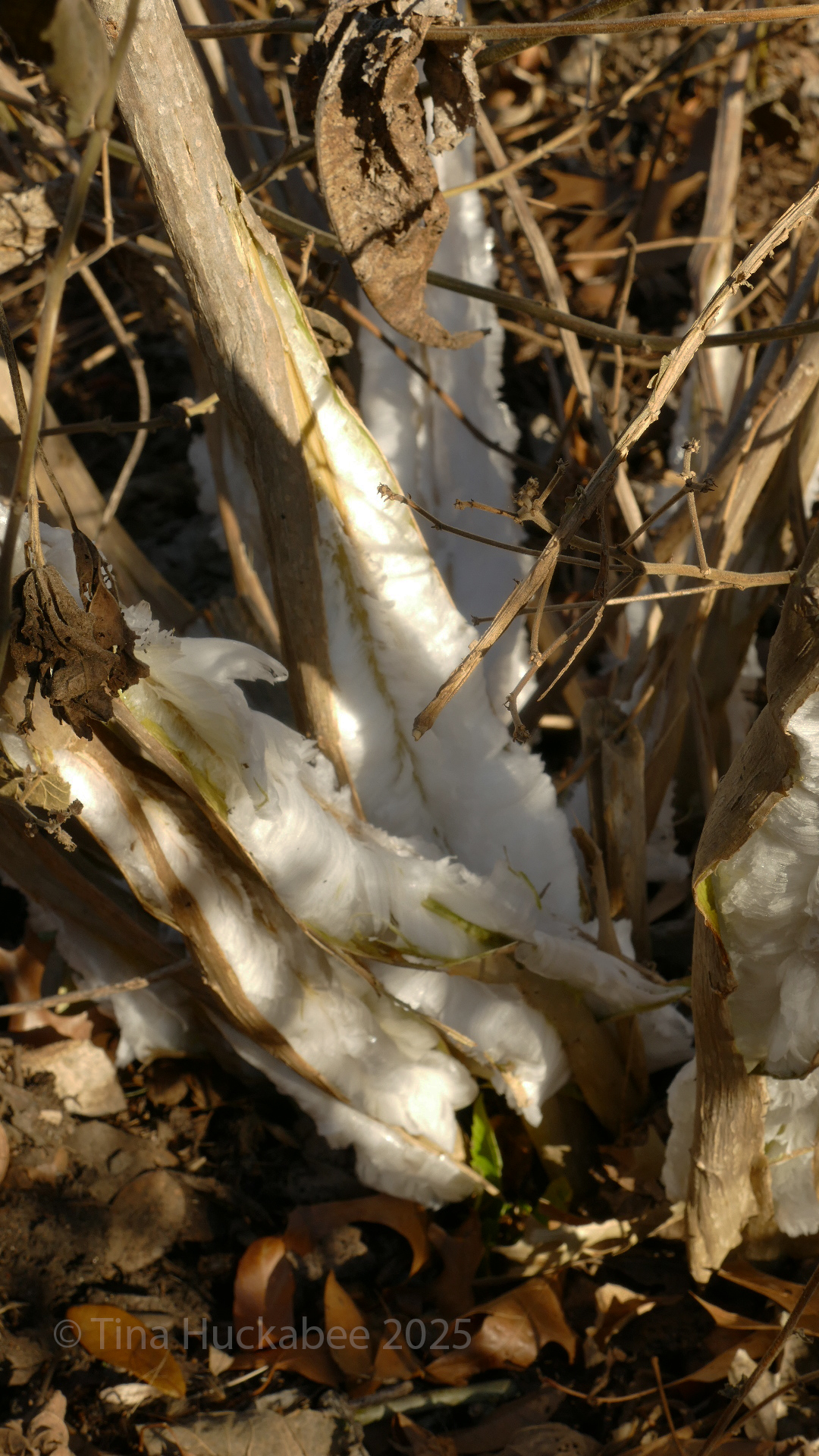
This winter has seen plenty of overnight light freezes in my garden, but only in the last few days were the conditions ripe for the formation of Frostweed, Verbesina virginica, ice sculptures. Two mornings ago, the day dawned cold, bright and sunny, with icy, exploded frostweed a new addition to the garden.

As I trundled around the garden, I observed many low-to-the-ground ice sculptures revealing themselves in light and shadow. Many plants produce ice sculptures during the first hard freeze of the season, but none with quite the drama of frostweed.

Morning sun highlighted fanned crystal formations, held firm along broken stems, as sturdy braces

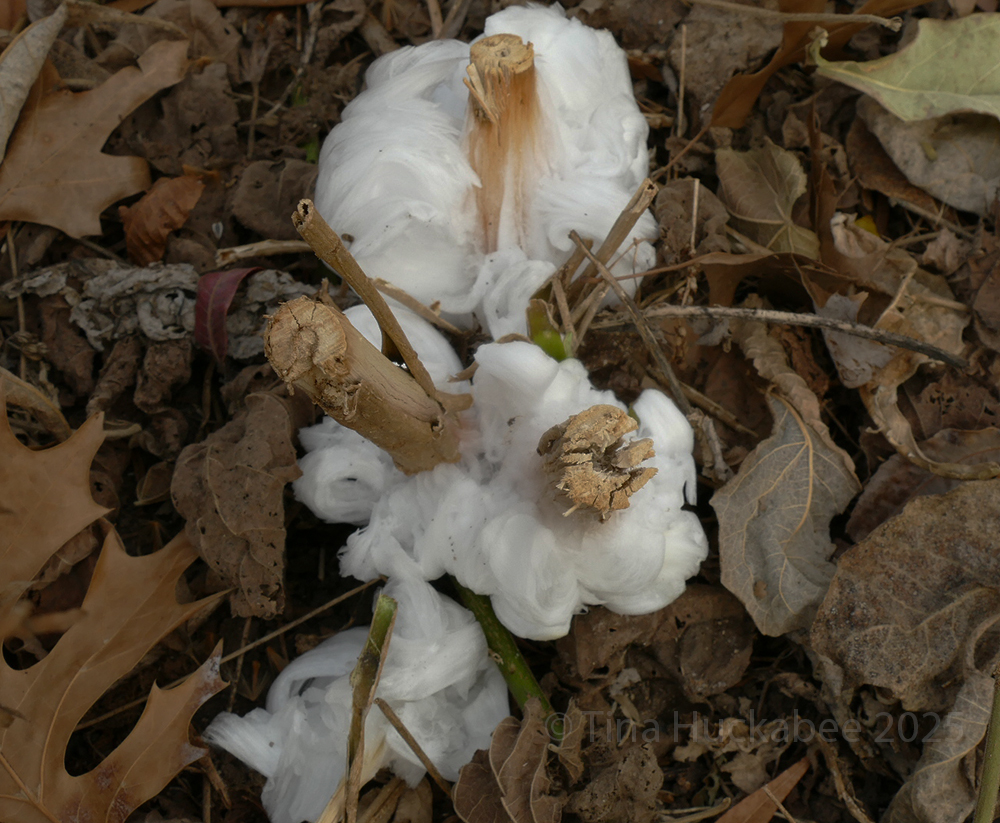
The temperature never rose above freezing that day and into the night, the fragile ice sculptures held. Indeed, by the next morning, many of the sculptures had expanded. The second day was cloudy, no sun rays to brighten the ice. Some newer sculptures, instead of traveling upwards the stems, remained close to the ground, the ice reminiscent of floral decorations from warmer days past.

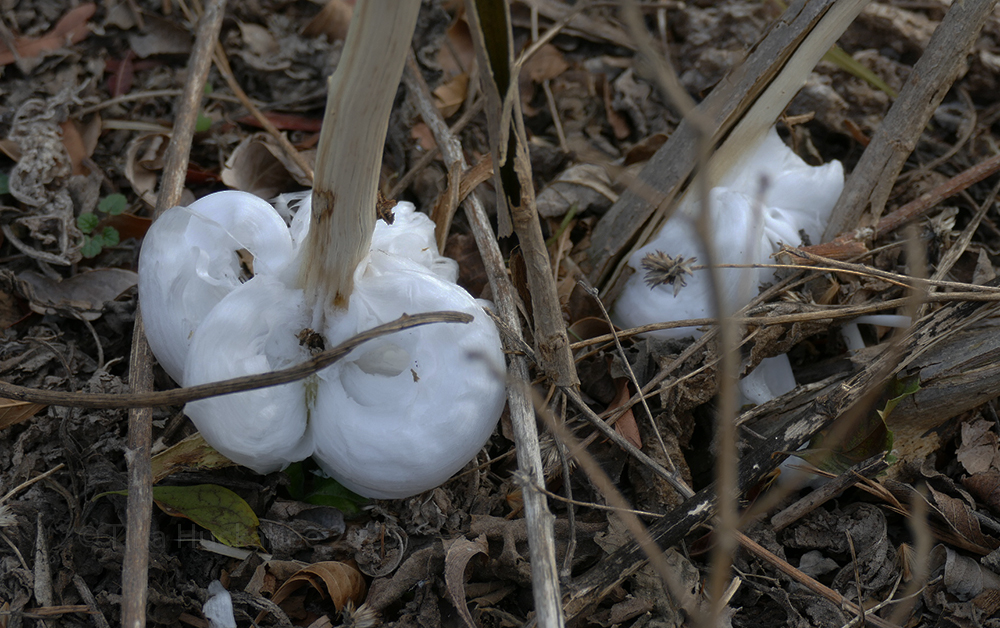
I haven’t pruned the winter garden, at least not in any major way. But here, it’s clear that stems were cut, the ice crystals limited to hugging the ground, swirling around the stems, snuggled on fallen leaves.

Frozen water proves stronger than sturdy stems.

This frostweed created the tallest of the ice formations in my garden, whirls around the stems, some 2 feet up from the ground. Green winter grass, coupled with some evergreen wildflower foliage, is a fetching background to the ice and winter-dormant stems.

Compare this photo with the first: it’s the same plant with more ice, less intact stems. Such is the way of frostweed ice sculpture work, rendering a new paradigm for the plants’ seasonal life. It’s an end, of a sort, though in reality, only a resting time. The roots below are priming for spring green.

This morning, snow is a light blanket in my garden. It’s not a powdery substance, but instead, sleet and snow mixed. It’s also quiet, the birds mostly still asleep or too cold to sing, except for the Carolina Wren–he’s awake. The Grey Fox, a regular night visitor to my garden, was out last night, caught on the wildlife camera prancing around the white ground, probably hunting. I hope it’s now in some warm, protect place, resting for the adventures to come.

This winter ice, whether snow, sleet, or busted plant stems, is fleeting–like so many things in the garden.