A Dab of Yellow

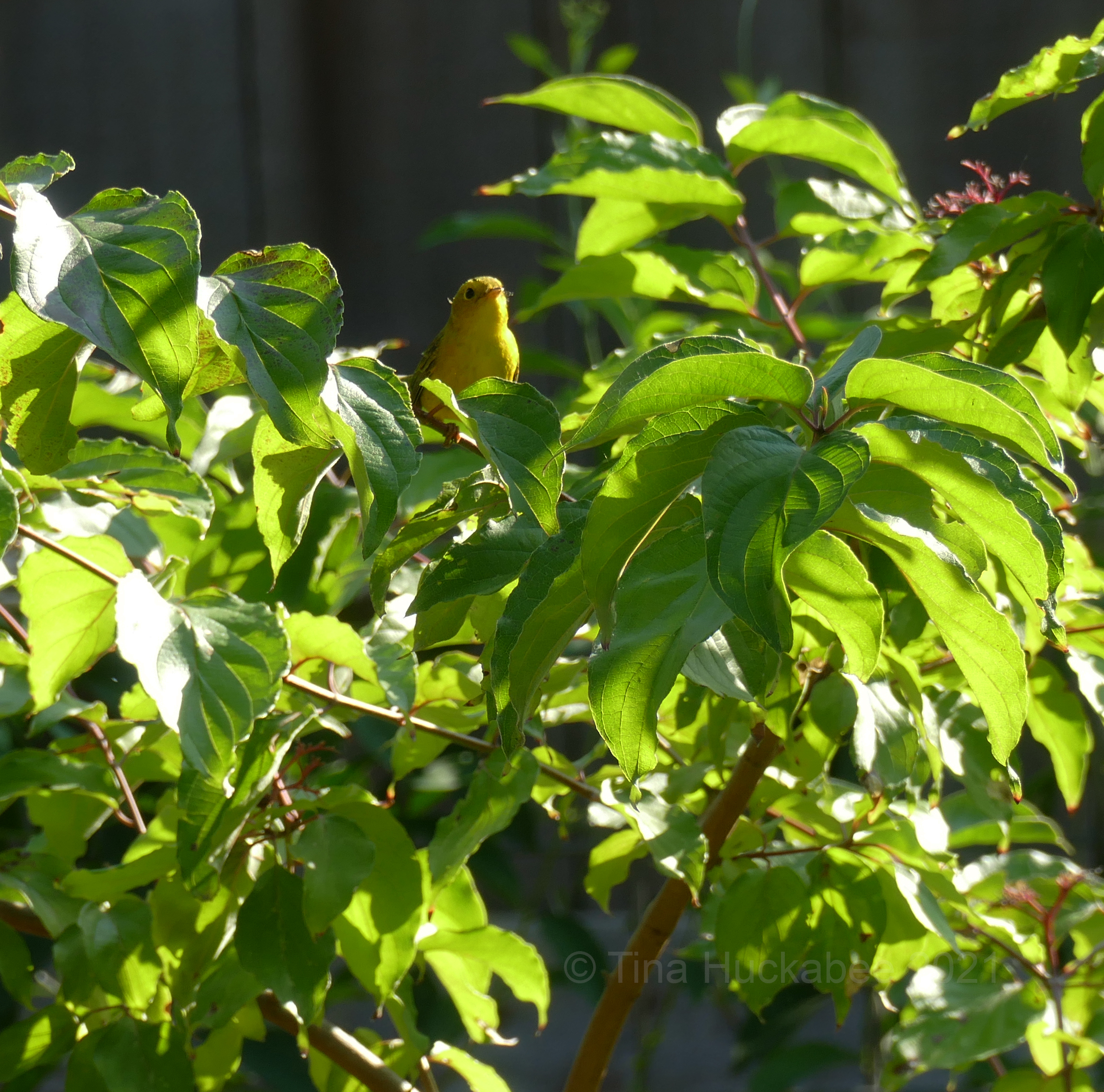
Fall migration through Texas is well underway and I’m keeping a keen eye out for atypical avian visitors to the garden. As a general rule, I don’t see as many migratory birds during autumn migration as I do during spring. So far this migration season, I’ve observed one Orchard Oriole and a Yellow Warbler, both of which where either females or juveniles, and neither of which did I photograph. Those two were the sum total of migratory birds until yesterday, when I spied this sunny male Yellow Warbler, Setophaga petechia.
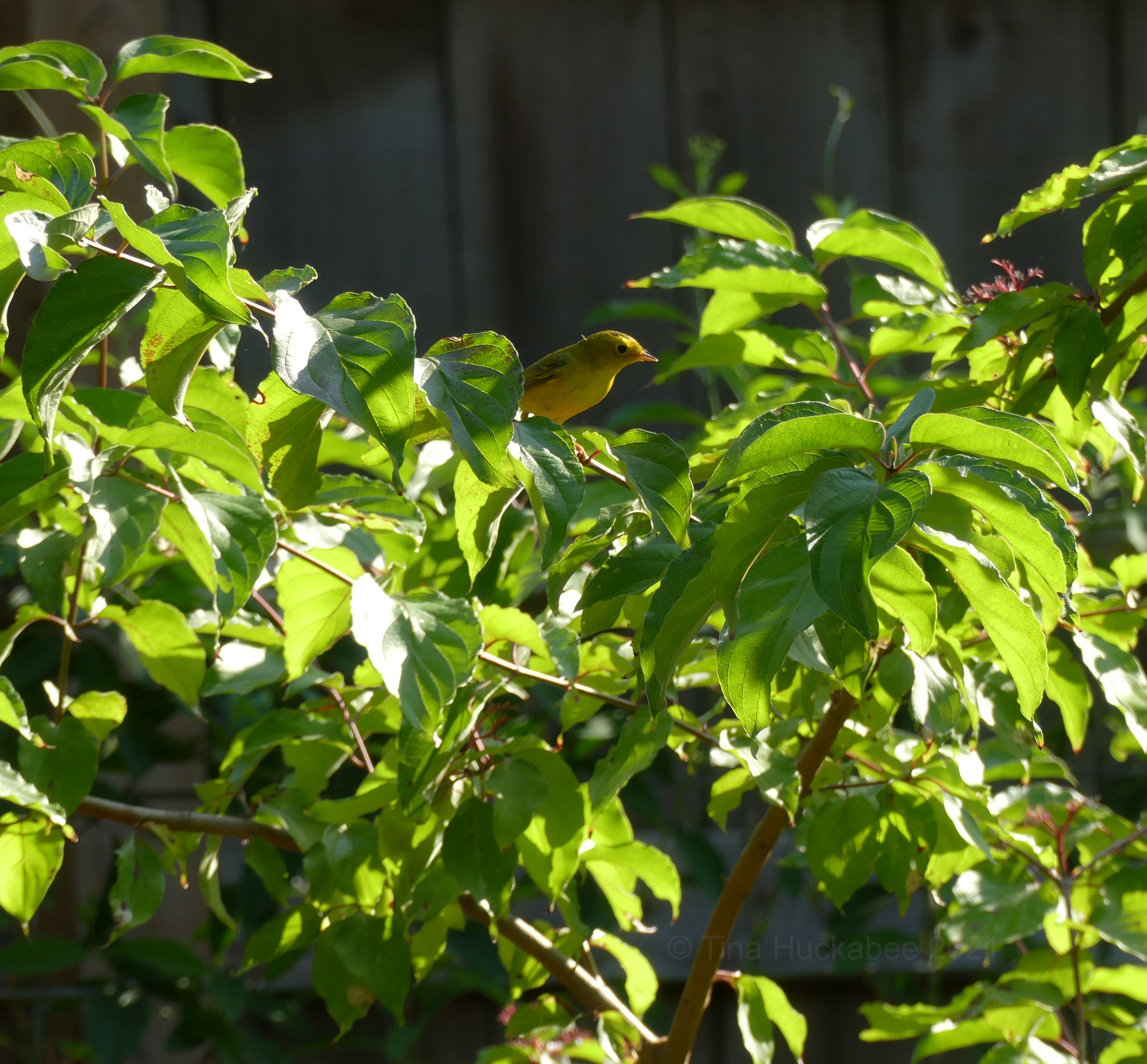
During spring migration, it’s the pond and other water features which hold the birds’ interest, but autumn migration is different. As I watched him flit, first in my larger Red Oak tree, then to a Rough-leaf Dogwood, Cornus drummondii, I assumed he was headed for the pond for a quick bath. Instead, he flew from the oak tree to the dogwood–and remained there. I then surmised that maybe he was aiming for his share of the white fruits that my two Rough-leaf Dogwoods have produced this year. If you look as the photo, to the right of Mr. Yellow Fellow and far right of the photo, you’ll see a mauve/reddish-brown branchlet. Until recently, this set of small branches, like other similar ones on both trees, held juicy white fruits, most of which have been eaten by a variety of birds, primarily the resident Mockingbirds and Blue Jays. No doubt, other migratory birds have dined on these fruits, too, including the aforementioned Orchard Oriole and Yellow Warbler, who spent time in both dogwood trees, playing peek-a-boo with my camera behind foliage.

Pre-bird munching, this is a close-up of the fruits, developed, but not yet devoured.

As there aren’t many berries left, and most of those sit waiting at the base of the tree, I realized that the yellow fellow was nibbling on insects as he moved along the upper branches. That tracks, as Yellow Warblers enjoy insects as a main source of their diet.

Unfortunately, Mr. Yellow Fellow didn’t hang around too long; I guess he’s eager to get to Central America, where his winter will be mild and his meal choices prolific.

These next few weeks are the apex of bird autumn migration in the Americas and I look forward to more feathered friends flying through. Good luck, Mr. Yellow Fellow–come back and see me next spring!
A Sunflower Summer

It’s been a bright and sunny sunflower summer. I always have sunflowers in my summer garden, presumably gifts from the digestive systems of a variety of birds and their fuzzy-tailed sunflower seed-loving friends, the squirrels. These urban dwelling critters disperse the remains of black-oiled sunflower seeds taken from feeders, dropped unceremoniously to the soil, which then fulfills its role in nurturing growth. This year, the numbers and sizes of sunflowers are over-the-top–literally. Each stalk is huge and there are scads of them. I pulled out quite a few, some when were very small and others as they grew taller, but my pruning shears were no match for the sunflowers determination to define my summer garden.

I kept most of the sunflowers at the center and back of my gardens so they wouldn’t interfere too much with beloved seasonal perennials like creamy Yarrow, Achillea millefolium and cheery Zexmenia, Wedelia acapulucensis var. hispida.

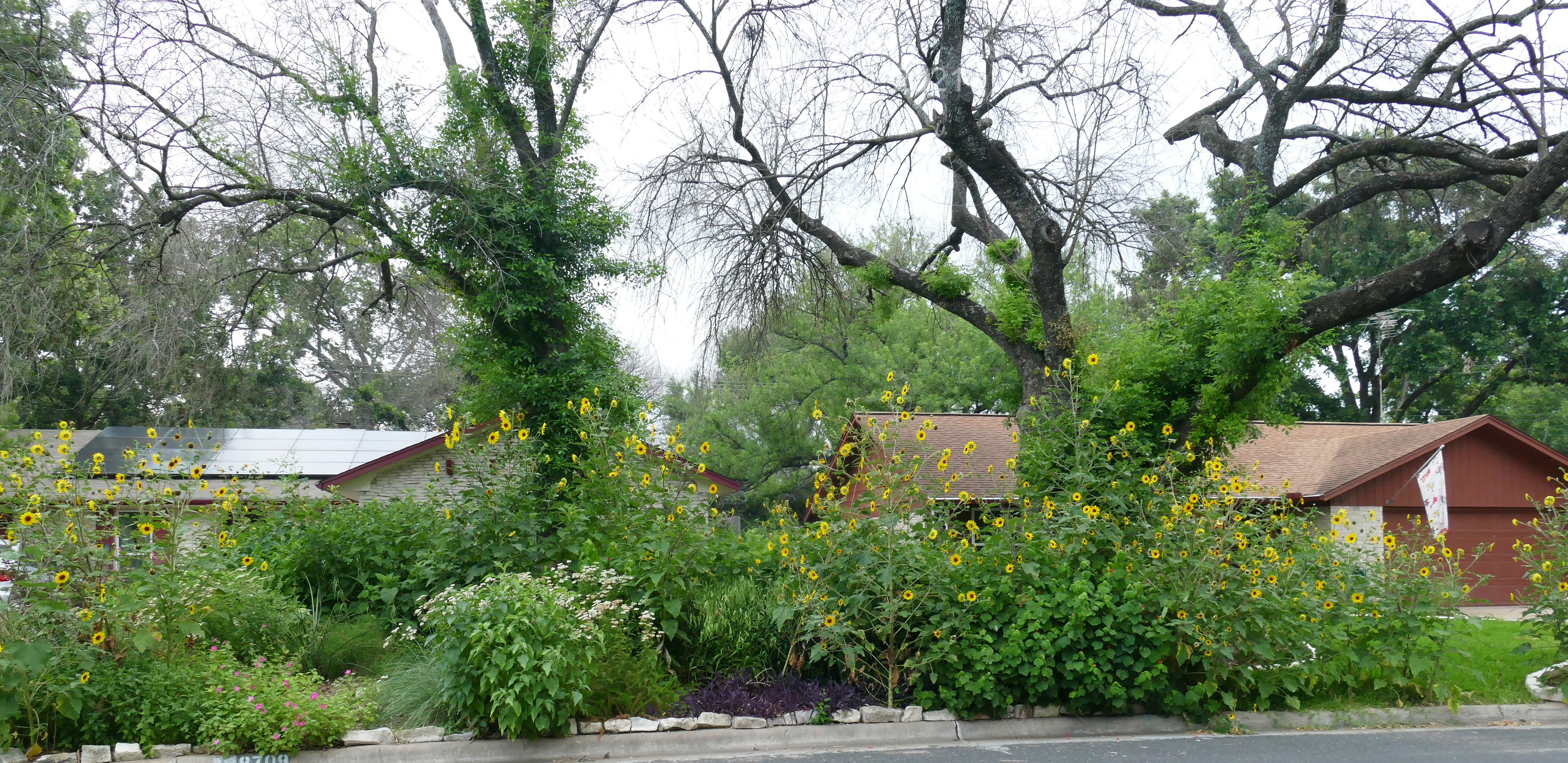
My home sits on the curve of the street and has no sidewalk. Toward my sister-in-law’s (SIL) home (right side of photo), I allowed the sunflowers to reach their sunny faces to the sky and form a floral barrier to the end of the garden.

From the other side, you can see that my SIL also took a pruning shears-off attitude toward the sunflowers in her garden (again, right side of photo). If anything, she may have more of these yellow monsters than we do!

A head-on photo of our two gardens gives you some idea of the statements these sunflowers make!

Also, you’ll notice that the trees look like it’s still we’re still in winter. Arizona Ash trees are the signature trees in both our front gardens and these two trees were badly damaged by February’s winter storm. They will never recover and will never again be fully foliaged trees. The green that you see, along the trunks and the lower branches, is all the trees will ever produce. We’ll be removing our trees later in in autumn. My once shady, west-facing front garden will become a full sun garden and changes are required. Some of the current garden inhabitants won’t like the Texas sun beating down everyday and will be removed; sun-lovers like native grasses and sun-worshipping perennials and shrubs will thrive in the heat and blossom with the blasts of daily sun. I’m sure whatever sunflowers show up next year will be perfectly happy in the new conditions. The end of a tree is a sad, sad thing and the end of two adjacent trees doubly so. I’ll miss their cooling effects, sweet movement of foliage in the wind, and the activities and songs of birds taking refuge in their canopies.

The pollinators have worked the sunflower since opening day in April or May. Honeybees are especially fond of sunflowers and are often covered with pollen after they’ve spent some time nuzzled in the flowers.

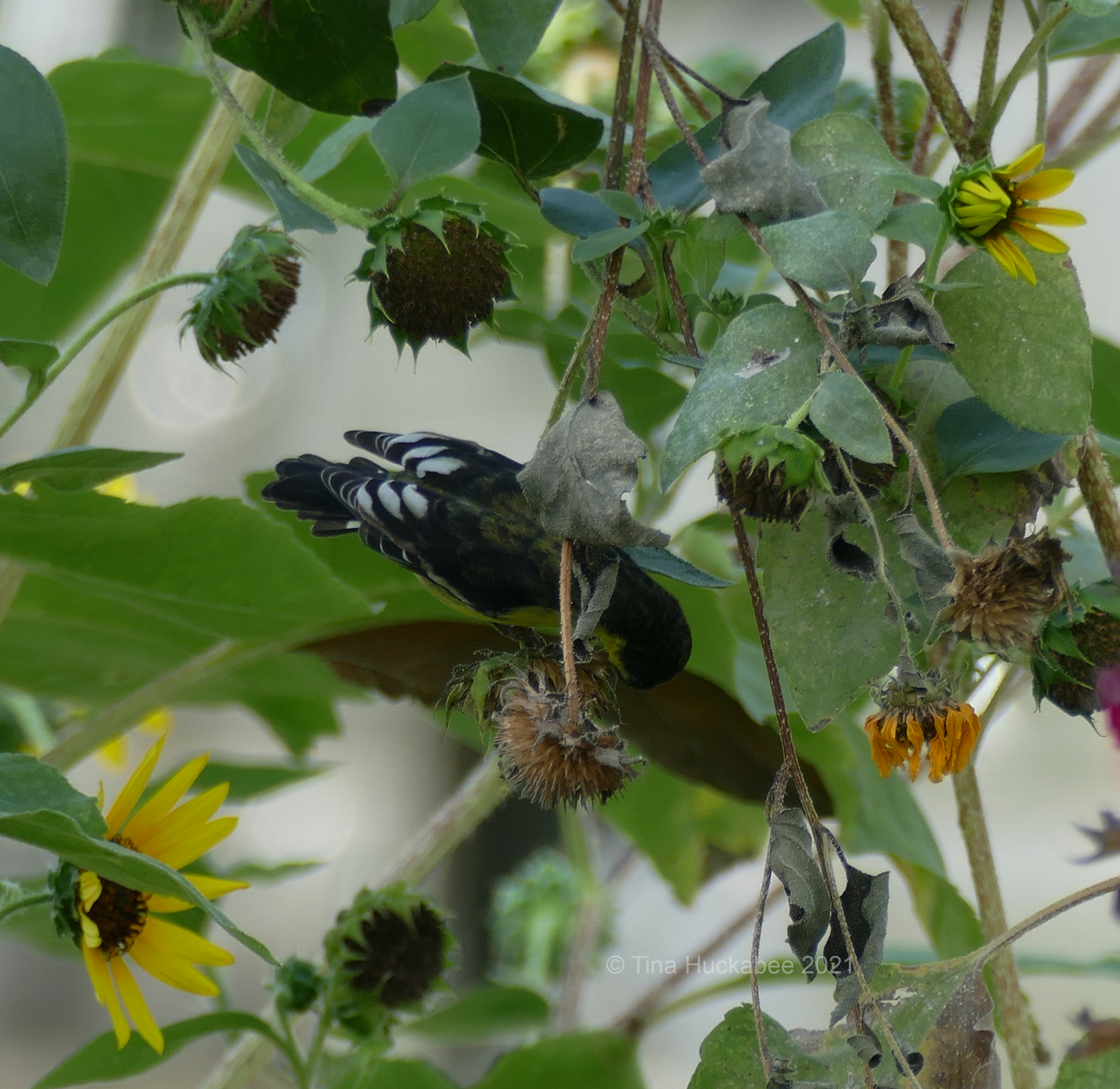
As blossoms fade, seeds develop and a new set of feeders show up for that bounty. This male Lesser Goldfinch, Spinus psaltria, is one of many birds who’ve enlivened the fading stalks with their busy munching. Feeding alongside the goldfinches are doves (both White-winged and Mourning), House Finches, House Sparrows, and Carolina Wrens. Often when I step outside, there’s a whoosh of wings and scatter of birds as all the eaters take flight.

As the Lesser Goldfinch perches prettily, his belly is yellow; when he bends to eat seeds, his back sports cool white racing stripes!

The sunflowers are definitely the stars of the garden show, but it hasn’t been all sunshine with the sunflowers. For about 18 months, I’ve experienced random outbreaks of itchy, angry red rashes, typically on my legs and arms. I couldn’t figure out what was triggering the annoying and very uncomfortable rashes–until this summer. In conversations with my SIL and other sunflower-growing neighbors, I learned that they were experiencing reactions to the sunflowers, resulting in itchy rashes. I realized that it was the sunflowers that were causing my itchy-scratchies, but it couldn’t only be the sunflowers. The rashes have occurred in autumn and late summer, too, when these particular sunflowers (that come from bird feeder black-oiled sunflower seeds), are done for the year and pulled from the garden. With observation, I then recognized that the native Plateau goldeneye, Viguiera dentata that I grow and which blooms in late summer and fall, also was resulting in my rashes. Both plants are in the Aster, or Asteraceae, family of plants, and I grow quite a few other Aster plants: Purple coneflower, Zexmenia, Gregg’s mistflower, Blue mistflower to name a few. So far, I think I’m safe with most of the Aster family plants, as long as my contact is limited; just brushing against most of them (not the two main culprits) doesn’t to end with me scratching for days and looking for relief. When I have experience outbreaks, I’ve taken Allegra and I have a prescription hydrocortisone cream; both are helpful. Even so, it takes a week or more for the rashes to clear up.

I’ve always been a t-shirt and shorts girl-in-the-garden, but I’m now covering up when I have work to do: long linen pants, some shirts from The Hub, and equestrian gloves which cover my arms to the elbows. And, when it’s hot and sunny, a hat. In the new gardening get-up I’m avoiding new rash outbreaks and it’s good to know that I can still garden, even if I look ridiculous.

Migratory Machinations

My garden enjoyed an extended fall bird migration as the the feathered travelers made their way southward for winter. I didn’t catch photos of most of the migrants I saw, either choosing to simply observe or (more often) lacking quickness in the utilizing of my camera. It’s gratifying to see so many birds resting–if only for a day–and that my garden serves as a respite along their long and dangerous journeys.

Typically, bird watching is more fulfilling during spring migration, as there are not only a reasonable number, but also a greater diversity of birds who temporarily visit my garden from early April, stretching to early June. Historically, fewer migratory birds have come through my garden during fall, though this year, that wasn’t the case. It’s hard to say why there were more migratory birds in September and October: perhaps it’s the drought we’re experiencing, making the urban garden scene a better bet for food and water sources than the open areas of rural Texas. Or maybe it was just the right weather or wind stream pattern that allowed for sufficient numbers on a path that brought them to my garden.

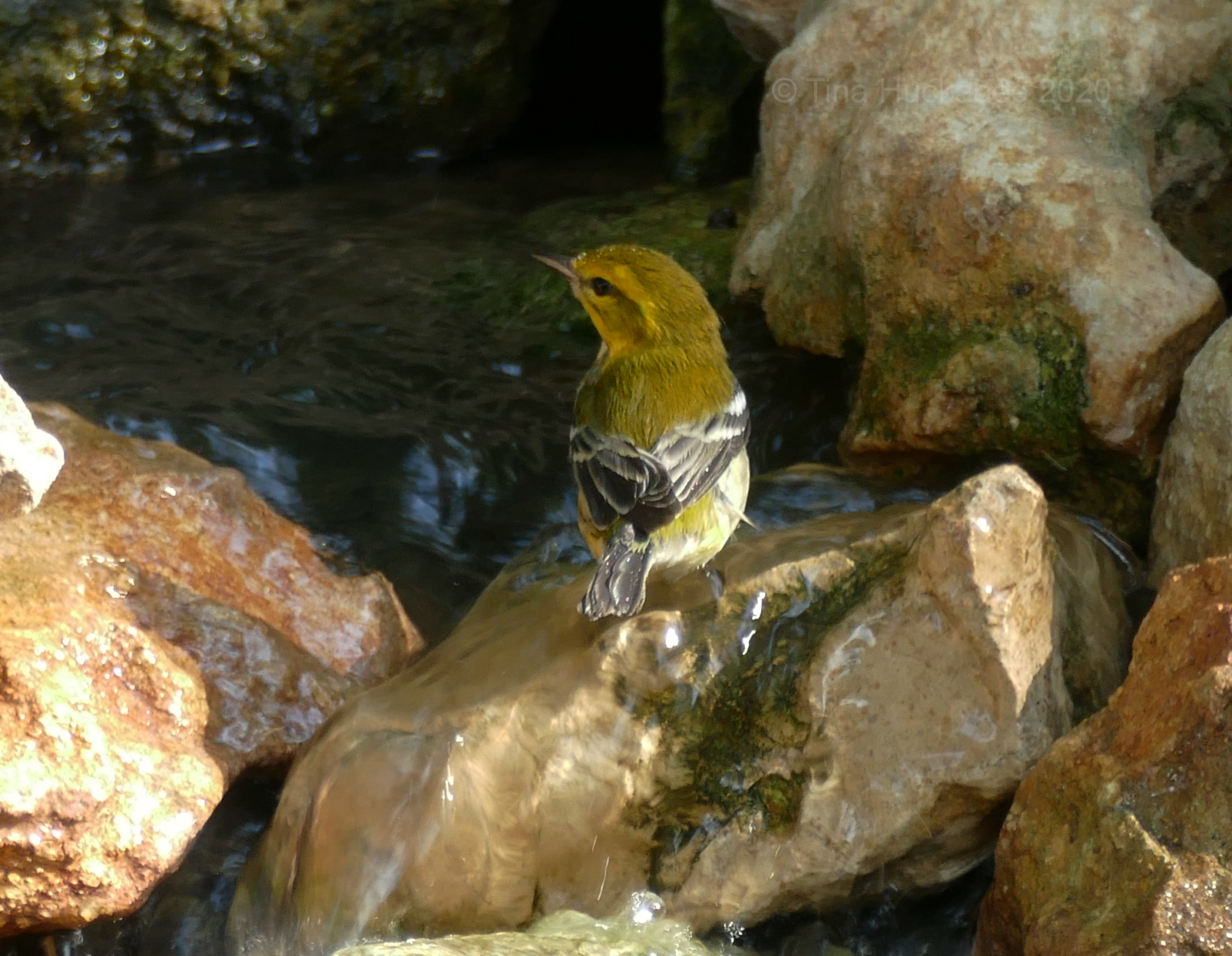
I was fortunate to host a female Black-throated Green Warbler, Setophaga virens, for the better part of a day.

Like most migratory birds (as well as the native birds), it’s the promise of a refreshing bath and cooling drink that lured this cutie in and allowed me to appreciate her beauty.

The first time I saw one of these birds I thought it was the endangered Golden-cheeked Warbler, Setophaga chrysoparia, who nests no where else in the world except here in Central Texas. If you click on that link, you’ll see that, at a quick glance and if you’re a novice bird watcher, the mistake is an easy one to make. I’ve never seen a Golden-cheeked, but I’m oh-so glad that the Black-throated greens have seen fit to visit my garden space, even if those visits are ever-so-brief.

I like this cheeky am I not adorable? pose!

I hope she has safely made her way to southern Mexico/Central America and that her winter is spent eating well and resting.

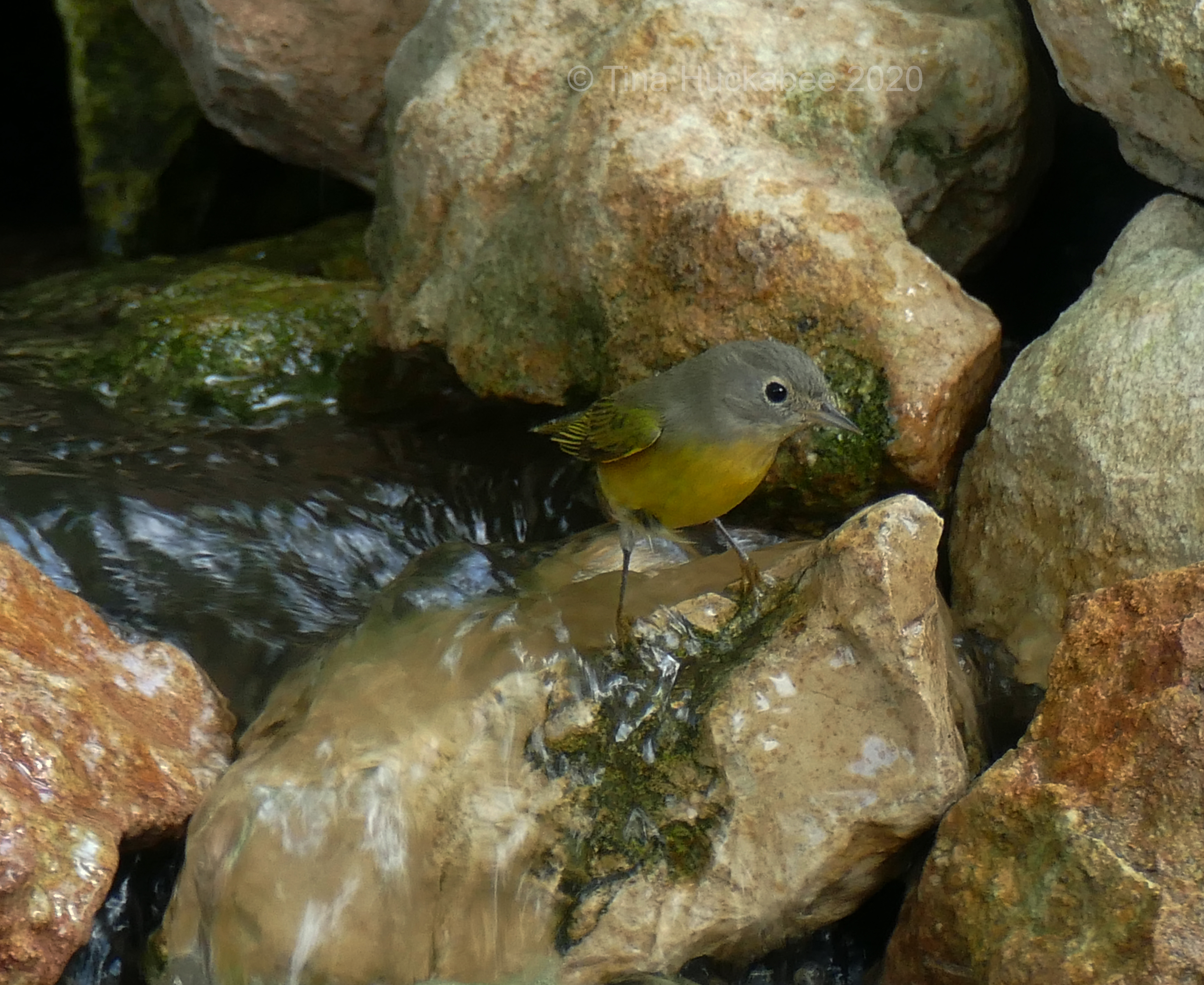
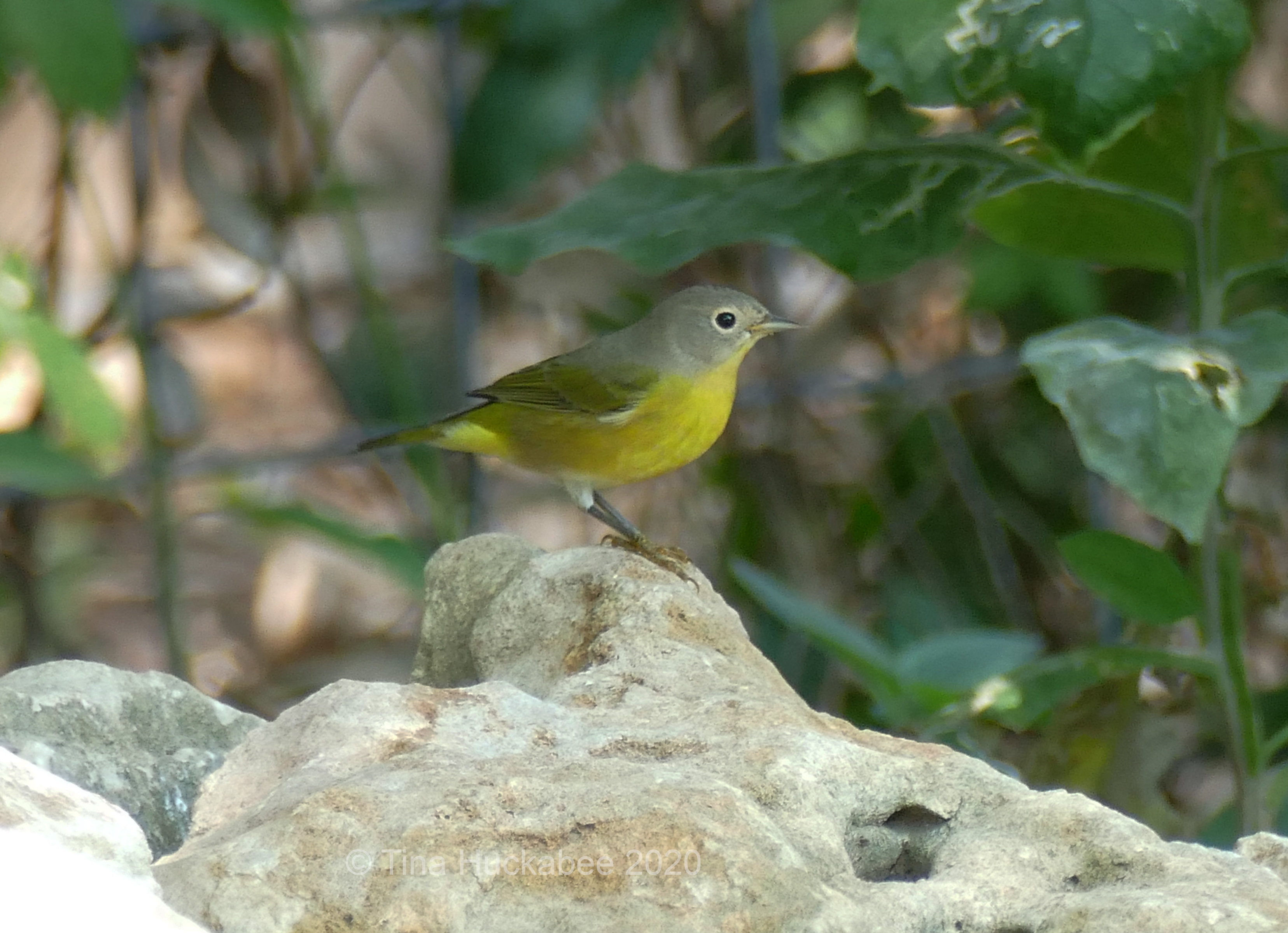
For the last few springs, I’ve seen Nashville Warblers, Leiothlypis ruficapilla, in my garden. They always come as a troop of 4 or 5, never as a single bird, like so many migratory bird species. Nashvilles are feathered friends who enjoy another’s company!

In mid October, I was entertained for most of a week by a group of 5, both males and females, until a strong cold front sent them on their way south.

They’re shy and skittish at first, perching in the trees above and alighting on the plants below and beside the pond before they’re comfortable getting into the pond.

This Firecracker plant, Russelia equisetiformis, well-placed by the pond, serves as both perch and protection, before and after a bath.

Usually, there’s some time sitting on top of the pond rocks, nervously surveying the surrounding area for safety’s sake.

This one is a female,

…and this one is male. How can I tell? Check out the dab of rust-colored feathers topping his little head–it’s guaranteed to charm the ladies, or at the very least, one special lady.

In time, relaxed and ready, they take the plunge! I like these two, canoodling in the bog area.

Isn’t that sweet? Bird love in the bog! Most of my bird visitors favor the bog: the water is shallow, perfect for fluffy, flitty bathing and plants grow for cover from predators.

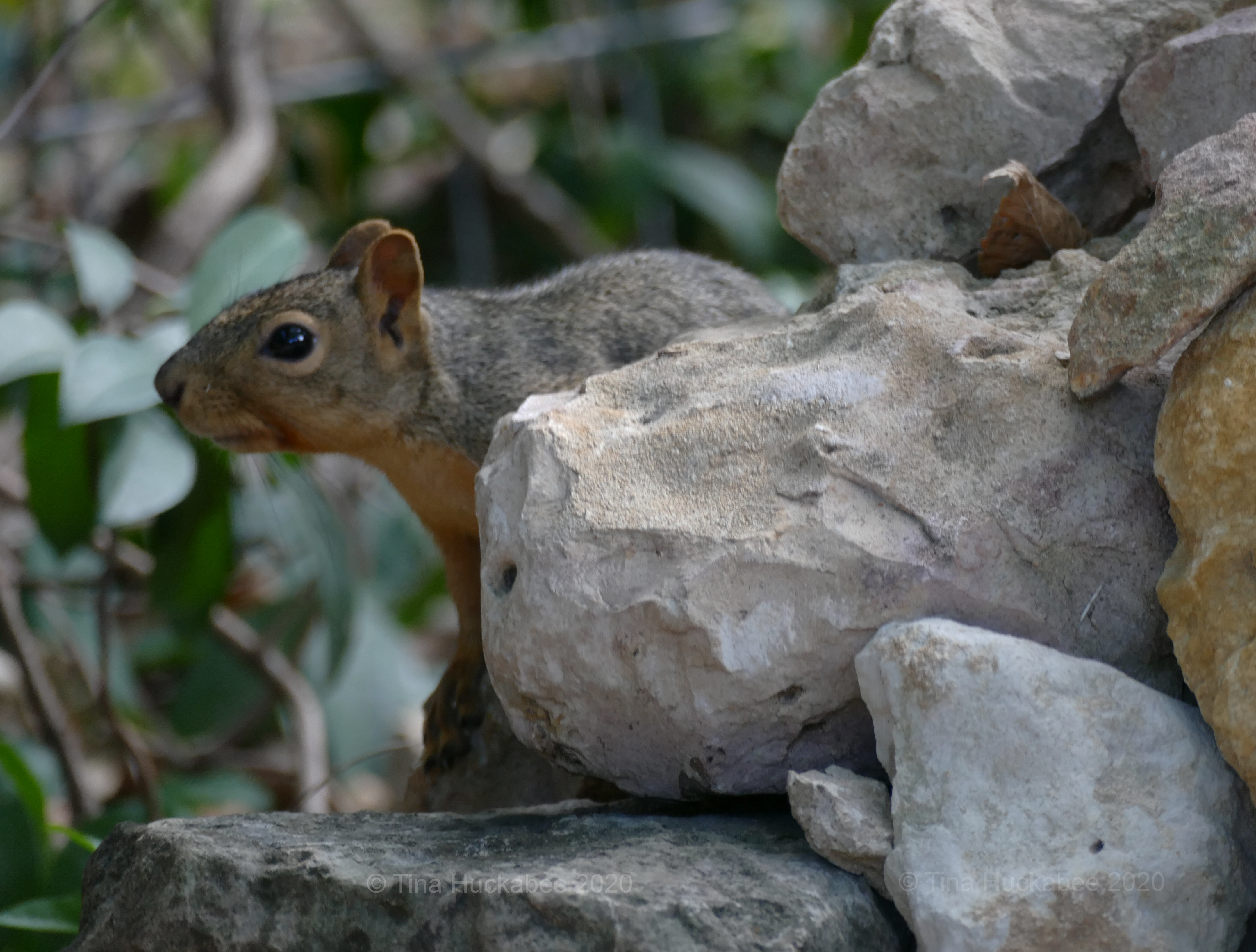
That said, there’s always a character lurking around, ready to disturb the peace, like this not-a-bird!

This Eastern Fox Squirrel, Sciurus niger, skittered up the rocks and scattered the birds, taking its turn for a drink at the waterfall. When disturbed, the birds disappear for a time, but they come back when all is quiet and they can bathe and drink in comfort.

Migratory season is mostly over. I did see a Nashville Warbler at the pond twice in this past week. Was it a tardy migrant, winging as fast as possible toward its warm winter digs? Or will it stay here until spring fever hits, joining several Yellow-rumped Warblers, Orange-crowned Warblers, and at least one Ruby-crowned Kinglet for bog baths, pond parties, and insect/suet munchies? Whatever they decide to do, they’re all welcome, temporary or permanent: these seasonal birds, along with the year-round resident birds, add their particular beauty to the diversity that is a wildlife garden.