A Path Well Traveled

In viewing the videos and photos capturing the night antics of various critters who visit my garden I noticed that each of the species use the same pathway as they arrive at, and then exit, the pond area. The fox(es) always travel a certain path, through the back edge of a garden, as they leave the pond area for other fox adventures.

While most nights foxes are the main attraction, the raccoons also show up to enjoy the yummy, fishy pond water. When they leave to continue their rounds, they usually follow the fox route.

There are fewer visits from Opossums that are caught on the camera, but they too like traipsing through the winter touched plants, rather than taking a less leafy track.

It’s not entirely clear from the videos, but the back fence is at the far left of the frame. There is a gardener-made path, nothing formal, just a well-worn trail going from here to there, and I would have assumed the nocturnal beasties would use that path as it’s available and easy to travel. But they all prefer ambling through the herbage, sticks and branches and pokey plants their walking companions. My best guess for the walkabout choice is that the plants provide cover and protection and I suppose they feel safer than in an open area. For myself, I don’t like to bumble through the garden too much (unless I’m working). Inevitably, a branch I move aside will pop back to whack me. I guess the low-to-the-ground animals don’t have that problem!

Interestingly, I have seen each species take the start of the back trail and make their way to the open area at the pond, politely skirting the wooden beam.

And sometimes it’s just easier to crawl over the back side of the water fall.

Like humans, occasionally a varmint will shake things up and travel a different path. This fox seemed comfortable in the garden, no doubt having cut through it before.

It’s been a week since I’ve seen a fox and longer since the raccoons were spotted on the camera. The Opossums are still around, though the pond camera hasn’t captured them; I’ve observed them in the early mornings before sunrise, crunching through the fallen leaves and sometimes walking along the top of the wooden privacy fence. Mostly, the rats have been on the camera and I’m not thrilled with that, but they’re out-n-about at night too, so it’s not a surprise. I expect that as I’m pruning many freeze-damaged plants the night walkers prefer areas with more cover. They’re still attracted to water sources though, and my garden provides plenty. I’m hoping that the rats that are now at play will become an inducement for some wily hunters.

The Problem with Pollinators

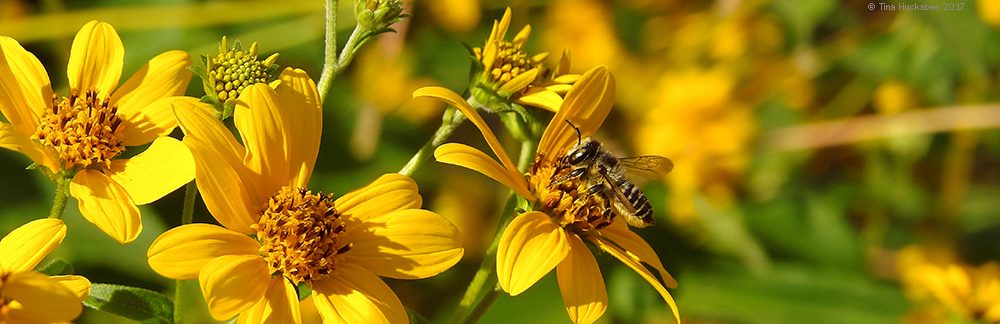
On the heels of the Intergovernmental Science-Policy Platform on Biodiversity and Ecosystem Services (IPBES) report about the potentially catastrophic worldwide decline of pollinators, I’d like to offer some  gentle reminders to home gardeners and all others concerned about the health and maintenance  of our food supply and the natural world as a whole.   The report paints a dire prediction of decline and extinction of  pollinators–honeybees, wild bees, butterflies and moths, and all other pollinating animals who play a vital role in production of managed crops and propagation of native plants and trees.  I certainly hope that this report will bolster efforts to support educational and research organizations in their work toward encouraging local, state and federal authorities to set aside land for prairies, native grasslands, and wild space in general, and to manage that space in appropriate and sustainable ways.

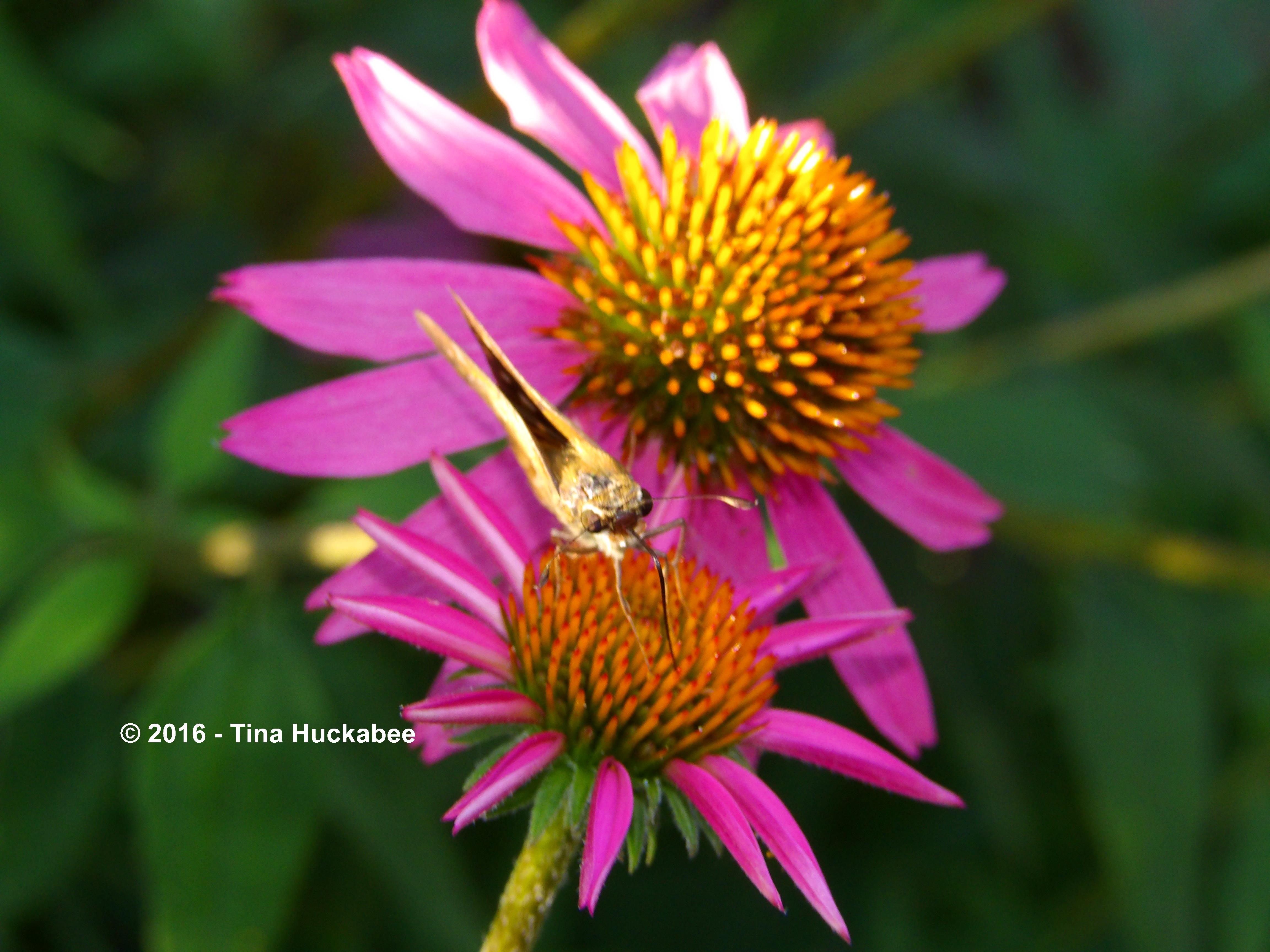
Skipper nectaring at Echinacea purpurea, Purple Coneflower.

Skipper nectaring at Echinacea purpurea, Purple Coneflower.

There are simple practices that the home gardener can engage to assure a safe haven for pollinators and all wildlife in general:

Refrain from pesticide and herbicide use.  Not only will abstaining from chemicals save you money and time, but usually, these chemicals create more problems than they fix. If you plant appropriately for your region, the need for chemicals in the garden decreases or disappears.

Osmia ribifloris (?), Megachilinae, sp. preparing nest in the mortar of the outside wall of a house.

Osmia ribifloris (?), Megachilinae, sp. preparing a nest in the mortar of the outside wall of a house.

IMGP4748_cropped_3230x2687..new

Use native plants!  There is no easier way to attract and sustain wildlife than to plant native plants–for pollinators, birds, bats, reptiles–every native critter will visit when their preferred food source is available.   Where native plants are hard to find, plant non-invasive, well-adapted pollinator-friendly perennials and annuals.   When replacing shade or ornamental trees, plant native trees; a large native tree is life-giving in so many ways.  Your locally owned nurseries and Agricultural Extension Agent offices and websites are excellent sources of information on appropriate plants.

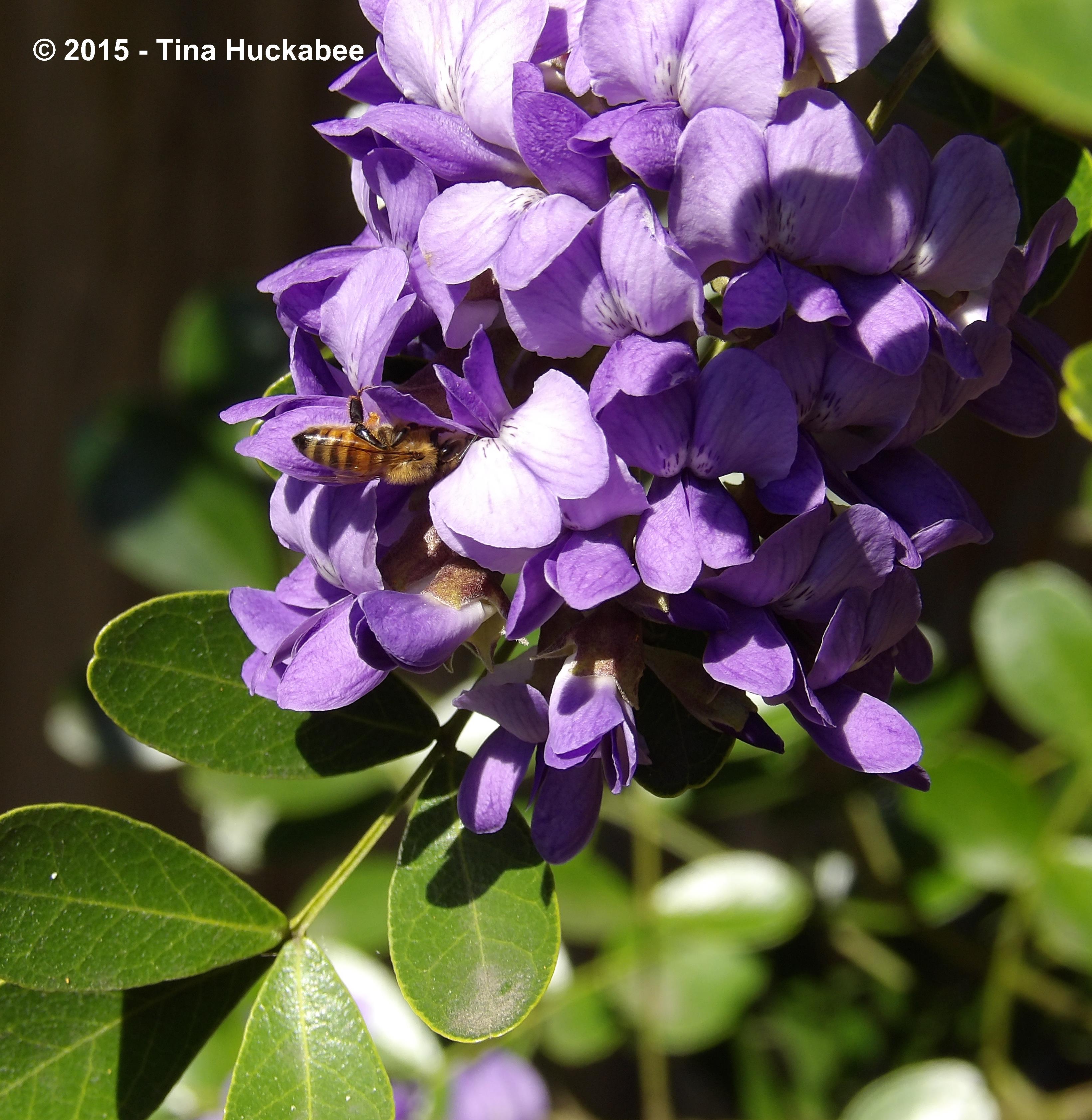
Honeybee working the blooms of a Sophora secundiflora, Texas Mountain Laurel.

Honeybee working the blooms of a Sophora secundiflora, Texas Mountain Laurel.

Allow some “nature” in your garden.   It’s perfectly fine to have a few leaves, branches, and garden detritus  in your garden for critters to use as cover and for nesting purposes. The 1950’s swath of lawn and scraped garden are so…yesterday.  A water-hogging, sterile lawn coupled with a few pristine, non-nectar producing plants (usually sold at big box stores) and placed solely at the foundation of a house, are antithetical to how nature exists and functions. Birds, mammals, amphibians, reptiles, and beneficial insects have no place to live and thrive in that kind of “garden.”

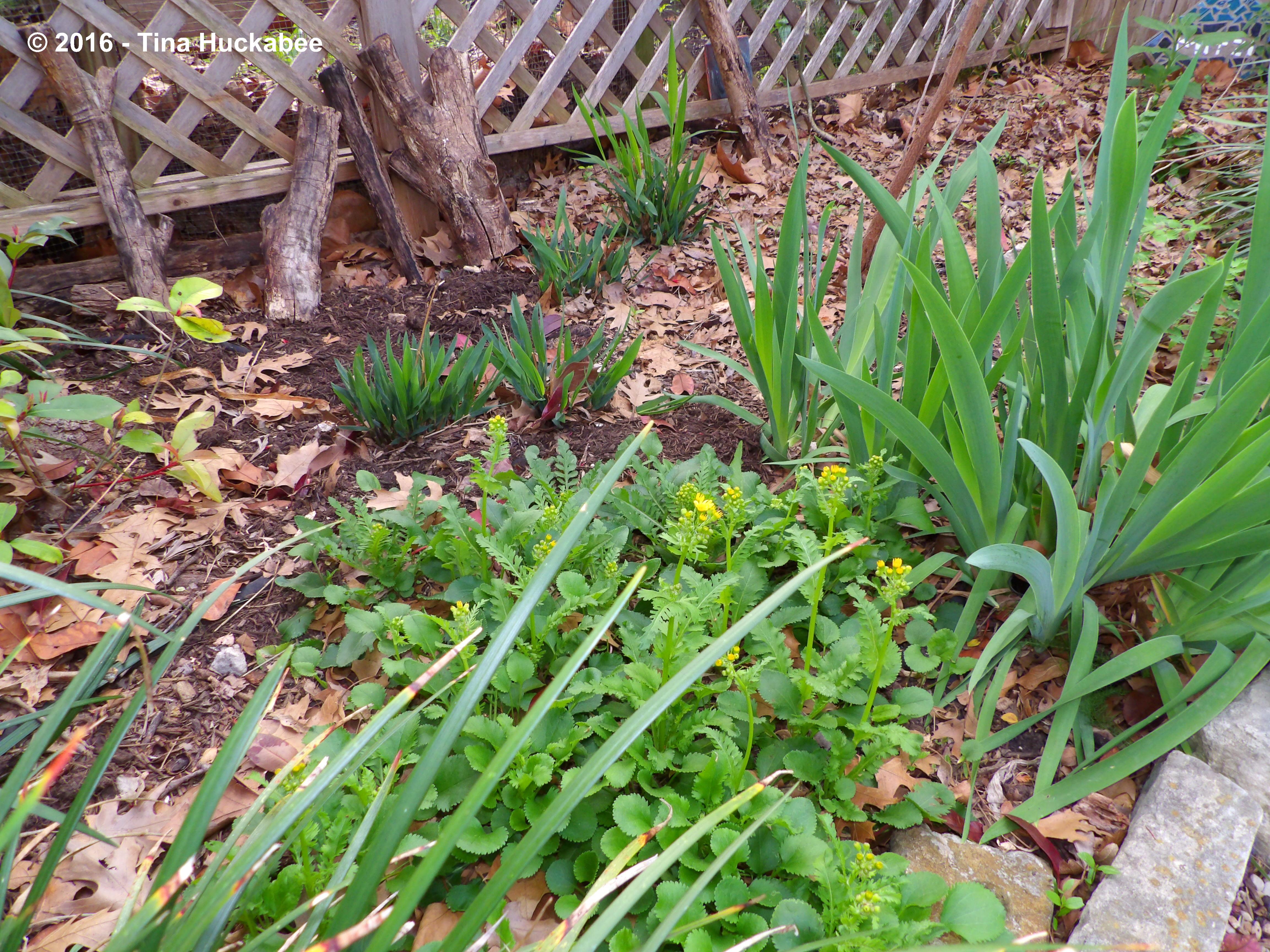
Leaf litter and rotting wood as part of the garden design and structure.

Leaf litter and rotting wood as part of the garden design and structure.

Your garden doesn’t have to be wild  to attract wild.  No matter what garden style the gardener appreciates and aspires to, incorporating plants that are beneficial to wildlife–those providing nectar, seeds, berries, and cover–is easily accomplished as time and budget allow. Whether in a formal or a cottage garden style–or anything in between–using wildlife-friendly plants, pruning after seed production, and refraining from chemical use is the ticket to a successful and life-nurturing garden.  And isn’t that what gardening and gardens are all about?  The creative endeavor of nurturing and sustaining life and beauty.

Provide water!   As simple as a bird bath or as complicated as a series of ponds with attached streams and waterfalls, water is a requirement for life and should be a part of any garden.  ‘Nuff said.

Honeybee drinking from a bird bath.

Honeybee drinking from a bird bath.

There are already places in the world where, because of mismanagement of land and misuse of chemicals, there are no pollinators available.  None.  They’re all dead.  Crops grown are hand-pollinated by people.  Surely this is not what we want worldwide, but that scenario is exactly where we are headed.  We can choose a different route and it doesn’t require great inventions or new technologies, but instead, thoughtful gardening and agricultural practices, as well as the political will to acknowledge and edit the environmental costs of industrialization.

Honeybee gathering pollen at Tradescantia gigantea, Spiderwort.

Honeybee gathering pollen at Tradescantia gigantea, Spiderwort.

Please consider the health of your local environment when you plan a garden.  Support private, municipal, and federal efforts to set aside land for wildlife.  Our survival, as well as the maintenance of the remarkable and diverse biology of the Earth, depends upon our acting NOW.  This is a solvable problem.  Let’s solve it.

Osmia ribifloris (?), Megachilinae, sp. flying into an insect hotel, preparing nest.

Osmia ribifloris (?), Megachilinae, sp. flying into an insect hotel, preparing a nest.

Pollinators are our friends and co-workers.  It’s in our interest to do right by them.

Xylocopa tabaniformis, Horsefly-like Carpenter Bee at a Salvia guaranitica, Blue Anise Sage.

Xylocopa tabaniformis, Horsefly-like Carpenter Bee, at a Salvia guaranitica, Blue Anise Sage.

Wildlife Wednesday, September 2015

It seems that August was mostly about the insects in my gardens, though a sprinkling of birds and spiders and lizards added a bit of spice to things. Welcome to Wildlife Wednesday, marked each month on the first Wednesday in observance and celebration of the wonderful wild creatures that we share our world with and who are necessary for gardens to be.

My good camera has spent this past month at the camera hospital, with a full recovery predicted.  No matter, I took decent photos of most things–plants and critters, with a reliable, but limited, point-n-shoot camera.

I’m flustered when birds don’t perch still and pose nicely for me.  With the good camera, shots are crisp and clear, birds flitting and flying notwithstanding. With the point-n-shoot, bird photos are never quite what I see in real life. Nevertheless, there are lots of birds in the late summer garden and a few presentable photos in which to profile them. The birds of August in Austin are the the usual suspects–Grackles, European House Sparrows, doves of various sorts, hummingbirds, Blue Jays, and Northern Cardinals, Cardinalis cardinalis, like this awkward juvenile male.

P1070663.new

Doesn’t he look like a typical teenager, pretending to be cool and looking around to see if anyone notices him, but underneath his splotchiness, just so terribly unsure of himself?   He can’t decide if he’s ready to take on adult responsibilities and the blasting, brilliant red that is his namesake, or if he’d rather be safe, with blander coloration, blending into the background as he prepares to make his way in the big, bad world.  Personally, I look forward to his adult suit, to his attracting a partner, and to the next generation of scarlet and mottled visitors to my garden.

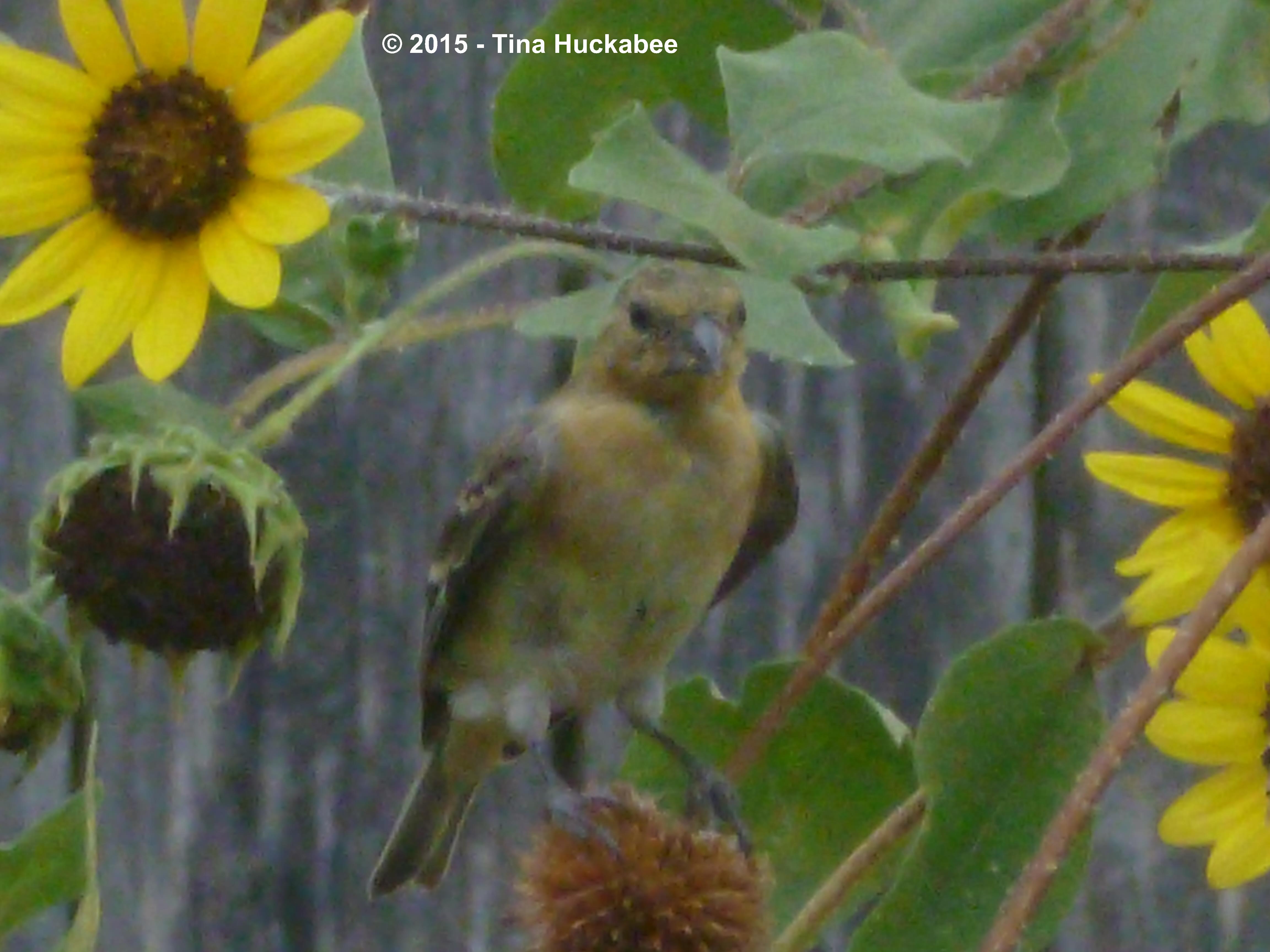
Lesser Goldfinches, Spinus psaltria, girls and boys alike, continued to enjoy the long-lasting sunflower seeds.
P1070619.new

P1070591.new

P1070629.new

And also, the water provided during this hottest month of the year.

P1070667.new

This guy,

P1070542.new

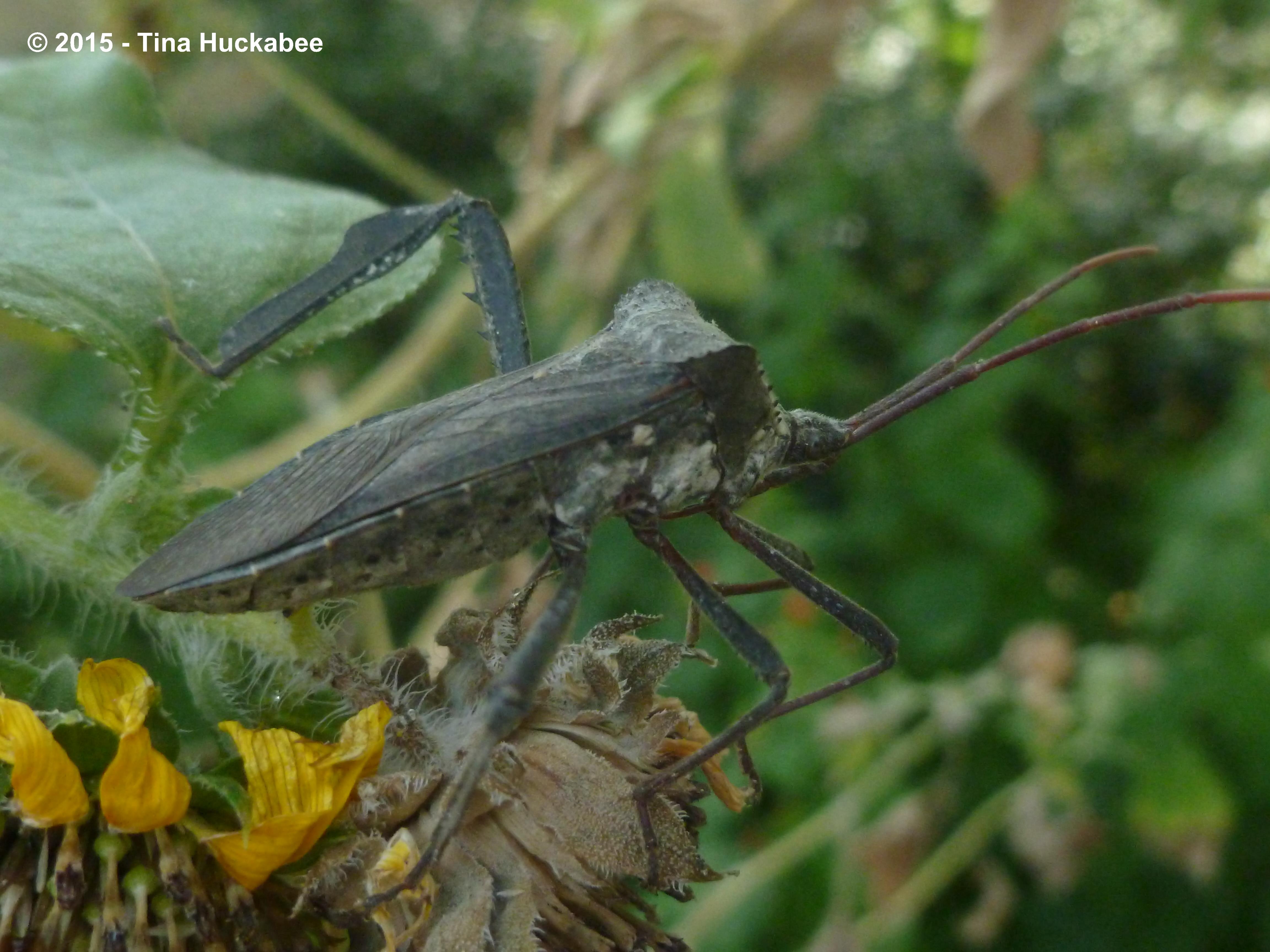
…a Leaf-footed BugAcanthocephala terminalis, hung out in the front garden for a couple of days.  Common in Austin, these bugs and their kin feed on leaves of many plants.  The terminalis part of the name is because of the red to yellow marking at the end of its antennae, though in my photo, the red isn’t all that noticeable.  I love this shot of the bug:

P1070541.new

I imagine it as a Leaf-footed Superhero Bug, profiled handsomely in shadow as it poses, stalwart and brave, overlooking the territory it protects. Dramatic music plays in the background as it surveys its realm.

I do believe that my brain is fried from the heat.

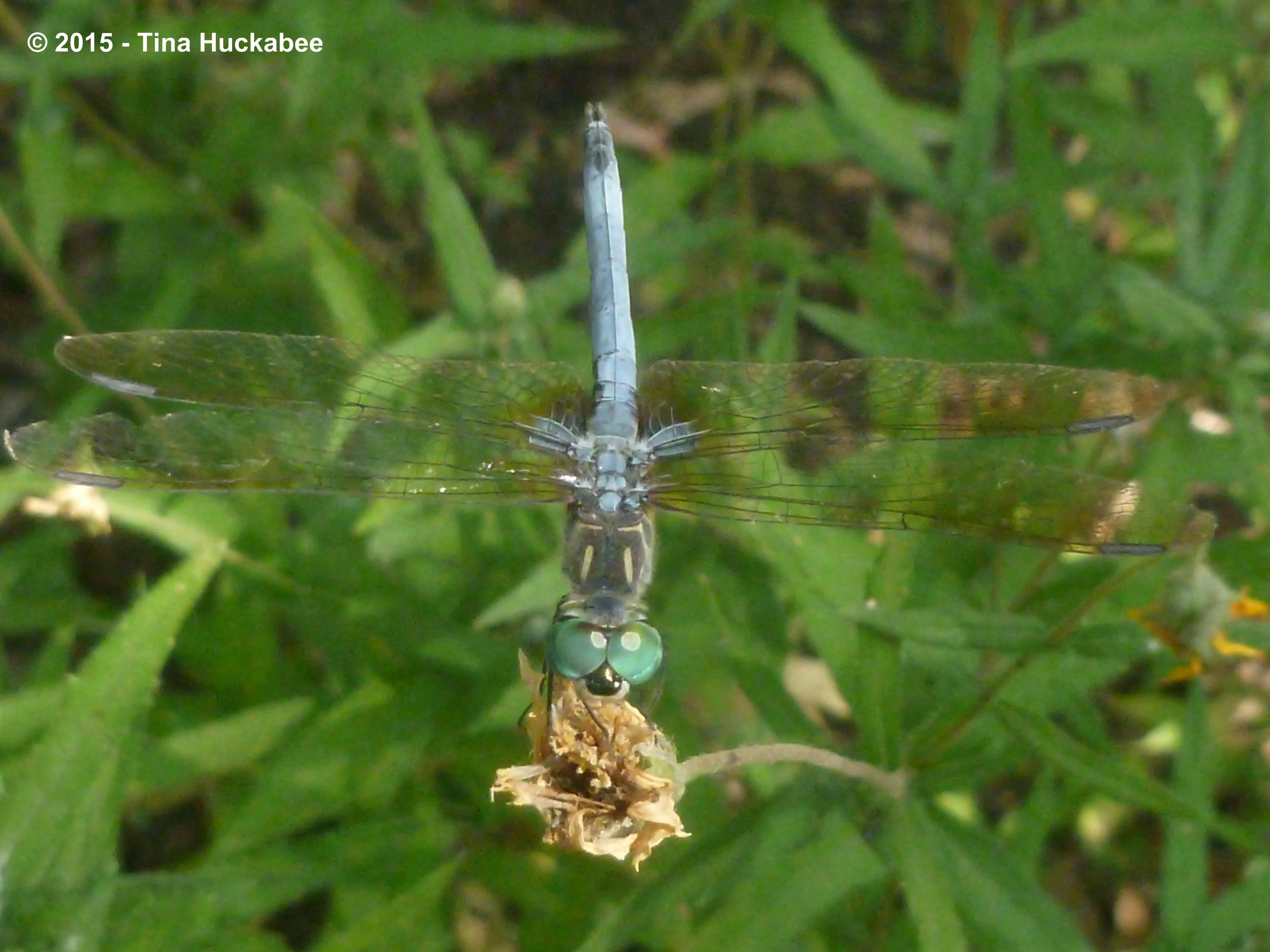
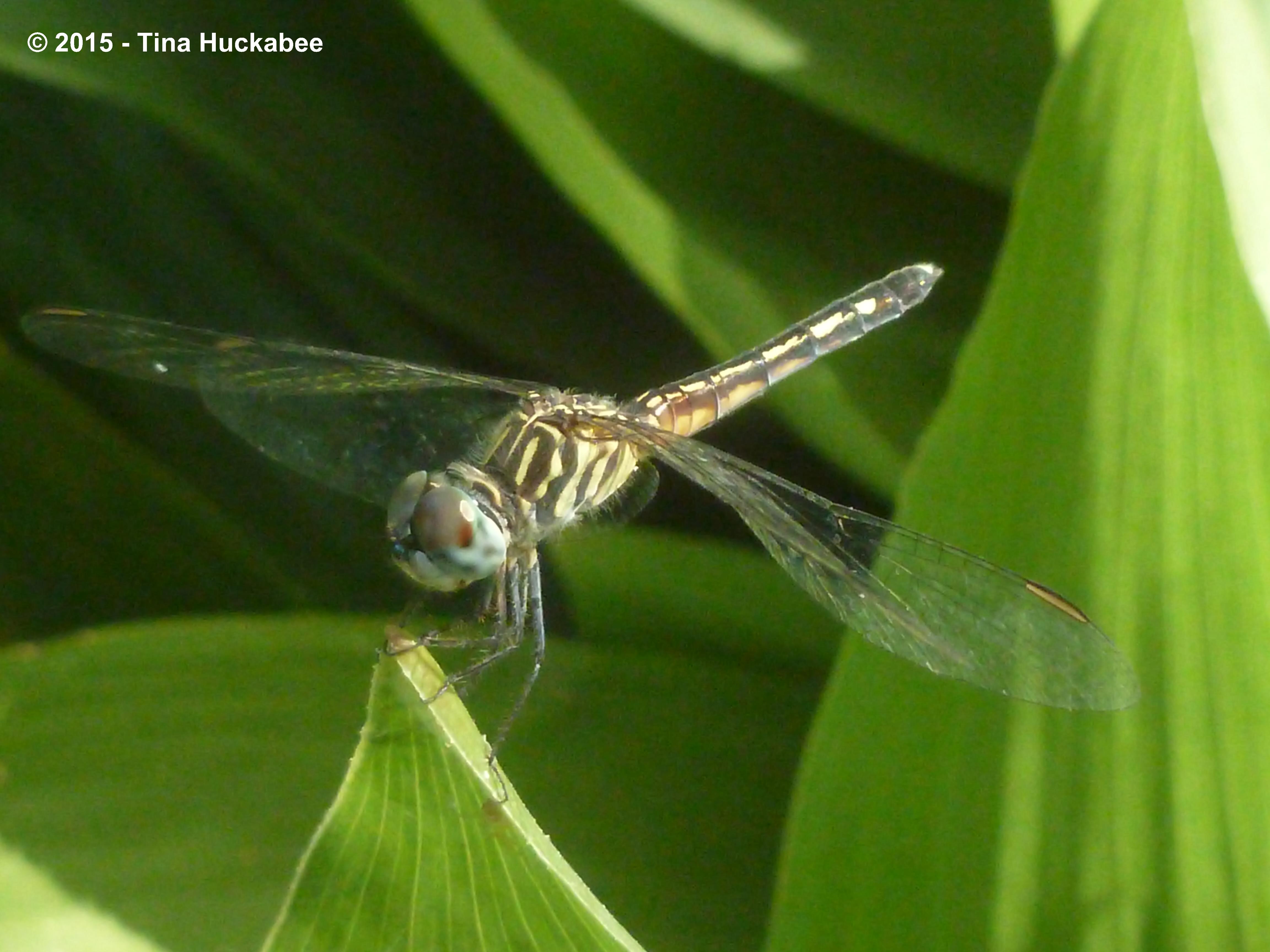
The dragons and damsels are busily hovering around the pond, hunting anything smaller than themselves, mating, and being gorgeous.  This male Blue DasherPachydiplax longipennis,

P1070756.new

…and a female of the same species are two of the many who are living in my garden.
P1070549.new

I love to watch them–the combination of beauty, fascinating life cycle, and flying agility make the Odonata species worth attracting to the garden.  If you build a pond, or similar water structure, they will come. 

Green Anoles, Carolinensis anolis, regularly adorn foliage, and often, the walls and fences in my gardens.  There are smaller ones roaming the verge in August, the offspring of the older, early summer generation.

P1070690.new

Just as charming as their parents, these little garden buddies hunt insects and stare ( or is it a glare??) at the gardener/photographer.

P1070691_cropped_3180x2111..new

I was thrilled one morning to observe this native Metallic Sweat Bee, Augochloropsis metallica(?)sunning itself on the leaf of a Drummond’s Wild Ruellia.

P1070698.new

So beautiful and such valuable pollinators, I have a hard time capturing these bees in photo form because I usually see them hovering over blooms in constant, flashing-green motion.  They alight on a flower, moving quickly around the bloom, before taking off in flight a few seconds later.  I’m  content with watching and marveling, rather than wasting time attempting to capture with the camera what my eyes behold, thus missing the action.

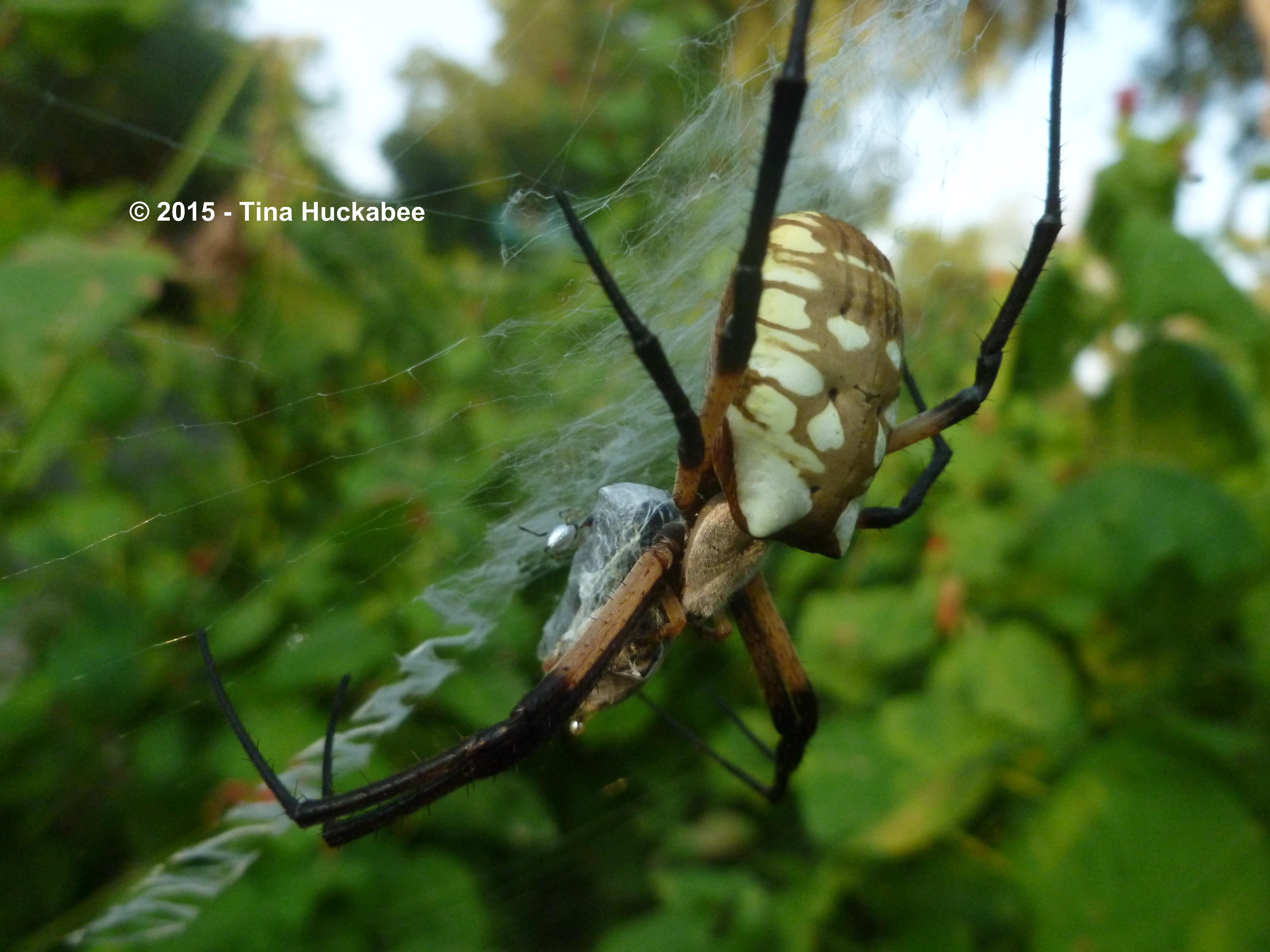
I wrote last month about the common garden spider, the Black and Yellow ArgiopeArgiope aurantia, who’d taken up residence in a large shrub of Turk’s Cap.  Ms. Giant Spider had a sweet spot here in the Turk’s Cap because the flowers are favorites of bees and butterflies, therefore, no shortage of meals for her.

P1070738.new

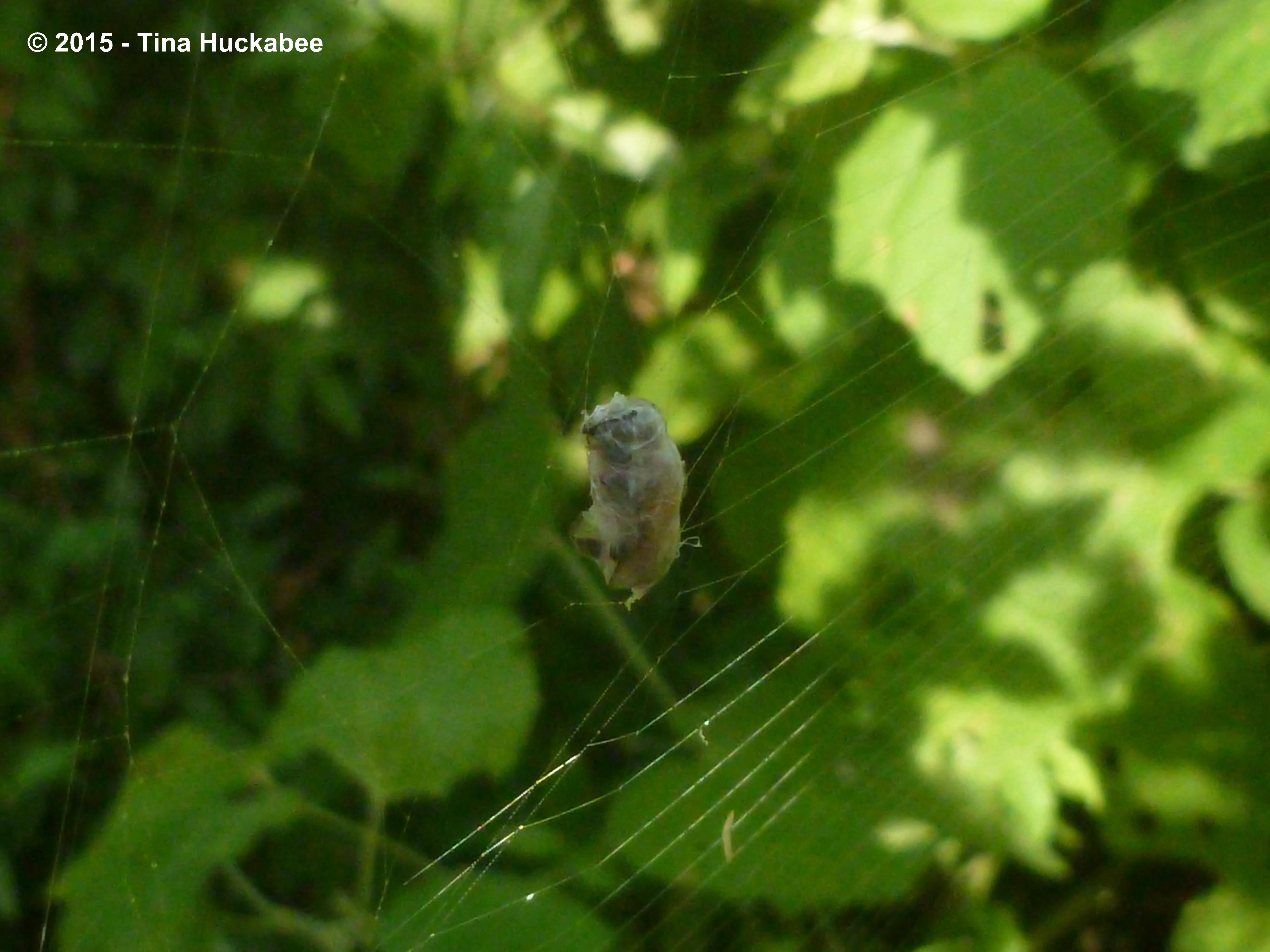
She’s been in the Turk’s Cap since July, ensnaring and devouring some “bad” bugs, but more commonly, my sweet honeybees.
P1070694.new

All wrapped up and no place to go–except into the spider’s digestive system.

Poor bee.

Poor bees. P1070693.new
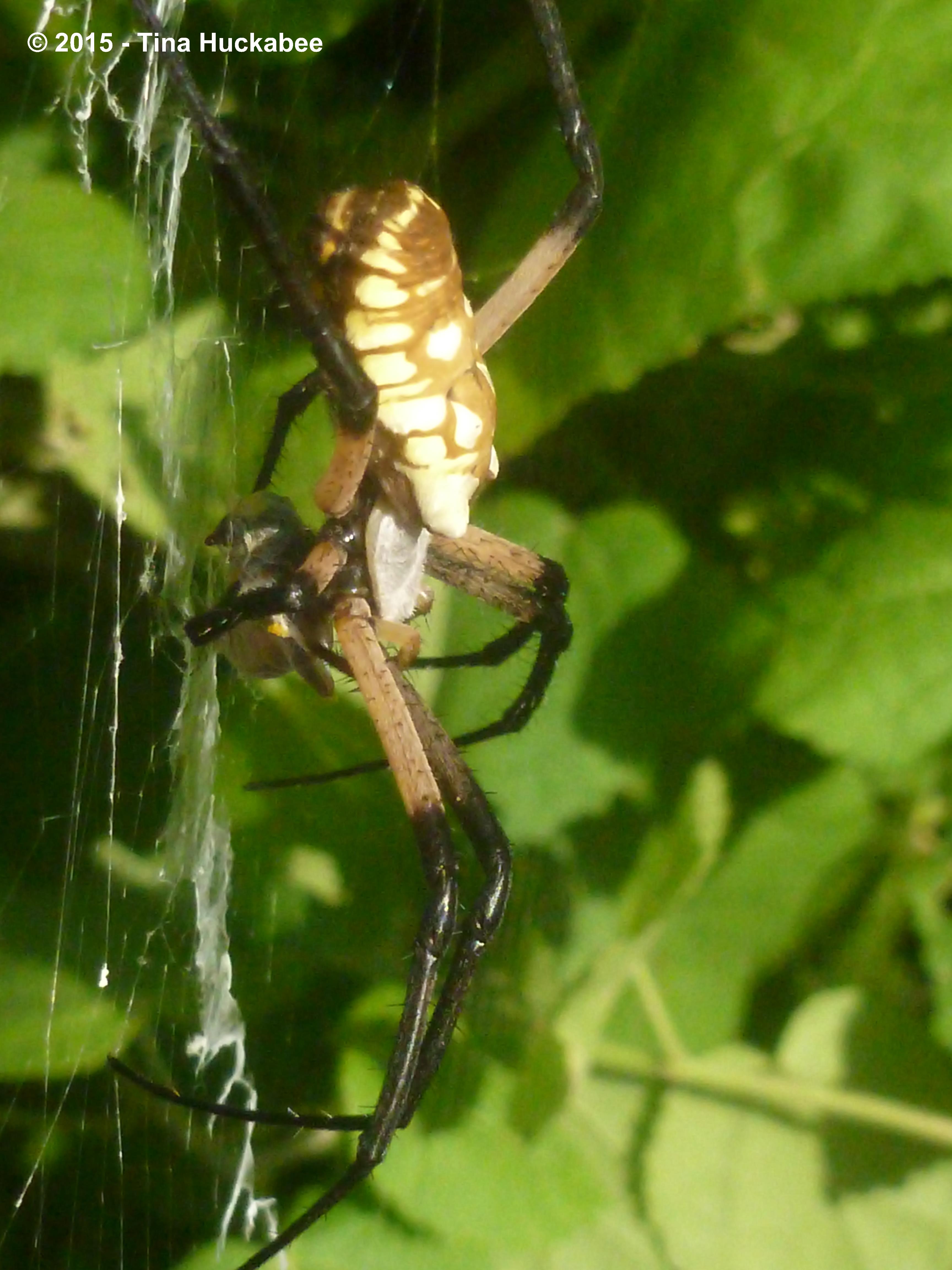
I saw several caught in the web, everyday.

I think this spider meal is one the native or wild bee species that’s common in my gardens and that I’ve written about before, a Horsefly-like Carpenter BeeXylocopa tabaniformis.

P1070838.new

The previous morning, before I’d had my full dose of caffeine, I’d seen a newly trapped Carpenter bee of the same species.  Well, I can tolerate Ms. Giant Spider catching my darling honeybees, after all, I know that the honeybee queens are strong and actively creating the next generation, but I’m not quite so open-minded about this colorful menace wrecking webbed havoc on  the wild bees.  I know the native/wild bees have a welcome home in my garden, but things are dicey for them elsewhere.  Completely ignoring the prime directive (and for those of you who have no clue what that phrase means, please read), I carefully extracted the trussed up and buzzing madly Carpenter bee from the web and gently (VERY gently) pulled away the well-woven webbing and was able to release an angry and no doubt, terrified, Carpenter bee back into the world.

This wildlife gardener interfered with wildlife.

My bad.

In my defense, the spider had two other hapless victims hanging on the web and the bee was still alive; Ms. Spider had other meals waiting and the bee had a chance to live.

I just couldn’t help myself.

I hope the Carpenter bee in this photo wasn’t the same one I rescued, but if it was, maybe it’s best  that the can’t-learn-a-valuable-life-lesson DNA is out of circulation.

P1070838.new

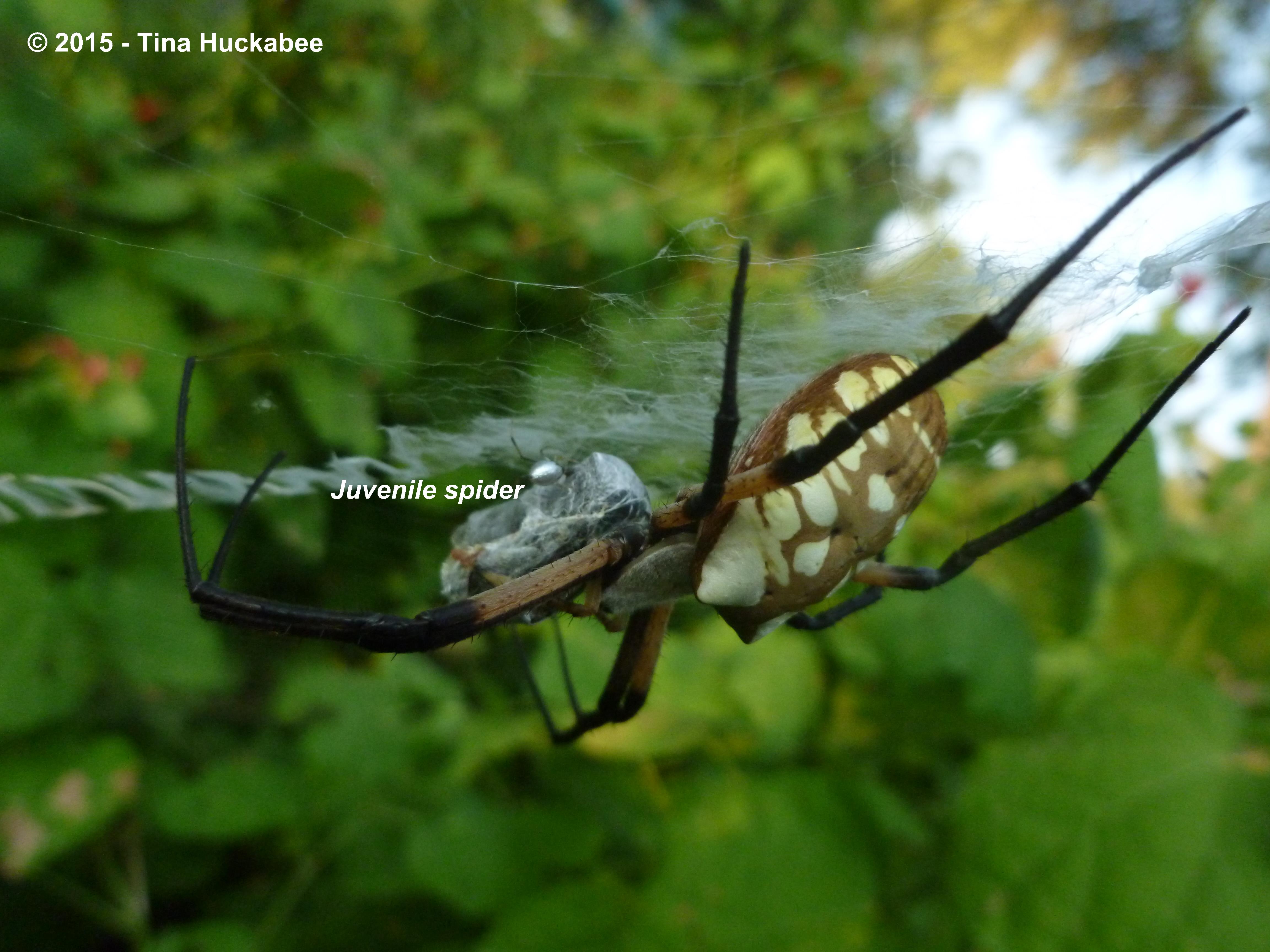
In this photo, the little silver-colored spider is, I think, a spiderling–the tiny offspring of Ms. Giant Spider, enjoying the meal trapped by Mom.
P1070837.new

It’s possible that it’s an unrelated species, but given Ms. Giant Spider’s voracious appetite and penchant for killing anything in her wake, I’m guessing Silver Bells is probably family.

In the last few days, Ms. Giant Spider has disappeared. I thought maybe she’d moved her web, because she’s done that a couple of times, but instead, I located  a smaller version of the same species about a foot away–lying in wait, web at the ready, in a different part of the Turk’s Cap.  I suspect Ms. Giant Spider has gone to her reward and has been replaced by Ms. Junior Spider.

And the cycle begins again.

Lastly, I’m fairly sure this lovely green critter is a Spotted Bird Grasshopper, Schistocerca emarginata (also known as Schistocerca lineata).

P1070799.new

He/she was hanging out in the Turk’s Cap, probably noshing on foliage.  I warned it about the webbing that’s situated just behind.  According to literature, the Argiope spider species are big enough to capture large bird grasshoppers. The grasshopper must have made its way safely, as I never saw it packaged up in the webbing.

And that’s about all for this month.  So long!!

P1070798.new

Kudos to all of you who garden for wildlife, no matter how much or little:  you’re part of the solution.  I hope your gardens received wildlife visitors this month and that you will join in posting for September Wildlife Wednesday. Share the rare or mundane, funny or fascinating, beneficial or harmful critters you encounter. When you comment on my post, please remember to leave a link to your Wildlife Wednesday post so readers can enjoy a variety of garden wildlife observations.

Happy wildlife gardening!