Bloom Day, October 2014

Summer has been reluctant to release its toasty grip on us in Texas, but the cool of autumn has mostly arrived. We’ve enjoyed a couple of refreshing cold fronts, dropping our temperatures into the ’50’s, with highs in the 70’s and ’80’s. The lingering warmth of September and early October didn’t damper blooms in my gardens, though. Joining Carol at May Dreams Gardens, I’m celebrating blooming stuff on this 15th of October.

There is no shortage of blooming native Texas plants in my gardens. Let’s take a tour, shall we?

Barbados Cherry, Malpighia glabra, has blossomed its dainty, pink clusters for a month or so now.

IMGP0216_cropped_3829x2521..new

Soon, cherry red fruits will replace blooms, feeding a whole different crop of critters. Barbados Cherry is lovely in tandem with Turk’s CapMalvaviscus arboreus.

IMGP0218.new

A cultivar of the native red Turk’s Cap, the Pam’s Pink Turk’s CapMalvaviscus ‘Pam Puryear’, blooms as heartily as the red,

IMGP0235_cropped_3548x3355..new

…but with softer pink swirls perched atop the long branches.   In my gardens, the Pam’s Pink is planted with FrostweedVerbesina virginica,

IMGP1283.new

….and it’s a successful pairing.   Frostweed is an excellent wildlife plant.   Attracting butterflies, like this migrating Monarch,

IMGP1166.new

IMGP1149.new

…and bees,

IMGP1077.new

…and this guy, a Tachinid fly,

IMGP1072.new

…who you can see again on Wildlife Wednesday, a fun little wildlife gardening meme I host.  The next Wildlife Wednesday is November 5th.  Frostweed a stalwart native perennial; it’s drought hardy and works well in either shade or sun.

IMGP1031_cropped_3429x3208..new

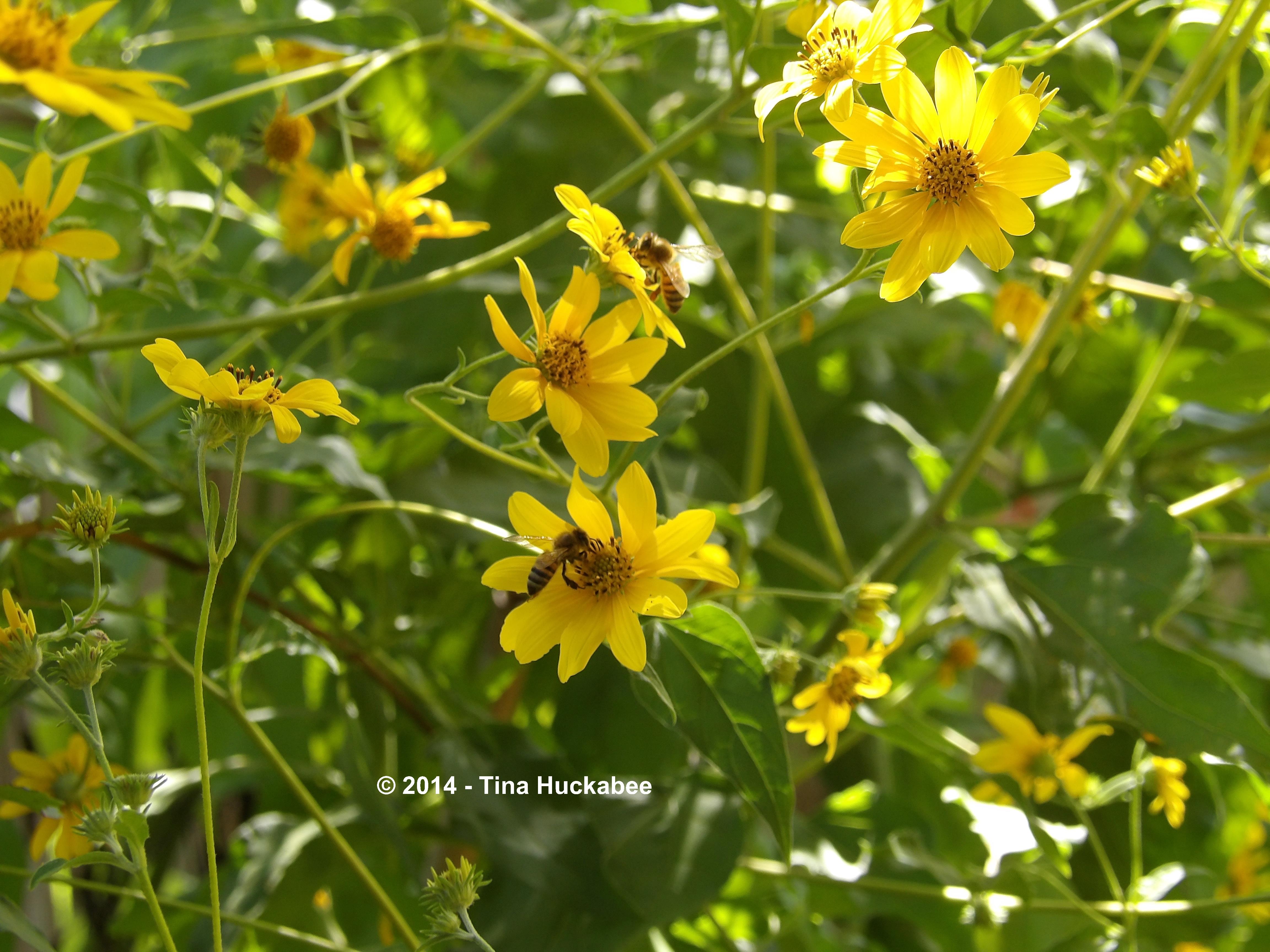
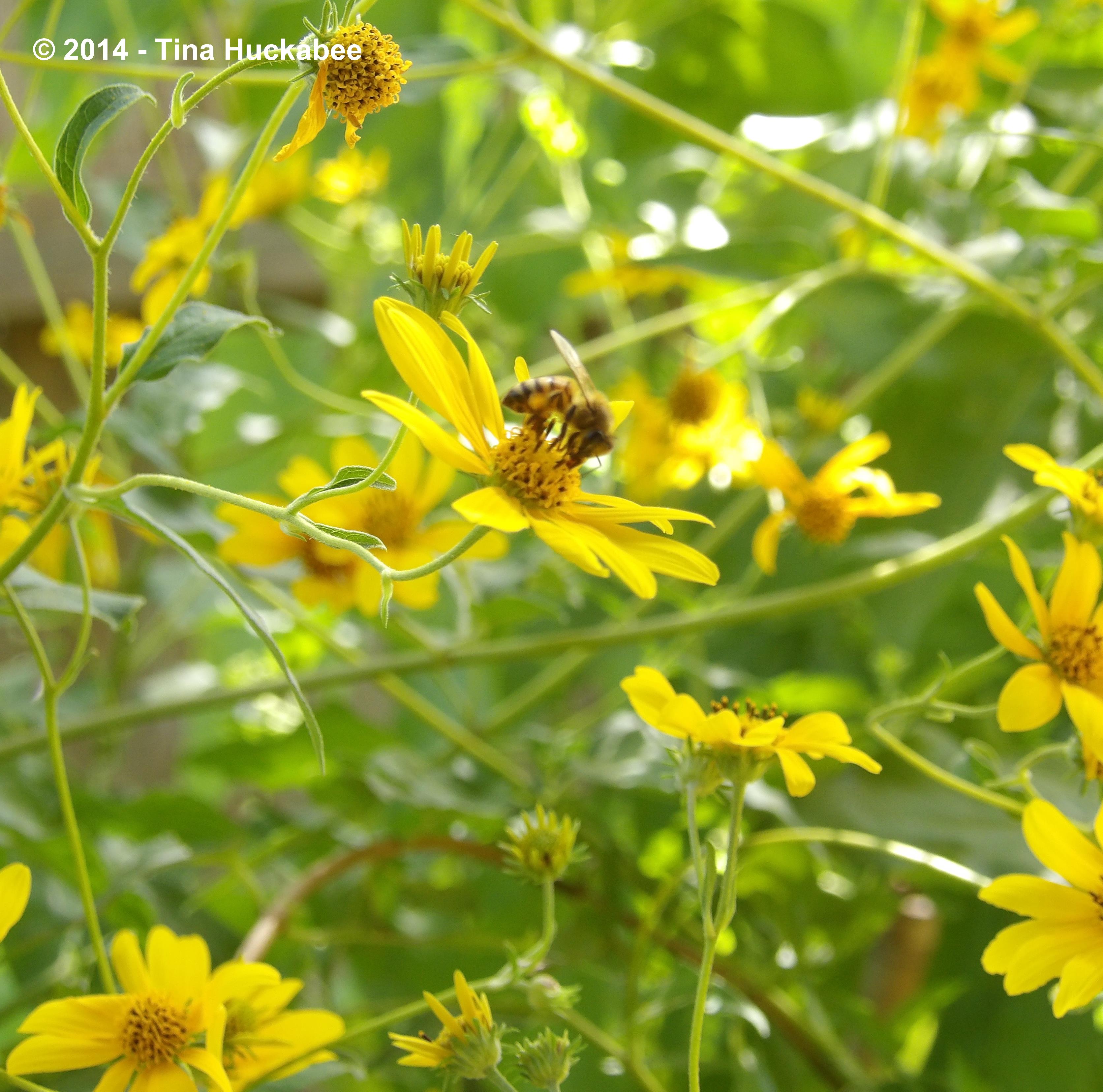
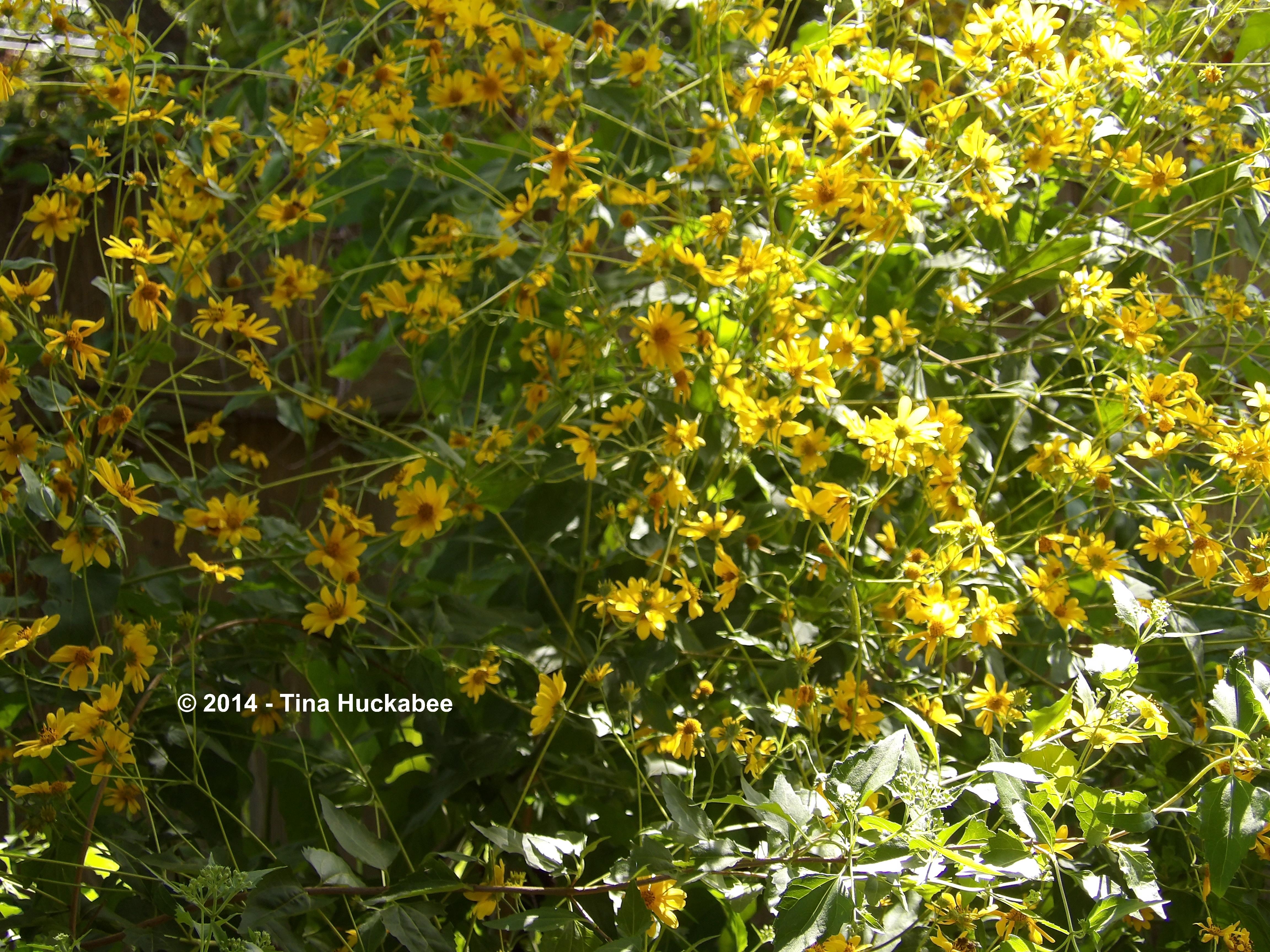
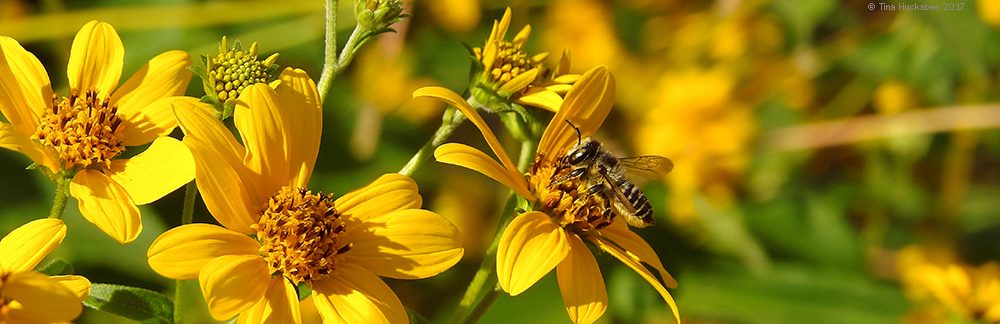
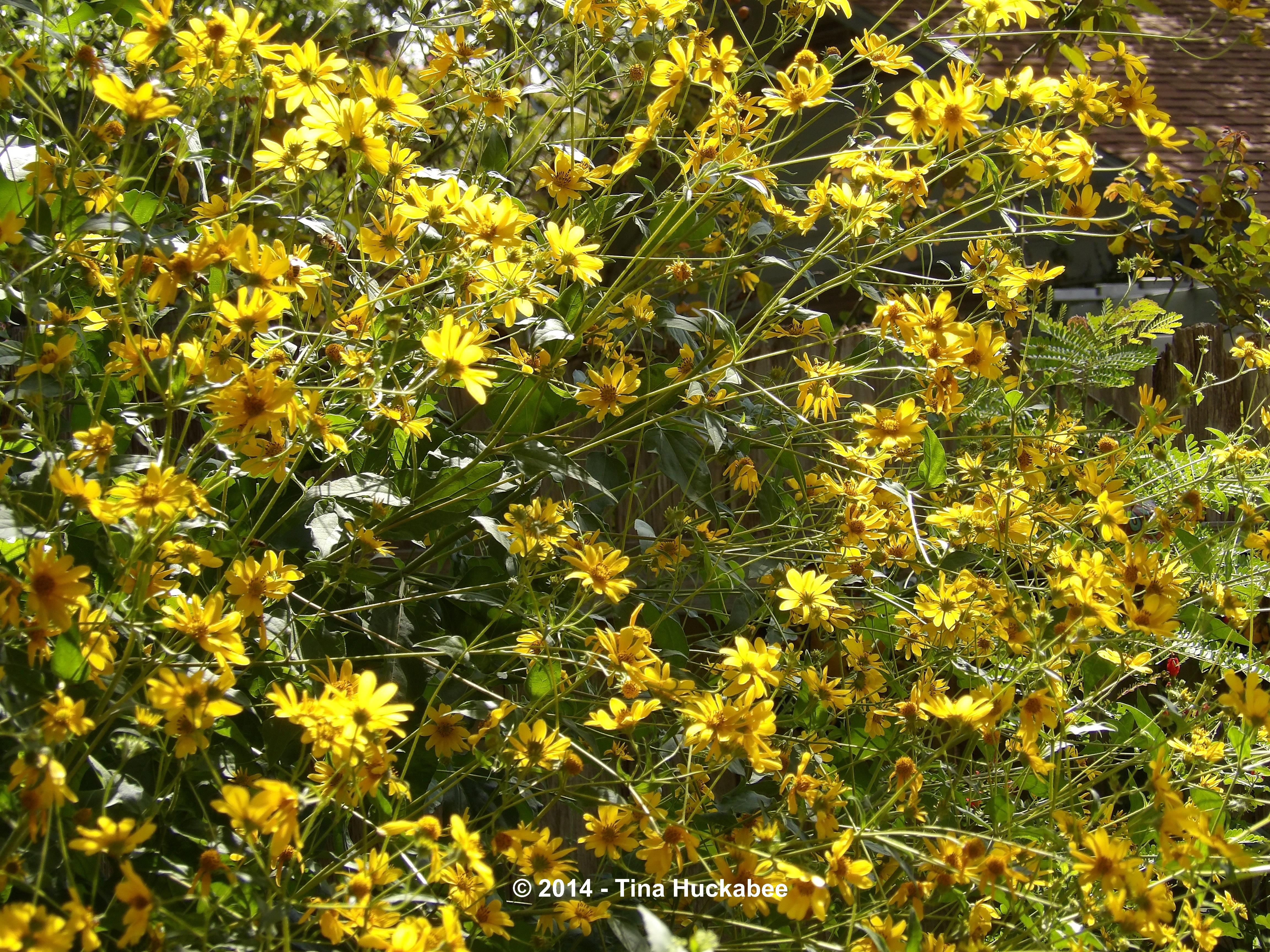
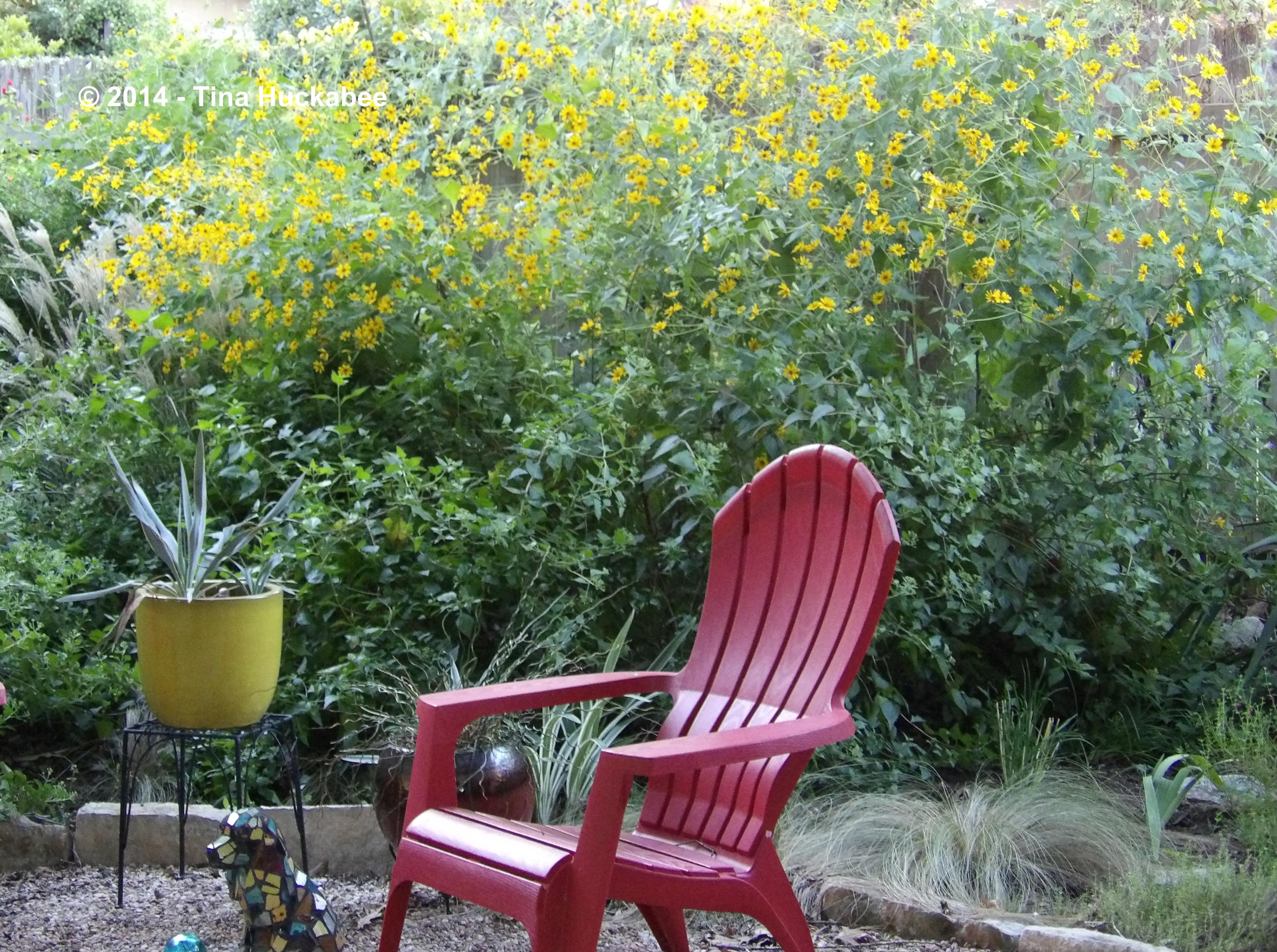
The GoldeneyeViguiera dentata, is photogenic in the fall garden.
IMGP1236.new

Another perennial which attracts its share of pollinators,

IMGP1241.new

…these pretty yellow flowers evoke glorious autumn sunshine.
IMGP1008_cropped_4129x3078..new

IMGP1342.new

They work and play well with other natives in my gardens,

IMGP1185.new

…like the Rock RosePavonia lasiopetala and Barbados Cherry. And who doesn’t love the tried and true combination of yellow and blue?

IMGP1277_cropped_3129x3382..new

This Goldeneye’s companion is the non-native Blue Anise Sage, Salvia guaranitica.  

The roses in my gardens are awake again after the heat of summer. I grow only water–wise antique or cultivar roses in my gardens.  If a rose can’t shrug off the heat and dry of the Texas summer, it’s out!  The Martha Gonzales Rose is one such beast.

IMGP1208.new

Named after a Navasota, Texas gardener, Martha Gonzales,

IMGP1204.new

…this rose is beautiful, fragrant, and tough. Martha grows in USDA zones 7a to 10b so it it’s appropriate in a wide range of situations.  If you only grow one rose, make it the Martha!

The Belinda’s Dream Rose, which is appropriate for USDA zones 5a to 10b,

IMGP1612.new

is the quintessential elegant pink rose. Fragrant and downright luscious, Belinda isn’t quite as hardy as the Martha, but still performs well for me.  Belinda gets a little peeky in summer, but picks up again with rain and softer temperatures.  Caldwell Pink Rose,

IMGP0975.new

looks dainty, but it’s no wilting beauty.  This poor thing, I’ve moved it four times–I think I’ve finally found its forever home.

IMGP1014.new

A migrating Monarch finds this Old Gay Hill Rose delightful,

IMGP1724.new

…and so do I.  Similar to the Martha Gonzales, the shrub is larger and the petals slightly (but only slightly) more pink than the Martha’s fire engine red petals.

I’m not a grow-only-native purest and host a number of non-native perennials in my gardens, like these Four O’Clocks, Mirabilis jalapa.  Considered a staple of the Southern garden, these are new to my gardens and were gifted to me by a gardening friend, TexasDeb at austin agrodolce.

IMGP1180.new

IMGP0856.new

IMGP0858_cropped_3419x3414..new

These lovely trumpets open late in the day, bloom all night, and close in the morning. Four O’clocks are fragrant and are such lovelies–I’m tickled to make room for them in my gardens.

Jewels of OparTalinum paniculatum, are another new-to-my-gardens perennial from TexasDeb.  Jewels are also an old-fashioned flower of the Southern garden.

IMGP1369.new

IMGP1380.new

I love the teesny flowers, the “jewels” seeds, and chartreuse foliage. Both Four O’Clocks and Jewels of Opar are potentially invasive, so I’ll keep them in check–ripping out uninvited extras who crash my garden party!

It’s now that my Coral Vine, Antigonon leptopus, shines,

IMGP1413.new

IMGP1415.new

…or is that a sparkle?  Whatever it is, the bees love this bloomer.

After each rain, the Almond Verbena, Aloysia virgata, flowers and its fragrance graces my garden.  Shown here in partnership with Turk’s Cap blooms, the Almond Verbena is favored by honeybees.

IMGP0918.new

My Almond Verbena is the anchor plant in a group of native shrubs and perennials.

IMGP0910.new

It fits quite well, I think.

Quoting another garden blogging buddy, Debra of Under the Pecan Trees,  we enjoy a “second spring” in Texas–a  lush blooming autumn gift, after the heat, when all, including gardeners, perk up anew.

What’s blooming in your gardens this October Bloom Day?  Check out May Dreams Gardens for blooms from everywhere.


The Monarch And The Bee

On a sunny October afternoon, the Frostweed, Verbesina virginica, is in full bloom mode.

IMGP0994.new

IMGP1076.new

A stately native perennial to Texas and other places as well, Frostweed attracts  those who pollinate for a living. This Monarch butterfly, Danaus plexippus, no doubt on his way to Mexico, rests on the Frostweed,

IMGP1136.new

RICOH IMAGING

IMGP1144.new

…while sipping nectar to re-fuel for the rest of his long trip.  He’s only the third or fourth Monarch to visit my gardens.  I hope there will be more.

One of my hived honeybees graciously shares her food bar space with the migrating Monarch.

IMGP1159.new

There are plenty of life-giving, yummy nectar and pollen rich blossoms this time of year. In beekeeper-speak, Central Texas is experiencing nectar flow, meaning lots of honey is being produced because there are so many flowers in full, autumn flush.

In concert with the blooming Frostweed, GoldeneyeViguiera dentata, is another native perennial at its height in flowering.

IMGP1187.new

IMGP1232.new

IMGP1237.new

My forager honeybees don’t travel far to find what they need for their hive,

IMGP1240.new

IMGP1238_cropped_3345x3313..new

…while Goldeneye conjures rays of sunshine in the garden.  Oh happy autumn blooms!

IMGP1233.new


Wildflower Wednesday, August 2014

Today I join Gail at clay and limestone with heat loving wildflowers for August. No longer cool nor even somewhat pleasant, we’re crawling down the hard stretch of summer here in Austin, Texas. But the light is different and once in a great while, I feel a slight change to the breeze. When there is a breeze.  I say that every year, to anyone who will listen: Sometime in August there is a change–the air is different, the breeze is different! Usually those I’m in conversation with roll their eyes and smirk.

I get lots of smirks.

There’s no smirking though when viewing  this hot, summer/fall blooming GoldeneyeViguiera dentata.

P1060547.new

A few of these flowers open throughout the summer months, but in October? Watch out! There will be an explosion of yellow.

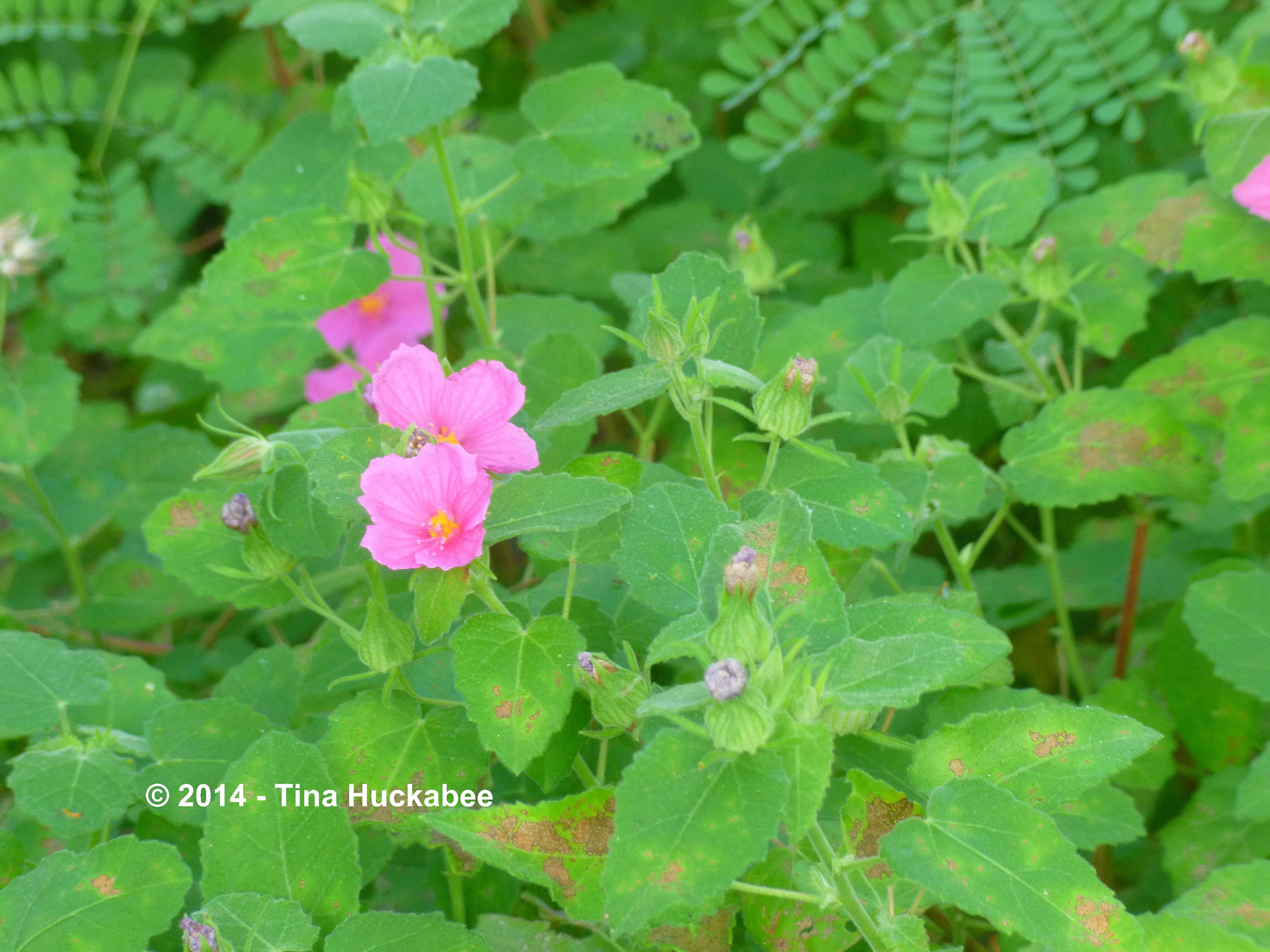
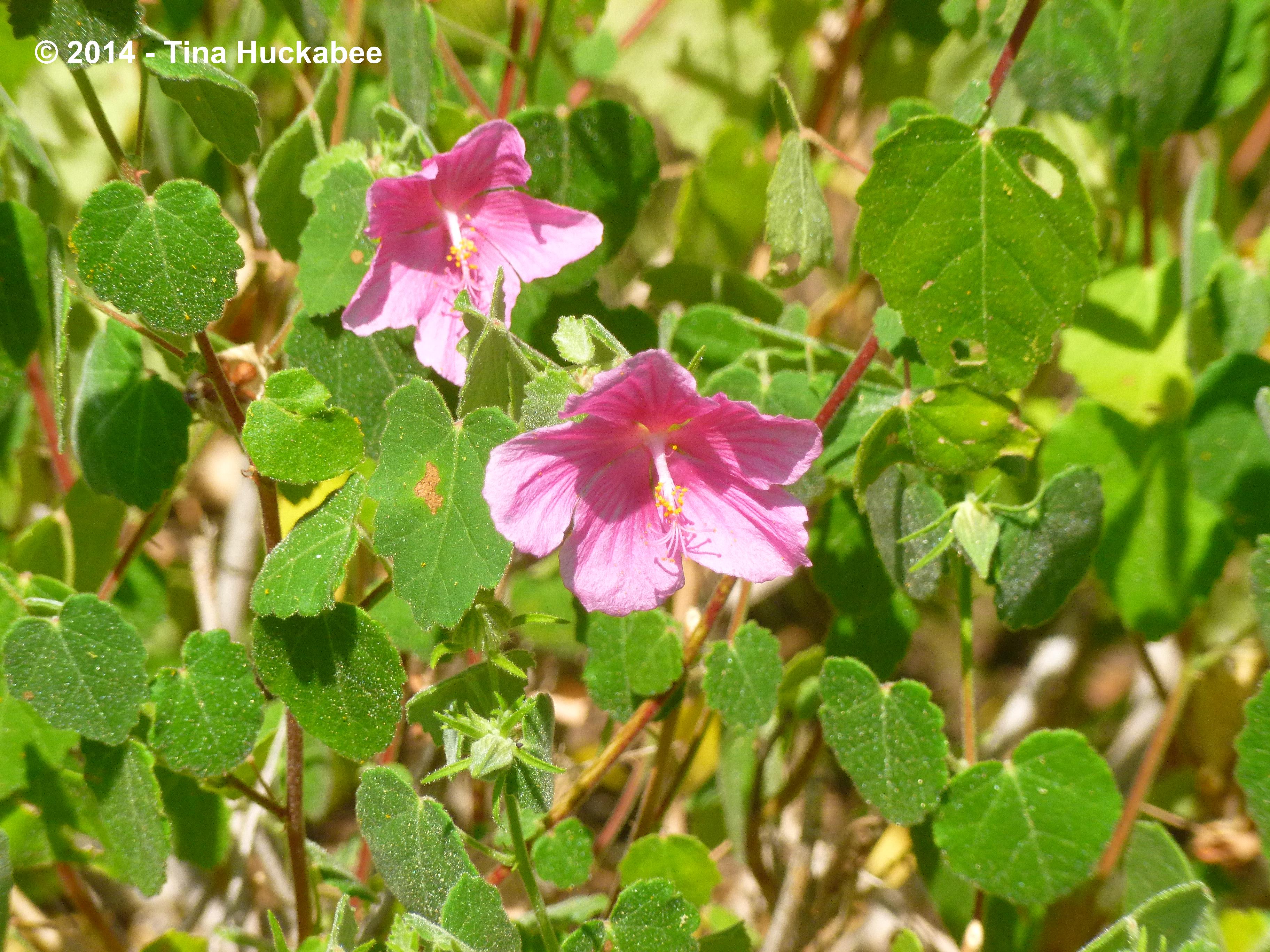
The ridiculously pink Rock RosePavonia lasiopetala, is a long-blooming native perennial. These pinks,

P1060605.new

look almost too pink.  They open in the wee hours before dawn and close in the afternoon heat.  This group is tired of the heat and are closing up shop for the day,

P1060606.new

…while this group contends with both heat and sun.

P1060640.new

By 4pm in hot August, Rock Rose blooms are done for the day. Fresh, perky blossoms will open for business early the next morning.

The glory of Purple ConeflowerEchinacea purpurea, 

P1060609.new

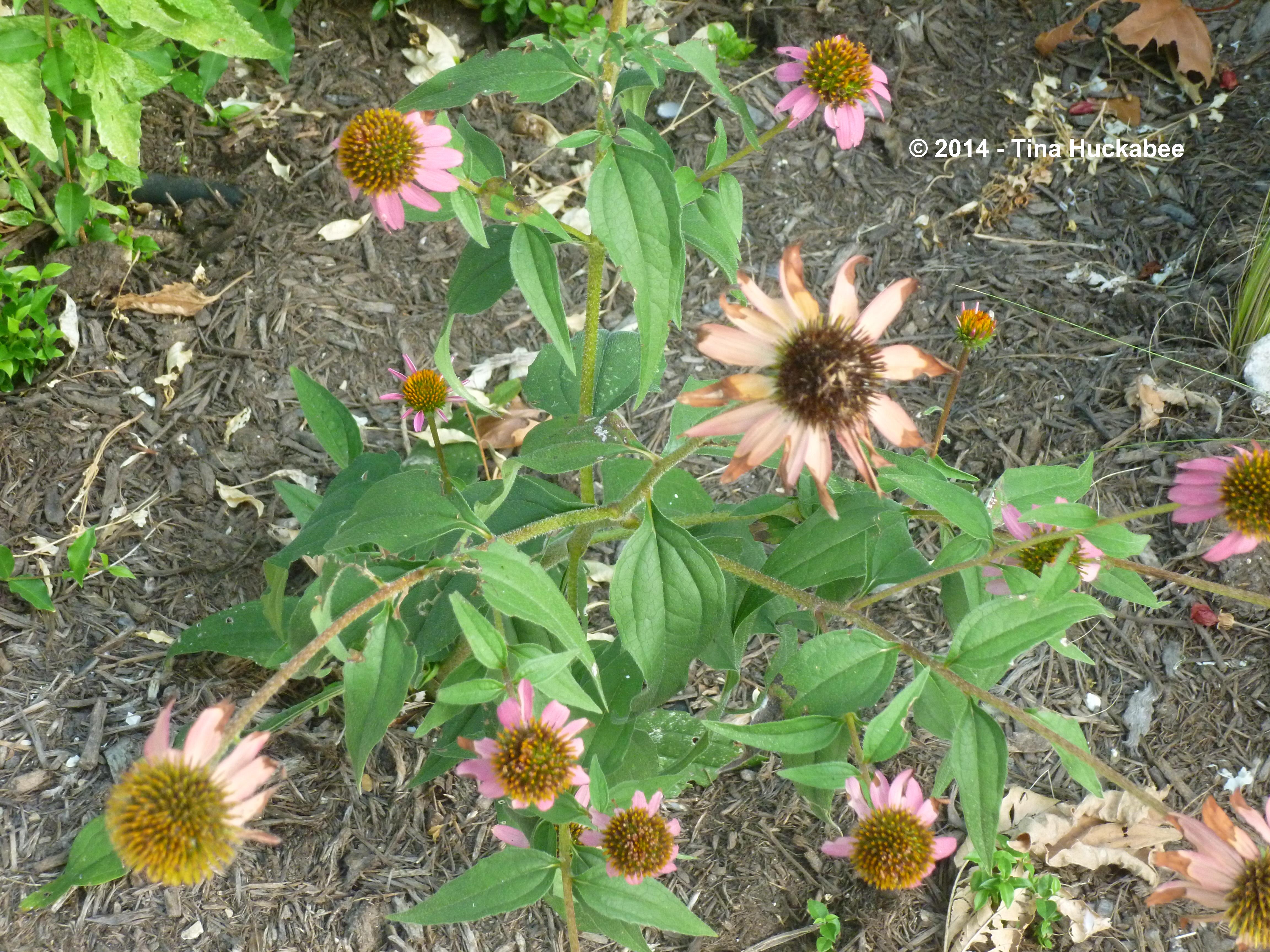
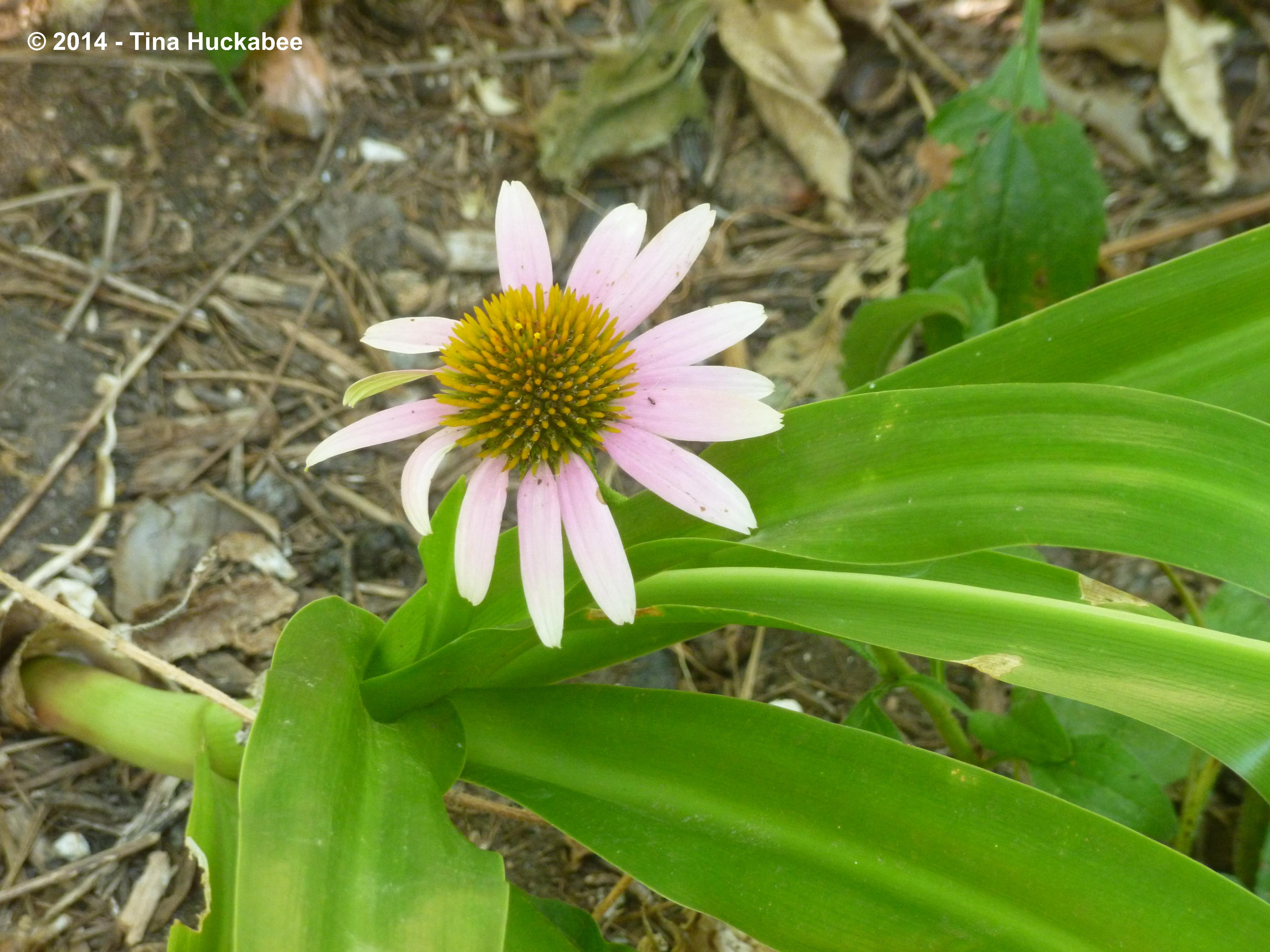
is over for the year.   I leave the gone-to-seed flower heads as long as possible for finch nibbling, but the blooms are crispy now and I’ve pruned most back to their rosettes. After the spring/summer blooms are done and pruned, there’s usually a second flowering that is shorter in stature, but very welcomed,

P1060650.new

P1060824.new

…by pollinators and people.  Later in fall, Purple Coneflower will segue again into seed production for winter finch food.

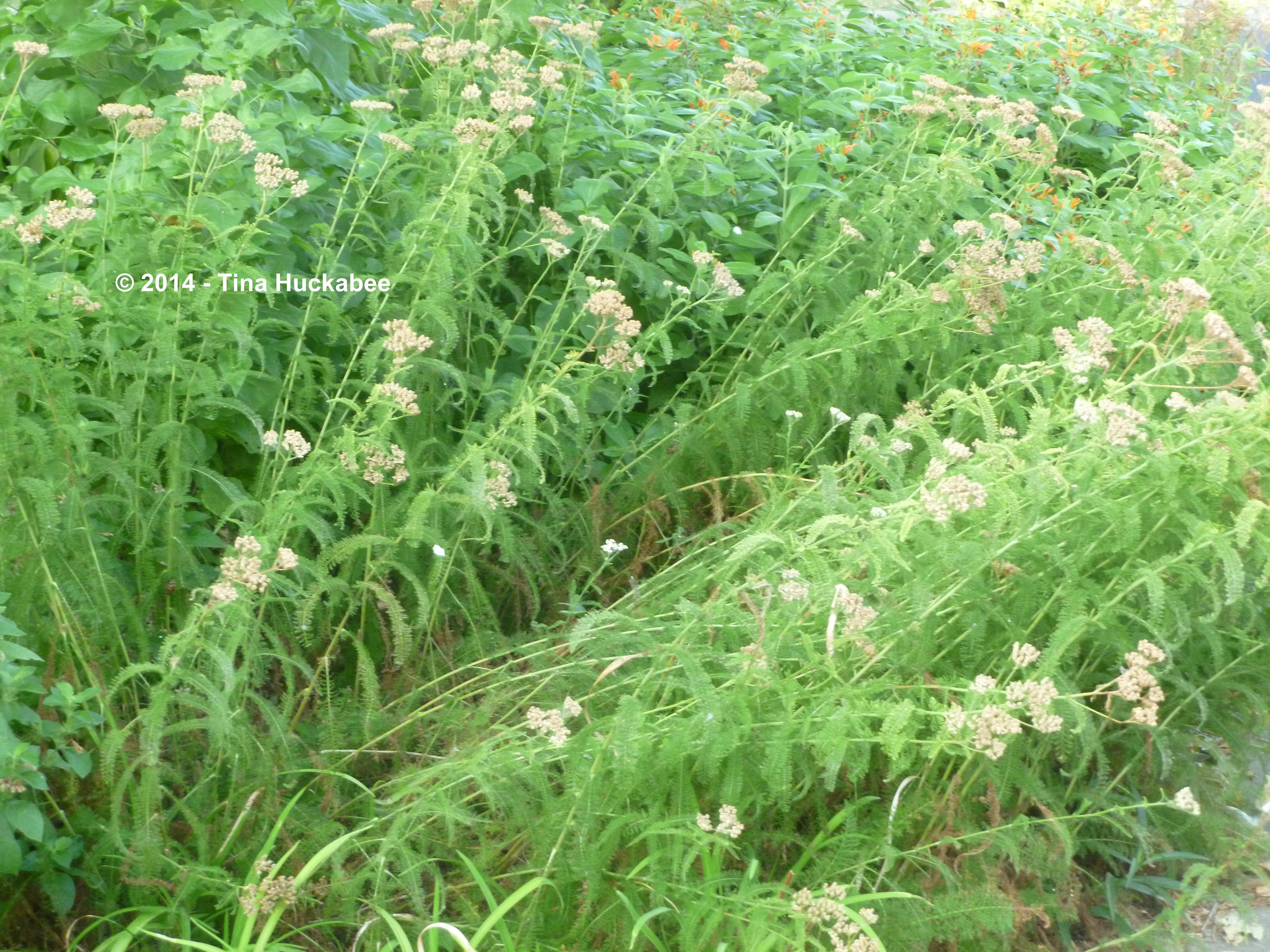
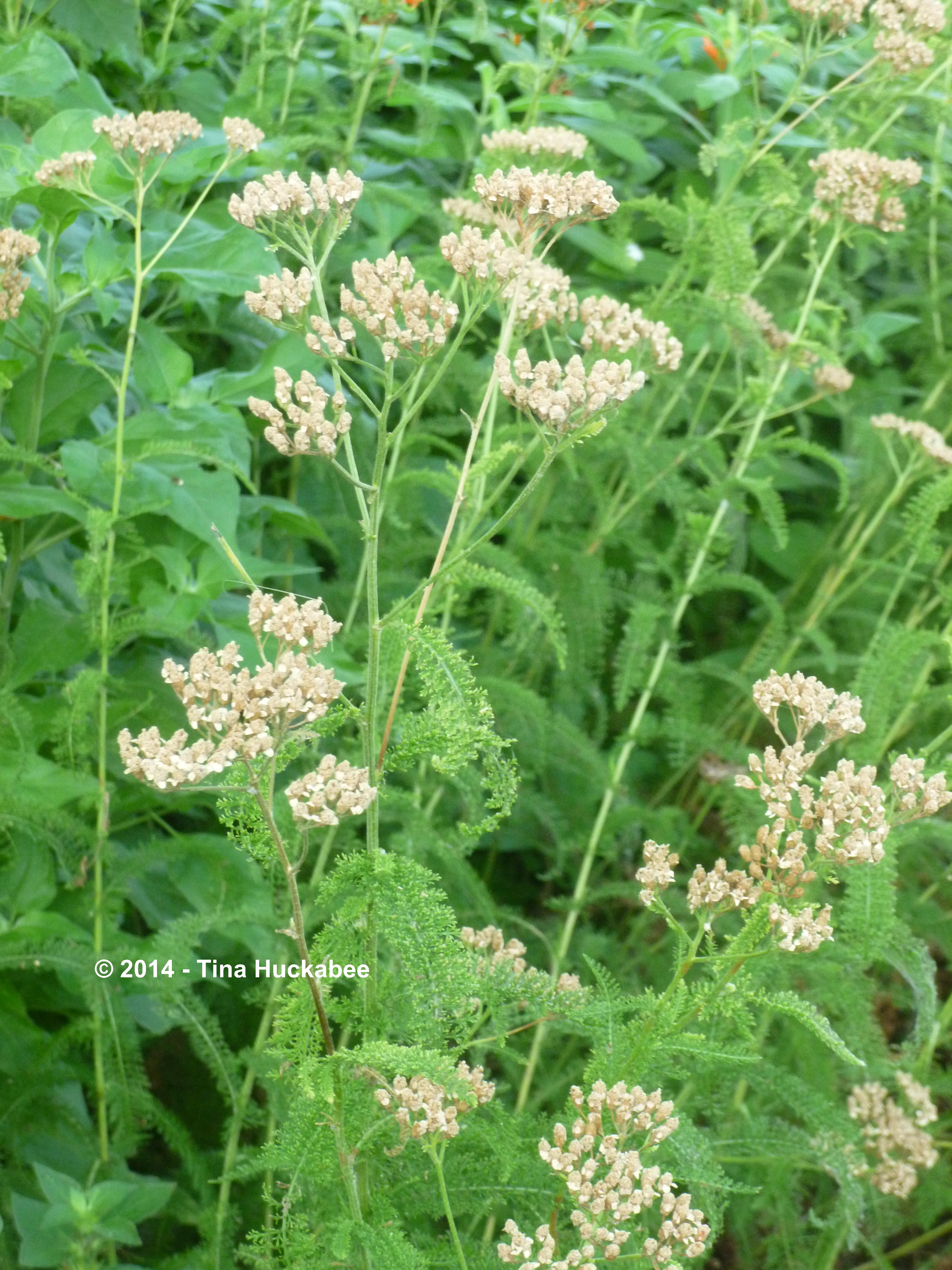
YarrowAchillea millefolium, is taking a bow for its long bloom season as well.  All of mine, save this patch,

P1060611.new

are pruned to their ground foliage for the year.  I’ve always found the ecru disks of spent blooms as attractive as the snowy white of the peak of Yarrow season, so I keep them through the long summer months.

P1060610.new

The finches appreciate the seeds, too.

Turk’s Cap,  Malvaviscus arboreus, blooms magnificently during this toasty time of year.

P1060632.new

Visited by bees,

P1060612.new

P1060613.new

Turk’s Cap produce scads of swirled lovelies with pollen and nectar galore and will do so for another month or two.

Frostweed, Verbesina virginica, employs a hopeful common name.

P1060615.new

Frost.  That’s hard to imagine right now. Frostweed’s snowy blooms evoke a coolness we can only dream about with our daily 100 degree-plus temperatures and the death rays of the August sun.

P1060616.new

Flowering will continue into September, giving way to seed production in the fall.

Slather on the sunscreen, drink plenty of fluids and traipse over to clay and limestone to see other hot August wildflowers.