Lean-n-Green

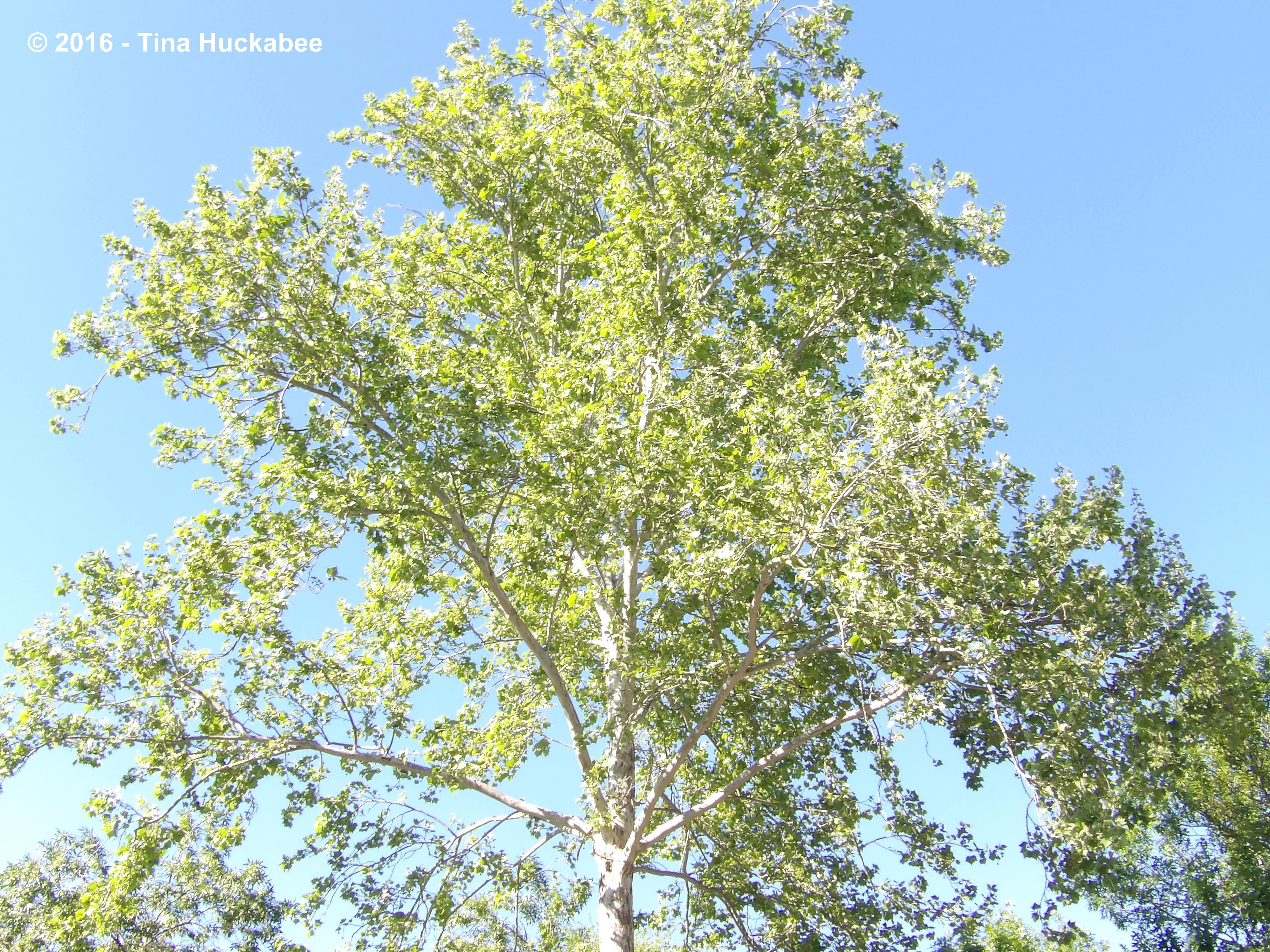
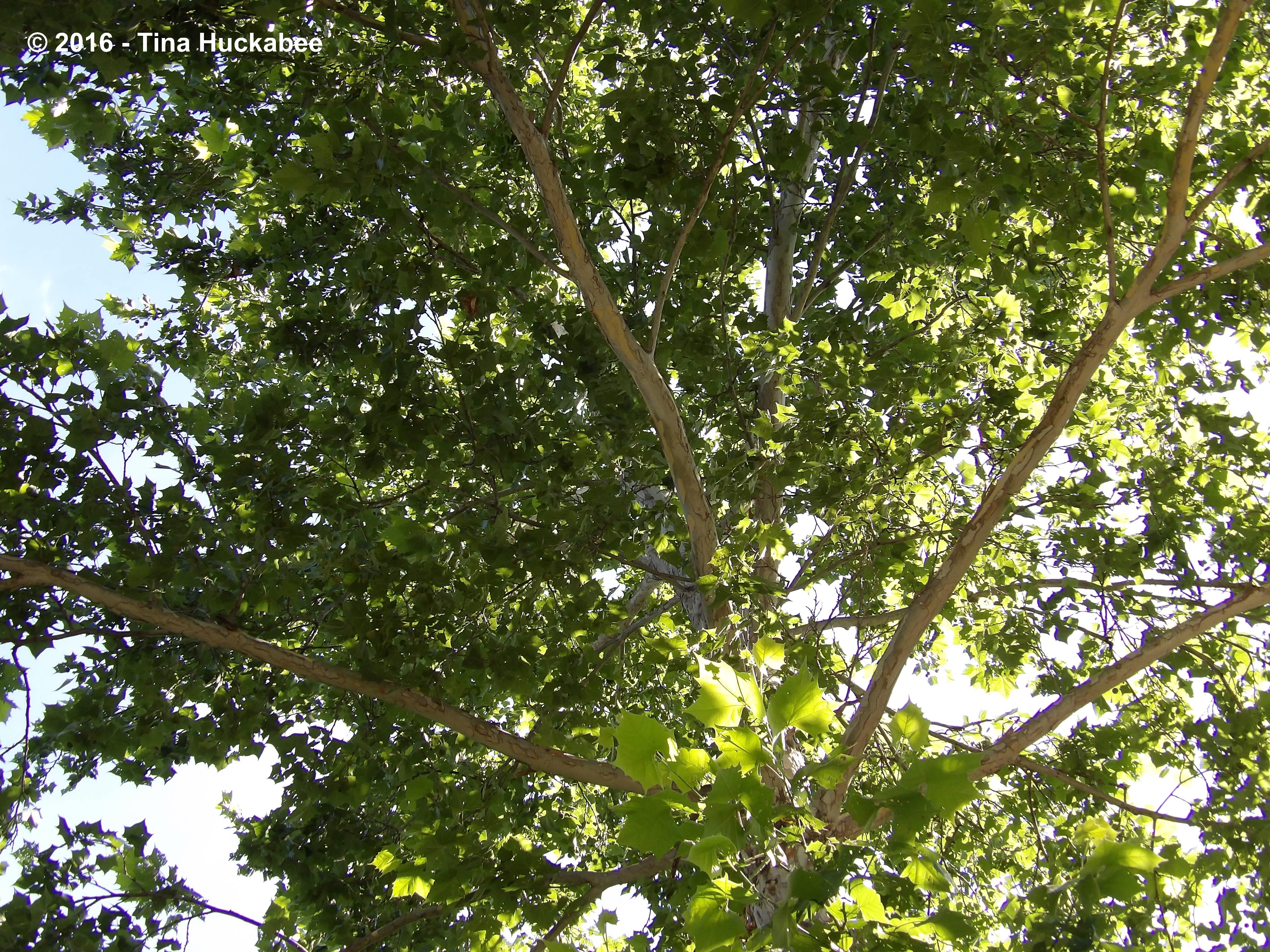
It’s been a wet March-May here in Central Texas and as a result, my American Sycamore, Platanus occidentalis, is plenty green and leafy-lush at this June Tree Following check-up.

IMGP8486.new

I never realized that  at this viewpoint, it looks like a chunk at the top of the tree has been removed.

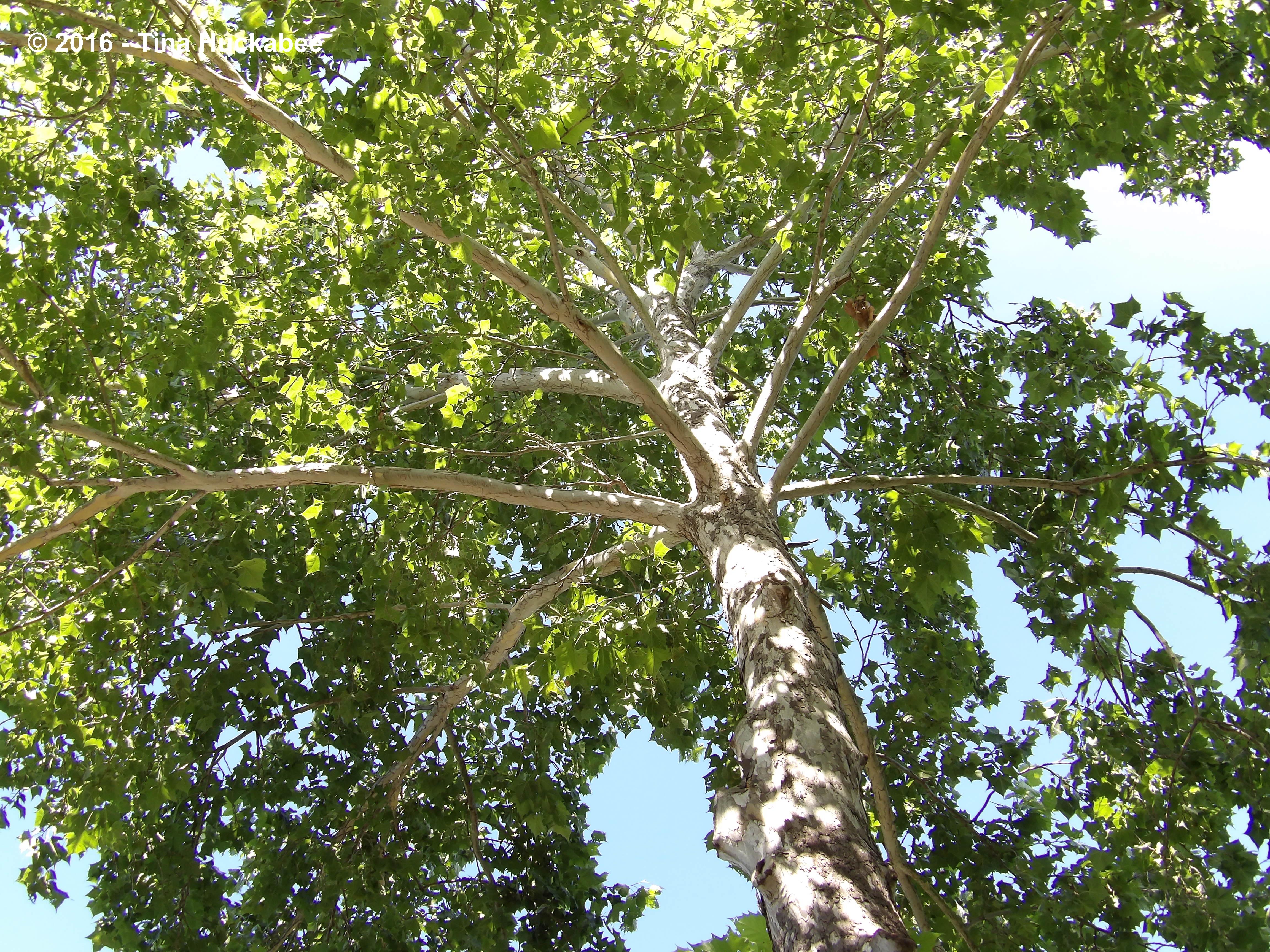
Truly, there’s not much to report this time around, except that the Sycamore is in summer mode, full-leafed and providing cover for birds.  In fact, it’s such a good protector of birds’ privacy that I’ve  enjoyed no good luck in getting photos of birds resting, mating, or feeding their young–all activities that this tree has recently hosted.
IMGP8487.new

The birds are in the tree, but well-hidden.

Darn these big ole leaves!

IMGP8488.new

IMGP8490.new

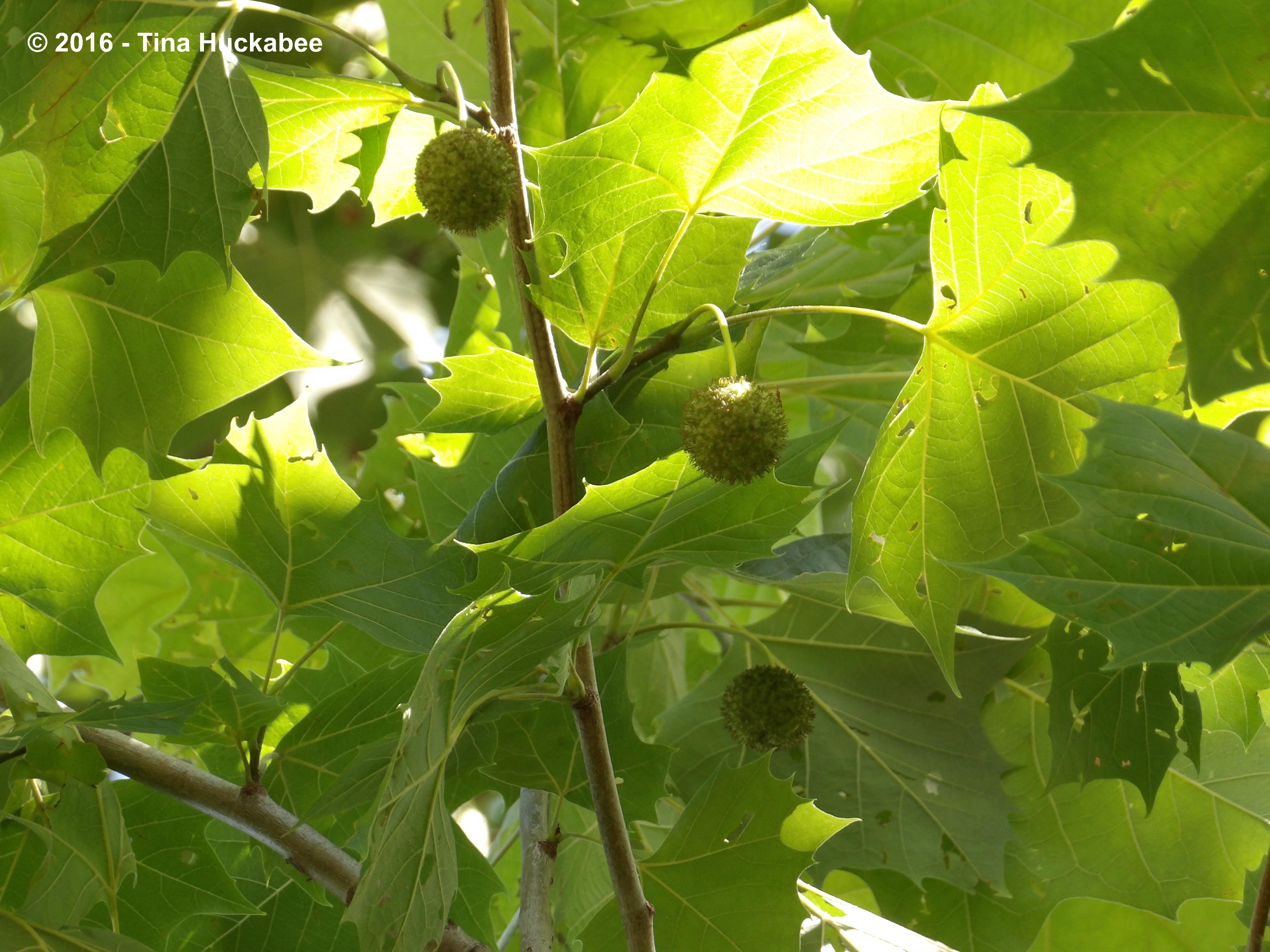
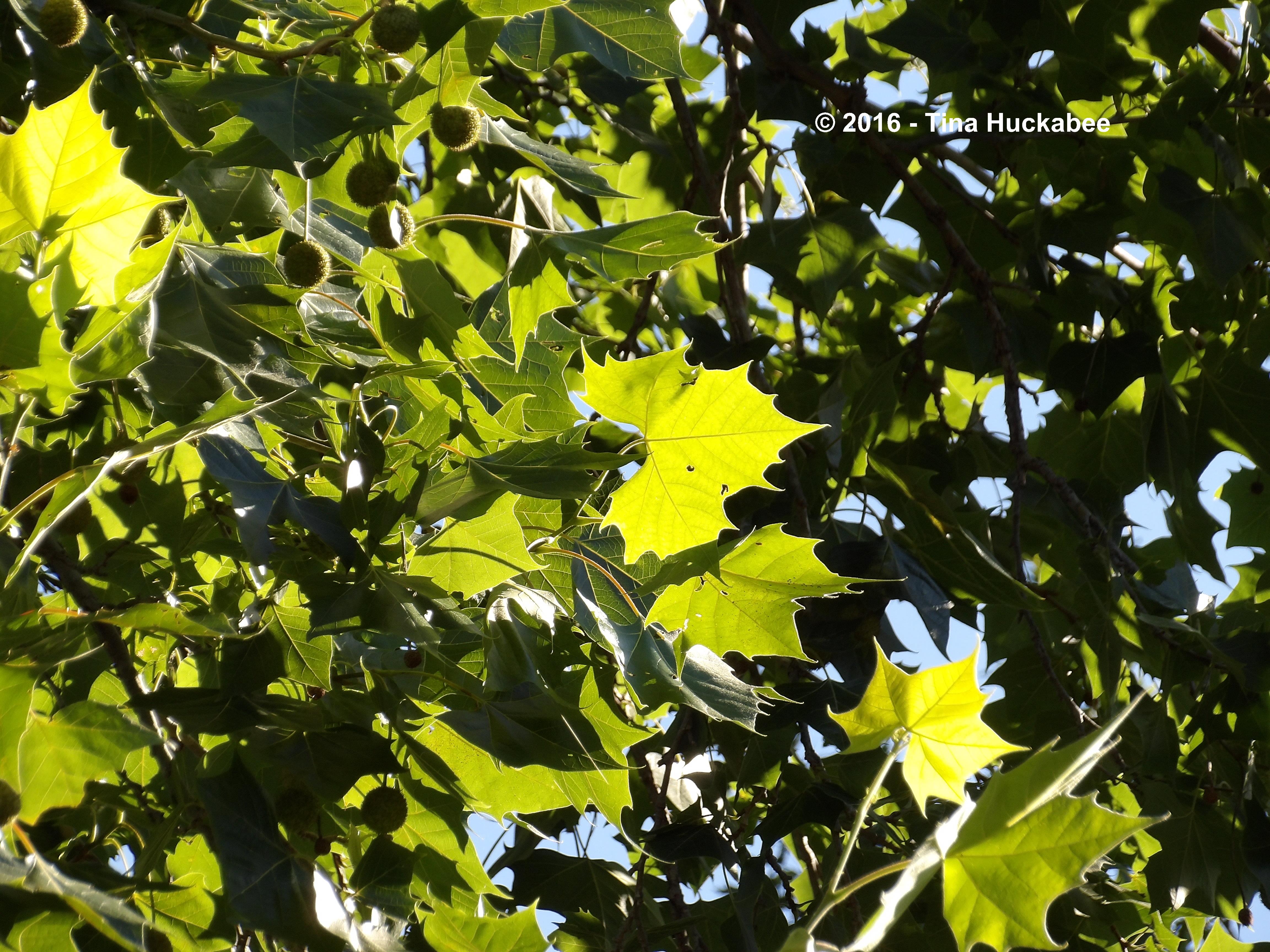
This year’s seed-balls are in form–and developing.
IMGP8548.new

I guess these big leaves are providing lots of oxygen too, while also helping to absorb pollutants in the air.  One of the reasons that American Sycamores are commonly planted in cities is just for that reason–they’re an excellent antidote for the multiple pollutants that urban life so excellently produces.
IMGP8491.new

As Central Texas segues into summer, it’s very likely that the generous spring rain spigot will shut off and the thermostat will be turned on. My gardening experience has taught me (repeatedly…) that after a mild and wet spring, summer drought and Texas heat can be especially harsh on certain plants–trees included.  Because the American Sycamore prefers more, rather than less, moisture, it tends to suffer a bit (more than other native trees) in that particular situation where the spring is gentle and moist, but summer is, well, Texas summer.  Changes in the Sycamore will depend upon just how hot and how dry the summer is. Time will tell whether this summer will be super hot-n-dry (as has become normative), or, perhaps, just normal hot-n-dry. That will make watching the Sycamore all the more interesting in the coming few months.

For today,  the American Sycamore is a lean and green arboreal machine.

IMGP8547.new

Thanking Pat of The Squirrelbasket for graciously hosting this fun and interesting meme about trees. Check out her blog to learn about trees from all over the world.

 

Green It Is: Tree Following in April

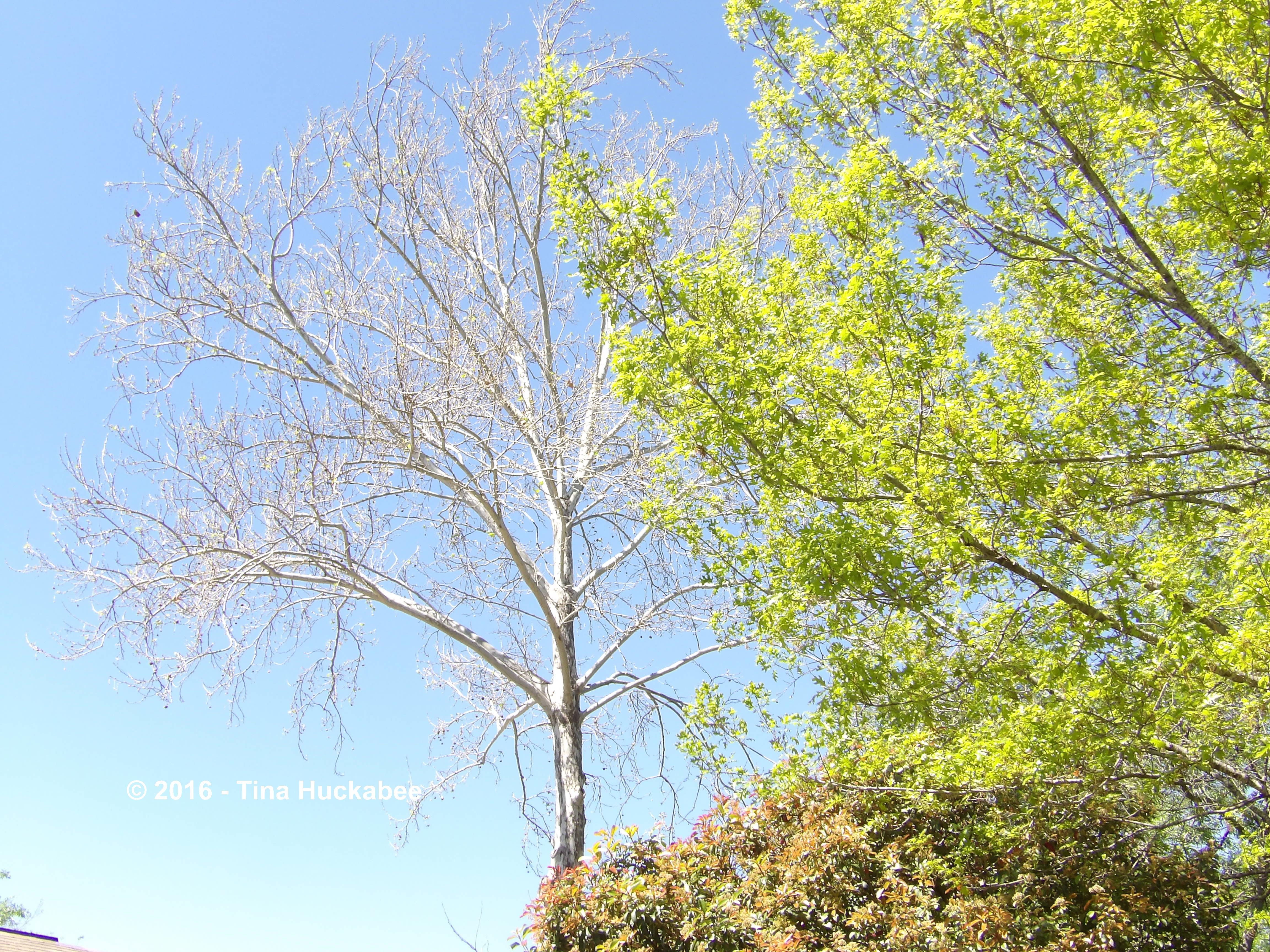
My  American SycamorePlatanus occidentalis, leafed out this past month.  It began the month in a  mostly leafless state.

IMGP5164.new

The Shumard Oak (Quercus shumardii), leafed out much earlier this spring, though it's always ahead of the Sycamore.

The Sycamore, at the center-left, leafs out later than the Shumard Oak (Quercus shumardii).

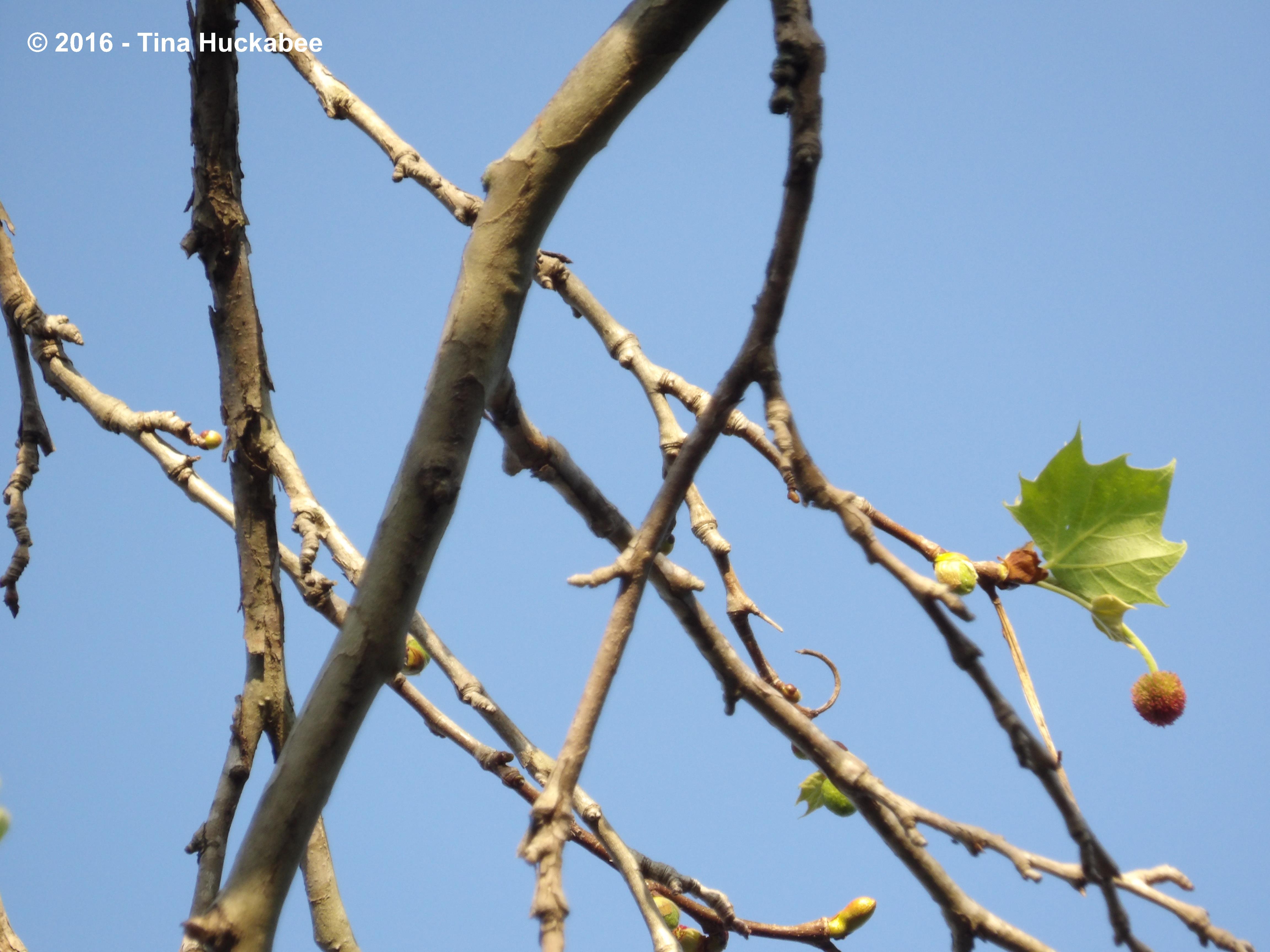
It wasn’t too far into March before dots of new green appeared.  I caught the beginning of the leafy action, snapped photos, then went on with my life.

IMGP5165.new

IMGP5158.new

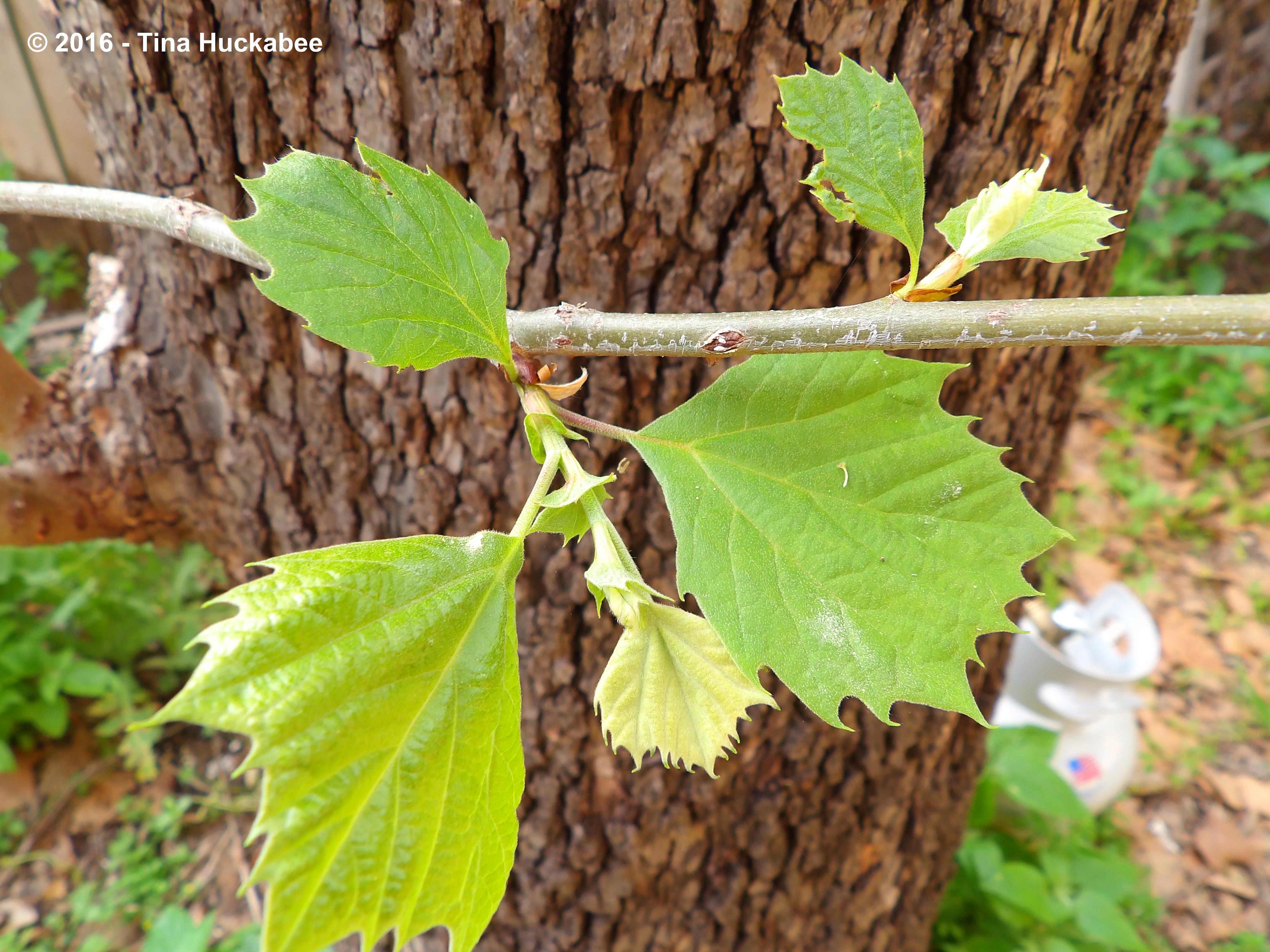
This branch is the only one that is below the roof of my house and easily accessible. No, I'm not going to climb on my roof for my blog or for Tree Following.

This branch is the only one that is below the roof of my house and therefore, easily accessible. I have no plans to climb on top my roof to get photographs of leaves for this blog.

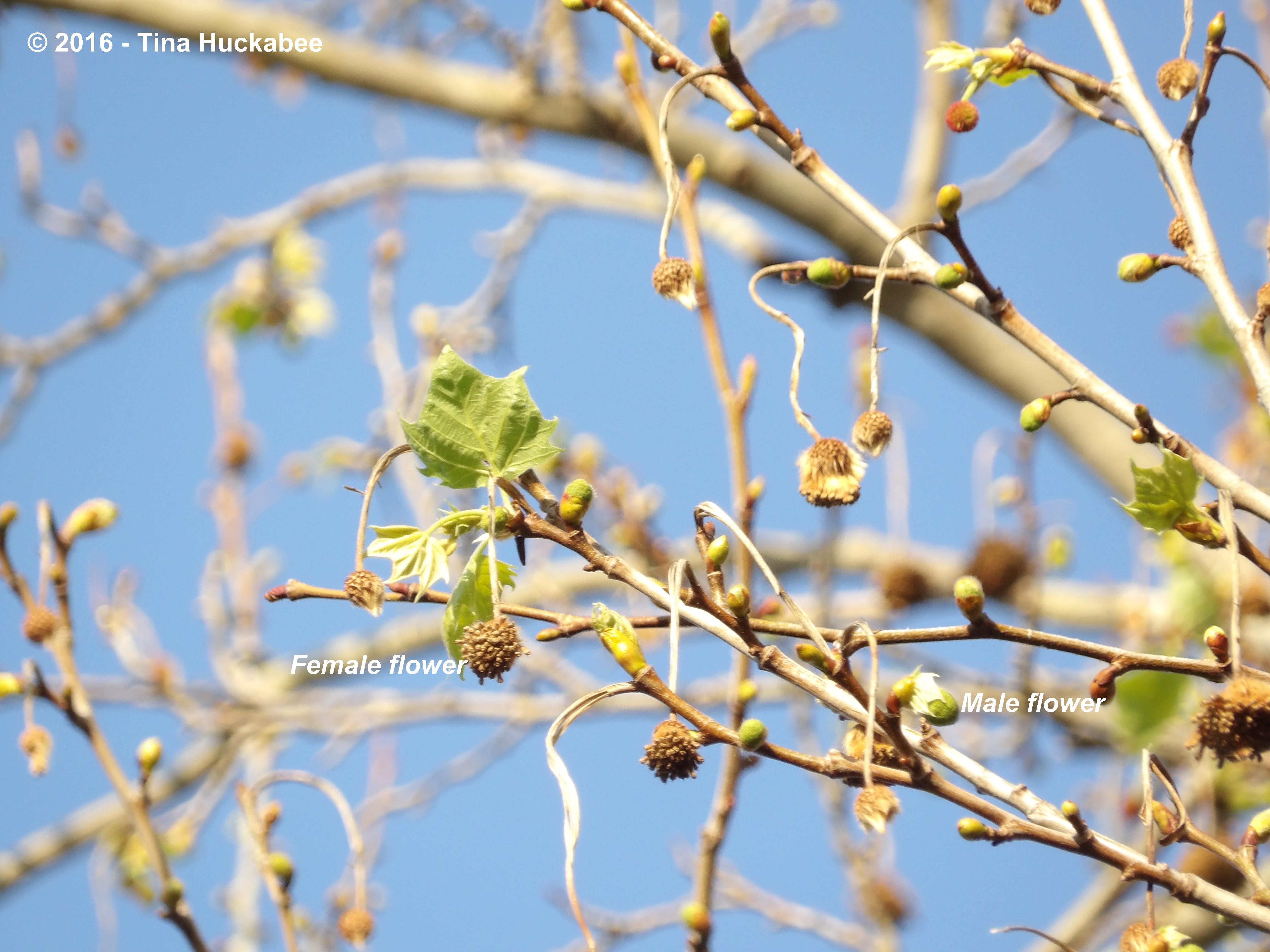
Sycamore, like most plants, is a monecious plant, which means that each tree has both female (pistillate) flowers and male (staminate) flowers.  As an aside, another way that plants function reproductively is by being dioecious–which means that the individual plants are either female or male.  Fewer plants are dioecious.

I knew that American Sycamores were monecious, but seeing that the tree is monecious is another thing entirely–and that’s the great thing about tree following: I notice these things because I’m paying attention. I assumed that because my tree is tall that I wouldn’t get a good photo of the male and female flowers.  Additionally, I wasn’t trying to get photos of the flowers.   But during in the photo-snapping session mentioned above, I caught both the male and female flowers.

IMGP5152.new

The male flowers grow on newer, shorter branchlets and the female flowers grow on older branchlets.

IMGP5154.new

The male flowers sport a sort nubby look along the branches, while the female flowers are fuzzier.  The male flower will break and release its pollen load, usually by wind, but also, by water.  If you recall from our March visit to the Sycamore, we learned about dispersal of seeds by wind, anemochory, and dispersal by water, called hydrochory.  The American Sycamore does both; it’s a good survival strategy to employ a couple of methods of reproduction–it certainly keeps the options open.

IMGP5156.new


Sycamore leaf production soon overtakes any flower show, though.

IMGP6171.new

IMGP6169.new

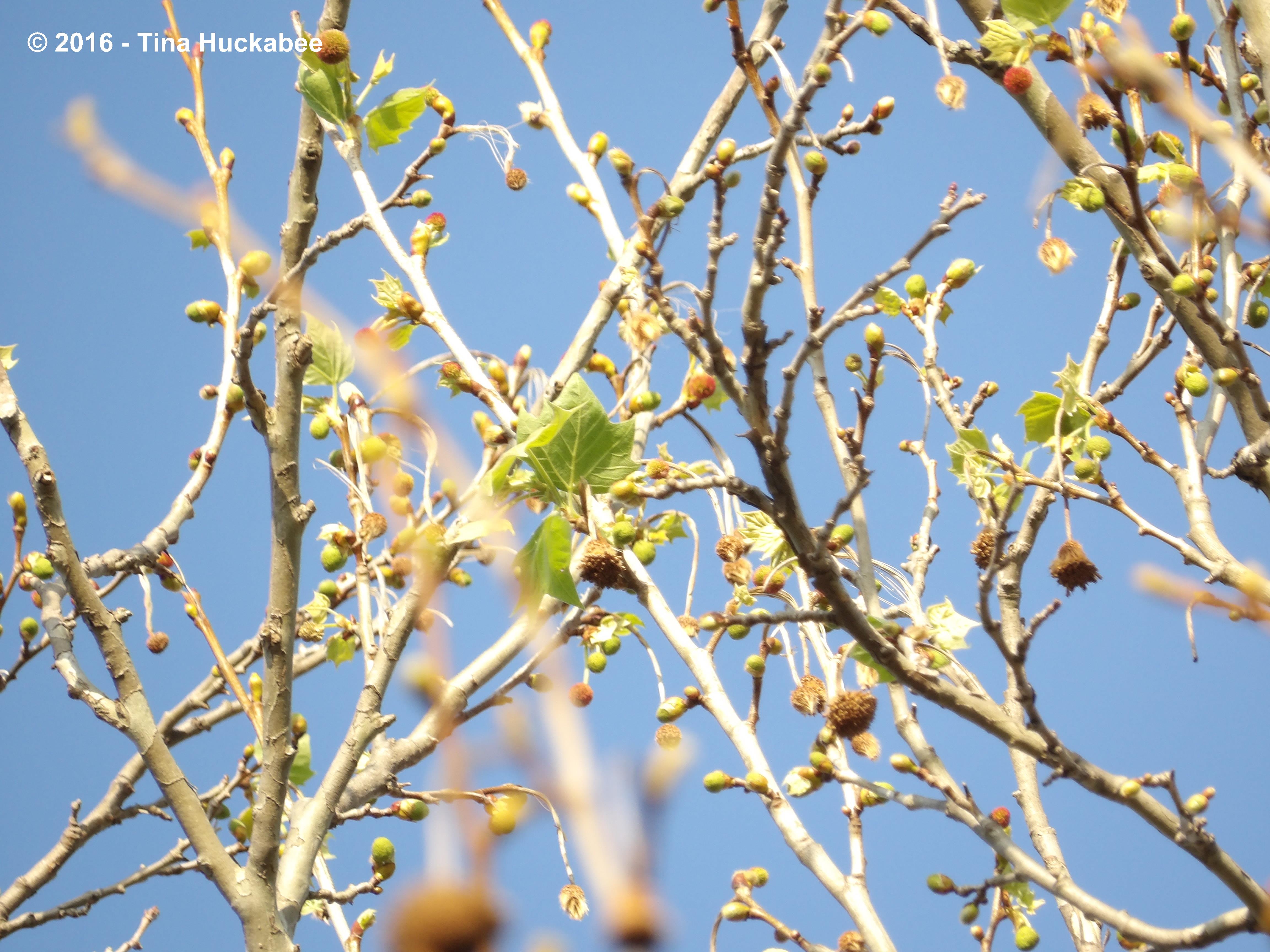
You can see that there are plenty of seed-balls for next year’s Sycamore seed dispersal.   For now, the new ones are spring green,

IMGP6170.new

…but eventually they’ll turn a toasty, autumn brown.

I’ve never seen a nest in the Sycamore, but it serves as a consistent resting spot for a variety of birds like this male Great-tailed Grackle,  Quiscalus mexicanus.                    .

IMGP6198.new

His glorious, purple-black plumage pairs well with the new leaves.  Other birds like White-winged Doves, House Sparrows, Blue Jays, and Cardinals, are year-round visitors to my Sycamore.  As the leaves grow larger and the foliage thickens, it will become more difficult to spot birds resting in the tree.

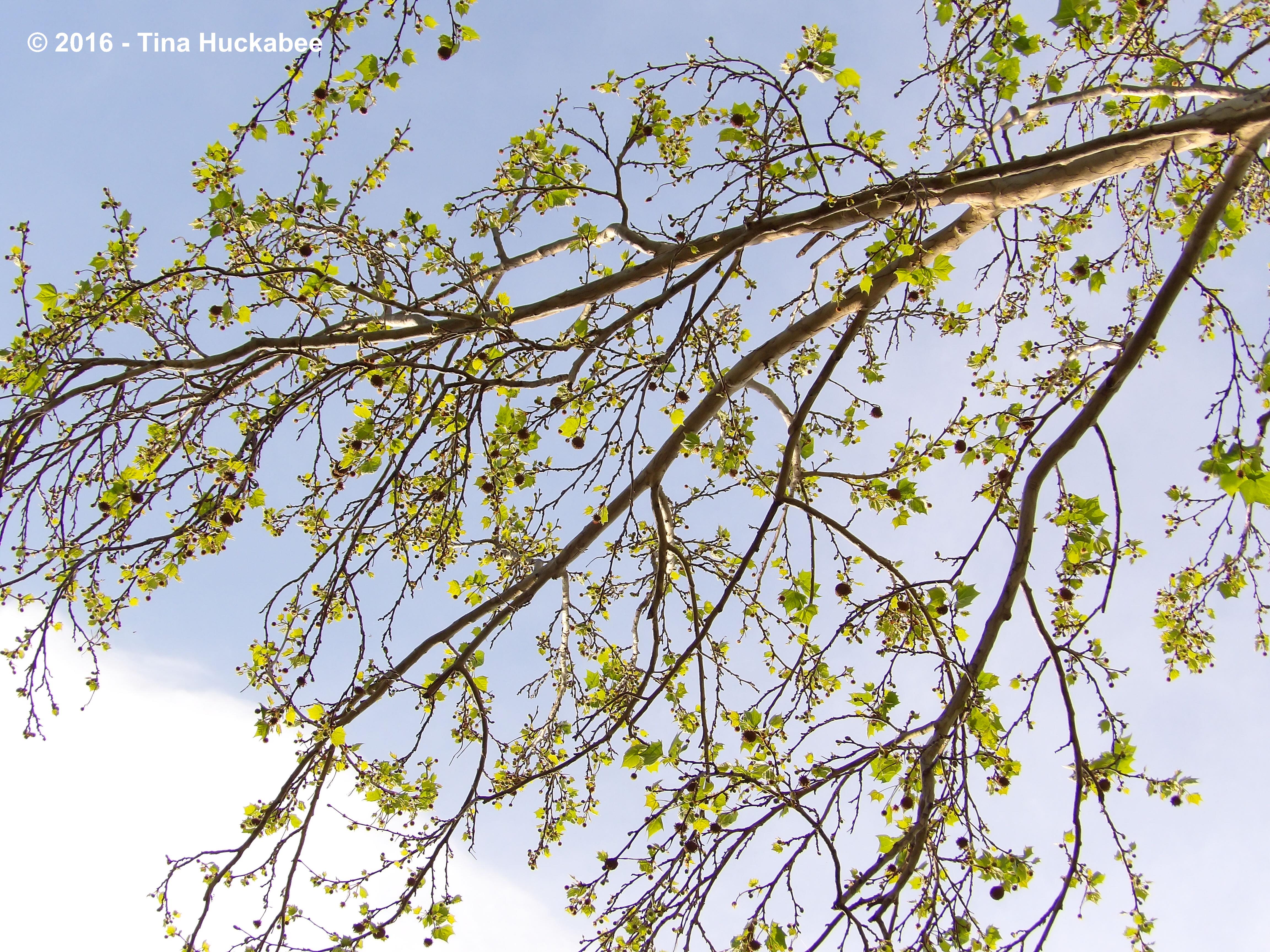
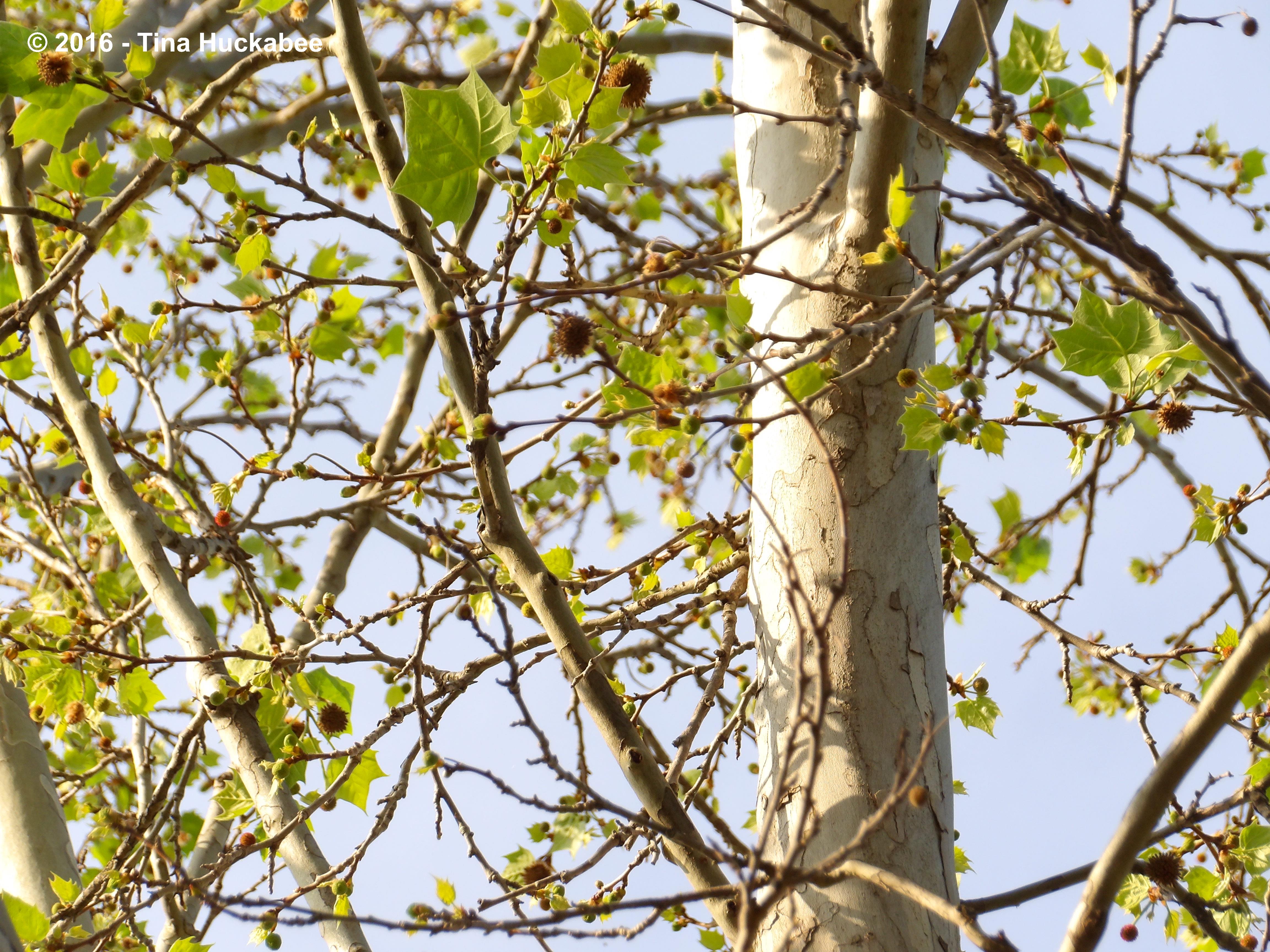
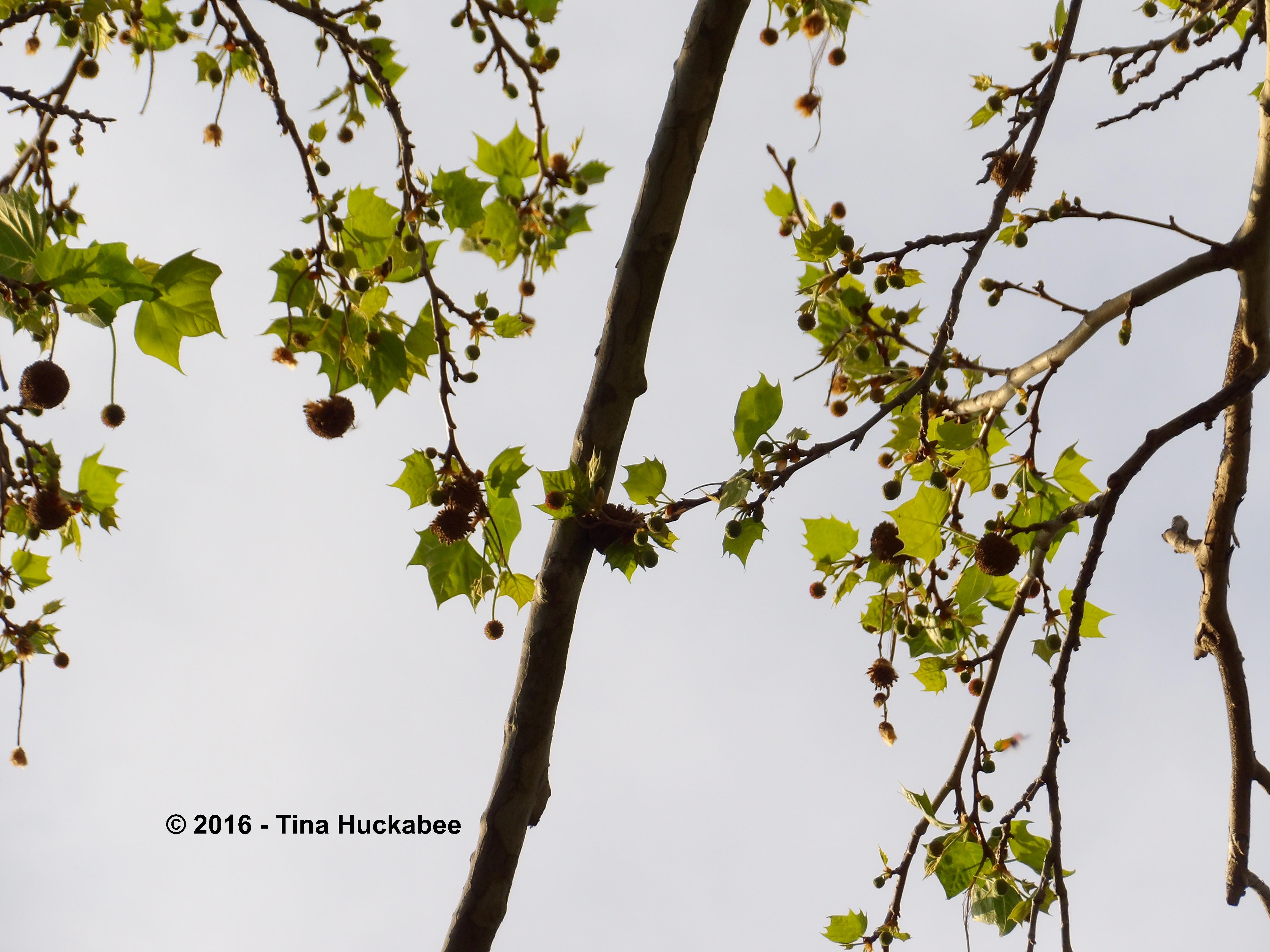
The foliage is now almost fully flushed out.  Sycamore is usually planted as a shade tree, but also as a tree for urban areas used to thwart air pollution.

IMGP6172.new

Maybe those big leaves will save us all.

IMGP6985.new

IMGP6988.new

IMGP6986.new

This is the American Sycamore as it enters late spring heading toward the summer months.

IMGP6982.new

Thanking Pat of The Squirrelbasket for graciously hosting this fun meme about trees. Check out her blog for interesting information about trees from all over the world.
 

Tree Following in March: A Whole Lotta Nuthin’

I suppose to suggest that there’s nothing going on with my American Sycamore,  Platanus occidentalis, would be erroneous. Truthfully, in its outward appearance, not much has changed since we last engaged in the monthly Tree Following musings.

IMGP4924.new

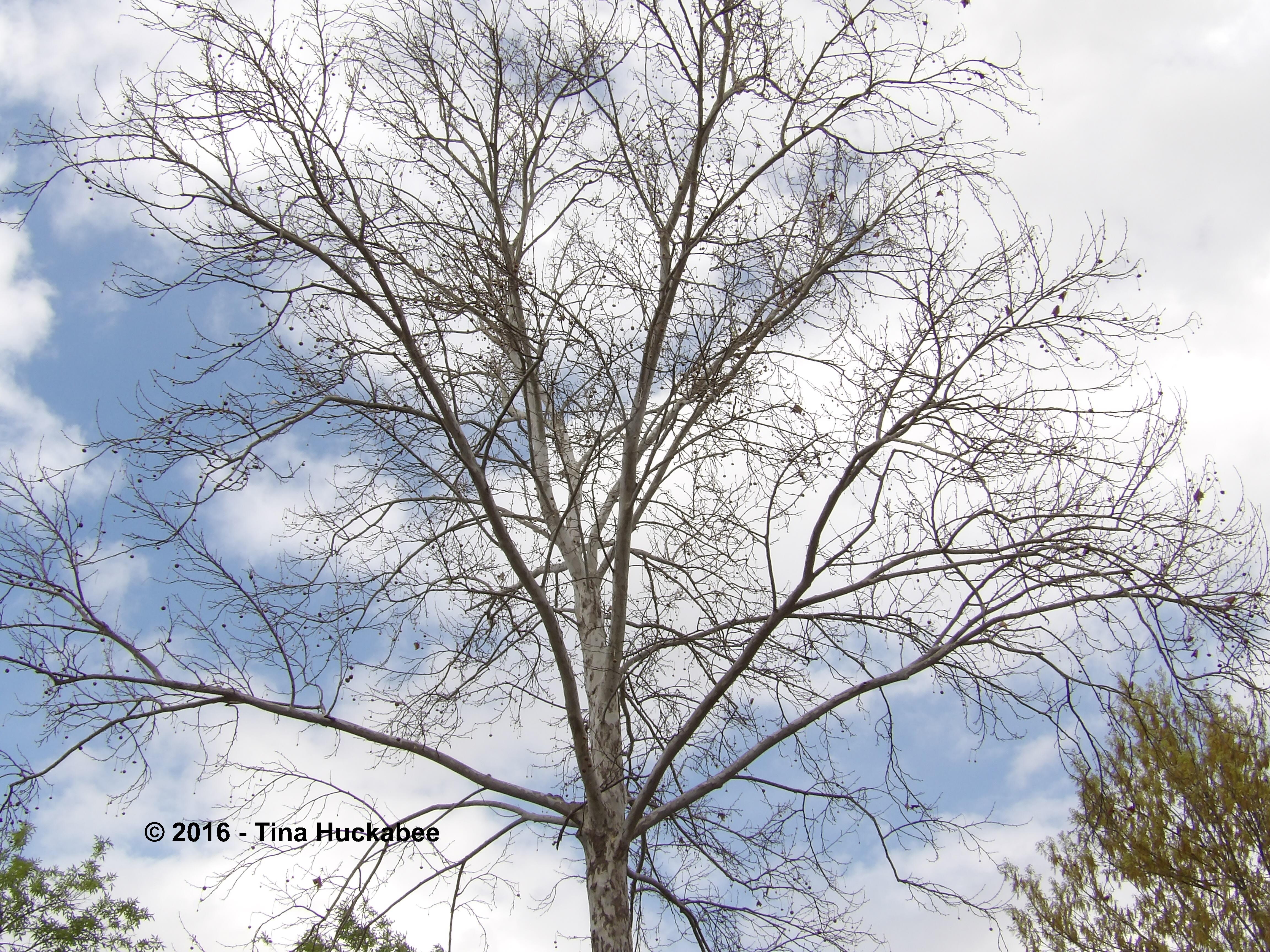
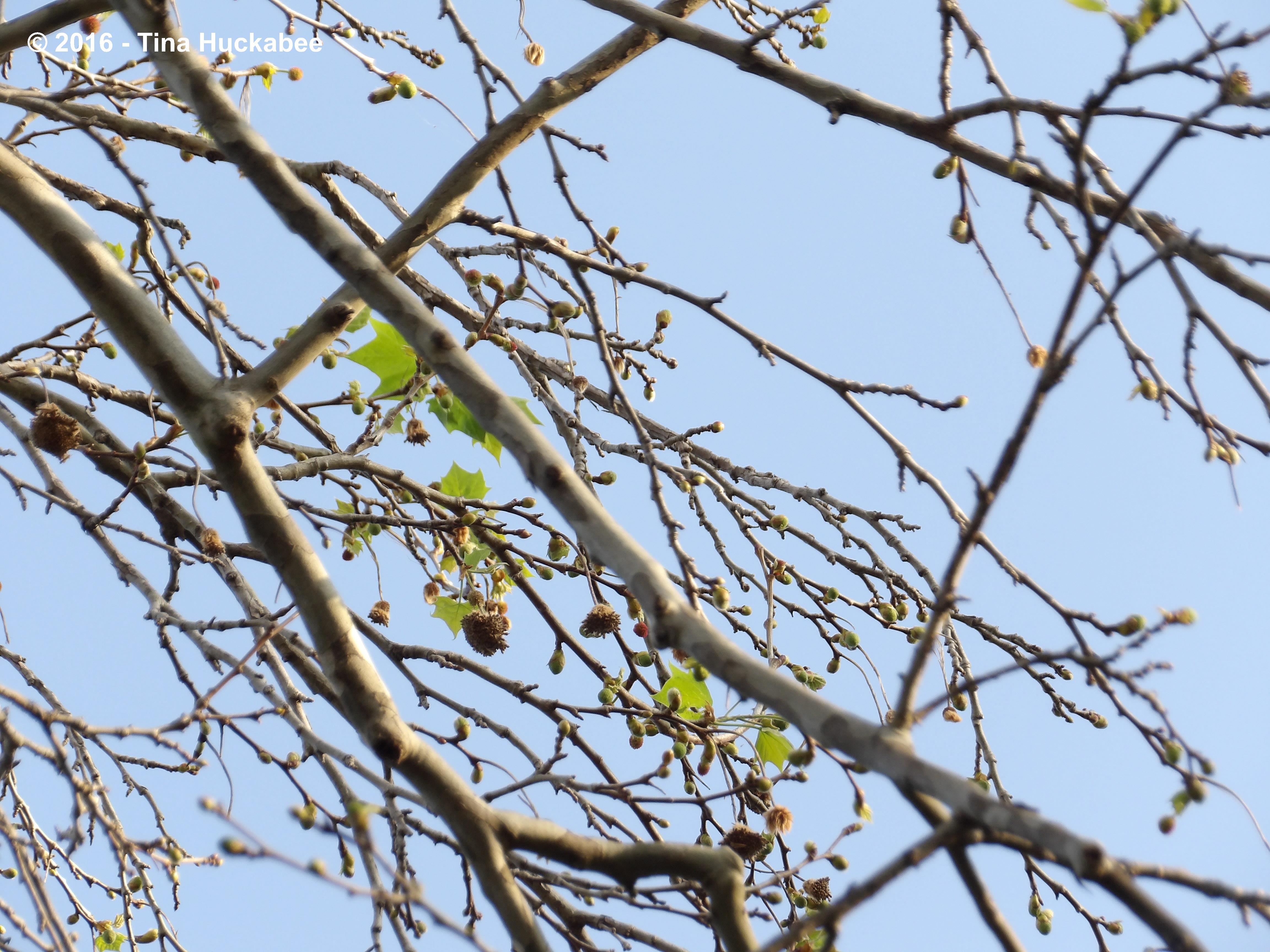
The American Sycamore stands stalwart and skeletal, beautiful in its simplicity.  It’s always one of the last trees to leaf out in my neighborhood, along with the native Pecan, Carya illinoinensis, trees.  I’m not seeing much, if any, thickening of bud development for ultimate leaf-making.

IMGP4763.new


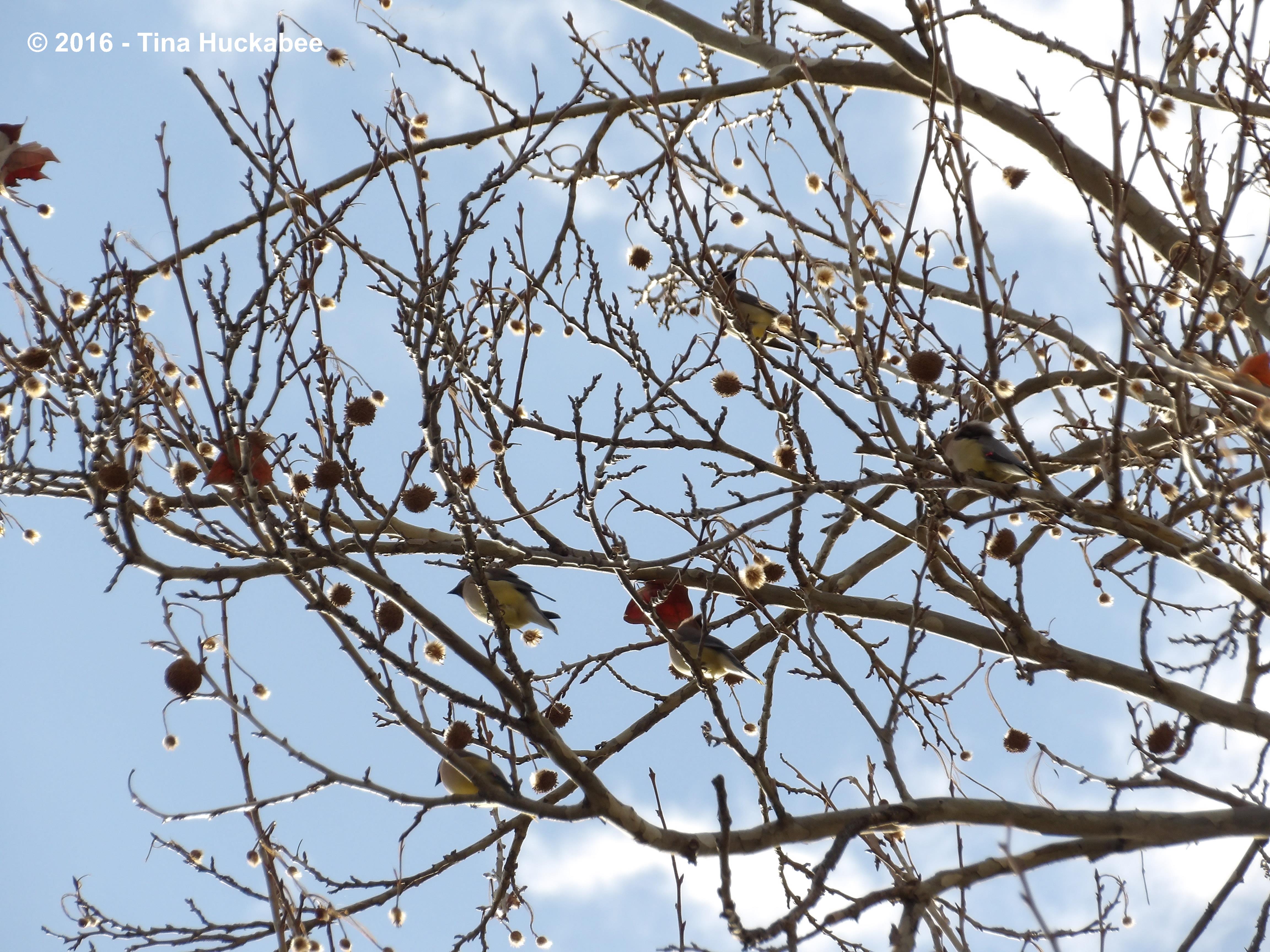
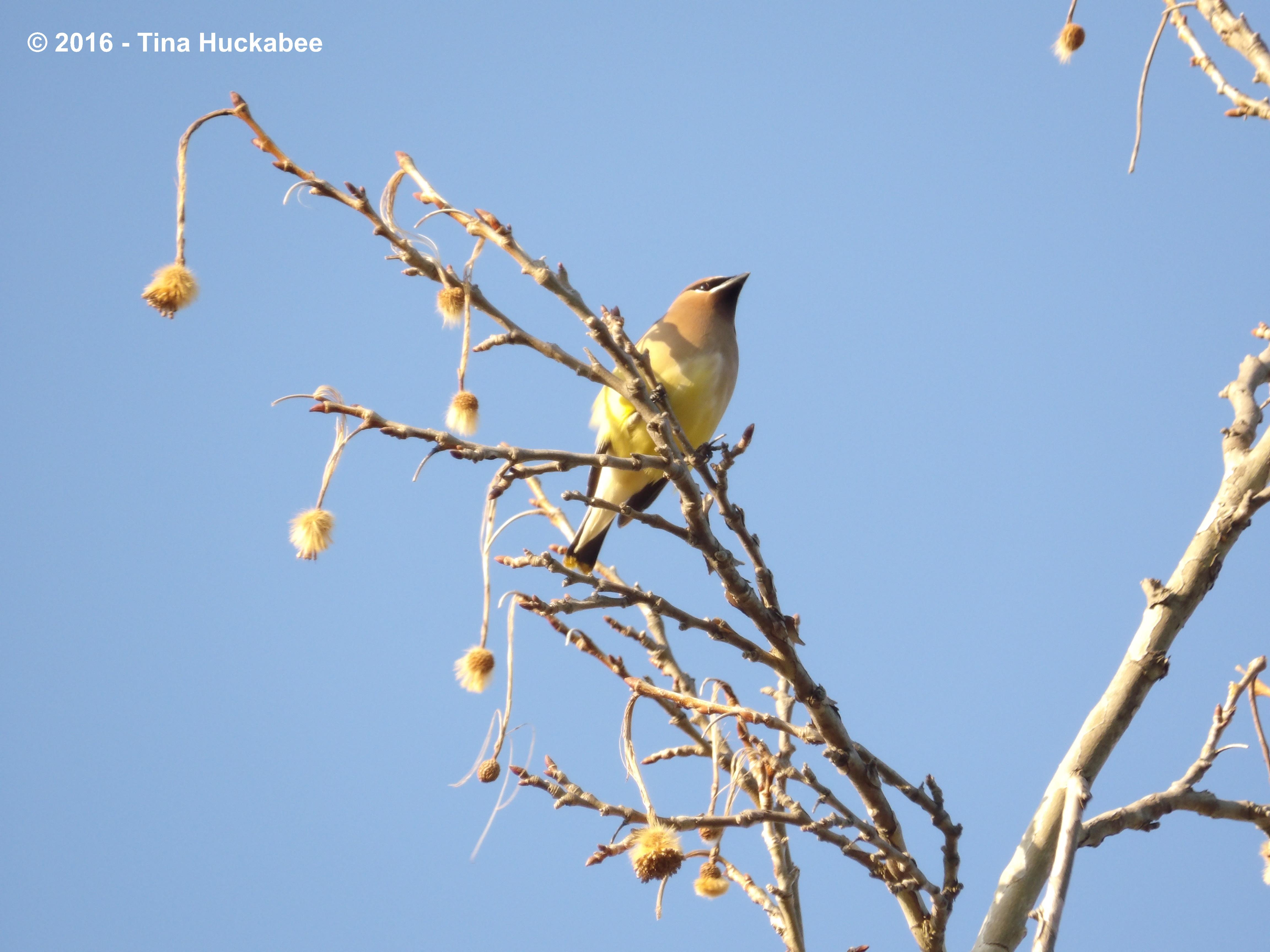
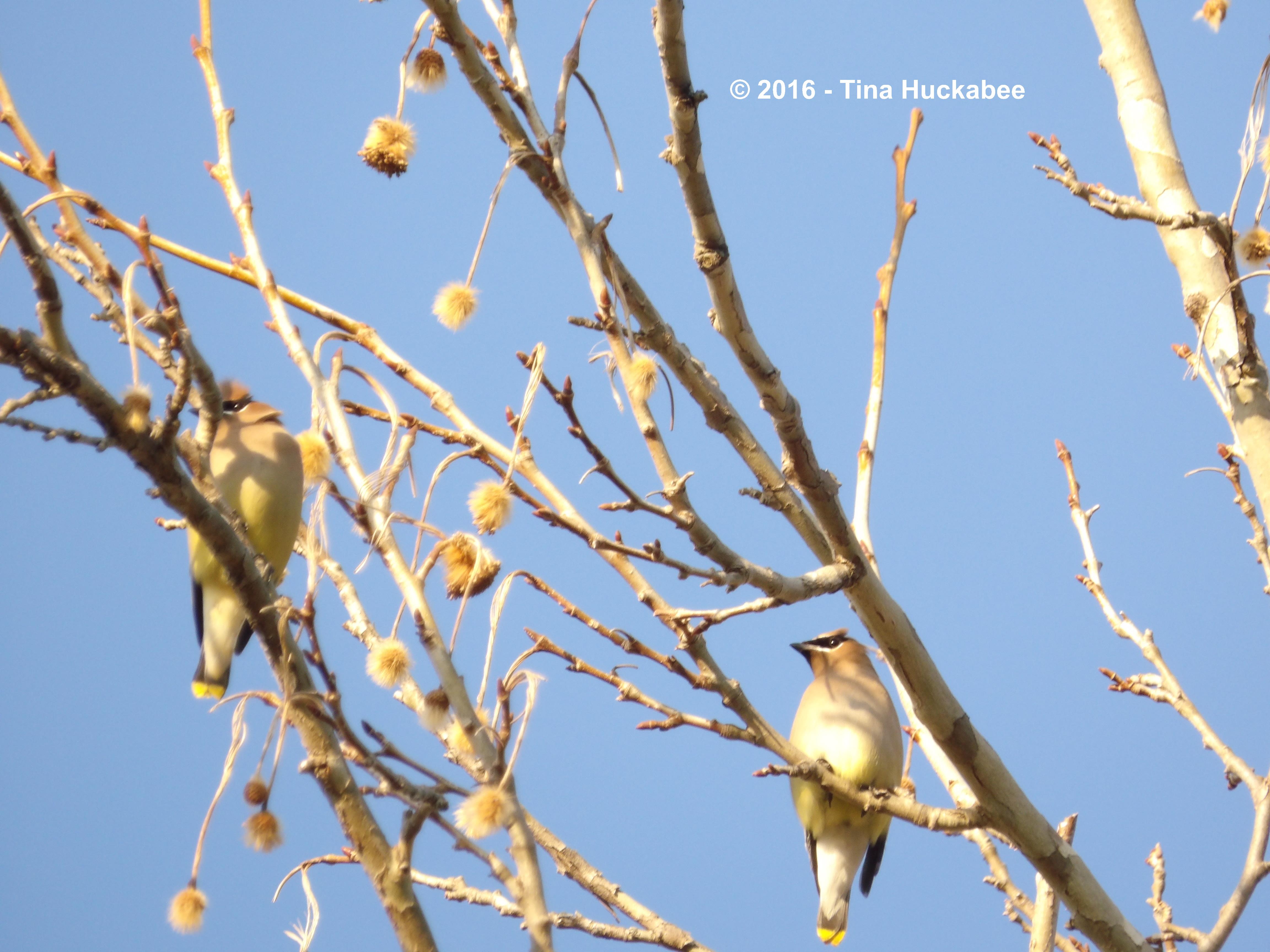
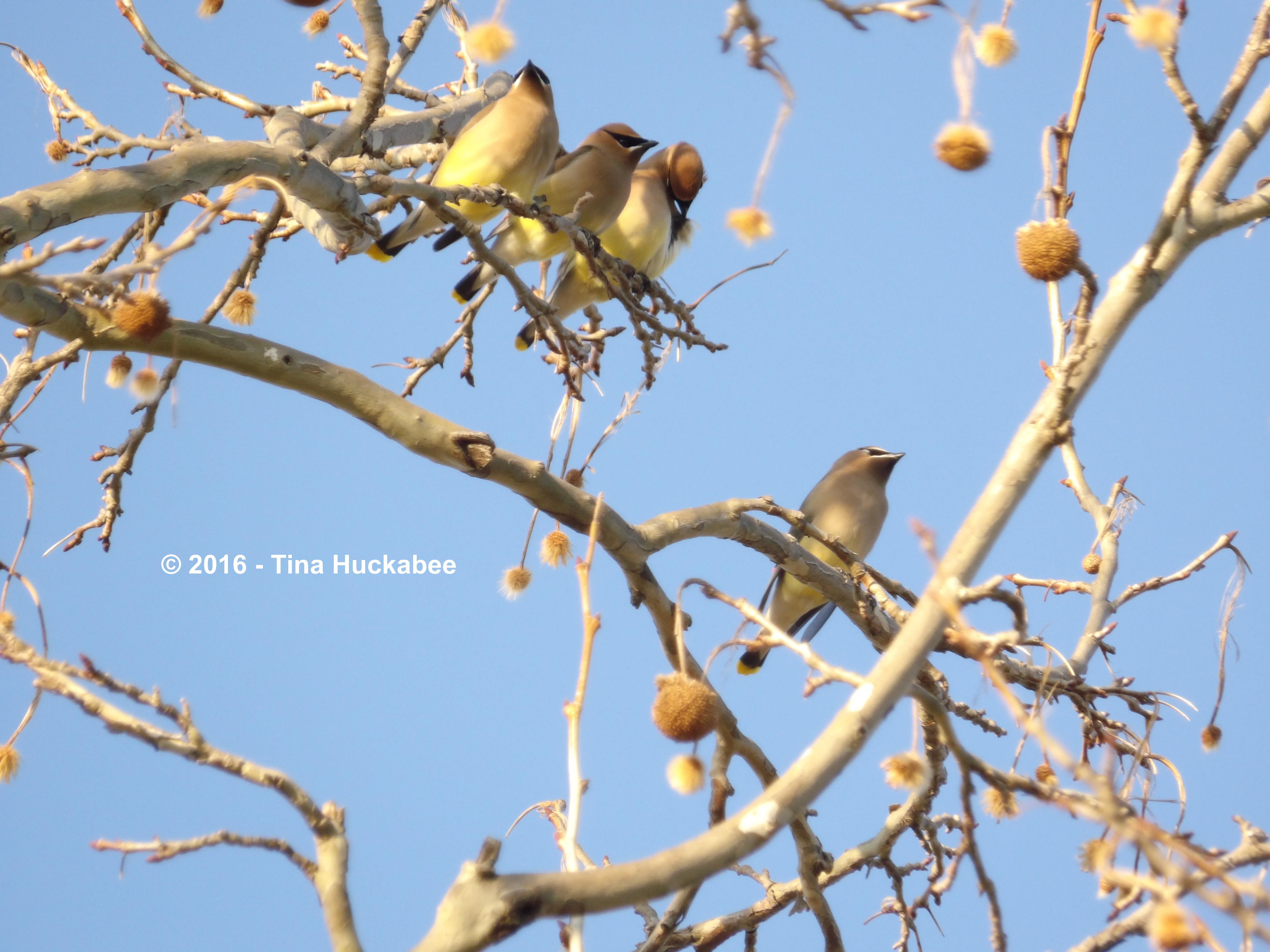
But there is some action in the goings-on of birds.  Cedar Waxwings,  Bombycilla cedrorum, rest and chatter on  the limbs.

IMGP4762.new

One,

IMGP4540.new

…two,

IMGP4611.new

…four,

IMGP4565.new

…four more,

IMGP4577.new


…and six.  Yes, there are six in the photo, though I cut the head off of one lad and another preens behind two full seed balls, to the amusement, or irritation, of a companion.

IMGP4568.new

There have been more birds at other times too, but on such windy days all that photographed was a smear.

The seed balls, or fruits, which never dangled in quite their usual numbers this year, are fewer on the tree now. Some are on the ground in my gardens, either whole or not.

IMGP4912.new

The Sycamore seed is an achene attached to hairy strands which help with seed dispersal.

The Sycamore seed is an achene attached to hairy strands which help with seed dispersal.

There have been days when I noticed a light snowfall of individual seeds floating on the wind, wafting to unknown destinations, but this year, there was no ticker-tape celebration of normal early spring wind dispersal.  The dispersal of seeds by wind is called anemochory, but American Sycamore seeds also disperse by water, called hydrochory.

IMGP4923.new

The Sycamore will leaf out during the next month.  The foliage will be lush, providing months-long shade for animals and people.

Thanking Pat of The Squirrelbasket for graciously hosting this fun meme about trees. Check out her blog for interesting information about trees from all over the world.