The change of time on a Roughleaf Dogwood, Cornus drummondii, as told by emerging spring foliage, replacing fall leaves.
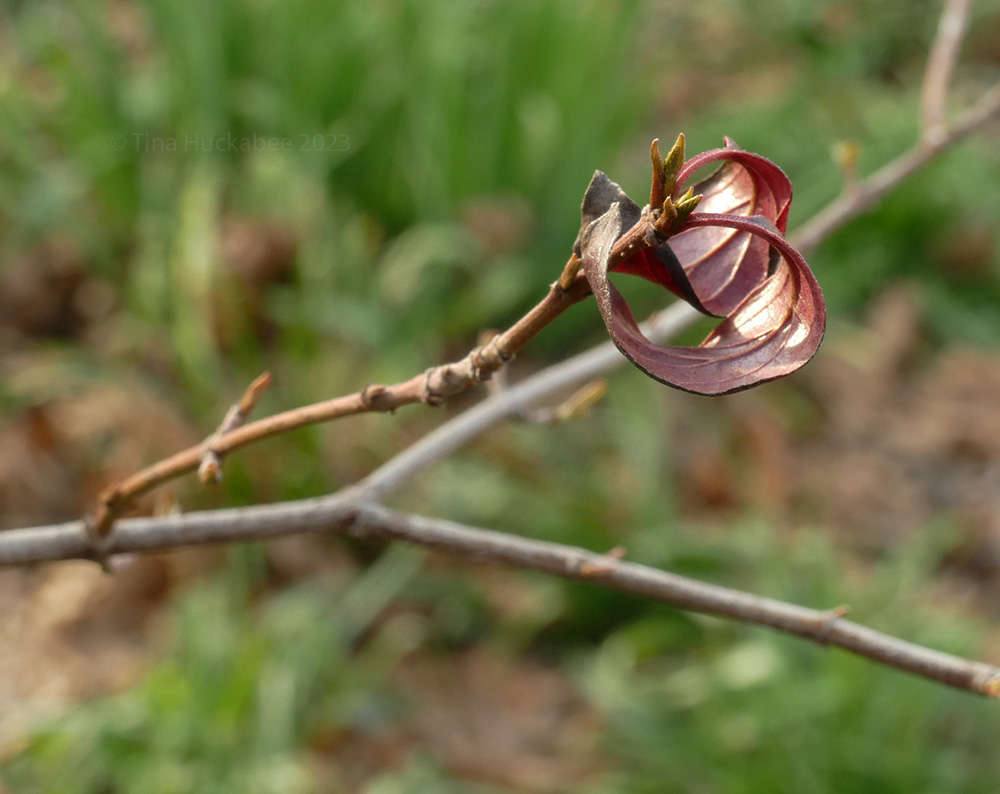
The change of time on a Roughleaf Dogwood, Cornus drummondii, as told by emerging spring foliage, replacing fall leaves.
I was recently visiting with a neighbor as we stood in front of one of my gardens and she commented that a rosette of American Basket flower, Centaurea americana, looks deliciously edible. (I’m not sure if I’d add Basket flower to my salad greens, but it has been used for traditional medicine purposes.) As we chatted, I realized the particular specimen that was the focus of our conversation also shared close space with several other lovely foliage types.

Basket flower forms a dramatic rosette, but peeking through those glorious leaves are ferny Common Yarrow, Achillea millefolium, rounded, lobed Henbit, Lamium amplexicaule, and palmate-leafed Carolina geranium, Geranium carolinianum. Except for the non-native Henbit–one of our earliest bloomers and welcomed by pollinators–all of these plants are native to Texas and in many parts of the Americas.
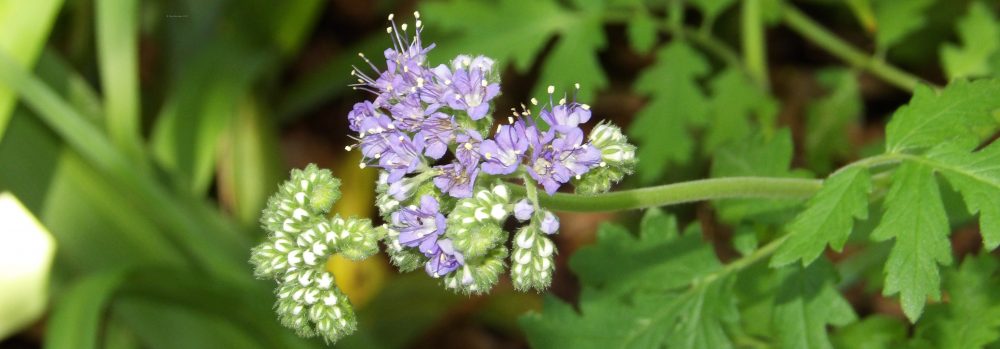
A closer look at these luscious leaves shows another in their midst, also wanting attention for its leafy action–Caterpillars or Blue Curls, Phacelia congesta

A different Blue Curls planted itself directly on a Basket flower rosette, both settled in the crack of a cement driveway, no less. They’ll have to battle it out for survival once spring growth and blooming begins. The smart money is on the Basket flower, as it tends to get much larger than the Blue Curls–but I wouldn’t count out the curls, they’re a tough bunch.
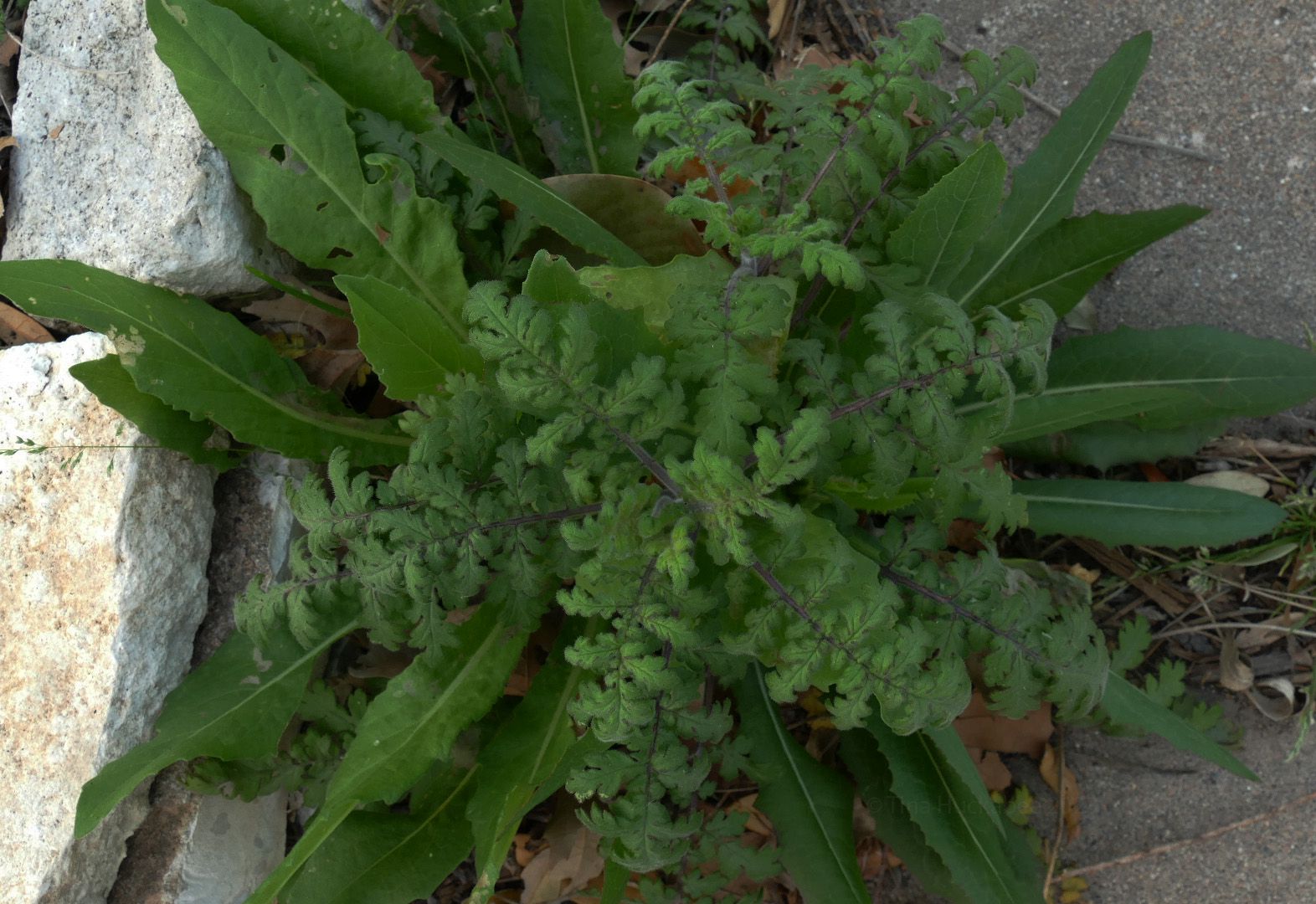
Both Henbit and Blue Curls are having a moment this year in my garden. Scads of them have seeded out and are growing in profusion!
Another nice foliage vignette in a different area of the garden features a purposely planted Twistleaf Yucca, Yucca rupicola, overseeing two volunteer annuals (poppies and geraniums) and one volunteer perennial shrub, Rock Rose, Pavonia lasiopetala. All will bloom in spring, two will disappear afterward (poppies and geraniums), but the Rock Rose will be foliaged and floraled through the growing season.
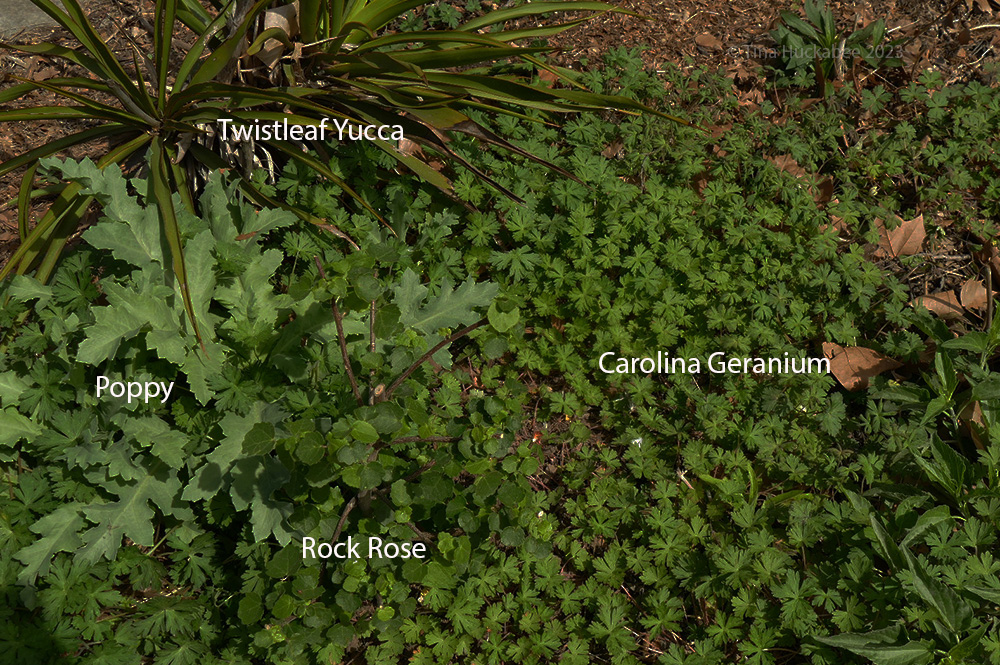
Spring flowers are bursting out of their winter doldrums and the foliage of those bloomers is also revving up for its part in the garden show. Foliage and flowers form a partnership that are the stuff of gardens, each adding their particular beauty and role in a diverse community of plants.
In my last post, Texas Mountain Laurel, A Seasonal Look, I wrote that these lovely small trees are year-round, stalwart evergreens, even when under ice.

My Texas Mountain Laurels have successfully withstood Texas’ capricious weather patterns, from extreme drought and heat, to mild winters suddenly punctuated by bitter cold, icy conditions. Two years ago, during the historic nine day deep freeze, not-so-affectionately called Snowpocalypse or Snowmageddon, both of my laurels endured damage. Several limbs, big and small, died back. Some I pruned, others I left for the birds’ perching pleasure. No blooms happened that March, but both trees survived, albeit thinner in foliage and form.
Last week, another cold snap settled in for several days. It wasn’t as cold, only 29-32F, but rain, turning to ice, covered everything.

The half-inch of ice played havoc on tree limbs (and utility lines) all over Central Texas. The only damage in my garden was to my older Texas Mountain Laurel. This specimen, already weakened by age and 2021’s Snowpocalypse, suffered several breaks due to the heavy ice, impacting its canopy.


The tree survived, but a significant bit of top foliage is now gone. It wasn’t a lot of foliage, but enough of these extra bits now gone add arboreal insult to broken-branch injury.
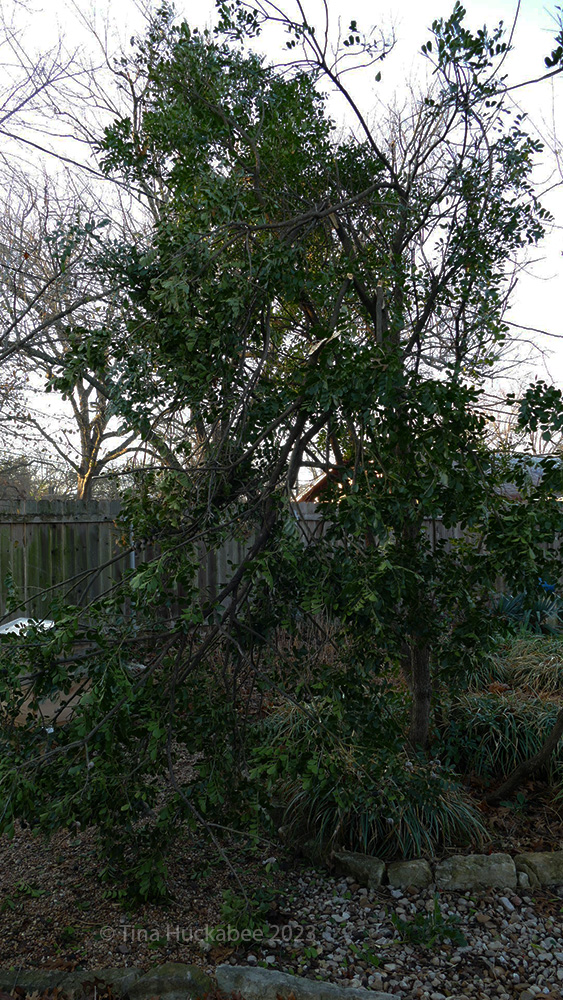
This pile of foliage and limbs now sits out by the street, awaiting the City of Austin yard waste trucks to haul it away, to continue existence as compost, mulch, or Dillo Dirt.

What remains has shaken off the ice and is ready to move on to spring–and beyond.

This is the older Texas Mountain Laurel a few days before the ice storm. The upper left quadrant of foliage is where I have recently observed the Eastern Screech Owl couple perching together, as they meet one another each evening at sundown.

In the photo below, you can see that the foliage in that area is missing. However the tree remains viable, though weathered and aged.
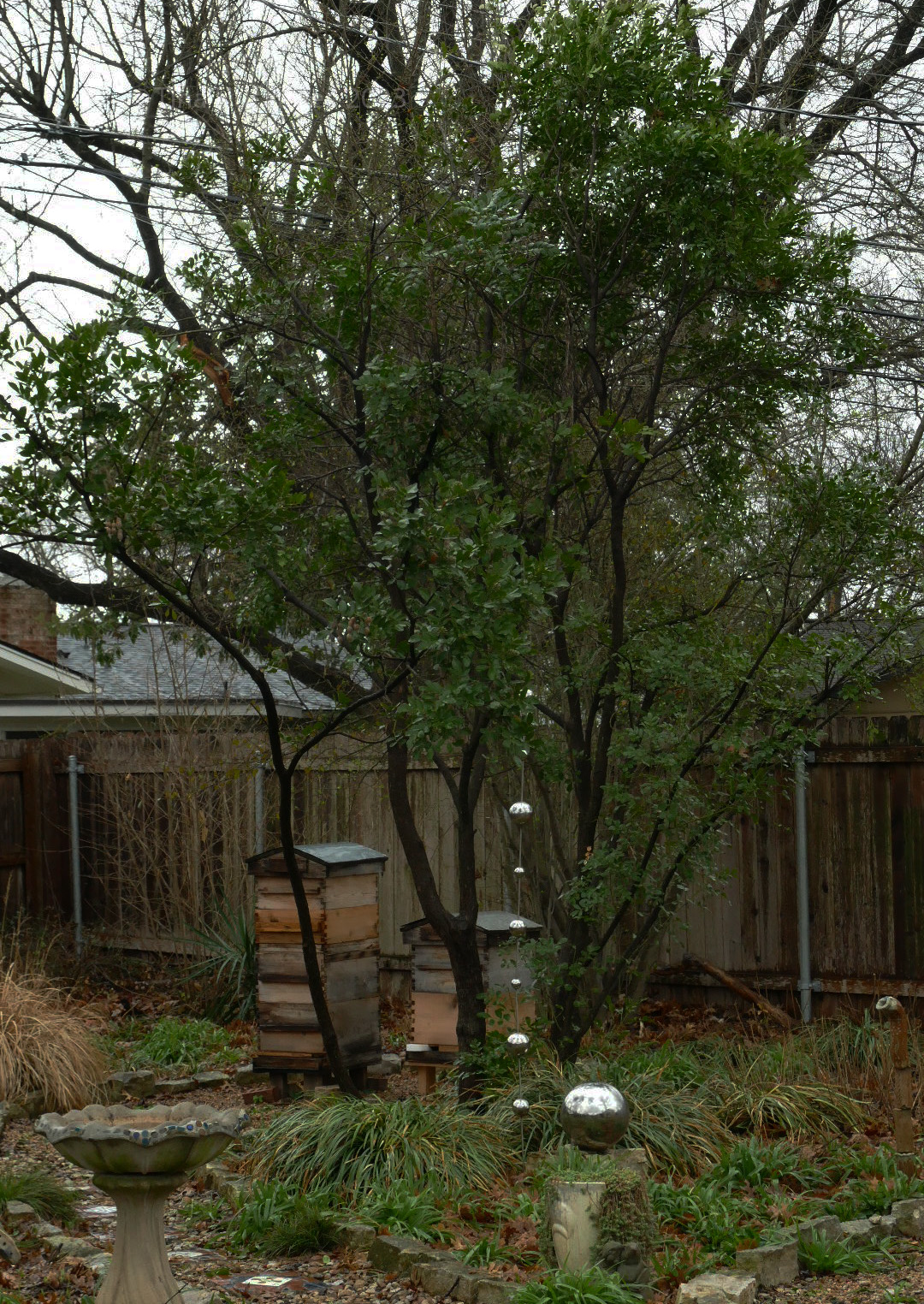
The canopy is not as dense as it once was, the green not as robust and full. This tree is entering its last years, any ice damage adds to its struggles.
This second laurel has always grown shade. It’s never been as large or full as the other and sustained some damage from 2021’s storm.

This year’s ice storm had no real impact on this little tree. It’s ready for its spring flowering, limited though it is by shade.
Severe cold events and summer droughts have challenged both laurels, but they are tough plants and they stand their ground. The possibility of extreme weather events should always be considered when choosing plants for a garden. I wouldn’t hesitate to plant more Texas Mountain Laurels–and I have!
 My Gardener Says...