Coral honeysuckle (Lonicera sempervirens): A Seasonal Look

Coral honeysuckleLonicera sempervirens), loved for its eye-popping clusters of pollinator-delighting blooms and its robust  demeanor in the garden, is a favorite perennial vine for many Texas gardeners.

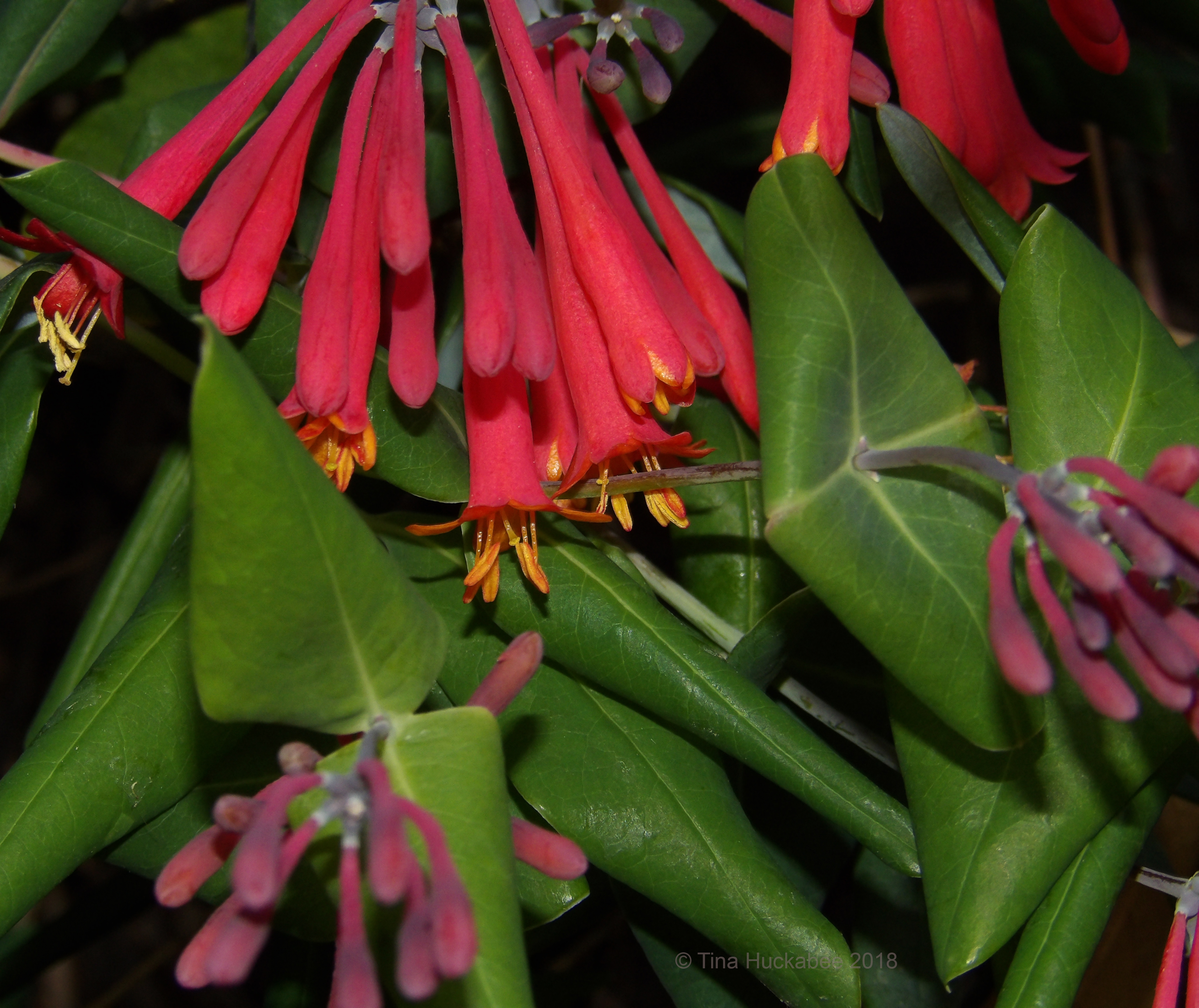
This vertical loveliness is native to East Texas, Florida, with a northward range up the east coast of the United States, but is also found in many other parts of the continental United States.   Here in Central Texas (Austin, Zone 8b), Coral honeysuckle provides semi-evergreen color, punctuated by spring outbursts of gorgeous red blooms, with yellow interiors.

The bloom clusters remind me of a group of debutants, all in elegant, clingy red evening gowns, with an underneath peek-a-boo of yellow petticoats.

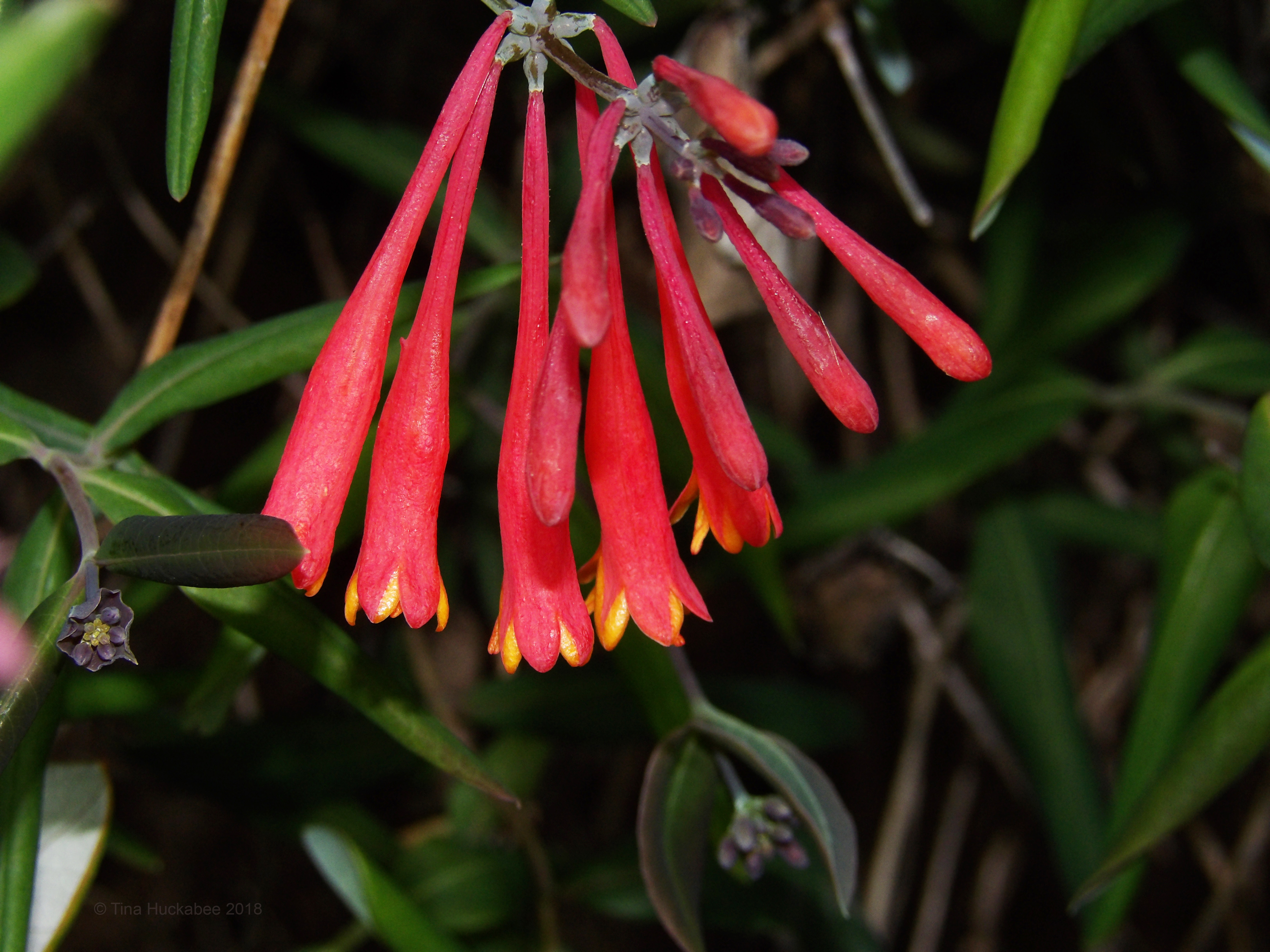
 

I’ve grown two of these vines in my garden.  This one in full sun,

…and this one in a mostly shade spot.
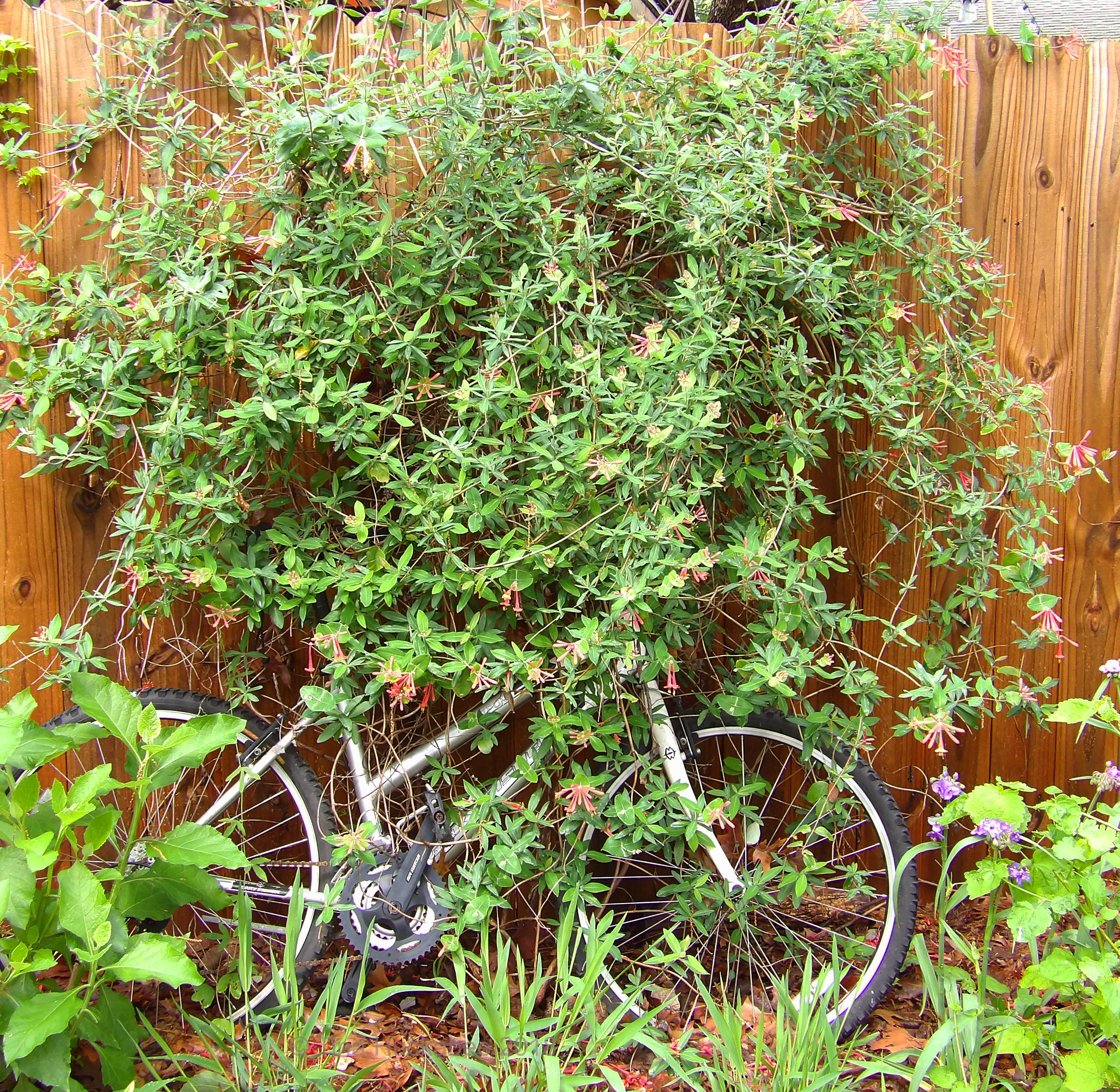
A May shot of a shady spot with blooming Coral honeysuckle anchoring the garden.  Aside from the bicycle, and (from left to right), grows Frostweed, Inland sea oats, and Turkscap.  Some Spiderwort are still popping with purple blooms.

The bulk of blooming occurs mid-to-late spring.   The flowers on my vines have bloomed as early as February, sometimes with continuous blooming into May.  Peak bloom time occurs during March and April, with a sprinkling of blooms in early summer.

An excellent climber–perfect for a trellis, arbor, or fence–Coral honeysuckle flowers more in full sun.

In woodland areas, it clamors over the ground as well as up trees and rocks.

Pollinators of all stripes, sizes, and colors flock to the tubular founts of pollen and nectar:
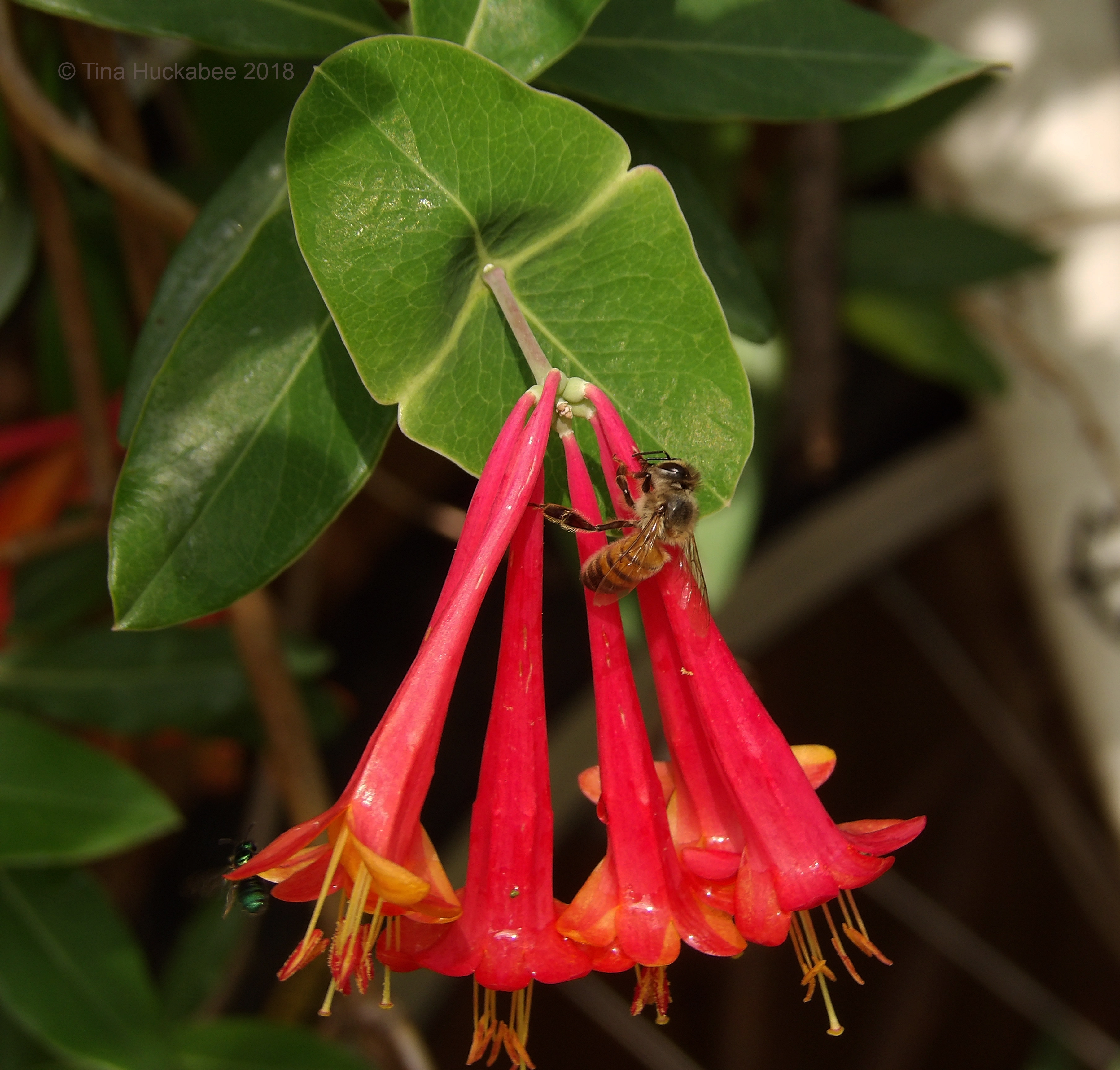
Nectar stealing Honeybee at top of bloom, with native Green Metallic bee (Halictidae) on left, toward back of bloom cluster.

Nectaring Metallic Green bee.
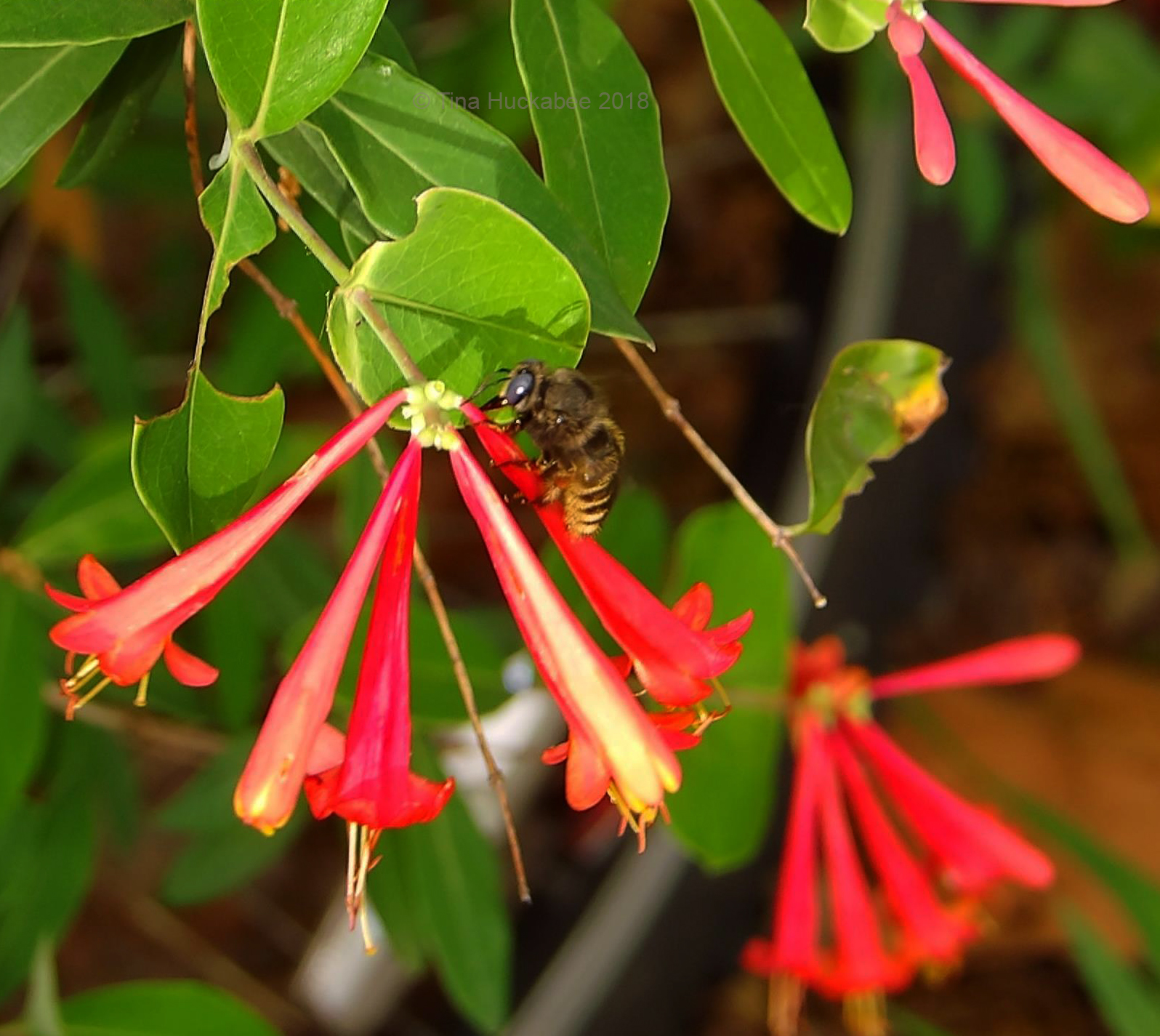
Horsefly-like Carpenter bee (Xylocopa tabaniformis).

Honeybee coming in for a meal.

Hummingbirds are attracted to the blooms, though I’ve never seen any at my blooms.   I suspect that there simply aren’t many (if any) hummers around during the peak bloom period in my garden as they don’t typically arrived back in Austin from Mexico and Central/South America.  That said, the tubular red blooms certainly fit the profile of hummingbird attracting flowers.
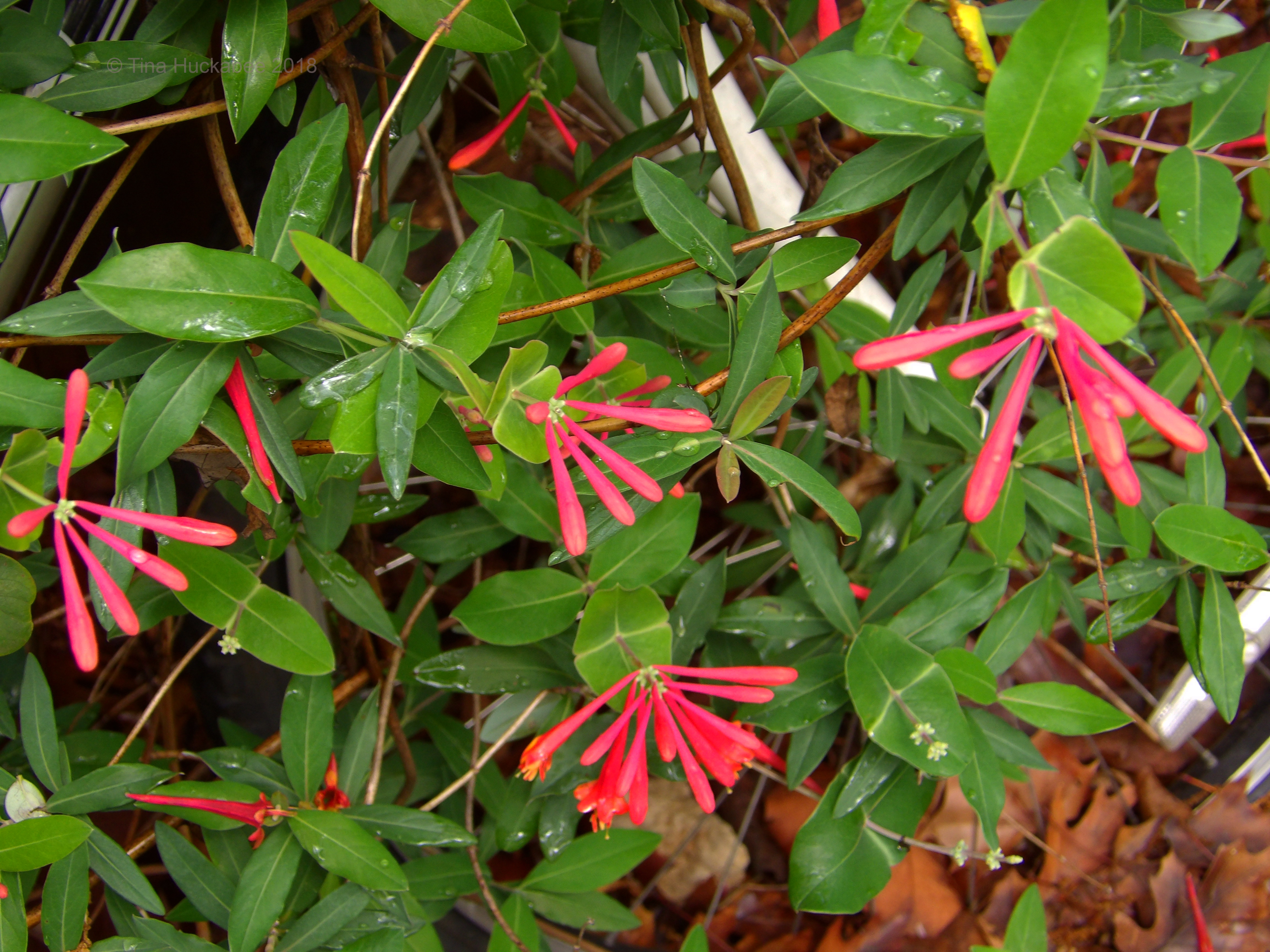
Additionally, this honeysuckle is the host plant for a butterfly, Spring Azure, (Celastrina ladon), and a moth, Snowberry clearwingHemaris diffinis.

Springtime sees the biggest burst of blooming, but sporadic clusters occur in summer as well, usually after a tropical rain event.

The vine maintains a lush, green presence throughout the summer months, requiring minimal water during the dry and hot of summer.  I irrigate in the hottest of the hot, during those months with nary a drop from the sky.
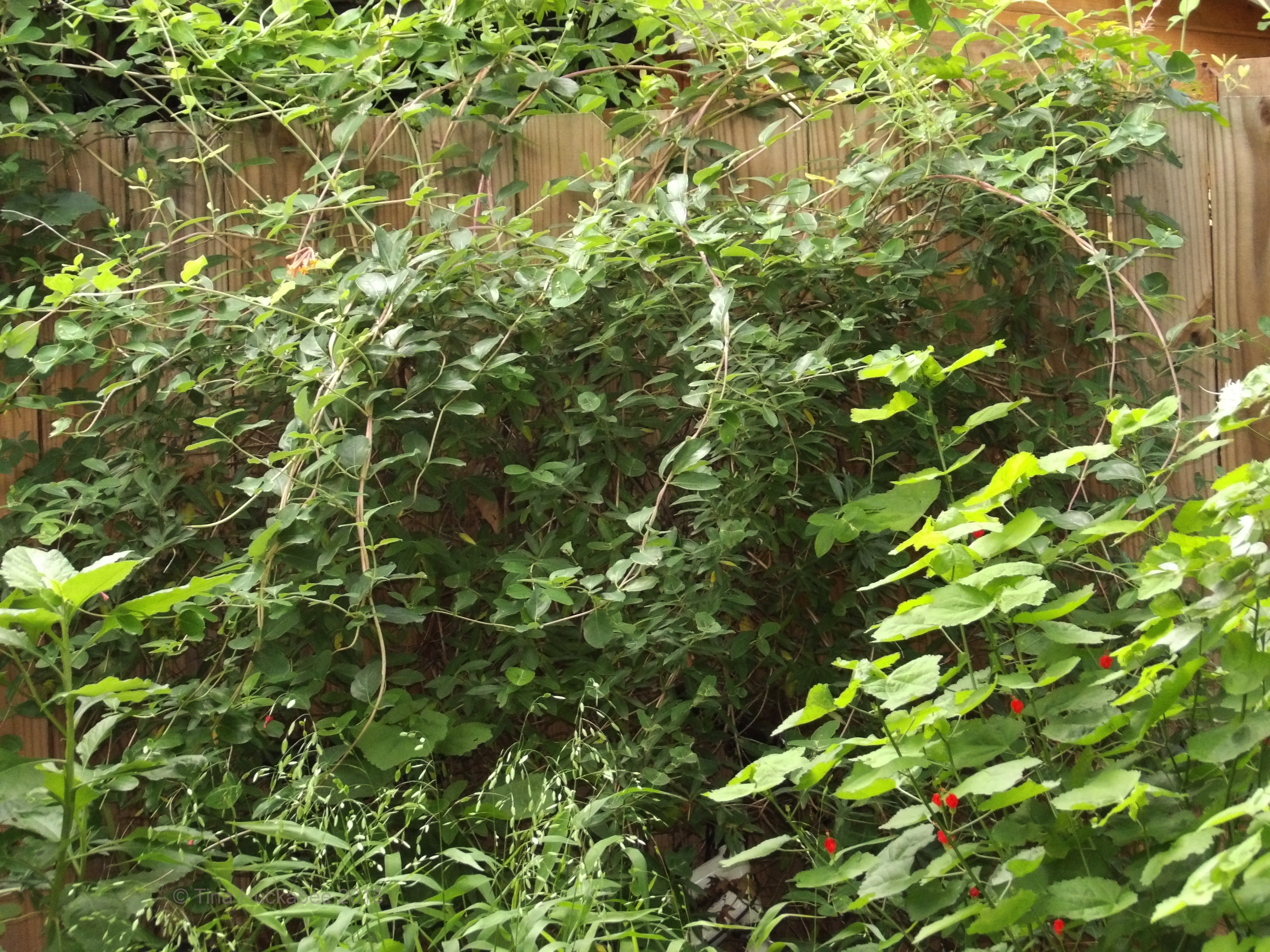
Coral honeysuckle is a water-wise addition to any garden.


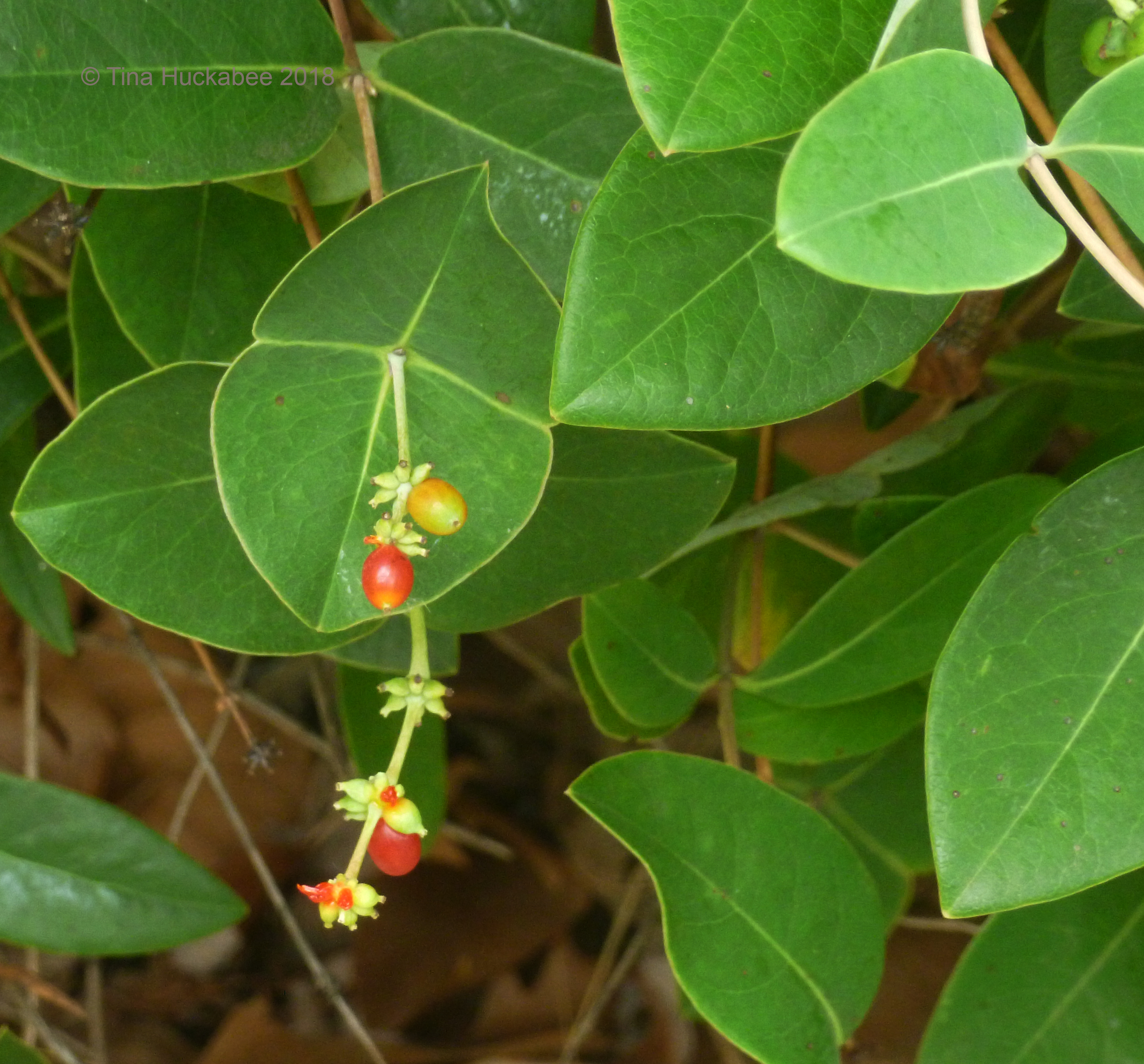
I usually see the fruits of the Coral honeysuckle in summer and early autumn.
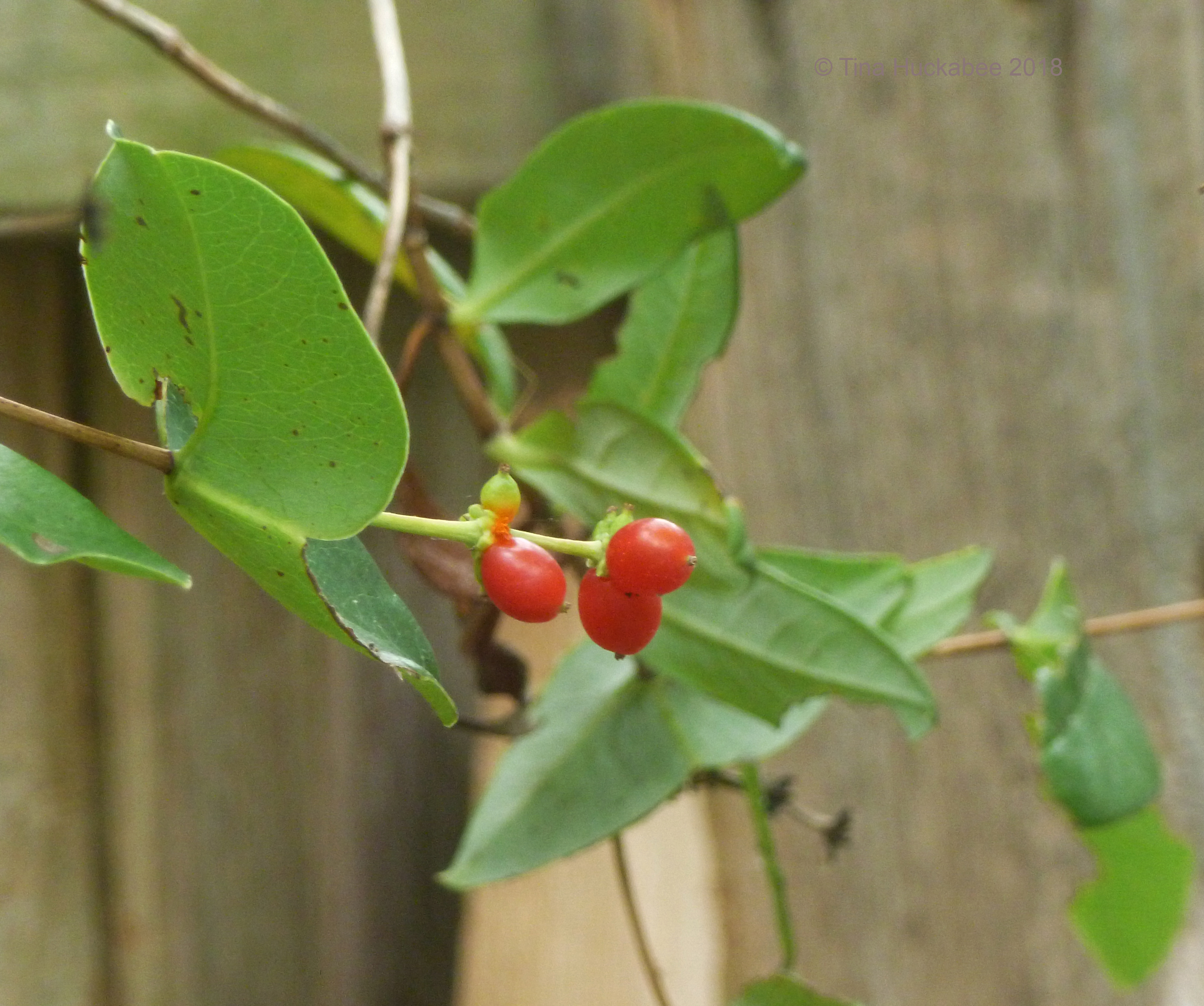
They must be yummy, because the fruits don’t last long on the vine.  Various birds enjoy the fruits and foliage protection from honeysuckle; I’ve seen Mockingbirds, Carolina Wrens, and other birds seek refuge–and probably snacks–in both of my vines.
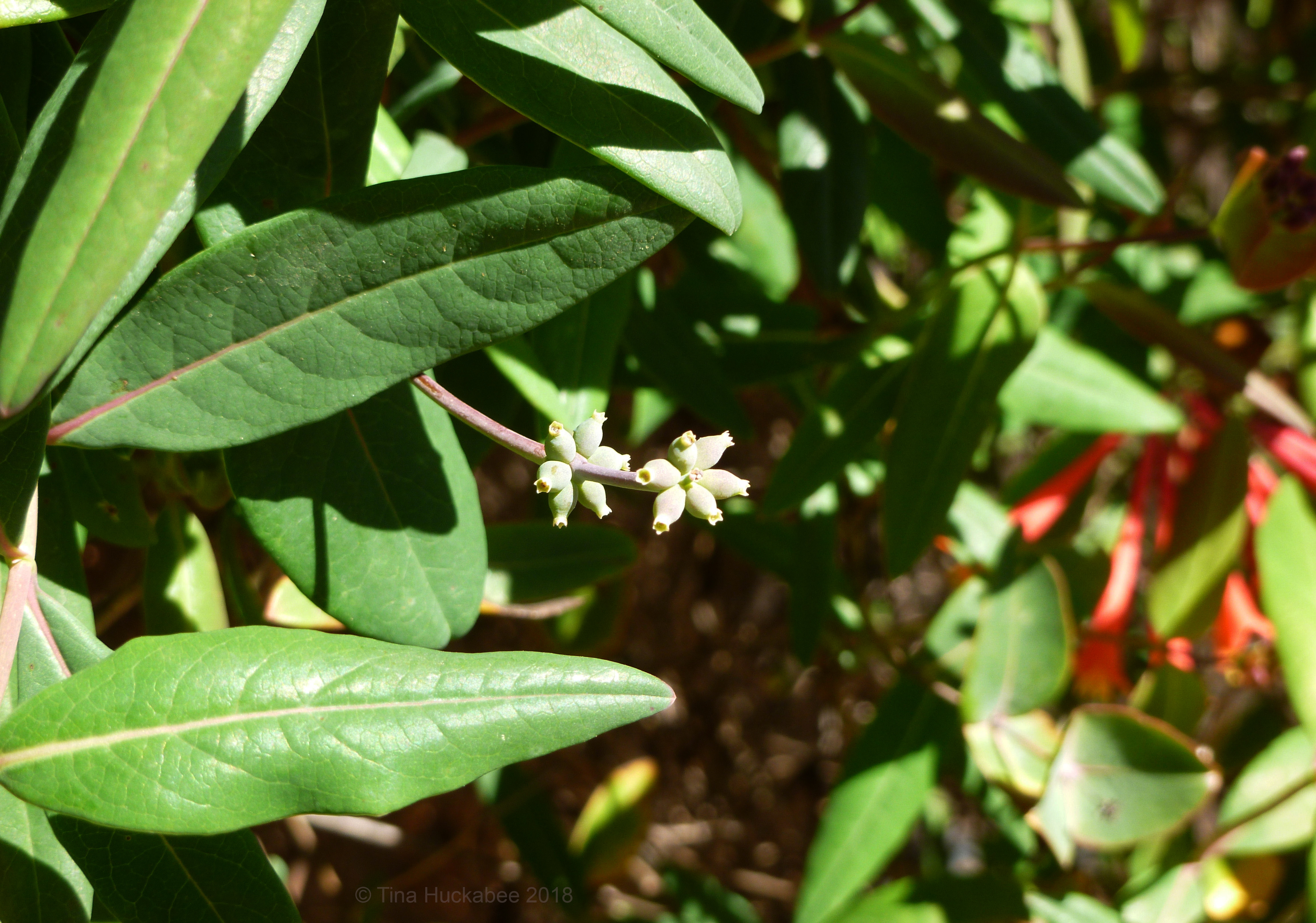
Nascent coral honeysuckle fruits.


As summer segues into autumn, Coral honeysuckle continues its solid green contribution to the garden.


During winter the vine can freeze completely if the freeze is hard and long enough.

There are usually a few token leaves remaining.
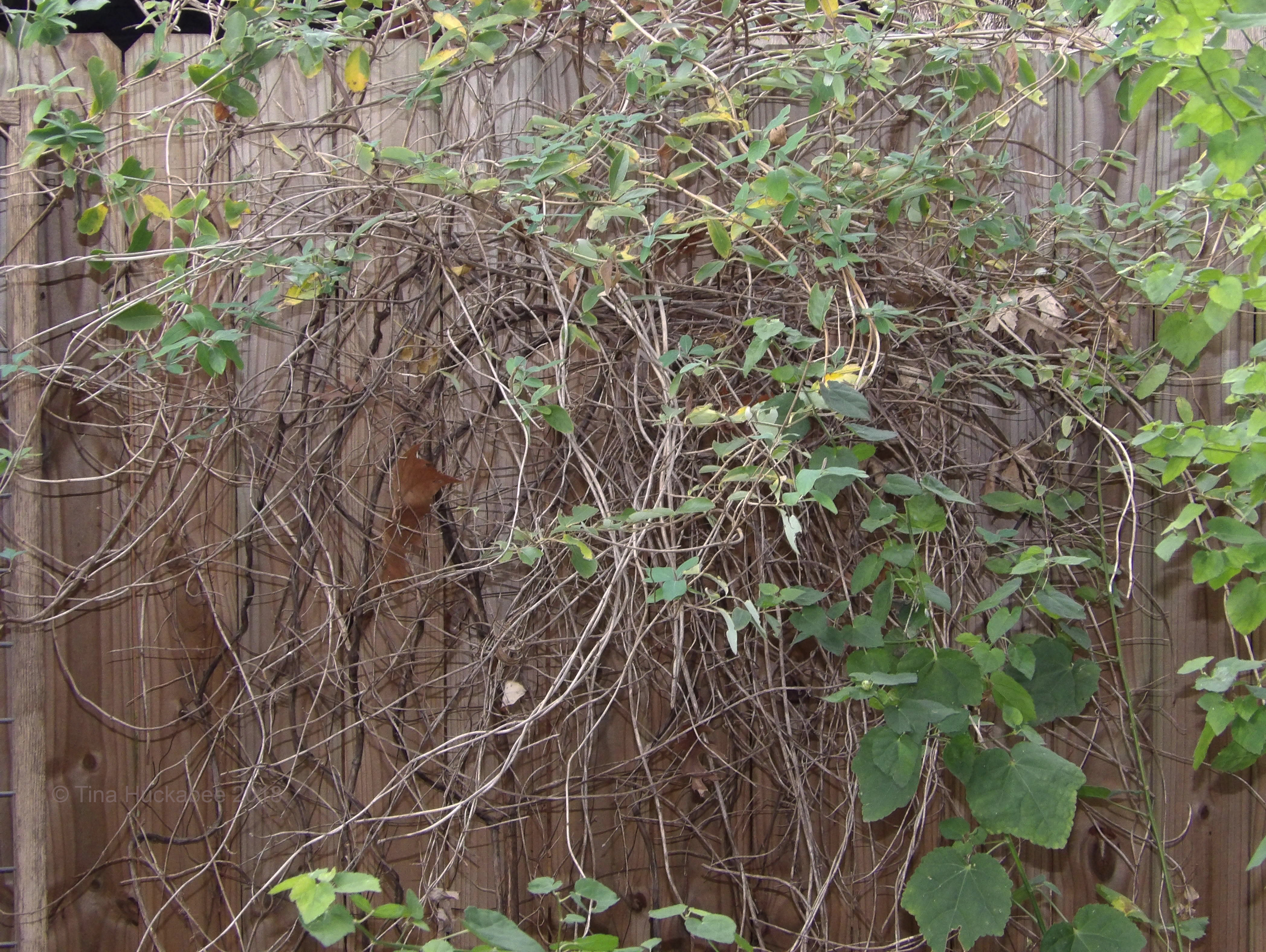
More often than not, the foliage simply thins a bit, with some strands lacking foliage and the vine maintaining the majority of its leaves.

As the days grow longer and the temperatures warm, whatever foliage which quit the vine during winter’s freezes, return–lush and full and ready for the new growing season.
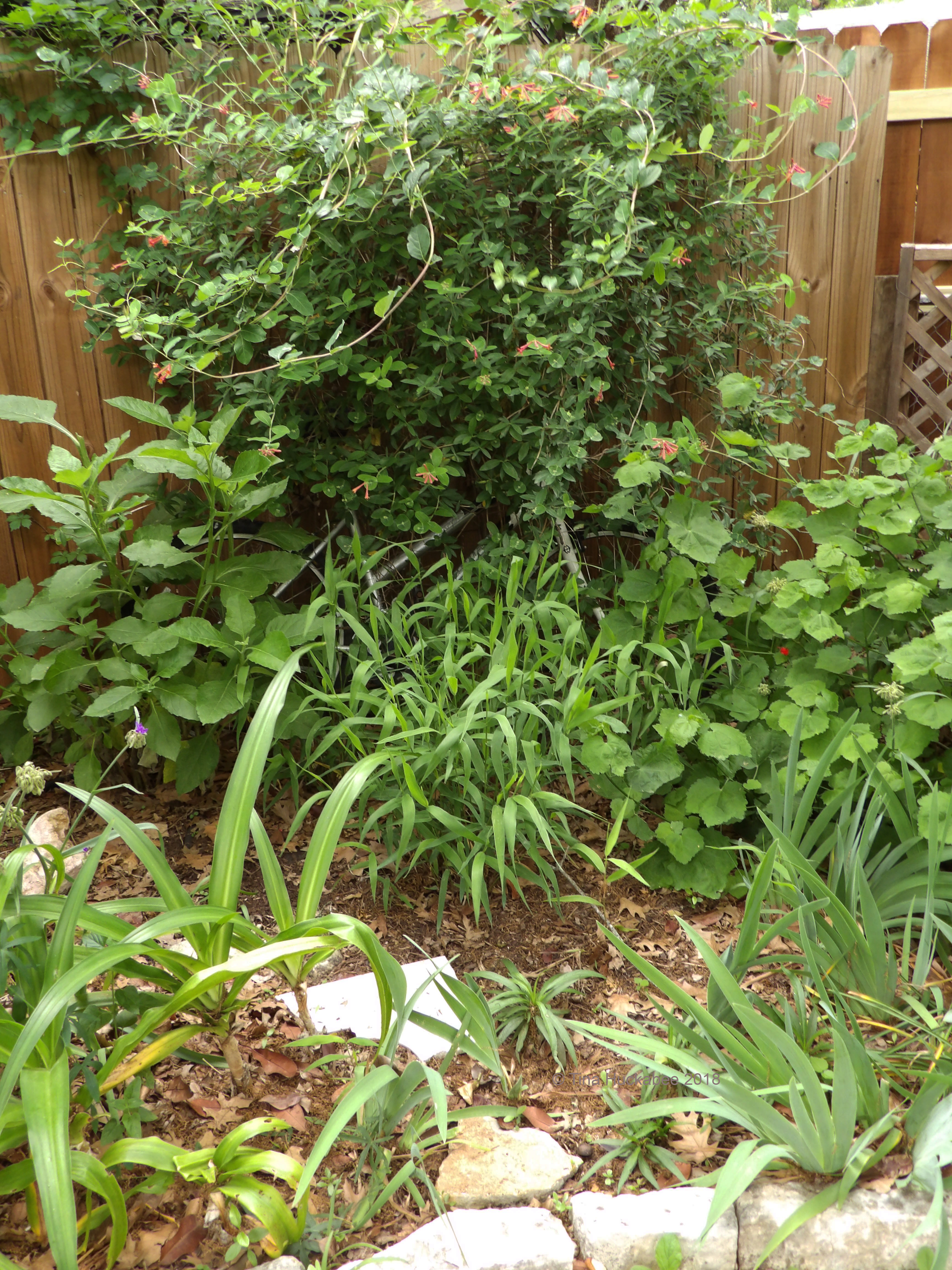
New Coral honeysuckle growth is exuberant–to the point that the fresh limbs reach to the sky in unwieldy growth spurts, requiring occaisional tucking in and twining around so as not to clamor over other things in their paths.
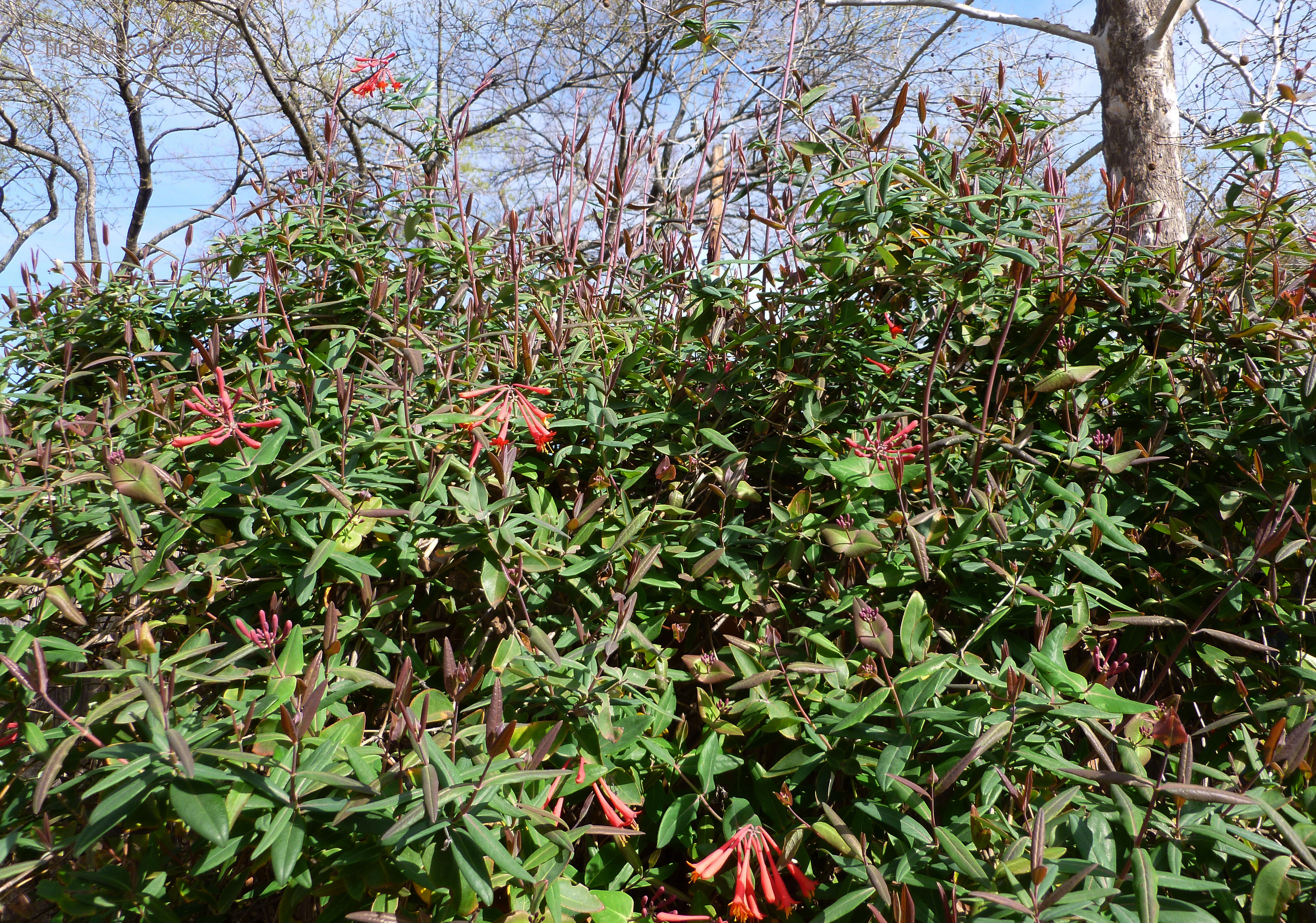
Additionally, emerging foliage and stems blush burgundy, augmenting the brilliancy of the blooms.
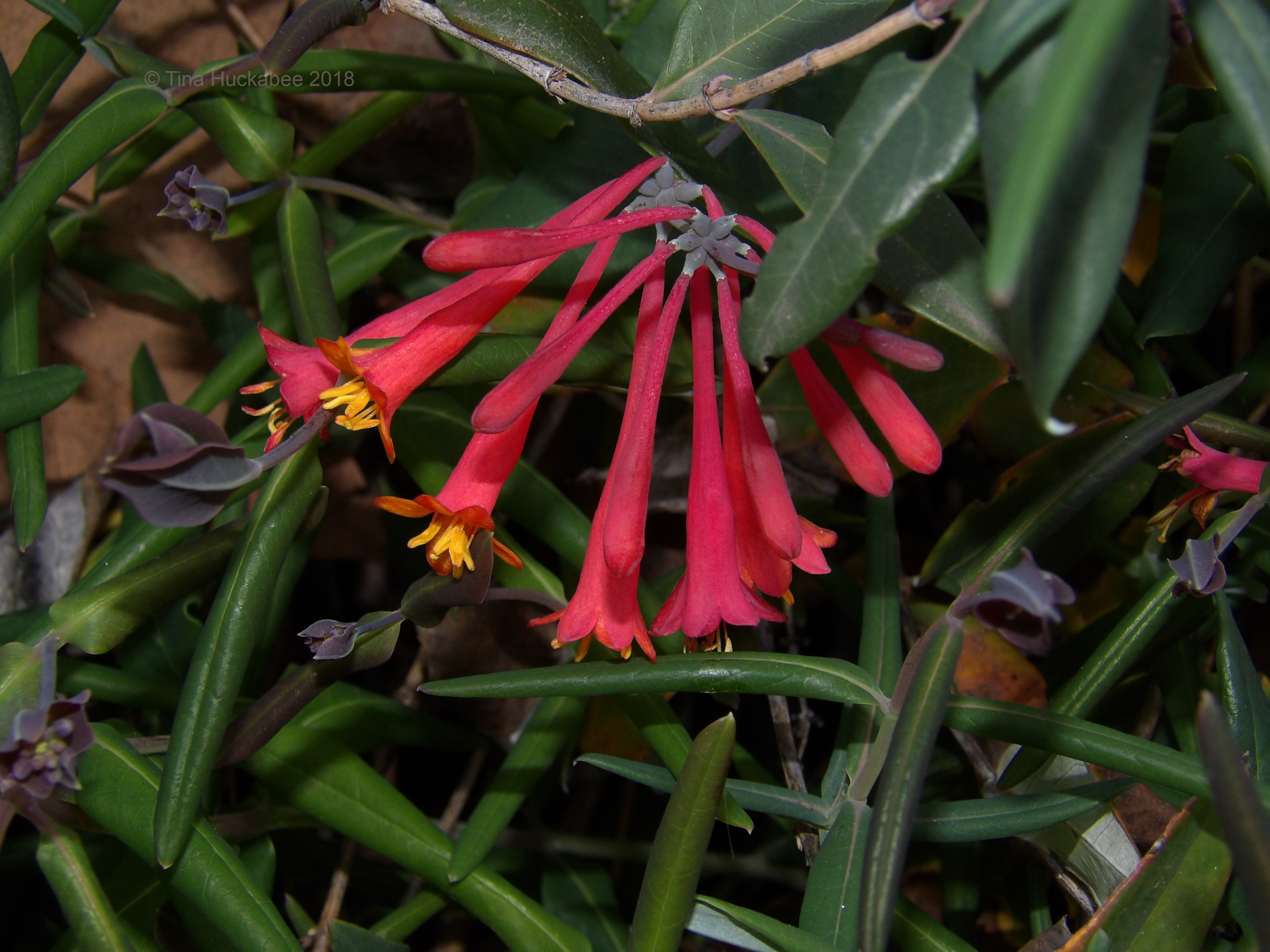
The crowning glory of this honeysuckle vine are the masses of bloom clusters which follow new spring growth.

Coral honeysuckle prefers well-draining soil and can develop powdery mildew if its feet are damp and the arms and legs of the vine congested.  That said, even in my clay soil and during the heaviest of flooding, I’ve never seen mildew on my leaves.  I mulch new plants, with a refresher of either commercial mulch or shredded leaves, as needed.  I water my vines, along with the gardens they’re a part of, during the dry of summer and prune bare strands when/if necessary.

I leave my vine as it is–a bit wild and wooly–so that birds can perch and hide, if someone scary (hawk, cat, gardener) comes near.  Coral honeysuckle isn’t invasive, it just requires a ‘haircut’ from time-to-time.  The oldest strands of vine are easily snapped off, making the work of pruning an easy task.  If you prefer a very tidy garden vine, Coral honeysuckle might prove a little feral for your taste.  But give it a chance: Coral honeysuckle’s beauty and hardiness make its mild rowdiness well worth the minimal shagginess.

My biggest complaint about Coral honeysuckle (and it’s not a complaint about the plant at all!) is that I don’t have enough room for more of these tough, pretty vines.  Gardeners appreciate the stalwart nature and beautiful blooms and foliage of this vine, wildlife appreciate its contributions to their safety and diet.

Coral honeysuckle:
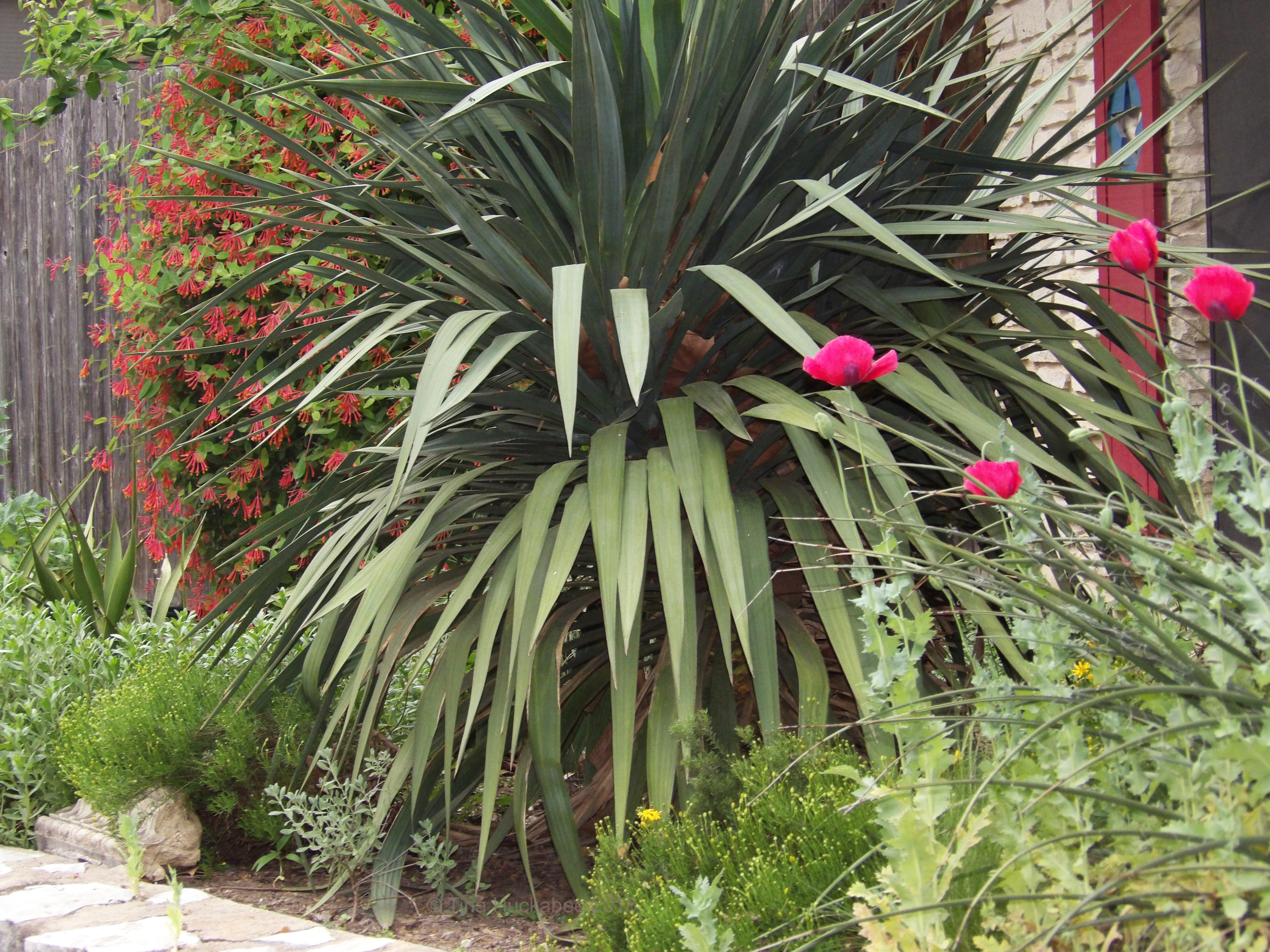
The vine grows to the left of the Softleaf yucca.


Spring:
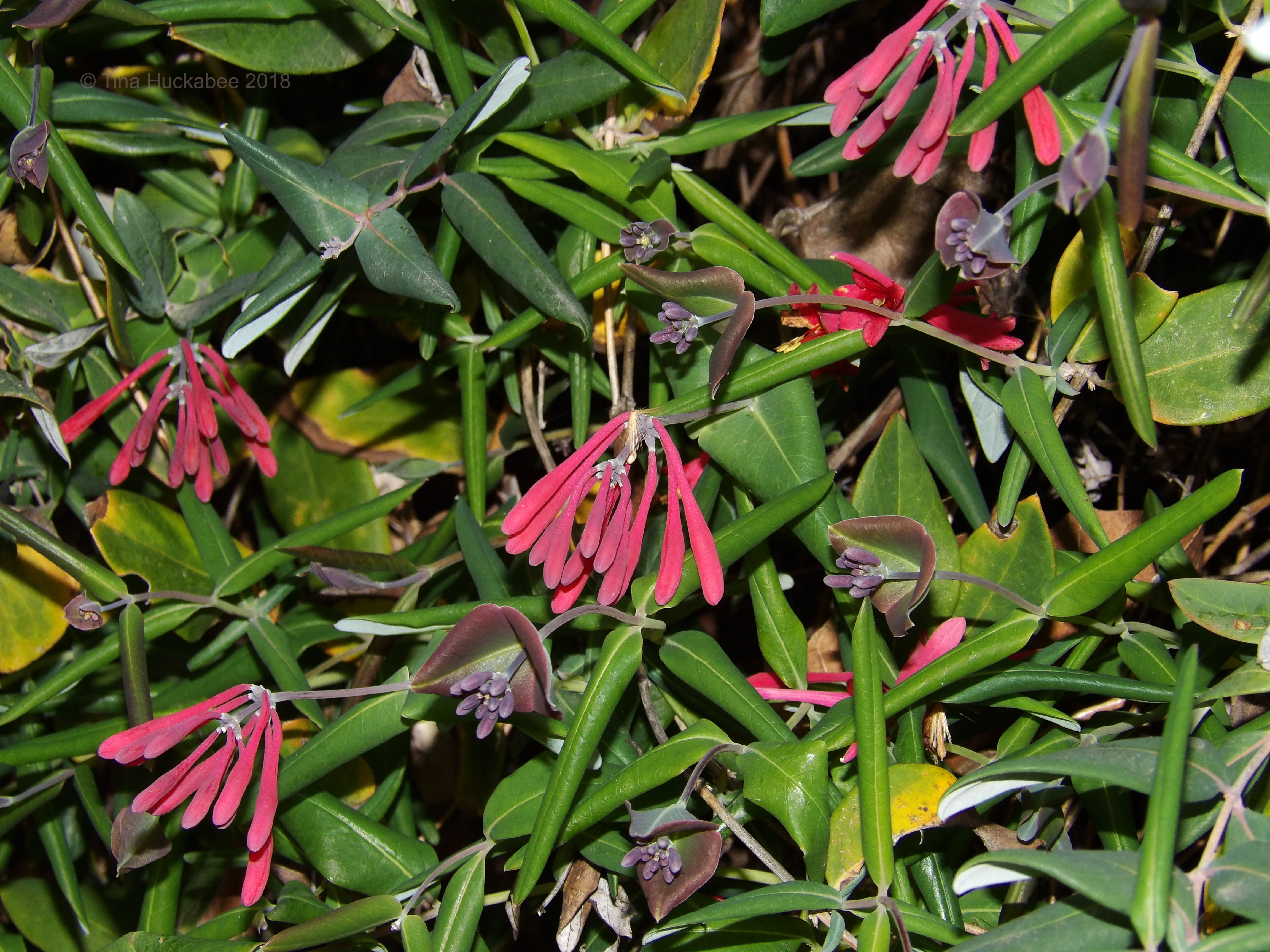
 

Summer and Autumn:


Winter:
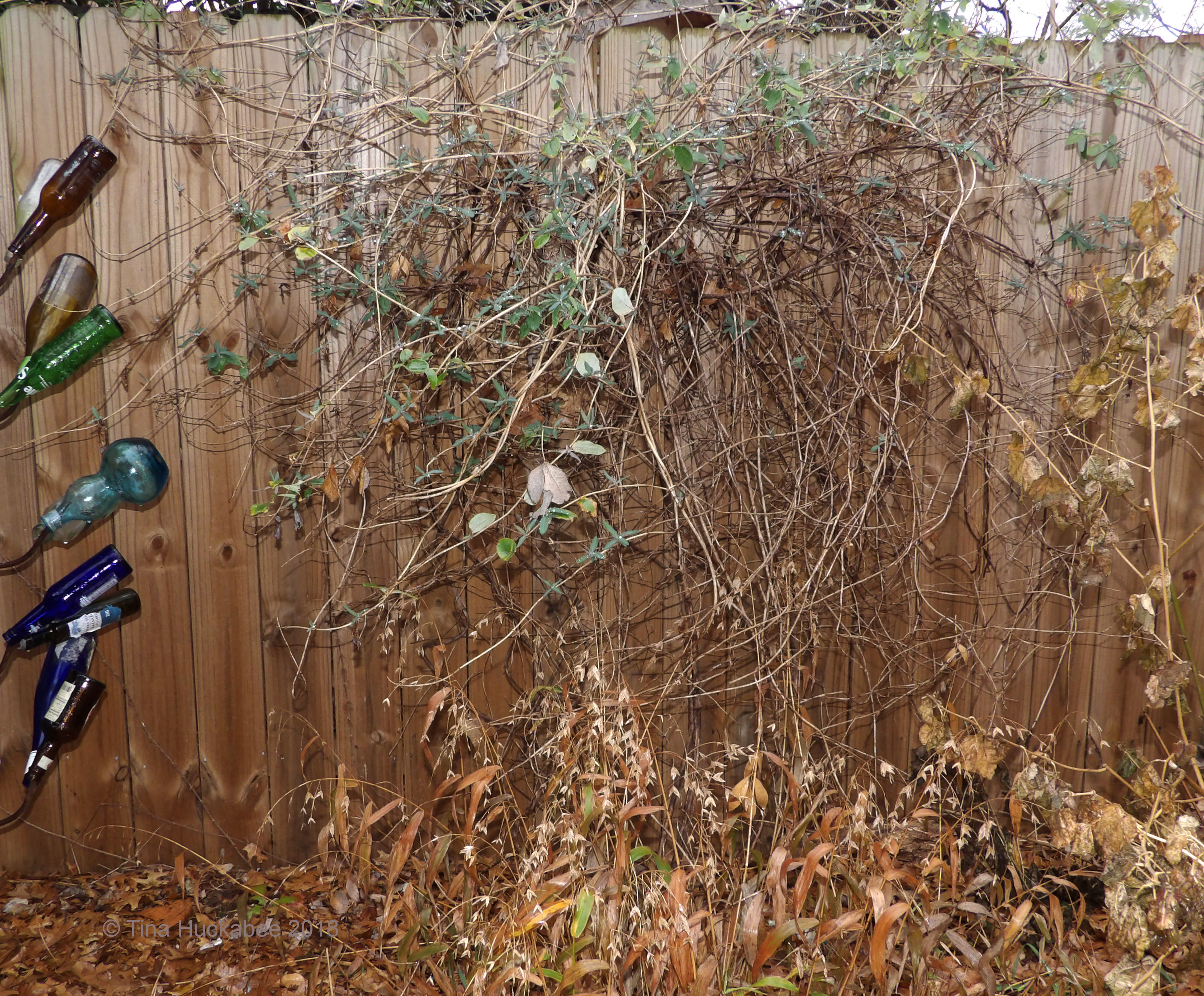
Coral honeysuckle flanked by dormant Turkscap (right), Inland Sea Oats (bottom) and in-bloom bottle tree (left).

A water-wise, wildlife-friendly, and gardener-pleasing vine–you’ll be glad it grows in your garden!

Native Season

This week, Texas gardeners recognize the value of native plants in our gardens during Native Texas Plant Week.  Native Texas plants belong here, where they’ve evolved alongside endemic wildlife, enduring capricious weather patterns, varied soils, and wide-ranging topography.  While not indestructible, native plants (once established) tend to withstand drought and periodic flooding better than most introduced plants.  There are exceptions of course, but when a garden is primarily natives, it reflects a strength of purpose which translates to less fuss and work for the gardener, as well as unique, regional loveliness in both flower and foliage  all year round.   

Spring flower cluster, with Black Swallowtail butterfly attached, of the Texas mountain laurel (Sophora secundiflora). The foliage is evergreen and attractive year-round.

The native plants thriving in my modest, urban garden array from those which bloom nearly year-round, to those that show-off seasonal glory.  When I evaluate my garden, I reflect that most of my native plants (and some of my non-natives) were gifted to me, either as seedlings or seeds.   Yes, I’ve purchased plants, mostly trees and a few shrubs, but gardening with natives doesn’t have to be an expensive endeavor if you connect with local native plant enthusiasts, native/wildlife gardening organizations, or the wacky gardening neighbor down the street.  Increasingly, local urban nurseries offer an assortment of native plants for affordable prices.

Golden groundsel (Packera obovata), spring flowers feeding Texan Crescent butterfly.

It takes time and requires more knowledge and creative energy to plant with natives, rather than simply sodding your “yard” with mono-culture turf.  But the rewards in enjoying seasonal interest, in providing a respite for wildlife, and lessening regular maintenance (especially in the heat of summer) makes the effort worthwhile for home and commercial landscapes.

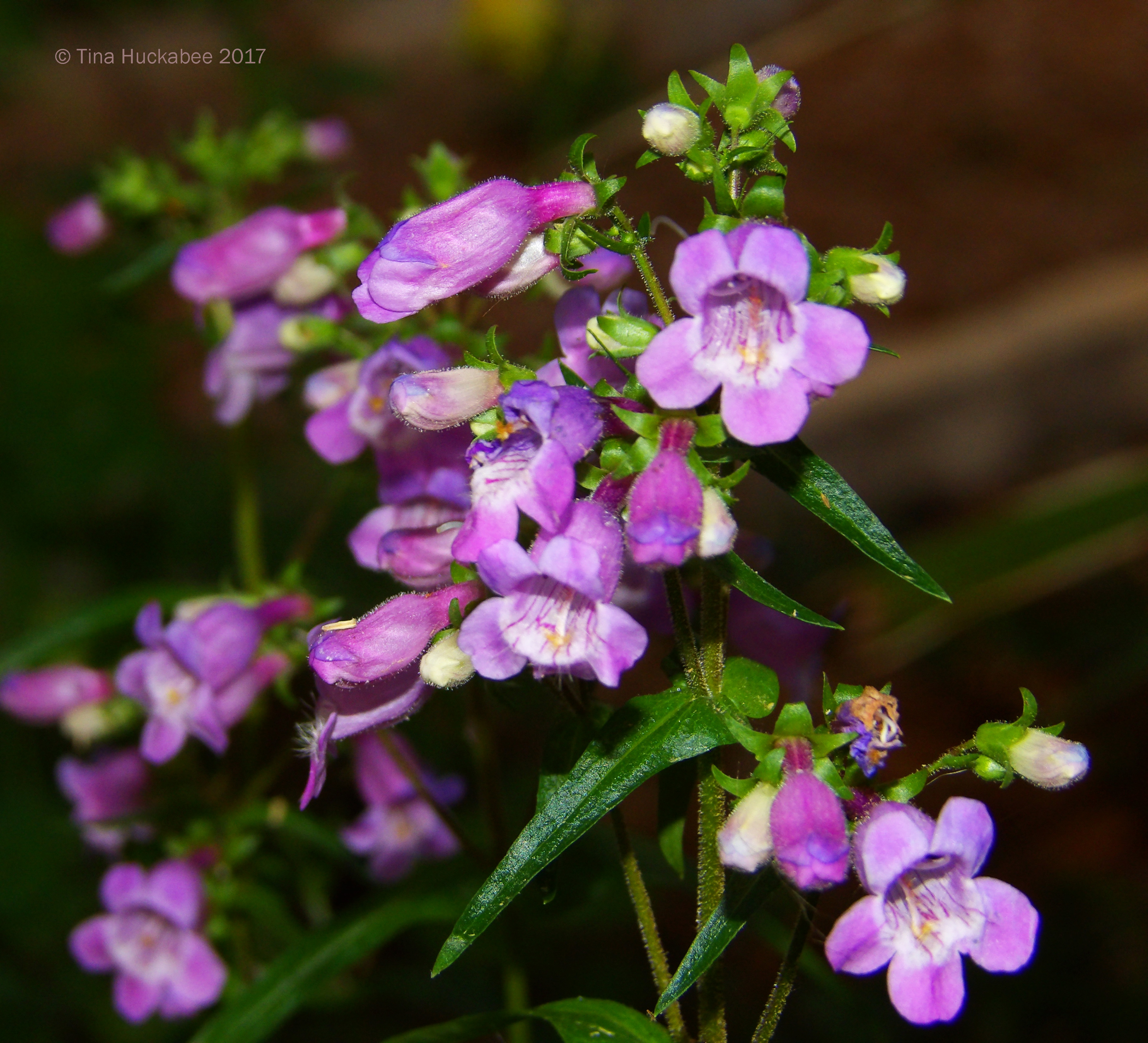
Gulf Coast Penstemon (Penstemon tenuis), blooming in spring.

Gulf Coast Penstemon with seed heads in late summer.

In this post you’ll see a few of the plants that grow happily in my garden, most of which I’ve profiled previously.  Some are spring-only actors, while some blaze the garden stage primarily in autumn.  Many bloom repeatedly throughout the long growing season, or morph from beautiful spring-summer blooms to spectacular fall-winter seedheads–alluring for the gardener, sustaining for wildlife.

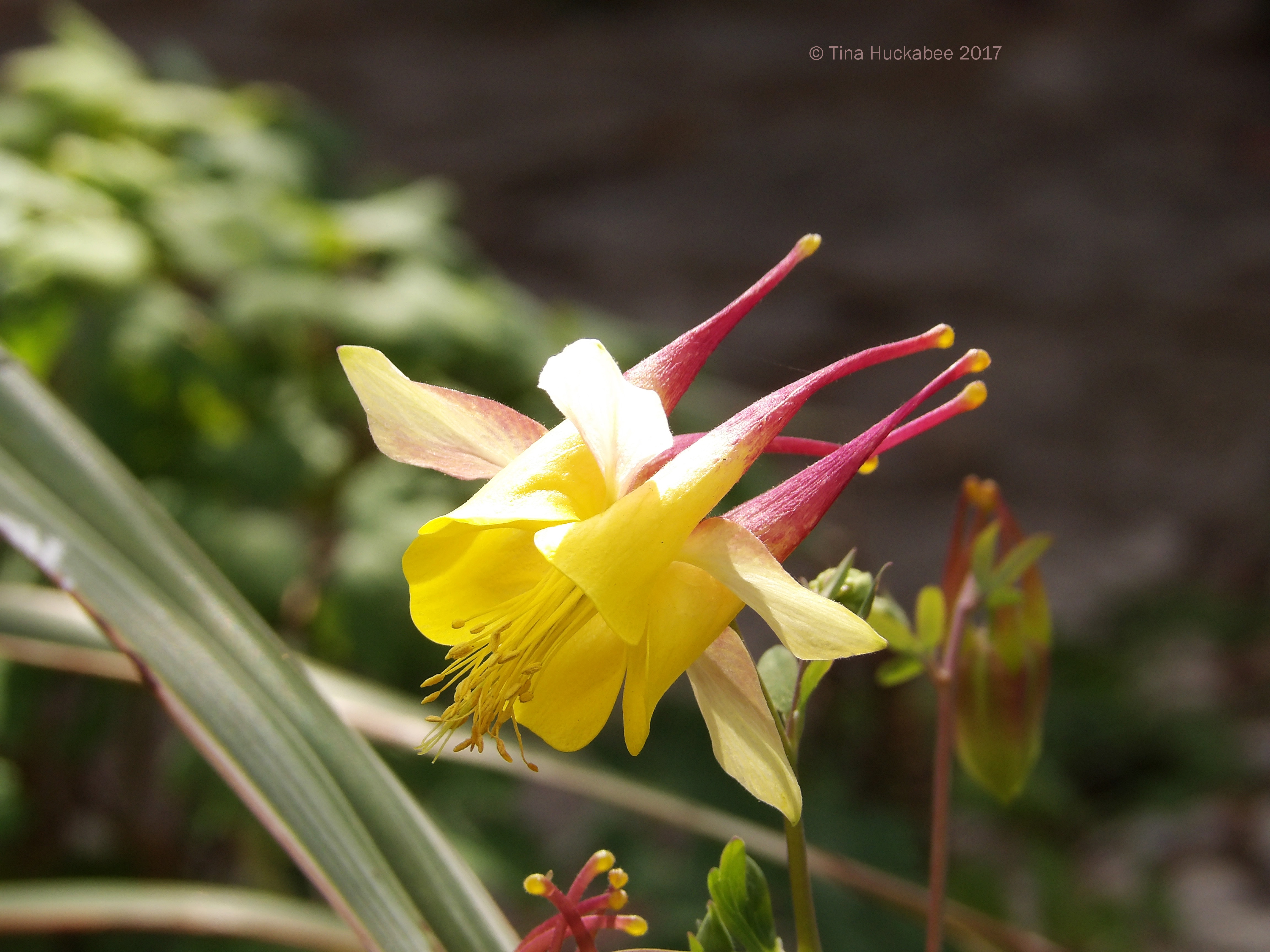
This spring bloomer is a hybrid between my Yellow columbine (Aquilegia chrysantha) and my Eastern red columbine (Aquilegia canadensis).  Check out my ‘Seasonal Look’ for Columbine.

In all cases, these plants are easy to grow–with the right light and soil requirements– and are appealing throughout the year.

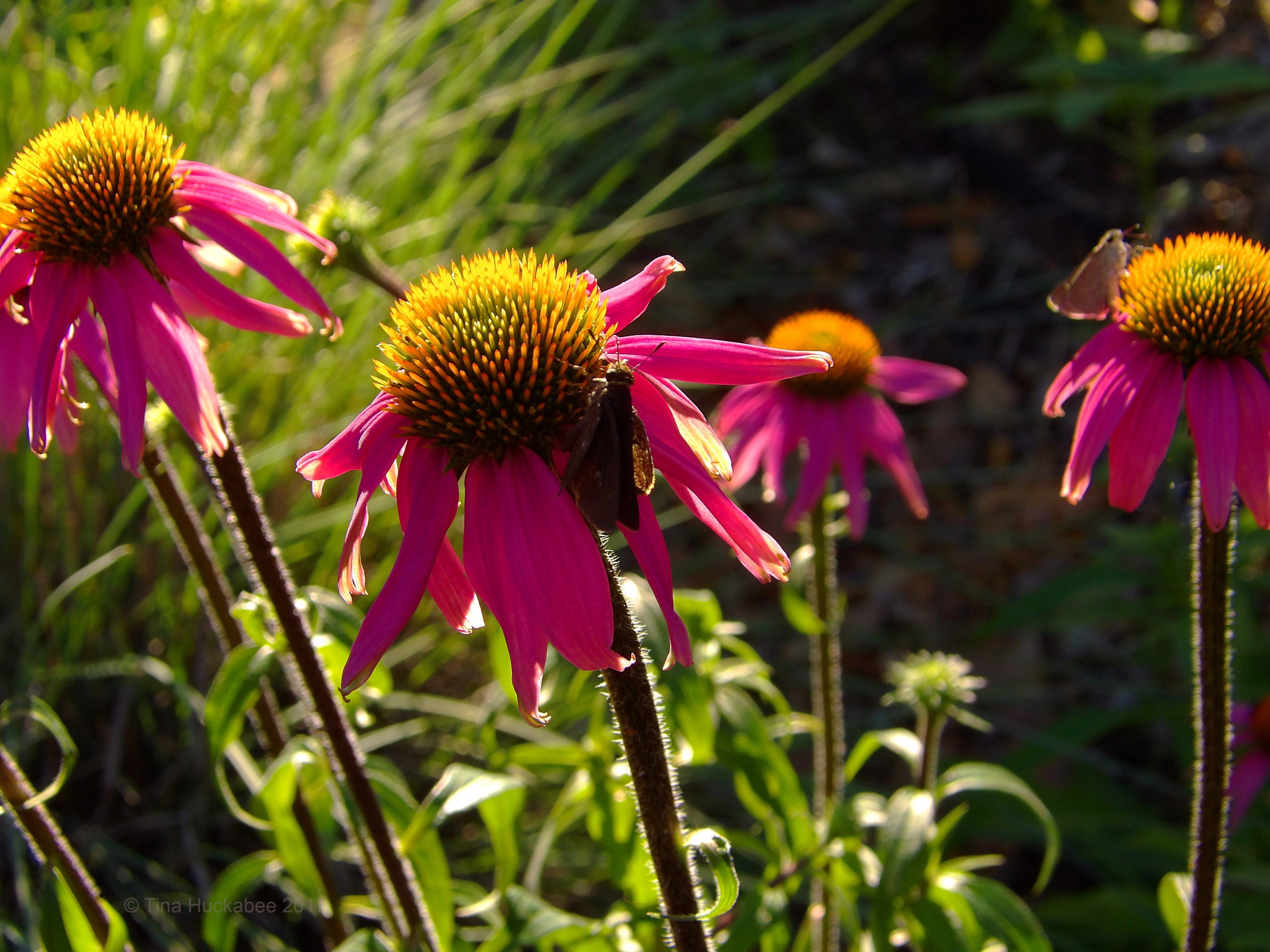
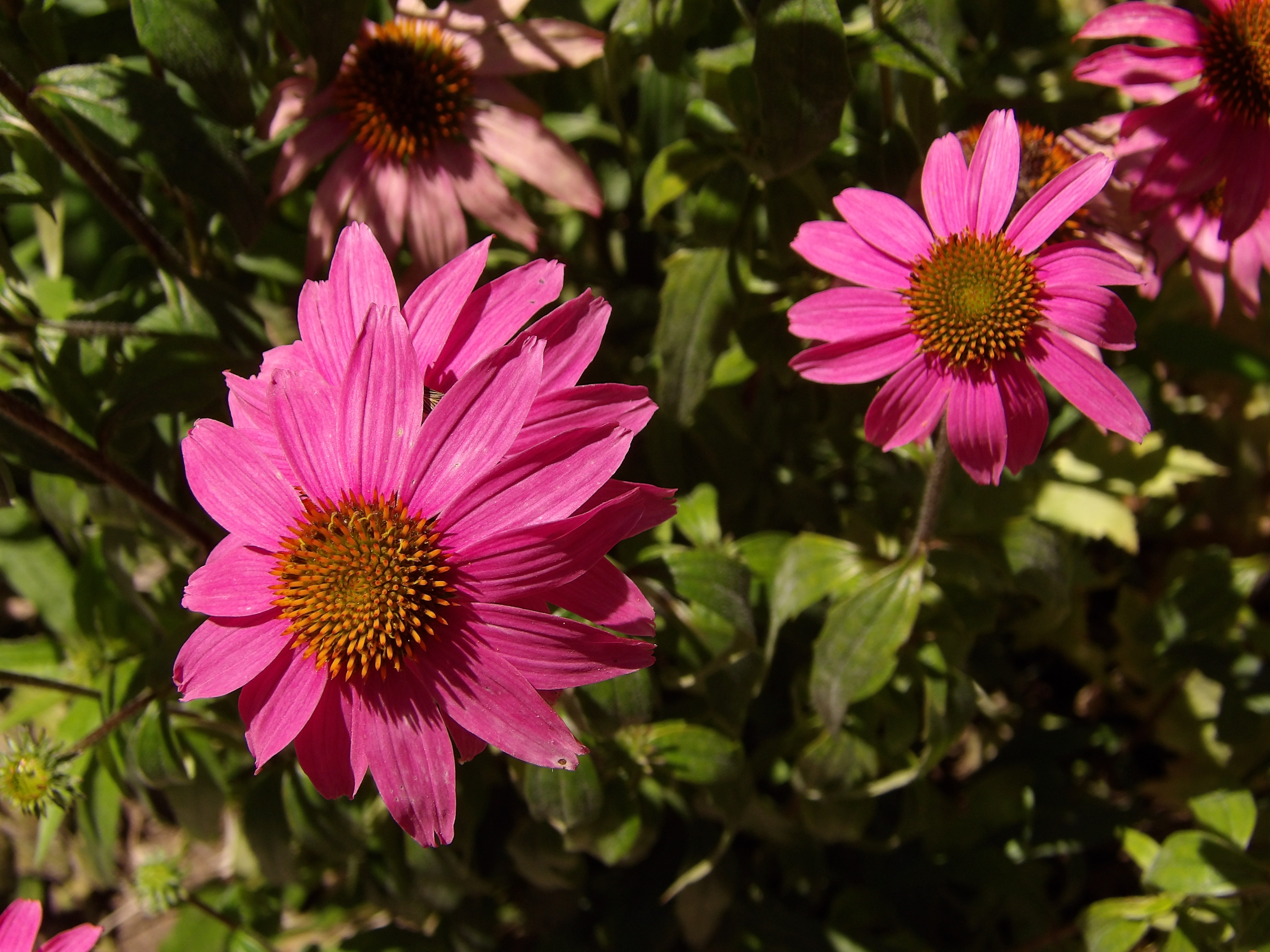
Purple coneflower (Echinacea purpurea) flowers in late spring and summer; rests during the heat of mid-to-late summer, then enjoys a second flowering again in autumn.

Red tropical sage (Salvia coccinea) is a small perennial, dormant in winter if there is a hard freeze. It emerges in spring and blooms through autumn, until winter, in earnest,  arrives.

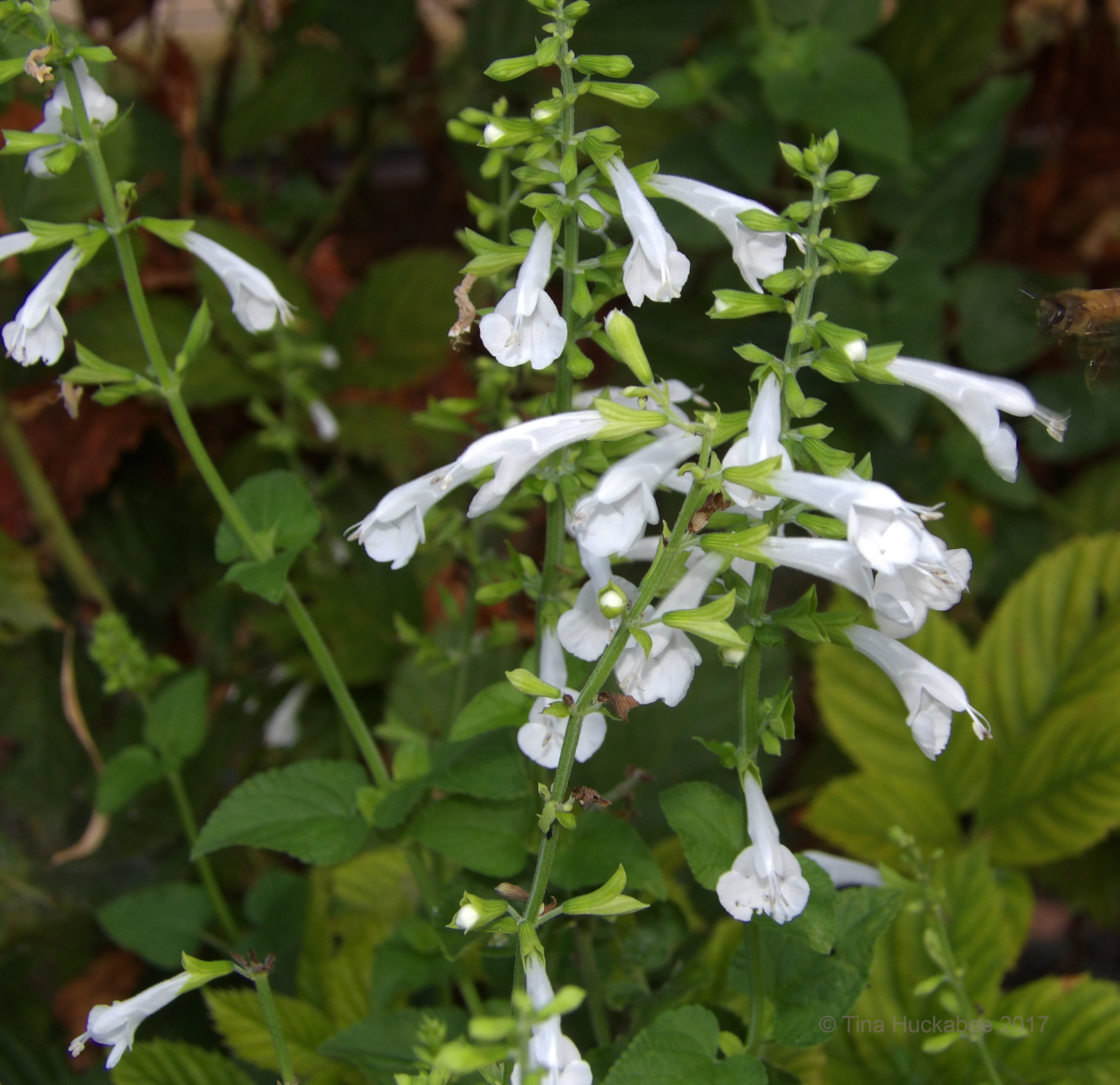
White tropical sage is a natural hybrid of the red tropical sage. Some of my tropical sage are red, most are white–all are gorgeous!

For information about North American native plants, visit the Lady Bird Johnson Wildflower Center.   Even better, if you live in or near Austin, go for a visit–it’s a stunning native garden dedicated to the education and preservation of native plants in North America.  Additionally for those in or near Austin, the LBJWC will hold its fall plant sale this Friday and Saturday, October 20-21–check out the website for more information.

Rock rose (Pavonia lasiopetala) is a long-blooming perennial shrub and a huge favorite of the pollinator crowd.

When someone visits my garden, a common comment is: You have such a green thumb.  My reply is always the same:  I don’t really have a green thumb, other than that I pick great plants that don’t need much care.  

Sunny Engelmann’s daisy (Engelmannia peristenia),  paired with Henry Duelberg sage (Salvia farinacea ‘Henry Duelberg’).  Buzzily nectaring native Carpenter bee–bonus treat!

And it’s absolutely true, since native plants are hardy enough to thrive, even for the most black-thumbed amongst us.

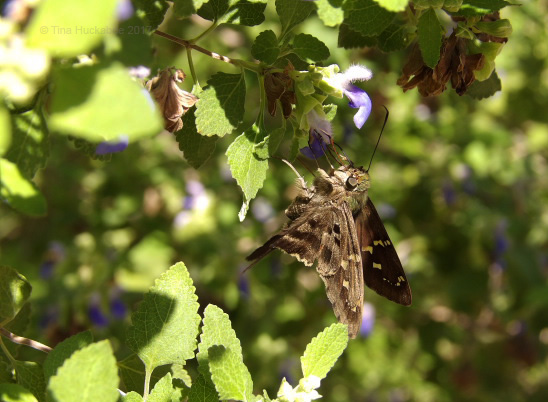
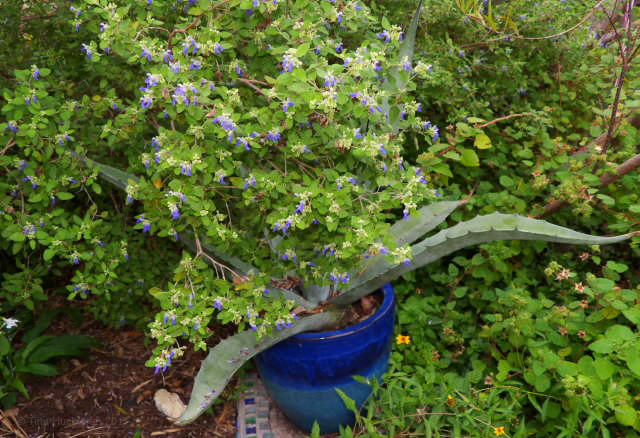
Shrubby blue sage (Salvia ballotiflora) hosting a Long-Tailed Skipper.  This West Texas native blooms repeatedly throughout the growing season.

The same sage photobombing a containerized American century plant (Agave americana)


Native plants are necessary for the health of wildlife and are vital sources of food for migrating insects and birds.  With native plants in the ground, your garden will be alive with wildlife, and after all, isn’t that what plants are for?

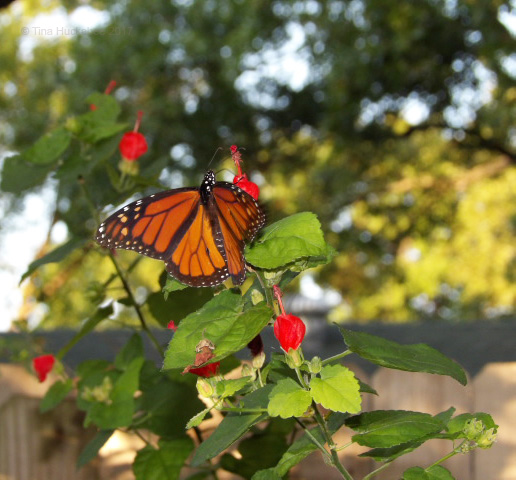
Male Monarch butterfly nectaring on Turkscap (Malvaviscus arboreus var. drummondii), another long-flowering perennial native.


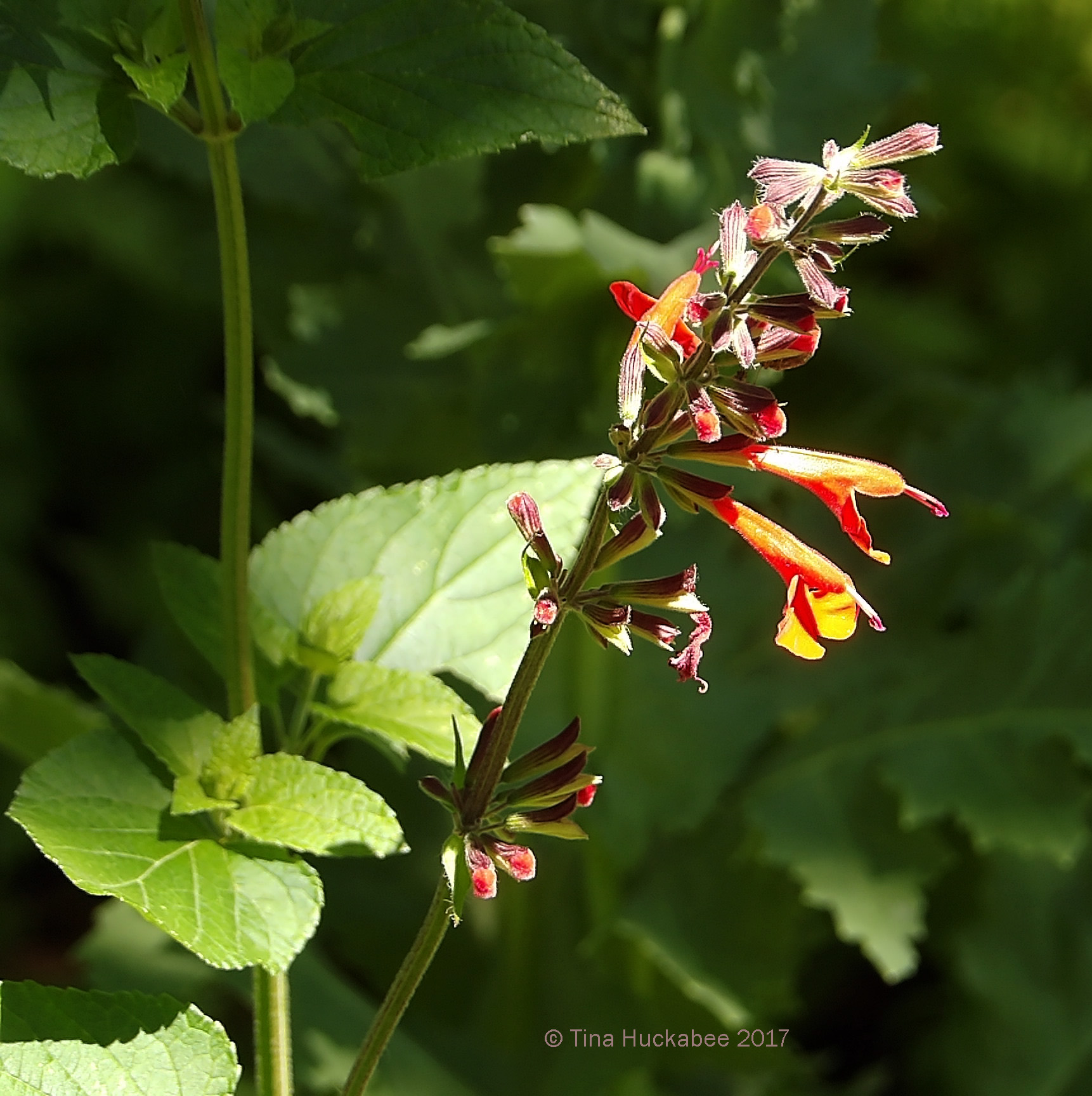
Some native plants are endemic to a specific area, like this Big red sageSalvia penstemonoides.  The Big red sage was believed extinct, but in the 1980’s several groups were found in the Austin area, its only native habitat (as I recall, under one of the MoPac overpasses).  Since then, the seeds collected have been nurtured and plants are grown for nursery trade.  This stunning summer bloomer (and great hummingbird flower) is found in some locally owned nurseries.  I purchased mine at Barton Springs Nursery.

I’ve planted four of these perennials in my back garden; this one overlooks the pond and receives the most sunlight. Recently, with the downing of part of a non-native tree in my front garden, I’ve transplanted the three remaining to that garden, with hopes that they will get more sun and the pollinators (and the gardener!) will enjoy more of these deep, crimson flowers.

Other native plants are found in a larger geographical area, some spanning the whole of North America.

American beautyberry (Callicarpa americana) has a native range from Virginia to Arkansas, Texas and Florida.


Natives are lovely planted together.

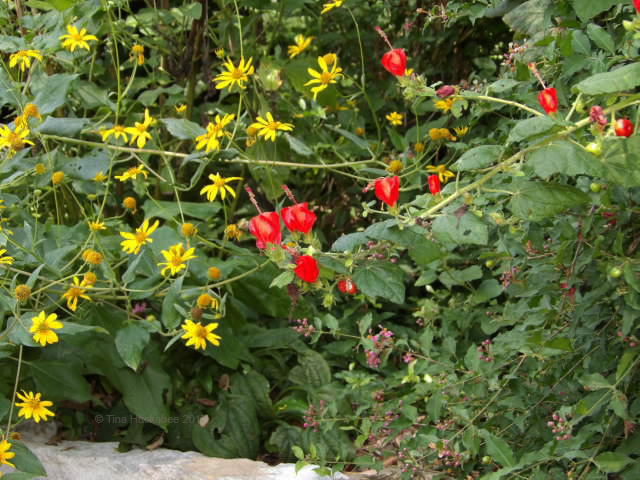
Plateau goldeneye (Viguiera dentata), Turkscap, and in the bottom, right corner, the subdued, pink-blossomed Barbados Cherry (Malpighia glabra)


While blooms are boss (at least, I think so!), don’t forget about our native grasses, appropriate for shade and sun situations, lending softness and grace to the garden.

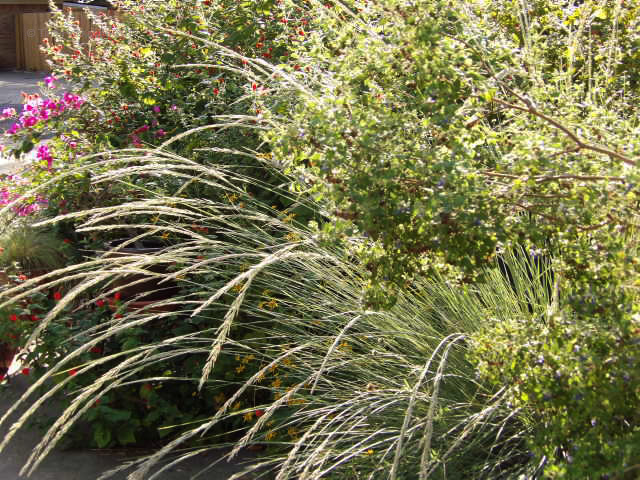
Big muhly (Lindheimer’s muhly) in autumn plume


Plant natives.

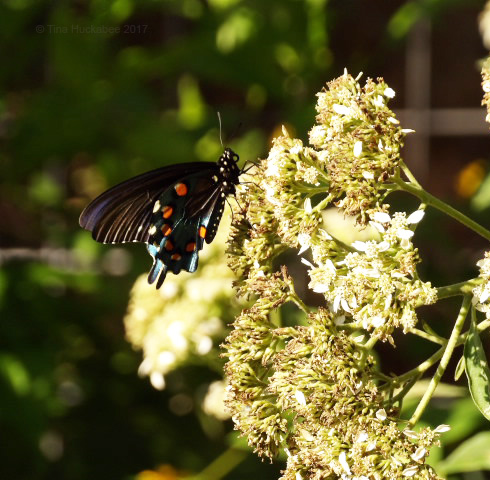
Pipevine Swallowtail, feeding on Frostweed (Verbesina virginica)

Painted Lady butterfly on Frostweed

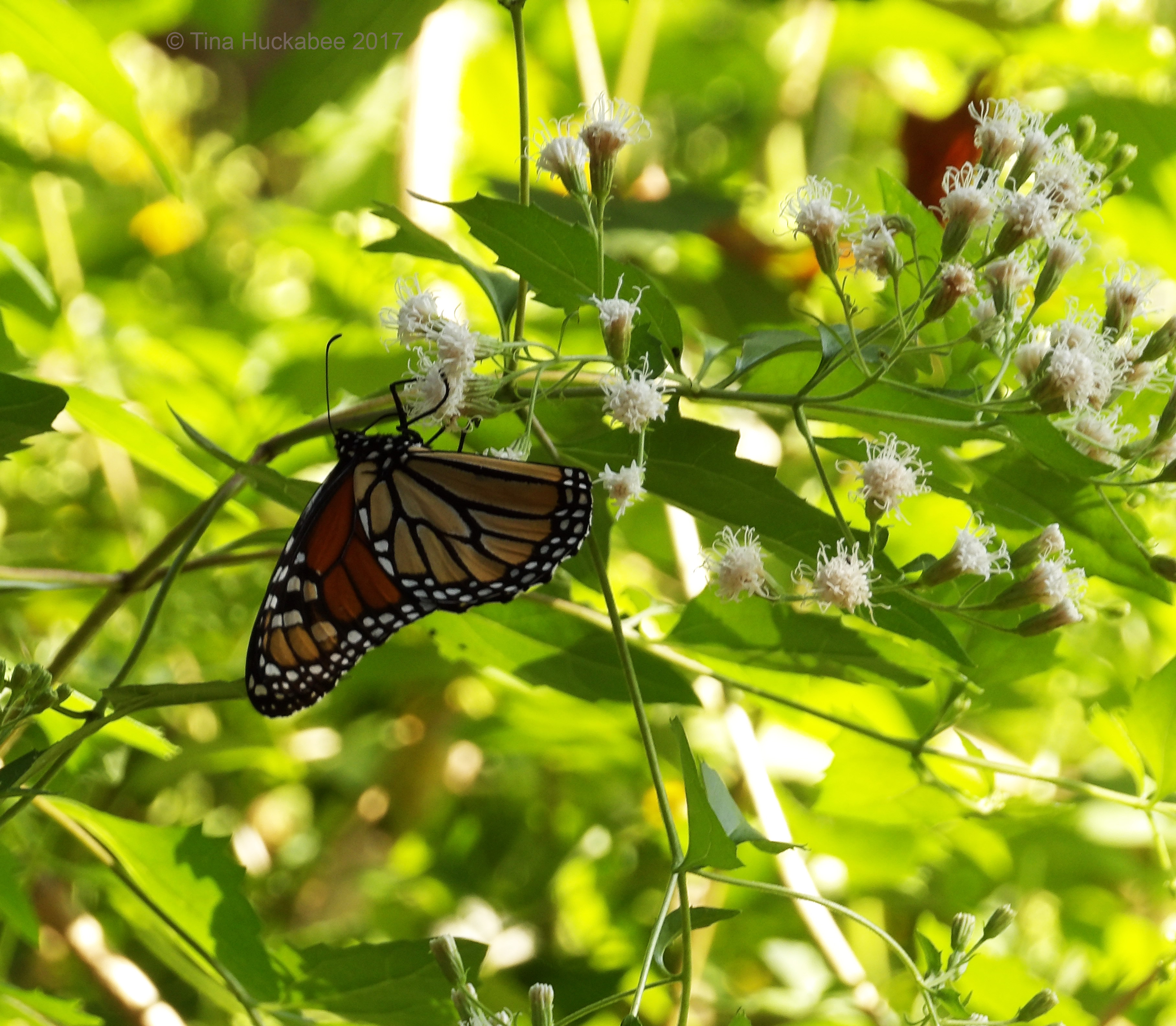
Migrating Monarch on White mistflower (Ageratina havanensis)

Big muhly, Shrubby blue sage, Turkscap, non-native, containerized bougainvillea

Texas craglily (Echeandia texensis)–blooming in fall

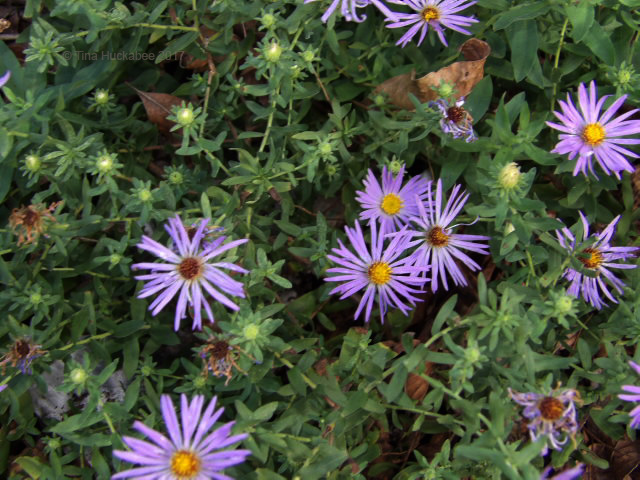
Wild blue aster, Fall aster (Symphyotrichum oblongifolium), turning happy, autumn-aster faces. imploring you to plant natives!

You’ll be amazed at the transformation of your once-boring swath of grass as it becomes enlivened with blooms-n-berries, foliage-n-flowers, and critters galore–all with less effort from you.

Go native plants!

Happy Texas Native Plant Week!

Wildflowers Work!

The wildflowers in my central Texas garden are screaming SPRING, and this week, May 1-7, is National Wildflower Week, so claimed with the purpose of celebrating the beauty and practicality of planting and nourishing native wildflowers alongside roads and in home and commercial gardens.  Wildflowers define place, as they are specific to region, and besides the beauty that wildflowers add to the world, they serve another noble purpose:  to provide food and cover for endemic wildlife.

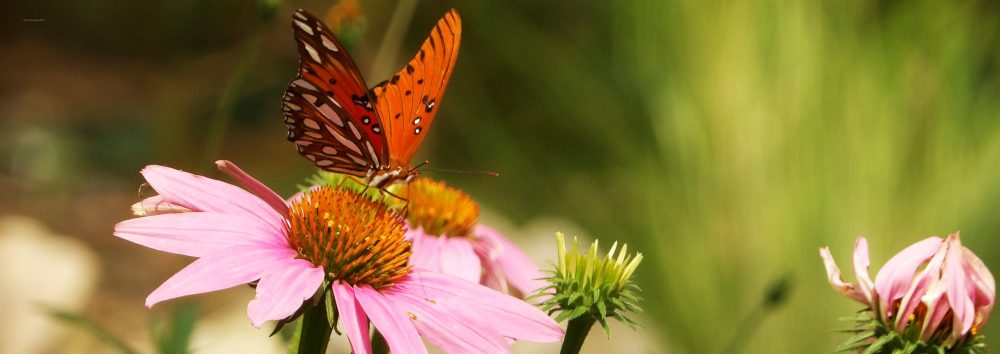
Gulf Fritillary butterfly (Agraulis vanillae) nectaring at a Purple coneflower (Echinacea purpurea). Yellow Zexmenia (Wedelia acapulcensis var. hispida) pops in the background, while Mexican feathergrass (Nassella tenuissima) waves in the breeze behind.

Wildflowers are easy to grow because they belong where they grow. Encroaching urbanization, modern agricultural practices, and the use of non-native, invasive plants threaten native wildflowers and the spaces where they thrive.  You can help lessen that threat to North America’s bountiful natural legacy by growing wildflowers in your garden. They are simple, elegant, and practical plant choices for home gardeners. Most wildflowers germinate easily by seed and many locally owned nurseries carry container grown wildflowers.  If you want to grow wildflowers by seed, use seed packets that contain specifically named seeds that are native to your region. Not only will you get the best results for your seedy efforts, but you’ll be a partner in the restoration of the magnificent endemic flora–wherever you may live in North America.

Red Admiral (Vanessa atalanta) at Purple coneflower.

Check out the Lady Bird Johnson Wildflower Center’s website  for excellent information on wildflowers and native plants.  Good native wildflower seed sources include, but are not limited to: Native American Seed, Prairie Moon Nursery, and Wildseed Farm.

I’ve grown native plants and wildflowers in my modest urban garden for more than 20 years.  Conditions have changed and interests evolved, but I’ve never regretted the transition from a garden of turf and non-native plants to one utilizing native Texas plants and wildflowers. They’re a snap to grow and fetching to behold. Unlike many non-native plants, natives are tough and stand up to the challenging soil and capricious weather patterns of Central Texas.

The following is a smattering of wildflowers and native shrubs that are currently abloom in my garden this 2017 National Wildflower Week.

This perennial wildflower,  Engelmann’s daisy, Engelmannia peristenia, blossoms in clusters, complementing its deeply lobed foliage.

A prolific spring to early summer bloomer, it’s also a favorite for many native bees like this metallic sweat bee.


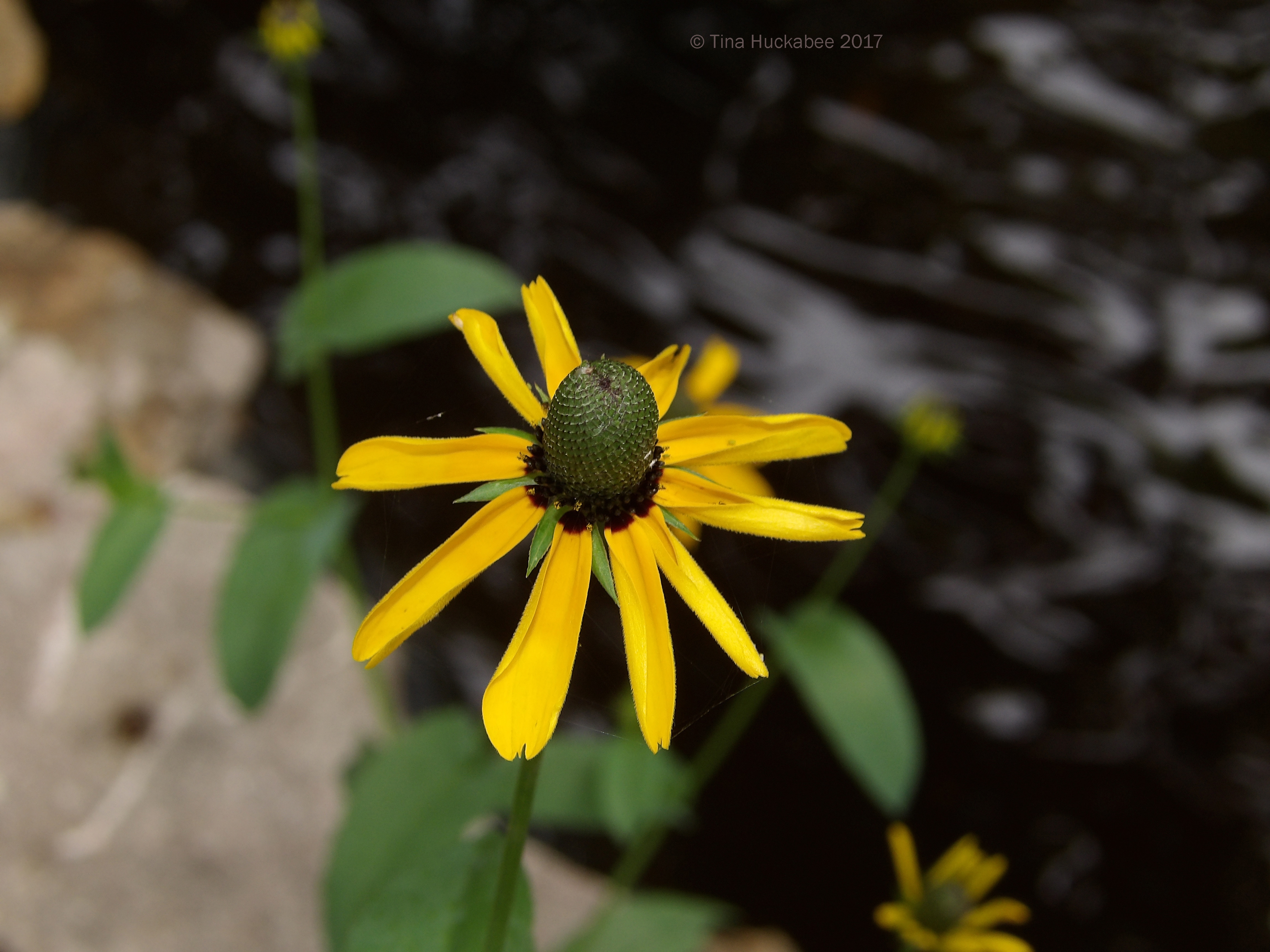
A gloriously re-seeding annual wildflower, the Clasping coneflowerDracopis amplexicaulis, blooms precariously by the pond.

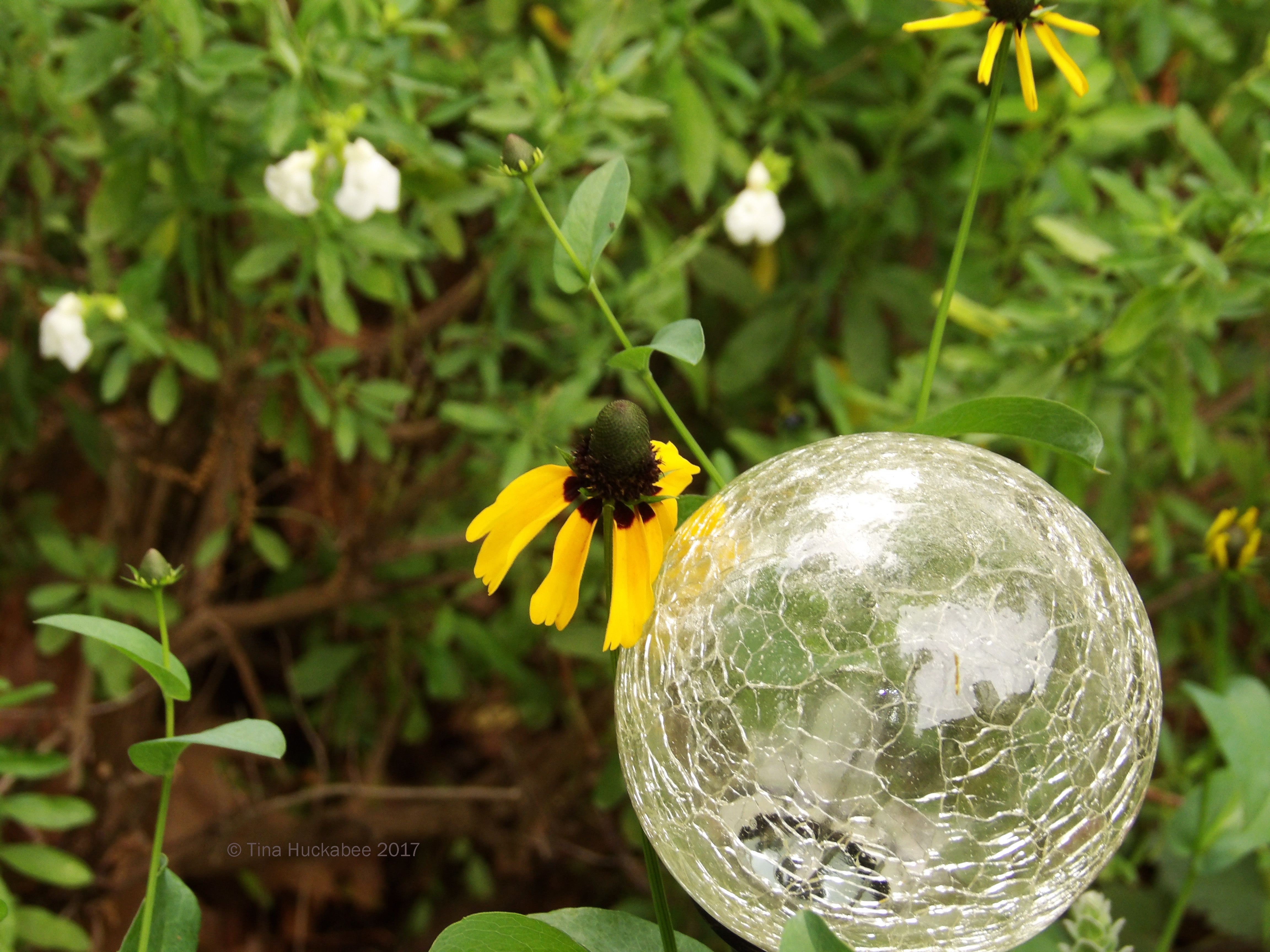
These cheery wildflowers mingle with other spring beauties.  Another Clasping coneflower cuddles with a solar lamp, while creamy-bloomed native Autumn sage, Salvia greggii sparkles in the background.


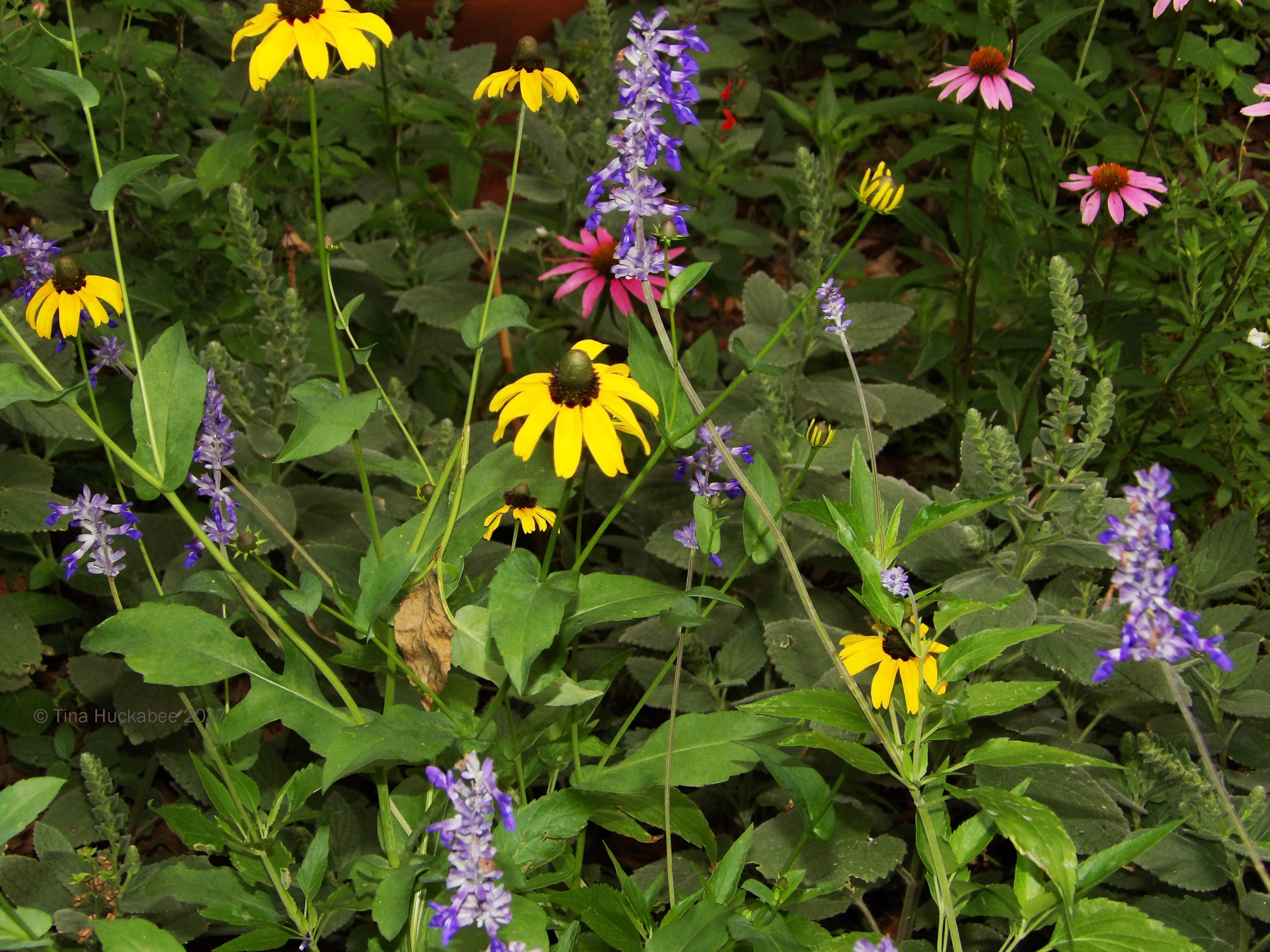
Here, the Clasping accompanies the Purple.  Further afield, red Autumn sage blooms.


Henry Duelberg sage, Salvia farinacea ‘Henry Duelberg’, cools a hot wildflower color combo of Purple and Clasping coneflowers.  Henry the wildflower was found in an old Texas cemetery by plantsman, Greg Grant.  It’s easily propagated by seed and readily available in various sized containers in nurseries.


Other spring wild things, like dainty, shade-loving White avensGeum canadense,

…and the aftermath of its blooms, quiet the garden.


Toward the end of its spring show, wildflower Wild red columbineAquilegia canadensis.

…and its spring partner, Gulf penstemonPenstemon tenuis, are fading and will make way for those who enjoy the heat of summer.


Just beginning its long summer-fall bloom period is the Tropical sageSalvia coccinea.

Red blooming

White blooming


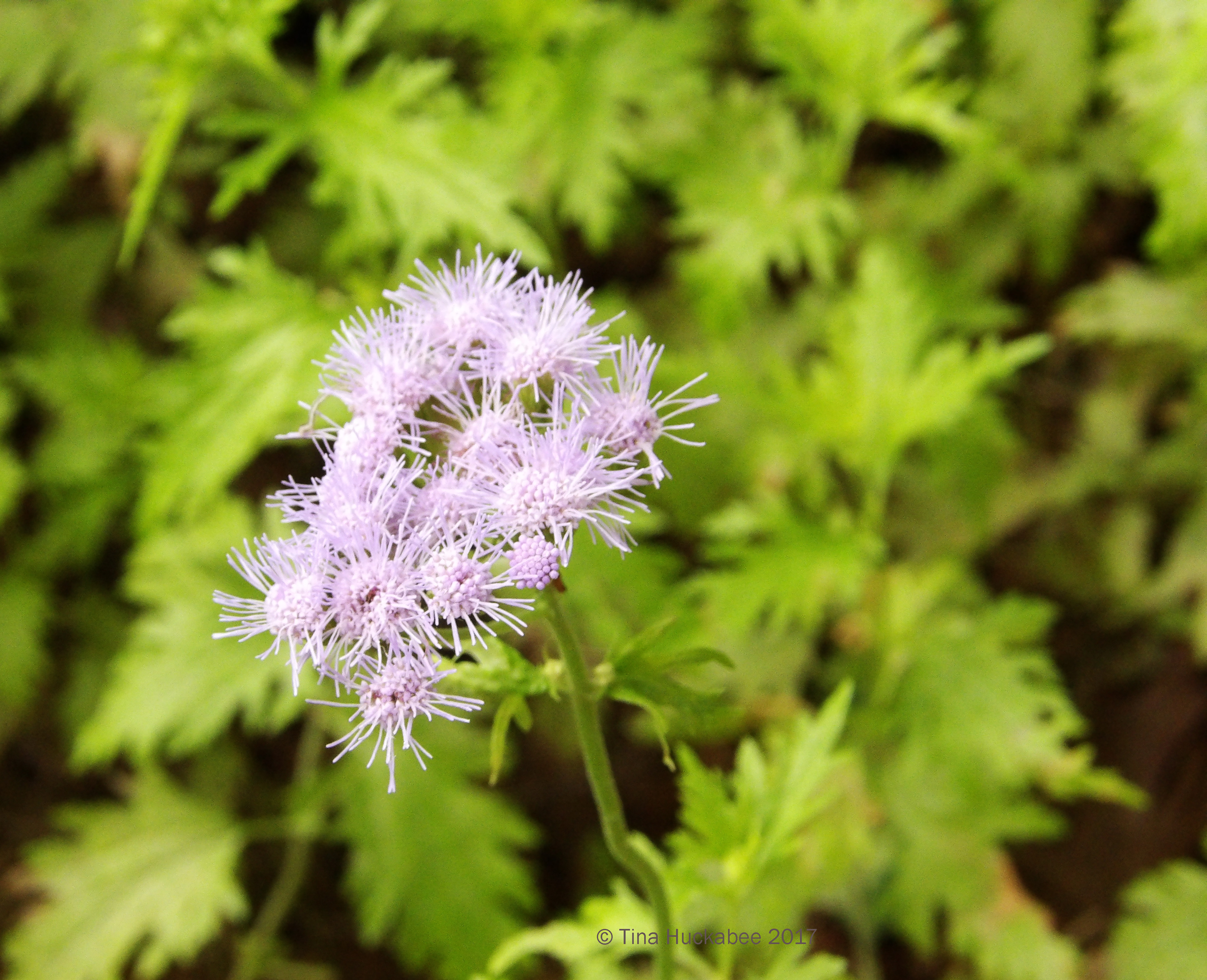
Favoring late summer and fall when it blooms in earnest for multitudes of busy butterflies, this Gregg’s mistflower, Conoclinium greggii, displaying its blooming fuzz in a season not its own, shows it has contracted wildflower spring fever.


More wildflower blues in the garden– another Henry Duelberg sage,

…and lavender-blue Heartleaf skullcapScutellaria ovata.

Here, the Heartleaf fronts a late summer flowering wildflower, Drummond’s ruellia, Ruellia drummondiana,


…and here, it fronts Purple coneflower and another fall blooming wildflower, Plateau Goldeneye, Viguiera dentata.

Heartleaf is a wildflower perennial which acts as a winter, spring and early summer groundcover.  It fills the garden with drifts of grey foliage topped with striking, lavender-hued, pollinator-friendly bloom spikes.  Heartleaf skullcap is an excellent landscape plant.


Native plants and wildflowers certainly combine well with hardy non-natives like iris, day lilies and roses.   Though this post is to remind and encourage gardeners to grow local, that doesn’t mean that beloved non-natives are necessarily poor choices as long as they’re not damaging, by being invasive, to the local environment.

The sweet Caldwell pink roses (at right) are the only non-natives in this shot.


These spring examples are a few of the North American native plants and wildflowers that I grow.  The trickiest aspect of having these lovelies in my garden is deciding what to do with the many seedlings they produce.  No worries–I’ve given scads away and they’re propagating happily in new homes, giving joy to their gardeners and sustenance to their fauna!

You too can grow wildflowers–they work, they’re beautiful, they’re easy.

Happy National Wildflower Week–buy some, trade some, plant some!