It’s springtime here in Austin, Texas and there’s plenty to relish, especially regarding the many gifts of nature: pleasant temperatures, glorious sunshine and well-appointed rainfall, iconic wildflowers and other blooming beauties, and active and abundant urban wildlife. You don’t have to go far–there’s no requirement for lengthy drives into the Hill County or blister-producing hikes–to savor the benefits of spring pleasures if you plant for wildlife in your own garden space. When you grow native annuals, perennials and trees, as well as adapted non-native plants, you will reap a blooming bonanza in your garden. Wildlife of all sorts will come, as they’re granted rest and reprieve, nourishment and protection, most especially during migration and into the breeding season. Welcome to Wildlife Wednesday where we showcase wildlife and appreciate their place in our own back yards and in the larger world.
This past month I haven’t observed the variety of migratory birds that I recall from 2016, but there were a few who made brief stops near the pond, or who rested in newly foliaged Red Oaks. A pretty White-eyed Vireo, Vireo griseus, a lone and stunning Black and White Warbler, Mniotilta varia, a handsome Dark-eyed Junco, Junco hyemalis, and four female Red-winged Blackbirds, Agelaius phoeniceus,(obviously engaged in a girls’ day out), comprise the sum total of spring migratory birds gracing my garden. With each observance, I either didn’t have my camera ready, or chose to simply marvel at the bird’s presence; I have no photos of these birds to share.
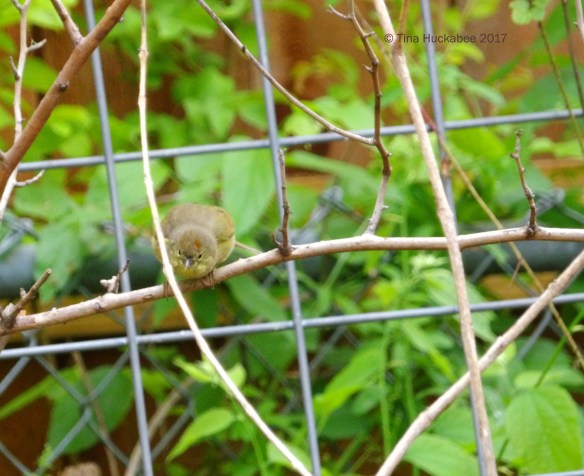
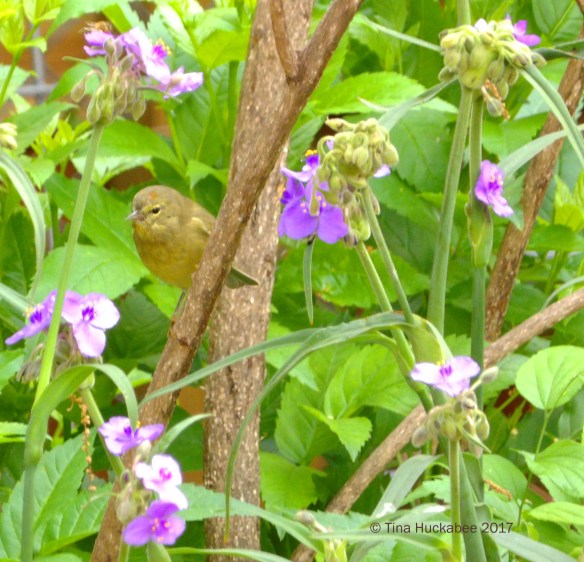
My avian winter Texans visit the back garden less frequently and I assume that most have moved on to more northern gardens and greenbelts, with the hope of a mate and chicks. I haven’t seen any Orange-crowned Warblers, Oreothlypis celata in several weeks, but throughout winter and earlier in March, one, or several, were daily garden charmers as they perched on limbs or hunted for insects from spring blooms.

Clinging to the stem of a Yellow bells (Tacoma stans) while surrounded by Giant spiderwort (Tradescantia gigantea).
This one poised to flutter to the bog area of my pond, which is a favorite bathing spot for all the birds in the garden, residents and visitors alike.
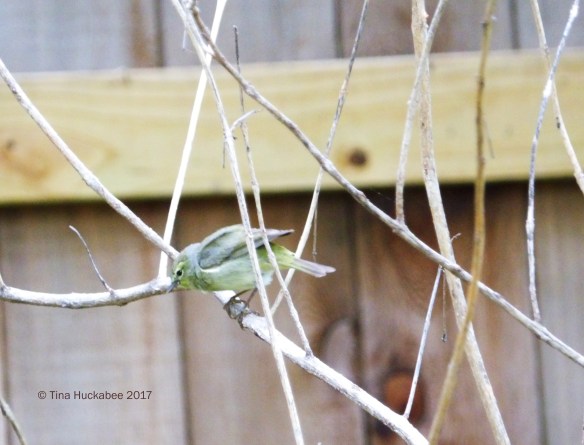
Jump!
If you look closely at the following photos, you can spot the smudge of orange, which male Orange-crowns flash in territorial warning when necessary, but which is drab and undramatic when life is simple and there are no threats to manhood, or perhaps I should say, birdhood.
I still see Yellow-rumped Warblers, Setophaga coronata, like these two breeding-plumaged boys, preparing for a buddy bath.

The photo isn’t the best, taken early and pre-coffee and through a window, but I was tickled to catch them hanging around. Do you see the difference between the two?
You’ll notice that the one toward the bottom has a yellow throat–he’s an Audubon’s subspecies and typically found in the West. The other with a white throat, is a Myrtle subspecies and they’re more common in the eastern part of the United States and in Canada. I have no clue why both were in my back garden, but it was a treat to see and photograph both in the same frame. More proof I suppose that Texas truly is a crossroads for migratory birds.
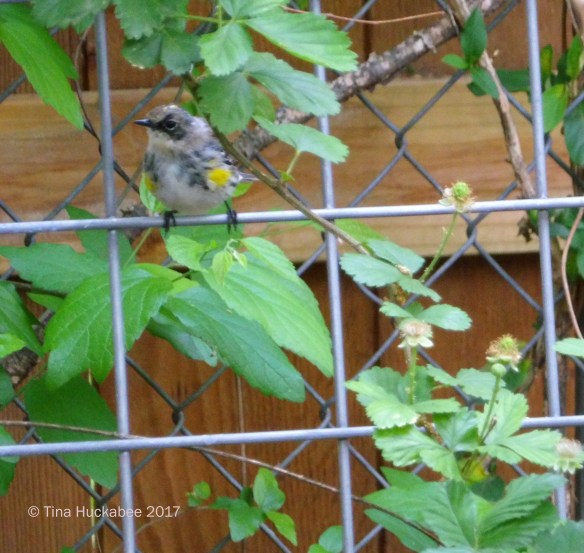
Too bad those blackberries aren’t ripe.
Butter Butts have been constant companions since November, but will soon be gone, making their way north to the upper mid-West and Canada for summer, My early mornings won’t be the same without them.
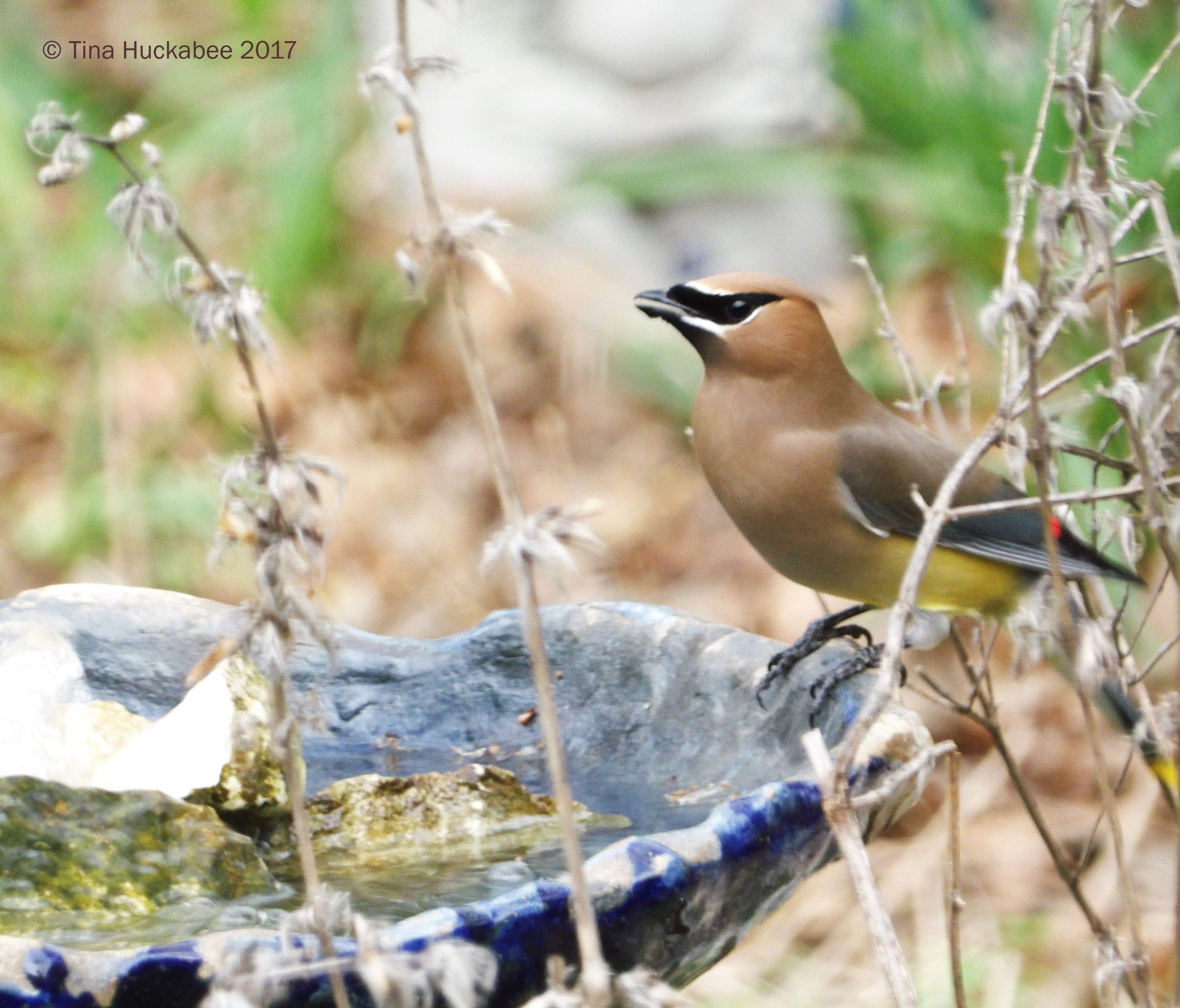
One of the last winter Texans to leave for northern lands are the Cedar Waxwings, Bombycilla cedrorum. Such beautiful birds, they’re always in a flock, gabbing and preening, and usually situated at the top of trees, where it’s too blustery to get a good photo. Even if I managed something decent, it would be of their butts and who wants to see that? I was on the phone with a friend when a couple of them dropped in to bathe and drink in the birdbath with the bubbling fountain. I told my friend that I HAD to hang up NOW so I could get some good, close shots of these dandies and she was gracious enough to let me go, forthwith. She’s understanding about my various idiosyncrasies and I knew she wouldn’t be offended at my hasty hangup.

As I write, I hear their high-pitched keening in the breezes outside, their voices carried into the house, keeping me company. Soon enough, that keening will no longer linger in the breeze and will be silent; I’ll realize that they’re gone for summer.
I miss them already.

One day next November, I’ll hear their call again–high-pitched and insistent. I’ll be thrilled that they’ve once again joined me for winter and much of spring.
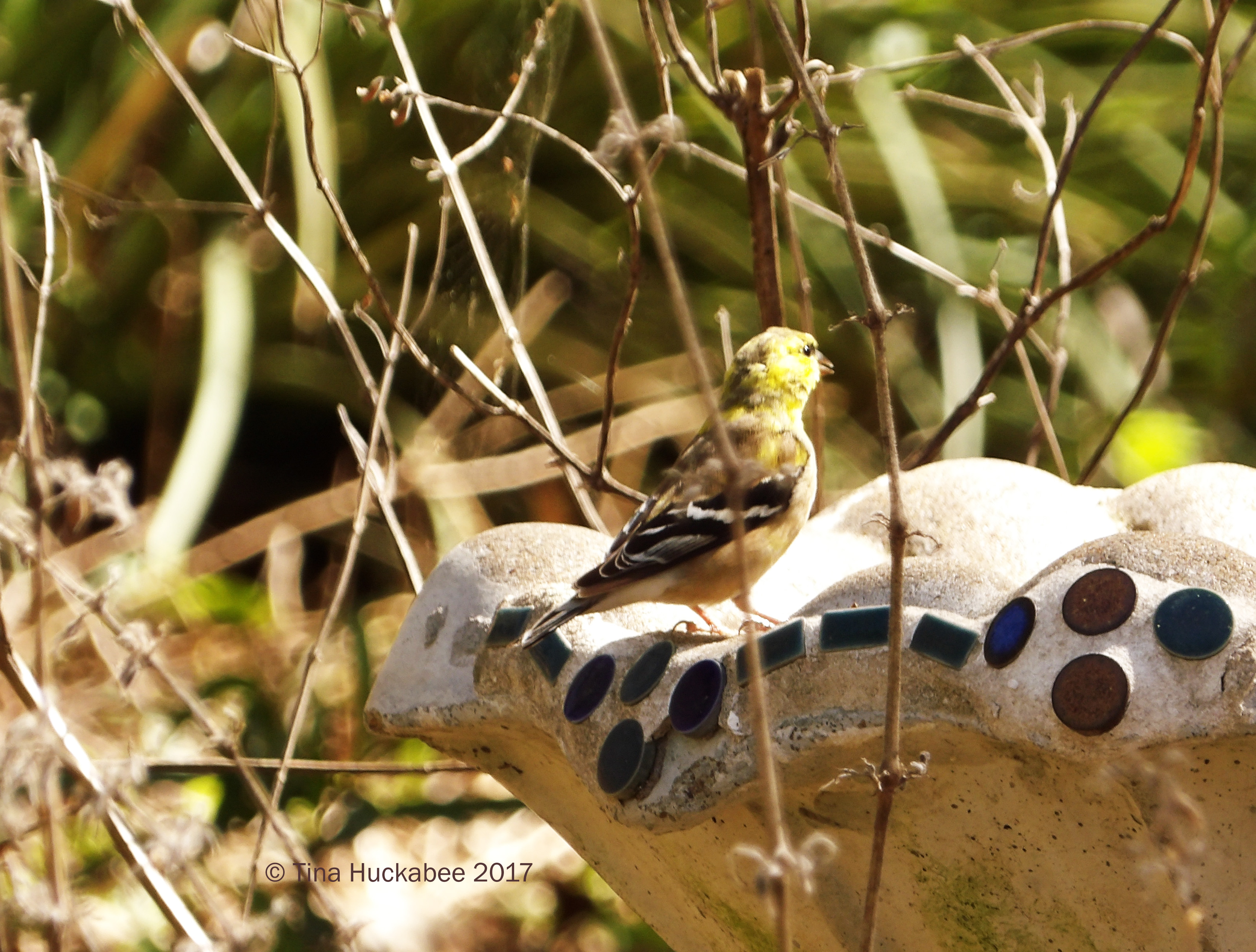
I take pleasure in the typical off-and-on visits from Lesser Goldfinches, Spinus psaltria, but they’ve been scarce this year. I have delighted in several visits from a little band of American Goldfinches, Spinus tristis.

Mostly, they’ve frequented the birdbaths,

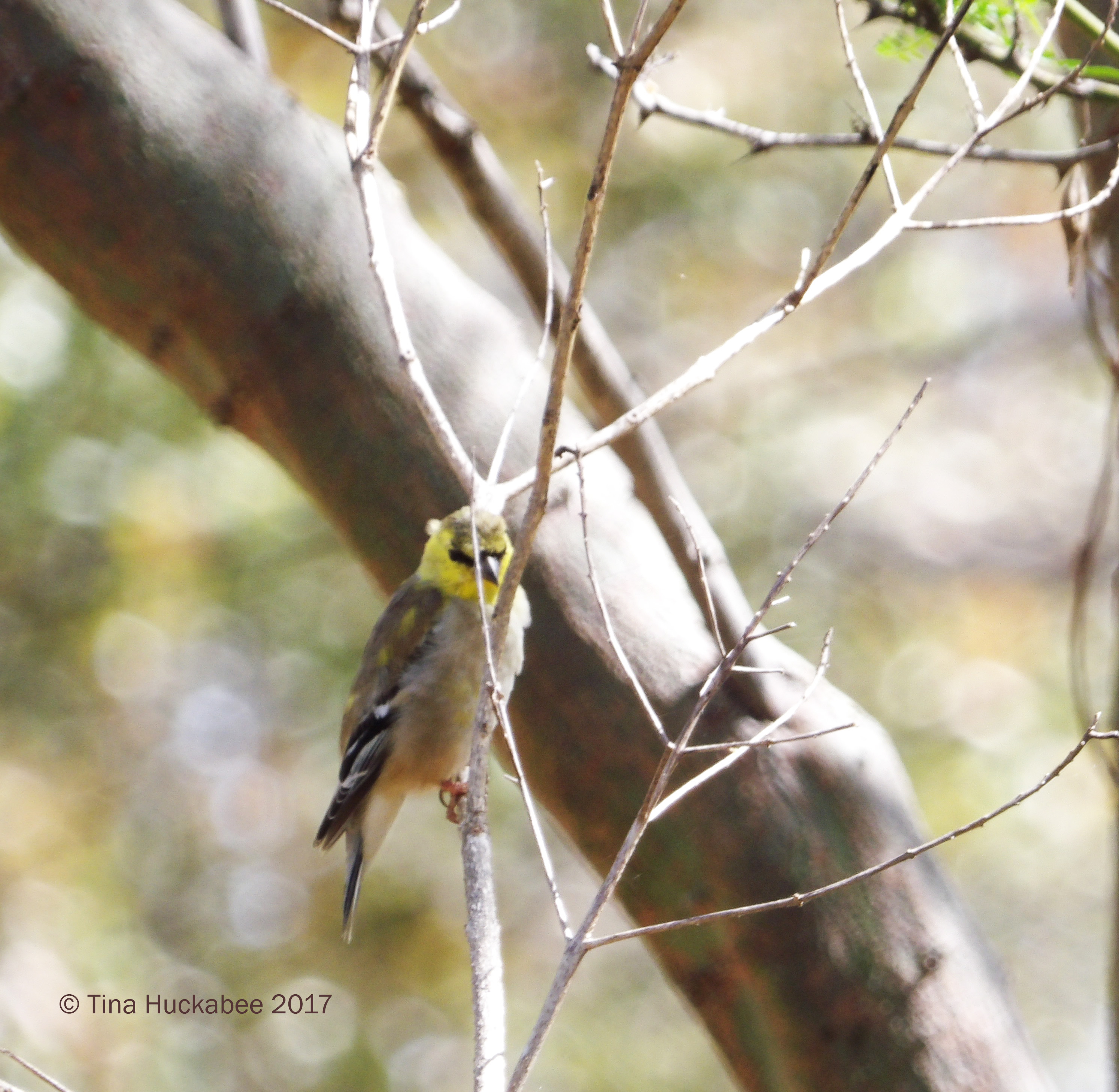
First you see my front,

….then you see my back.
…the bog of the pond,

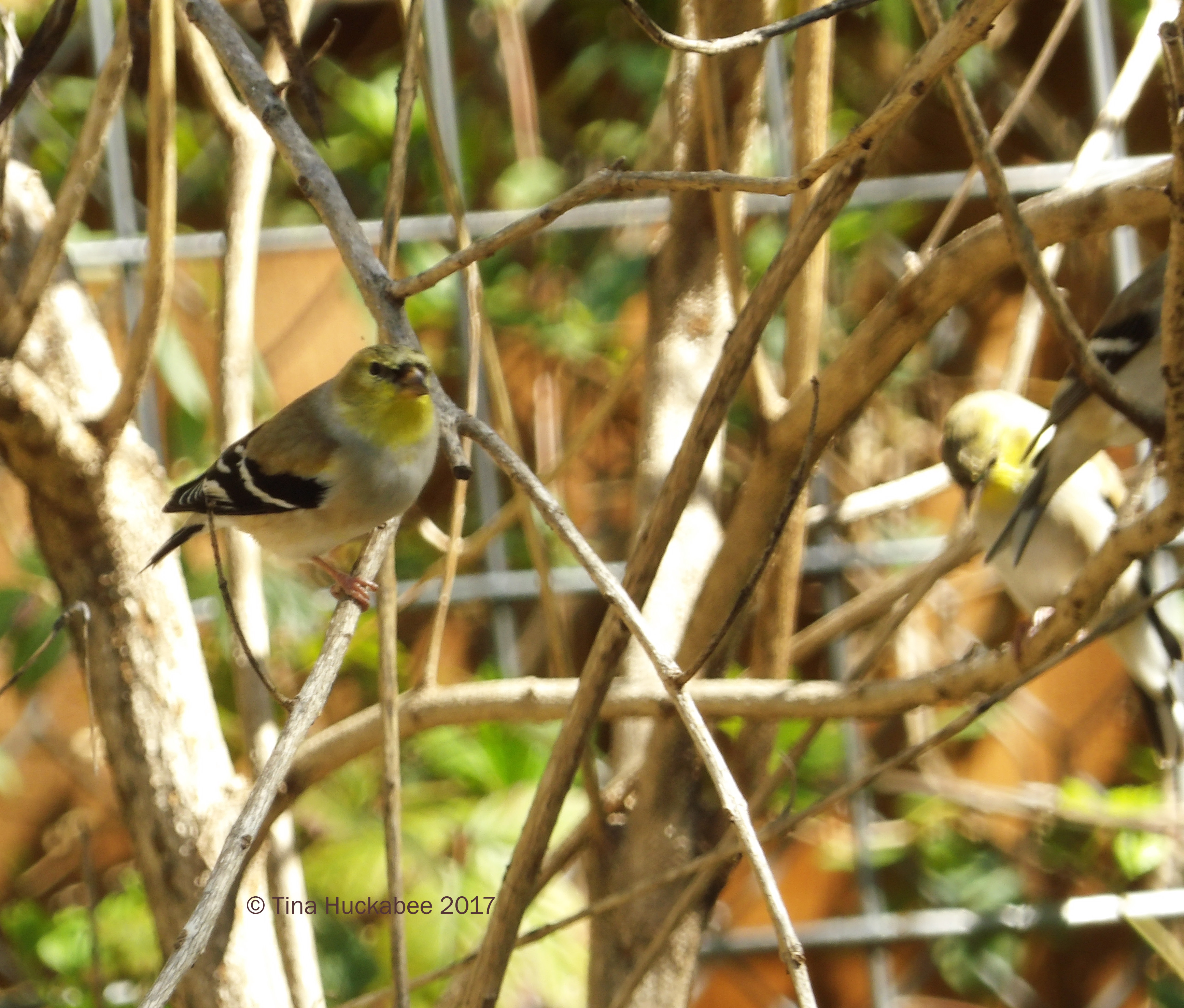
…or perched prettily in the shrubs and trees.

Until I downloaded this photo, I didn’t realize that there were two other goldfinches at the right edge of the above photo. Like the Cedar Waxwings and teenage humans, Goldfinches tend to hang out in groups, though they’re quieter than the Waxwings–and the human teenagers.

If you’re fortunate enough to host these birds during their summer breeding, they will nosh at feeders, but prefer native composite (Asteraceae) seeds; flower seeds of the many varieties of sunflowers are finch (of all species) favorites. The trick for attracting Goldfinches, as well as many other native songbirds, is to let the seeds develop after the bloom period. Many gardeners want to prune back “spent” blooms because there’s nothing left for pollinators and we’ve been “educated” that spent blooms are unattractive. Nothing could be further from the truth. Flower seed heads are attractive and the second round of feeding on a plant comes after the bloom-n-pollination/nectar gathering time: it’s the feeding time for birds, mammals and other insects besides pollinators. When you see a host of birds eating seeds at plants, it’s a lovely and affirming sight and that nourishing of wildlife is the purpose of plants.
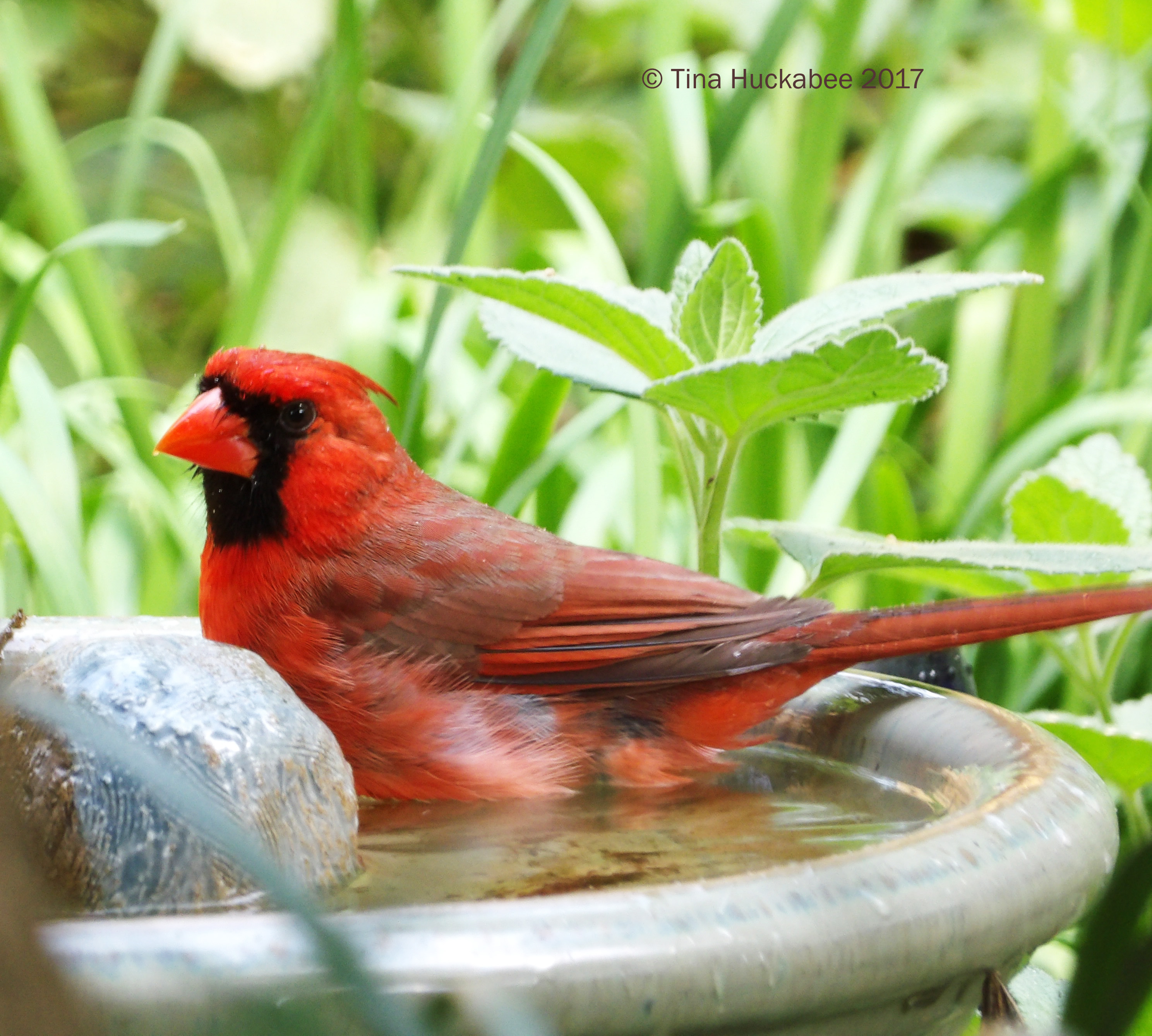
While the migratory birds are movin’ on to their summer breeding sites, I’m left with my resident birds, like this bathing male Northern Cardinal, Cardinalis cardinalis.

Well, that’s not so bad.
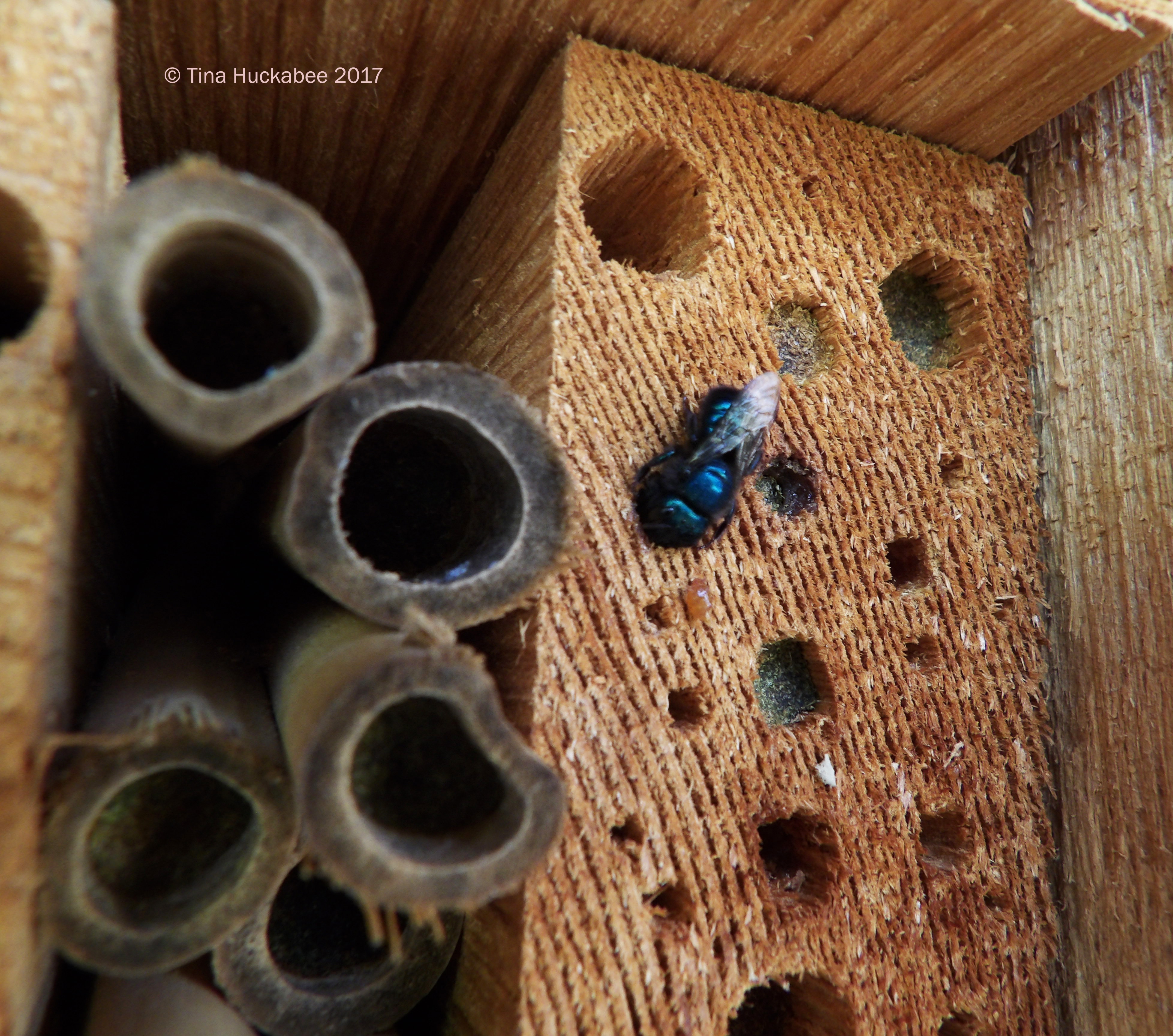
Blue orchard bees, Osmia lignaria, are almost finished with their seasonal contribution to the world and my garden.

The few remaining adults left are packing away their eggs and soon-to-be-larvae. There are plenty blue bee babies cookin’ for next year.
My favorite native bees, the Horsefly-like Carpenter bee, Xylocopa tabaniformis, are out in droves and pollinating up a flower-storm!
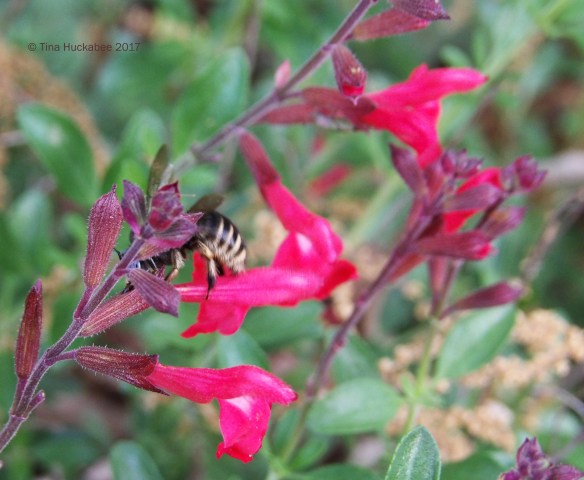
Stealing nectar from an Autumn sage (Salvia greggii).
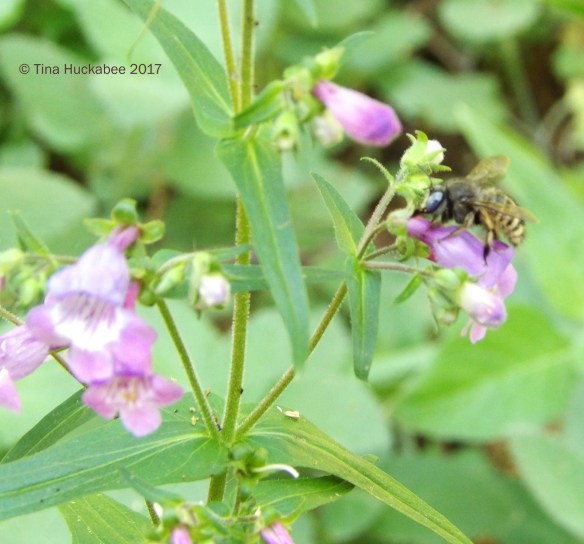
More nectar at a Gulf penstemon (Penstemon tenuis).

Zoom!

Got it!

Uh, the pollen and nectar of the white Autumn sage are the other way…
Ubiquitous Texan Crescent butterflies, Anthanassa texana, are also making the rounds of blooming bounty.

This Pipevine Swallowtail, Battus philenor, is battered–but not defeated–in its quest for nutrients from flowers of the Giant spiderwort. There will be more of these gorgeous and useful insects in my gardens in coming months.
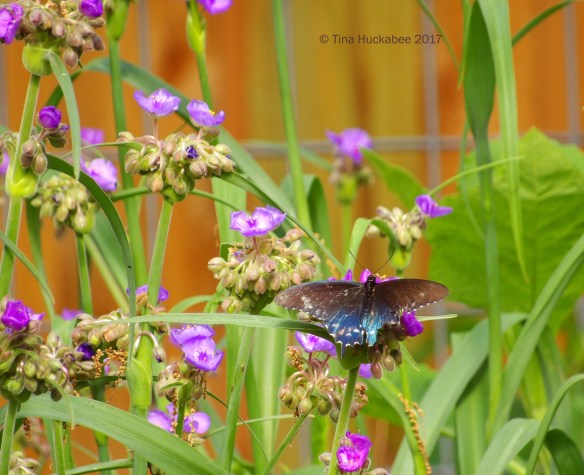
He may display rag-tag wings, but he works the garden diligently and for free!
Whether your garden enjoys migrating or resident critters, did wildlife visit your garden this past month? Please post for April Wildlife Wednesday. Share photos and stories of your garden wildlife to promote and appreciate your region’s natural habitat and diversity. When you comment on my post, please remember to leave a link to your Wildlife Wednesday post so readers can enjoy a variety of garden wildlife observations.
Happy wildlife gardening!












 My Gardener Says...